Trott Bailey Family Kingdom · Clean-Return Infrastructure
Krubaro: The Clean-Return Civilization
A real civilization does not only make things. It knows how to clean, return, repair, dry, sort, and reset them.
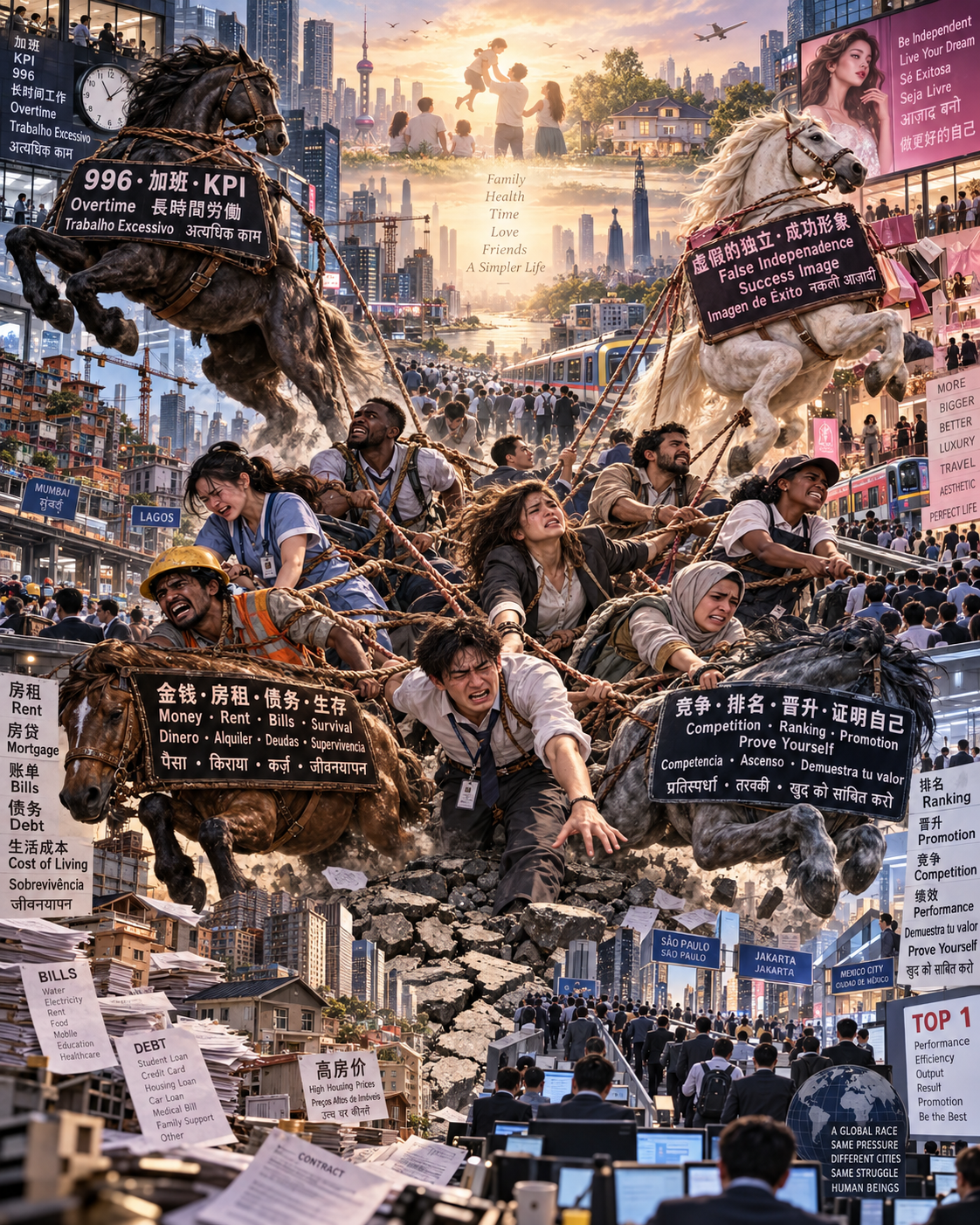
In the old world, waste is often treated as something to hide. Trash is pushed behind buildings. Drains are forgotten until they stink. Laundry piles up quietly in family homes. Wet towels, bibs, gloves, food scraps, packaging, broken tools, dirty uniforms, and used household items become private burdens.
The public may see the beautiful front of a restaurant, beach, home, hotel, school, park, or market, but behind it there is often an ugly service edge: overflowing bins, dirty water, clogged drains, tired workers, chemical smells, and families expected to manage too much alone.
Trott Bailey Family Kingdom asks a different question: why should the return side of life be ugly, hidden, weak, or badly designed?
That question becomes Krubaro.
What Is Krubaro?
Krubaro is the Trott Bailey Family Kingdom clean-return system. It is the civilization logic for waste, laundry, used materials, wet items, food scraps, damaged goods, household reset, public cleanliness, and service-side dignity.
Krubaro does not mean one trash room or one recycling bin. It is a full clean-return way of thinking: every item that becomes dirty, wet, broken, used, stained, worn, spoiled, or finished must have a proper route.
Krubaro asks: where does this thing go after use, and who is protected while returning it?
The Old World Hides the Return Side
Many places design the front beautifully and abandon the back. The dining room may be beautiful, but the grease trap is neglected. The beach may attract tourists, but public bathrooms are weak. The house may look elegant, but laundry overwhelms the family. The park may be photographed, but maintenance workers are left with poor storage, poor wash areas, and poor rest.
This creates a false kind of beauty. It looks good only because the dirty work is hidden elsewhere.
Trott Bailey beauty cannot be built on ignored mess, ignored workers, or ignored mothers.
Krubaro exists because every beautiful civilization must answer for the return side of life.
Clean Return Is Not Just Garbage
When people hear the word waste, they often think only of trash. Krubaro is larger than that. A family, public place, Sabennery, Makji, beach, orchard, baby court, service station, or festival produces many kinds of return needs.
- food scraps
- packaging
- wet towels and bibs
- dirty uniforms and work garments
- child washcloths and Doon textiles
- broken tools and damaged furniture parts
- used cooking oil and grease
- dirty water and rinse water
- garden waste and pruned branches
- baby-care mess and family bathroom waste
- public-event overflow
- hazardous or unusual materials that require specialist handling
Krubaro gives these things routes instead of letting them pile up in shame.
The Four Levels of Krubaro
Krubaro works across multiple scales. The family home cannot carry everything alone. The district cannot ignore what happens inside homes. Public places cannot produce waste and then pretend it disappears. Specialist materials cannot be handled casually.
For that reason, Krubaro has four major levels.
1. Family Compound Krubaro
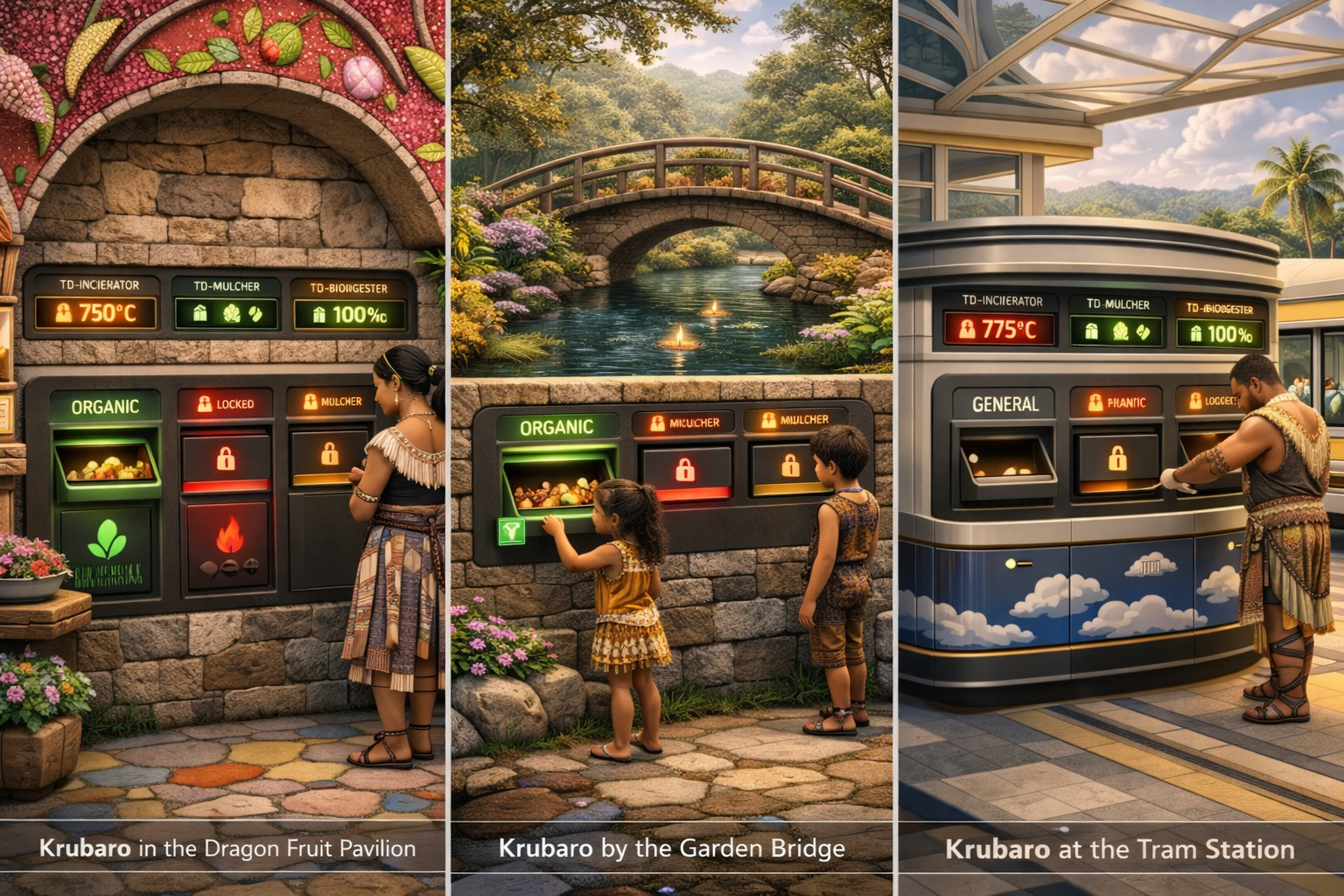
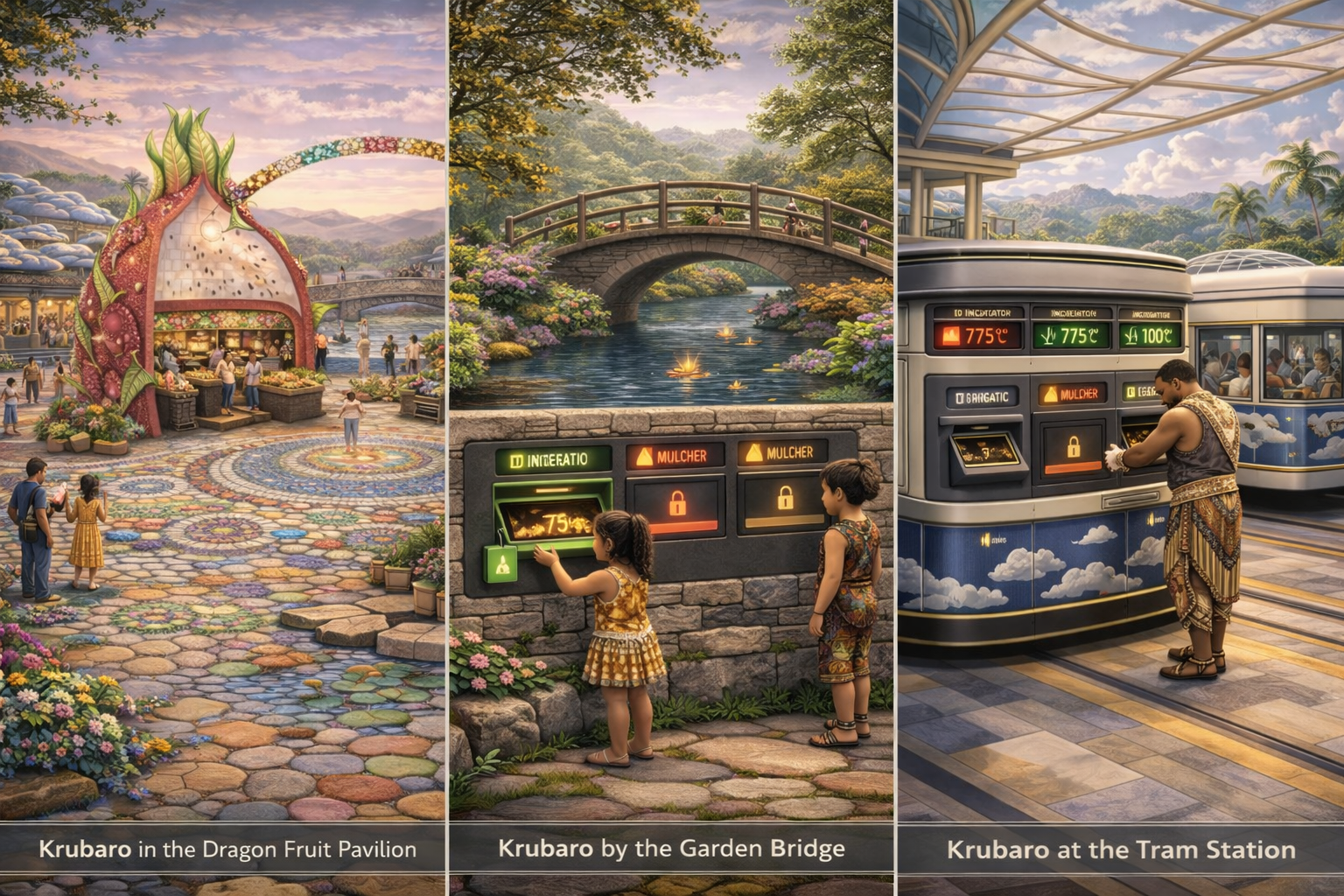
At the family-compound level, Krubaro supports everyday household return. This may include a service-side clean-return court, washable paving, drains, food-scrap processing, mulching, small-scale biodigestion where appropriate, controlled incineration where approved, laundry reset, Doon return, wet towel handling, child-mess reset, and dry-return storage.
This level helps the family because the home has proper places for what daily life produces. Food scraps are not random. Wet items are not scattered. Dirty laundry does not become a silent mountain. Sticky child life has a reset route.
2. FliB District Stations
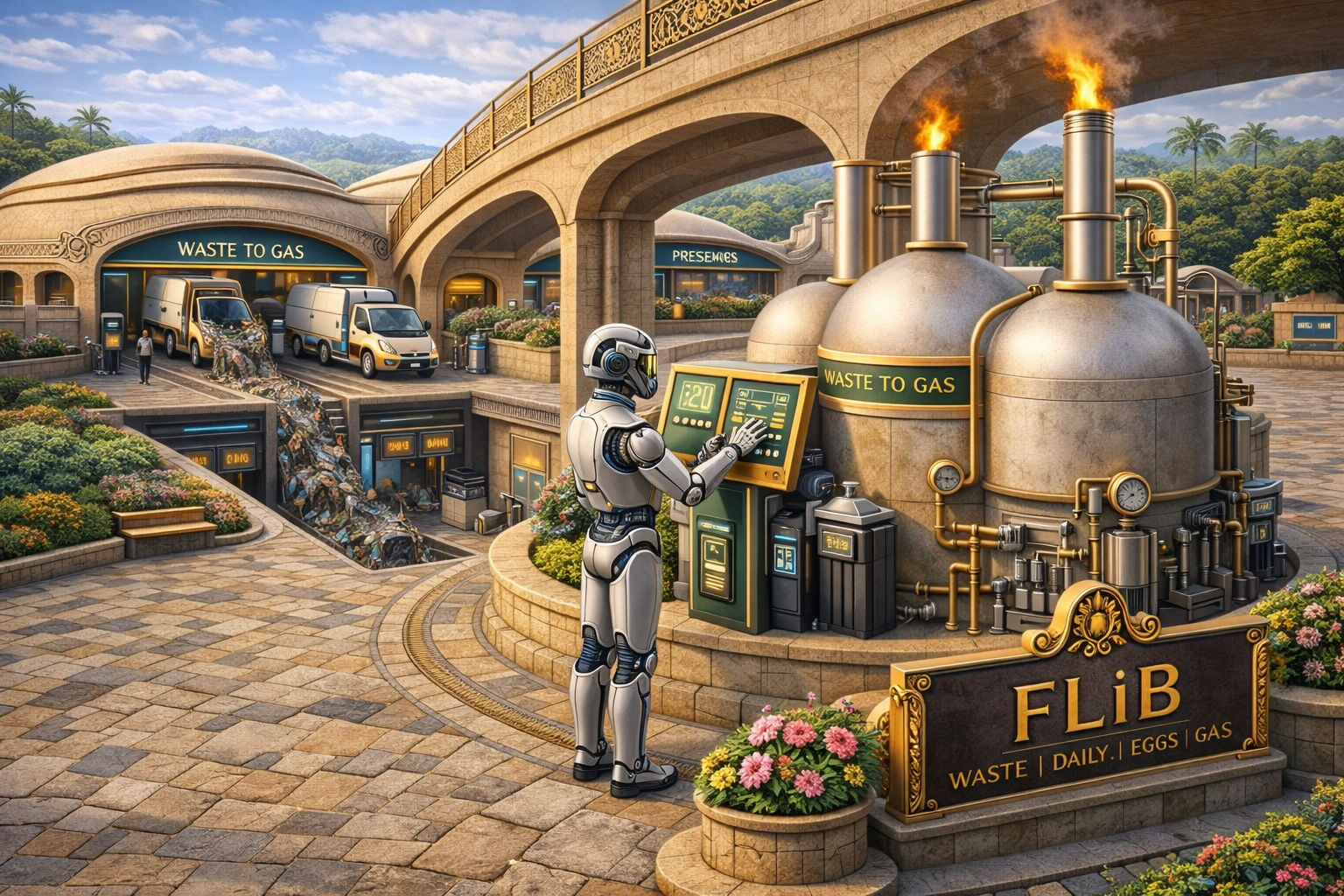
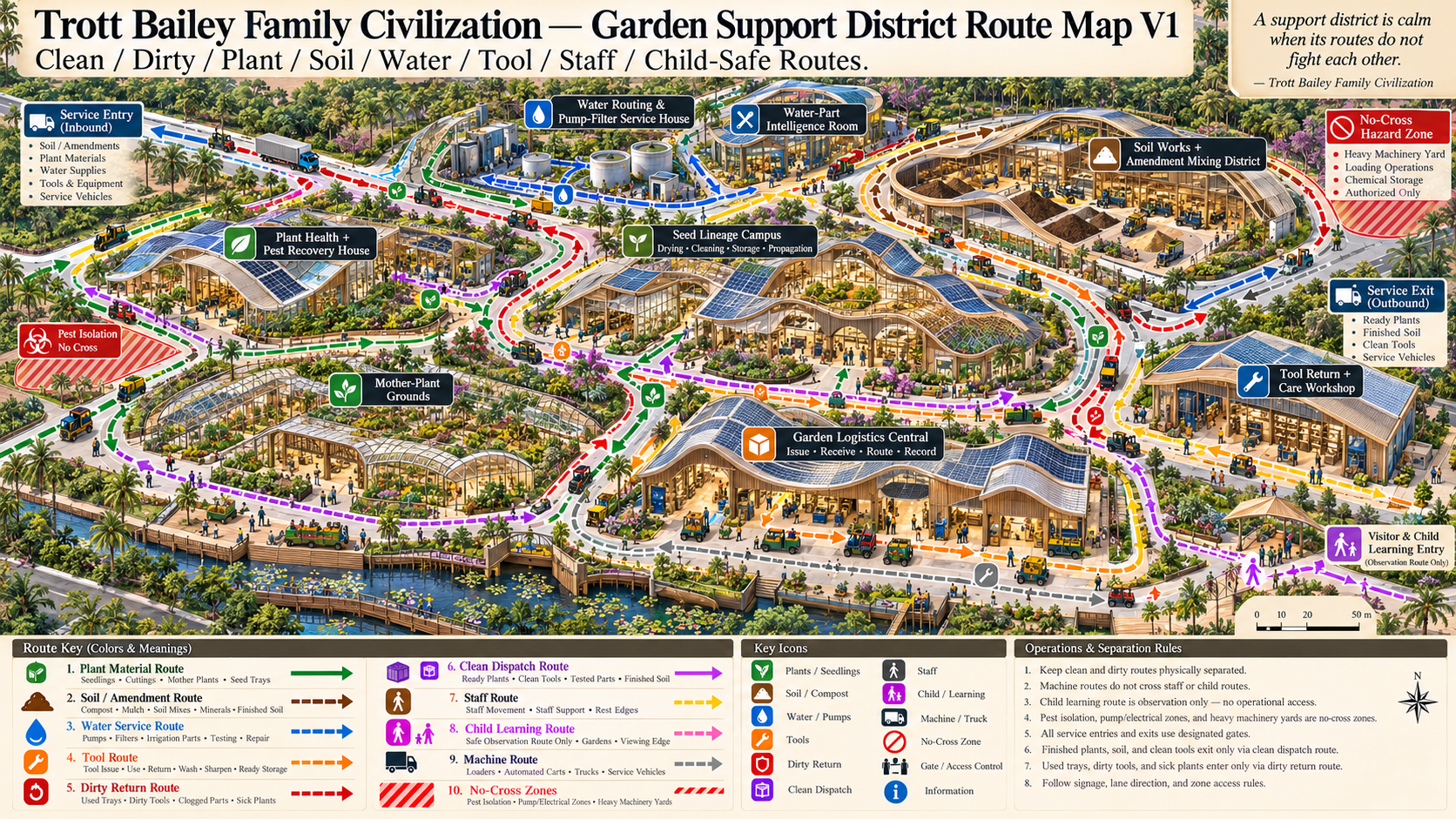
FliB District Stations are larger clean-return centers that support a district. They receive overflow, handle heavier processing, support scheduled pickup, manage repairs, hold separated material streams, and coordinate with homes, Sabenneries, public places, Service Shadow teams, and Pacorips.
These stations must not look like ugly waste yards. They are civic infrastructure and should be designed with dignity: proper thresholds, clean surfaces, worker support rooms, family-facing drop points, beautiful service architecture, clear separation, and safe operational zones.
3. Public Underground Routing
Public areas need clean-return routes that do not depend only on visible bins and overloaded workers. Underground or hidden routing can move separated waste, water, used textiles, and return materials through protected channels.
This allows public life to stay clean without pretending that cleanliness happens by magic. The system is present, monitored, accessible for maintenance, and integrated with the architecture above it.
4. Yoks Specialist Handling
Some materials should never be handled casually. Oversized, hazardous, chemical, medical, unusual, contaminated, or difficult materials require specialist teams and specialist locations.
Yoks handling prevents dangerous return needs from being dumped onto families, public workers, or ordinary district stations. It is the rare-material and high-risk branch of clean-return civilization.
Laundry Is a Civilization Problem
Laundry is one of the clearest examples of hidden household labor. A family may own a washing machine and still be overwhelmed. Clothing must be gathered, sorted, treated, washed, dried, folded, repaired, returned, and organized.
Babies create laundry. Toddlers create laundry. Parents create laundry. Service workers create laundry. Sabenneries create laundry. Makji create laundry. Baby Worlds, public bathrooms, Honey World, Beach Worlds, and Release Commons all create textiles that must return clean.
A washing machine is not the same thing as laundry relief.
Krubaro connects household laundry reset rooms, dry-return spines, Doon systems, centralized laundry infrastructure, textile repair, garment diagnostics, and delivery return so laundry becomes organized civilization support, not endless private exhaustion.
Dry-Return Spine
The Dry-Return Spine is one of the most important household and public-life clean-return systems. Many items do not only need washing. They need drying, airing, draining, returning, and safe storage.
A Dry-Return Spine may include drying rails, airflow walls, towel niches, bib return, glove return, washable ledges, drainage channels, child-height return spots, textile cubbies, service access points, and assisted air technology.
This matters because wetness is not a small issue. Wet items can smell, mold, damage materials, burden workers, and make family life feel constantly unfinished.
Clean is not complete until the item can return dry, safe, and ready for use.
Household Quick-Dry Wall
The Household Quick-Dry Wall is an example of Krubaro technology entering the home in a practical way. It can provide assisted airflow for towels, children’s washcloths, rain-wet garments, baby bibs, Doon items, light textiles, and family-care cloths that need fast reset.
This does not need to look like a machine slapped onto a wall. In Trott Bailey design, the airflow system can be built into beautiful wall architecture, carved vents, route seams, warm lighting, washable niches, and child-safe access zones.
The purpose is simple: the home should not stay damp, cluttered, and unfinished after every bath, meal, rinse, spill, rain walk, beach return, or baby-care moment.
Doon Return
Doon systems support the daily textile life of care: bibs, gloves, towels, cloths, wraps, wash pieces, baby-care textiles, family reset cloths, and other small care items that move constantly through the household and public support systems.
Without a return system, these small items become clutter. With Doon return, they become part of a clean cycle: use, drop, wash, dry, repair, restock, and return.
This is especially important in Kezidek family-care zones, Baby Worlds, Sabenneries, warm wash stations, family bathrooms, public rinse pavilions, and young-family homes.
Krubaro Protects Workers
Clean-return civilization is not only about objects. It is also about the people who handle those objects. If a worker cleans drains, bathrooms, vessels, waste channels, wet rooms, laundry systems, grease zones, or public overflow areas, that worker must be protected.
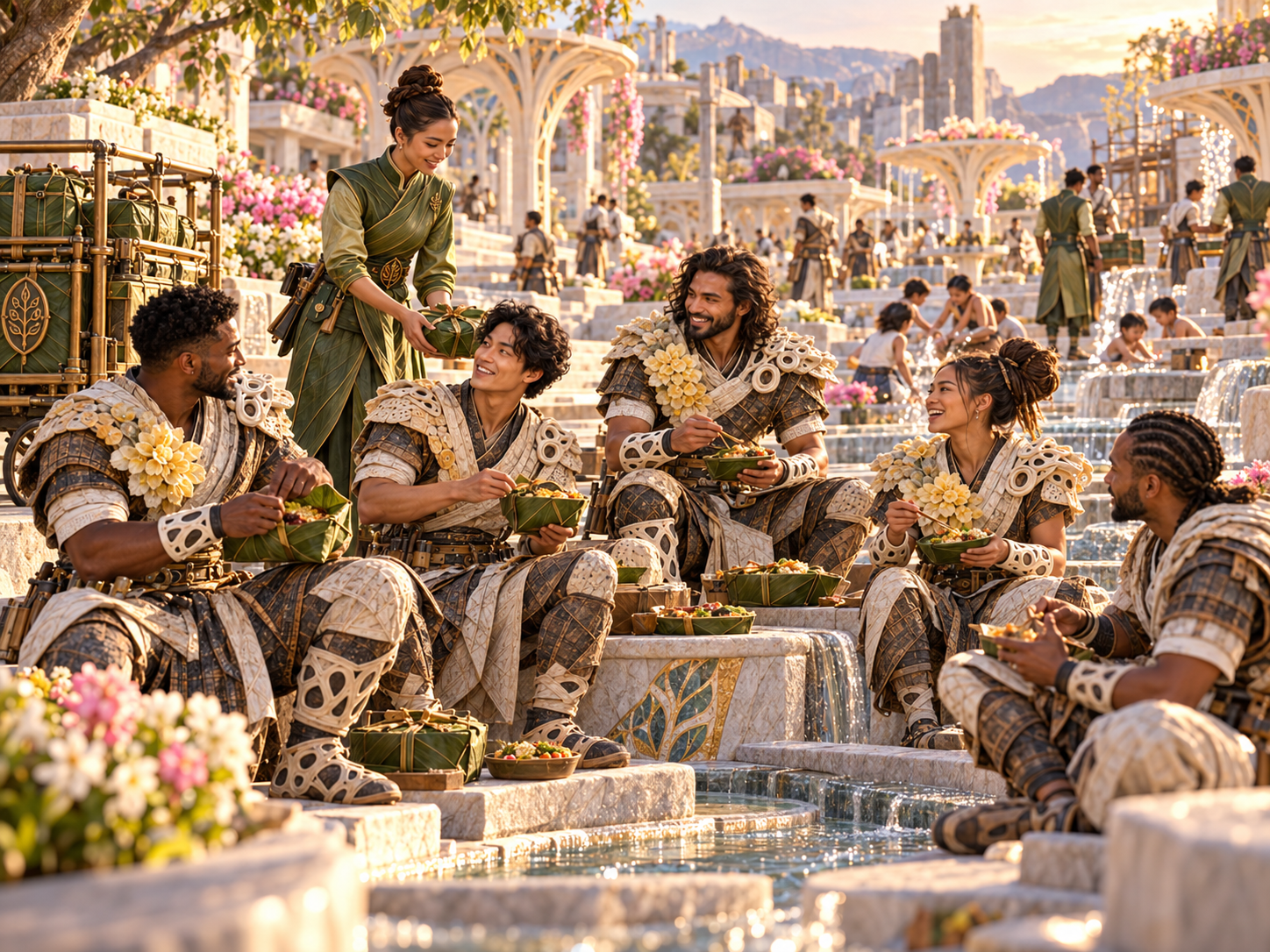
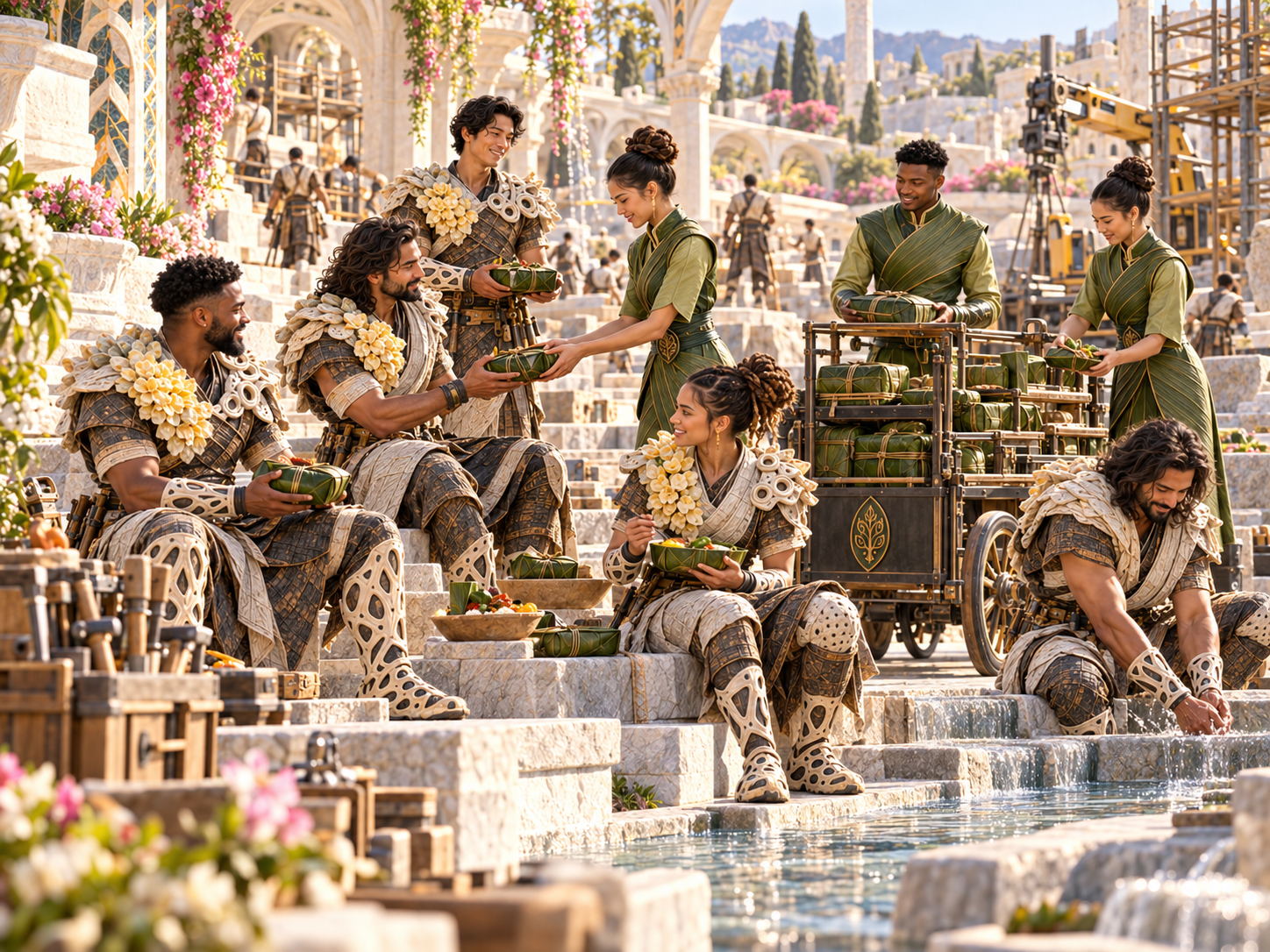
Krubaro must connect to Service Shadow support: protective gear, degearing rooms, body wash, gear cleaning, tool cleaning, rest, hydration, medical checks, transport, and safe return home.
No worker should carry dangerous work home on their body.
If a civilization depends on workers to keep it clean, then the civilization owes those workers a clean, safe, dignified system behind them.
Krubaro in Public Life
Public life creates heavy clean-return needs. Beaches, promenades, food courts, Sabenneries, Release Commons, festivals, Makji groves, bathrooms, rinse pavilions, fishing docks, child play areas, markets, and public eating routes all produce waste, water, textiles, packaging, scraps, and cleaning demands.
If these are not designed properly, public life quickly becomes dirty, chaotic, smelly, unsafe, and unfair to workers.
Krubaro public systems can include clean-return walls, food vendor return courts, public bathroom support routes, canal-edge repair streets, fishing dock rinse systems, grease handling, packaging return, water separation, Service Shadow access, and Pacorips-monitored collection.
Pacorips and Clean Return
Pacorips supports Krubaro by helping the kingdom notice what needs pickup, repair, cleaning, drying, inspection, replacement, routing, or specialist handling.
Pacorips can help schedule collection, identify overflow risk, alert Service Shadow teams, record repeated failures, track family-compound needs, support food safety, monitor dry-return use, and protect workers from being sent into unsafe conditions blindly.
Pacorips is not there to shame families or punish workers. It is there to help the civilization remember, route, verify, and respond.
Beauty Belongs in the Return Side Too
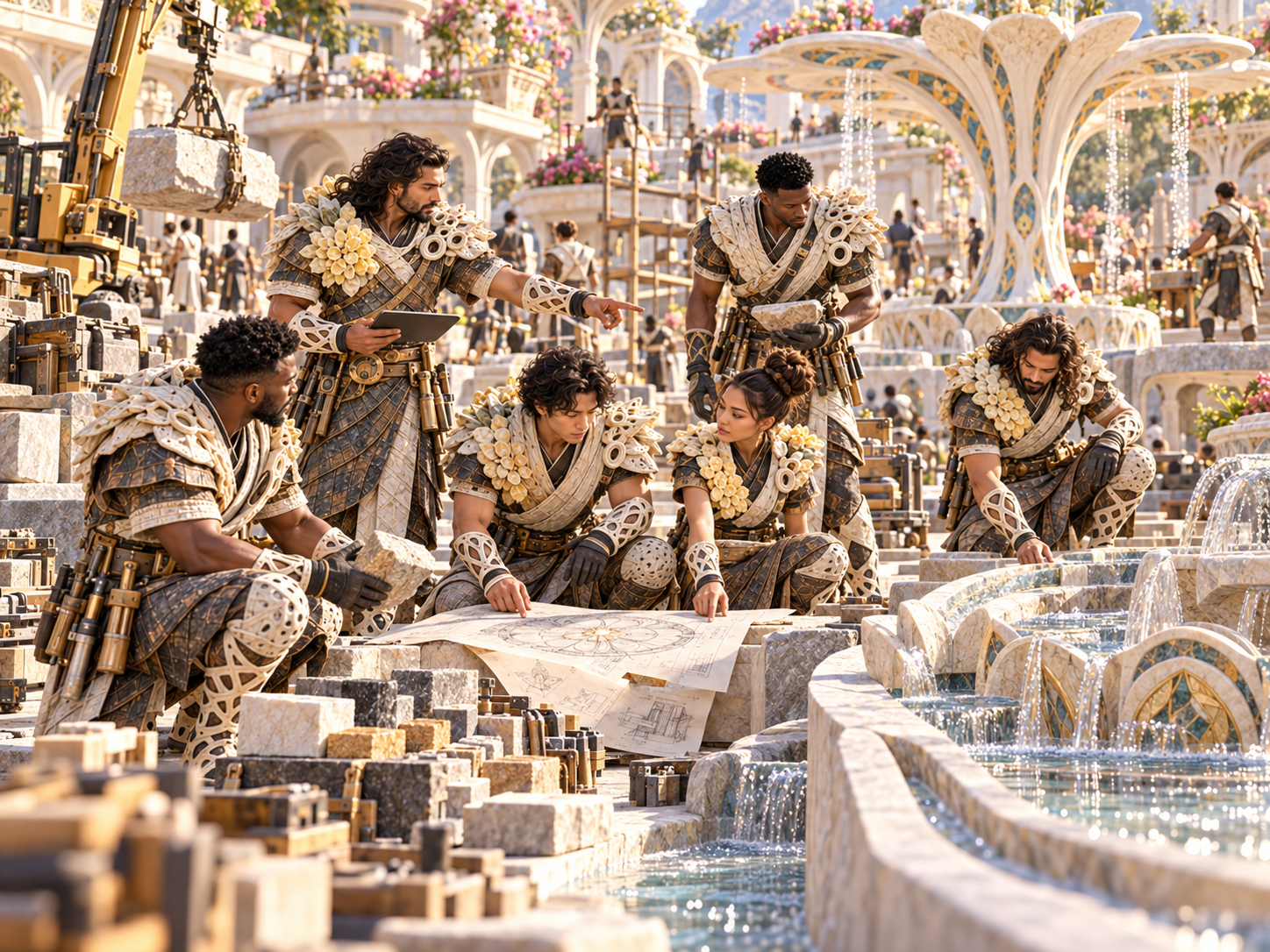
Trott Bailey Family Kingdom does not accept the idea that service spaces must be ugly. A clean-return wall, laundry reset room, FliB station, public rinse pavilion, drain-support node, or worker degearing room should still belong to the kingdom’s architectural language.
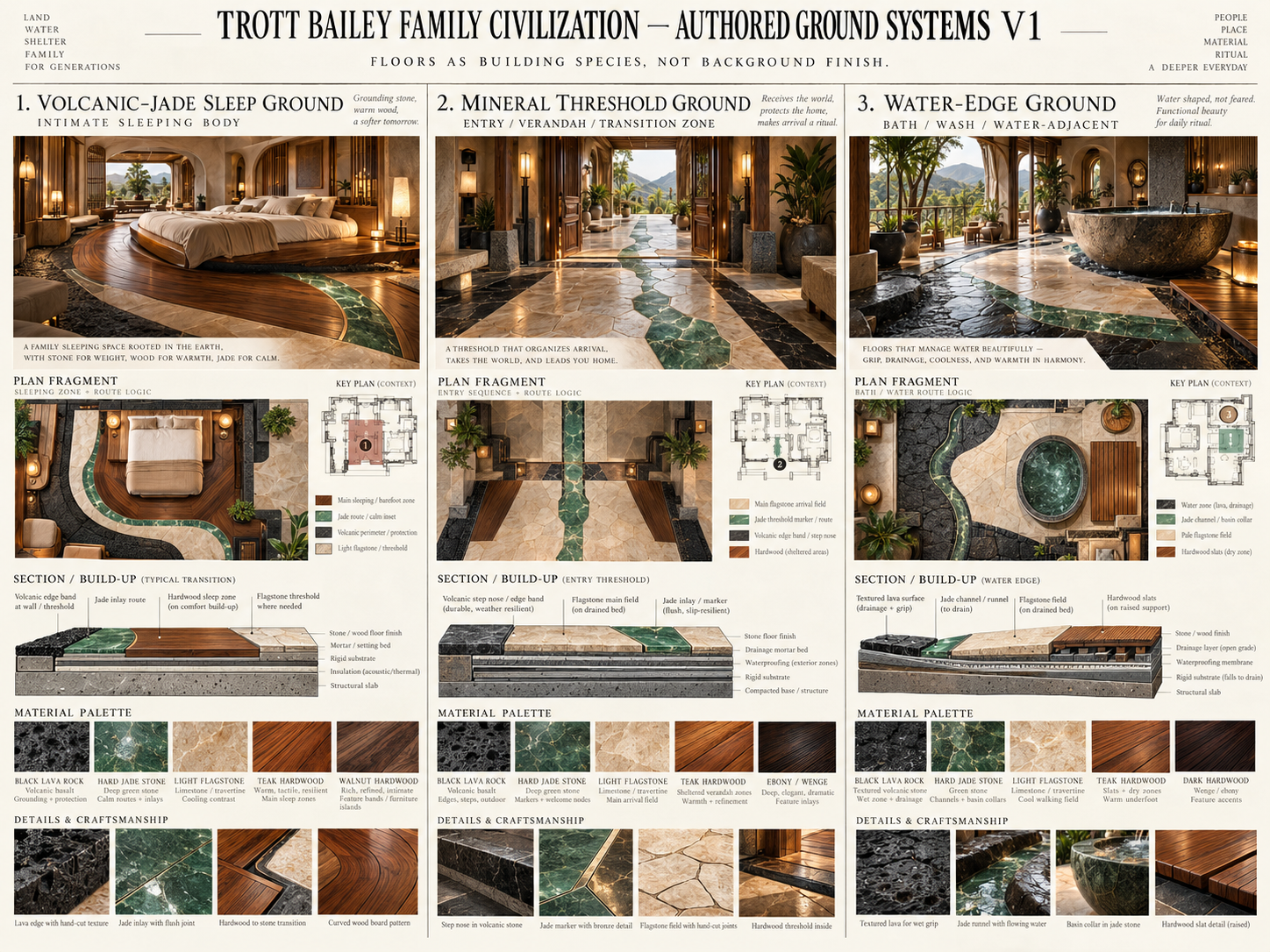
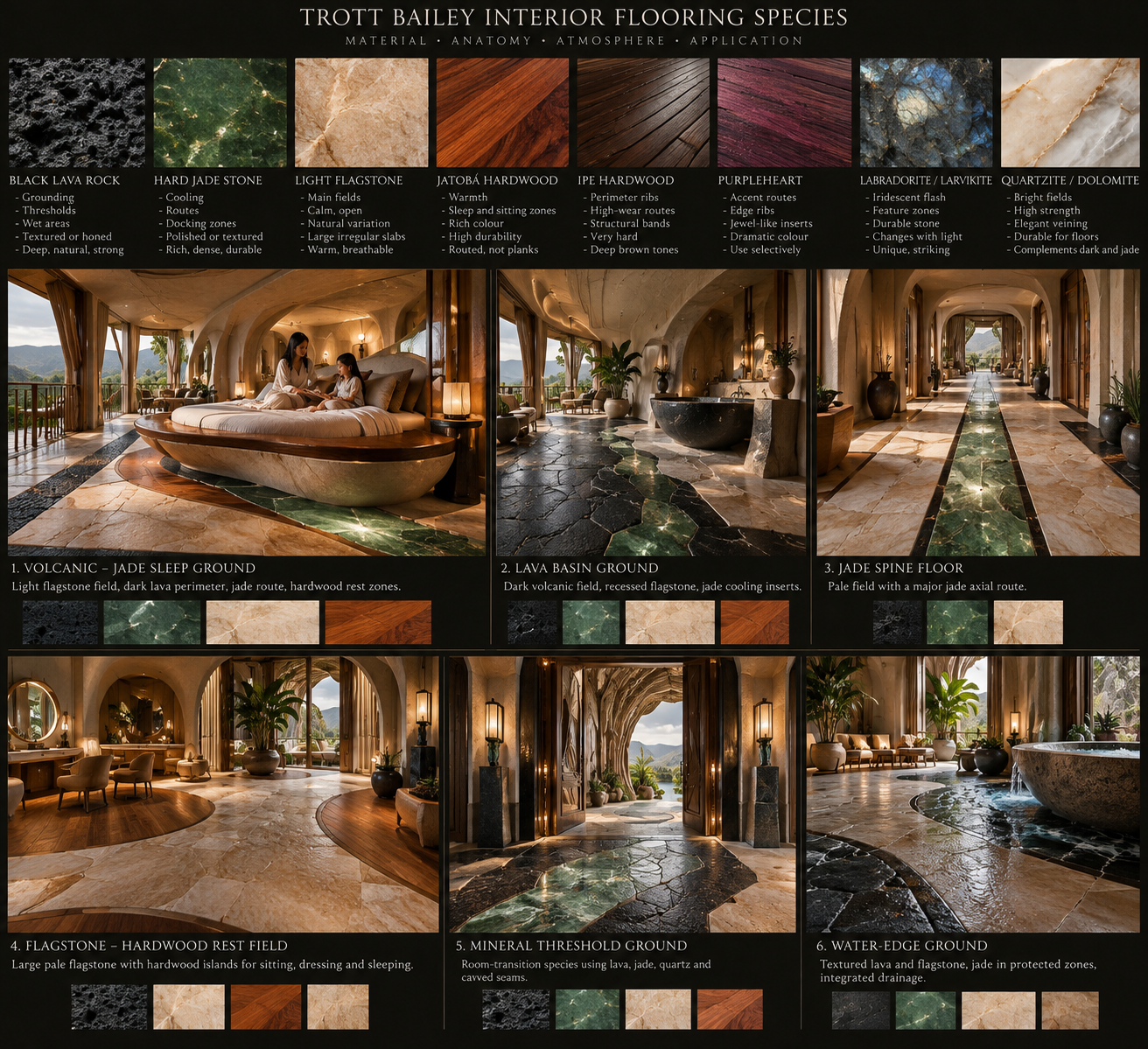
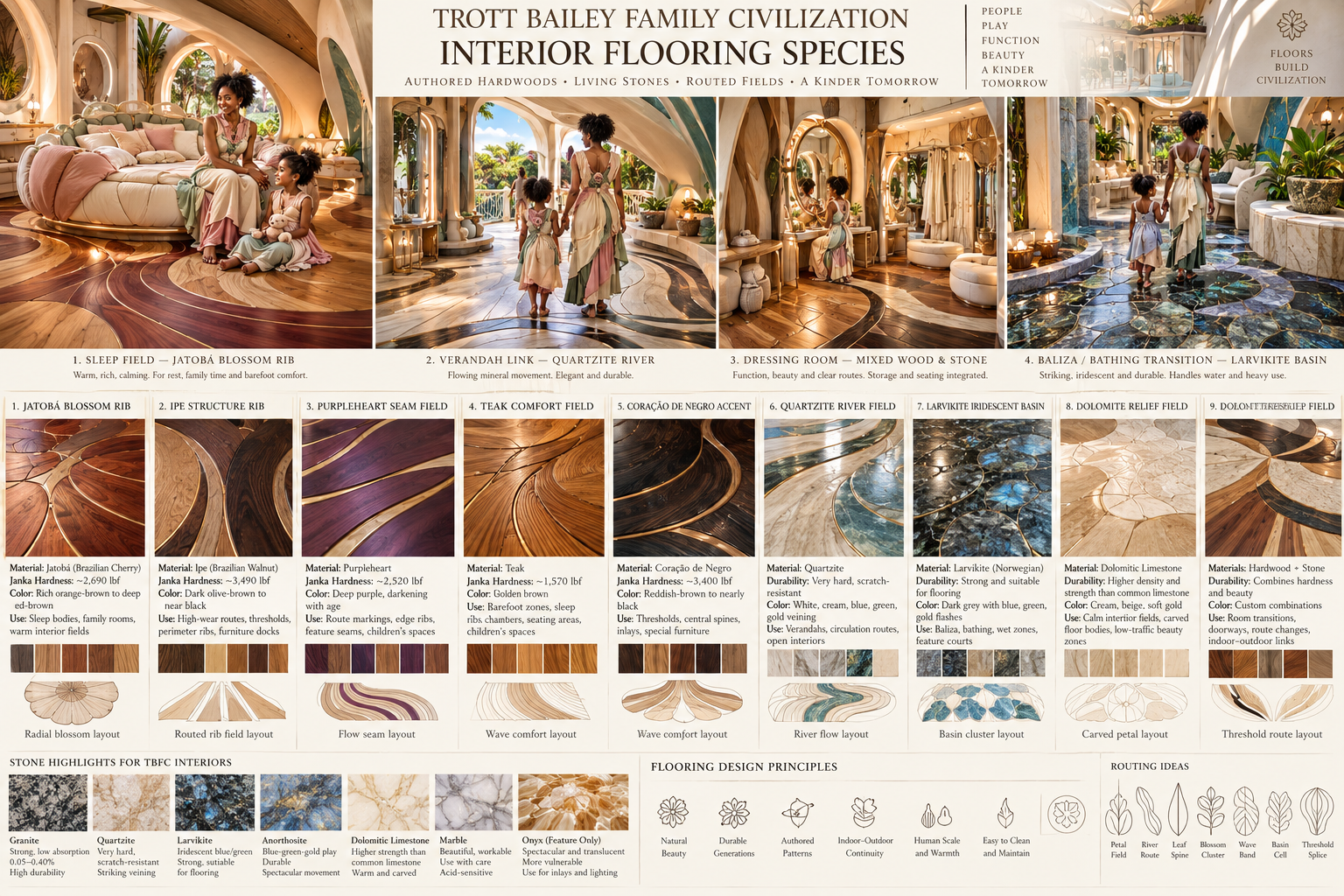
These spaces can use shell-ivory stone, carved drainage channels, bronze or soft-gold route seams, washable mineral floors, ashcoal grounding at high-use edges, warm lighting, strong thresholds, beautiful ventilation, clear signage, and dignified worker access.
Beauty here is not decoration. Beauty proves that the system is respected.
The return side of life should not look like civilization gave up.
What Krubaro Must Avoid
Krubaro must never drift into ordinary trash management with a prettier name. It must avoid ugly bin yards, hidden garbage alleys, careless drains, dangerous worker exposure, chaotic public bathroom edges, overfilled beach bins, laundry rooms that dump work back onto mothers, and infrastructure that only looks clean from the front.
It must also avoid pretending that every problem can be solved inside the home. Family compounds need district support. District systems need regional specialist handling. Public life needs worker dignity. Workers need recovery. Pacorips needs to help the system remember.
Krubaro is not a trash theme. It is a clean-return civilization layer.
The Promise of Krubaro
Krubaro promises that a civilization can stop treating mess, waste, laundry, wetness, worker cleanup, and material return as shameful afterthoughts.
It says that every used thing should have a path. Every wet thing should have a dry return. Every dirty thing should have a clean route. Every worker should have protection. Every family should have support. Every public place should be able to remain beautiful because its service systems are real.
A civilization is not clean because it hides dirt. A civilization is clean because it knows how to return life properly.
That is why Krubaro matters. It is not merely about waste. It is about dignity, order, family relief, worker protection, material intelligence, and the hidden side of beauty becoming visible enough to be respected.
Krubaro is the clean-return promise of the Trott Bailey Family Kingdom.