Trott Bailey Family Kingdom · Public Life World
Balushu: Public Life Without Chaos
Balushu is where the kingdom gathers without being crushed.
Public life is one of the hardest things for a civilization to design well. When many people gather, beauty can quickly become pressure. A festival can become crowd crush. A waterfront can become congestion. A public event can become noise, litter, traffic, heat, confusion, long bathroom lines, weak food support, and tired workers struggling behind the scenes.
In the old world, public gathering is often treated as an event problem. Put up a stage. Sell food. Control the crowd. Add security. Clean afterward. Hope the roads can handle it.
Trott Bailey Family Kingdom asks a deeper question: what if public life itself was designed as a beautiful, family-first civilization system?
That question becomes Balushu.
What Is Balushu?
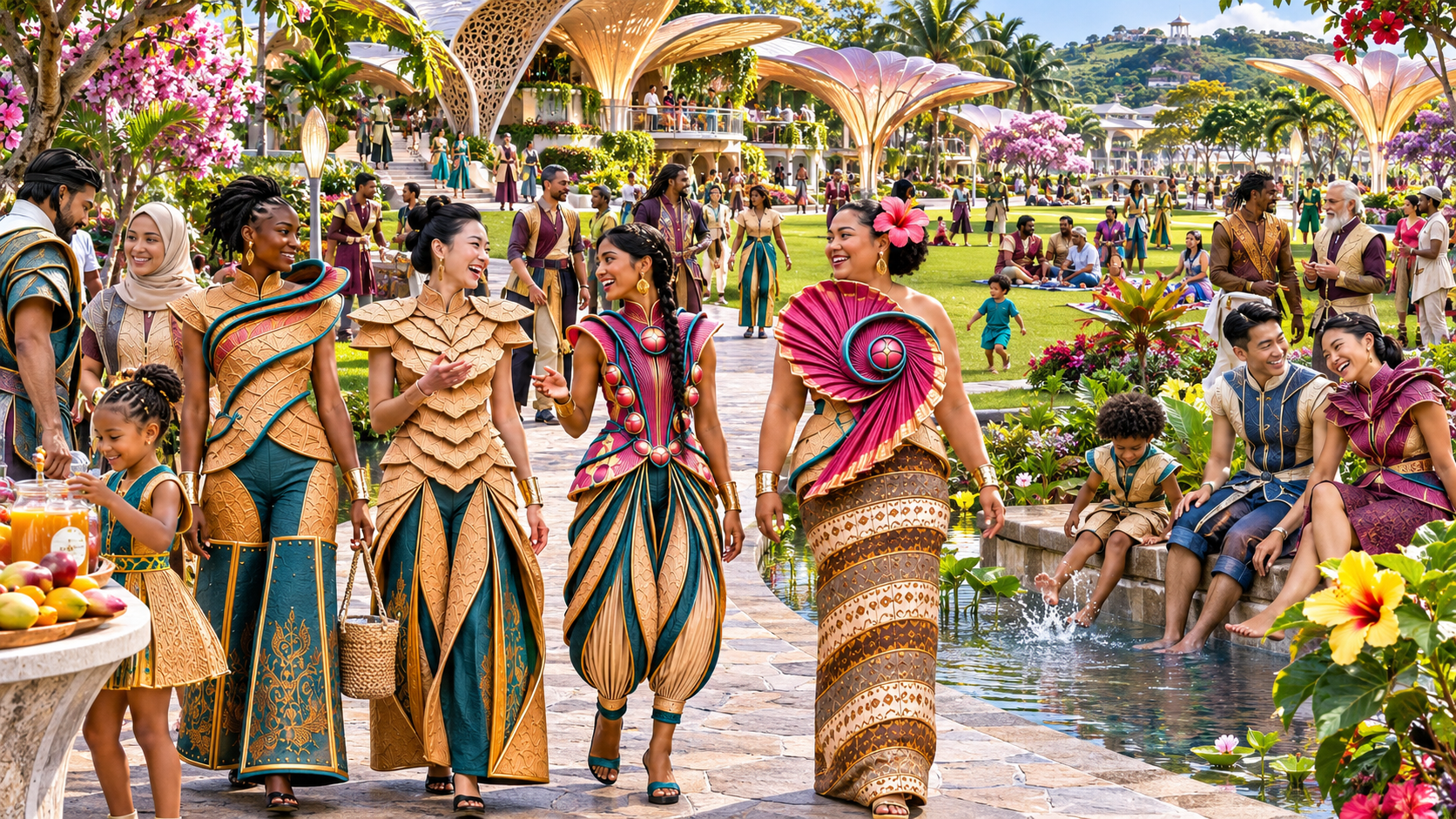
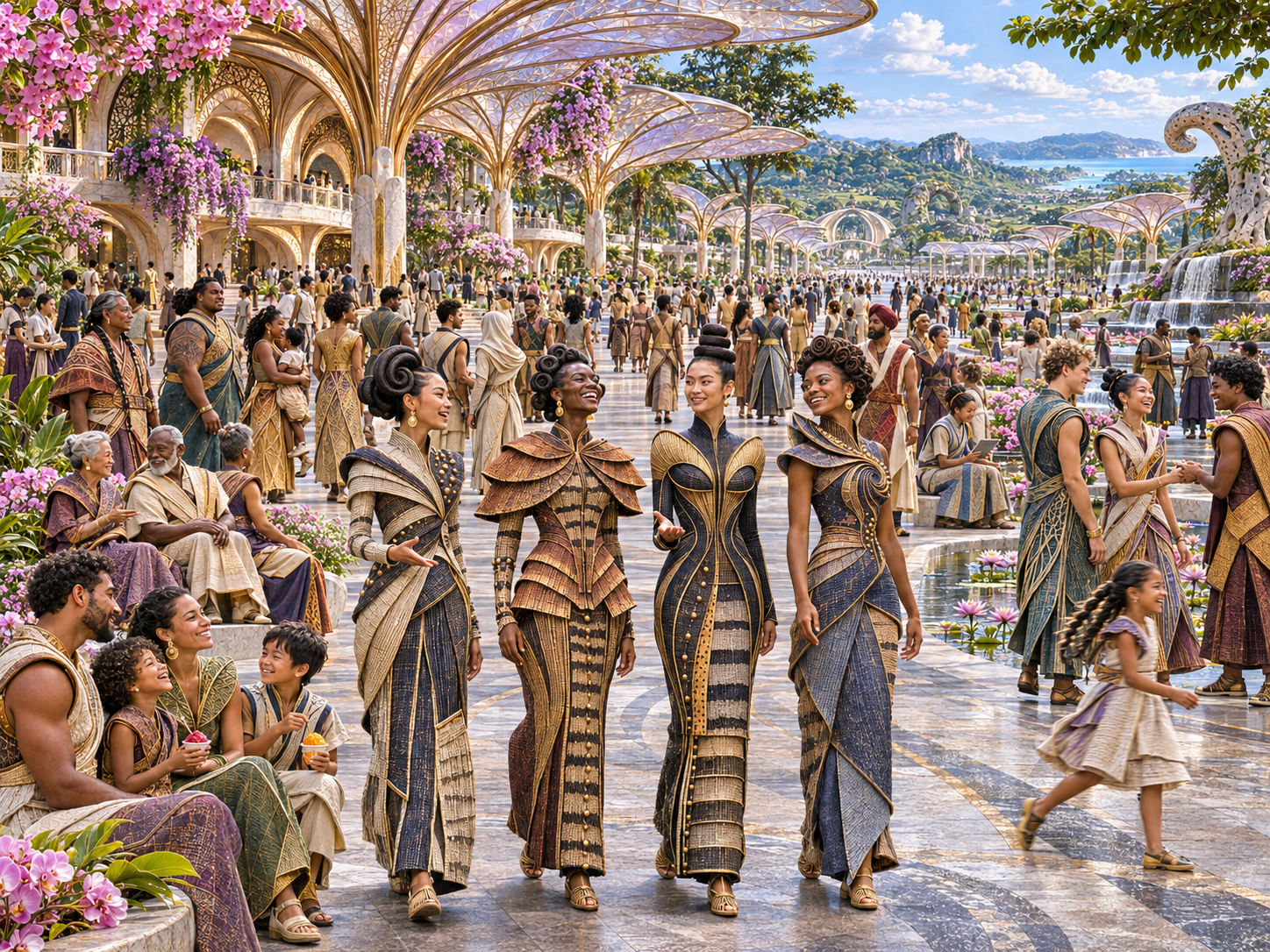
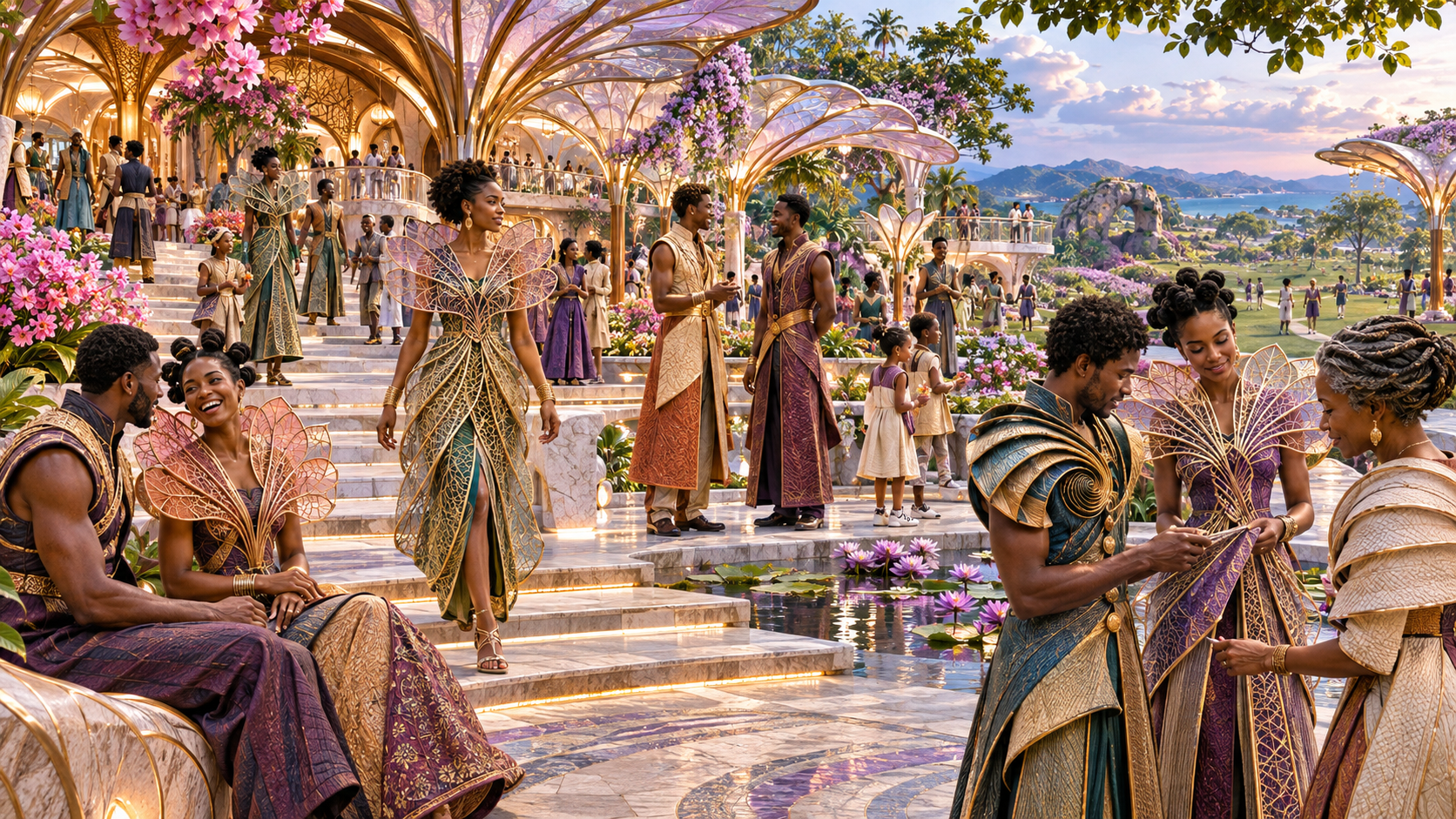
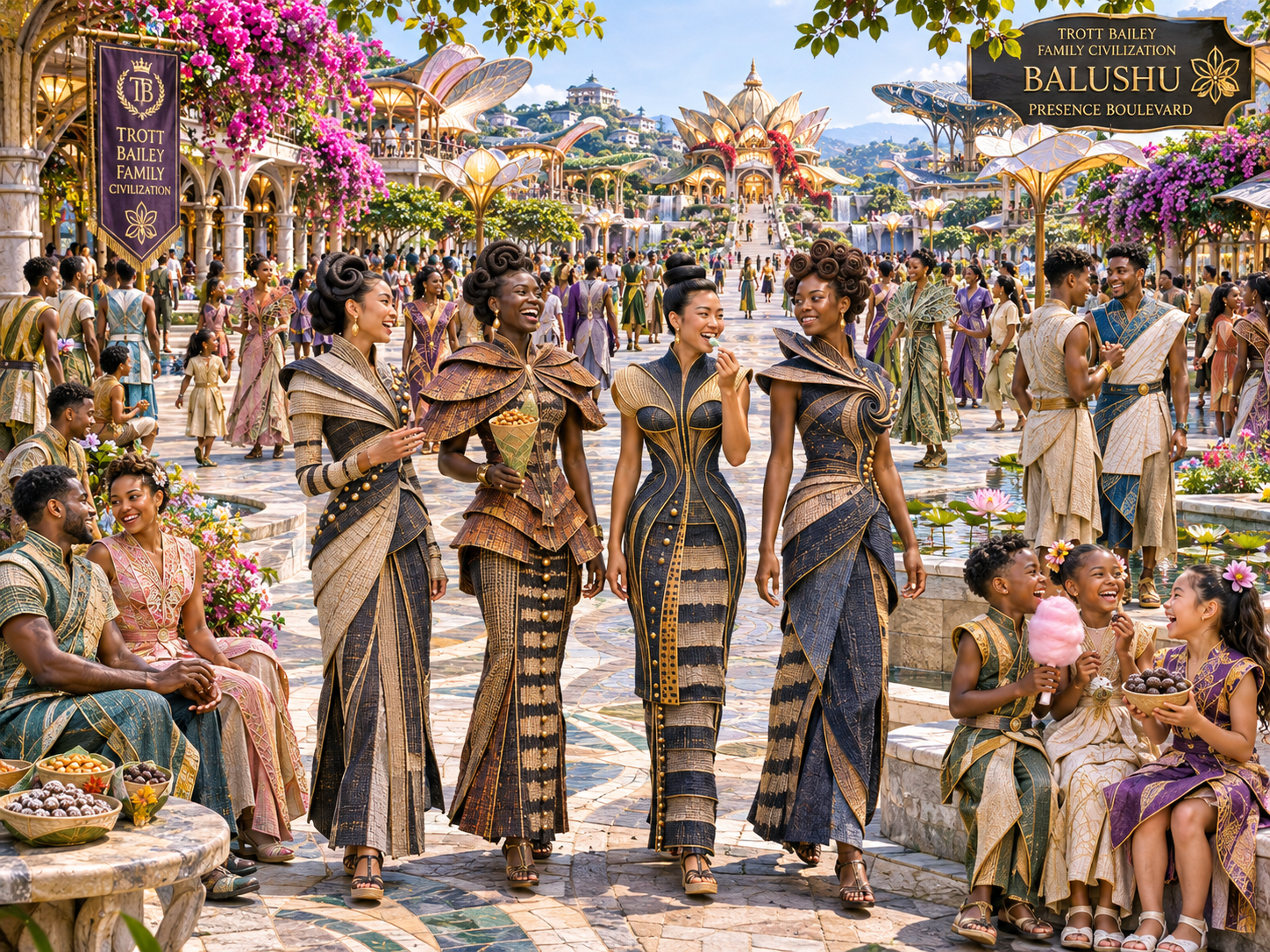
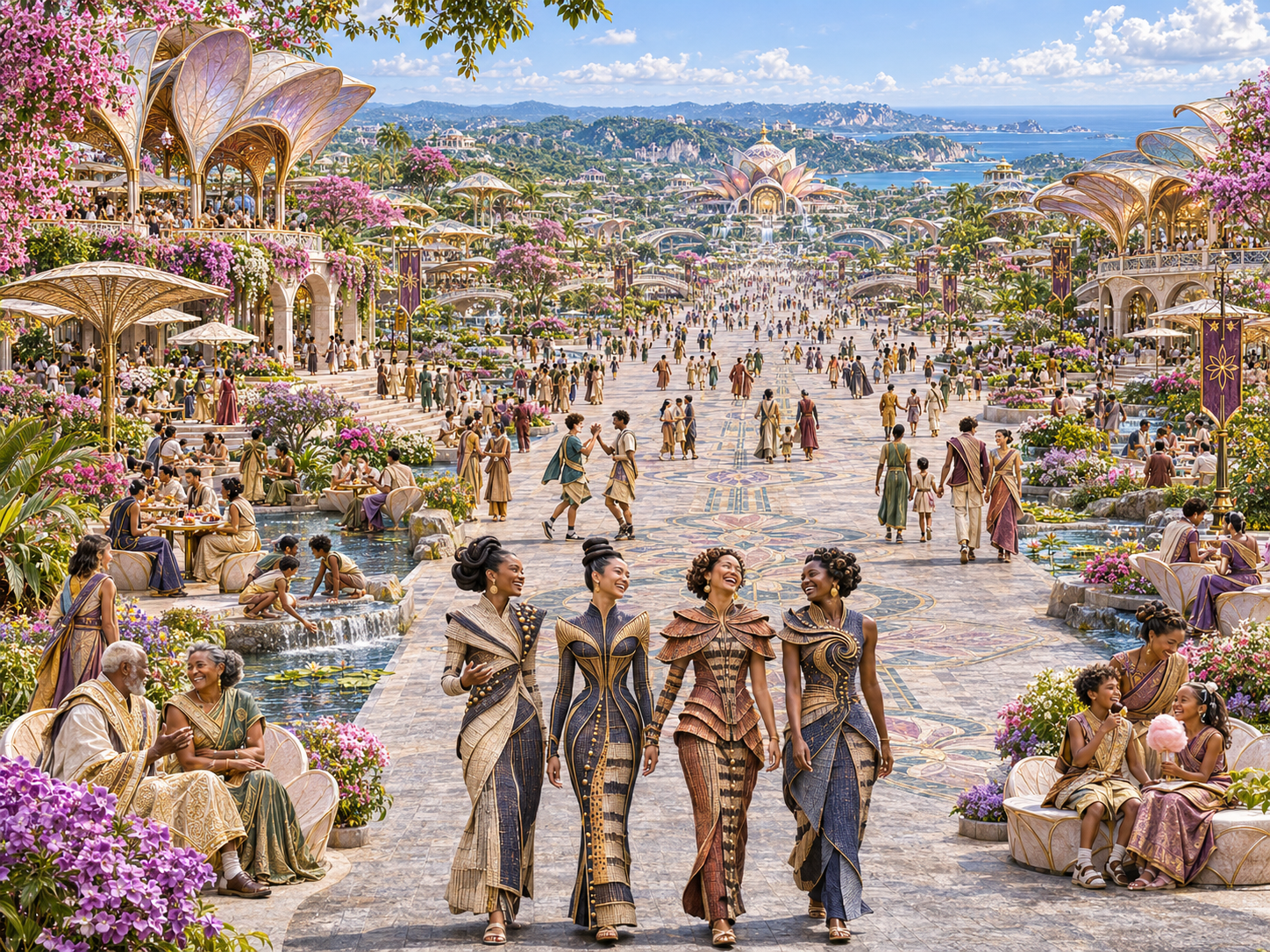
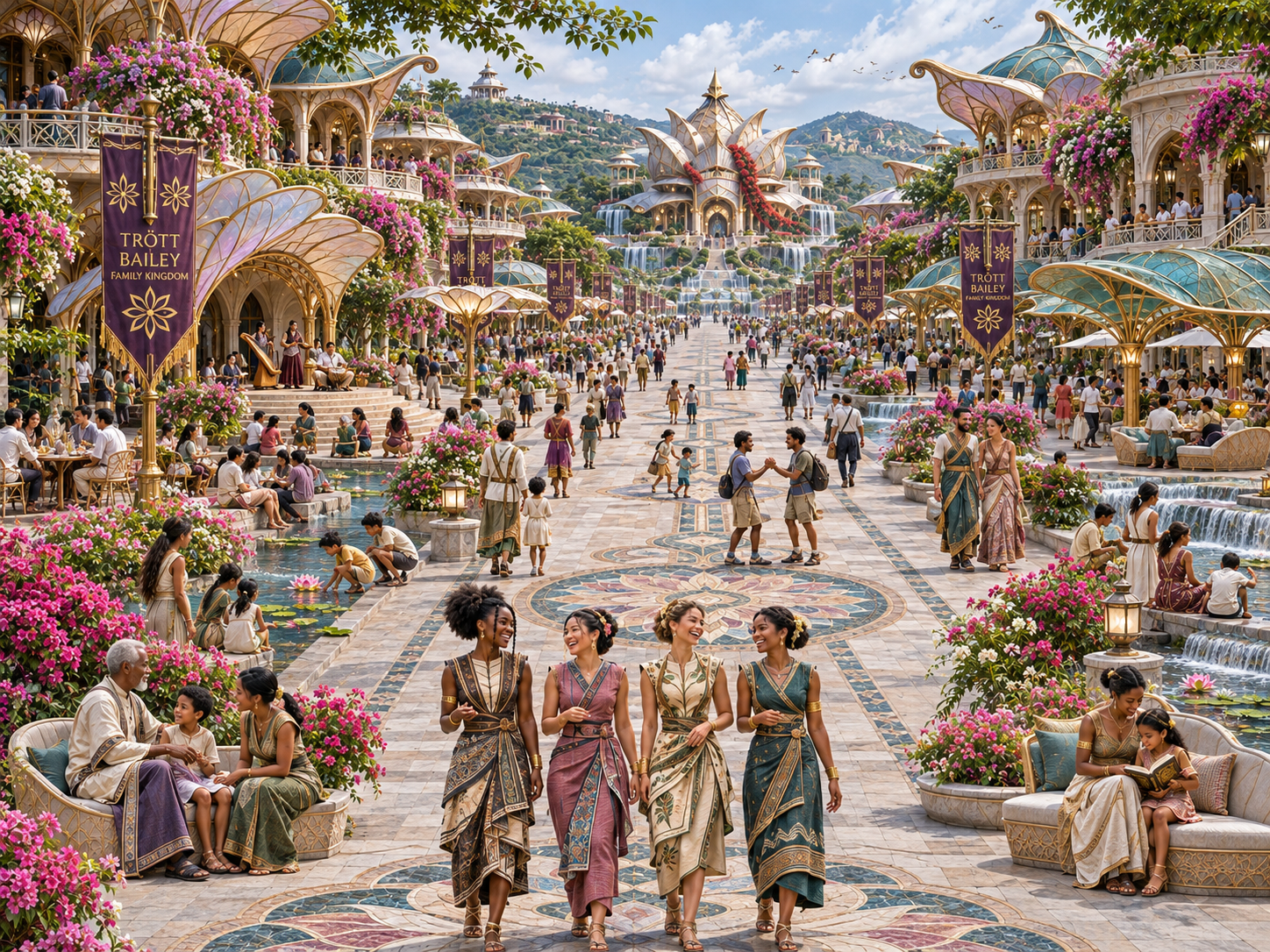
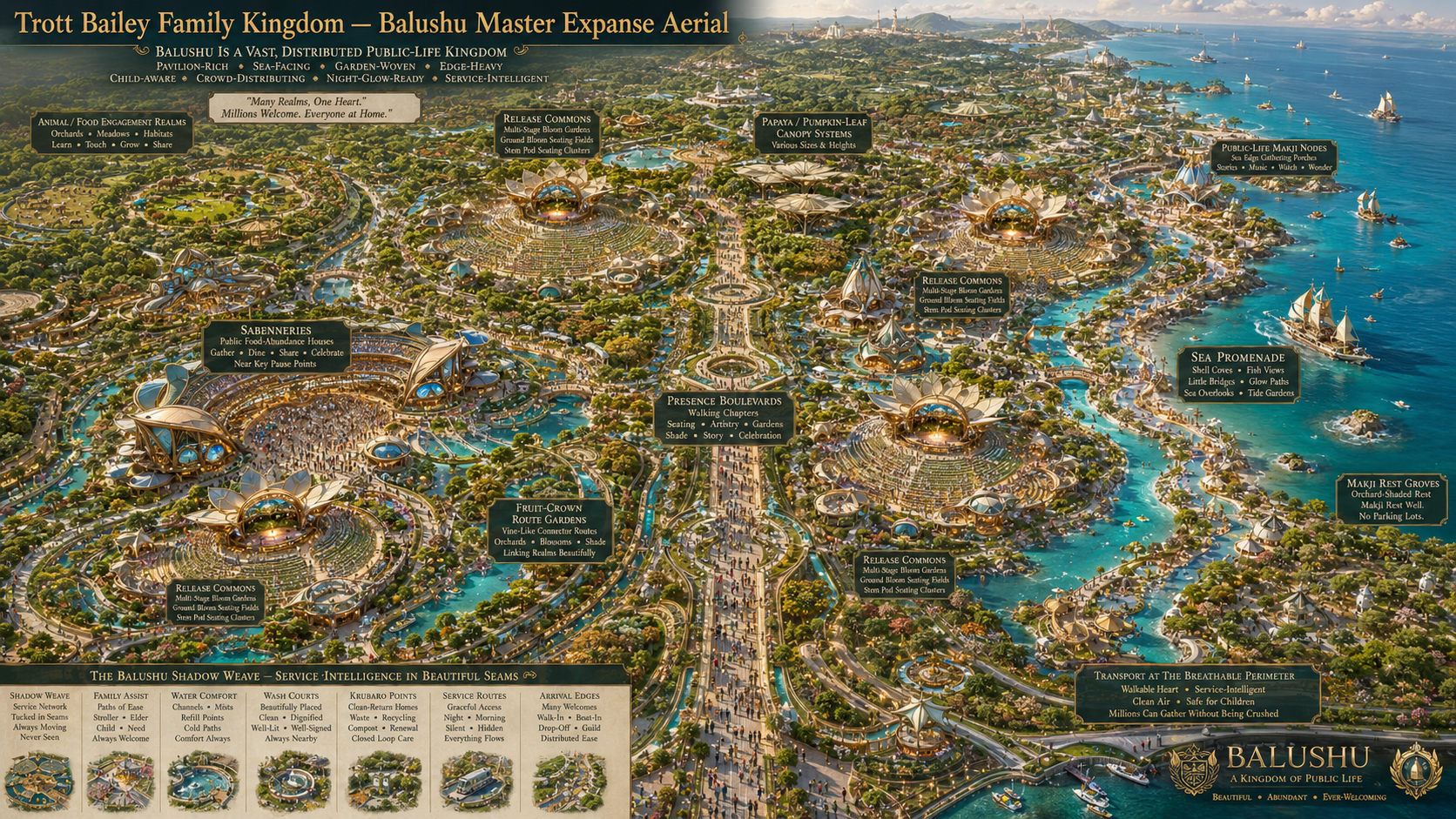
Balushu is the Trott Bailey Family Kingdom’s public-life world. It is pavilion-rich, sea-facing, garden-woven, edge-heavy, balcony-supported, child-aware, crowd-distributing, night-glowing, service-intelligent, family-first, and civilization-authored.
Balushu is not a city. It is not a resort. It is not a marina. It is not a stadium. It is not an airport terminal, shopping district, theme park, or entertainment strip.
Balushu is the place where the kingdom gathers, reveals, celebrates, watches, eats, rests, walks, arrives, and disperses without being crushed.
The Problem With Old-World Public Gathering
Many public places are built around pressure. A single main entrance. A single main stage. A few overcrowded bathrooms. A food area that becomes jammed. Parking lots that choke the arrival. Long lines that punish families with children. Workers hidden in ugly back corridors. Trash bins overflowing. People pushed toward one central spectacle until the place feels less like public life and more like survival.
That is not civilization. That is crowd management after design has already failed.
If a public place only works when the crowd is small, then the public-life system is weak.
Balushu begins from the opposite principle: the gathering must be distributed, supported, beautiful, visible, breathable, fed, cleaned, guided, and rested from the beginning.
Where the Kingdom Gathers Without Being Crushed
Balushu’s central law is simple: where the kingdom gathers without being crushed. This means public life must be designed around human comfort, family movement, visibility, rest, service access, food access, child safety, elder comfort, arrival dispersal, and graceful departure.
A crowd should not be forced into one narrow mouth. Families should not be trapped behind standing bodies. Children should not be lost inside adult-height chaos. Elders should not have to fight for rest. Service workers should not have to drag supplies through packed public paths.
In Balushu, public life is not allowed to become a crush disguised as celebration.
Release Commons: The Great Reveal System
One of Balushu’s strongest public-life systems is Release Commons. This is where the kingdom can reveal music, inventions, garments, performances, role honors, public announcements, child creations, family accomplishments, food discoveries, and cultural moments without forcing everyone into one dangerous viewing point.
Release Commons can use multiple stages, garden-water separation, balcony viewing, staggered reveal routes, rest pockets, food pavilions, child viewing zones, elder seating, service routes, and night-glow guidance.
A strong Release Commons is not simply “a big stage.” It is a public-life organism.
The reveal should be grand, but the people should not suffer to witness it.
Ten Stages, Many Views, One Comfortable Crowd
Balushu’s Release Commons V2 can hold a major public reveal through distributed capacity: ten stages, each supporting around five thousand people comfortably. Together, this can create a fifty-thousand-person public-life system without forcing the entire crowd into one packed center.
The power of this model is not only the number. The power is distribution. People can gather in multiple pockets, view from multiple angles, move between garden edges, pause at Sabenneries, rest under shade canopies, use bathrooms without walking across the whole site, and leave through different routes.
Capacity is not success unless people remain comfortable inside it.
Staggered Bloom Viewing
In Balushu, viewing should unfold like a garden rather than a crowd wall. Staggered Bloom Viewing creates layered viewing pods, balconies, terraces, garden steps, child-safe ledges, family pockets, elder seating, and soft standing zones that allow people to see without pressing into one another.
This matters because public visibility is often unfair. Tall adults block children. Families with strollers get trapped. Elders cannot stand long. Children need lower sightlines. Parents need nearby rest. Workers need passage.
Staggered Bloom Viewing makes public witnessing more humane.
Pumpkin Leaf Canopy Shade Fields
Public gathering cannot ignore heat. If thousands of people are expected to wait, eat, watch, move, celebrate, and care for children, shade must be treated as infrastructure.
Balushu can use Pumpkin Leaf Canopy shade fields: broad, organic, family-scale canopy systems that create shade, public identity, rest pockets, child-friendly gathering areas, and climate comfort.
Shade is not a decorative extra. Shade determines whether public life is bearable.
A public place that forgets shade has forgotten the body.
Makji Do Not Park; They Rest in Groves
Arrival is one of the most dangerous parts of public gathering. In old-world systems, public events are often surrounded by parking pressure, traffic jams, drop-off chaos, and exhausted families walking from distant lots.
Balushu avoids this by using distributed arrival logic. Makji do not simply park like dead vehicles. Makji rest in groves. Arrival is kept away from the most crowded heart. Edge holding landscapes, multiple arrival mouths, shaded waiting pockets, and Service Shadow access prevent the public center from choking.
This protects the gathering before people even reach the main public-life zones.
If arrival collapses, the event has already failed before the celebration begins.
Sabenneries in Balushu
Public life requires food, but food must not become a line of stress. Balushu uses Sabenneries as kingdom-controlled food abundance centers, not random vending or chaotic food stalls.
Balushu can include warm food Sabenneries, roasting Sabenneries, family buffet Sabenneries, husband-and-wife sit-down Sabenneries, light snack and dessert Sabenneries, new food tasting and voting Sabenneries, district identity Sabenneries, and Release/public-life Sabenneries.
Seasonal fruit must be present. Public food should feel abundant, organized, beautiful, and family-aware.
A hungry crowd becomes an unstable crowd. A fed crowd can stay human.
Children in Balushu
Balushu must always remember children. Children need sightlines, snack access, bathroom access, hand-wash points, safe edges, shaded waiting, discovery pockets, family rest areas, and public routes that do not treat them as small adults trapped below the crowd.
Child-aware design can include low viewing terraces, child-height wash stations, edible snack points, interactive food vending such as banana-tree-designed snack machines, safe rails, parent pause pockets, and clear route markers children can recognize.
Children should feel that public life welcomes them without making the whole public world childish.
Elders and Families Need Rest
Public life cannot be designed only for strong, young, standing bodies. Elders need seating, shade, stable walking routes, railings, quieter pockets, nearby bathrooms, clear signage, and dignity while participating.
Parents need places to pause with babies, feed children, change plans, rest with strollers, receive food, and step away from the densest crowd without leaving the event completely.
Balushu’s public comfort depends on rest pockets being placed throughout the system, not saved for the edges where only the lucky reach them.
Public life is stronger when weak moments are expected and supported.
Night Glow and Safe Departure
Public gathering does not end when the performance ends. Departure must be designed too. Night lighting, route glow, balcony edges, garden paths, Makji grove signals, Service Shadow movement, child-safe pathways, bathroom visibility, and food-return routes all matter after dark.
Balushu can use Curl-Tip Bioluminescent Porches, glowing pavilion edges, water-light routes, soft lantern nodes, and safe night garden paths so people can leave without confusion or fear.
A beautiful night public-life world is not only magical. It is safer.
Service Shadow Keeps Balushu Honest
A public-life world cannot stay clean, safe, and functional without Service Shadow. Balushu needs shift handoff pavilions, public bathroom reset teams, clean-return routes, worker rest pockets, food-service return, towel and Doon support where needed, waste routing, water handling, maintenance access, tool stations, and emergency support.
Service Shadow may be semi-visible in Balushu, but it must remain beautiful and dignified. The kingdom should never show ugly back-of-house logic: no trash alleys, no warehouse-door ugliness, no worker humiliation, no dirty chaos hidden behind pretty fronts.
Balushu’s beauty is only honest if its support systems are real.
Pacorips and Crowd Intelligence
Pacorips can help Balushu stay responsive without becoming controlling or cold. It can support crowd distribution, bathroom reset alerts, Sabennerie supply flow, Makji grove availability, child route safety, elder rest pressure, Service Shadow team routing, night departure timing, and public-comfort feedback.
Pacorips should help the kingdom notice stress before it becomes danger. If one viewing zone is too dense, people can be gently routed elsewhere. If a Sabennerie is overloaded, nearby food support can respond. If a bathroom cluster needs reset, Service Shadow can be alerted early.
Public intelligence should serve comfort, safety, and dignity — not turn celebration into control.
What Balushu Must Avoid
Balushu must never drift into old-world leisure types with Trott Bailey labels attached. It is not a resort, theme park, stadium, mall, airport concourse, marina, nightclub strip, festival field, convention center, or tourist boardwalk.
It must avoid single-entry crowd pressure, cheap event staging, generic food stalls, hidden service ugliness, unsafe crowd crush, parking-lot arrival logic, decoration without crowd intelligence, and public spaces that photograph well but exhaust families in real use.
Balushu is not entertainment pasted onto land. Balushu is public life designed as civilization.
The Promise of Balushu
Balushu promises that public life can be grand without becoming crushing, beautiful without becoming fake, crowded without becoming chaotic, festive without becoming unsafe, and supported without hiding the workers who make it possible.
It says that a kingdom should know how to gather. It should know how to feed a crowd, shade a crowd, guide a crowd, rest a crowd, clean after a crowd, protect children inside a crowd, honor elders inside a crowd, and let families leave peacefully when the moment is over.
Balushu is the kingdom proving that public joy does not have to become public pressure.
That is why Balushu matters. It is where architecture, landscape, movement, food, night glow, Service Shadow, Pacorips, Makji, and family comfort come together so the people can gather and still breathe.
Balushu is public life without chaos.