Trott Bailey Family Kingdom · Sherika District + Pacorips
Sherika Receives, Pacorips Remembers
Family registration is not a cold office function. In the Trott Bailey Family Kingdom, belonging begins in Sherika.
Every civilization has to decide how people are received.
Some systems receive families through forms, counters, waiting lines, identity checks, hard chairs, confusing offices, and the feeling that a person is being processed.
Trott Bailey Family Kingdom cannot begin that way.
If the kingdom is family-first, then the first encounter with kingdom memory must feel like welcome, not bureaucracy. A family should not feel like a file. A child should not feel like a number. A tired parent should not feel like they are entering a test.
Sherika receives the family. Pacorips remembers how to support them.
Why Sherika Holds Family Registration
Family Registration + Belonging Memory belongs physically in Sherika District because Sherika is the kingdom’s arrival, welcome, belonging, emotional orientation, and family-receiving heart.
Pacorips is the digital memory and routing intelligence, but Sherika gives that memory its proper human body. Without Sherika, registration could drift into a cold system. With Sherika, registration becomes receiving.
This means the first family Pacorips experience is not a machine asking for data. It is a civic care environment asking: who are you, what do you need, how can the kingdom support your family, and where should you be guided next?
Pacorips remembers. Sherika makes the remembering feel human.
What Is the Sherika Pacorips Receiving Core?
The Sherika Pacorips Receiving Core is the physical civic place where families are welcomed into the kingdom, oriented, refreshed, listened to, registered, and routed into support.
It is not a government office. It is not a tech lobby. It is not an immigration hall. It is not a hospital intake desk. It is not a bank-like service counter.
It is a beautiful receiving architecture where family memory begins with dignity.
The family enters through beauty, not bureaucracy.
The Family Journey Through the Receiving Core
A family should not be rushed through a cold process. Their journey through the Sherika Pacorips Receiving Core should feel calm, clear, and emotionally intelligent.
They may arrive through an Arrival Garden, pause under a shaded receiving pavilion, sit in a Family Receiving Nest, receive water, fruit, tea, or small nourishment from the Quiet Abundance Refreshment Wall, and then move gently toward a Route Bloom Intake Vessel or family consultation space.
Children should be able to wait without boredom. Parents should be able to breathe. Elders should be seated with dignity. Helpers should be visible without making the room feel policed.
The receiving journey should tell the family: rest, refresh, be seen, belong.
What Pacorips Begins to Remember
In Sherika, Pacorips begins the family’s living memory.
This may include the family’s members, children’s ages, household rhythm, support needs, story, skills, early youth interests, role pathways, Makji eligibility timeline, Baby World needs, food support, service needs, district routing, and future return visits.
This is not memory for control. It is memory for care.
A family should not have to explain the same need repeatedly to different systems. A child’s repeated gift should not disappear because no one remembered. A household’s rhythm should not be ignored when support is being routed.
Pacorips remembers so the family does not have to fight to be understood again and again.
Family Story Intake
A family is not only a list of names.
Families have histories, fears, hopes, children, rhythms, gifts, needs, burdens, memories, and dreams. The Sherika Pacorips Receiving Core should include private Family Story Rooms where a family can be listened to without being exposed publicly.
This is where the kingdom begins to understand the family as a living household. What support do they need? What kind of home rhythm do they carry? Are there babies, elders, youth, or special needs? What are the children showing interest in? What skills do the adults bring? What kind of transition support would help?
Before Pacorips routes the family, Sherika listens to the family.
Household Rhythm Intake
One of the strongest reasons Sherika matters is that family support must be based on real household life, not generic assumptions.
A household with a newborn needs different support from a family with active youth. A family with elders needs different routing from a young couple starting out. A family entering Makji readiness may need different guidance from a family beginning district training.
Household Rhythm Intake helps Pacorips understand daily life: meal needs, movement needs, rest needs, child-care patterns, laundry and Doon support, Baby World access, Sabennerie use, role training, and future pathways.
Support becomes stronger when the kingdom understands the rhythm of the home.
The Route Bloom Intake Vessel
The Route Bloom Intake Vessel is not an ordinary desk.
It should be a Trott Bailey-native receiving object: beautiful, curved, route-authored, easy to approach, child-readable, family-friendly, and integrated into the room’s architecture.
This is where a family’s next routes may begin. A family may be guided toward housing support, Baby World, Keslev food support, role placement, Youth Path, Makji readiness, Family Challenge, Service Shadow support, or district orientation.
The object itself should tell the truth: this is not a counter where people are processed. This is a vessel where the family’s path opens.
The intake point should feel like a route beginning, not a barrier.
Quiet Abundance Refreshment Wall
A family arriving into the kingdom may be thirsty, tired, nervous, hungry, or overstimulated. The receiving place should not ignore the body.
The Quiet Abundance Refreshment Wall is a slim, beautiful care wall with water, tea, fruit, nourishment, child-height access, hidden storage, Pearl Node status lights, and soft care logic. It should not look like a coffee station, appliance wall, vending cabinet, or hotel refreshment bar.
Its purpose is simple: before the kingdom asks a family to speak, it lets the family breathe.
Welcome should include nourishment.
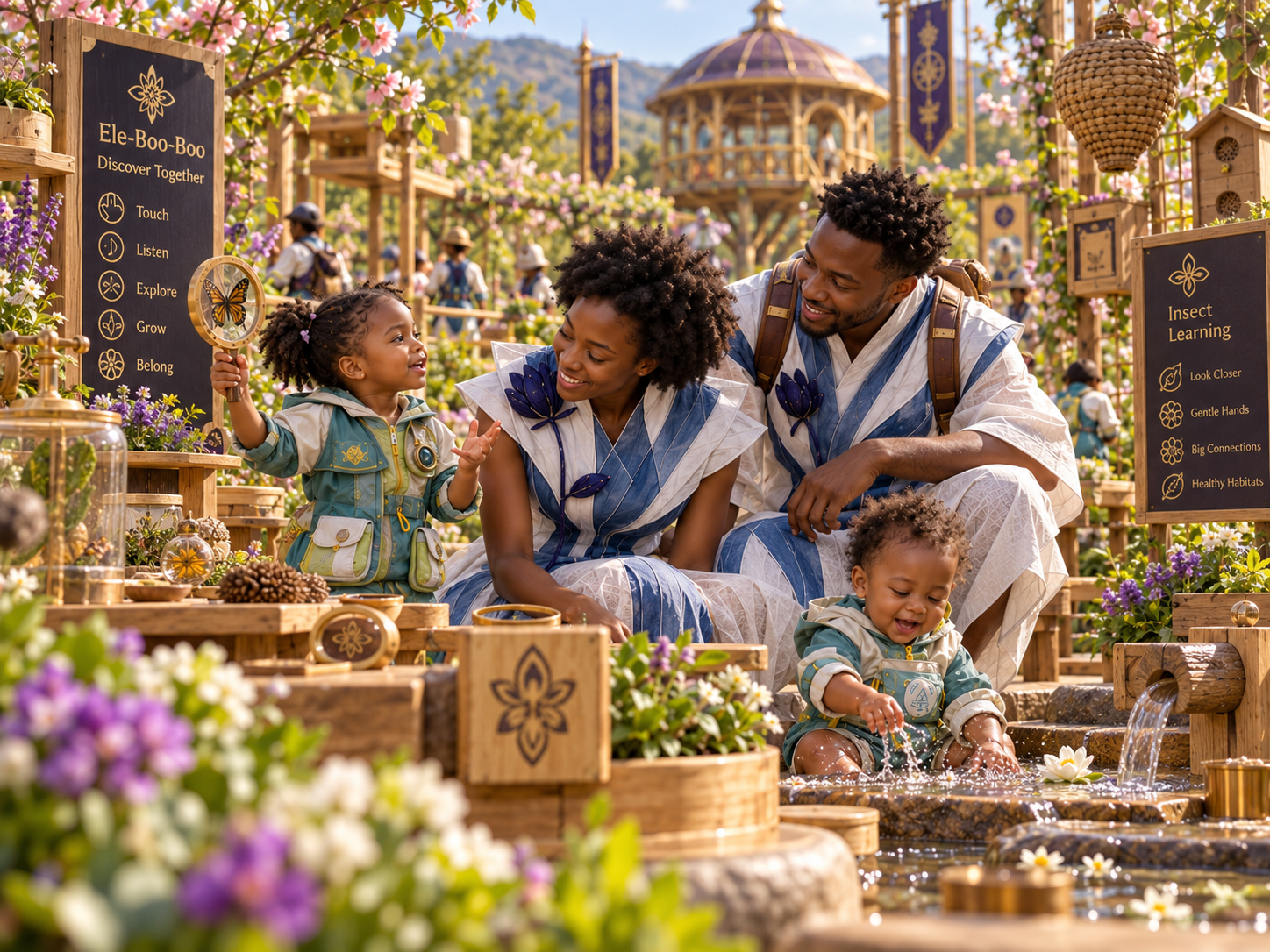
Child-Friendly Waiting Garden
A family receiving space should not punish children for being children.
The Sherika Pacorips Receiving Core should include child-friendly waiting gardens, soft seating, low discovery surfaces, calm play objects, story nooks, safe visibility, and gentle helper presence.
This does not mean turning the receiving core into a loud playground. It means children are included with dignity. They can wait, look, touch, sit, draw, or explore gently without disturbing the receiving process or being treated as a problem.
If the kingdom receives the family, it must also receive the children.
District Routing Without Confusion
After a family is received, Pacorips helps route them into the right parts of the kingdom.
This may include Kezidek for baby and young-family support, Keslev for food support and learning, Kultan for water and Makji movement, Balushu for public-life access, Krubaro for clean-return systems, Youth Path for gifts and training, Service Shadow support when needed, or district-specific role pathways.
The routing should be clear and calm. The family should not leave overwhelmed with too many instructions. They should leave with a simple next path and a sense that the kingdom knows how to guide them.
Pacorips turns a confusing kingdom into a guided path.
Return Visits
Family receiving is not finished in one day.
Families change. Babies grow. Youth gifts appear. Parents need different support. Elders may need new care. A household may become ready for Makji, Family Challenge, role training, district movement, or new forms of service.
The Sherika Pacorips Receiving Core should include a Return Visit Desk where families can update their story, review support, ask questions, and be routed again without starting from zero.
Belonging is not a one-time registration. Belonging is remembered over time.
Why the Architecture Must Be Beautiful
The design of the Sherika Pacorips Receiving Core matters because architecture tells families what the system believes about them.
If the building feels cold, the family will feel processed. If the seating is hard, the family will feel hurried. If the screens are confusing, the family will feel judged. If the space is too formal, children will feel unwelcome. If the room is generic, the family will not feel the kingdom’s authorship.
The receiving core should use Trott Bailey architecture-first room language: shell-ivory carved stone, Caneline route seams, warm wood ribs, pearl and mineral inlays, soft water, child-friendly waiting gardens, family nests, elegant intake vessels, botanical lighting, and readable route walls.
A beautiful receiving space tells the family: you are not a burden here.
What This System Must Avoid
- Government-office feeling
- Cold registration counters
- Hospital intake energy
- Immigration processing mood
- Corporate service lobby design
- Confusing screen walls
- Families standing in long lines
- Children treated as disruptions
- Private family needs exposed publicly
- Pacorips feeling like surveillance
The receiving system must never make belonging feel like permission reluctantly granted.
The Promise of Sherika Pacorips
Sherika Pacorips promises that families will not enter the kingdom as strangers in a system.
They will be received. They will be listened to. Their story will begin in memory. Their children will be seen. Their needs will be routed. Their household rhythm will matter. Their return visits will not begin from nothing.
Pacorips gives the kingdom memory, but Sherika gives that memory warmth.
The kingdom does not simply register the family. The kingdom receives the family into belonging.
That is why Family Registration + Belonging Memory belongs in Sherika District.
Sherika receives. Pacorips remembers. The family belongs.