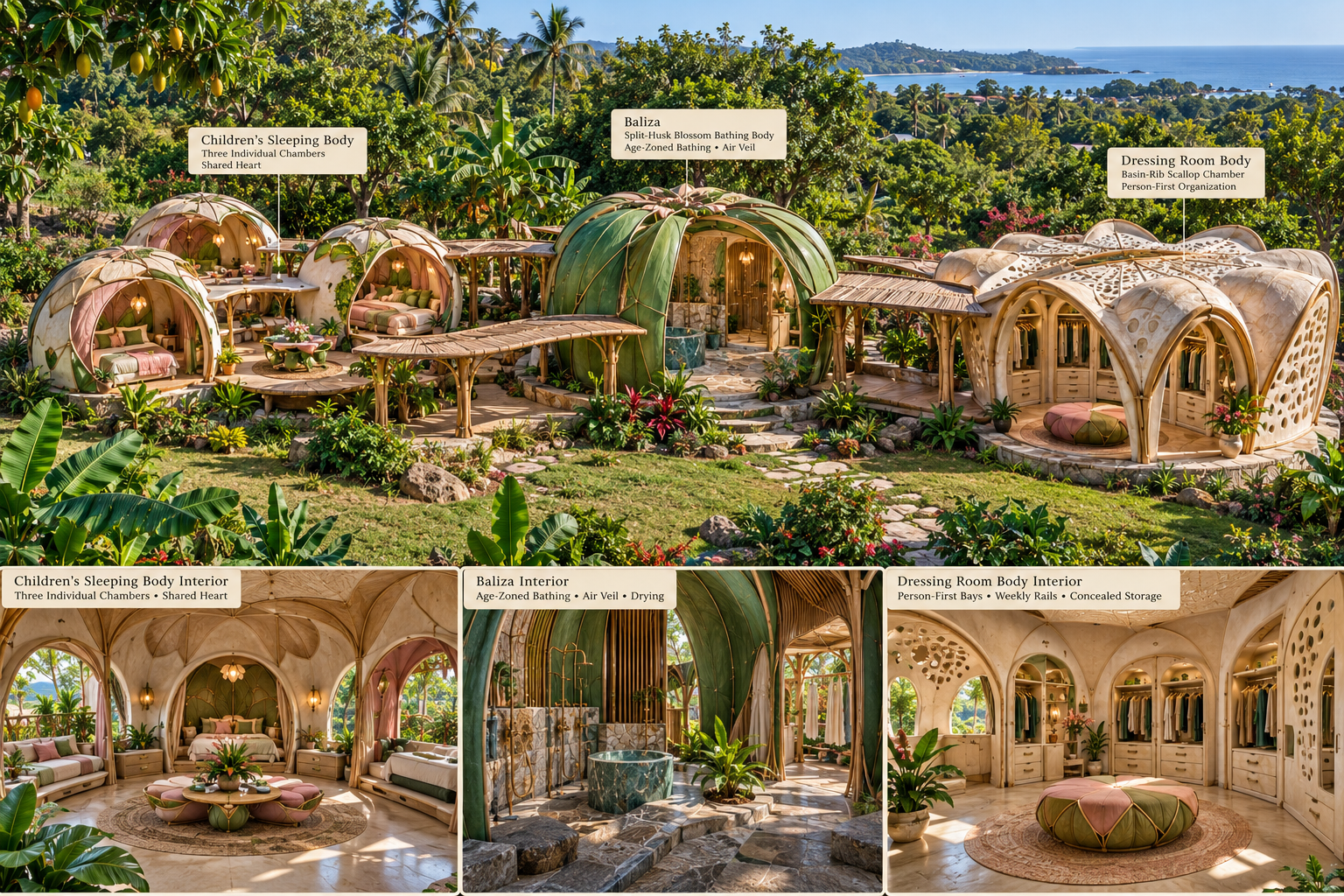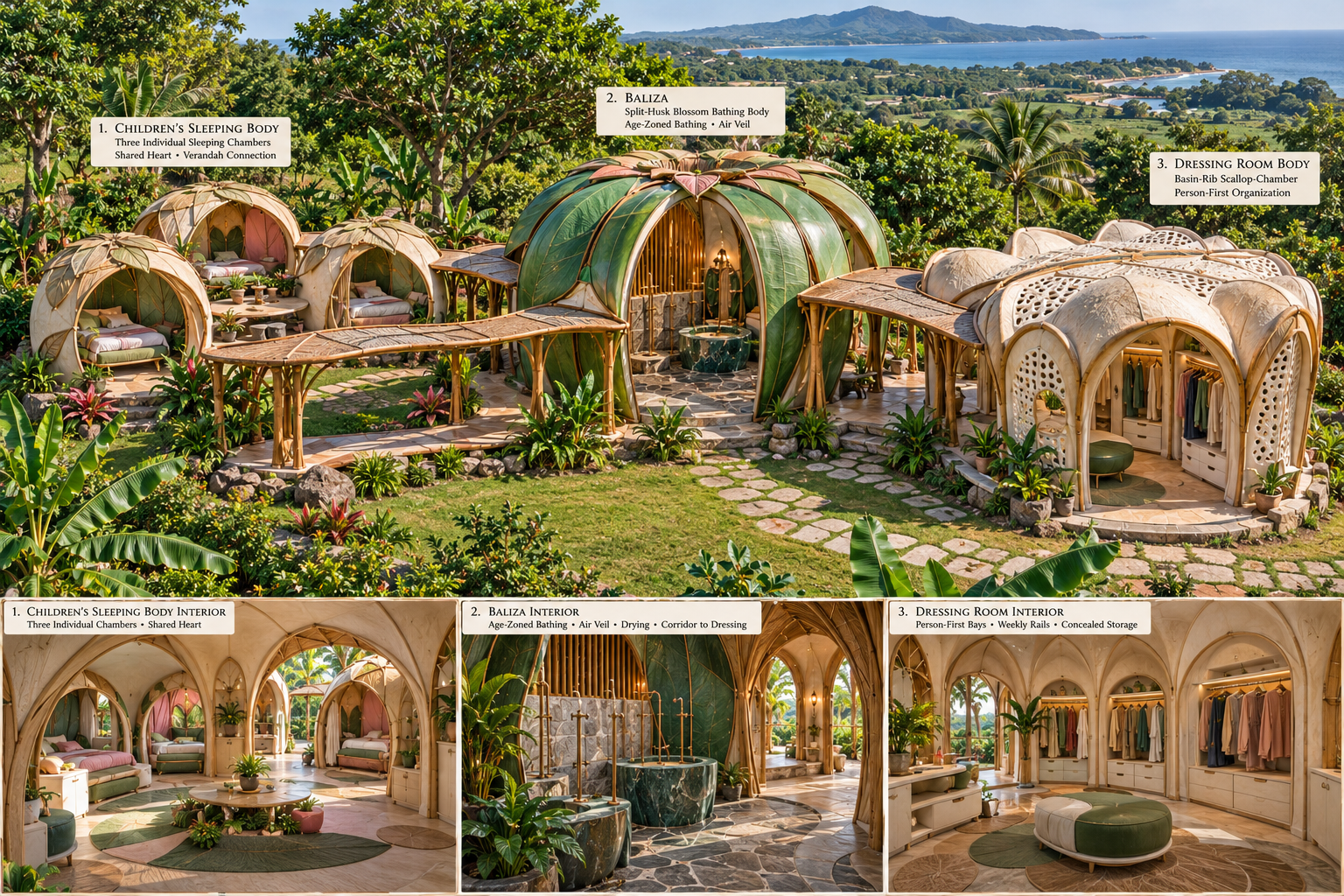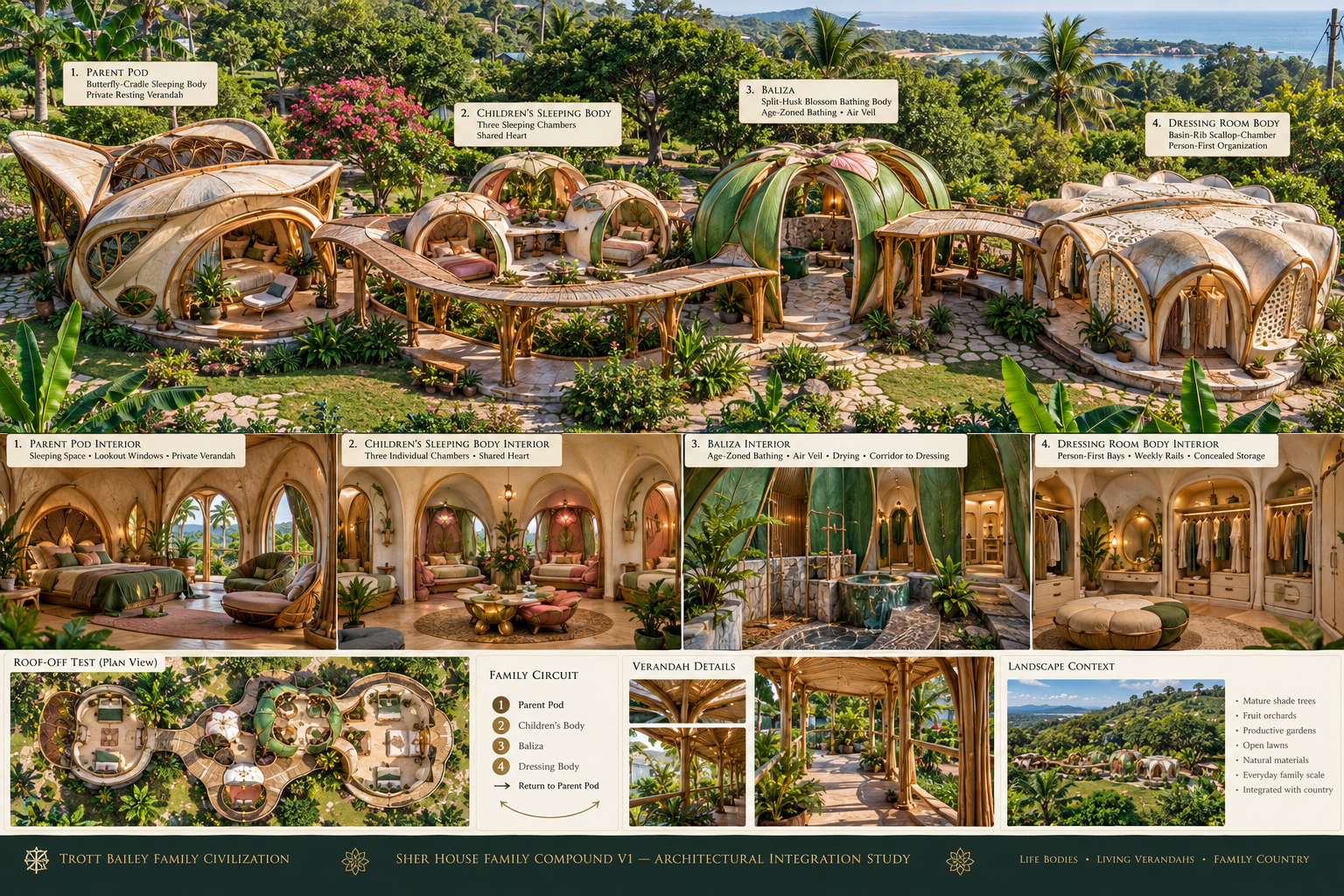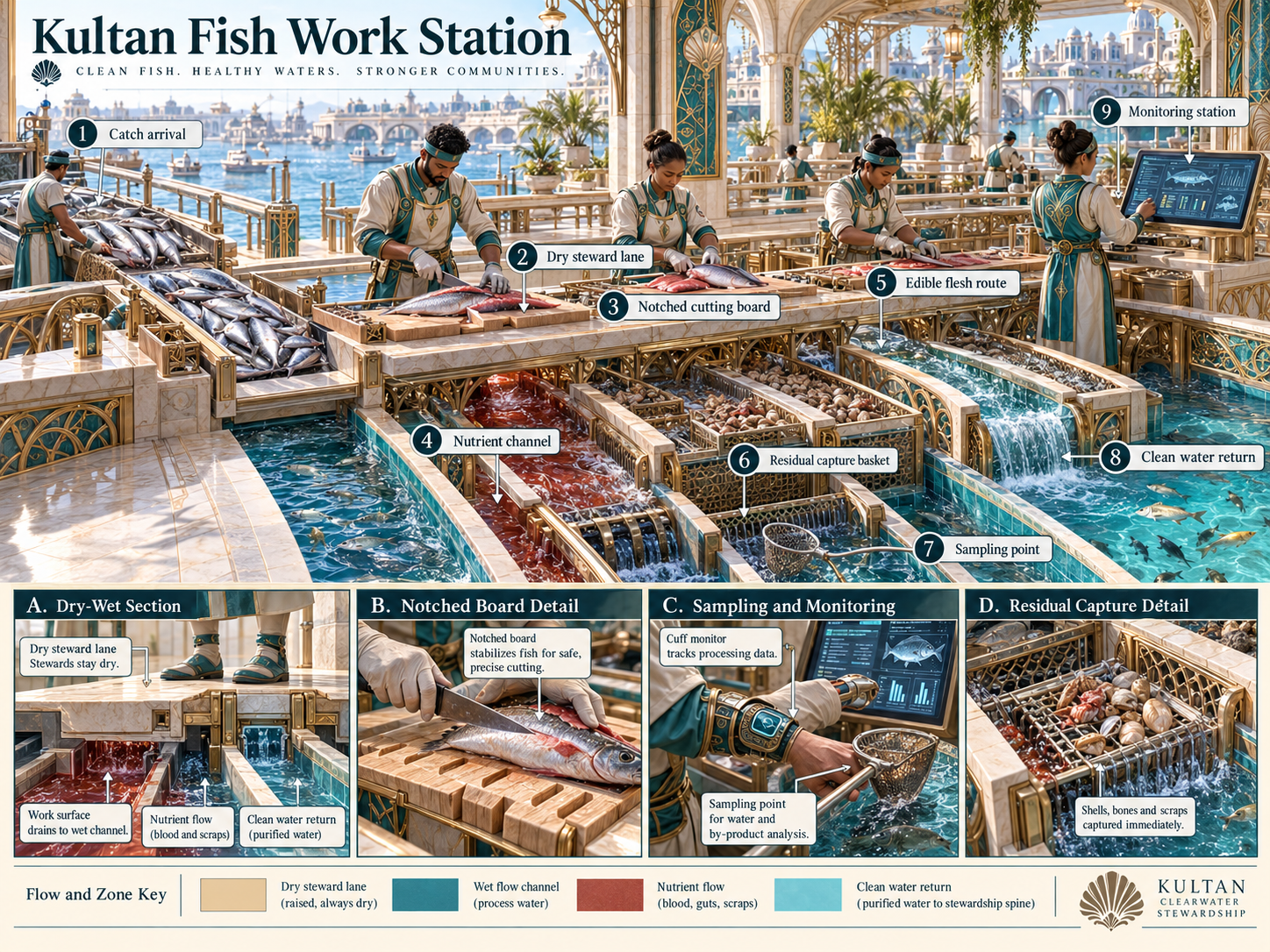
First Domestic Water Species Lock Record
Trott Bailey water is not hidden utility, decorative scenery, or isolated engineering. It is authored civilization intelligence.
This record preserves the first two locked domestic water species in the Trott Bailey Hydraulic Language Library: Family Rain Organ V1.1 and Porch Rain Spine V1.
Together, they establish the first household rain grammar of Trott Bailey Family Civilization: roofs receive rain intelligently, water is screened, dirty first rain is separated, clean water is stored or routed, and overflow is returned to life through gardens, washcourts, rills, cisterns, reed pockets, frog pockets, and Fofua basins.
1. Purpose of This Lock Record
This document exists to prevent the first two hydraulic species from being remembered as isolated images or decorative water ideas. These systems are not random architecture details. They are named, authored, repeatable components of Trott Bailey Family Civilization.
The goal is to preserve their identity, function, anatomy, visual law, family role, safety intelligence, material language, and anti-drift boundaries before the Hydraulic Language Library expands into larger water collection, storage, movement, power, ecology, and district systems.
2. The Two Locked Systems
Family Rain Organ V1.1
System type: Household rain-collection vessel species.
Role: Receives rain from a compound roof, screens debris, separates dirty first rain, stores clean water safely, shows water memory, and releases overflow into Fofua garden life.
Main character: Concentrated domestic water body.
Porch Rain Spine V1
System type: Linear roof-edge rain descent species.
Role: Turns long porch roof edges into repeated water-receiving rhythms, guiding rain down through visible spines into route channels, basins, cisterns, washcourts, and planted receiving zones.
Main character: Repeated architectural water rhythm.
3. Shared Hydraulic Law
The Family Rain Organ and Porch Rain Spine share the same governing civilizational law:
Water must pass through visible intelligence before it becomes household reserve, route flow, garden abundance, or public beauty.
This means Trott Bailey water systems must not simply collect or move water. They must reveal what is happening: where the water comes from, how it is protected, how it is cleaned, where dirty water is separated, where clean water is held, how overflow is controlled, and what life the water feeds afterward.
4. Domestic Rain Grammar
- Roof receives rain. The roof is not passive. It gathers, pleats, scoops, slopes, and declares water direction.
- Water enters an authored mouth. Rain is not dumped randomly from roof edges.
- Debris is screened. Leaves, insects, roof dirt, and larger particles are blocked before deeper entry.
- Dirty first rain is separated or slowed. First-flush or first-silt systems prevent the dirtiest flow from contaminating storage or routes.
- Clean water is stored, routed, or inspected. Water movement must remain visible and maintainable.
- Overflow feeds life. Surplus water enters Fofua basins, planting beds, washcourts, cisterns, reed pockets, frog pockets, rills, or infiltration zones.
- Children may learn, but cannot contaminate. Child-safe learning edges must be separate from sealed storage and dirty-water access points.
5. Shared Material Language
These first two hydraulic species use a disciplined Trott Bailey material palette:
- Shell limestone for pale vessel bodies, lips, basins, and protective architectural clarity.
- Kaolin ceramic for clean channels, screens, washable surfaces, and pale interior panels.
- Rammed earth for thick compound integration, thermal mass, and Prado earth logic.
- Fossil stone for bases, memory marks, threshold permanence, and grounded beauty.
- Basalt for dark-vein lattice, wet feet, durable edges, and erosion-resistant contact zones.
- Pebble filter beds for splash control, infiltration, and gentle water slowing.
- Timber access panels for human-scale maintenance and repair.
- Australian White-Matrix Azurite only as a restrained inspection, memory, civic, or ceremonial accent.
6. Shared Anti-Drift Law
These systems must never drift into:
- ordinary gutters or downspouts;
- plastic tanks or exposed barrels;
- random decorative fountains;
- resort waterfalls;
- Roman or European copy architecture;
- sci-fi glowing water tubes;
- generic eco-village rainwater collection;
- dangerous open cisterns;
- uncontrolled mud, splash, or erosion;
- beautiful water objects with no real function.
7. Constitutional Extraction
- Water is a visible civilizational intelligence, not a hidden utility.
- Roofs must declare what they do with rain.
- Dirty first rain must be separated before protected family storage.
- Every vertical rain descent must become authored architecture.
- Overflow must feed life, not create mud, waste, or household burden.
- Children may observe water safely, but they must not access contamination points or sealed storage.
- Beauty must reveal function; beauty must not replace function.
- Trott Bailey hydraulic systems must integrate architecture, family relief, ecology, maintenance, and material intelligence.
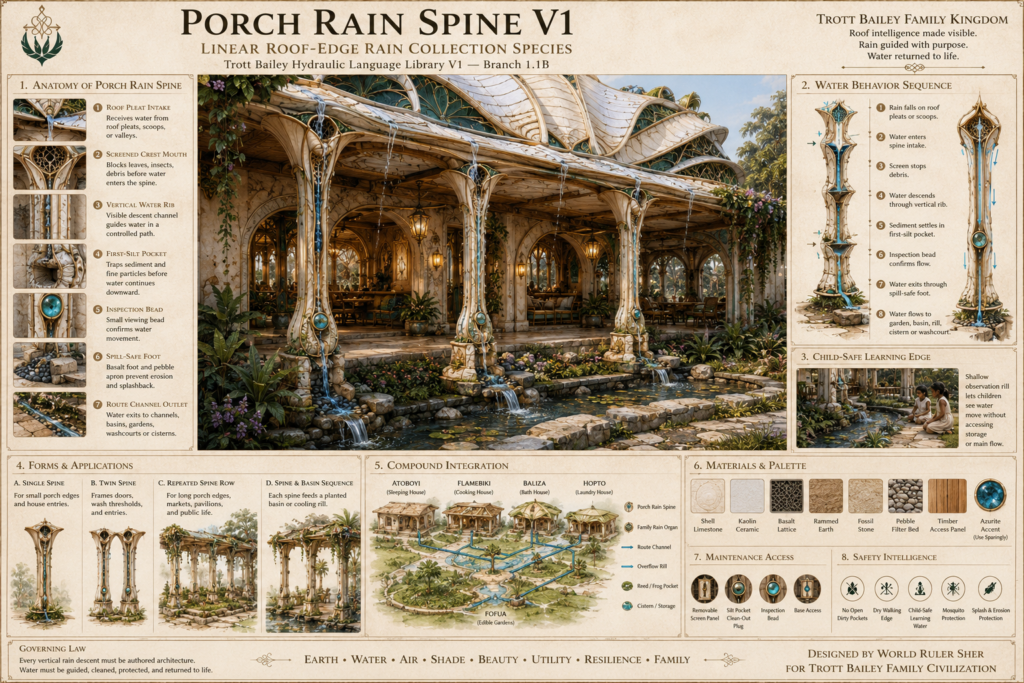
Porch Rain Spine V1
Every vertical rain descent in Trott Bailey must become authored architecture.
The Porch Rain Spine V1 is a repeated architectural water-spine system for Trott Bailey porch edges, pavilion fronts, washcourt thresholds, market shelters, family compound walkways, Sabennerie edges, learning pavilions, ferry shelters, and public waiting areas.
It turns long roof edges into organized water-receiving rhythms. It is not an ordinary downspout, gutter pipe, plastic pipe, decorative column, resort waterfall, or generic drain.
1. Plain Definition
A Porch Rain Spine is a vertical roof-edge rain descent body that receives water from a Trott Bailey roof pleat, scoop, valley, or fan lip; screens debris; guides water down a visible ribbed spine; traps sediment; confirms flow through inspection beads; protects the porch with spill-safe feet; and routes water into gardens, basins, cisterns, washcourts, reed pockets, frog pockets, or learning rills.
2. Civilization Problem It Solves
In ordinary buildings, roof water often drops from edges, stains walls, damages foundations, creates slippery areas, floods paths, erodes soil, or disappears into ugly downspouts. Trott Bailey does not attach crude pipes after the building is designed.
The Porch Rain Spine makes roof water visible, beautiful, screened, controlled, inspectable, child-aware, and useful.
No ordinary downspouts in Trott Bailey.
3. Required Locked Anatomy
1. Roof Pleat Intake
Receives water from locked roof scoops, pleats, valleys, folded fan lips, or butterfly-wing roof edges.
2. Screened Crest Mouth
Uses dark-vein ceramic or basalt lattice with pale shell-limestone or kaolin fields to block leaves, insects, and debris.
3. Visible Vertical Water Rib
The main gill-stem descent body that carries water downward in a controlled and visible way.
4. First-Silt Pocket
Traps sediment before water enters route channels, basins, cisterns, or washcourt systems. Must include clean-out logic.
5. Inspection Bead
A small visible marker that confirms water movement and allows quick checking.
6. Spill-Safe Foot
Uses basalt, pebble apron, scalloped stone, or shell-lipped floor protection to prevent erosion and splash damage.
7. Route Channel Outlet
Sends water to useful destinations instead of dumping it randomly at the porch edge.
8. Child-Safe Learning Edge
A shallow observation rill separated from storage and main flow, allowing children to see water without accessing hazards.
9. Dry Walking Band
Ensures the porch remains safe and usable during rain. Water reception must not turn the walking path into a slippery edge.
10. Productive Planted Receiving Zone
Includes Fofua basins, reed pockets, frog pockets, washcourt channels, cistern routes, garden infiltration beds, or route rills.
4. Water Behavior Sequence
- Rain falls onto a long Trott Bailey roof edge.
- Roof pleats, scoops, valleys, or fan lips direct water toward the spine intake.
- Water enters the screened crest mouth.
- Debris is blocked before water enters the vertical descent body.
- Water travels down the visible water rib or gill-stem spine.
- Sediment settles into the first-silt pocket.
- The inspection bead confirms flow and makes movement legible.
- Water exits through the spill-safe foot.
- The route channel outlet sends water into basins, cisterns, washcourts, gardens, reed pockets, frog pockets, or learning rills.
5. Main Applications
- Single Spine: small porch edges, quiet Atoboyi entries, Baliza side entries, Flamebiki garden edges.
- Twin Spine: doorways, bathhouse thresholds, washcourt entries, family ceremonial thresholds.
- Repeated Spine Row: wrap-around porches, Sabennerie cooking edges, market shelters, public waiting areas, learning pavilions.
- Spine-and-Basin Sequence: porch gardens, edible courtyard edges, cooling routes, child-safe rain-learning walks.
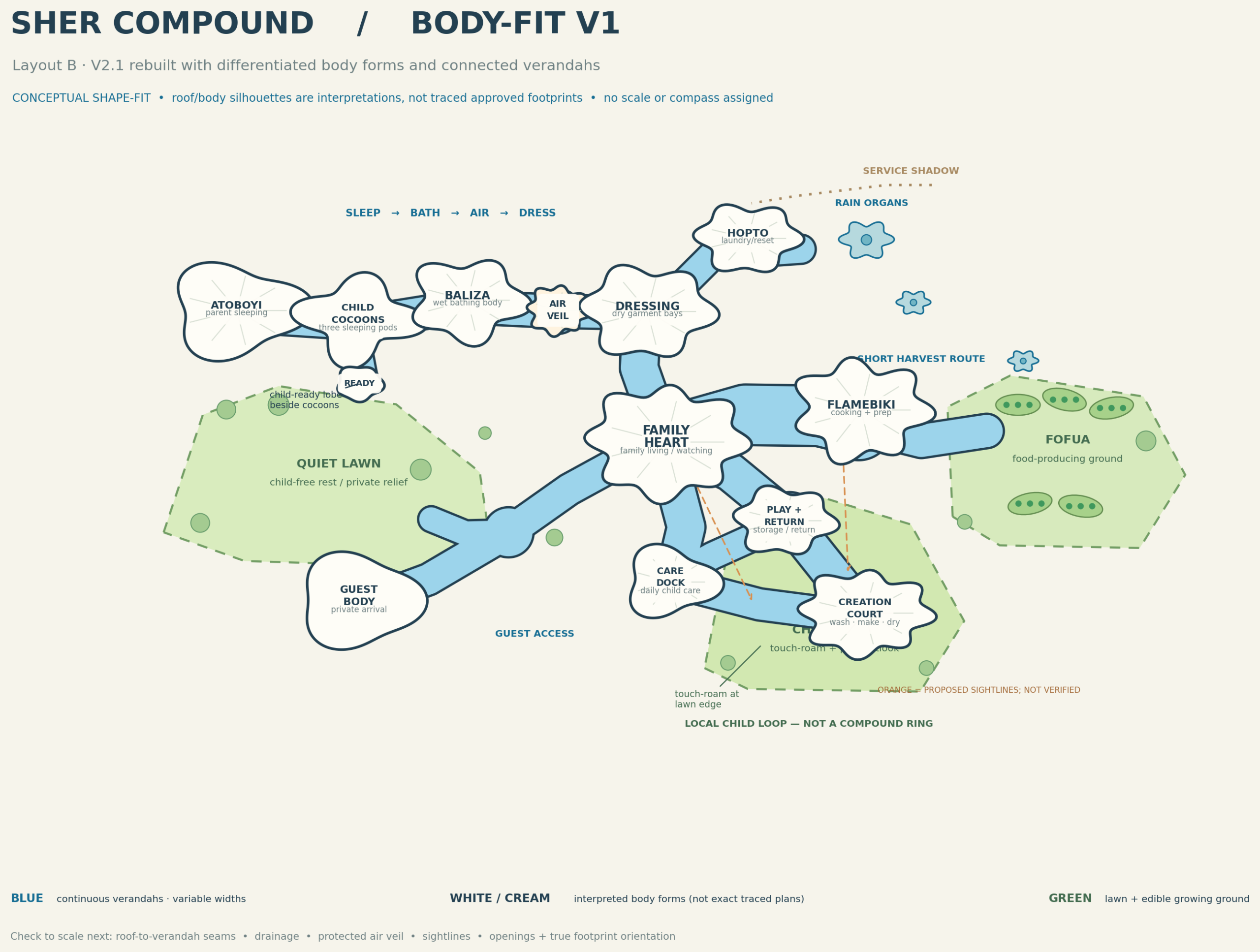
6. Compound Integration
The Porch Rain Spine supports water-smart compound life by connecting roof edges to:
- Atoboyi porch cooling and roof water organization.
- Flamebiki cooking-house garden support and cleaning edges.
- Baliza bathhouse thresholds and rinse-support logic.
- HOpto laundry-house intake, washcourt channels, and textile reset routes.
- Fofua edible garden basins, herbs, fruit roots, and infiltration beds.
- Route channels that move overflow through the compound without mud or erosion.
- Reed and frog pockets that support ecology and natural filtration.
7. Material Logic
- Shell limestone: pale spine bodies, lips, and porch-edge clarity.
- Kaolin ceramic: clean water surfaces, screen fields, and washable channels.
- Basalt: dark-vein lattice, wet feet, splash edges, and erosion resistance.
- Rammed earth: thick porch wall integration and Prado climate logic.
- Fossil stone: bases, memory points, and grounding.
- Pebble filter beds: splash control, infiltration, and water slowing.
- Timber access panels: maintenance and human-scale repair.
- Australian White-Matrix Azurite: one tiny inspection bead or ceremonial marker only.
8. Safety Intelligence
A porch may welcome rain, but it must not become a hazard.
- Walking areas must remain dry or clearly separated from wet zones.
- Wet edges must be textured and slip-aware.
- Water must not stain walls, weaken foundations, or pool at thresholds.
- Sediment pockets must be cleanable.
- Debris screens must be reachable for maintenance.
- Child observation rills must remain shallow and separate from storage and dirty-water areas.
- Spill-safe feet must prevent erosion, splashback, and mud.
- Overflow must move into useful route channels or planted receiving zones.
9. Anti-Drift Law
The Porch Rain Spine must never become:
- a modern metal downspout;
- a plastic pipe;
- a plain gutter;
- a decorative column with fake water;
- a resort waterfall;
- a sci-fi glowing tube;
- a Roman aqueduct detail;
- a hidden leaky wall stain;
- a slippery porch hazard;
- a water feature disconnected from real household function.
10. Constitutional Extraction
- Every vertical rain descent must become authored architecture.
- Roofs must visibly declare where they send rain.
- Rainwater must be screened before entering spine channels.
- Sediment must be trapped and cleanable.
- Water movement must be inspectable.
- Porch water must be controlled so it does not create slippery walking areas, wall dampness, erosion, mud, mosquitoes, or child hazards.
- Overflow and route channels must return water to life.
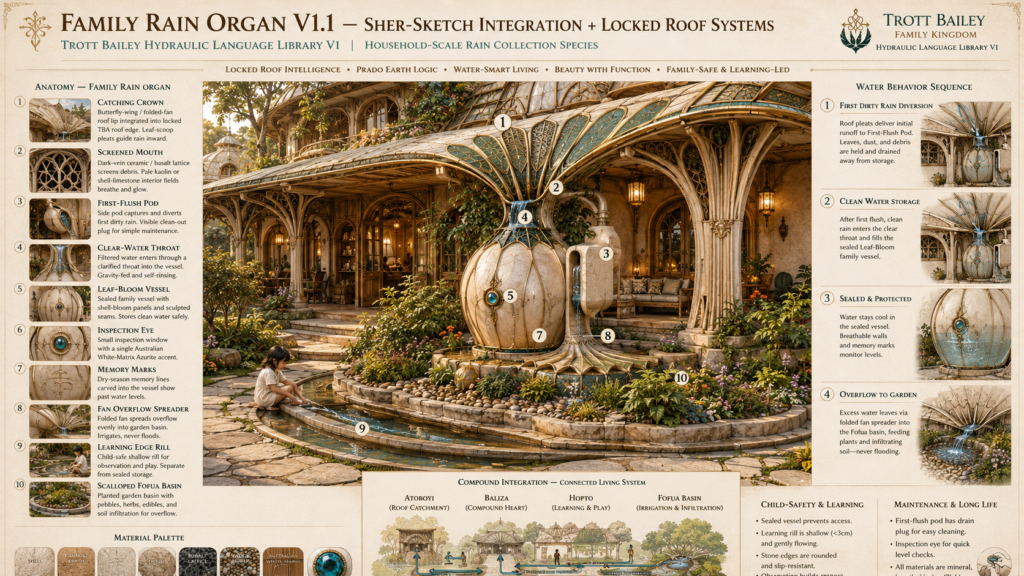
Family Rain Organ V1.1
The Family Rain Organ receives the sky and turns it into household order.
The Family Rain Organ V1.1 is a household-scale Trott Bailey rain-collection organ. It translates World Ruler Sher’s original sketch DNA, butterfly-wing and folded-fan language, shell-bloom vessel logic, and locked roof systems into a visible domestic hydraulic species.
It is not a gutter, not a plastic tank, not an exposed rain barrel, and not a decorative fountain. It is a protected family water body that collects roof rain, screens debris, separates dirty first rain, stores clean water, teaches water memory, and returns overflow to garden life.
1. Plain Definition
A Family Rain Organ is a household rain-receiving body that gathers water from Trott Bailey compound roofs, passes that water through visible intelligence, separates the dirtiest first flow, protects family storage, and releases excess water into Fofua gardens, wash support, cooling rills, swales, or infiltration beds.
2. Civilization Problem It Solves
In the old world, household rain is often ignored, wasted, dumped into mud, hidden in pipes, or stored in crude exposed containers. Families then suffer from flooding, erosion, water shortage, mosquitoes, contamination, and constant manual burden.
Trott Bailey Family Civilization refuses that disorder. The compound itself must help receive, protect, remember, and return water to life.
A family compound must not waste roof rain by default.
3. Required Locked Anatomy
1. Butterfly-Wing / Folded-Fan Catching Crown
Integrated into Trott Bailey roof intelligence. It receives rain from roof lips, pleats, scoops, and fan edges.
2. Screened Mouth
Uses dark-vein ceramic or basalt lattice with pale shell-limestone or kaolin fields to block leaves, insects, debris, and small animals.
3. First-Flush Side Pod
Receives dirty first rain before clean water enters storage. It must show drain or clean-out logic.
4. Clear-Water Throat
Guides cleaner water downward after screening and first-flush separation.
5. Sealed Leaf-Bloom / Shell-Bloom Vessel
Stores protected family water. It must be sealed, inspectable, shaded, child-protected, and cleanable.
6. Inspection Eye
A small visible checking point with restrained Australian White-Matrix Azurite as a possible ceremonial accent.
7. Dry-Season Memory Marks
Carved, tiled, beaded, or mineral marks that help the family understand seasonal water levels and rain history.
8. Productive Folded Fan Overflow
Releases excess water into life-giving basins and channels. It must not behave like a decorative fountain.
9. Child-Safe Learning Rill
A shallow observation edge where children may see water movement without accessing storage or contamination points.
10. Scalloped Fofua Garden Basin
Receives overflow through pebbles, herbs, edible plants, soil infiltration, and gentle water spreading.
4. Water Behavior Sequence
- Rain falls onto the Trott Bailey roof.
- The roof lip, scoop, pleat, or folded fan edge guides the rain toward the catching crown.
- Water enters the screened mouth.
- Debris is blocked by dark-vein lattice and pale ceramic screenwork.
- The first dirty flow enters the first-flush side pod.
- Cleaner water passes into the clear-water throat.
- Water descends into the sealed leaf-bloom family vessel.
- The family can inspect flow, level, and cleanliness through the inspection eye and memory marks.
- When the vessel is full, overflow leaves through the folded fan spreader.
- Overflow feeds the scalloped Fofua garden basin, planted beds, infiltration zones, or route channels.
5. Compound Integration
The Family Rain Organ belongs inside real family compound life. It may connect to:
- Atoboyi sleeping house roof collection and courtyard cooling.
- Baliza bathhouse support and water reset.
- HOpto laundry and washcourt support.
- Fofua edible garden irrigation and overflow absorption.
- Flamebiki cooking-house cleaning and garden support.
- Porch edges for family water observation and shade cooling.
- Route channels for moving excess water to useful destinations.
6. Material Logic
- Shell limestone: pale vessel surfaces, lips, basins, and water clarity.
- Kaolin ceramic: washable inner channels, screen surfaces, and clean-water contact areas.
- Rammed earth: compound integration, thermal mass, and Prado earth logic.
- Fossil stone: grounding, bases, memory marks, and long-life identity.
- Basalt: dark-vein lattice, wet-edge durability, and erosion resistance.
- Pebble filter beds: splash softening, infiltration, and overflow control.
- Timber access panels: hand-friendly maintenance and inspection access.
- Australian White-Matrix Azurite: one restrained inspection eye, water-level marker, or ceremonial bead only.
7. Child Safety + Family Relief
Children may learn from the Family Rain Organ, but the organ must never depend on children being careful.
- Storage must be sealed.
- First-flush and dirty-water areas must be protected.
- The child learning rill must be shallow and separate from storage.
- Wet edges must be textured and slip-aware.
- Overflow must not create mud or hidden holes.
- Cleaning panels must be adult-controlled.
- The family must be able to inspect and maintain the system without dangerous climbing.
8. Anti-Drift Law
The Family Rain Organ must never become:
- a plastic tank;
- an exposed rain barrel;
- a modern downspout;
- a random clay pot;
- a fantasy fountain;
- a resort water feature;
- an unsafe open cistern;
- a beautiful object with no first-flush or storage logic;
- a dirty water collector that burdens the family later.
9. Constitutional Extraction
- Collected water must pass through visible intelligence before family storage.
- The first dirty rain must be separated from clean family reserve.
- Clean water storage must be sealed, inspectable, and child-protected.
- Overflow must feed life, not create mud.
- The compound must help carry the water burden before exhausted parents have to.
- A rain organ must be beautiful because it works, not beautiful instead of working.