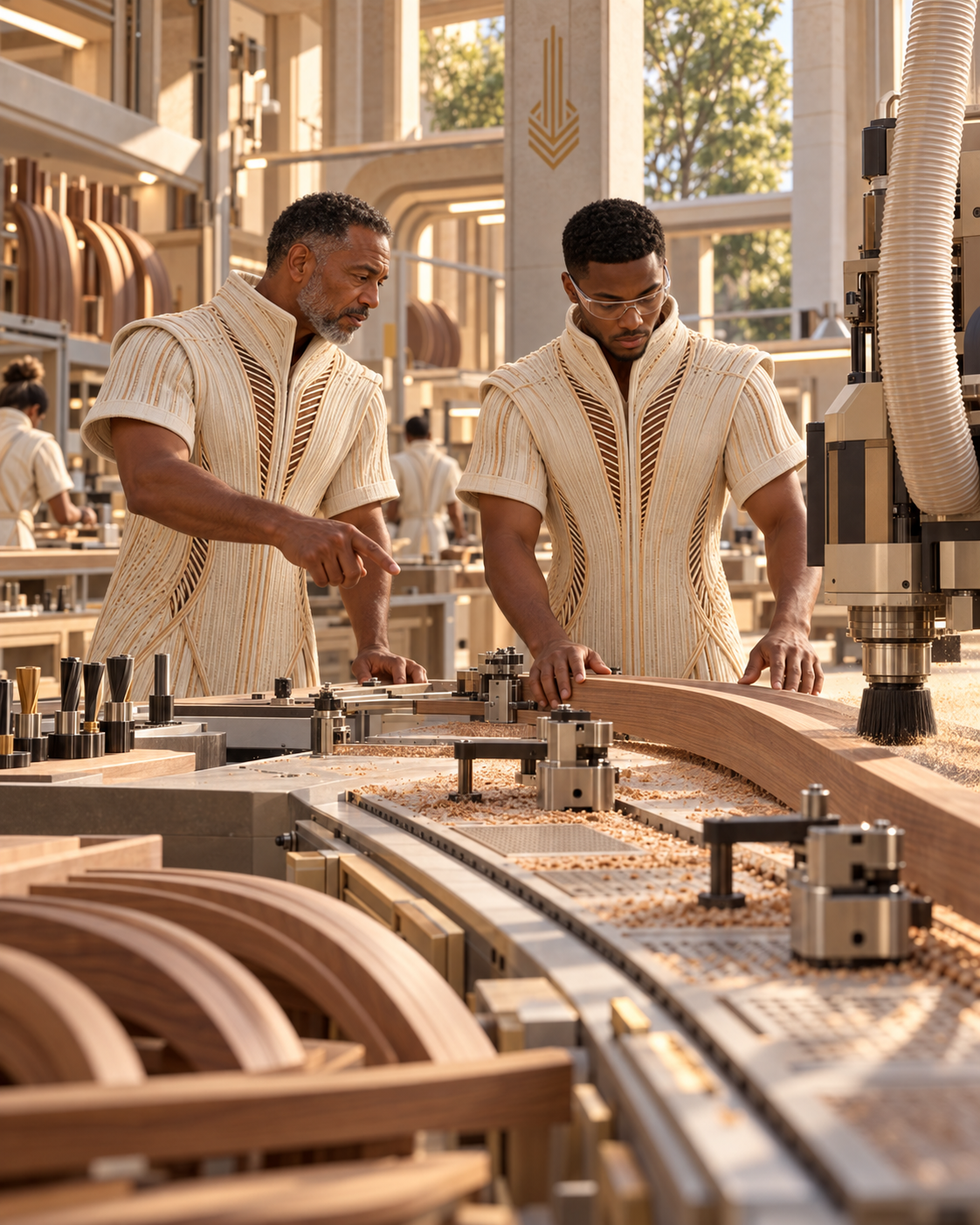
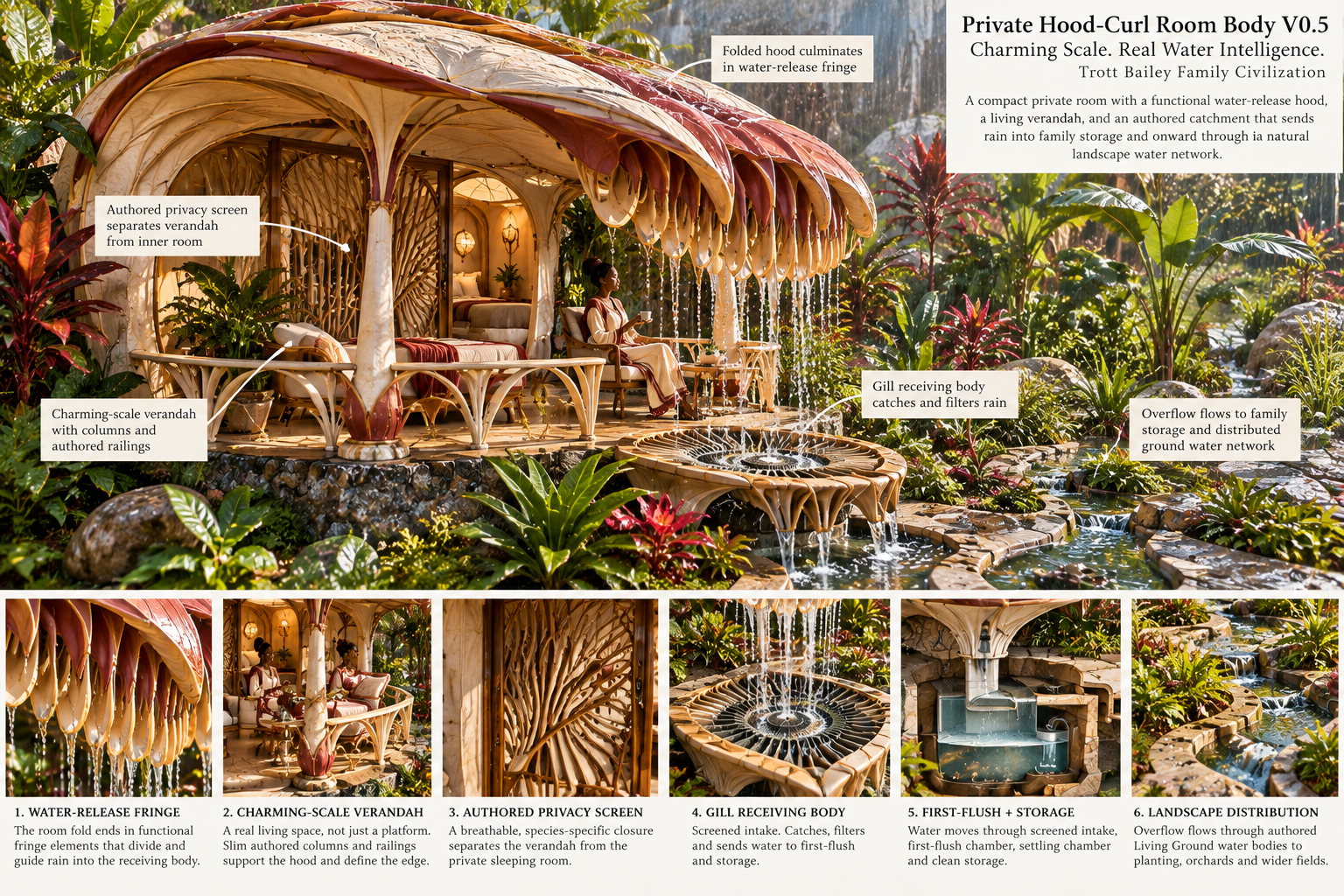
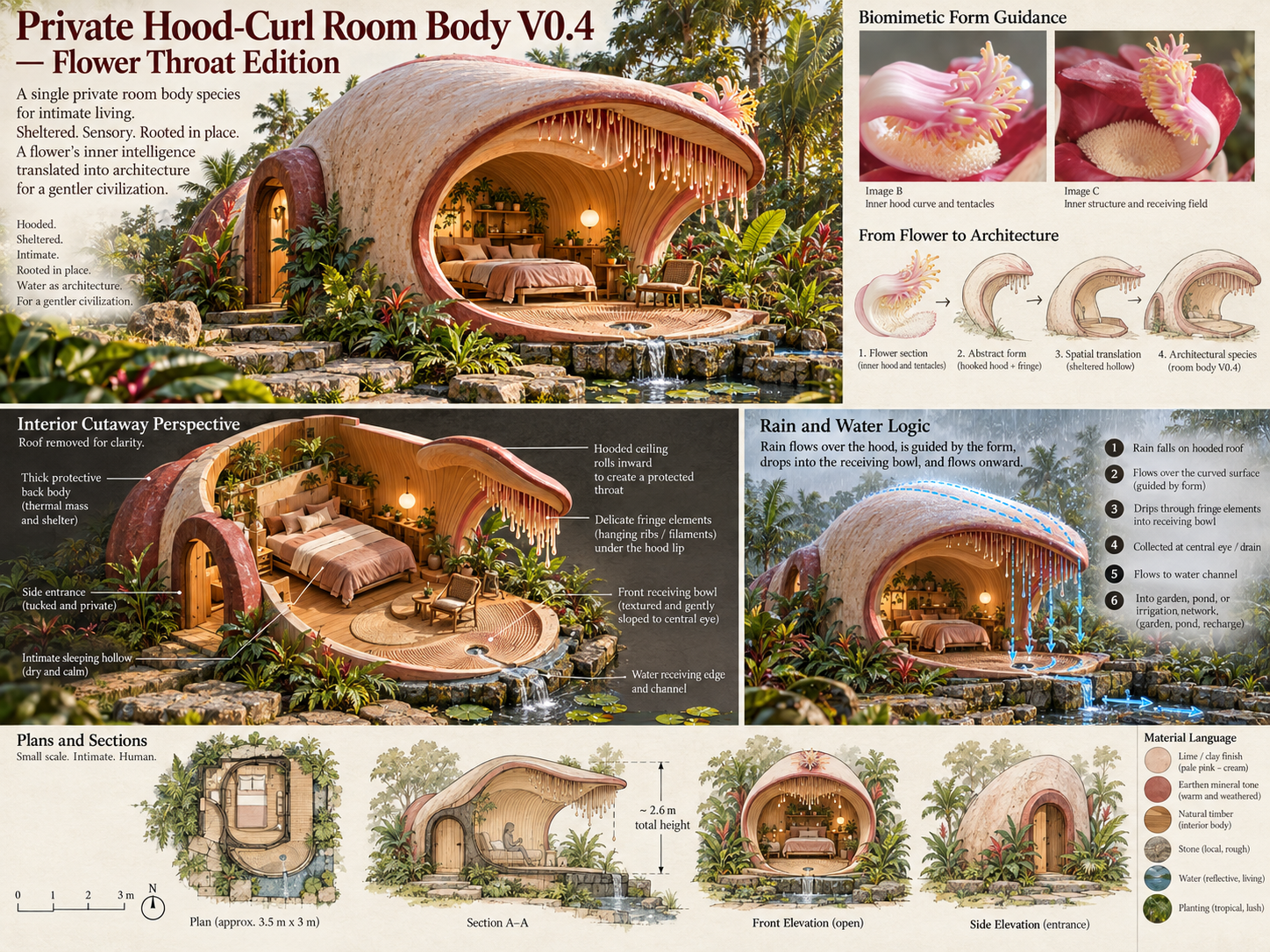
Trott Bailey Family Civilization
A Civilization Laid Out in Orchards
How food, beauty, nightlife and family joy become part of everyday life.
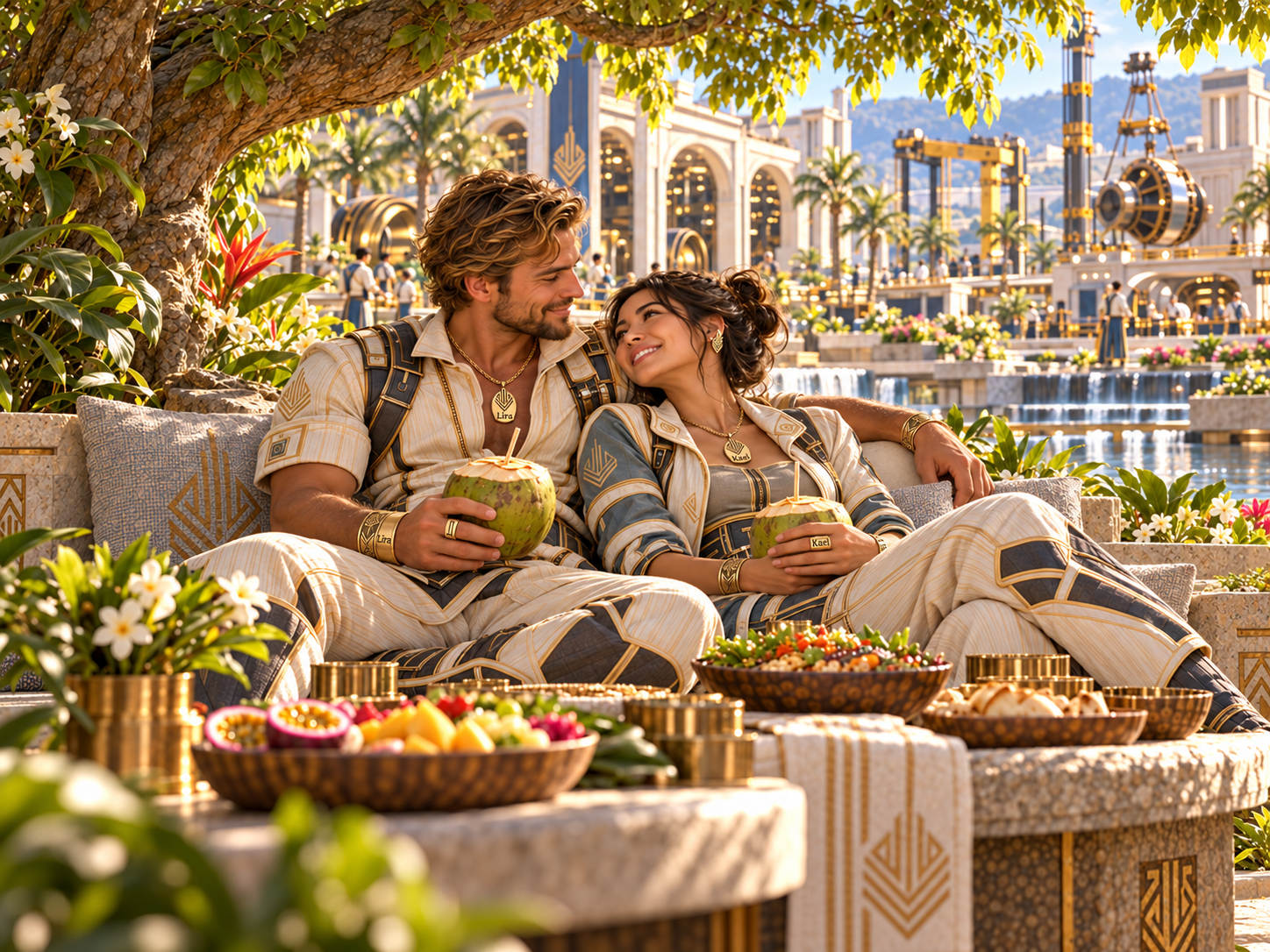
In the Trott Bailey Family Civilization, a family does not need to plan an expensive special outing in order to enter beauty.
The orchard may already be along the route from home.
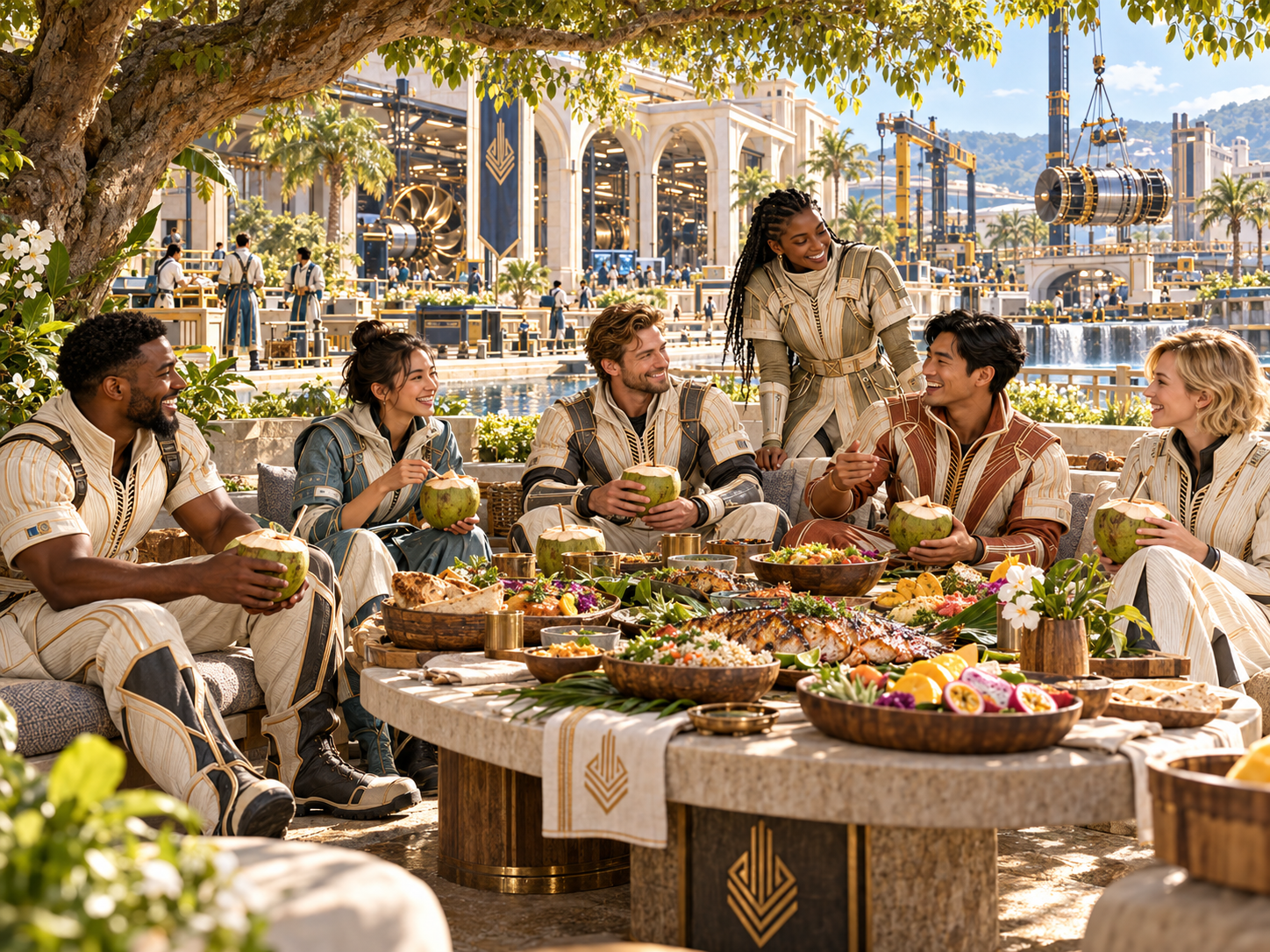
Children may know its fruit trees, patterned streets, little game grounds, verandahs and night lights as naturally as they know their own neighbourhood. Parents may pass into it as the day opens into evening, meet other families, eat, walk, rest, listen to music and allow their children to discover what is waiting farther along the route.
There is no entrance fee because there are no fees.
The fruit, prepared food, orchard confections, games, performances, child-wonder experiences and public facilities are all free. There are no premium zones, customer categories or purchases required before a family can sit, eat, play or remain.
The Trott Bailey Family Civilization is being laid out with many large, productive orchards woven throughout ordinary family life.
These orchards are not decorations surrounding the civilization.
They are part of its body.
A civilization made of many orchards
No single orchard is expected to carry the food, pleasure and public life of the entire civilization.
Orchards are distributed across districts, near family homes, beside wetlands, around public buildings, along major routes and between gathering territories. Some are lively. Some are quiet. Some support everyday family life. Others expand during harvests, celebrations and major civilization gatherings.
A cocoa orchard may become a warm evening ground with roasting hearths, fresh cocoa drinks, family storytelling and low Night-Seed lighting.
A citrus orchard may include cool water routes, fresh drinks, active games and bright seasonal gathering grounds.
A strawberry, kumquat and loquat orchard may support healthy confection houses where families watch fruit being washed, dried, shaped and folded into banana-leaf packaging.
A mango orchard may host dancing, fruit transformation and a major seasonal celebration.
A wetland-edge orchard may offer dark-sky walking routes, waterbird observation, quiet family seating and protected ecological islands.
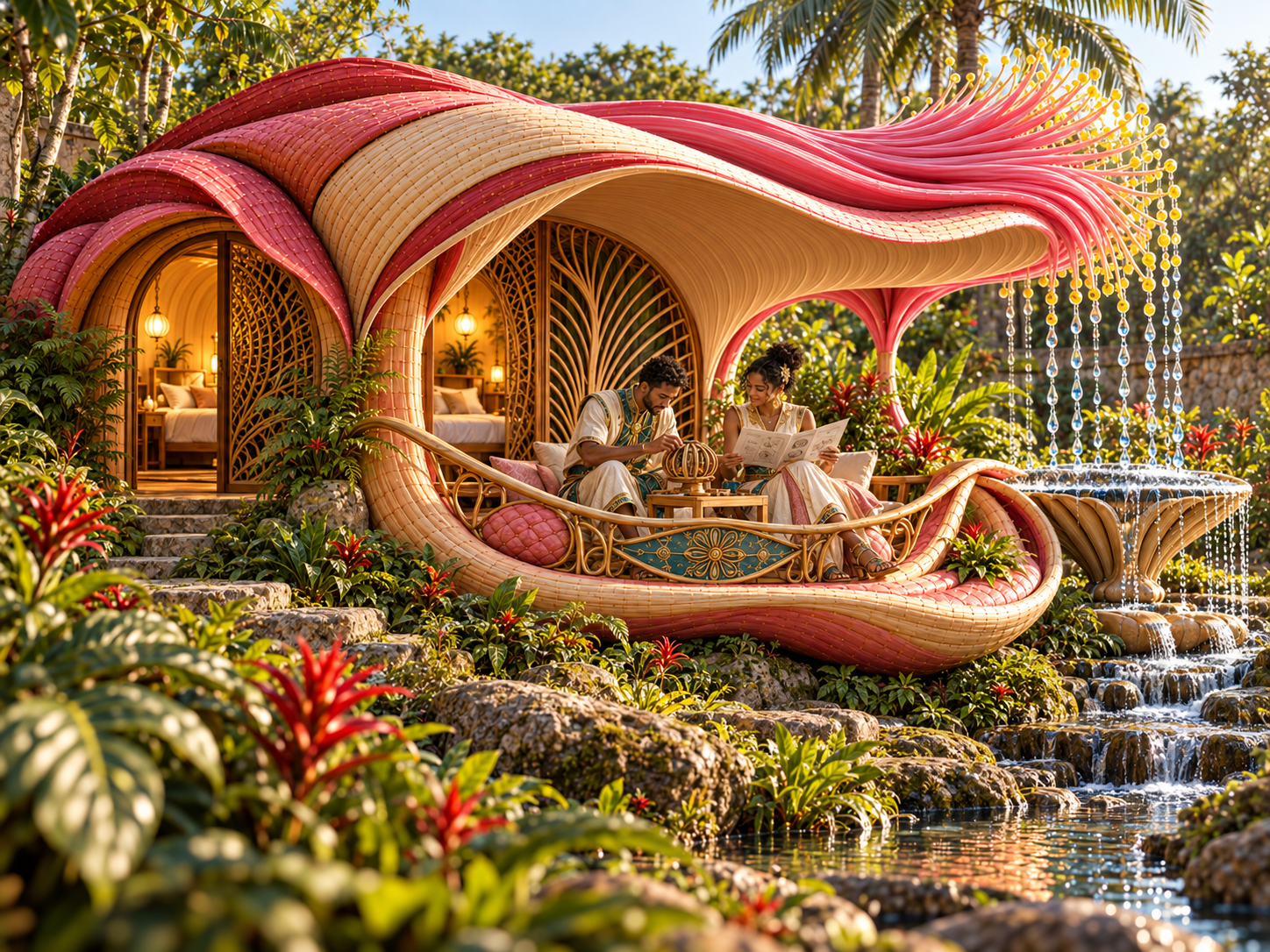
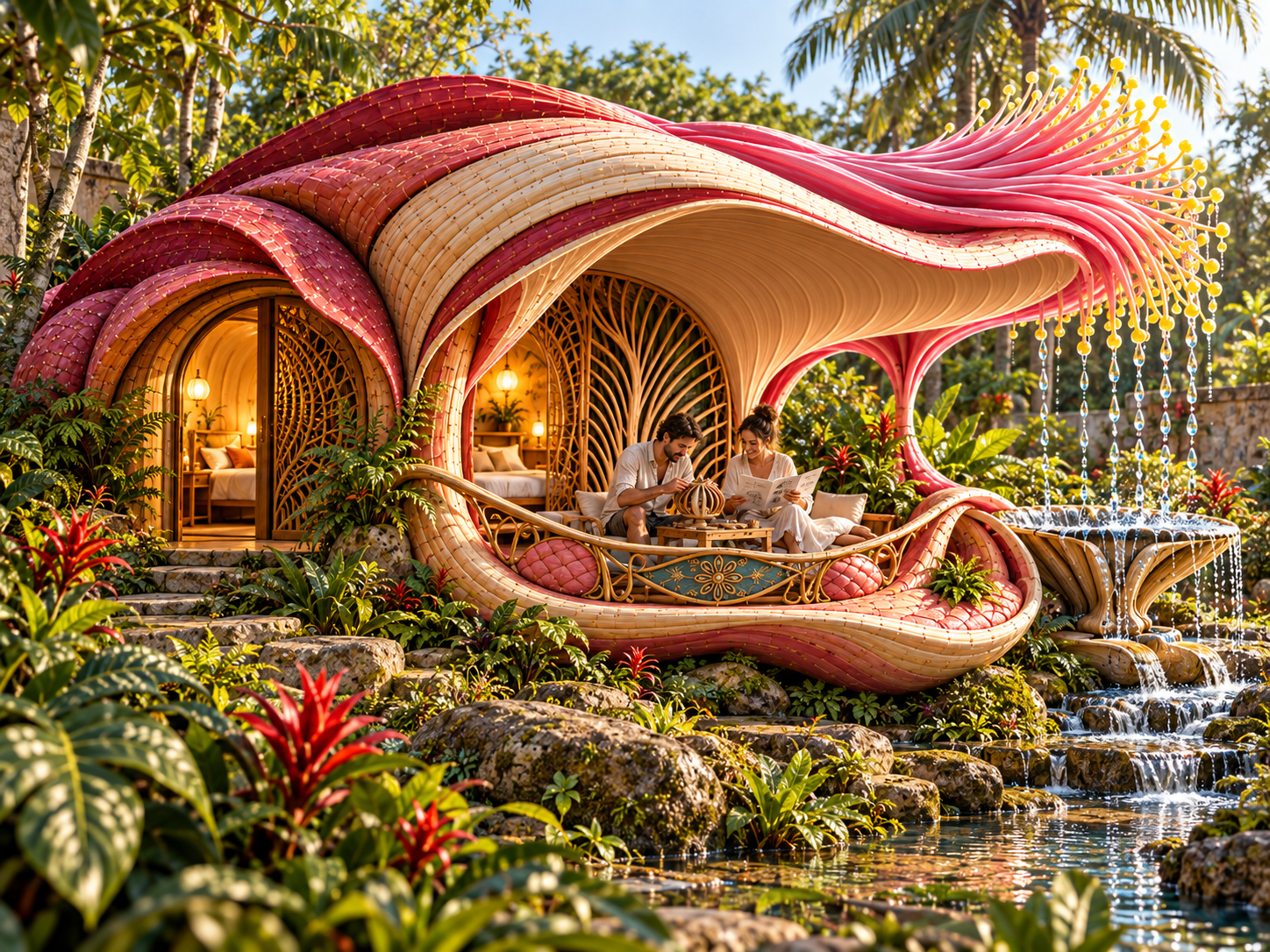
A children’s orchard may include sound passages, character houses, child-scale fruit discovery, soft play landscapes, patterned story routes and raised Mother-Sight verandahs.
A neighbourhood orchard may be simpler: fruit trees, shade, beautiful walking routes, seating, small games and places where families naturally meet throughout the day and into the evening.
The orchards share the standards of the Trott Bailey Family Civilization, but they are not copies of one another. Their fruit, architecture, planting, lighting, activities and emotional atmosphere respond to the life of each district.
Together, they form a civilization-wide orchard network.
Food grows inside public life
Old-world life has separated food from the people who eat it.
Fruit is commonly grown far away, transported long distances, processed, wrapped, priced and placed on shelves. Children encounter the finished product but rarely see the flower, pollinator, soil, harvest, preparation and return systems behind it.
The Trott Bailey orchards reconnect the full life of food.
Families see strawberries growing before they become fruit jewels. They see kumquats on small orchard trees before they become translucent candied wheels. They see carefully pruned loquats before the fruit becomes half-moon pastilles. They see cocoa being opened, roasted and transformed. They watch banana leaves become food packaging and then return through Krubaro instead of becoming rubbish.
The orchard teaches without turning life into a classroom display.
Growing, harvesting, washing, sorting, transforming, eating and returning organic material to soil remain visible parts of the same civilization system.
The child understands that the civilization plants it, protects it, harvests it, prepares it and shares it.
That is a completely different relationship with food.
Families live near land whose purpose includes feeding them. Food is not displayed before people and withheld behind a price. It is cultivated as shared abundance.
Families do not have to calculate joy
In old-world life, even a modest family outing can become a financial exercise.
Transport, admission, meals, drinks, activities and small treats begin accumulating before the family has properly relaxed. Every additional child increases the calculation.
Parents may spend the evening monitoring costs instead of enjoying their children. They decide which activity must be refused, which food is too expensive, how long the family can remain and whether another request will push the outing beyond the household budget.
The Trott Bailey orchards remove money from the experience.
A family can enter a magnificent place, walk for hours, eat, play, meet friends, listen to music, rest beneath fruit trees and return home without having purchased anything.
There is nothing to purchase.
Parents do not count how many children they can afford to include. Children do not learn that every joy is waiting behind a transaction. A large family is not punished for being large.
The whole family can come.
Nightlife that keeps the family together
Much of old-world nightlife is organized around bars, clubs, alcohol, expensive restaurants, shopping and adult-only entertainment. Parents are left with poor choices: remain home, pay for childcare, divide the family or bring children into spaces that were never designed for them.
The orchard network creates another kind of night.
Productive orchard routes become beautifully illuminated public grounds. Children may play a short skill game, receive a fruit confection, follow a story route, listen to an echo wall, watch a shadow performance or pull their parents toward the next discovery.
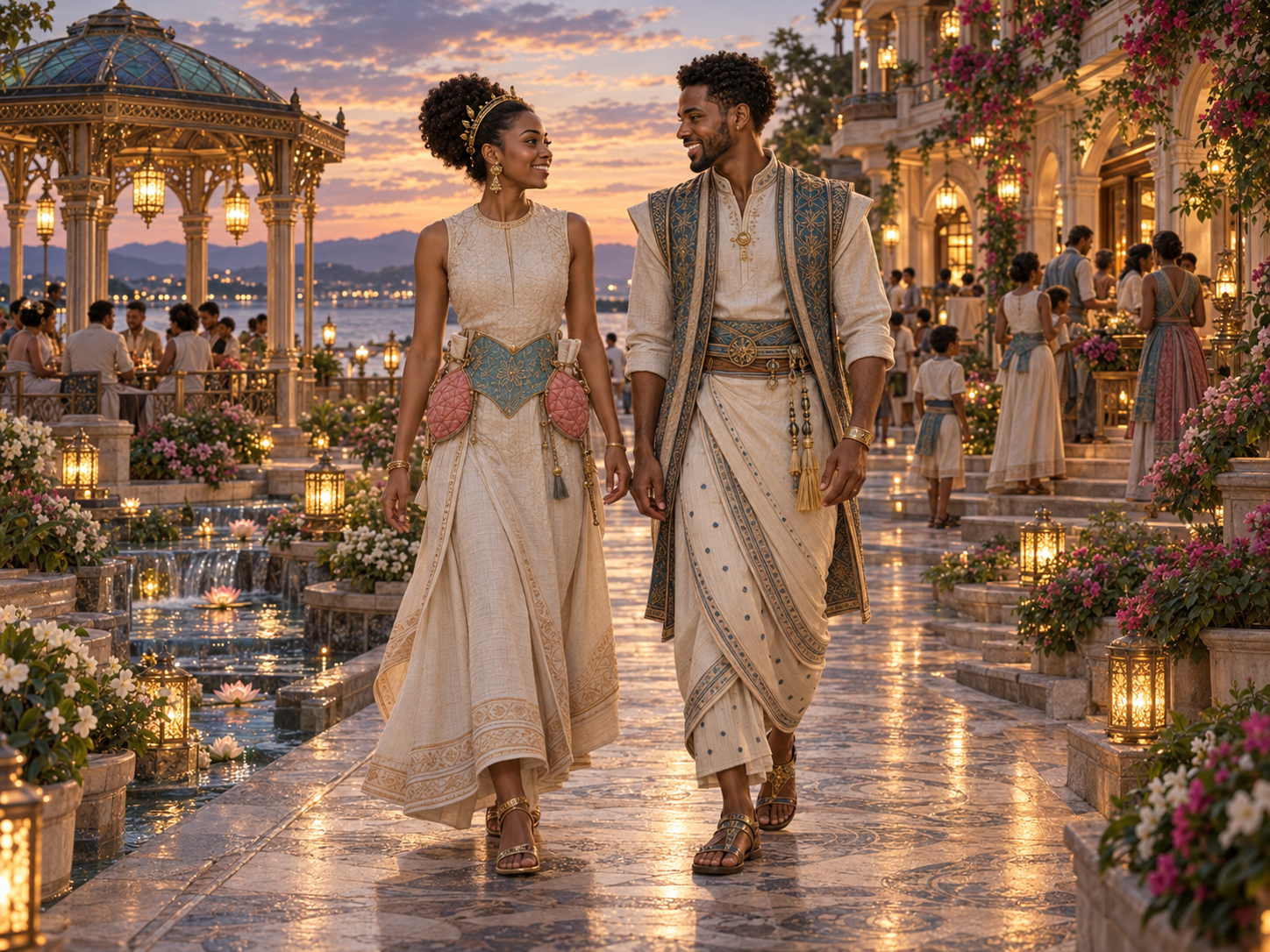
Adults may eat, dress beautifully, walk, talk, dance, listen to music, sit beside water or gather with other families.
Older people remain part of public life. Babies can rest in protected sleep gardens. Couples can enjoy the evening without pretending that family life must disappear before pleasure can begin.
The orchard night can be lively without becoming chaotic and beautiful without becoming exclusive.
One district may glow with silver Moonwash light. Another may carry cocoa-hearth warmth. A children’s route may use Dewburst lights at child height. A wetland edge may remain almost dark so the sky, water and birds remain dominant.
Nightlife becomes a shared civilization provision rather than a commercial product.
The night belongs to the families.
Childhood has somewhere magnificent to go
Children deserve more than plastic playgrounds, commercial playrooms, screens and repetitive attractions.
They deserve somewhere magnificent.
Within the orchard network, a child may encounter fruit trees, flowers, insects, water, sound, movement, unusual architecture, food transformation and changing seasons.
The child may enter a Frog Guardian Orchard Candy House, walk through an echo-and-vibration passage, follow gentle garden companions, gather flowers, play beneath giant light organisms or explore a soft squid-shaped play landscape.
These experiences do not replace the productive orchard. They help the child enter it.
Wonder is joined to real food, real planting, real stewardship and real public life.
Children are not arranged at the edge while adults enjoy the important parts of civilization. Their delight is designed into the orchard from the beginning.
They can run, eat, learn, meet other children, watch adults working and participate in clean-return systems. Their clothing, routes, seating, games and facilities are designed for their actual bodies and behaviour.
Beauty is part of what the civilization provides
The orchards are not allowed to be productive but ugly.
Beauty is not an unnecessary decoration added after the practical work has been completed. It changes how people experience land, how long they remain, how carefully they treat a place and what memories children carry from it.
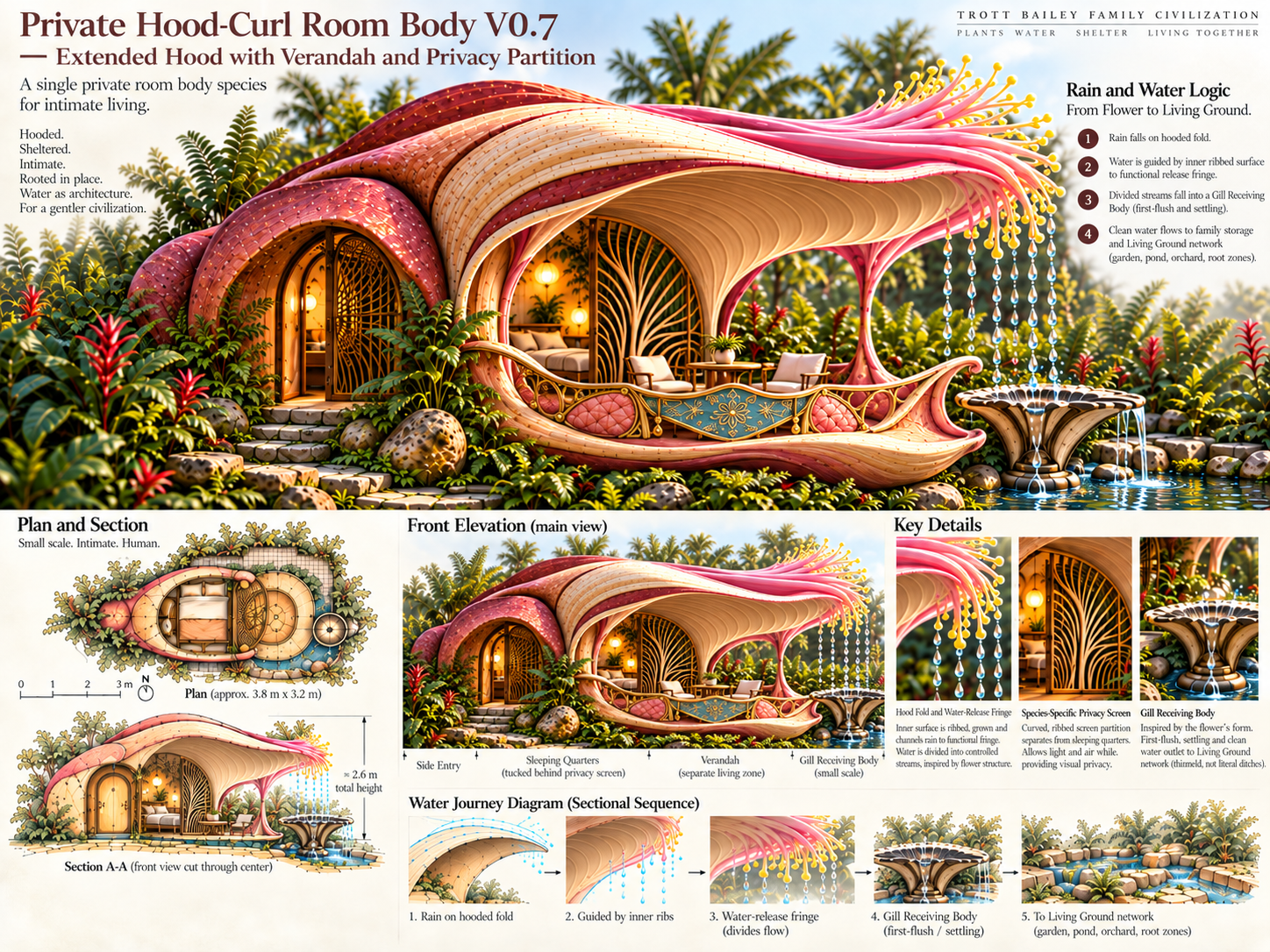
Patterned streets, shaped planting fields, water routes, flowers, verandahs, lights and architectural species all belong to the provision.
From above, productive planting may form large pictures through trees of different heights, dwarf-fruit gardens, vine structures, hedges and flower bands. At ground level, families move through the image without losing the usefulness of the land.
The streets are not plain gaps between destinations. They become a second artwork of the orchard through stone, ceramic, shell aggregate, woven-ground patterns and water traces.
Lighting does more than make the grounds visible. It gives different orchards distinct night identities while preserving safety, ecology and darkness where darkness belongs.
A family should not have to enter a luxury hotel, private estate or commercial development to experience land designed with imagination and care.
Beauty belongs in ordinary life.
A global and intergenerational public life
These orchard grounds belong to the full life of the civilization.
Families of many races and generations gather within the same abundance. Babies, children, teenagers, adults and older people remain visible together. Large families, mixed families, couples and extended families all find places suited to their needs.
Their varied Trott Bailey public-life garments allow the orchard itself to become an expressive picture of civilization life.
People meet repeatedly. Children form friendships. Older people remain known. Families recognise the stewards who care for the trees, food, routes and gathering grounds.
The orchard strengthens the social body because it gives people a beautiful reason to remain present.
Free does not mean careless
Everything is free because provision is organized, not because care has been abandoned.
Fallen fruit is recovered quickly. Food is protected. Banana leaves and reusable vessels return through Krubaro. Tools are washed. Service movement is kept clear of family routes. Stewards keep the grounds ready for the next family.
The orchard principle is simple:
No fallen fruit sleeps beneath the tree.
This protects food quality, prevents fruit-fly problems and keeps the grounds beautiful.
Children can participate through safe fruit-return carts, leaf-return points and guided harvesting. They learn that abundance must be cared for, not wasted.
There are no prices, but there are standards.
There are no customers. There are families, participants and stewards who understand that shared wealth must remain ready for the next person.
Care is organized.
Abundance is protected.
The spirit of an orchard civilization
A tree requires faith in the future.
It is planted before its full shade is available. It is watered before its greatest harvest appears. Someone prepares the soil before knowing every person who will later receive from it.
That is generosity expressed through time.
The orchard refuses to organize life around fear of shortage. It does not say, “Hold everything back because there may not be enough.”
Plant, tend, multiply, protect and share.
Fruit is one of God’s clearest lessons in living abundance. One tree produces many fruits. Each fruit carries the possibility of further life. Abundance grows through care, patience, knowledge and faithful stewardship.
The Trott Bailey orchard does not treat this multiplication as a private possession to be guarded from families. It turns it into civilization provision.
The orchard also restores the human spirit because it gives without humiliating.
Nobody must prove poverty before eating. Nobody enters a lesser queue for charity. Nobody must explain personal hardship before being allowed into beauty.
The same orchard receives the entire civilization.
That makes it more than a food system.
It becomes a symbol of how the civilization sees human beings.
Generosity built into the land
Generosity should not depend only on occasional private gifts.
Within the Trott Bailey Family Civilization, it is built into the landscape.
It becomes fruit already growing, shade already forming, water already moving, seating already waiting and lights already prepared for the evening.
It says that families were anticipated.
Their need for beauty was anticipated.
Their children’s joy was anticipated.
Their need to gather, rest, talk and remain together was anticipated.
So the civilization prepared the land.
The orchard is not charity.
It is shared civilization wealth made physical.
Part of the civilization’s body
The Trott Bailey Family Civilization is laid out so that orchards remain present throughout ordinary life. Families eat from them, walk through them, meet inside them, spend evenings in them and allow children to grow familiar with their land, food and public life.
No money enters the experience.
The food is free.
The games are free.
The beauty is free.
The night belongs to the families.
The orchards are not attractions added after the civilization has been built.
The orchards are part of the civilization’s body.