Geothermal Tempering System
Making an Earth gift that is naturally too hot for direct human enjoyment safely accessible—while respecting the source, its chemistry, its limits and the water’s continuing life.
What the invention originally wanted to achieve
The invention began after World Ruler Sher watched a feature concerning tectonically active territories associated with the Indian Plate and neighbouring plate systems. It included geothermal and hot-spring country, including places in China where naturally emerging water could be too hot for people to enter safely.
The originating idea was simple: if Earth is already bringing geothermal water upward, but its temperature prevents people from enjoying it, could an appropriate portion be redirected through cooling tracts, brought into a comfortable human-use range, divided, and allowed to emerge again as many small hot springs?
The original intention was not to turn the concept into a power station, cooking system or overloaded multipurpose machine. Its core purpose is human access to an Earth gift that is too hot in its original state.
One source. Many intimate spring experiences.
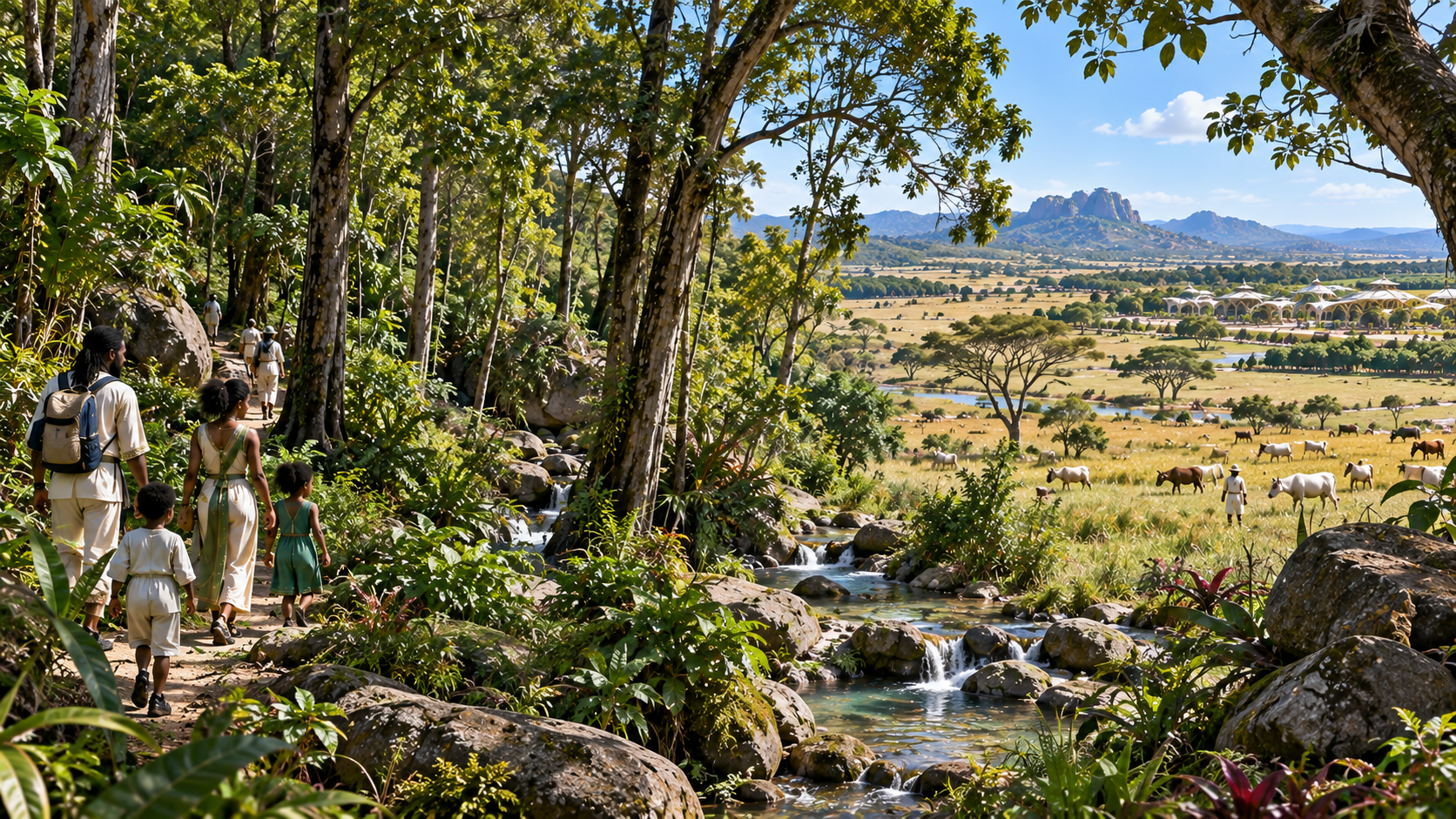
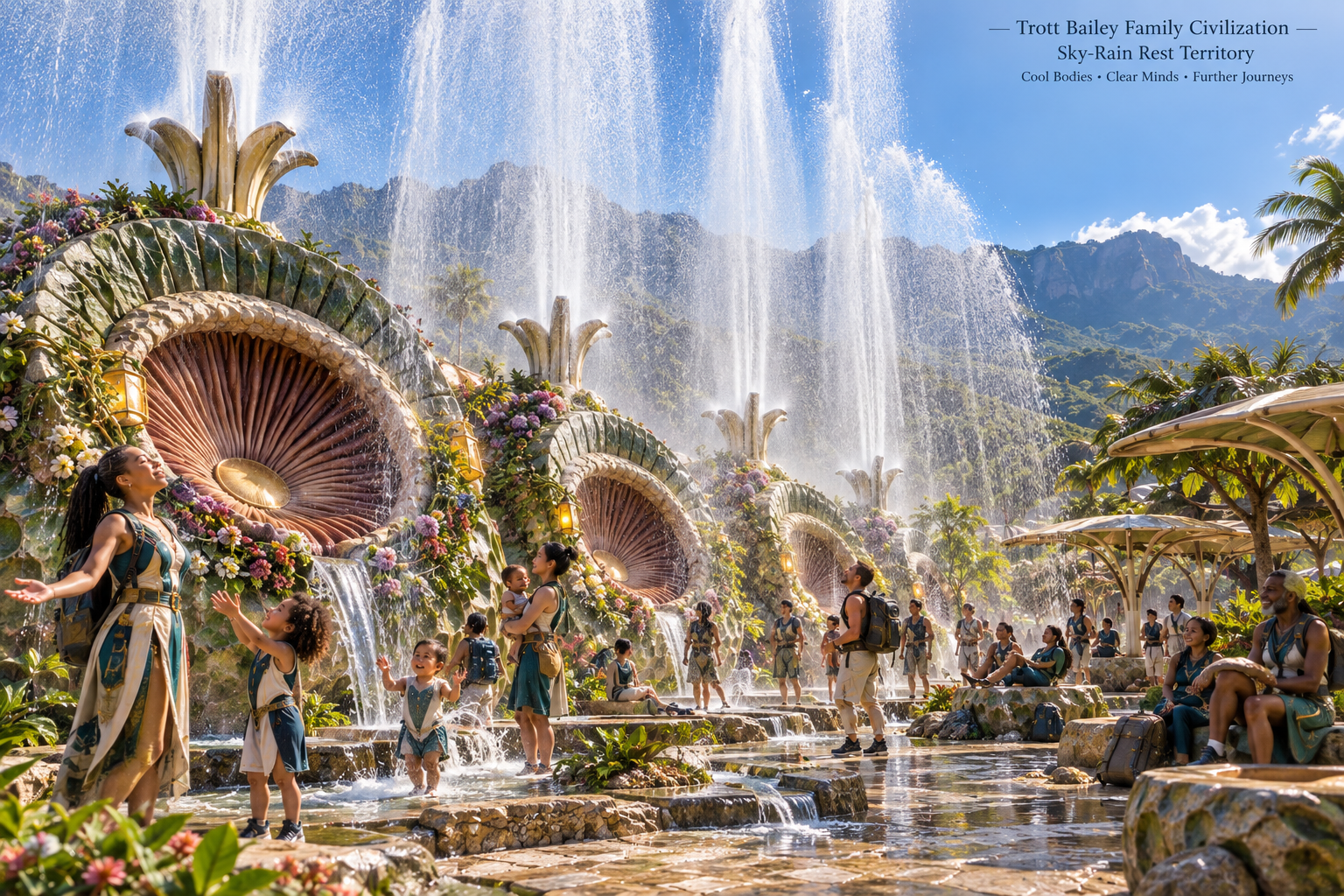
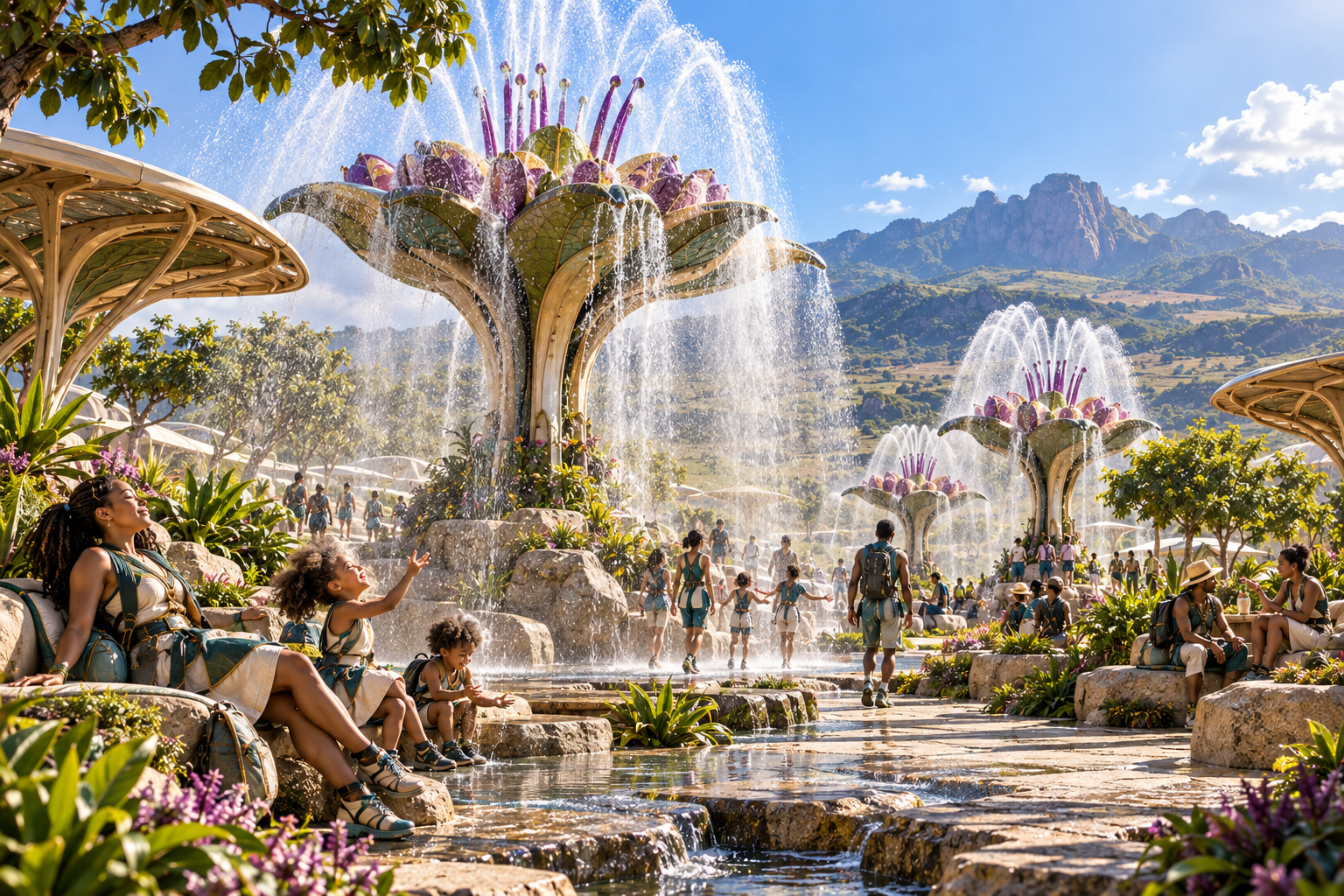
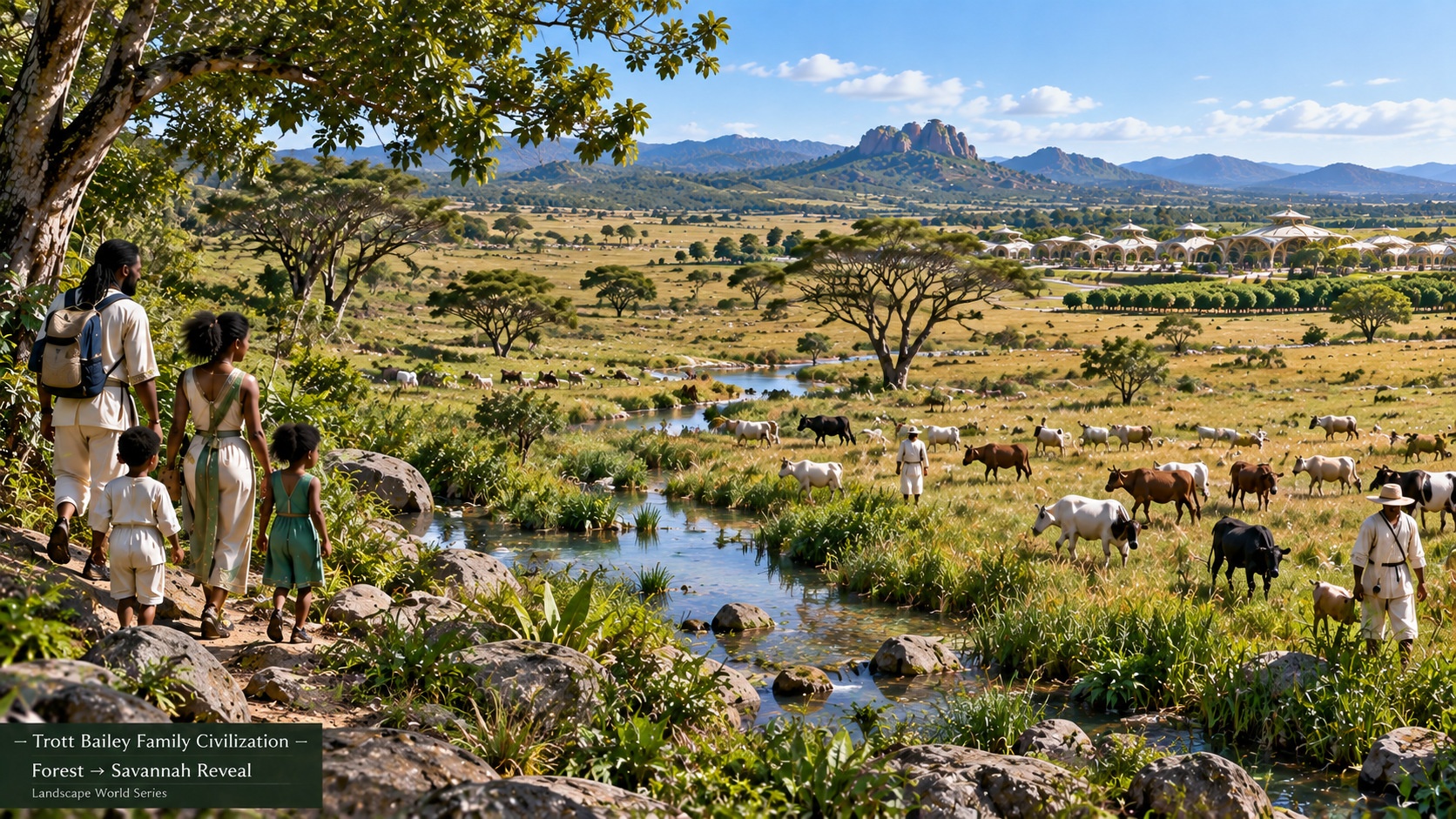
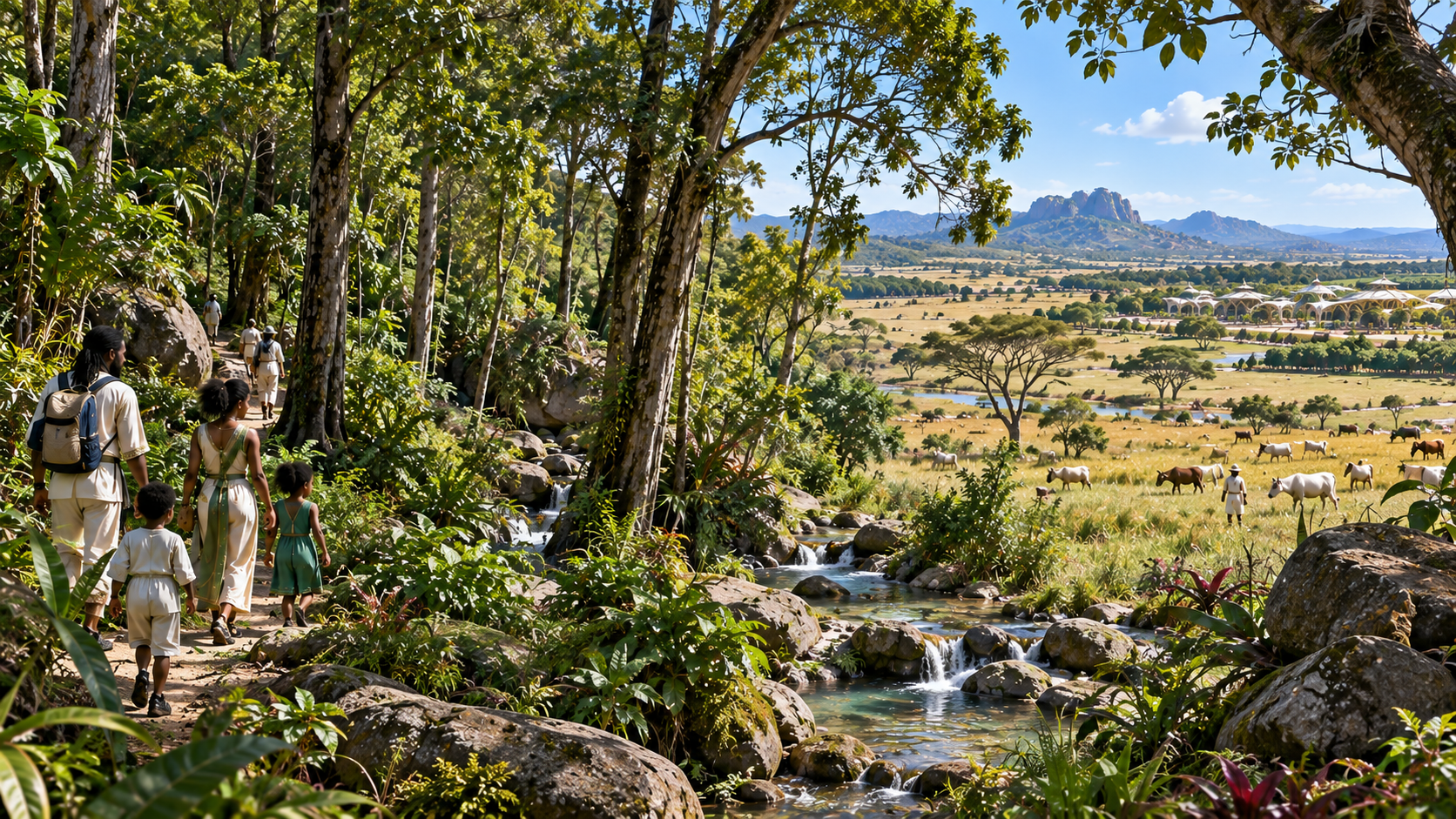
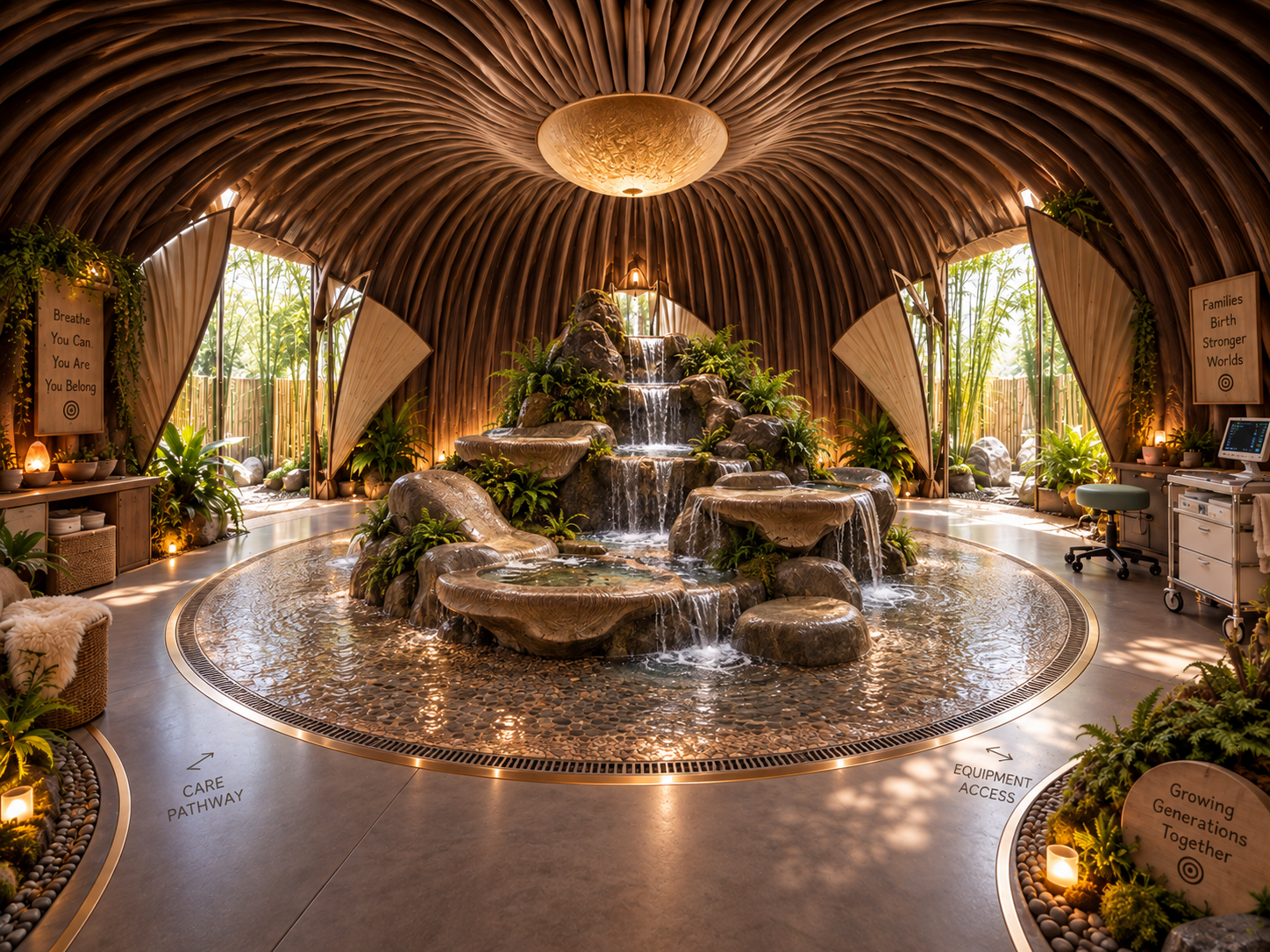
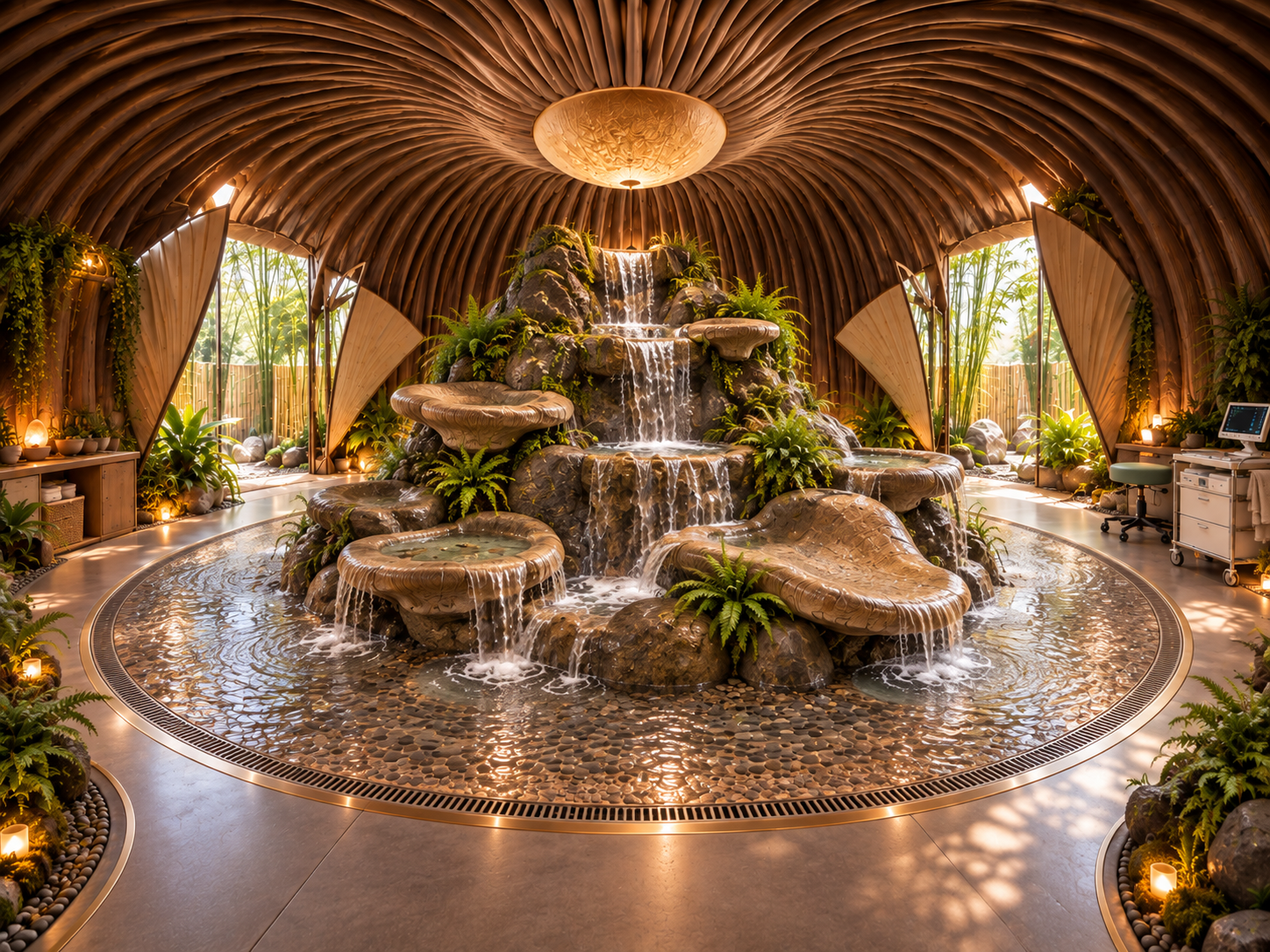
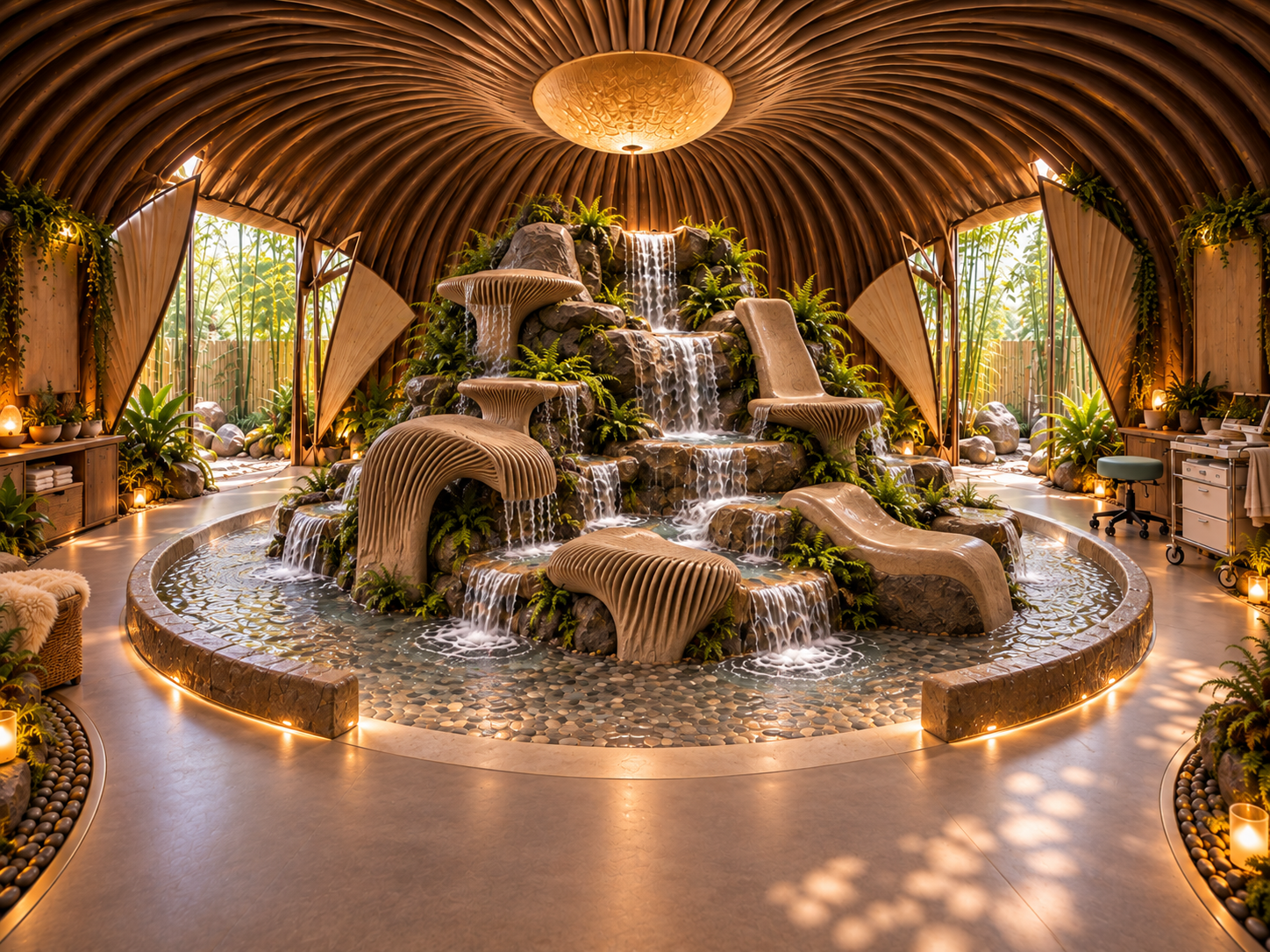
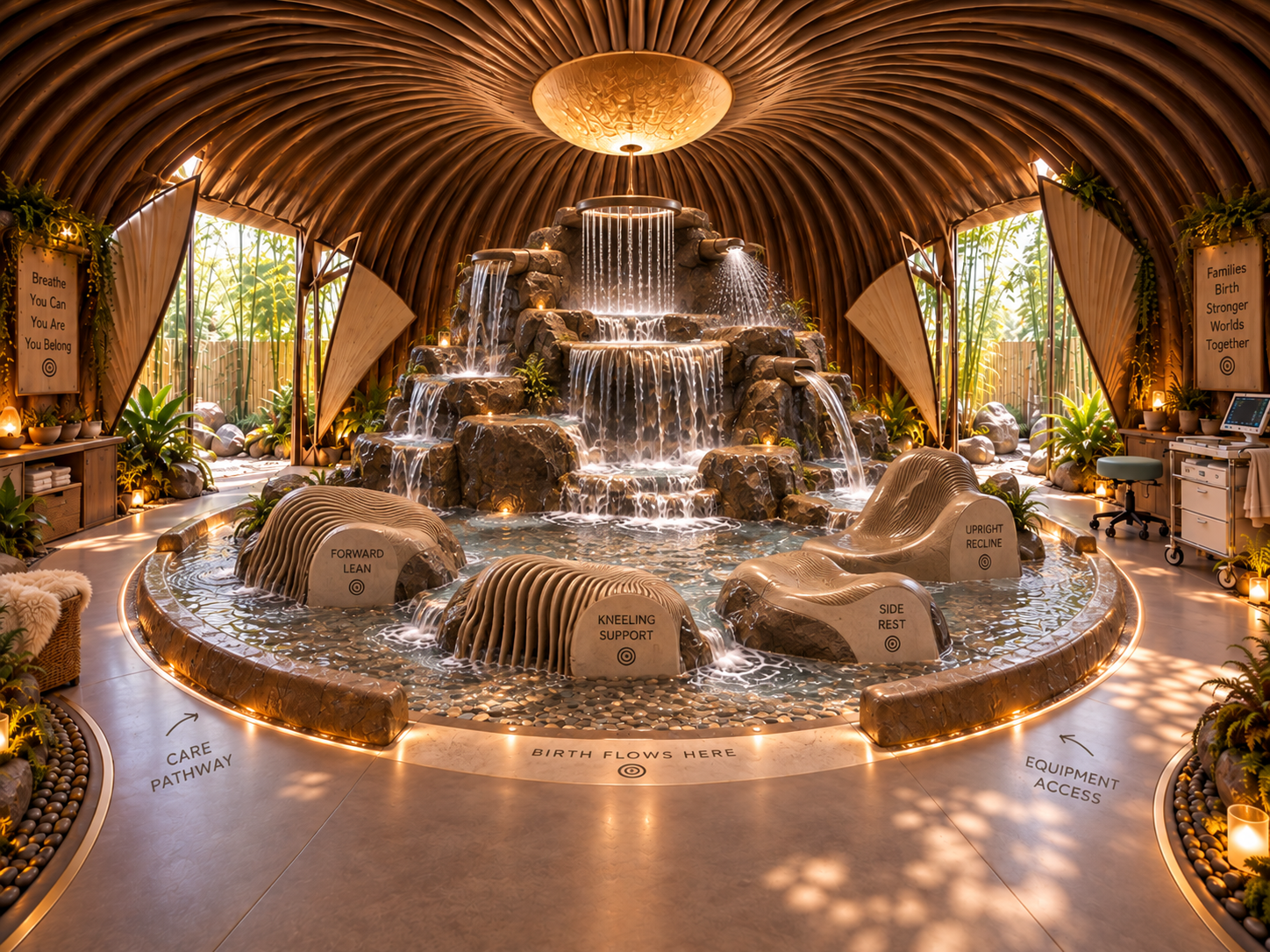
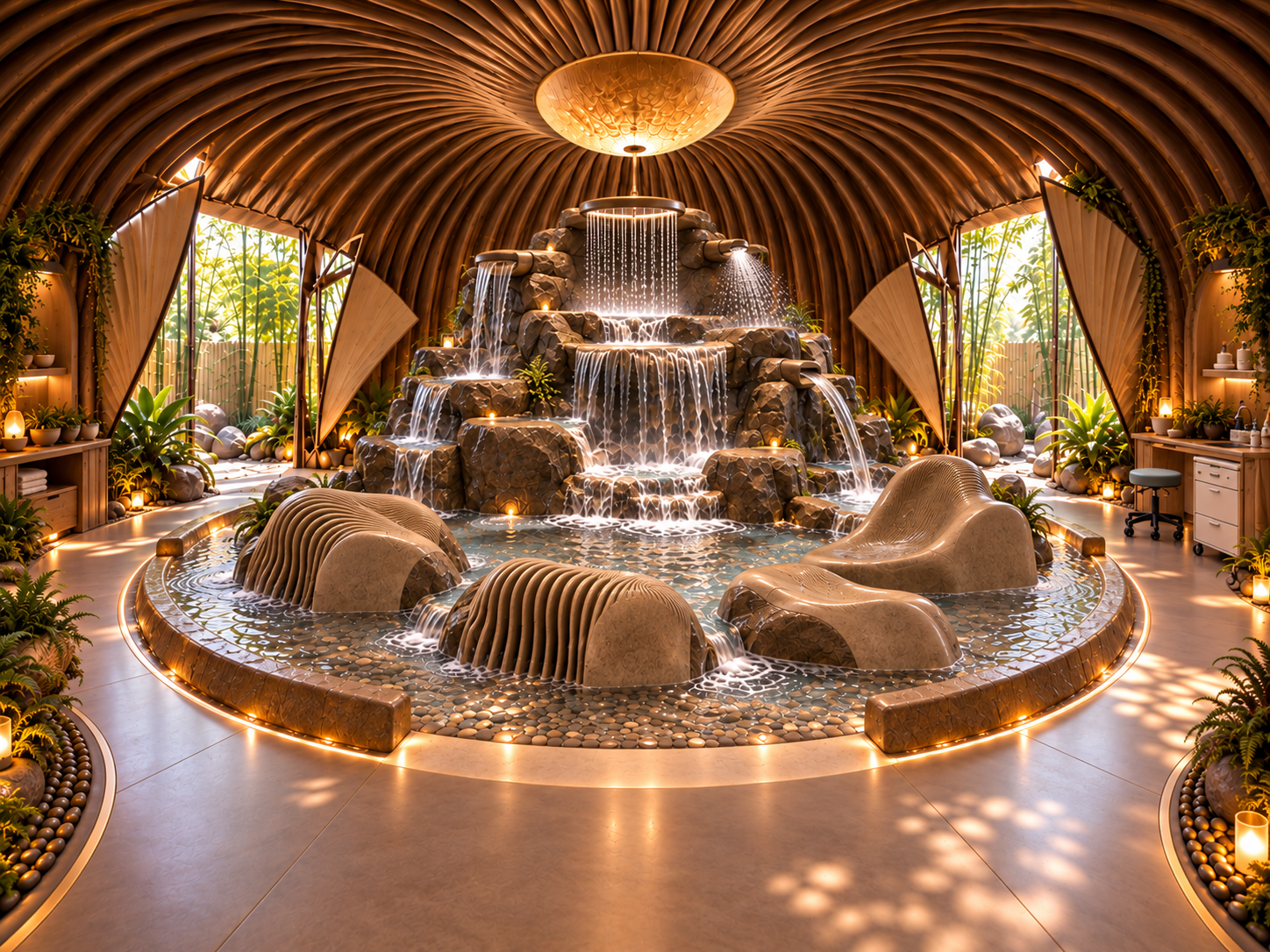
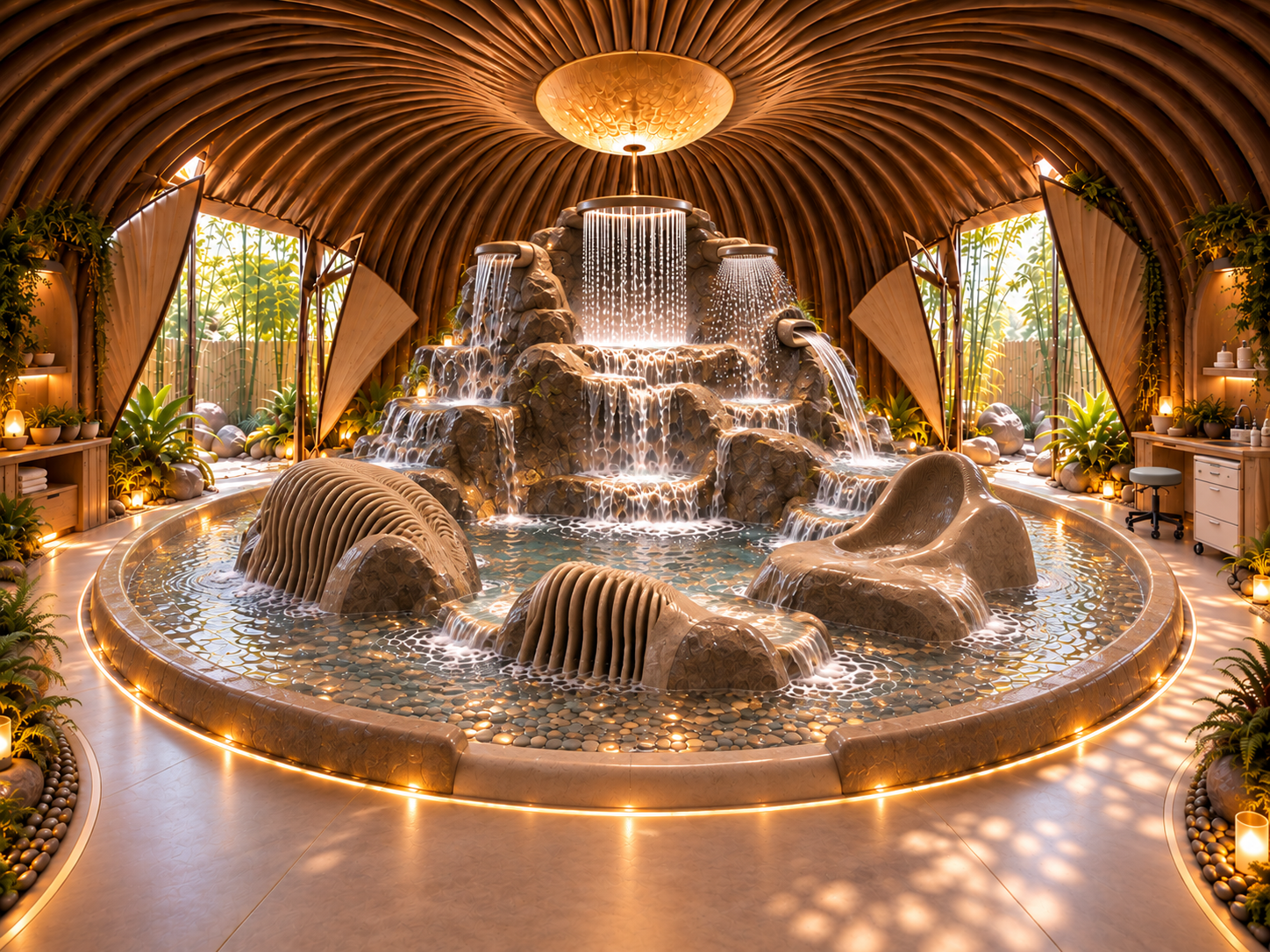
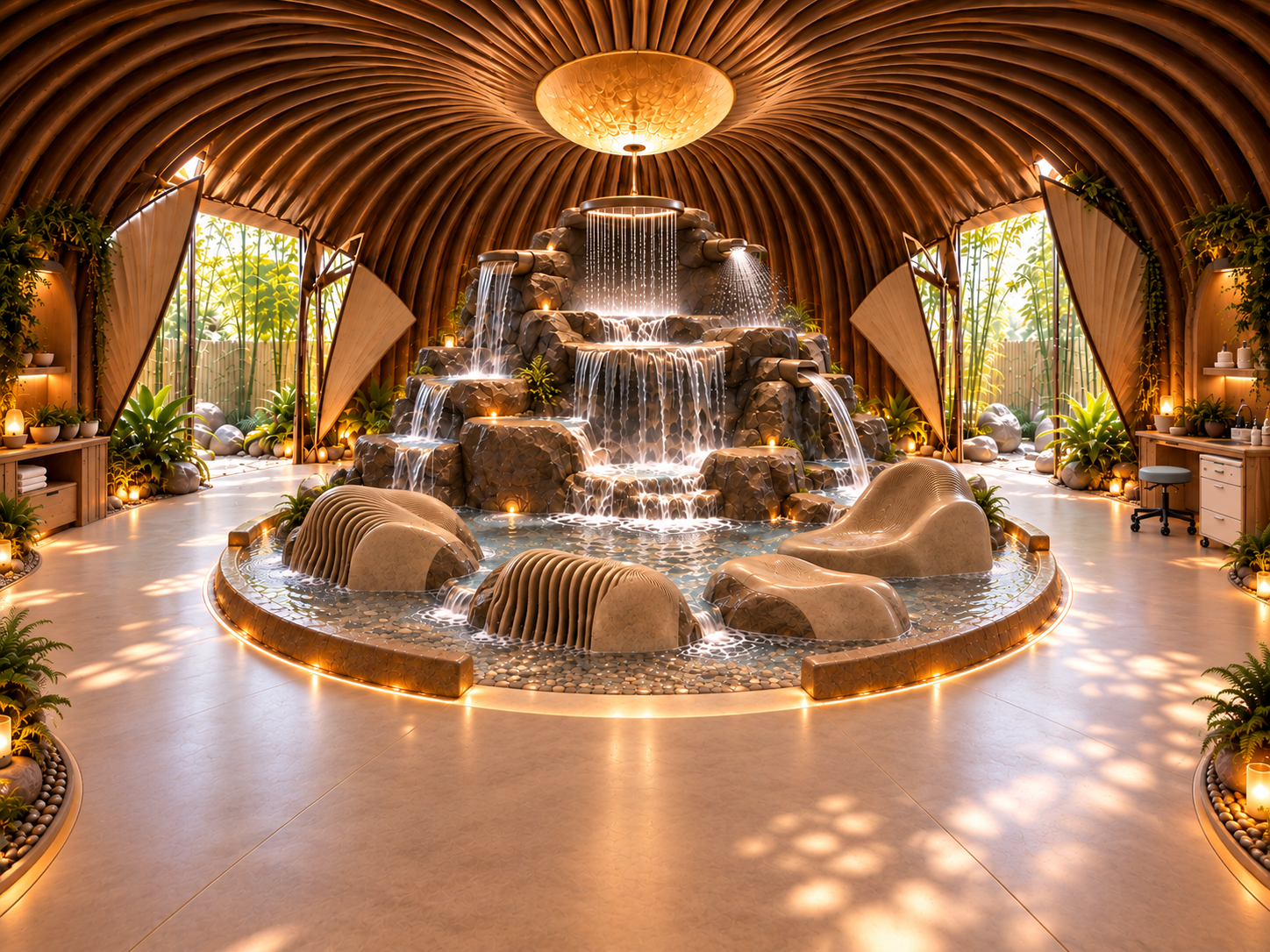
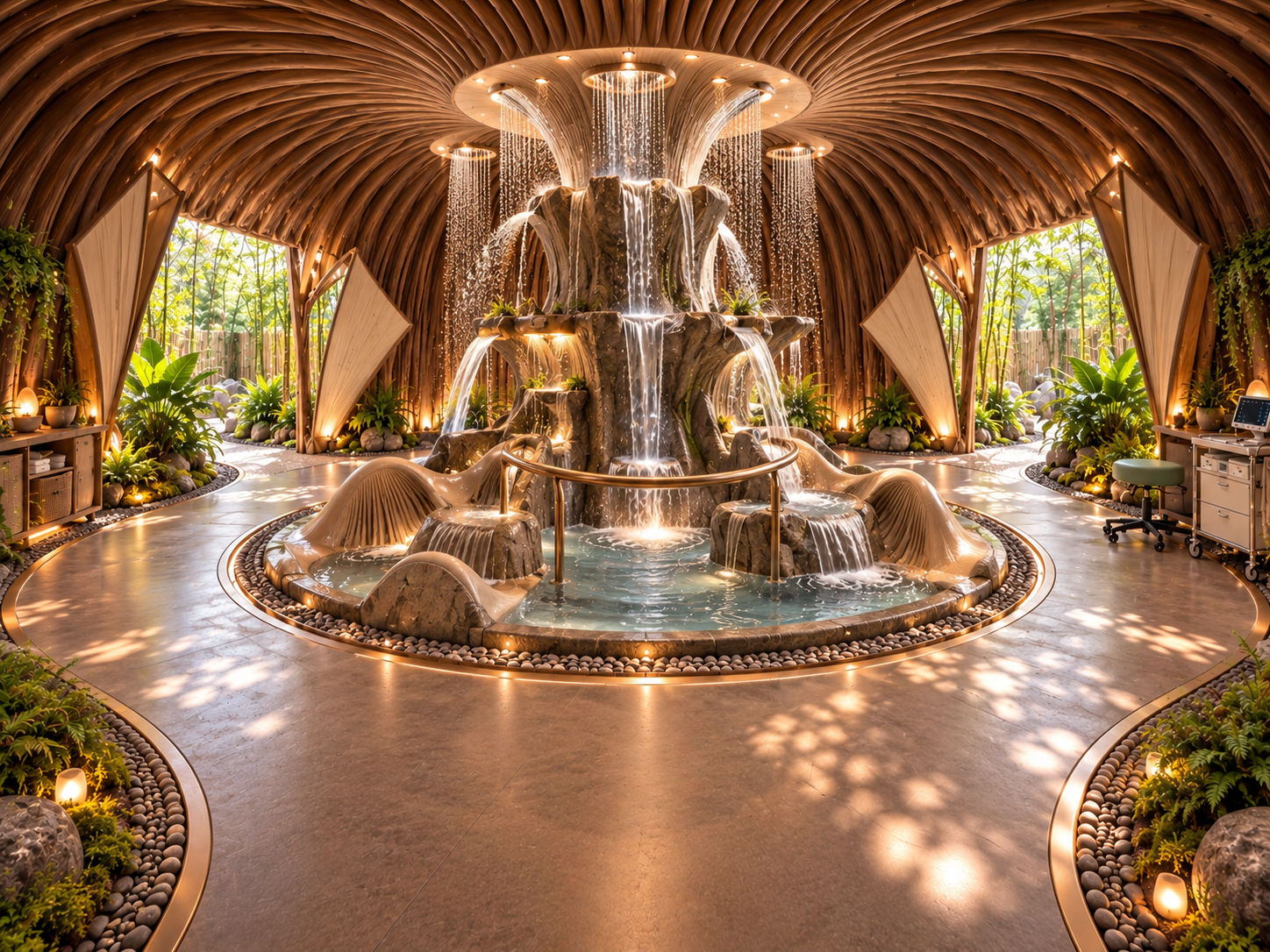
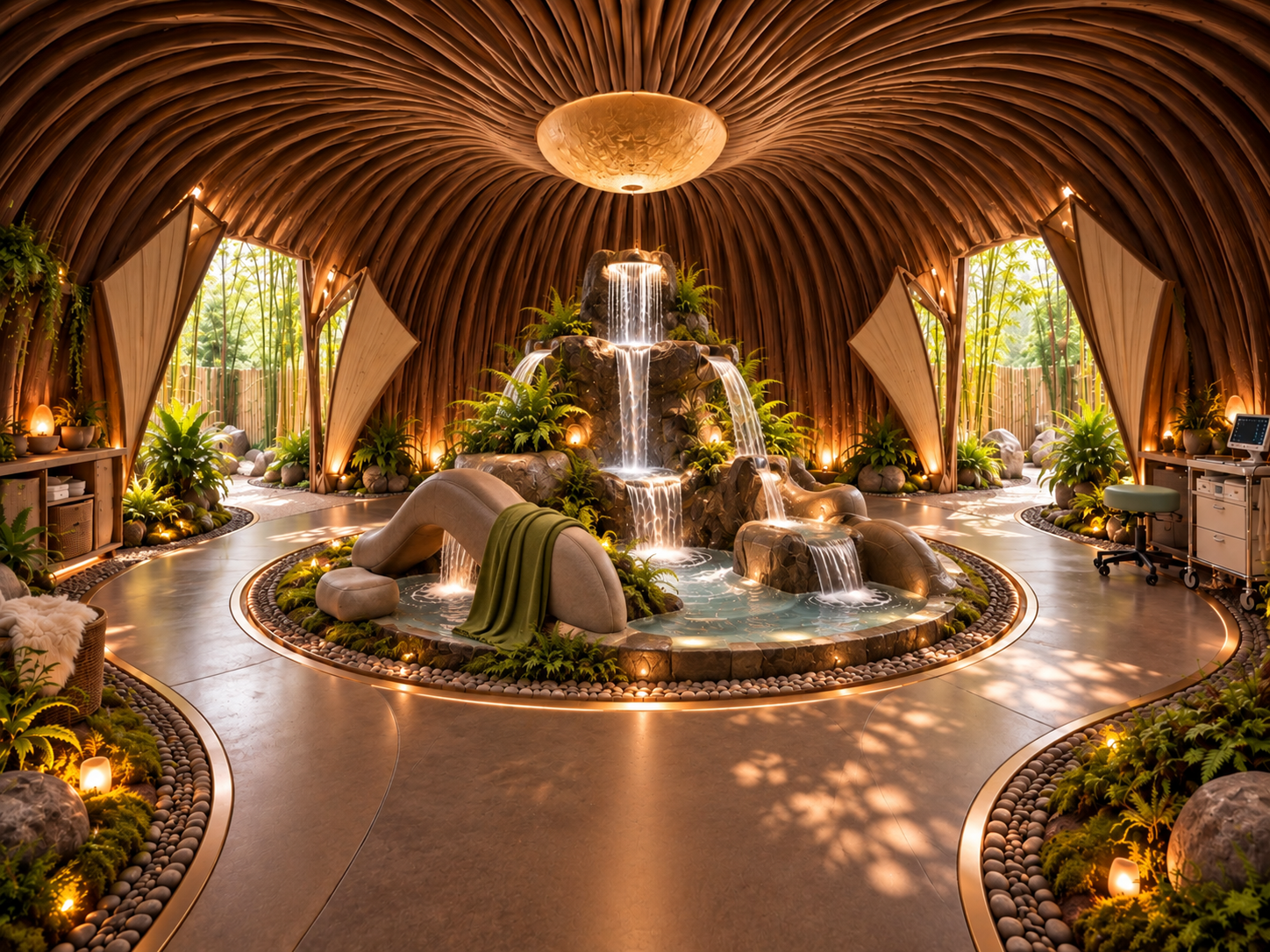
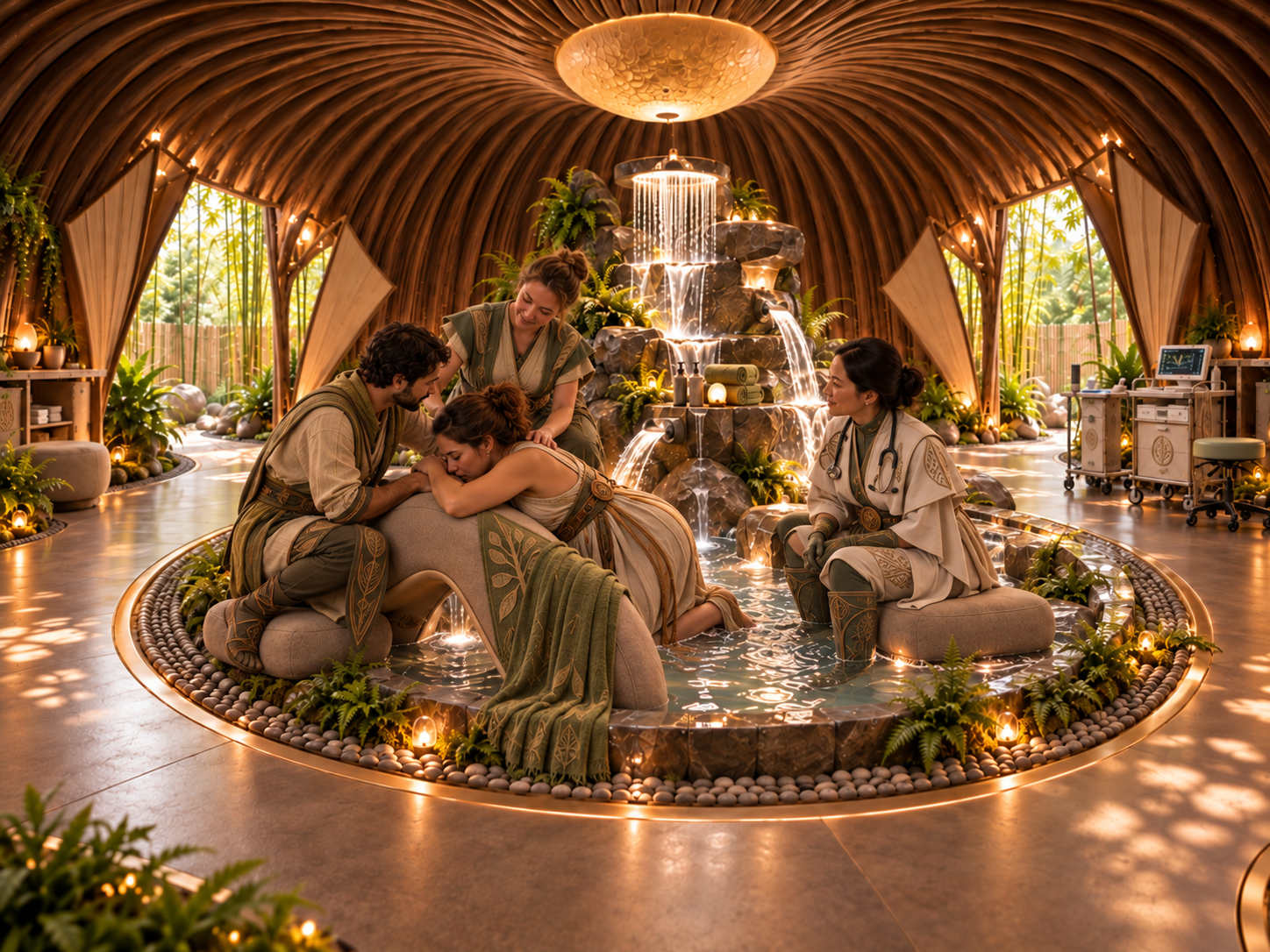
The concept does not require one enormous commercial spa surrounding the geothermal source. After tempering and safe distribution, small springs could appear among mountain rocks, inside forest, beside walking routes, within orchard country, near family territories, overlooking valleys or within quiet gardens.
Earth gives water too hot to enter.
Civilization receives an appropriate portion.
The water travels and cools.
One flow becomes many.
Warm springs emerge throughout the landscape.
The central proposition is technically plausible
Research confirmed that geothermal fluids can be transported through engineered networks, thermally managed and given an appropriate afterlife. Geothermal direct-use systems already demonstrate practical movement and use of subsurface heat and water.
Research on thermal mineral water also confirms the specific problem behind the invention: naturally hot water sometimes requires cooling before bathing use.
The authorship territory is therefore not simply whether hot geothermal water can be cooled. It lies in how cooling, distribution, landscape, maintenance, safety and human experience are composed as one system.
What research changed or deepened
Cooling need not mean dilution
Heat may be removed without simply mixing the geothermal water with large quantities of cold water, helping preserve more of its original character.
Chemistry matters
Natural + hot does not automatically mean suitable for bathing. Each source must be chemically and hydrogeologically understood first.
Scaling shapes anatomy
Cooling and pressure changes can precipitate minerals. Large serviceable passages, accessible surfaces, flushing and replaceable components therefore matter.
Safety needs a hard boundary
If safe conditions cannot be verified, flow to people should stop. The failure condition must never be uncontrolled excessively hot water reaching a human spring.
Warm water needs biological management
Comfortable bathing temperatures can also support microbial growth. Circulation, residence time, cleaning, chemistry and bather load remain serious design questions.
Protect the source
A visible spring can belong to a much larger underground system. Intervention requires understanding recharge, pressure, flow, neighbouring springs and ecological relationships.
The original spring does not have to be consumed
The invention does not grant permission to drain or diminish a natural geothermal feature. Depending on the source, a sustainable diversion, an appropriate geothermal well, another intake relationship—or no intervention at all—may be the responsible answer.
“This is what Earth produces.”
and elsewhere,
“This is how Civilization carefully made part of that gift accessible.”
Do not reinvent every metre of pipe
Early exploration risked turning the whole cooling journey into one monumental sculptural object. That was rejected.
Ordinary protected conduit can remain ordinary where it performs the transport job well. Authorship belongs where something consequential happens to the water.
Cooling bodies may become different species
A cold windy mountain and a hot humid tropical territory do not present the same heat-rejection problem.
Incoming temperature, flow, air movement, humidity, geology, chemistry, scaling and maintenance can all alter the appropriate anatomy.
Their common identity need not be a repeated visual style. It can be the depth of their engineering and authorship.
Nature supplied intelligence, not finished shapes
Sea pen
Central route plus repeated lateral surface multiplication.
Disc / jellyfish-like organism
Large thin surface territory surrounding a compact working core.
Ping-pong-ball sponge
Central body, narrow necks and expanded terminal chambers; useful for thinking beyond one linear cooling tract.
Christmas-tree-worm-like anatomy
A strong central body with spreading territories, suggesting lateral thermal anatomy around a protected core.
None of these references is an official exterior design. Finished architecture should not merely enlarge a biological reference to building scale.
What the studies taught us
Design Study 01 — Long ribbed cooling tract. It demonstrated progressive cooling and large surface area, but remained too literal to the sea-pen reference. Exterior rejected; system learning retained.
Engineering Anatomy Study 01 — Discrete cooling bodies. Separating ordinary conduit from major cooling events was a substantial improvement. The main body, however, still risked reading as a biomorphic pavilion explained afterward as engineering. Retained as development evidence; exterior not locked.
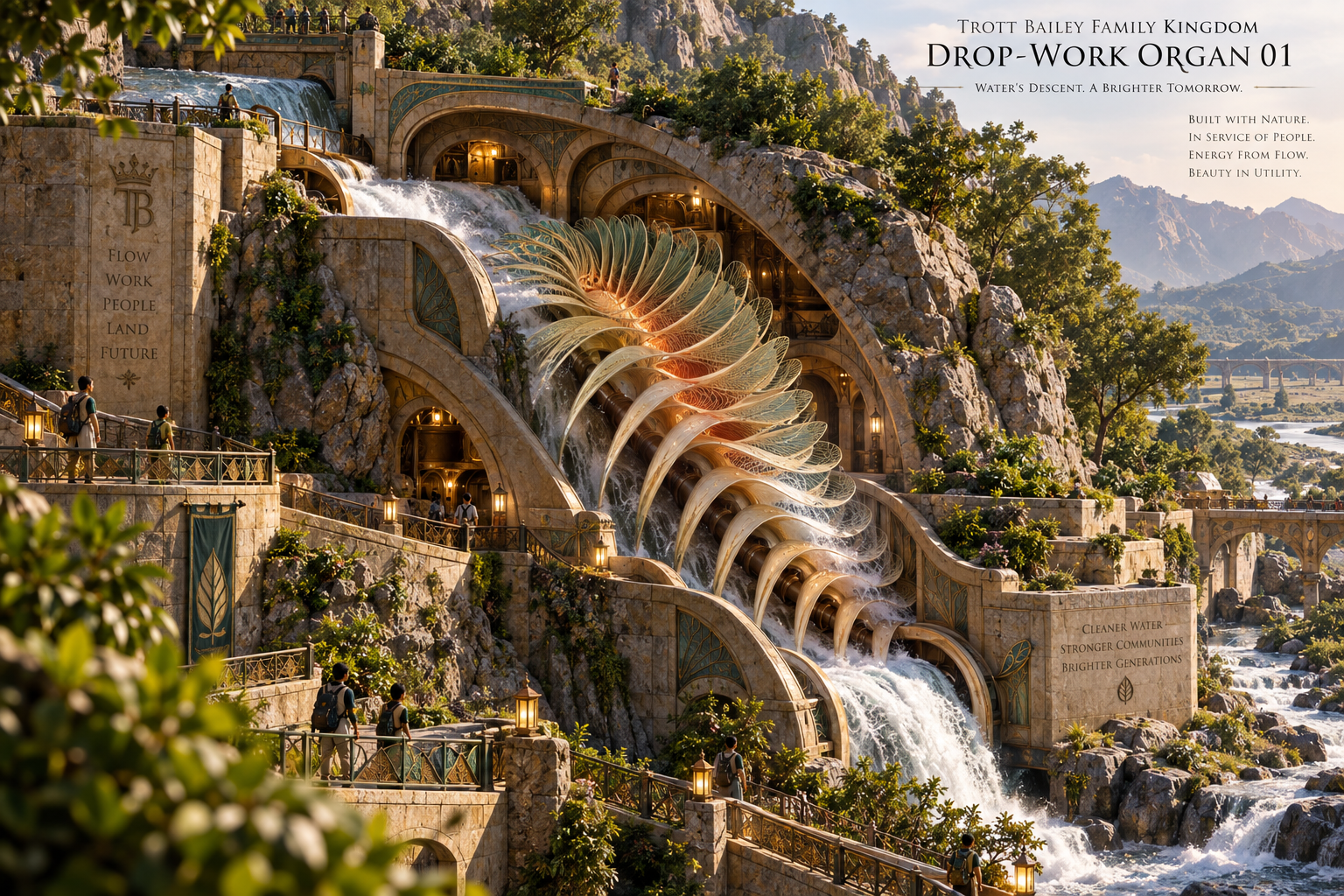
Design Study 02 — Landscape-integrated anatomy. A stronger possibility emerged: the mountainside, buried geothermal body and scattered exposed thermal fragments may together constitute one cooling organ.
Different thermal territories may emerge through rock at different orientations without forming one neat building at the surface. Promising; not locked.
The engineering can disappear where the experience begins
After water reaches an independently verified safe condition, it can divide into separately controlled routes.
A forest spring need not resemble a mountain spring. An orchard spring need not advertise the cooling machinery kilometres away.
Apparently effortless Earth-water downstream.
Whether springs receive one centrally tempered condition or use carefully controlled local final adjustment remains unresolved. Safety and engineering should decide.
The invention does not end at the beautiful spring
Used geothermal water still needs a deliberate destination. Depending on source chemistry, geology and ecology, future development may investigate reinjection, further appropriate use, treatment, or controlled environmental return where demonstrably suitable.
No universal afterlife is locked.
Four working territories
1. Source Steward Territory
Understands and controls the relationship with the geothermal source.
2. Cooling Territory
Removes sufficient heat while accommodating chemistry, scaling and maintenance.
3. Temperature & Safety Territory
Creates a hard operational boundary between excessively hot geothermal infrastructure and human-use water.
4. Distribution Territory
Divides verified tempered water into independently controllable routes serving multiple landscape springs.
Problems still to solve
- Source relationship: How much flow can appropriately be diverted or extracted?
- Cooling mechanism: Passive, conductive, air, indirect heat exchange, vacuum, hybrid, or another approach?
- Cooling scale: How much area, distance and time are required for particular source temperatures and flow rates?
- Scaling: Where will minerals precipitate as conditions change?
- Maintenance: How will passages and thermal surfaces be inspected, opened, flushed, cleaned and replaced?
- Materials: What survives heat, chemistry, corrosion and thermal cycling?
- Temperature safety: How is an uncontrolled hot-water route to people made physically fail-safe?
- Water chemistry: Which sources remain suitable for human contact after tempering?
- Microbiology: How will distributed warm-water springs remain healthy?
- Spring hydraulics: Continuous overflow, recirculation, drain-and-renew, or another behaviour?
- Distribution losses: What happens when tempered water travels long distances?
- Temperature branching: Central condition or individual spring adjustment?
- Pressure: How do elevation and source pressure affect the network?
- Natural variability: What happens when source flow or temperature changes?
- Extreme events: Earthquake, landslide, blockage, control failure, power loss or rupture?
- Afterlife: What happens to used water at each source and landscape?
- Architecture: What anatomy genuinely emerges from solving these problems rather than merely looking unusual?
These are development questions, not evidence that the invention has failed. They define the work required to turn the originating idea into a responsible physical system.
What is locked—and what remains open
Locked at functional level
The originating purpose; one source may support many geographically distributed spring experiences; source suitability must be understood first; temperature and chemistry both matter; a hard human-safety boundary is required; scaling and maintenance influence anatomy from the beginning; spring architecture can respond individually to landscape; and water afterlife must be designed.
Not locked
Exact cooling technology; Cooling Body exterior; biological-reference anatomy as final form; number and spacing of cooling bodies; central versus local final temperature control; source-intake method; universal afterlife method; and final names of individual physical species.
Geothermal Tempering System
Geothermal Tempering System is a Trott Bailey Family Civilization Authored Water Intelligence system conceived by World Ruler Sherika Trott Bailey to make appropriate geothermal water that naturally occurs too hot for direct human enjoyment safely accessible.
An appropriate portion of geothermal water is received only after the source and its suitability are understood, progressively tempered through a maintainable cooling journey, protected by a hard human-safety boundary, and divided into multiple routes that allow small warm or hot springs to emerge throughout different landscape worlds.
The system preserves the possibility that the original natural geothermal feature remains substantially or entirely untouched, and requires a deliberate afterlife for water following human use.
Water has a life
An organ is an encounter in the life of water, not necessarily the end of water’s usefulness.
The invention should not become ordinary geothermal plumbing covered with strange decorative shells. Nor should established components be rejected merely because they already exist.
Use proven conduit, valves, sensing and controls where they are the right tools. Author radically where there is a genuine opportunity to change form, behaviour or human experience.
The objective is not for every component to be unprecedented. The objective is for the resulting water life, physical system and human experience to be genuinely authored.
Selected technical references
- U.S. Department of Energy — Geothermal direct use: energy.gov/hgeo/geothermal/geothermal-direct-use
- Centers for Disease Control and Prevention — Hot-tub water-temperature guidance: cdc.gov/healthy-swimming
- Centers for Disease Control and Prevention — Legionella Control Toolkit, hot-tub module: cdc.gov/control-legionella
- U.S. Geological Survey — geothermal spring resource protection and susceptibility: usgs.gov
- Energies — thermal/mineral-water cooling research: mdpi.com/1996-1073/16/7/2941