Large Systems Machinery
Vessels, waterworks, launch infrastructure and heavy moving bodies. A machinery record for raising large civilization systems from the same productive backbone already being assembled.
The Large-System Question
The Makora, its launch body, and the water district do not suddenly require an entirely different civilization of machinery.
Much of the work still belongs to the backbone already identified: machining, forming, stone, timber, earth, ceramic, metal fabrication, hydraulics, electrical repair, material handling and building-raising machinery.
What these larger systems expose are the places where the existing backbone must grow in scale.
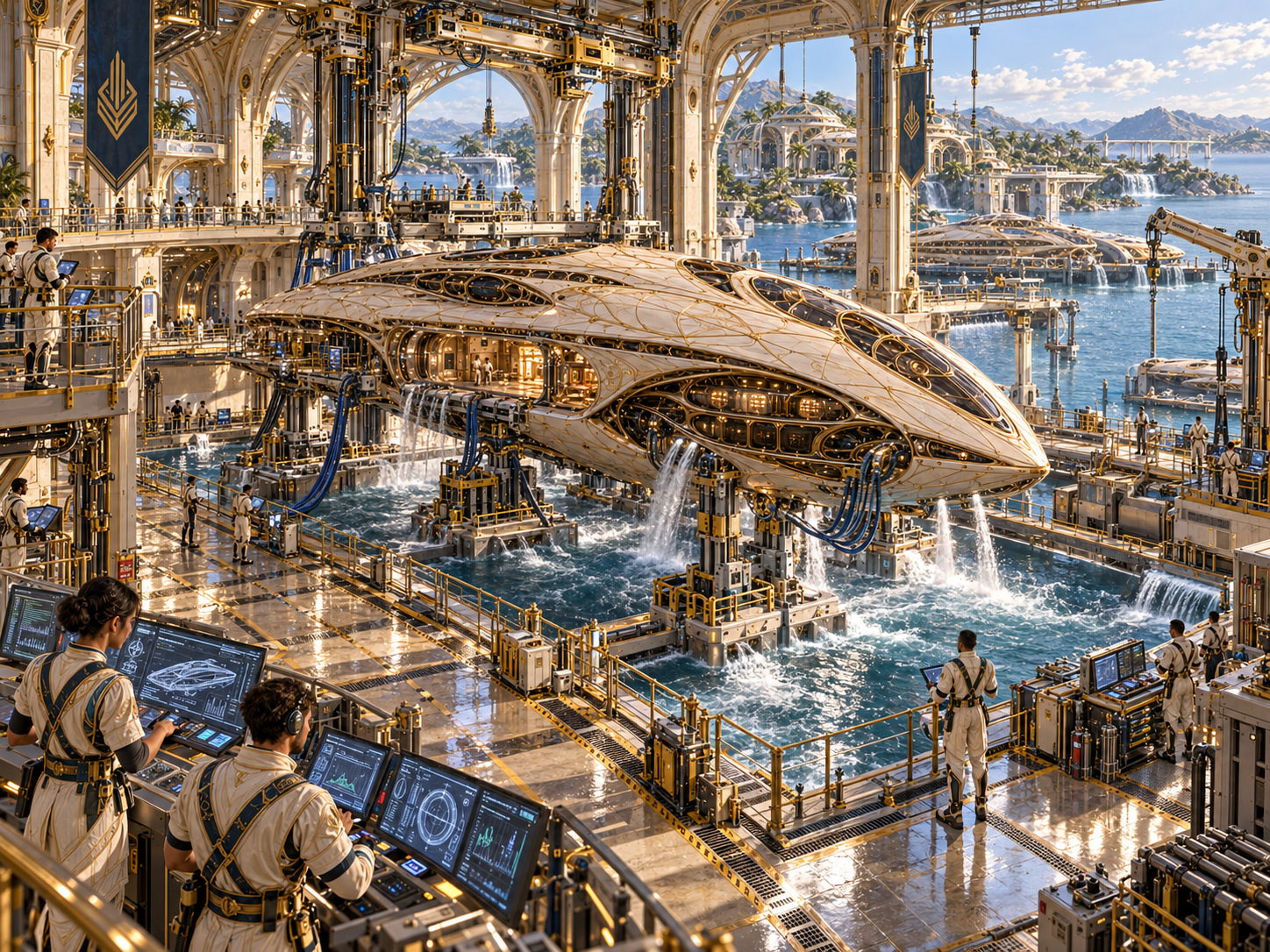
Makora Highshell Grand Carecraft
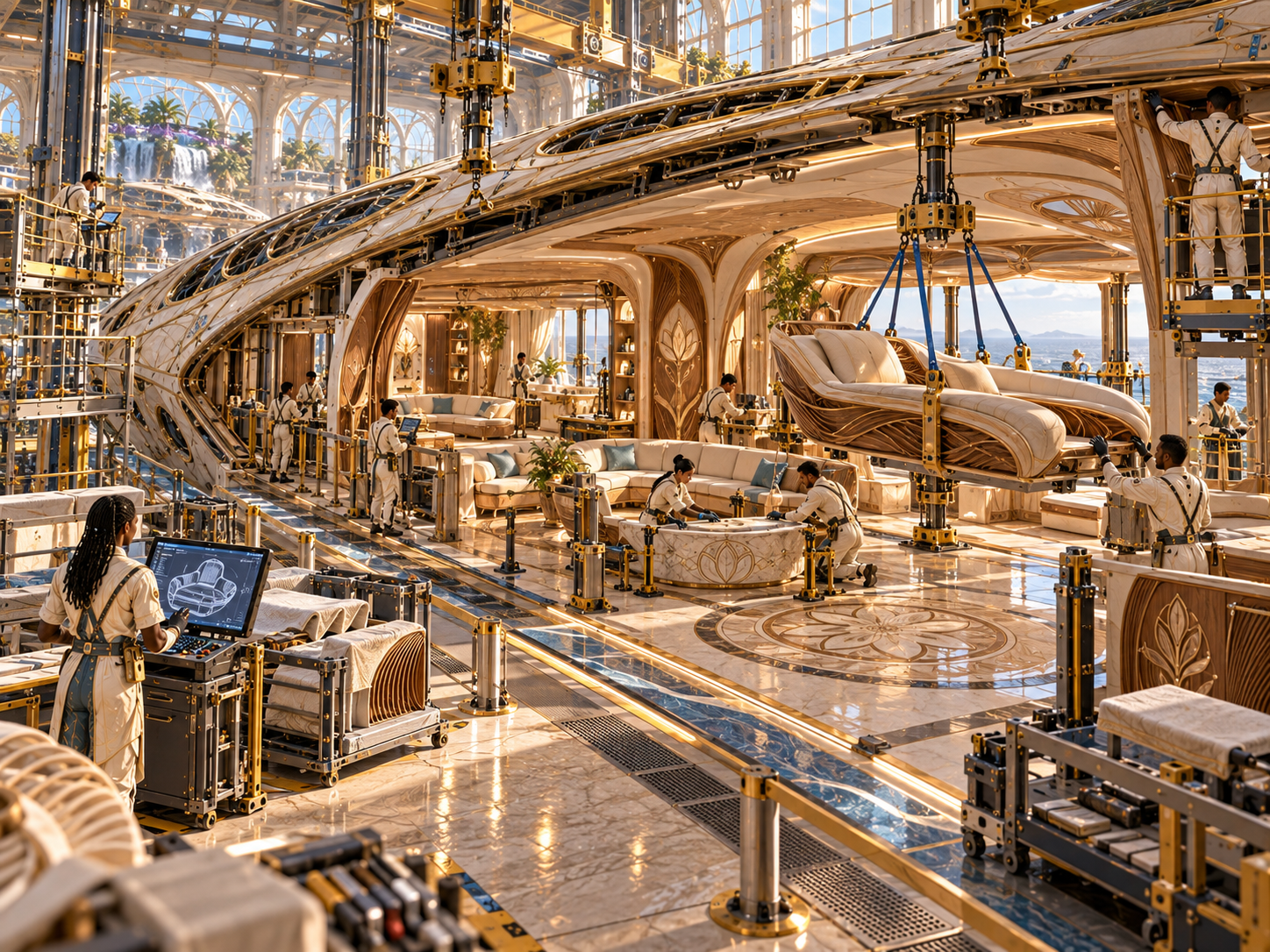
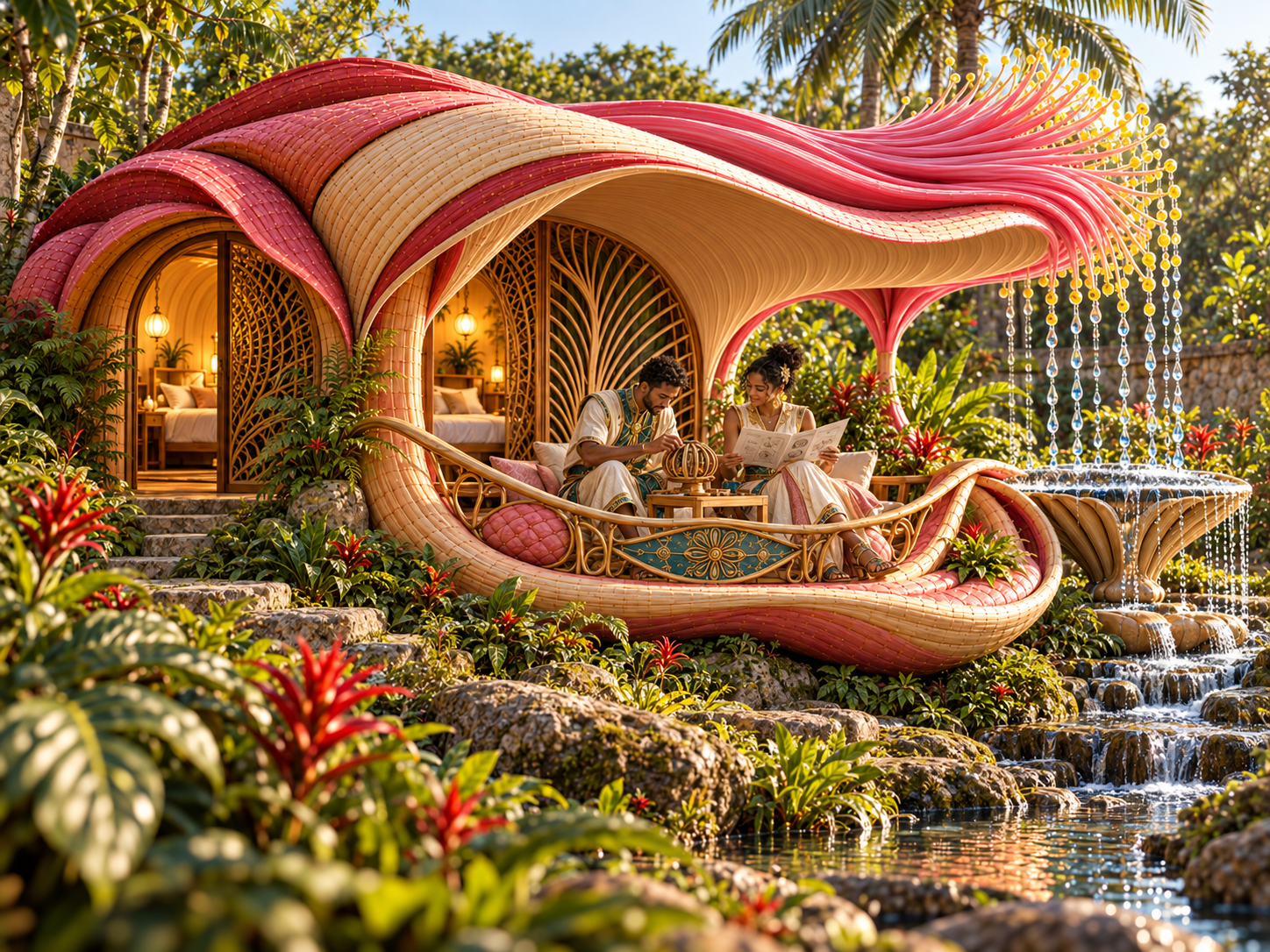
Makora combines large vessel construction, family interiors, marine movement, airborne movement, glazing, mechanical systems and precision assembly.
| Makora Body | What Must Be Produced | Main Machinery |
|---|---|---|
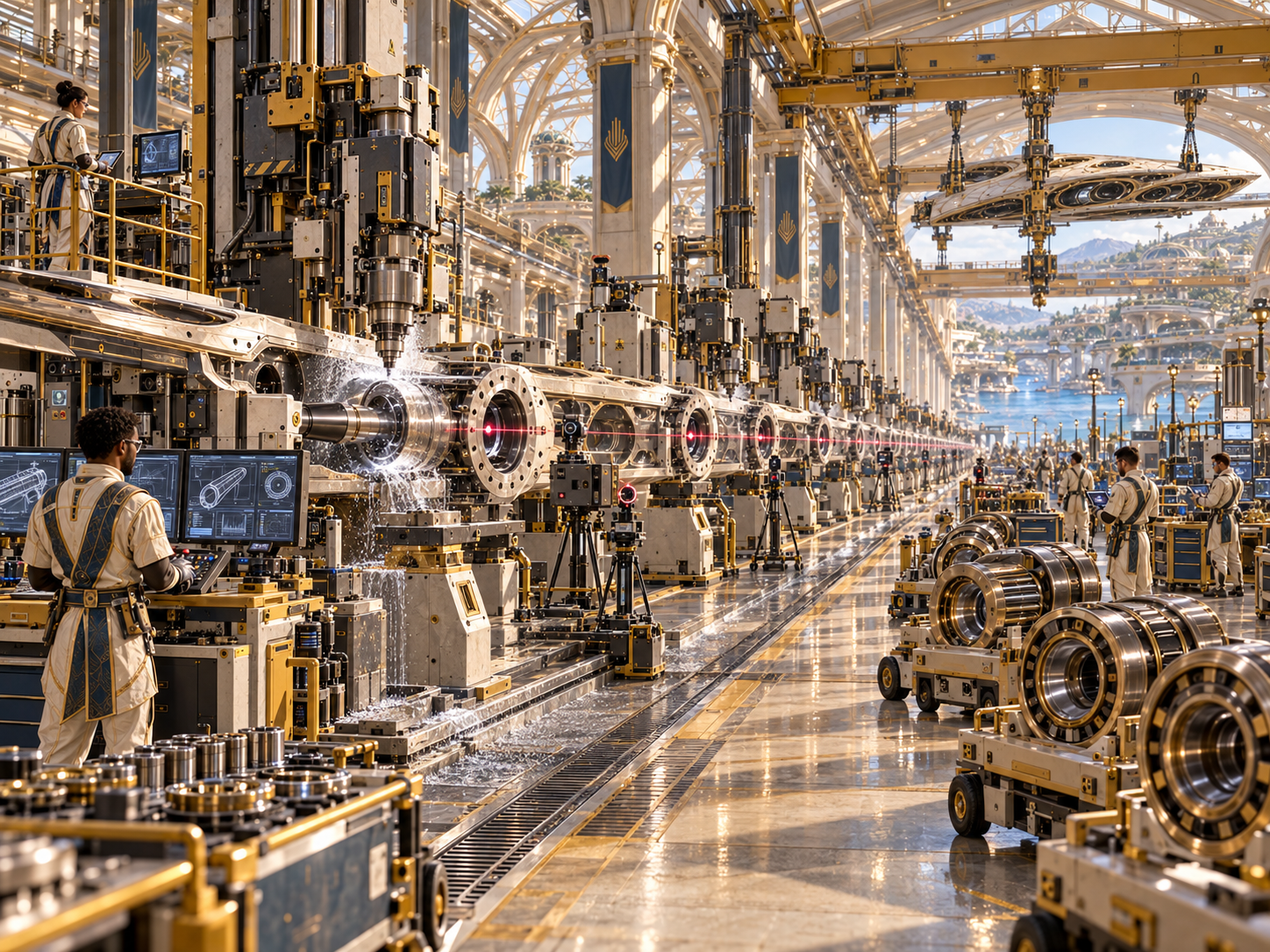
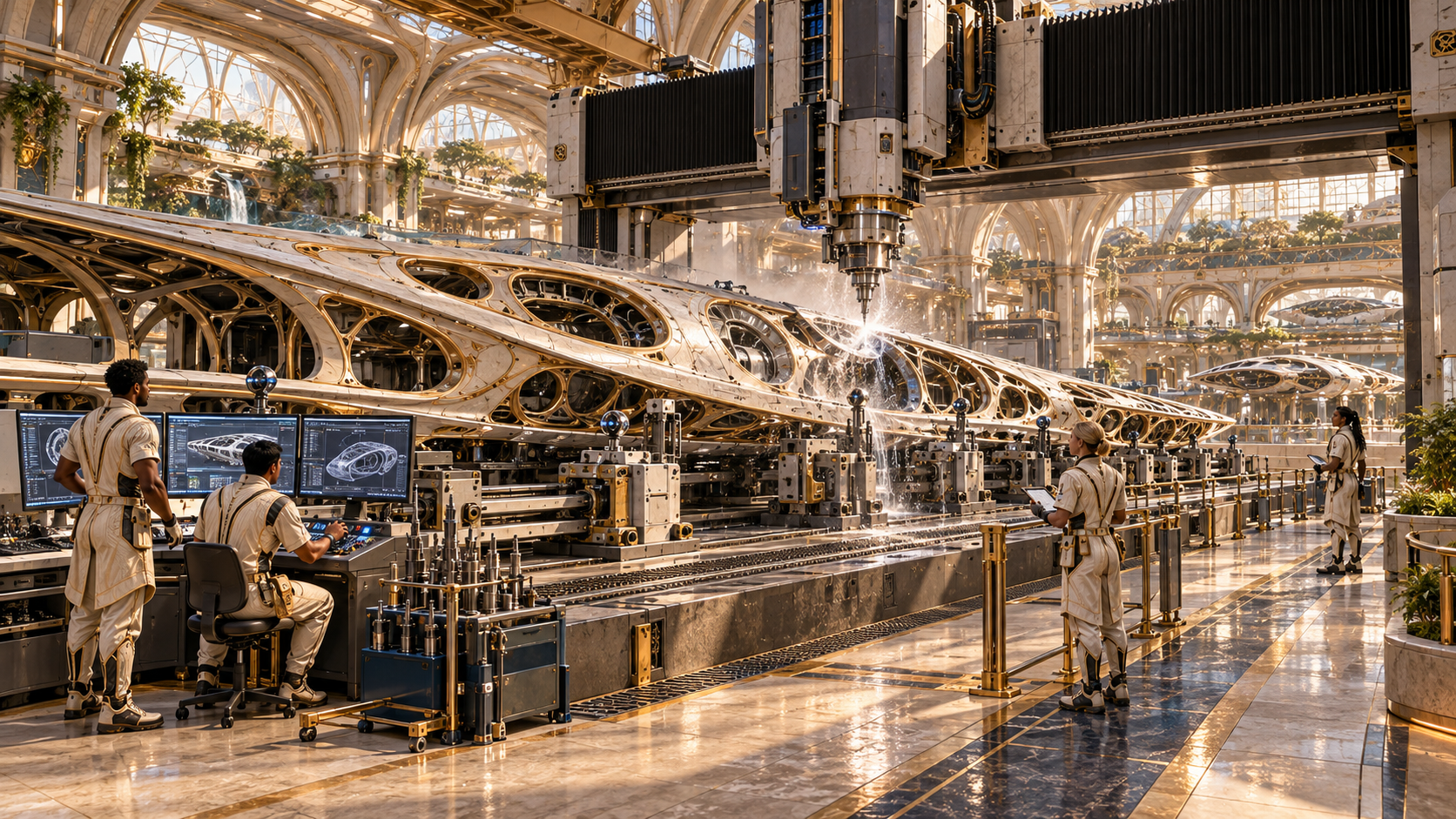
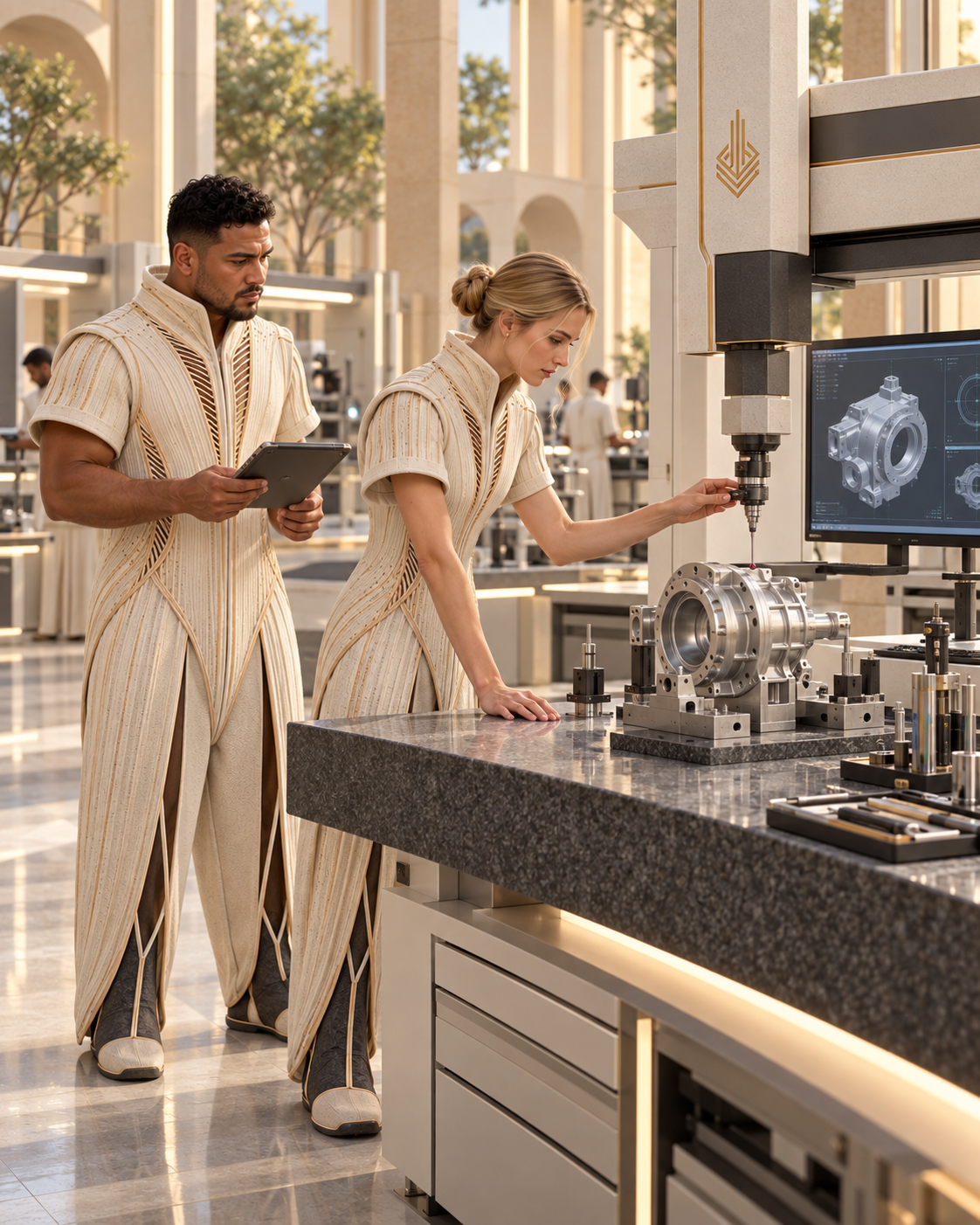
| Primary Structure | Central spine, two passenger bodies, ribs, frames, attachment bodies. | Large 5-axis gantry CNC, horizontal boring, mill-turn, large fixtures, large-format measurement. |
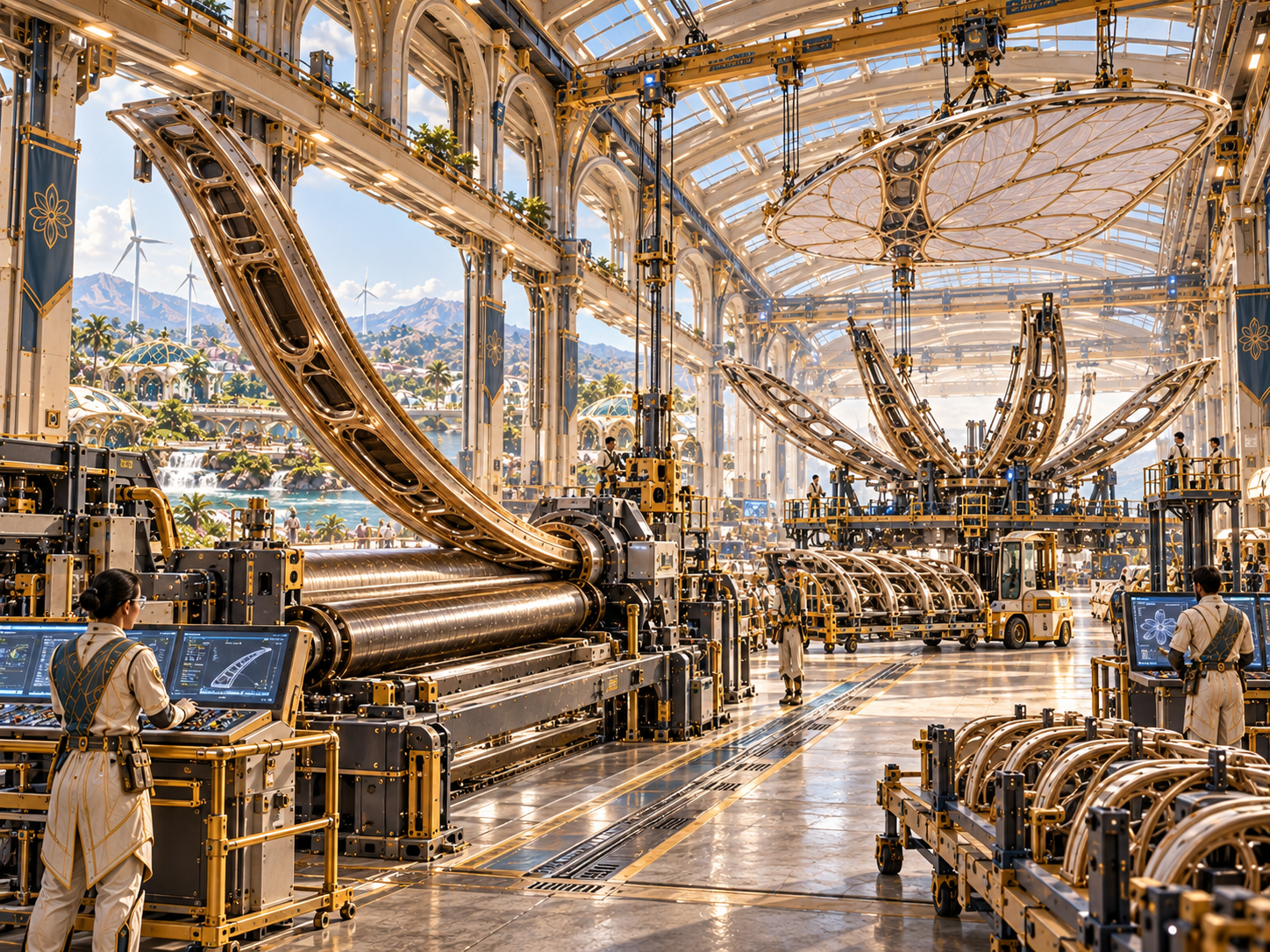
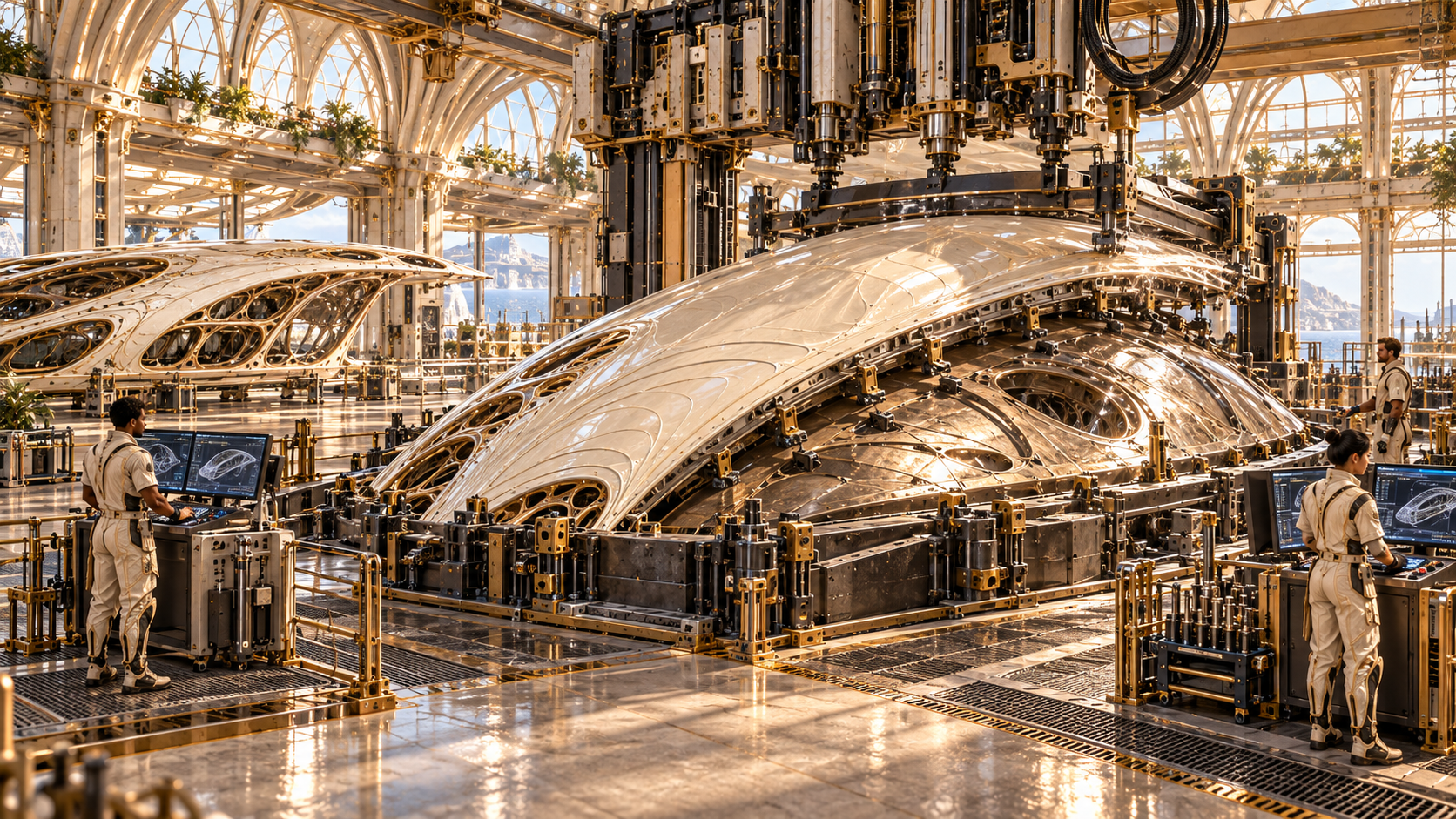
| Curved Outer Shell | Large flowing shell surfaces, nose bodies, side shells and shaped structural skins. | Stretch forming, heavy presses, plate and section rolling, large trimming CNC, precision fixtures. |
| Structural Connections | Mounts, brackets, seams, frames, access bodies and structural joining pieces. | CNC machining, welding, brazing, joining systems, heat treatment. |
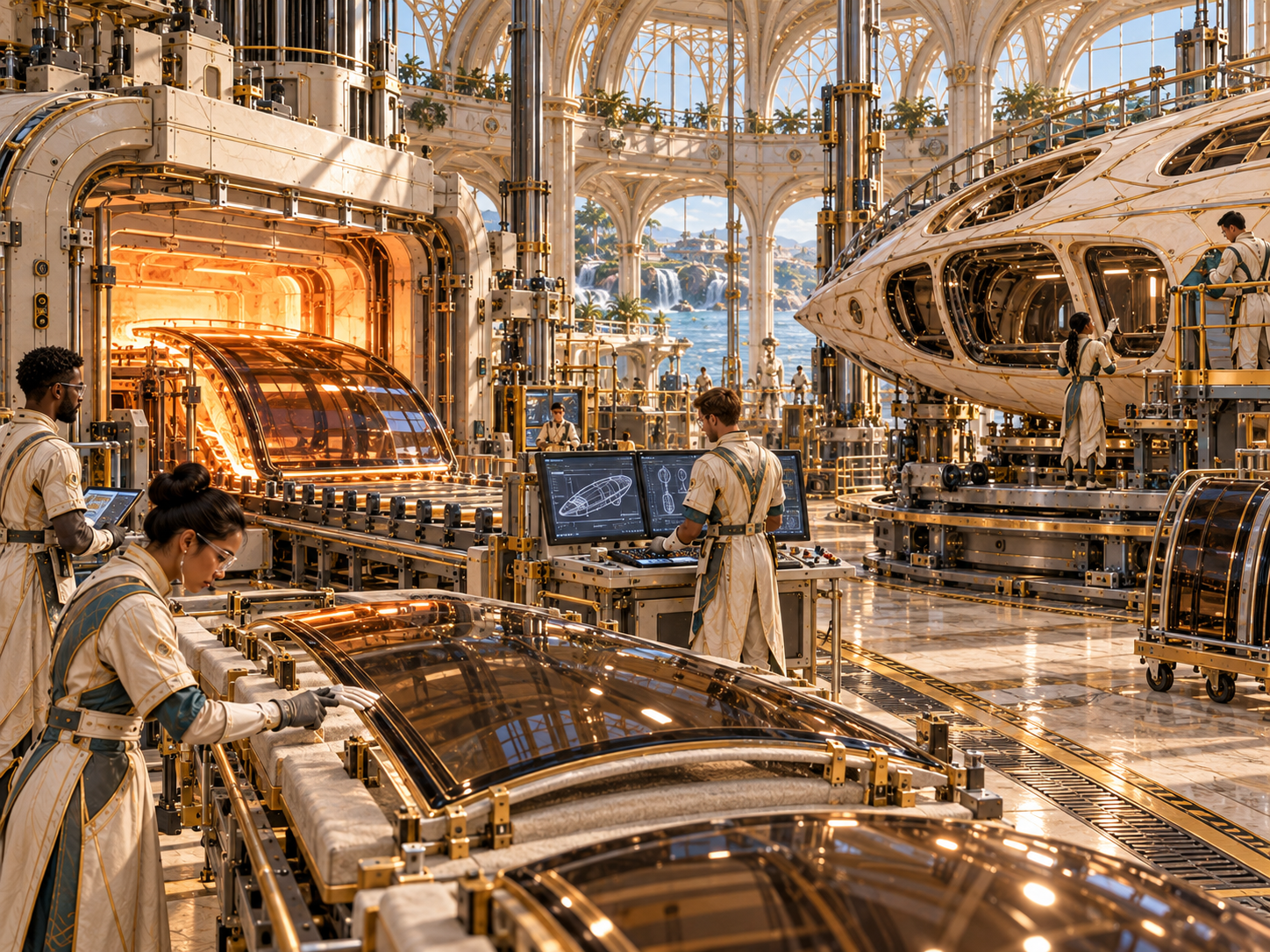
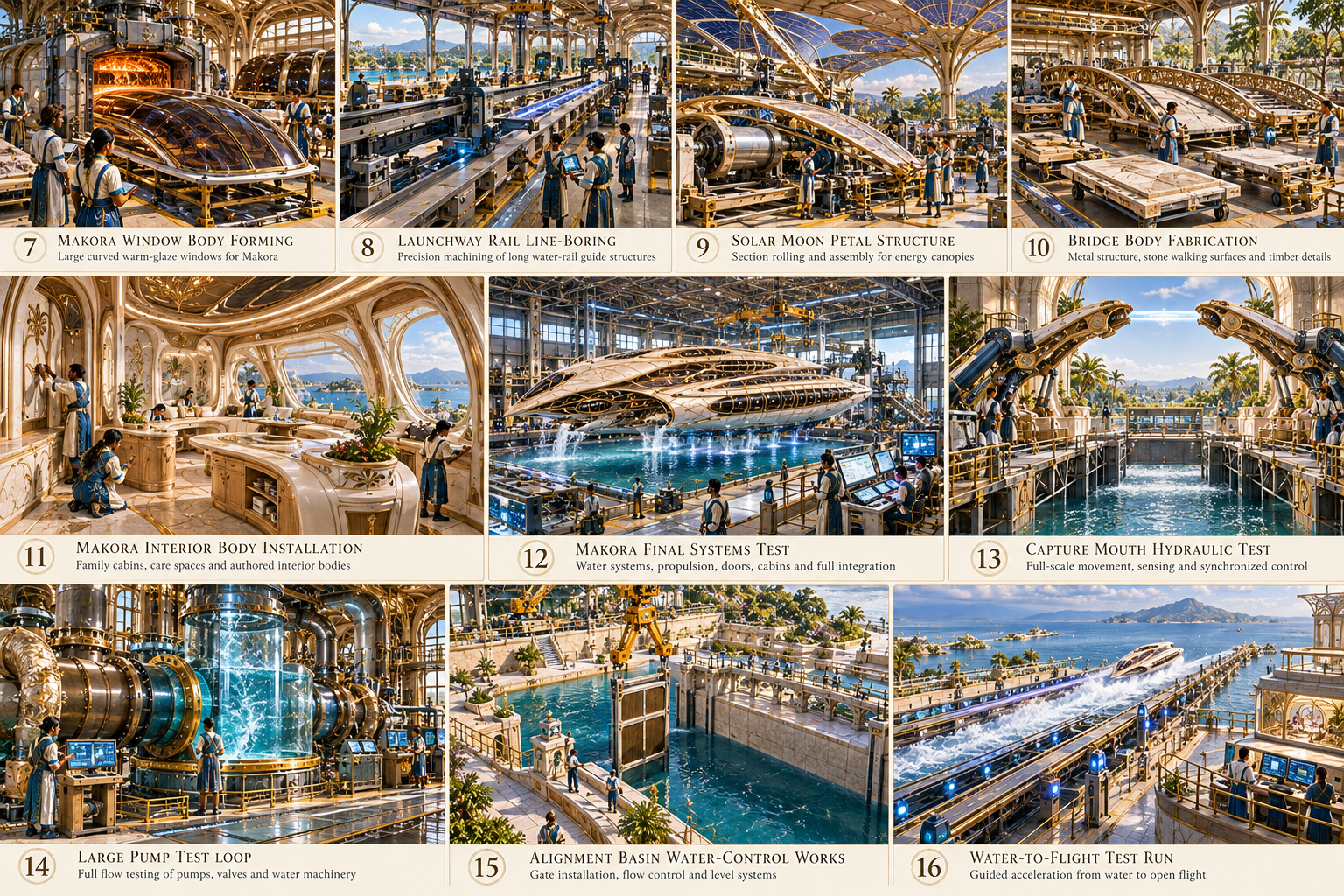
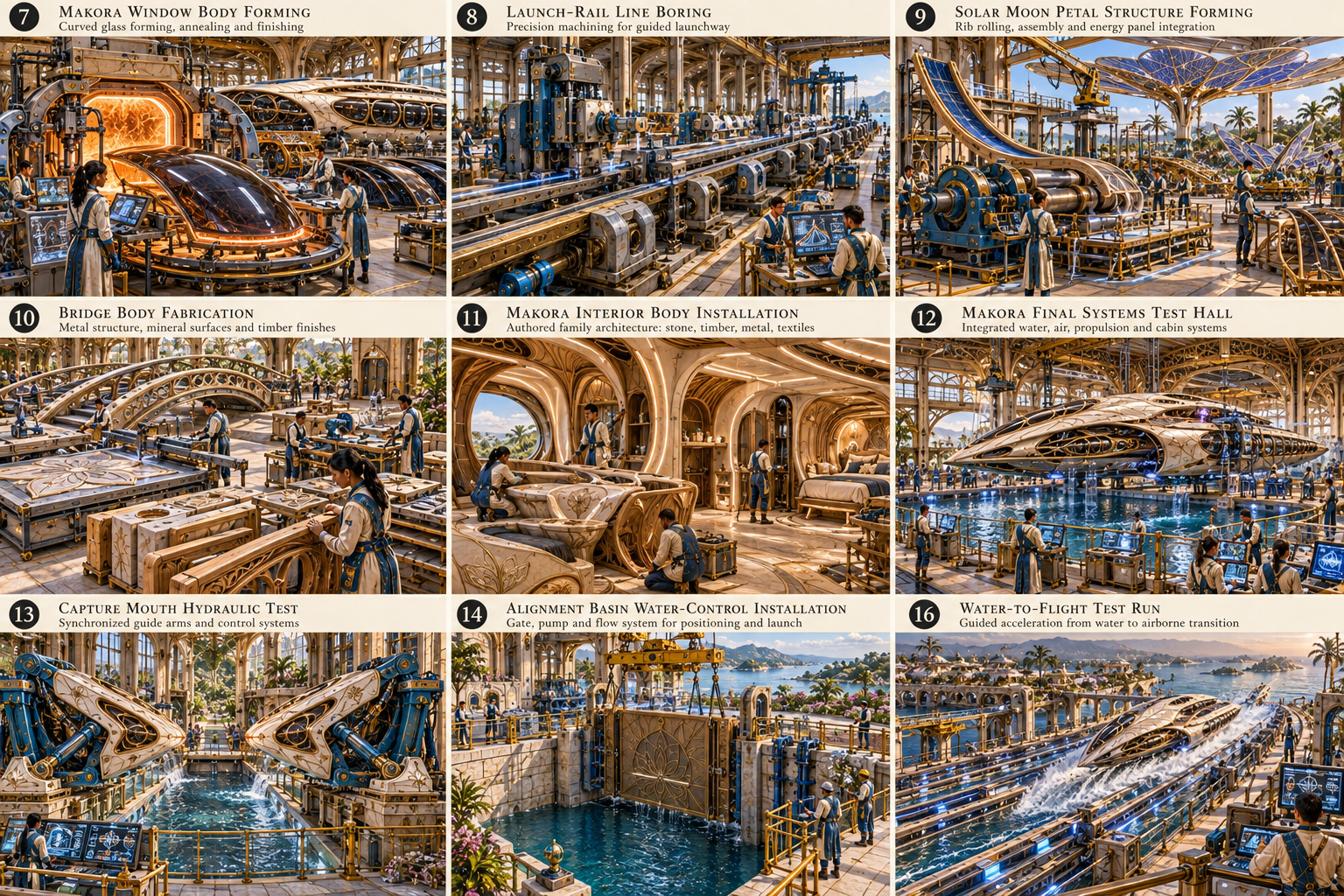
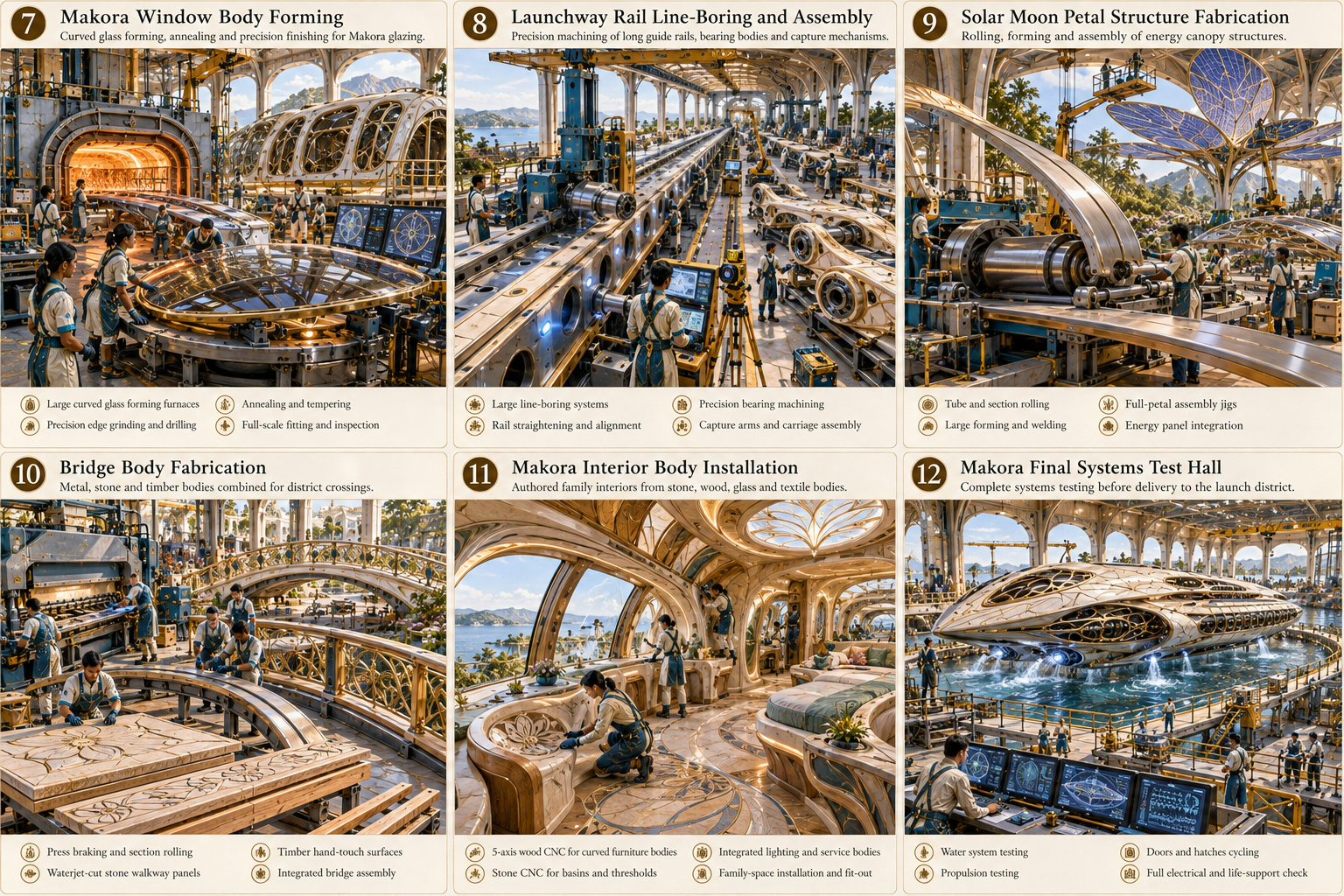
| Glazing | Large curved windows and luminous family-view bodies. | Glass cutting, forming furnaces, annealing, edge grinding, drilling and assembly equipment. |
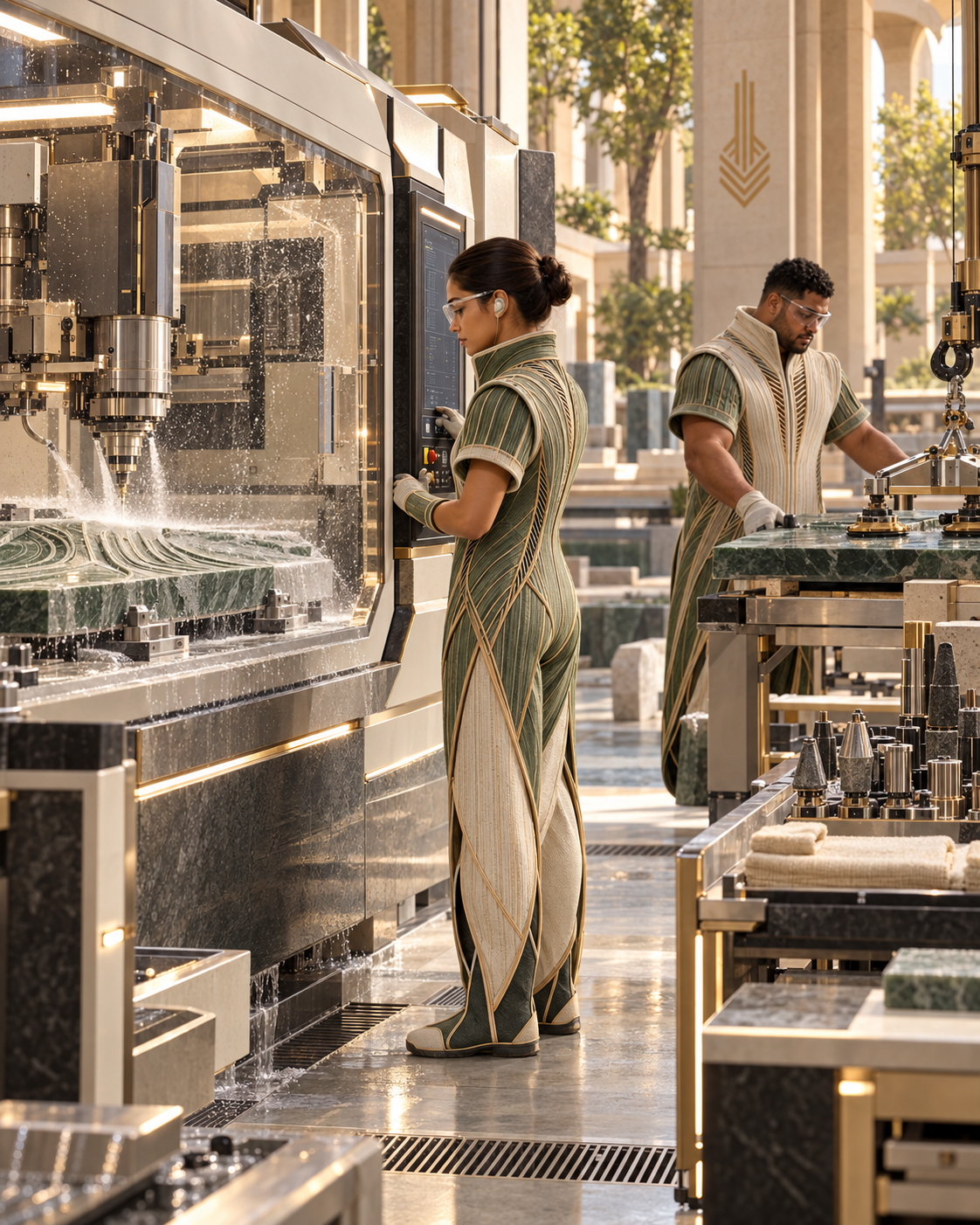
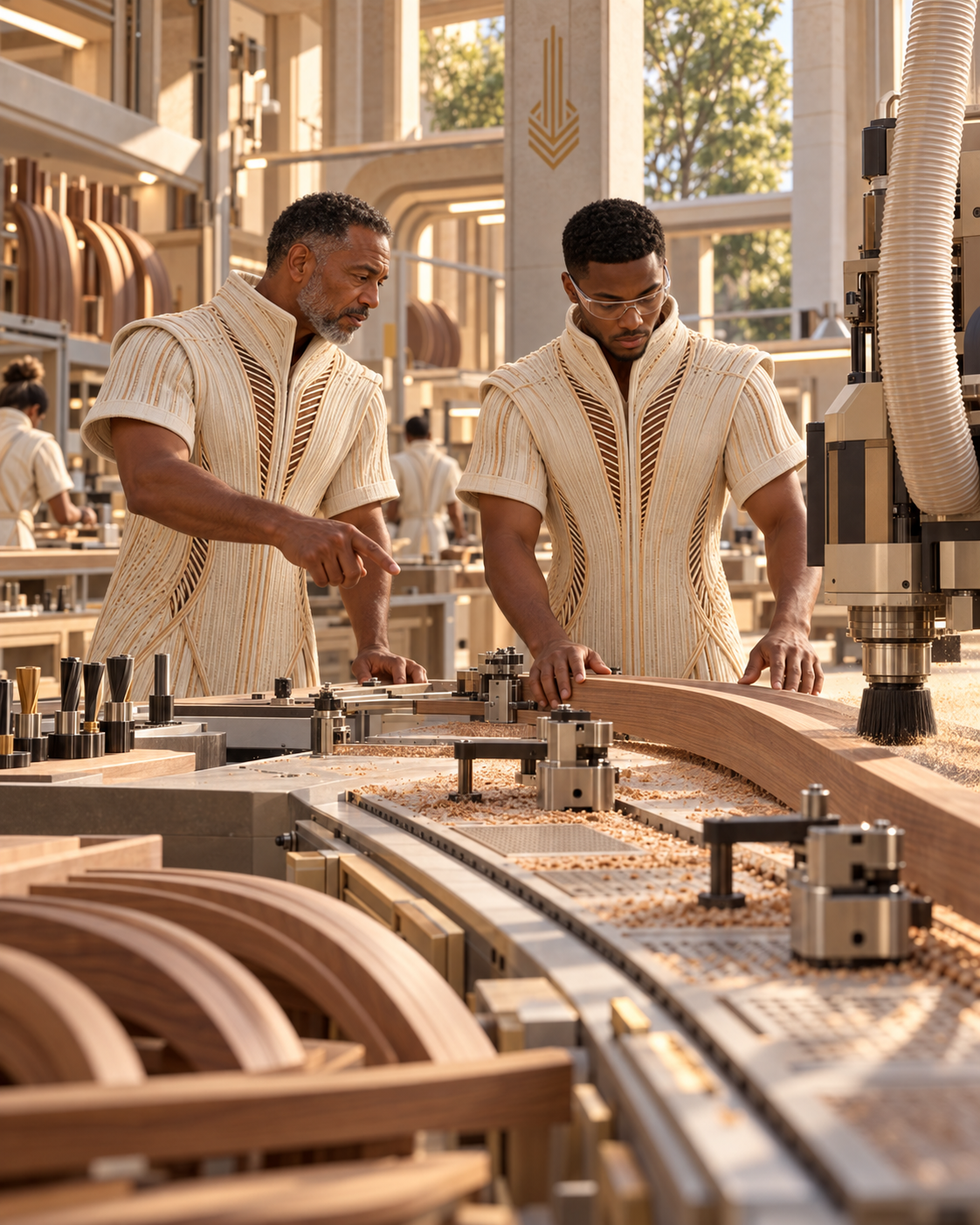
| Interior Bodies | Family cabins, furniture, care rooms, floors, stone, timber, textile and service bodies. | Wood CNC, stone CNC, waterjet, textile equipment, ceramic body, metal fabrication. |
| Doors, Hatches and Interfaces | Moving closures, water-contact interfaces, service access and docking bodies. | CNC machining, press brake, precision joining, seal production and test rigs. |
The major new requirement is large-form fabrication.
The existing machine-making body can already produce enormous numbers of Makora components. The expansion comes where structural members, shell bodies, fixtures and measurement systems become several meters long.
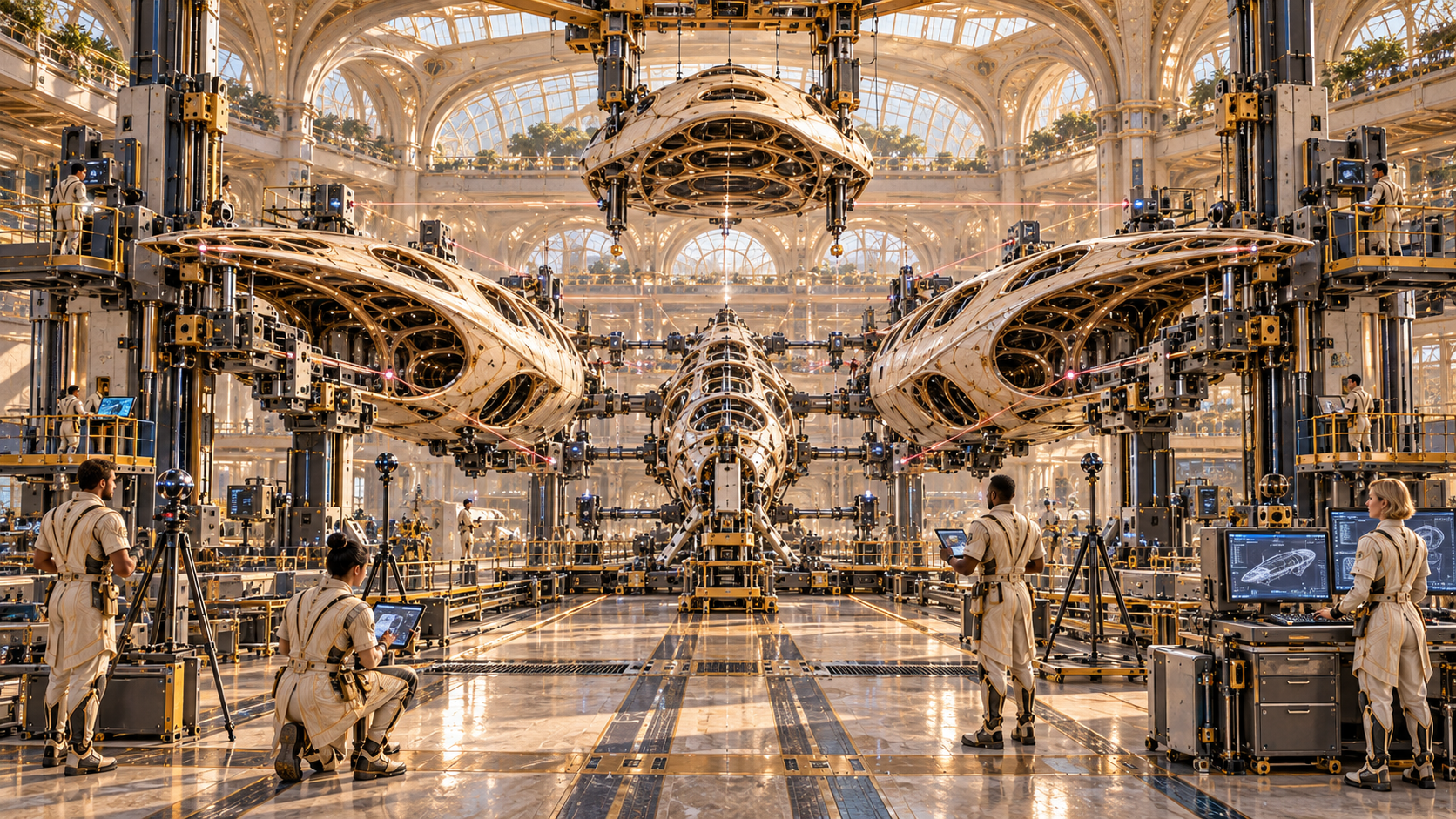
Large Precision Assembly Body
One of the most important machines for Makora may not cut anything at all.
Large structures must be held in the correct relationship while they are joined. Beautifully machined pieces can still produce a poor vessel if the assembly body cannot control their position.
The machinery hunt should therefore include:
- large aircraft and vessel assembly jigs
- adjustable precision tooling beds
- synchronized positioning tables
- large modular fixture systems
- rotating assembly stands
- laser trackers and large-format metrology
- overhead synchronized lifting systems
A huge CNC can make the piece. The assembly body makes the pieces become Makora.
Rotating Machinery and Propulsion Body
Pumps, fans, rotors, shafts, impellers and propulsion bodies reveal another productive branch shared by vessels and waterworks.
Rotating Parts
We need the ability to make:
- shafts
- impellers
- fans
- propellers
- rotors
- pump bodies
- bearing housings
- nozzles
Motor and Generator Works
Build capacity for:
- motor winding
- stator work
- rotor work
- shaft production
- bearing assembly
- generator repair
- motor testing
Dynamic Balancing
Anything rotating rapidly must be understood as a balanced body.
Dynamic balancing machinery therefore becomes important for propulsion, pumps, fans, turbines and large rotating assemblies.
Propulsion Test Stands
The propulsion body should be run and studied before installation into Makora.
Test stands allow thrust, vibration, heat, speed, power and endurance to be observed as part of development.
The Water-to-Flight Launch System
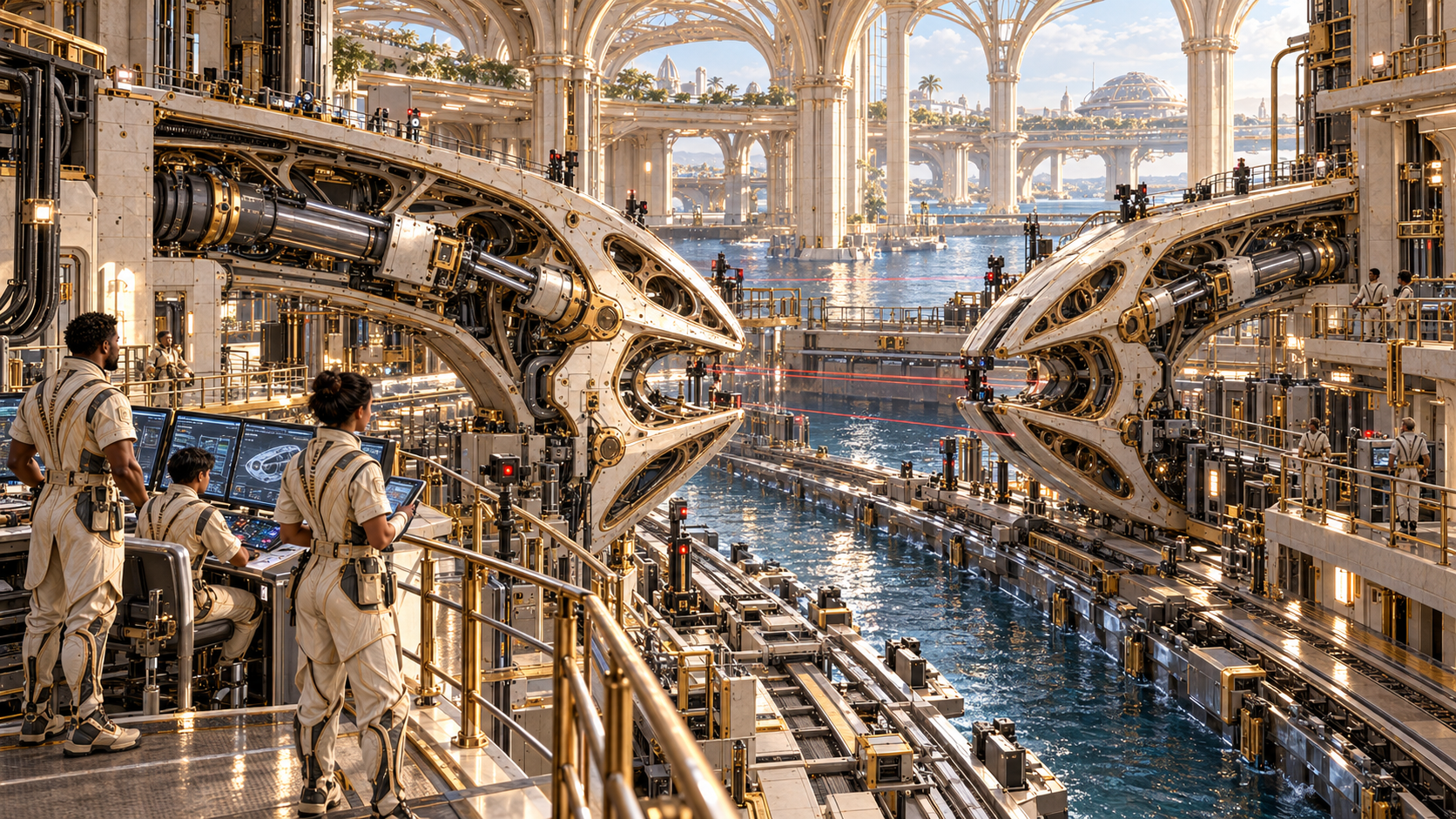
The Makora launch district is not merely landscape surrounding a vessel. Much of the landscape is itself machinery.
The sequence contains:
- Grand Passionflower Dock
- Alignment Basin
- Water-Rail Capture Mouth
- Guided Launchway
- Release Corridor
- Separate Recovery Lane
Each body combines civil construction, water control, sensing, structural metal, hydraulics and large moving mechanisms.
Alignment Basin
The basin prepares Makora’s position and orientation before the launch machinery captures it.
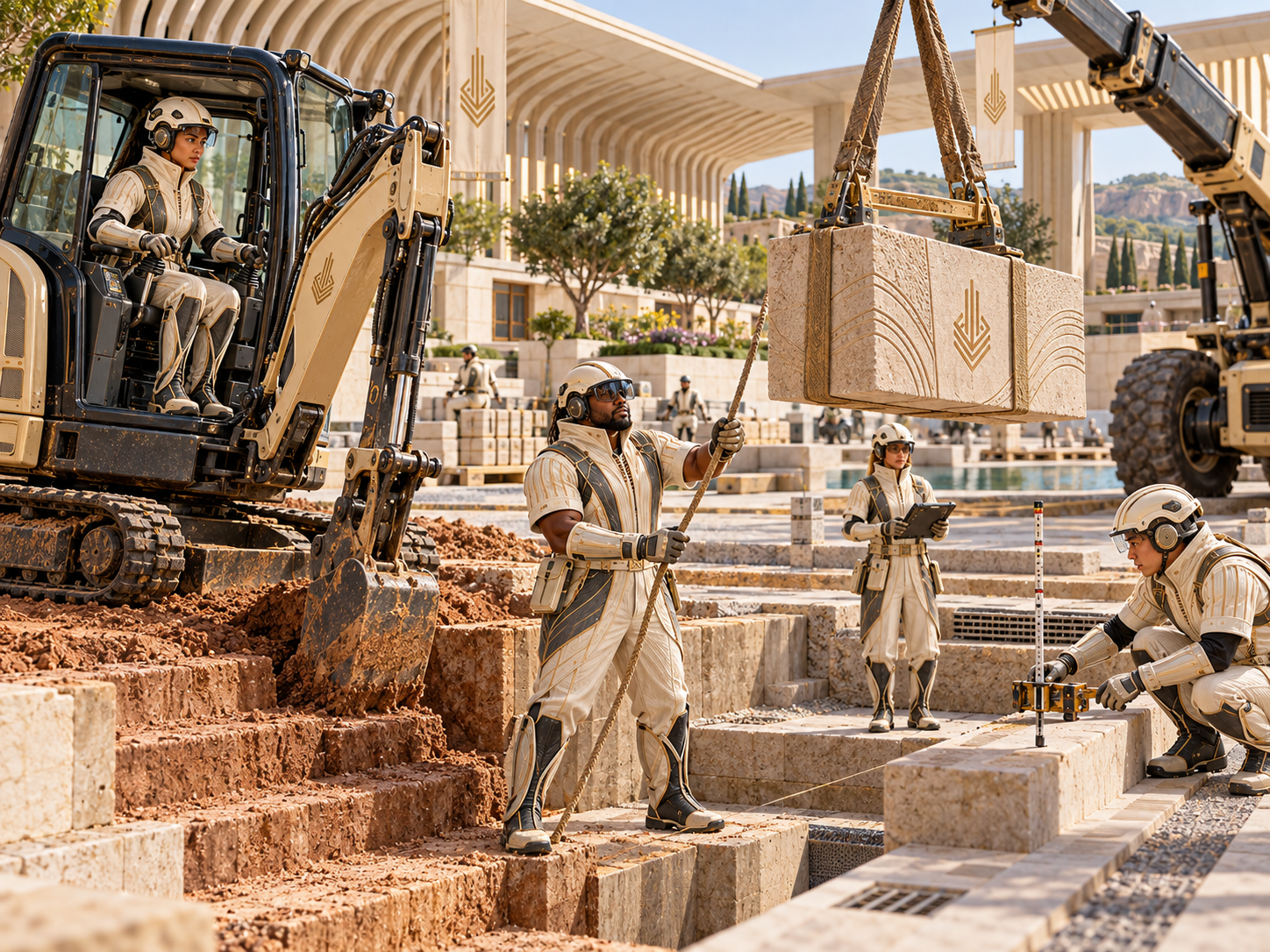
The Building-Raising Body handles earth, structural ground and major civil work: excavators, loaders, drilling, trenching, compaction and cranes.
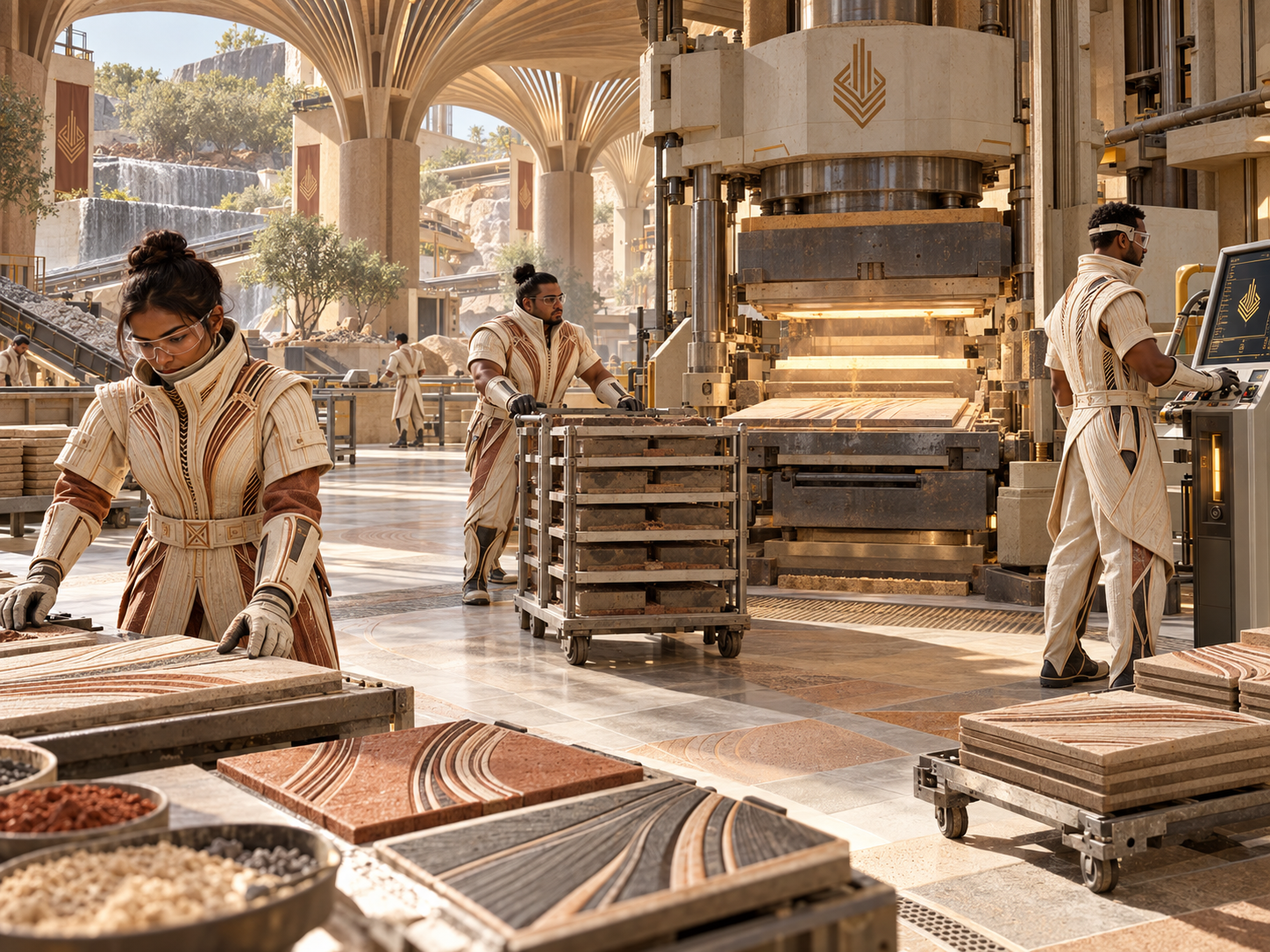
The Stone Body produces basin edges, channels, stairs, walking bodies, carved thresholds and water-facing architectural stone.
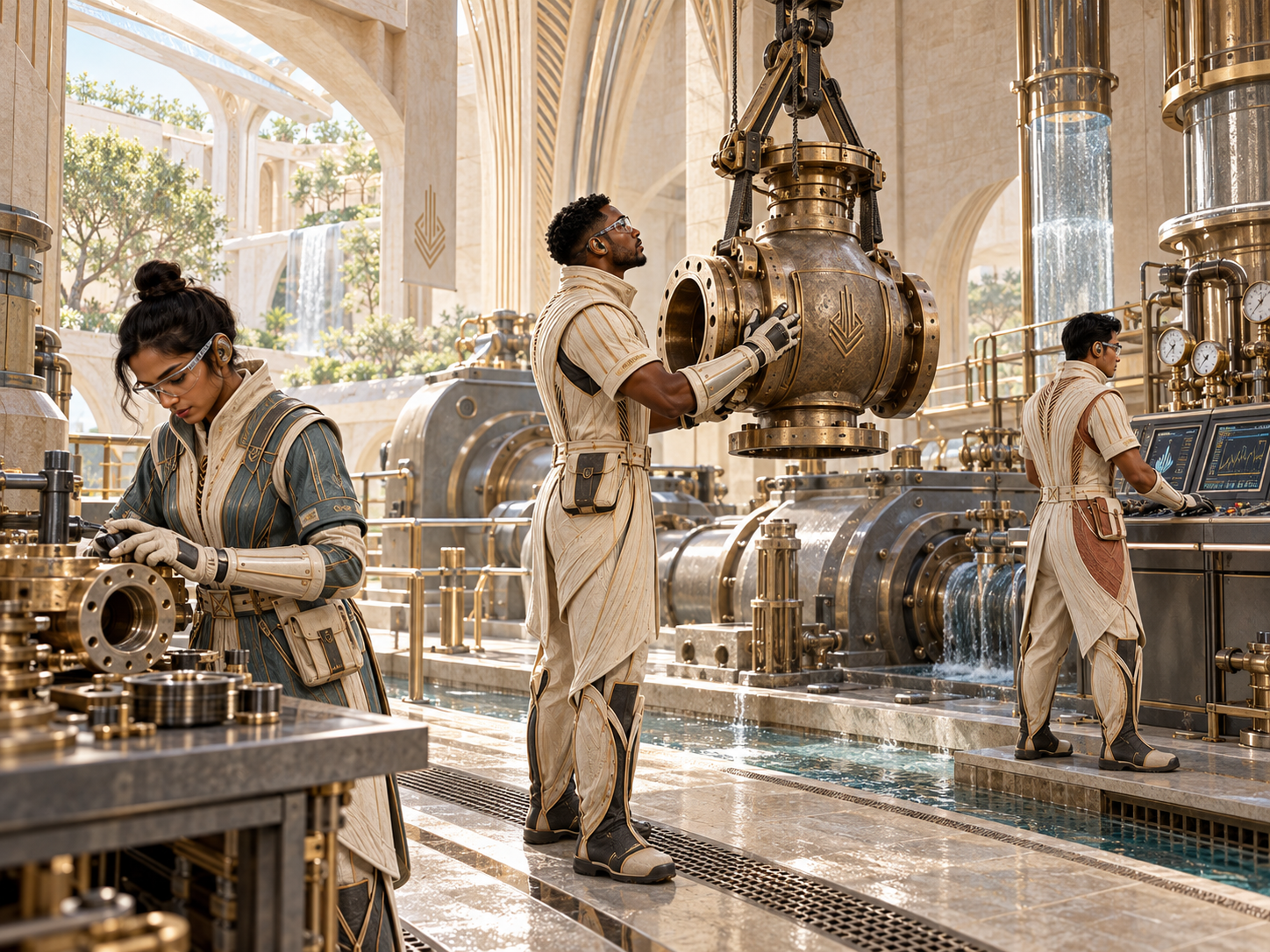
The Water Machinery Body provides pumps, gates, valves, screens, filters, level control and controlled flow.
The basin may itself become a positioning machine through controlled water movement.
Water can help rotate, settle and align the vessel before mechanical capture.
Capture Mouth and Guided Launchway
The launch rails are machines.
They require the ability to make:
- long structural rails
- guide bodies
- capture arms
- rollers
- carriages
- bearing bodies
- hydraulic actuators
- linear guide mechanisms
- release mechanisms
- sensor mounts
- rail foundations
Large Rail and Section Straightening
Long guidance bodies need controlled geometry over distance. Rolling, forming and straightening therefore become part of the launch-body shop.
Horizontal Boring and Line Boring
Large bearing points that must share an axis need to be machined in relationship to one another.
That same capability serves pumps, cranes, large machines, bridge systems and heavy transport bodies.
Synchronized Hydraulic Positioning
The capture mouth operates through coordinated movement rather than brute force.
Develop the body around hydraulic cylinders, servo-hydraulic units, position sensing and synchronized control.
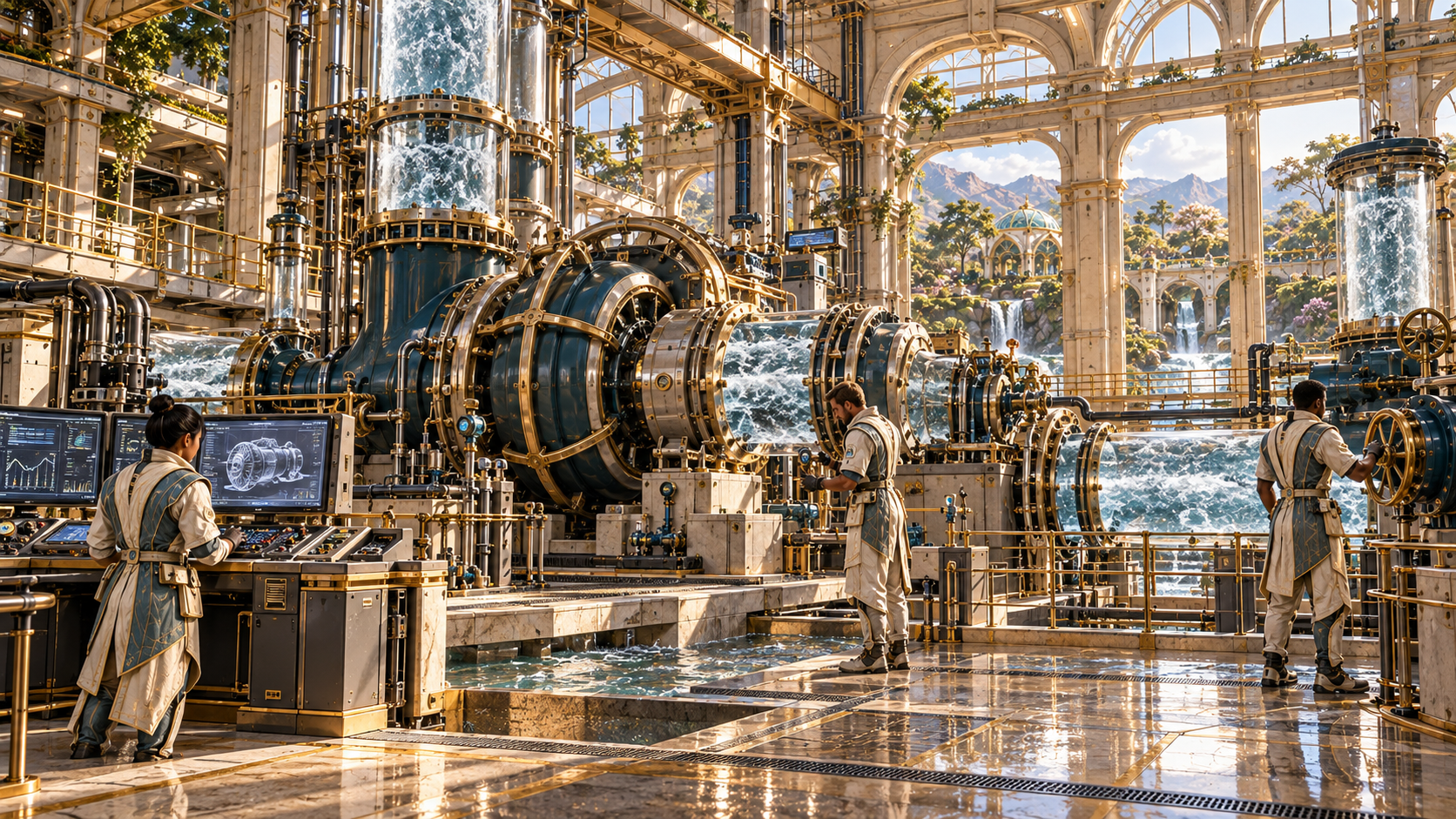
Waterworks and Pump Works
The district water landscape contains a large amount of machinery that is mostly invisible from the surface.
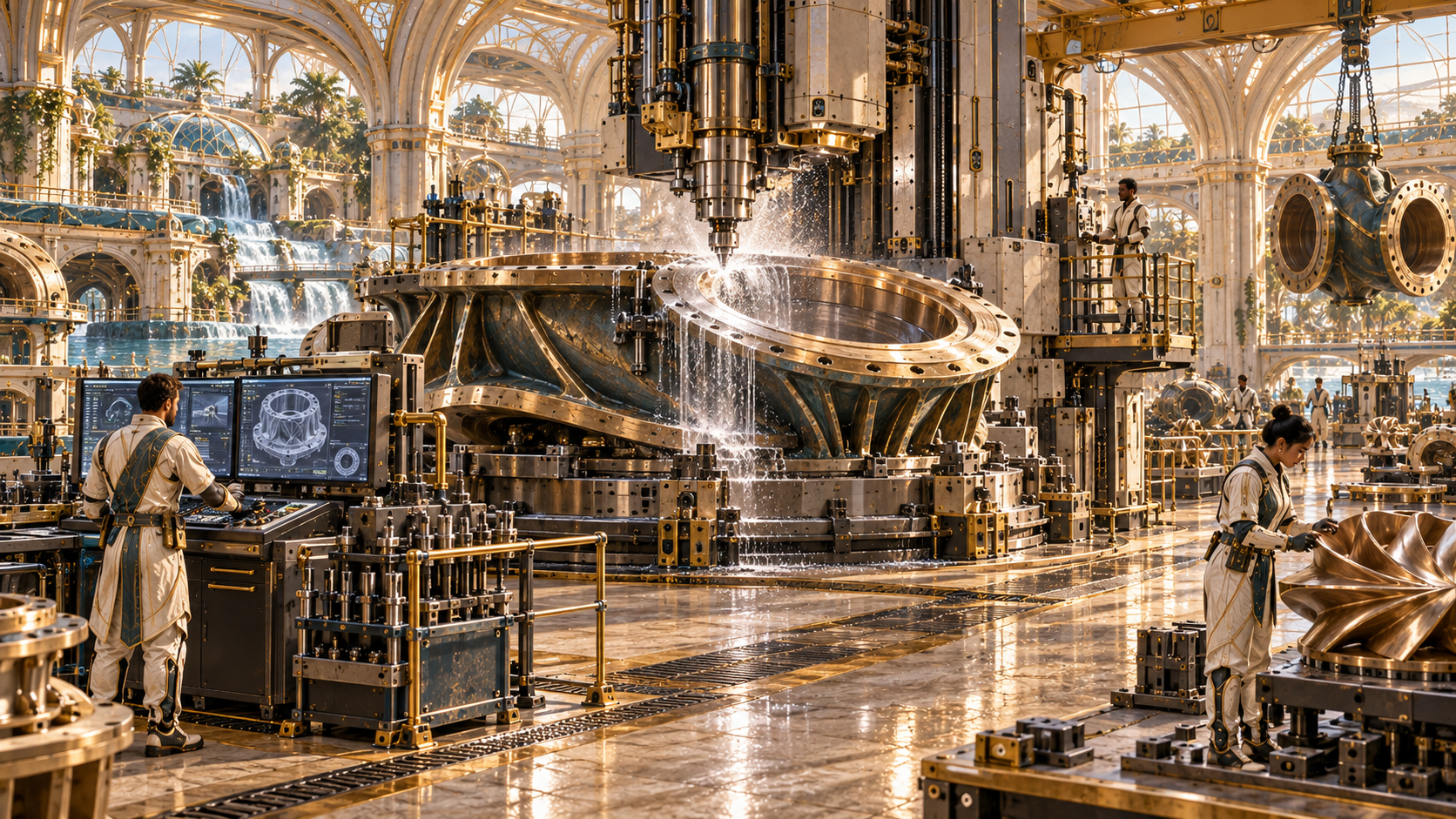
Large Pump Bodies
- pump housings
- impellers
- shafts
- bearing bodies
- flanges
- valves
- nozzles
Major Machinery
- vertical turning lathe
- horizontal boring mill
- large mill-turn
- 5-axis machining
- cylindrical grinding
- dynamic balancing
Water Control
- large gates
- valve bodies
- actuators
- flow channels
- screens
- service bodies
Testing
Build a large pump test loop so pumps, valves, channels and rotating water machinery can be operated before final installation.
Canals, Waterfalls and Water Routes
The visible water landscape is also part of the civilization’s operating water body.
Construction draws from:
- earth excavation
- stone machining
- channel construction
- pipe fabrication
- pump manufacturing
- gate fabrication
- flow control
- drainage
- water recovery
A waterfall can be more than an ornamental fountain.
Its body can include an upper reservoir, flow gate, spillway, return route, pump body, inspection access and downstream distribution.
The visible beauty can be part of the actual water system.
Bridges and Crossing Bodies
The numerous small bridges do not require a separate industrial world.
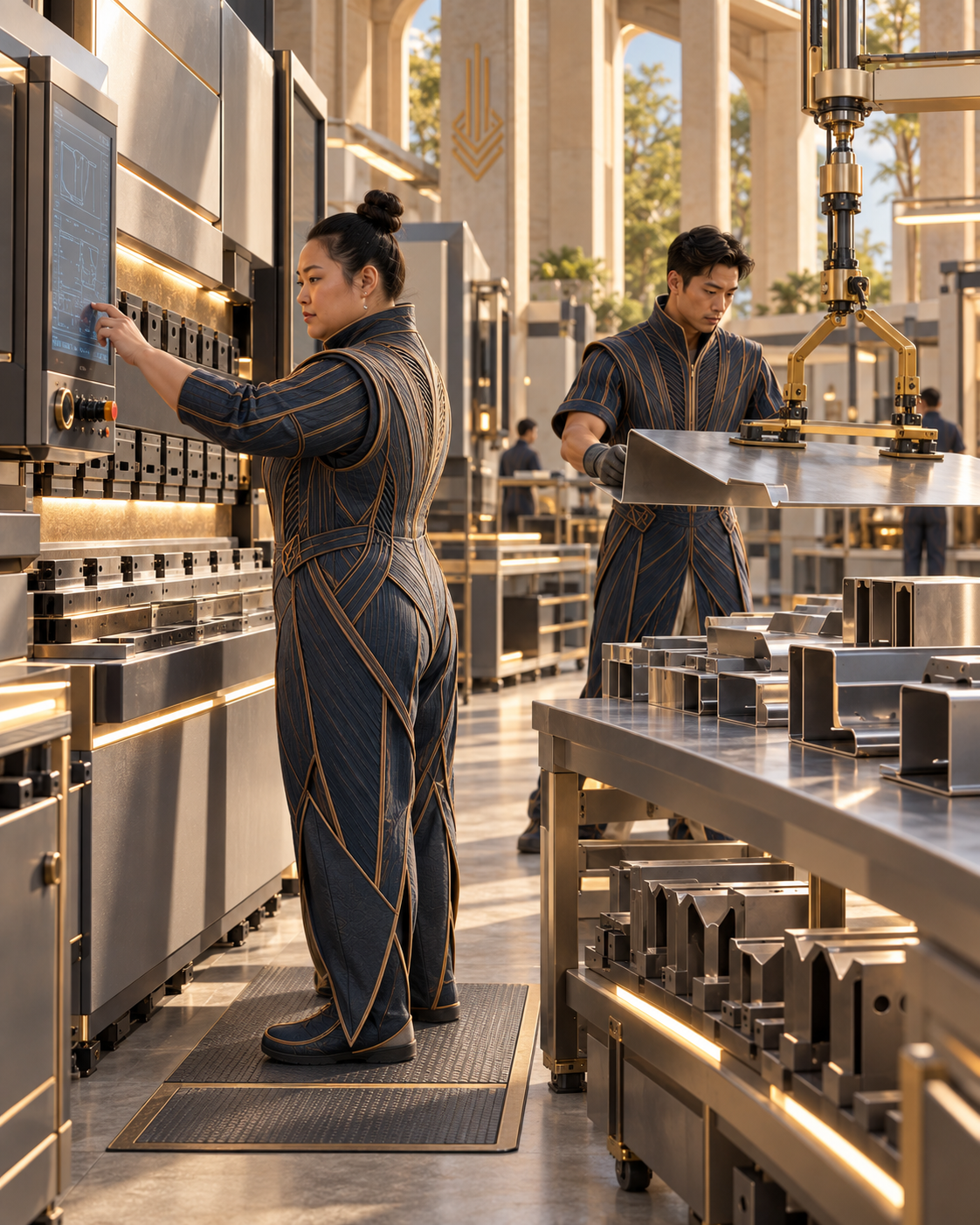
Their structural bodies come from the Metal Fabrication Body: tube cutting, plate cutting, press braking, section rolling, welding and CNC connections.
Their human-facing surfaces come from the Stone and Wood Bodies: walking surfaces, carved edges, mineral fields, timber touch surfaces, rail infill and authored detailing.
The bridge is a joining point between productive bodies already present.
Solar Moon and Petal Energy Bodies
Large petal canopies create another large-form fabrication demand.
The structural bodies require:
- tube bending
- section rolling
- plate cutting
- large forming
- welding
- CNC connection machining
- large assembly fixtures
The energy body requires panel support, electrical routing, junction bodies, power conversion, energy storage interfaces and any tracking systems developed for the species.
The immediate backbone need is energy-system integration.
Deeper photovoltaic-cell manufacturing can grow as its own productive branch.
The Buildings Around the Machines
Large-system infrastructure still grows from the same authored material bodies.
Stone Body: walls, floors, arches, channels, basins and carved components.
Wood Body: roofs, furniture, doors, screens and interior bodies.
Metal Body: structural connections, service systems, rails, water hardware and moving machinery.
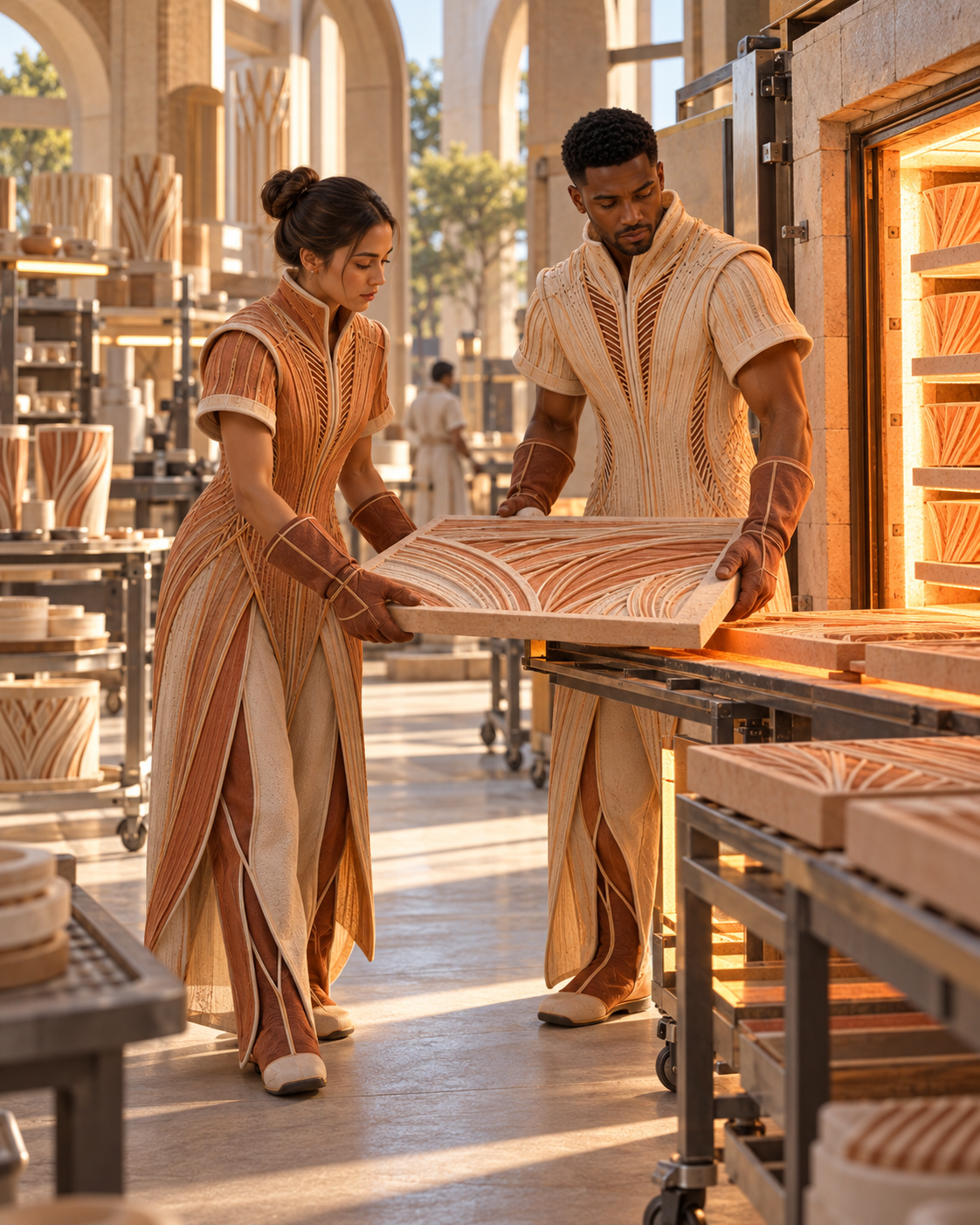
Earth and Ceramic Body: tiles, reliefs, blocks, mineral fields and colored architectural surfaces.
Glass Body: windows, skylights, luminous surfaces and large glazed bodies.
The architecture does not require a different machine for every building species.
That is precisely why the backbone is organized around machines that can release many forms from basic materials.
New Additions to the Backbone Machinery Record
These images expose several production gaps worth adding explicitly to the machinery hunt.
Large-System Retrieval Standard
When a large factory, shipyard, aircraft works, pump works, waterworks manufacturer or heavy-machinery plant becomes idle, ask for more than the headline machines.
Request the productive body around them:
- large assembly jigs
- positioning fixtures
- gantries
- cranes
- lifting beams
- slings and handling systems
- large tool holders
- forming dies
- inspection equipment
- laser trackers
- test stands
- hydraulic power units
- pump test equipment
- balancing machinery
- electrical control cabinets
- software
- drawings
- maintenance records
- spare components
- experienced operators and maintenance knowledge
A giant machine separated from the fixtures, lifting system, measurement body, software and people that made it useful is an incomplete resource.
The Productive Chain
These large systems make the earlier backbone machinery more important, not less.
The same machinery raising Makora and its launch district should still be useful tomorrow for pumps, bridges, buildings, transport bodies, water systems, agriculture machinery and the next machine.