What Can We Use to Make Fertile Soil?
Teaching children to recognise local resources, prepare fertile islands and grow food.
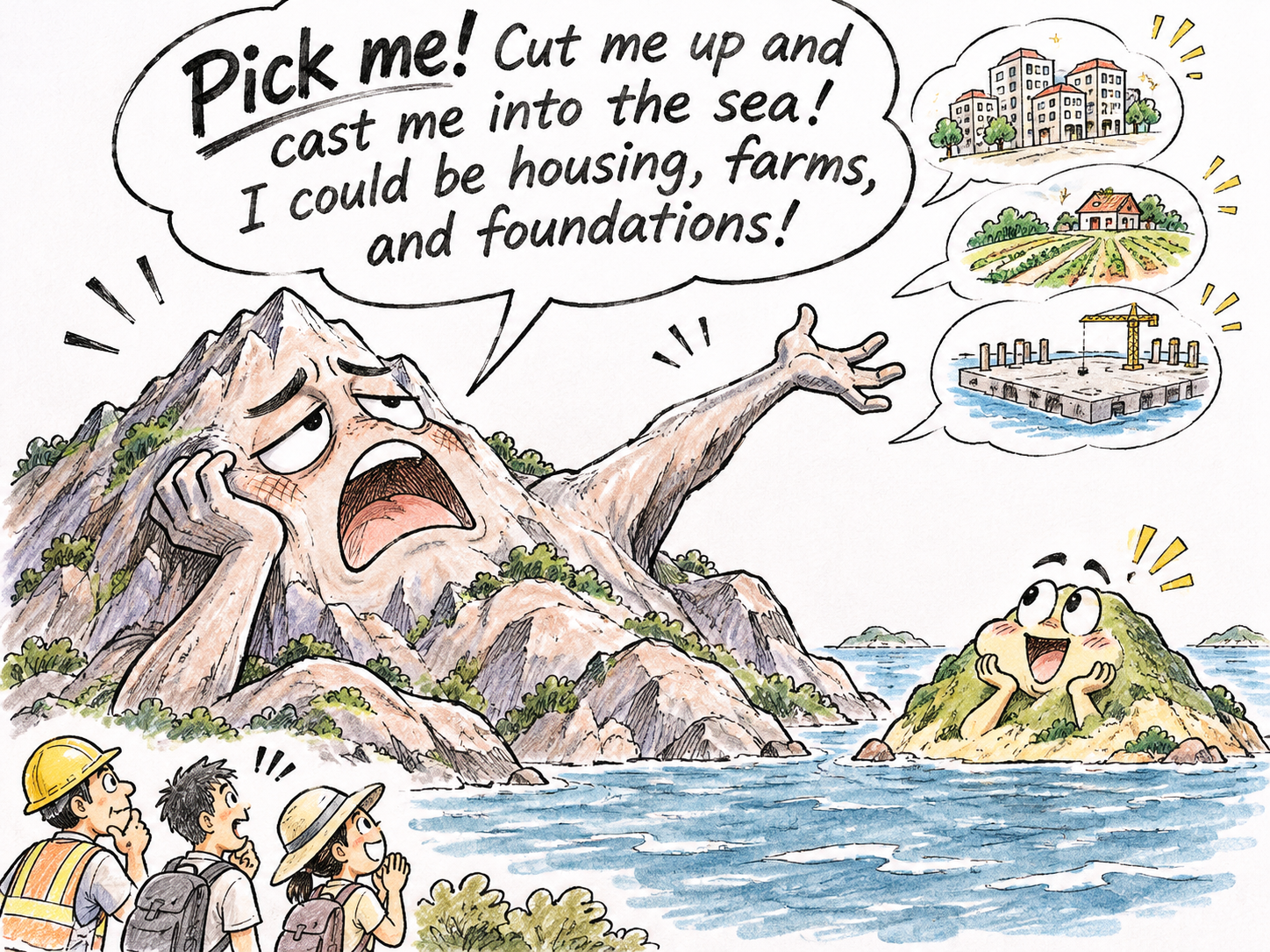
Suppose a child is given a patch of sandy ground and wants to grow food. There is no finished compost sitting nearby. What can the child use?
Perhaps there are fallen leaves beneath a tree, grass cuttings from a nearby lawn, vegetable peelings from a kitchen or an old coconut trunk that has been rotting for years.
The child may also have access to worm compost, suitable animal manure, crushed rock minerals or molasses from sugarcane processing.
These are all materials worth investigating, although they serve different purposes and require different preparation.
Our family has been working with sandy ground in Prado, Bahia, experimenting with small areas prepared for food growing. Among the materials we have used are fallen organic matter, decomposing coconut trunks, kitchen returns, charred wood and mulch.
We have observed how plants respond in different growing areas, although we have not made controlled comparisons or measured the effects of every material separately.
This work has raised many questions about preparing fertile ground, especially in places where organic matter is limited and water moves quickly through sandy soil.
We want children in Trott Bailey Family Civilization to have the opportunity to investigate these things themselves: to examine the ground, understand what they have available, prepare different soil compositions and grow food.
This forms part of our NoDumbDumbs lifelong capability training.
Learning to Use What Is Available Locally
Learning to use whatever suitable materials are available locally trains children to be resourceful.
We want them to use their eyes to spot solutions given their local constraints, and as much as possible not to fold or throw up their hands with the excuse that there is nothing around to use.
Different districts will have different resources. A coastal district may have coconut husks, decomposing coconut wood, fallen leaves and abundant green plant matter.
An inland agricultural district may have rice straw, sugarcane bagasse, maize stalks, animal bedding and composted manure.
Another district may have access to worm compost, suitable rock minerals or large amounts of prunings from established orchards.
We want children to become familiar with these materials, their properties and the different ways they can be prepared.
If one material is unavailable, what else might serve the purpose? Does it require composting first? Could another material be used as mulch? Is there someone nearby who understands how to prepare it?
A child who has no finished compost may still have leaves, grass cuttings and kitchen scraps available to begin making compost for future use.
If there is no suitable animal manure, the child can investigate other organic materials and the growing of cover crops.
If a particular mineral amendment is unavailable, the child should first understand whether the soil actually needs it.
Of course, some materials are unsuitable or require special treatment. Resourcefulness includes recognising when something should not be used and when more knowledge is needed.
We want children to learn how to examine their surroundings, ask useful questions, try sensible approaches and improve their methods through experience.
The same ability will serve them when building, cooking, making equipment, repairing things and caring for their homes.
First, Examine the Ground
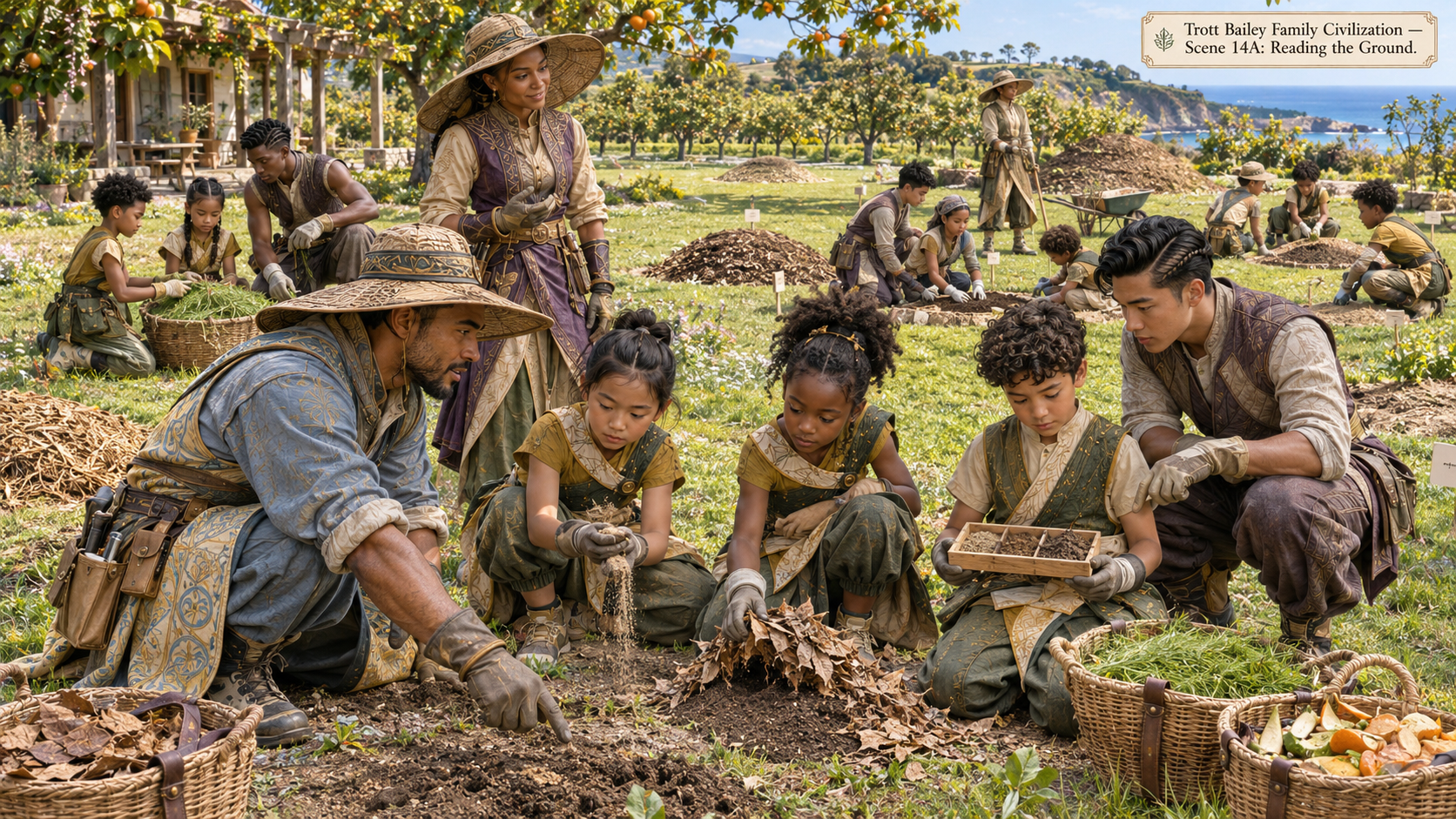
Before preparing a fertile island, the children should examine the soil they intend to use.
They can compare exposed sandy ground with the soil beneath established trees, where leaves and other organic matter may have been decomposing for years.
They can observe differences in texture, moisture, roots, ground cover and the organisms living in the soil.
Water provides another useful comparison. Does it disappear quickly into the ground? Does it remain on the surface? Does the soil become hard after drying?
These observations help children decide what to investigate. Very sandy soil, heavy clay and constantly wet ground may require different treatment.
An appropriate soil test can provide further information, particularly where nutrient deficiencies or excessive acidity are suspected.
The children should also learn to preserve useful vegetation and existing fertile soil, rather than clearing everything simply because they want to begin a new growing area.
Leaves, Grass and Kitchen Scraps
Fallen leaves can serve as surface mulch or be processed into compost and leaf mould.
As mulch, they help protect the soil from direct sunlight, rainfall impact and excessive moisture loss.
When decomposed, they can contribute organic matter that helps improve soil structure and water retention.
Grass cuttings are another useful resource. Fresh grass is generally richer in nitrogen than dry leaves.
Children can combine untreated fresh grass with dry leaves and other suitable ingredients to make compost.
They learn to provide enough moisture and air. Too much wet grass packed together can become compacted and unpleasant, while a dry pile may decompose slowly.
Kitchen returns provide further composting material. Suitable fruit and vegetable scraps can be added to managed compost systems.
Another option is to bury appropriate plant-based scraps in a prepared trench, cover them properly and allow them to decompose before using that area for suitable crops.
Children can compare fresh materials with older, decomposed material and observe the changes.
Meat, oily food remains and other problematic waste are excluded from these simple introductory field-burial experiments. The burial areas must also be managed to prevent animals digging up the scraps.
Children should become familiar with the appearance, smell and texture of finished compost, and understand that decomposition takes time.
Rotted Wood Trunks and Branches
An old, rotting tree trunk is another material worth examining.
Wood gradually decomposes through the activity of fungi, microorganisms and other organisms. Its structure changes, becoming softer and more fragmented.
We have been interested in this process through our experiments with decomposing coconut trunks in Prado.
Children can examine pieces of wood at different stages of decomposition. Some may be hard and recently fallen, while others are already soft, dark and crumbly.
Suitably decayed, untreated wood can be investigated in small planting mounds, beneath an adequate layer of planting soil.
The children can compare this arrangement with an island made from ordinary soil and finished compost.
They should observe moisture, settling, root development and plant growth over time.
Fresh sawdust and fine wood chips mixed into soil can temporarily reduce the nitrogen available to plants as microorganisms decompose the wood.
Woody materials may therefore be more suitable as surface mulch or for prior composting, depending on their condition and purpose.
The shape of the mound also deserves attention. In hot, dry places, a high mound may lose moisture more quickly than surrounding ground.
We want children to investigate the whole growing arrangement, including where the wood is placed and whether the plants actually benefit.
Making Compost with Worms
Worm composting gives children another practical way to study decomposition.
Suitable composting worms live in a managed bed containing moist organic material and bedding.
Together with microorganisms, the worms help process suitable organic matter into vermicompost.
Children learn how to prepare bedding, maintain appropriate moisture and shade, supply suitable food and avoid conditions that harm the worms.
They can examine the material before processing and compare it with the finished worm compost.
The finished material can be used as a soil amendment or surface dressing.
In a planting experiment, children might prepare two otherwise similar islands, adding a measured amount of finished worm compost to one.
They can then compare plant growth and soil condition.
The worms themselves also need proper care. Suitable species should be chosen for the managed compost system, and they should not simply be released into unfamiliar natural habitats.
Crushed Stones and Soil Minerals
Rocks are another source of materials worth studying.
Different rocks contain different minerals. Some appropriately processed and tested rock materials are used in agriculture as soil remineralisers.
But simply crushing a stone does not automatically produce a useful fertiliser.
The mineral composition matters, as does the rate at which nutrients become available to plants.
Some rocks may also contain elements that make them unsuitable for agricultural use.
Children can begin by examining labelled rock samples and learning how different rock types contribute to soil formation.
Older learners can examine soil-test results and the analysed composition of approved agricultural rock amendments.
Where a suitable amendment is indicated, the children can observe a supervised comparison between prepared planting areas with and without it.
Specialists handle rock crushing and fine mineral dust. Children can learn about the materials without unnecessary exposure to airborne dust.
Investigating Molasses
In districts where sugarcane is processed, molasses may also be available.
Molasses contains sugars that can provide food for microorganisms under suitable conditions.
It is sometimes used in managed compost preparations, but adding sugar does not automatically improve compost or plant growth.
Molasses can also encourage unwanted microbial growth. Sugar-added liquid compost preparations require particular attention to food safety.
We can introduce children to the subject through observation and supervised comparisons managed by experienced practitioners.
They can examine the purpose of the addition and what, if anything, changes in the preparation.
We would not use uncontrolled sugar-fed compost teas on vegetables eaten fresh.
Other Materials the Children Can Study
These are only some of the resources available for soil building.
Coconut husks, banana leaves and chopped stems, rice straw, sugarcane bagasse, maize stalks, coffee grounds, suitable composted manure and prunings may all have useful applications.
The method depends on the material. Some can be used as mulch, while others need composting or further treatment.
Children should also become familiar with plants that help improve growing ground.
Suitable cover crops can protect the surface, maintain living roots and provide organic material when foliage is cut and returned to the ground.
Certain legumes can contribute nitrogen through their relationships with suitable root bacteria.
These are additional possibilities children can investigate according to local soil, climate and available materials.
Making a Fertile Island from Local Materials
Let us take a practical example. A group of children is working in a coastal district where the soil is very sandy.
There are coconut trees nearby, fallen leaves, some grass cuttings and an old decomposing trunk.
The children want to prepare a small growing area for vegetables.
Examining the Site
First, they examine the ground. They look at the existing vegetation, feel the sandy soil and observe how it responds when watered.
They choose a suitable planting location with sufficient sunlight and access to water, without unnecessarily disturbing established tree roots.
Collecting Materials
The children gather clean fallen leaves and suitable untreated grass cuttings. They also examine the old coconut trunk to see how far it has decomposed.
If finished compost is available, they can use some in the immediate planting area.
If it is not, they begin preparing compost from the available materials for later use.
Suitable kitchen scraps may be directed into a separate composting or burial area. They will need time to decompose before being used appropriately.
Preparing the Growing Area
With an experienced instructor, the children prepare the planting area.
They can loosen the soil where appropriate and incorporate suitable mature compost into the growing layer.
They then protect the exposed surface with a covering of leaves or another suitable mulch, leaving the immediate plant stems clear.
The height of the island is adjusted to the site. In sandy ground that dries quickly, there may be little advantage in making an unnecessarily high mound.
Trying the Rotted Wood
The children may prepare another small island to investigate the decomposed coconut wood.
The second island can have the same basic planting soil and mulch, with the rotted wood introduced beneath the planting layer.
They record where it was placed, how decomposed it appeared and how much was used.
The children can then plant the same crop in both islands and maintain similar watering and growing conditions.
This gives them a specific comparison to follow over time.
Returning to Observe
Over the following weeks, the children return to water, inspect and care for their plants.
They observe soil moisture, plant condition, growth and any settling of the mound.
They may find differences between the two islands, or they may not.
If they repeat the comparison using additional similar plots, they can begin developing greater confidence in the results.
The point is to make careful observations, record what was done and see what further investigation is needed.
Comparing Different Soil Compositions
As children gain experience, we can prepare more fertile islands with different materials.
Some arrangements are intended simply to explore what different combinations can do.
Others can be prepared as more controlled comparisons, changing one ingredient while keeping other conditions as similar as possible.
| Material or Method | Possible Use | What to Examine |
|---|---|---|
| Finished Compost | Mixed with native planting soil. | Plant growth, texture and moisture. |
| Leaves and Grass | Prepared as compost, with suitable leaves also used as mulch. | Decomposition, soil protection and moisture. |
| Kitchen Returns | Previously composted or decomposed in a managed burial area. | Changes in soil condition and plant growth. |
| Rotted Wood | Examined in an experimental mound beneath planting soil. | Moisture, settling and root development. |
| Worm Compost | A measured addition of mature vermicompost. | Plant response and soil condition. |
| Tested Rock Amendment | Applied where soil needs and mineral analysis support use. | Soil chemistry and plant response. |
| Coconut Fibre | Properly processed material added to a growing mixture. | Drainage, water retention and roots. |
| Living Cover Plants | Grown in place, with suitable cut foliage returned as mulch. | Soil protection, root activity and organic returns. |
Molasses belongs in a separate supervised investigation of managed microbial preparations, rather than being treated as something every fertile island needs.
The children can record what was used, where it came from, how it was prepared and what was planted.
Later, they can examine germination, plant height, leaf condition, soil moisture, root development and harvests.
We should teach them to separate what they observed, what they measured and what they suspect may explain the results.
One good harvest does not establish that a particular mixture is best for every location.
Learning with Experienced Growers
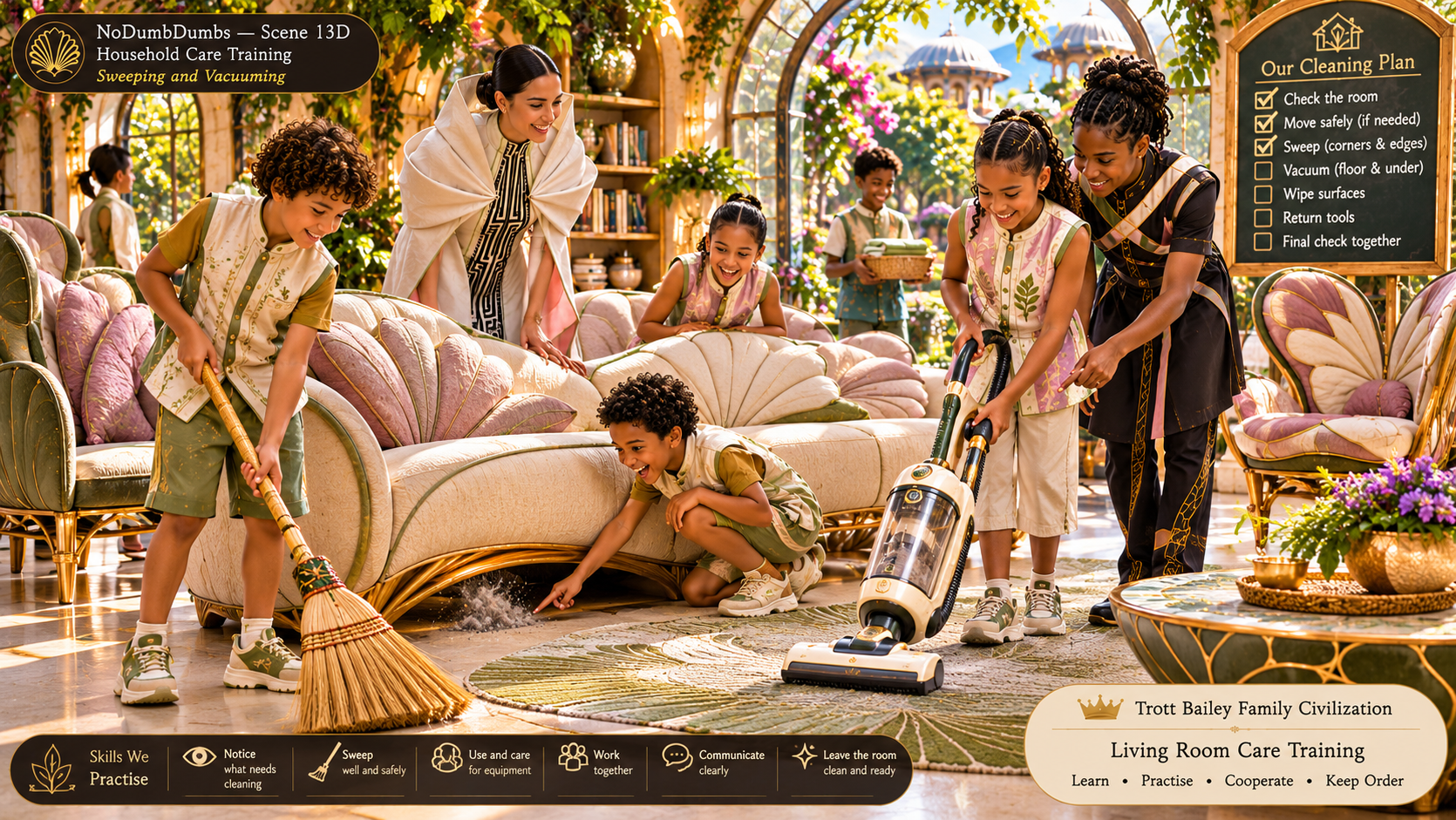
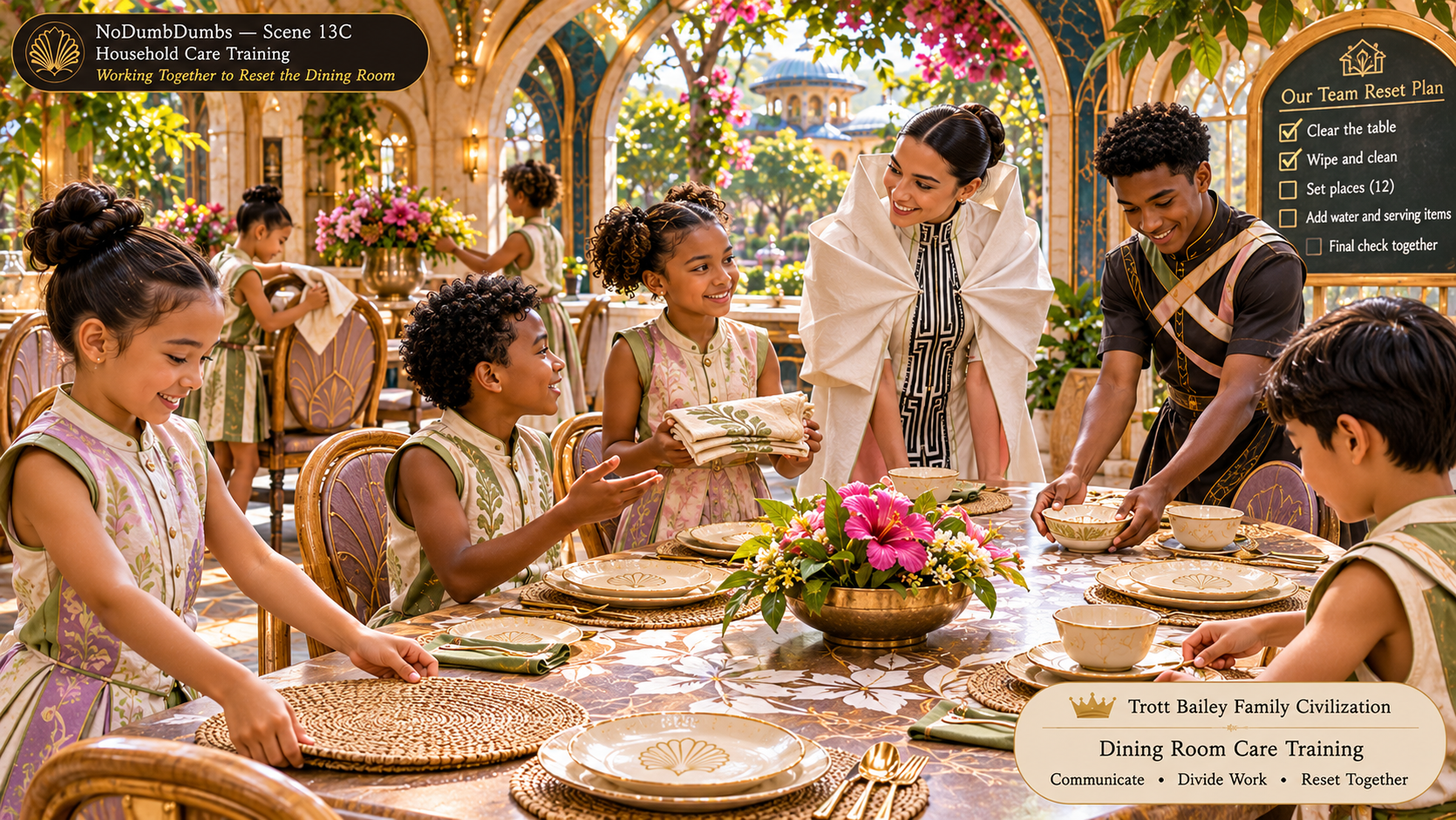
The NoDumbDumbs outdoor training grounds provide children with real fields, appropriate tools and experienced practitioners.
Groups of up to twelve children work in smaller teams, with adult instructors and teenage apprentices helping.
The children wear suitable outdoor garments, protective gloves and footwear appropriate to the work.
One group may prepare leaf compost, another may examine decomposing wood, while a third tends an established worm bed.
More demanding operations are managed by experienced practitioners.
The children return to their planting islands over weeks and months, maintaining the soil and plants, recording changes and discussing what they have discovered.
They can also visit growers in other districts, where different soils, climates and materials provide further opportunities to learn.
Parents may join these activities, and Pacorips can help coordinate learning arrangements and preserve useful records of the experiments.
The Skills of Life That Last
When you brush off the glamour of everything else, the skills that are truly needed and lasting become quite clear. Knowing how to grow food, build and keep a home, unify with another person and procreate more life. These are the core issues of life that wise parents should prepare their children for.
We want our children to grow up capable of taking care of themselves, building a good life with their husband or wife, raising their own children and maintaining a home and family. The ability to grow food, solve practical problems, cooperate with others and make good use of available resources will serve them throughout their lives.
In Trott Bailey Family Civilization, we take this a step further by making it the civilization’s mission to assist parents in this endeavour. We provide the people, places, materials, training and opportunities that help families prepare their children thoroughly for these responsibilities.
We believe that raising capable children in this way will lead to a better world, with fewer wasted lives and less wasted time. Children who are properly prepared for the responsibilities of life can grow into adults who are capable of caring for themselves, establishing strong families and contributing freely to the flourishing of others.
Research and Further Reading
The materials and processes discussed above draw on agricultural extension and soil research. The proposed fertile-island compositions are learning experiments, not claims that any particular mixture is superior.
- University of Maryland Extension — How to Make Compost at Home
- Oregon State University Extension — Mulching Woody Ornamentals with Organic Materials
- Utah State University Extension — Vermicomposting
- Embrapa — Princípios geoquímicos, mineralógicos e biológicos do manejo de remineralizadores de solos
- University of Florida IFAS Extension — Organic Vegetable Gardening in Florida