Trott Bailey Family Civilization
Created Landscapes: What the Underwater World Taught Us About Land
Coral reefs, jellyfish, great lawns, and a new breakthrough in how we create the landscapes of Trott Bailey Family Civilization.
October 9, 2026 | Design Breakthrough V1
Who would have thought that looking at photographs of fish, jellyfish, and coral under the sea would help us figure out what to do with our lawns?
Yet here we are.
We were studying photographs from beneath the sea. Branching coral, great rounded coral colonies, jellyfish with delicate hanging tentacles, sea fans, anemones, fields of seagrass, and colourful fish moving through it all.
The shapes were extraordinary. Some looked like trees. Others resembled flowers, mushrooms, giant cushions, folded fabric, or entire little landscapes.
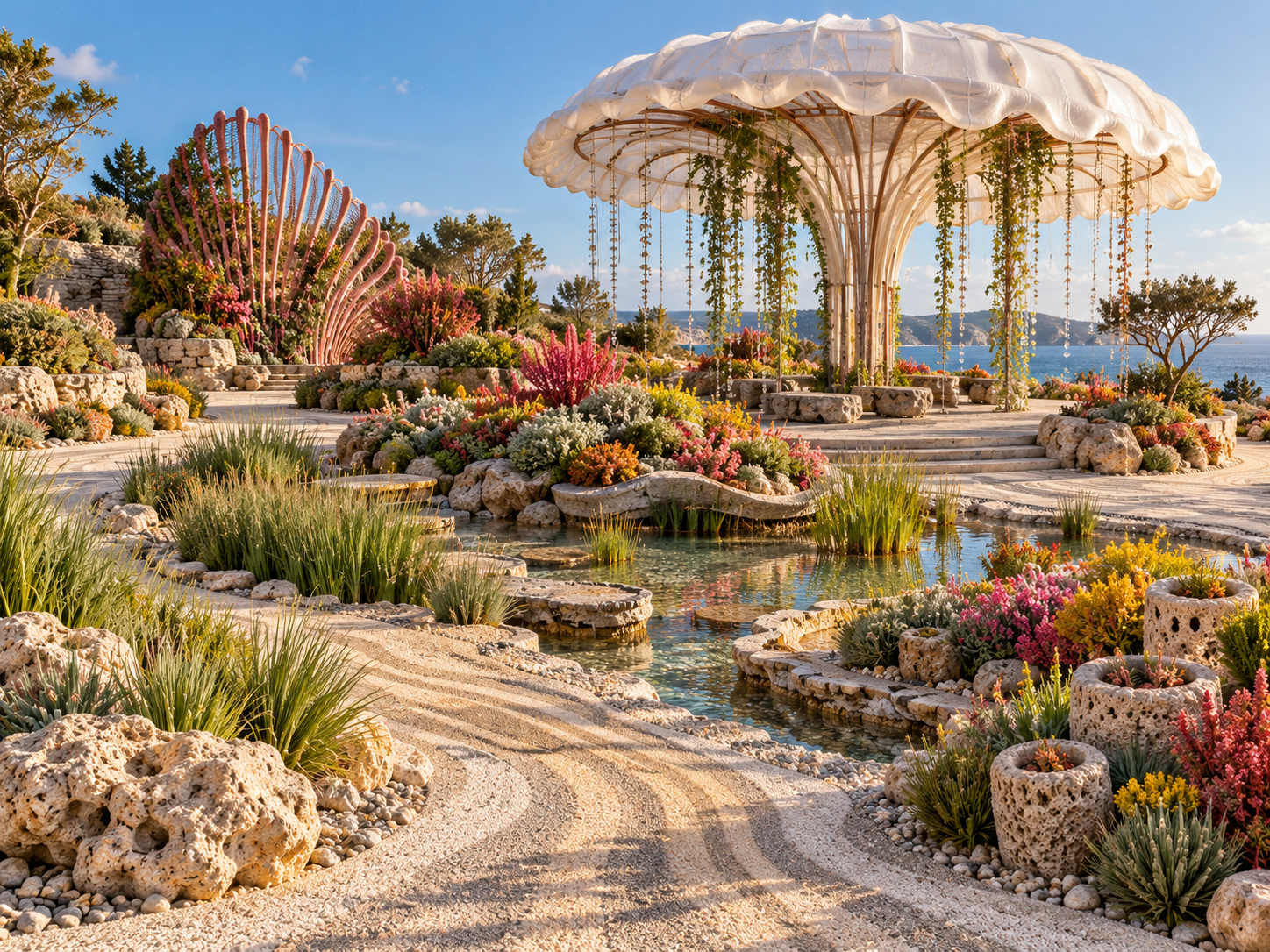
We could imagine bringing these forms onto land through plants, stone, water, terrain, and unusual shade structures.
But something else caught our attention.
The Reef Gave Us More Than Shapes
Look at how a coral reef is arranged.
In some places, hundreds of living forms crowd together. They branch, overlap, spread, rise and settle at different heights. Some are soft and feathery. Others are hard, rounded, or full of little openings.
And then suddenly, open water.
There may be an enormous amount of life in one area, with great stretches of openness around it.
That relationship caught our attention because we have been working through something similar in our landscaping.
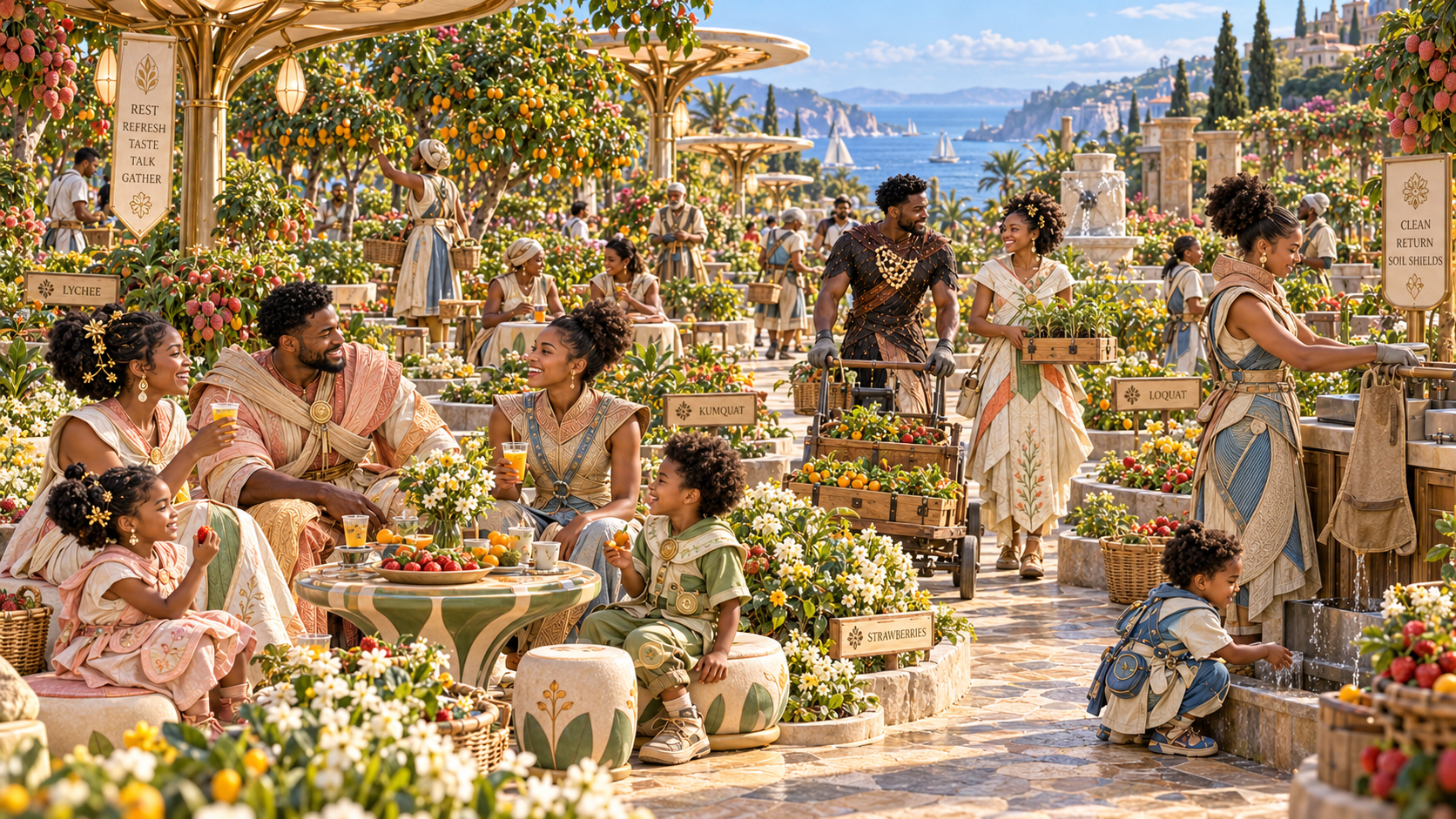
We want beautiful planting, dramatic stone bodies, water systems, orchards, unusual landforms, and public resting grounds.
We also want broad lawns, pasture, prairie, open sandy ground, and space for families to enjoy the land.
Some of our first landscape images were becoming crowded with beautiful things.
The reef photographs offered a wonderful way to think about how these different land bodies could live together.
Dense, abundant life in some places. Great stretches of breathing room in others.
Bringing the Underwater World onto Land
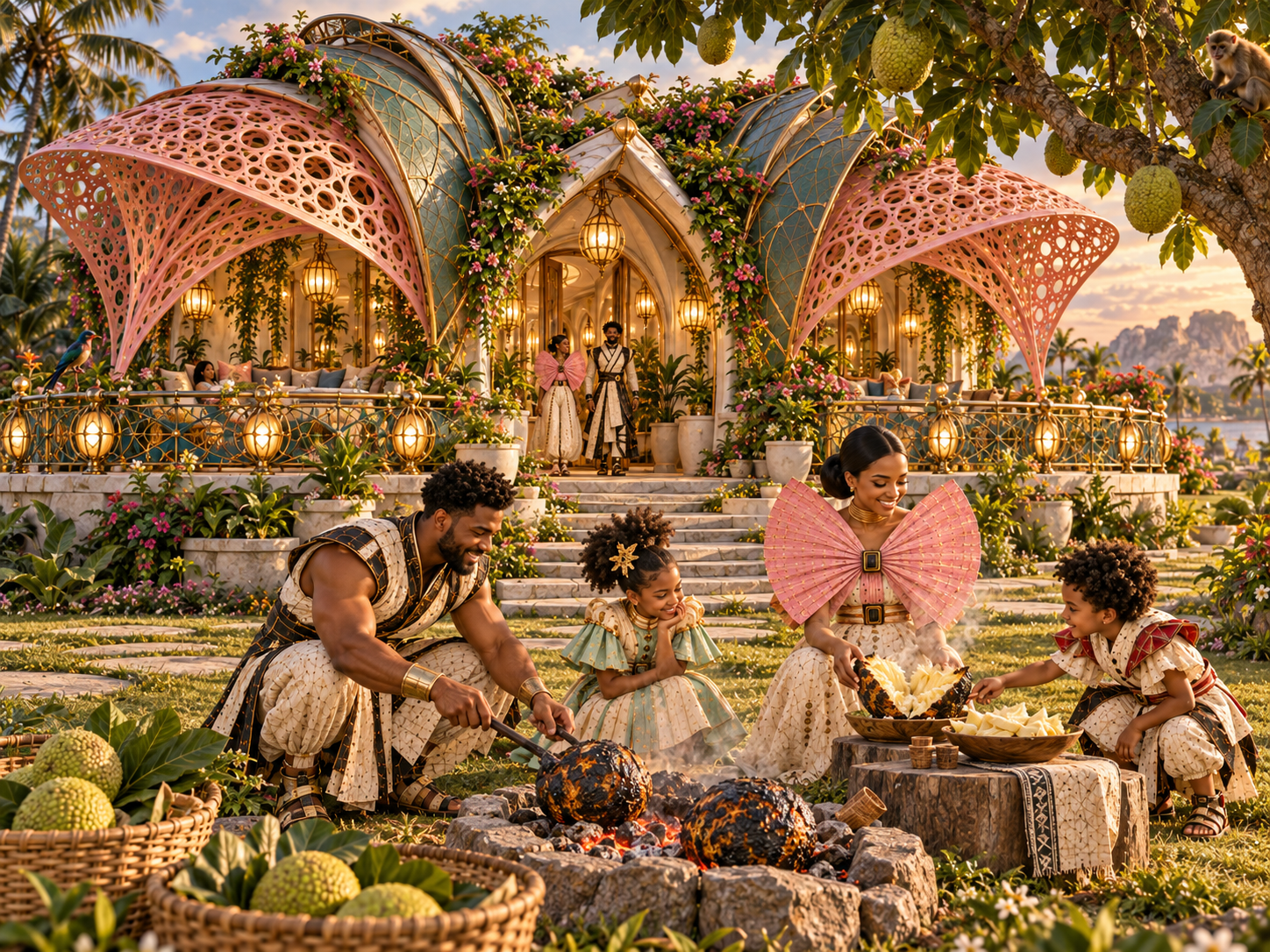
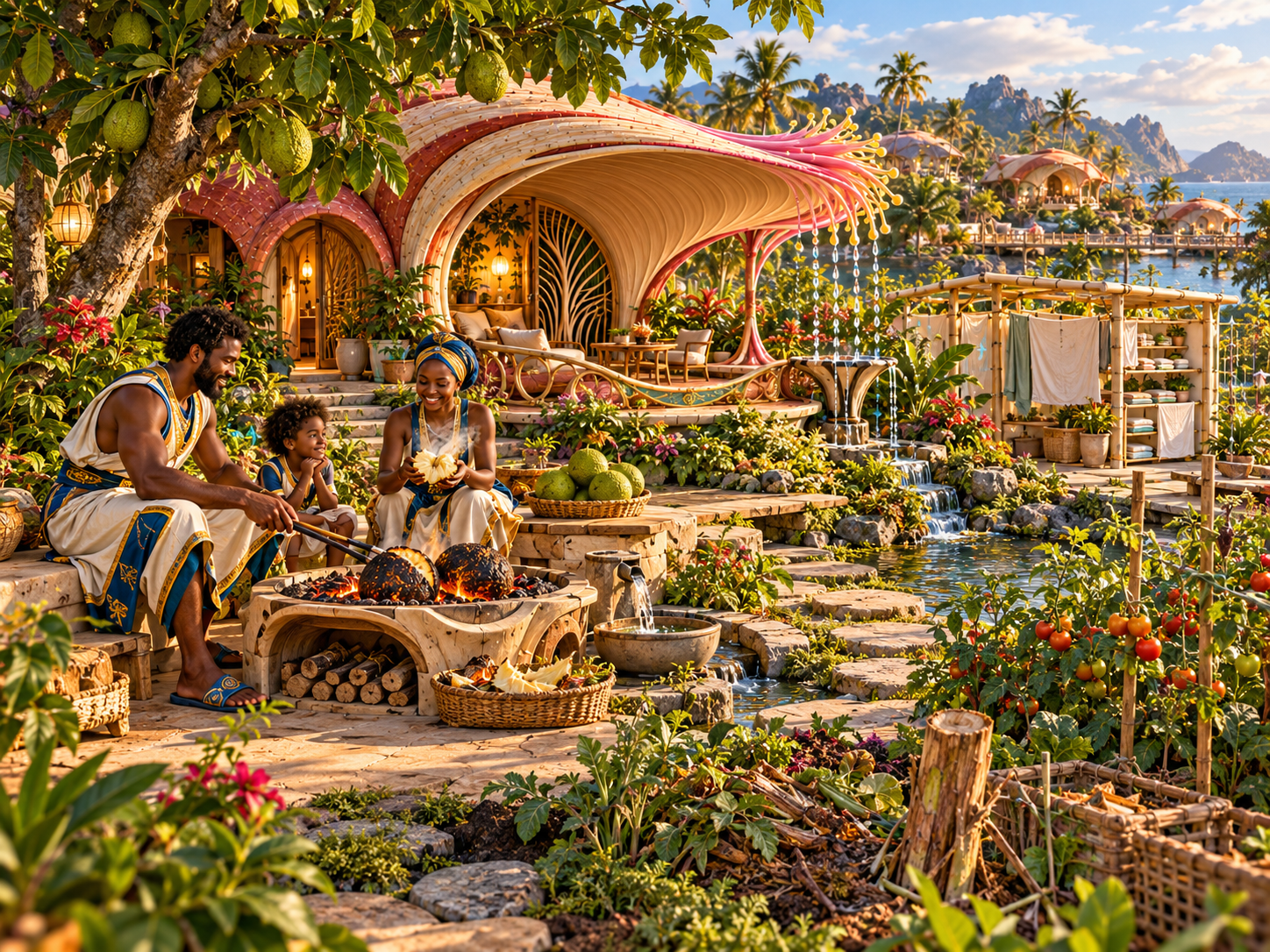
Branching coral can inspire flowering shrubs, small trees, and intricate planting colonies. Dome corals can influence rounded land rises, gathering stones, and shelter forms.
Sea fans suggest beautiful ribbed screens and shaded passages. Jellyfish offer ideas for broad, lightweight canopies with hanging planting or water chains.
Seagrass can become sweeping fields of grass that move with the wind.
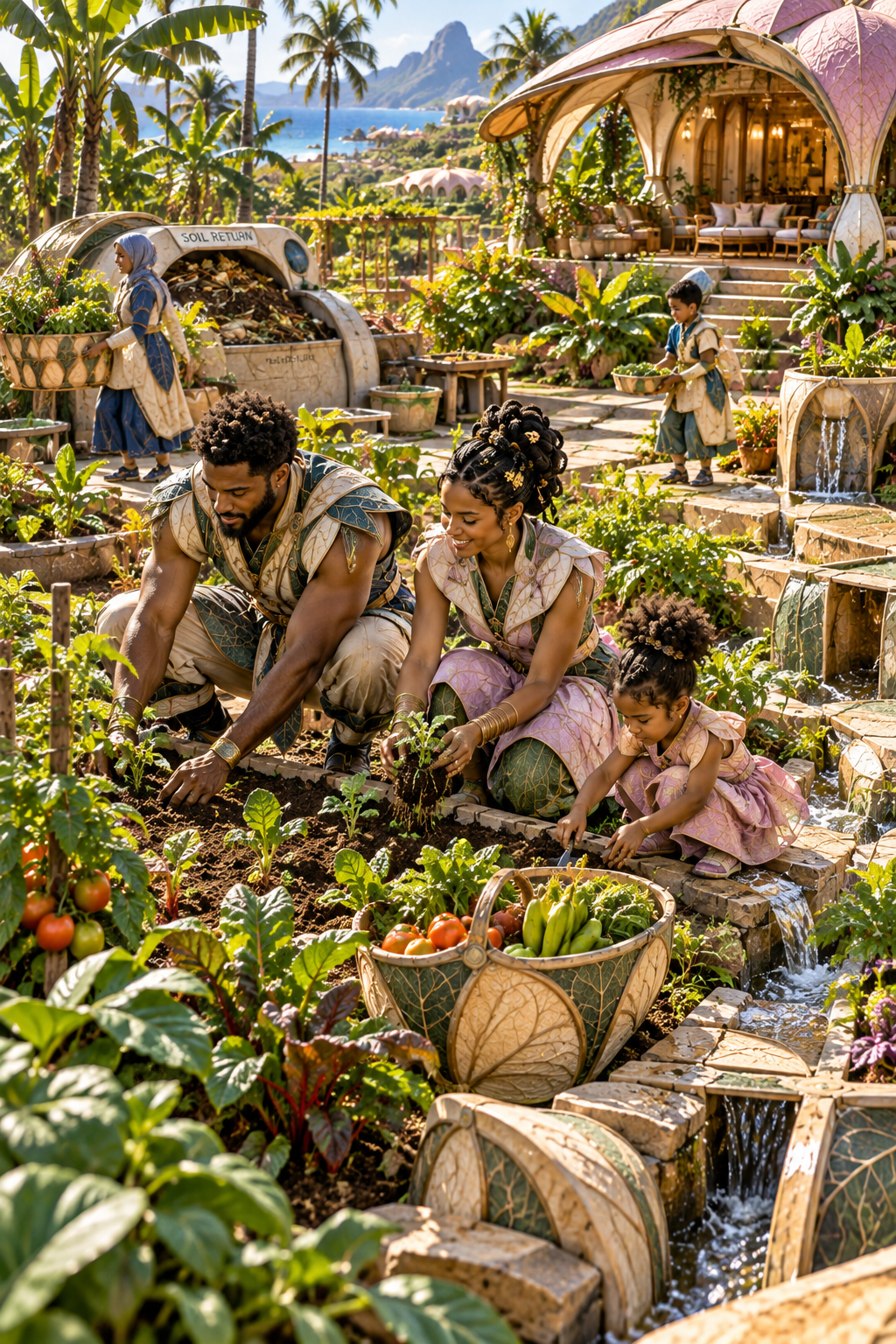
Reef shelves can inspire productive terraces, planted stone levels, and the way we move between different heights of land.
Even the tiny colourful fish moving in groups gave us ideas for drifts of flowers travelling through larger green fields.
We can explore coral-inspired stone bodies that provide seating, support terraces, guide routes, carry planting, or help manage water.
And we can borrow the underwater world’s astonishing colours: pale creams, soft pinks, warm coral, golden yellows, sea-greens, and turquoise.
These colours can come from real flowers, foliage, crops, fruit, soil, mineral materials, and water.
What excites us most is the possibility of bringing entire relationships onto land: the layering, the clusters, the open spaces, and the transitions from one living world to another.
And Yes, We Still Want Lawns!
As we developed the first sea-inspired landscape images, some became very elaborate. Wonderful structures, colourful planting, water flowing through stone, sculptural forms everywhere.
Beautiful, yes.
But where were our great lawns?
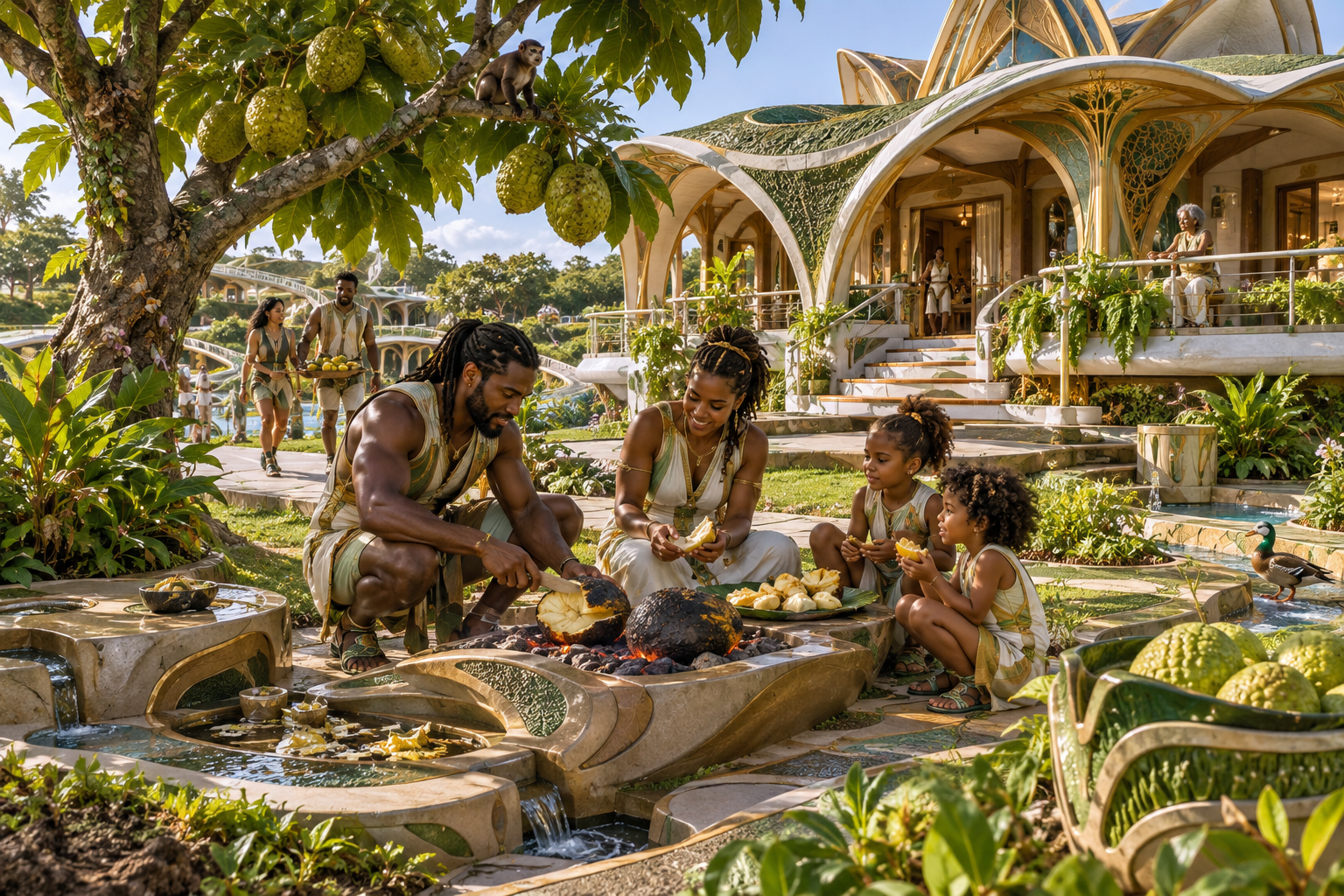
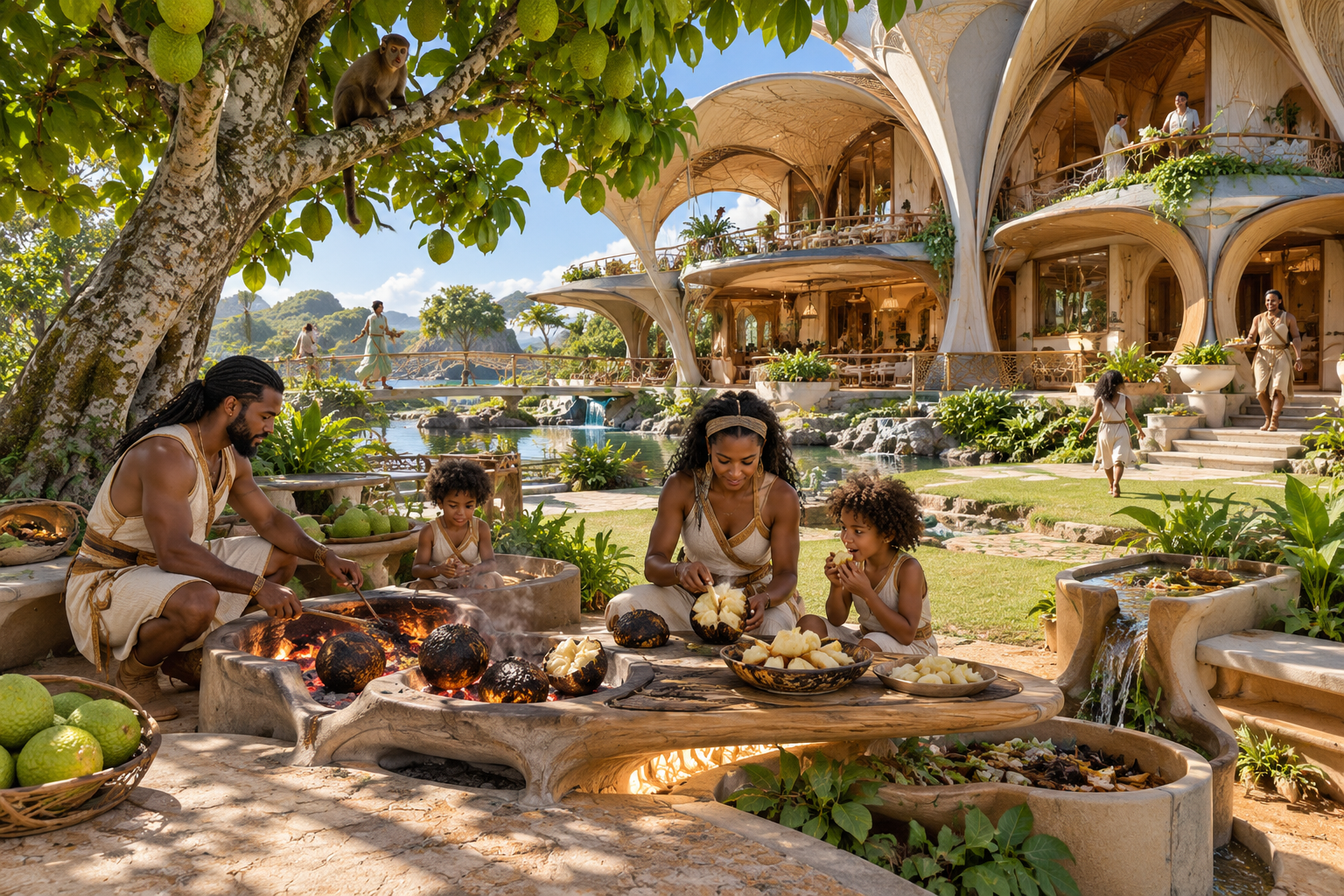
I still want broad green ground where families can sit, children can run, people can lie down, and the eye can travel without meeting another decorative feature every few feet.
The sea-world ideas should make these lawns even more interesting.
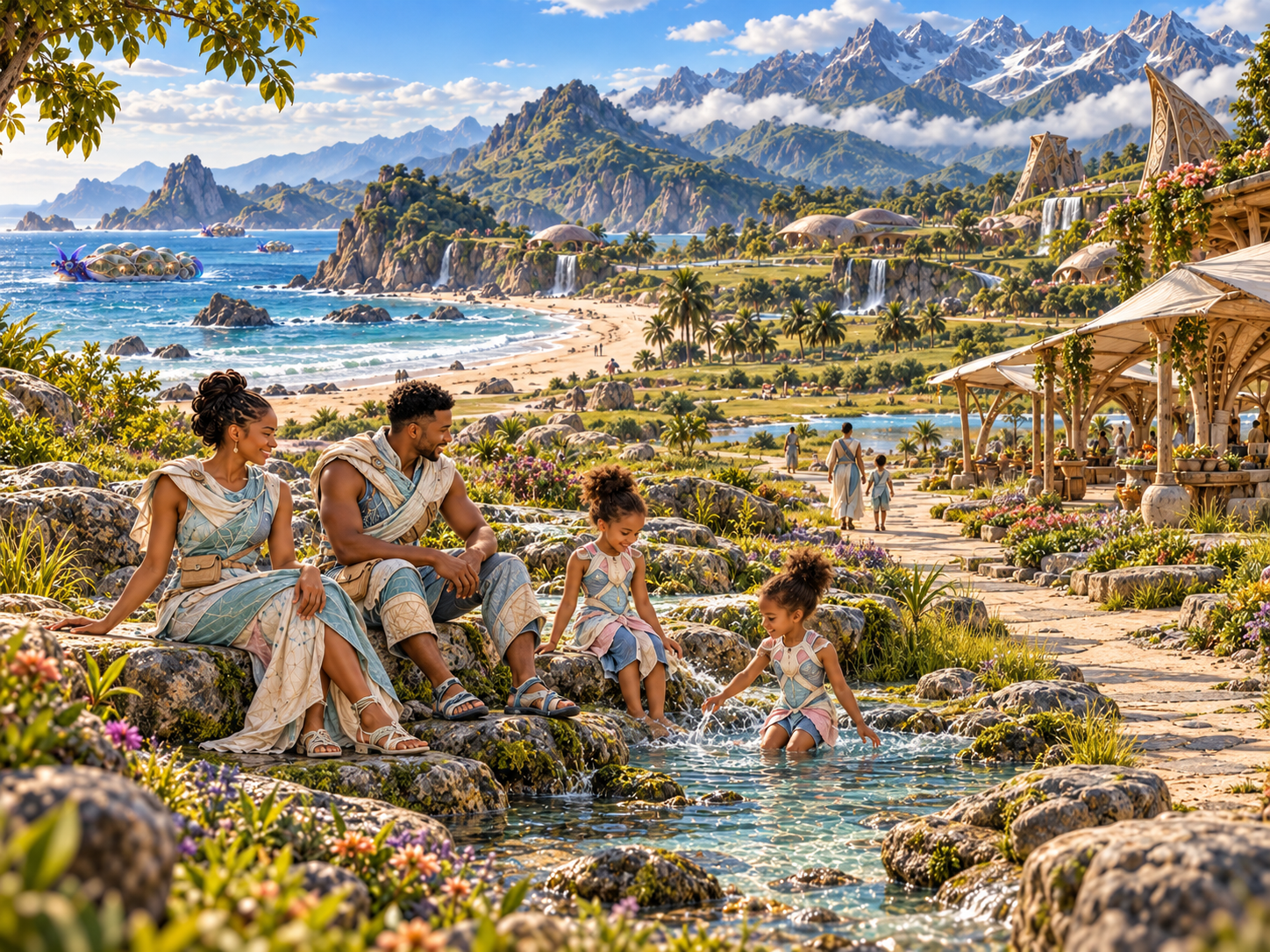
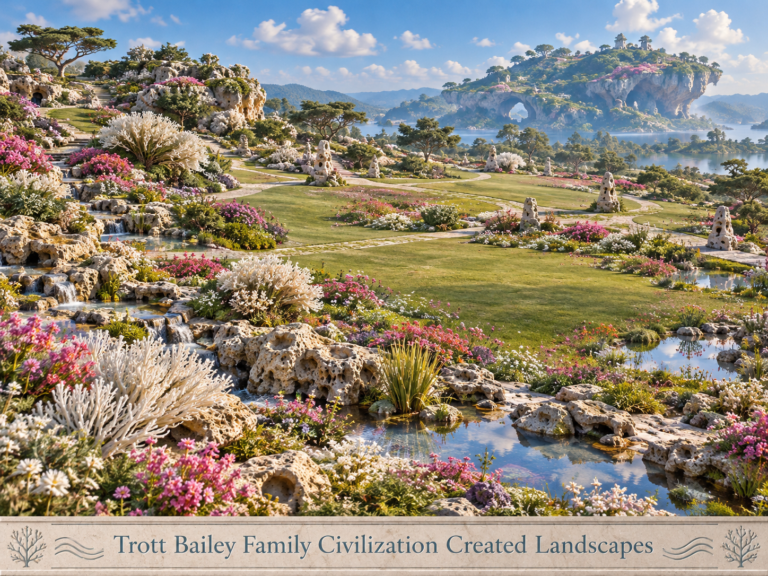
Imagine a great lawn surrounded by soft coral-inspired planting. Perhaps the edges rise gently into colourful colonies, then fade into longer grasses.
Beyond that, an orchard. A rocky transition. A stream. Maybe a shaded passage inspired by a sea fan.
And plenty of green ground remaining open.
There can be different degrees of management across the same territory: shorter grass where families gather, longer grasses at the edges, flowering meadow beyond, then productive planting or woodland.
We want some landscapes to be rougher, looser, and less manicured.
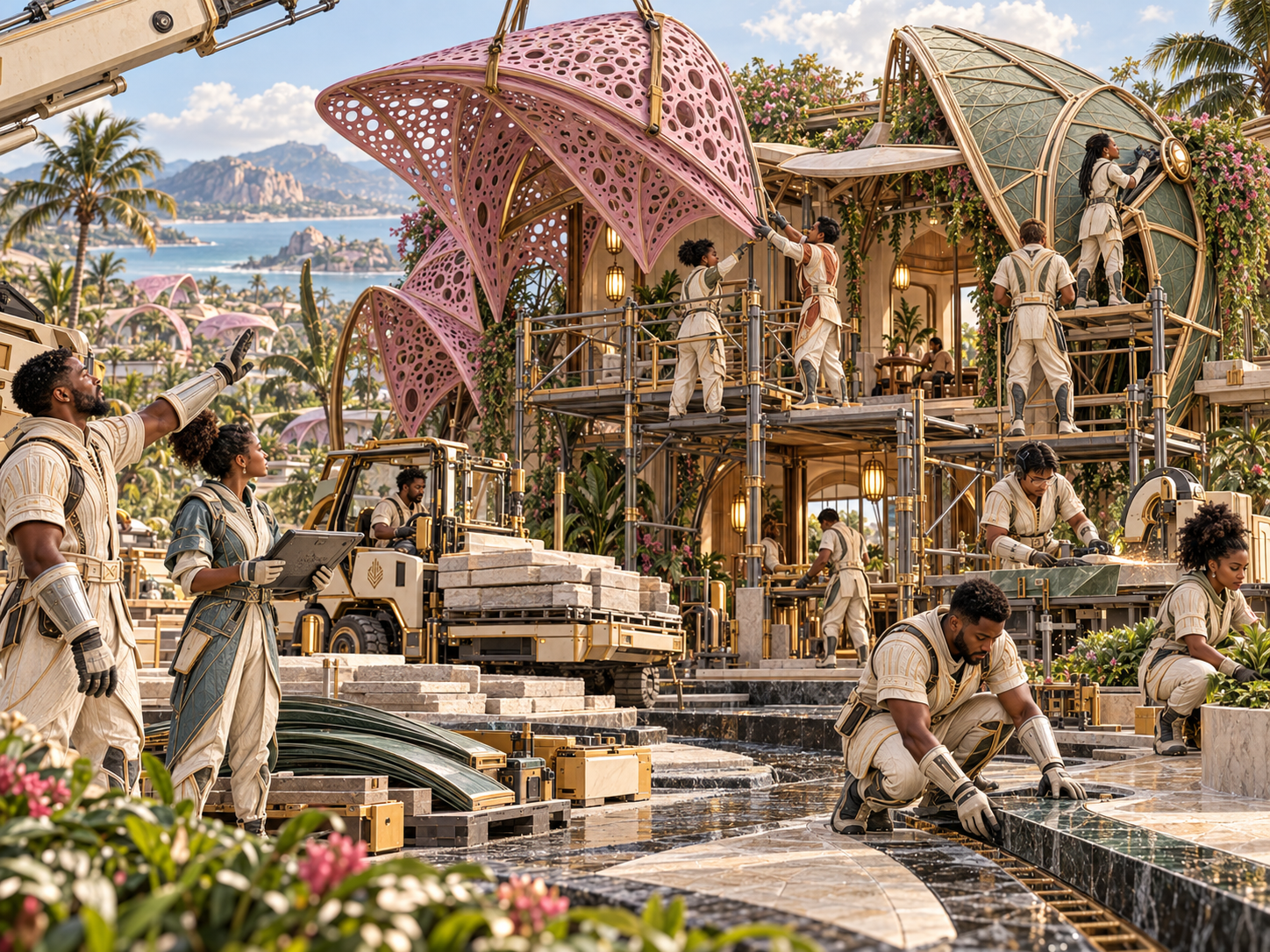
Our routes can be beautifully constructed. Our water systems can be properly engineered. Our stonework can be excellent.
The planting and terrain can still grow with natural variation, irregular edges, and wonderfully uneven distributions.
A landscape should not look as though somebody spent the entire morning combing every blade of grass.
Our Landscaping Matrix Has Grown
We already had a system for organizing created landscapes: TBF Landscaping Matrix V1.
It uses nine original categories to help us shape coherent, distinct territories.
| Code | Category | What It Establishes |
|---|---|---|
| T | Terrain Spine | The main landform: coast, valley, orchard rise, lawn, pasture, rocky highland, mountain, or other terrain. |
| X | Transition Body | How one land world changes into another. |
| P | Productive / Planting World | Orchards, crops, bamboo, flowering fields, planted edges, and other plant communities. |
| O | Open Ground Type | Lawns, pasture, prairie, sandy clearings, Living Ground, or terrace platforms. |
| R | Route Network | How people move through and connect the land. |
| S | Boulder / Stone Logic | Functional stone systems, markers, seating, terraces, climbing and relief. |
| W | Water Logic | Streams, water channels, sea edges, spillways, basins and other water systems. |
| L | Relief / Public-Land Body | Optional gathering, resting, shade and outlook places. |
| B | Background / Horizon | The greater country surrounding the scene. |
The original matrix organizes four master landscape families: Coast Worlds, Productive Transition Worlds, Open Ground Worlds, and High / Shaped Worlds.
Our new TBF Sea–Land Landscaping Matrix V0.1 adds marine-inspired design choices to this foundation.
We now have additional libraries for sea forms, reef planting, lawn relationships, sea-derived stone, colour and texture, and marine-inspired public-land structures.
Each landscape can borrow selected ideas from these libraries while keeping its own terrain, planting, water, stone, routes, and open ground.
The Landscapes We Are Developing
These first visual studies have already opened several directions.
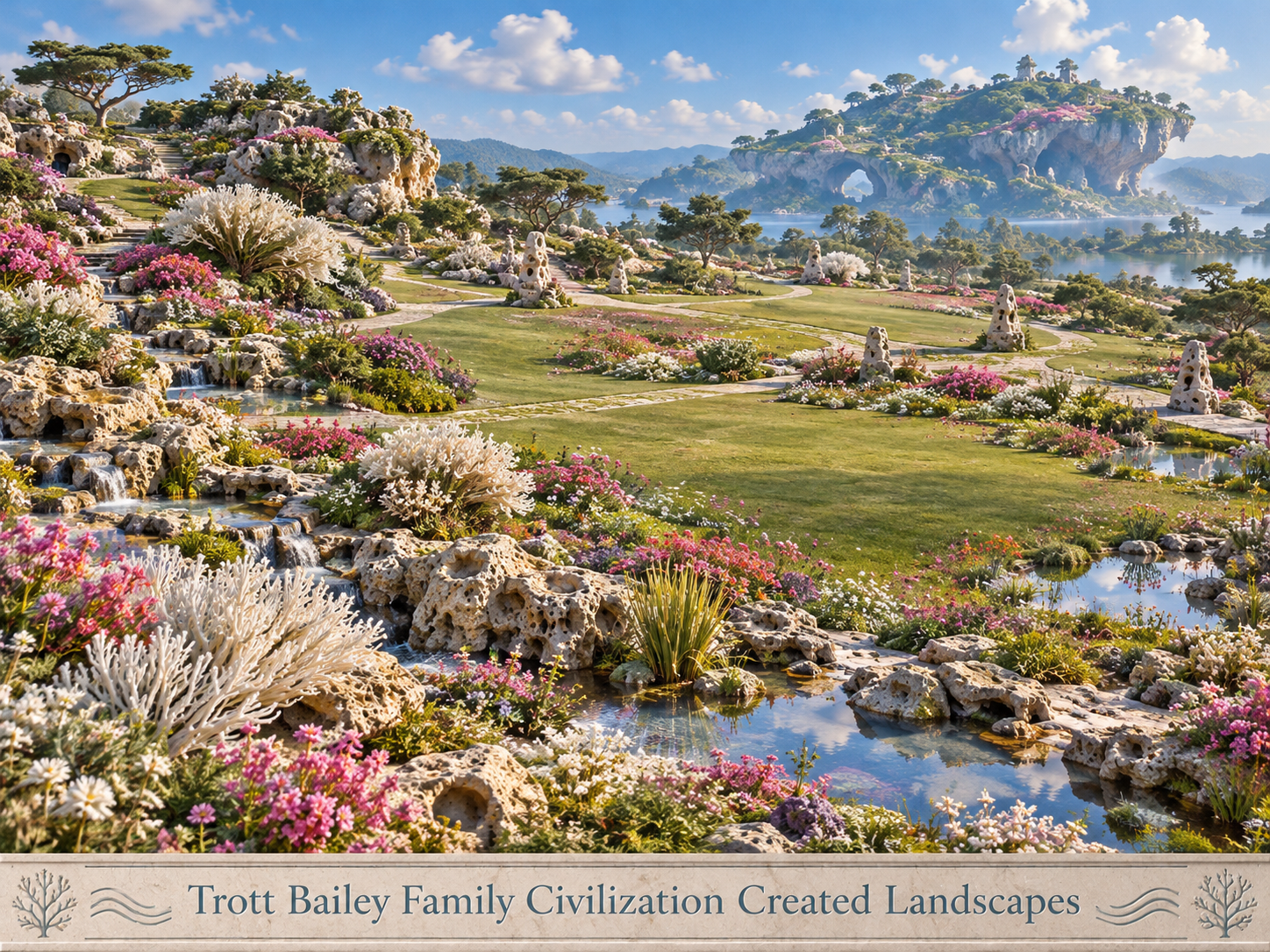
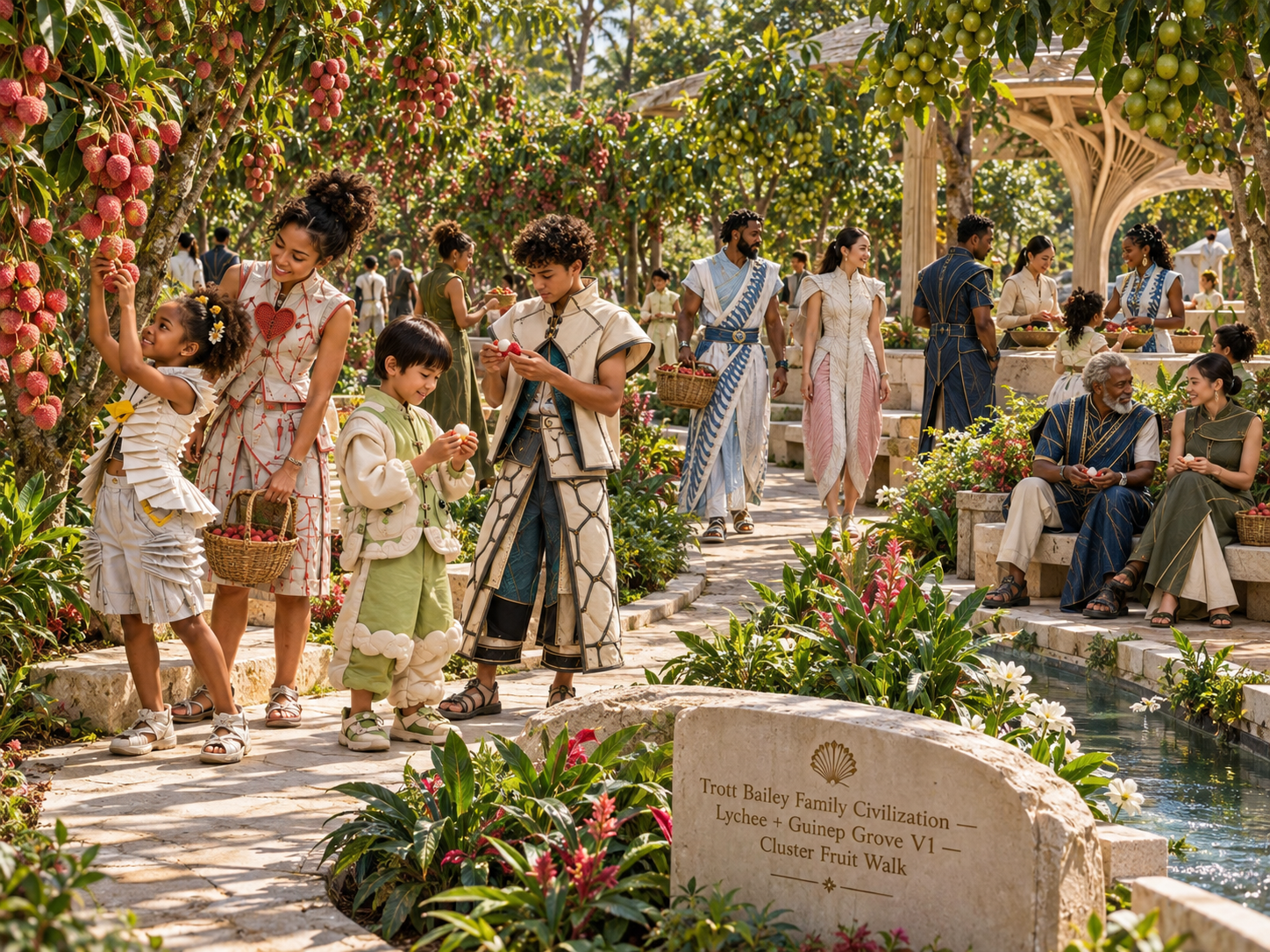
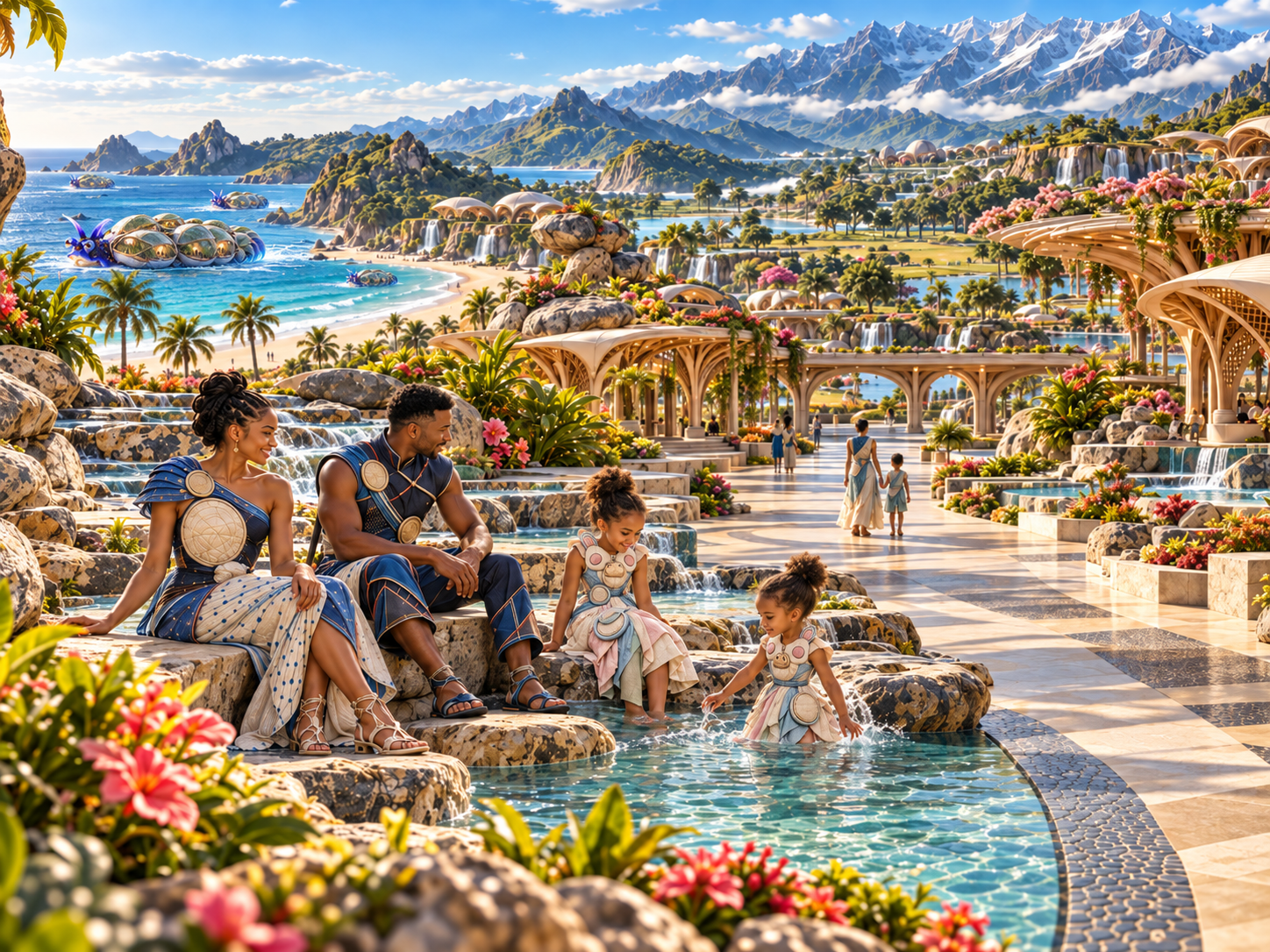
Broad green resting ground with loose coral-inspired planting colonies, occasional stone bodies, and gentle rises.
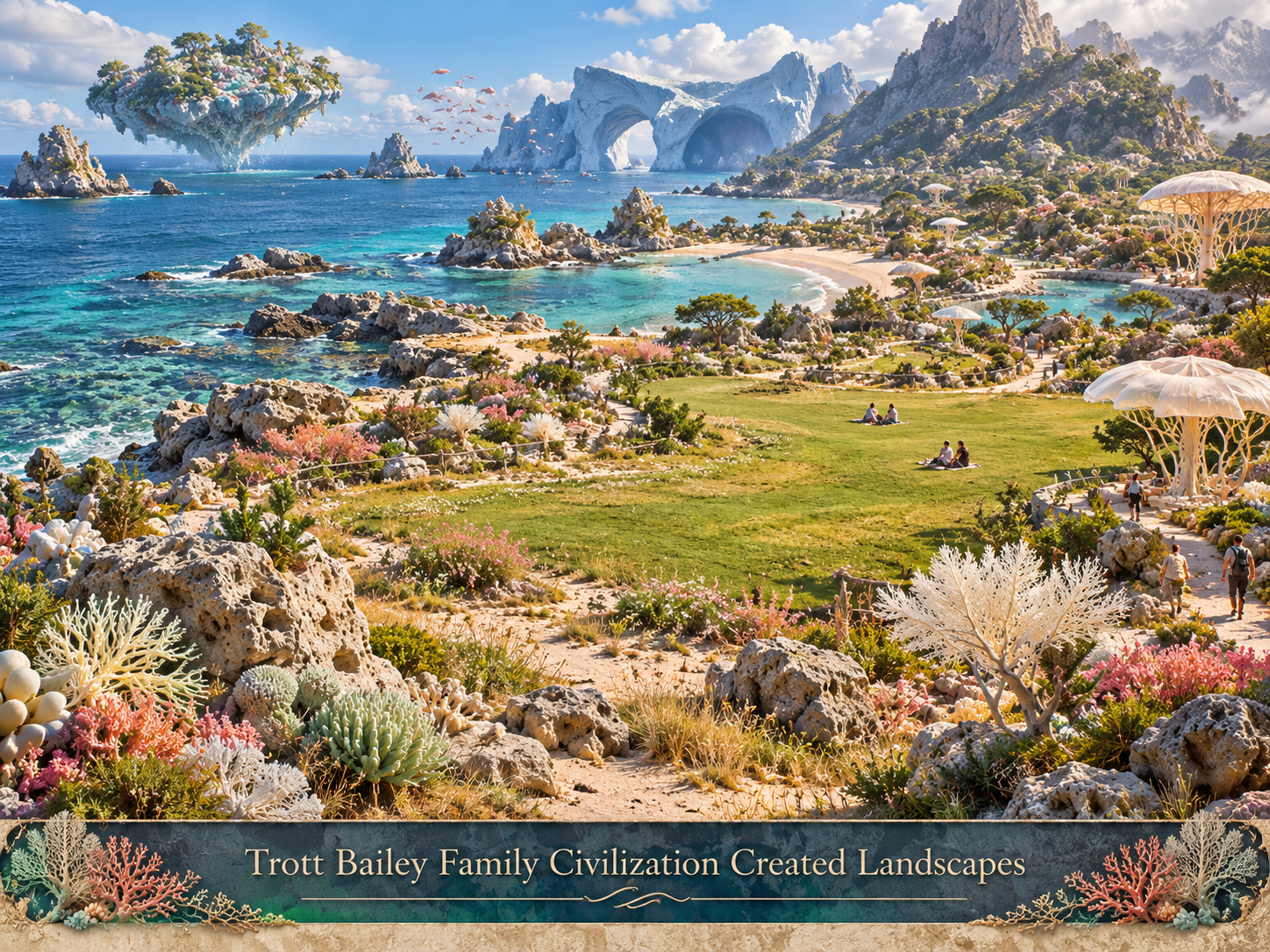
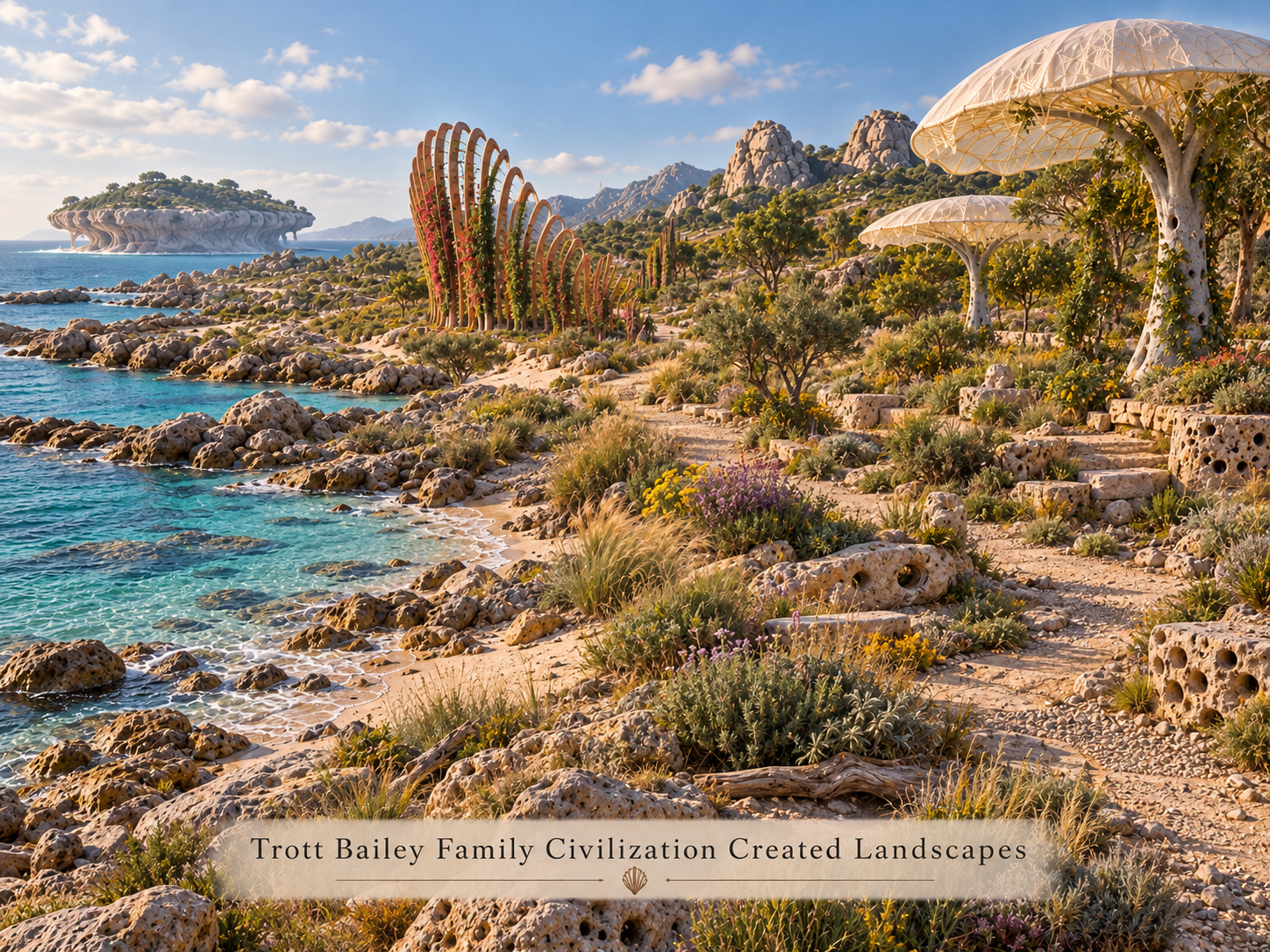
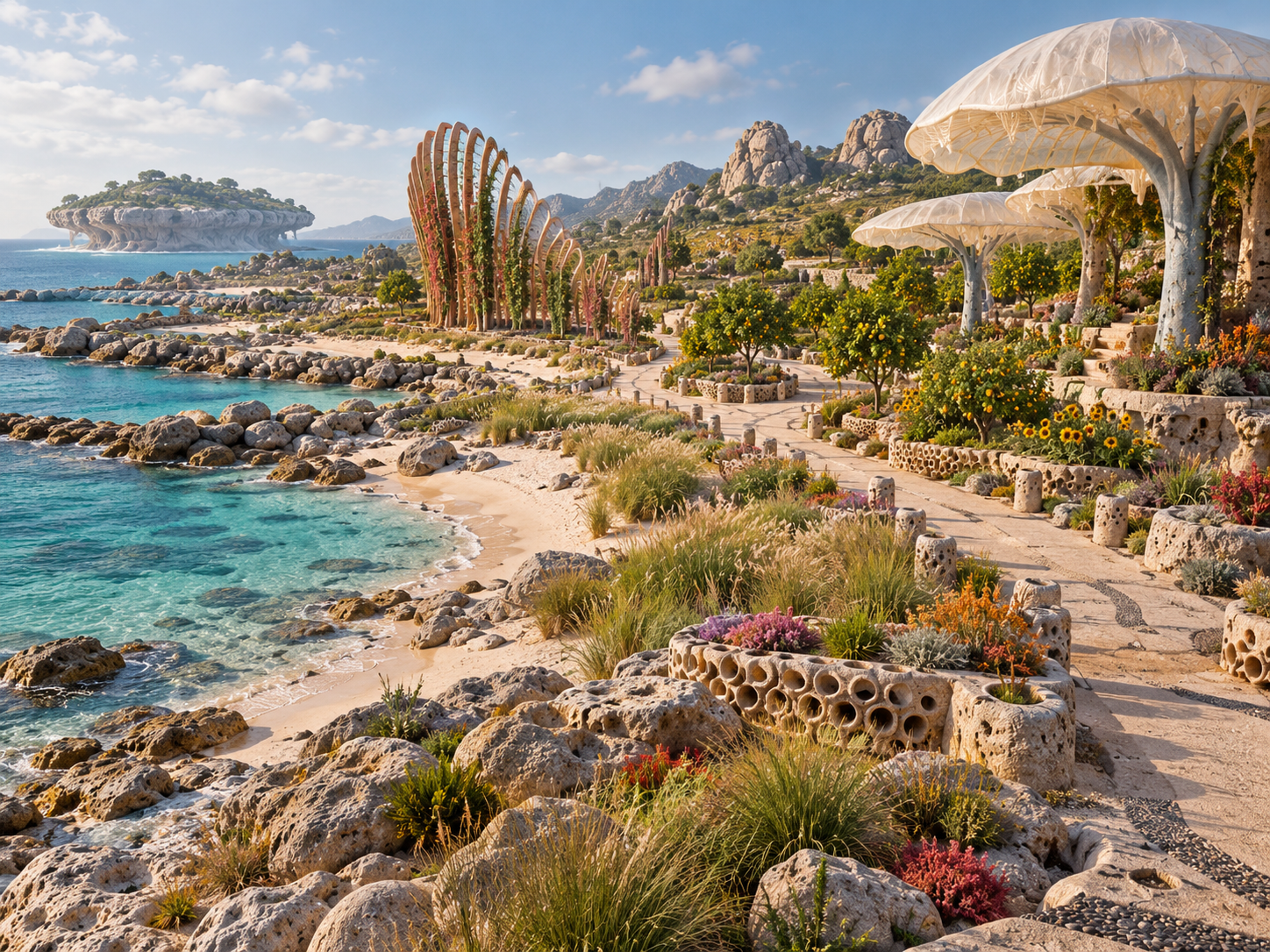
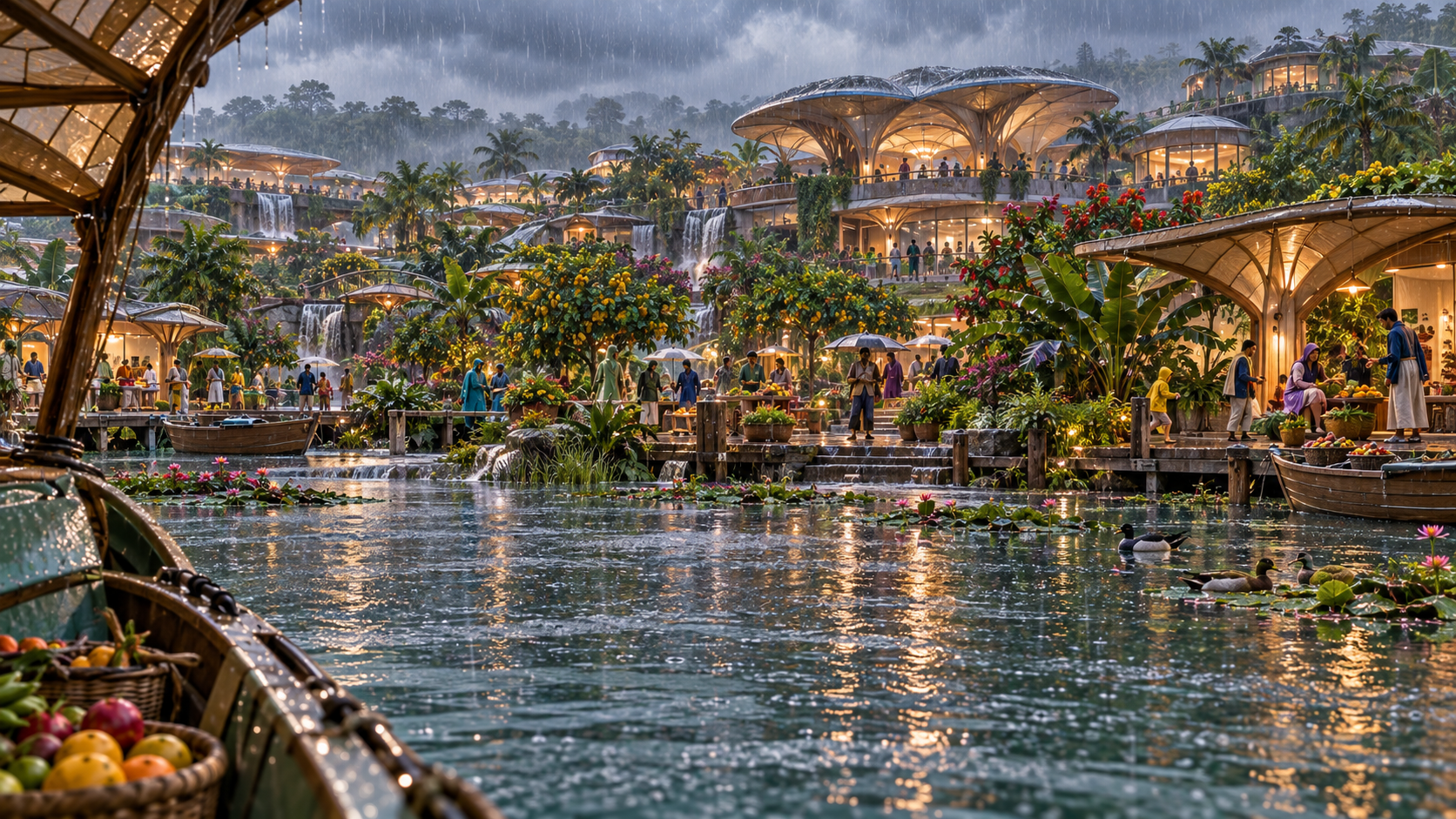
Sandy coast, turquoise sea, boulders, open lawns, and soft sea-inspired planting transitions.
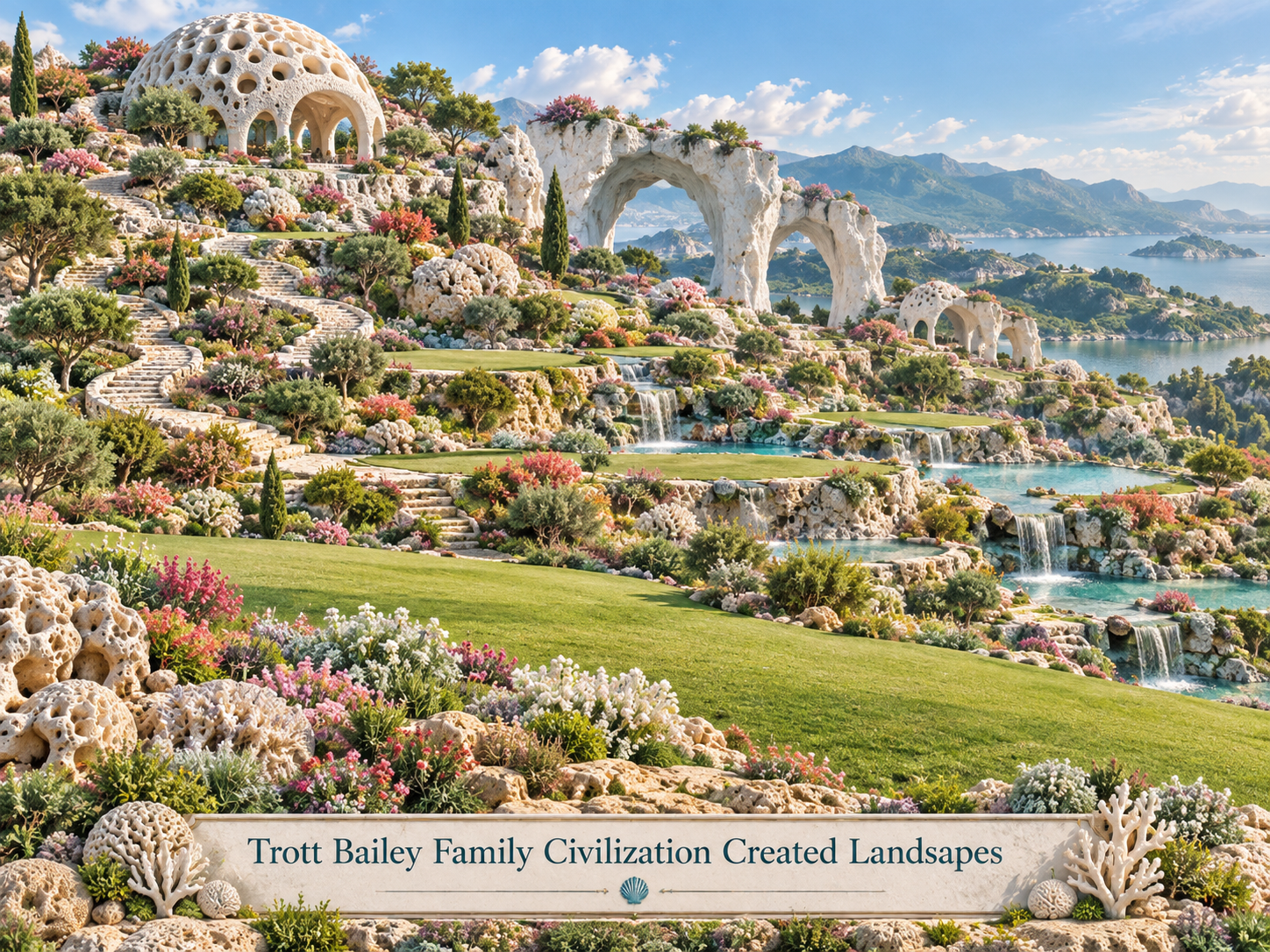
Giant mini-hills, productive fruit planting, grassy openings, layered vegetation, and rounded mineral forms.
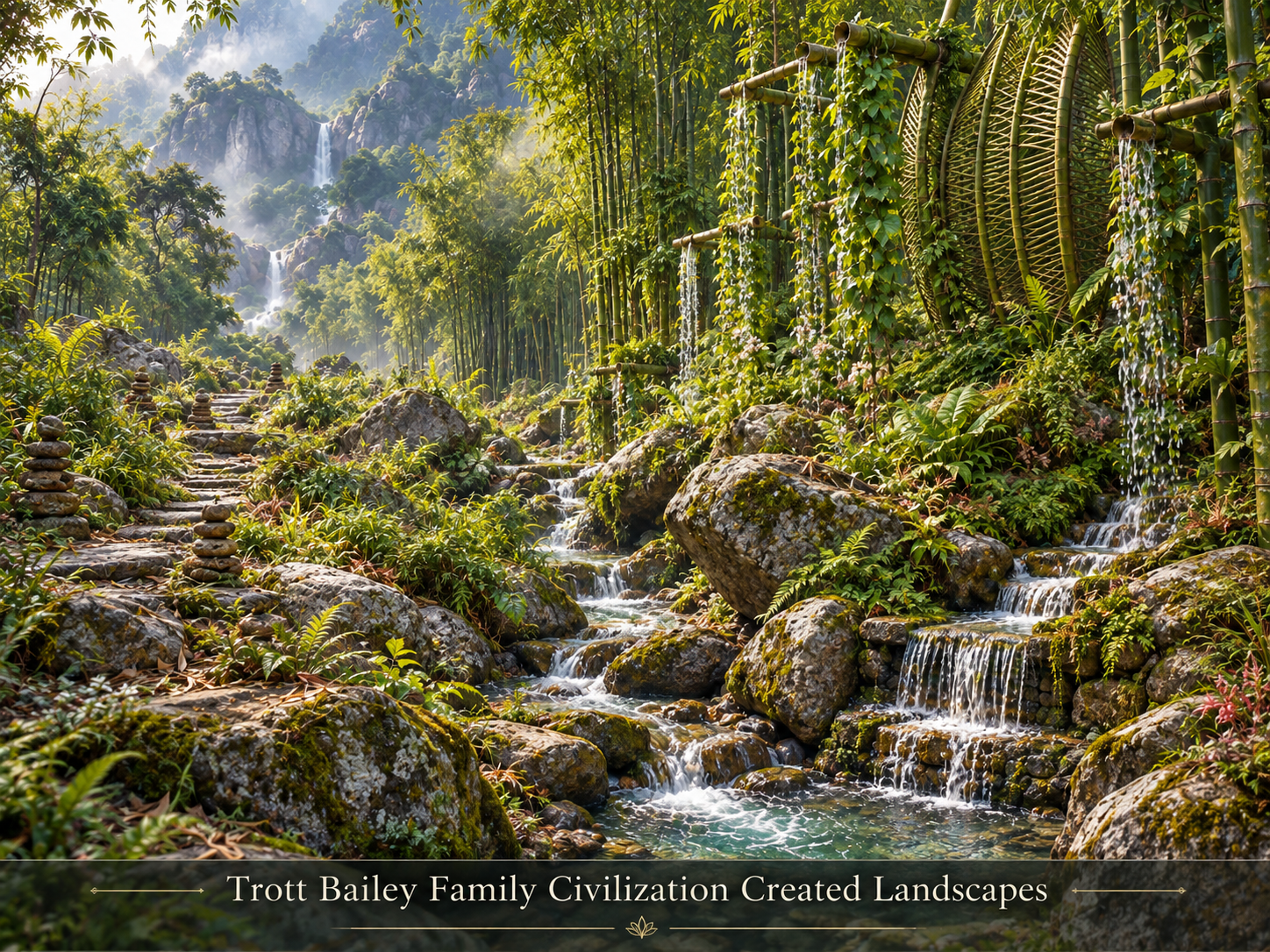
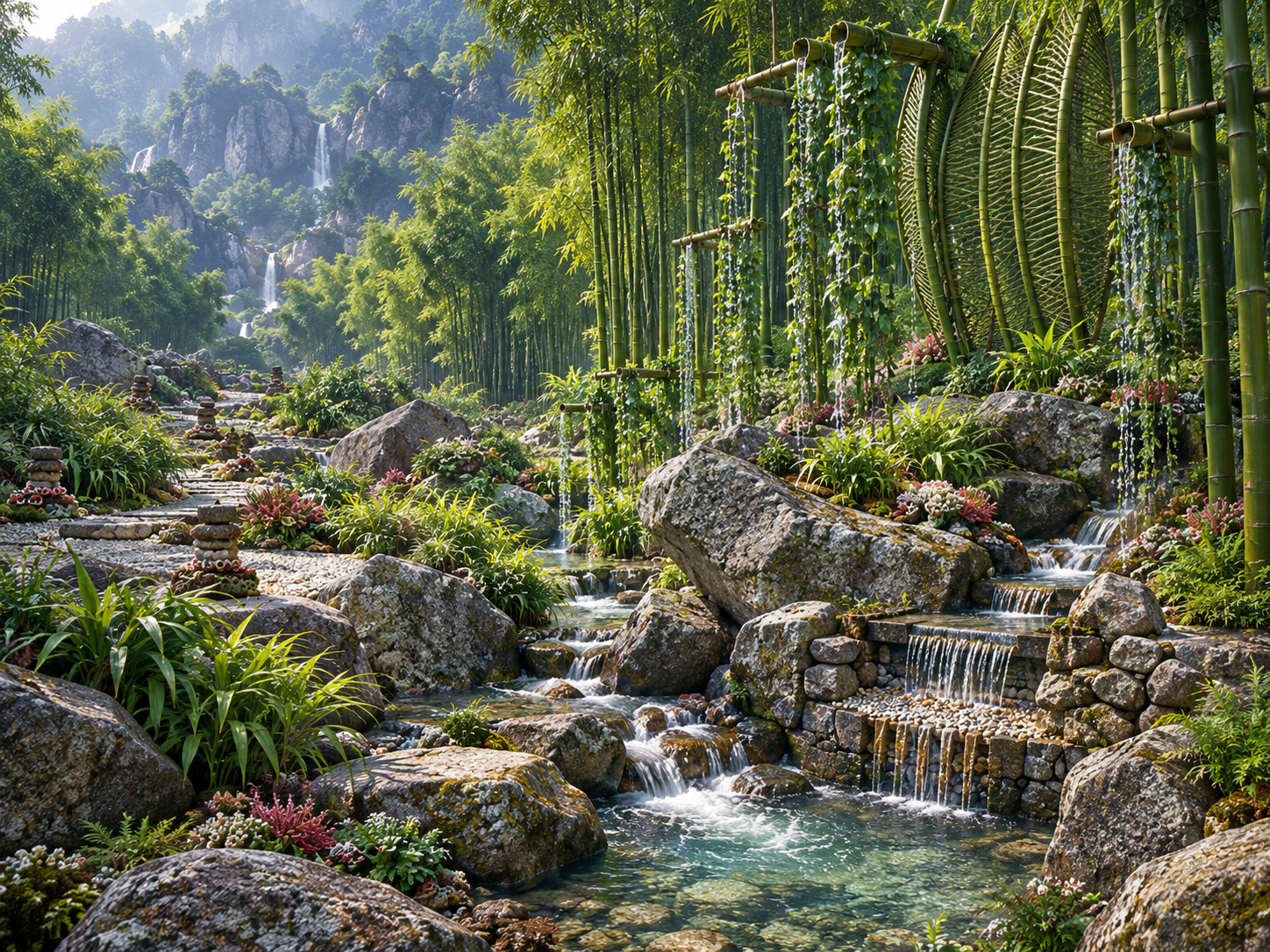
Cool bamboo belts, boulder-threading routes, flowing water, shaded clearings, and soft green planting.
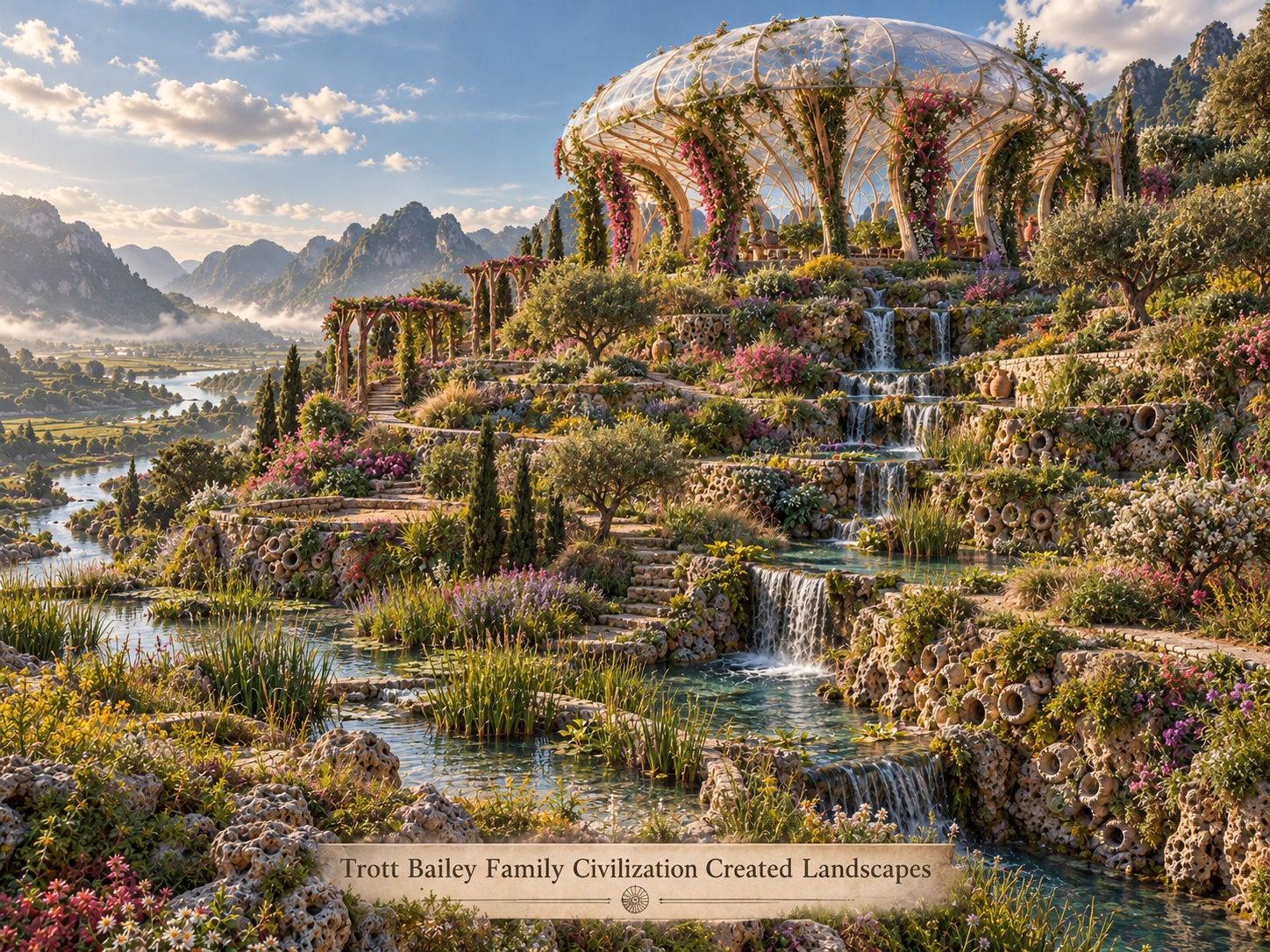
Grassy terrace shelves, productive rises, planted stone systems, and cascading water.
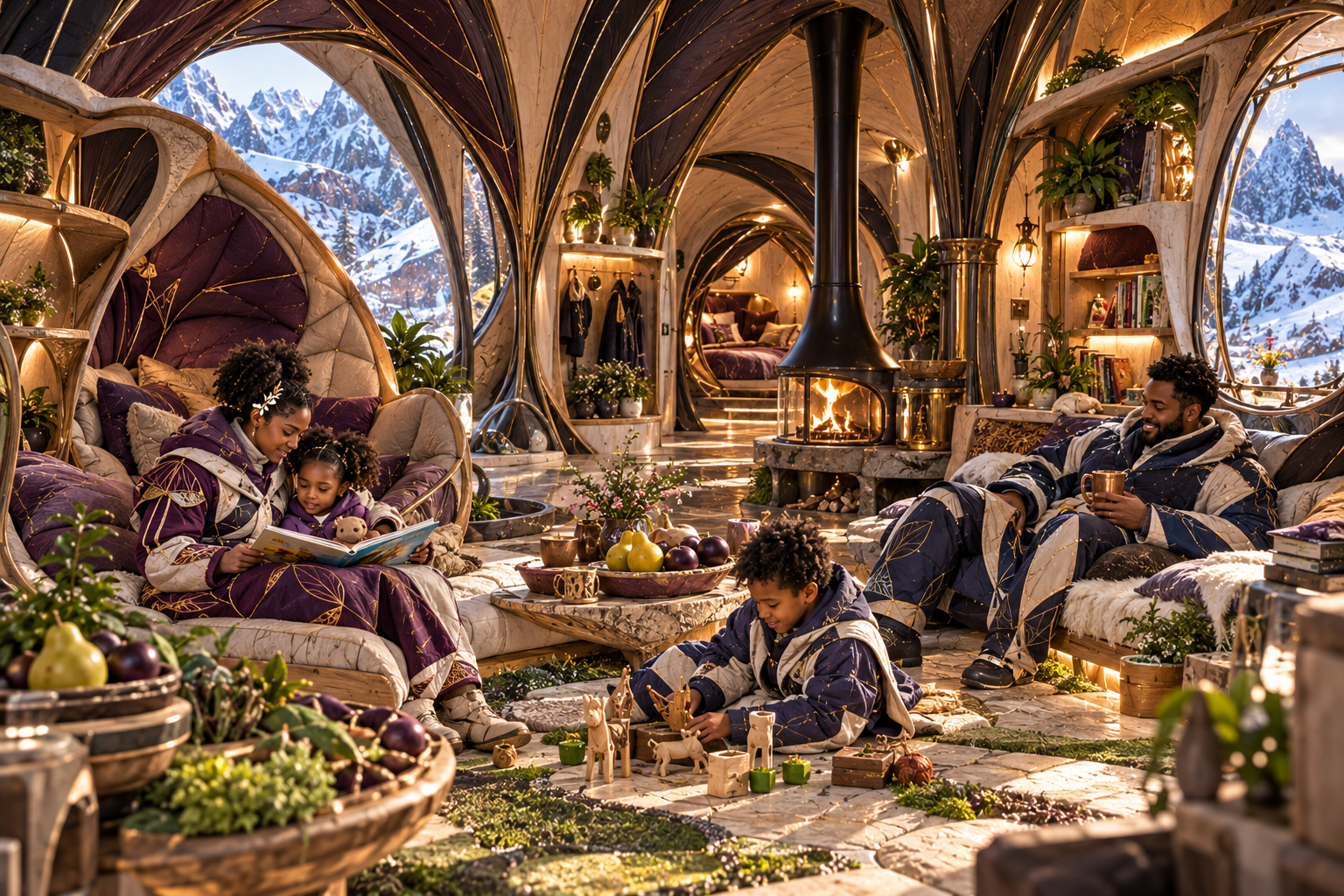
Snow basins, pale mineral arches, mountain-water channels, rocky slopes, and cold-country planting.
These are visual design studies. We are developing the landscape relationships first, then examining the practical details of planting, construction, drainage, water movement, and long-term use.
The Land Has Many More Teachers
This discovery has opened another possibility.
What other natural worlds can we study for the ways they arrange life?
A forest canopy has its own layers of light, shade, height, and openings. River systems branch through valleys and plains. Grasslands carry enormous open fields with scattered areas of concentrated life.
We have been exploring the underwater world first, and it has already given us an extraordinary amount to work with.
There is much more to study.
Trott Bailey Family Civilization Created Landscapes
We want to create land that is beautiful, productive, spacious, useful, and full of life.
Land with great lawns, orchards, pasture, prairie, rocky country, water, flowering fields, and surprising forms that people can actually enjoy.
The underwater photographs gave us new ideas for how these worlds can come together.
We are going to keep studying, creating, examining what works, and improving the designs.
Who knew that a few photographs from under the sea would send our landscaping in such an exciting new direction?