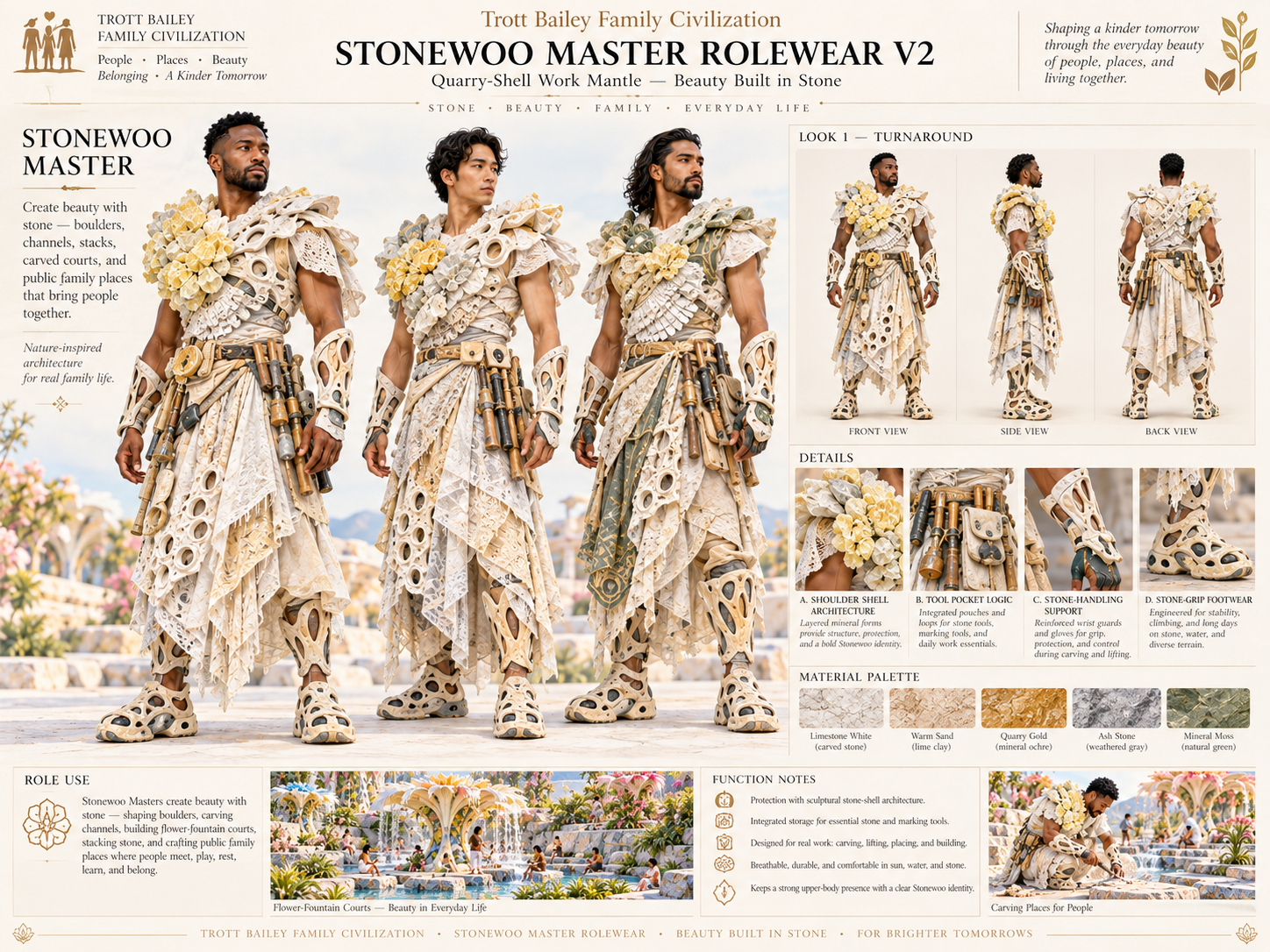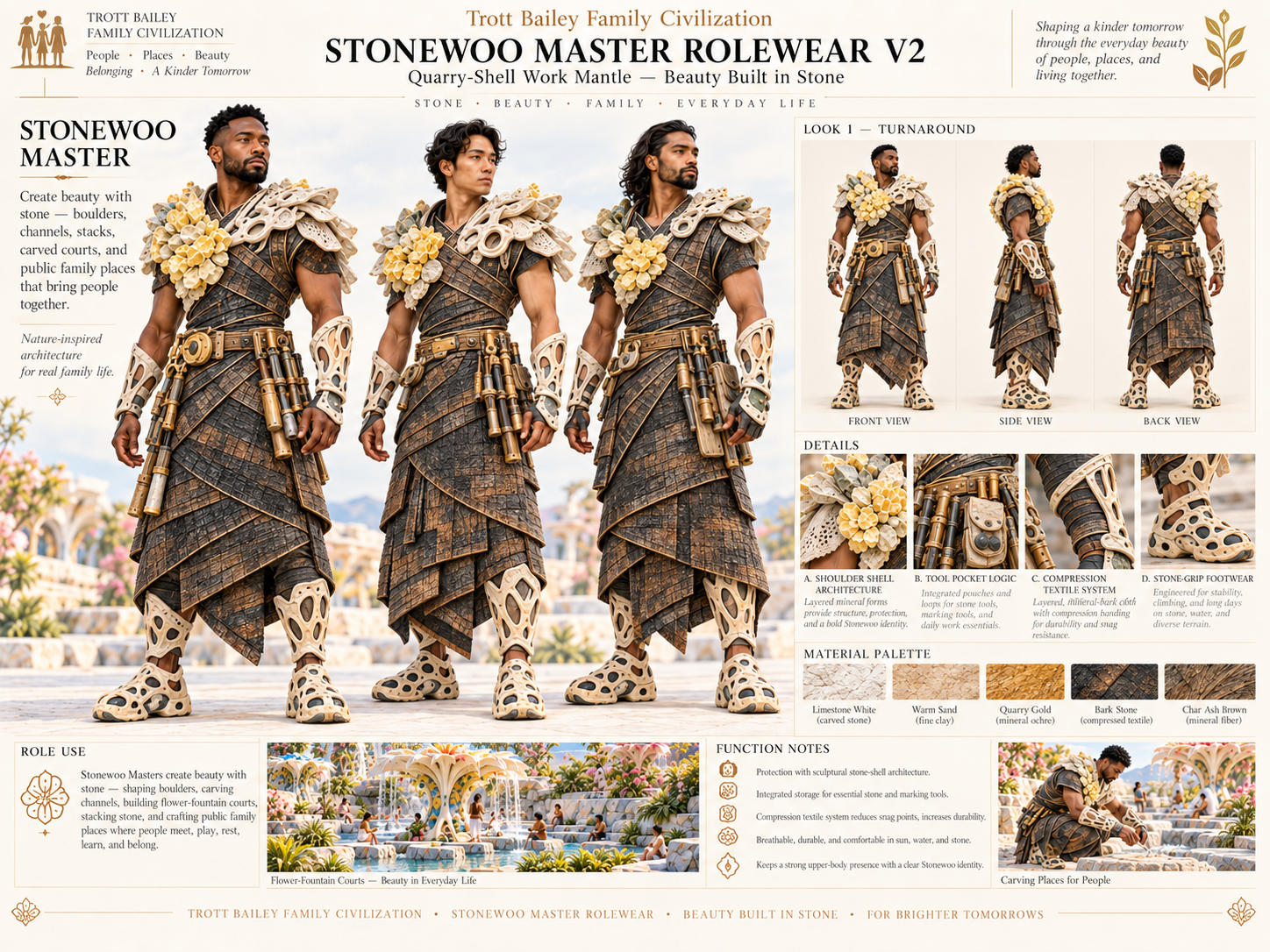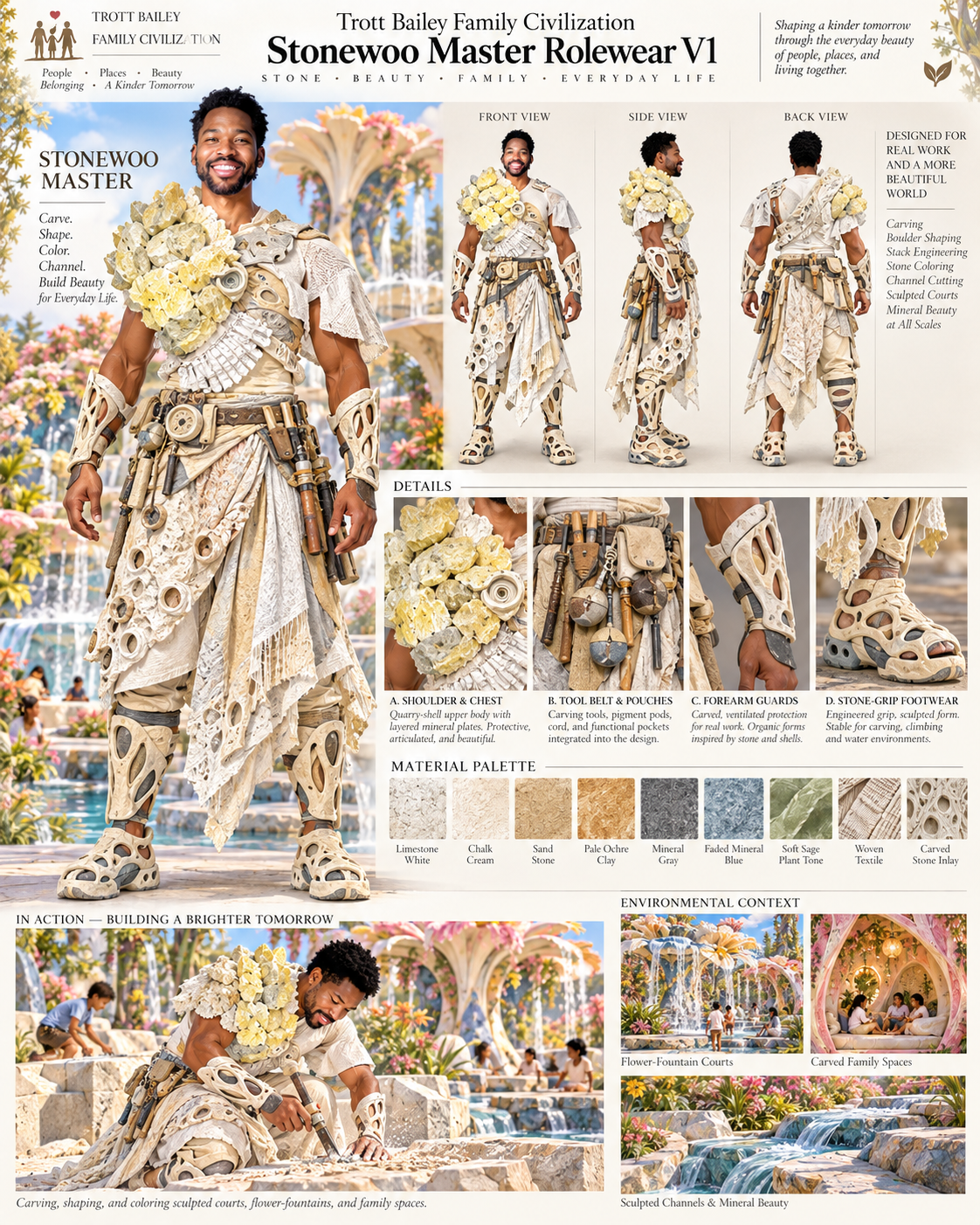
Stone Woo Master
A Stonewoo Master is a person who can create beauty with stone.
This is not ordinary masonry.
This is not only stacking rocks, cutting blocks, or laying paths.
Stonewoo is the art and skill of making stone serve life, beauty, water, rest, play, shelter, movement, and public belonging.
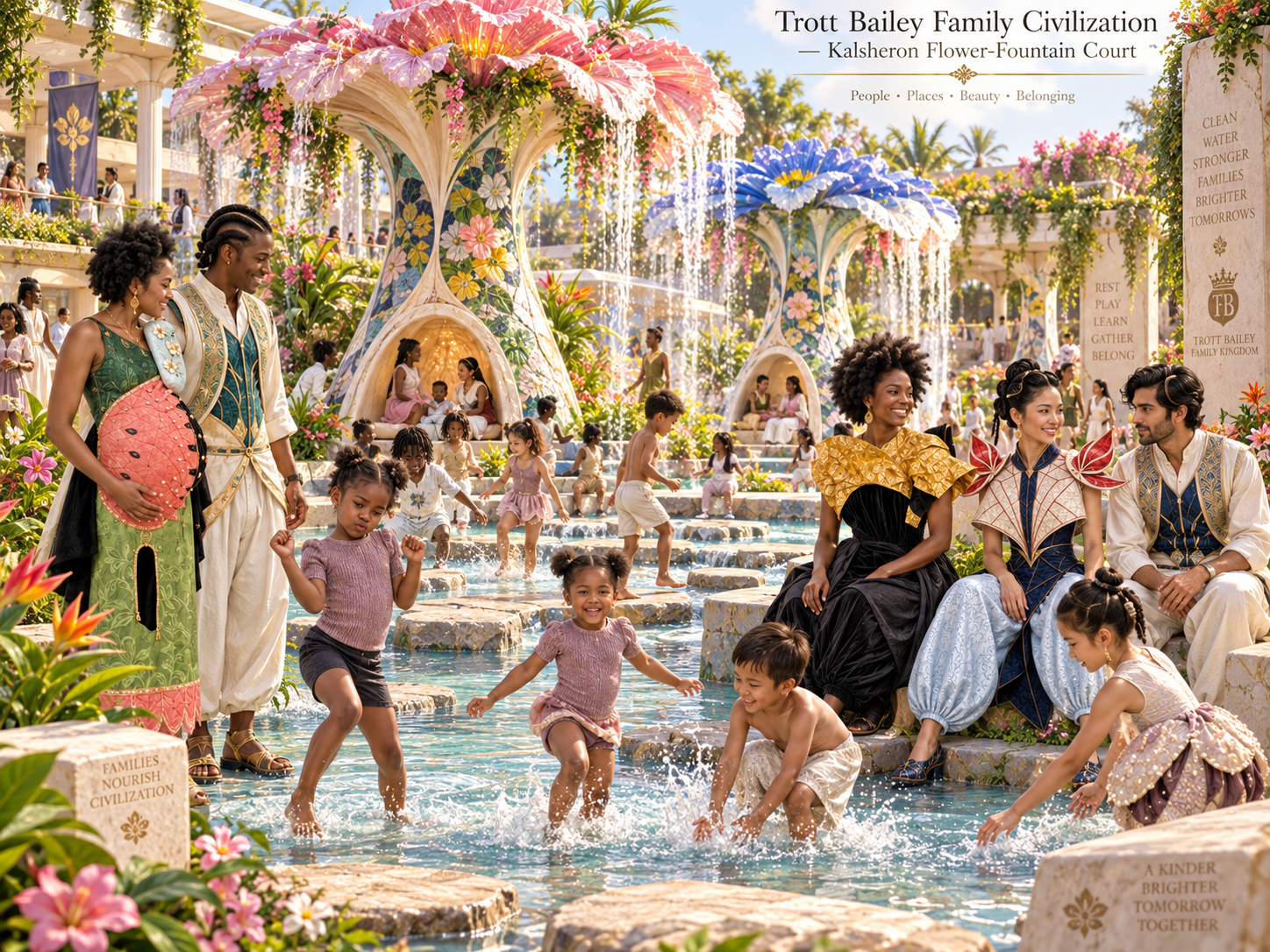
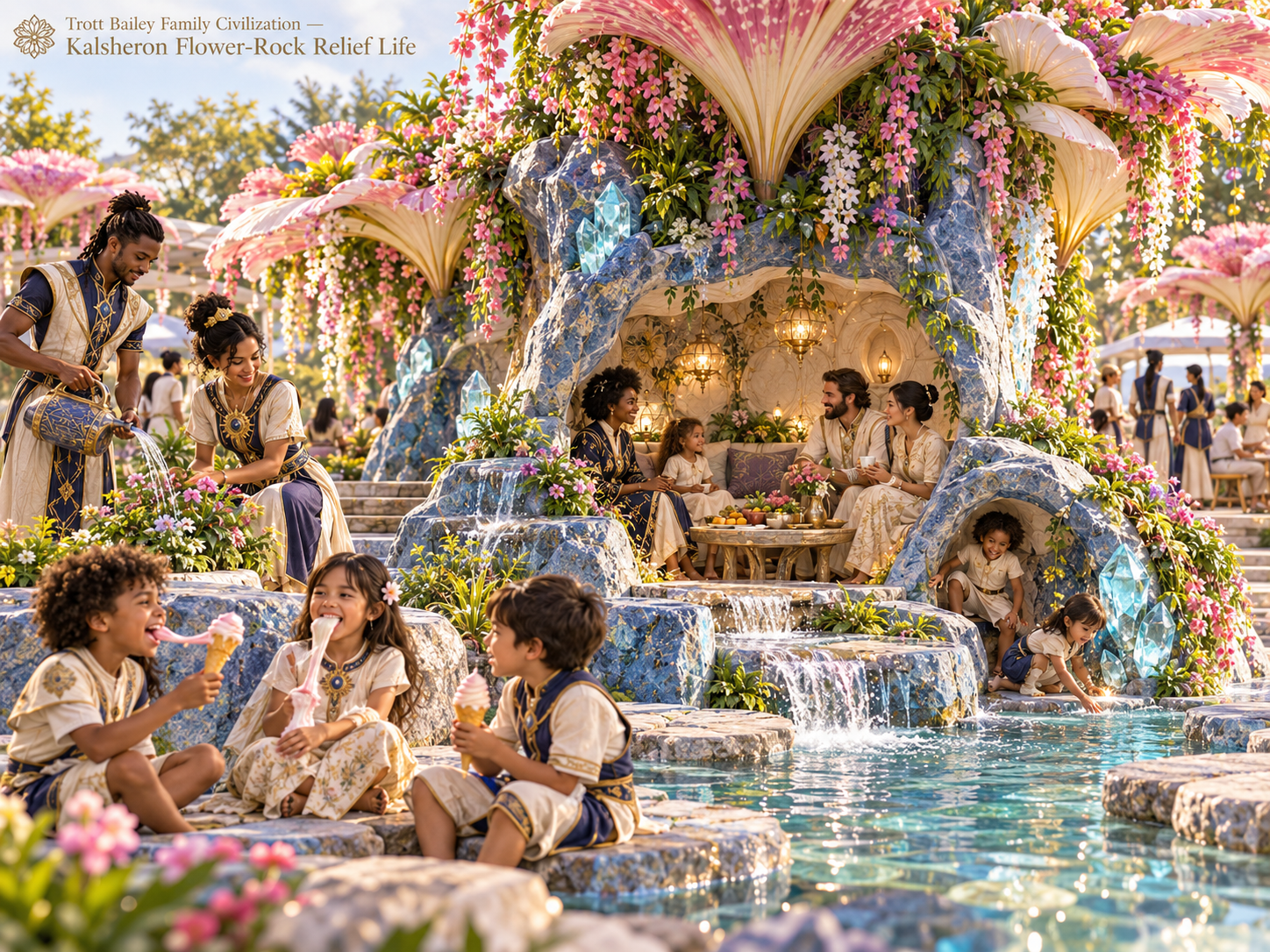
In the Trott Bailey Family Civilization, stone is not dead material. Stone can become a seat, a path, a basin, a step, a shelter nook, a flower-fountain body, a water edge, a child play route, a family court, a wall, a carved surface, a cool resting place, or a public object that carries meaning.
A Stonewoo Master understands stone at many scales.
Small stones.
River stones.
Stepping stones.
Carved details.
Colored stone inlays.
Large boulders.
Stacked stone bodies.
Stone water channels.
Family-scale basins.
Public court foundations.
They know how to carve, shape, stack, engineer, place, color, smooth, roughen, polish, weather, anchor, and combine stone so that it is safe, beautiful, and useful.
They understand when a stone should feel soft to the body, when it should grip the foot, when it should hold water, when it should guide movement, and when it should become part of a building body.
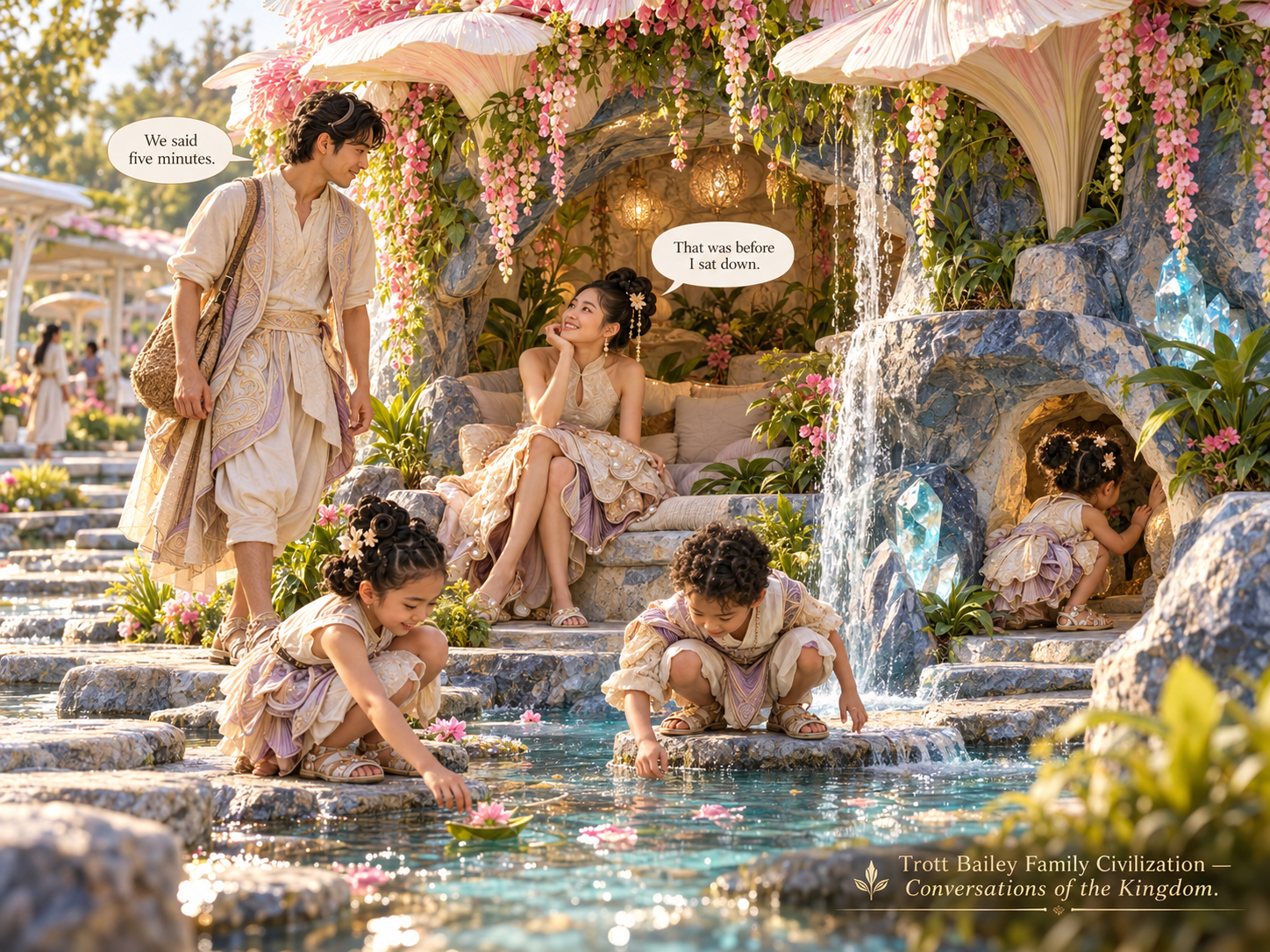
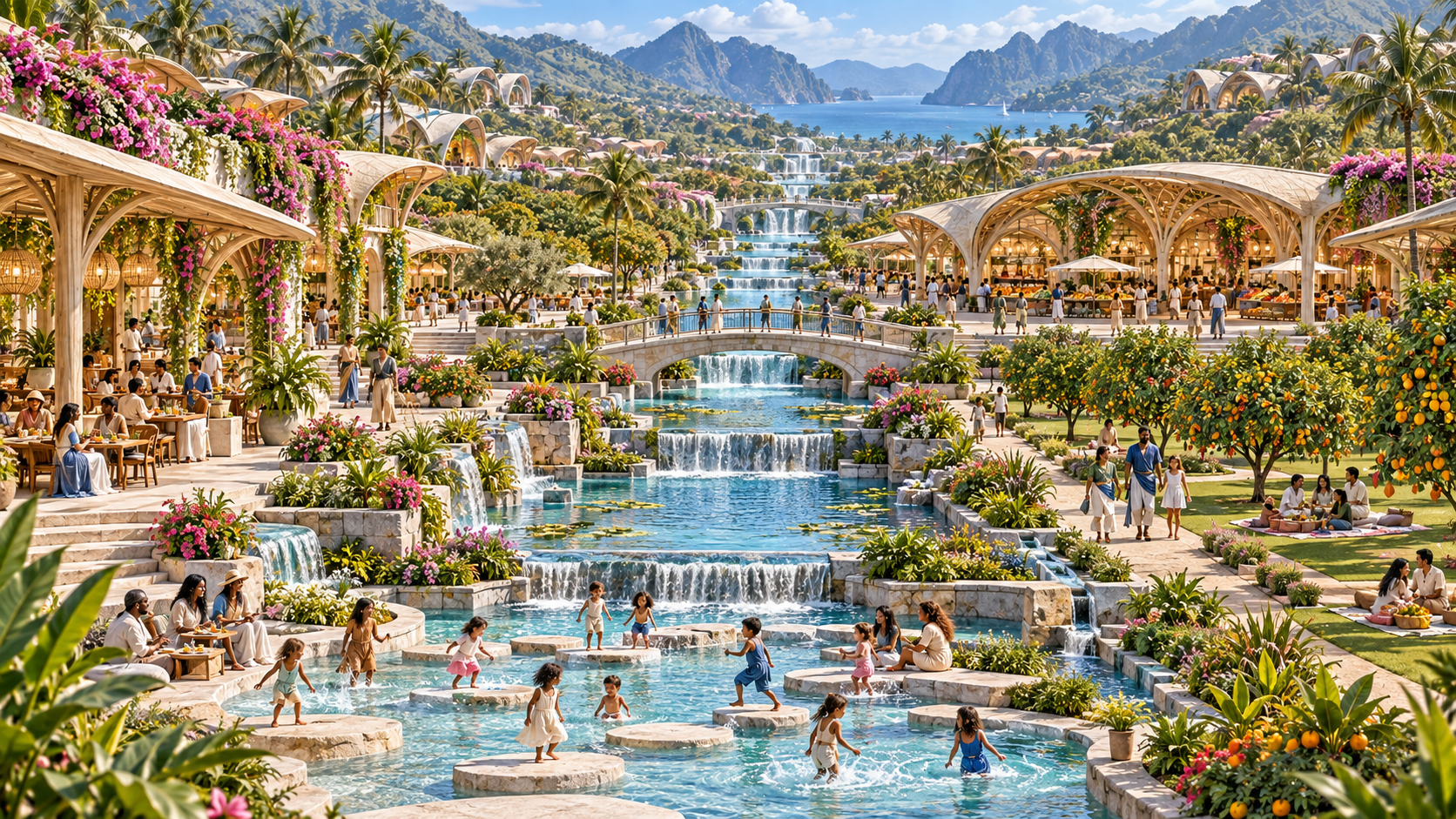
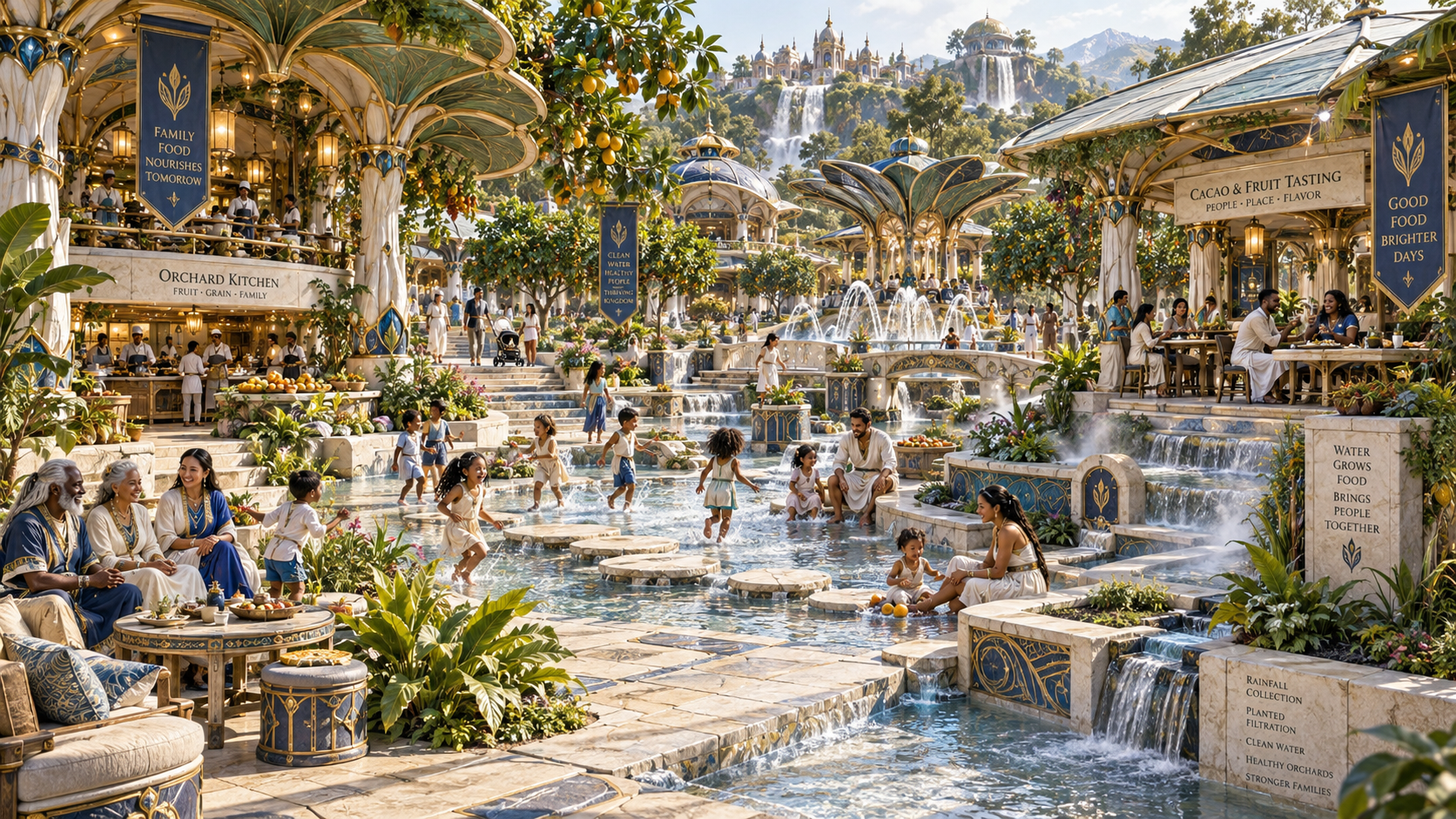
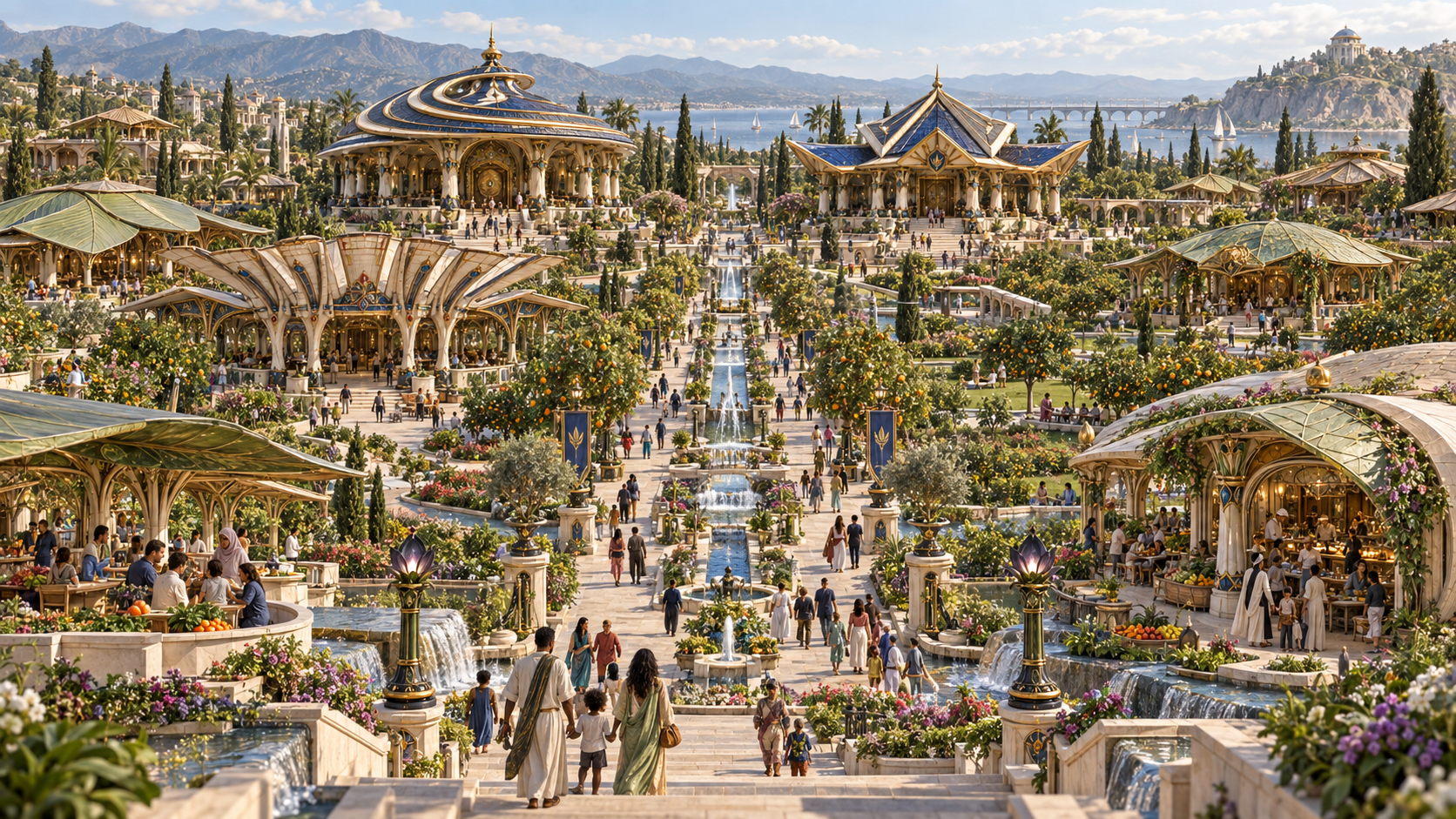
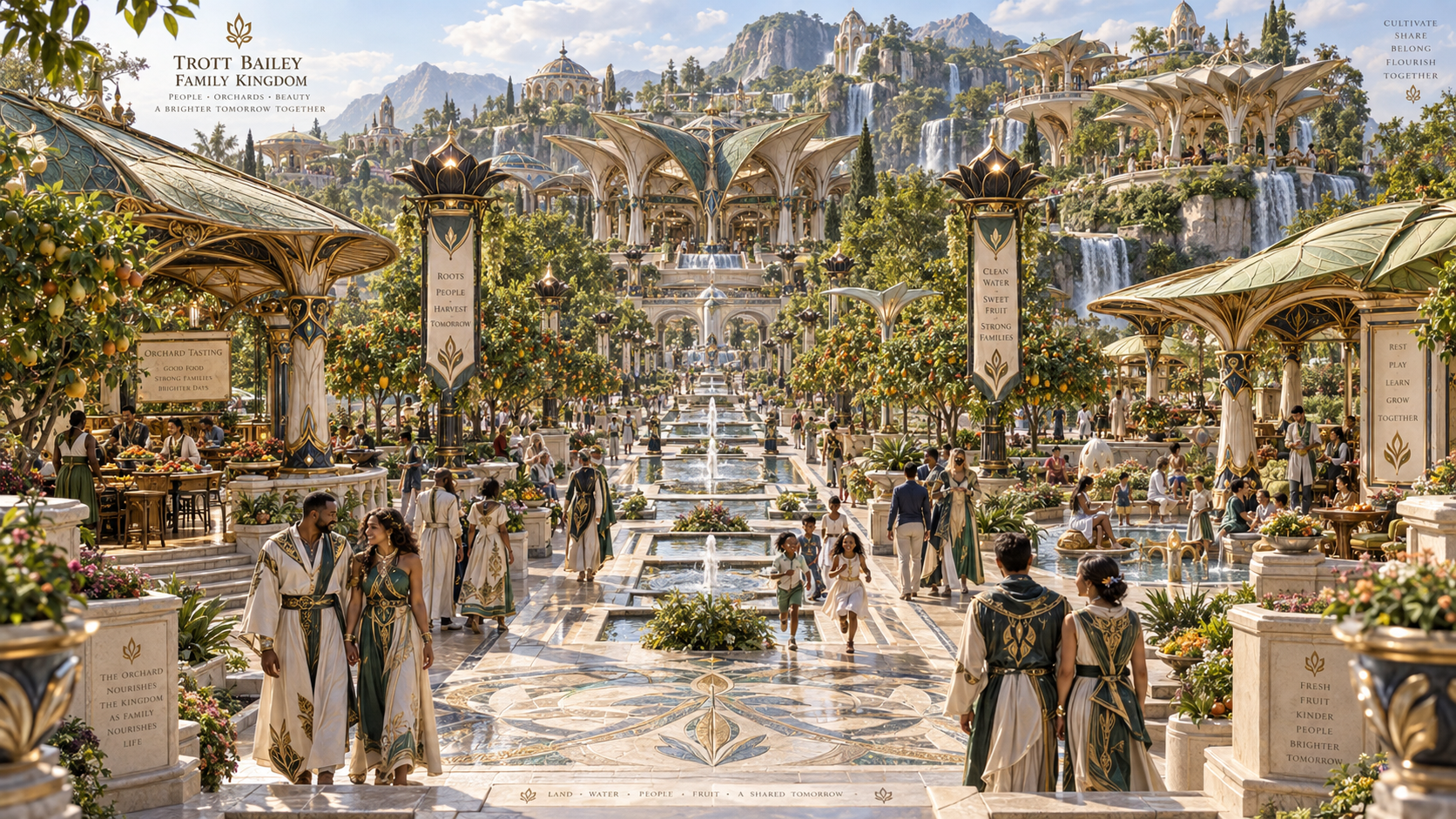
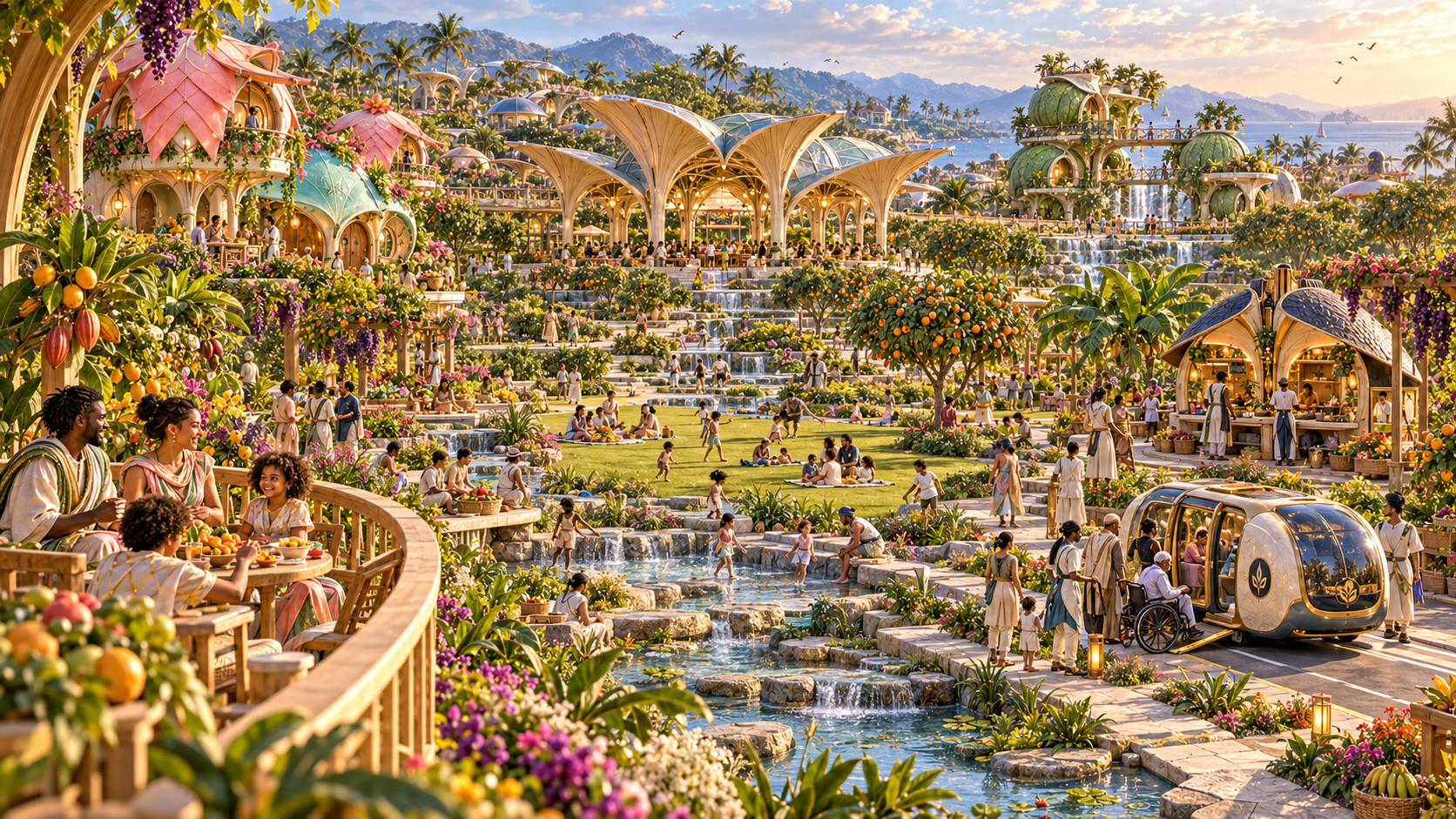
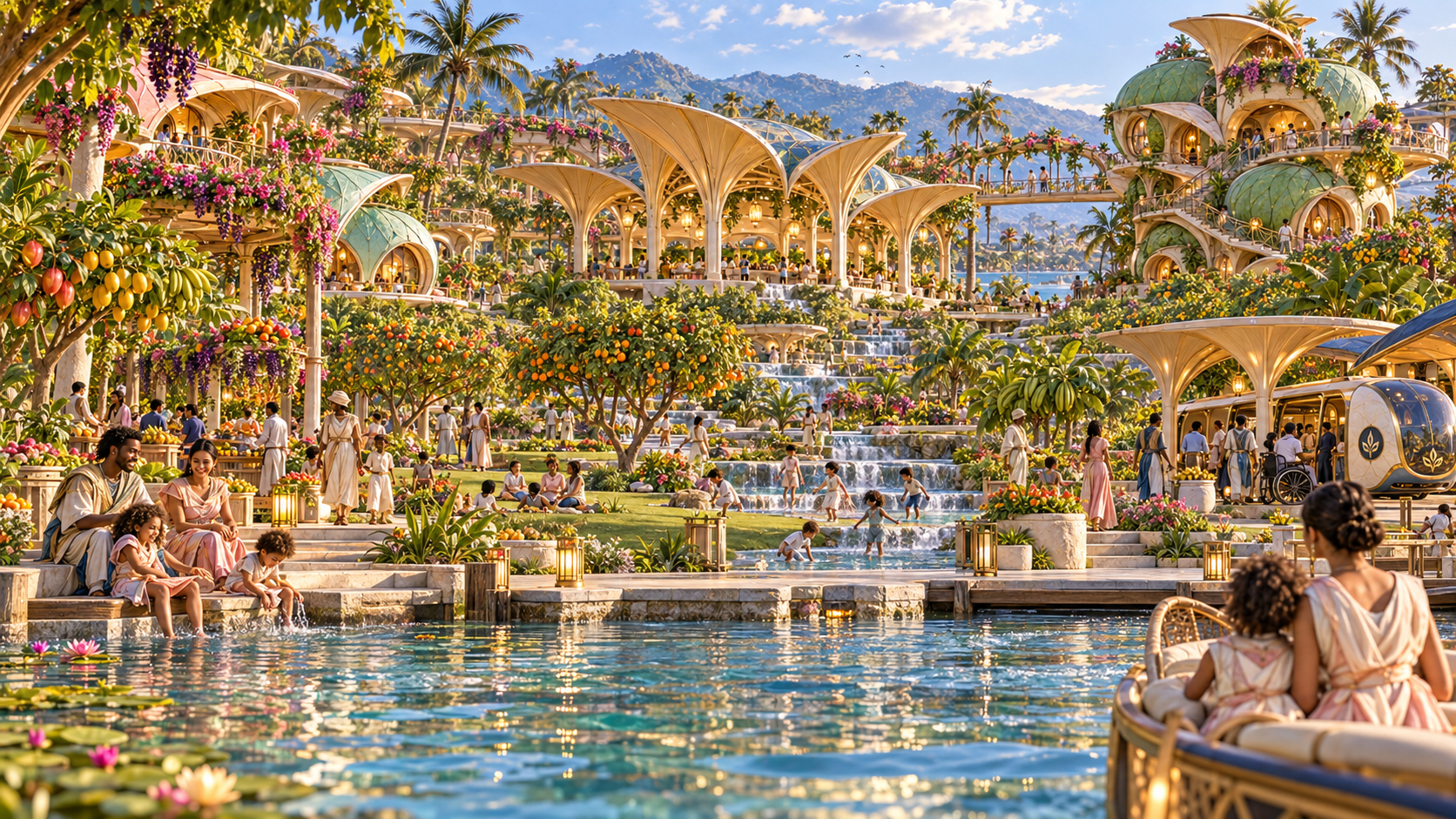
The Stonewoo Master has a major role in public-life places like flower-fountain courts, hanging blossom rooms, family water courts, garden paths, play basins, shelter nooks, and cooling terraces.
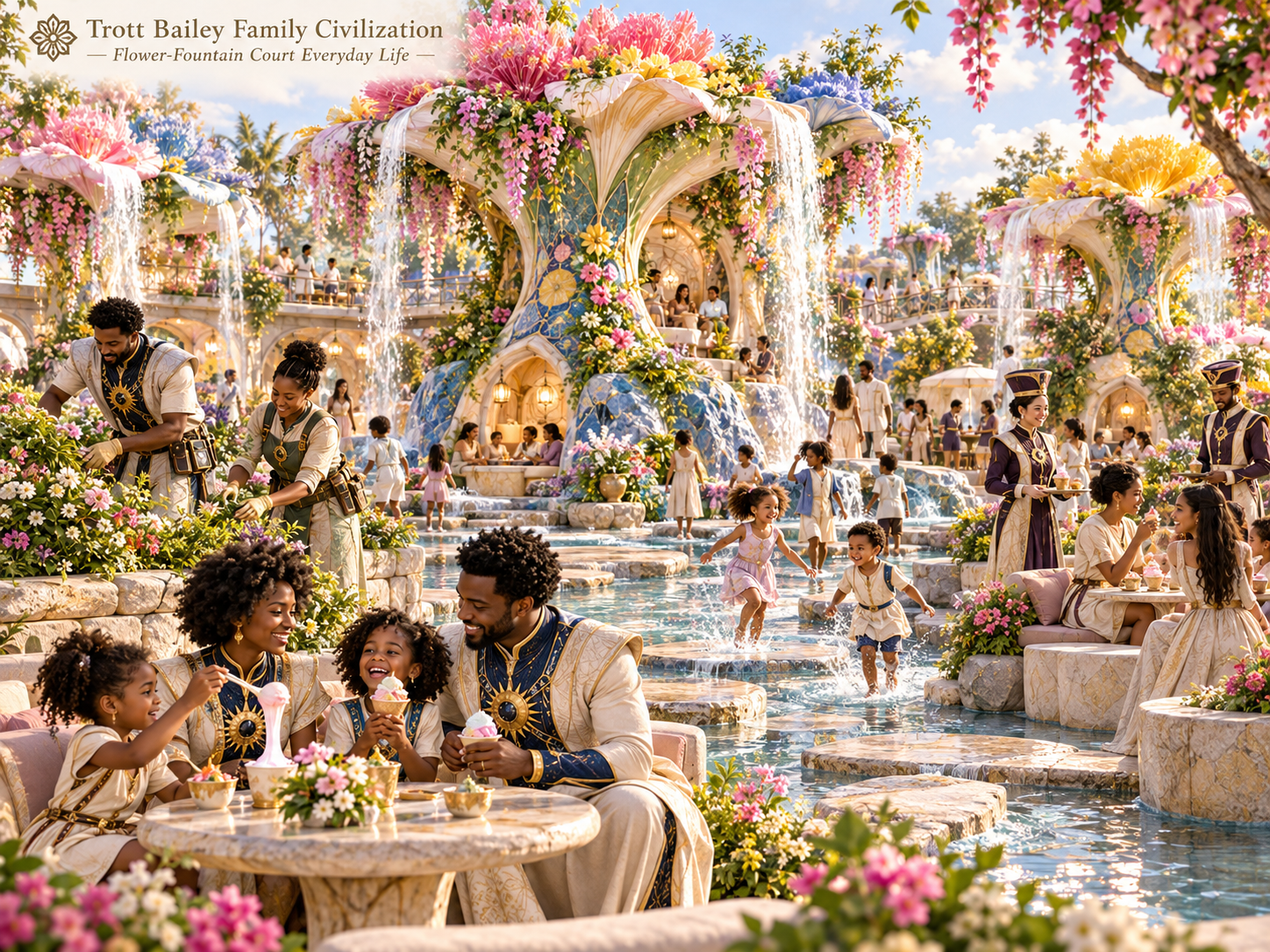
In a flower-fountain court, a Stonewoo Master may shape the stepping paths, water basins, carved stone edges, stone islands, fountain supports, child-safe water routes, and resting stones.
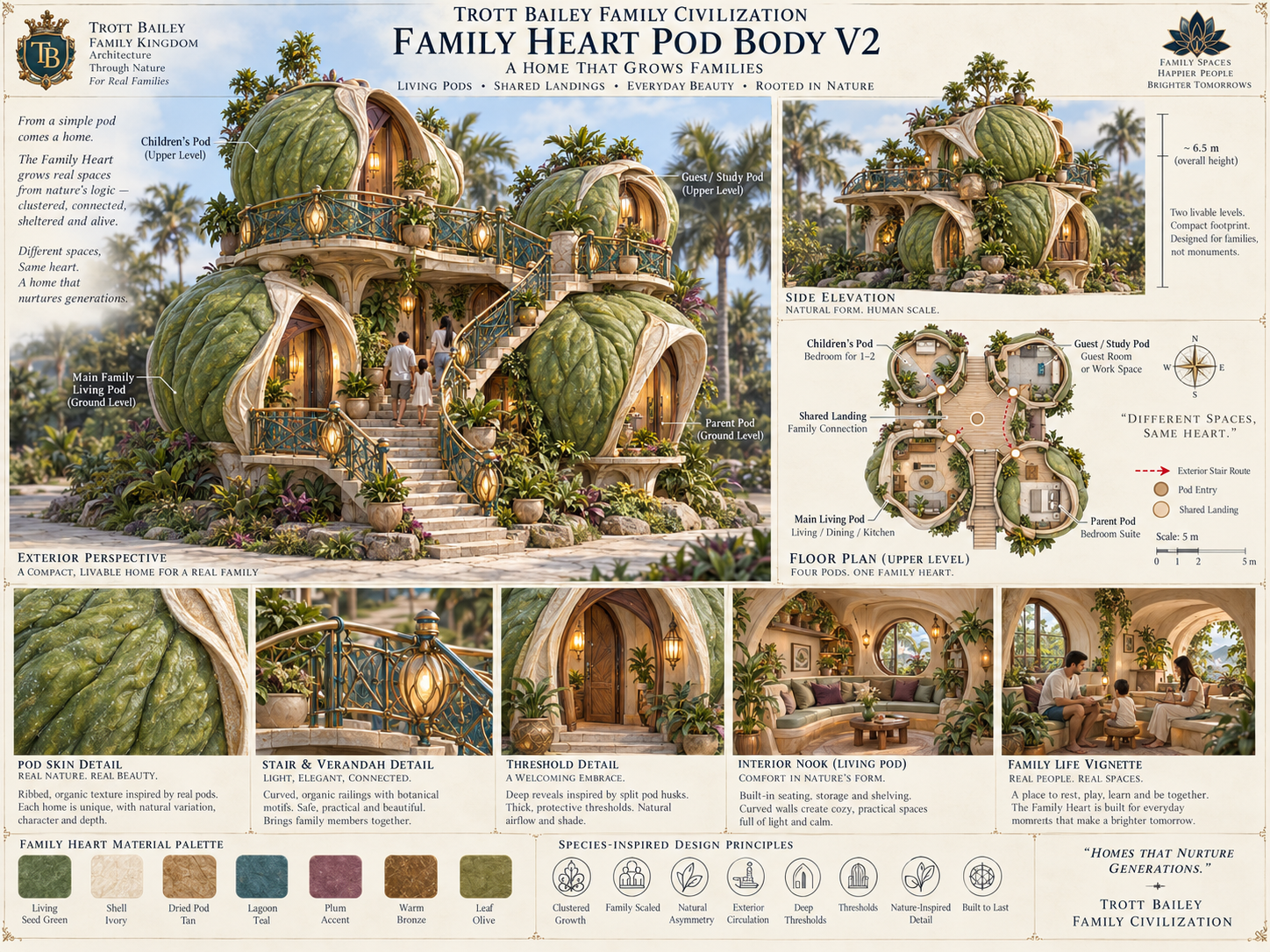
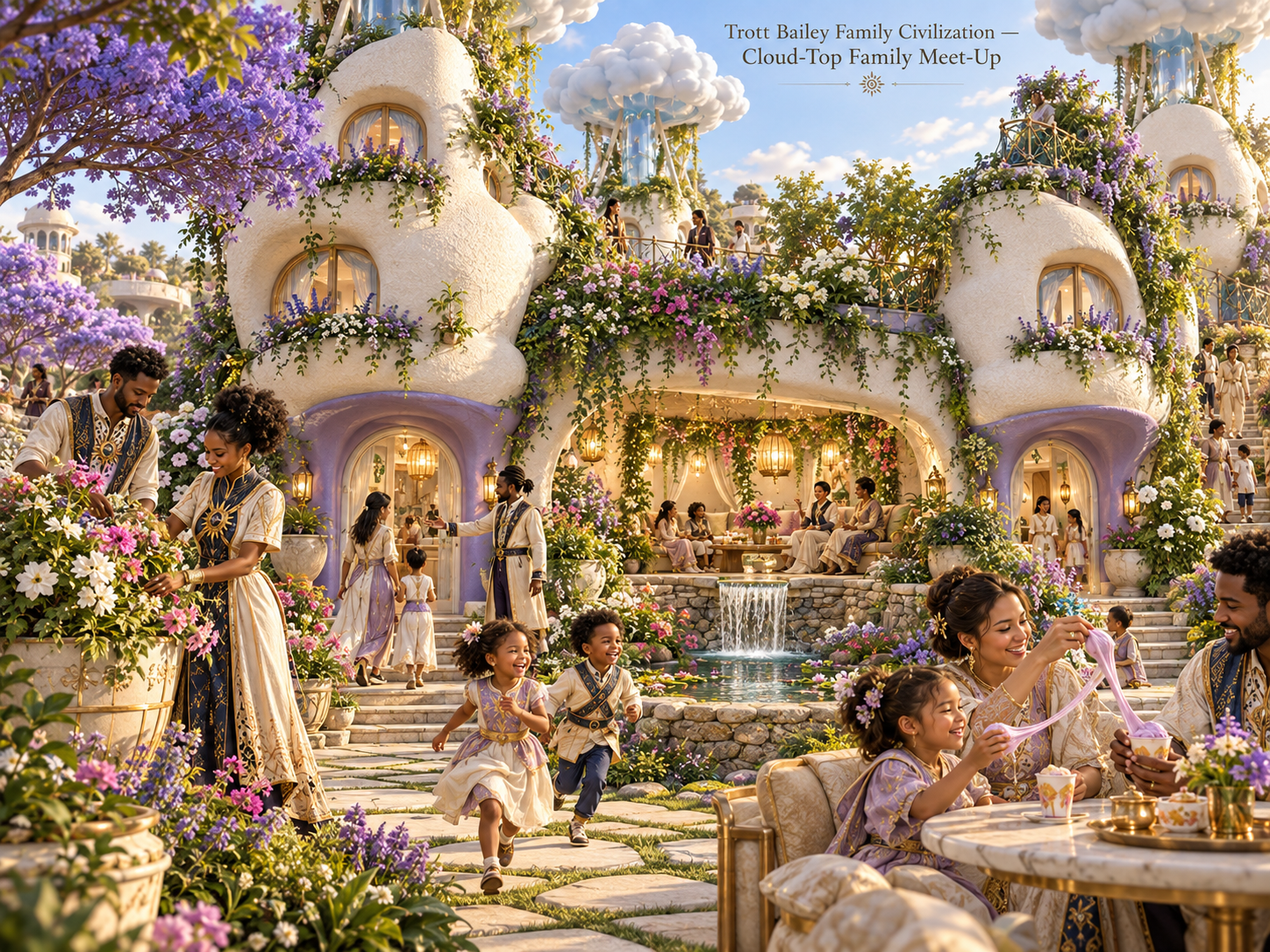
In hanging blossom rooms, the Stonewoo Master may help form the stone anchors, garden foundations, water edges, boulder clusters, stair paths, and cool gathering places below the rooms.
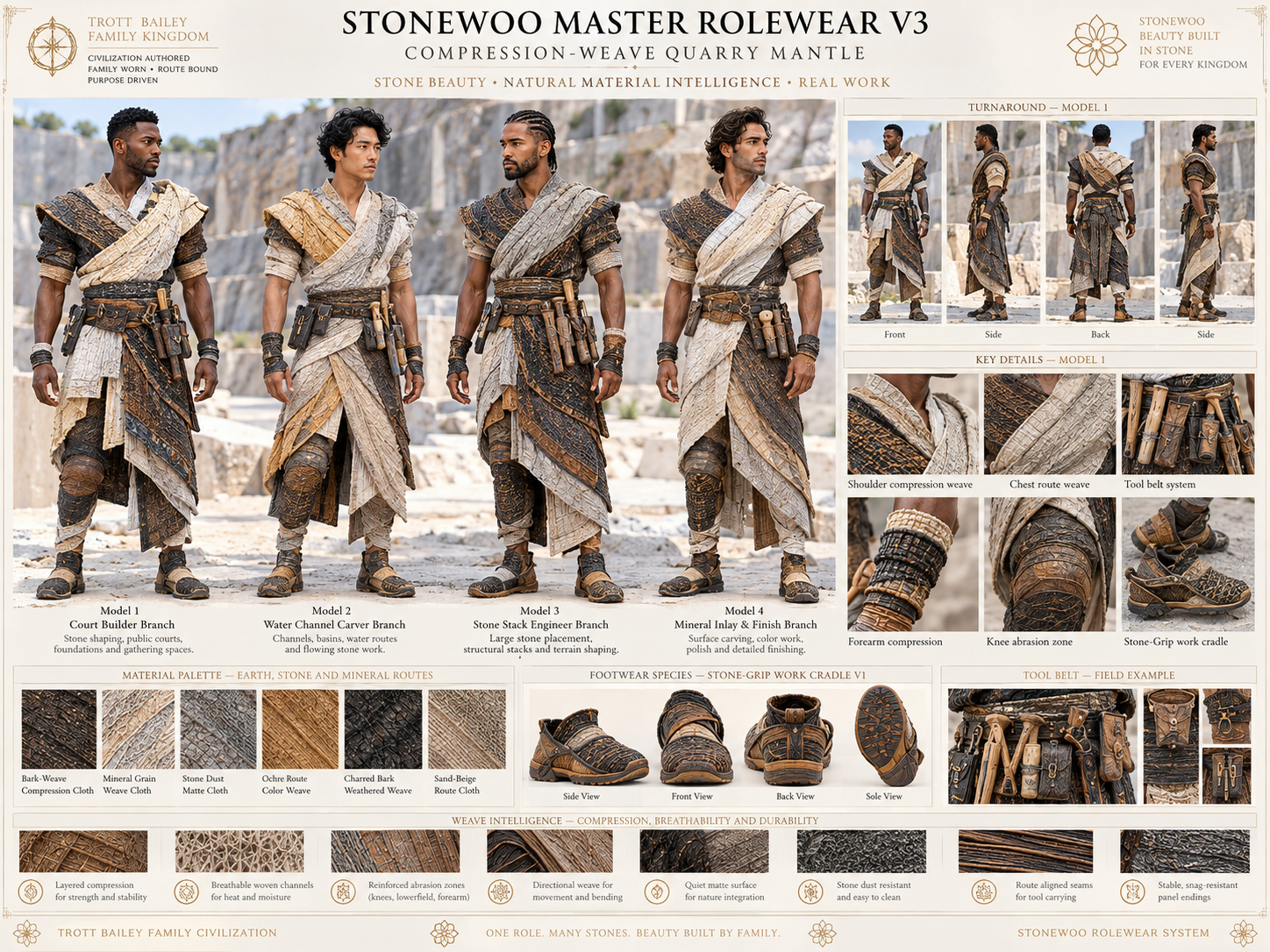
The earlier rolewear boards should not be treated as failed replacements. They become Stonewoo team branches.
That gives the role range without forcing one outfit to do everything.
Main public-facing Stonewoo Master branch. Creates beautiful stone courts, family spaces, carved surfaces, and visible public-life architecture.
Water-route branch. Works on basins, channels, cooling rills, waterfall edges, drainage beauty, splash routes, and stone-water interaction.
Heavier structural branch. Handles large stones, boulder placement, support stacks, retaining forms, terraces, and safe climbable stone bodies.
Detail and beauty branch. Handles stone coloring, mineral inlays, carved patterns, surface finishing, visual rhythm, and child-delighting details.
Harder field-work branch. More practical, dust-resistant, snag-resistant, durable, tool-heavy, and suited for rougher daily stone work.
Public wonder branch. Designs and finishes stone places children and families love: flower-fountain courts, stepping paths, play stones, shelter nooks, and carved discovery details.
Each branch carries the same stone-beauty doctrine, but different work demands.
This role requires strength, patience, design sense, engineering sense, beauty sense, and respect for family life.
A Stonewoo Master must understand safety.
A stone path cannot trip children.
A water edge cannot become careless danger.
A boulder cannot be placed only because it looks dramatic.
A shelter nook must feel cool, calm, and usable.
A public court must let families move, sit, play, rest, gather, and belong.
The Stonewoo Master works with architects, water stewards, planting stewards, builders, children’s space designers, public-life stewards, and repair teams.
The Trott Bailey Family Civilization needs Stonewoo Masters because beauty must become physical.
Stone has to be shaped.
Boulders have to be placed.
Water has to be guided.
Paths have to be made.
Courts have to be formed.
Rest places have to be carved into the world.
Children need places to step, splash, climb, explore, and imagine.
Families need places to sit, cool off, gather, and belong.