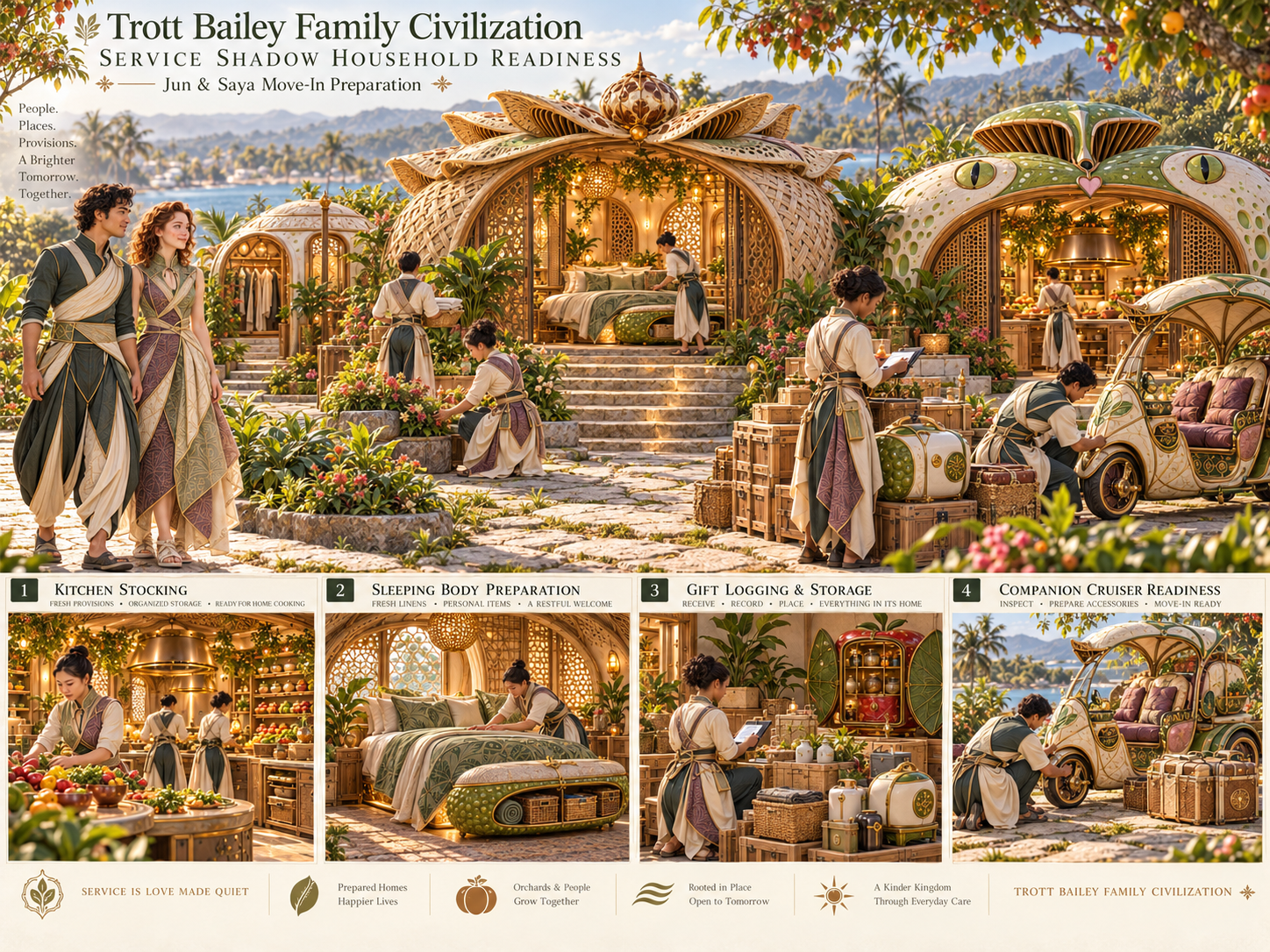
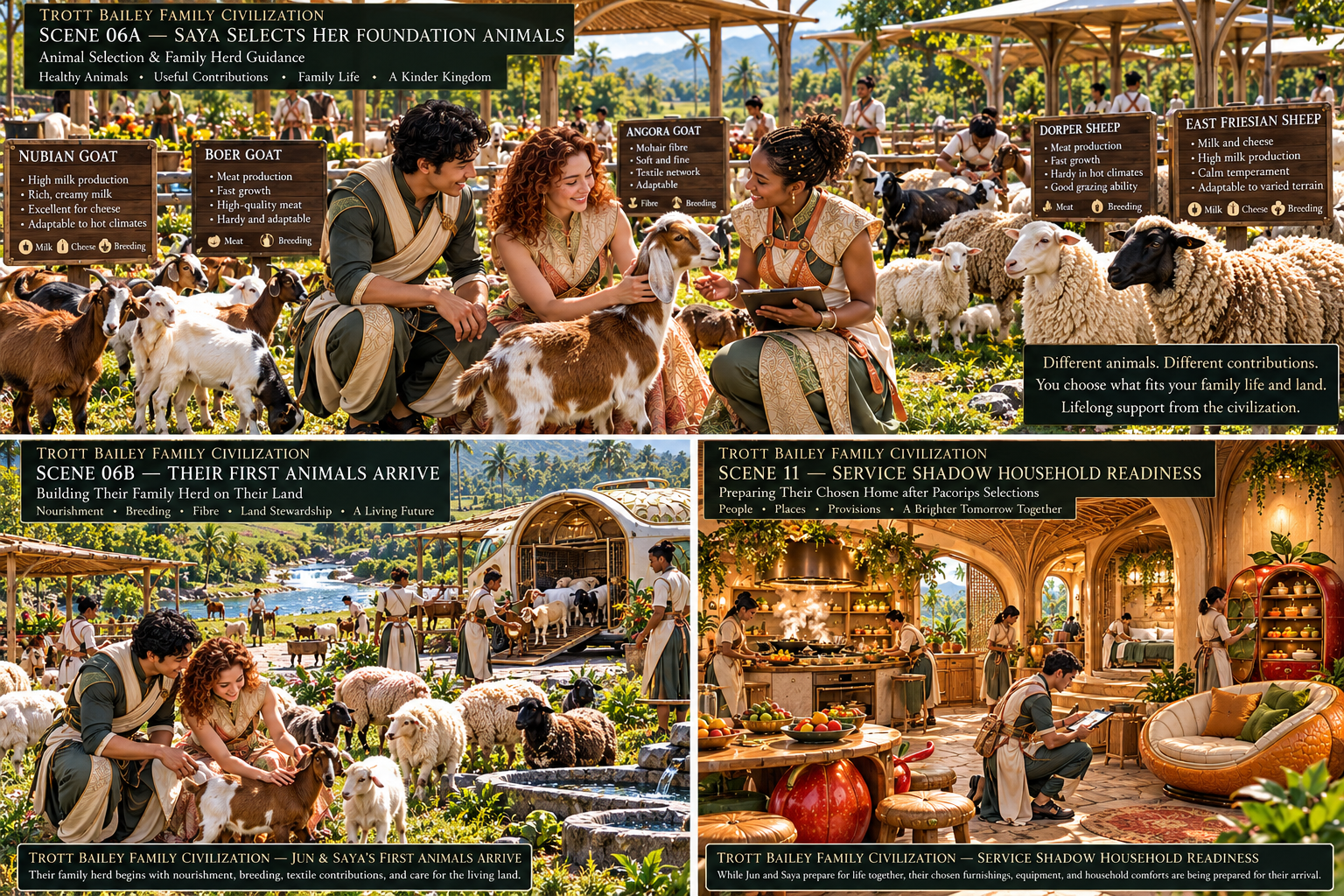
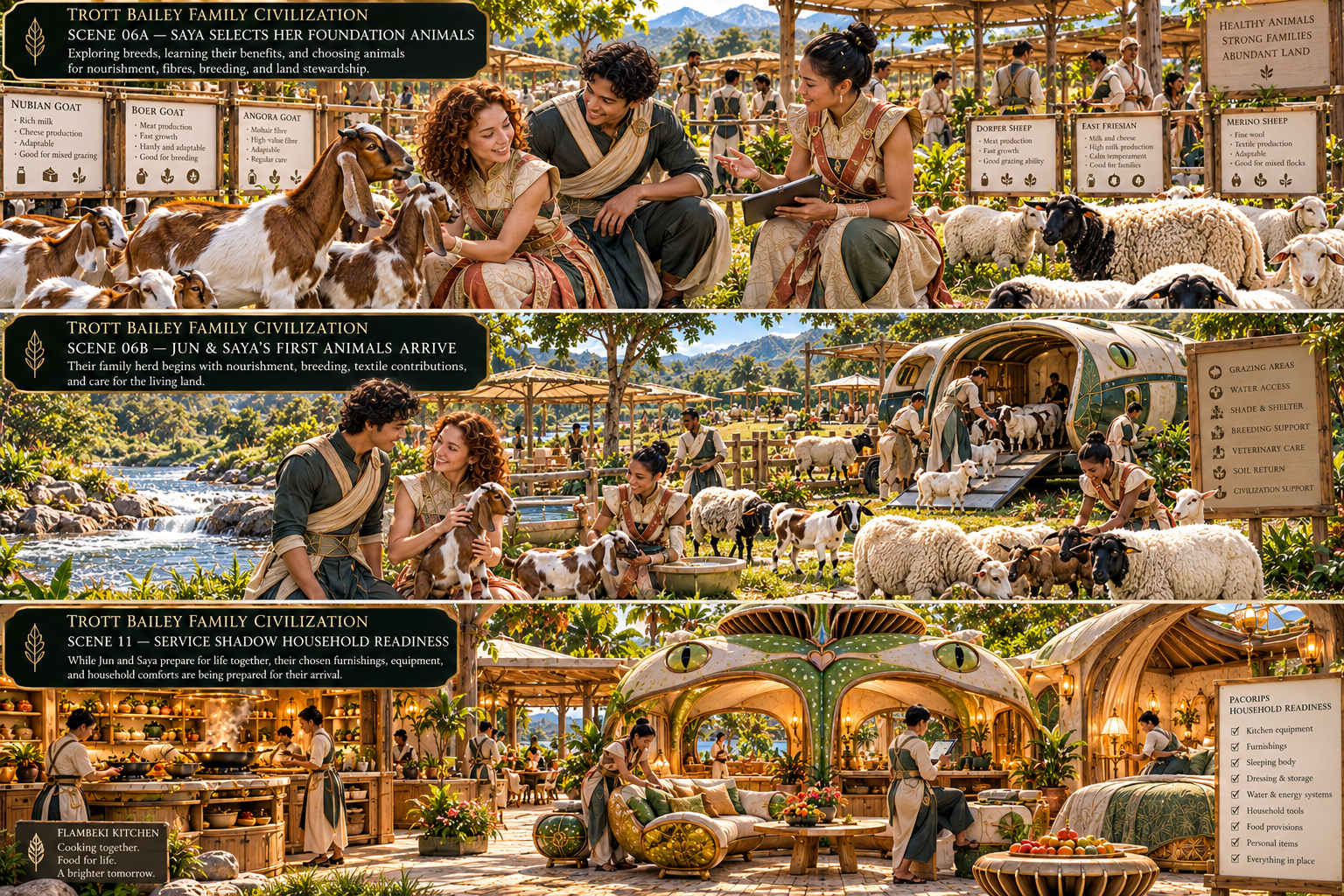
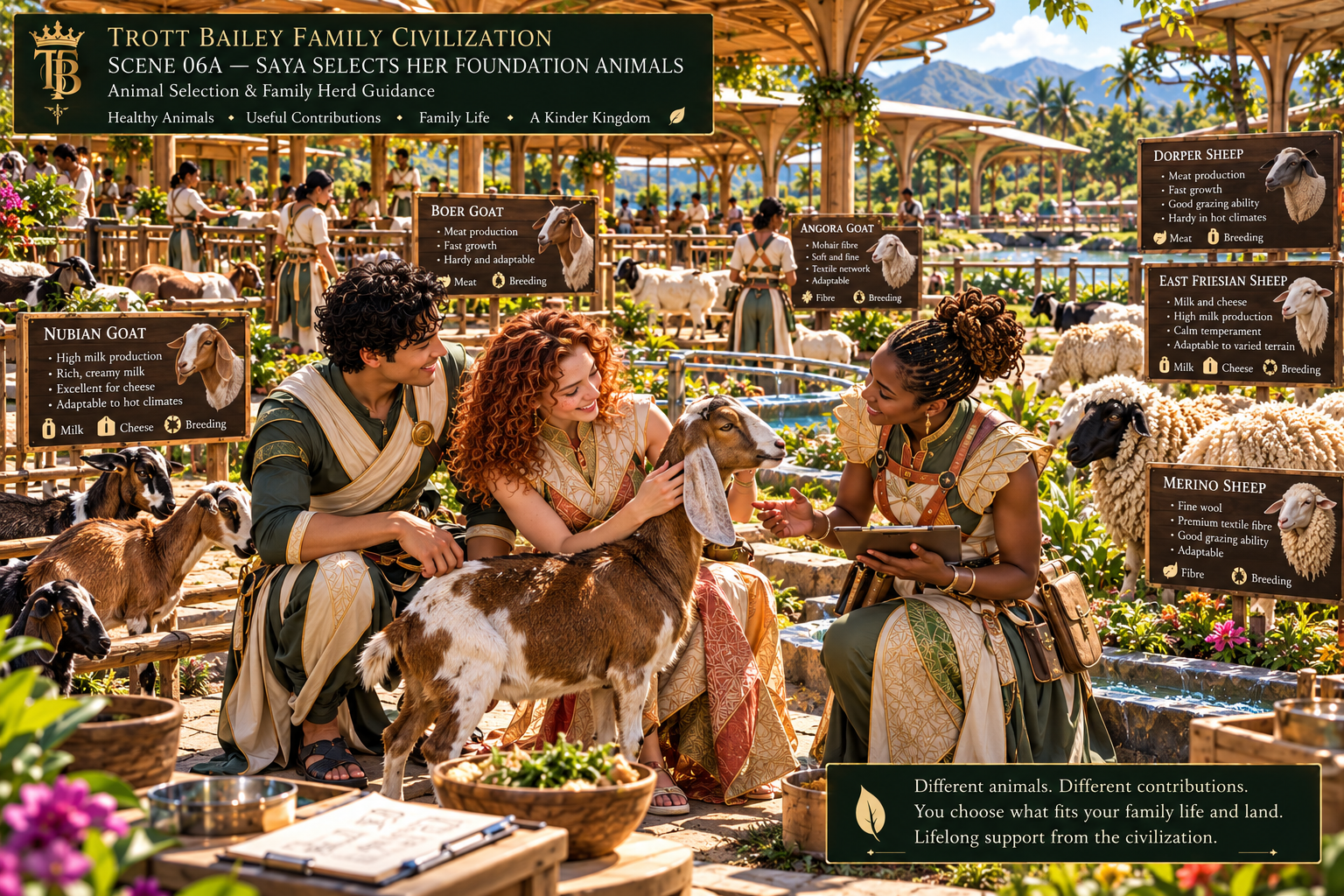
The Roles Behind the Trott Bailey Family Civilization


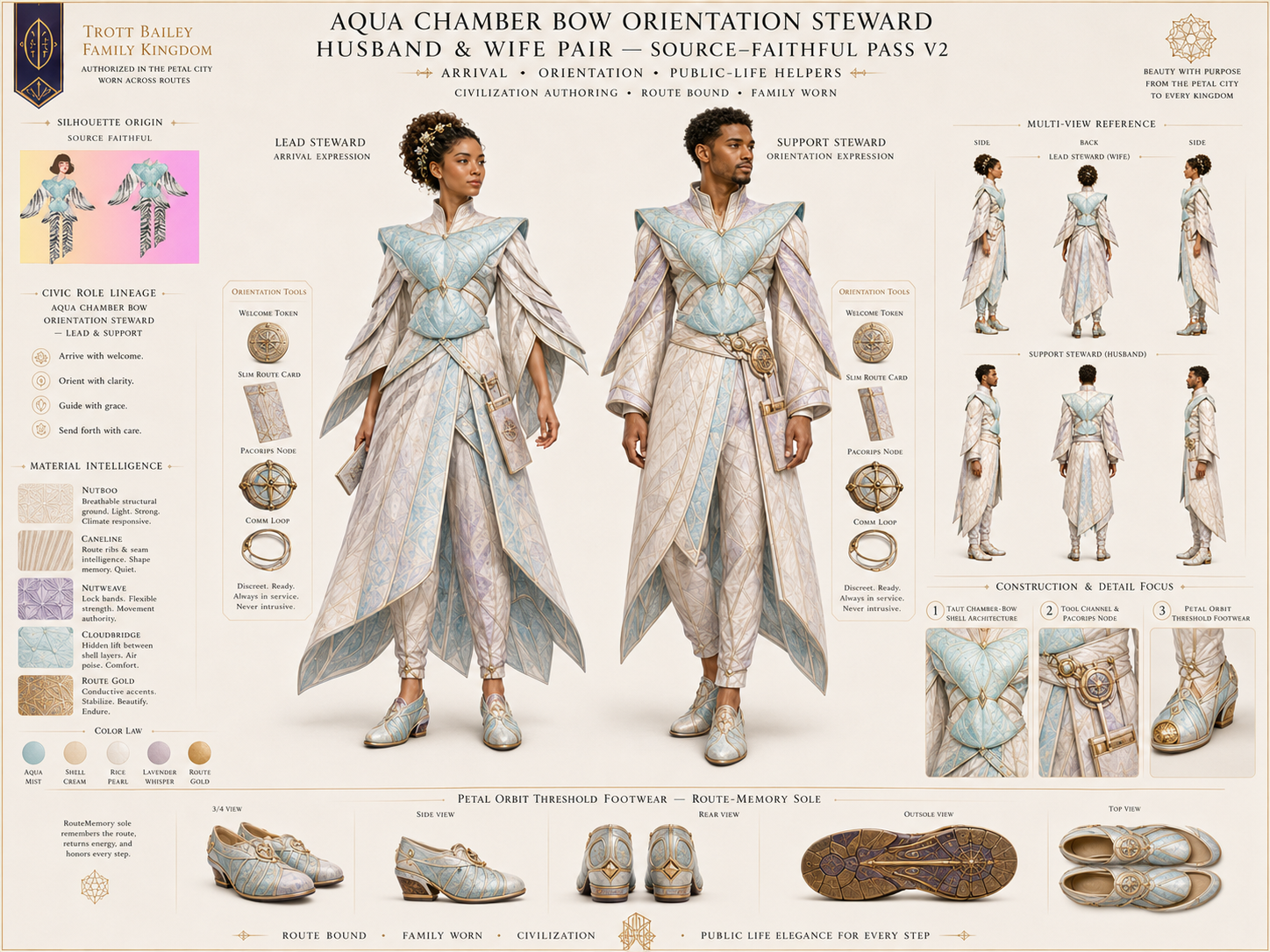
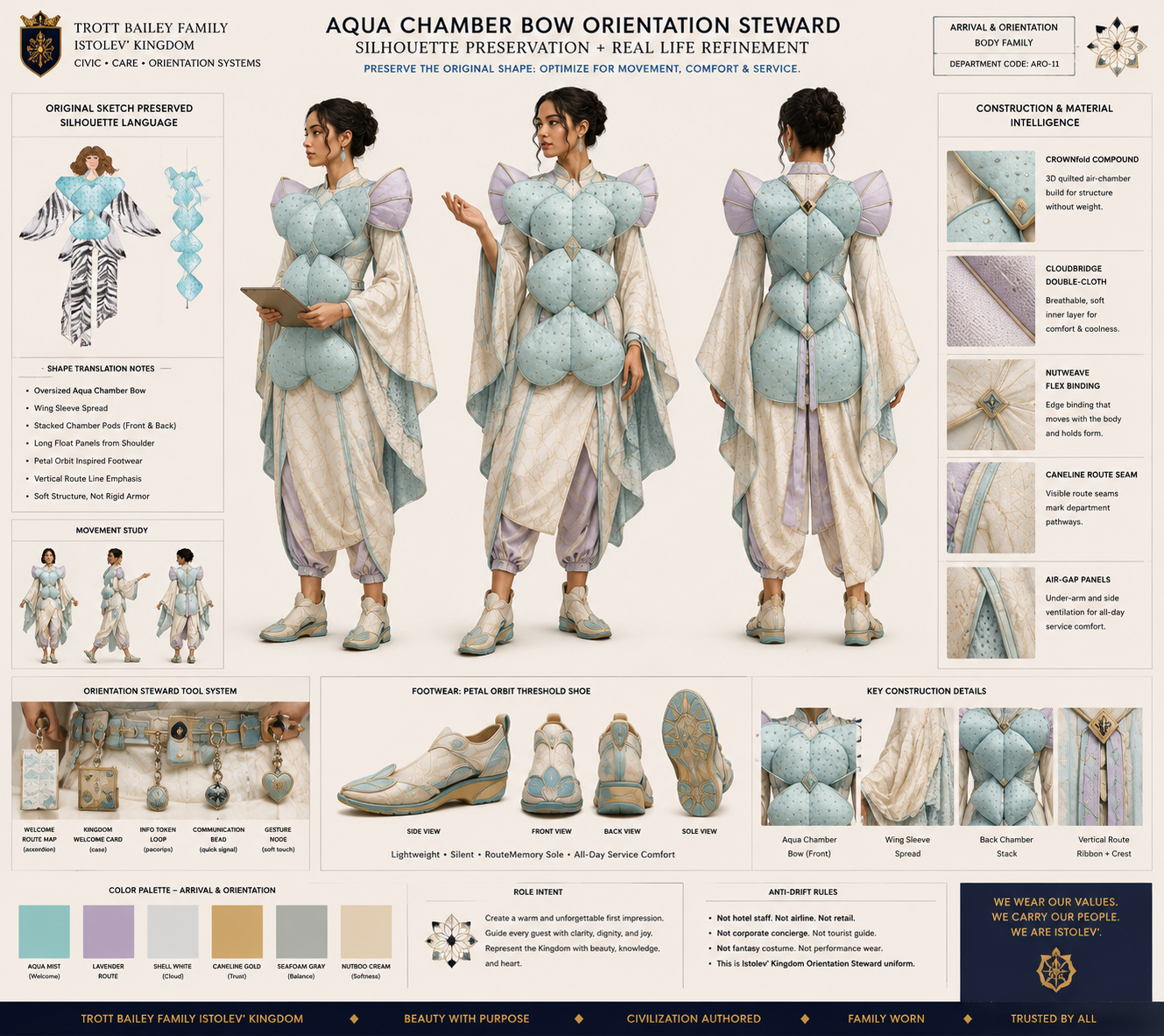


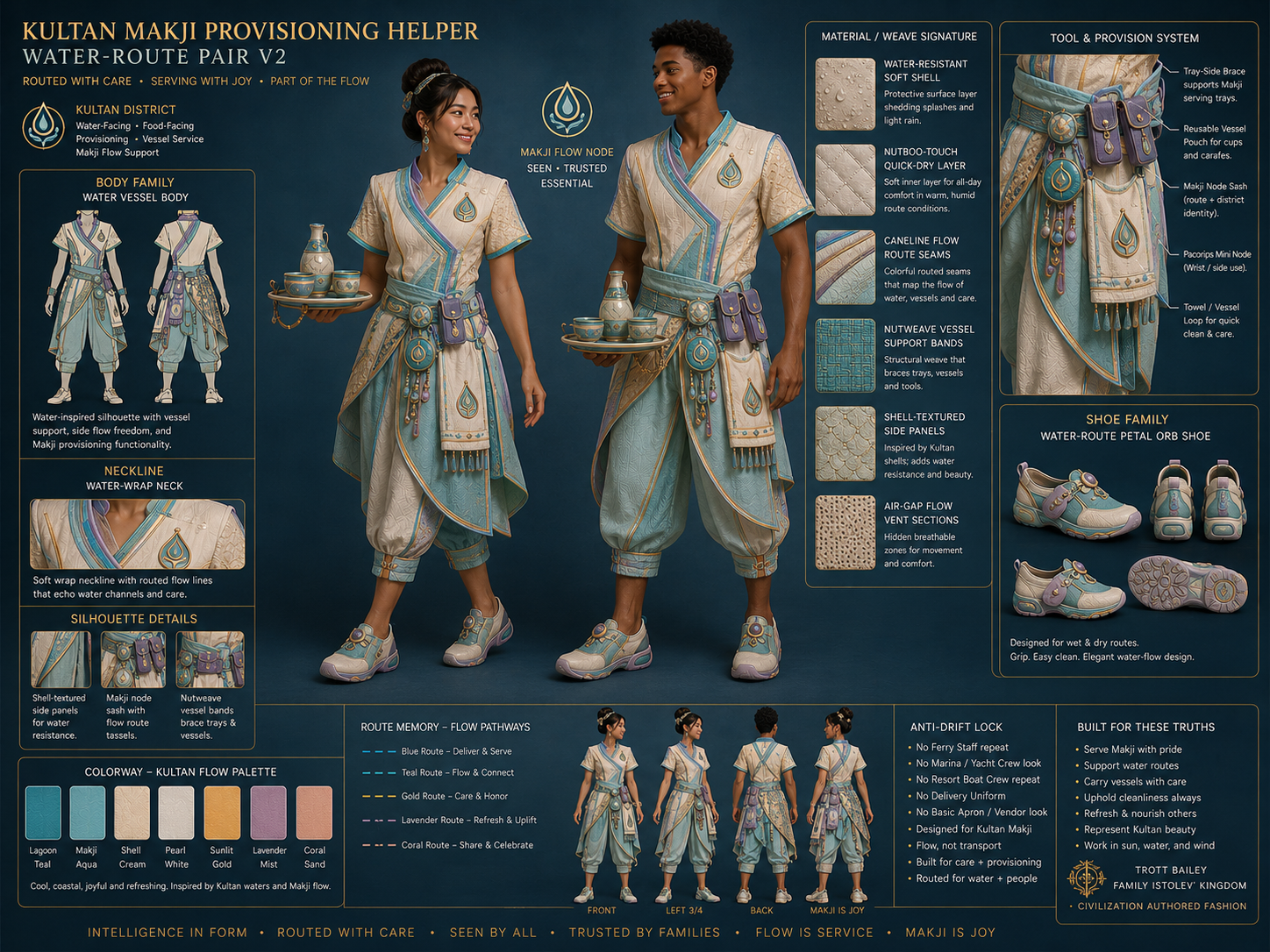
Trott Bailey Family Kingdom · Role + Function Catalog
The Roles Behind the Kingdom
Every beautiful place creates meaningful work.
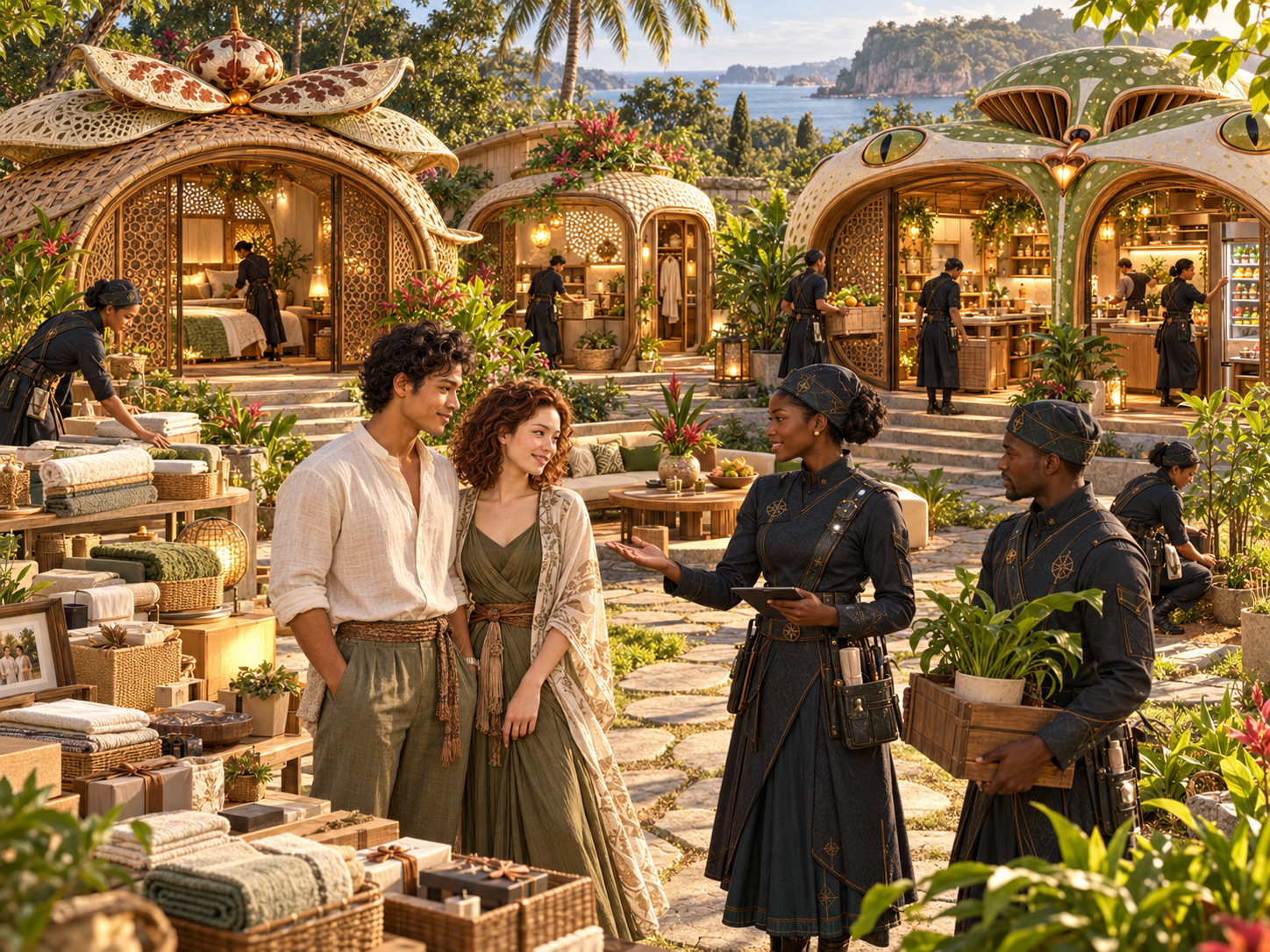
When people see a beautiful room, garden, district, public pavilion, orchard, Makji grove, baby court, or Sabennerie, they often notice the finished image first. They see the color, the shape, the lighting, the furniture, the path, the food, the water, the shade, the comfort, and the wonder.
But in Trott Bailey Family Kingdom, a beautiful thing is never only an object. A beautiful thing is a role generator.
Behind every beautiful public object is a living web of people who design it, build it, maintain it, clean it, host it, repair it, explain it, verify it, improve it, and keep it useful.
This is why the kingdom does not merely have jobs. It has an entire living web of purposeful, enjoyable, family-aware contribution.
A Beautiful Public World Requires Hidden Role Depth
A public world can look beautiful in an image, but if no one knows who maintains it, who cleans it, who repairs it, who protects children inside it, who supports workers behind it, who restocks it, who routes it, who teaches it, and who improves it, then the beauty is shallow.
Trott Bailey Family Kingdom treats beauty as a responsibility. If a thing is built beautifully, it must also be cared for intelligently.
Beauty creates Shubaka.
Every beautiful object creates service, stewardship, hosting, maintenance, making, teaching, monitoring, cleaning, repair, comfort, and care roles around it.
What Is Shubaka?
Shubaka is meaningful contribution inside the Trott Bailey Family Kingdom. It is not simply “work” in the old-world sense. It is not survival employment, status chasing, servant-class labor, or meaningless busyness.
Shubaka means a person is helping the civilization function, flourish, protect life, support families, maintain beauty, feed people, guide children, repair systems, host public life, verify truth, care for water, preserve memory, or improve the kingdom.
No role that protects life, food, water, children, elders, beauty, safety, memory, movement, family dignity, or civilization is low.
The Public Role Name Should Be Simple
The kingdom may have deep systems behind a role, but the public role name should remain simple. A person should be able to understand the role quickly.
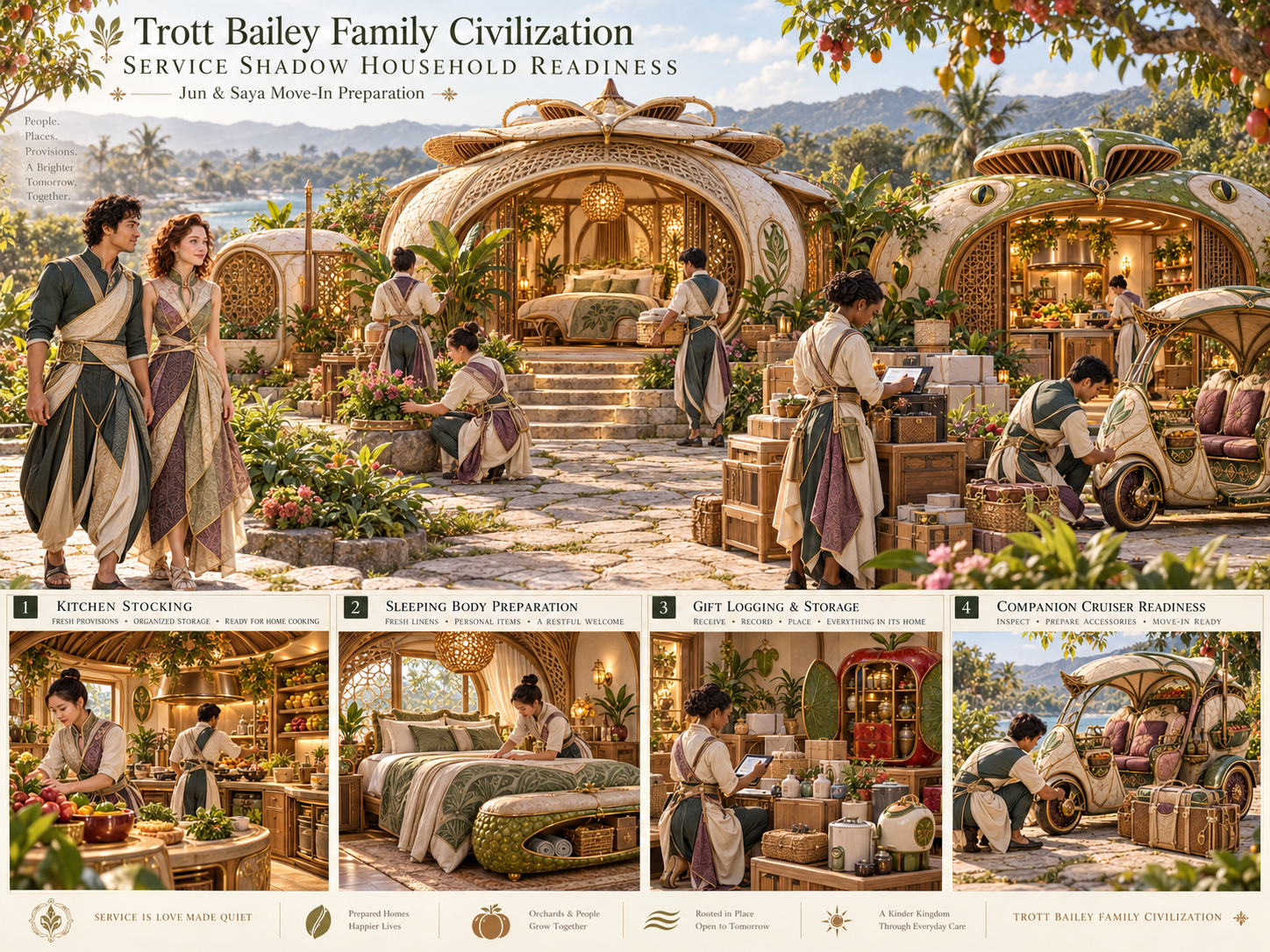
Use names like Water Steward, Food Guide, Return Steward, Wardrobe Steward, Baby Court Helper, Makji Grove Steward, Orchard Guide, Tower Operator, Route Host, or Service Shadow Worker.
The explanation underneath can be rich. It can describe the systems, tools, safety responsibilities, Pacorips records, family support logic, hidden service routes, and training path.
The public role name should be simple. The explanation can be rich.
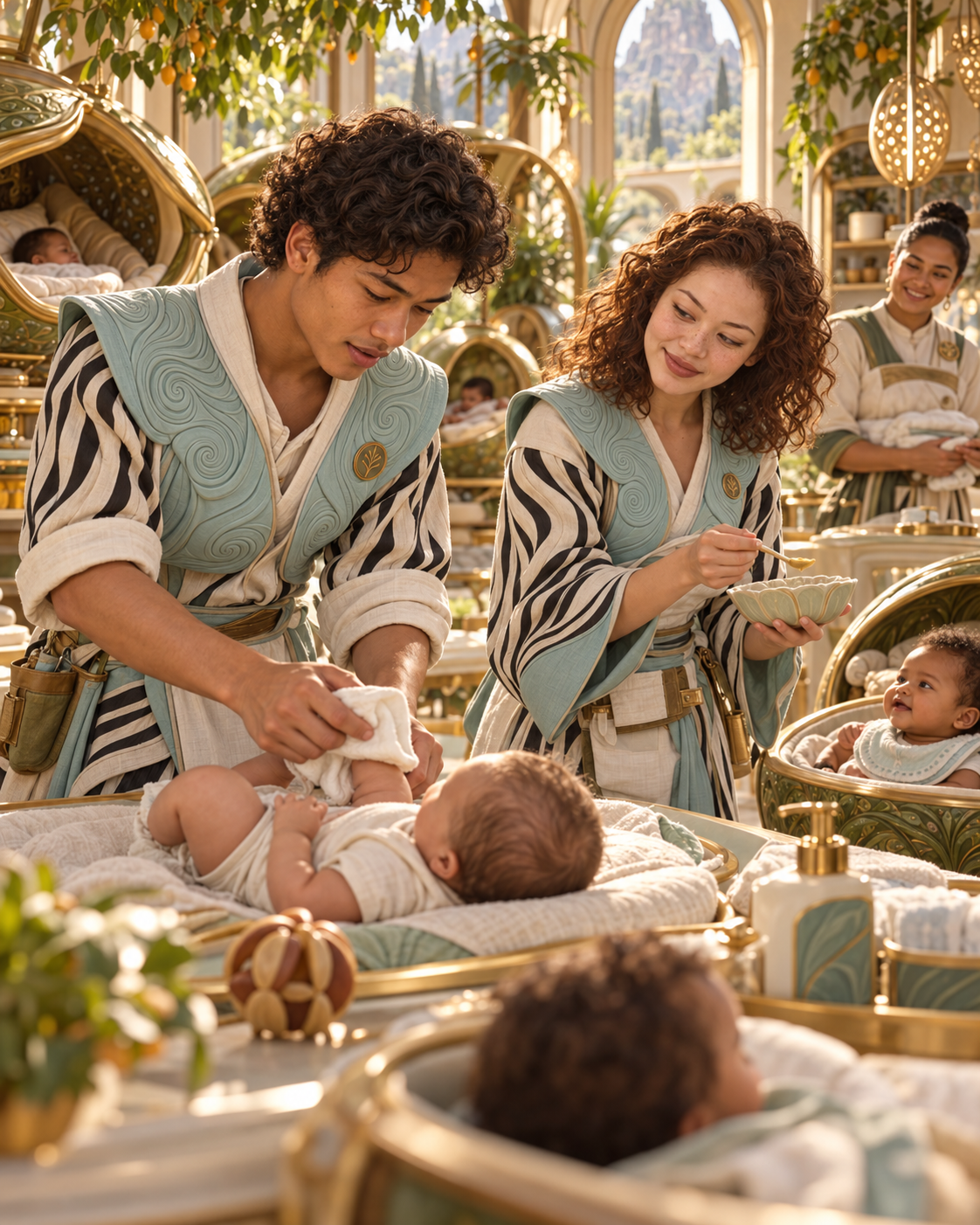
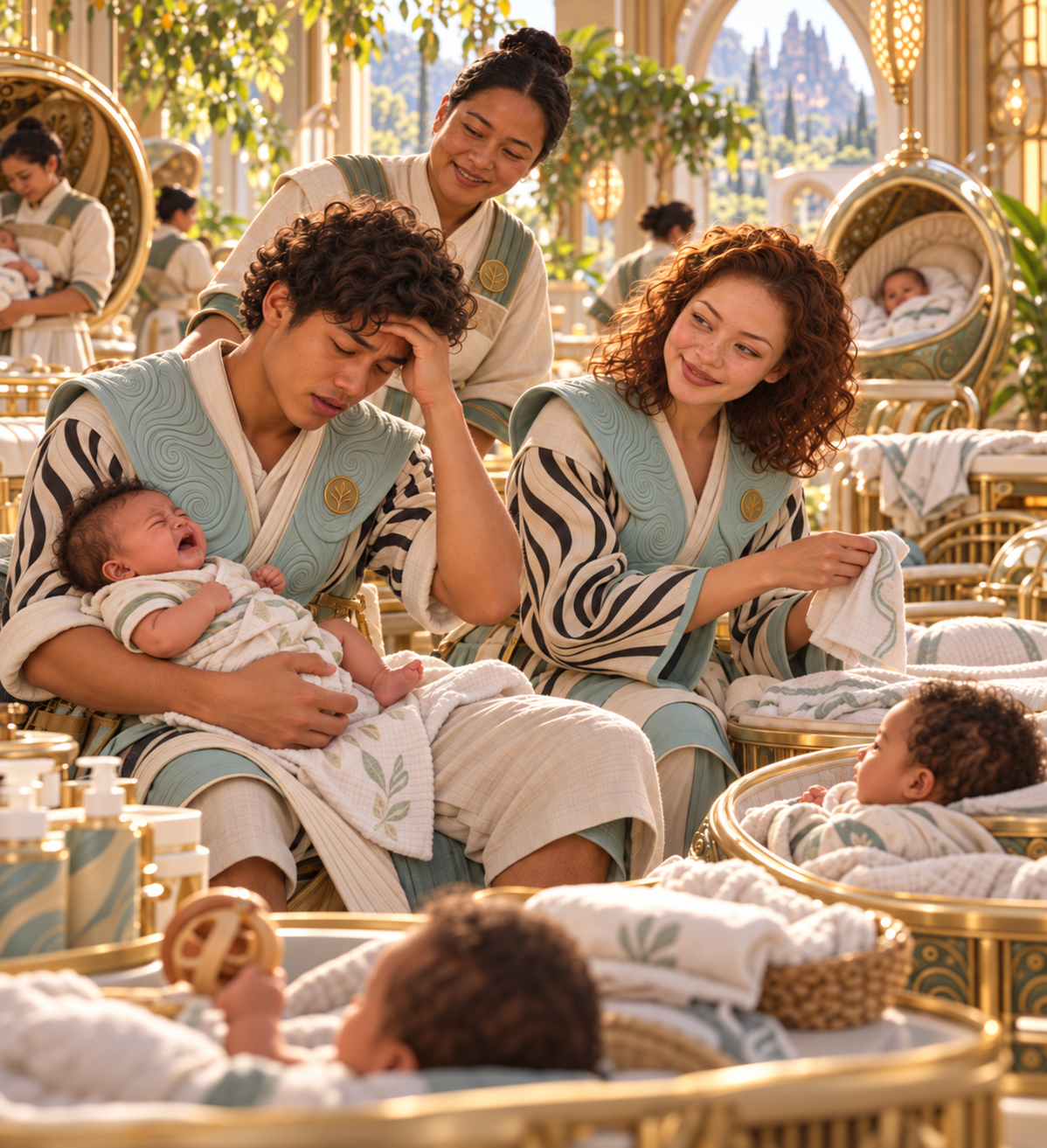
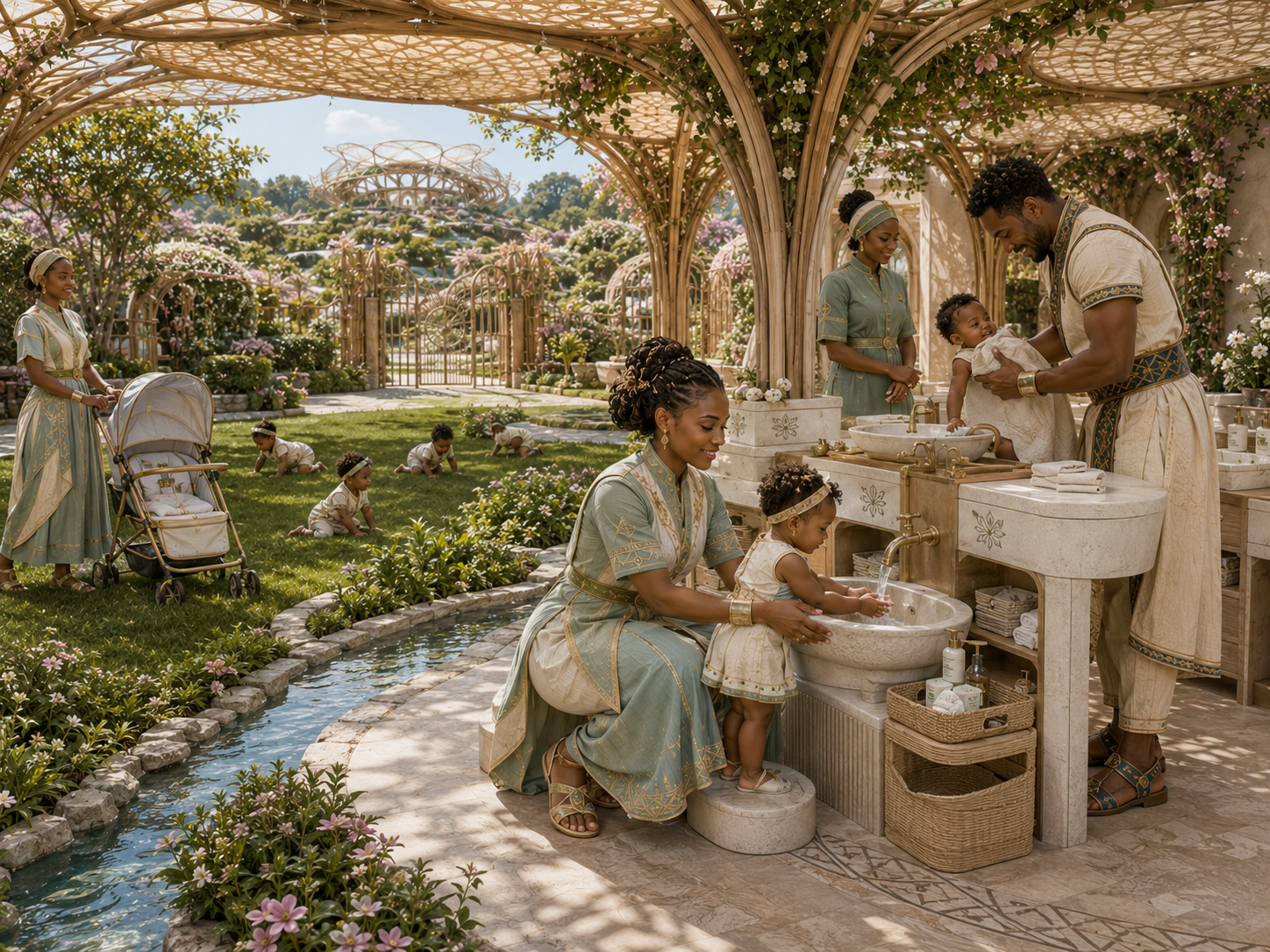
Example 1: The Roles Behind a Baby Touch-Roam Court
A Baby Touch-Roam Court may look like a soft, beautiful room where babies crawl, touch, pull, listen, explore, and remain near the parent’s sightline.
But behind that one room is a whole web of roles.
- Baby Court Designer — shapes the room so it supports crawling, touch, sightlines, and safety.
- Tactile Floor Maker — builds soft ridges, texture strips, embedded discs, and washable crawl routes.
- Baby Safety Verifier — checks edges, materials, heights, choking risks, grip, softness, and falls.
- Pull-Tail Route Maker — creates gentle interactive pull elements that are safe, washable, and slow-moving.
- Mother-Sight Planner — ensures the parent can see the baby while cooking, washing, resting, or working nearby.
- Warm Wash Helper — keeps child wash points stocked, clean, and ready.
- Doon Return Helper — gathers and returns bibs, cloths, towels, and care textiles.
- Pacorips Baby Court Checker — records maintenance, crowding, safety checks, and reset needs.
One baby room creates design roles, safety roles, textile roles, cleaning roles, maintenance roles, family-support roles, and Pacorips support roles.
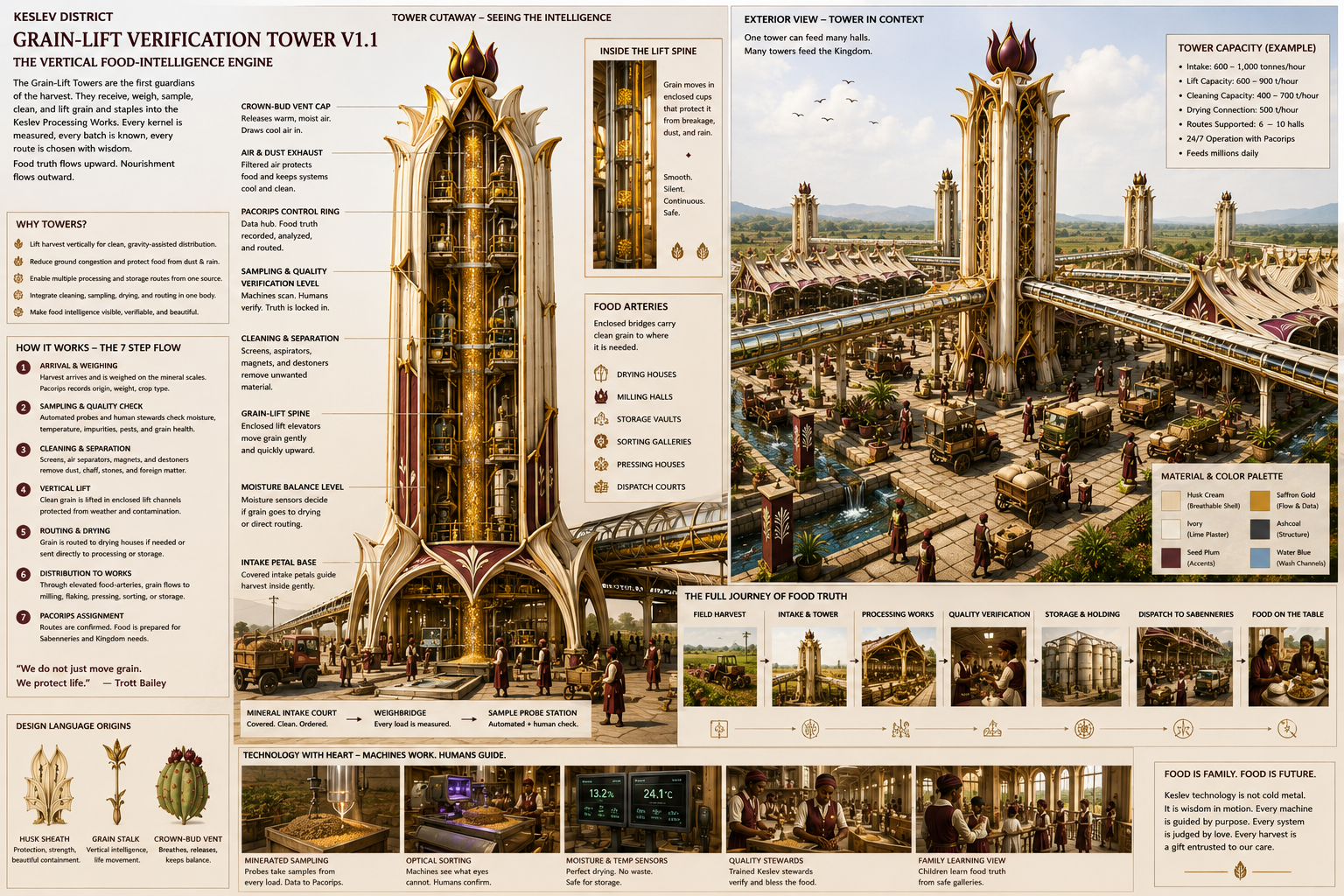
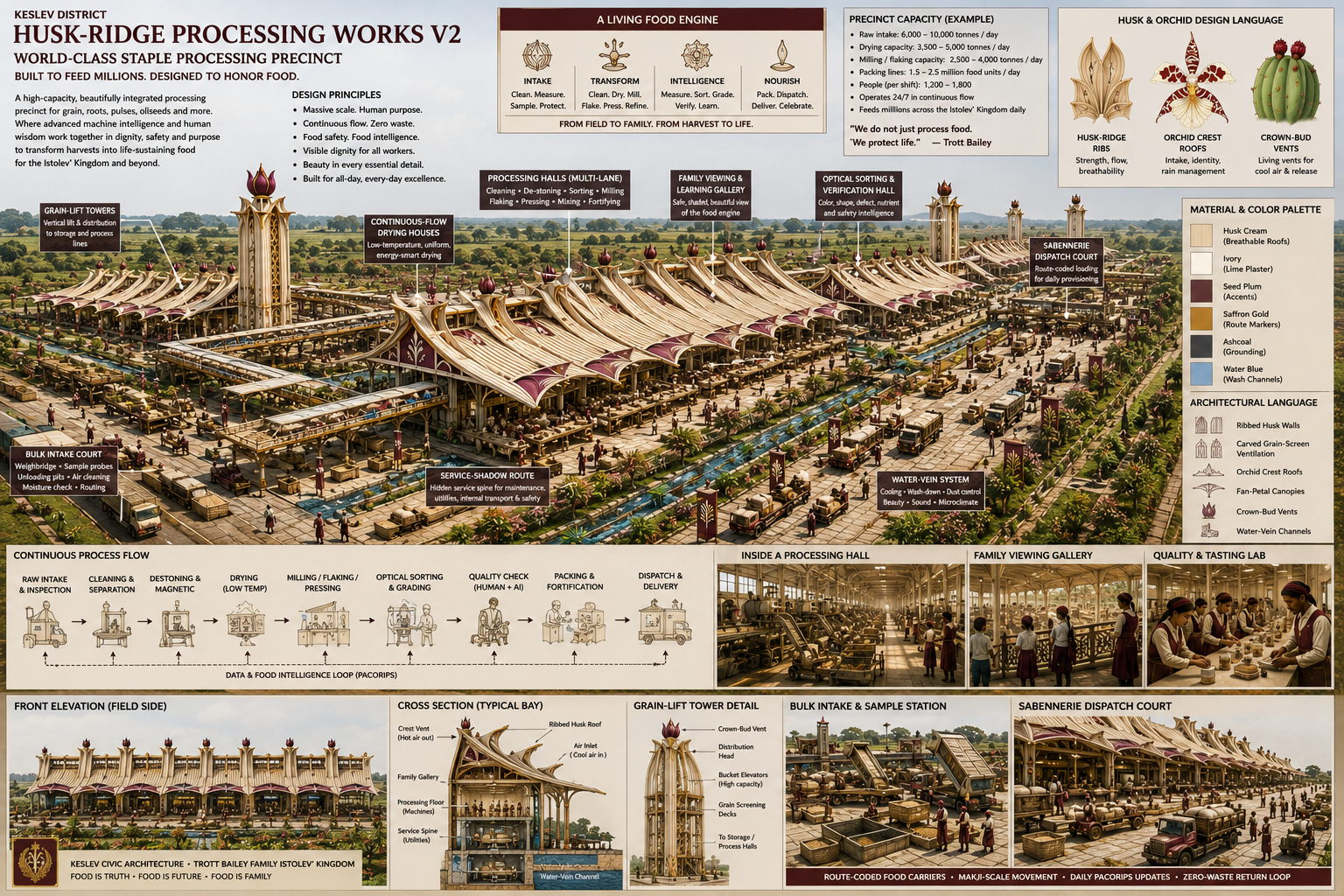
Example 2: The Roles Behind Keslev Orchard Civilization
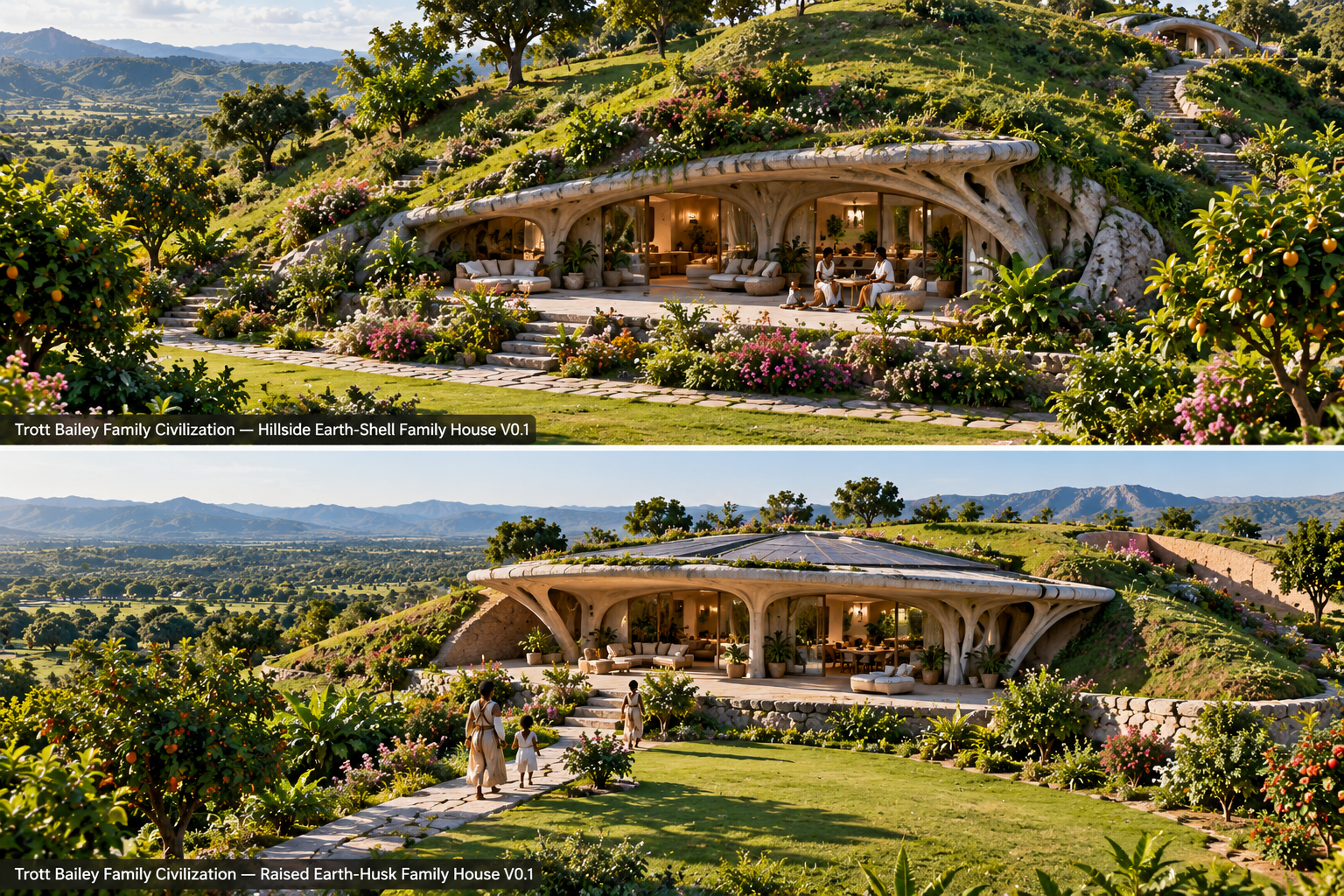
A Keslev orchard home or walking field may look peaceful: fruit trees, warm houses, edible paths, family porches, harvest balconies, and tasting pavilions.
But Keslev is not a decorative orchard. It is a food civilization, and food creates endless roles.
- Orchard Steward — cares for trees, seasonal cycles, soil, fruit quality, and safe harvest access.
- Child-Pick Route Helper — supports children picking safe fruit without damaging plants or themselves.
- Harvest Balcony Keeper — maintains safe tree-circle balconies, ladders, railings, baskets, and fruit-drop systems.
- Food Truth Verifier — checks harvest records, food handling, storage, and quality before distribution.
- Tasting Guide — helps families try new foods, give feedback, and understand food discovery.
- Seed Keeper — protects, organizes, tests, and records seeds for future abundance.
- Grain-Gill Pavilion Steward — supports drying, sorting, storage, ventilation, and public learning around grain systems.
- Sabennery Provision Worker — helps route food from Keslev abundance into public nourishment systems.
Food sovereignty creates endless roles because food is not one job.
Example 3: The Roles Behind Krubaro Clean-Return
Krubaro may look like clean-return infrastructure: washable rooms, dry-return spines, household reset walls, district stations, and public underground routing.
But clean return also creates roles that protect families and workers from being buried under mess.
- Return Steward — helps route used, dirty, wet, broken, or finished items into proper return systems.
- Dry-Return Keeper — manages towels, bibs, cloths, gloves, and wet items until they return dry and usable.
- Household Reset Helper — supports family compound clean-return, child mess reset, and service-side order.
- FliB Station Worker — supports district-level sorting, repair, material flow, and clean-return processing.
- Yoks Specialist Handler — manages rare, oversized, hazardous, or unusual materials safely.
- Doon Stock Helper — keeps care textiles circulating through use, wash, repair, restock, and return.
- Pacorips Return Coordinator — helps schedule pickup, detect overflow, record failures, and route support.
Clean return is not one hidden chore. It is a civilization layer full of useful roles.
Example 4: The Roles Behind Balushu Public Life
Balushu may look like beautiful public gathering: pavilions, sea edges, Release Commons, Sabenneries, Makji arrival groves, balconies, shade canopies, and night glow.
But a public-life world requires deep role structure.
- Route Host — welcomes families, explains routes, and helps distribute public movement.
- Viewing Pod Steward — supports Staggered Bloom Viewing zones so families, children, and elders can see comfortably.
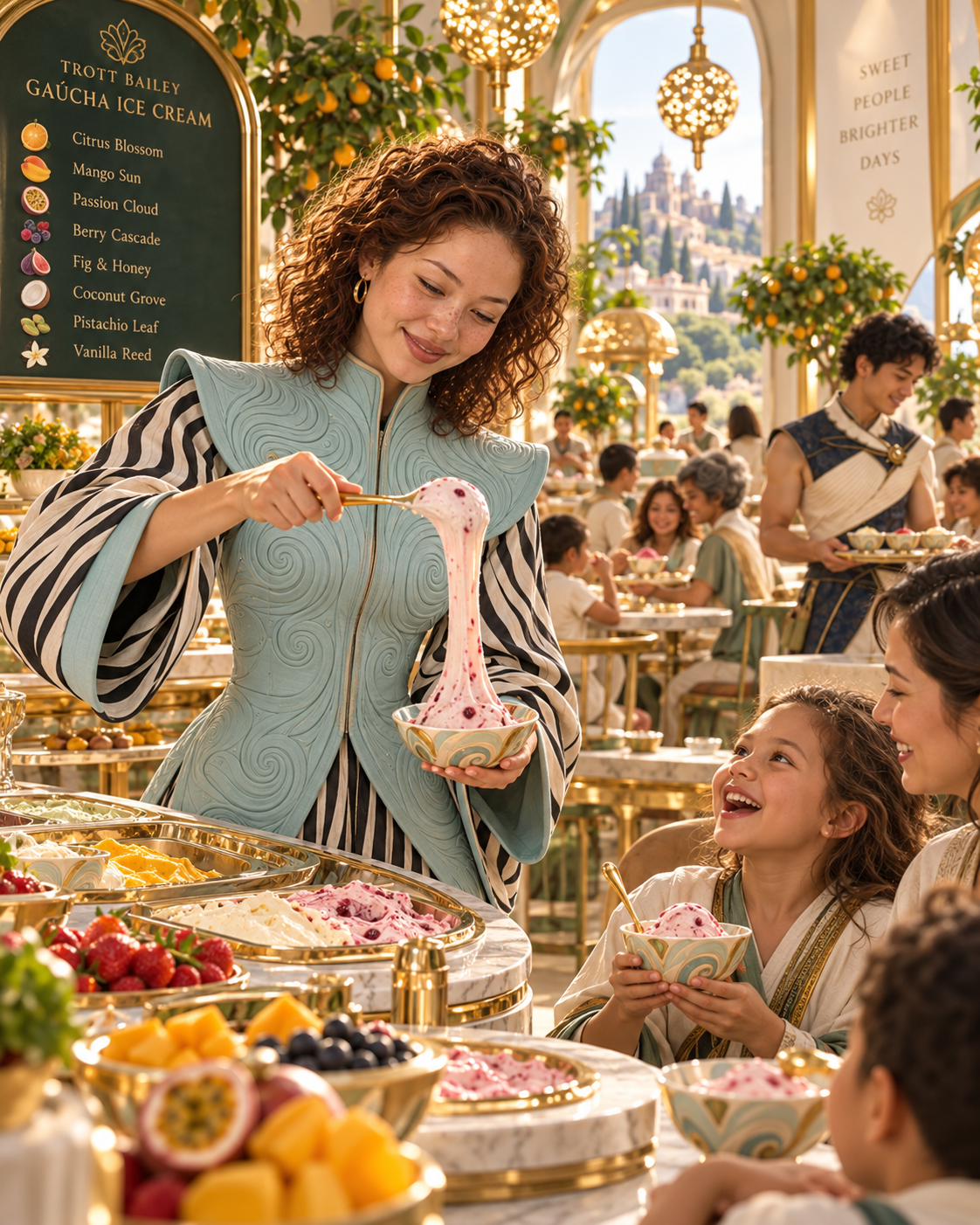
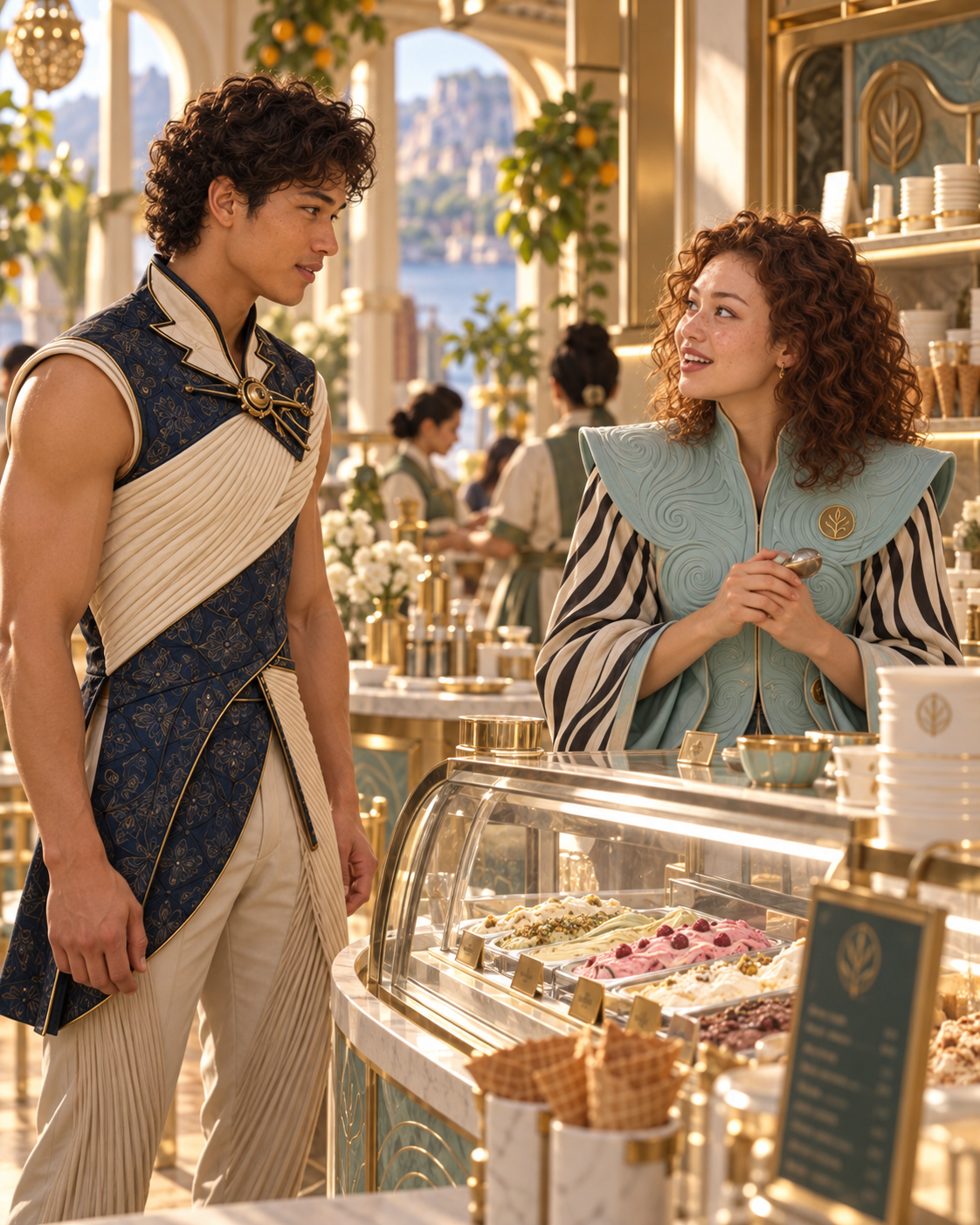
- Sabennerie Host — helps feed the public with warm food, fruit, snacks, meals, and tasting support.
- Night Glow Checker — checks route lighting, pavilion glow, water-edge safety, and night departure paths.
- Makji Grove Steward — supports arrival, rest, unloading, reboarding, and family transition from Makji to public life.
- Public Comfort Watcher — notices shade pressure, seating needs, crowd discomfort, bathroom lines, and stroller stress.
- Service Shadow Reset Worker — keeps bathrooms, food returns, water points, Doon, and public routes clean and functioning.
Beauty as crowd management requires people, systems, memory, and care.
Example 5: The Roles Behind Makji Movement
A Makji may look like an extraordinary movement object, but Makji civilization is not only about the vessel. Makji create roles in arrival, comfort, service, repair, cleaning, routing, and family support.
- Makji Grove Steward — manages shaded rest groves, arrival bays, family unloading, and reboarding flow.
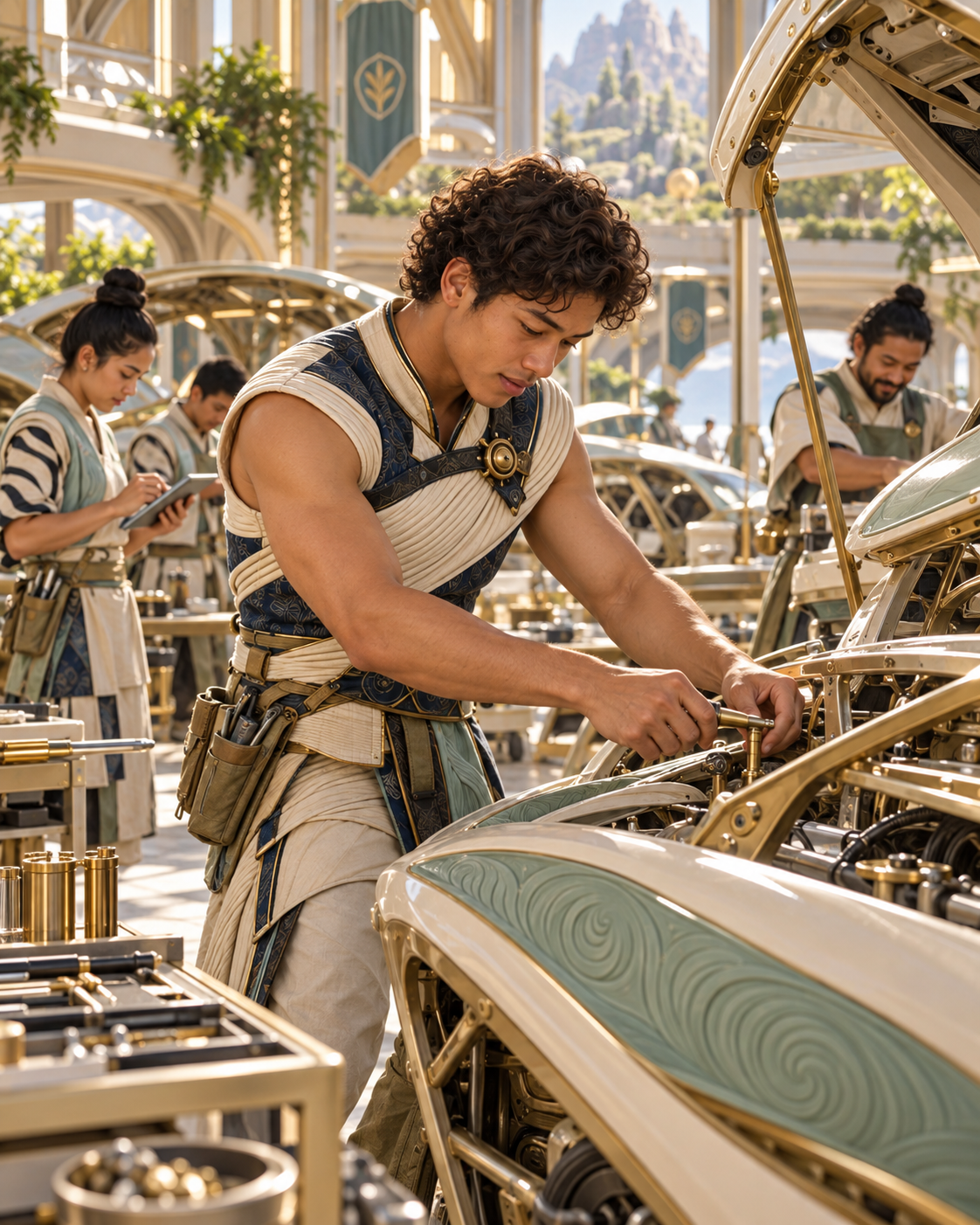
- Makji Care Bay Worker — supports cleaning, diagnostics, water refill, energy support, and interior reset.
- Interior Reset Helper — prepares the Makji living layer for family comfort after use.
- Route Assignment Guide — helps Makji move through the kingdom without clogging public life.
- Dry Interior Inspector — protects the living chamber from wet technical systems or service contamination.
- Makji Diagnostic Reader — checks signals, failures, energy, water, safety, and service alerts.
- Pacorips Makji Coordinator — supports eligibility, route memory, maintenance timing, and rest-grove availability.
Movement is not one job. Movement creates stewardship, service, hospitality, maintenance, and route intelligence.
Machines Carry Force and Precision. Humans Carry Judgment, Taste, Care, and Truth.
Trott Bailey Family Kingdom does not reject machines. The kingdom uses machine intelligence, tools, robotics, Pacorips coordination, service pods, sensors, processing systems, diagnostics, and high-capacity support where they are useful.
But machines should not erase human purpose. Machines can lift, detect, sort, move, measure, remind, route, and process. Humans still carry care, judgment, taste, welcome, verification, design, child understanding, family dignity, correction, and cultural meaning.
Machines detect. Humans verify. Pacorips records food truth.
This balance prevents the kingdom from becoming either primitive or cold. It allows technology to remove drudgery while humans remain present for the parts of civilization that require wisdom.
No Permanent Servant Class
Trott Bailey roles must never become a hidden servant class. Service does not mean inferiority. Clean-return work, baby support, public hosting, food service, water care, garment repair, Makji reset, orchard work, and Service Shadow tasks must all be structured with dignity, training, proper equipment, rest, rotation, recognition, and family-aware scheduling.
The kingdom’s role system should allow people to grow, rotate, specialize, apprentice, teach, improve systems, and move through deeper responsibility over time.
Everyone contributes. Everyone is relieved. No one is trapped below the beauty they maintain.
Family-Aware Roles
Roles in the kingdom should be family-aware. A father, mother, youth, elder, husband-and-wife pair, refugee, inventor, caregiver, builder, artist, farmer, technician, guide, or support worker should not be treated like a replaceable unit.
Some roles may work beautifully as husband-and-wife or family-aware pairings. Some roles may allow elders to teach. Some may allow youth to apprentice. Some may support parents with protected shifts. Some may be designed for people who are gentle, observant, technical, artistic, physical, social, quiet, analytical, nurturing, or mechanically skilled.
A role system should harvest gifts, not flatten people.
Child Invention Becomes Public Infrastructure
In Trott Bailey Family Kingdom, children’s strange, playful, food-loving, language-loving, reward-loving, art-loving, and movement-loving ideas should not be dismissed automatically. Some child inventions can become refill stations, mascots, learning machines, public games, reward objects, cleaning prompts, route signs, food-discovery systems, and new Shubaka roles.
This matters because a civilization that listens carefully to children may discover forms of delight, clarity, and usefulness that adult systems often miss.
Child invention becomes public infrastructure.
How the Website Can Present the Roles
The easiest way to present the kingdom’s roles is not to start with a giant list of thousands of jobs. That can overwhelm the reader and the creator.
A better method is to show a beautiful system first, then reveal the roles behind it.
For example:
- Show a Baby Touch-Roam Court, then list the baby-care, safety, floor-making, textile, and reset roles behind it.
- Show a Keslev orchard home, then list the food, harvest, child-pick, furniture, and storage roles behind it.
- Show a Krubaro clean-return room, then list the return, drying, Doon, FliB, Yoks, and Pacorips roles behind it.
- Show Balushu Release Commons, then list the host, shade, viewing, food, crowd comfort, and Service Shadow roles behind it.
- Show a Makji Rest Grove, then list the arrival, diagnostic, interior reset, family unloading, and route roles behind it.
Let the image pull people in. Let the roles reveal the depth.
The Master Role Families
As the catalog grows, roles can be organized into families so the website remains clear. The kingdom’s roles may include:
- Food-Facing Shubaka
- Water-Facing Shubaka
- Care-Facing Shubaka
- Child-Facing Shubaka
- Public-Life Shubaka
- Architecture and Built-Environment Roles
- Fashion and Rolewear Roles
- Machine and Tool Operation Roles
- Fashion and Rolewear Roles
- Machine and Tool Operation Roles
- Service Shadow Roles
- Pacorips and Technology Support Roles
- Husband-and-Wife or Family-Pair Roles
- Child, Elder, Parent, and Family Support Roles
- Verification Roles
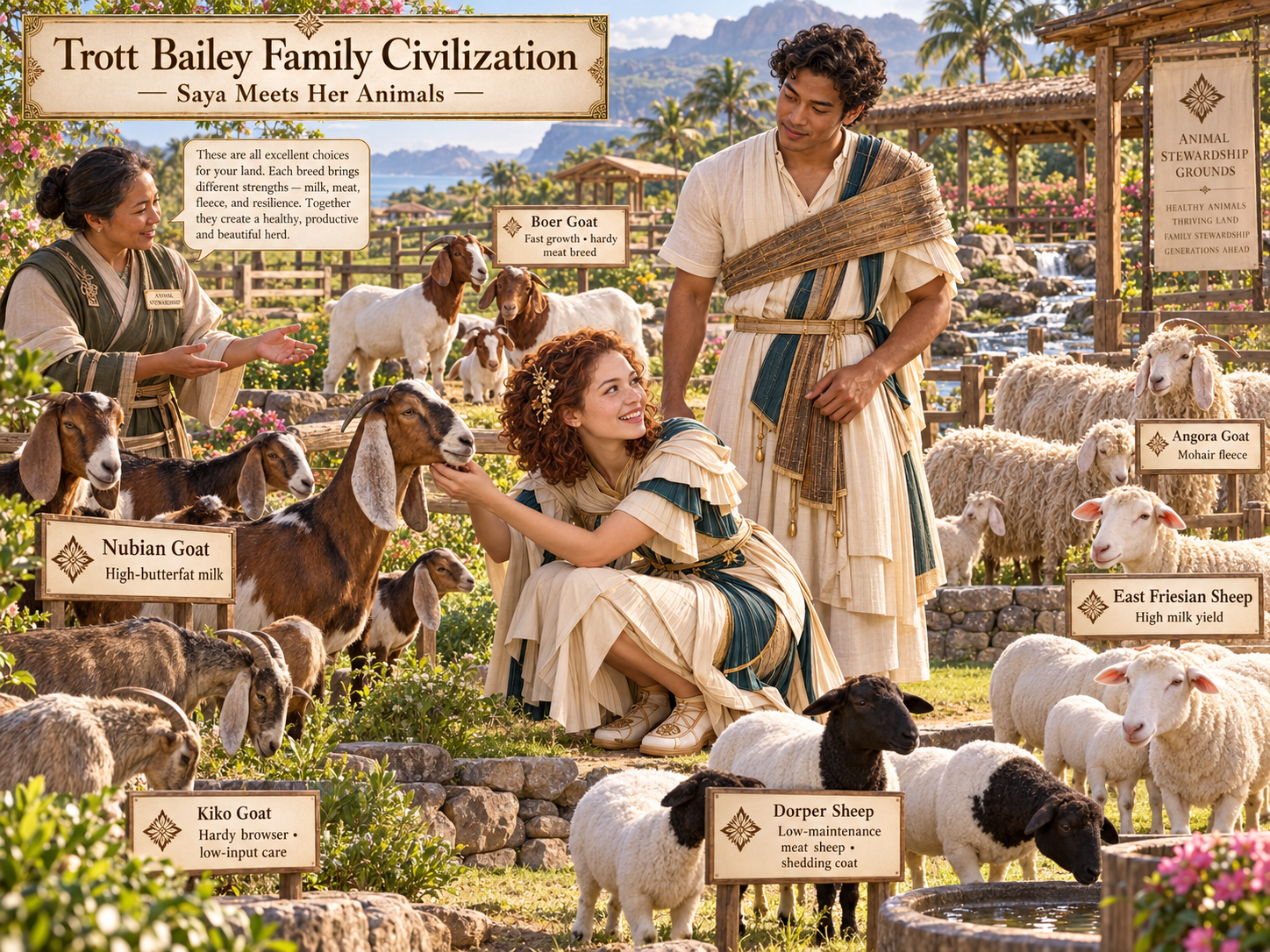
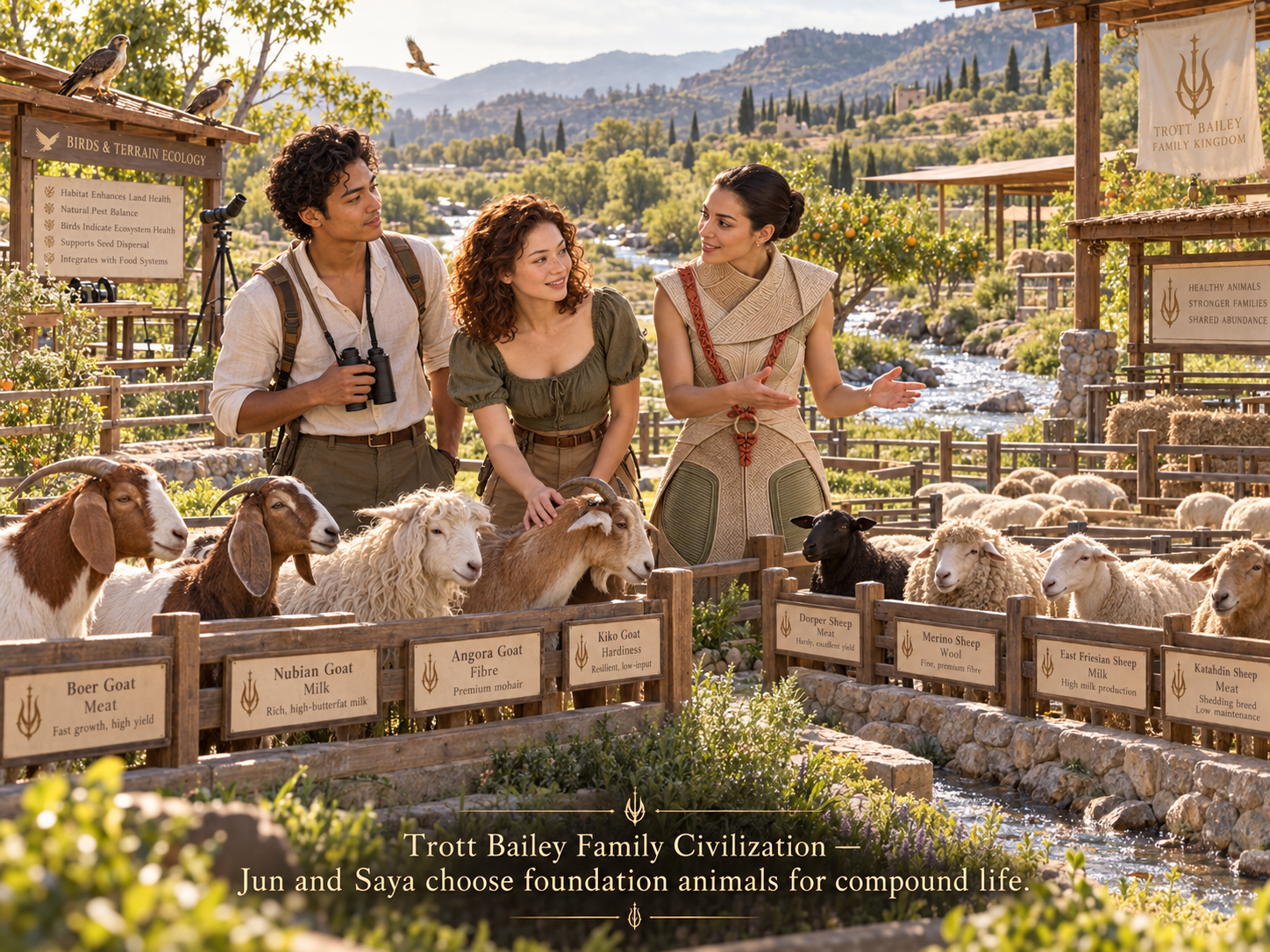
- Animal and Nature-Facing Roles
- Learning and Guide Roles
This structure allows the catalog to grow without becoming chaos.
Refugees Are Talent-Routed, Not Stored
The role system also matters because the kingdom should not treat refugees or new arrivals as problems to contain. A person may arrive with farming knowledge, repair skills, cooking gifts, artistic ability, child-care experience, tool intelligence, water knowledge, building strength, storytelling gifts, fashion talent, elder wisdom, or a quiet gift that has never been properly noticed.
Pacorips and human guides can help discover those gifts and route people into meaningful contribution, apprenticeship, protection, and growth.
People are not stored. People are noticed, protected, trained, and placed.
What the Role Catalog Must Avoid
The role catalog must avoid becoming an overwhelming wall of names. It must not make every role title too long. It must not turn roles into rigid social ranks. It must not create a servant class. It must not make technology replace human judgment. It must not hide the people behind beauty.
It should also avoid old-world job thinking: narrow tasks, low dignity, poor training, weak support, exhaustion, invisible cleanup, and meaningless repetition.
The catalog should help people see possibility, not feel crushed by complexity.
The Promise of the Roles Behind the Kingdom
The Trott Bailey Family Kingdom role system promises that beautiful civilization will not be built on hidden exhaustion, wasted talent, bored youth, unsupported parents, invisible workers, or people trapped in meaningless labor.
It says that every baby court, orchard walk, Makji grove, Sabennerie, Krubaro station, Balushu pavilion, water route, garment system, public seat, child invention, and family-support room creates real work for real people.
A beautiful public world requires hidden role depth.
That is why the roles behind the kingdom matter. They reveal that Trott Bailey civilization is not only made of images, buildings, landscapes, garments, vehicles, and systems. It is made of contribution.
Every beautiful place creates meaningful work.


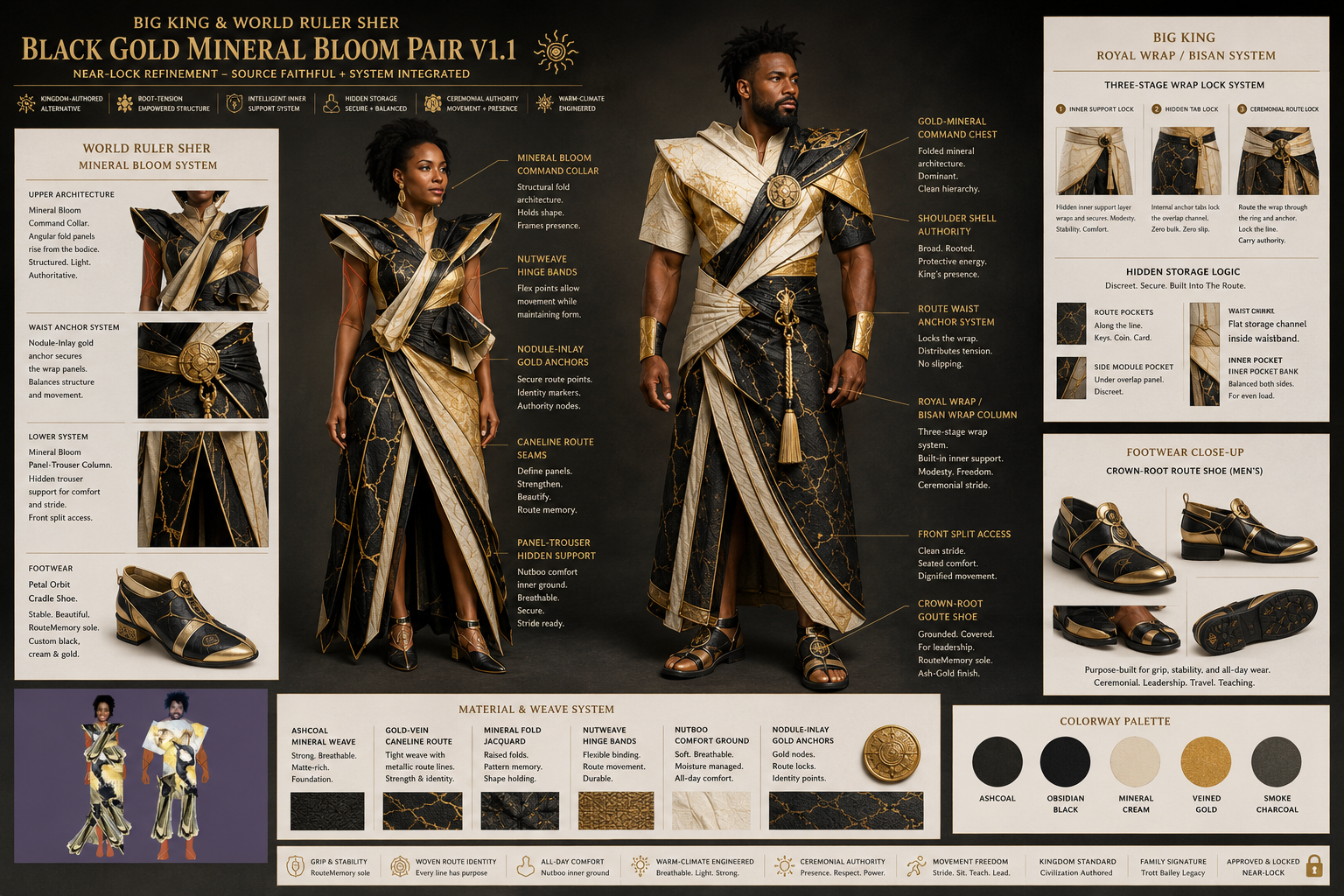



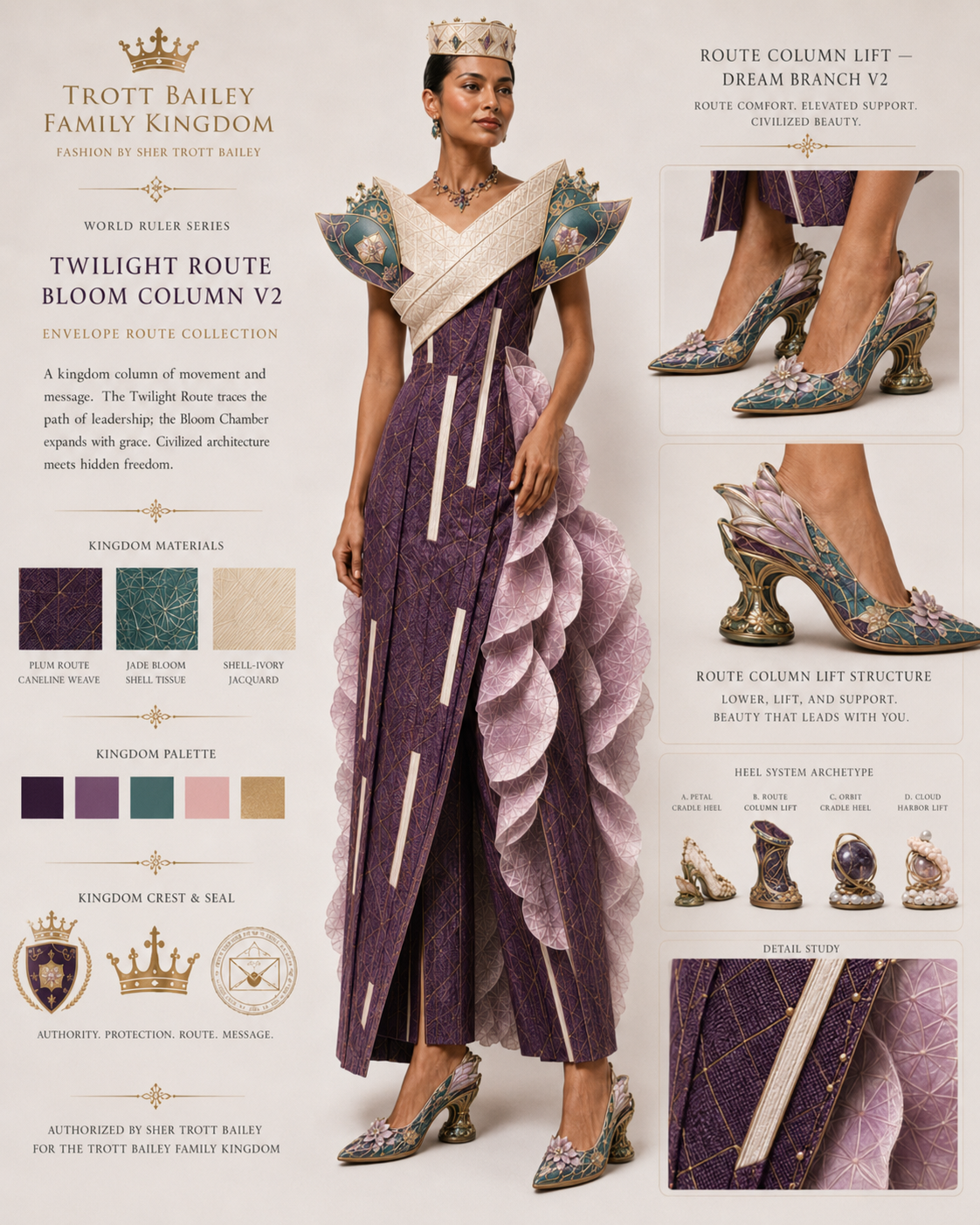
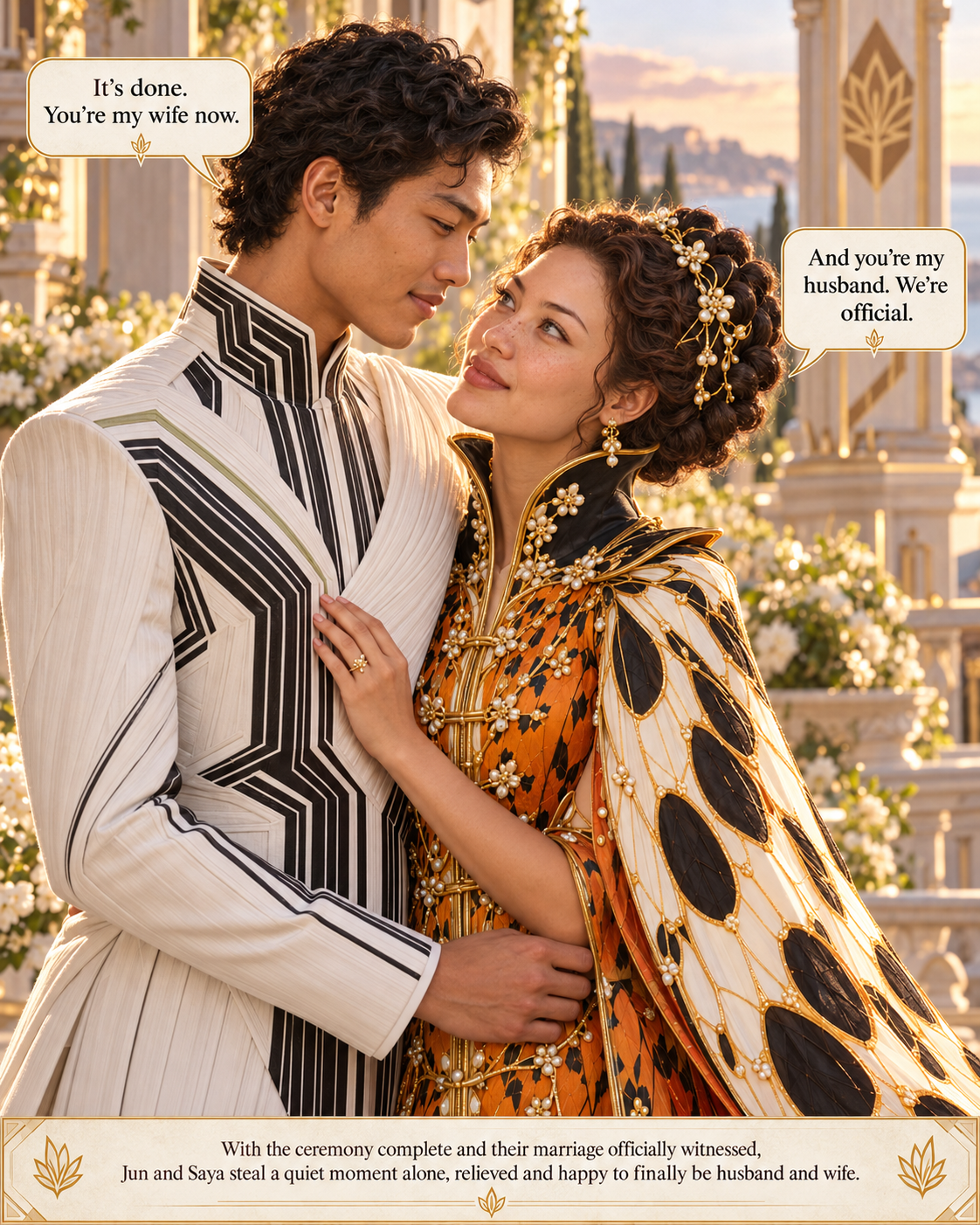
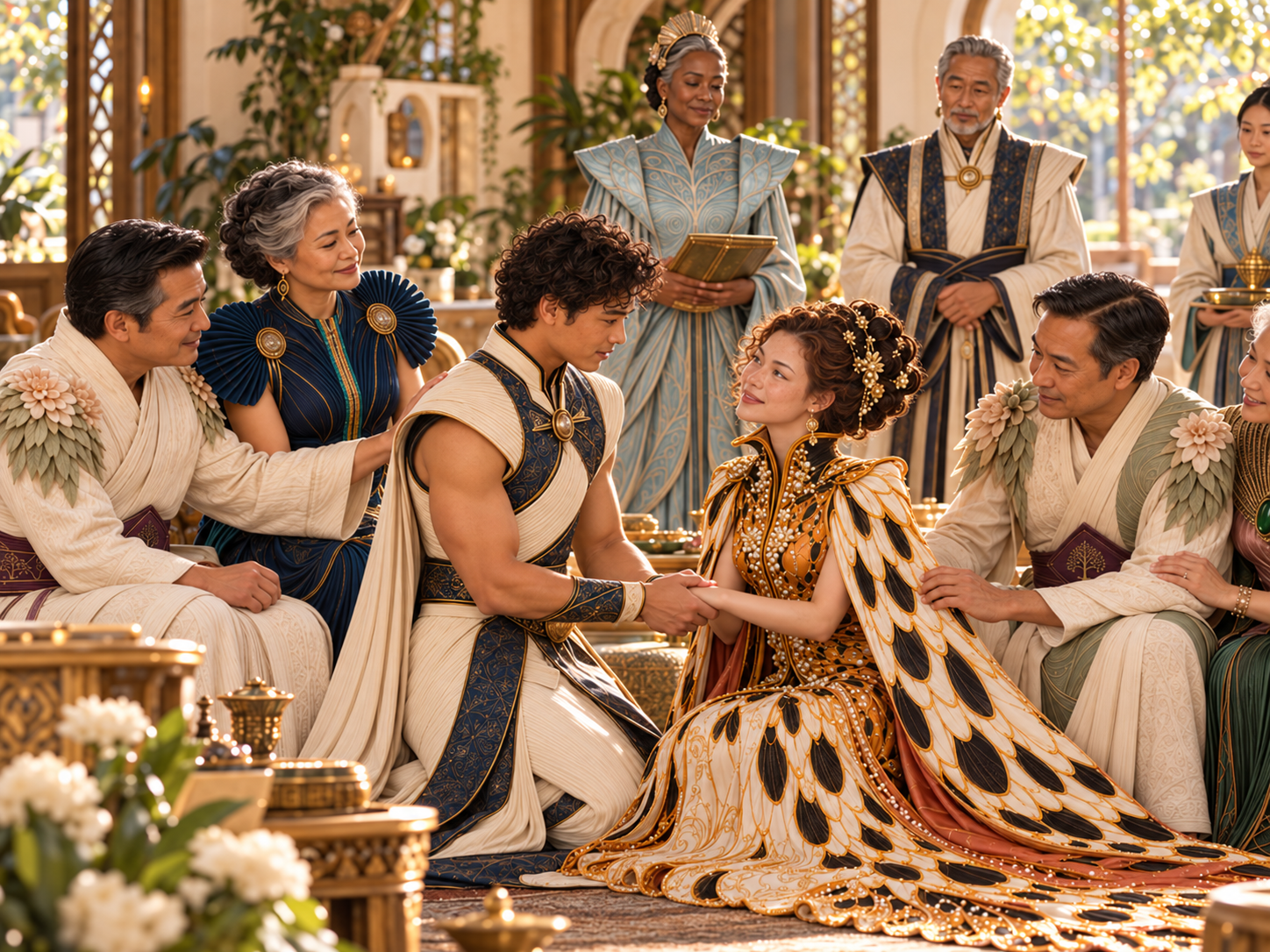
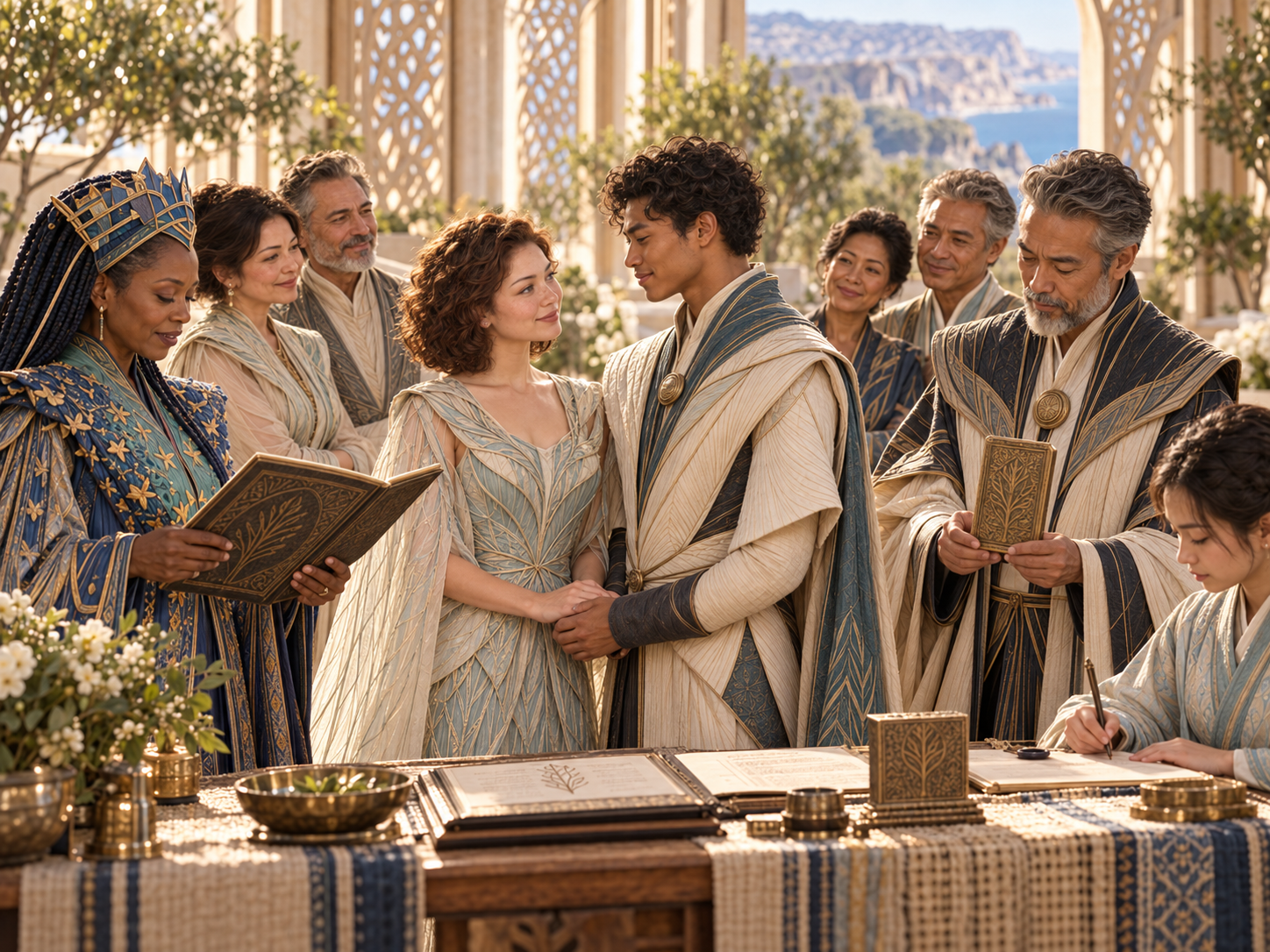
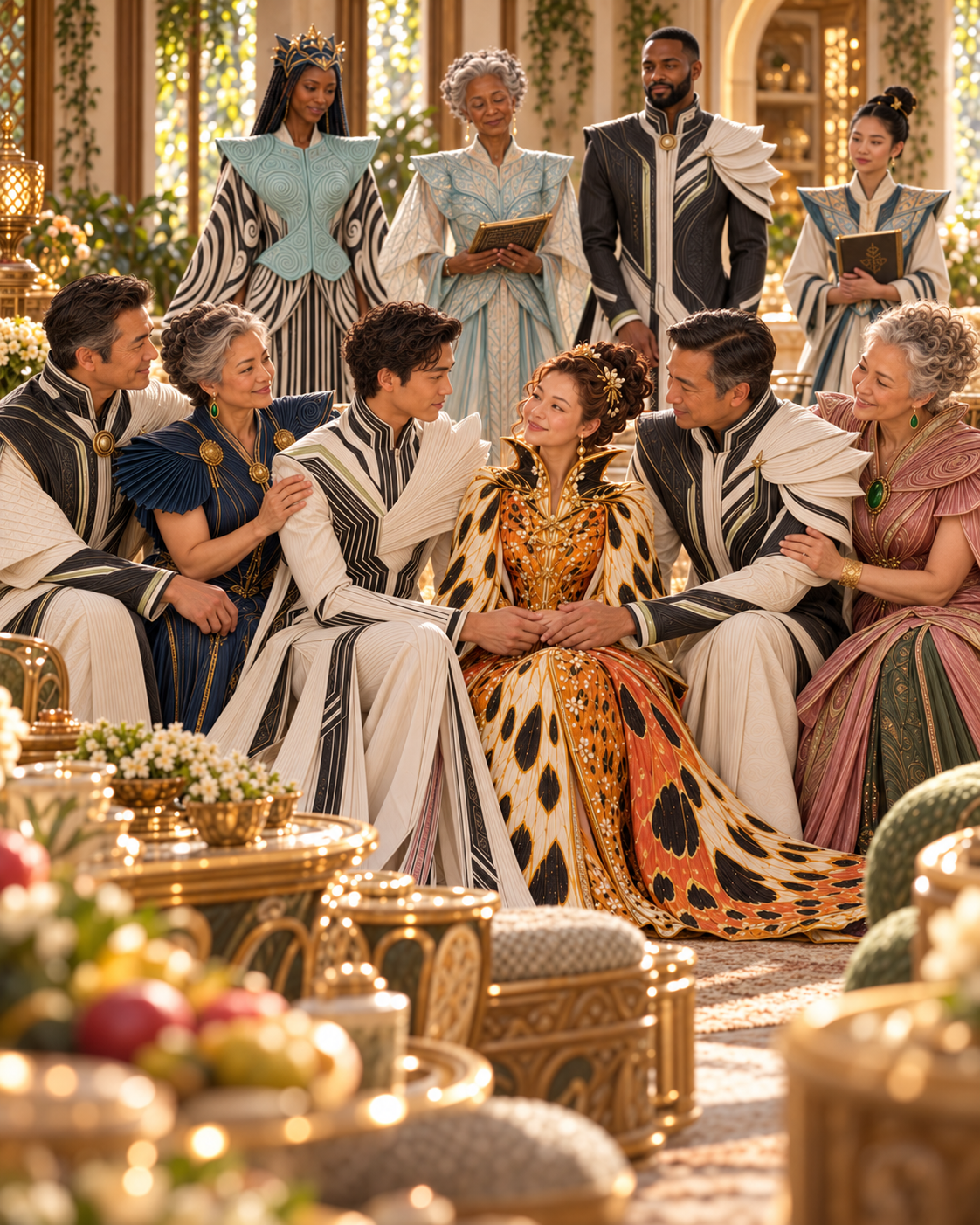
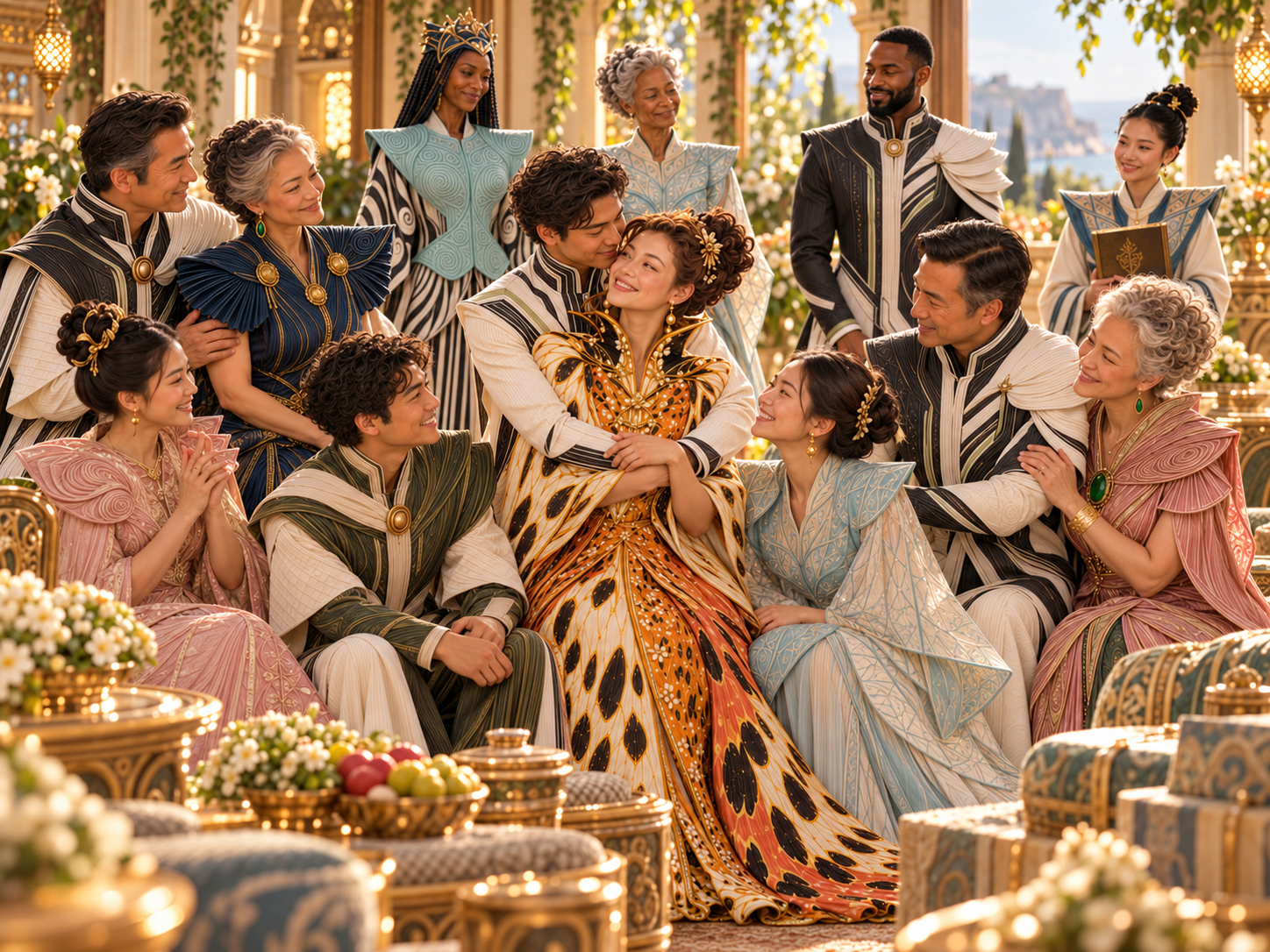
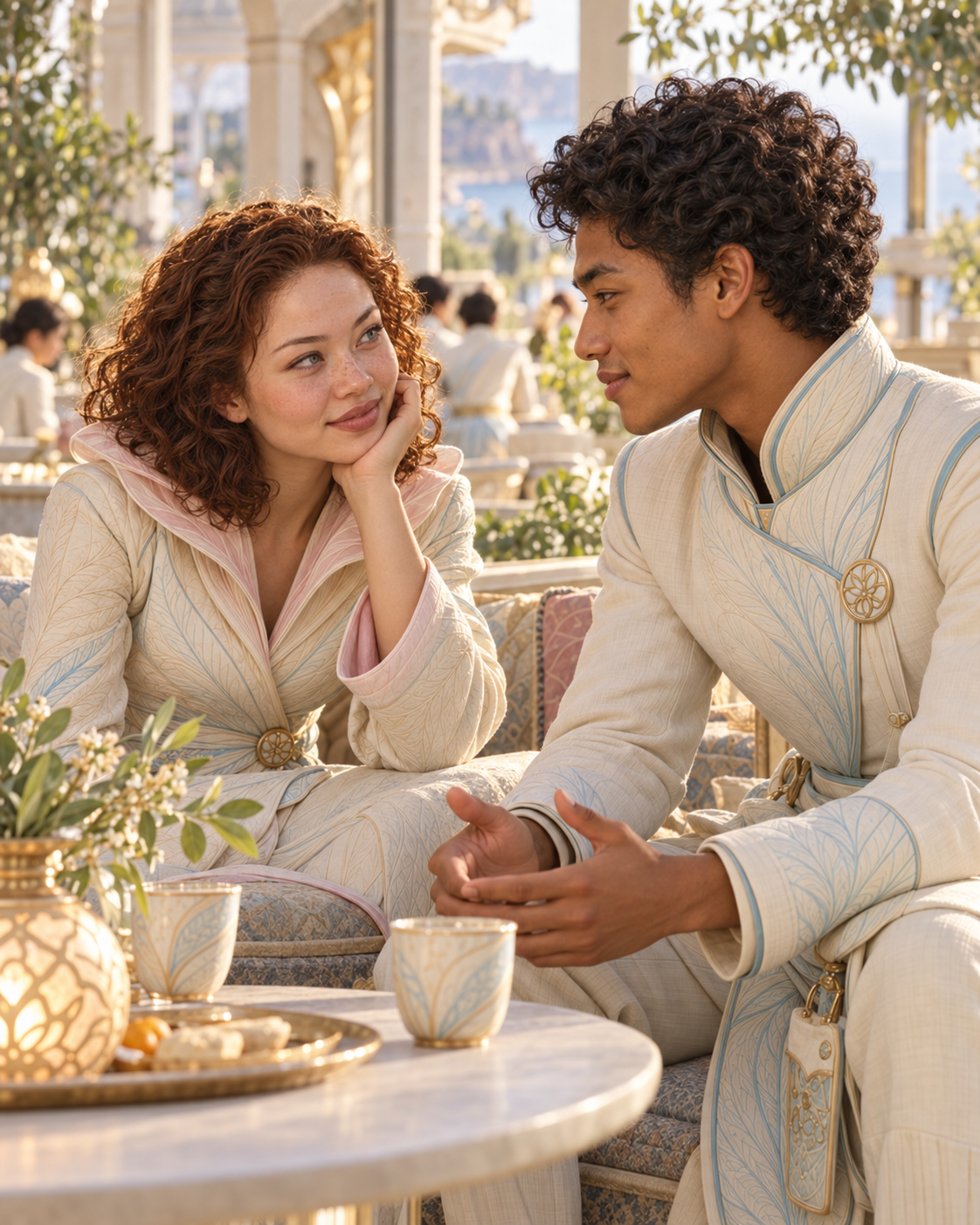
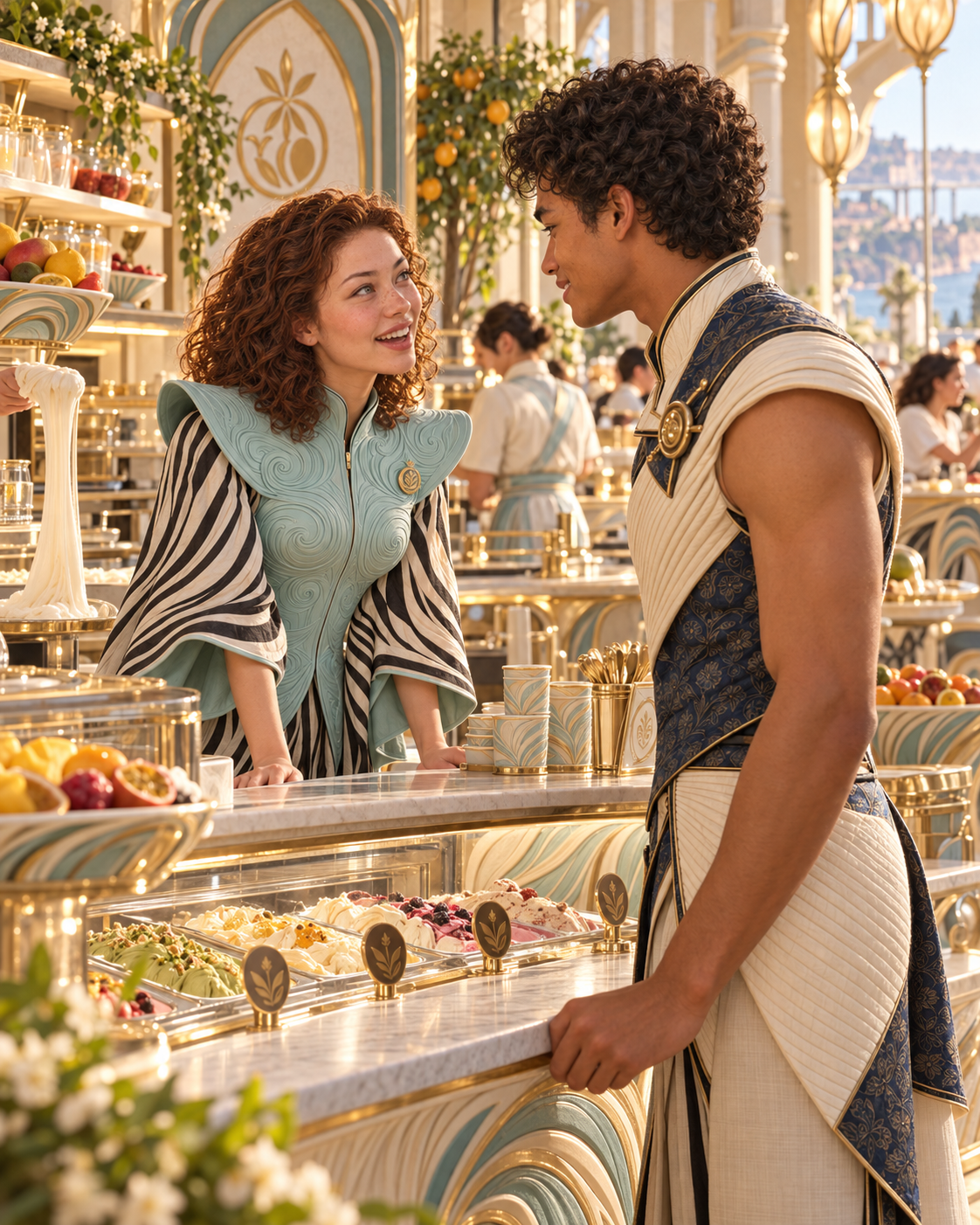
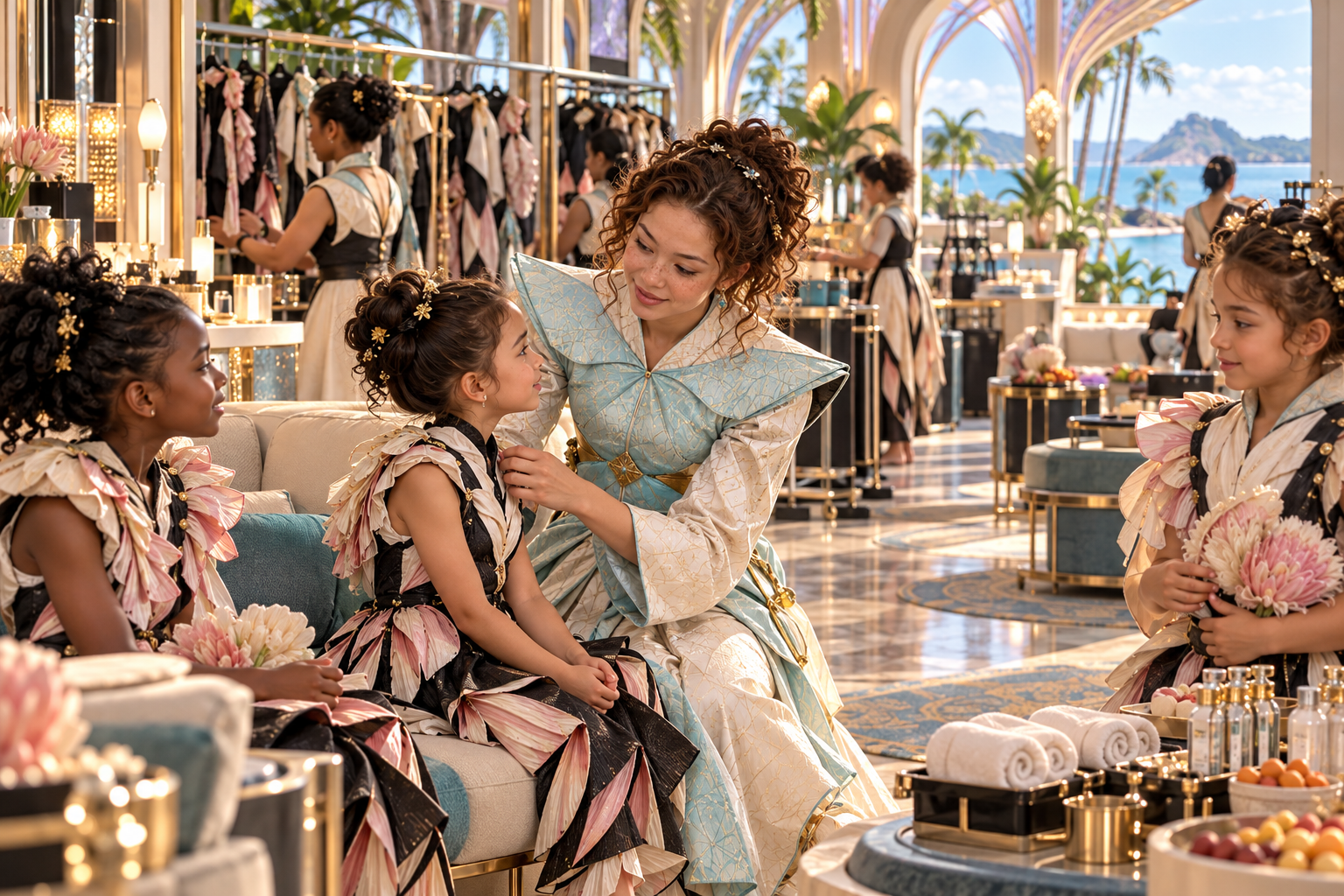
Models wearing and depicting the outfits of Big King K.B and World Ruler Sher. The models are not the rulers themselves.