

Freda and Henry Did Everything Right

Freda and Henry Did Everything Right
So why was their family still buried under mountains? This is the story of two stable-minded people who loved each other, got married, tried to build a family, and still found the wider Western system pressing down on their household.
Freda and Henry were not reckless people. They were not lazy. They were not foolish. They were not anti-family. They were not two unstable people who stumbled into marriage with no thought, no discipline, no character, and no seriousness.
They were the kind of people the modern world claims to want.
They worked. They studied. They disciplined themselves. They tried to choose love wisely. They believed marriage, children, loyalty, family, and a decent life were still worth building.
Everything should have been good, right?
That is what they were told.
They Were Told the Script
Go to university. Get good degrees. Choose respectable careers. Stay out of trouble. Get married. Work hard. Climb the ladder. Have children. Keep going. Keep smiling. Keep paying. Keep proving that you are responsible.
Freda became a dentist. Henry became an engineer in a corporation.
That should have meant stability. That should have meant that the household would be protected. That should have meant that, after all the work and discipline and sacrifice, family life would become easier to build.
But the wider Western system, with the United States as the main reference point here, does not stop pressing on a household just because the husband and wife did many things right.
Freda Was Not Raised to Trust Marriage
Freda did not grow up in a home where marriage was held up as something beautiful, stable, and worth building.
She was raised by a single mother who never got married herself. And that mother did not teach Freda good, balanced, hopeful things about men.
The message was always bitter:
- Men suck.
- Men cheat.
- Men are no good.
- Do not trust them too much.
- Do not be foolish.
- Do not think you are special.
That kind of message can train a daughter to distrust men before she even has a chance to know one properly. It can make suspicion feel like wisdom. It can make love look like foolishness. It can make marriage look like a trap.
But Freda was not a crowd-follower. She had inner confidence. She was a thinker. She was practical and organized. She did not simply swallow every bitter thing handed to her.
That matters, because when Freda met Henry, she did not treat him as guilty just because her mother had trained her to expect the worst from men. She looked at his actual character.
Henry Was Not Raised Soft Either
Henry did not come from a gentle path.
He had been working since he was sixteen. Then, at eighteen, he was kicked out of his house and told to “go be a man.”
That is not guidance. That is pressure.
A young man needs teaching, correction, training, covering, and wisdom. He needs older men and older family members who help him understand responsibility without throwing him into survival and calling that manhood.
Henry did not receive that kind of covering. He had to carry adulthood early.
He sent himself to university through scholarships, odd jobs, and side hustles. He cleaned pools. He ran a small printing business from inside his dorm on campus. He worked. He studied. He figured things out.
He had roommates who were sexually loose, but Henry did not just follow them. He was logical, warm, funny, grounded, and disciplined enough not to become a fool just because foolishness was around him.
Freda had to resist bitterness against men. Henry had to resist looseness, irresponsibility, and the harsh pressure that tried to turn manhood into lonely survival.
So when Freda and Henry found each other, they were not two perfect people from perfect homes. They were two people who had already resisted bad teachings before marriage.
That is why they were able to recognize something good in each other.
They Met on an Ordinary Day Outside a Bank
Freda and Henry did not meet in some reckless, chaotic way. They met on an ordinary day outside a bank.
They had both gone there to sort out different issues, to handle whatever service or business brought them to the bank that day.
Coming out of the bank, Freda twisted her ankle going down the steps.
Henry saw what happened. He helped her. He carried her to a bench. He did not turn it into a performance. He did what needed to be done.
They started talking.
He offered to drive her to the doctor. The conversation did not feel forced. They found themselves talking nonstop. They just clicked.
Henry stayed with her at the doctor. Then he ran to a nearby Chick-fil-A and bought her a chicken sandwich and ice to ice her ankle.
He told her he remembered his college buddy always saying to elevate and ice the foot.
That detail matters.
It was ordinary, practical, and kind. He was not trying to impress her with empty talk. He paid attention, remembered something useful, and acted.
For Freda, who had grown up hearing that men cheat, men suck, and men are no good, this moment mattered. Henry did not ask her to believe a speech. He showed care through action.
They dated. Seven months later, they got married.
Then the Family Interference Started
Freda’s mother did not attack the marriage all at once. It started small, which is how a lot of interference works.
When Freda first brought Henry to introduce him, her mother criticized his looks. Henry was handsome, but she still said to his face that Henry was “just ok looking.”
That kind of comment is not harmless.
It is a small act of disrespect. It lets the man know, “I am not impressed by you,” and it lets the daughter know, “Do not get too excited.”
Then came the suspicion comments.
If Henry did not answer a call, or if he went out, Freda’s mother would imply that maybe he was cheating. She did not need proof. She had already spent years training Freda with the message that men cheat, men suck, and men are no good. Now she was trying to attach that old poison to Henry.
Then it grew.
- Henry was controlling.
- Freda and Henry were moving too fast.
- Henry wanted to control Freda.
- Freda needed to be careful.
- Freda should not trust too much.
This was not wisdom. This was interference.
A mother warning a daughter about a genuinely dangerous man is one thing. Trying to poison a daughter against a decent husband because of bitterness, suspicion, resentment, or jealousy is another thing entirely.
Being bitter does not give anyone the right to undermine another person’s marriage.
Being disappointed does not give anyone the right to poison another person’s home.
Being “not healed” does not give anyone a pass to sabotage another family.
Do not prettify it.
This was criticism. This was suspicion planting. This was disrespect. This was interference designed to weaken Freda’s trust in Henry.
Then Privacy Was Violated
Freda’s mother also asked invasive questions.
She wanted details she did not need.
Then private conversations between Freda and her mother did not stay private.
Things Freda said in confidence ended up at the hair salon, repeated to her mother’s friends and turned into gossip.
That is not harmless.
That is putting Freda’s family business outside.
A young marriage needs privacy. Husband and wife need room to talk, make mistakes, learn each other, solve things, and build trust without every conversation becoming public entertainment for gossipers.
When Freda’s mother leaked private conversations, she was not helping Freda. She was exposing Freda’s household. She was turning Freda and Henry’s marriage into discussion material for outsiders who had no responsibility for protecting that marriage.
This was not concern.
This was boundary violation dressed up as family closeness.
Henry’s Family Wanted to Harvest Him After They Did Not Carry Him
Henry’s family brought another kind of pressure.
His family was riddled with single-mother aunties, cousins, wayward children, wayward brothers, and relatives who had their own broken households and unresolved messes.
Some wanted Henry to become a father figure to their children. Some wanted Henry to “give their kids a good talking to.” Some wanted him to fix young people he did not create and households he did not break.
One brother had a child with a woman. The woman died. Then Henry’s own brother did not want to step up for his own child. His excuse was that he was not sure if the child was even his.
And then family members had the nerve to pressure newly married Henry to adopt the child.
Henry was newly married to Freda. He was trying to build his own household. But people who did not care when he was struggling now wanted to milk him because he had become successful.
- They wanted him to be a substitute father.
- They wanted him to be a moral repairman for wayward children.
- They wanted him to give people references.
- They wanted him to speak at this event and that event.
- They wanted to parade his success around.
- They wanted to use him to make his mother look important in community meetings and church groups.
His mother wanted to feel like the head bitch of the community meetings and church groups by displaying Henry’s success.
Do not prettify that either.
They did not carry Henry when he was being formed, but they wanted to harvest him once he became useful.
Henry’s success became something they wanted to milk, not something they wanted to protect.
A newly married man cannot build a household if every irresponsible relative thinks his life is now their backup plan.
Freda and Henry were not only trying to love each other. They were trying to build a household while both family systems pushed pressure into the marriage.
The Wider System Was Pressing Too
These family pressures did not happen in an empty room.
Freda and Henry were also living inside the wider Western system, with the United States as the central reference point: career pressure, housing costs, grocery costs, fuel costs, childcare fears, media poison, social suspicion, and the constant performance demand to look like you are succeeding even when the household is being squeezed.
This is not imaginary pressure.
Public evidence supports the pressure families feel. Federal Reserve household well-being reporting has named price increases as a major financial concern for U.S. adults, especially food and groceries. Official inflation tracking shows that food, shelter, fuel, and other basic costs remain central parts of household budgets. U.S. Department of Labor childcare data shows that full-day care for one child can consume a serious share of median family income. Pew Research has reported that many U.S. parents describe parenting as tiring or stressful all or most of the time.
So when Freda and Henry start to feel the squeeze, it is not because they are weak people who made foolish choices.
It is because the household is being hit from several directions at once.
The Mountains Pushed Onto the Household
Freda and Henry loved each other. They wanted children. They wanted to stand united. But love still has to live inside economics, media poison, family interference, parenting labor, and daily household strain.
Freda and Henry did not enter marriage looking for collapse.
They wanted to love each other. They wanted two or three children. They wanted to be good members of society. They wanted to build a household with loyalty, order, warmth, work, and hope.
But a household does not live in a vacuum.
The Fear Around Children
When Freda and Henry began thinking about children, the world did not simply celebrate life with them.
The fear started coming.
- Your good years are over.
- Pregnancy can have complications.
- Your body will change.
- Children are a financial burden.
- Childcare will eat your money.
- You will never sleep again.
- Your marriage will change.
- Your career will suffer.
- Three kids? In this economy?
Some risks are real. Pregnancy can have risk. Children do cost money in the old-world system. Childcare can be expensive. Sleep can be interrupted. Marriage can be strained.
But that is exactly the point.
A society should not merely name the dangers and then leave families alone. A society that wants children should build the support around pregnancy, birth, early life, food, housing, child care, fabric care, work, marriage, and rest.
Instead, Freda and Henry were being warned about mountains without being shown a civilization that would help carry them.
The Economic Mountain
Then inflation keeps coming.
Groceries go up. Fuel goes up. Rent or mortgage costs go up. Insurance goes up. Utilities go up. Childcare planning becomes frightening. The paycheck does not rise at the same speed.
Food and fuel are not separate from ordinary family life. When fuel rises, transportation feels it. Food distribution feels it. The cost of moving goods feels it. Corn and fuel markets are linked through ethanol and industrial uses, even though the exact price effects can be debated and should not be reduced to one simplistic cause.
The point for Freda and Henry is simple: the household feels the squeeze.
Freda is a dentist. Henry is an engineer. These are not careless people. These are trained, educated, useful people.
Yet even they can feel the pressure.
And if even Freda and Henry can feel squeezed, what is happening to families with fewer resources, weaker support, lower income, unstable housing, poor transportation, no family help, no savings, and no breathing room?
The Media and Performance Mountain
The pressure is not only financial.
American and Western media often flood the mind with negative messages about love, sex, marriage, men, women, family, aging, beauty, betrayal, selfishness, escape, and suspicion.
Freda is being told lies from one direction:
- Your husband may cheat.
- He may not love you like he used to.
- You should not trust too much.
- Motherhood will erase you.
- Your body is losing value.
- Family life may be the thing trapping you.
- If you are tired, maybe the marriage is the problem.
Henry is being pressured from another direction:
- Be a man.
- Provide more.
- Earn more.
- Do not complain.
- Be emotionally available but never weak.
- Lead, but do not offend.
- If money is tight, it is your fault.
- If you feel unseen, stay quiet.
- If you are tired, you are failing.
Both are being measured.
Both are being watched.
Both are being told they are not enough.
Then society acts shocked when marriages become tense.
The Parenting Energy Mountain
Then the children come.
Parenting is not only “having kids.”
Parenting means:
- wiping butts
- passing tissue to one child while holding a messy baby
- feeding children
- washing clothes
- folding clothes
- cleaning the house
- organizing the family
- disciplining a child because you care about who they become
- explaining the same lesson again because they did not understand it the first time
- teaching common sense
- teaching honor
- teaching integrity
- teaching wisdom
- teaching right choices
- teaching self-control
- pleading with a child when they are stubborn, upset, or confused
- finding creative ways to teach a lesson so it actually lands
- wiping tears after correction
- correcting without crushing
- protecting a daughter’s mind when outside messages try to tell her she is not beautiful
- dealing with over-processed food and the health consequences it can bring
- watching children’s teeth, bodies, moods, and habits
- spending time together as a family, not just surviving around each other
That takes energy.
That takes mental focus.
That takes emotional steadiness.
That takes a body that has been fed, rested, and replenished.
That takes a home that is not constantly being squeezed by money, work, food, housing, relatives, media poison, and domestic overload.
Good parenting requires more than love. It requires energy, time, food, patience, mental focus, emotional steadiness, and a civilization that does not drain the parents before they reach the child.
The Household Scene
This is where the pressure becomes visible.
Freda is holding a messy baby. One child needs tissue. Another child wants food. Someone spilled juice. Someone needs help in the bathroom. Clothes are waiting. Laundry needs folding. Dinner is not finished. The floor needs cleaning. Work emails are waiting. A school form needs signing. A bill is due. One child is crying. Another child wants attention.
Henry comes home tired from work. Freda is tired too.
Freda needs tenderness.
Henry needs appreciation.
Both need rest.
Both need to be kind.
Both are trying not to snap.
And while all of this is happening, the outside world keeps whispering blame:
- Work harder.
- Take another job.
- Budget better.
- Have fewer children.
- Be more patient.
- Be more attractive.
- Be more masculine.
- Be more feminine.
- Be more romantic.
- Be more successful.
- Be more grateful.
But at some point, the question must be asked:
How much can two people carry before the world admits the problem is not simply their attitude?
The Moral Question Nobody Wants to Answer
The deeper question is: what kind of world keeps piling these mountains onto families and then acts shocked when people stop wanting family, children, marriage, and future?
That is the moral argument.
A society cannot keep making family life financially dangerous, emotionally suspicious, logistically exhausting, socially mocked, and privately unsupported, and then wonder why people hesitate to marry, delay children, have fewer children, avoid children altogether, or retreat into themselves.
At some point, the world is not merely making family “difficult.”
It is asking people to carry so much that the message becomes:
Do not continue.
Do not build.
Do not multiply.
Do not hope.
Do not bring more life into this.
These mountains — who in their right mind will carry these?
If the answer society gives is basically, “Only the strongest, richest, most disciplined, most supported, most fortunate people should have families,” then that society has already admitted its failure.
Family should not be a luxury for the unusually resourced.
Family is the root of civilization.
When the Family Is Crushed, Vision Leaves the Earth
Now the evils laid on the family have come back to bite the world.
Many people do not want family. Birth rates are declining. Marriage is delayed or avoided. Children are treated like financial risk. The earth feels gloomy. There is no vision.
Vision comes out of the family.
The reason and motivation to do things must come out of the family, because if the alternative motivation is only money, then we are left with the greedy.
The greedy do not build for the future. They build what makes quick money. They build cheap poor-quality things. They build addictive things. They build disposable things. They build systems that extract attention, labor, rent, debt, and desire.
But family asks different questions.
- Will this help children grow?
- Will this reduce pressure on parents?
- Will this strengthen marriage?
- Will this make homes more peaceful?
- Will this make food better?
- Will this make clothing last?
- Will this make daily life more beautiful?
- Will this give families a reason to keep going?
Why Trott Bailey Family Civilization Begins Here
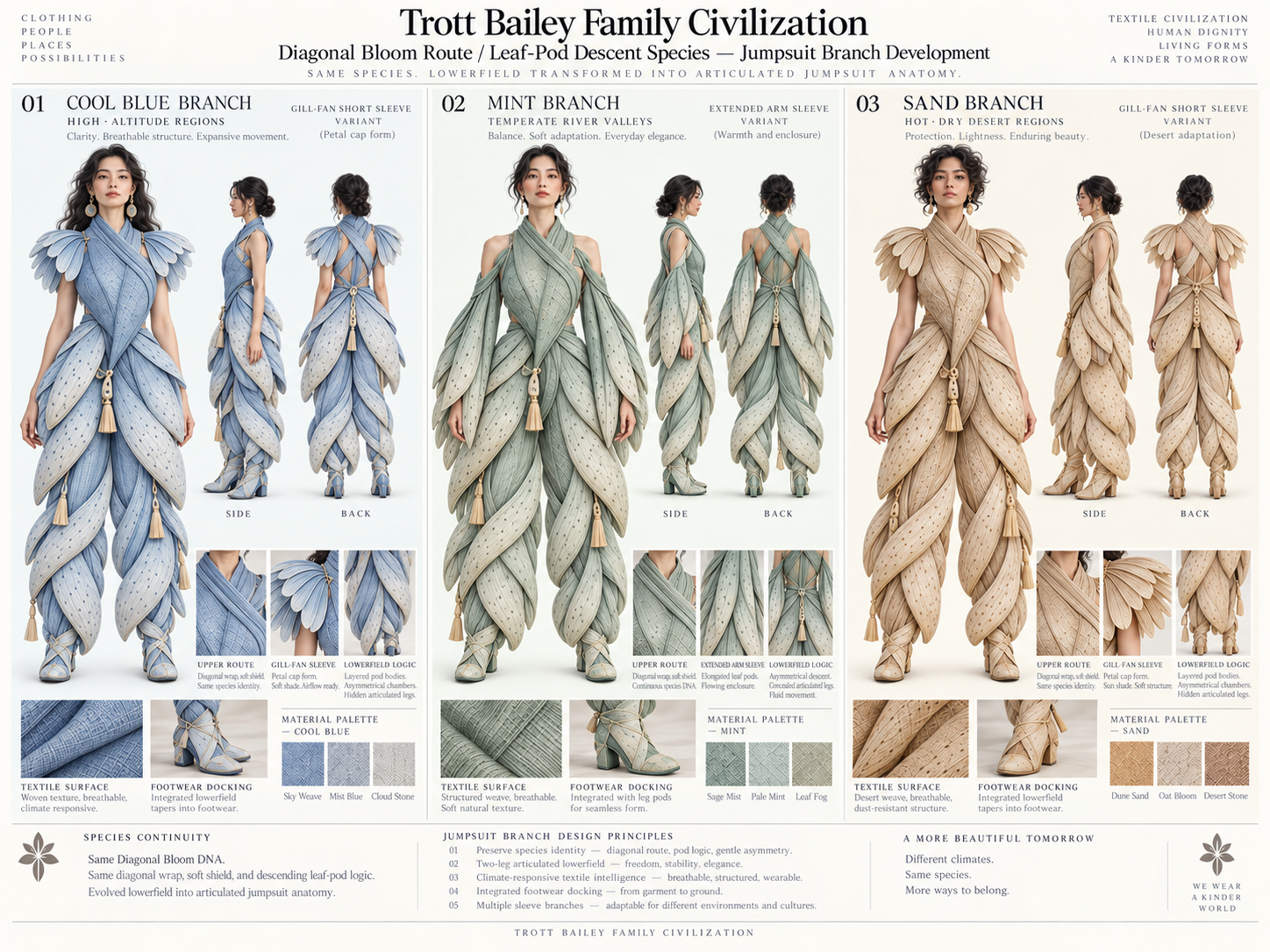
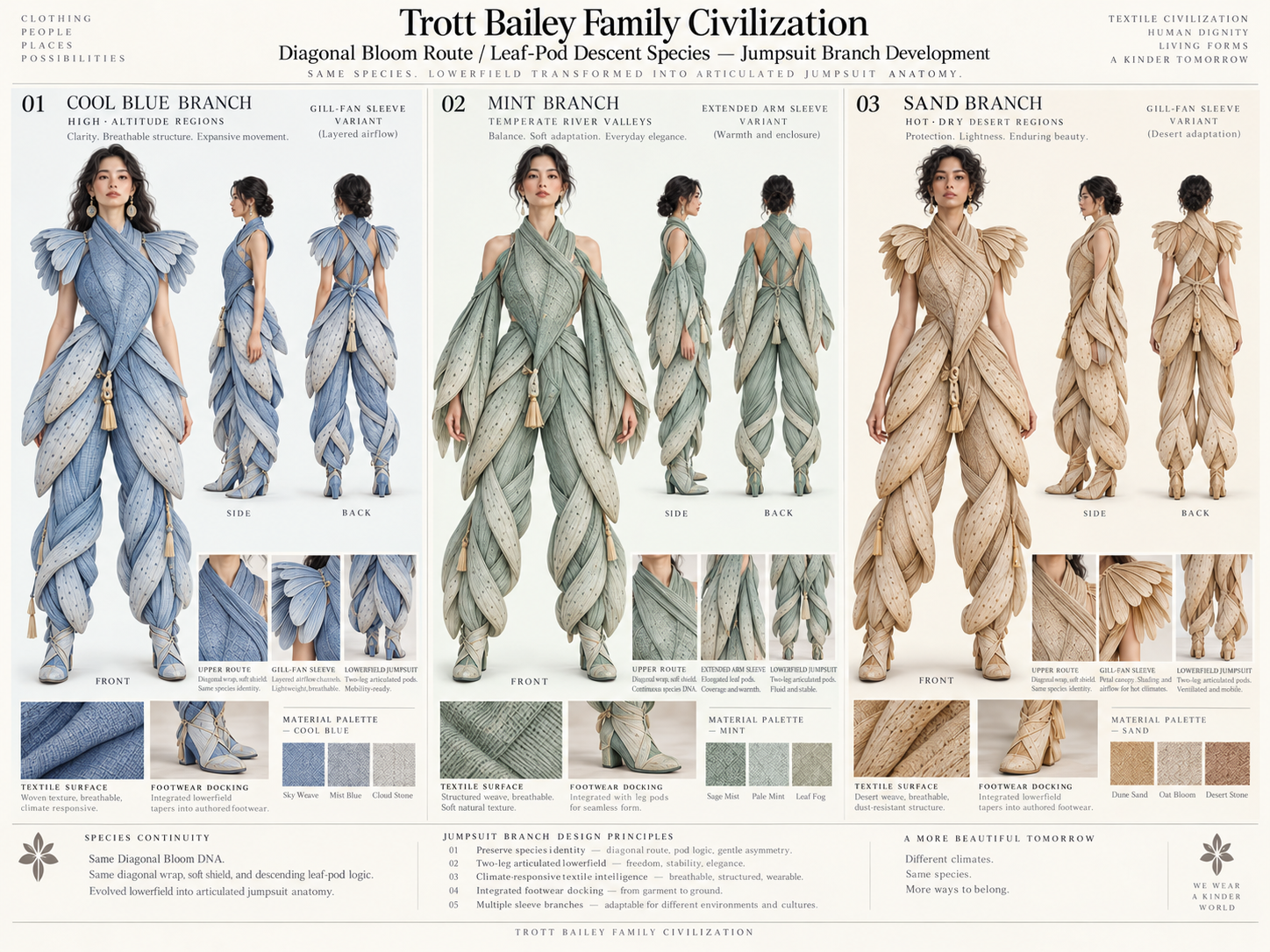
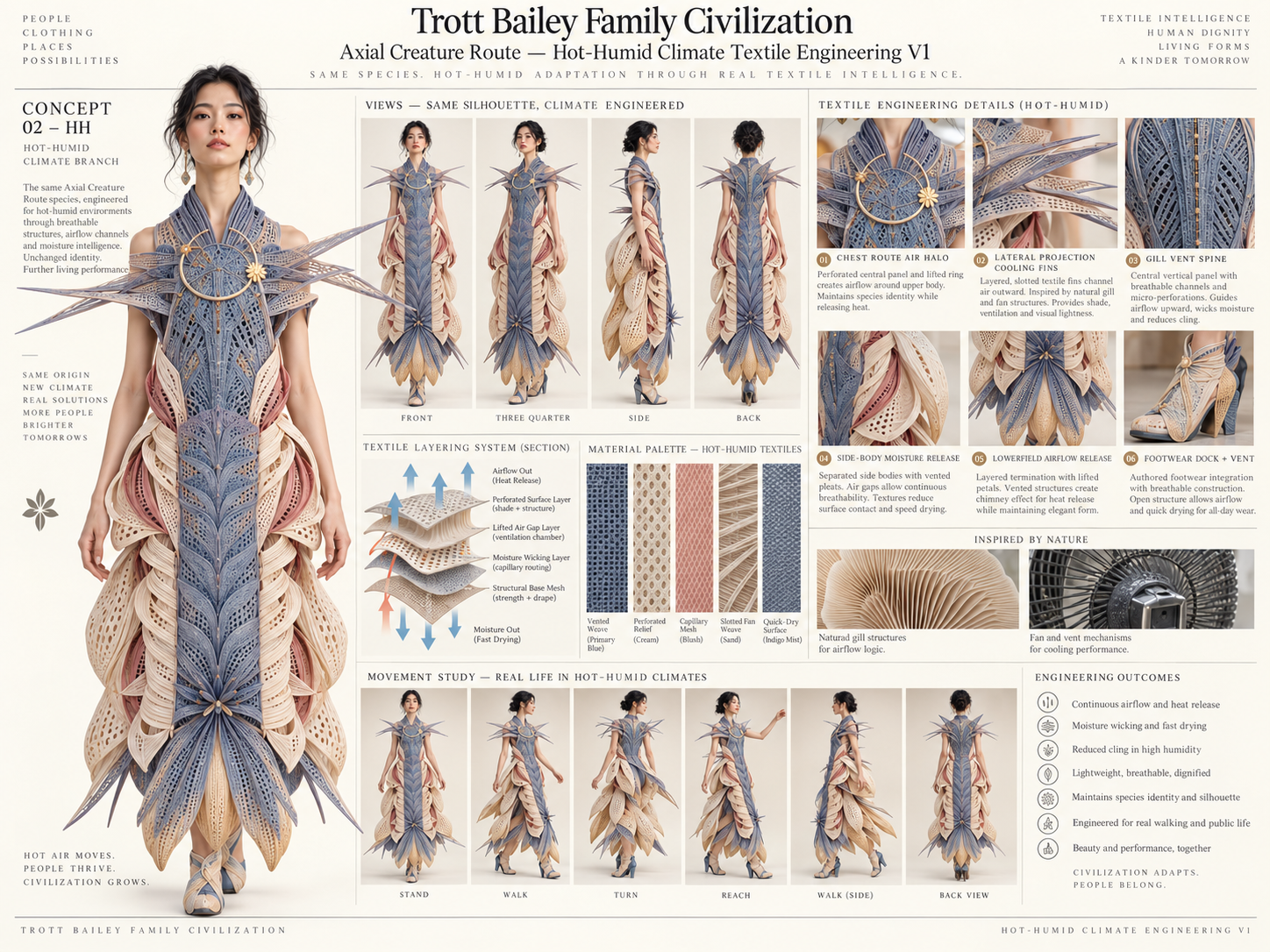
Trott Bailey Family Civilization is not built because families are weak.
It is built because families are important enough that they should not be crushed.
Freda and Henry did not fail because love was absent.
They did not fail because they had children.
They did not fail because they were not educated enough.
They did not fail because they were not trying.
They were living inside a civilization that kept pushing mountains onto the household and calling that normal.
Trott Bailey Family Civilization begins by refusing that normal.
The household was not failing because families were weak. The household was failing because too many mountains were pushed onto two tired people and then those people were blamed for bending.
When the household is crushed, children feel it. Marriage feels it. Vision feels it. The future feels it.
And when enough families stop believing the future is worth building, the whole world becomes gloomy.
That is why family is not a private hobby.
Family is where vision is born.
And a civilization that wants vision must stop crushing the place vision comes from.