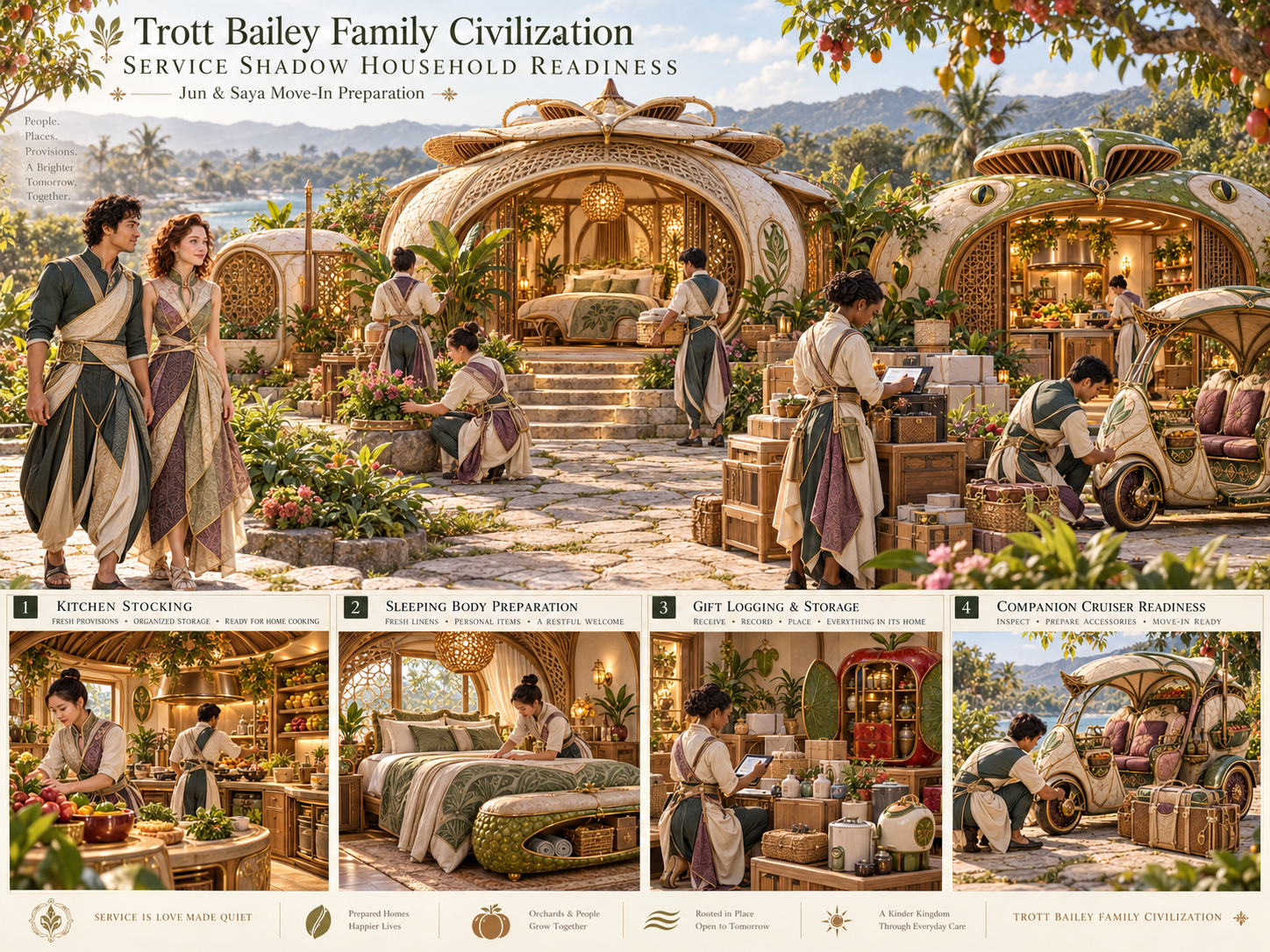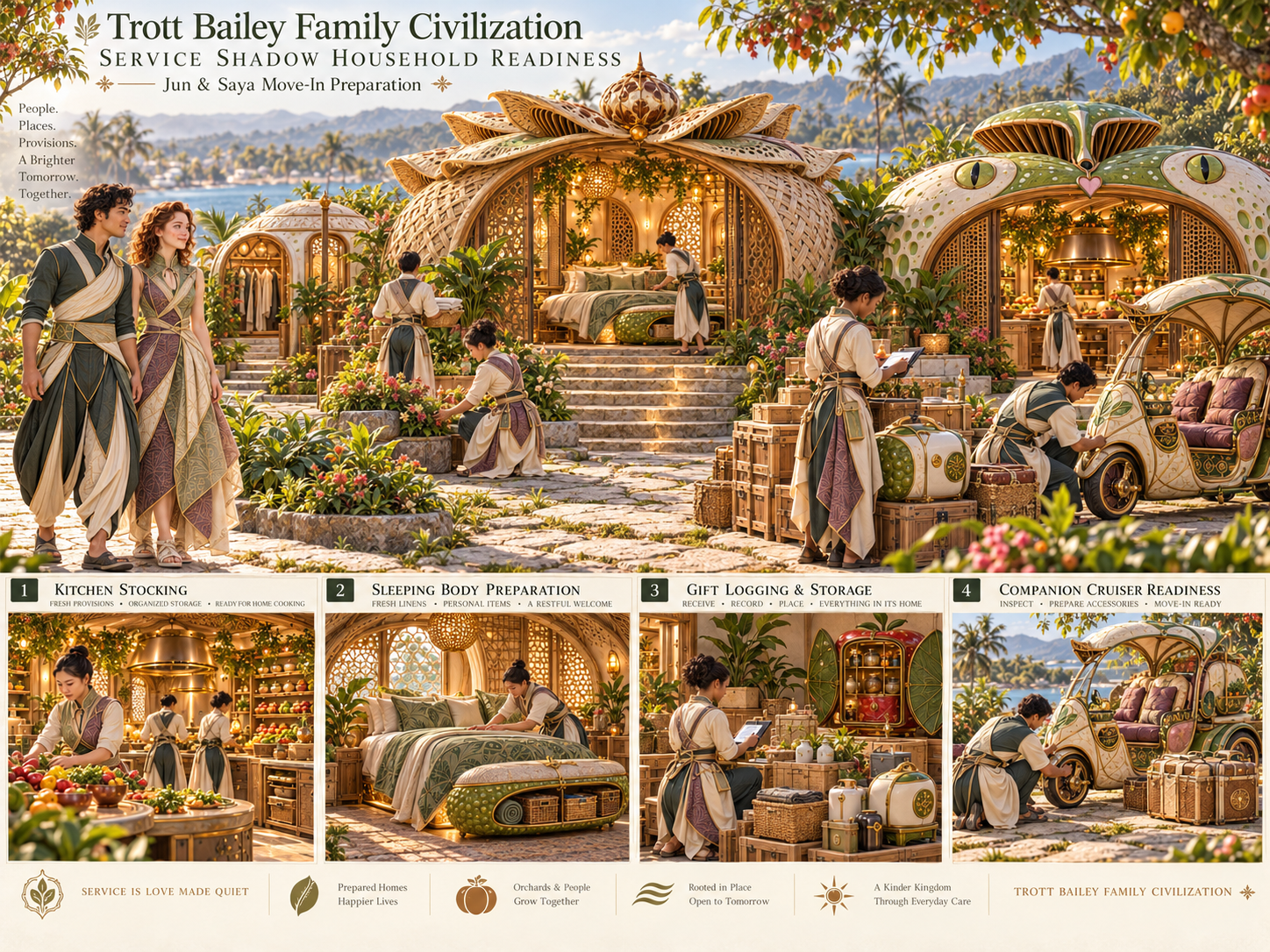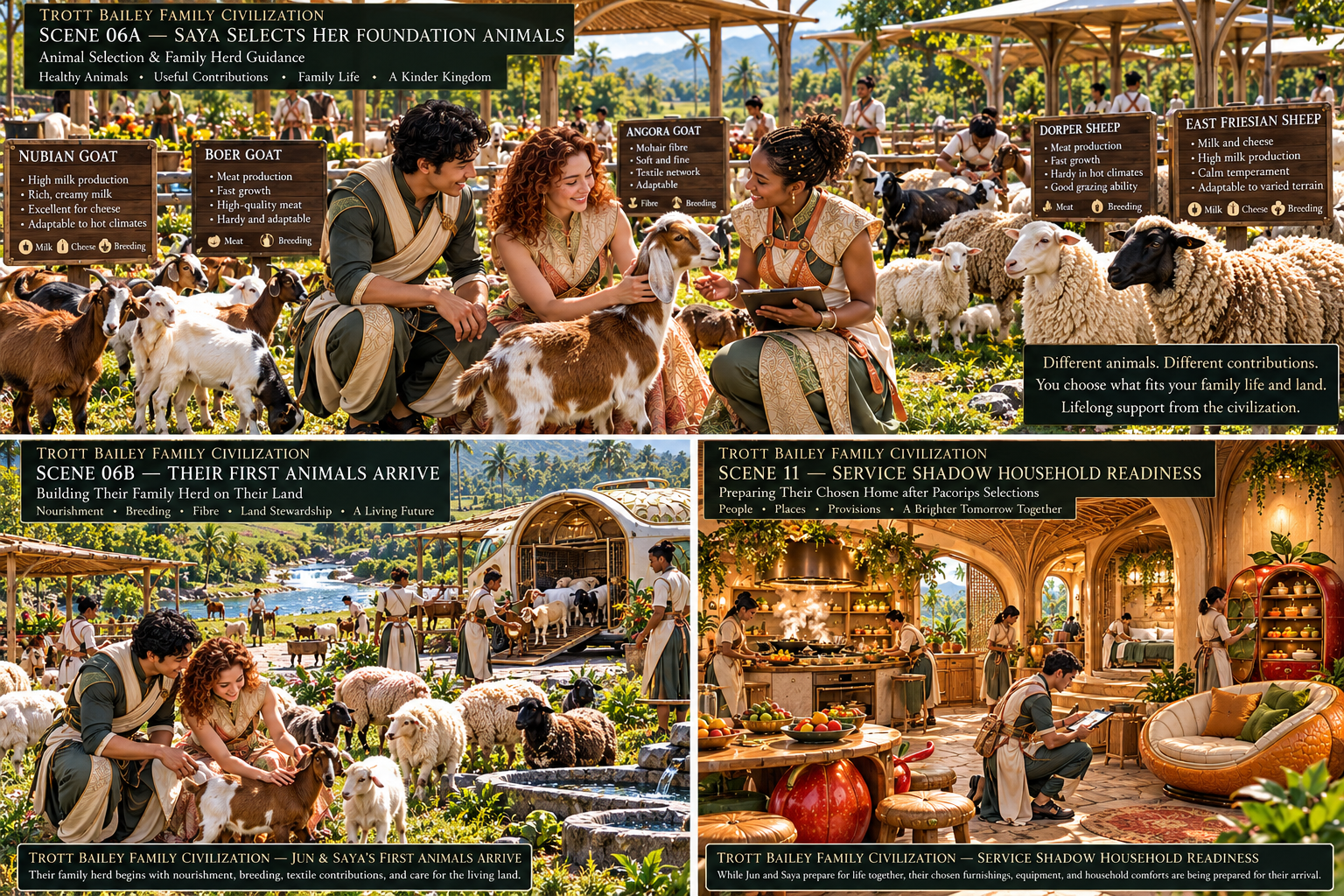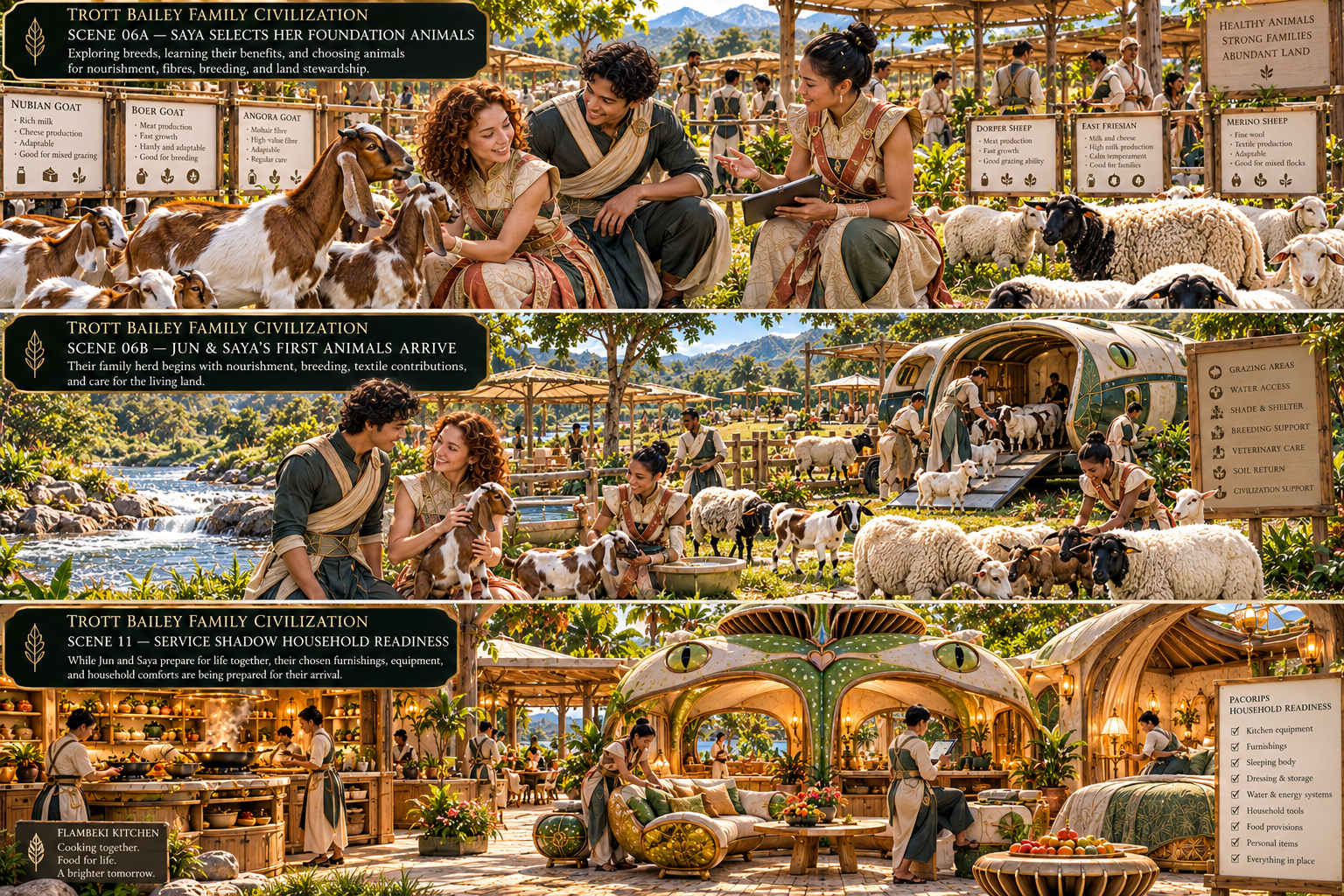

A Civilization Where People Do Not Work Like they do in the Current World
Trott Bailey Family Kingdom
The Family Shubaka Contribution System
How the Trott Bailey Family Kingdom replaces exhausting wage labor with joyful, family-centered contribution, shared abundance, robotics, and dignity.
A Kingdom Where People Do Not Work Like the Current World
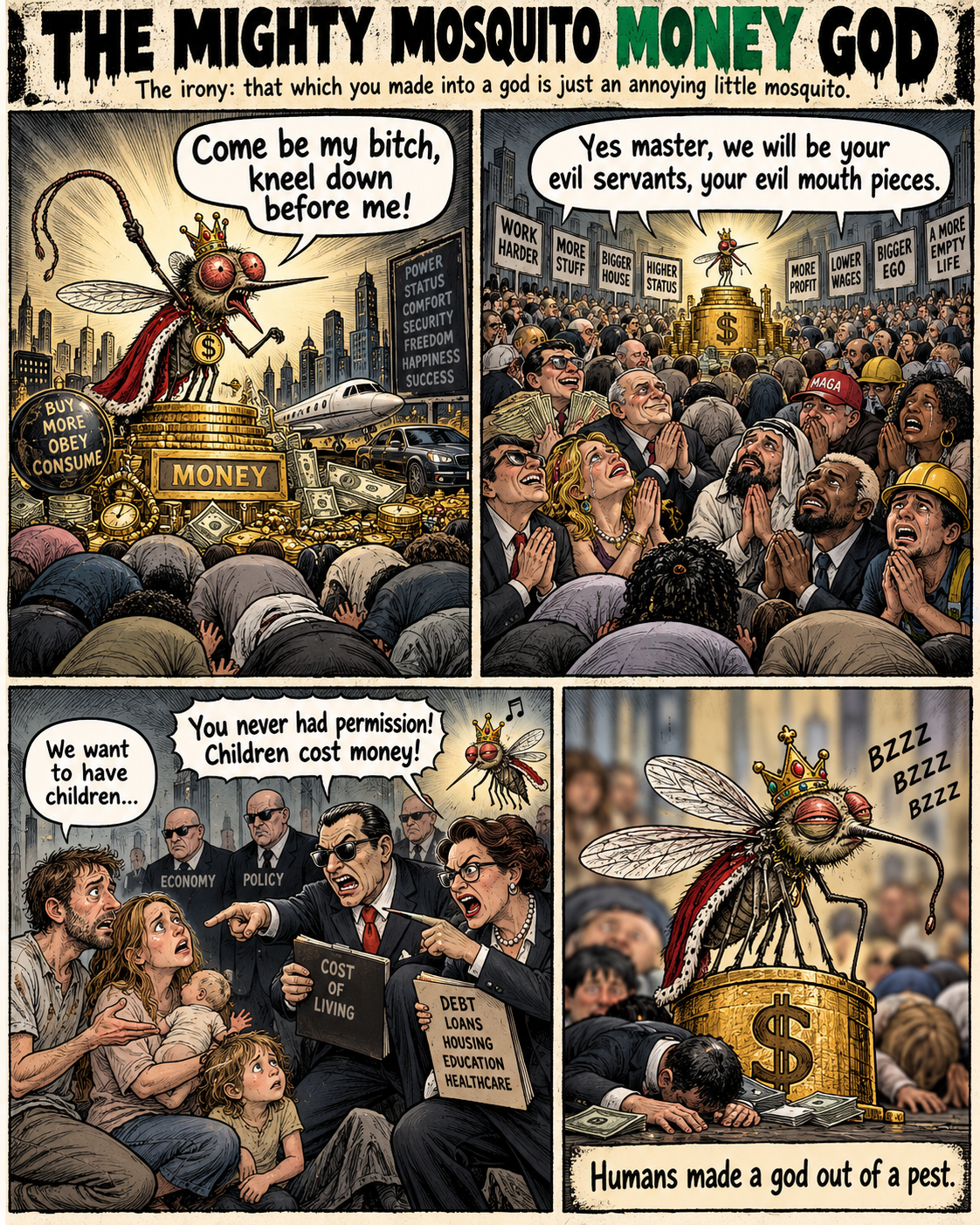
In the Trott Bailey Family Kingdom, people do not work the way people are forced to work in the current capitalist world. Life is not organized around survival wages, long exhausting shifts, fear of losing income, or being trapped in labor that drains the family. The kingdom is built on a different understanding of human contribution.
Citizens contribute to the civilization because they are part of it, benefit from it, and help keep its abundance alive. This contribution is called Family Shubaka: dignified work, joyful skill expression, family service, and active participation in the life of the kingdom.
The purpose of Shubaka is not to extract labor from people. The purpose is to allow families to take part in the care, beauty, intelligence, and abundance of the civilization without being consumed by work.
The Core Principle
In the Trott Bailey Family Kingdom, people contribute meaningfully without being trapped in exhausting labor.
A citizen may contribute roughly six hours over a week in a role they truly enjoy, are gifted in, or feel called to support. This is not a rigid wage schedule. It is a civilization rhythm: enough contribution to keep shared systems alive, but not so much that family life is sacrificed.
The same people who help care for Baby World, orchards, gardens, water systems, food pavilions, music spaces, or family support centers also enjoy those places on their own days off. The kingdom is not divided into a class of exhausted workers and a class of consumers. The people who contribute are also the people who rest, celebrate, eat, learn, raise children, enjoy beauty, and receive care from the same civilization.
Family-Oriented Contribution
Shubaka is family-oriented by design. Husband-and-wife pairs may contribute together as a unit. Whole families may become known for special skills that become their kingdom contribution. A family may be recognized for storytelling, orchard care, water stewardship, music, baby care, food preparation, invention, fashion, craft, animal care, teaching, topiary, architecture, or hospitality.
This means contribution is not only individual. It can become part of a family’s identity, reputation, joy, and inheritance.
A family may become known as:
- The Nest-Making Family — skilled in maintaining soft woven baby nests and rest pods.
- The Fruit-Tasting Family — known for guiding children through edible learning gardens.
- The Water-Garden Family — trusted in shallow water play, cooling gardens, and toddler splash safety.
- The Lullaby Family — known for music, calming rituals, and baby rest circles.
- The Orchard Guild Family — gifted in companion planting, harvest teaching, and food abundance.
- The Welcome Pair — a husband-and-wife team skilled in receiving new families with warmth and order.
In this model, family strength is not separated from public life. Family becomes one of the ways civilization is served.
Why Automation Belongs in the Kingdom
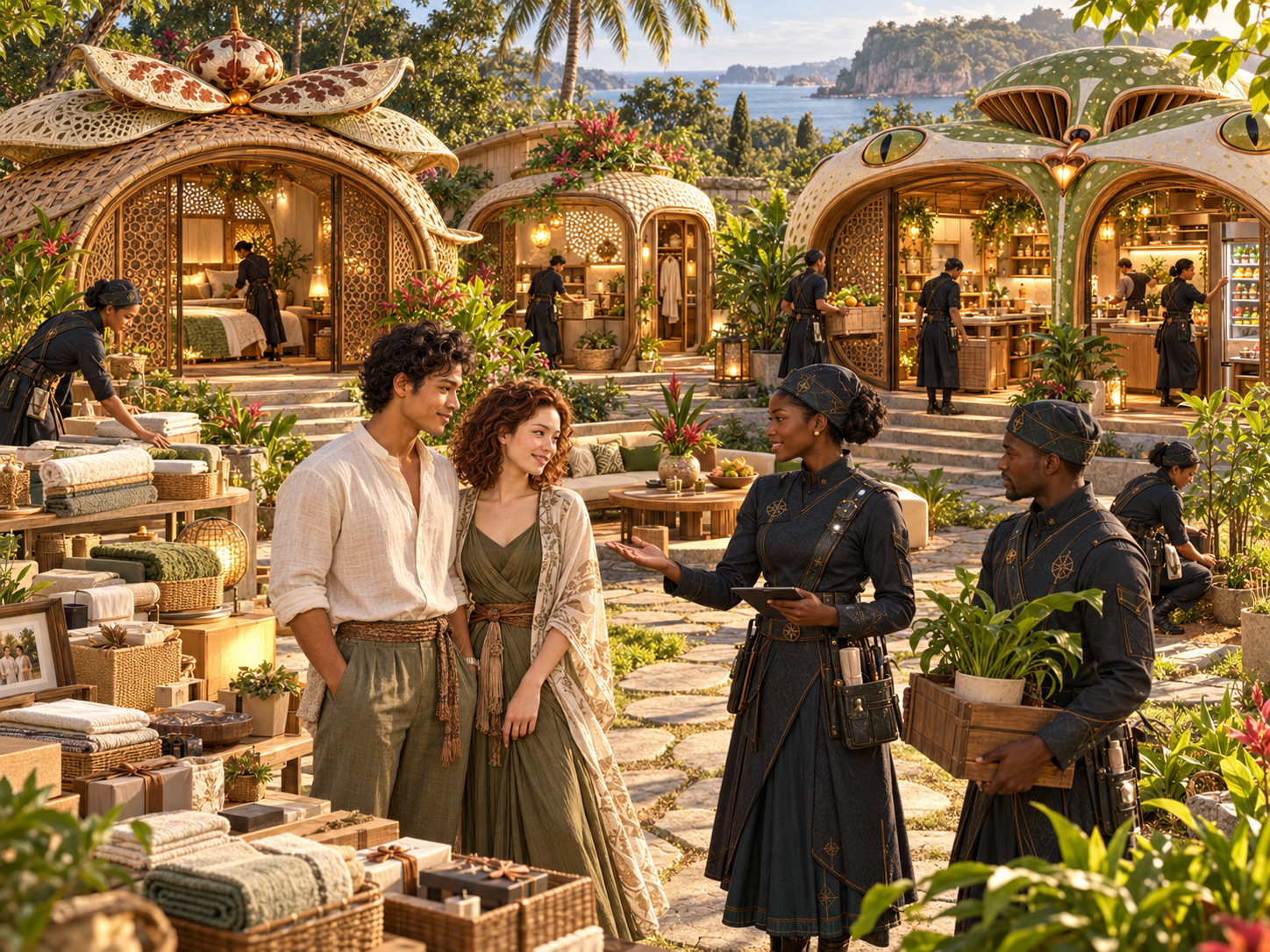
The Trott Bailey Family Kingdom uses automated helpers, robotics, and integrated technology systems because the kingdom refuses to waste human life on repetitive, exhausting, low-meaning labor.
Robots and automated systems are not used to replace human warmth. They are used to remove burden. They carry supplies, monitor safety, clean and reset spaces, move towels, check water levels, guide families, transport materials, and support the human contributors who bring care, wisdom, creativity, and emotional intelligence.
A robot can deliver towels. A robot can monitor whether a water surface is slippery. A robot can move baskets, reset mats, carry food trays, or alert a human helper. But a robot cannot replace a mother’s comfort, a father’s calm presence, a storyteller’s voice, a musician’s spirit, or the trust that forms between families.
Humans provide warmth, wisdom, care, creativity, and relationship. Robots and integrated systems carry repetition, monitoring, reset, logistics, and burden.
Mr and Mrs Rasta Robot: Big King’s Family-Care Helpers
In Baby World and other family-care settings, the kingdom can use the Mr and Mrs Rasta robot pair designed by Big King. These robots are not cold machines placed inside a baby environment. They are warm, safe, family-friendly, culturally authored helper-assistants designed to support human caregivers.
Their work may include:
- carrying towels, mats, clean cloths, toys, fruit bowls, and supplies;
- monitoring shallow water areas for depth, temperature, and slippery surfaces;
- guiding families to nursing rooms, rest groves, edible gardens, and stroller routes;
- resetting play zones after use;
- delivering snacks, hydration, and baby-safe food samples;
- supporting stroller logistics and family movement;
- alerting human helpers when a family needs personal care;
- cleaning, drying, and preparing spaces without making people do endless repetitive tasks.
Their presence makes the system more humane, not less. They allow people to contribute in meaningful ways instead of being buried under logistics.
Baby World as an Example
Baby World is a perfect example of why the Family Shubaka Contribution System matters. A place designed for babies, toddlers, parents, caregivers, water play, edible learning, rest groves, nest chambers, and soft gardens requires care. But that care should not create a hidden class of exhausted workers.
In Baby World, human contributors may serve in short, joyful, meaningful roles:
- Parent Welcome Pairs greet families and help them settle.
- Nest Helpers support the Grass-Bore Nest Chamber areas.
- Water Joy Pairs help parents and toddlers in shallow Sky Water Gardens.
- Edible Wonder Families guide babies through safe food discovery.
- Rest Grove Helpers support nursing parents, tired caregivers, and quiet family recovery.
- Baby Music Families bring lullabies, soft rhythm circles, and calming sound.
- Sibling Edge Helpers keep older siblings engaged near the baby zones.
Meanwhile, robots and integrated systems carry the repeated physical burden: towels, cleaning, water checks, supply movement, stroller flow, mat resets, and surface monitoring. The result is a Baby World that is beautiful, safe, intelligent, and humane.
Contribution Without Wage Slavery
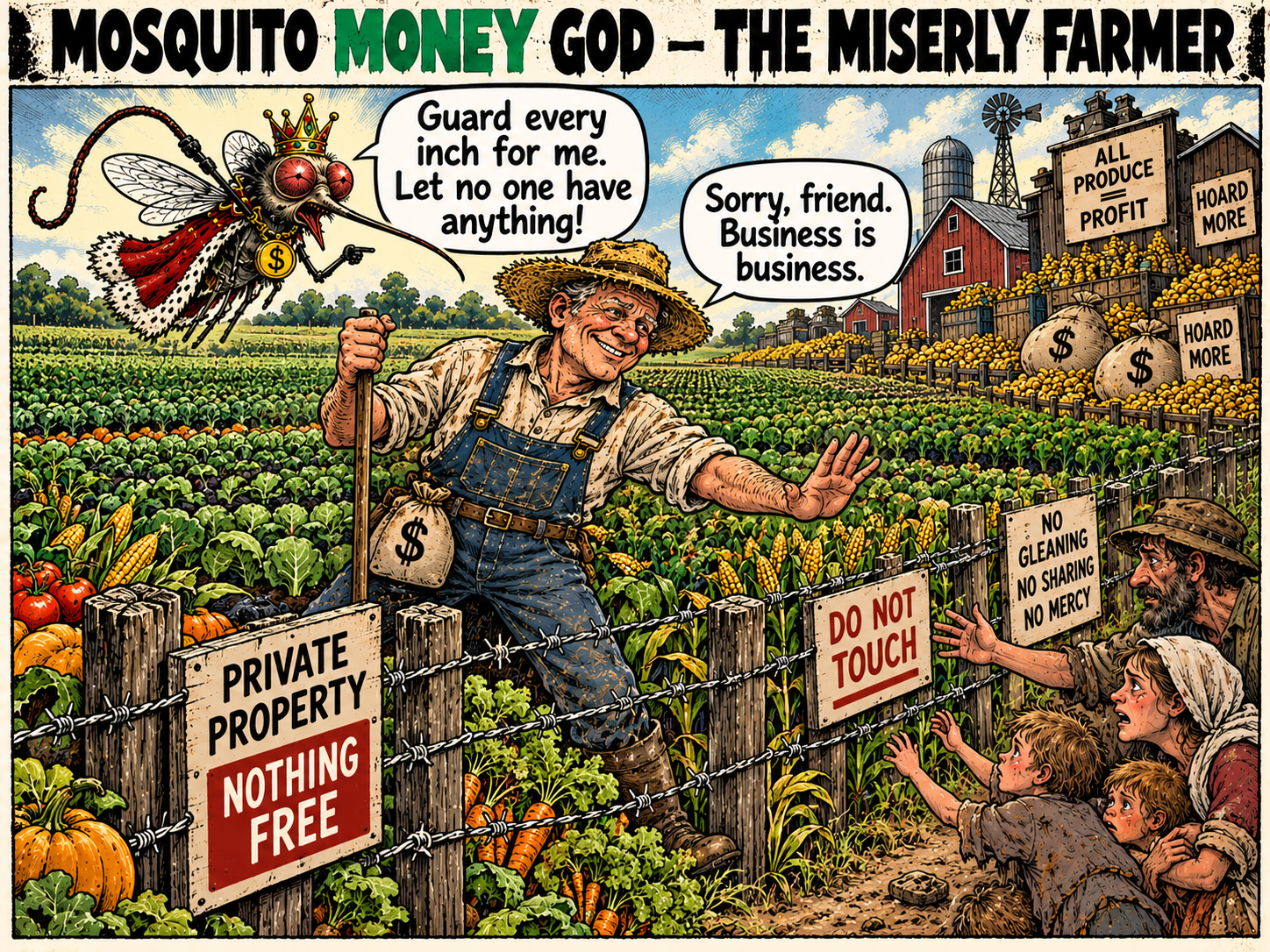
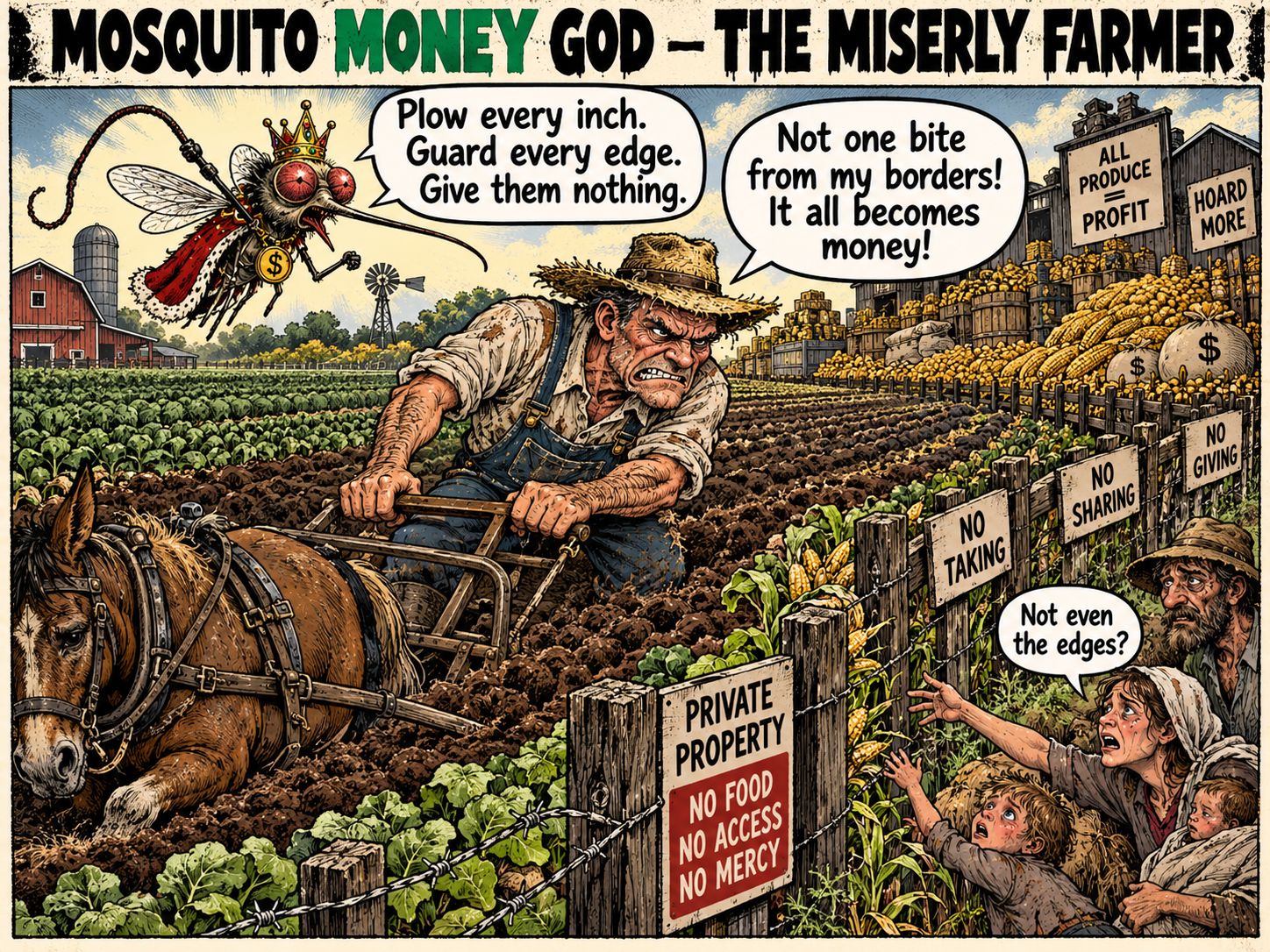
The Family Shubaka Contribution System rejects the idea that human worth is measured by how many hours someone can sell. It also rejects the idea that useful work must be miserable, exhausting, or separated from family life.
In the kingdom, essentials are not held hostage by wages. Food, housing support, transportation, care, learning, public beauty, and family systems are part of the shared abundance model. Because citizens are not trapped in survival labor, they are free to contribute from strength, joy, skill, and belonging.
This does not mean nobody does anything. It means contribution is reorganized around dignity. It is shared, supported, automated where appropriate, family-centered, and limited enough that life remains full.
How Families Become Known in the Kingdom
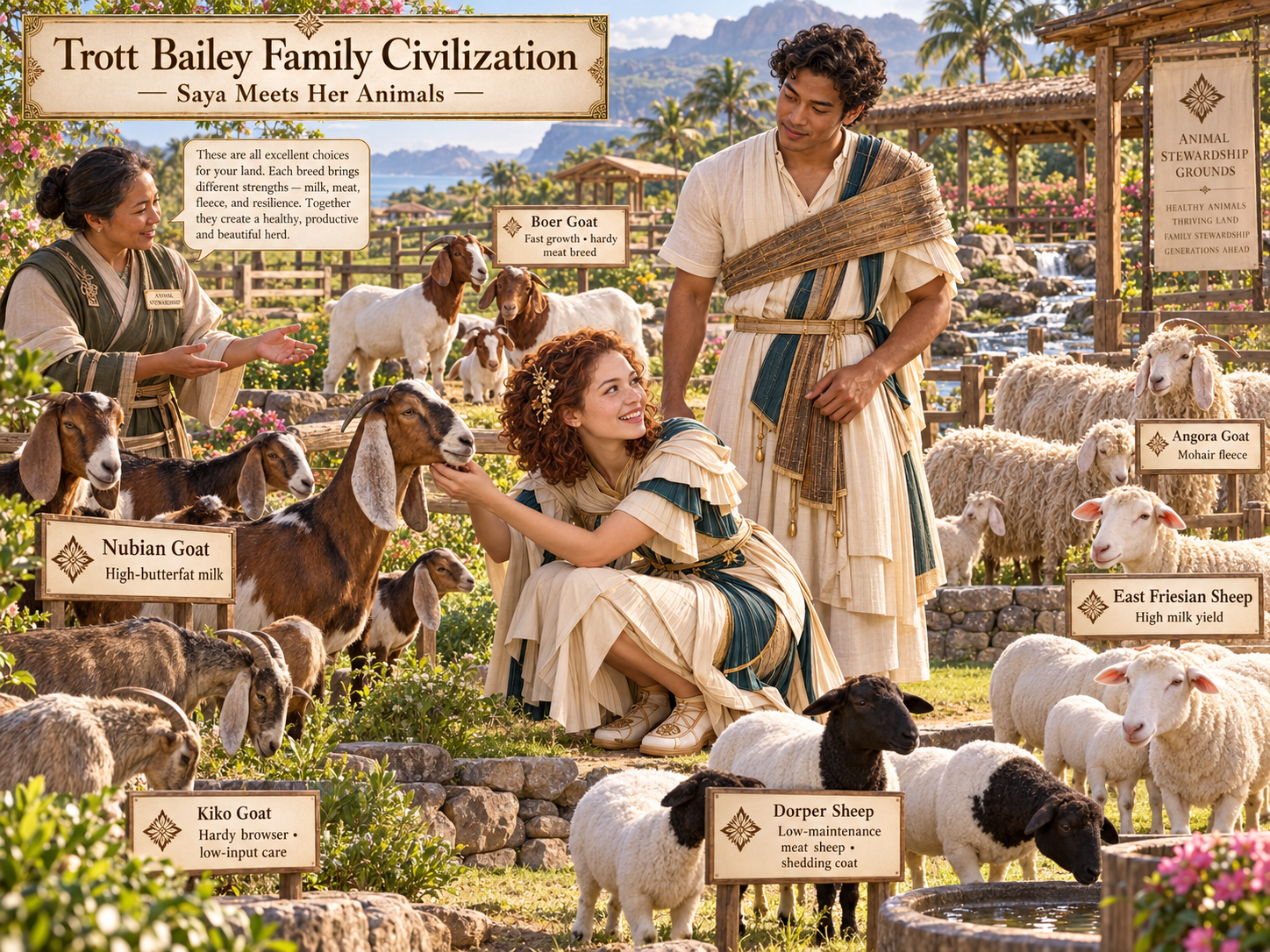
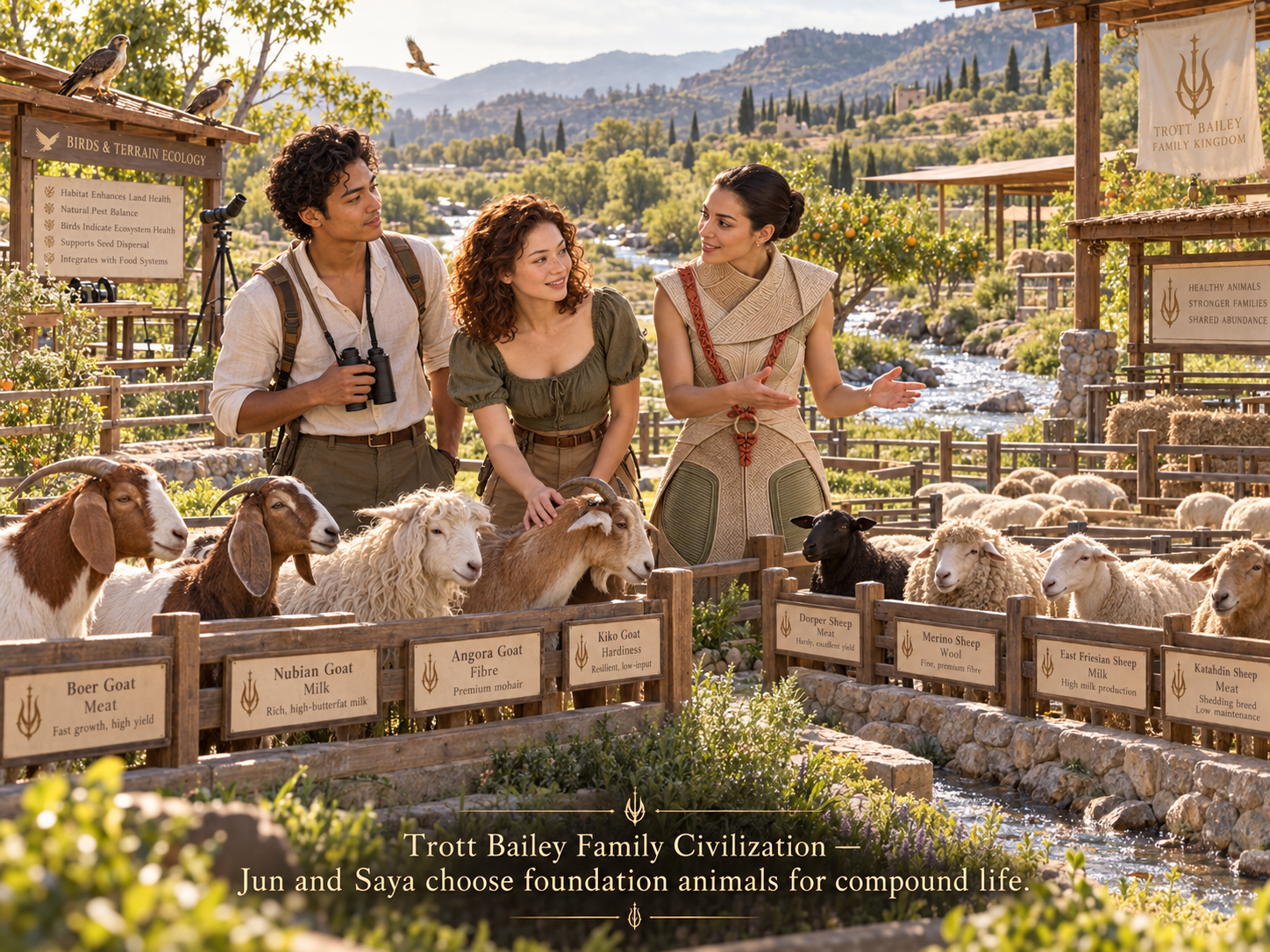
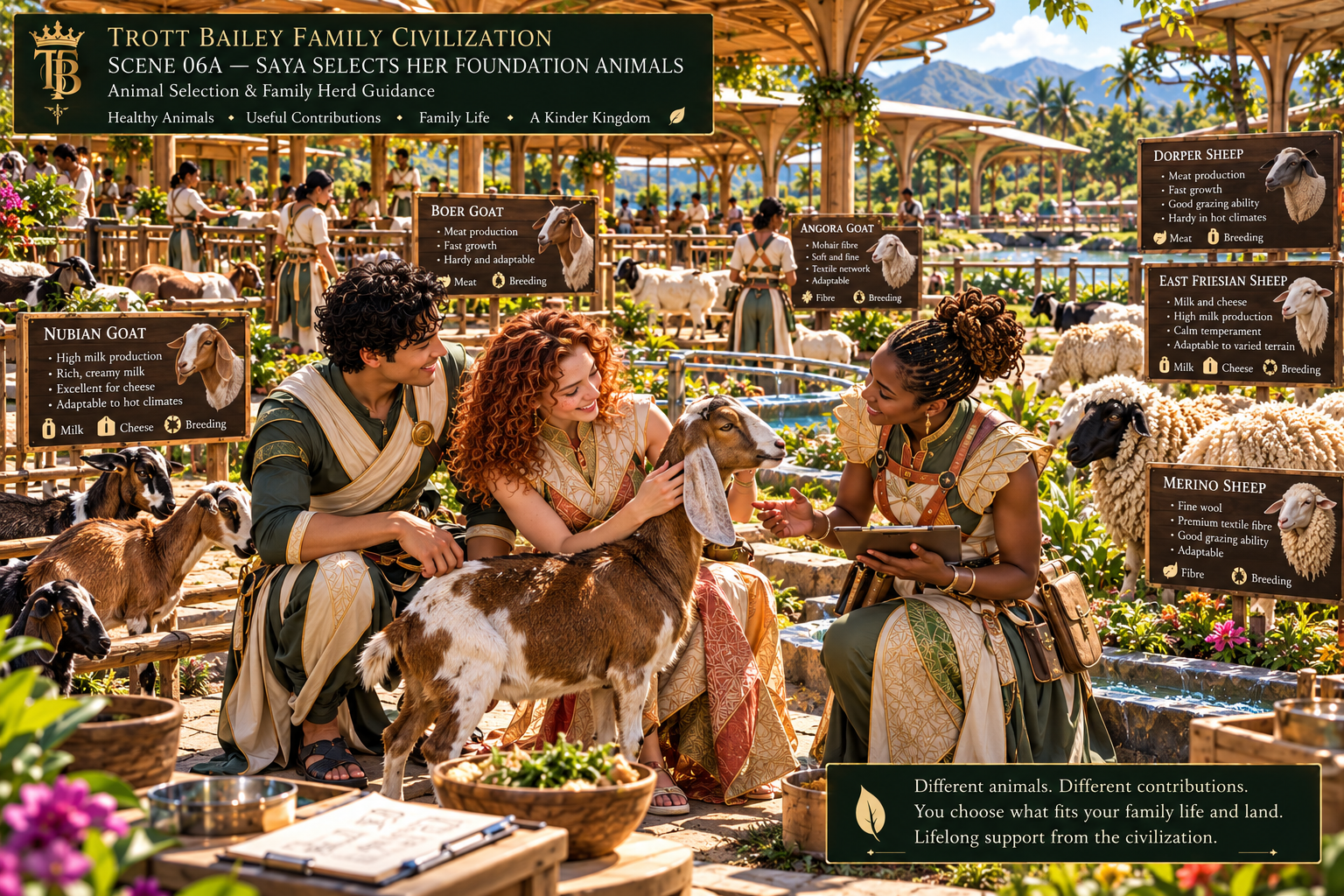
Over time, families may develop recognizable contribution identities. One family may be known for garden design. Another for food preservation. Another for music. Another for caring for babies. Another for invention. Another for animal stewardship. Another for building beautiful resting spaces. Another for teaching children to understand orchards, seeds, water, soil, and food.
These identities are not job titles in the modern sense. They are family gifts made visible in the kingdom. They allow children to grow up seeing their family’s contribution as honorable, creative, and connected to the good of everyone.
A child may grow up knowing, “Our family helps care for the Baby Edible Wonder Rings,” or “Our family is known for Kultan water gardens,” or “Our family builds nest chambers,” or “Our family helps welcome new arrivals in Sherika Regional District.”
This turns contribution into legacy.
The Role of Pacorips
Pacorips can help coordinate the Family Shubaka Contribution System without turning people into numbers. It should not function as a cold registry, credit score, or bureaucratic labor office. It should help families discover where their gifts fit, what support they need, and how their contribution can be matched with real kingdom needs.
Pacorips may help track:
- family skills and interests;
- preferred contribution roles;
- training needs;
- rest cycles and availability;
- district needs;
- family pairings and contribution teams;
- recognition for meaningful service.
The point is not to control people. The point is to coordinate abundance with care.
A Civilization That Protects Family Time
The Family Shubaka Contribution System exists because the Trott Bailey Family Kingdom is built around the belief that strong families make strong nations. A civilization cannot claim to honor family while consuming all of a family’s time, energy, and emotional capacity through endless labor.
Therefore, the kingdom protects family time as a civilization resource. Parents need time with children. Husbands and wives need time together. Elders need dignity. Children need present adults. Communities need joy. Public places need care. And people need enough rest to contribute from love rather than exhaustion.
Shubaka is the bridge between personal family life and shared national life.
The Final Vision
The Trott Bailey Family Kingdom does not ask people to spend their lives maintaining systems they never get to enjoy. It builds systems that serve everyone, and then invites everyone to contribute in ways that are limited, meaningful, joyful, and family-centered.
A mother who helps guide Baby World can return with her own children and be restored. A father who contributes to a water garden can later sit beside that same water with his family. A family that helps cultivate orchards also eats from the kingdom’s abundance. A child who sees parents contributing learns that civilization is not something distant. It is something families build together.
Family Shubaka is not wage labor. It is joyful civilization contribution supported by shared abundance, family identity, robotics, and dignity.
This is how the kingdom protects human life from exhaustion while still keeping its gardens, food systems, baby worlds, water districts, homes, public spaces, and cultural places alive.
The goal is not a world where nobody contributes. The goal is a world where contribution no longer destroys the family.



 and then