

More Roles in TBF Civilization: Nucleus Formation Stewards
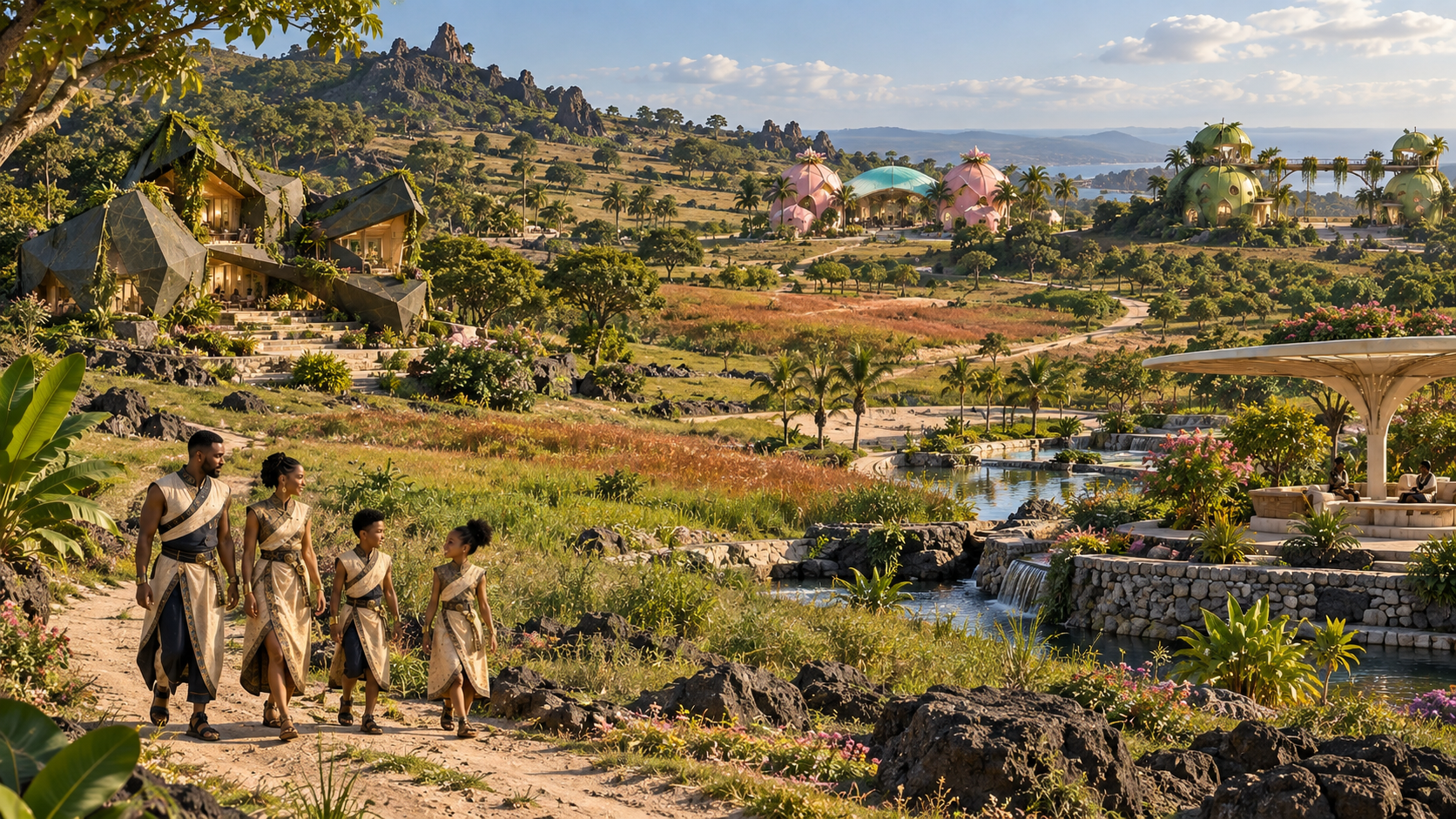
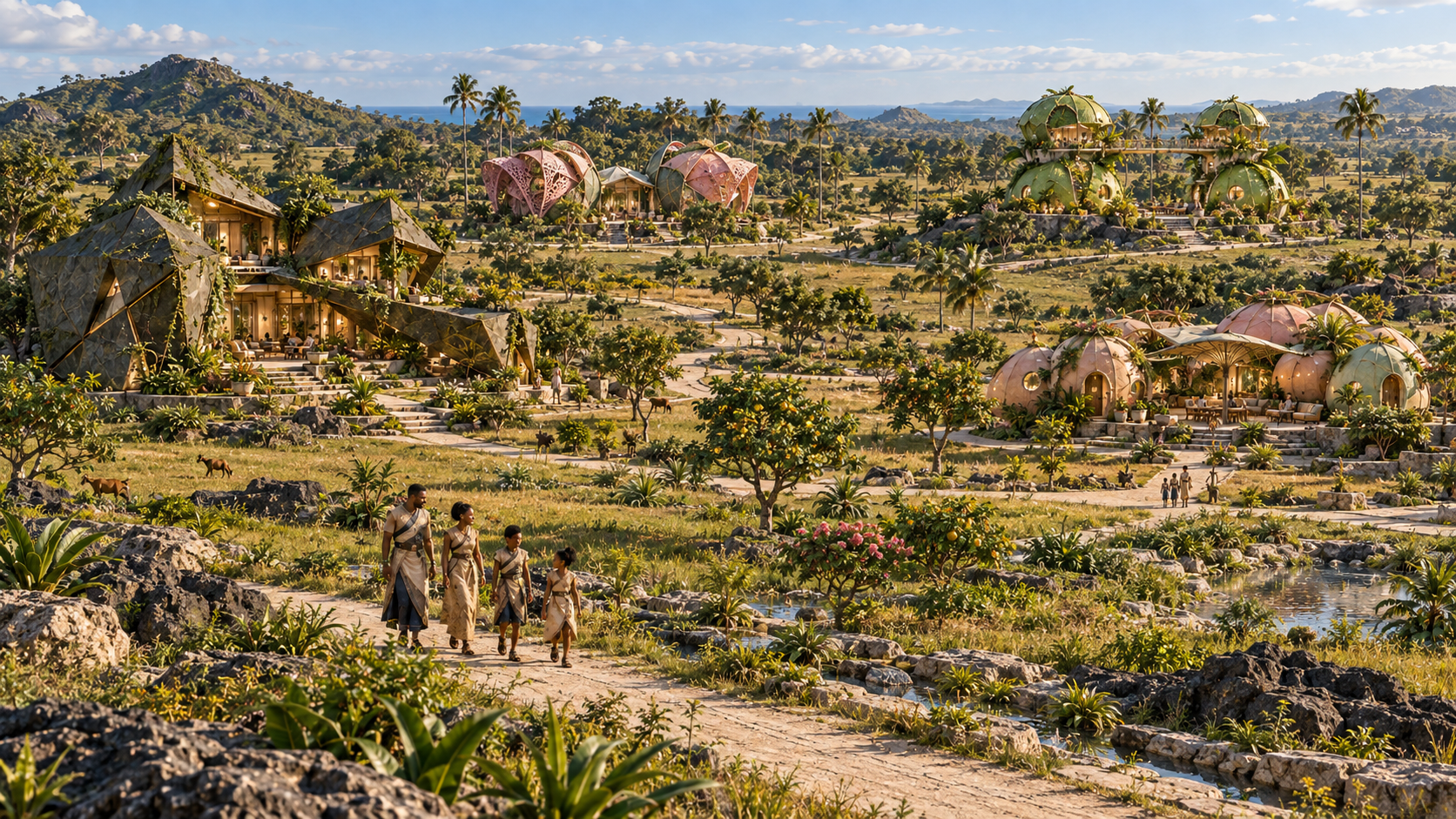
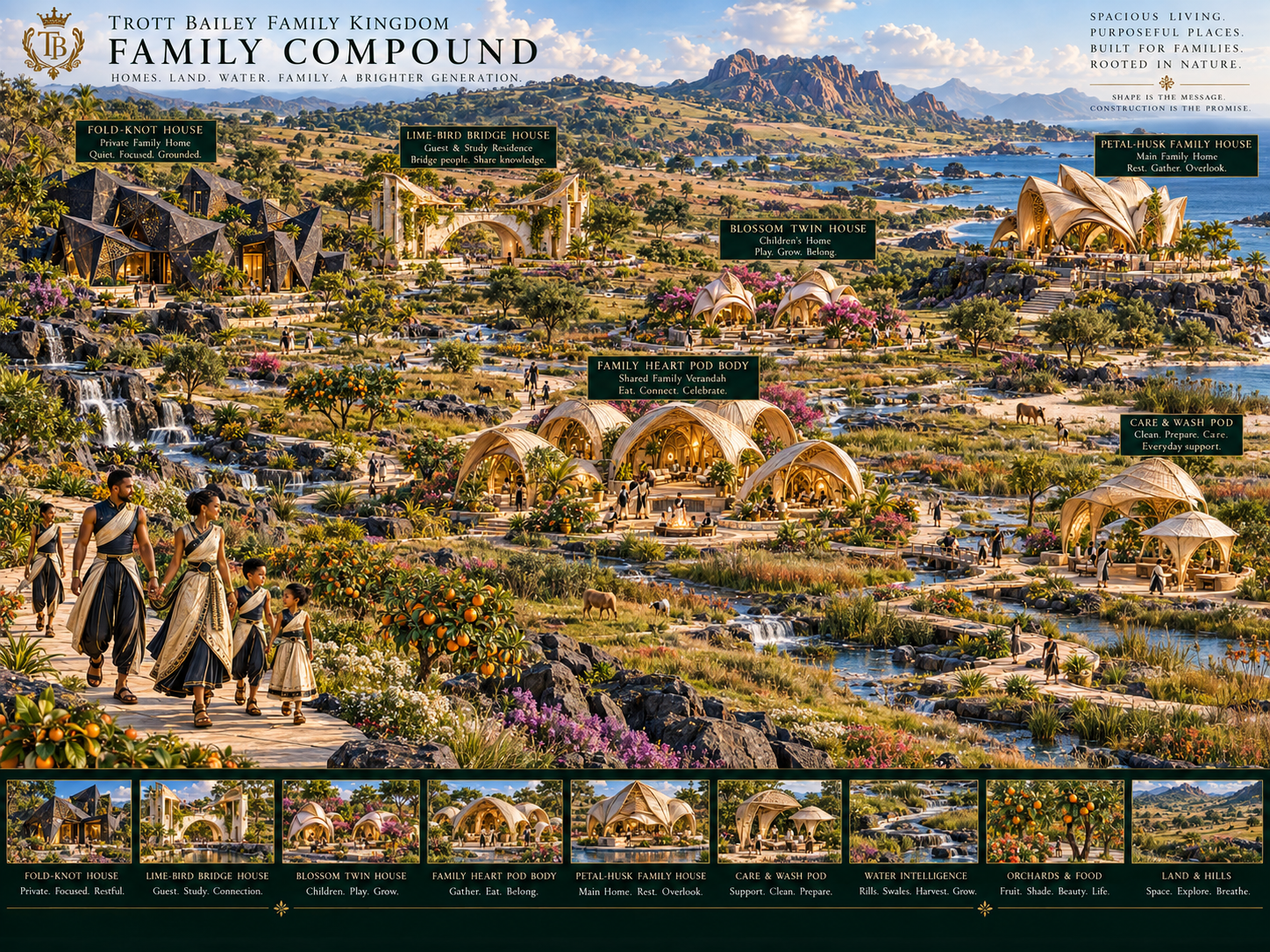
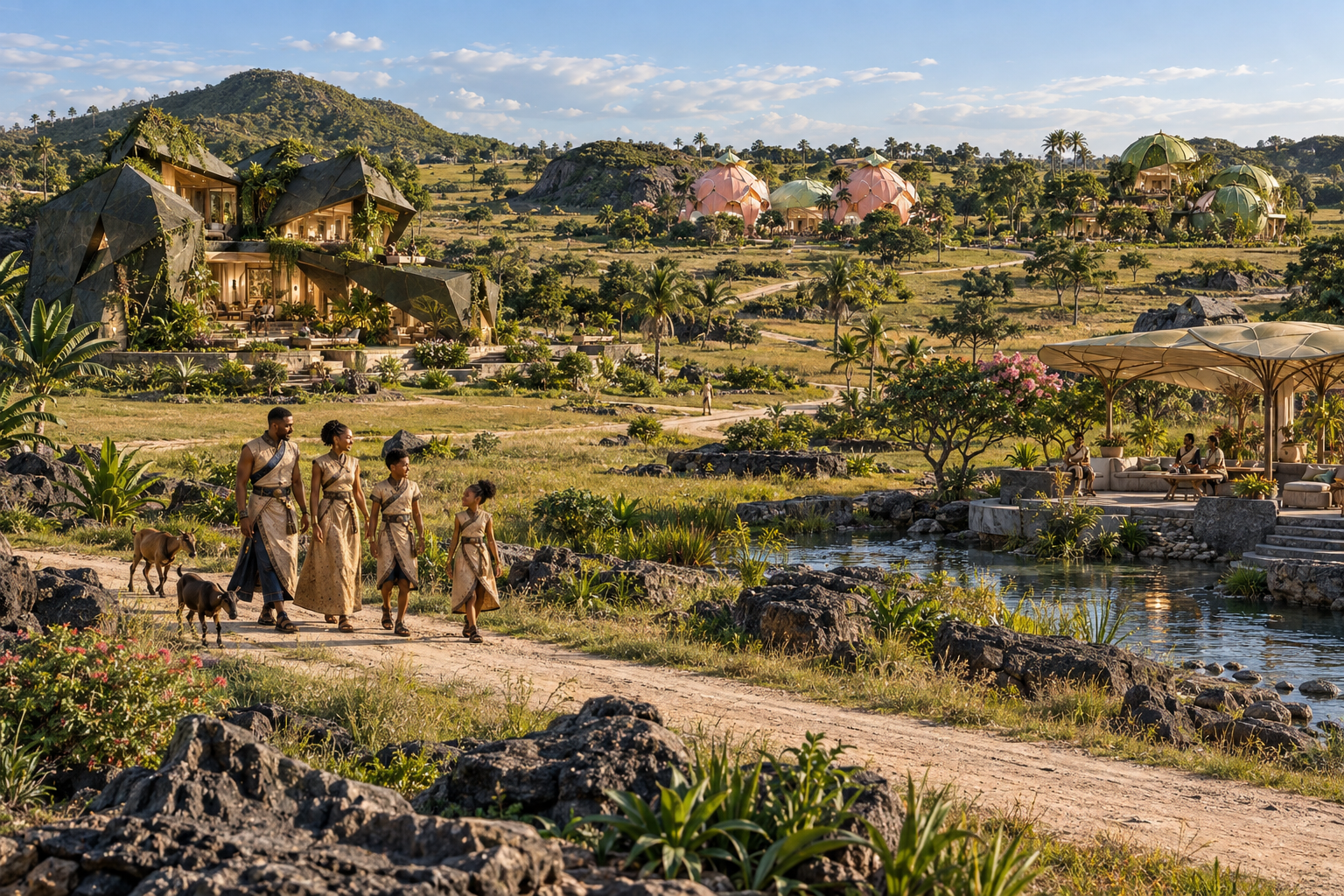
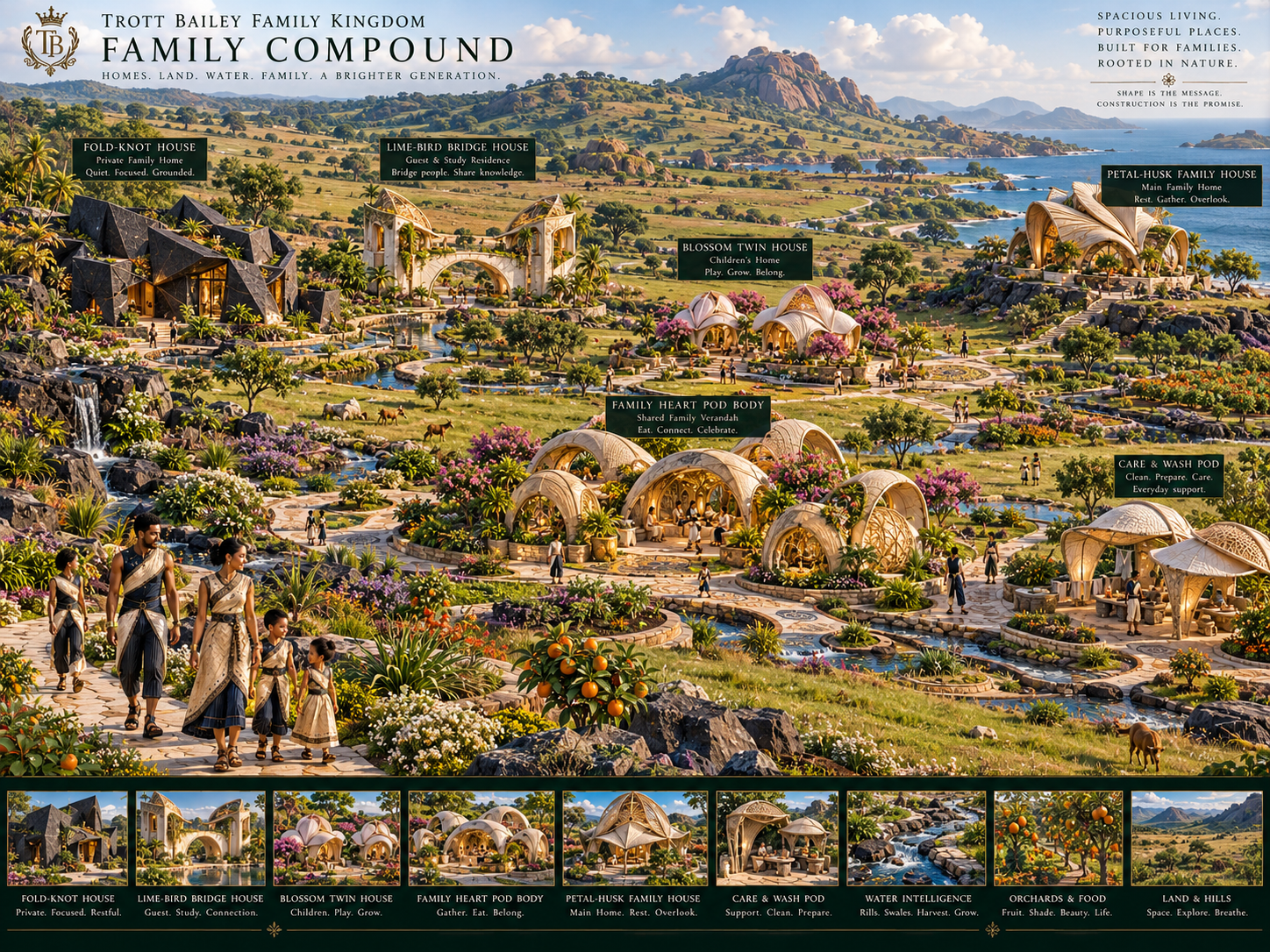
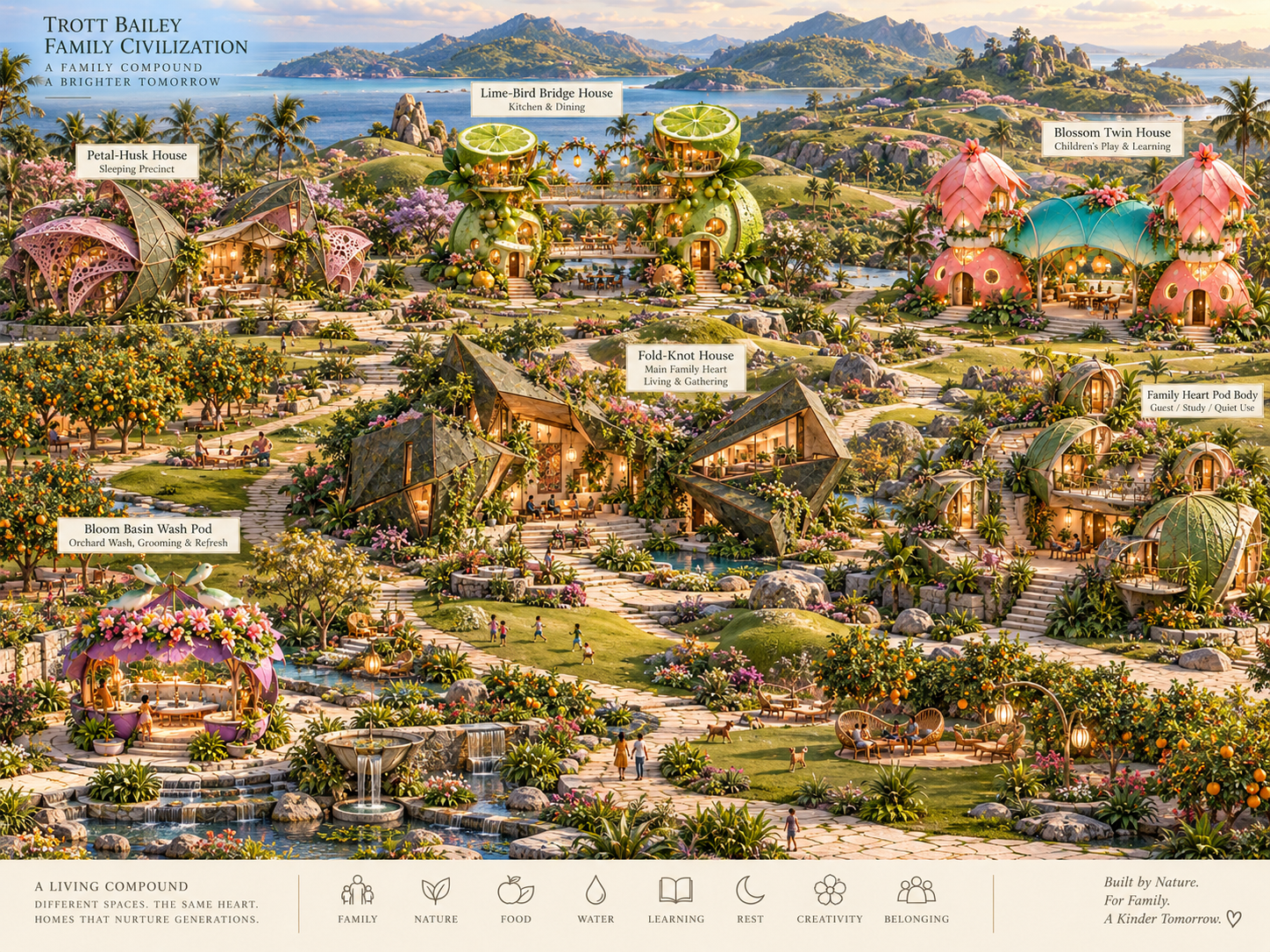
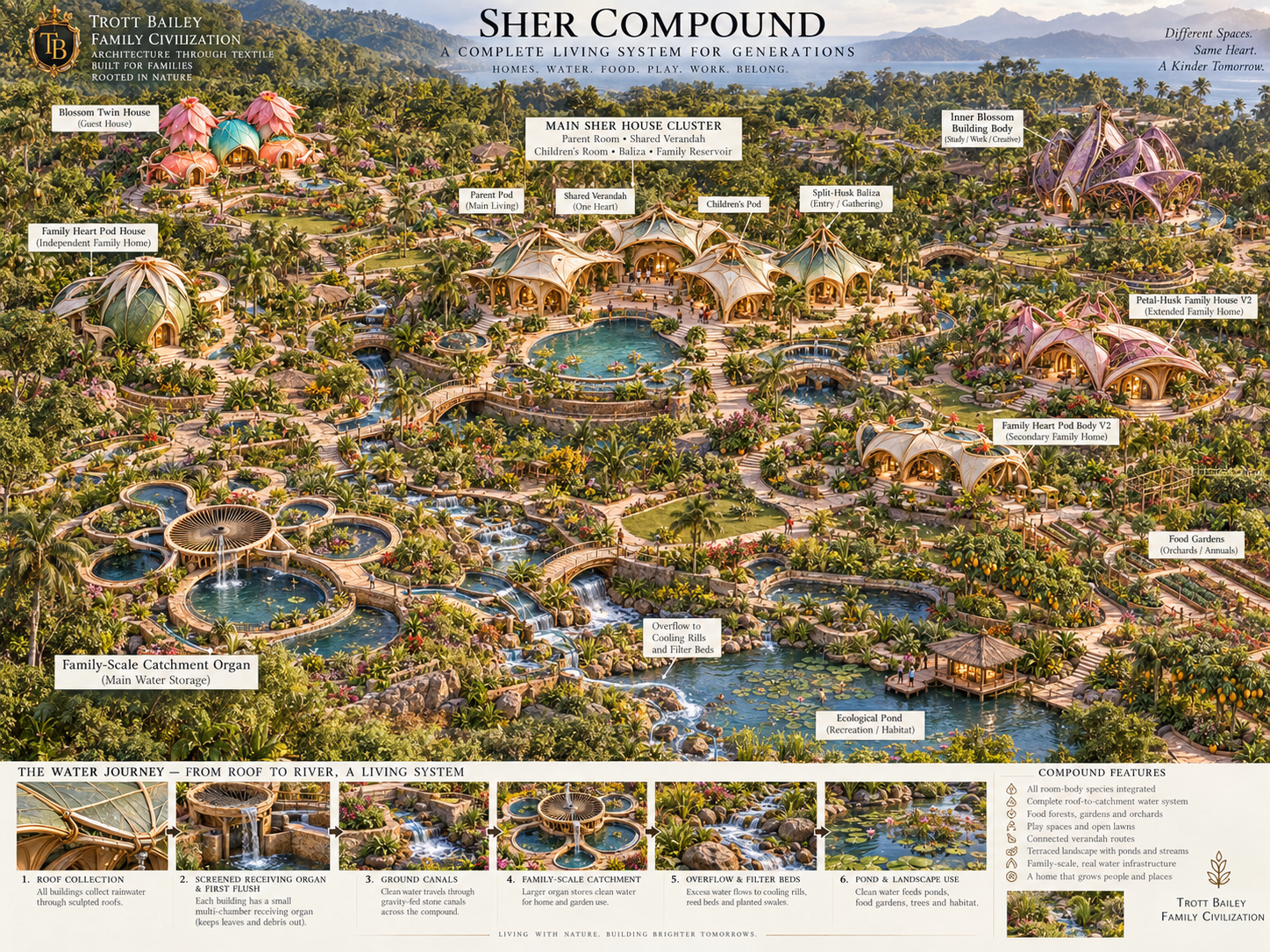
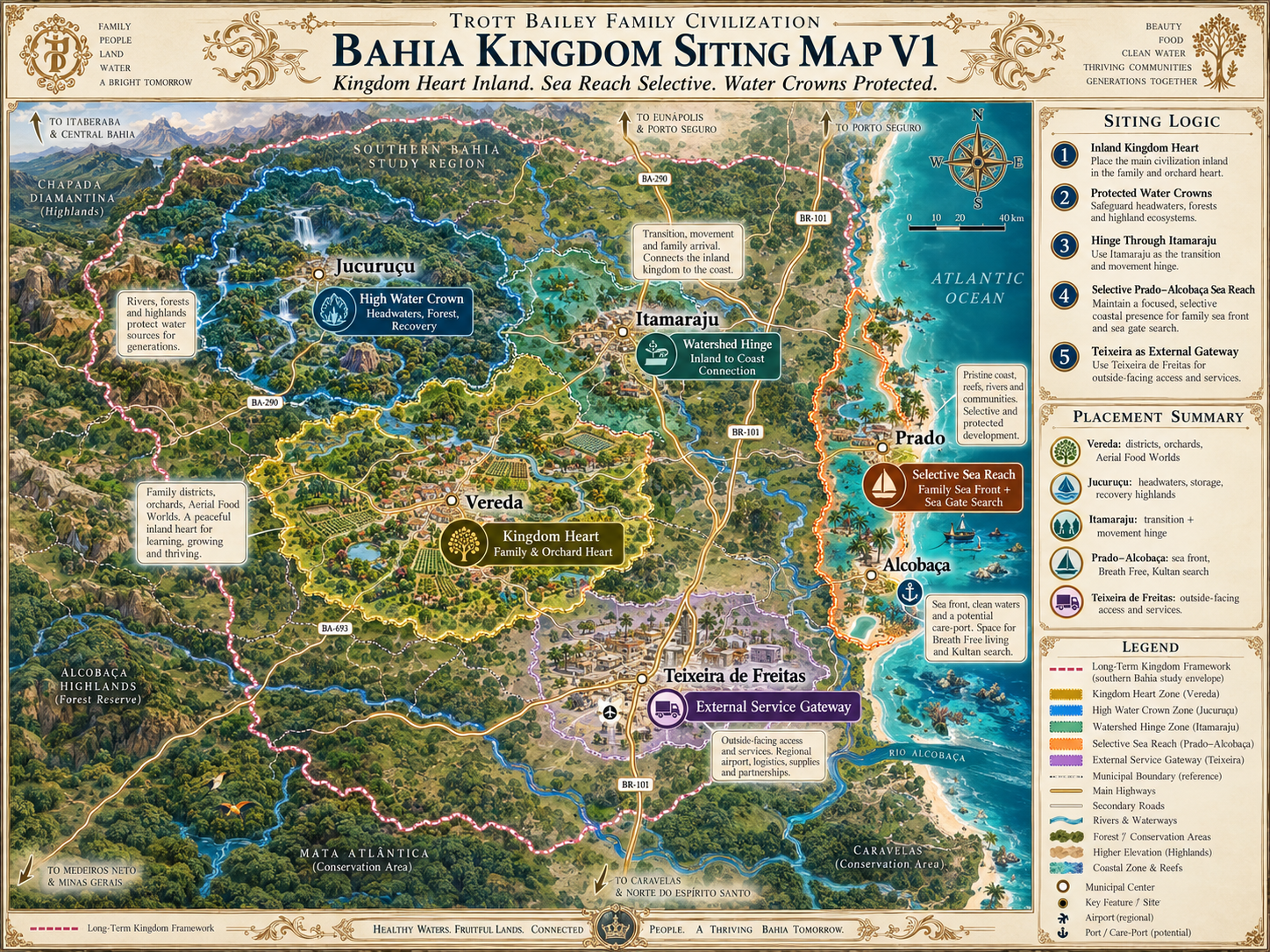
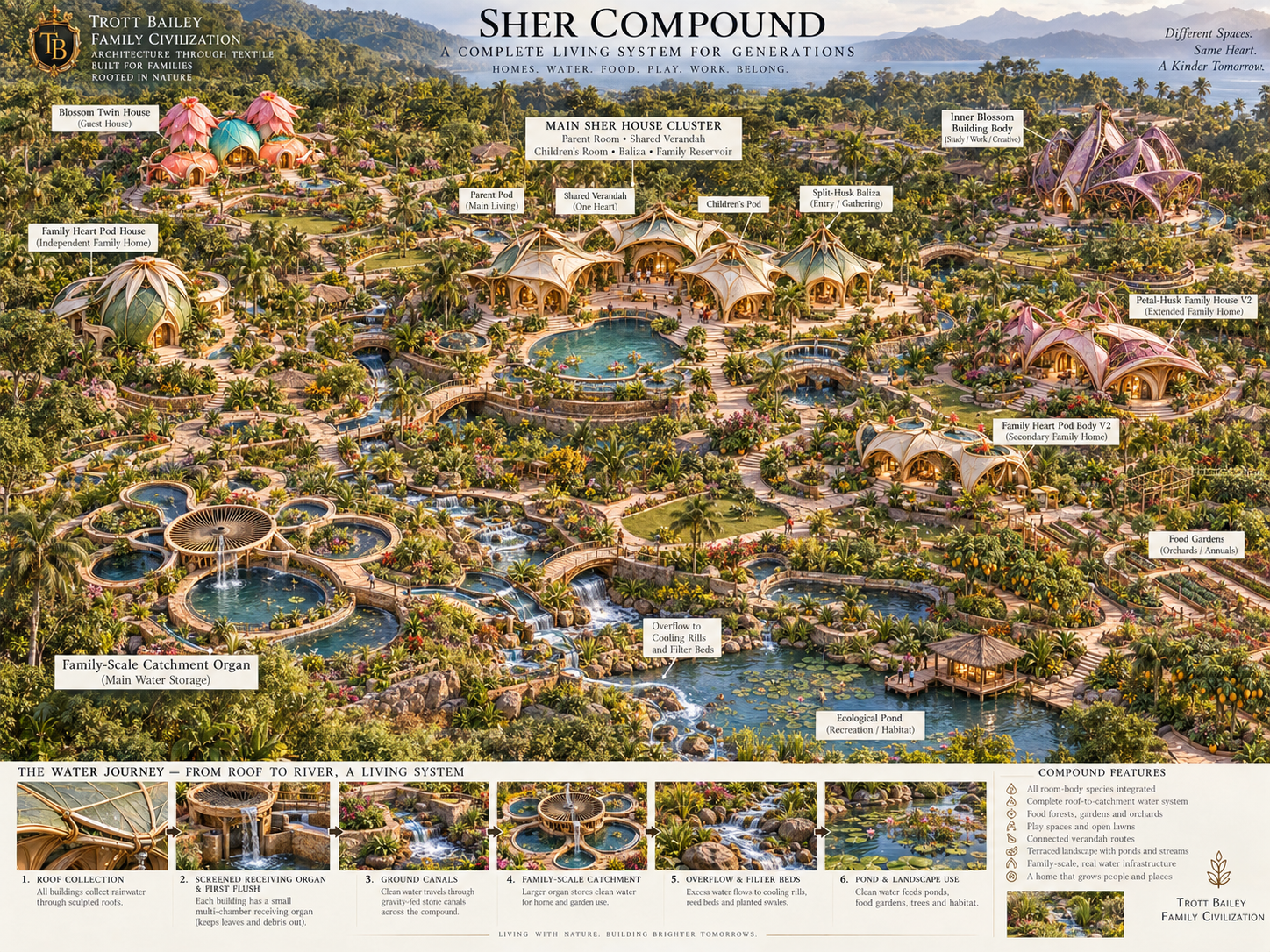
Trott Bailey Family Civilization does not begin as a vague crowd of people waiting for the future to arrive. It begins through capable nuclei: small, serious, organized settlement bodies that can receive families, support daily life, keep building, and multiply without collapsing into shortage, disorder, or dependence.
A nucleus is not a camp. It is not only a landholding. It is not only a construction site. It is the first competent body of the Civilization in a place.
The Civilization Build Corps raises homes, water systems, energy systems, food bodies, routes, work courts, care spaces, and public-life structures. Nucleus Formation Stewards make sure those pieces come together into a livable beginning. Their responsibility is not to build every part with their own hands. Their responsibility is to hold the whole first settlement in view and make sure it becomes capable enough to receive families.
A first nucleus must be small enough to organize and serious enough to support real family life. It must have homes, water, energy, sanitation, food, Clean Return, tools, routes, communication, repair capacity, emergency readiness, and enough skilled people to keep the work moving. If those pieces are weak, the first wave of families arrives into strain instead of relief.
Why Nucleus Formation Stewards Exist
The first wave of families cannot be received by hope alone. Families need somewhere to sleep, bathe, eat, wash, rest, move, store belongings, care for babies, and recover. Children need safe ground, shaded routes, learning space, food access, and places to play. Mothers need relief built into the daily structure. Workers need tools, machines, shade, water, energy, food, and rest. Public life needs at least one calm body where people can gather without standing inside unfinished disorder.
A settlement can fail even when many good pieces are present. A house can be built but have weak water. Water can be present but not properly routed. Energy can exist but not support refrigeration, pumping, lighting, tools, or backup. Food can be available but lack storage, cooking space, dish return, shade, and serving routes. Tools can be present but scattered. Machines can be present but unsupported. Families can arrive before the whole system can hold them.
A nucleus is capable when the basic organs work together. Housing, water, energy, food, sanitation, Clean Return, routes, storage, repair, communication, emergency support, and work capacity must not exist as isolated parts. They must connect enough for daily life to move.
Nucleus Formation Stewards keep that connection visible.
What Makes a Nucleus Competent
A nucleus is competent when it can hold daily family life without pretending that future systems are already present.
This does not mean every mature district feature must exist on day one. It means the first families are not entering empty promise. They are entering a beginning that can hold sleep, food, water, bathing, children, safety, work, rest, repair, and continued formation.
The first nucleus must be honest about its own capacity. If it can hold five families, it should not behave as if it can hold fifty. If its water is still fragile, that truth must be known. If its food body is not ready, that must be corrected before the next wave arrives. If tools, machines, routes, or repair systems are weak, those weaknesses must be visible, not hidden by excitement.
The Nucleus Formation Standard
A nucleus must be able to answer basic life questions before it grows.
Where do families sleep tonight? Where does drinking water come from? Where does bathing happen? Where is food prepared? Where is food stored? Where is refrigeration powered? Where do used dishes go? Where does organic matter go? Where do toilets empty or process safely? Where does greywater move? Where do children play safely? Where do mothers rest? Where do workers eat? Where are tools kept? Where are machines maintained? Where is shade? Where are carts moving? Where does emergency access remain open? Where is the next house going? Where is the next water line going? Where does the next wave of families fit without breaking the first wave?
These are not paperwork questions. These are settlement survival questions.
Do not bring more families than the nucleus can hold. Do not delay family relief in the name of perfection. Build enough competence to receive, support, and continue.
This standard keeps the first nucleus honest. It does not allow a settlement to pretend it is ready because one part is impressive. It also does not freeze the settlement waiting for full maturity. A nucleus can begin before everything is complete, but it must begin with the right organs functioning.
1. First-Wave Readiness
First-Wave Readiness Stewards decide what must be working before the first families arrive. Their work is not abstract planning. They inspect the actual condition of the nucleus and ask whether family life can begin without immediate strain.
They check whether homes are livable, whether water is reliable, whether energy is available, whether food can be cooked and stored, whether bathing and toilets are ready, whether babies and children have safe places, whether Clean Return exists, whether routes are usable, whether shade exists, whether emergency access is clear, and whether workers have the tools and support needed to keep building.
Their responsibility is to prevent false readiness. A place may look active, but activity is not readiness. A place may have buildings, but buildings are not enough. A place may have land, but land alone does not hold families.
2. Family Receiving
Housing and Family Receiving Stewards make sure the first homes are not treated as separate structures but as family-receiving bodies. A house must be ready for sleep, bathing, children, food preparation, storage, shade, water access, energy connection, and service support. The first homes do not need every mature feature of a full compound, but they must be placed and organized so family life can actually begin.
These stewards check whether each family has a clear sleeping arrangement, a bathing route, a way to wash, a place for children, a place for baby care, a shaded threshold, a storage plan, and access to food, water, energy, and sanitation. They also make sure the home does not immediately become crowded by tools, damp cloth, unreturned dishes, building materials, or support work.
Family receiving is more than assigning space. It is the act of bringing a family into a livable rhythm.
3. Water Competence
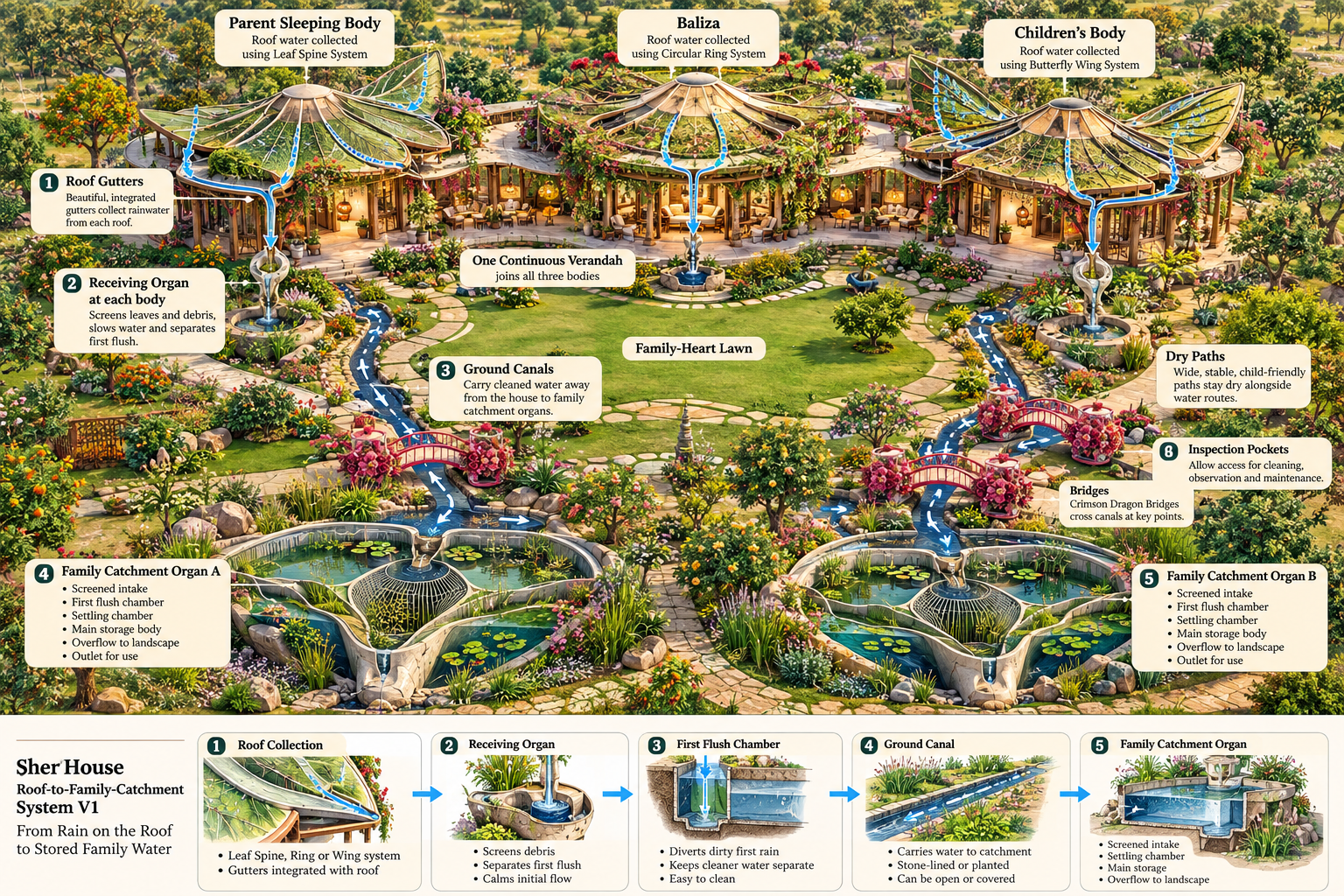
Water Competence Stewards make sure the nucleus is not pretending to be ready while water remains fragile. A first nucleus needs drinking water, washing water, bathing water, toilet water or dry-sanitation logic, kitchen water, cleaning water, garden water, emergency water, and drainage.
They check sources, capture, storage, treatment, pumping, gravity routes, cisterns, rain collection, non-potable routes, potable treatment, greywater movement, overflow, drainage, and emergency reserve. They make sure water is not only present in one place but available where life happens: homes, kitchens, Sabenneries, Baliza routes, Care-Ports, Baby Worlds, work courts, gardens, and Clean Return systems.
They also watch growth. A water system that barely holds five families should not be used to receive fifty. If the next wave will require more storage, treatment, pumping, cisterns, or drainage, that must be known before expansion.
4. Energy Competence
Energy Competence Stewards make sure the first nucleus has enough power for real life, not just symbolic lighting. Energy must support water pumping, refrigeration, cooking support, communication, charging, tool use, workshop power, public lighting, care spaces, emergency backup, and repair access.
They organize generation, storage, distribution, priority loads, backup systems, wiring routes, battery care, safety, charging points, lighting, refrigeration, and power for work. They understand that energy is not only about comfort. It protects food, water, safety, tools, communication, and the speed of building.
They also decide what must never lose power first. Drinking water support, refrigeration, critical lighting, communication, medical or care support, and certain tools may need priority. A nucleus that treats all loads the same can lose the systems that matter most.
5. Food Body Readiness
Food Body Readiness Stewards make sure families and workers can be fed from the beginning. Food abundance cannot depend on scattered cooking, weak storage, missing refrigeration, no shaded seating, no dish return, and no organized serving rhythm. A nucleus needs a food body.
These stewards coordinate the first Sabennerie or food court, cooking surfaces, prep tables, water access, refrigeration, dry storage, fruit and staple storage, serving routes, shaded eating, child food access, worker nourishment, dish return, organic return, and clean-side restock. They make sure food moves from storage to preparation to serving to eating to return without chaos.
They also connect food infrastructure to land production and external supply. Early food may come from a mix of stored food, brought food, existing fruit trees, gardens, foraging where appropriate, and first crops. The Food Body Readiness Steward keeps the daily feeding system honest so abundance does not exist only as a future promise.
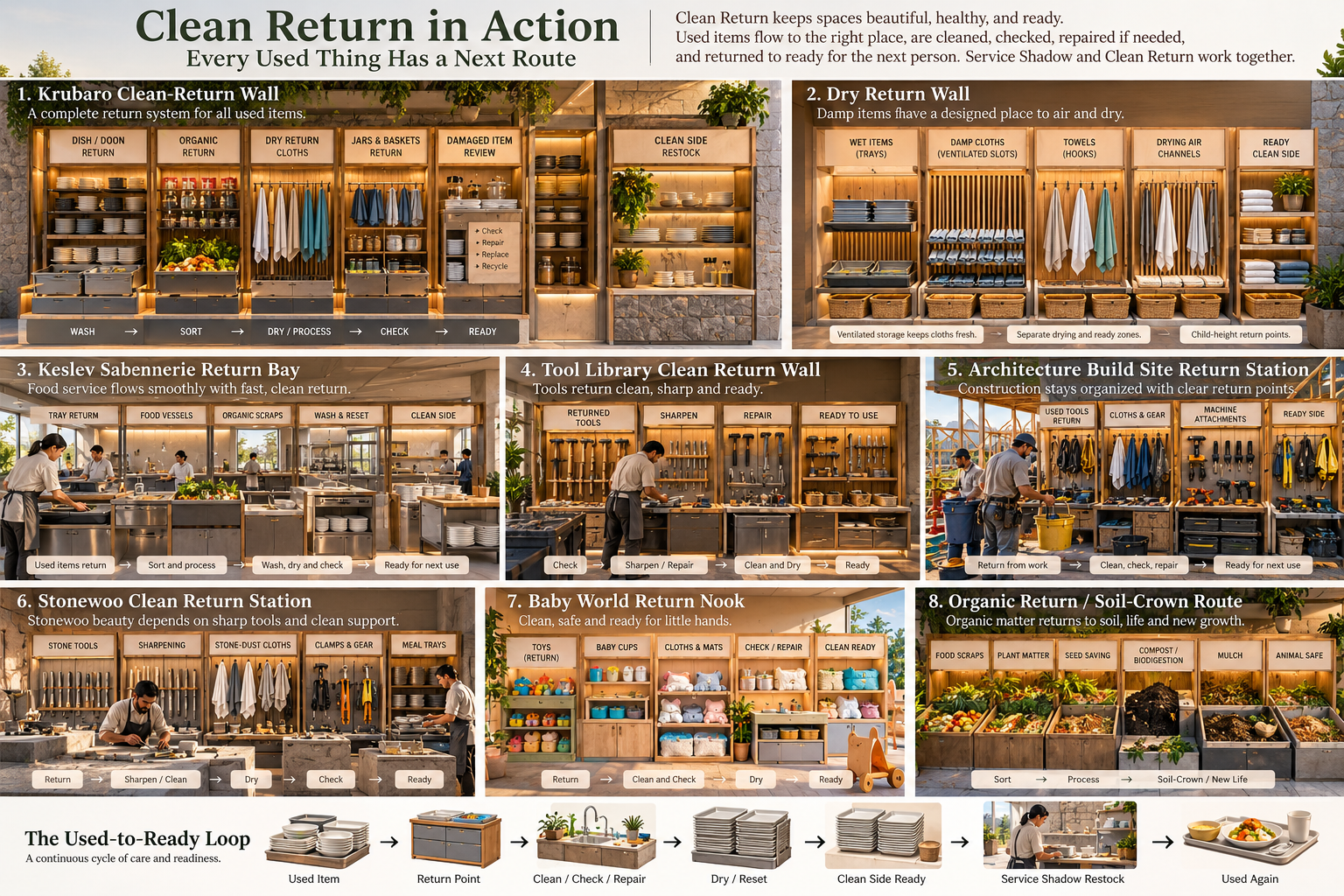
6. Sanitation and Clean Return
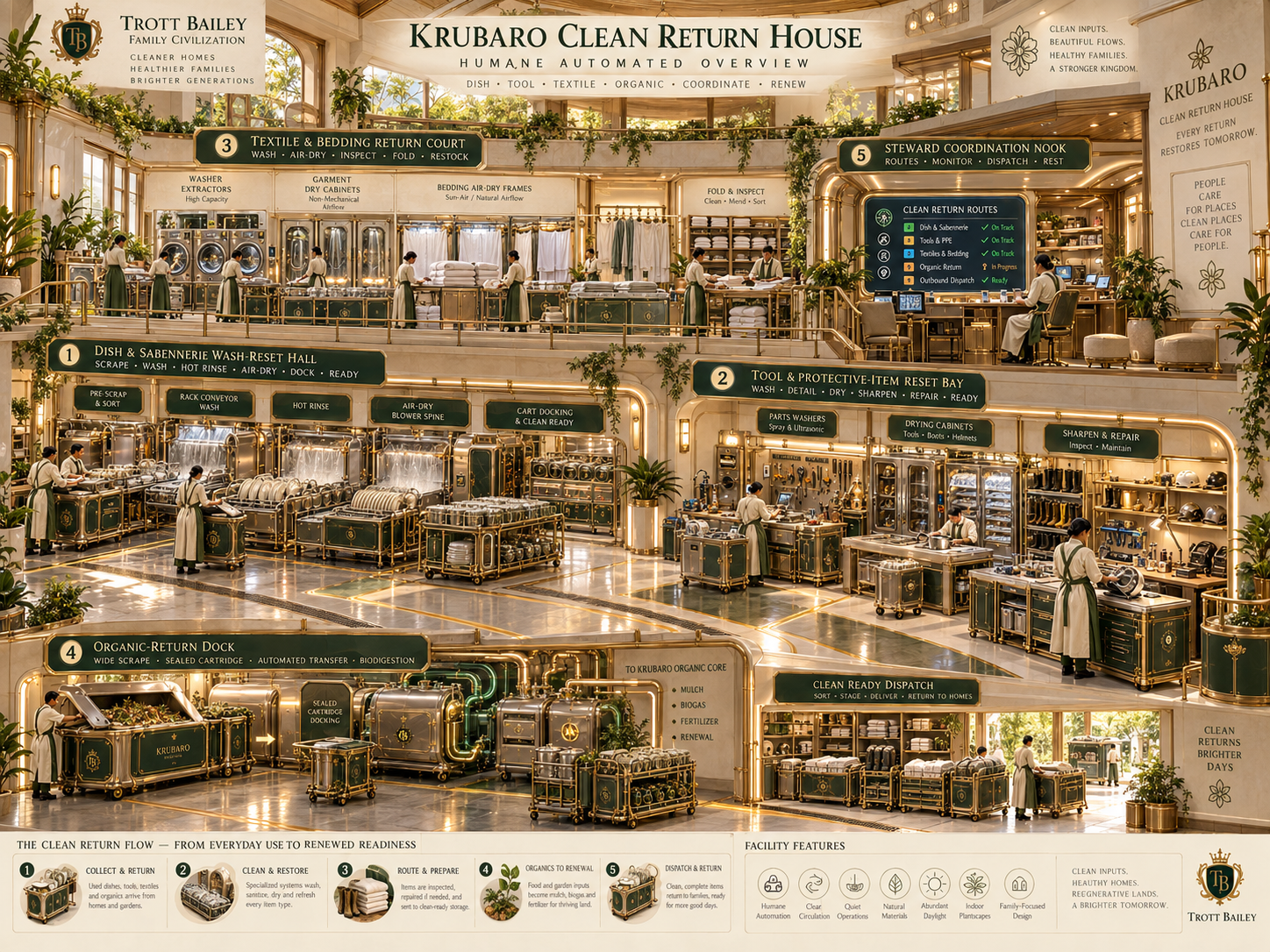
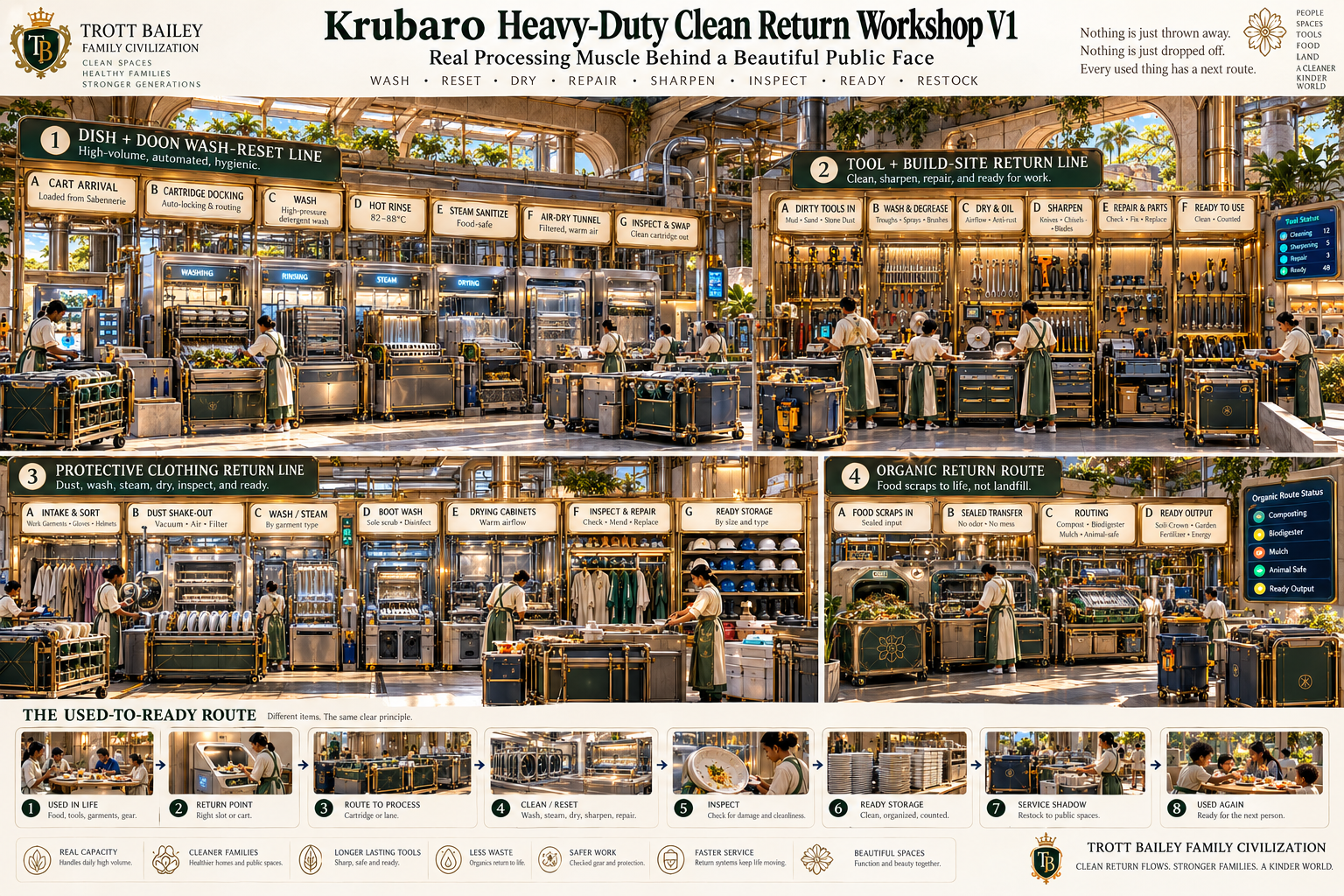
Sanitation and Clean Return Readiness Stewards make sure the first nucleus has routes for what has been used. Toilets, bathing, dish return, cloth return, organic return, greywater, drainage, wash stations, drying routes, and clean-side storage must be present early because used things begin on the first day.
They make sure toilets are safe, bathing does not create mud and disorder, dishes do not pile, damp cloth has a drying route, organic matter has a life-return route, clean and used movement are separated, and wash water does not become a new problem. They coordinate with Clean Return Stewards, Water Competence, Sabennerie Stewards, Baliza Support, and Service Shadow.
A nucleus without sanitation and return systems becomes heavy quickly. The first week may look manageable by human effort, but repeated daily use exposes the truth. If every meal creates disorder, every bath creates mud, every cloth becomes a damp pile, and every toilet use creates risk, the nucleus is not ready.
7. Routes and Access
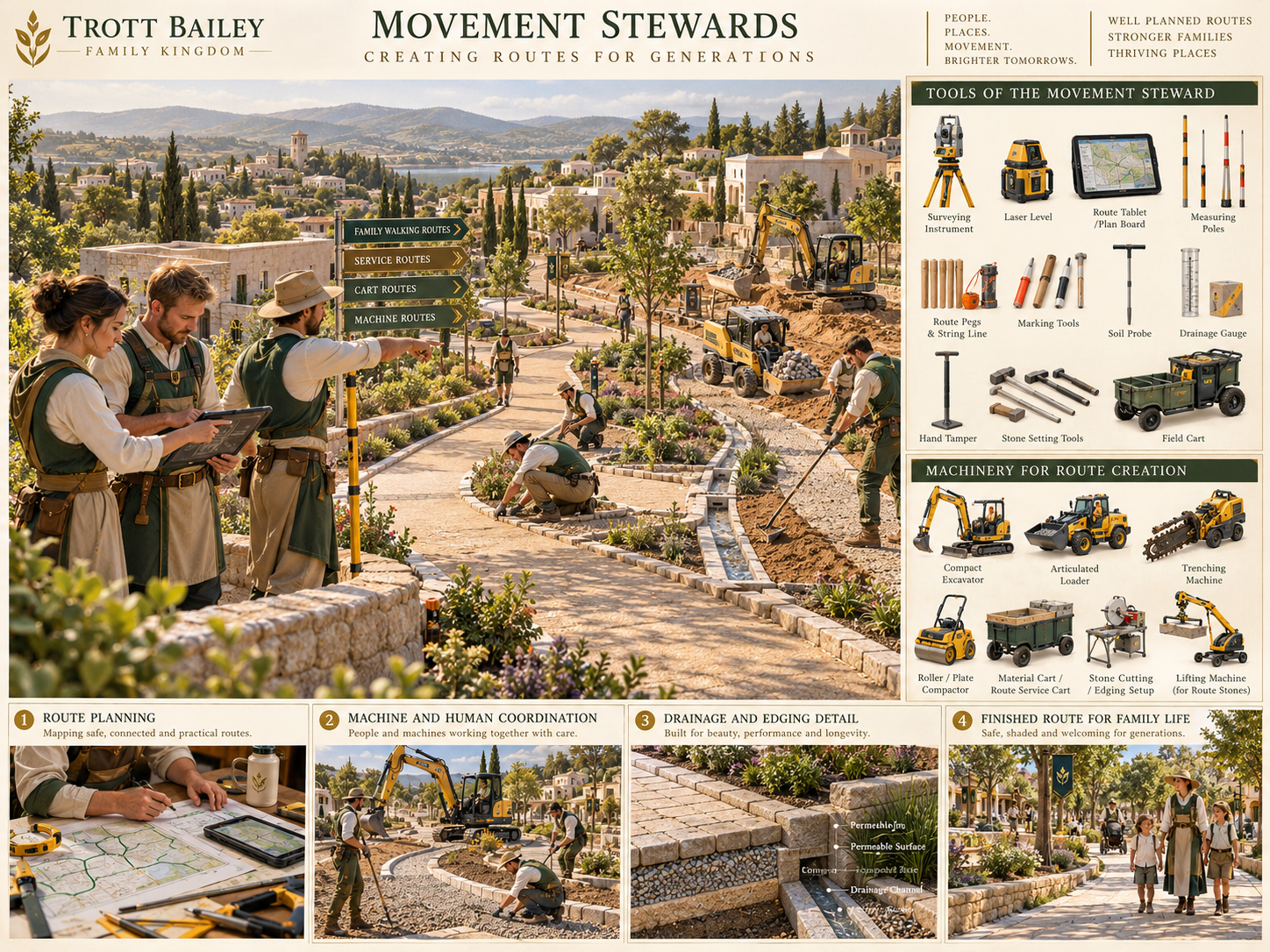
Route, Access, and Internal Movement Stewards make sure the first nucleus can be entered, crossed, serviced, supplied, and expanded without confusion. Routes are not cosmetic. They determine whether food arrives, water moves, carts pass, machines enter, children stay safe, materials are delivered, emergencies can be reached, and public life remains calm.
These stewards plan walking paths, service routes, cart routes, machine routes, emergency access, water access, food routes, material delivery, clean and used movement, shaded family paths, and safe child movement. They make sure heavy work does not fight family life, clean routes are not crossed by used routes unnecessarily, and public places are not swallowed by supply movement.
They also protect future expansion. A badly placed early path can make the next phase harder. A service route placed through family rest space can create daily friction. A material delivery path that blocks children’s movement can create danger.
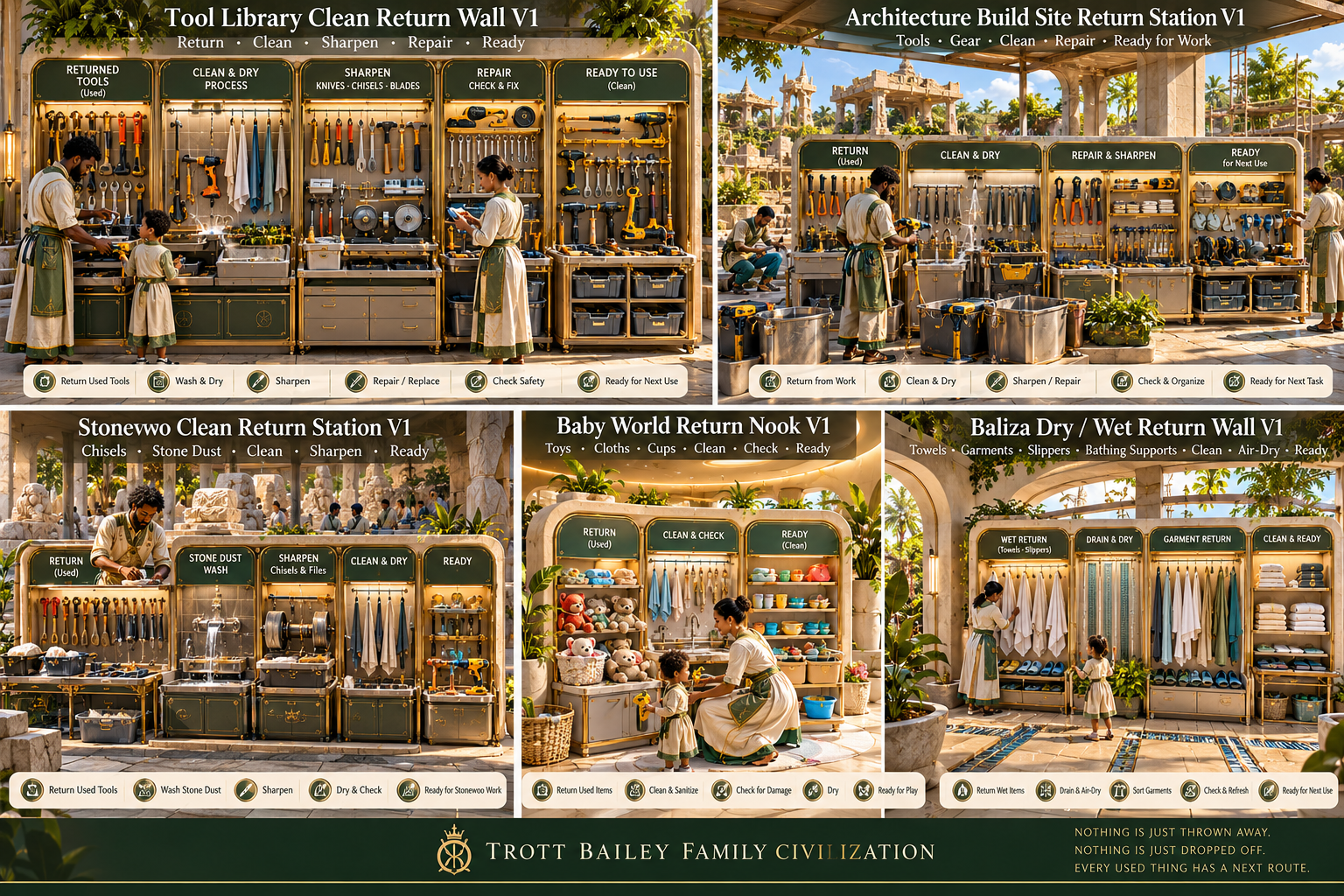
8. Workshop and Machinery Yard
Workshop, Repair, and Machinery Yard Stewards make sure the nucleus can keep building and fixing itself. A first nucleus must not become helpless every time something breaks, dulls, bends, leaks, tears, cracks, or jams. It needs repair capacity early.
These stewards establish tool libraries, repair benches, sharpening stations, machine yards, parts storage, protective clothing return, attachment storage, material cutting, fabrication support, basic diagnostics, and maintenance routines. They keep drills, saws, blades, chisels, clamps, straps, ropes, carts, pumps, hoses, batteries, solar parts, water fittings, fasteners, and machine attachments organized.
They also protect time. A build slows when tools are missing, machines are unsupported, blades are dull, parts are scattered, and every repair becomes a search.
9. Material Staging
Material Staging and Supply Stewards keep the first nucleus from losing days to disorder. Fast building depends on staged materials, not panic. Timber, stone, panels, pipes, wires, roofing, fasteners, batteries, solar parts, cistern parts, tools, hardware, cloth, waterproofing, drainage parts, doors, windows, storage bodies, and service components must be visible, sorted, protected, and near the work that needs them.
These stewards know what has arrived, what is missing, what is reserved, what is damaged, what must stay dry, what must stay shaded, what must be locked away, what is needed for the next build day, and what should not be used because it belongs to a later system. They prevent builders from improvising badly because the correct part could not be found.
Material staging is especially important in a nucleus because the first build is under pressure. Families need relief, but rushing without staging creates mistakes. Staging lets speed become orderly.
10. Communication and Records
Communication and Record Stewards keep the nucleus from forgetting itself. A first settlement has many moving parts: what has been built, what is incomplete, what materials are available, what water routes exist, what energy loads are active, which homes are ready, which systems are fragile, what repairs are needed, what families are arriving, what tasks are urgent, and what next phase is planned.
These stewards work with Pacorips to keep records visible. They help track build phases, family readiness, material staging, water systems, energy systems, tool locations, repair needs, emergency contacts, route maps, care spaces, food storage, and unresolved risks.
Communication matters because a nucleus can become confused quickly. If only one person remembers where the pipe route goes, what parts are missing, which battery is weak, which home is ready, or which route must stay clear, then the nucleus is fragile. Records turn memory into shared capability.
11. Emergency Resilience
Emergency and Resilience Stewards make sure the first nucleus can respond when life is interrupted. Rain, heat, injury, tool failure, energy failure, water shortage, food spoilage, illness, transport delay, animal issue, broken pump, damaged roof, blocked route, or sudden family need should not throw the whole settlement into panic.
These stewards prepare backup water, backup energy, first-aid access, emergency lighting, tool repair, safe gathering points, storm routes, food reserve, communication routes, shade refuge, child safety, and clear response roles. They work with Water Competence, Energy Competence, Food Body Readiness, Service Shadow, and the Build Corps.
Emergency readiness is not fear-based. It is respect for reality. A first nucleus is a living beginning, and living beginnings need backup.
12. Capable Family Integration
Capable Family Integration Stewards help match the first families to the needs and rhythm of the nucleus. The first wave carries a special formation responsibility because the settlement is not yet mature. The nucleus grows best when early families include people who can live, contribute, learn, build, organize, cook, repair, farm, care, teach, operate machines, steward children, support food systems, maintain records, protect health, or strengthen land recovery.
This does not mean families must prove worth to deserve life. It means the first nucleus must be able to hold itself. The first wave helps stabilize the beginning so later families enter greater relief.
Capable Family Integration Stewards make sure families are received with clarity. They help families know what is ready, what is still forming, where to live, where to eat, where children go, where to get water, how Clean Return works, where tools are, what support is needed, and how contribution is organized without chaos.
Nucleus Formation Phases
A nucleus should grow by competence, not by excitement alone.
1. Receiving Phase
The site must have enough shelter, water, energy, food, sanitation, return routes, tools, materials, and care space to receive the first families without immediate disorder.
2. Stabilizing Phase
The nucleus strengthens food storage, water capacity, energy backup, repair capacity, tool systems, Clean Return, child spaces, shade, routes, and public rest while the first families form daily rhythm.
3. Multiplying Phase
More homes rise, food systems expand, workshops grow, land recovery deepens, Sabenneries strengthen, water and energy scale, and the next family wave can arrive.
4. Reproducing Phase
The nucleus becomes capable of helping form another nucleus through training, stewards, records, materials, machinery support, seeds, designs, and formation knowledge.
Relationship to the Civilization Build Corps
The Civilization Build Corps raises the physical systems: homes, water, energy, routes, sanitation, food bodies, care spaces, work courts, and public structures.
Nucleus Formation Stewards make sure those systems become a competent settlement body. They watch the whole readiness picture. They do not replace the Build Corps. They coordinate the threshold of livability.
The Build Corps asks, “What must be built?”
Nucleus Formation asks, “Is the first settlement capable enough to receive families and keep building?”
Both are necessary.
Relationship to Service Shadow
Service Shadow keeps life ready once people are living inside the nucleus. It handles the place. It watches restock, return, routes, carts, clean-side staging, used-item movement, care support, food-service support, public rest, and work-court support.
Nucleus Formation Stewards make sure Service Shadow has something ordered to operate. Service Shadow cannot fix a nucleus that was never given routes, return points, clean-side shelves, food bodies, water access, or service paths. Those must be built and organized early.
Nucleus Formation gives Service Shadow a workable body. Service Shadow keeps that body ready day by day.
Relationship to Land Recovery
The first nucleus should not treat land as empty ground around buildings. Land must become food, shade, water-holding, soil recovery, animal support, child discovery, beauty, and future abundance.
Nucleus Formation Stewards coordinate with Land Recovery and Foodway Formation from the beginning. They protect useful existing plants, avoid unnecessary clearing, establish fast growers, plan food canopy, connect organic return to soil recovery, and make sure homes and routes are placed with land life in mind.
The nucleus should not grow by killing the land and then trying to repair it later. It should read the land while building.
Relationship to Pacorips
Pacorips is important to Nucleus Formation because the first nucleus has too many interdependent parts to rely on scattered memory. Pacorips can track what is ready, what is missing, what is fragile, what is growing, what is broken, what is staged, what is assigned, what is delayed, and what must happen before the next family wave.
Pacorips can hold maps, phase records, water routes, energy loads, family readiness, tool records, material lists, repair needs, food storage, emergency plans, land recovery zones, and build priorities. It can help the nucleus avoid forgetting its own sequence.
Pacorips does not replace the steward. It strengthens the steward’s memory, visibility, and coordination.
The Nucleus Steward Standard
Nucleus Formation Stewards must be practical, observant, sequence-minded, and honest about readiness. They must not confuse activity with competence. They must not confuse beauty with completion. They must not confuse land ownership with livability. They must not confuse houses with settlement. They must not confuse family arrival with family support.
They should be able to walk through the nucleus and see the whole body: where families live, where water moves, where energy is stored, where food is prepared, where used things return, where children move, where mothers rest, where machines enter, where tools are kept, where materials are staged, where emergency access remains open, where public life breathes, where land recovery begins, and where the next phase can grow.
Their work is to keep the first beginning from becoming scattered.
This Is Shubaka
Nucleus Formation is Shubaka because it turns the first settlement from a collection of parts into a capable living beginning. It protects families from arriving too early into strain. It protects builders from disorganized pressure. It protects mothers from being handed unfinished burden. It protects children by making safe space part of readiness. It protects food, water, energy, sanitation, repair, and land recovery from being treated as disconnected concerns.
This work matters because Trott Bailey Family Civilization must not only be authored. It must be held in place by competent beginnings.
A capable nucleus becomes proof that the Civilization can live.
A nucleus is the first competent body of Trott Bailey Family Civilization in a place.
It must be small enough to organize and serious enough to support real family life. It must receive families with homes, water, energy, food, sanitation, Clean Return, routes, tools, repair capacity, communication, emergency support, land recovery, and public calm already forming together.
Nucleus Formation Stewards hold that whole picture. They make sure the first settlement does not grow faster than its competence, and does not delay relief in the name of full maturity.
They protect the sequence, the first families, the build, the land, and the Civilization’s ability to continue.