

Food Stewards and More
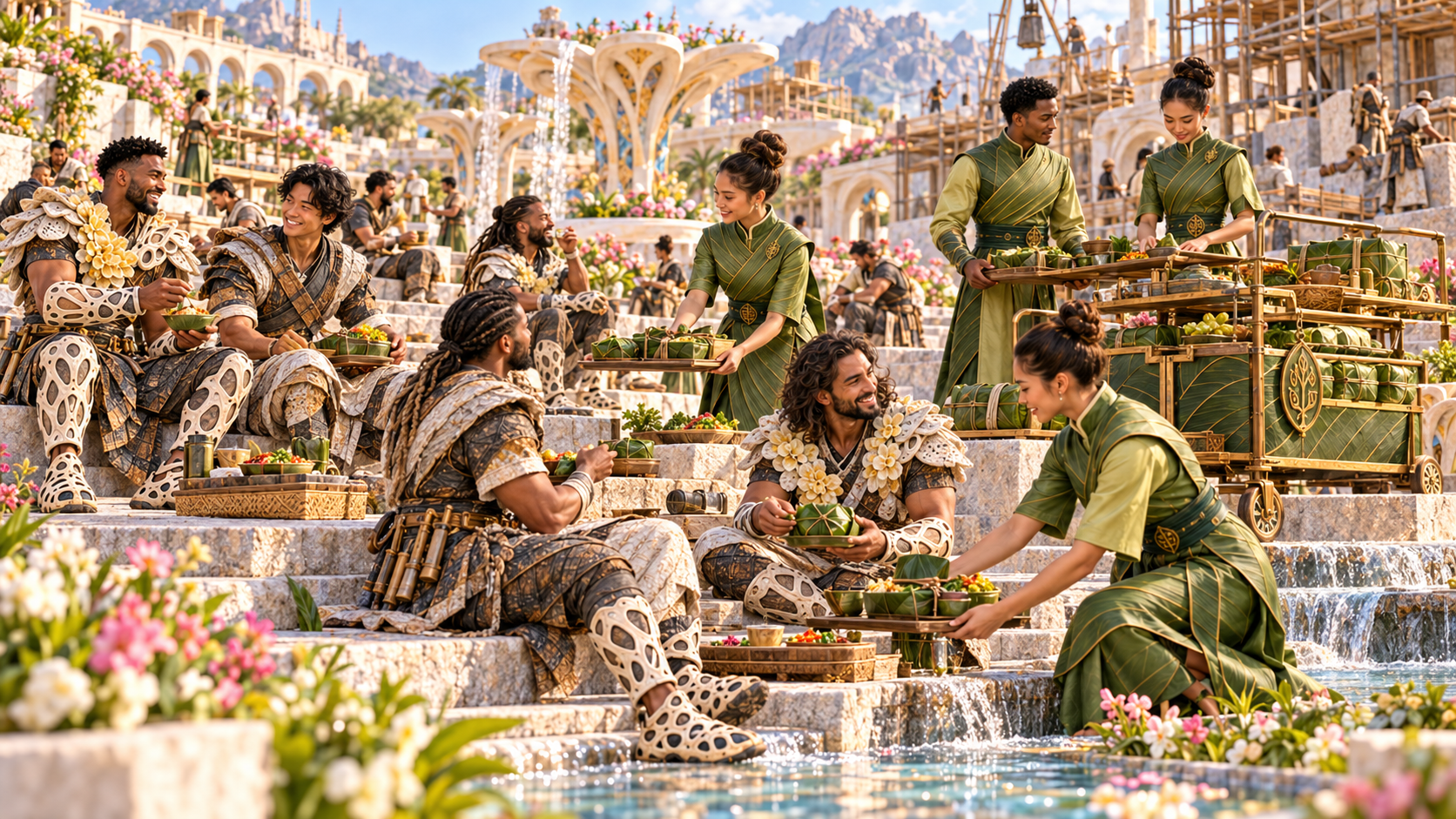
The first nucleus of Trott Bailey Family Civilization needs a food body from the beginning because people cannot build, care, learn, recover, or settle while food is uncertain.
Food cannot be treated as something each family struggles through alone while the settlement is being formed. The first homes, water systems, energy systems, workshops, routes, Clean Return systems, and land recovery all depend on fed people. Builders need food. Mothers need food. Children need food. Babies and toddlers need frequent nourishment. Service Shadow needs food. Machine operators need food. Land recovery teams need food. Tired families need food without turning every meal into another private burden.
A first nucleus must not have families living beside construction work, water work, energy work, and land recovery while everyone is still asking the same daily question: what are we eating, where is it stored, who is cooking, where do the dishes go, what is spoiling, and how do children eat on time?
The Food Body and First Sabennerie Stewards exist to make feeding organized early.
Their work is to make sure food enters the nucleus, stays protected, gets stored, gets cooled where needed, gets prepared, gets served, reaches children and workers, returns through Clean Return, sends organic matter into managed return, and connects to the land as the nucleus begins producing more of its own food.
Why This Role Exists
A first nucleus can become hard to live in very quickly if food is scattered.
One family cooks in a corner. Another family waits. Workers keep building while hungry. Children snack badly because proper food is late. A mother has to cook while tired, holding a baby, or recovering. Ingredients are stored in different places and nobody knows what is available. Refrigerated food is not protected. Dry food is exposed to damp, pests, or heat. Dishes pile. Food scraps sit around. People repeat cooking work separately because the nucleus has not yet formed a shared food body.
This is not good enough for first-wave family life.
A first Sabennerie does not have to be the final mature food system of the Civilization. It can begin modestly. But it must be organized enough to feed people daily, reduce private strain, protect food, and support the work of formation.
Food is not only an end result of agriculture. Food is a daily system. It includes storage, cooling, preparation, serving, eating space, dish return, organic return, cleaning, records, supply routes, and the beginning of land-to-table movement.
Food Body and First Sabennerie Stewards keep that whole movement visible.
The Formation Standard
The first food body must be able to answer practical questions.
Where does food enter the nucleus? Where is dry food stored? What needs cooling? What must be eaten soon? What is being cooked today? Where is water for washing and cooking? Where are the prep surfaces? Where do children eat? Where do workers eat? Where can mothers get food without standing in another burden? Where do dishes return? Where do food scraps go? What is low? What is spoiling? What is coming from outside supply? What is coming from the land? What can be prepared ahead? What happens if more families arrive?
A nucleus is not ready if food exists but nobody knows where it is, who is preparing it, how long it will last, what needs refrigeration, what must be cooked first, or how dishes and organics return after eating.
The food body must be planned with water, energy, Clean Return, Service Shadow, land recovery, and family receiving. Food cannot sit outside these systems. It depends on all of them.
The first food body does not need to be large. It needs to be clear, clean, reliable, and able to grow.
1. First Sabennerie Stewards
First Sabennerie Stewards form the first daily food body of the nucleus.
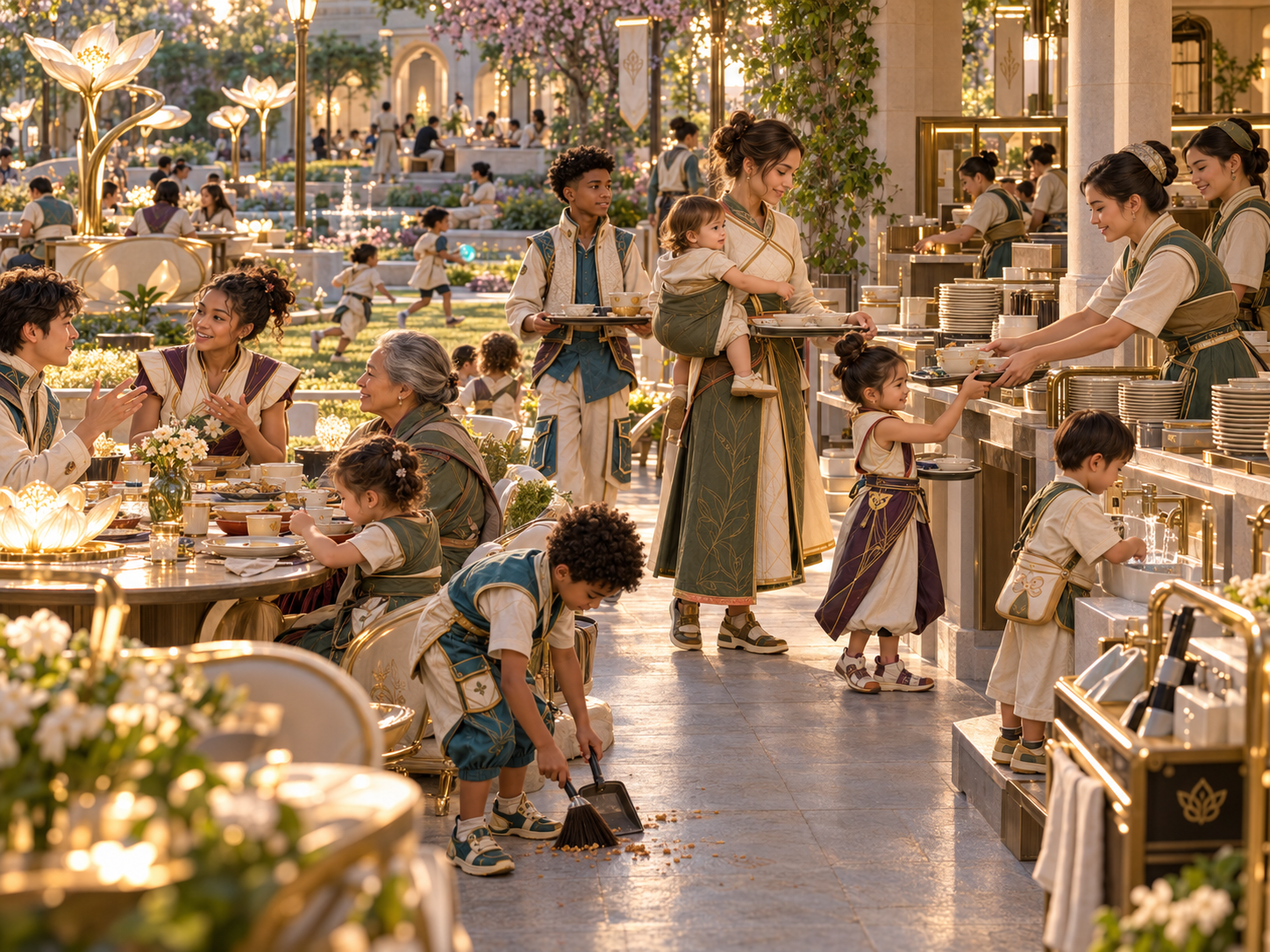
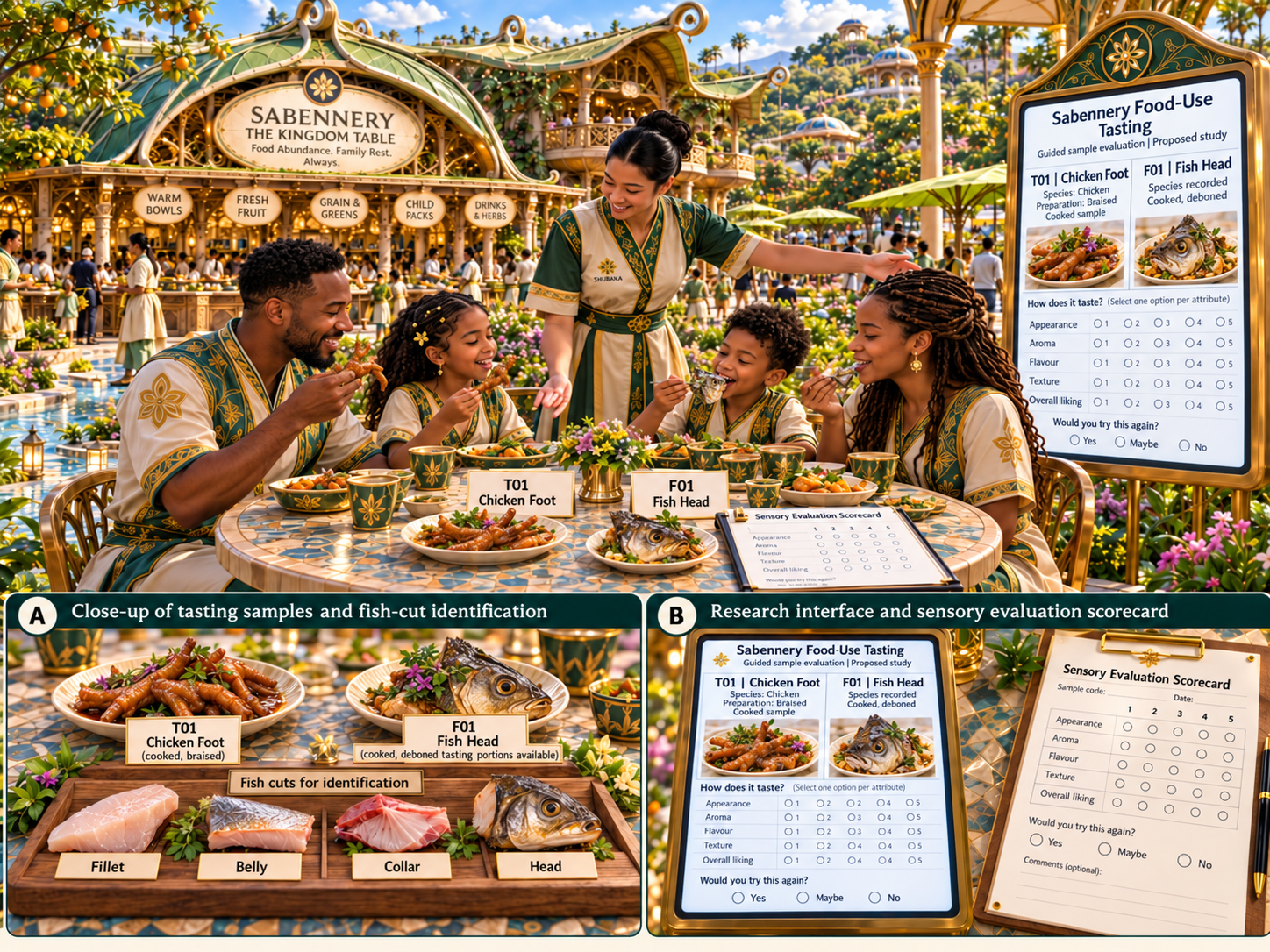
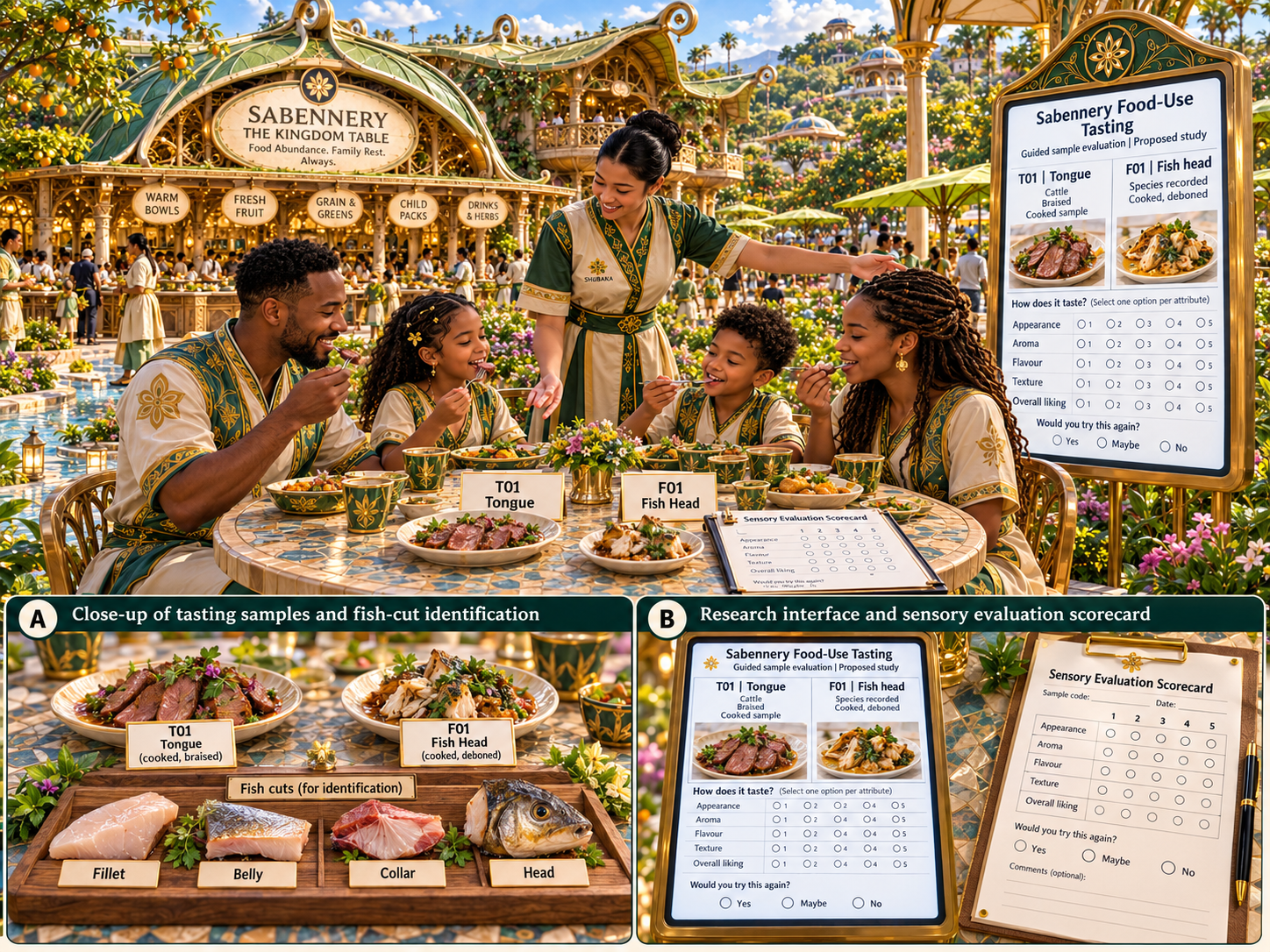
Their work is to make sure families and workers have a reliable place where food is prepared, served, eaten, returned, and recorded. This may begin as a simple but well-organized food court, kitchen body, shaded serving area, and dish-return route. It should not begin as scattered private cooking under pressure.
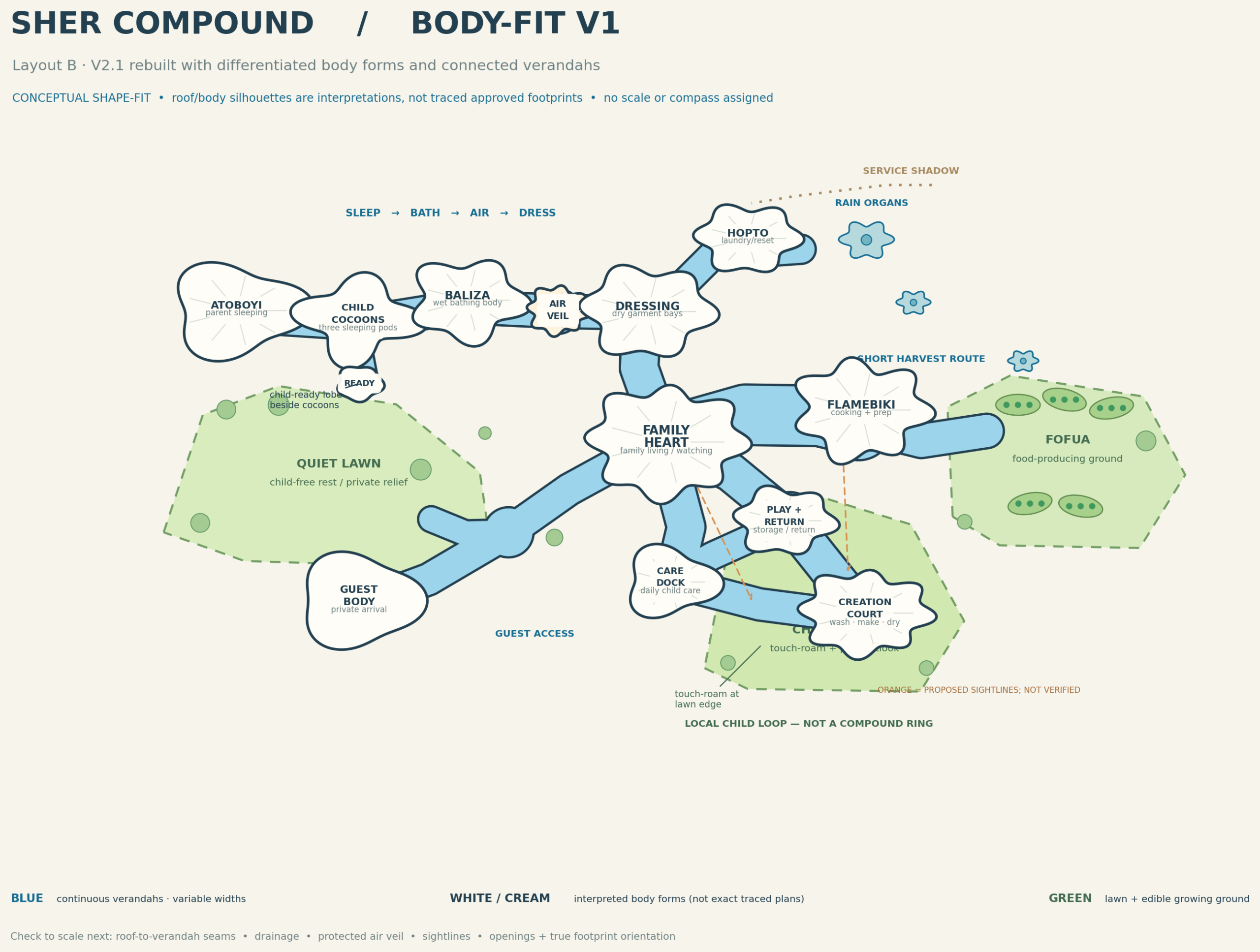
The first Sabennerie must have water access, prep surfaces, cooking stations, safe food storage, cooling where needed, serving flow, child access, worker access, shaded seating, dish return, organic return, cleaning access, and clean-side restock. It must be placed where families can reach it without crossing dangerous work zones, and where Service Shadow can support it without disturbing rest.
The First Sabennerie Stewards do not only ask, “Can food be cooked?” They ask, “Can food be cooked every day without exhausting families and disordering the settlement?”
2. Food Storage Stewards
Food Storage Stewards make sure food does not become a scattered pile of supplies.
A first nucleus needs dry storage, cool storage, protected storage, child-safe access, pest control, damp control, containers, shelves, labels, rotation, and records. Food must be easy to find, easy to protect, and easy to use in the right order.
Dry foods, grains, roots, fruits, oils, seasonings, preserved items, baby foods, emergency foods, cooking supplies, and first-harvest foods cannot all be treated the same. Some must stay dry. Some must stay cool. Some must be used quickly. Some must be protected from insects, rodents, mold, heat, children, or damage. Some must be placed close to the Sabennerie. Some must be reserved for emergency or care use.
Food Storage Stewards work with Food Pacorips, Refrigeration Stewards, Service Shadow, Clean Return, and Sabennerie Stewards. They make sure stored food is not forgotten until it spoils.
3. Refrigeration and Cold Food Stewards
Refrigeration and Cold Food Stewards protect the foods and care items that need cooling.
A first nucleus may need refrigeration for fresh produce, dairy, eggs, fish, meat, prepared foods, baby food, medicines, care supplies, or ingredients that spoil quickly in heat. Even when fresh routes and land production become strong, cold storage still helps with timing, safety, and relief.
These stewards coordinate refrigerators, freezers where needed, cool rooms, insulated boxes, temperature checks, power priority, backup plans, cleaning, food rotation, and emergency decisions when power is limited. They work directly with Energy and Machine Power Stewards because refrigeration depends on stable power.
They also make sure cold food is not handled casually. If food needs cooling, it must be clear who checks it, where it belongs, how long it can stay, and what must be used first.
4. Cooking and Preparation Stewards
Cooking and Preparation Stewards organize the daily work of turning food into meals.
They make sure the first Sabennerie has safe cooking stations, preparation surfaces, knives, boards, pots, pans, utensils, wash points, handwashing, heat sources, ventilation, fuel or power access, cleaning routes, and enough space for people to work without bumping into one another.
Food preparation must be practical. Raw and cooked foods need proper handling. Washing and cutting need surfaces. Hot areas need safety. Children need boundaries. Used tools need return. Floors need cleaning. Water must be close. Fire, heat, smoke, steam, sharp tools, and boiling water must be handled with care.
Cooking and Preparation Stewards do not make food work ornamental. They make it workable. The question is whether meals can be prepared repeatedly without confusion, danger, or unnecessary strain.
5. Serving and Eating Space Stewards
Serving and Eating Space Stewards make sure food can be received calmly.
Food is not complete when it leaves the cooking pot. People need a place to sit, eat, feed children, nurse babies if needed, wash hands, return dishes, drink water, and move without crowding. Workers may need quick but proper meals. Families may need slower meals. Children need safe access. Elders or tired people may need easier seating.
These stewards organize shaded seating, serving counters, handwashing points, drinking water points, child-height access, worker meal flow, family meal flow, queue movement, dish return points, organic return points, floor cleaning, and weather protection.
The eating space must not block the cooking area, the return route, the child route, or the service route. People should not have to eat standing in dust, heat, rain, tools, smoke, or construction clutter.
6. Worker Nourishment Stewards
Worker Nourishment Stewards make sure the people building and maintaining the nucleus are fed properly.
Build Corps workers, machine operators, Water Stewards, Energy Stewards, Service Shadow, Clean Return teams, land recovery teams, repair teams, and route workers cannot work well while underfed. Hungry people slow down, make mistakes, become irritated, lose strength, and recover badly.
These stewards coordinate worker meal times, water access, shade, electrolyte or mineral support where needed, rest food, heavy-work meals, quick food during urgent tasks, and recovery food after long effort. They make sure workers are not forgotten because the focus is on family meals alone.
This does not mean creating a separate servant-feeding logic. It means the food body understands that people doing heavy work need reliable nourishment.
7. Family Food Access Stewards
Family Food Access Stewards make sure mothers, children, babies, elders, recovering people, and tired families can actually get food.
A food system can be technically available and still hard for families to use. If a mother has to walk too far with a child, wait too long, stand in heat, carry too many dishes, or cook privately after a long day, the food body is failing part of its purpose.
These stewards watch child feeding, baby food, toddler snacks, mother access, recovery meals, simple breakfast access, water with meals, evening food, family seating, and food routes between homes and the Sabennerie. They help make sure food timing fits family life, not only work schedules.
They also watch dignity. Families should not feel like they are begging for food or interrupting workers. Food access should be normal, clear, and calm.
8. Dish Return and Organic Return Stewards
Dish Return and Organic Return Stewards make sure feeding does not create disorder after every meal.
Every food body produces used bowls, cups, trays, utensils, pots, pans, serving tools, wash water, food scraps, peels, seeds, spoiled bits, and cleaning cloths. If these do not have clear routes, the Sabennerie quickly becomes heavy.
These stewards place dish return points where people naturally finish eating. They organize scraping, sorting, washing, rinsing, drying, inspection, clean-side shelves, organic return containers, compost or soil routes, and separation from residual waste. They work closely with Clean Return, Water and Sanitation Stewards, Service Shadow, and Organic Return Stewards.
Food service is not finished when meals are served. It is finished when the used items and organic matter have moved correctly.
9. Food Safety and Freshness Stewards
Food Safety and Freshness Stewards protect people from spoilage, contamination, careless storage, and unclear food age.
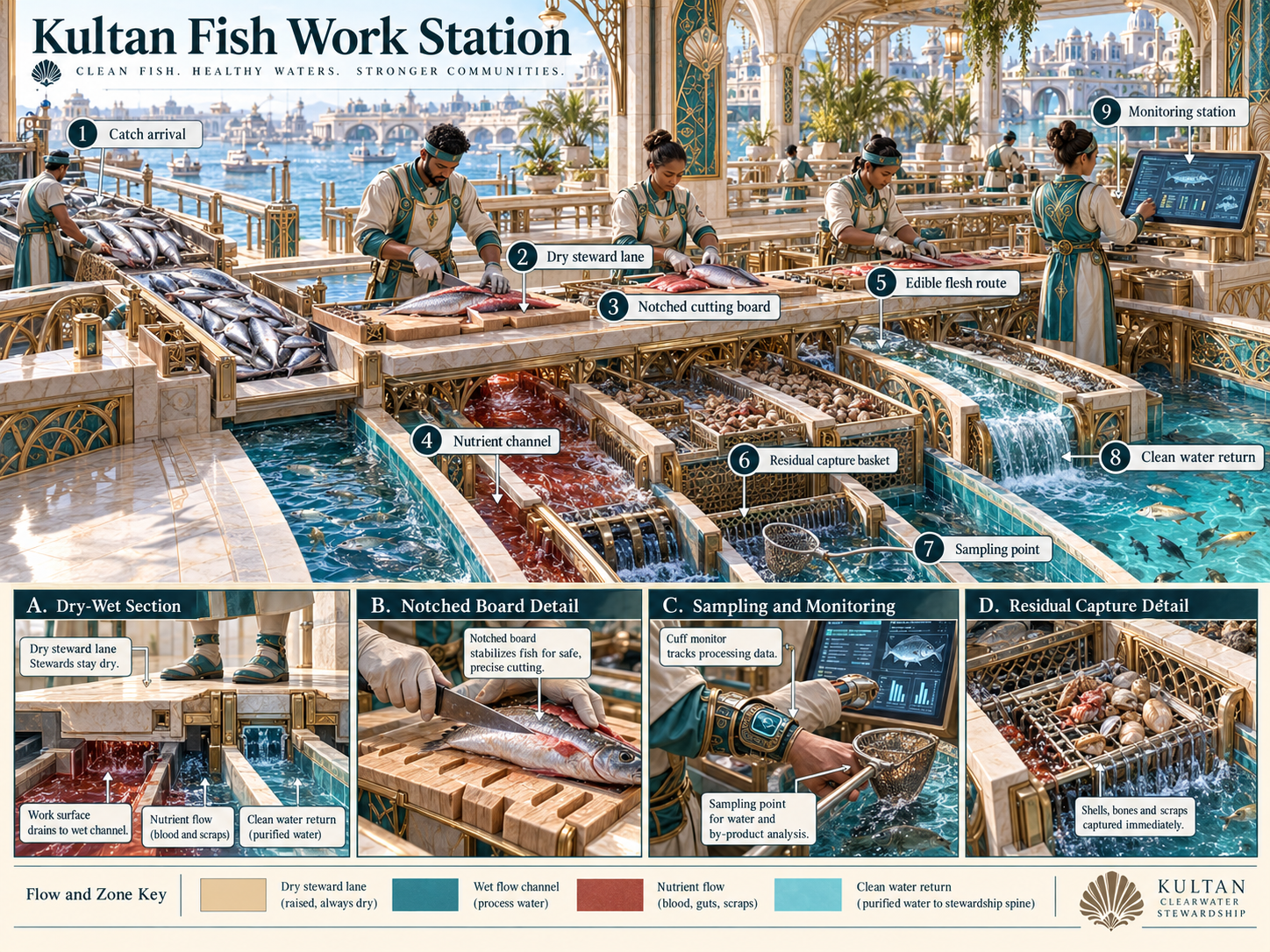
They watch washing, cooling, temperature, pests, handwashing, surface cleaning, raw and cooked separation, leftovers, prepared food timing, child food, baby food, fish, meat, dairy, eggs, fresh produce, and food that must be used quickly.
They do not turn food into fear. They make freshness visible and practical. People should know what was cooked today, what was stored yesterday, what needs cooling, what must be eaten first, what should not be served, and what has already moved to organic return.
These stewards work with Food Pacorips, Refrigeration Stewards, Cooking Stewards, Service Shadow, and Clean Return. Their work protects trust in the food body.
10. First Harvest and External Supply Stewards
First Harvest and External Supply Stewards feed the gap between arrival and full land production.
The first nucleus may have useful existing fruit trees, planted fast growers, gardens beginning, stored staples, brought supplies, local food sources, fishing where appropriate, nearby farms, or partner supply routes. But the land may not be fully producing yet. That gap must be managed honestly.
These stewards know what food is coming from outside, what is already on the land, what is ready to harvest, what will be ready soon, what must be planted now, what stores are low, and what the Sabennerie needs for the next days and weeks.
They work with Land Recovery and Foodway Formation, Food Storage, Food Pacorips, Sabennerie Stewards, and Nucleus Formation. They help the food body move from dependence on external supply toward increasing local abundance.
11. Food Pacorips Stewards
Food Pacorips Stewards keep the food body visible.
They track what is stored, what is cooling, what is low, what is spoiling soon, what meals are planned, what has been cooked, what has returned, what is needed tomorrow, what children need, what workers need, what the land is producing, and what external supply is expected.
This matters because food problems often begin with not knowing. Nobody knows how much rice is left. Nobody knows which fruit must be eaten first. Nobody knows whether the refrigerator is overloaded. Nobody knows if workers need extra meals tomorrow. Nobody knows what the garden can supply this week.
Pacorips helps stewards avoid guessing. It gives memory, warnings, lists, timing, and visible records.
12. Land-to-Sabennerie Stewards
Land-to-Sabennerie Stewards connect the first food body to the land.
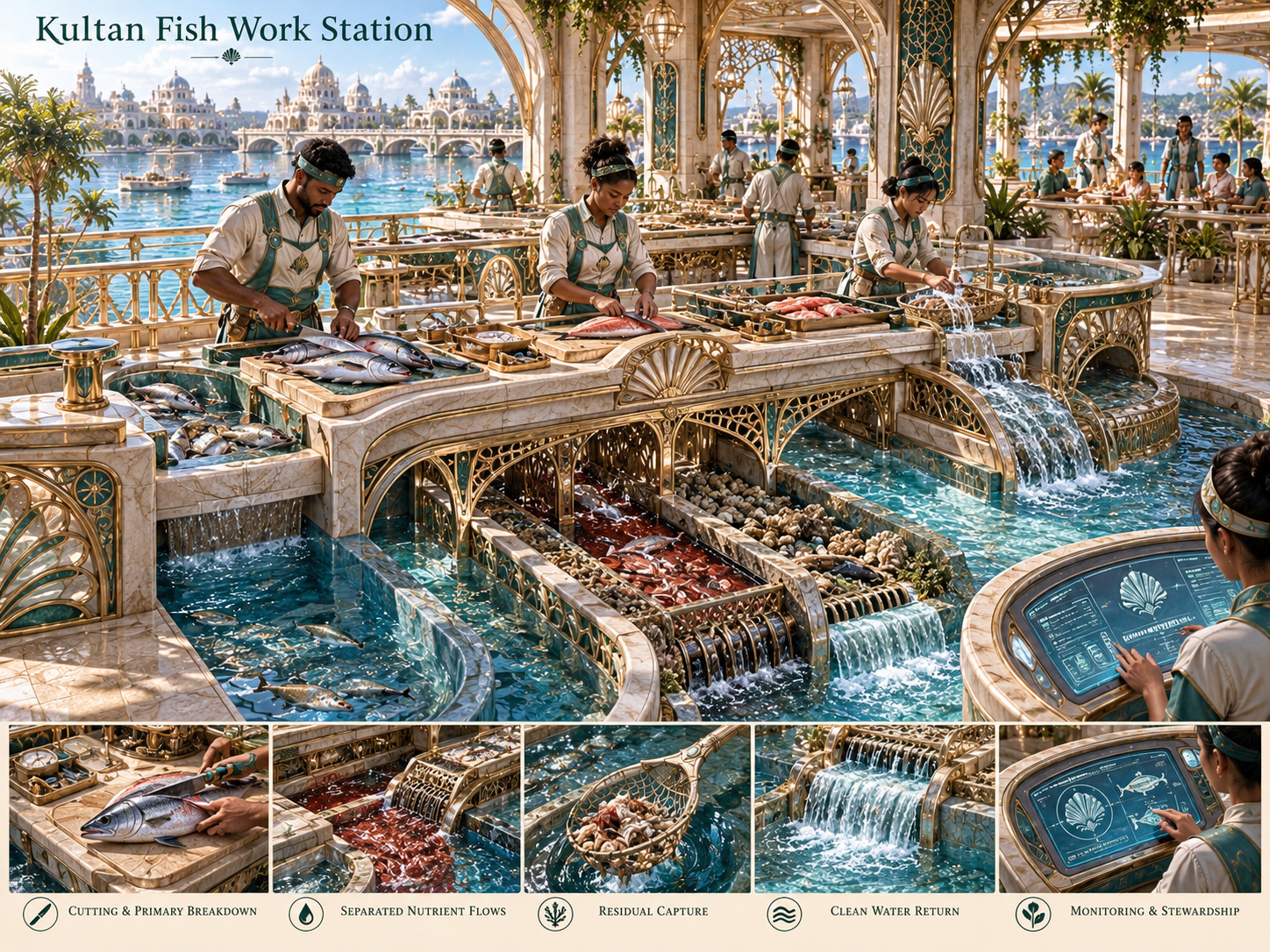
As gardens, orchards, animal systems, fishing routes, forage systems, nurseries, and foodways develop, the Sabennerie must know how to receive that food. Harvest should not arrive randomly with nowhere to wash, sort, store, cool, cook, preserve, or distribute it.
These stewards coordinate harvest baskets, wash points, sorting tables, ripeness checks, short-term storage, seed saving, compost return, menu planning, preservation, and communication with land teams. They help the food body adjust to what the land is giving.
This role becomes more important as the nucleus matures. At first, the Sabennerie may depend heavily on stored and external food. Over time, more food should come from the land around the families.
The First Nucleus Food Threshold
Before a nucleus receives more families, Food Body and First Sabennerie Stewards should be able to answer practical questions clearly.
Can families eat every day without private struggle? Can workers eat before and after heavy work? Is drinking water available with meals? Is food stored safely? Is cold food protected? Is there a cooking body? Are prep surfaces clean and enough? Can children get food safely? Can mothers and recovering people get food easily? Are dishes returned? Are food scraps routed? Is food freshness watched? Is Pacorips tracking stores, meals, and shortages? Is the land beginning to feed the Sabennerie? What fails first if more families arrive? What must be added before that happens?
A nucleus is not ready for growth if food depends on improvisation.
Relationship to Nucleus Formation Stewards
Nucleus Formation Stewards hold the whole settlement picture. They ask whether the first settlement is capable enough to receive families and keep building.
Food Body and First Sabennerie Stewards answer a major part of that question. Can the nucleus feed families, children, mothers, workers, care teams, Service Shadow, and builders every day without creating dish piles, storage confusion, spoiled food, hungry workers, or private cooking strain?
Nucleus Formation cannot honestly call a settlement ready if food is uncertain.
Relationship to Water, Sanitation, and Clean Return Formation
Food depends on water and return routes.
Cooking needs water. Washing produce needs water. Dishes need water. Handwashing needs water. Cloths need washing. Floors need cleaning. Greywater must leave safely. Dish return must connect to Clean Return. Organic matter must move to compost, soil recovery, animal-safe routes where appropriate, biodigestion, or another managed return.
A Sabennerie without water and return routes becomes disorder quickly.
Food Body Stewards must therefore work closely with Water, Sanitation, and Clean Return Formation from the beginning. The food body must not be built before its return routes are understood.
Relationship to Energy and Machine Power
Food also depends on energy.
Refrigeration needs power. Lighting needs power. Some cooking systems need power. Food records need power. Water pumping may need power. Ventilation may need power. Tool use, preservation, milling, grinding, blending, cooling, and storage may need power depending on the nucleus stage.
Energy and Food Body Stewards must decide what food systems receive priority power. Refrigeration cannot be left to fail casually. A food body that depends on powered systems must know its backup.
The first food body should be planned with the energy system, not added after it.
Relationship to Service Shadow
Service Shadow helps keep the food body ready day by day.
It may restock clean vessels, move carts, support serving areas, watch seating readiness, help return used items, prepare clean-side storage, support worker nourishment, and keep public eating areas from becoming disordered.
Food Body Stewards give Service Shadow clear routes and places to support. Service Shadow should not be forced to invent dish return, organics return, clean-side shelves, or seating flow because the food body was poorly formed.
Good food formation makes Service Shadow’s work easier and makes family life calmer.
Relationship to Land Recovery
The first food body must connect to the land from the beginning.
Land Recovery and Foodway Formation will protect useful plants, establish fast growers, build soil, route water, plant food canopy, form gardens, develop animal forage systems, and increase local abundance. The Sabennerie should be ready to receive that abundance as it appears.
This means the food body needs harvest receiving, washing, sorting, short-term storage, cooking plans, preservation routes, seed saving, compost return, and communication with land teams.
The land feeds the food body. The food body returns organics to the land. That loop should begin early.
The Steward Standard
Food Body and First Sabennerie Stewards must be practical, clean-minded, family-aware, and honest about food capacity.
They must not pretend the nucleus can receive more families if meals are already late, storage is confused, refrigeration is weak, dishes are piling, workers are hungry, children are snacking badly, or mothers are carrying too much private cooking burden.
They should watch food stores, meal timing, child access, worker nourishment, freshness, cold storage, cooking load, dish return, organic return, water access, seating, family stress, and the food needs of the next arriving families.
Their work is to make food reliable enough for the first nucleus to live and keep building.
This Is Shubaka
Food Body and First Sabennerie work is Shubaka because it feeds the people forming the Civilization. It protects mothers from carrying the whole food burden alone. It protects children from unreliable meals. It protects workers from hunger during heavy work. It protects food from spoilage. It protects public life from dish and organic disorder. It connects the first settlement to the land’s growing abundance.
Food is not a side issue. People cannot build, care, learn, recover, or settle properly while food is uncertain.
The first nucleus needs a food body from the beginning.
Food must enter, store, cool where needed, prepare, serve, nourish, return, compost, record, and connect to the land. The first Sabennerie does not need to be mature on day one, but it must be clear enough to feed families and workers without turning every meal into private struggle.
Food Body and First Sabennerie Stewards make sure the first settlement can eat, work, recover, build, care, and continue.