
Water Stewardship: A Civilization Perspective
Water Stewardship: A Civilization Perspective
Why water is more than plumbing, and why a strong civilization must understand, protect, store, route, and responsibly use water across family life, agriculture, buildings, health, sanitation, and public life.
Why Water Is More Than Plumbing
Most people only think about water when something goes wrong. The tap stops running. A drought arrives. A flood damages property. Water becomes contaminated. A pipe bursts.
Until then, water often remains invisible.
This invisibility is one of the reasons water stewardship deserves more attention. Water is not only a utility service, a plumbing system, or a natural resource. Water affects family life, food production, health, sanitation, buildings, agriculture, hospitality, and public life.
Water Existing Is Not The Same As Water Being Available
A civilization must understand this clearly: water can exist while people still lack usable water.
A river may flow nearby. Rain may fall regularly. Groundwater may exist beneath the soil. Yet families can still experience water shortages if water is not collected, protected, stored, cleaned, distributed, and maintained.
The challenge of civilization is not merely finding water. The challenge is making water reliably useful.
Why Water Matters To Family Life
Water affects far more than drinking. It affects cooking meals, washing dishes, bathing children, cleaning homes, washing clothes, gardening, caring for babies, and hosting guests.
This means water stewardship is not an abstract environmental issue. It is a family issue. A reliable water system reduces stress, reduces unnecessary labor, improves sanitation, supports health, and allows families to focus on living instead of constantly solving water problems.
Water And Food Are Deeply Connected
Every civilization depends on food, and every food system depends on water. Water supports crop production, livestock care, food processing, and food preparation.
A conversation about food security is also a conversation about water security. If a civilization wants reliable access to nutritious food, it must pay attention to how water is collected, stored, protected, and distributed.
Water And Buildings
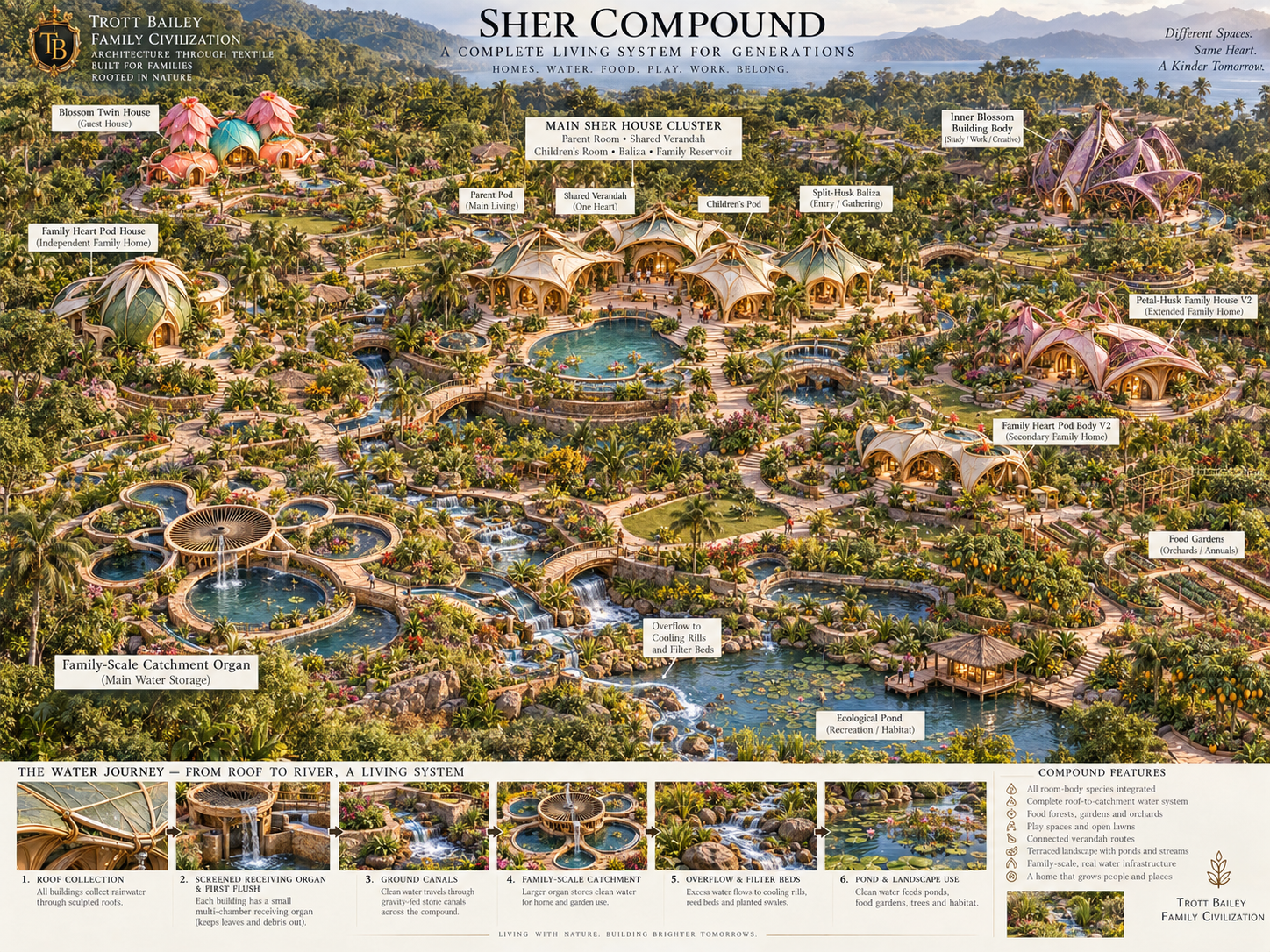
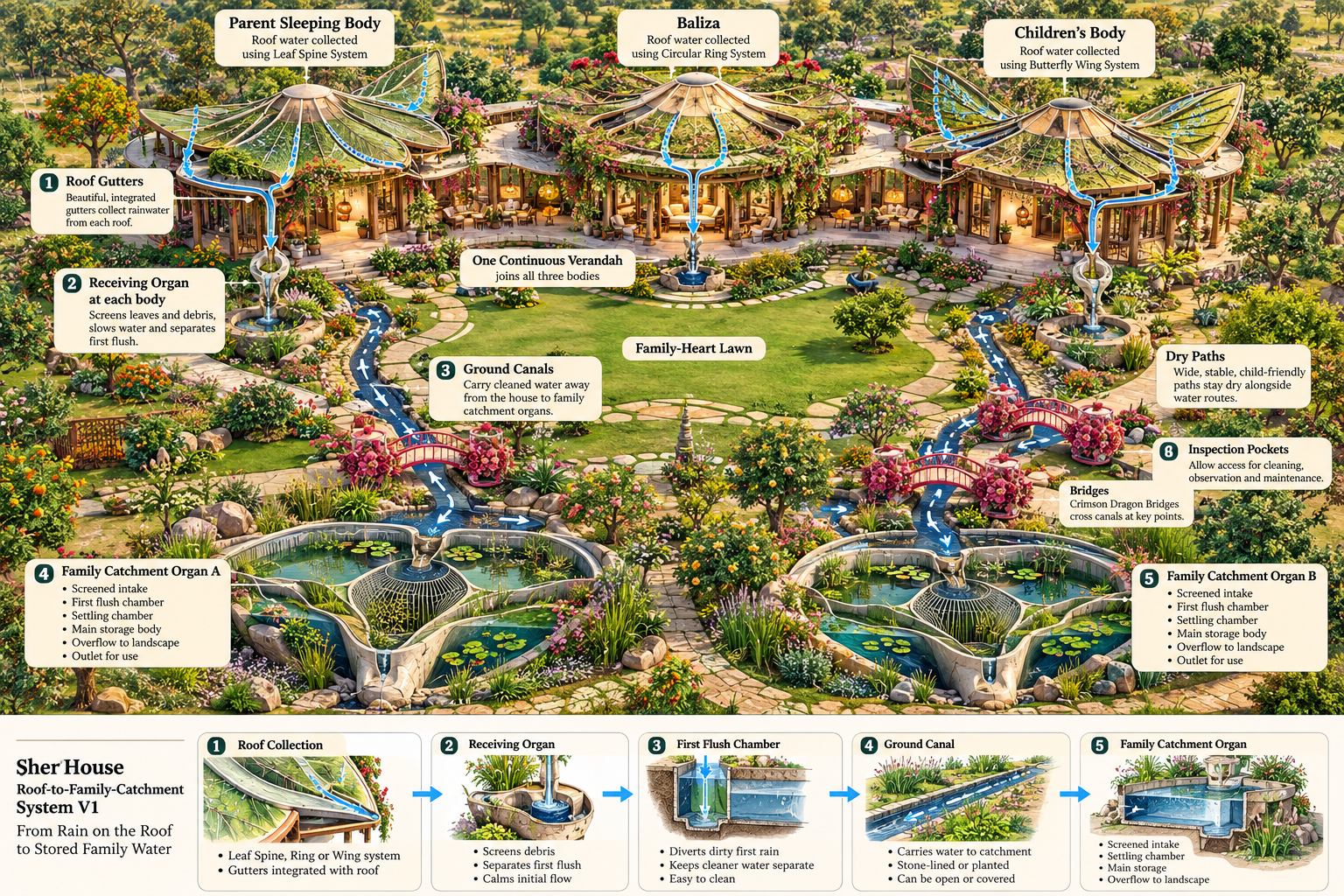
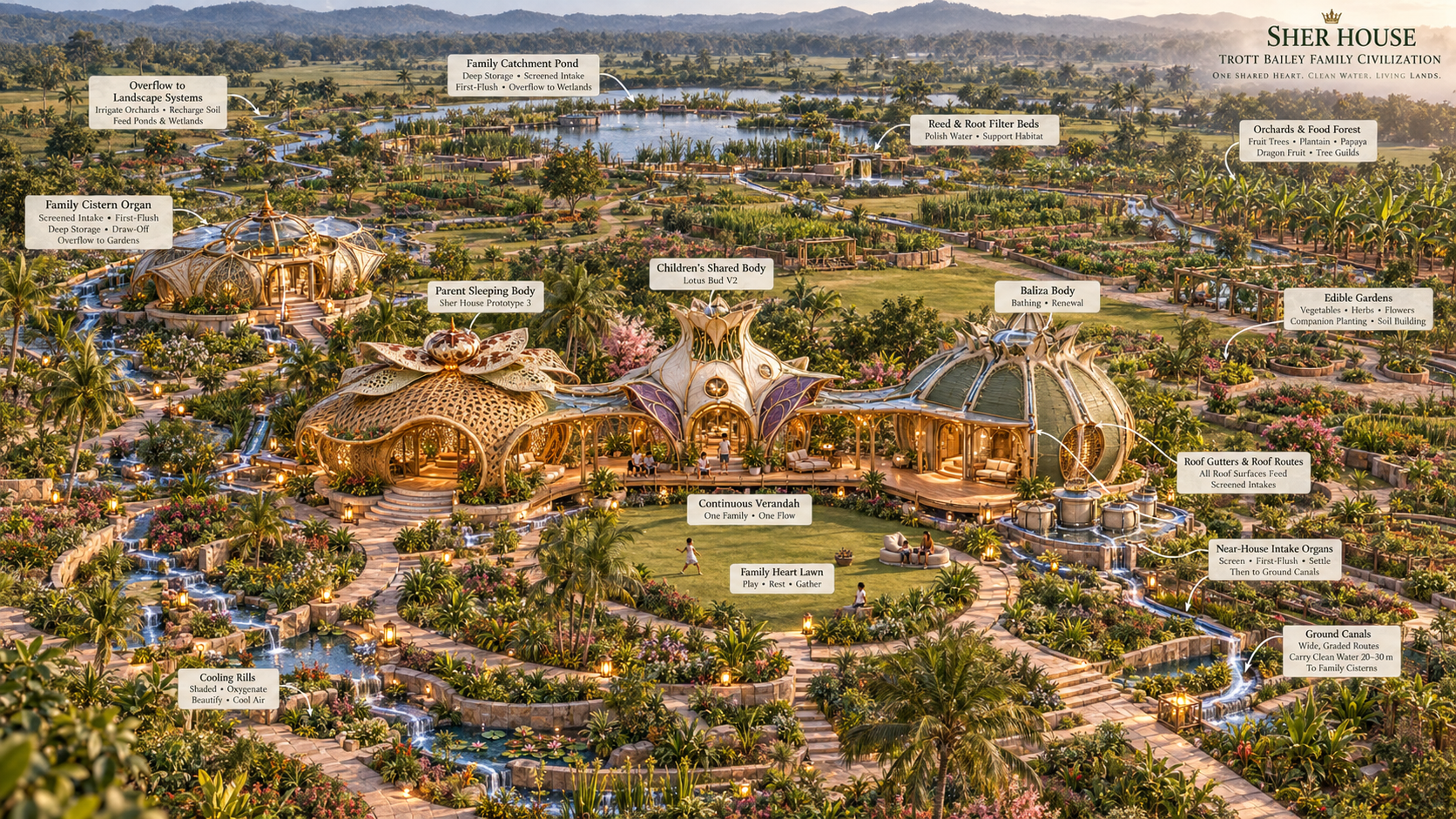
Buildings and water have a close relationship. A building must do more than keep water out. It must also manage water intelligently.
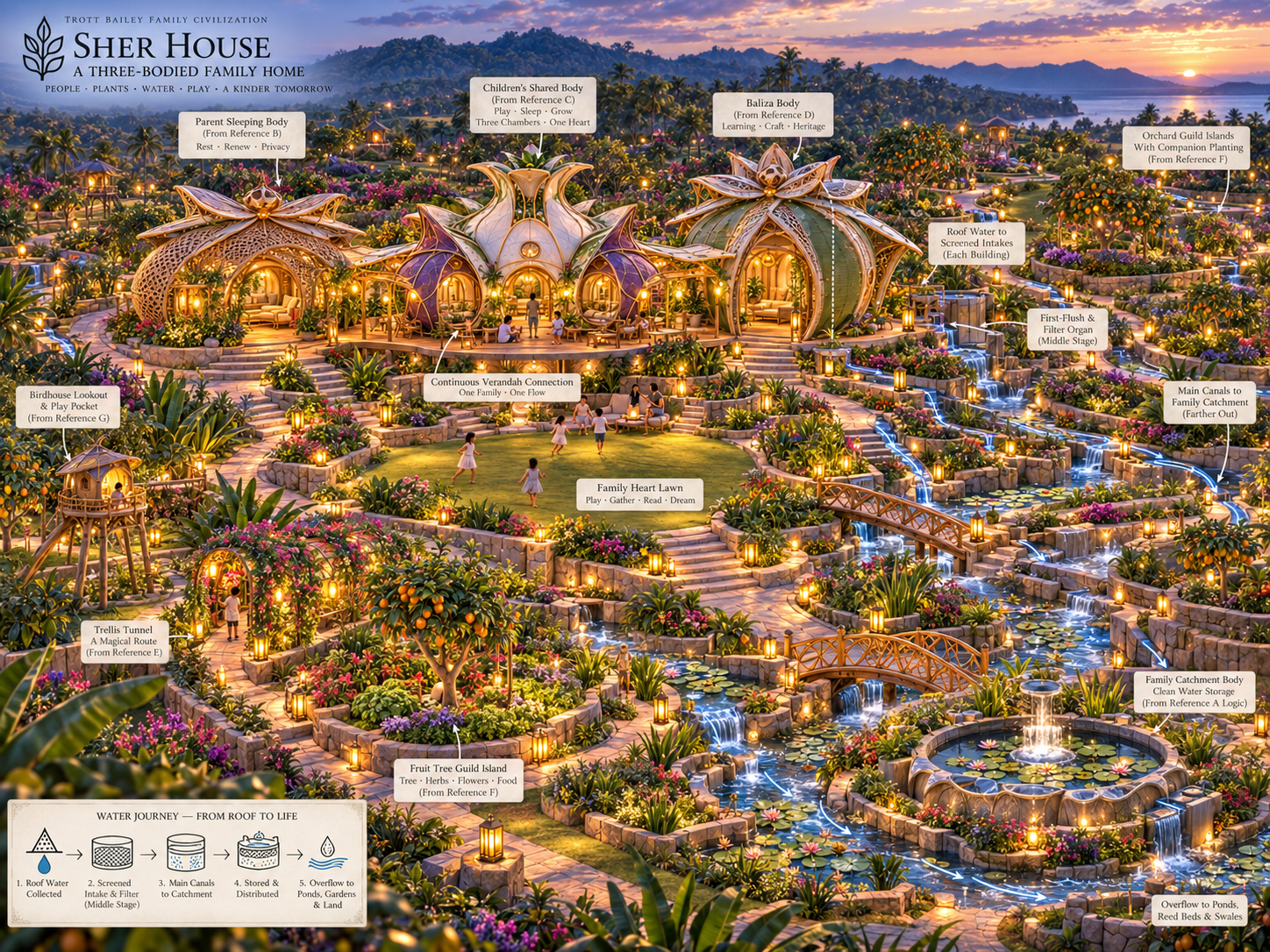
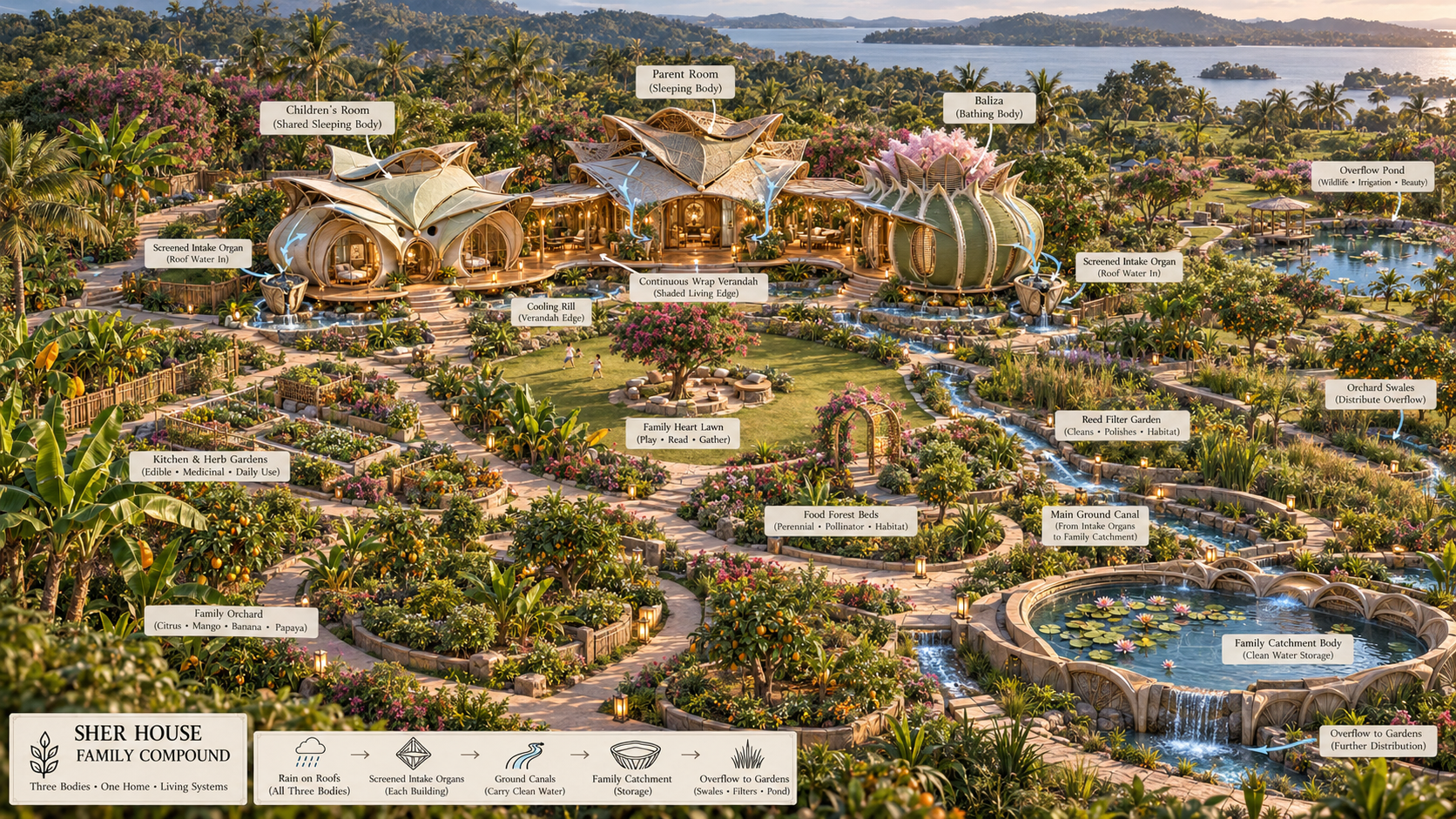
Rainwater
Where does rainwater go after it lands on the roof or ground?
Drainage
How is excess water routed away from foundations, paths, and living areas?
Storage
How is useful water collected and preserved for later need?
Sanitation
How do building systems support cleanliness, bathing, washing, and waste separation?
A poorly designed building can create water problems. A well-designed building can help solve them.
Floods And Droughts Teach Important Lessons
Many people think of floods as simply too much water and droughts as simply not enough water. Reality is often more complicated.
A flood may reveal poor drainage, poor routing, inadequate storage, or inadequate absorption. A drought may reveal poor preparation, poor conservation, insufficient reserves, or weak stewardship.
Civilizations cannot control every natural event, but they can improve how prepared they are.
The Importance Of Water Literacy
Modern systems often make water so convenient that people stop thinking about it. Convenience is good. Ignorance is not.
A healthy civilization should help its people understand where water comes from, how water is cleaned, why storage matters, why contamination matters, why conservation matters, and how water affects food, health, sanitation, buildings, and family life.
This does not mean everyone must become a water engineer. It means citizens should understand enough to participate responsibly in stewardship.
Water Stewardship Is Shared Responsibility
One mistake a civilization can make is assuming that water stewardship belongs entirely to one department, one company, or one institution.
Water touches households, buildings, agriculture, health systems, public infrastructure, and emergency planning. Responsibility must therefore exist at multiple levels.
Families
Use water carefully, maintain household reserves, and understand basic water care.
Builders
Design homes and public spaces that collect, route, drain, and protect water intelligently.
Agriculture
Use water in ways that support food production without weakening future supply.
Water Stewards
Protect quality, reliability, storage, distribution, monitoring, and emergency readiness.
Water Sovereignty And Resilience
A resilient civilization should ask difficult questions before a crisis arrives.
- What happens if outside systems fail?
- How vulnerable are families to disruption?
- How much water can homes, districts, and communities store?
- How much capability exists locally?
- Who knows how to maintain, repair, or replace water systems when needed?
What Kind Of Civilization Does Water Require?
The deepest question is not only about infrastructure. It is about people.
What kind of people must a civilization produce if water stewardship is to survive across generations?
People who understand consequences. People who think beyond today. People who prepare before emergencies occur. People who understand that convenience does not remove responsibility. People who can cooperate across households, agriculture, buildings, and public systems.
Reservoirs matter. Storage matters. Treatment matters. But every water system eventually depends on human decisions.



 and then