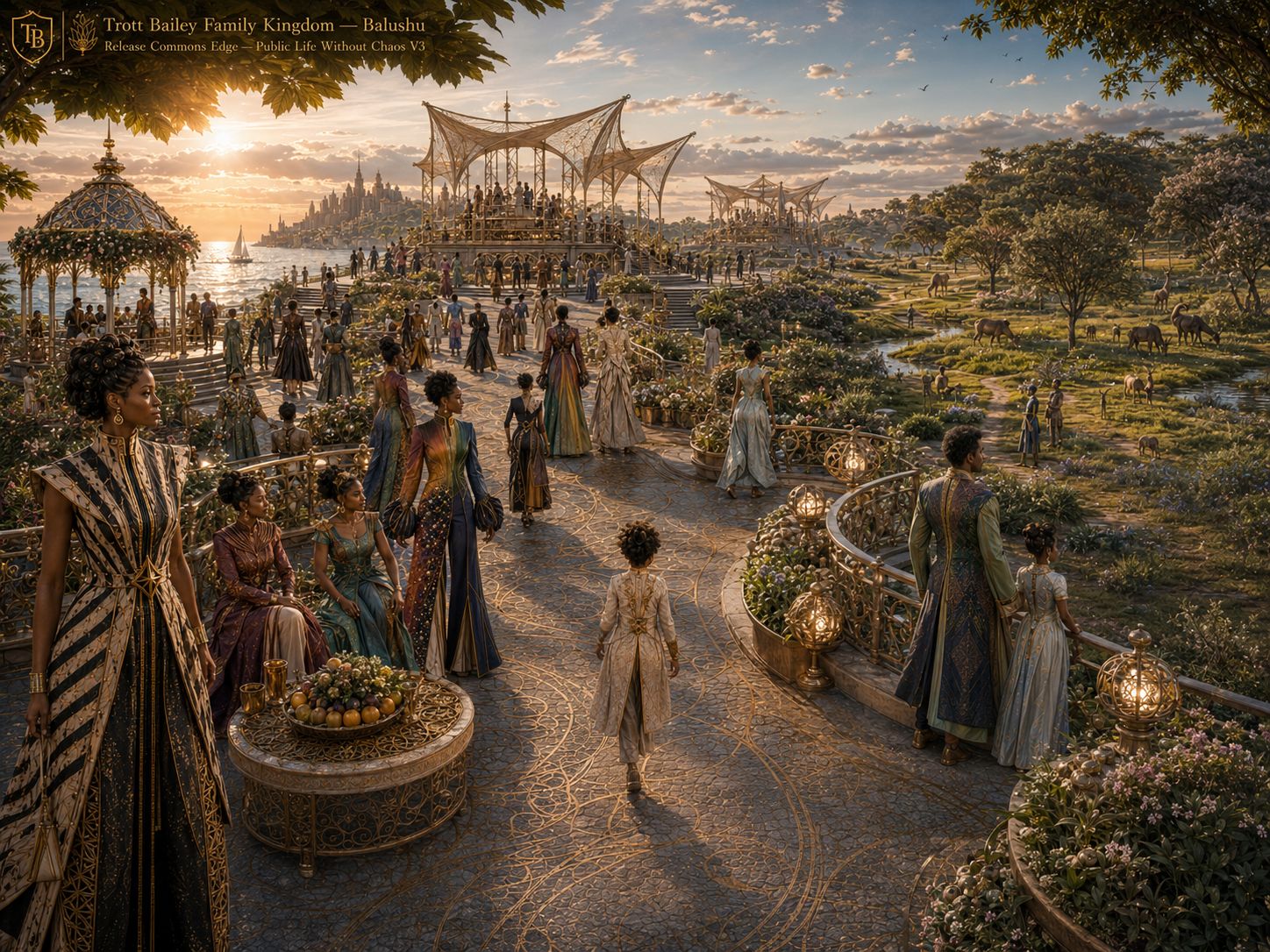
Balushu: Public Life Without Chaos
Balushu: Public Life Without Chaos
Balushu is one of the clearest proofs that the Trott Bailey Family Kingdom is not trying to copy the outside world.
Balushu is not a resort.
It is not a marina.
It is not a stadium district.
It is not a shopping strip.
It is not a theme park.
It is not an entertainment zone where people are pushed from attraction to attraction until they are tired, hungry, hot, and overstimulated.
Balushu is the kingdom’s public-life world.
It is where families gather, walk, eat, rest, watch, celebrate, discover, learn, and move through beauty without being crushed by the crowd.
The central question behind Balushu is simple:
How can millions of people share public life without chaos?
Most places answer that question badly. They build one giant venue, one main entrance, one huge plaza, one food court, one big transport hub, one waterfront strip, one crowd funnel, one main stage, one parking zone, and then wonder why people feel exhausted.
Balushu rejects that logic completely.
In Balushu, public life is not forced into one place. It is distributed.
Beauty is multiplied.
Shade is multiplied.
Food is multiplied.
Rest is multiplied.
Stages are multiplied.
Routes are multiplied.
Water comfort is multiplied.
Quiet is multiplied.
Animal realms are given space.
Families are given choices.
Balushu does not gather people by trapping them in a single mass. It gathers people by giving them many beautiful places to be.
That is the heart of public life without chaos.
Balushu Is a Public-Life World
Balushu is designed as a world of connected experiences.
A family may enter through a shaded arrival garden, walk along a Presence Boulevard, pause at a Sabennery, sit under a Curl-Tip porch, watch a reveal at a Release Commons, follow a Fruit-Crown route, refresh at a water comfort pavilion, then drift into an Animal/Food Engagement Realm where the public-life energy softens into quiet meadow, orchard, and respectful animal viewing.
That is not a random collection of attractions.
That is a civilization-scale public-life system.
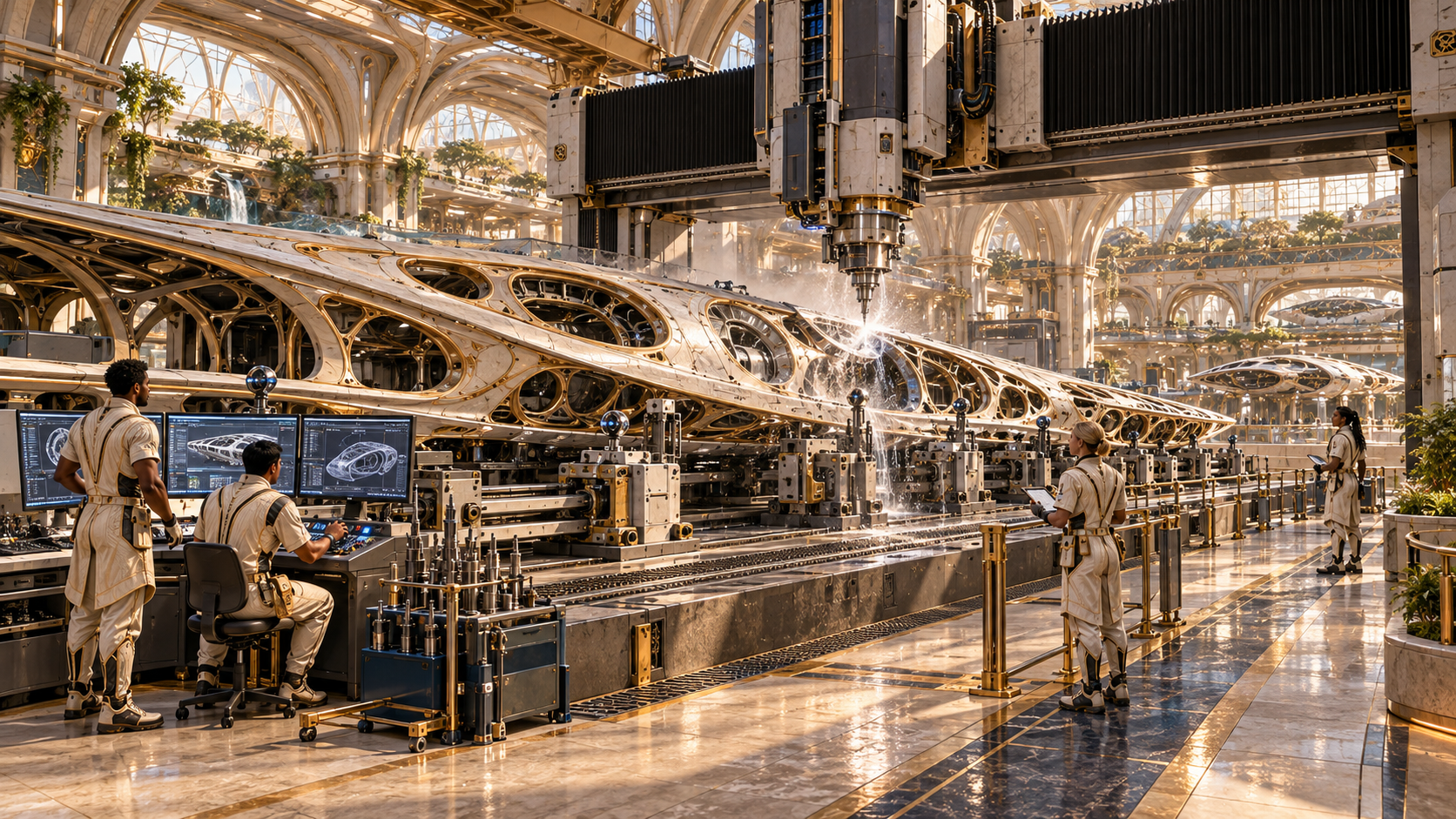
Balushu’s identity is built from movement, support, and choice. It is pavilion-rich, sea-facing, garden-woven, edge-heavy, balcony-supported, child-aware, crowd-distributing, night-glowing, service-intelligent, and family-first.
Every major part of Balushu has a job.
The Release Commons handle witnessing and public presentation.
Sabenneries handle food abundance.
Presence Boulevards handle elegant walking and public discovery.
Fruit-Crown routes connect people through edible gardens.
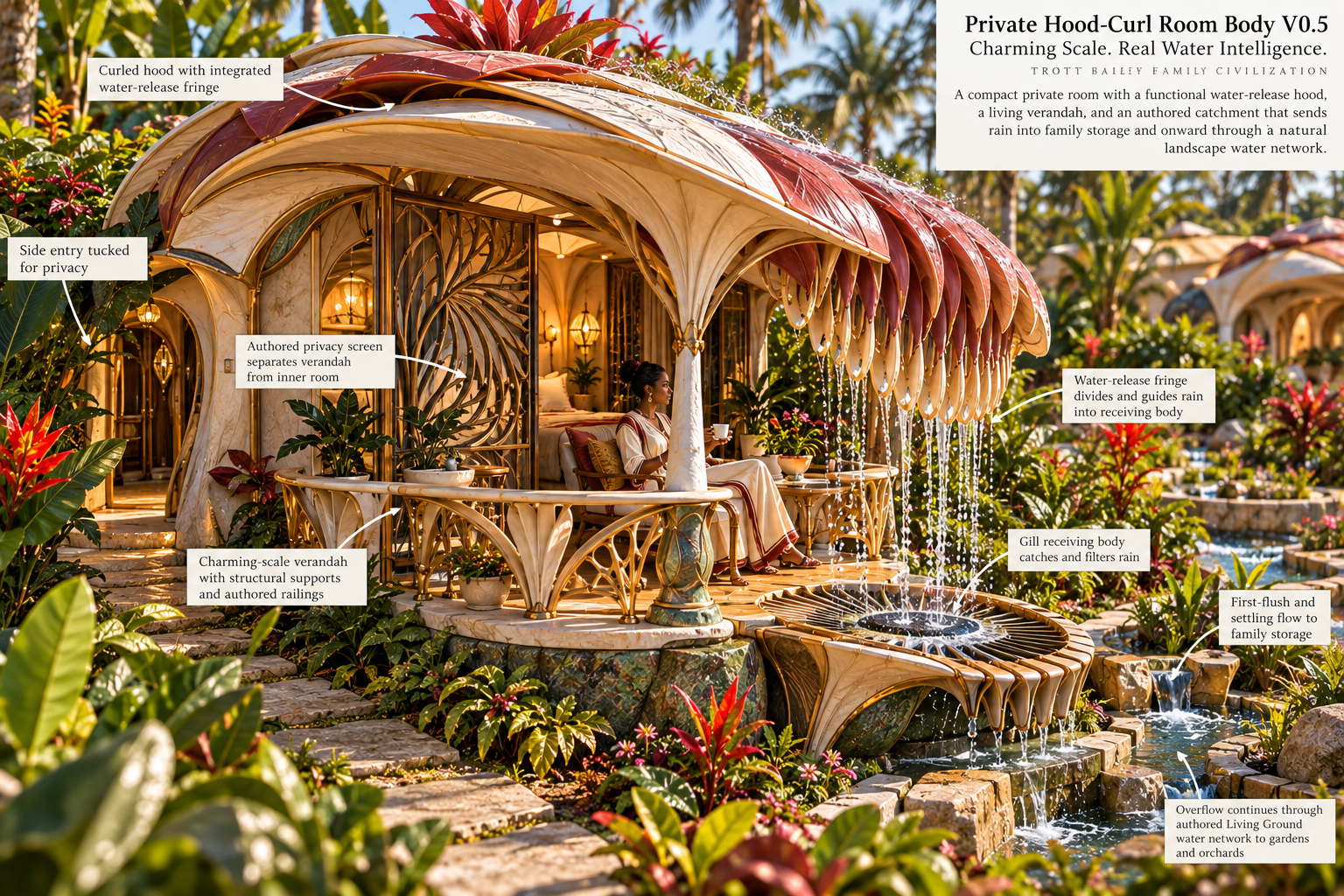
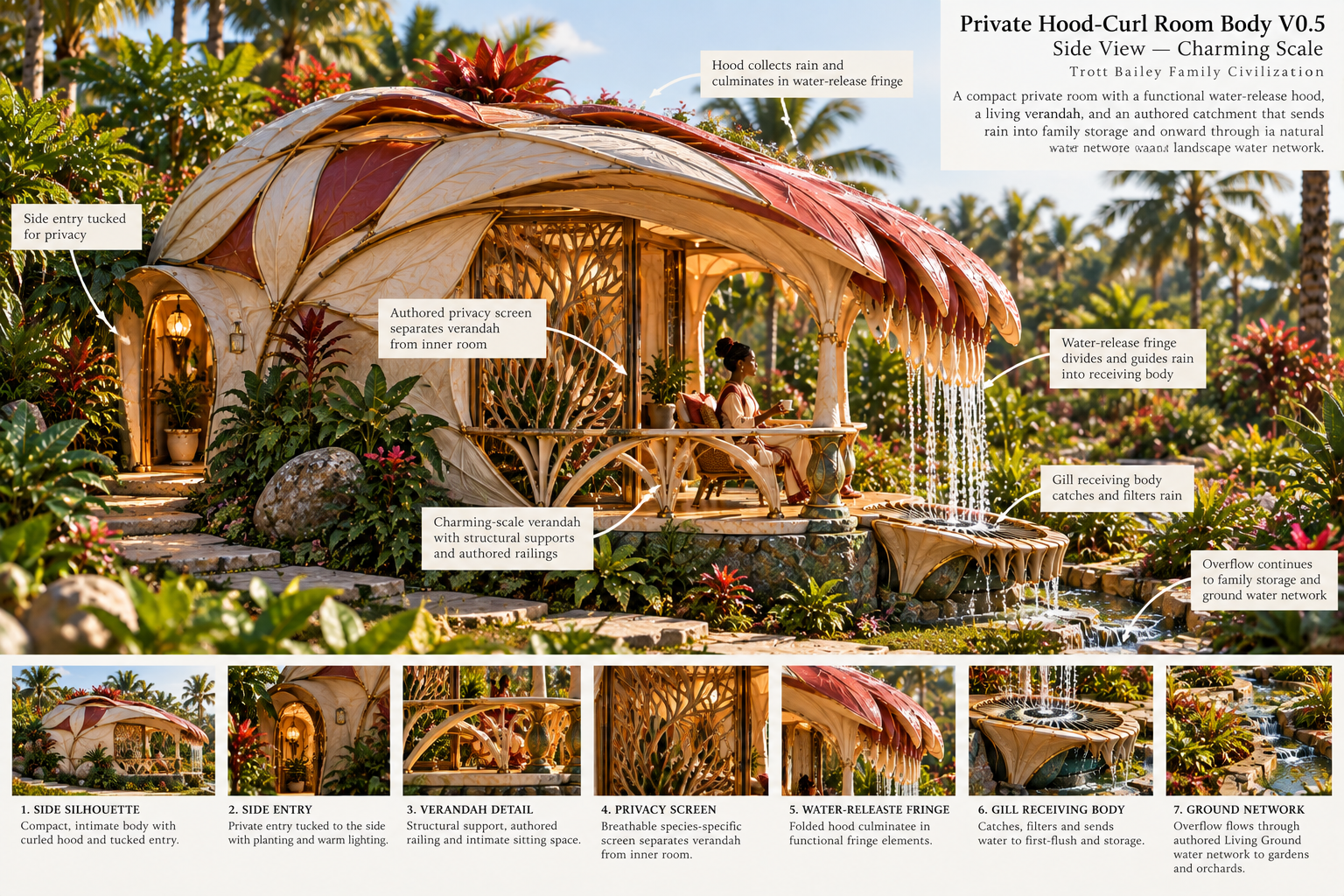
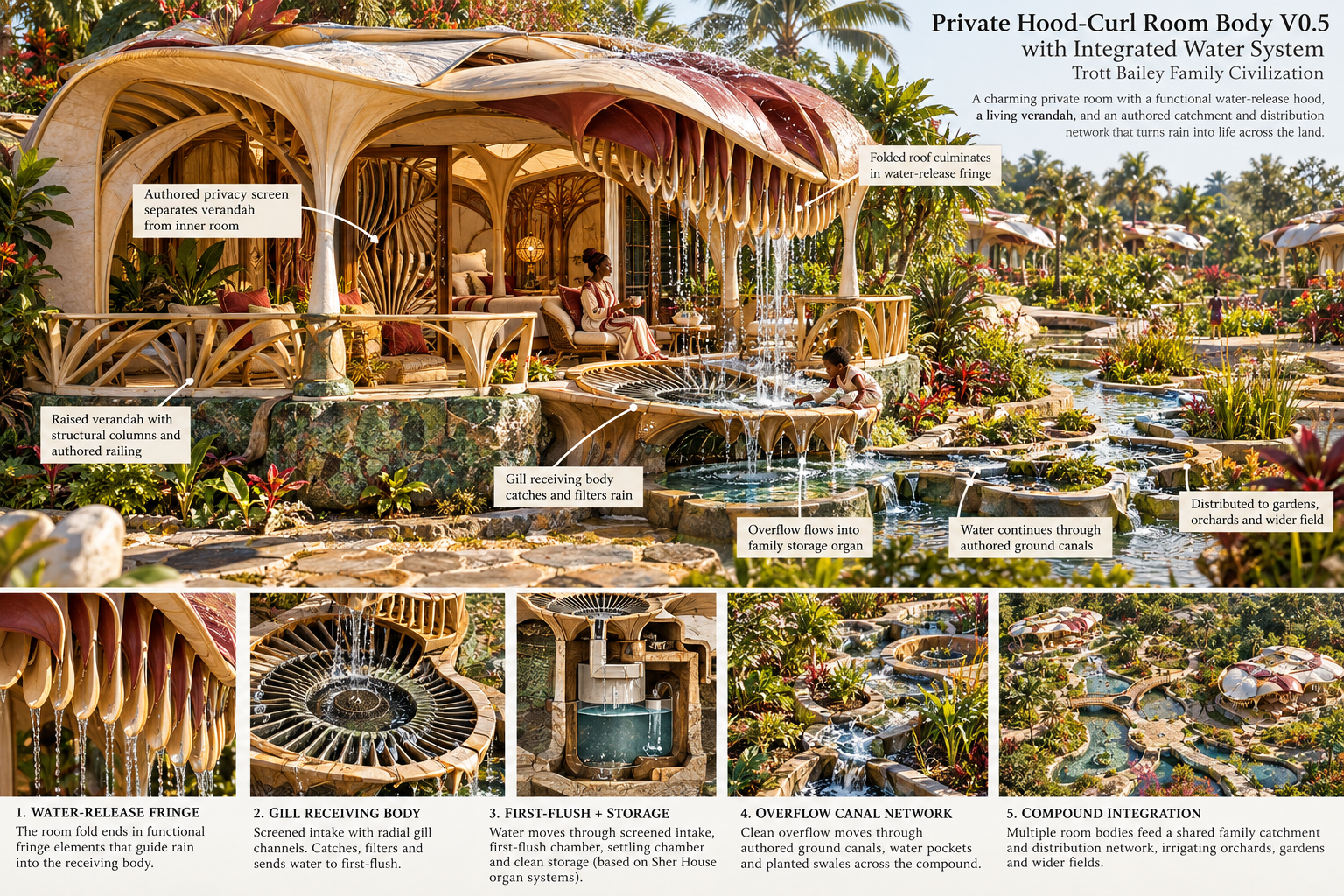
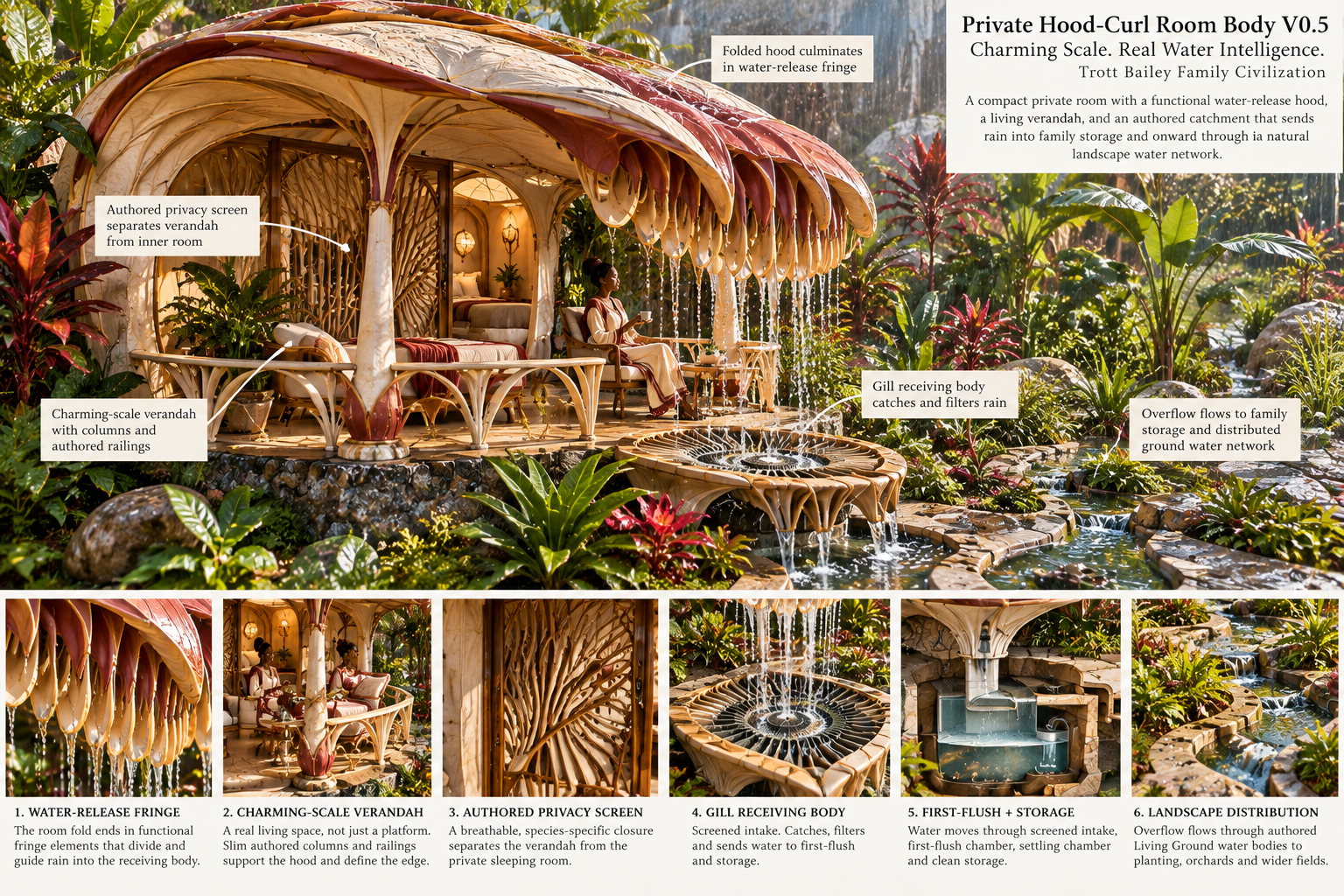
Refresh Pavilions handle mess, heat, salt, sweat, and reset.
Animal Realms offer quiet, space, and dignity for both animals and families.
The Shadow Weave keeps the visible public world calm.
Balushu is beautiful because it works.
Why Balushu Refuses Stadium Logic
A stadium is built around concentration.
One main event.
One main crowd.
One dominant bowl.
One pressure point.
Balushu does not work that way.
The kingdom does not want public life to feel like being packed into a giant container. It does not want families pressed into rows, forced into queues, or trapped in a crush of bodies.
Instead, Balushu uses Release Commons.
A Release Commons is a multi-stage public witnessing landscape. One Release Commons can hold large numbers of people, but it does not behave like a stadium. It is made of stage gardens, ground bloom mats, low terraces, mid bloom nests, calm elder pods, child viewing areas, seated protected pods, and garden routes.
The audience rises like blooms.
People are spread through landscape, not stacked like a wall.
The performance is visible, but the crowd is not crushed. The stage is clear, but the public still has room to breathe. Families can sit, stand, pause, shift, eat, listen, and move without being punished by the design.
This is one of the major differences between Balushu and ordinary public venues.
Balushu does not ask the crowd to endure the event.
Balushu designs the event around the crowd’s dignity.
Public Density With Elegance
Balushu can be full of people without feeling chaotic because it does not depend on one type of space.
There are open promenades.
There are sea-edge balconies.
There are porch pockets.
There are shaded garden routes.
There are quiet side paths.
There are food terraces.
There are animal thresholds.
There are child discovery routes.
There are elder calm areas.
There are service seams hidden behind beauty.
A person is never forced to experience Balushu in only one way.
A young couple may choose the sea-view path.
A family with children may choose the shaded Fruit-Crown route.
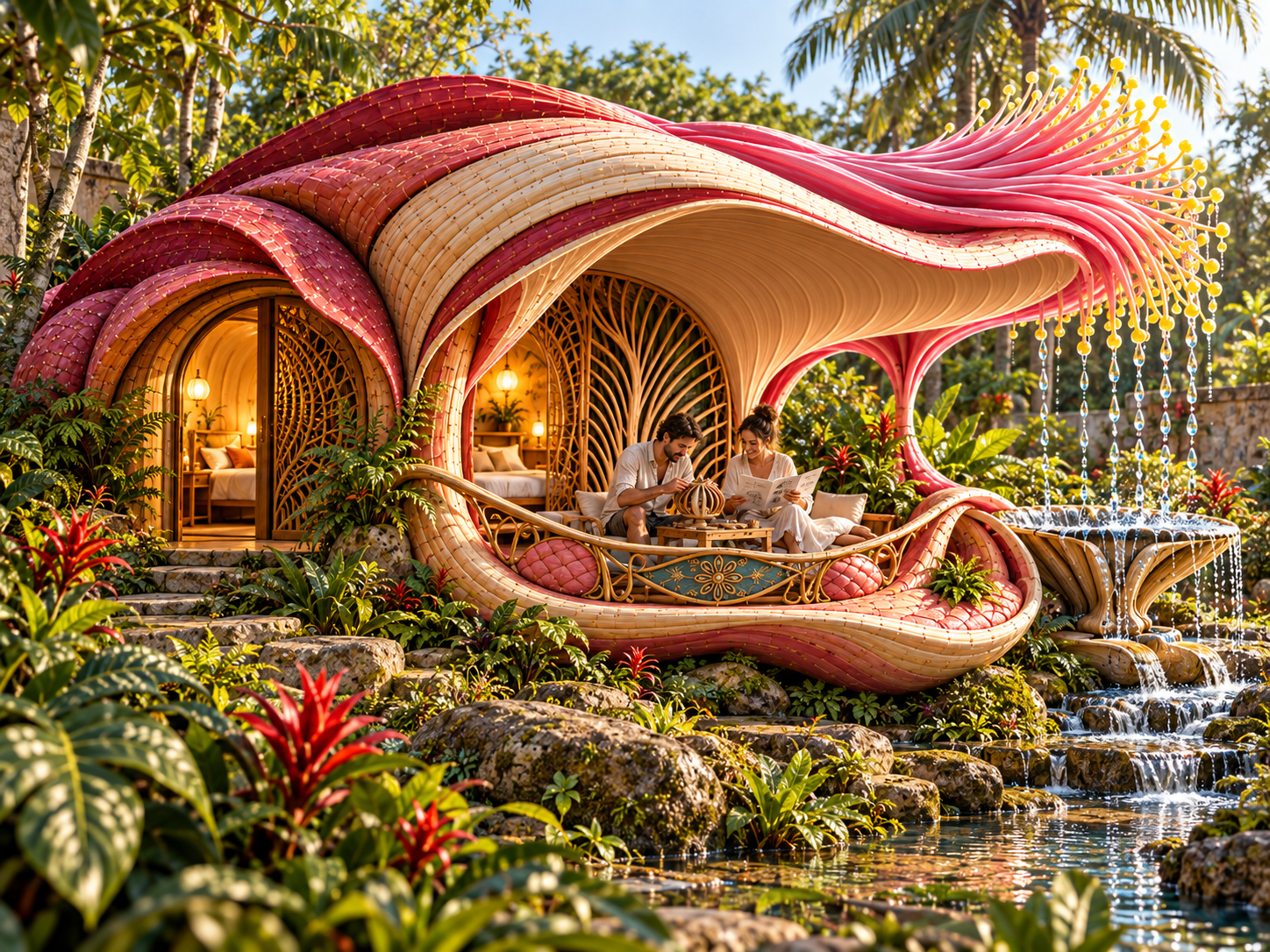
An elder may rest under a Curl-Tip pavilion.
A child may follow a riddle path.
A tired parent may request a gentle assistance carrier.
A family may leave a busy Release Commons edge and enter the quiet Animal/Food Engagement Realm.
The crowd is managed by offering choices before stress begins.
That is public density with elegance.
Sabenneries Prevent Food-Court Chaos
Food can easily destroy public life.
If food is centralized in one giant hall, people rush toward it. If meals are sold through stalls, queues form. If everyone has to buy, decide, wait, carry, and search for seating, the public realm becomes stressful.
Balushu avoids that.
Balushu uses Sabenneries.
A Sabennery is not a restaurant.
It is not a café.
It is not a cafeteria.
It is not a food court.
It is not a market stall.
A Sabennery is the public table of the kingdom.
It receives the kingdom’s abundance and serves it forward.
In Balushu, Sabenneries are distributed throughout the public-life world. They sit near Release Commons edges, Presence Boulevards, Sea Promenades, Fruit-Crown routes, Child Wonder zones, Makji Rest Grove transitions, and Animal/Food Engagement Realm edges.
They are placed where family life actually pauses.
A Sabennery has three faces:
Feed face. Return face. Shadow face.
The feed face serves fresh daily food, seasonal fruit, warm bowls, roast foods, snacks, drinks, and family meals. The return face lets families wash, return vessels, send organic scraps into the proper system, and leave cleanly. The shadow face receives supplies, clean vessels, replenishment, and service movement without turning the public side ugly.
This is how Balushu feeds many people without becoming a food court.
Food does not become a commercial bottleneck.
Food becomes public abundance.
The Shadow Weave Keeps Beauty From Collapsing
One of Balushu’s most important principles is this:
The public has one map; the shadow has another.
The visible map is what families experience. It is the map of promenades, gardens, pavilions, Sabenneries, stages, water comfort points, animal realms, and rest porches.
The hidden map is the Shadow Weave.
The Shadow Weave is the service intelligence behind Balushu. It moves food, clean dishes, used vessels, water, ice, fruit, towels, wipes, stroller help, clothing refresh, Jubo rewards, stage support, animal care supplies, medical support, lost items, cleaning materials, and waste streams.
It also supports elders, babies, tired families, parents with strollers, mobility-limited people, and anyone who needs assistance.
The Shadow Weave is not an ugly back alley. It is not a loading dock. It is not a hidden zone of exhaustion and neglect.
In Balushu, even the shadow must be beautiful.
Service Shadow can be semi-visible when appropriate, through clean steward routes, botanical service panels, handoff pavilions, return walls, and learning windows. But it must never expose families to trash alleys, ugly loading bays, industrial clutter, or warehouse doors.
Balushu feels effortless because its shadow works beautifully.
And the people who keep Balushu beautiful must also be protected by Balushu’s abundance.
That is why Service Shadow labor is not treated as punishment, low-status work, or exhausting service labor. Shifts change smoothly. Workers rest, hydrate, eat, reset their uniforms, and rotate through Pacorips-guided role assignments.
The kingdom does not build beauty on someone else’s suffering.
Water Comfort Is Public Infrastructure
In many public places, water is decorative. It is a fountain, a canal, or a pool placed for atmosphere.
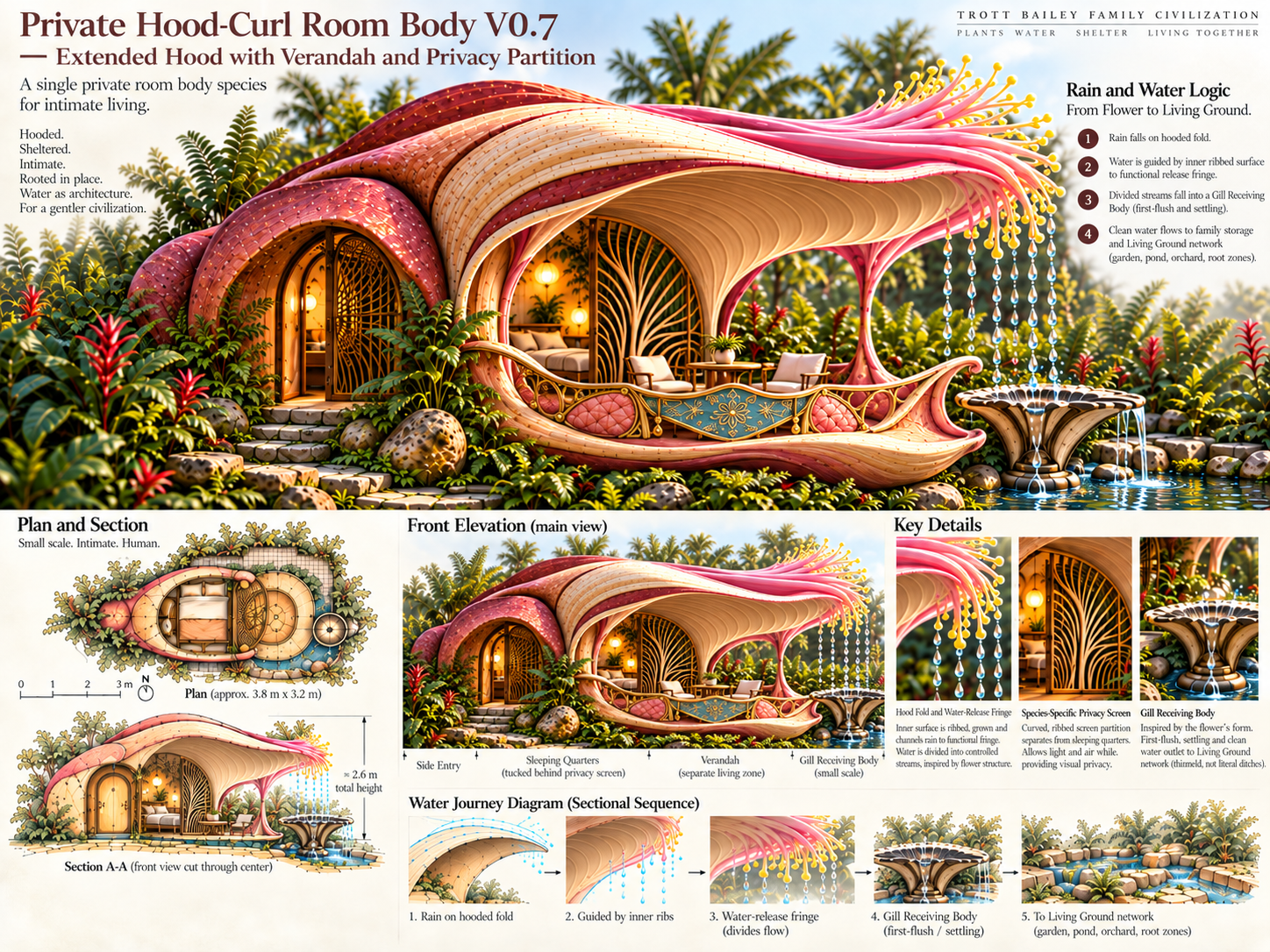
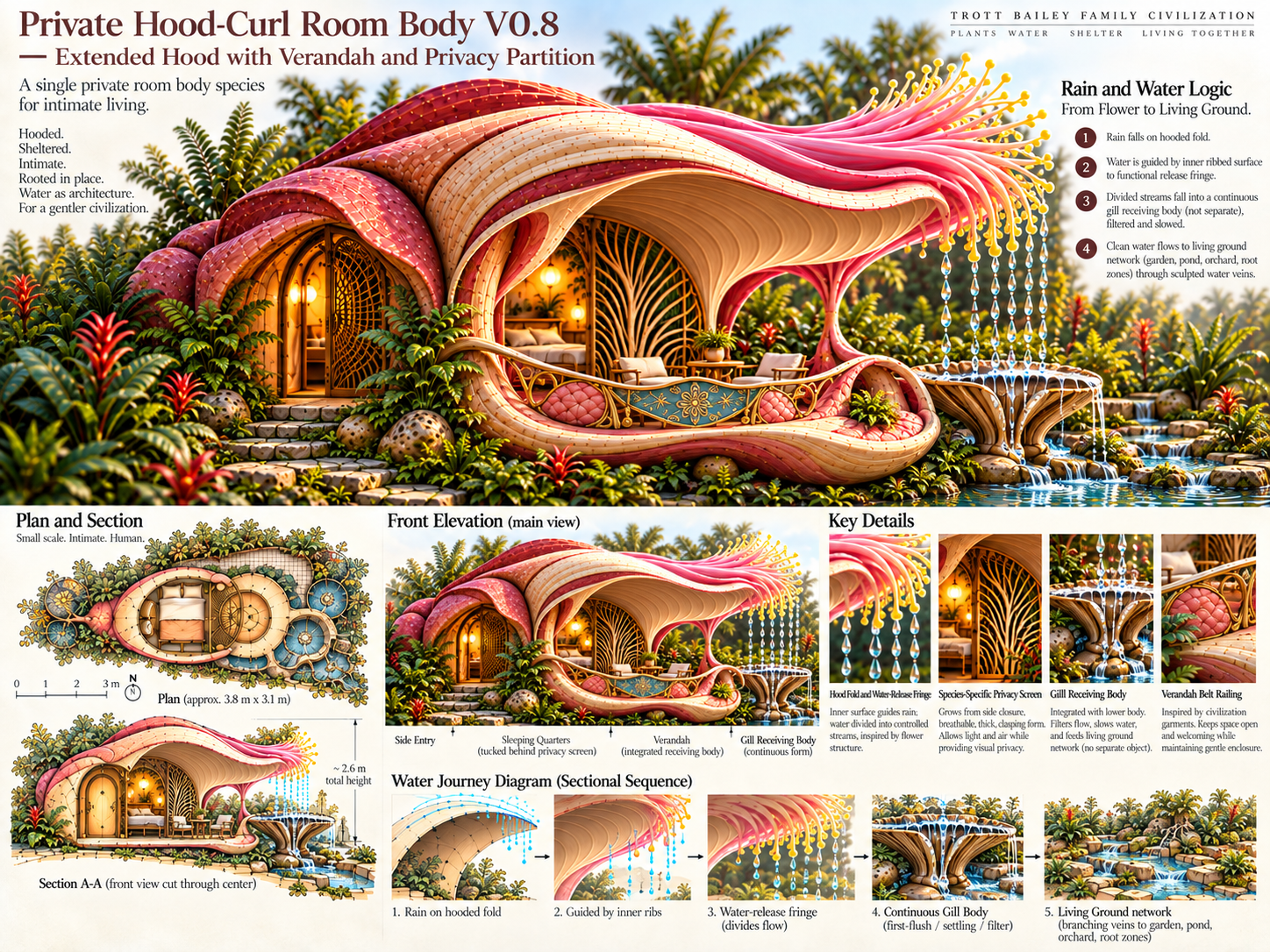
In Balushu, water has a job.
Water cools.
Water cleans.
Water hydrates.
Water guides.
Water supports animals.
Water resets families.
Water feeds gardens.
Water helps public life continue.
This matters because abundance creates mess. Children eat fruit. Families walk by the sea. People sweat. Babies need care. Strollers roll through paths. Elders need hydration before distress. A child with sticky hands should not become a family problem.
Balushu designs reset into the route.
There are handwashing groves, hydration niches, foot rinse points, stroller wheel rinse bays, sea-edge salt reset pavilions, child-height basins, shaded water channels, and Sabennery return-wall liquid routing.
The rule is simple:
If Balushu gives delight, Balushu must also give reset.
A public world that gives children fruit, food, sand, water, animals, and play must also give families beautiful ways to clean, cool, and continue.
Water comfort prevents small discomforts from becoming public stress.
Animal Realms Must Feel Like Another World
Balushu is not only spectacle.
One of its strongest ideas is that a family can leave the energy of a Release Commons and enter a completely different atmosphere.
The Animal/Food Engagement Realms must feel spacious, calm, and secluded. They must not feel like animal displays squeezed beside a public plaza.
The rule is:
Animals come close by comfort, not confinement.
That means animals need deep habitat space, shaded retreat zones, quiet animal-only areas, water territories, orchard feeding landscapes, and distance choices from humans.
Families do not rush at them. They observe through respectful overlooks, quiet verandahs, long viewing lawns, hedged paths, and guided interaction zones only where appropriate.
The threshold into an animal realm is especially important.
Public-life energy must thin out before the animal realm begins.
The hard promenade softens into meadow path. The rail becomes a calm viewing edge. The paving gives way to grass. The crowd becomes smaller. The sound becomes gentler. The animals are visible, but not trapped. The family feels that it is entering a quieter world.
That transition is not decoration.
It teaches respect.
Many Expressions, One Kingdom
A public world is not complete if the people inside it look like generic extras.
Balushu crowds must show a civilization wardrobe, not a uniform crowd.
That means many races, ages, body types, heights, family roles, and clothing branches must be present. Everyone does not need to wear the same cream outfit. Everyone does not need to look like a resort visitor, a fantasy extra, or a modern tourist.
Balushu fashion must carry Trott Bailey identity.
A single scene may include Variegated Shell Route, Mineral Wrap Chamber Route, Crown Bloom Route, Prism Command Column, Off-Axis Pleat Column, Bloom Core Petal Wrap, Sun-Woven Civic Column, Aether Bloom Shard Route, men’s routed column coats, shell-route trousers, child variants, elder variants, and Shubaka steward uniforms.
This is important because clothing is part of civilization.
Fashion tells the viewer who people are, how they move, what roles they hold, what materials the kingdom values, and how public dignity is carried.
The principle is:
Many expressions, one kingdom.
Balushu should never look like one uniformed crowd. It should look like a living civilization.
Beauty as Crowd Management
In Balushu, beauty is not surface decoration.
Beauty is how the kingdom manages movement, comfort, attention, and dignity.
A shaded porch reduces heat stress.
A curved path slows the crowd gently.
A Sabennery prevents hunger from becoming chaos.
A return wall prevents waste from becoming mess.
A water point prevents sticky hands from becoming frustration.
A Flower Orb railing makes safety feel authored, not institutional.
A BloomSound bud guides sound without harsh speaker towers.
A quiet side route lets overwhelmed families leave without shame.
A soft animal threshold lowers emotional intensity.
This is the deeper intelligence of Balushu.
The public world does not need to feel controlled because it is already cared for.
Good design removes panic before it forms.
Balushu Is Not Escape. It Is Civilization
A resort is built for escape.
Balushu is built for public life.
A resort asks people to consume beauty for a limited time. Balushu gives beauty back to the people as a permanent part of civilization.
A resort creates special zones for those who can access them. Balushu operates inside the kingdom’s open abundance model.
A resort hides labor behind luxury. Balushu protects the Service Shadow and makes the hidden operating system part of the moral design.
A resort makes public life feel like leisure. Balushu makes public life feel like belonging.
That is why Balushu cannot become a marina town, hotel promenade, yacht-club waterfront, stadium district, shopping strip, theme park, or entertainment complex.
Those models are too small.
Balushu is larger than leisure.
It is the kingdom’s answer to the question:
What should public life feel like when a civilization actually cares about families?
The Core Promise of Balushu
Balushu is designed so families can gather without being swallowed.
A child can wonder without being lost.
An elder can rest before exhaustion.
A parent can wash sticky hands without scolding.
A hungry family can eat without buying.
A performer can be seen without a stadium crush.
An animal can approach without being forced.
A steward can serve without being exploited.
A crowd can move without becoming chaos.
That is the promise.
Balushu is not simply beautiful.
Balushu is a public-life operating system where beauty, food, shade, water, fashion, animals, service, rest, and movement are all designed together.
It proves that a civilization does not have to choose between abundance and order.
It can have both.
It can gather millions and still protect the family.
It can host spectacle and still preserve quiet.
It can feed crowds and still avoid food-court chaos.
It can build public beauty without turning people into consumers.
It can make a world where the crowd is not a problem to control, but a family body to care for.
That is Balushu.
Public life without chaos.



 and then