
Children Should Be Able to Help Themselves


Children Should Be Able to Help Themselves
A child-friendly civilization is not one where adults do everything for children. It is one where the environment is designed so children can handle small needs safely, clearly, and confidently.
Child self-help design means building homes, kitchens, washcourts, gardens, food spaces, and public routes so children can complete simple tasks without needing adult intervention every time.
This does not mean children are left unsupervised. It means adults are not forced to stop everything for every sticky hand, sandy foot, spilled drink, small food taste, cup refill, or basic rinse.
Good child self-help design reduces parent stress, teaches responsibility, builds confidence, and makes public life easier for families.
Children should not be treated as interruptions when the environment can be designed to support their small needs.
The Problem: Children Are Often Designed Around, Not Designed For
Many homes and public places are built at adult height, with adult controls, adult handles, adult sinks, adult counters, adult signs, and adult pacing.
Then children are blamed for needing help. They cannot reach the sink, cannot turn the tap, cannot understand the sign, cannot rinse their own feet, cannot access a safe food surface, and cannot return used cloths or wrappers to the right place.
The result is not only child frustration. It is parent exhaustion.
This is why child self-help is not a small decorative idea. It is a serious family-relief system.
What Child Self-Help Means in Real Life
Child self-help does not mean asking children to act like adults. It means giving children child-scale tools for child-scale tasks.
A child should be able to rinse sticky fingers after eating fruit. A child should be able to wash sandy feet after playing. A child should be able to place a used cloth into the correct basket. A child should be able to taste a small food portion at a safe ledge. A child should be able to understand a picture-symbol instruction without reading a long sign.
Sticky Hands
A low rinse point lets a child clean fruit juice, honey, sauce, or dessert from their hands without needing an adult to lift them.
Sandy Feet
A foot-rinse petal or shell trough lets a child rinse sand before entering a home, Sabennery, or family sitting area.
Food Tasting
A tiny-taste ledge lets children try safe portions without crowding the main cooking or serving area.
Simple Return
Clearly marked child-height baskets or return slots help children put cloths, banana leaves, cups, or food sticks in the right place.
The Child Self-Help Rinse Grove
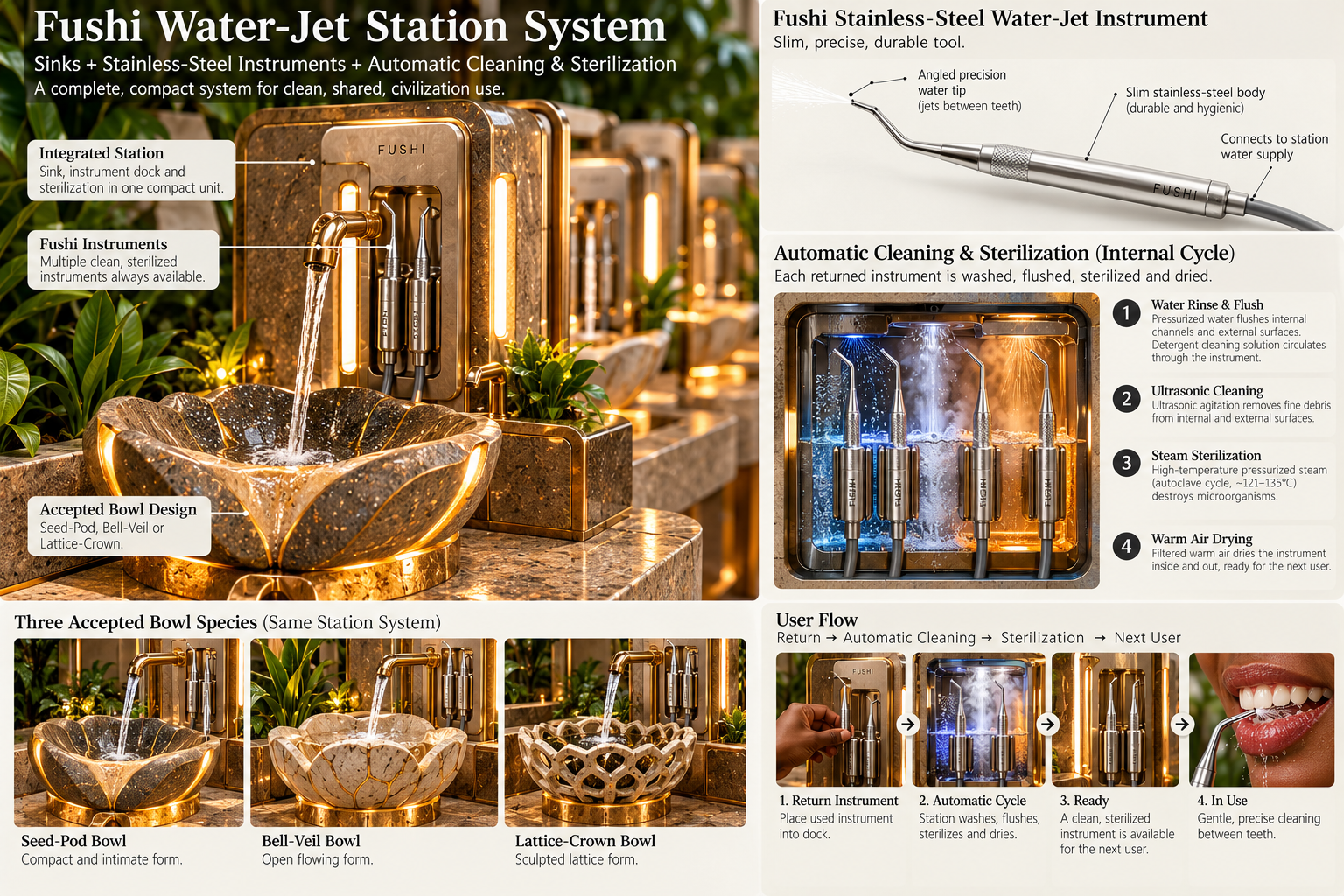
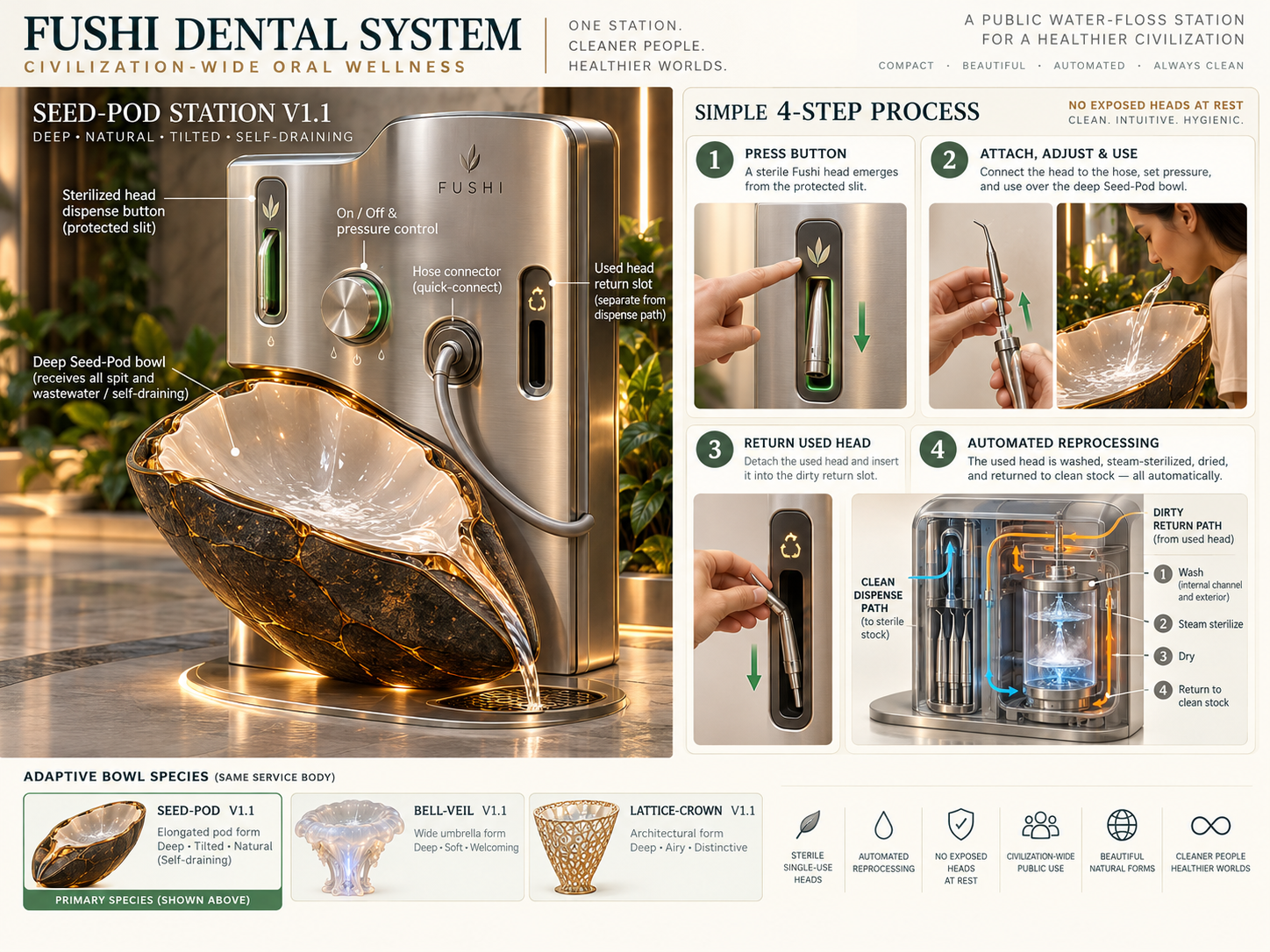
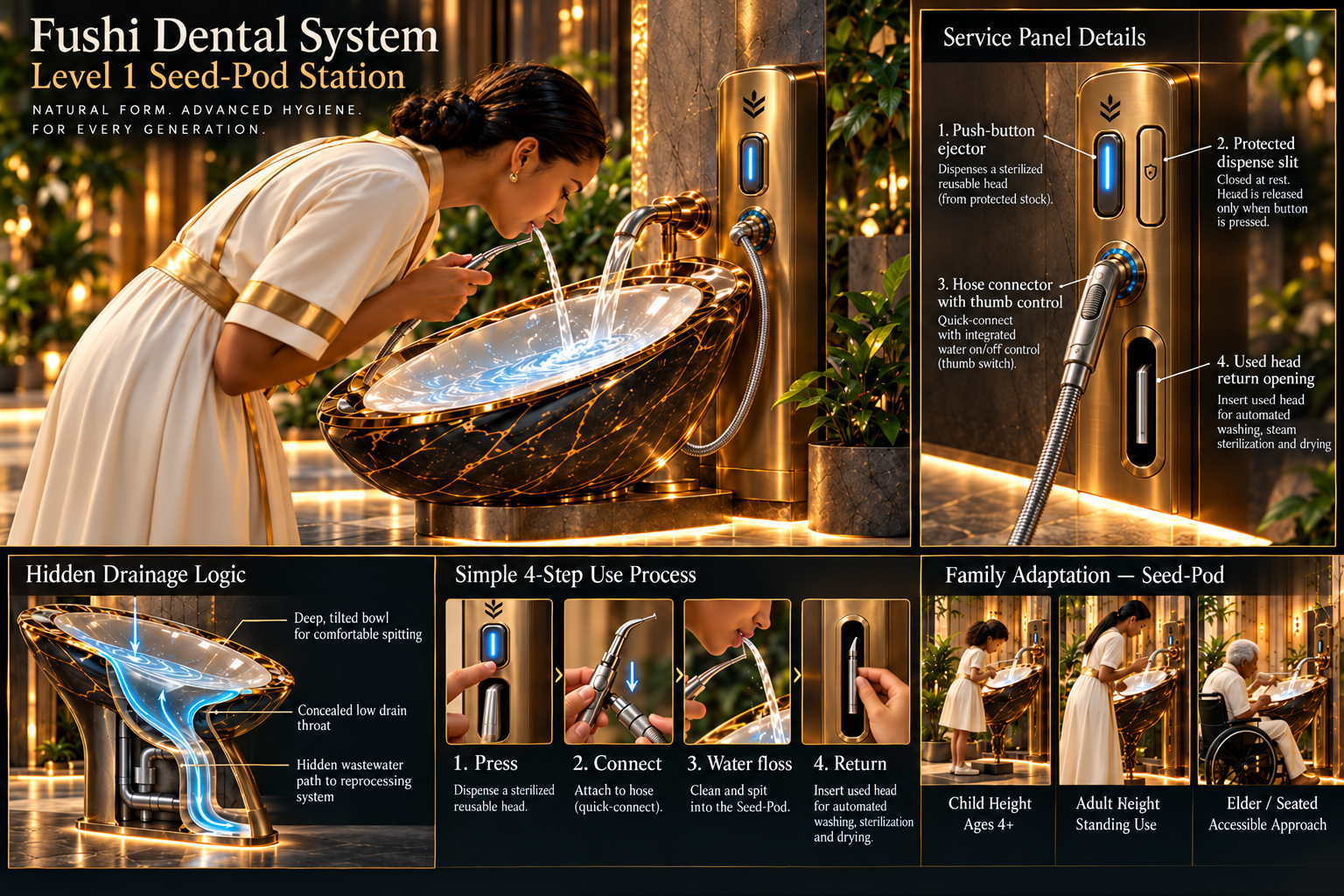
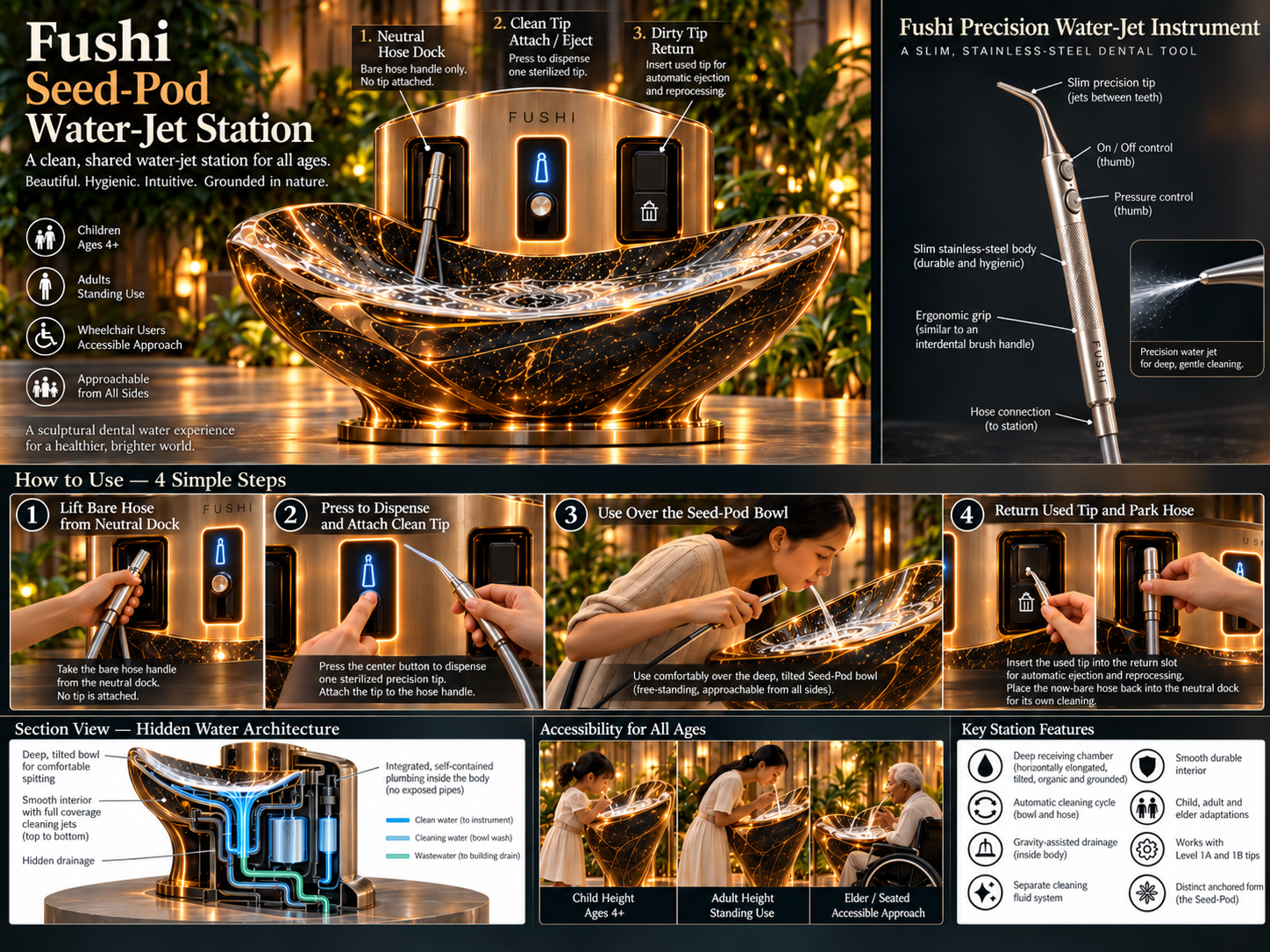
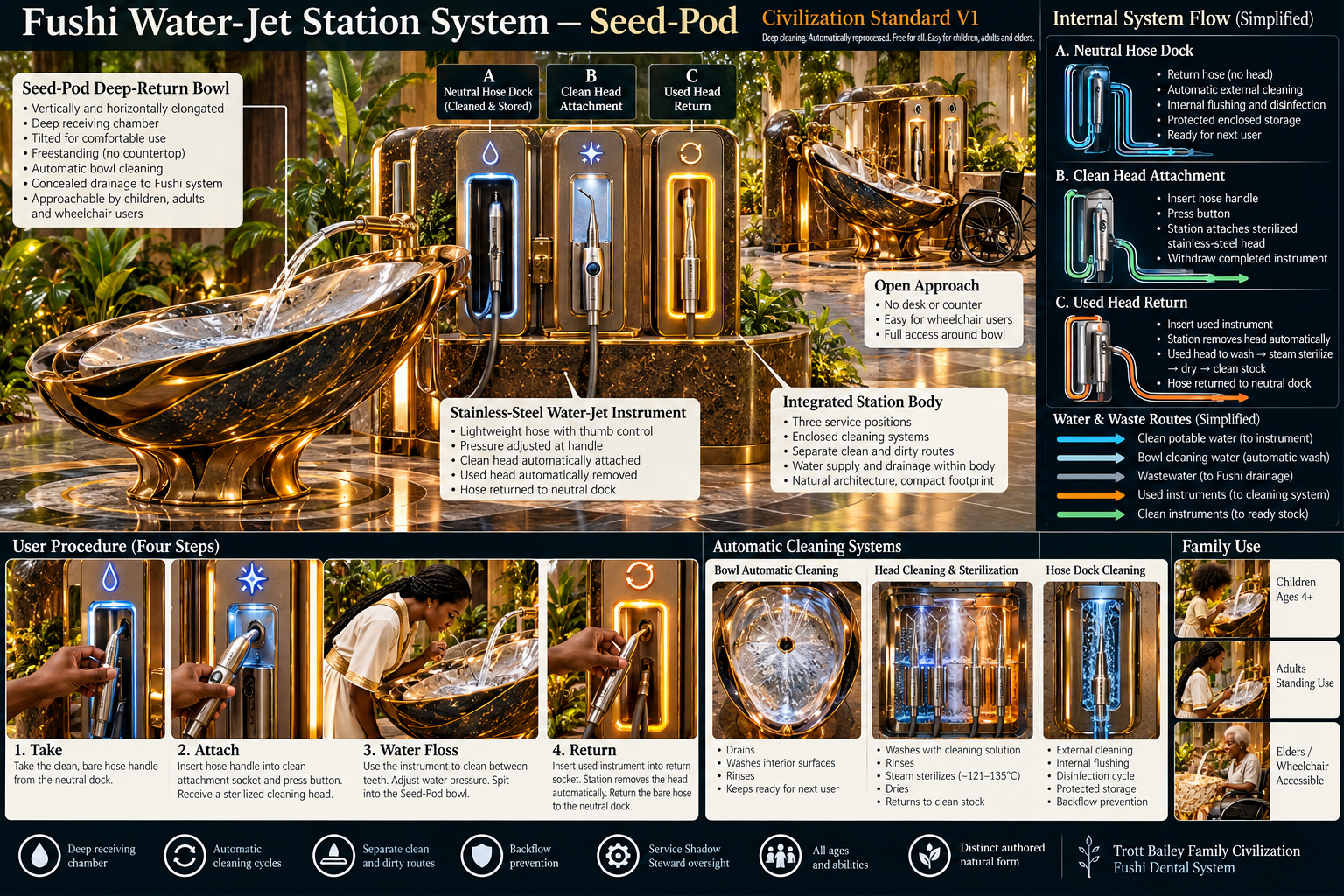
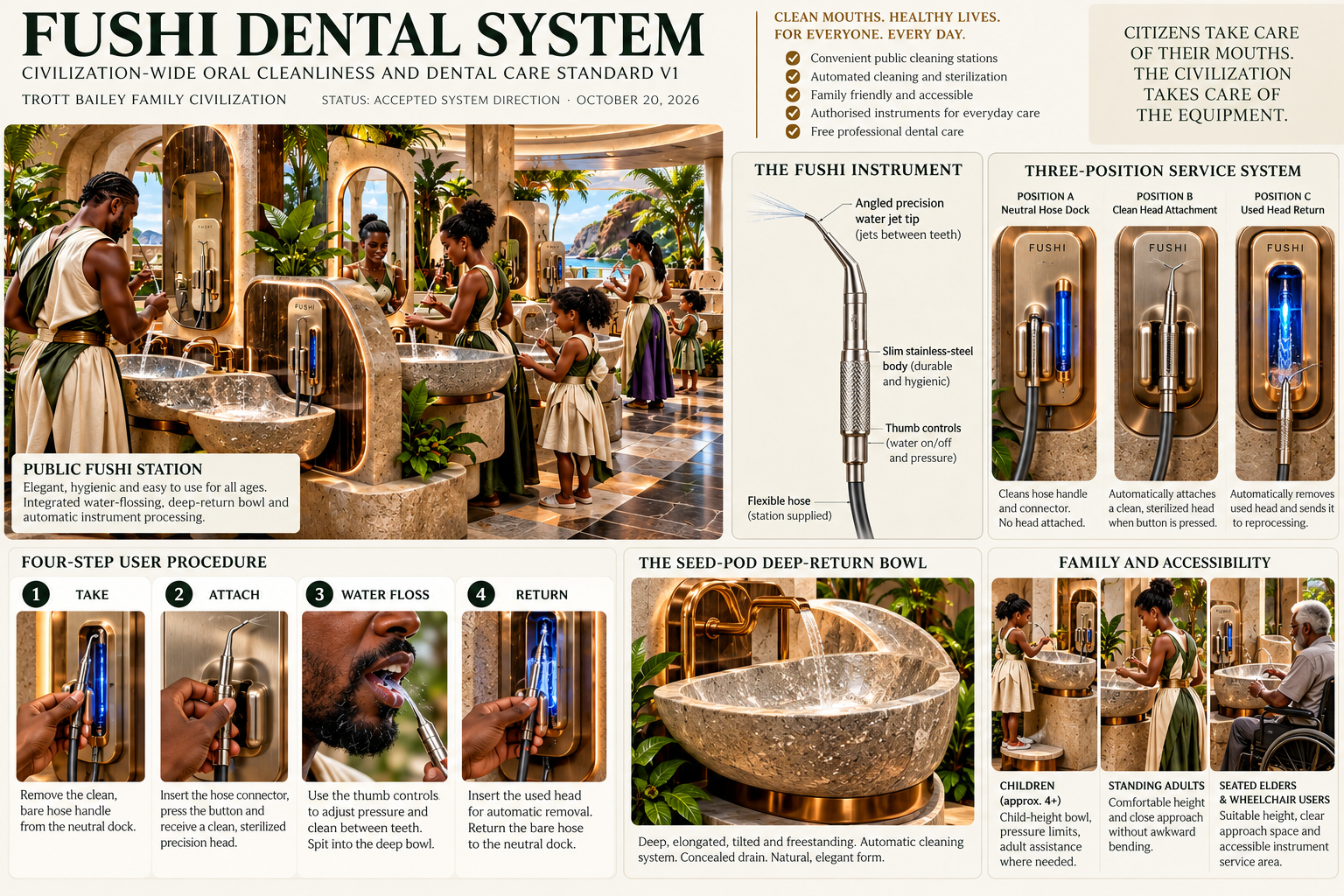
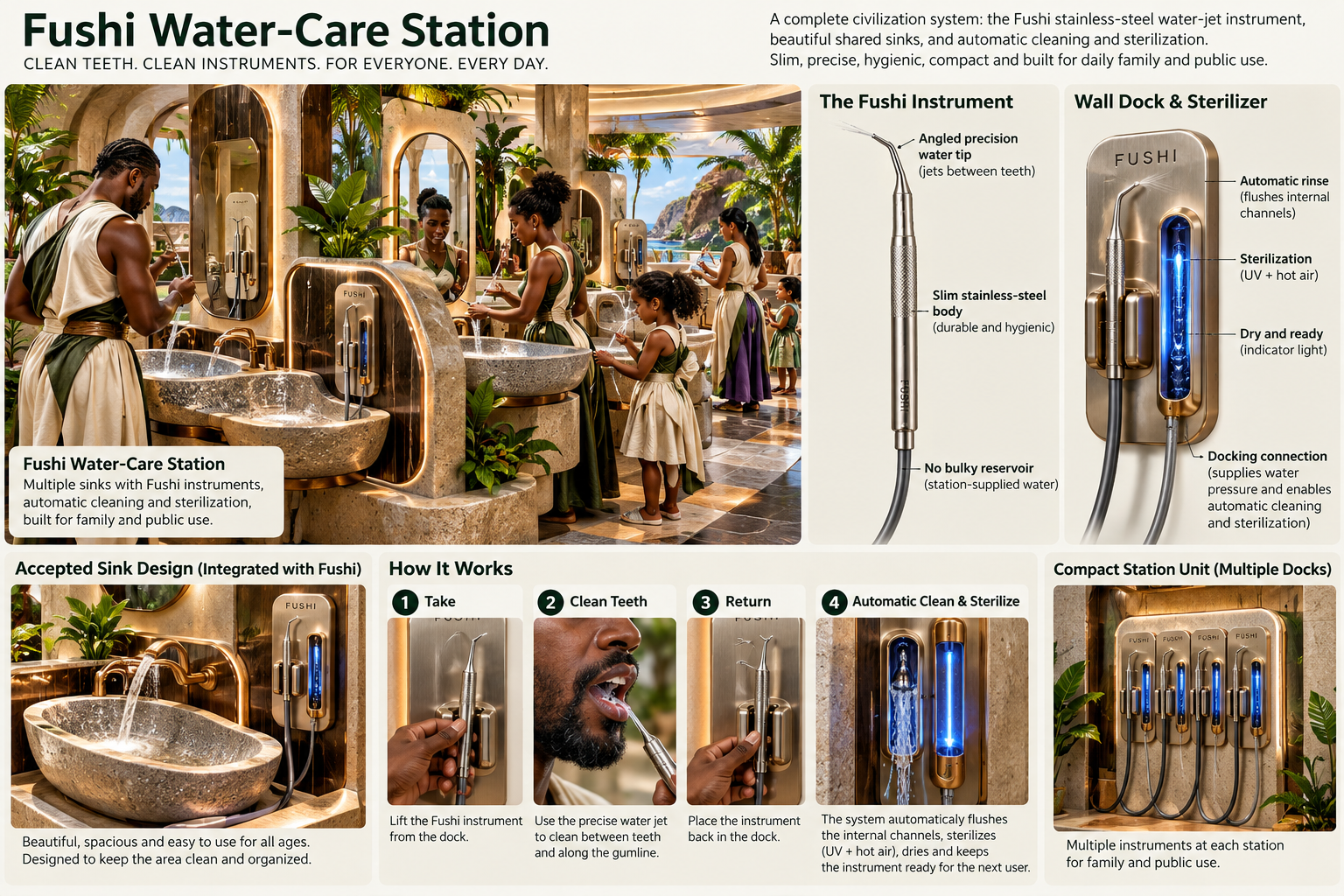
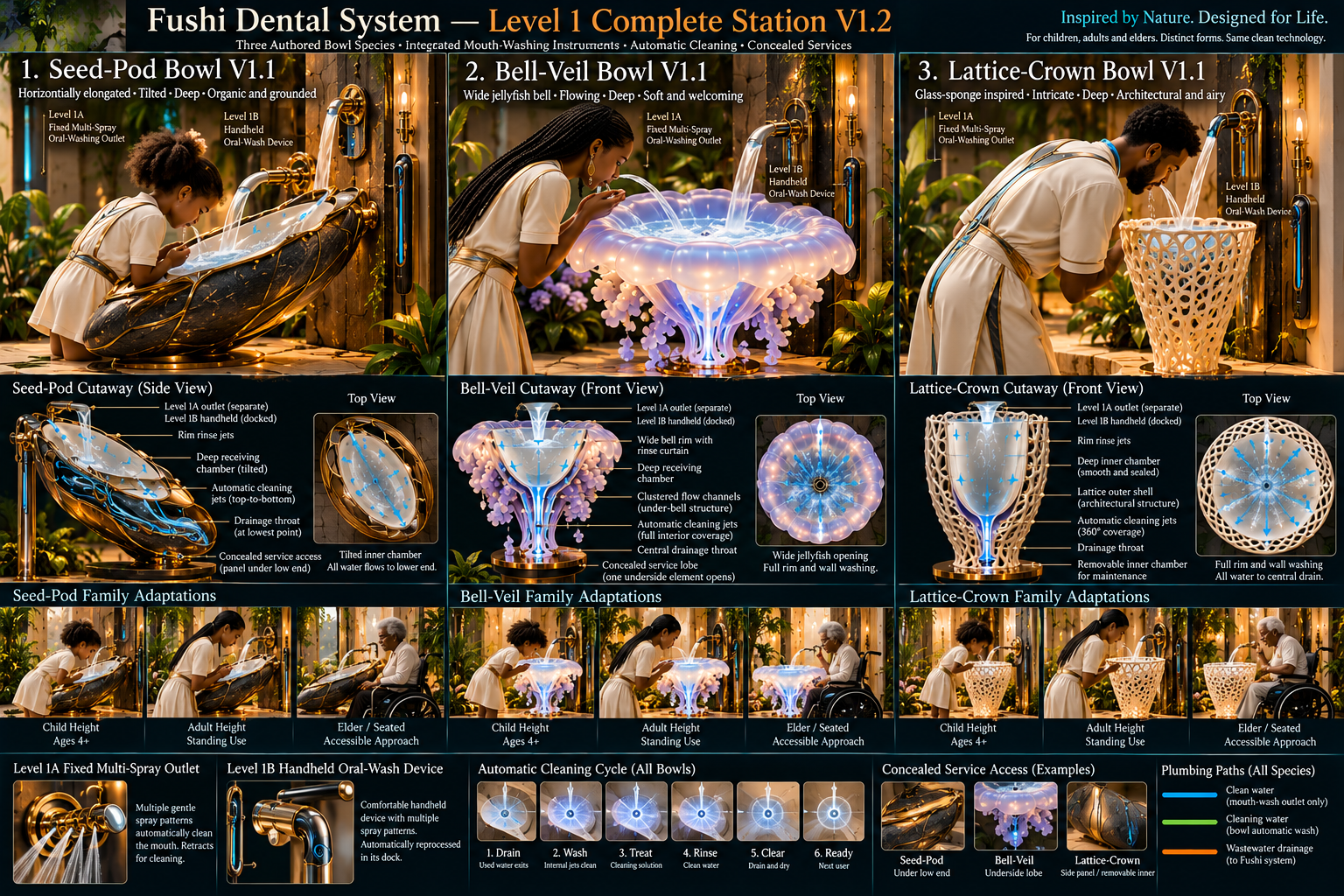
A Child Self-Help Rinse Grove is a child-scale wash area inside a washcourt, garden, food court, Baby World route, beach-return path, or public family zone.
A washcourt is a public body-support area where people can wash, rinse, cool down, clean children, reset clothing, and return to public life. The child rinse grove is the child-specific part of that system.
It should be designed so children can use it easily while adults supervise nearby.
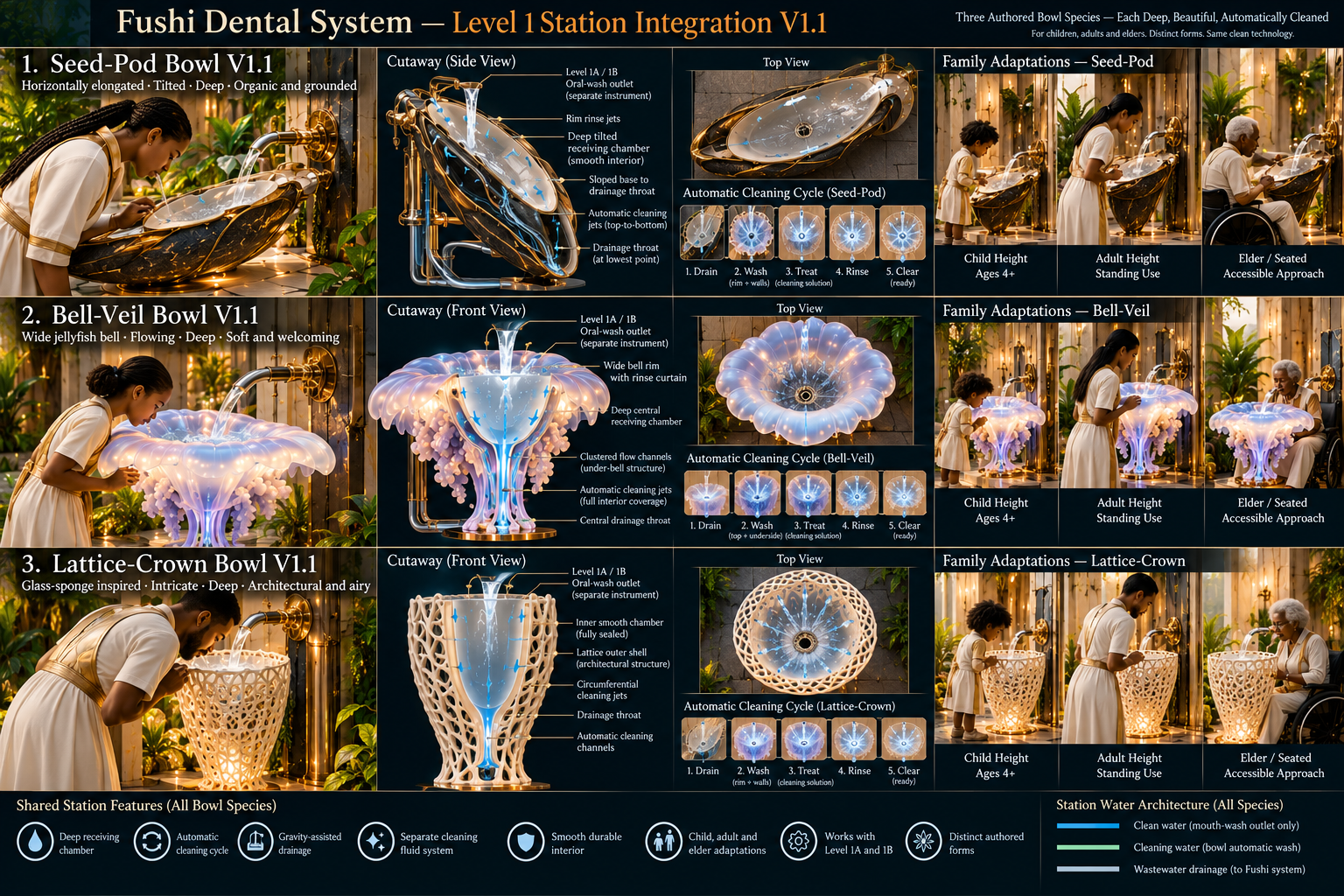
- child-height rinse bowls
- large soft-press water buttons
- easy-turn flower knobs
- color-coded warm and cool controls
- timed water release so taps do not stay running
- foot-rinse petals for sandy feet
- low airflow drying arches
- picture-symbol instructions
- non-slip floors
- parent seating nearby
The controls must be easy for small hands, obvious at a glance, and safe enough for independent use. Children should not have to fight stiff handles, confusing sensors, adult-height taps, or unclear buttons.
Child controls must be simple enough that a child can understand them quickly and safe enough that adults do not have to hover over every use.
The Tiny-Taste Ledge in Food Spaces
A Tiny-Taste Ledge is a child-height food surface where children can safely taste small portions, learn flavors, and participate in food life without standing in the main adult work path.
This belongs in home finishing hearths, Sabenneries, food learning areas, and family cooking spaces. A finishing hearth is a home kitchen designed for receiving, warming, seasoning, assembling, and serving food that has already been partly prepared by the wider food system.
The Tiny-Taste Ledge prevents two common problems. First, children are not pushed away from food learning. Second, they are not underfoot in the most dangerous or busy part of the kitchen.
What It Gives Children
Safe tasting, small choices, food curiosity, responsibility, and a clear place to participate.
What It Gives Parents
Less interruption, less child reaching, less crowding near heat, and more peaceful meal finishing.
Self-Help Does Not Mean No Supervision
Child self-help must not be misunderstood. It does not mean children are left alone with water, heat, tools, or food.
It means the adult role changes from constant physical intervention to calm nearby supervision. The parent can sit, watch, guide, and step in when needed, instead of doing every small action by hand.
For example, in a Child Self-Help Rinse Grove, the parent may sit at the edge while a child presses a soft button, rinses sticky hands, dries them under a low airflow arch, and returns to the family table.
The child gains confidence. The parent gains relief. The public space remains orderly.
Clear Design Prevents Chaos
Some people may worry that giving children self-help systems will create mess. That can happen if the design is weak.
Good child self-help design prevents chaos by making the correct action obvious and limiting what can go wrong.
- Timed water buttons prevent taps from running endlessly.
- Non-slip floors reduce falling risk.
- Picture symbols reduce confusion.
- Low basins reduce splashing.
- Separate wet and dry zones keep paths safer.
- Parent seating keeps adults nearby.
- Visible return baskets teach where used items go.
- Rounded forms reduce injury risk.
The goal is not to give children unlimited control. The goal is to design small freedoms inside safe boundaries.
Self-Help Reduces Mother Burden
In many families, mothers are expected to respond to every small need: wipe this, wash that, pick this up, fix that shoe, clean that spill, bring that snack, help with the bathroom, manage the mess, calm the child, carry the bag.
Some of this is normal care. But much of it is caused by poor design.
If a child can reach the rinse point, understand the return basket, use a safe food ledge, and wash sandy feet without being lifted or dragged across a room, the mother’s burden is reduced.
Self-Help Builds Real Competence
Children do not become capable by being kept away from every practical action. They become capable by practicing small, safe responsibilities again and again.
Rinsing hands, putting a cloth in the right basket, tasting new food, carrying a small bowl, pressing a water button, rinsing sandals, or wiping a small spill may look minor. But these actions train coordination, awareness, responsibility, and belonging.
In Trott Bailey Family Kingdom, children are not treated as decorative passengers in family life. They are gradually trained to participate.
A child-friendly civilization should raise capable children, not helpless observers.
Where Child Self-Help Should Appear
Child self-help should not be limited to playgrounds. It belongs anywhere children repeatedly create small needs.
Homes
Low rinse points, tiny-taste ledges, cloth baskets, safe snack access, and child-height cleanup tools.
Sabenneries
Child-height food ledges, sticky-hand rinse points, Doon cloth return, and clear food return slots.
Washcourts
Self-help rinse groves, foot-rinse petals, low airflow drying, and picture-symbol instructions.
Sea and Sand Routes
Shell foot-rinse troughs, sandal ledges, wet/dry transition points, and seated parent supervision.
Baby World and Kezidek
Soft toddler-scale wash points, stroller-adjacent reset areas, warm water, and parent rest nearby.
Kaleeyon and Play Areas
Invention mess cleanup, chocolate or sticky-food reset, playful controls, and child-readable water symbols.
The Trott Bailey Correction
Old Pattern
Adult-height sinks, unclear controls, no child return points, children needing help for every small task, and parents constantly interrupted.
Trott Bailey Pattern
Child-height rinse groves, tiny-taste ledges, picture instructions, timed water controls, simple return baskets, and nearby adult supervision.
The practical result is simple. Children can do more small things safely. Parents are interrupted less. Public places stay calmer. Children learn responsibility. Family life becomes easier without removing care.
Children should be able to help themselves because good design should reduce unnecessary dependence, not create it.


 and then