
Makji Are Not Cars: How the Trott Bailey Family Kingdom Redefines Movement
Makji Are Not Cars: How the Trott Bailey Family Kingdom Redefines Movement
In most places, movement is treated like a problem.
People need to get from one place to another.
So they are given roads, cars, buses, trains, parking lots, stations, tickets, traffic, waiting, noise, and stress.
The outside world often calls that transportation.
The Trott Bailey Family Kingdom sees it differently.
Movement is not only about getting somewhere.
Movement shapes family life.
If movement is stressful, family life becomes stressful.
If movement separates parents from children, family life becomes more fragmented.
If movement is ugly, rushed, crowded, and exhausting, people arrive already drained before life even begins.
That is why Makji matter.
Makji are not cars.
They are not vehicles in the ordinary sense.
They are part of a completely different movement philosophy.
The Outside World Built Movement Around Machines
Modern movement is usually designed around the machine first.
The car needs roads.
The road needs traffic systems.
The traffic system needs parking.
The parking creates distance.
The distance creates more dependence on cars.
Then family life is forced to fit inside that structure.
Parents buckle children in.
Everyone sits still.
Families move through sealed boxes, traffic lanes, fuel stations, parking lots, and stressful transitions.
Even when the car is expensive, the lifestyle can still be exhausting.
The car may be comfortable inside, but the world built around it is often hostile to family rhythm.
That is the problem.
The issue is not only the vehicle.
The issue is the entire way movement has been organized.
The Kingdom Starts With the Family
The Trott Bailey Family Kingdom begins from a different question.
Not:
“How do we move bodies efficiently?”
But:
“How should a family continue living while it moves?”
That one question changes everything.
Movement is no longer treated as an interruption to life.
Movement becomes part of life.
Families should be able to travel without feeling like they have been pulled out of their rhythm.
Children should not experience movement only as waiting, sitting, being strapped in, and being told to be quiet.
Parents should not feel that travel is a punishment they must survive.
Movement should carry the family, not break the family.
What Is a Makji?
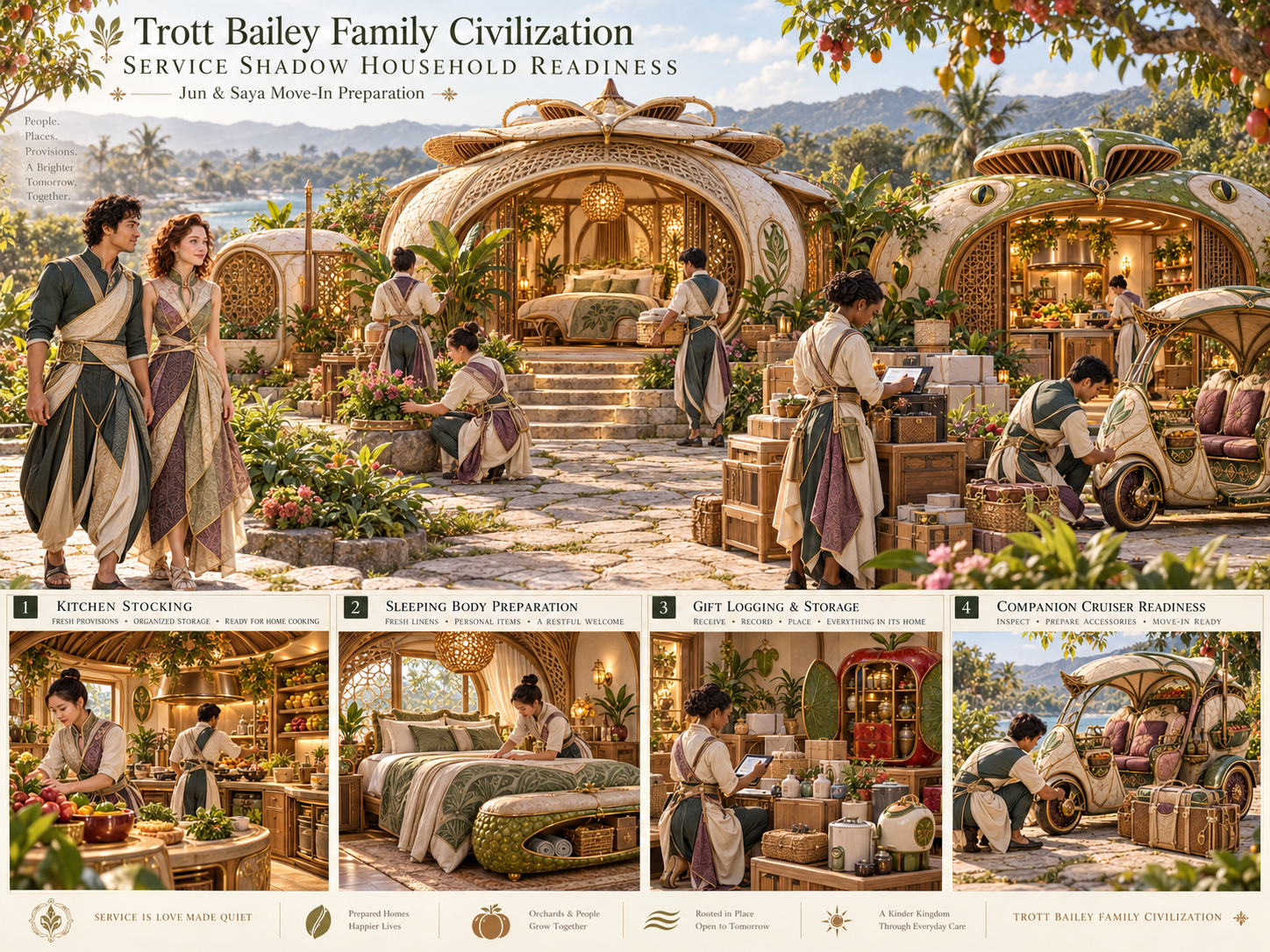
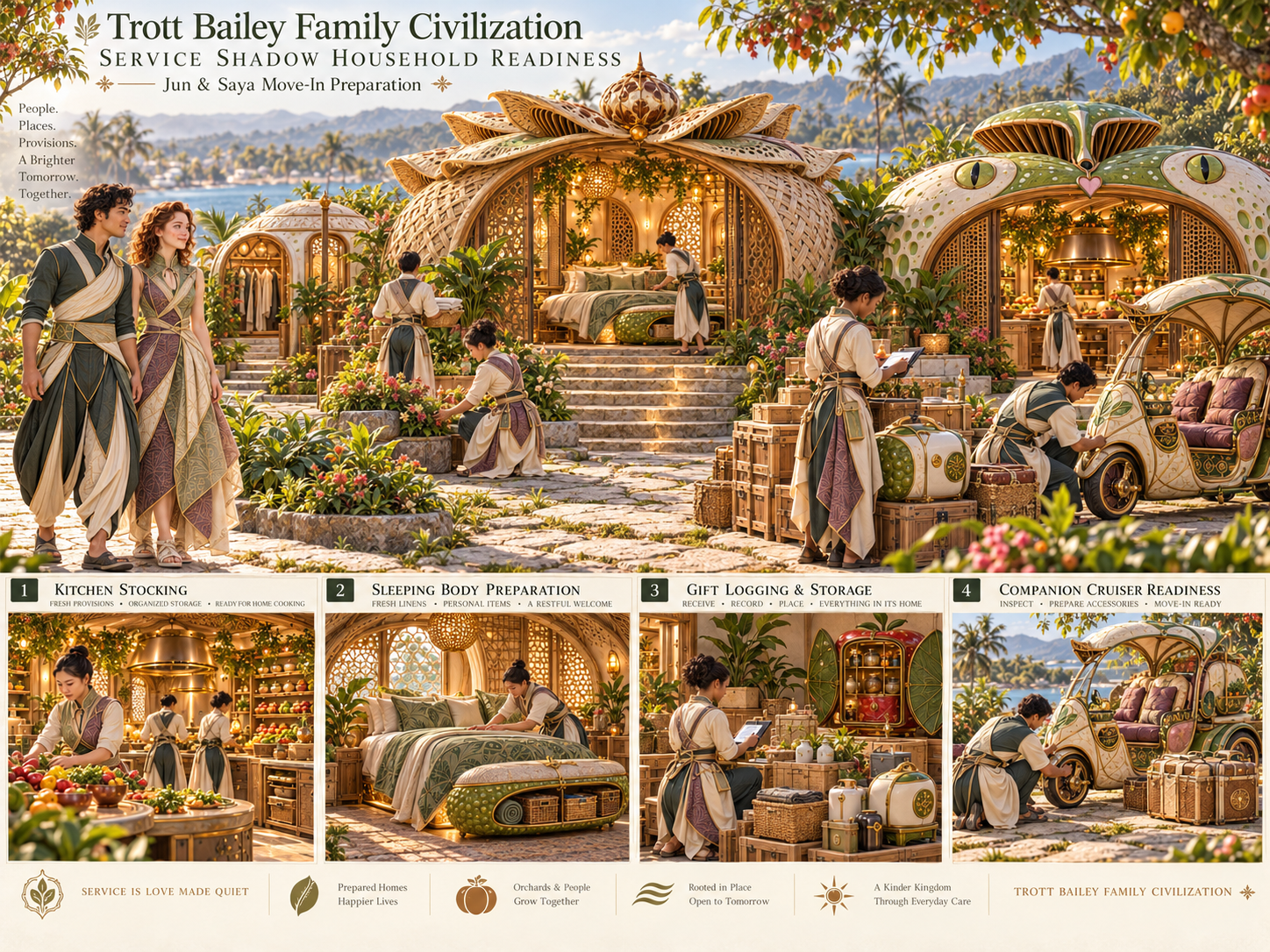
A Makji is a special Trott Bailey Family Kingdom movement system.
It is not merely transportation.
It is a family-centered mobility form connected to beauty, stewardship, water, land, rest, travel, and continuity.
Some Makji are deeper family dwelling systems.
Some Makji are used for water and land movement.
Some are connected to Balushu public life.
But all Makji carry one core idea:
movement should feel alive, beautiful, and family-centered.
A Makji is not built around traffic.
It is built around family rhythm.
Makji Stewardship Is Special
In the kingdom, true privately entrusted Makji are not casually handed out.
They are not bought like consumer products.
They are not status toys.
They are connected to stewardship.
A family must live in the kingdom for three full years or more before becoming eligible for a privately entrusted Stewarded Family Makji.
This matters.
Because a Makji is not just something a family uses.
It becomes part of that family’s movement story.
It may support:
- travel
- family challenge
- semi-nomadic movement
- sea and land continuity
- special outings
- family growth
- longer journeys
So Makji stewardship must remain meaningful.
If everything is handed out casually, nothing remains sacred.
Public-Life Makji Do Not Replace Stewarded Family Makji
Balushu introduces another branch:
Public-Life Makji.
These are not privately owned or privately stewarded Makji.
They are temporary public delight vessels inside Balushu.
They allow families who do not yet steward a Makji to experience Makji wonder for a short time.
This is important because Balushu is a public-life rhythm world.
Families come to Balushu to enjoy:
- sea life
- orchards
- tasting
- lounging
- animal engagement
- night buzz
- public premieres
- child wonder
In Balushu, the sea should feel as easy to enter as a garden path.
So families need many beautiful ways to move into sea life.
Public-Life Makji help make that possible.
Public-Life Makji Are Not Mass Transport
Public-Life Makji are public, but they are not basic.
They are not crowded.
They are not buses.
They are not ferries.
They are not ordinary shuttles.
A Public-Life Makji usually carries only 15 to 20 people maximum.
That gives enough room for a few families, children, helpers, and shared comfort.
The point is not to move the largest number of people possible.
The point is to create a memorable shared movement experience.
In the Trott Bailey Family Kingdom, public access never means basic.
The baseline is luxurious, beautiful, and emotionally memorable.
It can only rise from there.
The Whale Face and Eye Matter
Makji must remain recognizable.
The whale-like face and expressive eye are part of what makes Makji iconic.
This is especially important for children.
A child should be able to see a Makji and know it instantly.
Not because someone explains it.
Not because a sign says so.
Because the Makji has presence.
The eye gives it character.
The whale face gives it gentleness.
The body language gives it memory.
A Makji should feel like something the child wants to meet, not just ride.
Movement Should Be Magical Without Becoming Fake
Makji are not fantasy decorations.
They must still belong to real kingdom life.
They must board well.
They must move well.
They must hold families comfortably.
They must connect to water, land, promenades, docking edges, and public-life routes.
But they should never lose the wonder.
This is the balance:
functional enough to serve life, magical enough to shape memory.
How Makji Change the Meaning of Travel
In ordinary systems, travel often means leaving comfort behind.
You leave home.
You enter traffic.
You wait.
You sit.
You arrive tired.
In the kingdom, Makji help make movement feel like continuation instead of interruption.
A family can move while still feeling held.
A child can experience travel as delight.
Parents can feel the journey is part of family life, not a problem before the real experience begins.
This is one of the great shifts:
movement becomes life, not the gap between life.
Balushu Shows Why Makji Matter
Balushu is where the Makji idea becomes especially visible.
Balushu is not a city.
It is not a district.
It is the kingdom’s public-life rhythm world.
Families come there to enjoy sea life, orchard delight, tasting, lounging, dressed-up presence, animal engagement, children’s wonder, and public cultural releases.
That means movement in Balushu must be part of the joy.
Families should be able to choose:
- a long walkout promenade into the sea
- a cute small delight boat
- larger public sea transport
- a Public-Life Makji
- a shoreline arrival terrace
- a night route over glowing water
The sea is not a distant view.
The sea is part of daily public life.
In Balushu, the water is open to the family.
The Difference Between Movement and Transportation
Transportation asks:
How fast can we move people?
Kingdom movement asks:
What kind of life is created while people move?
That is the deeper question.
A fast system can still be ugly.
An efficient system can still be stressful.
A large system can still make people feel small.
The kingdom is not trying to copy modern transportation and make it prettier.
It is redefining movement itself.
The Final Principle
Makji are not cars.
Makji are not status vehicles.
Makji are not ordinary transport pods.
They belong to a different civilization logic.
They show that movement can be:
- family-centered
- beautiful
- gentle
- memorable
- water-connected
- child-delighting
- publicly dignified
- stewardship-based
The outside world built movement around machines.
The Trott Bailey Family Kingdom builds movement around family life.
That is why Makji matter.
Because they are not just about where a family goes.
They are about how a family remains whole while moving.
Makji are not cars.
Makji are the kingdom’s answer to movement that keeps the family alive, together, and filled with wonder.



 and then