World Ruler Sher’s Own Inner Directions
World Ruler Sher’s Own Inner Directions
A Record of Emerging Directions in the Authorship of Trott Bailey Family Civilization
September 18, 2026
A Record, Not a Finished Rulebook
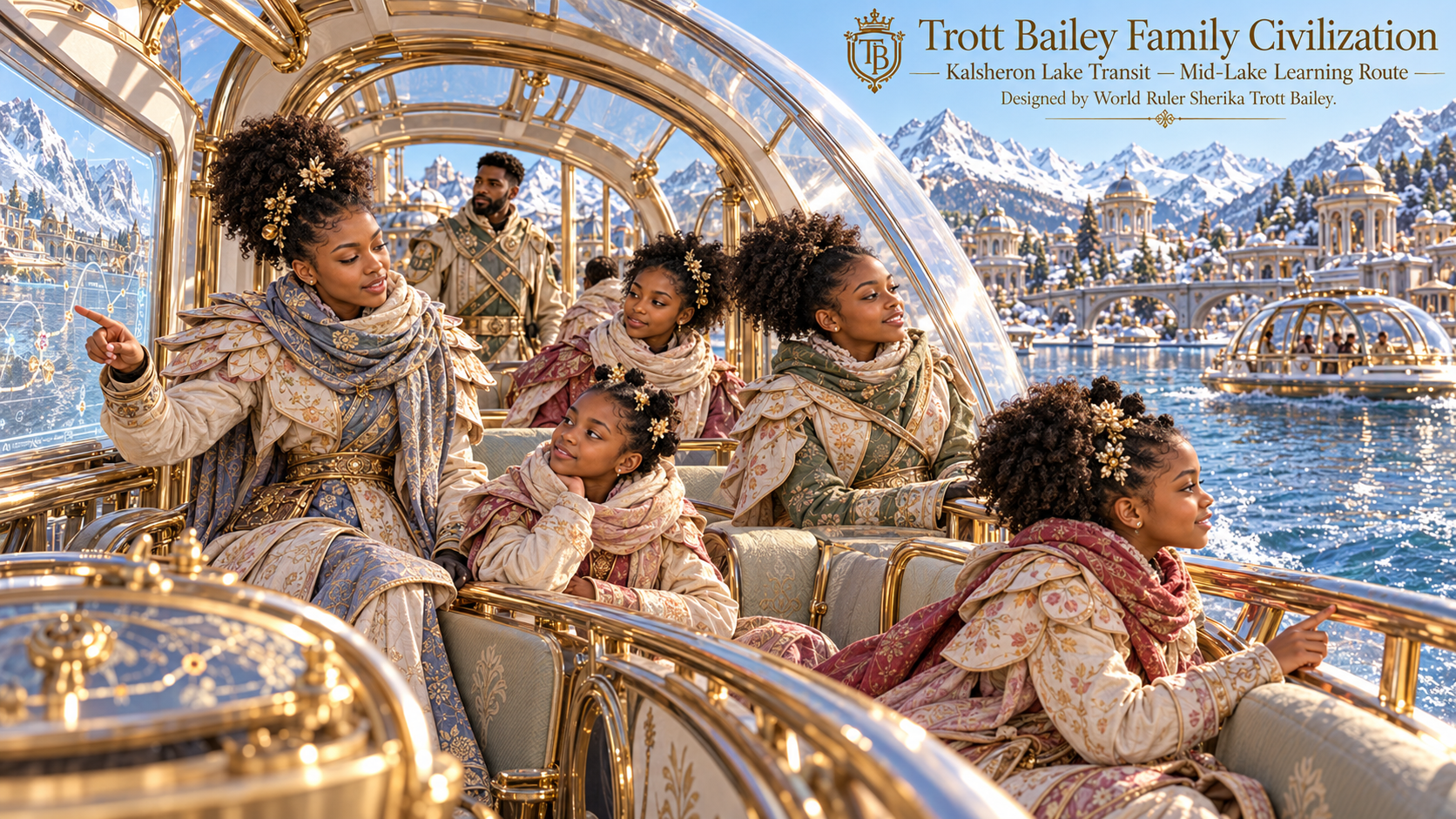
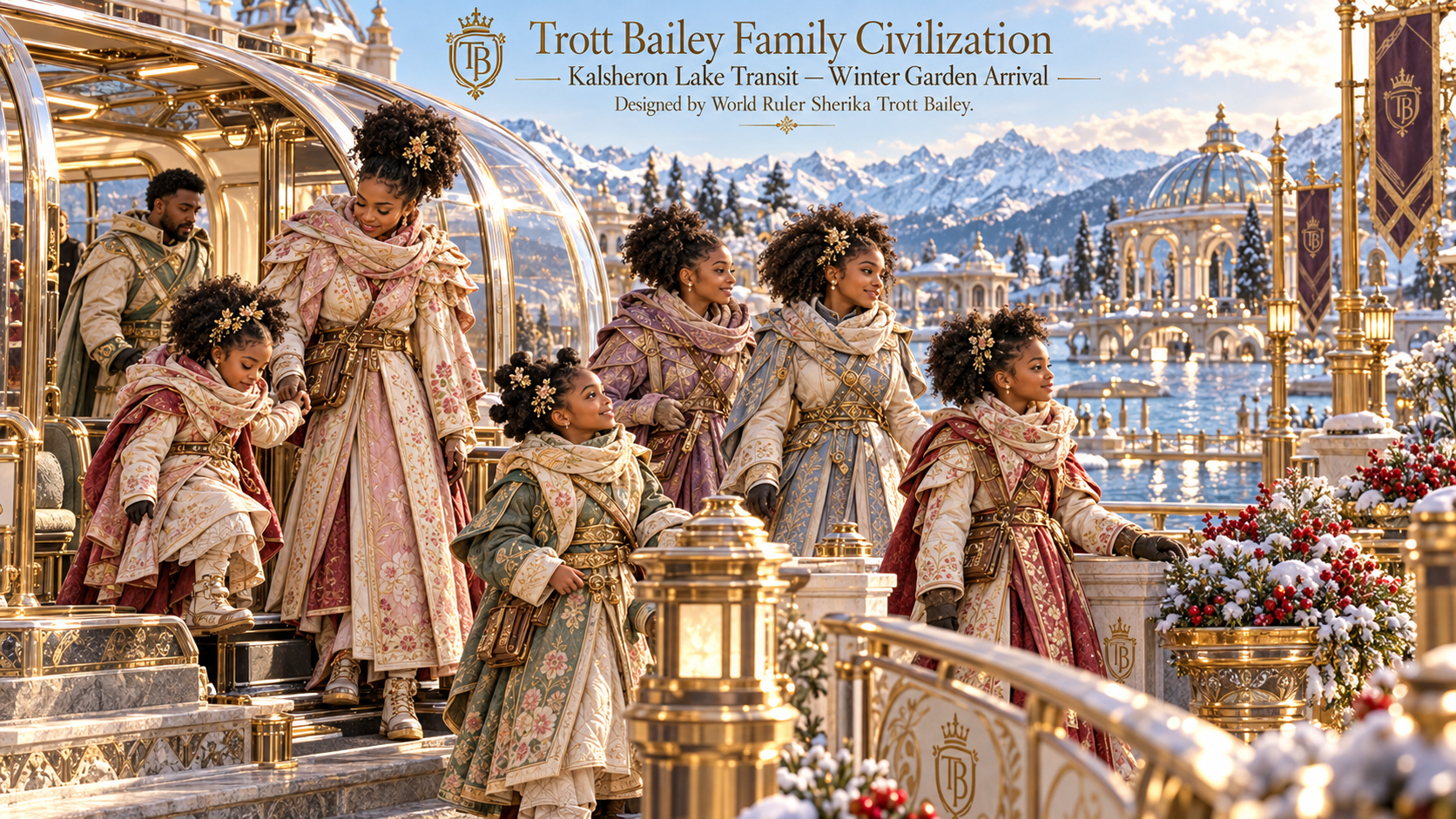
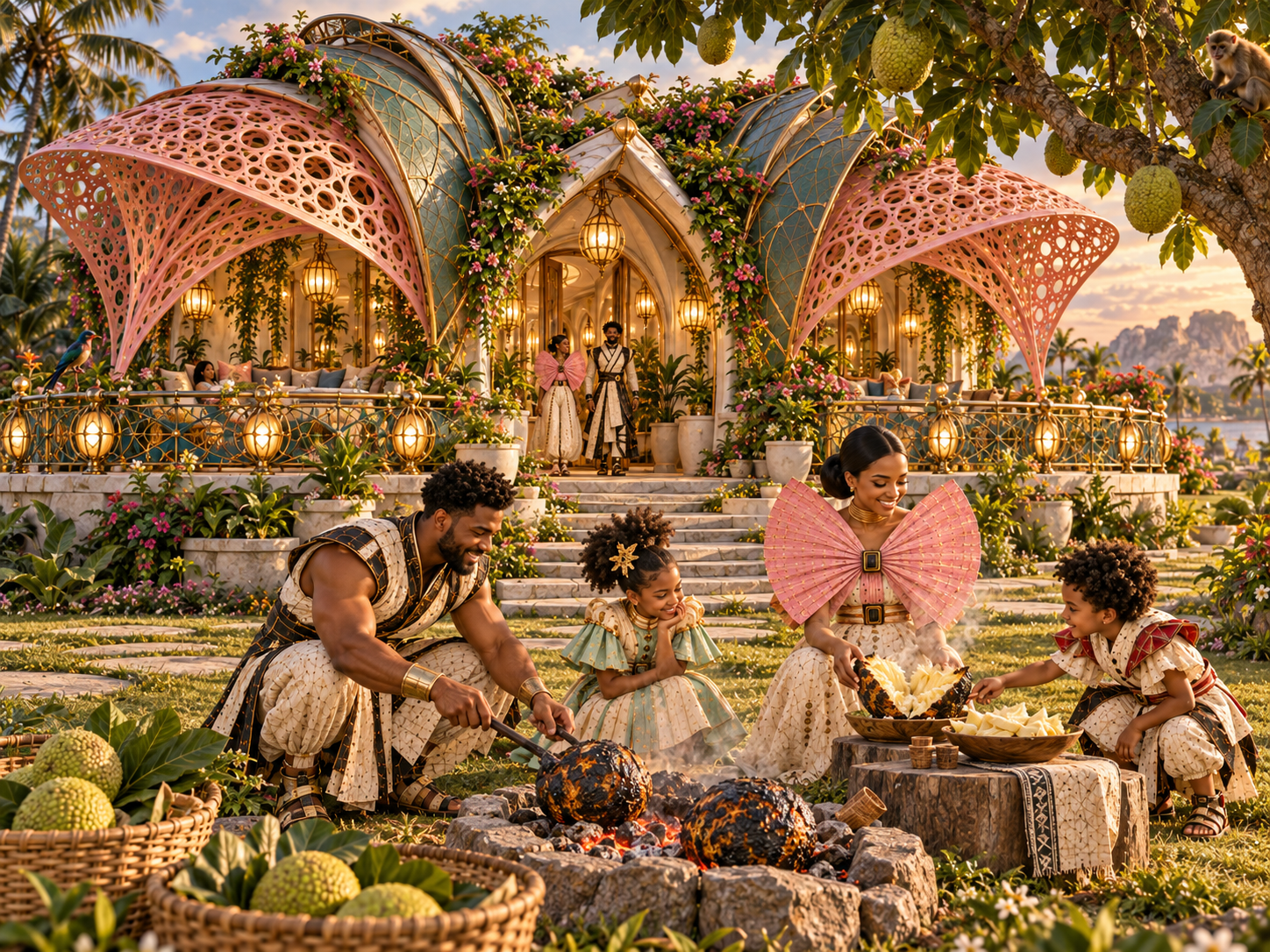
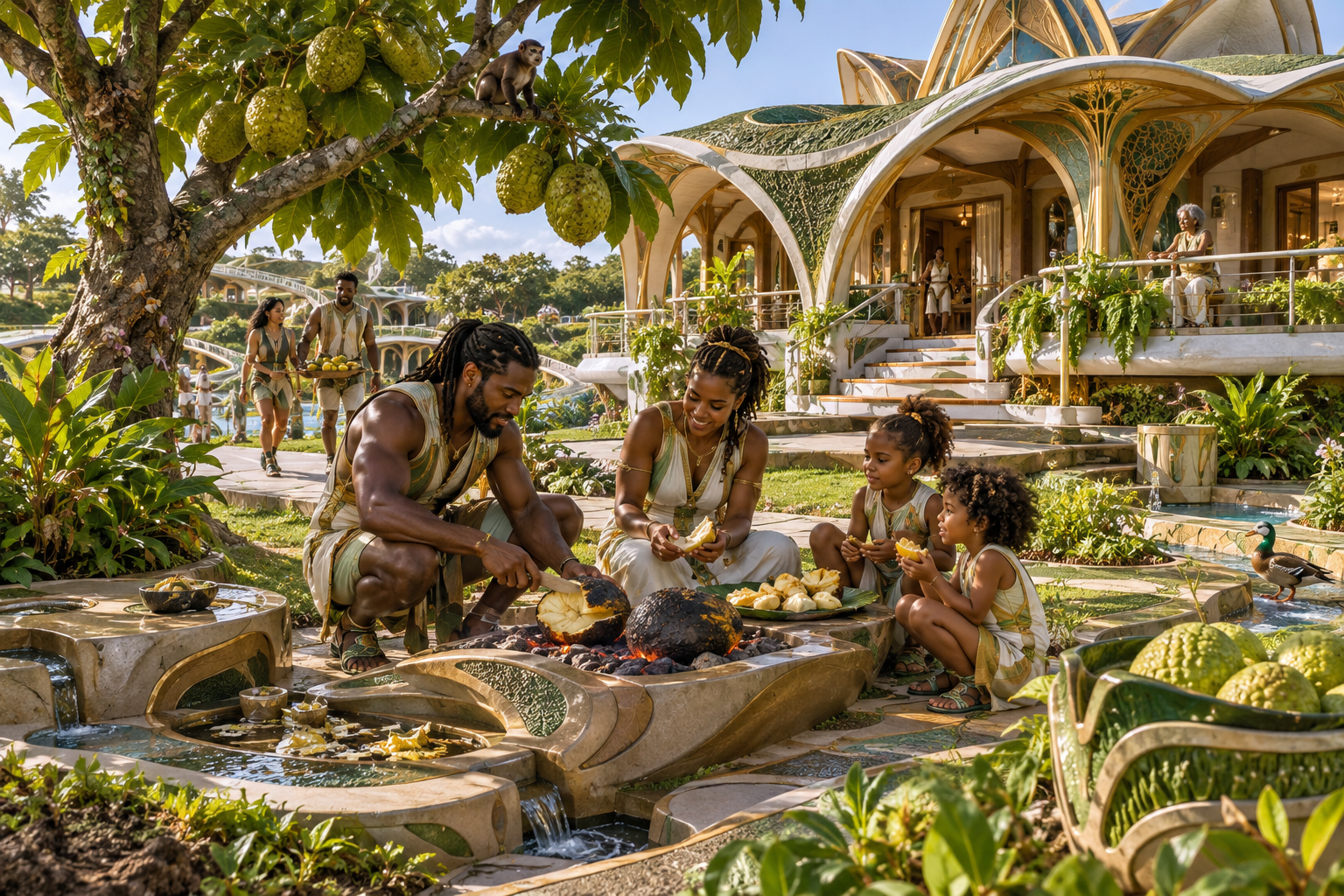
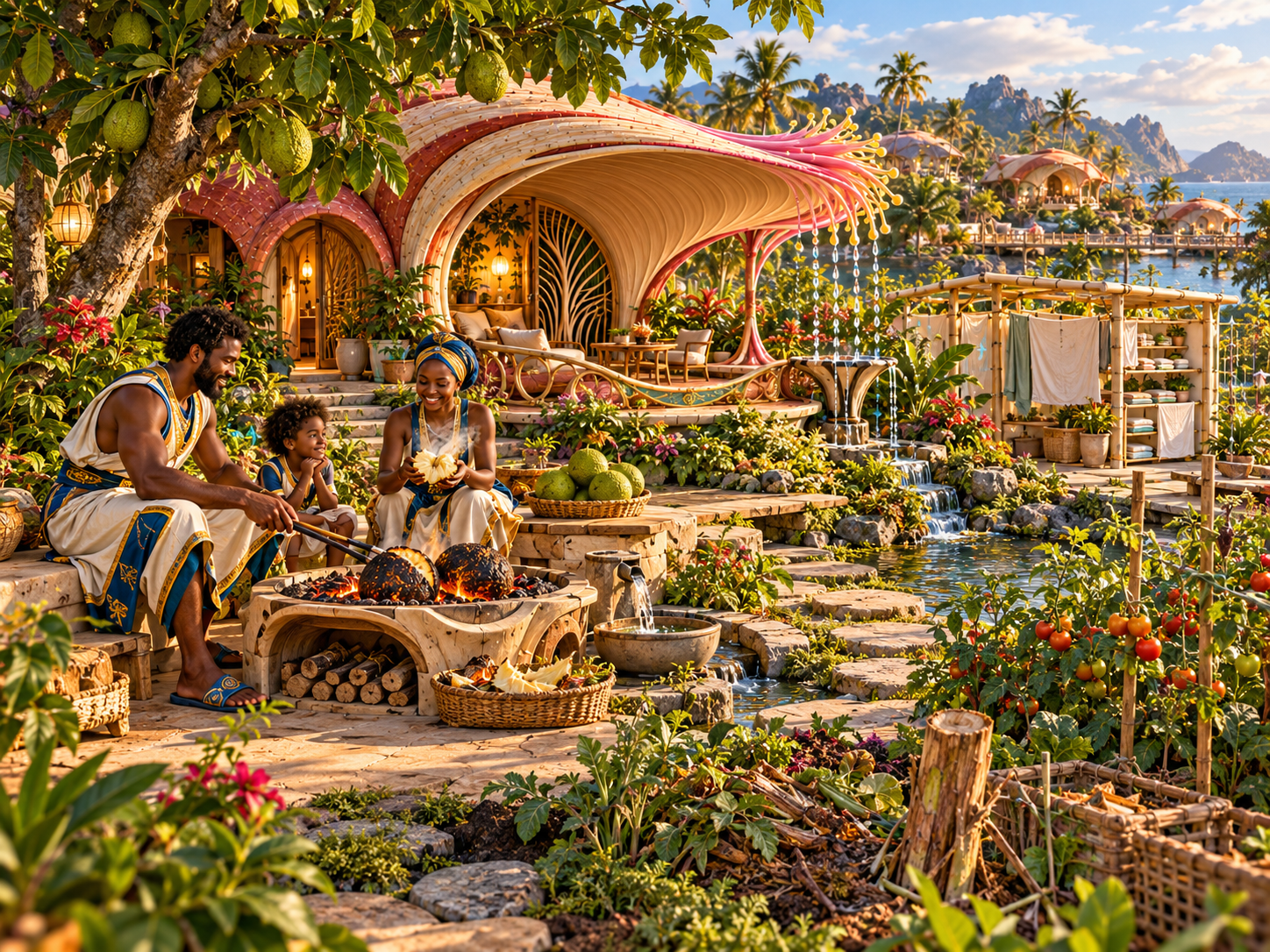
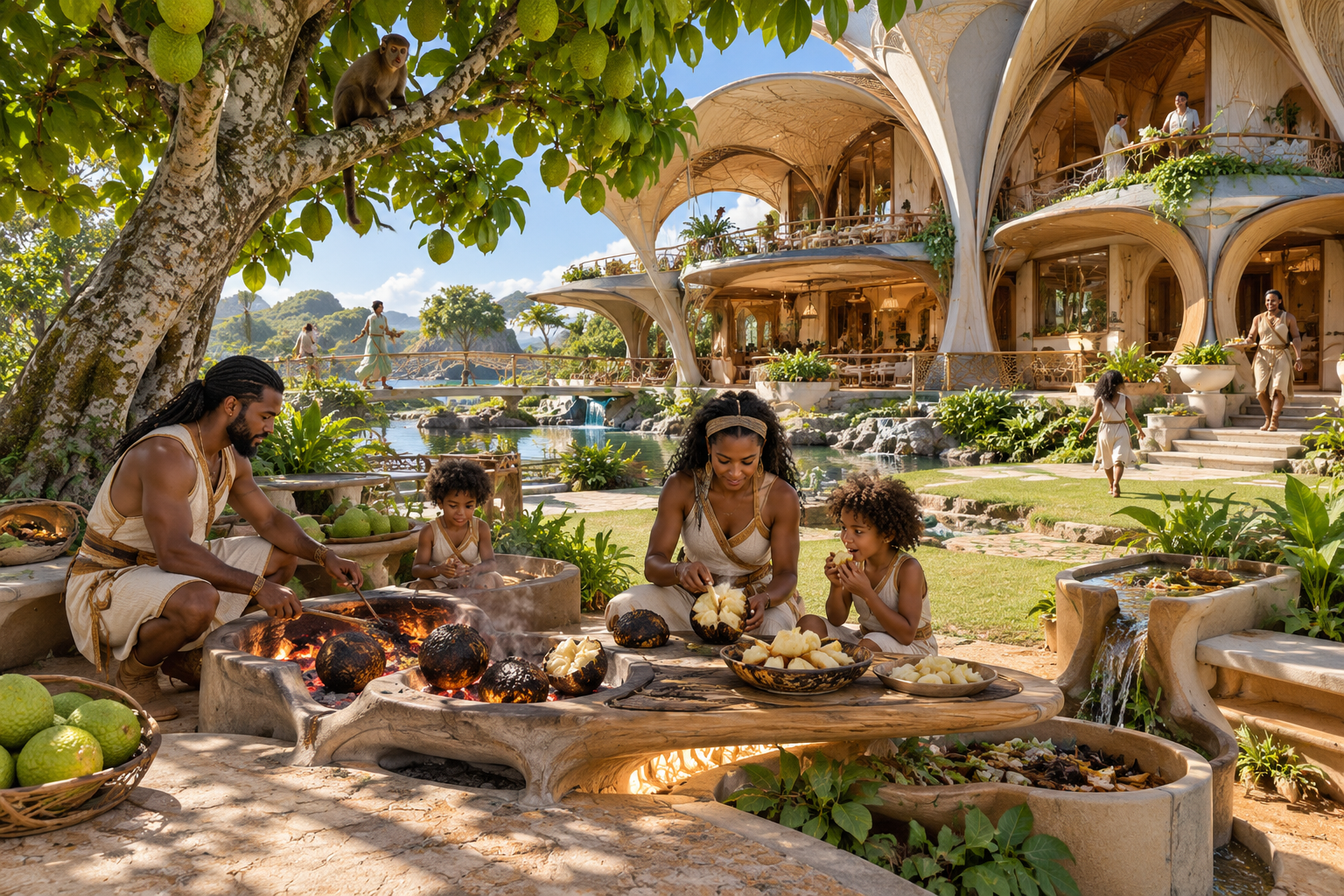
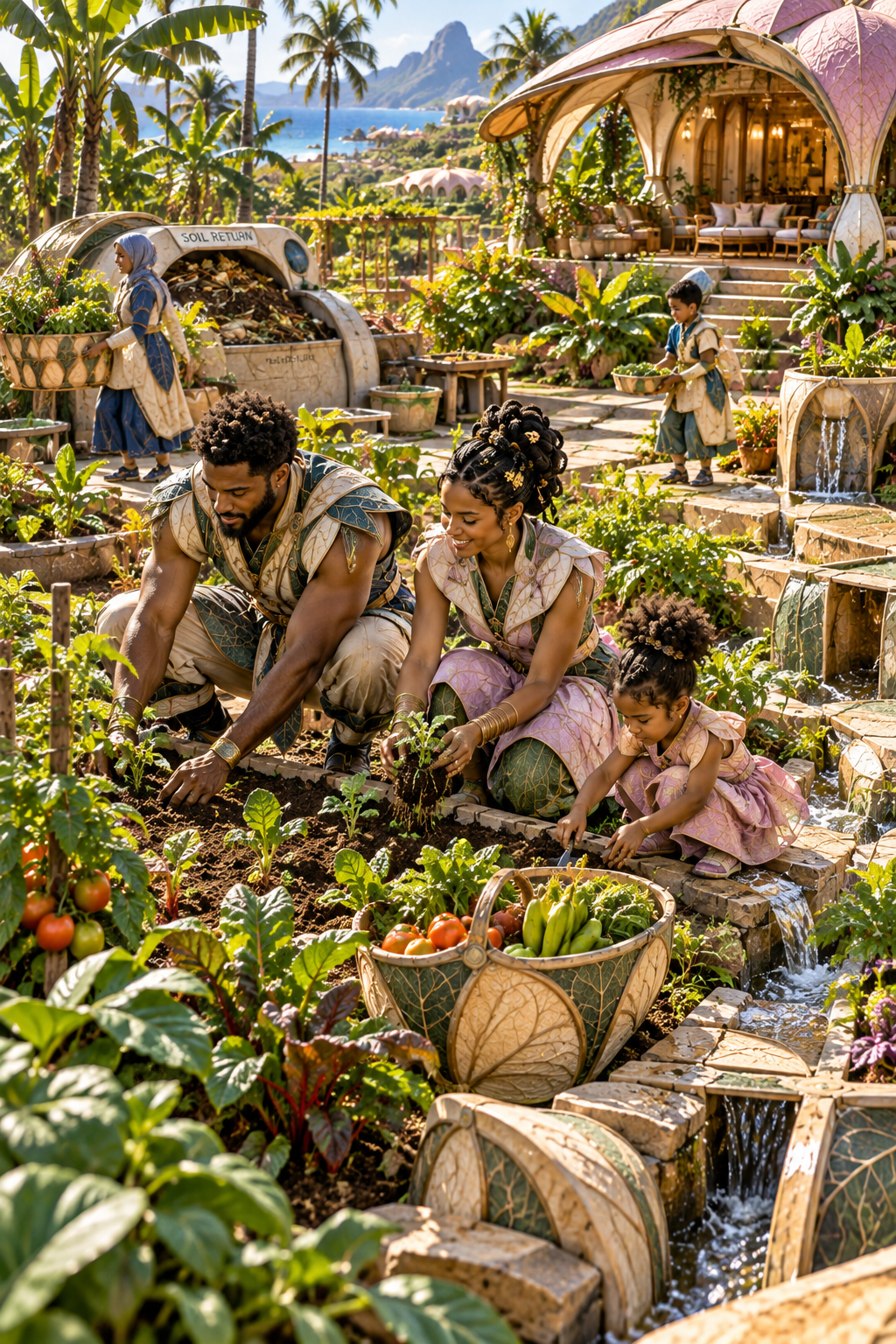
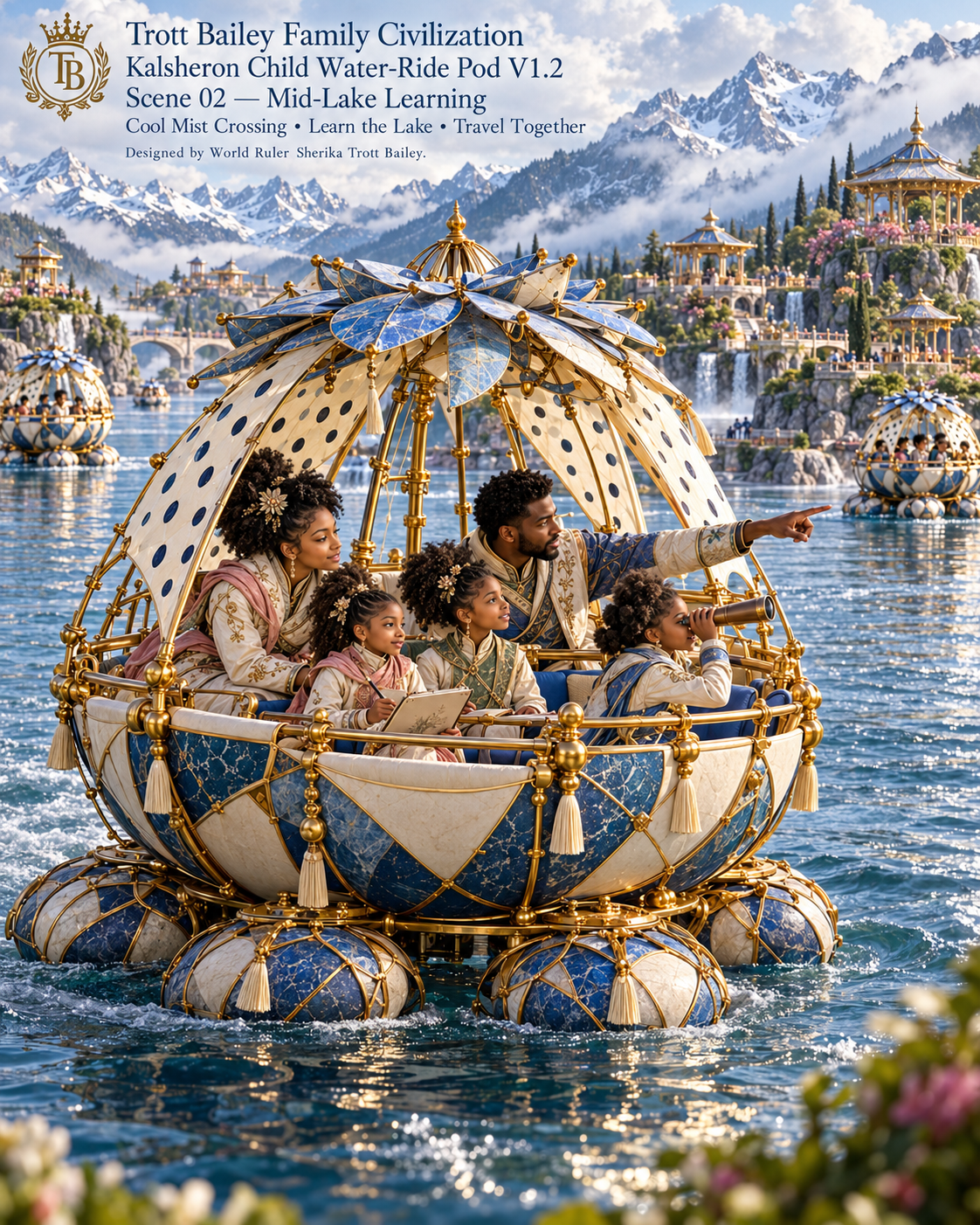
World Ruler Sher’s Own Inner Directions records ideas that have emerged through the actual work of authoring Trott Bailey Family Civilization.
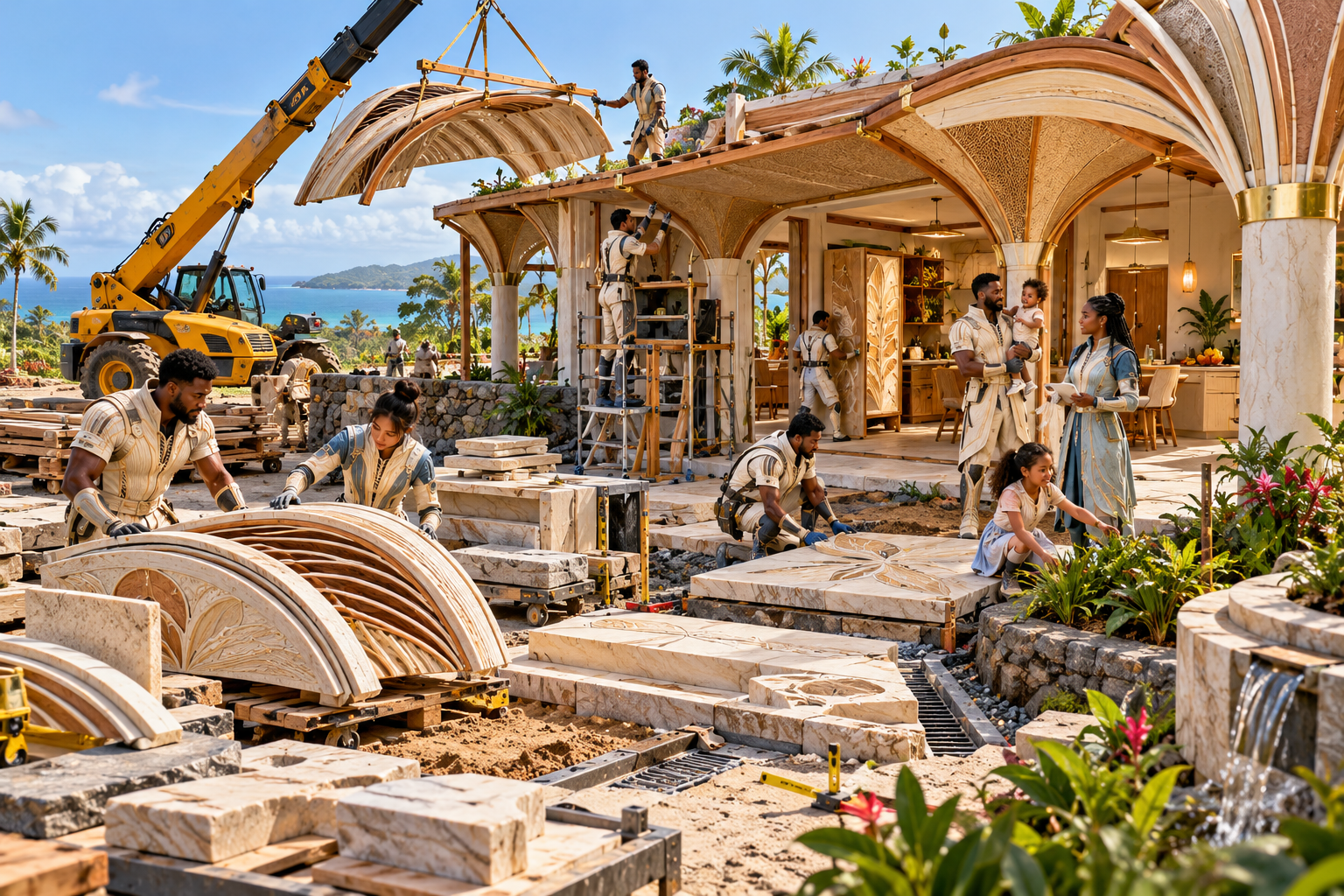
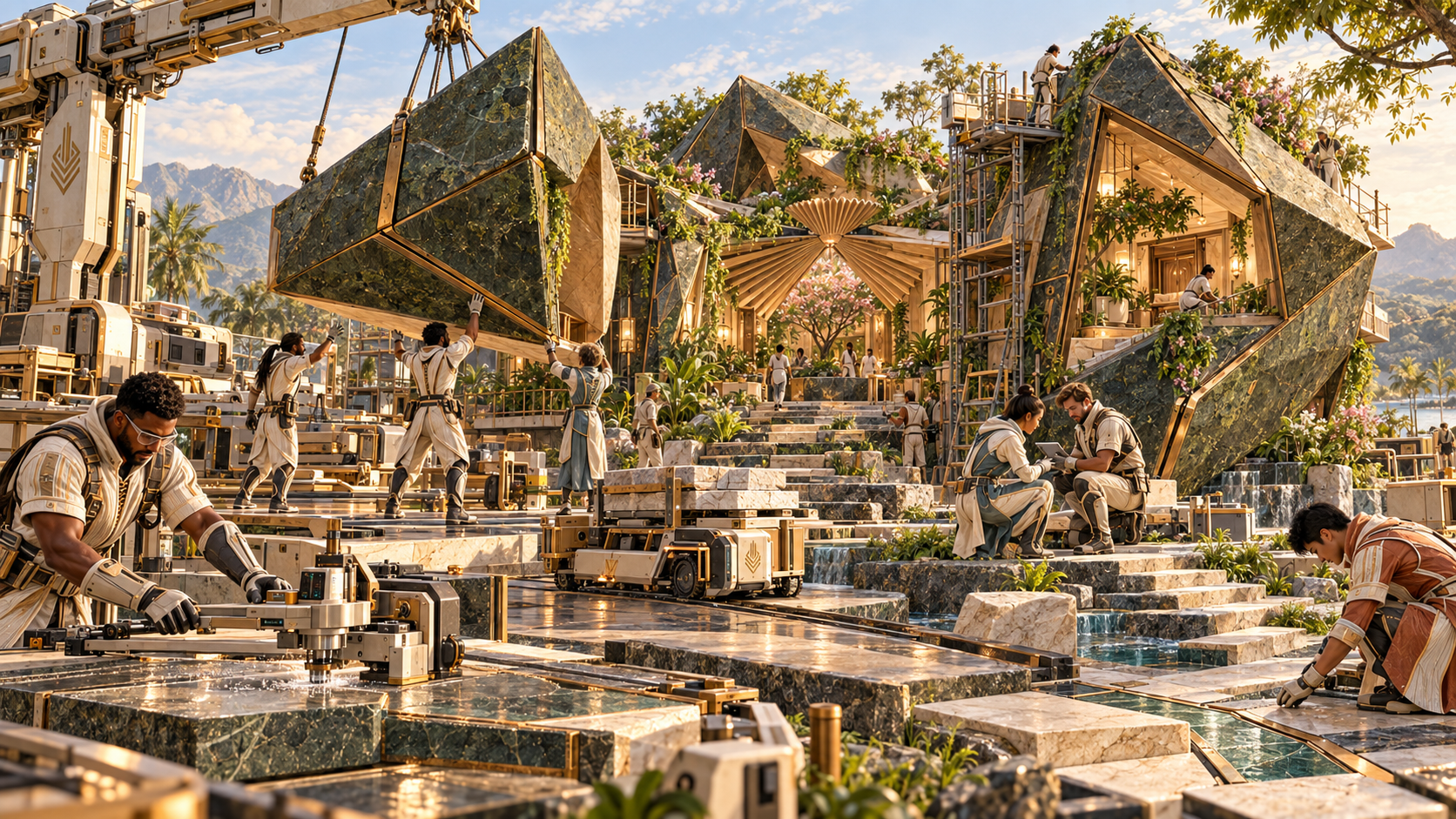
They were not all decided beforehand. Many became visible while designing landscapes, buildings, water systems, movement, districts and scenes of ordinary family life. Sometimes a direction appeared through something that felt immediately right. At other times, it became clear through rejecting something that looked beautiful but did not belong to the Civilization.
These Inner Directions sit upstream of formal systems.
Inner Direction → Governing or Design Principle → Method or System → Physical Species → Lived Civilization
Some Inner Directions may eventually become formal Standards, Protocols, Methods or Governing Principles. Others may remain simple sentences because the sentence already says enough.
This is therefore not a completed constitution of design. It is a dated record of what has become clear so far.
I. Earth & Landscape
1. Landscape World Principle
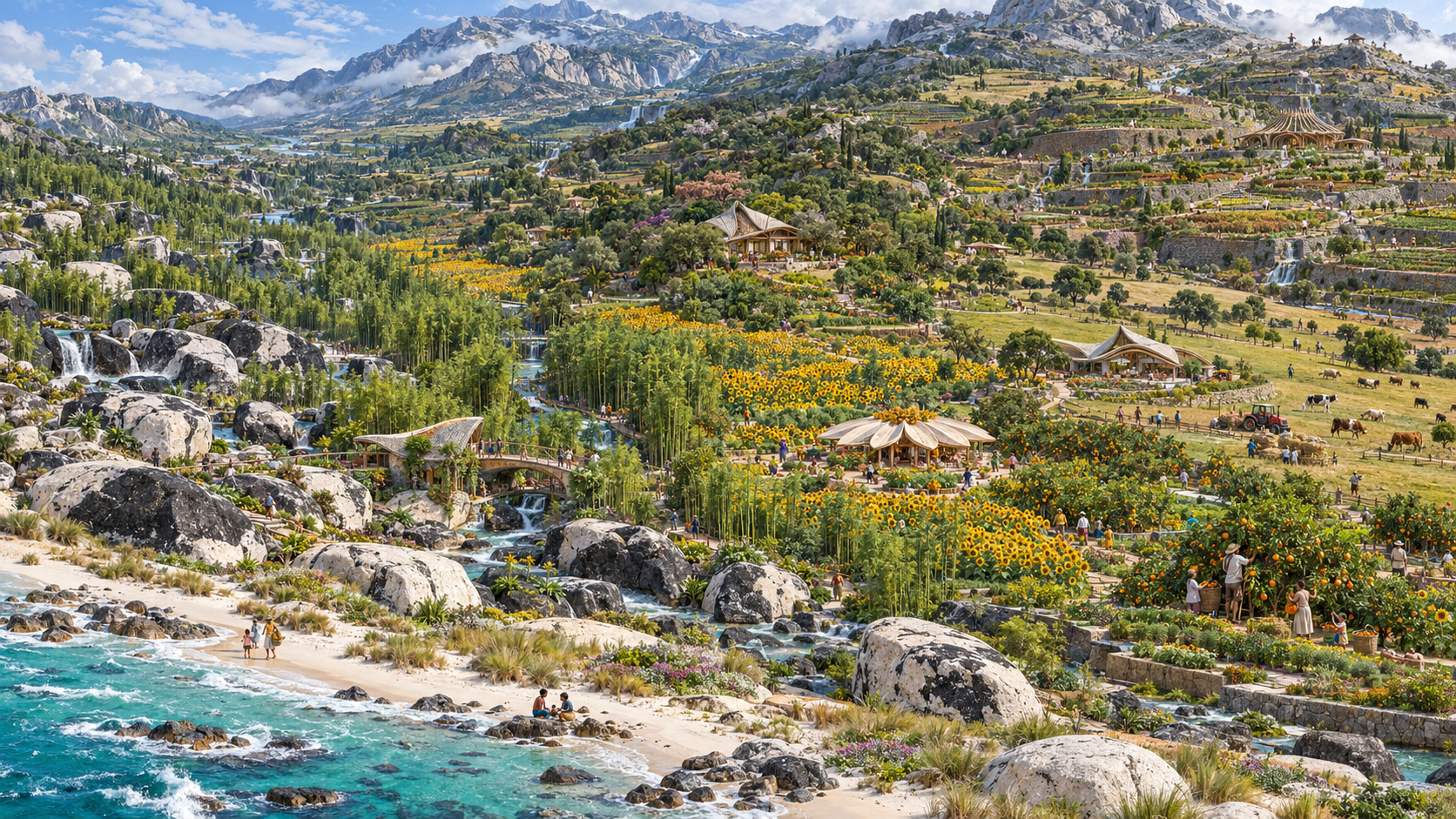
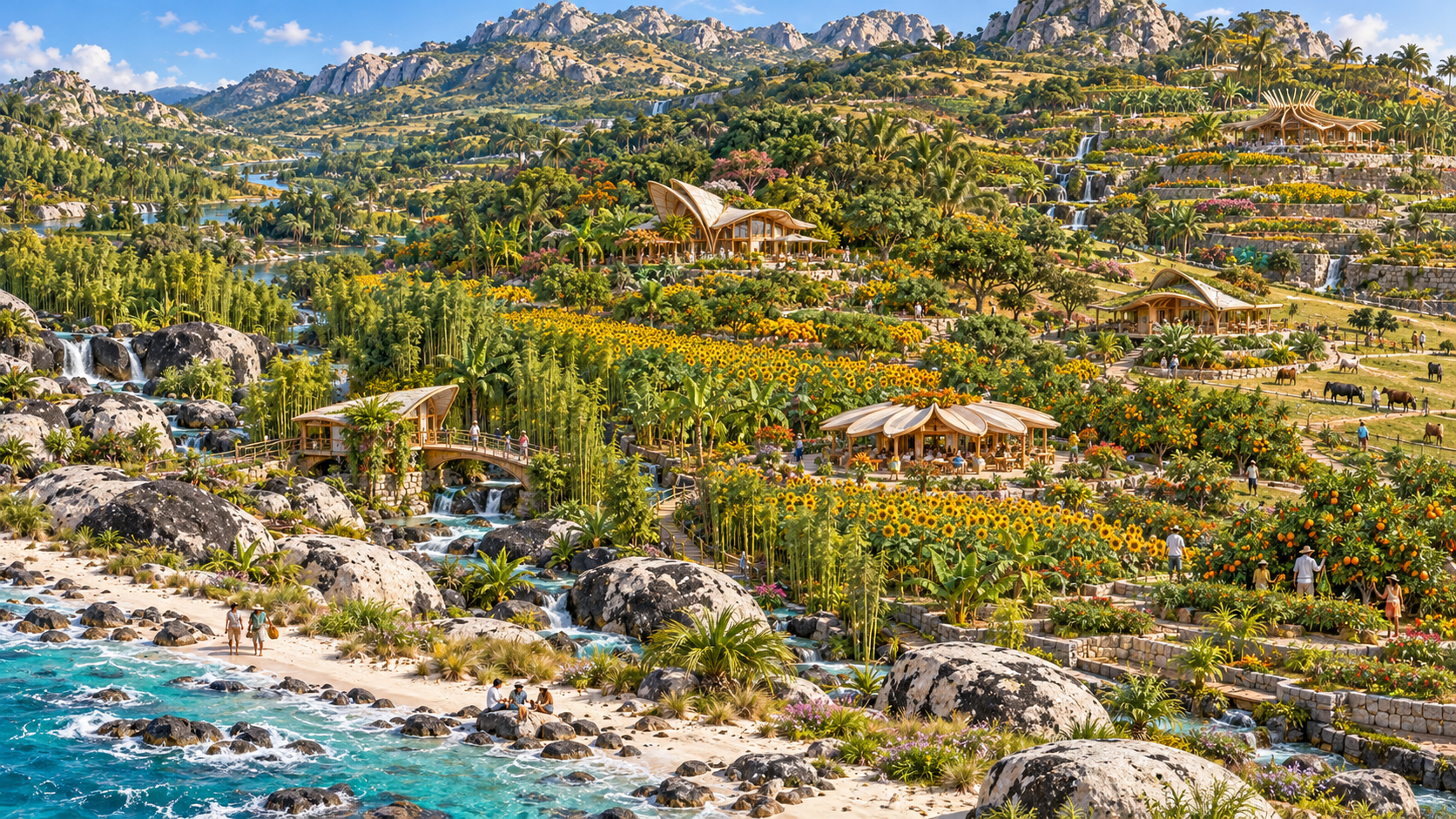
A district should contain genuinely different landscape worlds, not small themed gardens scattered between buildings.
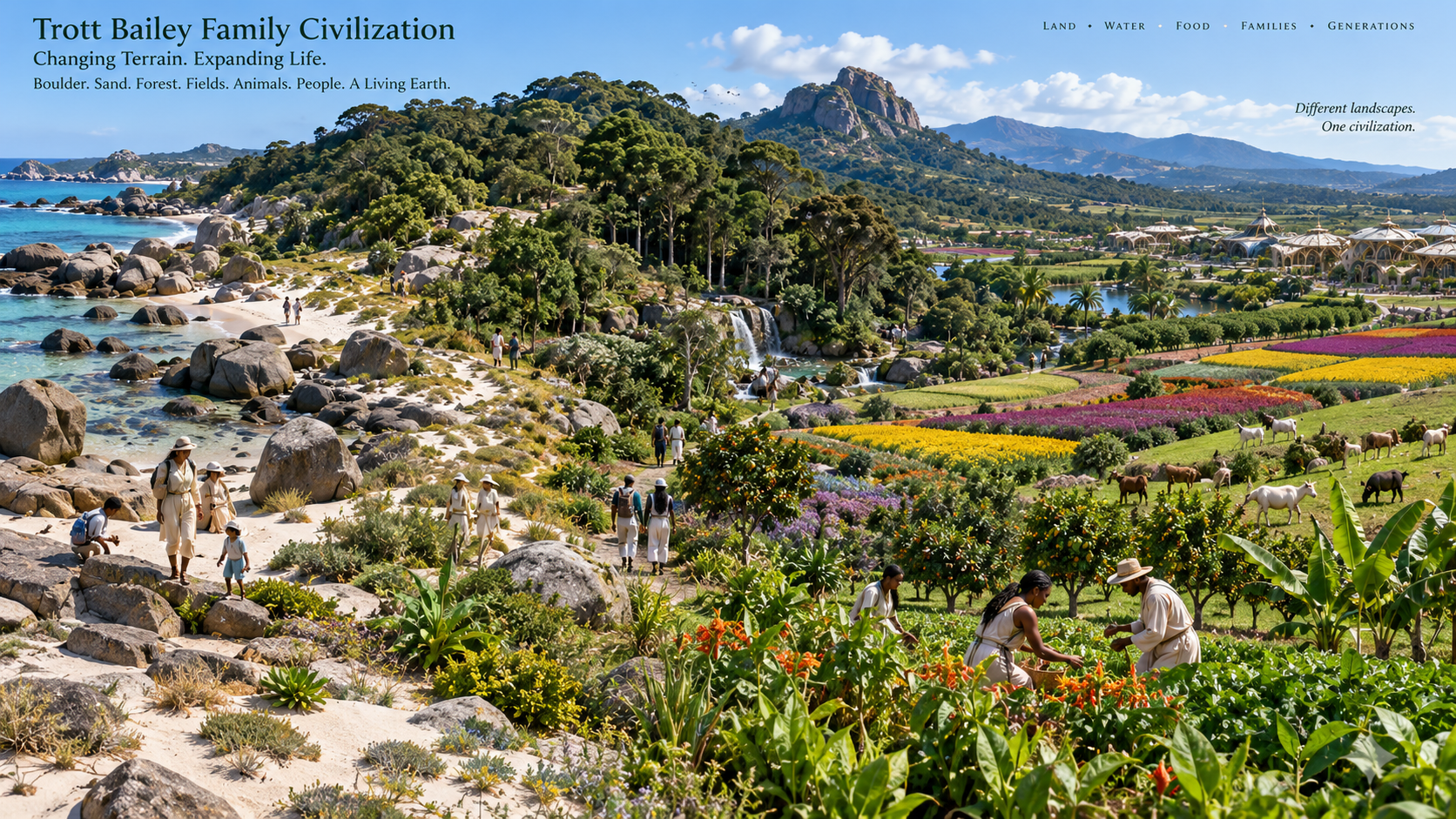
A forest should be large enough to enter and temporarily lose the rest of the Civilization. A savannah should feel like savannah. A prairie should permit enormous views. Boulder country, wetlands, orchards, sand landscapes and coast should possess their own scale and character.
The landscape is not decoration around civilization. It is part of civilization.
2. Landscape Succession
Landscape worlds can flow into one another.
Boulders and sand may lead into forest. Forest may open into multicoloured fields. Fields may lead toward grazing animals, orchards, wetlands or water.
The transition itself becomes part of the experience.
3. Changing Ground
Movement through the Civilization should repeatedly change a person’s physical relationship with Earth.
Grass becomes stone. Stone becomes sand. Sand becomes forest floor. Forest opens into field. Dry ground approaches wetland. Fresh water eventually encounters salt water.
The ground should not remain visually and physically uniform for kilometres.
4. Journey as Experience
Travelling several kilometres should feel like having gone somewhere.
Experiential distance can come from changing terrain, vegetation, animals, water, architecture, elevation, temperature, activity and openness—not merely from kilometres travelled.
5. Earth-Gift Districts
Some places already possess extraordinary combinations of geography: mountains meeting sea, waterfalls descending through forests, enormous rock formations, lakes beneath mountains, estuaries, lagoons, islands, cliffs and river valleys.
These places should generate a particular family of settlement: Earth-Gift Districts.
Their starting point is not: What can we build here?
It is: What has Earth already given here, and how can civilization live within it?
6. Preserve the Gift. Author What Is Missing.
This is a central Earth-Gift direction.
If extraordinary geography creates difficulty for conventional architecture, transport or infrastructure, destroying the geography should not automatically be the solution.
Preserve the gift. Author what is missing.
7. Do Not Flatten Earth to Make Civilization Easy
Human technical capability should allow civilization to adapt itself to Earth rather than repeatedly forcing Earth into geometries convenient for existing construction methods.
A mountain does not need to become flat because we already know how to build on flat land.
8. Terrain Leads; Architecture Responds
Architecture does not always arrive with its form already decided.
Mountain, cliff, forest, wetland, boulder field, estuary and shore can each demand different architectural anatomy.
The terrain can author the question. Architecture authors the response.
9. Constraint as an Authorship Generator
Difficulty can generate invention.
A steep mountain may generate a new movement species. A giant rock formation may produce a new dwelling species. A tidal landscape may produce changing infrastructure.
The question becomes less: How do we remove the constraint?
And more: What does this constraint give us the opportunity to author?
II. Mountains, Lakes, Estuaries & Sea
10. Mountain-to-Sea Transect
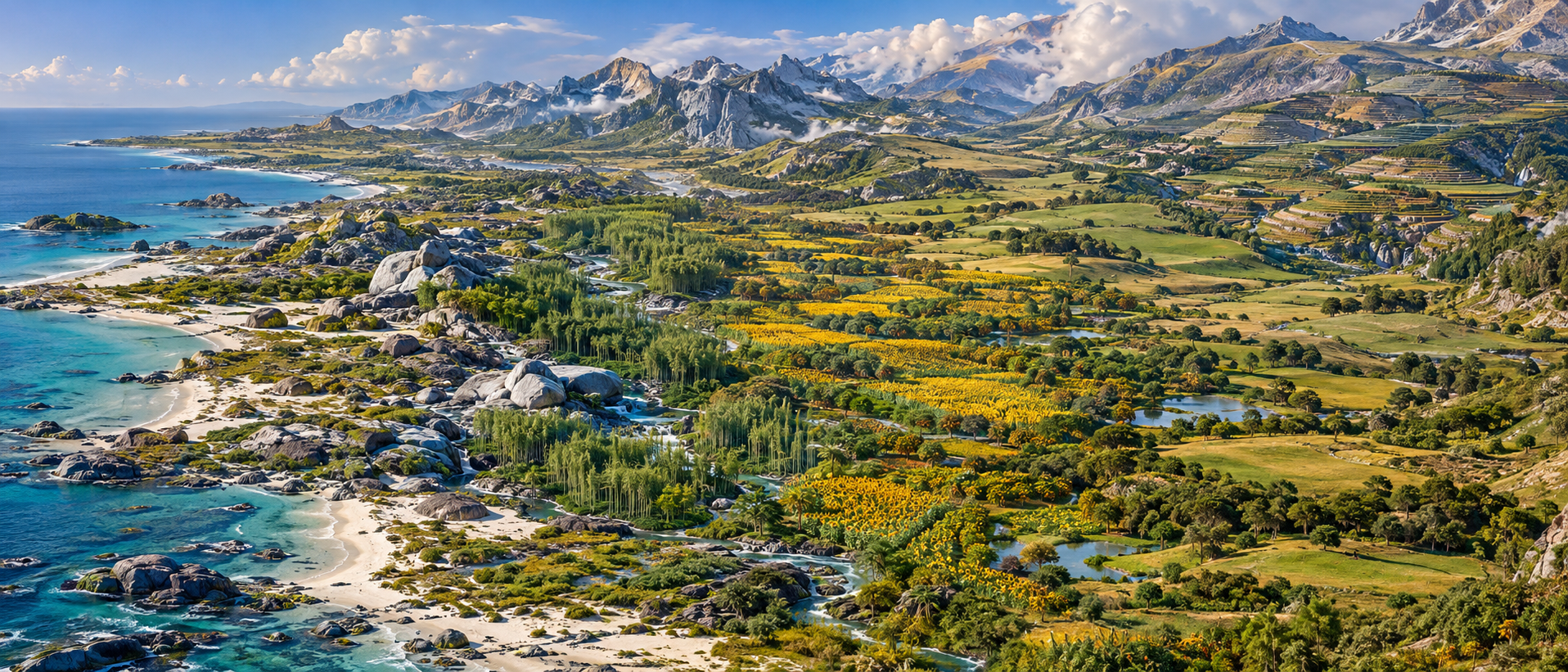
A single district can contain a complete geographic journey:
mountaintop → mountain forest → streams and waterfalls → inhabited slopes → orchards and fields → freshwater lake → wetland → lagoon or estuary → beach → open sea.
Mountain life and sea life do not need to be separated.
11. Mountain Life + Sea Life
A family can live somewhere that provides serious hiking, high overlooks, rock faces, waterfalls and cooler upland environments while remaining directly connected to swimming, fishing, boating, beaches and open ocean.
The choice between mountains and sea is unnecessary where geography allows both.
12. Straight Mountain-to-Sea Axes
Some routes should deliberately run straight between mountain and sea.
Stand at the coast and look inland: mountain.
Turn around: ocean.
From higher ground, the same route becomes a visual corridor toward the sea.
13. Straightness Can Be Deliberate
Naturalistic design does not require every road to curve.
A powerful straight route can create an extraordinary relationship between two geographic anchors while smaller routes respond more closely to terrain.
14. Freshwater-to-Saltwater Living
The places where freshwater becomes brackish and eventually saltwater deserve special settlement attention.
Lake, river, wetland, lagoon, estuary and sea can form one inhabited water sequence.
15. Lagoon & Estuary Districts
Lagoons and estuaries are not inconvenient spaces between land and ocean.
They can support family life, fishing, swimming, boats, birds, aquatic habitat, water learning, food production, stewardship and new architectural and movement species.
III. Water Intelligence
16. Water as Geographic Connector
Water can connect entire landscape worlds.
A mountain stream may become waterfall, river, irrigation branch, lake, wetland, estuary and eventually sea.
Following water can therefore become one way of understanding an entire district.
17. Water Changes Character
Water should not repeatedly appear as the same attractive blue canal.
It can be rushing, falling, shallow, tidal, marshy, still, broad, narrow, clear, sediment-rich, shaded, exposed or oceanic.
Its character should respond to its geography.
18. Water Intelligence
Water should do more than look beautiful.
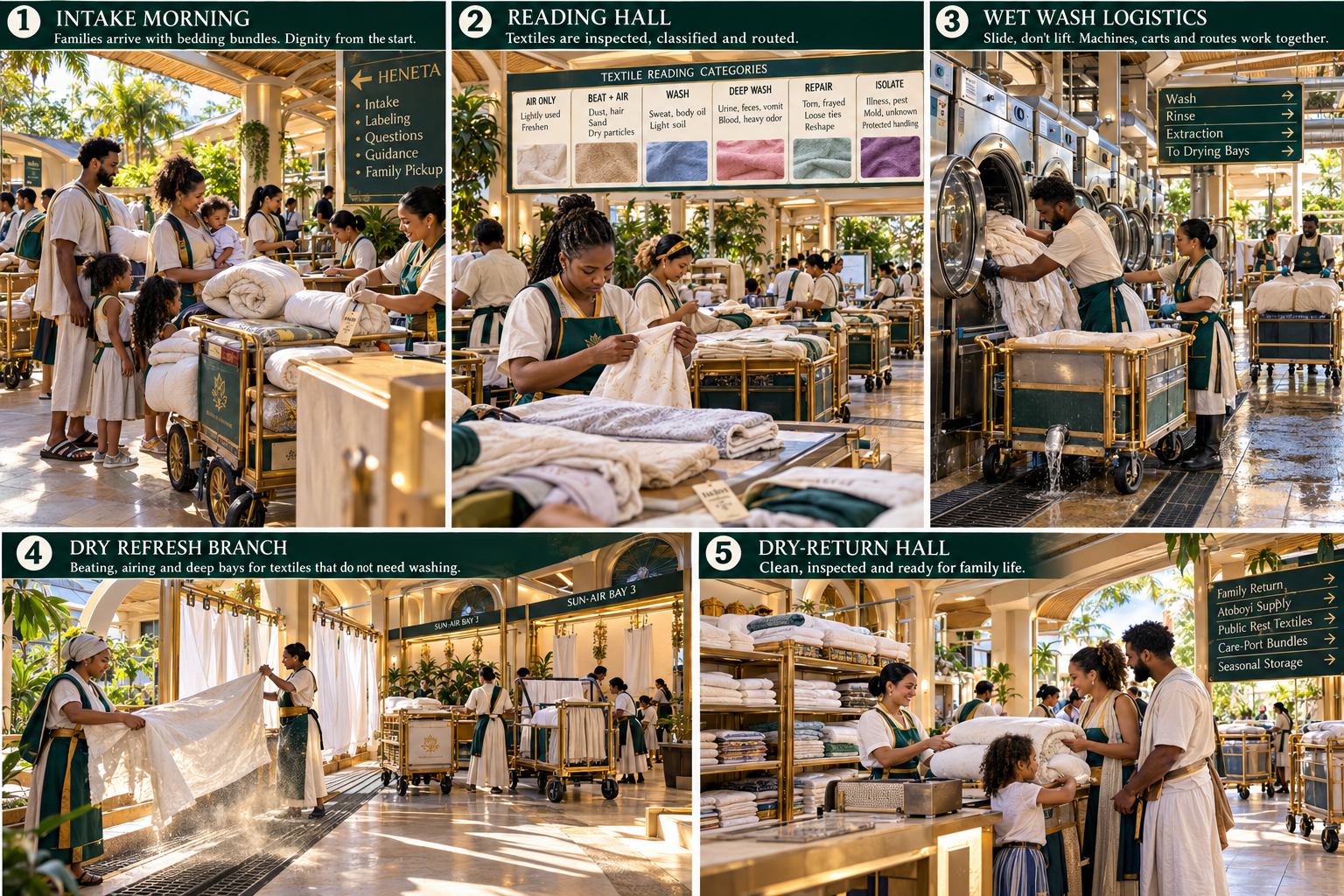
It may contribute to irrigation, ecological habitat, cooling, recreation, swimming, fishing, movement, filtration, hydraulic energy, washing, recharge, nourishment processing and other needs.
19. Visible Water Intelligence
Citizens should sometimes be able to see and understand what water is doing.
Intakes, reed basins, sluices, irrigation branches, treatment landscapes, swimming reaches and ecological zones do not all need to disappear underground.
20. Backstage Beauty
Civilization still requires maintenance.
Filtration, drainage, waste interception, ecological protection, repair, safe water edges and service access should be authored with the same seriousness as the visually celebrated parts of civilization.
Beauty should not require hiding reality.



 and then