

Trott Bailey’s Fashion is Civilization Infrastructure


Fashion Is Infrastructure
Why clothing matters in Trott Bailey Family Civilization, and why a serious civilization cannot dress its people carelessly.
Many people have been trained to treat fashion as a light subject. They hear the word fashion and think of trends, shopping, celebrity outfits, runway shows, luxury brands, beauty contests, or personal taste. They imagine fashion as something added after the “serious” work is done.
But inside Trott Bailey Family Civilization, fashion cannot be treated like decoration. It is not a surface layer placed on top of civilization. It is one of the ways civilization becomes visible on the human body.
A person does not walk through the kingdom as an abstract citizen. A child, father, mother, elder, helper, steward, inventor, host, worker, ruler, youth, or public guide walks through the kingdom with a body. That body moves, sweats, bends, carries children, climbs stairs, enters public spaces, receives guests, works with tools, stands in ceremony, washes, rests, travels, teaches, guides, and belongs somewhere.
Clothing is one of the first systems that answers: Who is this person? What are they doing? What does this place require? How can they move with dignity? How does the civilization support them?
What Do We Mean by “Fashion Is Infrastructure”?
Infrastructure usually means the systems that allow life to function: roads, water, energy, food networks, homes, public spaces, communication systems, care systems, and waste systems. In Trott Bailey Family Civilization, fashion belongs in that category because clothing helps organize human life at body scale.
Definition: Civilization-level fashion is clothing designed as part of a complete life system. It is shaped by role, body, climate, movement, beauty, maintenance, public order, family dignity, and district identity.
This does not mean every garment must look formal, heavy, or ceremonial. It means every garment must have thought behind it. A baby garment, a father-host garment, a public route steward garment, a women’s hosting wrap, a child’s playful ceremonial outfit, a honey worker’s rolewear, or a Big King District representative look should all answer real questions.
Can the person move? Can the garment breathe? Can it be cleaned? Can it be repaired? Does it make the person feel dignified? Does it fit the district? Does it reveal a role without humiliating the person into a dead uniform? Does it allow beauty to serve usefulness?
This is why Trott Bailey fashion connects naturally to the broader kingdom systems described in the Trott Bailey Kingdom Systems. The clothing system is not isolated from food, water, family life, youth development, public movement, or service support. It lives with them.
The Old Problem: Clothing Became Too Small for Human Life
Much of the old world reduced clothing into narrow categories.
- Fashion as trend: What is new this season?
- Fashion as status: Who can afford this?
- Fashion as seduction: How much attention can this body attract?
- Fashion as uniform: How do we make workers look controlled and interchangeable?
- Fashion as costume: How do we create a dramatic look that photographs well but cannot support life?
- Fashion as cheapness: How quickly can this be made, sold, worn, and discarded?
None of these are large enough for civilization.
A serious civilization must ask deeper questions. What should a father wear when he is guiding children through a movement route? What should a mother wear when she is hosting, walking, resting, helping, and still needing beauty? What should children wear when their clothing must allow play, wonder, growth, safety, and dignity? What should a public helper wear so families can recognize help without reducing the helper to a cheap uniform? What should a ruler wear when authority must be visible but not cruel?
Trott Bailey fashion begins from those questions.
Fashion as a Body-Scale Civilization System
Civilization is often discussed at large scale: districts, buildings, transport, farms, water systems, public life, and energy. But if those systems do not reach the body, they remain incomplete.
A beautiful public route still needs people who can walk it comfortably. A family-centered district still needs parents dressed for real family movement. A youth path system still needs young people whose clothing says they are growing into purpose, not idleness. A no-money civilization still needs garments that are not built around price, scarcity, branding, and status competition.
The Trott Bailey Family core worldview declares a civilization that is money-free, God-centered, practical, intelligent, protective, and life-giving. Clothing must agree with that worldview. It cannot quietly smuggle the old world back onto the body through shame, hierarchy, disposability, fake luxury, or careless ugliness. For broader worldview context, see The Official Trott Bailey Family Core World View.
Example: The Men’s Gill-Bloom Route Species
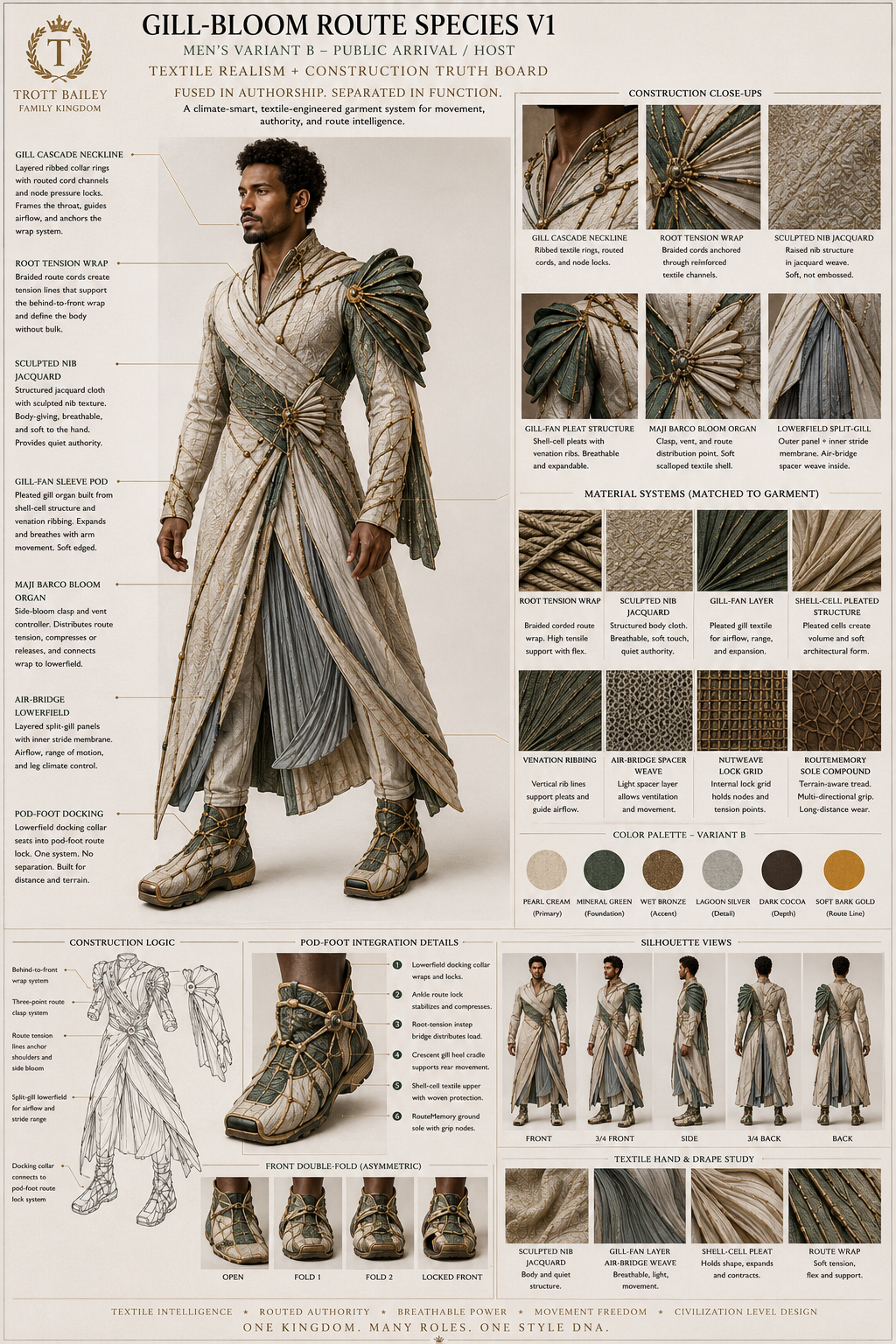
One recent example is the development of the Men’s Gill-Bloom Route Species V1. For a new reader, that phrase needs explanation.
Gill-Bloom refers to a garment language inspired by gill-like pleats, shell-bloom folds, route seams, side-locking systems, and breathable textile structures. It is not a fish costume. It is a way of designing men’s clothing that can hold movement, airflow, public presence, and district identity.
Route Species means the garment is not only a shirt, jacket, trouser, robe, or shoe. It is a new clothing species designed for movement through kingdom routes: stairs, water edges, arrival courts, public paths, family support spaces, and civic terrain.
The original Gill-Bloom Route Species is for men who are active public guides, route stewards, and movement-aware hosts. In Big King District, one version was placed into a River-Climb Belt scene. He was not standing there as decoration. He was moving along a climbing and walking riverside route, guiding families safely, managing flow on platforms and stairs, and helping public life remain safe without becoming harsh or overcontrolled.
The garment matters because the role matters. A man doing that work needs clothing that supports movement, communicates authority, handles terrain, and remains beautiful in public. Ordinary pants and a shirt do not carry the full intelligence of that role. A generic uniform would flatten him. A costume would embarrass the seriousness of the work. The Gill-Bloom Route Species gives the role a body.
The Soft Authority Mantle Variant
A second branch developed from the same family: the Soft Authority Mantle Variant. This is not the same as the original route-active garment. It is softer, more draped, more representative, and more suited to receiving, welcoming, explaining, and public-hosting.
In Big King District, this matters because not every man is hauling, climbing, welding, guiding terrain, or operating machines at every moment. Big King District also needs representatives: men who receive visiting families, explain district systems, stand at arrival courts, orient people near Family Relief Pavilions, and carry composed father-host authority.
That is not weakness. That is another kind of strength.
The Soft Authority Mantle Variant proves that masculine clothing can be calm, refined, and textile-rich without becoming delicate, princely, or generic ceremonial wear. It gives Big King District a representative branch: a man dressed not for labor at that moment, but for dignity, explanation, welcome, and public trust.
The Foot Is Where Beauty Is Tested by the Ground
One of the strongest lessons from the Gill-Bloom development was the foot-zone problem. Many fashion systems create an impressive outfit and then end it with ordinary shoes. This weakens the whole idea. If the garment is civilization-level but the foot is generic, the system is incomplete.
That is why the Gill-Bloom Root-Tension Pod-Foot V1 was developed.
Pod-Foot means an integrated foot-zone system where the garment transitions into footwear through a docking collar, ankle route lock, root-tension instep bridge, crescent heel cradle, shell-cell toe protection, and real walking sole.
It is not a sneaker. It is not a boot. It is not a sandal. It is not a rubber costume foot. It is a foot architecture designed to belong to the garment while still supporting real walking.
The pod-foot principle is simple:
That means the foot visually belongs to the garment, but each part still has a practical job. The sole grips the ground. The instep bridge supports the foot. The heel cradle stabilizes. The toe front protects. The docking collar connects the lowerfield to the foot. Beauty does not cancel function. Function does not cancel beauty.
This is what civilization-level fashion does. It refuses lazy endings.
Rolewear Without Dead Uniformity
A civilization needs people to know who can help them. But the old world often solved this through uniforms that flattened people. Workers became interchangeable. Helpers became visually reduced. Service became associated with plainness, ugliness, or invisibility.
Trott Bailey fashion takes another path.
The goal is role-readable individuality. A route steward, representative, Baby World helper, Sabennerie host, Honey World worker, Pacorips steward, Fabric Node specialist, or Youth Path House guide should be visually understandable. Families should know who can help. But the person should still look dignified, authored, and human.
This connects directly to the kingdom’s youth and role-placement philosophy. The article Where Do Young People Fit? explains how youth are noticed, guided, and placed into meaningful paths rather than left idle or wasted. Clothing becomes part of that larger system because a role must eventually become visible.
Fashion Helps Public Life Move Without Chaos
Public life can become confusing when people cannot read the space around them. Where do families go? Who is guiding the route? Where is help? Who represents the district? Where should children pause? Where should elders rest? Which path is active? Which edge requires care?
Clothing helps answer those questions.
In a Big King District river route, the original Gill-Bloom steward should visually communicate movement-readiness and route authority. At an arrival court, the Soft Authority Mantle representative should communicate welcome, composure, and public explanation. Near a Family Relief Pavilion, a representative should be recognizable without shouting. Along a marine support edge, an active route host should be visually prepared for wind, water, public flow, and safety.
Fashion becomes part of wayfinding. Not as signage printed on the body, but as role, silhouette, color, textile, posture, and placement.
When clothing is authored correctly, the crowd does not only read signs. It reads people.
The Thinking Garment: Nothing Is Merely Decorative
Trott Bailey garments are often visually rich. But the richness should not be random. A civilization garment must be able to explain itself.
A route seam should guide tension or movement. A node should lock, distribute pressure, mark a route, or stabilize a closure. A gill pleat should breathe, expand, collapse, or release heat. A petal panel should shape volume. A mantle should receive and wrap. A lowerfield should serve movement without falling back into ordinary pants. A foot system should meet the ground intelligently.
Beauty becomes more powerful when it is not empty.
Route Seams
Lines that guide movement, closure, flow, or body direction. They are not random decoration.
Node Locks
Small anchoring points that can close, stabilize, distribute pressure, or signal a functional transition.
Gill Pleats
Breathable folded structures that can allow airflow, movement release, or body expansion.
Lowerfield
A lower-body garment system that may replace the old assumption of pants, skirt, robe, or shorts.
Pod-Foot
A foot-zone architecture that completes the garment and proves the design against the ground.
Material Law
The garment must look powerful because of woven intelligence, not because everything is thick, rubbery, or armored.
Textile Intelligence Is Part of the Seriousness
A civilization-level garment cannot only have an interesting silhouette. It must also have material truth.
If every surface looks like thick leather, rubber, molded plastic, or fantasy armor, the garment has failed the body even if the shape is exciting. Trott Bailey fashion must show believable textiles: woven grain, pleated cloth behavior, finished seams, route-cord tension, jacquard relief, shell-cell folds, breathable gill layers, and purposeful reinforcement only where reinforcement is needed.
The question is not simply, “Does it look new?” The question is, “Can the viewer believe this could be made, worn, cleaned, moved in, repaired, and lived with?”
That is why the kingdom’s fabric-care systems matter. A serious garment does not end at creation. It needs maintenance. The broader laundry and textile-care problem is explored in The Old Laundry Battle, and it connects directly to the future Fabric Washer, Mini Fabric Rescue Kit, Fabric Node, and clothing preservation systems.
Fashion Must Serve Real Bodies
Civilization-level fashion cannot be designed only for one idealized body. A garment system must be tested across different heights, weights, ages, racial features, body shapes, movement needs, and life stages.
That is why recent development boards tested Gill-Bloom garments on different male body frames and different races. It was not a visual diversity checklist. It was a design necessity.
A garment that only works on one narrow body has not yet become civilization-level. A kingdom has fathers, sons, uncles, elders, broad men, lean men, athletic men, soft-bodied men, tall men, short men, and men from every race and background. The garment must remain authored across them.
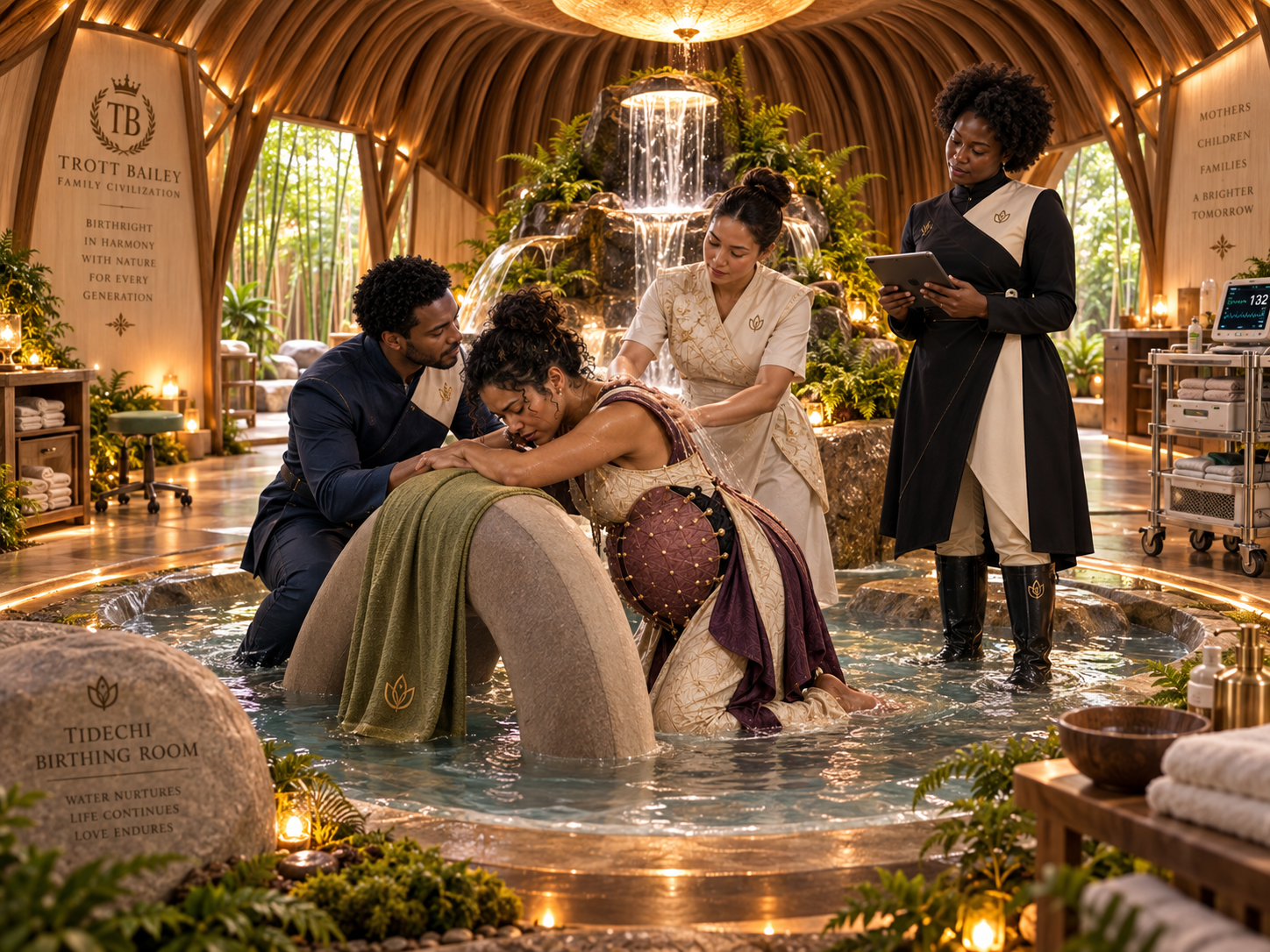
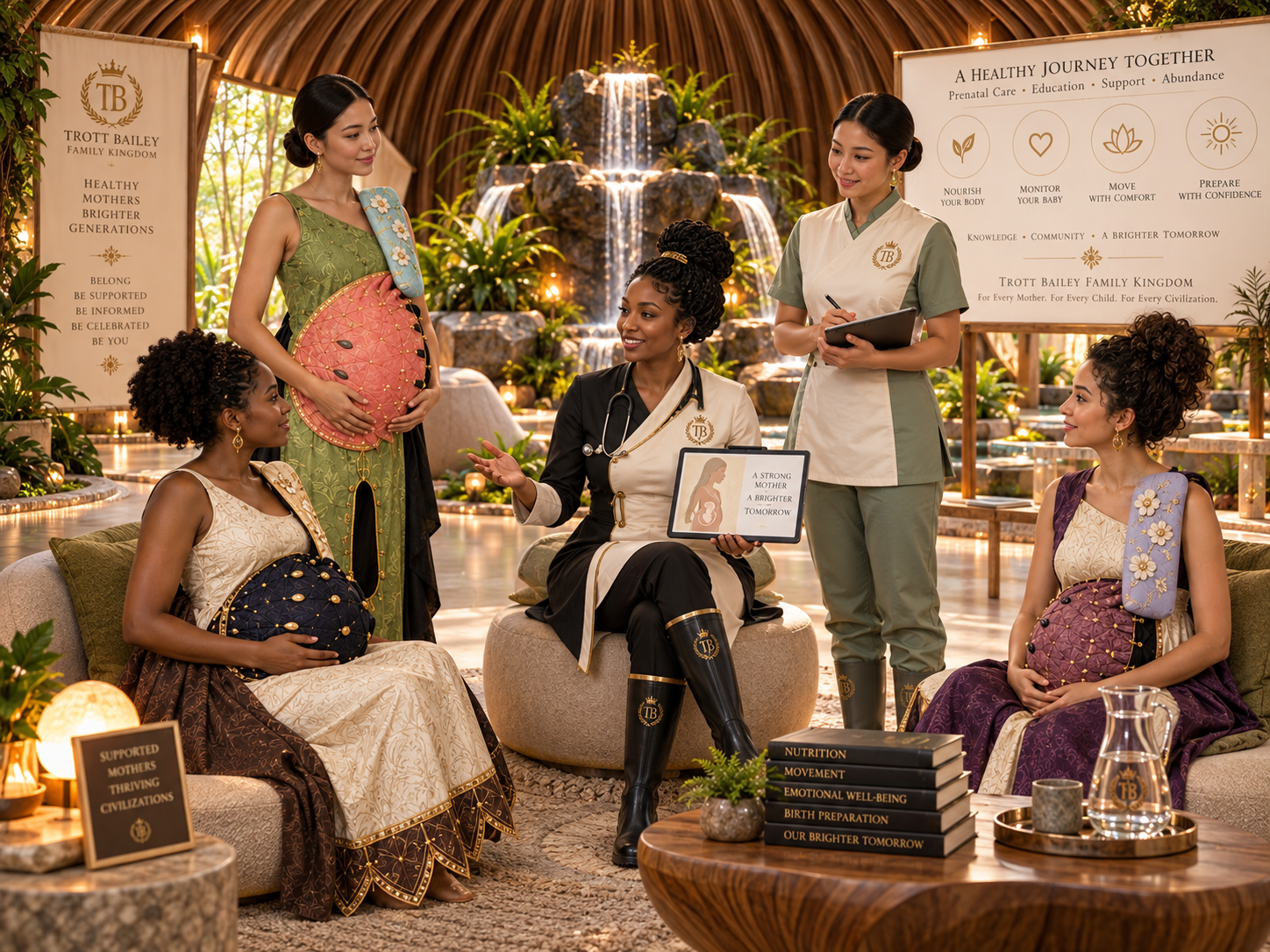
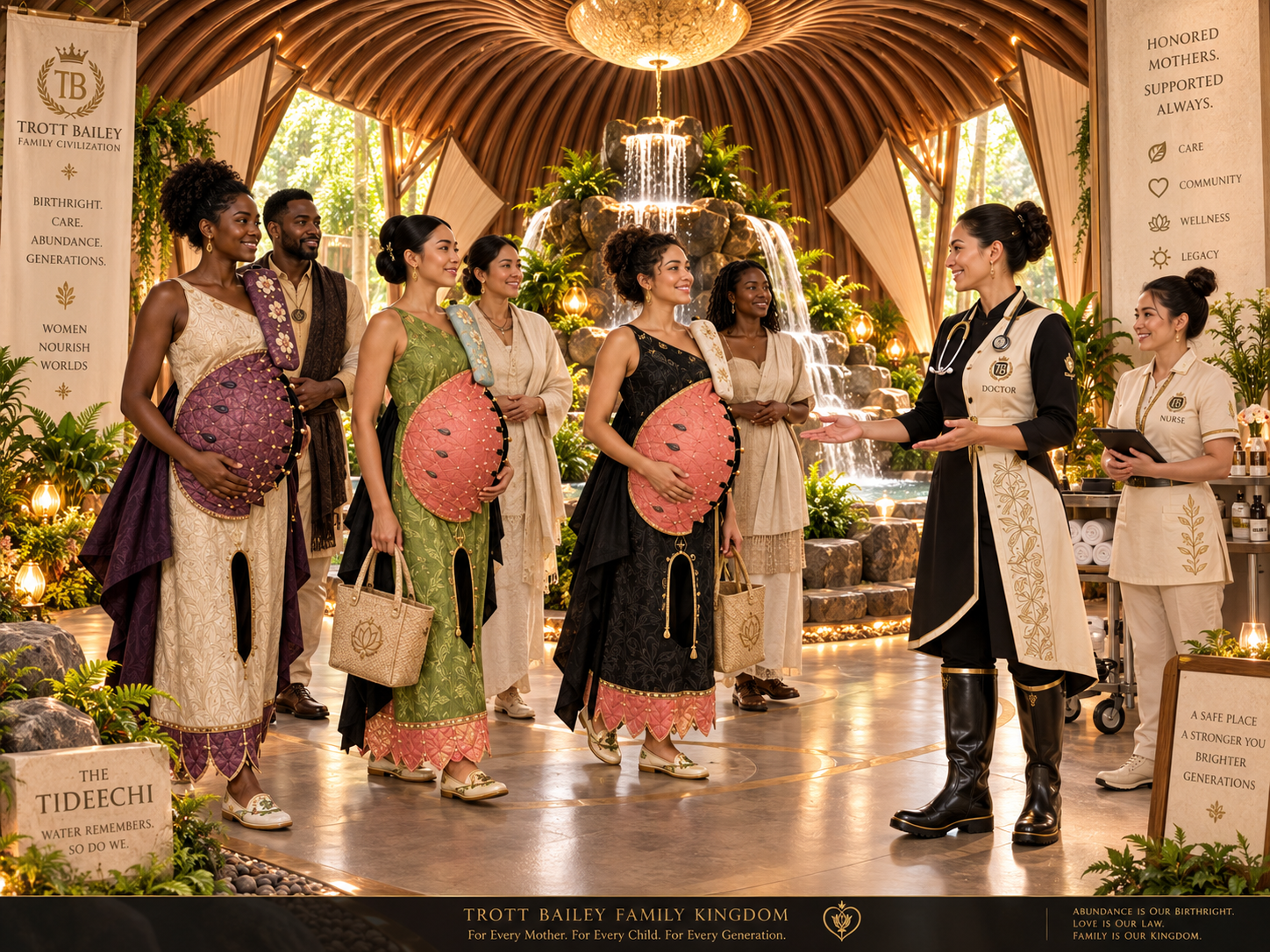
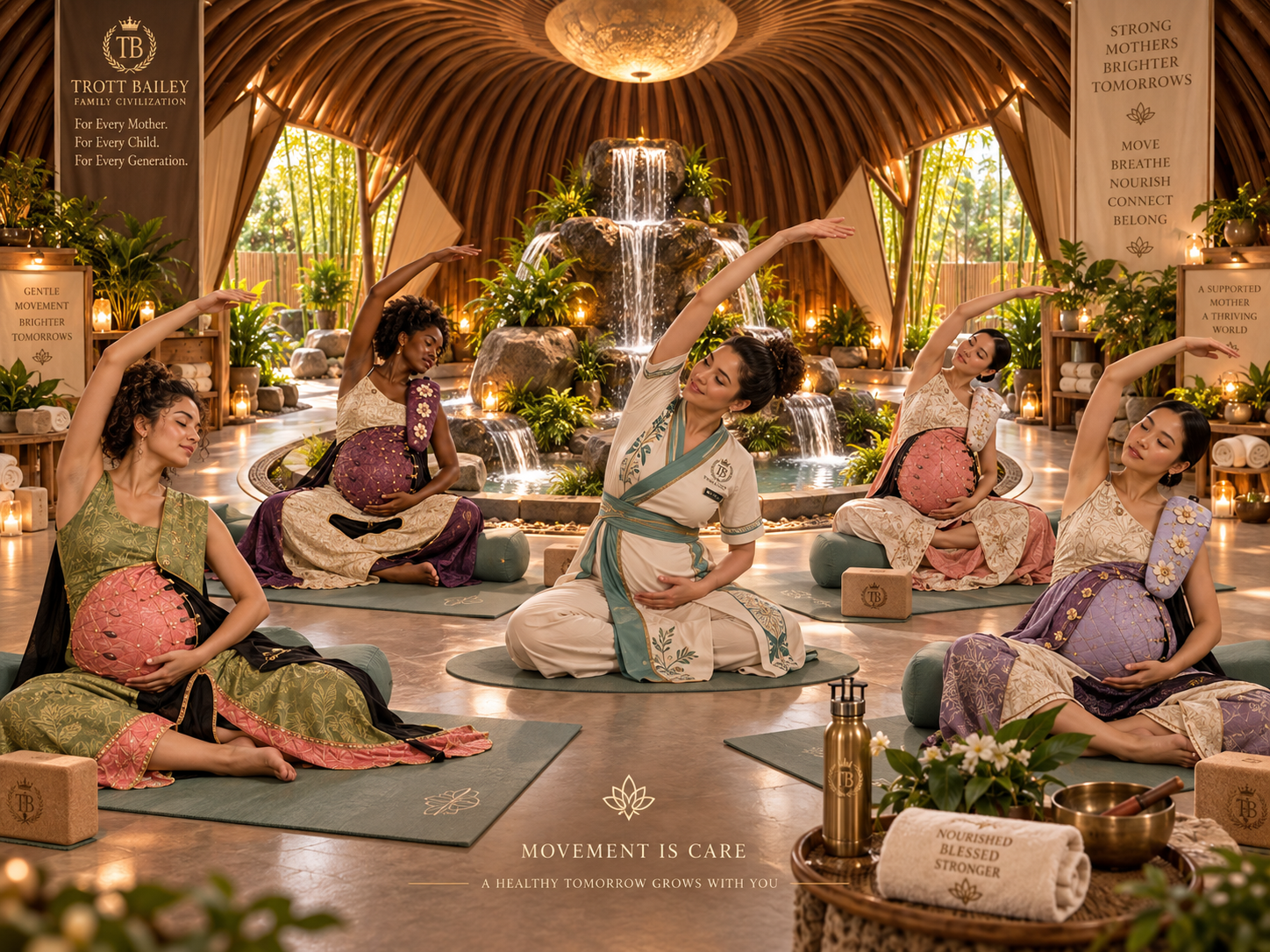
The same is true for women’s fashion, children’s clothing, elder clothing, family sets, workers’ rolewear, and public-life garments. Beauty must not disappear when the body changes.
District DNA: Clothing Must Belong Somewhere
In Trott Bailey Family Civilization, clothing is not generic. It belongs to places, roles, climates, family systems, and public needs.
Big King District has its own masculine public life: fatherhood, movement, technology, public strength, marine edges, maker culture, representative authority, family relief, and district guidance. That means its clothing should not be copied from another district. The original Gill-Bloom Route Species and the Soft Authority Mantle Variant can both live in Big King District, but they serve different lanes.
The route steward belongs in movement-heavy places such as the River-Climb Belt, marine support edge, active family strength paths, and public route platforms. The Soft Authority Mantle representative belongs in arrival courts, public explanation scenes, family receiving spaces, and Family Relief Pavilion orientation. For more about Big King District threshold logic, see The Big King District Threshold Seven.
This is what district DNA means. Clothing is shaped by the life of the place.
Children, Youth, Workers, Hosts, and Rulers All Need Clothing Seriousness
Once fashion is understood as infrastructure, the question expands beyond adult runway-level clothing.
Children need authored clothing because they deserve comfort, wonder, safety, and dignity. Youth need clothing that can support growth, role discovery, apprenticeship, public participation, and identity without rushing them into adult burden. Workers need clothing that honors service instead of making service ugly. Hosts need clothing that makes receiving and guiding visible. Rulers need clothing that carries authority without becoming cruelty, vanity, or distance.
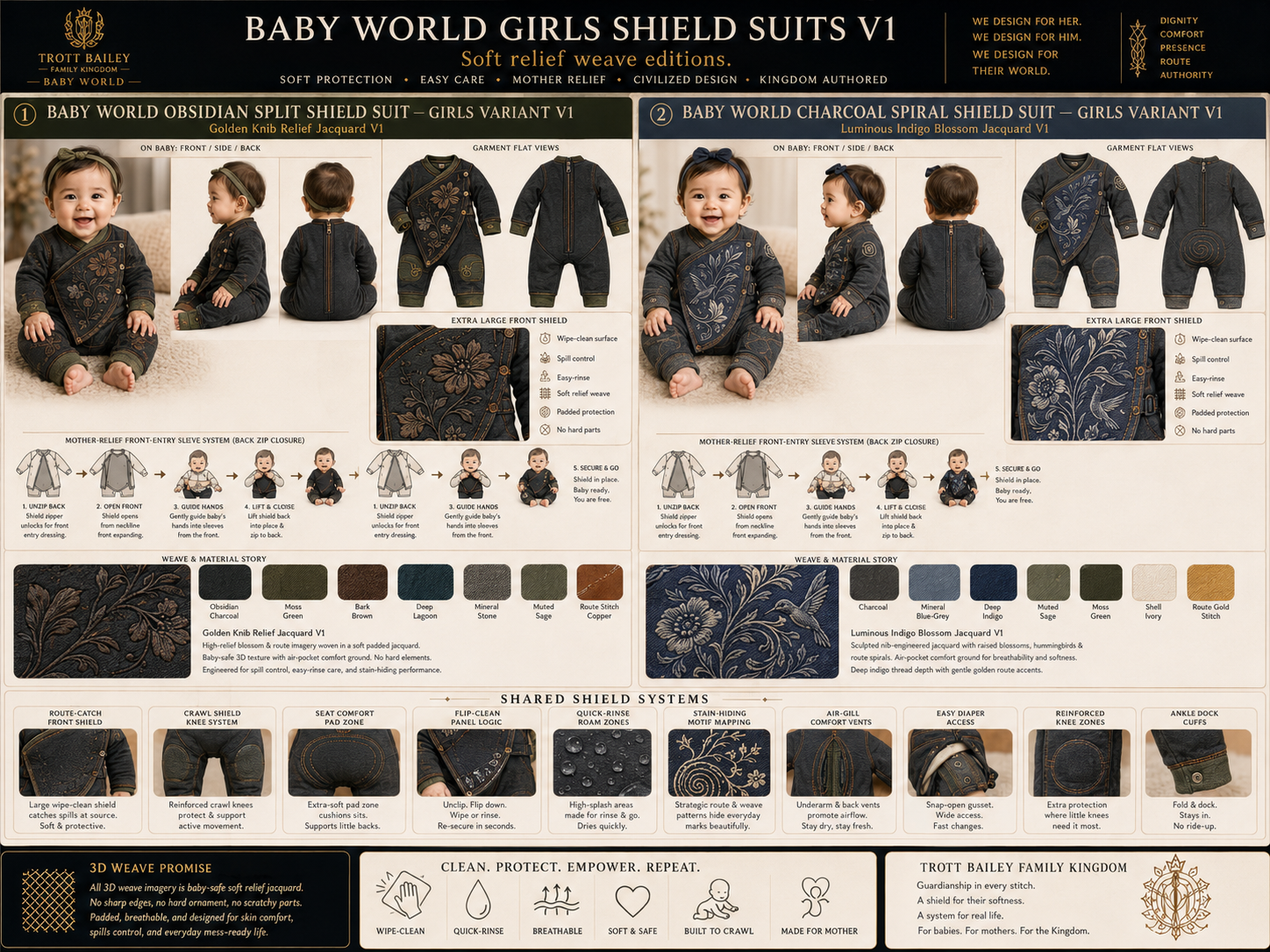
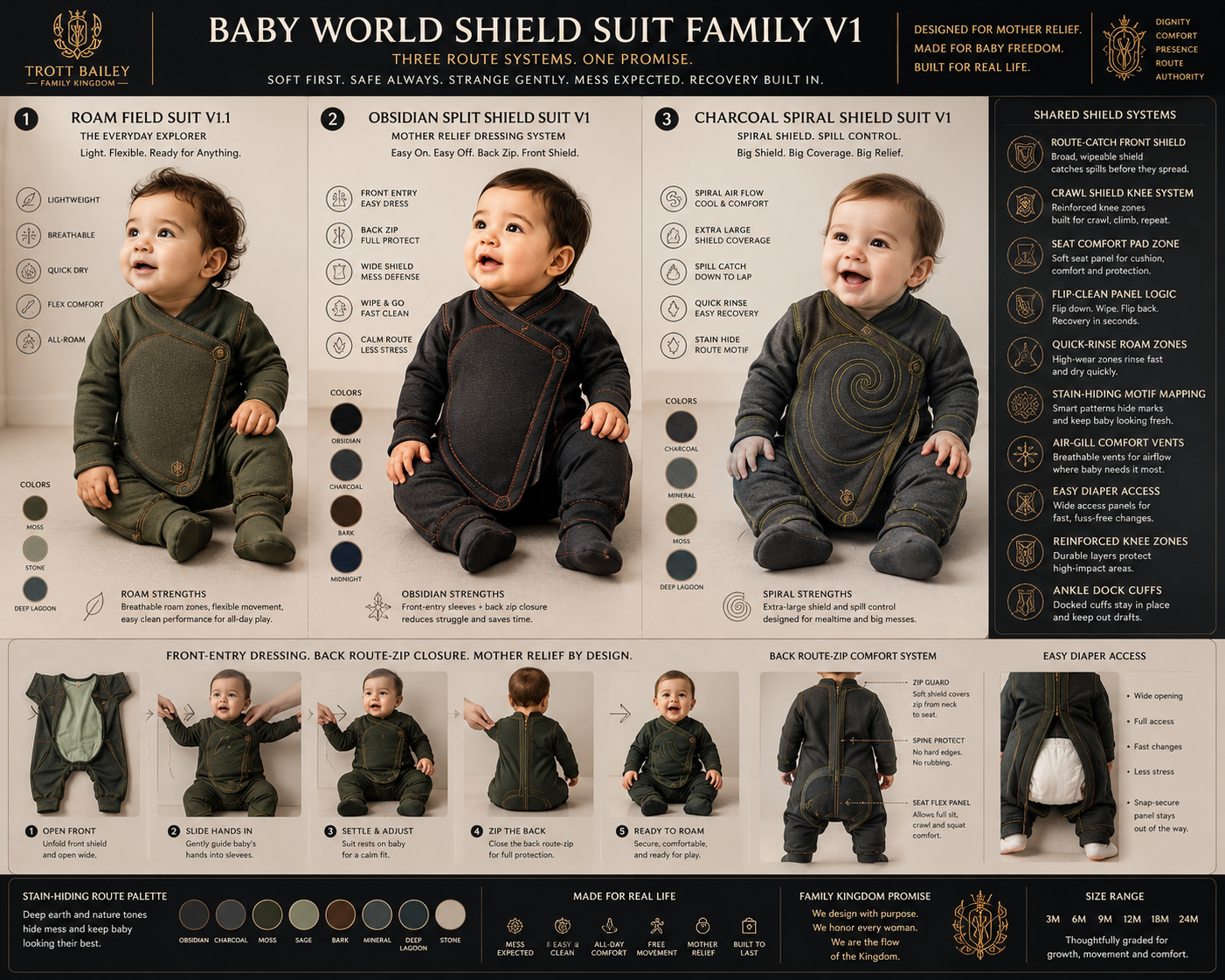
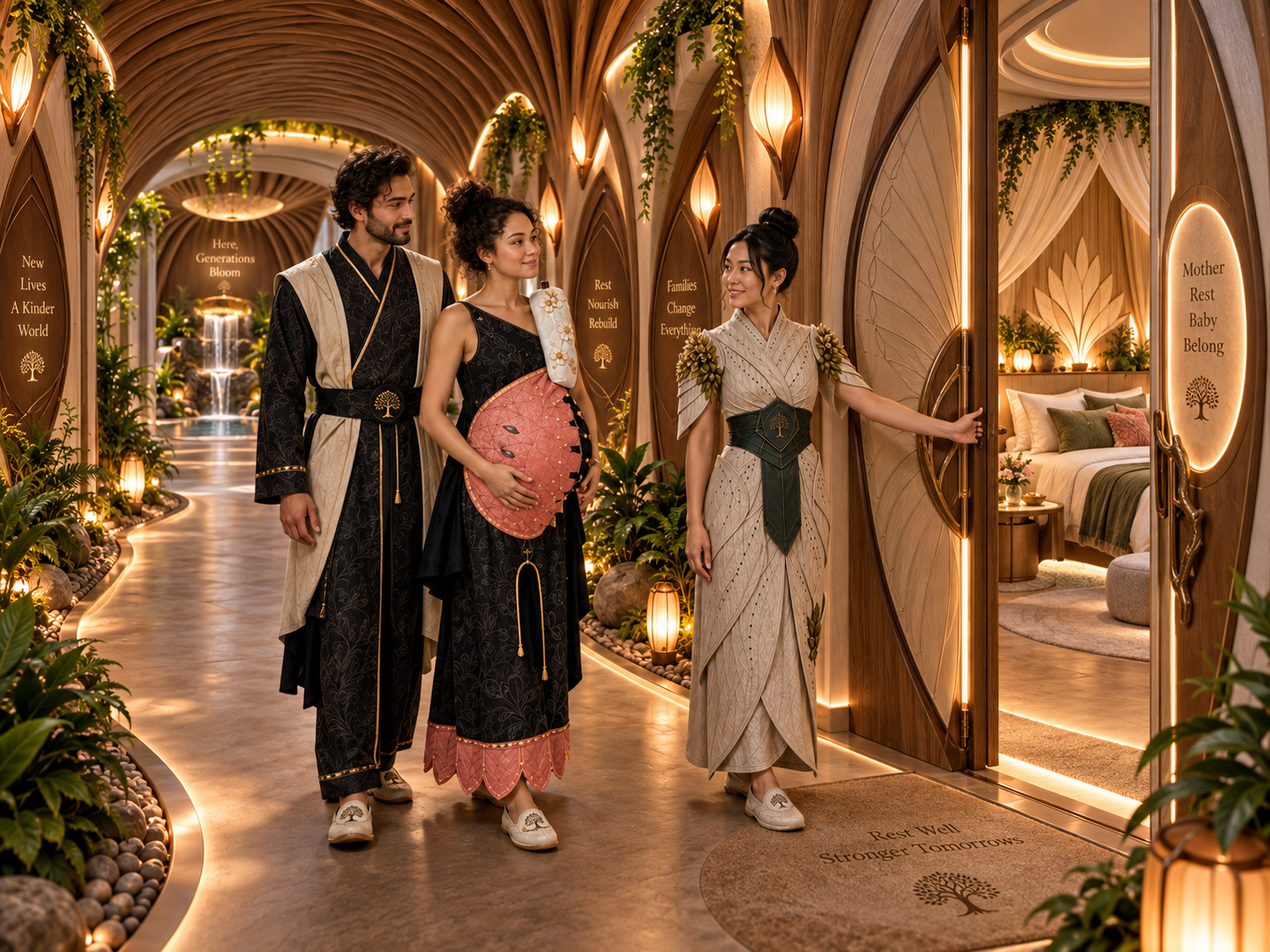
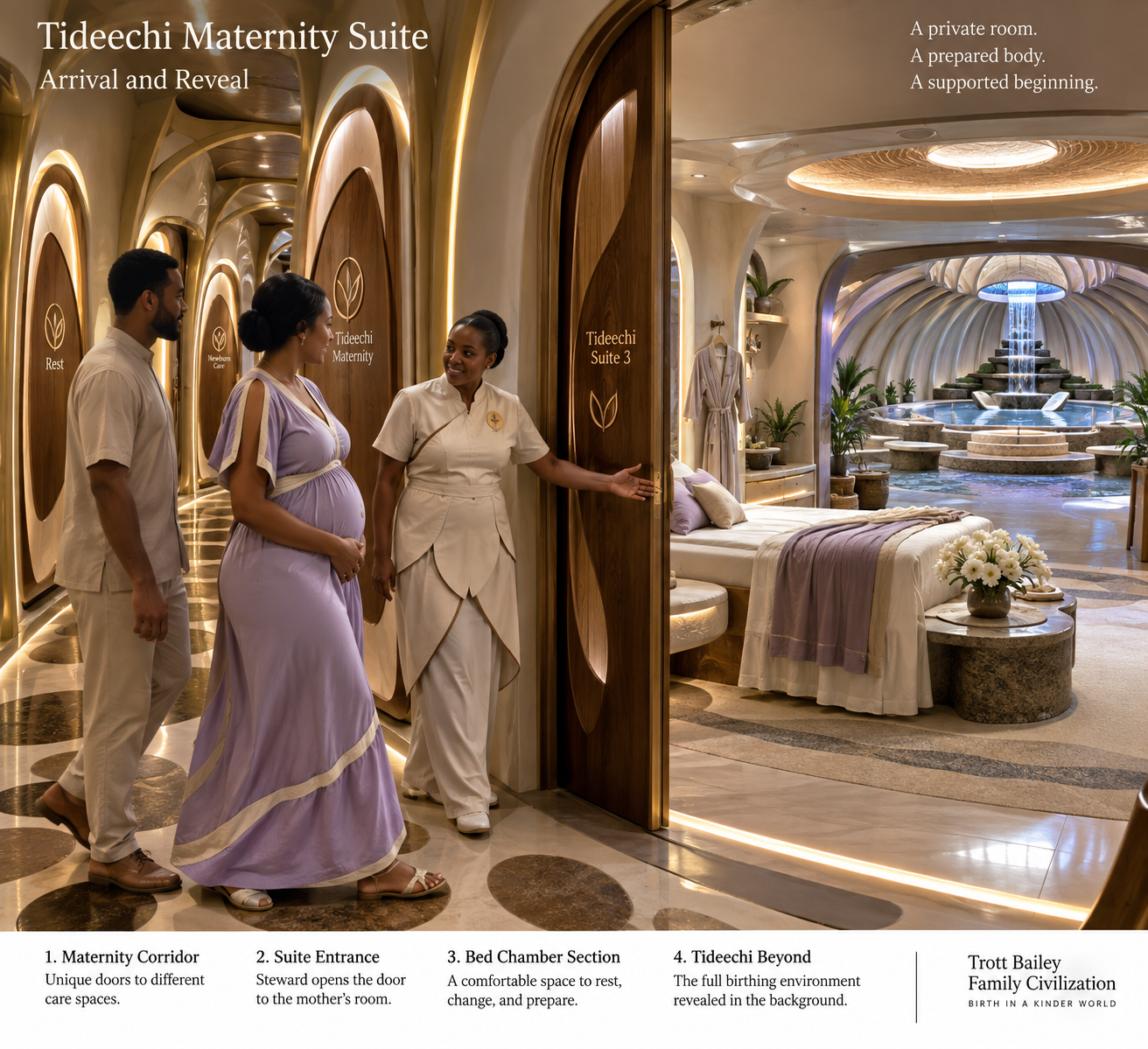
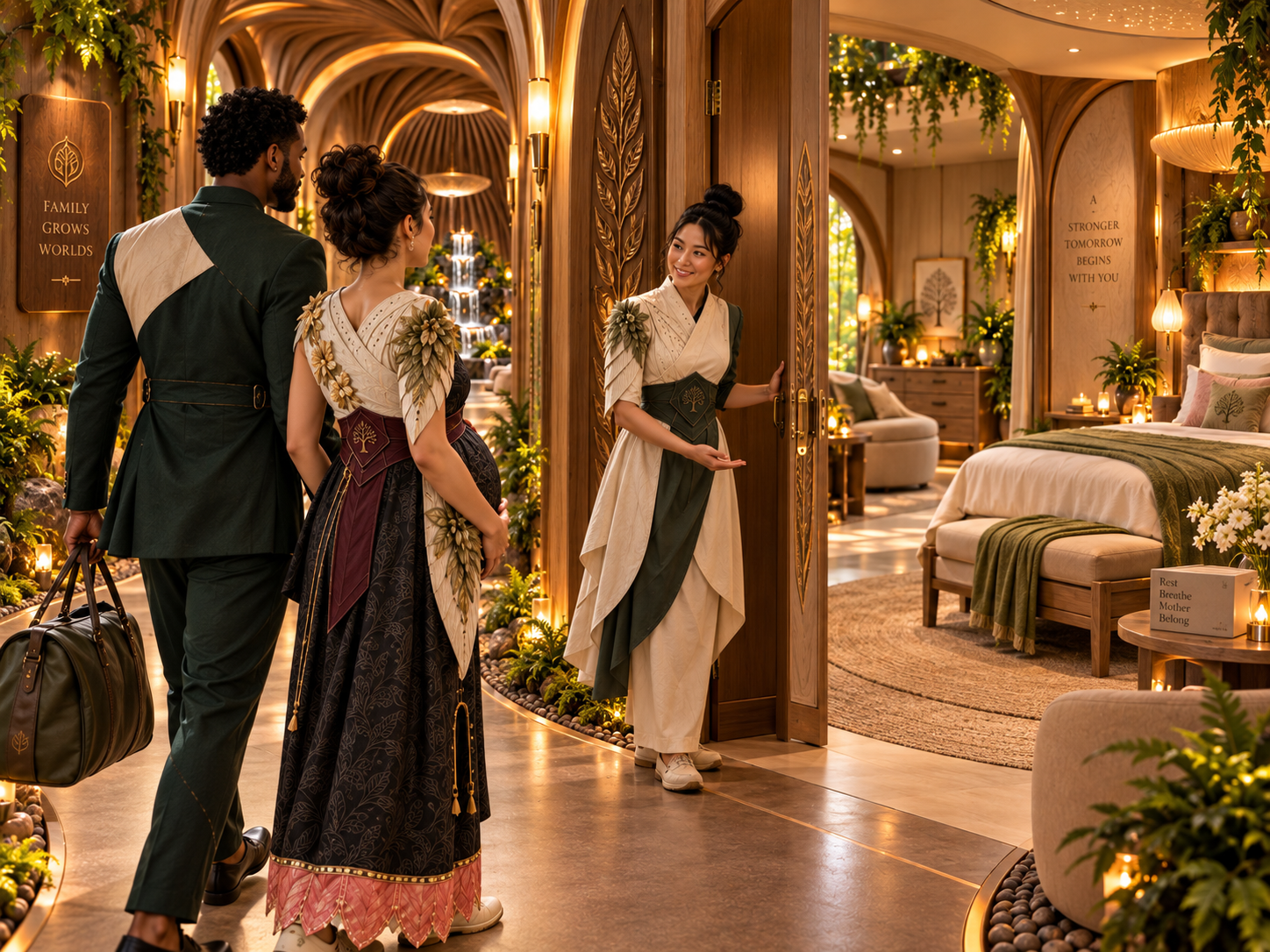
This is why the kingdom develops girls’ wraps, child footwear, Baby World shield suits, men’s route species, women’s hosting garments, Honey World worker attire, Big King representative branches, public-life citizen garments, and district clothing families.
Fashion is not frivolous when it touches every life stage.
What Problems Does Trott Bailey Fashion Solve?
Trott Bailey fashion is solving more than the problem of “what should people wear?”
It solves disposability.
Garments are not treated as temporary consumer products but as maintained objects of life, role, and beauty.
It solves generic identity.
People do not disappear into plain uniforms, trend cycles, or meaningless casualwear.
It solves role confusion.
Public helpers, representatives, stewards, and hosts become visually readable without becoming flattened.
It solves body neglect.
Design must honor many bodies, not just one idealized fashion body.
It solves climate ignorance.
Garments must consider heat, rain, wind, water, sweat, movement, and public terrain.
It solves ugly utility.
Useful clothing does not have to be ugly. Service does not have to be visually degraded.
This Is Not a Fashion Brand
A fashion brand often asks: Will people buy this? Will it trend? Will it photograph well? Will it create status? Will it sell identity?
A civilization wardrobe asks different questions.
- Who is this person?
- What role are they carrying?
- What does their body need?
- What climate are they moving through?
- What district do they belong to?
- What public system does this clothing support?
- How does the garment move?
- How is it cleaned?
- How is it repaired?
- How does it age?
- How does it protect dignity?
- How does it make beauty useful?
That is why Trott Bailey fashion cannot be judged only by the standards of the fashion industry. It is not a brand trying to win attention. It is a civilization trying to dress life properly.
Final Word: Clothing Is Where Civilization Touches the Skin
Fashion is serious because the body is serious. Movement is serious. Work is serious. Childhood is serious. Motherhood and fatherhood are serious. Public life is serious. Beauty is serious. Dignity is serious.
Trott Bailey Family Civilization cannot build extraordinary districts, food systems, water systems, youth systems, public-life worlds, and family-support structures while leaving people dressed by the old world’s shallow imagination.
If the kingdom is new, the clothing must be new too.
Not new for novelty. New because the old categories were too small.
A route steward needs more than pants and a shirt. A representative needs more than a suit. A child needs more than cheap costume clothing. A mother needs more than fashion that ignores her life. A worker needs more than a uniform that hides dignity. A ruler needs more than luxury. A civilization needs garments that think.
Fashion is infrastructure because it carries civilization at the scale of the person.
And in Trott Bailey Family Civilization, the person matters.
Suggested image placement: use one hero image of the Original Gill-Bloom Route Species in the River-Climb Belt scene, one image of the Soft Authority Mantle Variant in the Big King District Arrival / Receiving Court, and one close-up board of the Gill-Bloom Root-Tension Pod-Foot to show that the garment system continues all the way to the ground.