
Where Do Young People Fit in Trott Bailey Family civilization?
Where Do Young People Fit?
Youth, talent, wisdom, apprenticeship, Pacorips guidance, and the No Dumb Dumbs model inside the Trott Bailey Family civilization.
In the Trott Bailey Family civilization, young people are not treated like background noise. They are not left sitting around until adulthood. They are not ignored until they become a problem. They are not told, “You are too young to matter,” and then suddenly expected to become wise, useful, disciplined adults overnight.
Young people are seen as one of the kingdom’s greatest living resources. Not because they are cheap workers. Not because adults want to control them. Not because everyone has to become the same kind of person.
Young people matter because inside them are gifts, strengths, ideas, courage, creativity, service, inventions, wisdom, and future leadership that can bless their families and strengthen society.
01You Are Not Here to Be Ranked. You Are Here to Grow Fruit.
The kingdom does not look at young people through the old-world idea of ranking everybody from best to worst. That is not the goal.
A young person is not valuable because they are “above” another young person. A young person is valuable because they are becoming more awake, more skilled, more disciplined, more useful, more caring, more creative, more wise, and more fruitful.
- What gift is inside you?
- What are you naturally drawn to?
- What do you notice that others miss?
- What can you build, protect, repair, grow, design, teach, carry, sing, solve, organize, or improve?
- How can your gift serve your family and society?
02The No Dumb Dumbs Model
The kingdom is loving, but it is not foolish. It does not believe in abandoning young people to bad habits, careless thinking, laziness, arrogance, idleness, disrespect, or wasted talent.
The No Dumb Dumbs Model does not mean young people are mocked. It does not mean struggling youth are thrown away. It does not mean everyone has to be naturally brilliant. It means the kingdom refuses to raise young people into foolishness.
Talent without wisdom is unfinished.
A gifted young person still needs judgment, discipline, humility, and the ability to receive correction.
Talent without service becomes selfish.
The kingdom teaches youth to use their gifts for family, public good, beauty, protection, invention, care, and society.
Correction is not hatred. Challenge is not rejection. Discipline is not oppression. In the Trott Bailey Family civilization, correction is part of love.
Idle youth are often not bad youth. They are unplaced youth.
03No Young Person Left Idle
One of the great laws of the youth system is simple: no youth should be left idle, unseen, untrained, or without a next step.
Idleness is dangerous when it becomes a lifestyle. A young person with no path can drift into foolishness, distraction, trouble, insecurity, or wasted potential. So the solution is not always punishment first. The solution is placement.
- Movement and physical activity
- Creative practice and invention
- District exploration and rotation
- Apprenticeship beside skilled adults
- Family service and younger-child guidance
- Food, garden, animal, water, public-life, and technology learning
04Finding Your Gift
The kingdom does not expect every young person to fit the same mold. Some youth are naturally good with babies. Some understand machines quickly. Some are drawn to food, animals, beauty, performance, wisdom, invention, organizing, or quiet service.
Care Youth
Patient, soft, protective, calming, and naturally aware of babies, younger children, elders, and family needs.
Tech Youth
Drawn to Pacorips, robotics, scanning systems, software, interfaces, vehicles, diagnostics, and problem solving.
Food Youth
Interested in flavor, preparation, orchards, gardens, feeding people, food safety, and abundance systems.
Beauty Youth
Sensitive to clothing, hair, buildings, gardens, public spaces, music, atmosphere, and how people feel.
Invention Youth
They make strange things, funny things, useful things, playful things, and ideas adults may not understand at first.
Wisdom Youth
Quiet or spoken, they notice problems, give good advice, think deeply, and often understand people well.
A young person’s gift may begin small. It may appear as curiosity, repeated interest, unusual patience, a drawing, a question, a toy idea, a food idea, a tool idea, or a way of solving a small problem.
05Gift Placement Pathways
Once a gift is noticed, the kingdom does not leave it floating. The young person is placed into a pathway where the gift can be tested, strengthened, corrected, and expanded.
Kezidek Pathway
For youth drawn to care, babies, family relief, early childhood, parental support, and protective softness.
Keslev Pathway
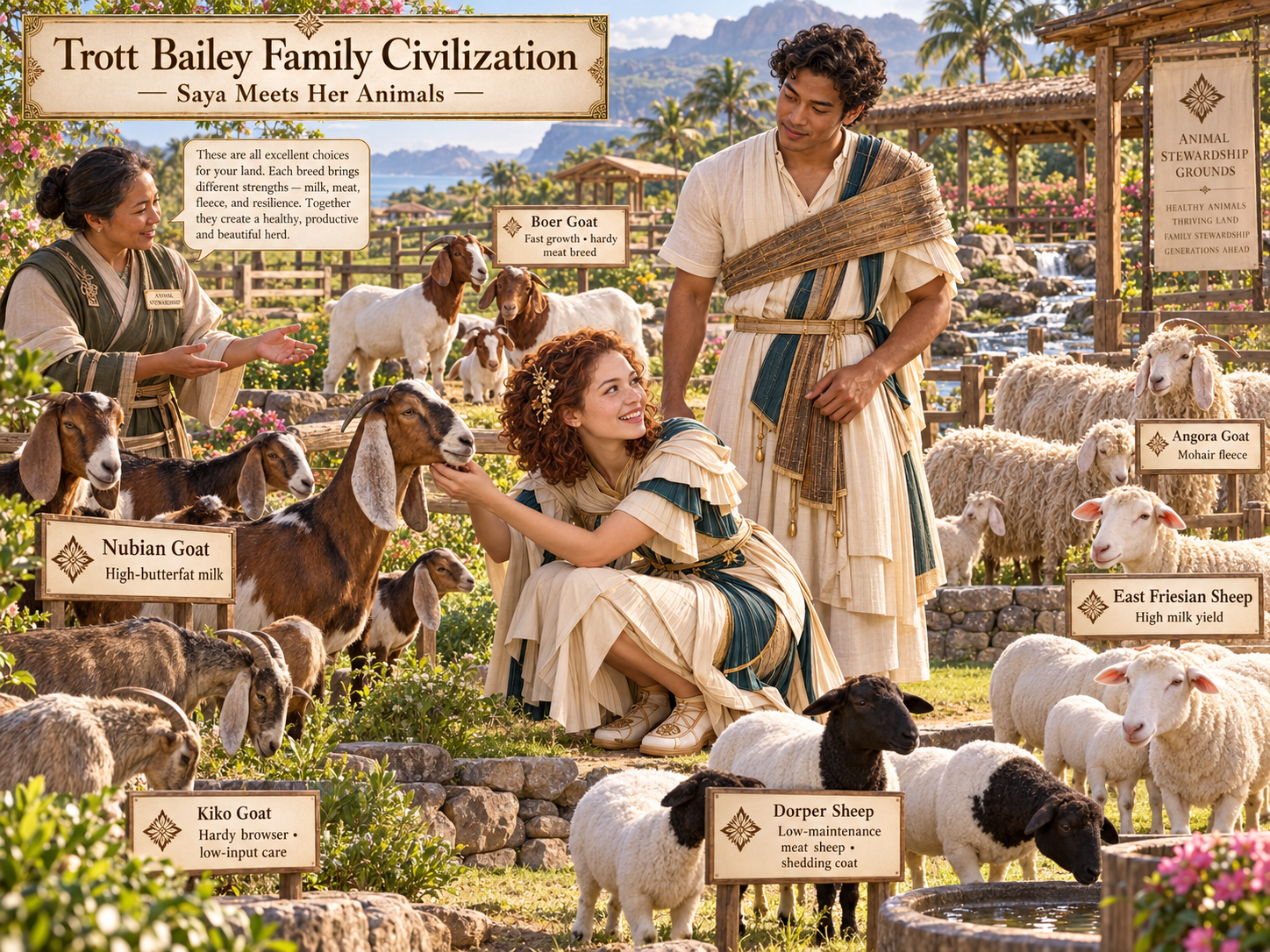
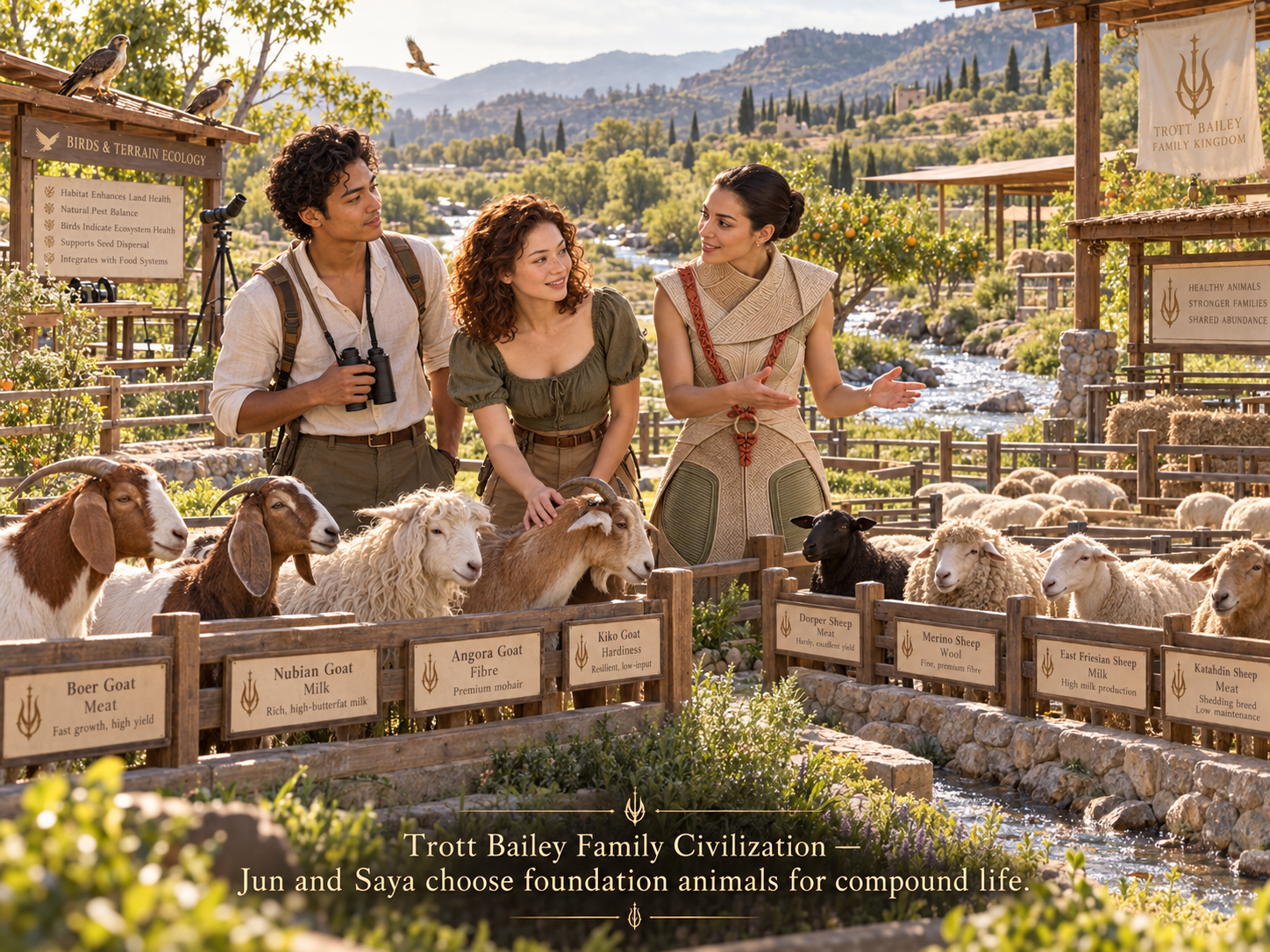
For youth drawn to farming, orchards, soil, food processing, compost, aquaponics, and food sovereignty.
Kultan Pathway
For youth drawn to water, Makji movement, lagoon systems, docking, sea routes, and water safety.
Balushu Pathway
For youth drawn to public life, Sabenneries, festivals, Release Commons, crowd comfort, reward systems, and hosting.
Sherika Pathway
For youth drawn to arrival, welcome, dignity, prairies, animal meadows, first impressions, and hospitality.
Keilah Pathway
For youth drawn to art, culture, music, clothing, child inventions, public toys, story, and playful food ideas.
Kaleeyon Pathway
For youth drawn to child delight, rainbow systems, games, playful devices, standpipes, and learning-through-fun.
Big King Pathway
For youth drawn to technology, software, Pacorips, robotics, scanning, vehicles, interfaces, and diagnostics.
This does not trap the young person. It gives them somewhere to grow. A young person can try different pathways before specializing.
06Kingdom Rotational Studies
Before a young person settles deeply into one path, they are exposed to many parts of the kingdom through Kingdom Rotational Studies.
This is not ordinary classroom learning. Youth go into the living systems of the kingdom. They see how food is grown, verified, prepared, transported, served, returned, composted, and grown again.
They see how babies are protected without being trapped. They see how water movement works. They see how public joy is managed without chaos. They see how beauty helps people behave better in public spaces. They see how technology supports care, movement, safety, and abundance.
07Apprenticeship: Learning Beside Real People
In the Trott Bailey Family civilization, young people learn beside real practitioners. They do not only sit and listen. They observe, ask questions, assist, practice, prove, and eventually contribute.
- First, the youth watches.
- Then they help with small tasks.
- Then they practice under supervision.
- Then they are trusted with specific responsibilities.
- Then they may guide younger youth.
- Then they may join deeper training.
The point is not to rush youth into adult burden. The point is to let ability mature through real contact with real work.
08Trust, Not Status
The kingdom does not need old-fashioned status ranking for youth. Instead, it uses trust.
Trust means the kingdom has seen enough wisdom, discipline, and skill to give the young person more responsibility.
Trust can open access.
A youth may be trusted to handle tools, help younger children, assist with food-safe tasks, work near animals, or use certain Pacorips interfaces.
Trust is not superiority.
A trusted youth is not worshipped. They are expected to stay humble, careful, useful, and correctable.
09Proofs: Evidence That You Can Be Trusted
The kingdom may recognize young people through proofs. A proof is not a shallow badge. It is evidence that a young person has shown skill, maturity, and care in a real area.
Baby Calm Proof
Patience, gentleness, and good judgment around babies or younger children.
Food Cleanliness Proof
Food safety, serving discipline, clean hands, return systems, and respect for feeding people.
Garden Sense Proof
Plants, watering, harvesting, soil, and care for living food systems.
Animal Respect Proof
Calm and responsible behavior around animals.
Interface Trust Proof
Responsible use of Pacorips or technical interfaces.
Public Presence Proof
Helping in public without being rude, chaotic, distracted, or attention-hungry.
These proofs open doors. They do not make one youth better than another. They show where a youth is ready to be trusted.
10Talent Harvest Moments
A young person’s gift should not remain hidden forever. When a youth uses their talent well, the kingdom recognizes it through Talent Harvest Moments.
A Talent Harvest Moment happens when a young person’s gift produces fruit: a useful invention, a better tool, a song that strengthens public life, a child toy that becomes part of a district, a food idea that families love, a beautiful clothing idea, a helpful Pacorips feature, a repaired system, a younger child helped, or a public event improved.
11Pacorips and the Youth Gift Ledger
Pacorips plays a major role in the youth system. But Pacorips is not there to turn young people into numbers.
Pacorips helps families, mentors, elders, and district stewards remember what is happening with each young person.
- Visible talents and repeated interests
- Learning strengths and areas needing correction
- Completed rotations and apprenticeships tried
- Mentors assigned and proofs earned
- Inventions submitted and public contribution moments
- Reliability, service attitude, and safety permissions
- Areas where the youth seems most alive
- Areas where the youth may be wasting talent
12Youth and Wisdom
The kingdom does not want brilliant fools. It wants wise young people.
So youth are not only trained in skills. They are trained in judgment. They learn how to receive correction, speak with respect, disagree without becoming foolish, work without showing off, help without controlling others, lead without bullying, avoid waste, tell the truth, repair mistakes, choose good friends, and use technology responsibly.
Skill needs character.
A talented young person who cannot be corrected is not ready.
Gifts need wisdom.
The kingdom would rather slow a youth down and strengthen their character than rush them forward and let their gift become harmful.
13Mistakes Do Not End You
Young people will make mistakes. The kingdom knows this.
The goal is not to create youth who never fail. The goal is to create youth who can be corrected, restored, and strengthened.
- A small mistake may need quick correction.
- A repeated mistake may need a wisdom talk.
- Carelessness may require a pause in trust.
- Disrespect may require apology and repair.
- Damage may require restoration.
- Idleness may require placement.
- Arrogance may require service.
- Confusion may require teaching.
14Youth Are Not Free Labor
The kingdom’s youth system must be clear about this: young people are not used as cheap workers.
They are not pushed into adult burdens too early. They are not made responsible for systems adults refuse to carry. They are not exploited because they are eager, gifted, or obedient.
Young people still need rest, joy, friendship, family time, play, food, sleep, creative freedom, emotional care, and protection from overwork. The kingdom wants strong youth, not burnt-out youth.
15Where Would You Fit?
If you are a young person reading about the Trott Bailey Family civilization, you may wonder: where would I fit?
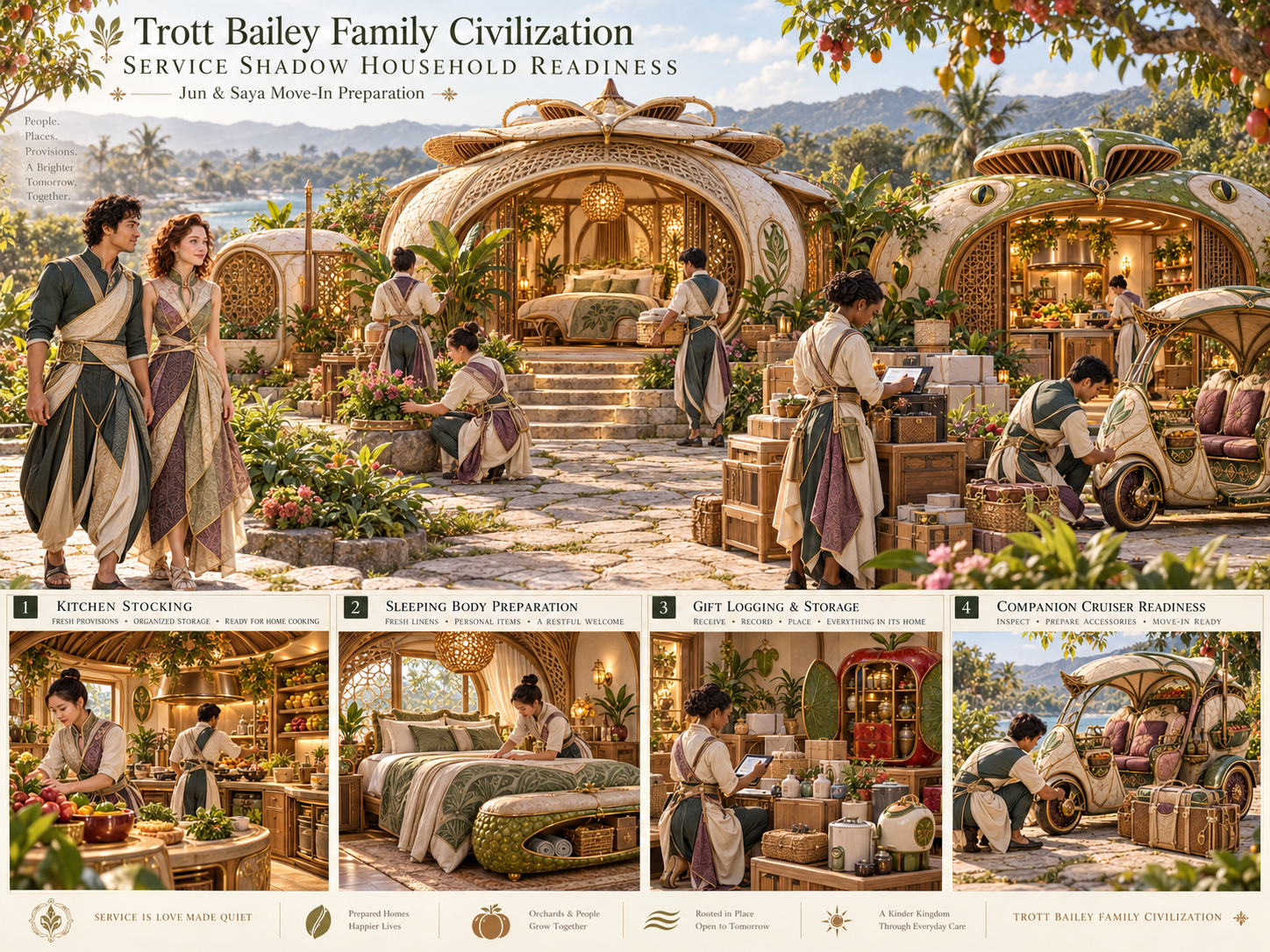
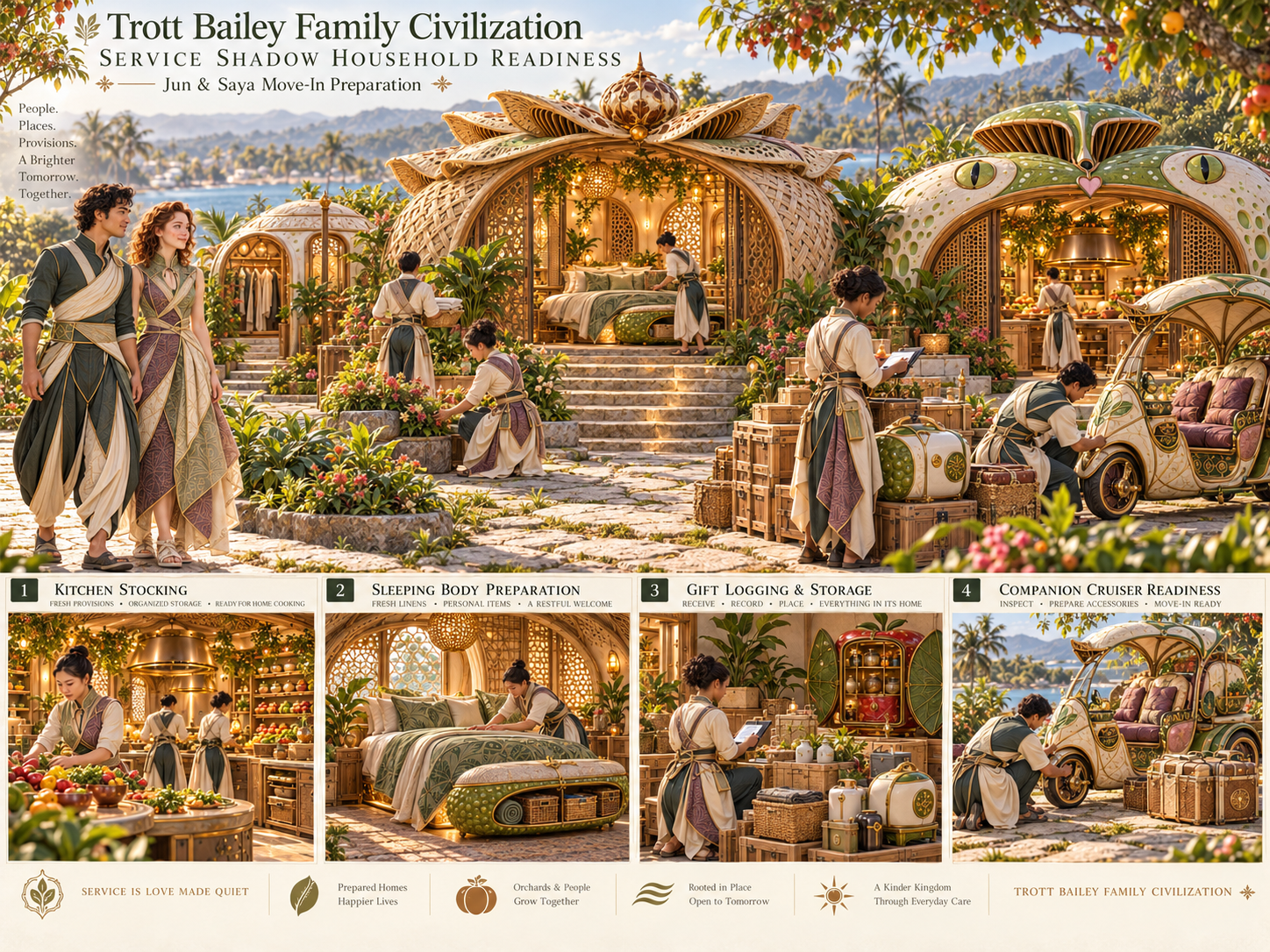
You might fit in the gardens. You might fit in the baby worlds. You might fit near animals. You might fit in food houses. You might fit around music, clothing, or public beauty. You might fit with water routes. You might fit in technology labs. You might fit in invention rooms. You might fit in service-shadow systems, quietly making everything work.
- What wakes you up?
- What do you keep returning to?
- What do you notice?
- What do you protect?
- What do you make better?
- What kind of responsibility makes you stronger?
- Where does your gift become useful?
That is where you begin.
16The Kind of Young Person the Kingdom Wants to Grow
The Trott Bailey Family civilization wants young people who become skilled but humble, creative but disciplined, strong but gentle where needed, brave but not reckless, joyful but not foolish, confident but correctable, intelligent but not arrogant, useful but not exploited, expressive but not chaotic, independent but still family-rooted, talented but service-minded.
The kingdom does not need every youth to be loud. It does not need every youth to be a performer. It does not need every youth to be technical. It does not need every youth to be the same.



 and then