

Rolewear Without Uniformity

Rolewear Without Uniformity
How Trott Bailey Family Civilization makes roles visible without making people generic, ugly, flattened, or interchangeable.
A civilization needs roles. People need to know who can help them, who is guiding a route, who is caring for a child zone, who is receiving families, who is inspecting a system, who is serving food, who is protecting public comfort, and who represents a district.
But the old world often solved this problem poorly. It made roles visible by turning people into uniforms. It stripped workers of personality. It dressed helpers in cheap practical clothing. It made service look plain. It made authority look hard. It made public guidance look like security. It made care work look like low status. It treated many useful people as background infrastructure instead of human beings carrying dignity.
Trott Bailey Family Civilization rejects that.
What Is Rolewear?
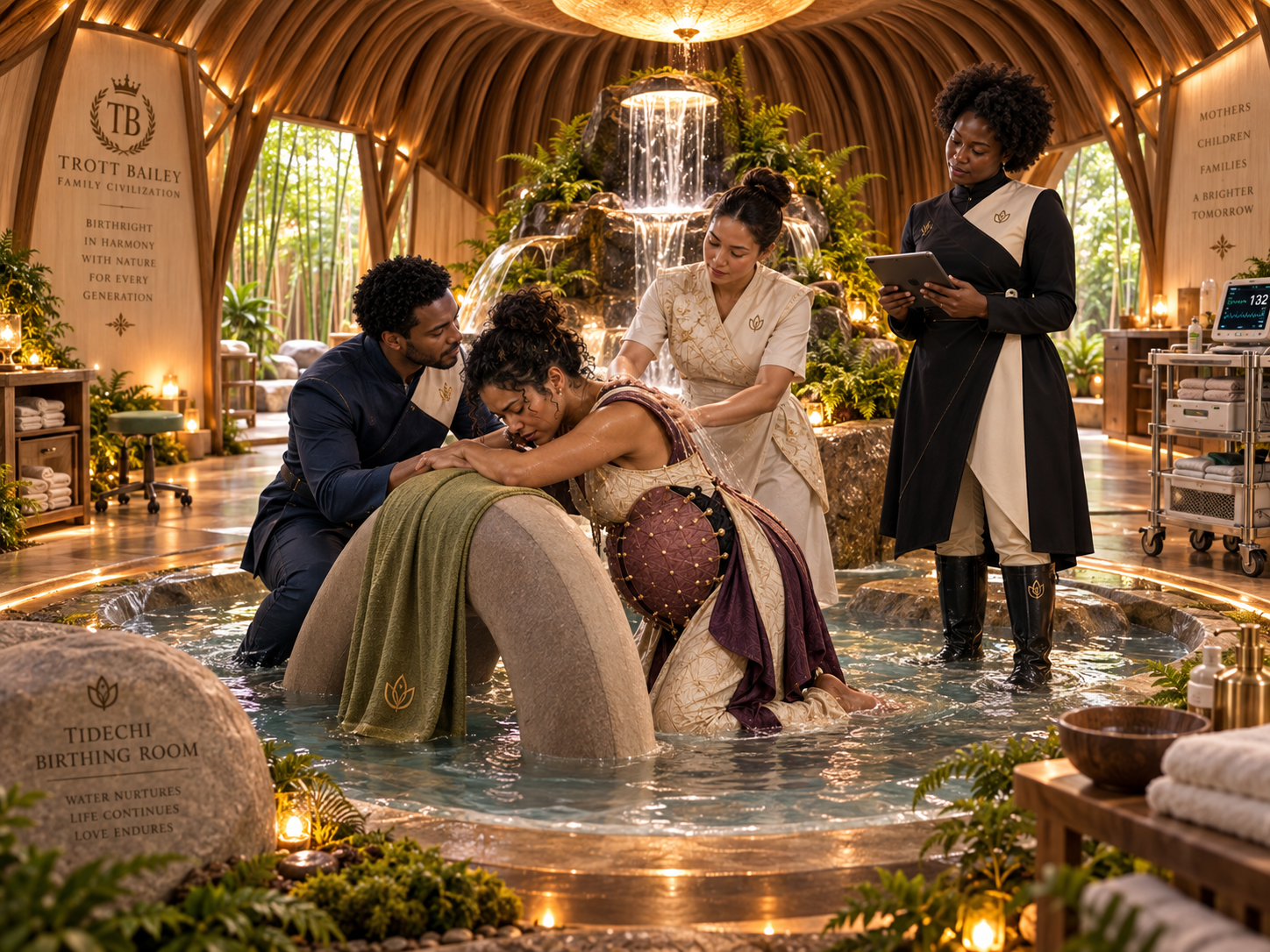
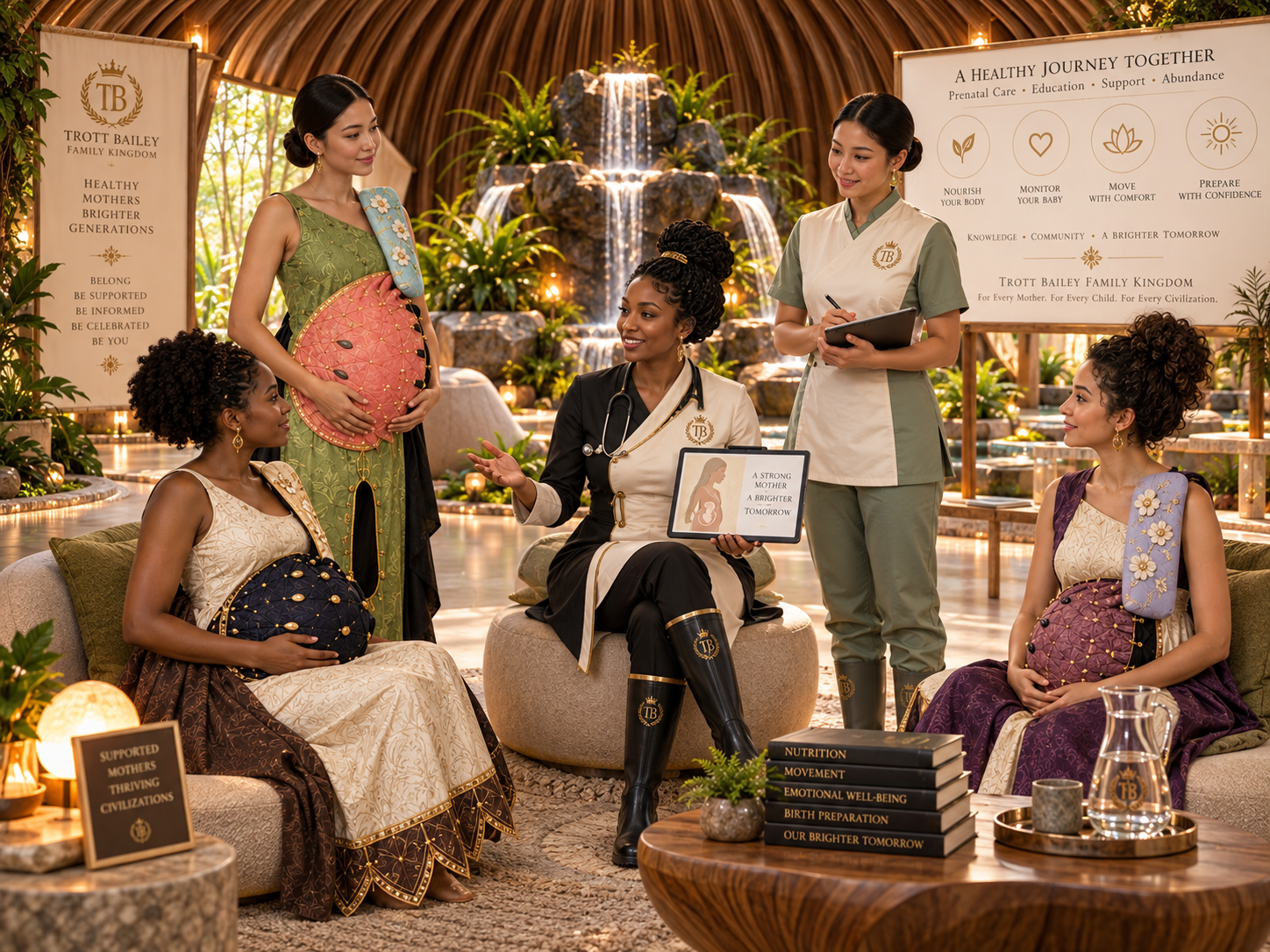
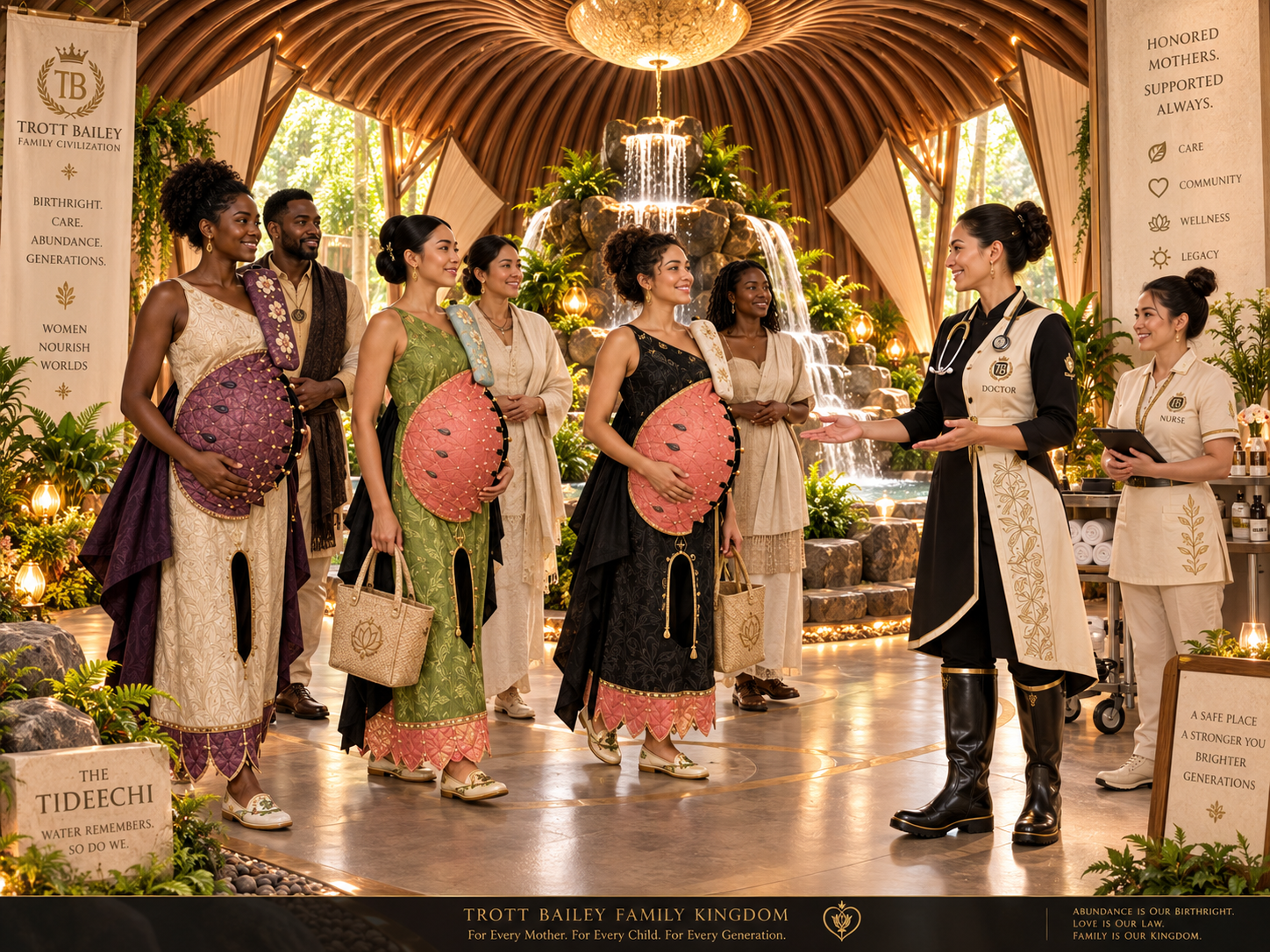
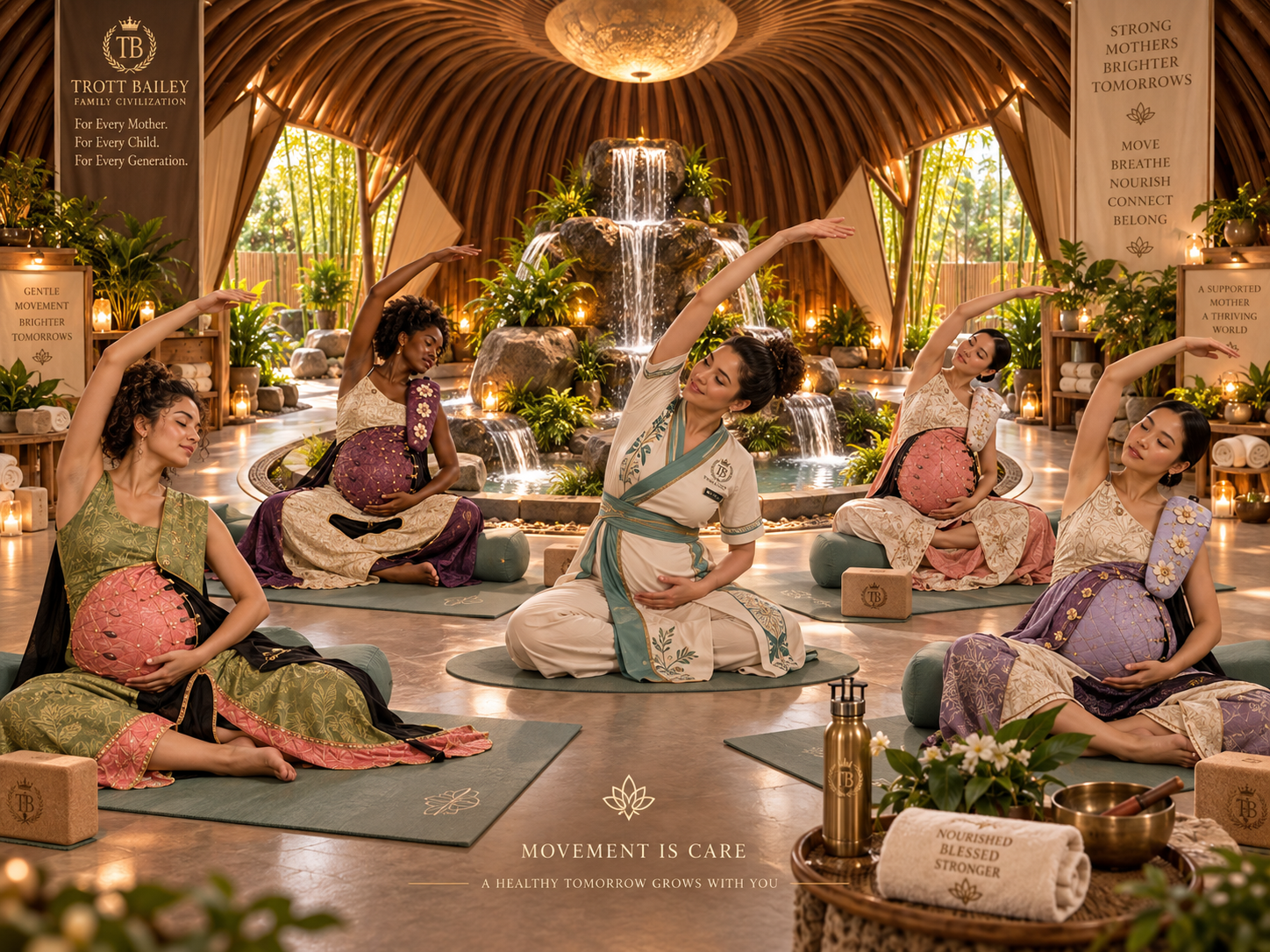
Rolewear is clothing designed for a person’s function in public life, family life, service, care, movement, ceremony, work, or representation. It is not just “work clothes.” It is not just “uniform.” It is not just “costume.” It is clothing that makes a person’s role understandable while still honoring their body, dignity, and individuality.
Definition: Rolewear is civilization-authored clothing that helps a role become visible, useful, dignified, and beautiful without reducing the person into a generic uniform.
This article continues the argument from Fashion Is Infrastructure and The Thinking Garment. Those articles explain why clothing is not a shallow topic and why every seam, fold, panel, node, and foot zone must carry purpose. Rolewear is where that thinking becomes social. It asks: how should a civilization dress the people who help it function?
The broader foundation is also explained in We Are Not Designing Fashion. We Are Designing Civilization Clothing. Trott Bailey clothing is not about trends or random beauty. It is about building the clothing language of a new civilization.
The Old Failure: Uniforms That Flatten People
Uniforms can be useful. They can make roles recognizable. They can create order. They can tell the public who is responsible for what. The problem is not visibility. The problem is flattening.
Many old-world uniforms communicate one message: this person is here to perform a function, not to be seen as fully human. The worker becomes a category. The helper becomes a label. The steward becomes a sign. The person disappears behind the job.
This is especially visible in service clothing. People who clean, guide, cook, wash, inspect, care, repair, carry, direct, and support public life are often dressed in the least beautiful clothing in the environment. The place may be luxurious, but the helper’s clothing tells the truth: usefulness has been visually downgraded.
Trott Bailey civilization cannot be built that way. A family-first, no-money, beauty-rich civilization cannot make useful people look like leftovers from a supply catalog.
Rolewear Is Not Costume
The answer is not to replace boring uniforms with theatrical costumes. Costume can be visually exciting, but it often performs identity instead of supporting life. It may look good for a photograph, ceremony, or screen moment, but fail when the person has to bend, walk, lift, guide, wash, climb, comfort, inspect, or stand for hours.
Trott Bailey rolewear must avoid both failures:
- Dead uniformity: clothing that is recognizable but ugly, flat, cheap, and dehumanizing.
- Empty costume: clothing that is dramatic but cannot support real role, body, climate, or movement.
The correct middle is not ordinary. It is higher than both.
Rolewear without uniformity means the role is clear, but the person is still dignified, beautiful, body-real, district-authored, and alive.
This is closely connected to the Trott Bailey originality rule described in 50% Refined, 50% Strange. Rolewear must be refined enough to be trusted and strange enough to belong to a new civilization.
Role-Readable Individuality
The goal is not that everyone in the same role wears identical clothing. The goal is that everyone in the same role family shares enough visible language that the public can recognize the function.
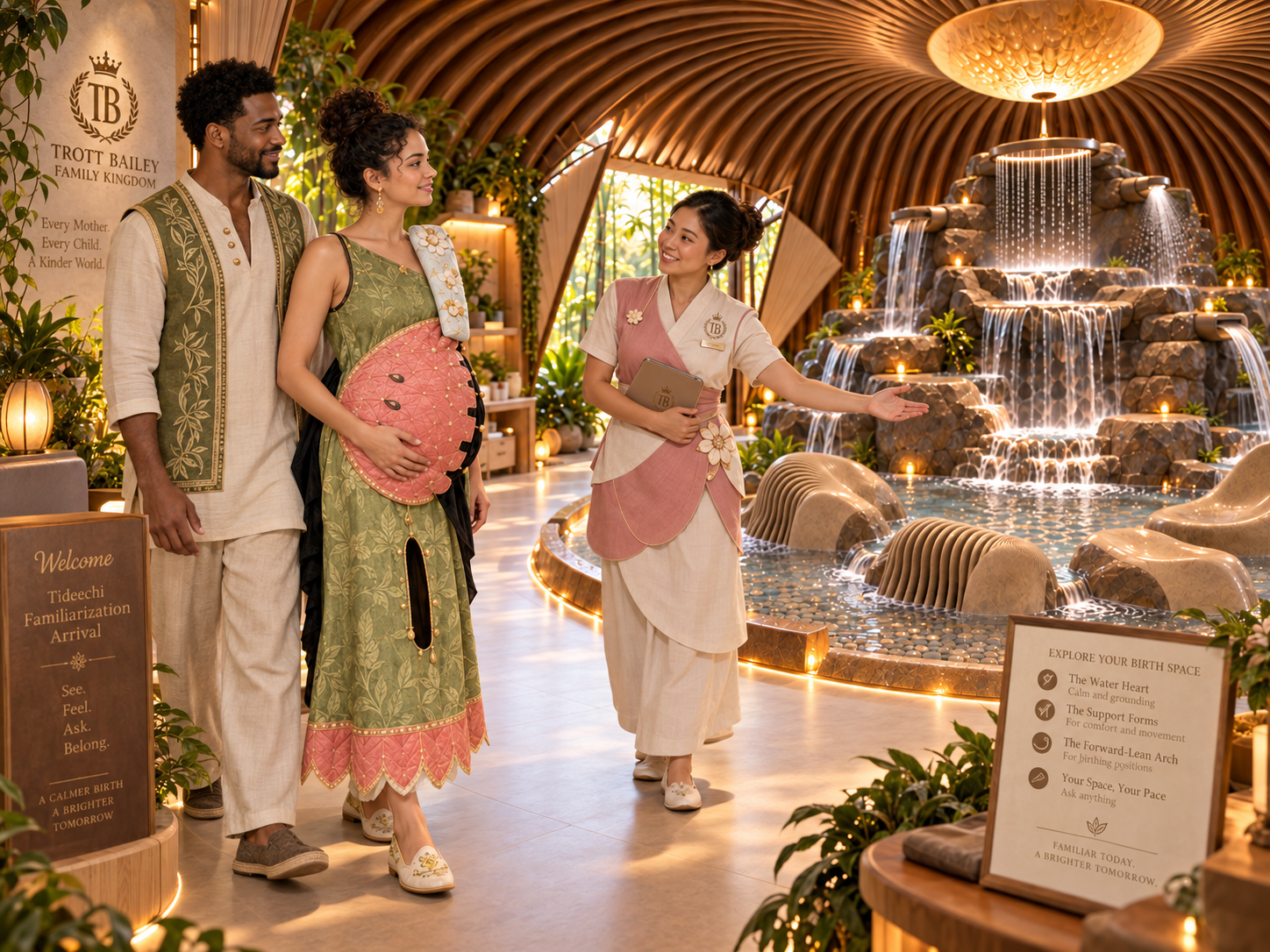
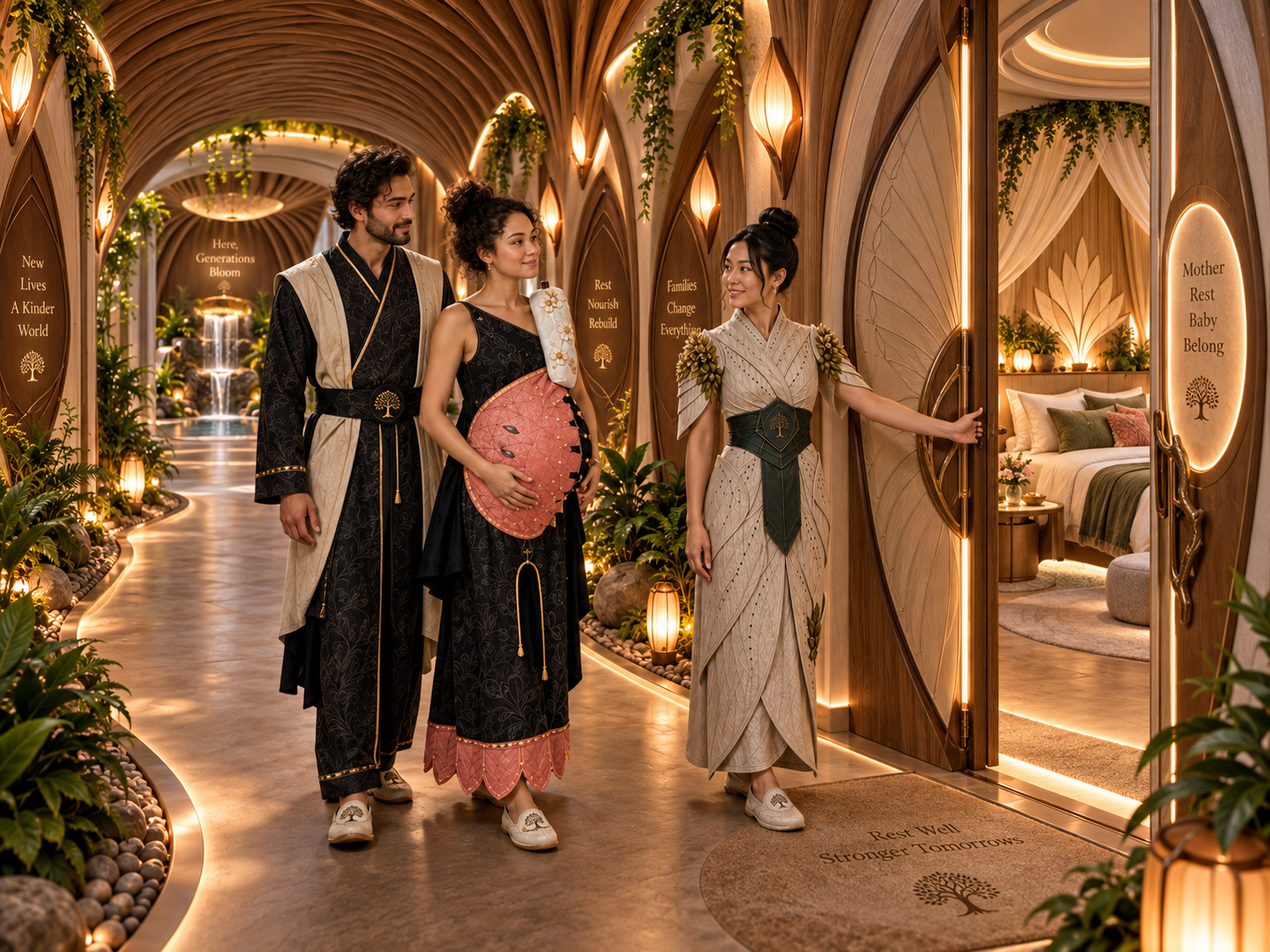
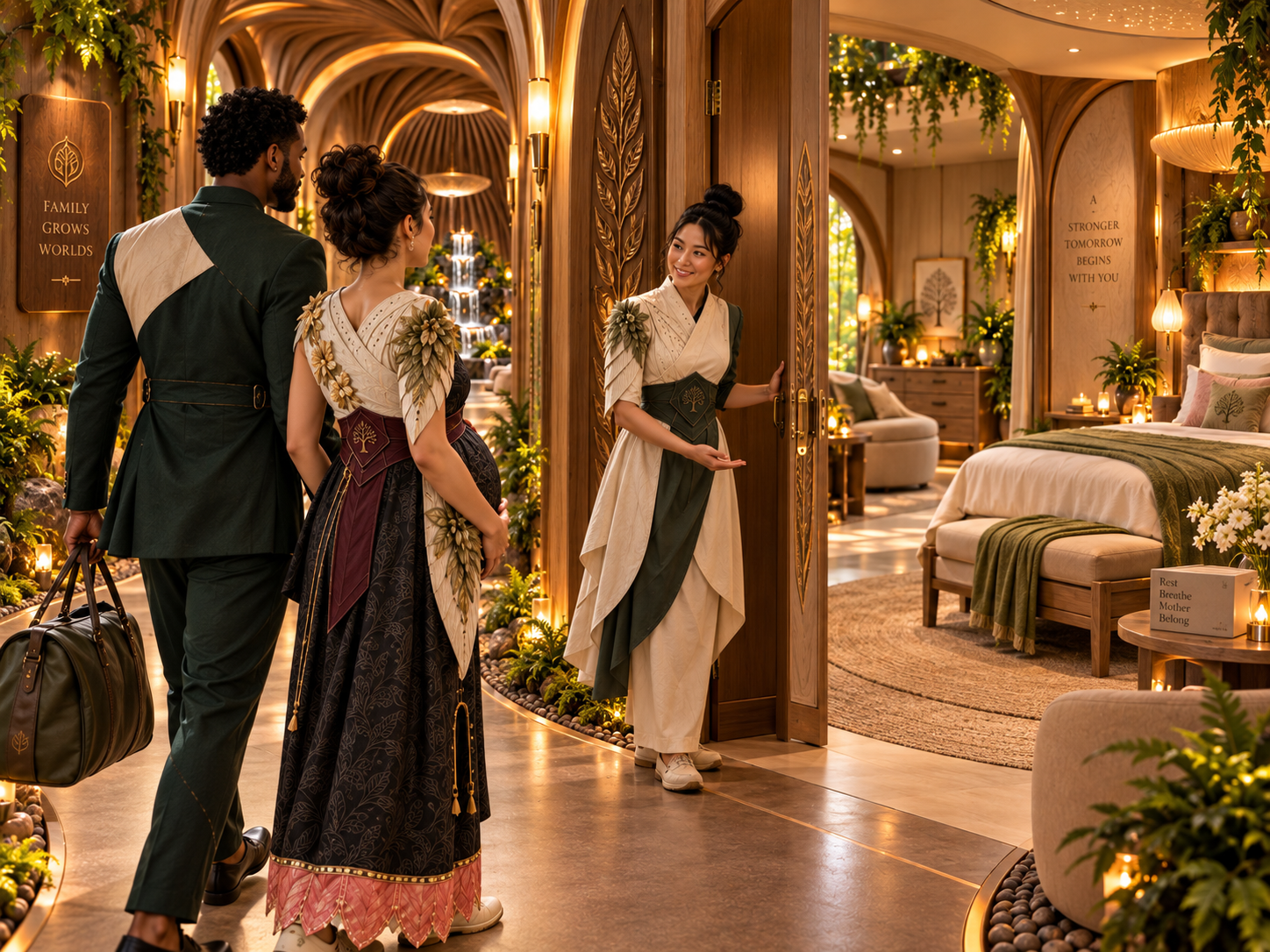
A Baby World helper does not need to look identical to every other Baby World helper. But their clothing should communicate softness, early-life care, clean handling, movement comfort, parent relief, and child-safe authority. A Food Helper does not need to become a generic apron worker. But their clothing should make warmth, food safety, carrying logic, washable surfaces, and family nourishment visible. A Route Steward does not need to look like security. But people should understand that this person knows the path, the terrain, the flow, and the safe movement of families.
That is role-readable individuality.
Readable
The public can understand the role without confusion, signage overload, or shouting.
Individual
The person is not erased. Body, age, district, variant, and personality can still be respected.
Useful
The clothing supports the actions the role requires, not just the appearance of the role.
Beautiful
The role is visually honored because useful people deserve beauty too.
Example: Shubaka Fashion
The Shubaka direction is one of the clearest examples of rolewear inside Trott Bailey civilization. Shubaka clothing is not random fashion clutter. It is organized around actual daily living and the kingdom’s maintenance and support systems.
In Beautiful Kingdom Wear for Shubaka Enjoyment, clothing is connected to practical life, climate, movement, and the Doon System. This matters because the Shubaka role is not merely decorative. A Shubaka world needs garments that can support service, beauty, washing, movement, public life, and enjoyment without becoming plain utility wear.
This is rolewear without uniformity. The clothing helps a person belong to a role family, but it does not reduce them to a flat worker identity.
The same logic can be expanded across the kingdom: Baby World Stewards, Family Shubaka Helpers, Warm Food Helpers, Edible Ring Guides, Warm Nest Stewards, Field Verification Inspectors, Kornara Cornworks Stewards, Riceworks Stewards, Beanworks Stewards, Fabric Node workers, Pacorips stewards, Honey World harvesters, and Sabennerie hosts.
Rolewear Must Show What the Role Protects
A role is not only a job title. A role protects something.
The Route Steward protects public movement. The Baby World Steward protects early-life calm and parent relief. The Warm Food Helper protects nourishment and family comfort. The Fabric Node worker protects garments from damage, stains, and careless washing. The Pacorips steward protects truth, placement, memory, and system intelligence. The Family Relief Pavilion representative protects dignity during basic human needs. The Honey World worker protects the relationship between bees, fields, honey, family delight, and harvest honor.
If a garment does not show what the role protects, it is incomplete.
Example: Original Gill-Bloom Route Species
The Original Gill-Bloom Route Species V1 is a strong example of rolewear for movement-heavy public life.
Gill-Bloom is a Trott Bailey garment language using gill-like pleats, shell-bloom folds, route seams, breathable textile structures, and side-locking systems.
Route Species means the garment is designed as a body system for public routes, not just as a shirt, pants, robe, or shoe.
In Big King District, the original Gill-Bloom branch belongs to the active route steward: the man moving along river-climb routes, public stairs, marine edges, platforms, and active terrain. His role is not simply to look impressive. He helps families move safely through the district. He manages flow. He reads terrain. He guides without becoming police, security, or military.
The clothing therefore needs:
- a route-readable silhouette,
- a lowerfield that allows stride without defaulting to ordinary pants,
- breathable gill structures for movement and climate,
- side-lock systems that hold the body without heavy armor,
- and pod-foot docking that proves the garment against the ground.
This is rolewear because the garment is shaped by the work of guiding public movement. It is not a uniform because the design still carries beauty, textile intelligence, district identity, and masculine authorship.
Example: Soft Authority Mantle Variant
The Gill-Bloom Route Species V1 — Soft Authority Mantle Variant shows another kind of rolewear. It is not for the same action-heavy role as the original route steward branch. It is a refined representative branch for receiving, explaining, welcoming, and standing with composed father-host authority.
This is important because Big King District does not only need men in action roles. It also needs men who represent the district: men who receive families at arrival courts, explain systems, guide visitors toward Family Relief Pavilions, host public technology presentations, and stand as calm civic representatives.
The Soft Authority Mantle Variant answers that need. It is softer, more draped, and more public-hosting in tone. It must not drift into a robe, prince costume, kaftan, or generic ceremonial garment. It must remain Big King-authored: grounded, masculine, composed, useful, and representative.
This is rolewear without uniformity because it allows a man to be visibly responsible without making him hard, plain, or generic.
Rolewear and District DNA
Rolewear cannot be identical across the whole kingdom. A Honey World worker, a Big King District route steward, a Baby World helper, a Keslev food steward, a Kultan water-route host, and a Balushu public-life guide are not serving the same environment.
They may all belong to Trott Bailey Family Civilization, but they do not all need the same garment language.
District DNA matters. Big King District carries father-host authority, public movement, marine edges, maker culture, technology, family strength, and representative dignity. Keslev carries food sovereignty, orchards, storage, preparation, abundance, and return. Kultan carries water movement, Makji logic, clean flow, and water-edge service. Baby World carries early-life care, parent relief, mess-readiness, softness, and safety.
A rolewear system must translate across these differences.
The point is not to make one national costume. The point is to develop a civilization wardrobe where each district and role has clothing that belongs to its real life.
Rolewear and Public Trust
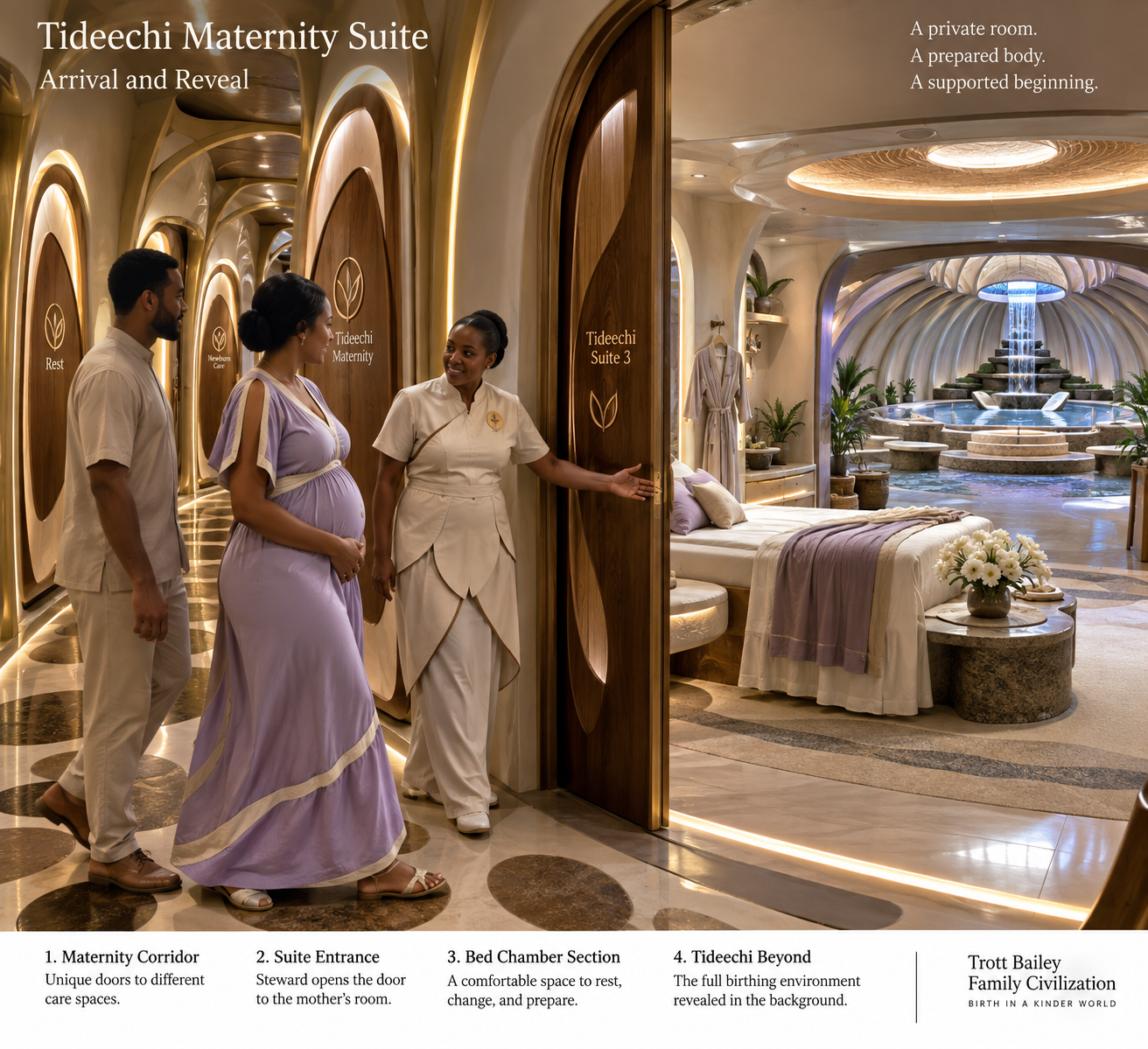
Public trust is not only built through rules. It is also built through clarity. A family entering a public space should not have to guess who can help them. A parent should be able to recognize a warm-food helper, a route steward, a Baby World support worker, a pavilion representative, or a field verification inspector.
But recognition must not require ugly uniforms.
Trott Bailey rolewear uses silhouette, color family, route seams, node placement, textile behavior, footwear, and role tools to create trust. The person becomes readable without being visually degraded.
Public clarity without human erasure.
That is the rolewear standard. People should know who can help them, but the helper should still look dignified, authored, and fully human.
Rolewear Must Serve Real Bodies
If rolewear only works on one body type, it is not civilization-level. Real roles are carried by different bodies. Route stewards may be tall, broad, lean, older, younger, dark-skinned, light-skinned, Asian, Black, Indigenous, mixed, brown, white, muscular, soft-bodied, or differently proportioned. Family helpers, food stewards, Fabric Node workers, and public hosts also come in many bodies.
This means rolewear must be designed as a system, not as one narrow model look.
Fit must be intelligent. Closures must adjust. Panels must scale. Lowerfields must move. Foot systems must support the ground. The garment must preserve dignity across bodies, not only on the body that the fashion world usually chooses.
This is why Trott Bailey fashion testing now includes different races, skin tones, ages, and body sizes in citizen scenes. Diversity is not a surface checkbox. It is proof that the civilization is actually dressing people.
Rolewear Must Include Footwear
A role does not stop at the ankle. A steward who walks routes needs foot logic. A helper who moves through wet zones needs safe soles. A public representative standing for long periods needs stable support. A Baby World worker needs soft, clean, quiet, non-slip movement. A field steward needs terrain readiness.
That is why the Gill-Bloom work developed the Root-Tension Pod-Foot instead of placing a normal sneaker under the garment.
Pod-Foot: A foot-zone architecture that belongs visually to the garment while still functioning as footwear. It can include a docking collar, ankle route lock, instep bridge, heel cradle, toe protection, pressure nodes, and a real walking sole.
Kingdom footwear already has its own direction in Trott Bailey media, including Easy Wear but Fashionable Kingdom Shoes Designed by Sher Trott Bailey. The principle is larger than one shoe: every role needs the ground-contact logic to match the life it serves.
If the garment is rolewear but the shoe is generic, the role has not been fully dressed.
Rolewear Must Be Maintainable
The more serious clothing becomes, the more serious clothing care must become. Rolewear cannot be designed as if families and workers will simply “figure it out” with old washing machines, harsh heat, random detergent, or panic scrubbing.
In Trott Bailey civilization, clothing care is part of the fashion system. The article The Old Laundry Battle explains why clothing is identity, memory, beauty, and public life, not disposable laundry trouble.
Rolewear needs a care chain:
- Mini Fabric Rescue Kit for immediate stain stabilization.
- Fabric Washer for daily washing that does not destroy intelligent textiles.
- Fabric Node for deeper preservation, diagnosis, repair, and treatment.
If a role garment is expected to serve real public life, it must also survive real public life. Food spills, mud, sweat, rain, baby mess, water edges, route dust, honey, fruit, oil, and daily wear are not failures. They are part of life. The civilization must be prepared to preserve the garment through them.
The Moral Weight of Beautiful Service Clothing
The way a civilization dresses useful people reveals what it truly believes about usefulness.
If the rulers are beautiful but helpers are plain, the civilization has exposed its hierarchy. If public buildings are grand but service workers look like afterthoughts, the beauty is dishonest. If children are delighted but the workers supporting that delight are visually degraded, the system is not complete.
Trott Bailey civilization must be different.
A Warm Food Helper should look worthy of the nourishment they help provide. A Baby World Steward should carry soft authority. A Field Verification Inspector should look truthful and trusted without looking like police. A Fabric Node worker should look like a guardian of clothing, not a back-room laundry employee. A Route Steward should look like public flow has a human body. A Family Relief Pavilion representative should make care feel dignified.
Rolewear Is Not Status Clothing
In the old world, clothing often signals status: who has money, who has access, who is elite, who is ordinary, who is worker, who is customer, who is servant, who is important.
Trott Bailey rolewear must not reproduce that old hierarchy. In a no-money civilization, the question is not: who can afford better clothing? The question is: what does this person need to carry their role with dignity, usefulness, and beauty?
A helper should not be visually below a host. A steward should not be visually below a representative. A child’s garment should not be cheap because the child is small. A worker’s garment should not be ugly because their work is practical.
The kingdom’s broader fashion media has long carried the vision that clothing in the kingdom should be beautiful and freely provided within the kingdom system, as seen in Trott Bailey Family Kingdom Fashion Design Movie by Sher. Rolewear continues that principle by applying beauty to function, not just ceremony.
Rolewear and Youth Path Development
Rolewear also matters for young people. Youth should not grow up seeing public roles as boring, ugly, low-status, or visually dead. If the kingdom wants youth to notice gifts, try real environments, learn skills, and imagine useful futures, then the people carrying those roles must look worthy of attention.
A young person watching a Route Steward, Warm Food Helper, Fabric Node specialist, Honey World worker, Pacorips guide, or Baby World support worker should be able to think: that role has dignity. That role has beauty. That role has intelligence. That role might be worth learning.
Rolewear therefore supports the Youth Path House system, where young people discover possible paths through real kingdom life rather than being forced into abstract career categories.
A society that dresses useful roles poorly should not be surprised when young people do not want to enter them.
The Rolewear Checklist
Before a garment becomes approved rolewear in Trott Bailey Family Civilization, it should answer these questions:
- What role does this garment make visible?
- What does the role protect?
- What actions does the person need to perform?
- What body movements must the garment support?
- What climate or terrain does the role face?
- What district does the role belong to?
- How does the public recognize the role without reducing the person?
- What parts of the garment are shared across the role family?
- What parts can vary by body, person, district, or occasion?
- Does the garment avoid dead uniformity?
- Does the garment avoid costume drift?
- Does the footwear belong to the role?
- Can the garment be cleaned, repaired, and maintained?
- Does the person look useful and dignified at the same time?
Final Word: Give Usefulness a Visible Body
Rolewear without uniformity is one of the clearest signs that Trott Bailey Family Civilization is not copying the old world.
The old world made many useful people plain. It made workers interchangeable. It made helpers visually small. It made uniforms recognizable but often lifeless. It gave beauty to status and utility to those expected to serve.
The kingdom must do better.
A civilization that honors family, service, public life, children, food, water, clothing, movement, care, and truth must also honor the people who carry those roles. Their clothing should help them move. It should help families recognize them. It should protect the role. It should support the body. It should belong to the district. It should be maintainable. It should be beautiful.
Not because the role is performance.
Because the role matters.
Trott Bailey rolewear says: usefulness is not ugly, service is not shame, and public life should never require people to disappear into dead clothing.