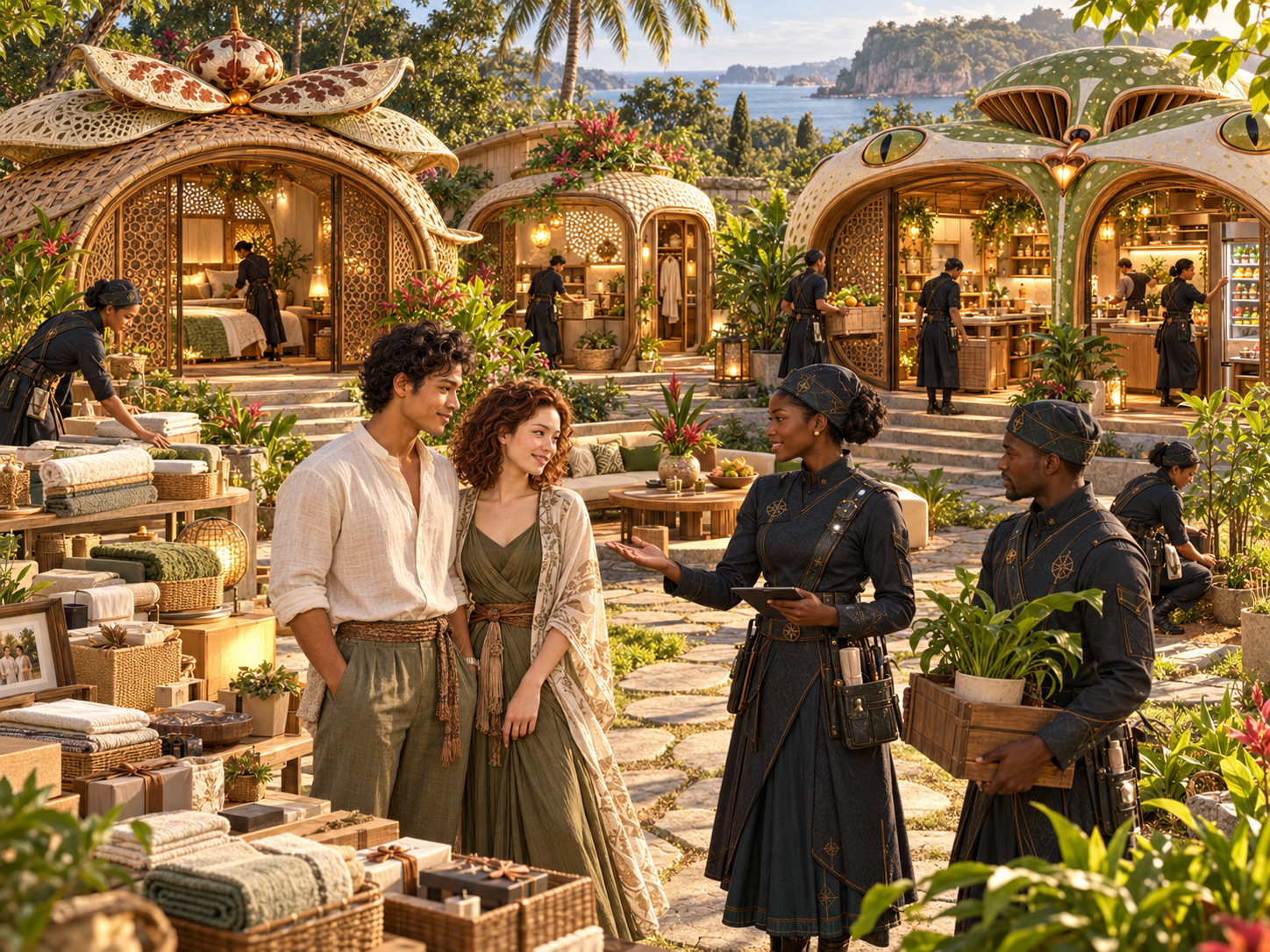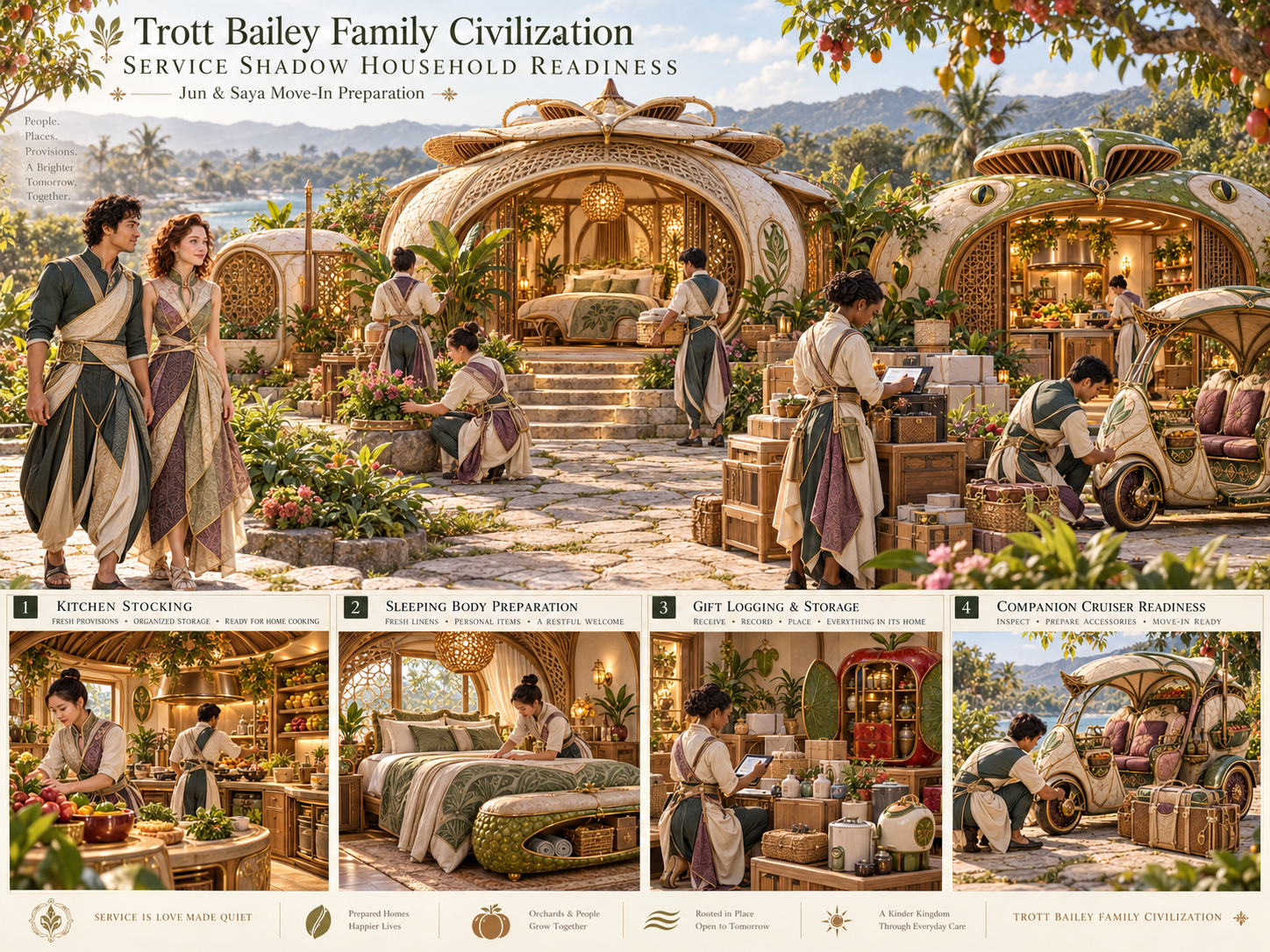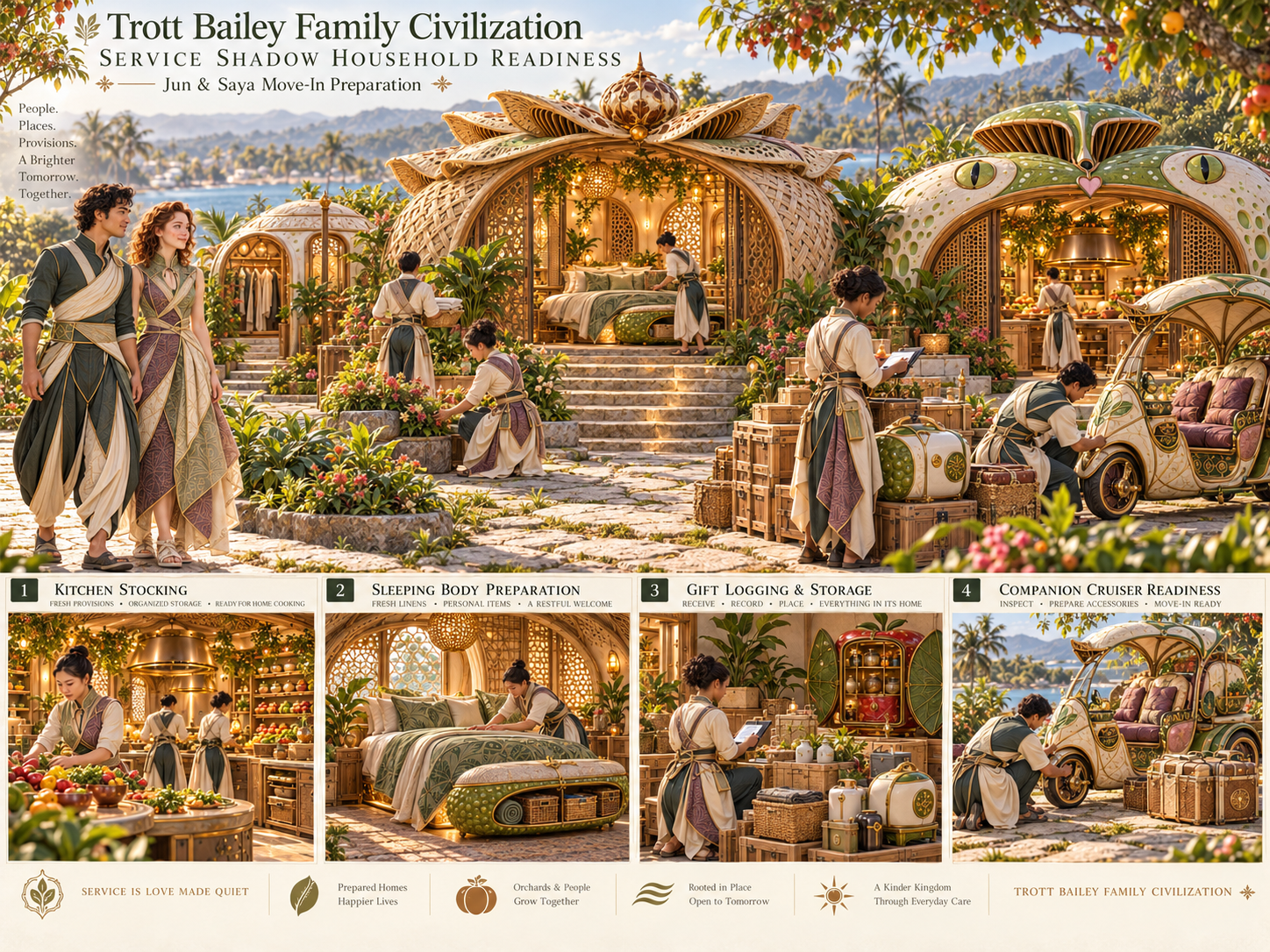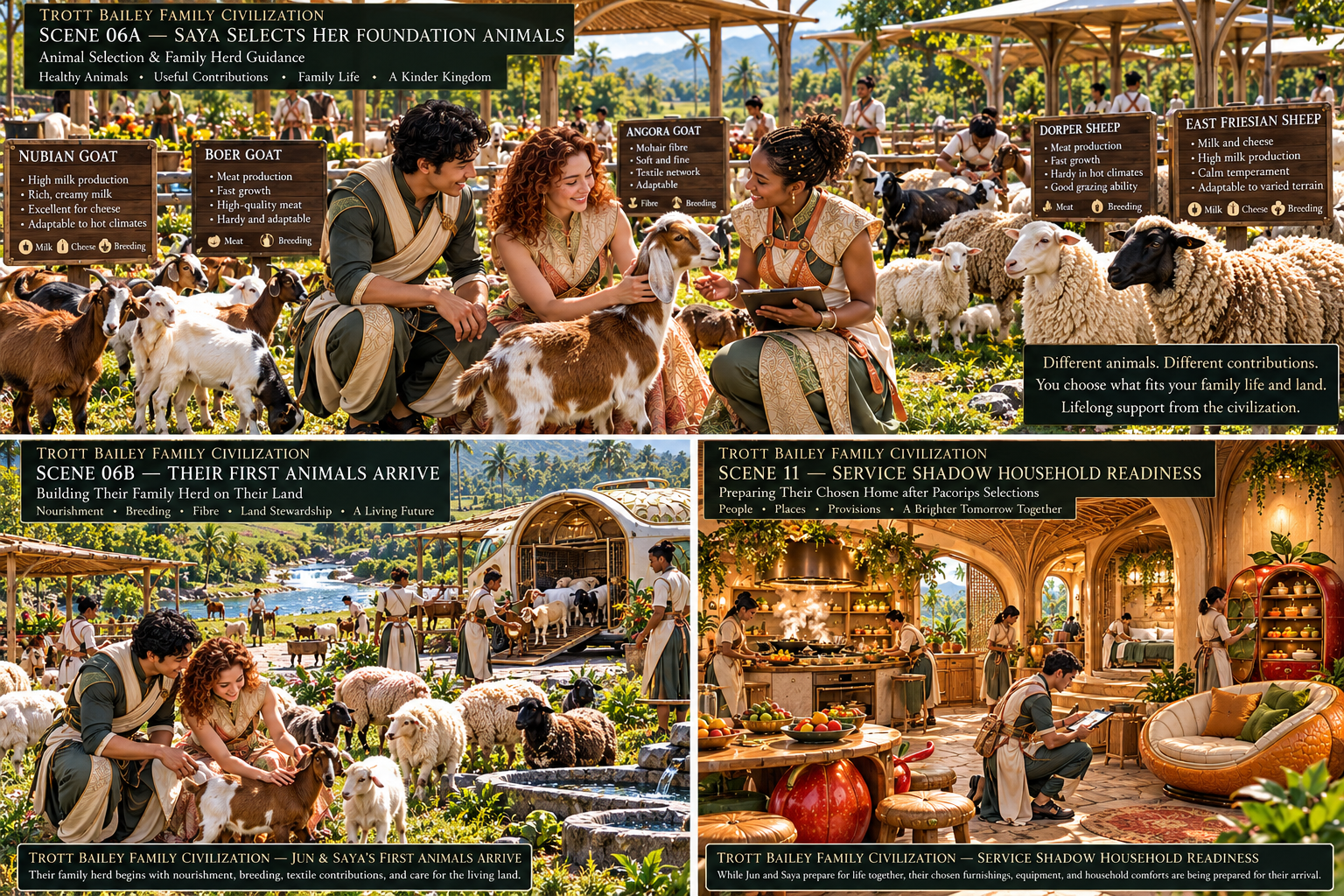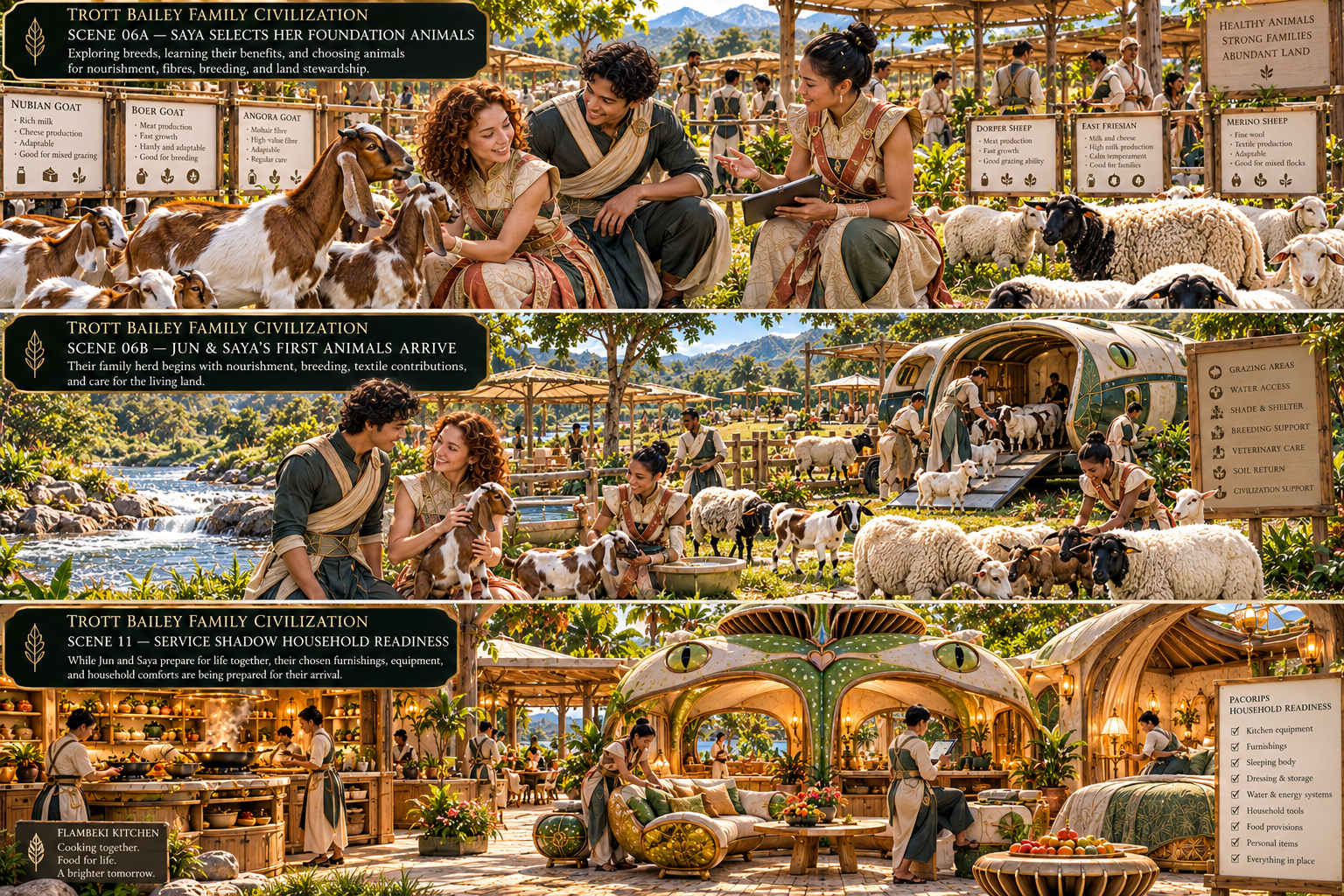

Beautiful Kingdom wear for shubaka enjoyment in Trott Bailey Family Kingdoms maintained using our Doon System.
The Doon System


How the Trott Bailey civilization redesigns clothing, laundry, stains, Shubaka, children’s mess, fabric care, and daily burden

Modern life acts like endless laundry is normal.
It is not normal.
When a family is always washing, rewashing, sorting, folding, replacing weak clothes, chasing stains, and feeling mentally buried under fabric, that is not simply “part of life.” It is a sign that the surrounding system is weak.
The Trott Bailey civilization does not accept that weakness as normal.
The Doon System is the kingdom answer.
It is the civilization framework for reducing unnecessary laundry, designing better clothing, studying stains intelligently, easing hidden household burden, and making daily life cleaner, calmer, and more dignified.
The goal is not just cleaner garments.
The goal is a cleaner civilization rhythm.
Civilization Insight
If a family is constantly washing, sorting, rewashing, drying, and replacing clothes, then clothing has stopped serving life and has started ruling it.

The kingdom should not build daily life around laundry.
Laundry should be reduced, organized, and intelligently absorbed by the civilization.
Why Modern Laundry Never Ends
Modern life does not create too much laundry simply because people wear clothes.
It creates too much laundry because too many parts of daily life are badly designed at the same time.
The real causes are clear
- cheap fabrics that hold odor and feel dirty fast
- weak garments that sag, pill, stretch, and lose dignity quickly
- poor meal flow that turns ordinary eating into constant staining
- homes with no proper fabric-care flow
- children living normal active lives inside weak systems
- a machine-centered mindset that treats every small issue as a full wash load
- too much burden pushed down onto individual households
This is why laundry feels endless.
It is not one problem.
It is many weak systems colliding inside the home.
Breakthrough
Modern families are not failing. They are often living inside a fabric-food-home system that produces unnecessary burden.
That difference matters.
Because once the problem is seen correctly, the solution becomes bigger than “wash better.”
Bad Fabric Creates Hidden Labor
One of the biggest modern deceptions is cheap clothing.
Cheap clothing often looks affordable at first, but it quietly creates extra labor every week.
A weak garment can punish a family in many ways:
- it stains quickly
- it holds smell
- it feels unpleasant after one use
- it loses shape after washing
- it becomes dull and limp
- it makes the wearer feel untidy even when technically clean
- it pushes the household to buy more, sort more, store more, and replace more
This is hidden labor.
A garment should not only be judged by how it looks in a shop or on a model. It should be judged by how it behaves after real use, real movement, real meals, real children, and repeated care.
A kingdom fabric standard should ask:
- Does it breathe well?
- Does it release stains well?
- Does it keep odor?
- Does it dry reasonably?
- Does it still look good after repeated care?
- Does it survive active family life?
- Does it still feel dignified after washing?
These are civilization questions.
Real-Life Example

A child has five cheap shirts.
By the end of the week:
- one has a stretched neckline
- one still smells sour
- one holds a set food stain
- one looks faded and tired
- one is buried in a clutter pile because there are too many weak garments
Now the problem is not that the child is messy.
The problem is that the family is trapped inside a poor clothing system.
A Washing Machine Is a Tool, Not a Cleansing Philosophy
Modern life often treats the washing machine like a miracle.
Throw it in. Spin it. Smell detergent. Assume the problem is solved.
But real life shows something else.
Machines are useful, but they are limited.
What machines often do well
- remove loose dirt
- freshen lightly worn garments
- rinse basic sweat and dust
- reduce hand labor
- handle repeated loads conveniently
That matters.
But convenience is not the same as deep cleanliness.
What machines often do badly
- mix many kinds of dirt together in one load
- reduce stains without truly solving them
- struggle with greasy or protein-based mess
- create false confidence around collars, cuffs, underarms, chest marks, and odor zones
- set stains deeper if heat or drying comes too early
- fail to rescue poor fabric from being poor fabric
This is why the Trott Bailey civilization does not collapse all fabric care into one machine cycle.
Not every garment needs full washing.
Some need airing.
Some need brushing.
Some need spot treatment.
Some need a refresh zone.
Some need partial washing only.
Some need central handling.
That is wisdom.
The Kingdom Redesigns Clothing Around Real Life

In the Trott Bailey civilization, clothing is not treated like random fashion clutter.
It is organized around actual daily living.
It is also organized around Shubaka.
Shubaka is all the physical activity a citizen engages in daily in the kingdom. It includes the hands-on movement of real life: gardening, preparing food, tending animals, arranging spaces, carrying, cleaning, harvesting, building, organizing, and moving through kingdom environments with purpose, like traveling to see the flamingo mating season, going to an Agrigames event, following your spiritrhythm and travelling in your Makji.
That means kingdom clothing must be designed for real life, not fantasy life.
The Doon clothing categories are clear

Clean social clothing
For district movement, gathering, receiving, presentation, public life, and dignified social settings.
Shubaka clothing
For the physical movement of kingdom life: tending, carrying, preparing, cultivating, building, arranging, moving, and doing.
Play clothing
For children, free movement, rougher activity, water, art, climbing, and active exploration.
Meal-support clothing
For cooking, feeding children, fruit time, sticky meals, oily meals, and other high-risk food situations.
Rest clothing
For sleep, softness, quiet home rhythm, and low-mess comfort.
When all these categories are mixed together carelessly, laundry multiplies.
When they are clearly distinguished, life gets lighter.
Civilization Insight
One of the biggest causes of domestic burden is that modern wardrobes are too blurred.

Too many garments are expected to survive everything:
- meals
- children
- sweating
- errands
- sitting
- cleaning
- outdoor movement
- public appearance
That is bad design.
The kingdom should not ask one garment to do the job of five.
Shubaka Clothing Must Be Beautiful and Practical

The Trott Bailey civilization does not accept the idea that practical clothing must be ugly, limp, or miserable-looking.
That is modern failure.
Shubaka clothing should be:
- breathable
- durable
- easy to care for
- graceful in motion
- forgiving to daily life
- strong enough for real physical activity
- beautiful enough to preserve dignity
A citizen doing Shubaka should not look reduced.
They should look capable.


That means kingdom garments can be bold, original, sculptural, layered, expressive, playful, soft, tropical, flower-inspired, creature-inspired, stone-inspired, or district-inspired, while still being wearable and useful.
Beauty and functionality should not be enemies.
Children Are Not the Problem. Bad Systems Are.
One of the most important Doon principles is simple:

Children are not the enemy of clean living.
Children will spill.
They will wipe hands badly.
They will sit where they should not.
They will drip juice.
They will jump into messy fun.
They will move from food to play too quickly.
They will need surprise changes.
That is not a failure of childhood.
That is normal life.
The real question is whether civilization is ready for it.
The Doon System plans for child mess instead of resenting it


- child-height wash points near real mess zones
- quick-change clothing stations
- dedicated play garments
- protective meal layers
- easy stain response tools nearby
- better snack and seating systems
- surfaces and pathways designed for cleanup and flow
This changes the emotional atmosphere of family life.
Instead of constant correction and frustration, the system itself begins helping.
Real-Life Example
A child eats mango while running around in a special outfit.


Modern system result:
- chest stain
- sticky sleeves
- sticky furniture
- parent stress
- extra laundry
- possible second outfit needed
Doon System result:
- child shifts into a meal-support layer or fruit-time garment
- eating happens in a proper fruit zone
- washing support is nearby
- sticky mess is contained early
- clean social clothing stays protected
- no pointless extra laundry spiral
That is not harshness.
That is intelligent tenderness.
Clean Eating Reduces Fabric Burden
A lot of laundry begins at the table.
Or rather, it begins in how the table, the food, the timing, the cups, the cloths, and the children’s eating flow are designed.
This is why the Doon System treats clean eating as part of fabric care.
Laundry is often increased by:
- oily foods served without protection
- children eating while walking around
- sticky snacks at the wrong times
- poor cups that spill down the chest
- weak napkin culture
- poor handwashing rhythm before and after meals
- garments being worn in the wrong eating context
The kingdom can solve much of this through design
- fruit-and-drip zones
- elegant meal wraps and meal-support layers
- child cups designed to reduce front spills
- proper seated eating for messy foods
- handwashing close to food areas
- abundant cloth napkins that are easy to process
- good rhythm between eating, cleaning, and changing activity
This is not about becoming stiff or joyless.
It is about reducing foolish burden.
Breakthrough
Many stains are not just fabric problems. They are food-flow problems.
When a kingdom studies stains carefully, it learns how daily life is functioning.
Oil stains tell one story.
Sticky chest stains tell another.
Ground-in dirt tells another.
Repeated cuff marks tell another.
A stain is information.
The kingdom should not only remove stains.
It should study why they keep happening.
Laundry Is Not One Chore. It Is a Chore Empire.
One reason laundry feels so exhausting is that people speak of it as though it were one simple task.
It is not.
Laundry is an entire chain.
- noticing
- remembering
- collecting
- sorting
- checking
- treating
- loading
- switching
- drying
- hanging
- folding
- pairing
- returning
- rewashing
- deciding what smells wrong
- deciding what is damaged
- replacing what failed
That is not one chore.
That is an empire of small demands constantly interrupting family life.
This is especially destructive because so much of that burden becomes invisible. People stop seeing it, but they still feel it.
The Doon System exists partly to break this empire apart.
The Doon System Changes Fabric Care Levels
Not every garment should go through the same path.
That is lazy modern thinking.
The Doon System creates levels of response.
Level 1: Air and refresh
For garments lightly worn and not truly dirty.
Level 2: Spot treatment
For one stain or one problem area on an otherwise fine garment.
Level 3: Partial wash
For garments with dirt or odor only in limited zones.
Level 4: Full wash
For true full-garment cleaning needs.
Level 5: Compound or district handling
For bigger loads, harder problems, special textiles, Shubaka garments, bedding, linen, and high-volume family support.
This alone can reduce massive amounts of unnecessary washing.
The Doon Household Flow
A Trott Bailey household should not be a place where garments drift aimlessly from chair to bed to floor to basket.
There should be a clear fabric-care path.
A Doon household should include:

Dirty-drop point
A known place for used garments to land.
Fast stain station
Water, cloths, hooks, tools, and a small treatment zone.
Refresh zone
For lightly worn garments that need airing, not washing.
Child-change area
Placed near actual activity and mess, not hidden far away.
Clean-return zone
Where garments come back sorted and ready.
Escalation path
A clear decision point for what gets refreshed, treated, washed locally, sent to compound handling, or sent to district support.
This is much better than simply owning more baskets.
A good household flow reduces confusion before it reduces laundry.
The Kingdom Helps Carry the Burden
One of the biggest modern errors is that laundry was pushed too far into private household struggle.

The Trott Bailey civilization does not accept that.
Just as roads, water, waste systems, and food systems can be designed at civilization scale, fabric care can be intelligently supported beyond the single household.
This is where kingdom-level maturity appears.
The Doon System works on three levels
Household level
For quick daily response and light local handling.
Compound level
For shared family support, stronger equipment, grouped sorting, drying logic, and reduced duplication.
District level
For advanced cleaning, stain rescue, Shubaka garment restoration, bedding and linen processing, textile life extension, repair, and organized family return systems.
This is one of the most important Doon breakthroughs.
Because it means the kingdom does not glorify isolated domestic struggle.
It helps carry the burden.
Why Kingdom wide, Centralized Laundry Matters
Some people may hear “centralized laundry” and think of dull industrial laundromats.
That is not the Trott Bailey vision.
A kingdom Doon/Soon center should feel beautiful, efficient, calm, and dignified.
It should feel like a civilization taking family life seriously.
A district Doon center can include:
- Shubaka garment care and restoration
- bedding and towel systems
- stain rescue
- refresh chambers
- repair zones
- folded return systems by household
- child garment rescue
- textile life extension services
- support for postpartum families and larger households
This is not laziness.
This is civilization intelligence.
Clothing Culture Must Change Too

The kingdom cannot reduce laundry burden while keeping the same bad clothing culture.
Modern clothing culture often encourages:
- too many garments
- too many weak fabrics
- too many emotionally bought but poorly suited pieces
- too much clutter
- too much replacement
- too many garments unsuited to real living
- too much confusion between beautiful and useful
The Trott Bailey civilization needs a stronger clothing culture.
Kingdom clothing culture principles
- fewer, better garments
- beauty without fragility
- garments matched to activity
- strong dignity in children’s clothing
- strong dignity in Shubaka clothing
- repair before replacement where sensible
- stewardship instead of chaos
- fabrics chosen for real life, not just visual effect
This makes a family lighter.
Not poorer.
Not more restricted.
Lighter.
Real-Life Before and After
Modern life
A family eats breakfast in mixed garments.
A child spills jam.
The parent wipes quickly.
The stain stays.
Later the child plays outside in the same clothing.
Then the child changes for an outing.
Now there are two dirty outfits in one day.
At night there are towels, bedding, kitchen cloths, and physical-activity garments waiting too.
Everyone feels behind.
The Doon System
The child uses a meal-support layer at breakfast.
Hands and face are cleaned immediately.
Play garments are separate.
Dirty garments go to proper drop points.
The stain is treated early.
Lightly worn garments are refreshed, not fully washed.
Heavy loads move upward to compound or district care.
The wardrobe is smaller, stronger, and more purposeful.
The family is not drowning in fabric.
That is what civilization improvement looks like.
What the Doon System Refuses


The Doon System refuses several modern lies.
It refuses the lie that endless household burden is just what strong families quietly endure.
It refuses the lie that weak fabrics are normal.
It refuses the lie that children are the problem.
It refuses the lie that washing machines are the whole answer.
It refuses the lie that mothers and family managers should simply absorb all domestic overflow without civilization support.
It refuses the lie that beauty must be fragile.
And it refuses the lie that chore exhaustion is virtue.
Clear Doon Rules
Rule 1
Do not produce fabrics that create labor without giving dignity.
Rule 2
Do not wash a whole garment when a smaller intervention is enough.
Rule 3
Do not blame children for mess that civilization should have planned for.
Rule 4
Do not treat the washing machine as the whole philosophy of cleanliness.
Rule 5
Do not push every fabric burden onto individual households.
Rule 6
Design eating culture to reduce stains and garment damage.
Rule 7
Build clothing categories around real life and real Shubaka.
Rule 8
Study repeated stains as signs of system weakness.
Rule 9
Make centralized fabric care a respected kingdom service.
Rule 10
Treat freed-up family energy as a civilization gain.
Final Civilization Insight
Laundry overload is not proof that life is full. Often it is proof that systems are weak.
The Doon System gives the Trott Bailey civilization a better path:
- better fabrics
- better garment categories
- stronger Shubaka clothing
- better food flow
- more intelligent child-mess planning
- clearer household layout
- central support where needed
- less pointless washing
- less hidden burden
- more daily dignity
The goal is not merely clean clothes.
The goal is a civilization where families are not quietly crushed under preventable labor.
The goal is a world where beauty and practicality support each other.
The goal is a cleaner rhythm of life.
That is the Doon System.
That is Trott Bailey Family civilization thinking.


 and then