

Earth Choose: Luxury for the rich, plastic for the masses or beautiful free fashion from World Ruler Sher
Choose, Earth
Luxury for the rich, plastic clothing for the masses, or beautiful free clothing from World Ruler Sher?
Choose, Earth
Luxury for the rich, plastic clothing for the masses, or beautiful free clothing from World Ruler Sher?
Who will Earth back?
Luxury for the rich, plastic clothing for the masses, or beautiful free clothing from World Ruler Sher?
Earth is not only choosing what shirt, shoe, dress or bag to buy. Earth is choosing what clothing system will cover human bodies, command farms and workshops, use water and energy, enter rivers and seas, and remain after the wearer is finished.
Three parts. One choice.
Read straight through, or jump to any part below.
Luxury Wants the Whole World
Why luxury wants everybody’s attention while serving only a narrow wealthy group.
Go to Part I ↓ 02Plastic Clothing, Hidden Cost
How fast fashion moves the real price onto workers, poorer countries, the sea and the future.
Go to Part II ↓ 03The Trott Bailey Answer
Free high-quality clothing, full production control, clean return and the starting line of a prosperous civilization.
Go to Part III ↓Luxury Wants the Whole World
It wants everyone to recognize the symbols, but it only serves a narrow wealthy group.
Luxury wants everybody’s attention but only serves the rich.
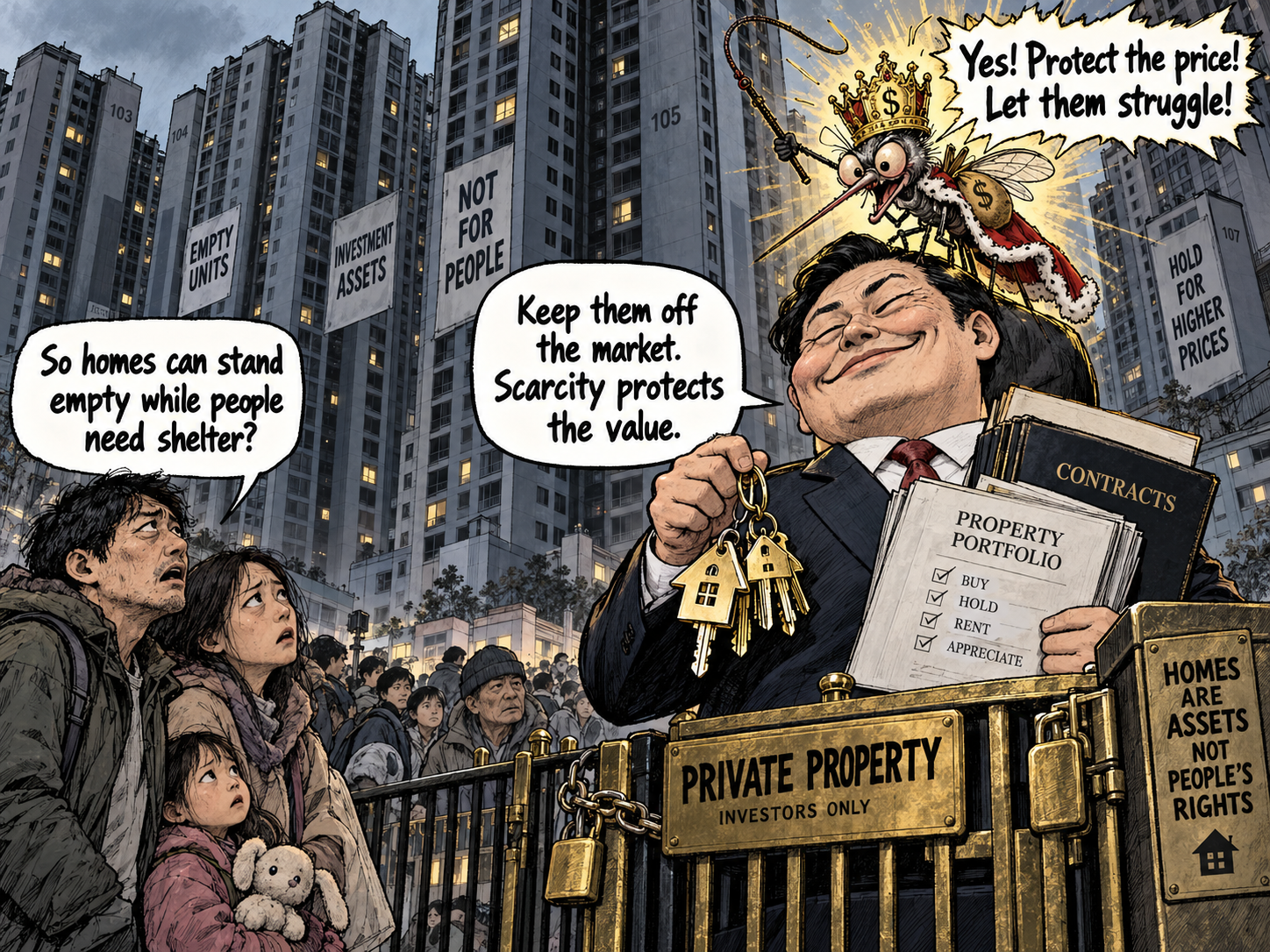
Luxury fashion wants the whole world to believe it decides what is beautiful, even though it mainly makes clothing, bags and shoes for rich people.
It wants poor people to know the names. It wants working families to recognize the logos. It wants middle-income people to dream about the products. It wants children to learn which bag means wealth. It wants celebrities, singers, magazines and fashion shows to keep the names in everybody’s head.
Without the millions of people watching, copying, dreaming and talking, many luxury objects would lose much of their power. The rich buy the product, but the whole world helps build the prestige.
One purchase is not affordability.
Saving for months, using a credit card, buying second-hand or owning one special item does not mean a family can live inside the luxury system.
Real access means
- Buying without missing rent, food, medicine or school costs.
- Replacing garments when they wear out.
- Clothing children and dependent family members too.
- Continuing without debt or financial panic.
The truth
Most people can admire luxury, save toward luxury, imitate luxury or occasionally enter luxury.
Most people cannot safely and repeatedly live inside it.
Expensive does not automatically mean good.
World Ruler Sher does not have to prove that every luxury object is bad. She only has to prove that the price and the label do not guarantee quality, fair work or honest production.
Italian investigations have exposed hidden subcontracting, very low contractor payments and serious labour abuses inside parts of luxury supply chains. In one widely reported case, a contractor was paid about €53 for a partially assembled Dior handbag that later sold for about €2,600.
- What the worker earned.
- How safe the workshop was.
- How many hidden companies touched the product.
- Where every material and component came from.
So stop treating the price like proof. It is a price. That is all it is until the company proves the rest.
“Made in Italy” is not the whole story.
People see a national label and imagine one clear workshop, one local chain and one complete story. Modern production often does not work that way.
The fibre may come from one country. The yarn may be spun in another. The fabric, dye, lining, zipper, hardware and stitching may cross several borders before the final product reaches a store.
One excellent coat does not clothe Earth.
Even when a luxury garment is honestly made and truly excellent, it still cannot serve as the clothing answer for humanity.
A palace may be beautifully built. That does not solve homelessness. A private well may hold clean water. That does not supply a country. In the same way, one beautiful garment for one wealthy person does not create a clothing system for billions of people.
Its high prices help keep it exclusive. If everybody could easily buy it, much of its status would disappear. Keeping most people outside is not an accident. Being hard to get is part of what makes luxury luxury.
Why should they decide what beauty is?
Why should a system that cannot clothe most human beings be allowed to decide what beautiful clothing looks like?
World Ruler Sher does not need permission from Paris or Milan. She is not trying to enter their hierarchy. She is building another clothing civilization.
The cheap alternative is not freedom.
Fast fashion says, “You cannot afford luxury? Here is something cheap.” Part II follows the cost that disappears from the price tag and reappears in workers, rivers, seas and poorer countries.
- Reuters reporting on Italian luxury supply-chain investigations, contractor payments and labour conditions.
- European Commission guidance on non-preferential rules of origin and substantial transformation.
- World Inequality Report evidence on the concentration of global income and wealth.
Plastic Clothing, Hidden Cost
Fast fashion did not remove the cost. It moved it onto workers, poorer countries, the sea and the future.
Fast fashion did not remove the cost. It moved it.
The customer pays less at the shop because much of the real cost is pushed somewhere else.
The worker pays
Through low wages, speed pressure, unsafe work and unstable contracts.
The earth pays
Through fossil fibres, polluted water, burning, dumping and microplastics.
The future pays
Through waste that lasts far longer than the trend that produced it.
Polyester is plastic.
Nylon is plastic. Acrylic is plastic. Most elastane is plastic. A fabric name does not cancel the material truth.
Polyester made up about 59 percent of global fibre production in 2024.
Most polyester still comes from fossil fuels, not from old garments returning cleanly into new ones.
The world is drilling oil and gas, turning it into fibre, placing it on human bodies and then acting surprised when the clothing becomes plastic waste.
The sea is wearing our clothing.
Synthetic garments release tiny plastic fibres during production, wearing, washing and disposal.
Those fibres move through drains, rivers, soil, beaches, fish and coastal water. The United Nations Environment Programme has estimated that textiles account for about nine percent of the microplastic pollution reaching the oceans each year.
More clothing. Less use. More waste.
About 92 million tonnes of textile waste are produced each year.
Clothing production doubled between 2000 and 2015 while garments were kept for less time.
This is not progress. It is a machine running faster while becoming more foolish.
Donation does not make the waste disappear.
Good second-hand clothing can serve another person. But torn, weak, stained and unwanted garments can become another country’s burden.
Europe exports around 1.4 million tonnes of used textiles each year. Large amounts go to Africa and Asia. Some are worn again. Some are repaired or recycled. Some are dumped or burned.
That is not always charity. Sometimes it is waste travel.
What will 2076 look like?
No honest person can predict every detail. But the direction is easy to see if the system keeps moving the same way.
- More synthetic fibres in oceans, rivers and soil.
- More clothing sent to countries that did not create the waste.
- More mixed garments that are hard to separate and recover.
- More burning, dumping and fossil fuel use.
- More future children inheriting pollution from clothing sold before they were born.
We cannot call a system modern when it fills the future with rubbish.
Earth does not have to choose between expensive exclusion and cheap pollution.
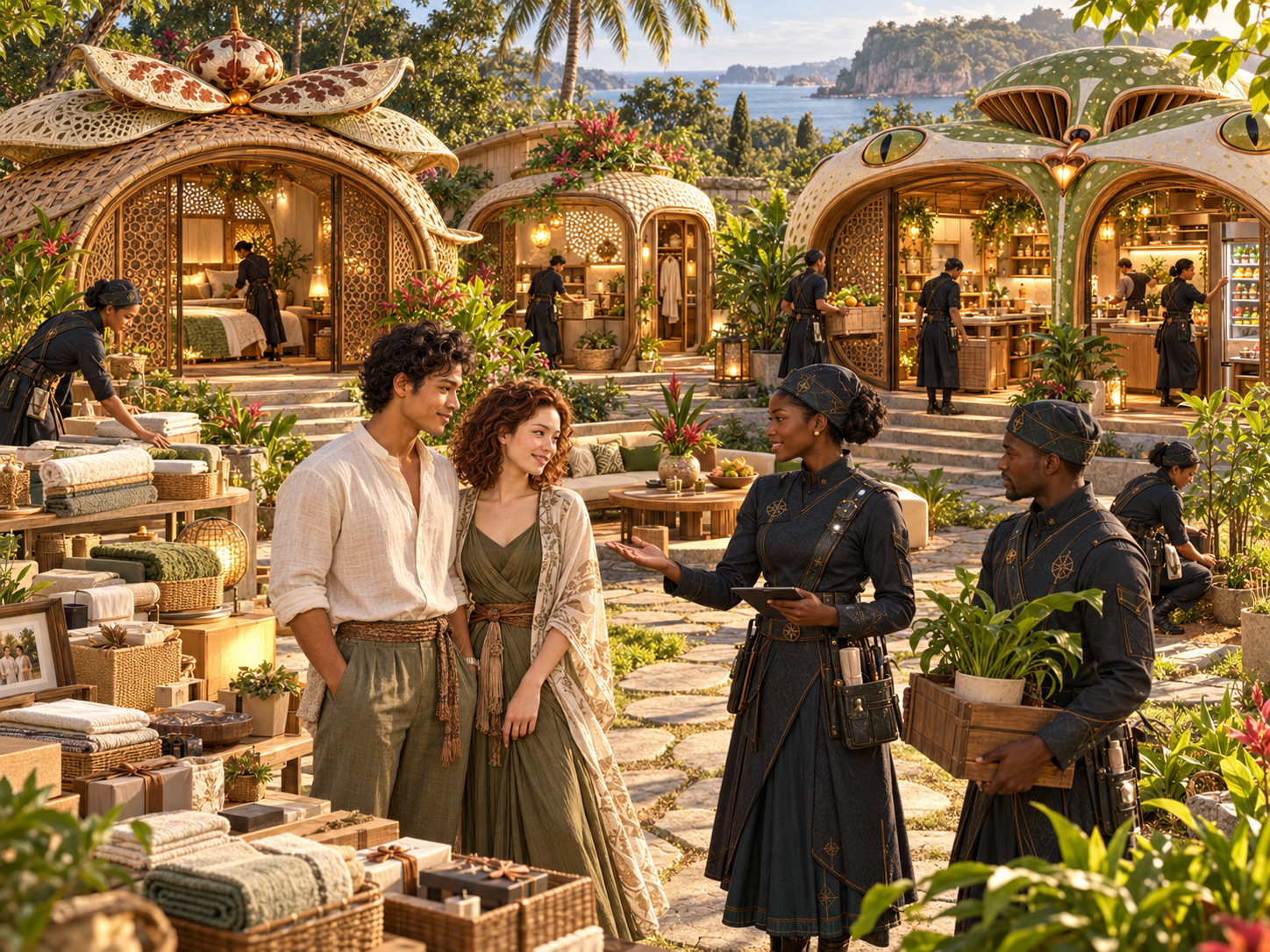
World Ruler Sher offers another path: beautiful clothing given freely, made through a system the civilization owns, and brought home cleanly when its work is finished.
- Textile Exchange, Materials Market Report, for global fibre and polyester data.
- United Nations Environment Programme for fashion emissions, waste and ocean microplastic estimates.
- European Environment Agency for used-textile export volumes and destination regions.
- Ellen MacArthur Foundation and OECD materials on circularity and future risk scenarios.
The Starting Line of a Prosperous Civilization
Beautiful clothing given freely, made through a system the civilization owns, and brought home cleanly.
World Ruler Sher needs only two reasons.
First
The clothing is offered as a free gift without losing quality.
Second
World Ruler Sher builds, owns and controls the full garment-making process.
The clean-return system is not a separate promise. It is what full control looks like after the garment has been worn.
Beautiful clothing is given freely without becoming cheap.
The garment is still properly designed. The materials are still carefully chosen. The fit is still studied. The craft is still respected. The shoes are still strong. The design is still authored.
The civilization carries the cost because clothing the people is part of the civilization’s job.
Three systems. Three questions.
Pay more if you want beauty.
Pay less and accept plastic, weak clothing and waste.
Receive beautiful clothing. Wear it. Care for it. Bring it home when its work is done.
World Ruler Sher controls the life of the garment.
Most brands control the logo, the advertisement and the price. Trott Bailey Family Civilization must control the full process.
World Ruler Sher does not have to stand beside every plant, animal and machine. Control means the Trott Bailey Family Civilization owns the system, sets the rules and keeps the knowledge.
The designer must control more than the drawing.
Drawing the garment is not enough. Choosing the colour is not enough. Attaching a name is not enough.
- Responsibility for the land.
- Responsibility for the plants and animals.
- Responsibility for the workers and machines.
- Responsibility for dyes, finishes and waste.
- Responsibility for the body wearing the garment.
- Responsibility for repair and final return.
No plastic clothing.
No polyester. No nylon. No acrylic. No conventional elastane. No plastic leather, mesh, sequins, buttons, zippers, coatings or packaging.
Trott Bailey must build approved plant, animal, mineral, metal, ceramic, glass and other clean material families. But the Kingdom must also control the chemistry. A natural fibre covered in harmful dye is not a clean material system.
Every garment must have a way home.
The civilization that creates the garment remains responsible for it throughout its material life.
Fit Return
For growth, pregnancy, body change, aging or disability needs.
Repair Return
For failed seams, closures, soles, panels or support zones.
Role Return
For changes in work, department, climate or responsibility.
Material-Life Return
For garments that can no longer serve safely as clothing.
Every garment carries its own record.
The workshop should never have to guess what it is receiving.
- Fibre family and source.
- Dyes, finishes, thread and fasteners.
- Workshop and production record.
- Cleaning, repair and disassembly method.
- Approved reuse and final return route.
This is not a surveillance system. It is a material-responsibility record.
What the world calls luxury is only the starting line.
The old world calls beautiful clothing, strong homes, clean water, healthy food, useful tools, safe surroundings, family support and time to think “luxury.” World Ruler Sher calls them the minimum.
A prosperous civilization should not be judged by how beautifully a few rich people live. It should be judged by the ground it places beneath ordinary families.
Human strength should not be wasted on preventable suffering.
People should not spend their whole lives recovering from broken systems and then be blamed for not creating more.
The minimum
- Clean clothing.
- Strong homes.
- Healthy food and safe water.
- Useful tools and working systems.
- Family relief and beautiful surroundings.
What comes after
- Family and legacy.
- Learning and discovery.
- Growing the earth.
- Delightful inventions.
- New paths for future generations.
Who will you back?
Luxury asks: “Can you afford us?” Fast fashion asks: “How much can you buy?” World Ruler Sher asks: “How can I clothe you well, clean up the earth and take responsibility for everything I create?”
World Ruler Sher calls it the minimum.
The minimum needed to make life on Earth tolerable.
The starting line of a prosperous civilization.
I am not promising people the finish line. I am building the starting line humanity should have had all along.