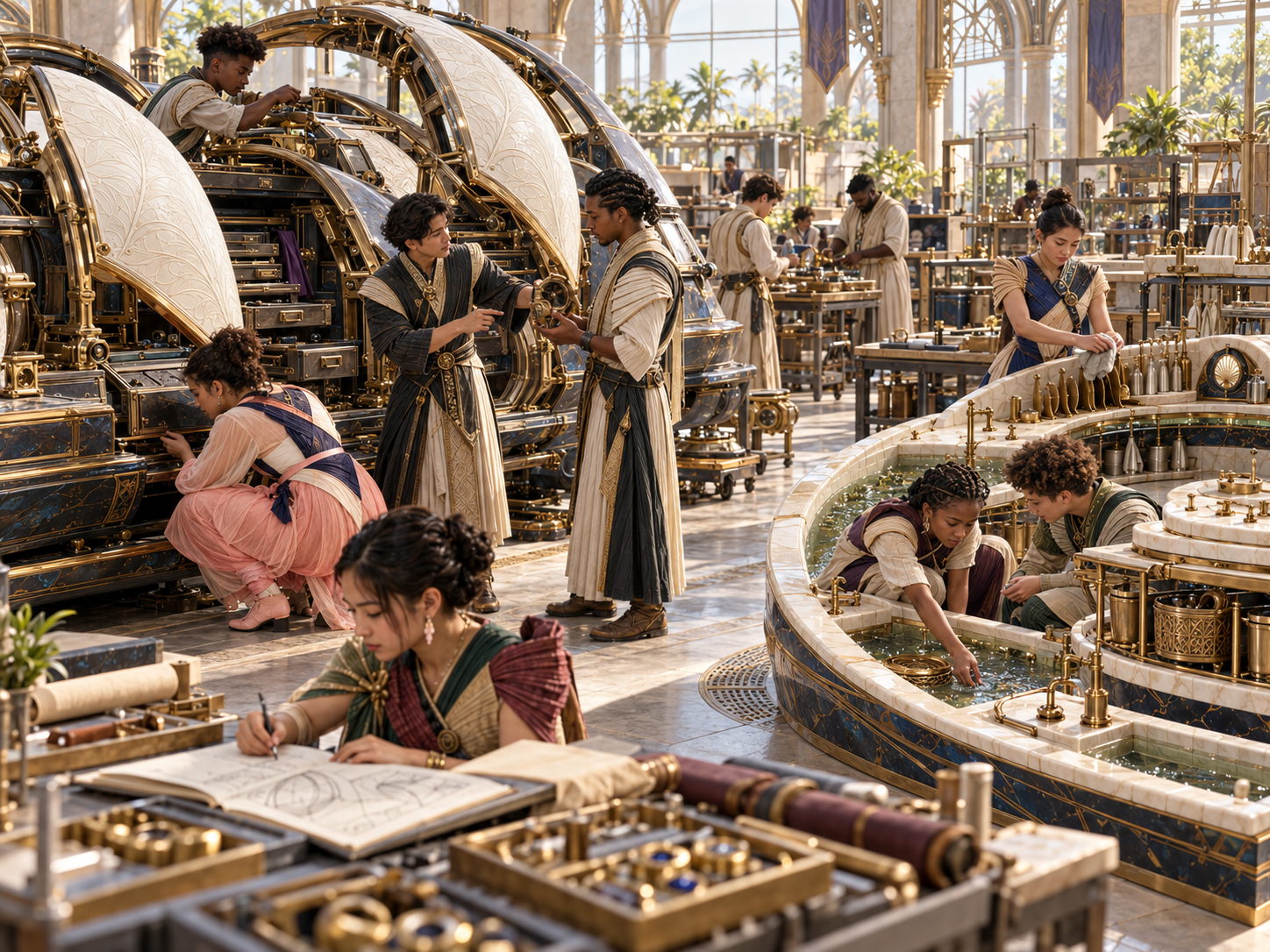


Matriage &Lifetime Family Flourishing Support
Marriage & Lifetime Family Flourishing Support
Marriage Establishment · Land Entitlement · Family Housing · Resource Access · Lifetime Support
Marriage in the Trott Bailey Family Civilization establishes more than a recognized relationship. It establishes a family entitled to the resources needed to live comfortably, develop its abilities, raise children, and participate fully in civilization life.
Newly married couples receive land, a prepared principal home, and foundational household provisions. As their lives develop, they remain welcome to request additional resources, land, machinery, training, household improvements, and other support that contributes to their family’s flourishing.
The family does not exist to answer to the Marriage Hall. The Marriage Hall exists to support and resource the family.
Purpose — Supporting Marriage and Family Life
Marriage in Trott Bailey Family Civilization establishes more than a recognized relationship. It establishes a family entitled to the resources needed to live comfortably, develop its abilities, raise children, and participate fully in civilization life.
Newly married couples receive land, a prepared principal home, and foundational household provisions.
As their lives develop, they remain welcome to request additional resources, land, machinery, training, household improvements, and other support that contributes to their family’s flourishing.
The Marriage & Household Establishment Hall is the civilization institution responsible for providing this continuing support.
It does not supervise marriages or interfere in private family decisions.
Marriage Recognition and Immediate Entitlement
Official witnessing
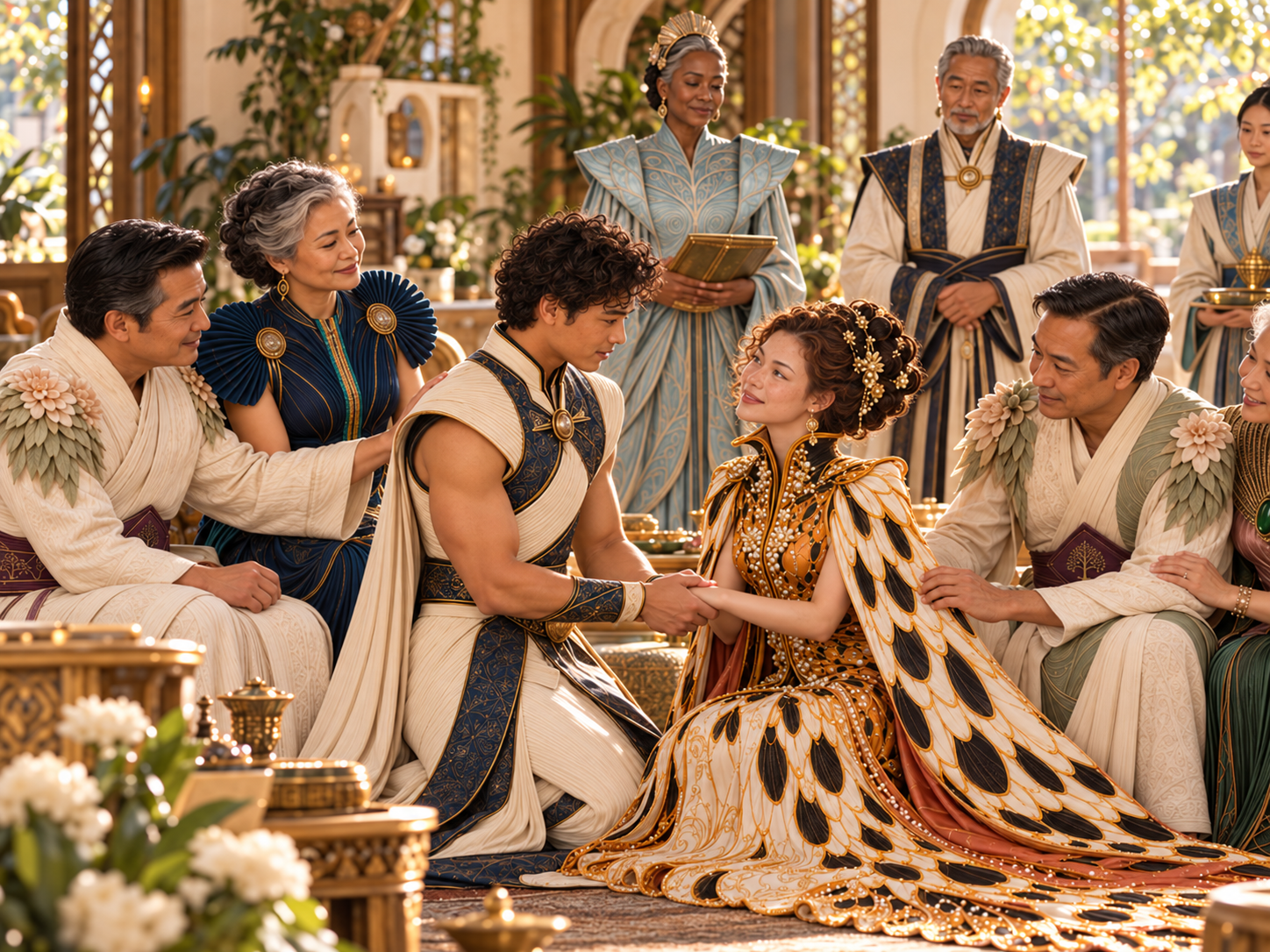
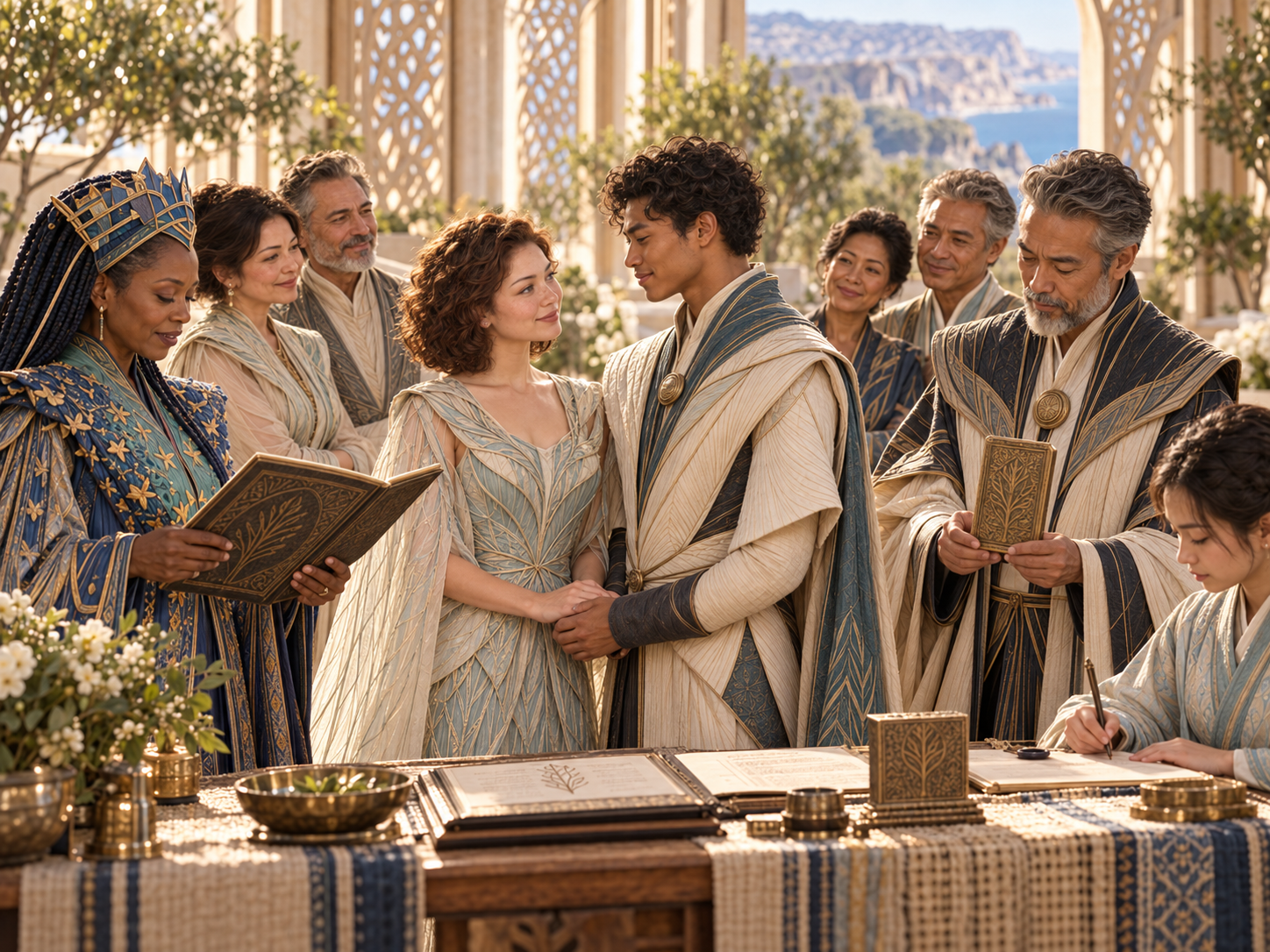
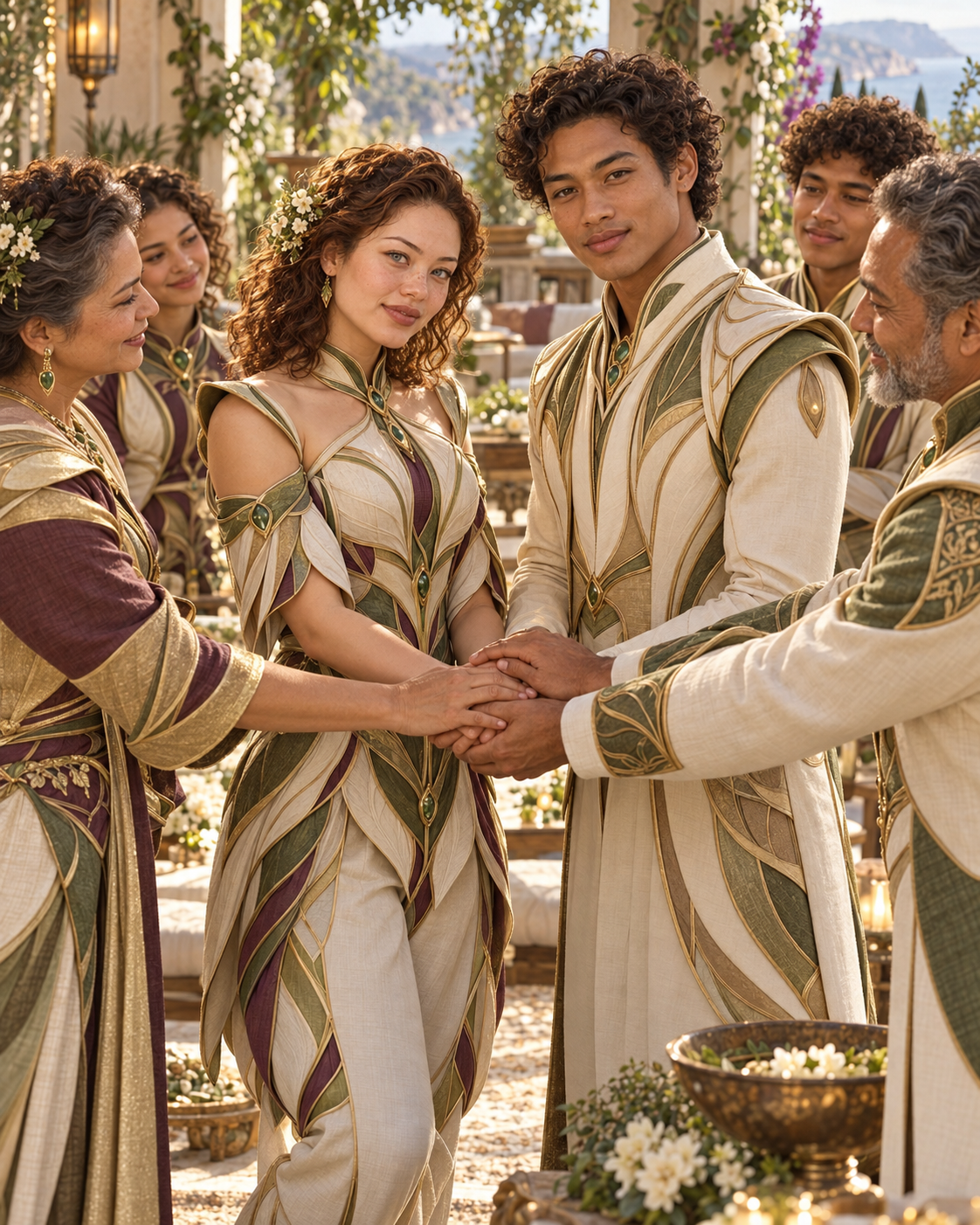
The actual marriage hand-joining must be witnessed personally and in real time by authorized civilization marriage or courtship officiators.
The intimate ceremony includes the couple, parents, siblings, authorized officiators, and any specifically invited guests.
Parents ceremonially join the couple’s hands. Relevant inheritance and family-resource passovers are witnessed and verified.
The officiators formally acknowledge and record the marriage and establishment of the new household.
The civilization does not substitute an unwitnessed ceremony followed by a later claim of marriage for this official procedure.
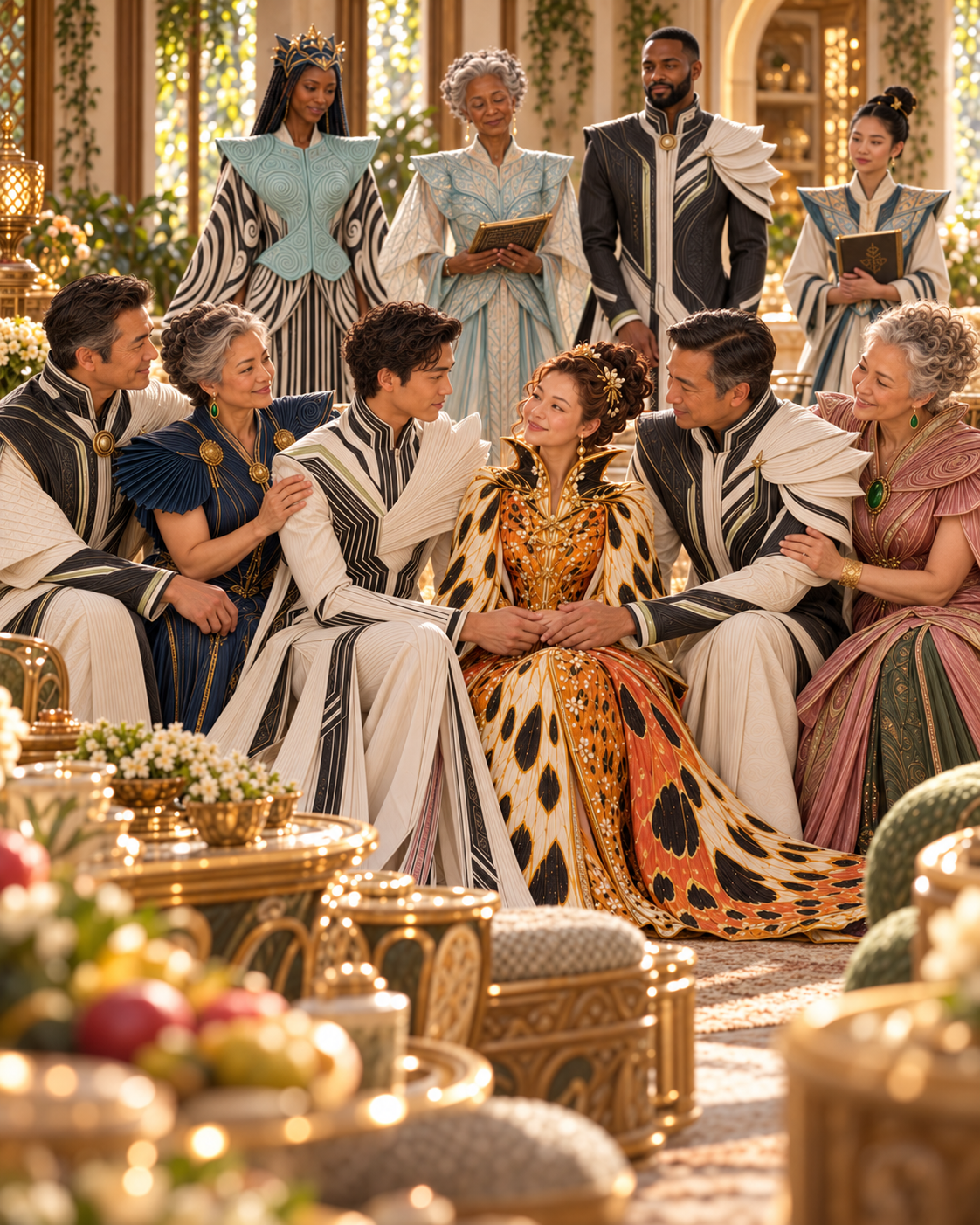
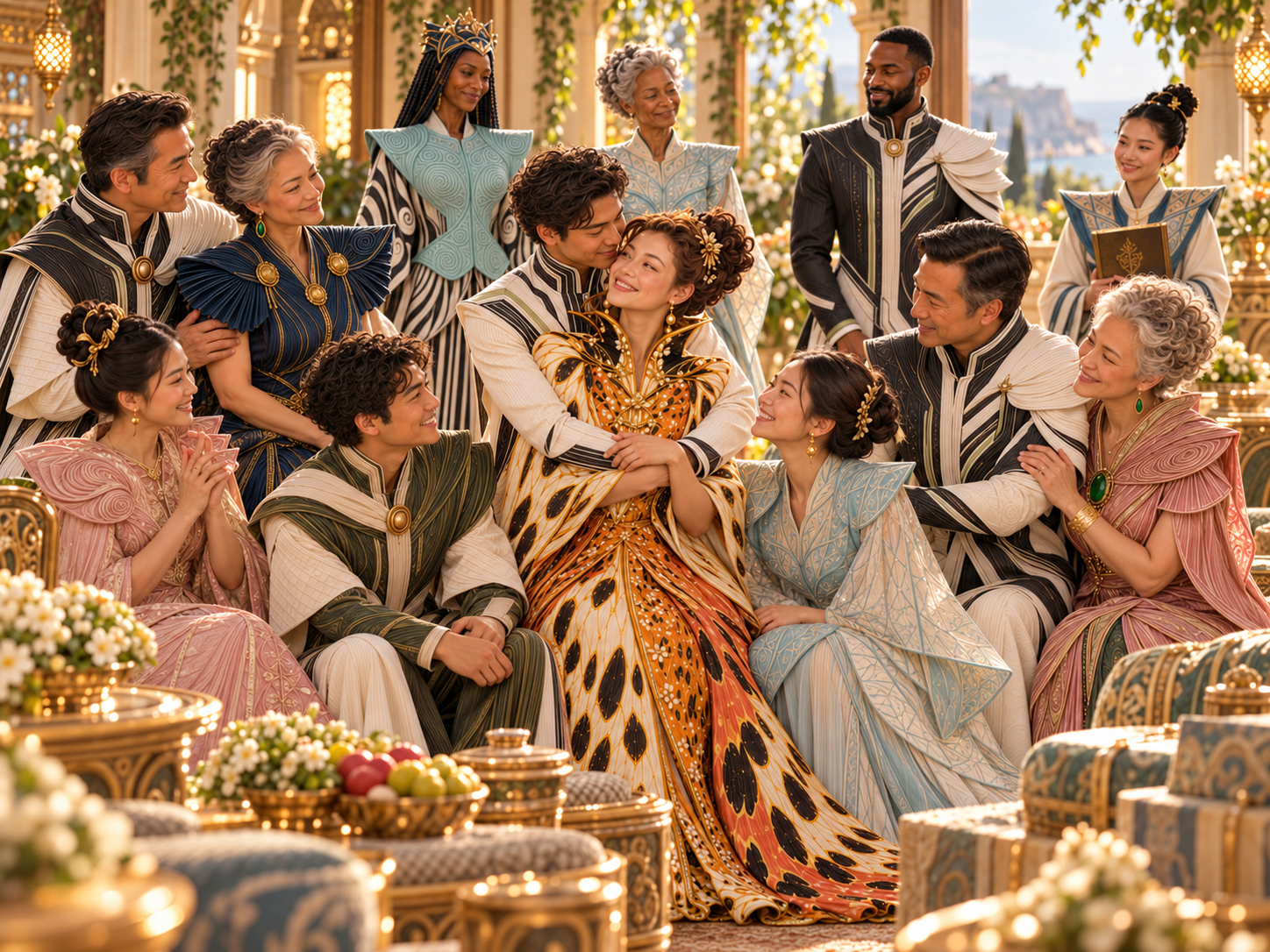
A larger public marriage presentation or celebration remains separate.
The marriage record is sufficient
The official marriage record establishes the newly married couple’s foundational entitlements.
The couple does not need to complete separate applications, approval procedures, or household-establishment paperwork.
Marriage Hall officials act on the recognized marriage and coordinate the resulting provisions.
Marriage Land Entitlement — A Minimum of 50 Hectares
Guaranteed foundation
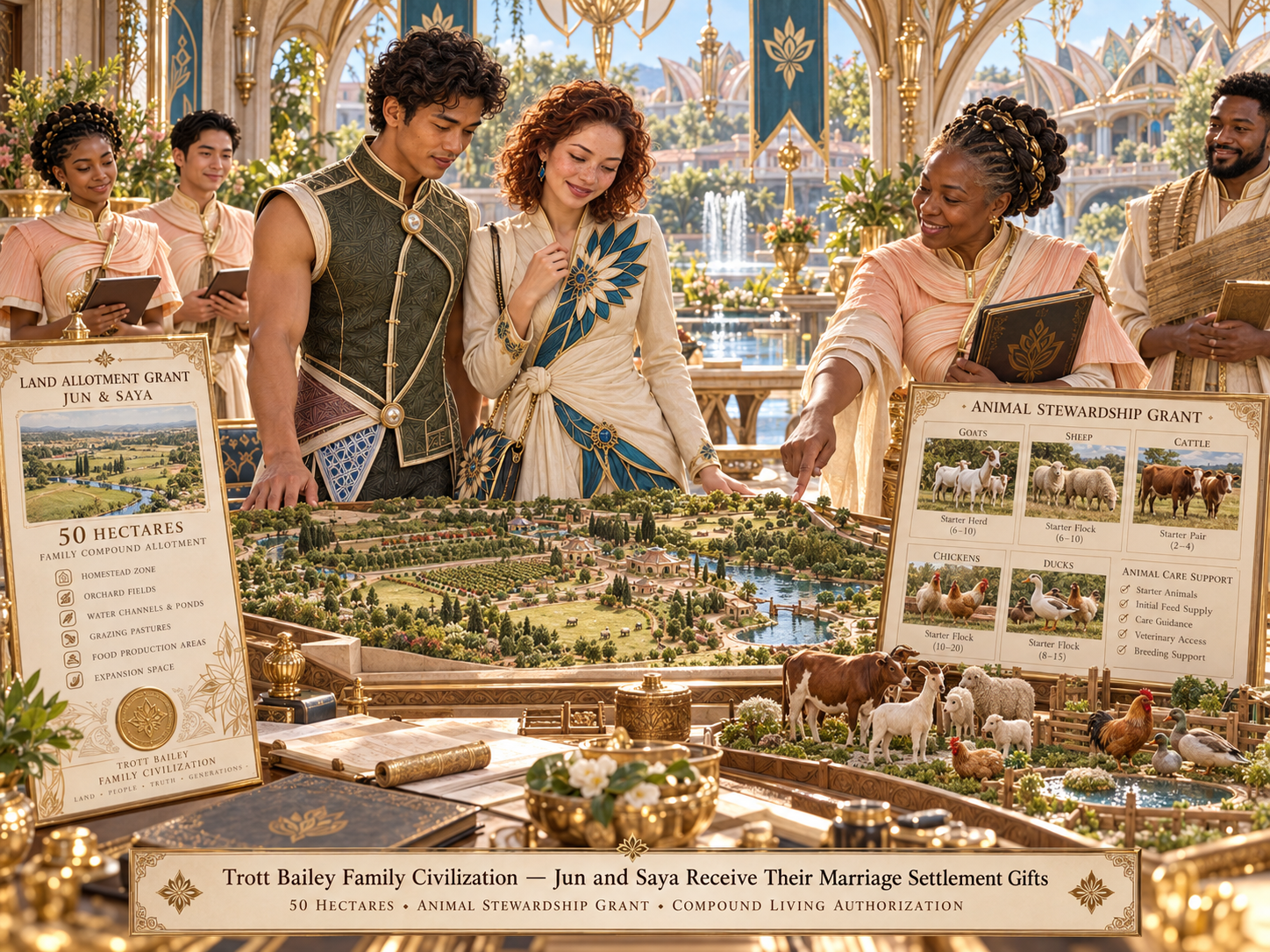
Every newly married couple is entitled to a minimum of 50 hectares of land.
This entitlement is not conditional on exceptional ability, productivity, or professional achievement.
It provides a substantial family foundation for housing, food growing, recreation, future children, and other living purposes.
Entitlement is not compulsory land development
Some couples may prefer a relatively compact compound, a modest orchard, and considerable freedom to travel.
Others may develop extensive agricultural, ecological, animal, engineering, or educational activities.
The full 50-hectare entitlement remains available even when the couple chooses to actively use or develop only a smaller portion.
The civilization does not require the couple to cultivate, construct upon, or otherwise develop all 50 hectares to retain its foundational entitlement.
The amount allocated and the amount actively developed are different matters.
Additional land according to capability and need
Fifty hectares is the minimum, not a maximum.
A couple that demonstrates the capabilities, dedication, and clear vision necessary for larger undertakings may request additional land.
The couple can explain its plans and the resources required through the Marriage Hall or Pacorips.
Additional allocations respond to genuine needs and the family’s demonstrated ability to use the land beneficially.
Family growth may also create a need for more land. Additional children do not automatically trigger a fixed acreage increase, but a growing family may request an expanded allocation when its circumstances warrant it.
Why capability matters
The civilization rewards people who use their talents and dedicated efforts to bring benefits to their families and the wider civilization.
A family developing large-scale ecological restoration, food production, animal nourishment, or another beneficial undertaking should not be restricted simply because it has reached the foundational allocation.
Additional land is a means of supporting demonstrated ability and meaningful work, not a reward for empty status.
The Marriage & Household Establishment Hall — Accountable for Results
The Marriage Hall is responsible for the initial establishment and lifelong support of married families.
It includes authorized officiators, family-establishment stewards, and supporting apprentices.
Initial establishment
The Hall oversees:
- Recognition of the marriage and new household.
- Delivery of the family’s minimum land entitlement.
- Coordination of personal civilization marriage gifts.
- The couple’s selected home design and construction arrangements.
- Temporary accommodation when needed.
- Furnishings, appliances, food, and practical household provisions.
- Coordination with Build-Life, Service Shadow, and other necessary specialists.
- Completion of the principal home and its essential infrastructure.
One-month delivery responsibility
Marriage Hall officials are expected to ensure that the couple’s selected principal home is delivered within one month.
This is an operating responsibility, not merely an estimate that Build-Life might achieve.
Build-Life is equipped to construct the selected principal room bodies rapidly. The Marriage Hall brings the relevant teams and resources together so construction, infrastructure, deliveries, installations, and readiness proceed as one coordinated operation.
When problems arise, the Hall acts to resolve them promptly.
The couple must not be passed between disconnected teams or made responsible for chasing unfinished work.
Lifelong support
The Hall’s responsibility continues throughout the marriage.
It remains available for household expansion, additional land, equipment, training, specialist assistance, family development, and other resource needs brought forward by the couple.
Its responsibility is to facilitate practical assistance, not direct how the family lives.
Principal Home Construction and Successive Expansion
The couple chooses its home
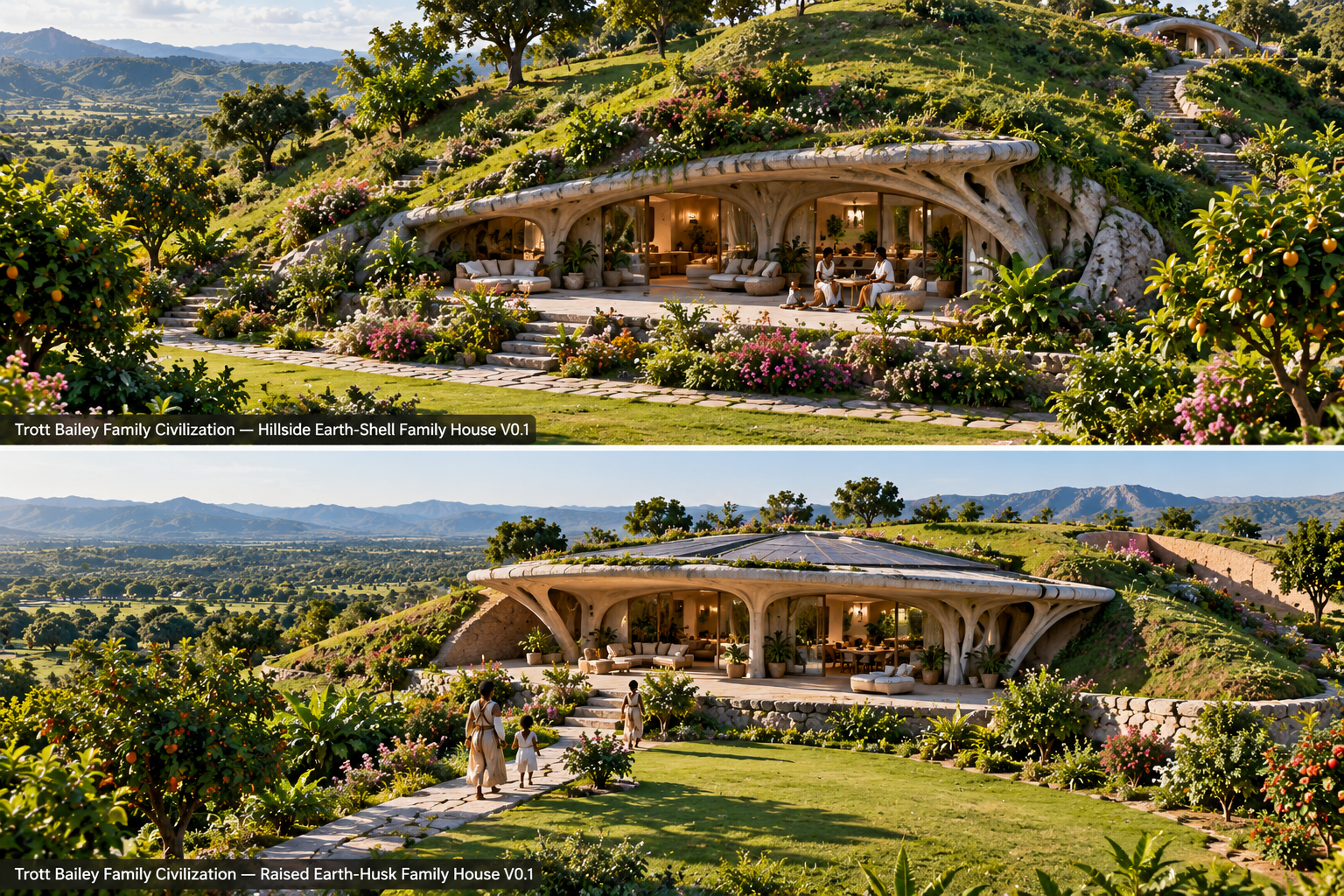
The couple selects from the established Trott Bailey architectural species authored by World Ruler Sher.
Build-Life develops the selected arrangement for the particular family site, taking account of terrain, access, privacy, environmental conditions, and the couple’s preferences.
The civilization’s actual architectural species must be preserved.
Families are not assigned repetitive generic houses or required to build oversized conventional residences.
The essential principal home
A couple may occupy its compound once the following principal room bodies are ready:
- Sleeping Body: private sleeping and rest.
- Baliza: bathing and body washing.
- Dressing Body: garment organization, dressing, and grooming.
- Flamebiki: kitchen and food preparation.
The essential infrastructure must also be ready:
- Functioning running water.
- Functioning electricity.
- Practical road and compound access.
Relevant systems must be safe and operational for their intended use.
Temporary living while construction proceeds
The couple may use a free civilization-provided Marriage Home or Travel Home during construction.
Temporary accommodation provides comfort and freedom while the principal home is being completed.
It does not replace the couple’s owned core home and land.
The couple decides when to move in
Once the principal room bodies and essential infrastructure are ready, the husband and wife may choose to occupy their compound.
The complete long-term compound does not have to be constructed before married life begins there.
Additional room bodies, gardens, orchards, animal facilities, children’s spaces, and specialized family structures can be developed successively.
The family can continue traveling, contributing through Shubaka, and enjoying married life while these additions are built.
Architectural principle
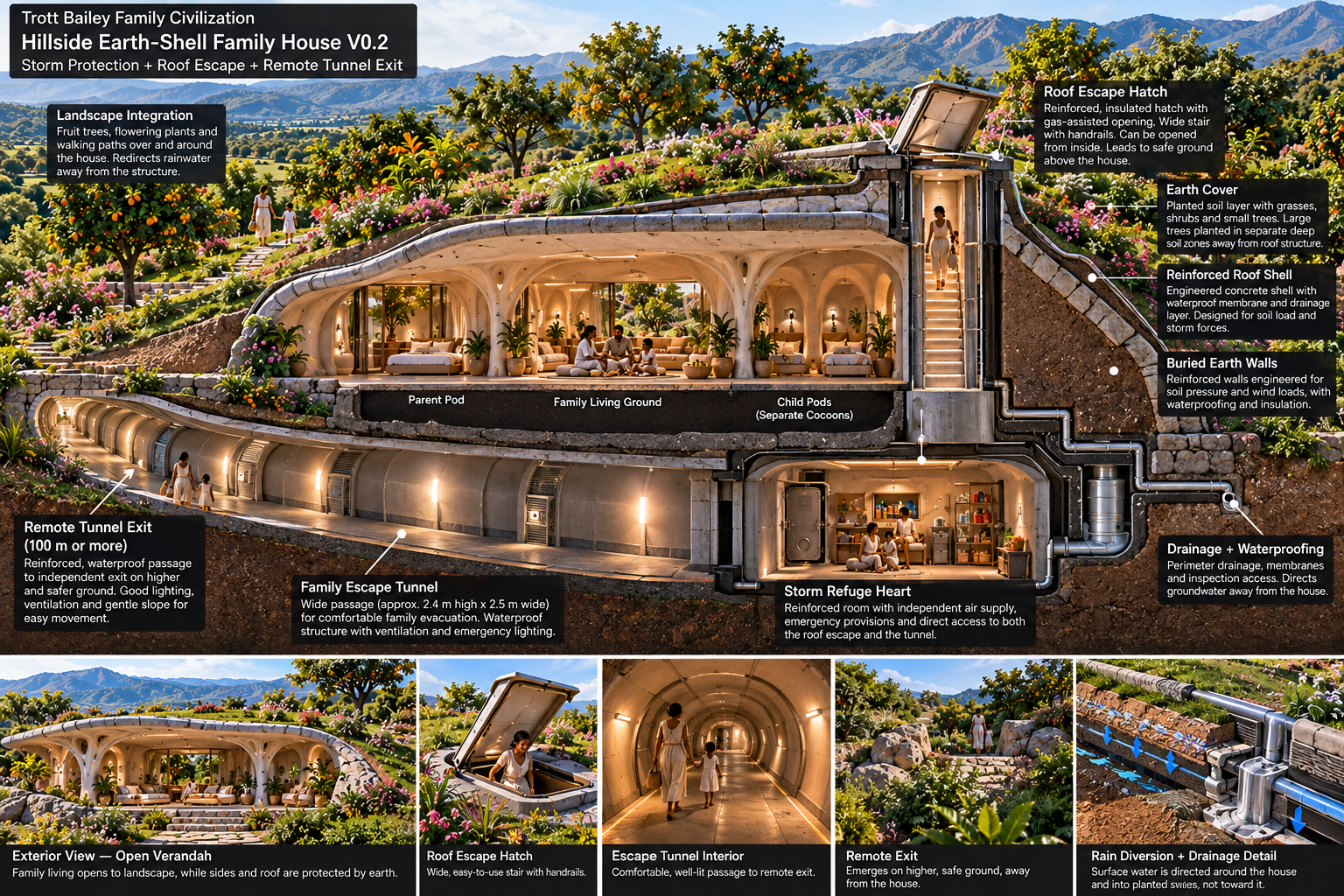
Trott Bailey family compounds use distinct functional room bodies connected through appropriate verandahs, living routes, planted courts, and household grounds.
The intended character is charming, comfortable, natural-intelligent, premium, practical, and suited to real family living.
Household Readiness — Prepared for Actual Living
Construction completion and household readiness are connected but distinct responsibilities.
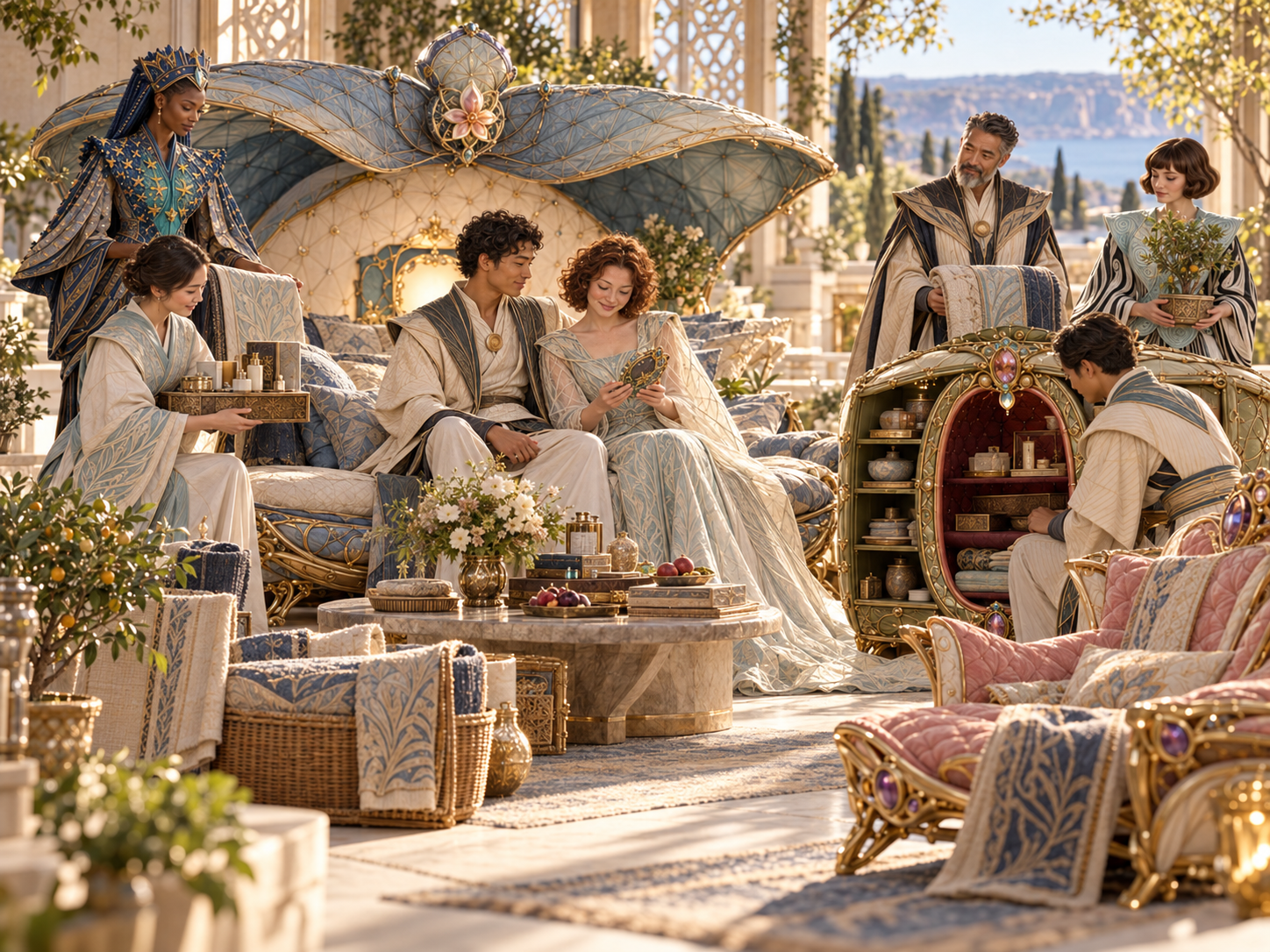
The couple’s selected home should contain the necessary resources for immediate comfortable living.
Furnishings
Sleeping supports, bedding, seating, storage, lighting, tables, and other selected furnishings must be installed or appropriately prepared.
Appliances and household instruments
Selected refrigeration, cooking, food-processing, garment-care, cleaning, and other practical household machines must be provided.
Specialists carry out technical installation and verification where required.
Body care
The Baliza and Dressing Body should contain the couple’s selected grooming instruments, oral-care provisions, hair-care tools, nail-care tools, bathing supplies, towels, and other personal-care resources.
Food
The refrigerator and appropriate food-storage facilities should contain selected fresh foods and useful household provisions.
The couple should be able to eat comfortably from the beginning without first organizing a major supply operation.
Continuing food access removes the need for excessive stockpiling.
Clothing and household care
Garment storage and care facilities must be prepared. The family’s continuing access to the civilization’s Fashion and Fabric Node networks remains available.
Mobility
The couple retains access to free local and wider civilization travel.
Their core home and land provide a family base without restricting movement.
Living land
Fruit-tree seedlings, mature nursery plants, useful growing resources, and other land provisions can be prepared according to the family’s plans and the stage of compound development.
Not every future planting or animal area must be completed before initial occupancy.
Pacorips — One Connected Digital System
Pacorips is both the family’s digital resource interface and the civilization teams’ shared coordination and progress system.
The family’s interface
Couples use Pacorips to select household items, communicate preferences, access resources, review establishment progress, and request future support.
They do not need to visit the Marriage Hall physically whenever something is required.
Shared team coordination
The Marriage Hall and participating teams work from the couple’s confirmed selections and the same connected progress information.
A selection already made does not need to be repeatedly requested by different workers.
Each team can communicate its relevant progress and outstanding needs.
No digital bureaucracy
Pacorips exists to make civilization resources easier to access and deliver.
It must not become a complicated application platform, an unnecessary approval gateway, or a substitute for practical action.
One Integrated Establishment Operation
The Marriage Hall retains overall accountability.
Specialized teams contribute their actual skills without becoming isolated departments.
Build-Life
Build-Life handles the selected buildings, site preparation, structural work, technical construction, and relevant infrastructure.
Its lead stewards and specialists coordinate construction according to the family’s selected architecture and establishment schedule.
Service Shadow
Service Shadow handles household deliveries and its assigned practical preparation and readiness work.
Its head coordinator communicates directly with the Marriage Hall so deliveries and preparation remain aligned with the overall operation.
An experienced team of approximately four to six Service Shadow stewards may carry out a typical preparation assignment, with staffing suited to the actual work.
The work is distributed. It does not fall entirely on a husband-and-wife role pair.
Service Shadow personnel retain appropriate equipment, protected shifts, recovery, and family time.
Other specialists
Furnishing, food, technical, agricultural, animal, and other specialist contributors perform the work requiring their expertise.
They cooperate within the same establishment operation.
No departmental tunnel vision
The Marriage Hall does not merely send requests and wait.
It actively ensures that people, materials, machinery, and services come together when needed.
Specialization must create efficiency, not excuses for delay.
Family Gifts — Generosity Without Disorder
Parents, siblings, relatives, and friends are welcome to contribute additional gifts.
These may include furnishings, garments, heirlooms, food, household instruments, personal objects, plants, or other useful and meaningful items.
Family contributions remain separate from the civilization’s guaranteed foundational provisions.
Service Shadow’s responsibility
Service Shadow receives the gifts arriving through the household preparation operation, records the contributions, and stores them neatly and appropriately.
The couple later decides how to organize, display, use, or retain those gifts.
For example, a mother may contribute a beautiful furnishing, a father may provide an established fruit tree, or siblings may give personal household objects.
Service Shadow receives and protects the contributions without deciding how the couple must arrange them.
Order remains essential
Family members may also offer their assistance.
However, their contributions must not interrupt deliveries, obstruct routes, redirect working teams, or disrupt the preparation schedule.
Service Shadow maintains order within its assigned delivery and preparation work, while the Marriage Hall retains oversight of the entire establishment.
Household Completion and Move-In
The relevant specialists confirm completion and proper operation of their assigned systems.
Service Shadow completes its delivery and household-readiness responsibilities.
Its head coordinator communicates outstanding matters directly to the Marriage Hall.
The Hall ensures that the principal home, essential infrastructure, and immediate living provisions are ready within the one-month establishment period.
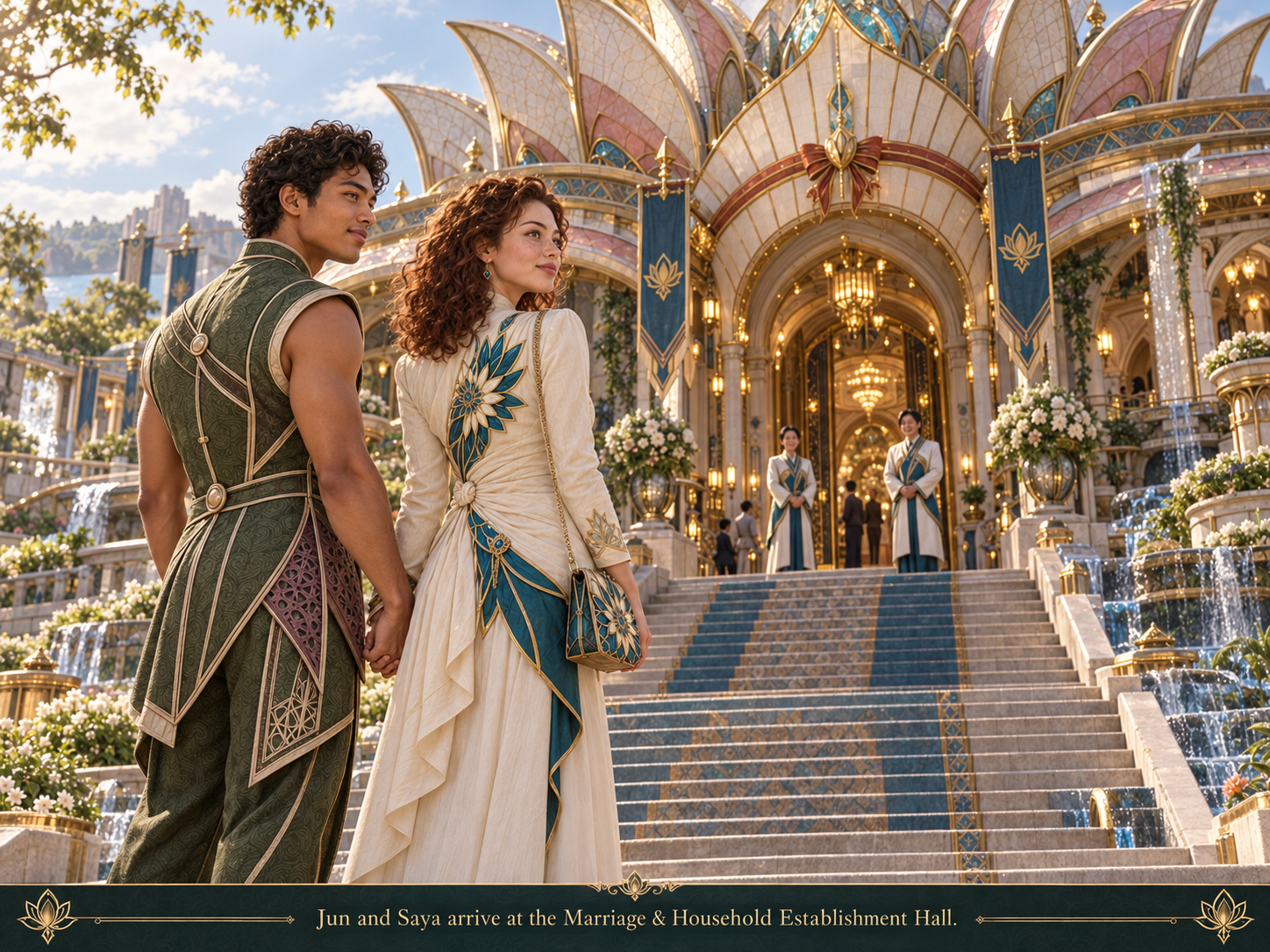
Jun and Saya decide when to move into their completed principal home.
There is no additional paperwork or repeated approval process before occupying the prepared household.
The couple’s personal family gifts remain available for them to arrange.
The larger compound can continue developing after their arrival.
Lifetime Family Flourishing Support
The Marriage Hall remains one welcoming point of contact for married couples throughout their lives together.
It is not restricted to household establishment, childbirth, or building construction.
Whatever may contribute to the flourishing of the marriage and family, and whatever the family wishes to bring forward, may be presented to the Hall for assistance.
Example — Jun’s interest in birds
Jun has a strong interest in birds, nesting systems, ecosystems, and engineering.
As these interests develop, he may begin designing nesting environments, habitat-observation systems, specialized machinery, or ecological restoration projects.
Such work may require manufacturing equipment, additional land, technical specialists, research facilities, or skilled collaborators.
Jun can approach the Marriage Hall through Pacorips and explain what he is developing.
The Hall helps him obtain access to the resources and people capable of supporting that work.
It does not decide what Jun must be interested in or take over his projects.
The support exists because his abilities and efforts may benefit his family and the wider civilization.
Example — A child’s proven talent
Suppose one of Jun and Saya’s children demonstrates a strong talent for engineering, music, agriculture, ecological research, or another discipline.
The family may recognize that the child needs specialized tools, machinery, land, training, learning environments, or experienced practitioners.
Jun and Saya can bring the matter to the Hall.
The civilization helps the family access suitable resources so that the child’s talent can continue developing.
Demonstrated ability helps identify the assistance required; it must not become an unnecessary credentialing barrier.
Example — Additional land for family growth
Jun and Saya may eventually require more land as their children grow or as their ecological, agricultural, or animal-related activities expand.
They can explain their needs and plans to the Hall.
The civilization can respond with additional land according to demonstrated capability, clear purpose, and actual requirements.
The original 50 hectares are not an artificial ceiling.
Example — Saya’s developing interests
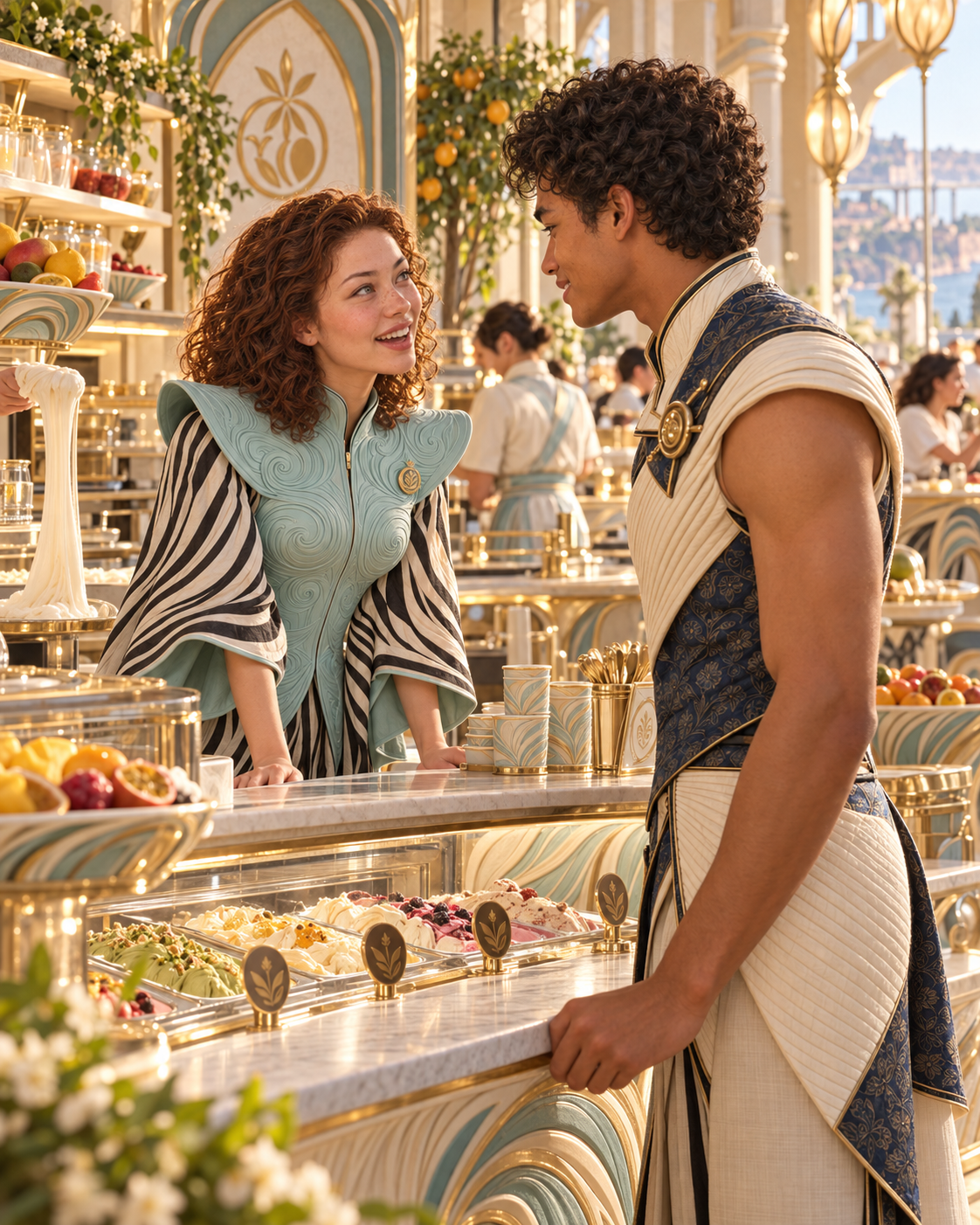
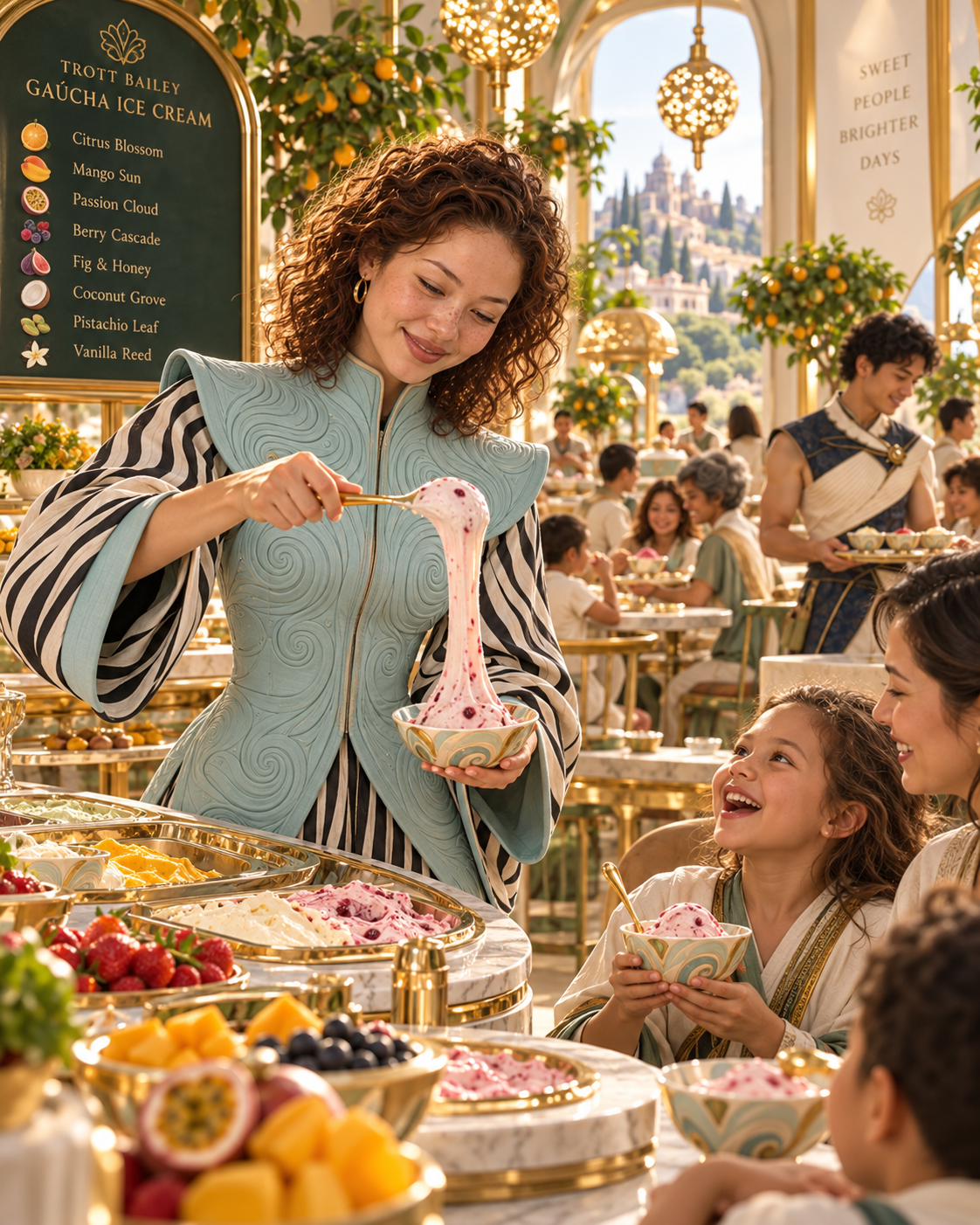
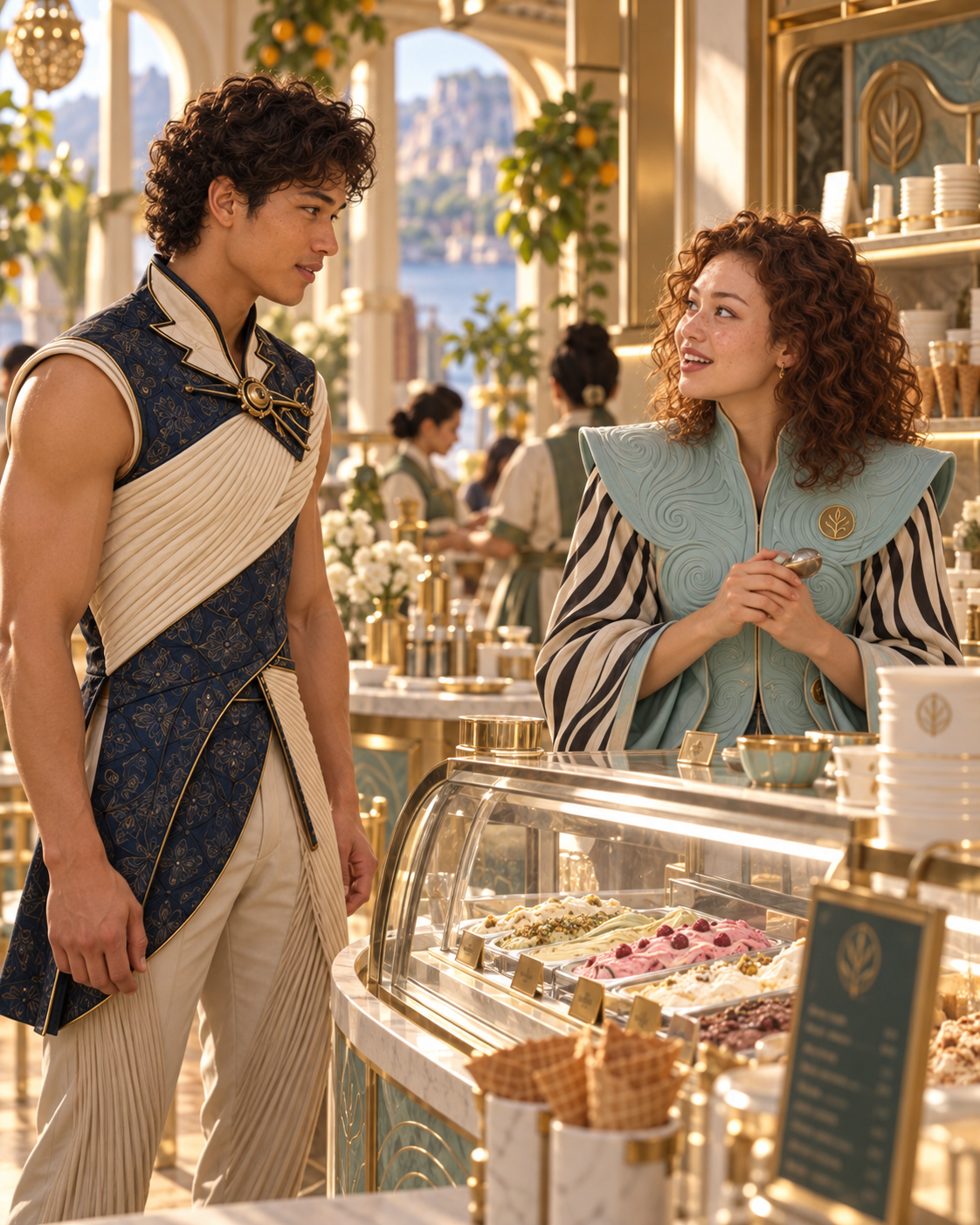
Saya’s interests include goats and sheep, hospitality, Gaúcha ice cream preparation, Balushu backstage performer care, and working with people.
These interests may develop into activities requiring special equipment, facilities, training, or other resources.
The Hall can support her development when she wishes to bring forward such needs.
Neither spouse is confined to one activity or one stage of married life.
Family autonomy
The Hall does not monitor the couple’s private life or interfere with parenting, marital decisions, personal interests, or household preferences.
The family voluntarily seeks assistance when it wishes.
It may also approach other suitable civilization networks directly.
The Hall is a welcoming point of contact, not a compulsory gateway.
Jun and Saya — Applied Marriage Establishment Record
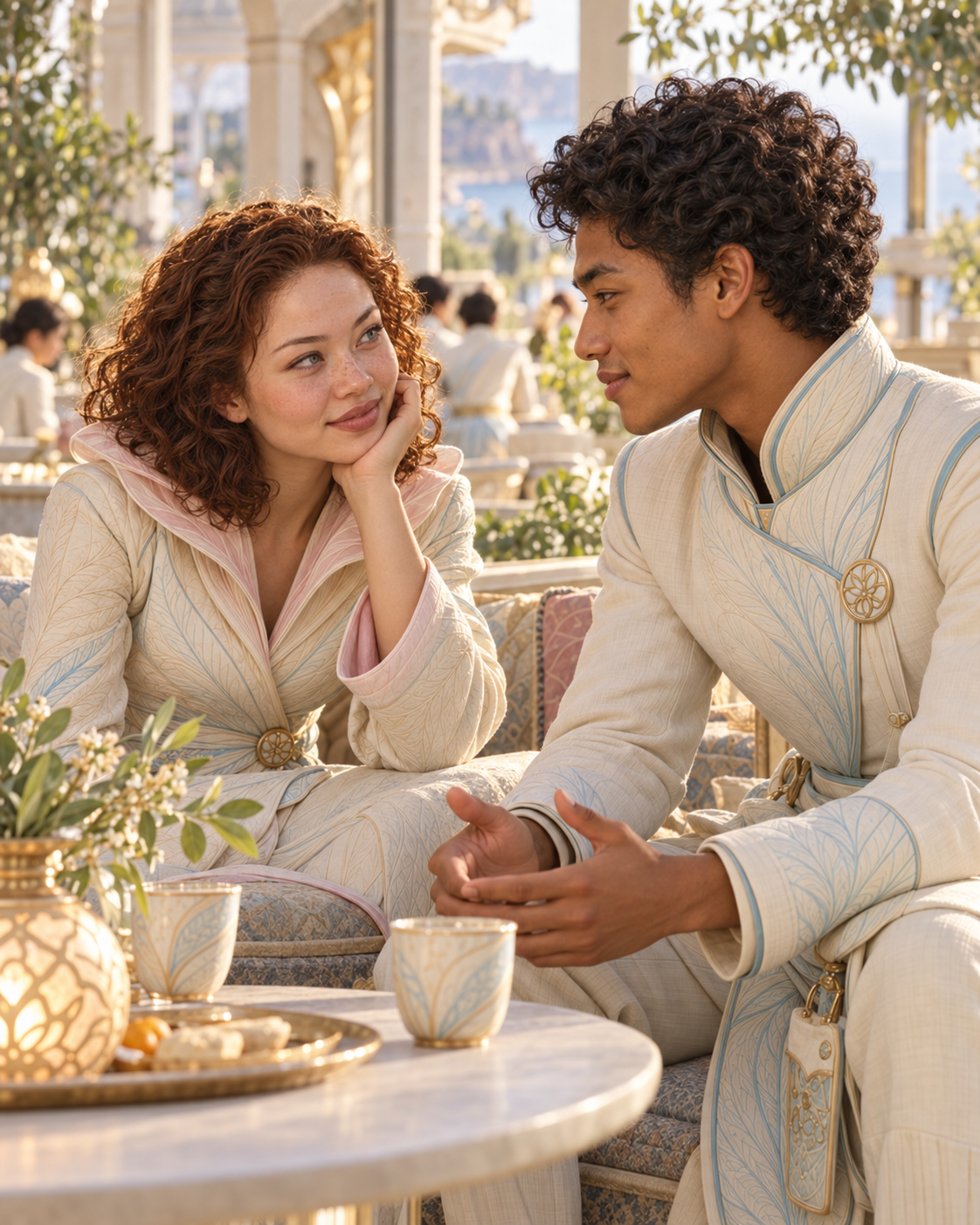
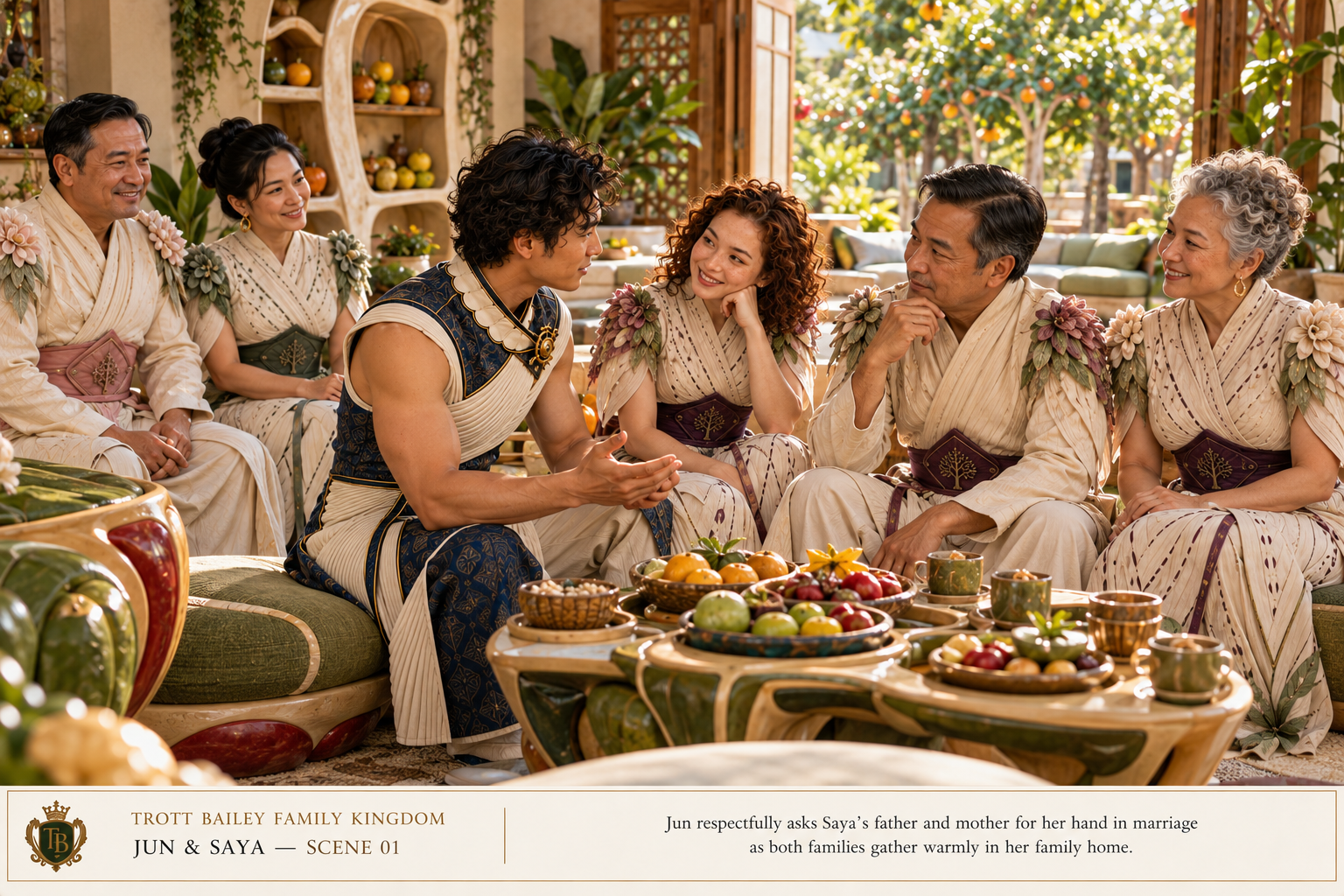
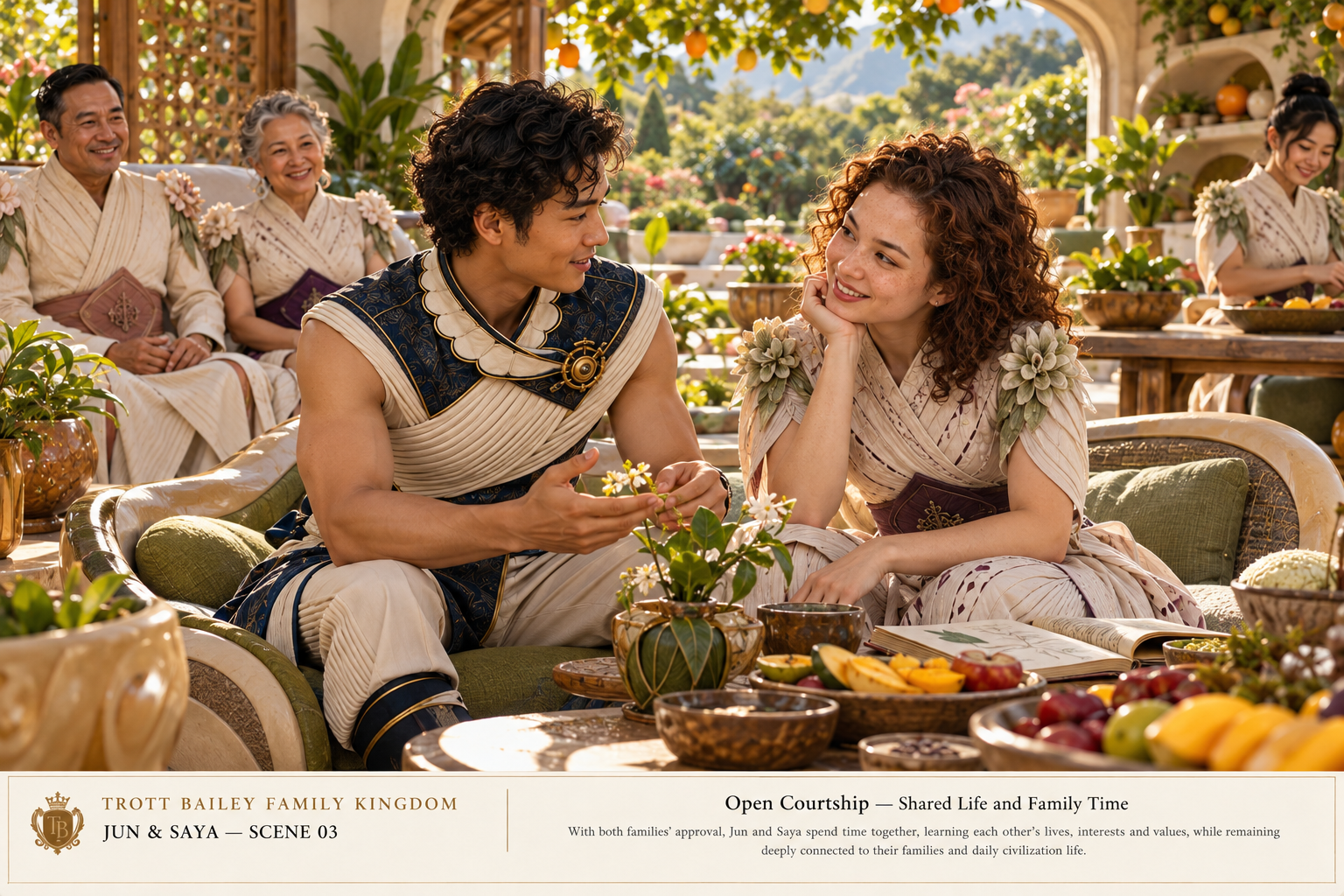
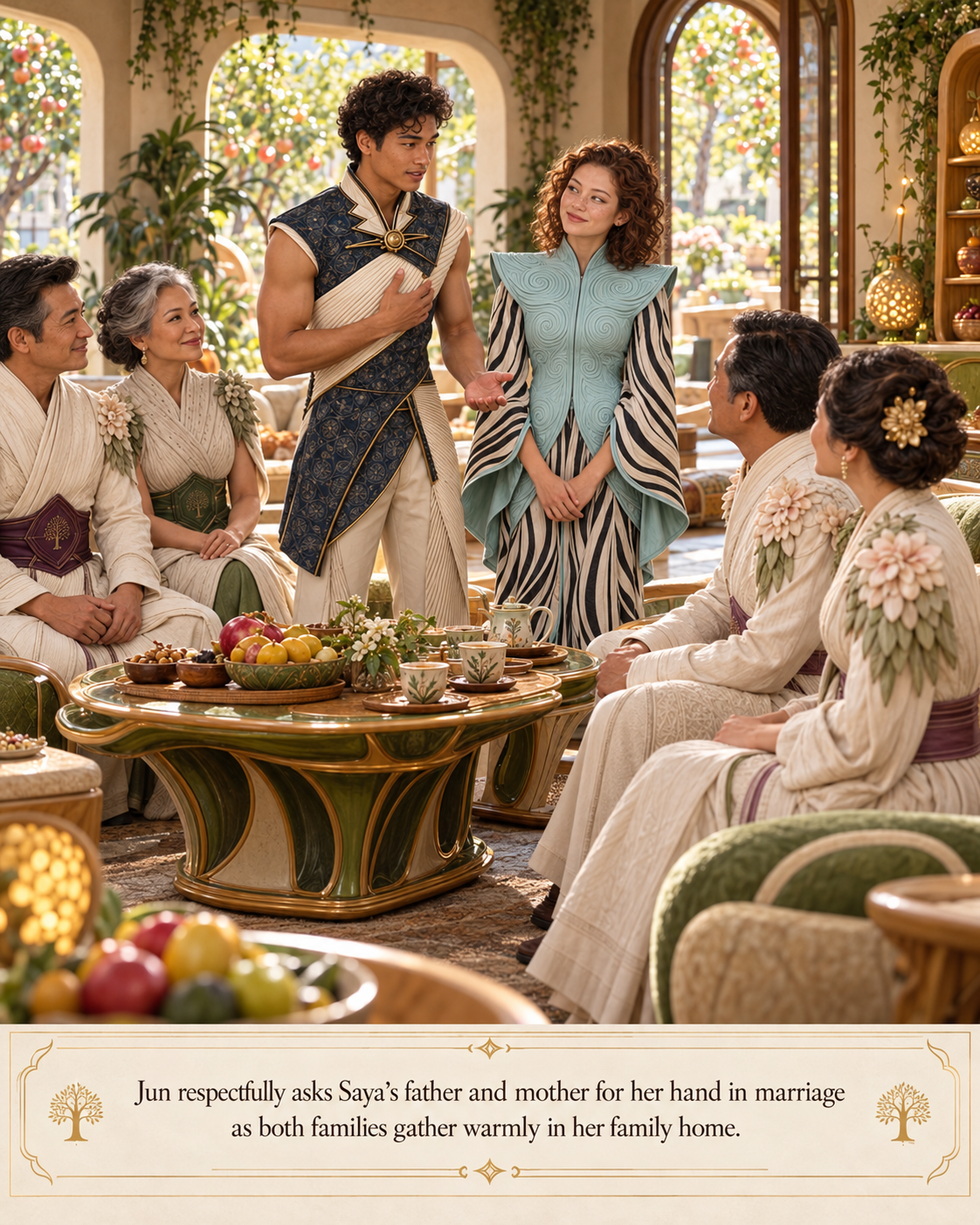
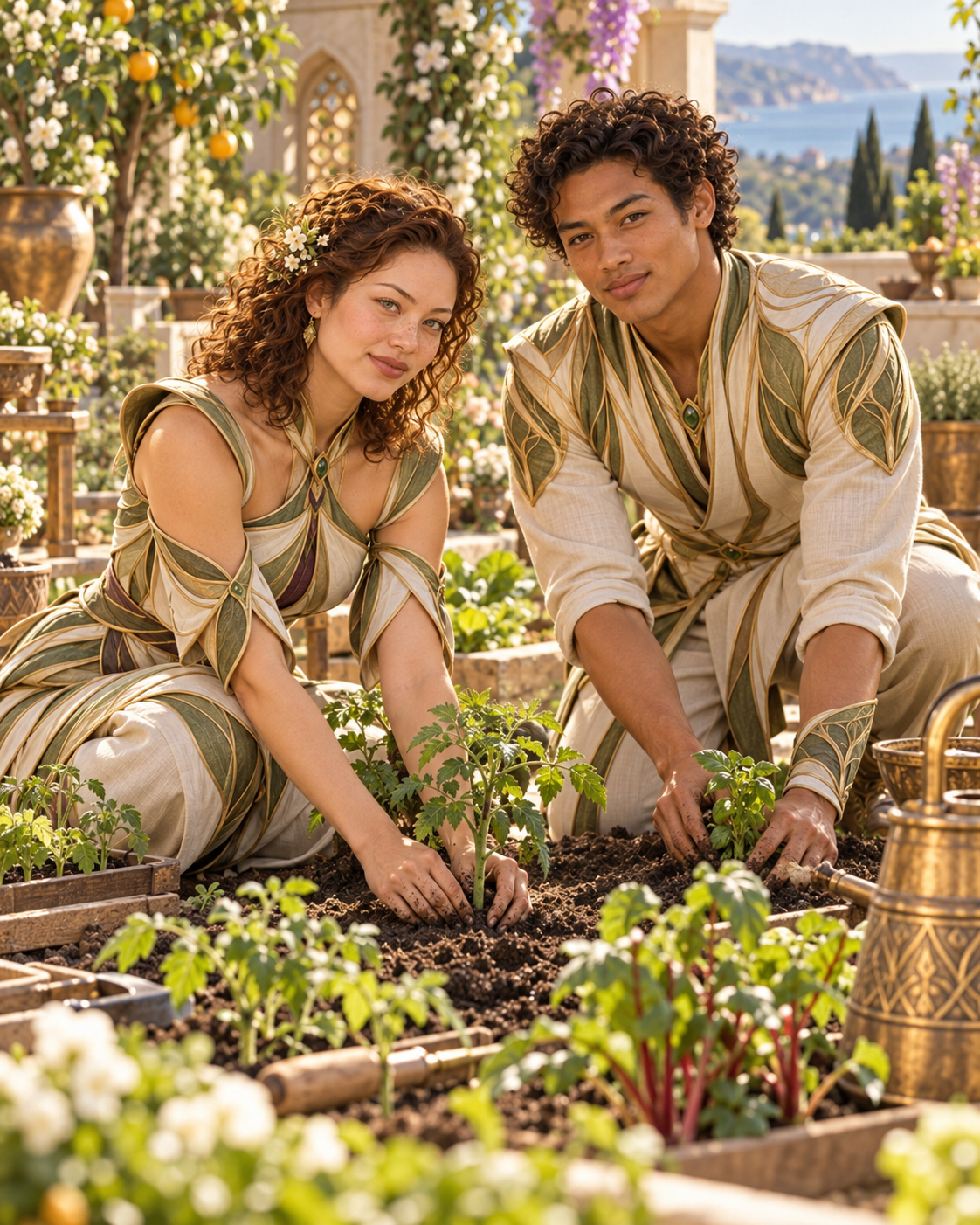
Jun and Saya met during their mandatory two-year Baby World Shubaka contribution. They later reunited, courted, married, and began establishing their family household.
Their experience brings the system into a practical human setting.
Marriage and personal gifts
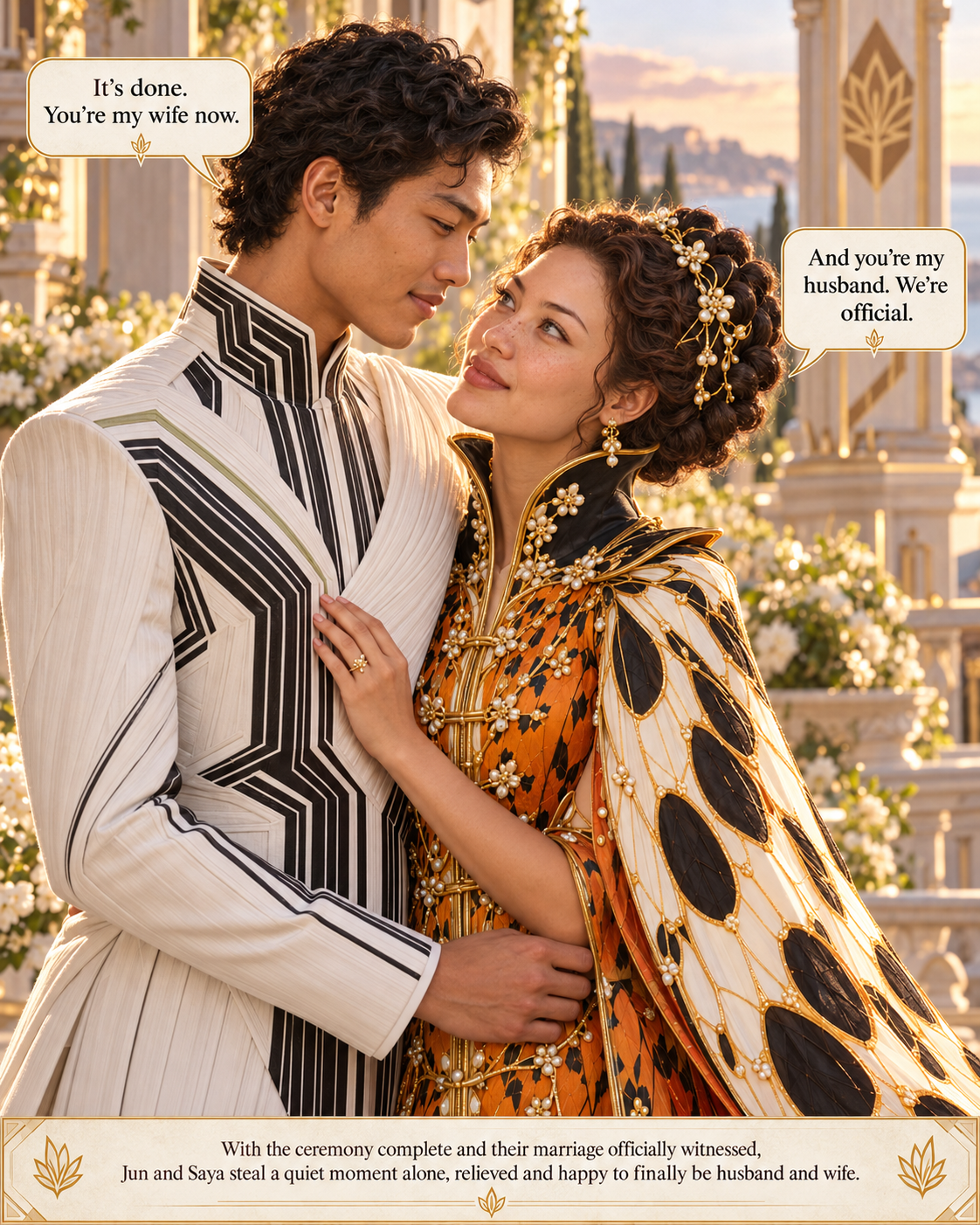
Their marriage is officially witnessed through the private hand-joining ceremony.
Saya’s selected civilization gifts include a custom ruby-and-pearl ring, golden ear cuffs, pearl accents, and an initials necklace.
Jun’s include a black onyx-and-ruby ring, an authored wrist cuff, and an initials necklace.
The gifts are presented in appropriate civilization-made containers and trays.
Their private enjoyment of these personal gifts remains separate from the later public celebration.
Their land
Jun and Saya receive their guaranteed 50-hectare marriage allocation.
Their particular land includes a small river and existing living environmental features.
Jun’s interest in birds and ecosystems, and Saya’s interest in goats and sheep, inform planning for their future compound.
Their home
They visit the land with supporting stewards, examine possible home sites, and consult Build-Life about established Trott Bailey architectural species.
Build-Life prepares their selected principal home.
They may enjoy a temporary Marriage Home or Travel Home during construction.
The Marriage Hall is responsible for ensuring the essential home is delivered within one month.
The couple may move in when the Sleeping Body, Baliza, Dressing Body, Flamebiki, running water, electricity, and road access are ready.
Their household preparation
Their chosen furnishings, appliances, and household provisions are already available through Pacorips.
Service Shadow handles deliveries and its assigned readiness work, communicating directly with the Marriage Hall.
Specialists provide the installations and technical services required.
Family members may contribute additional gifts, which Service Shadow receives, logs, and stores for Jun and Saya to arrange.
Their continuing family life
The wider 50-hectare compound can develop successively with additional room bodies, gardens, animal environments, and other selected features.
Jun and Saya remain free to travel, contribute through Shubaka, welcome family and friends, and pursue their interests.
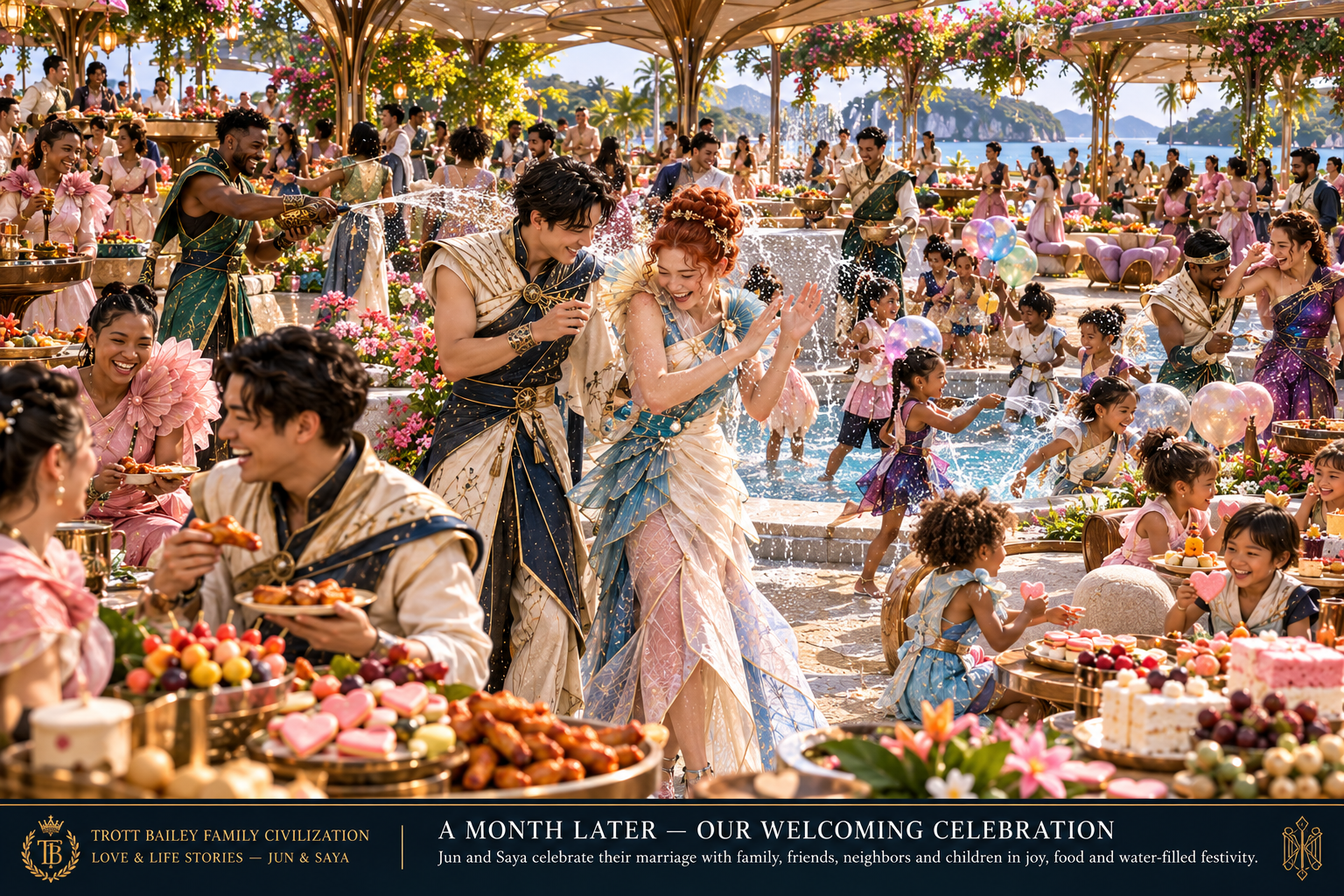
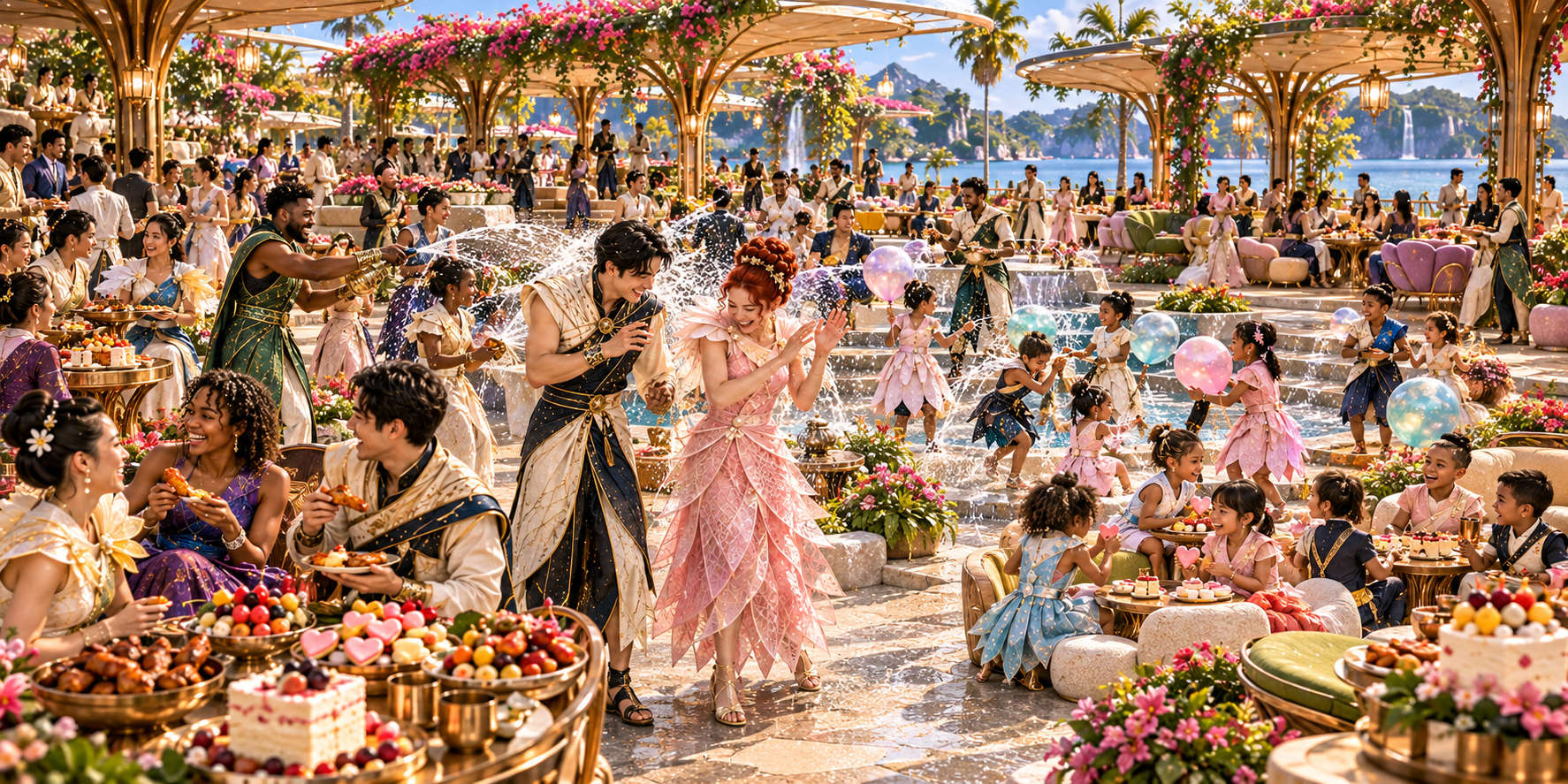
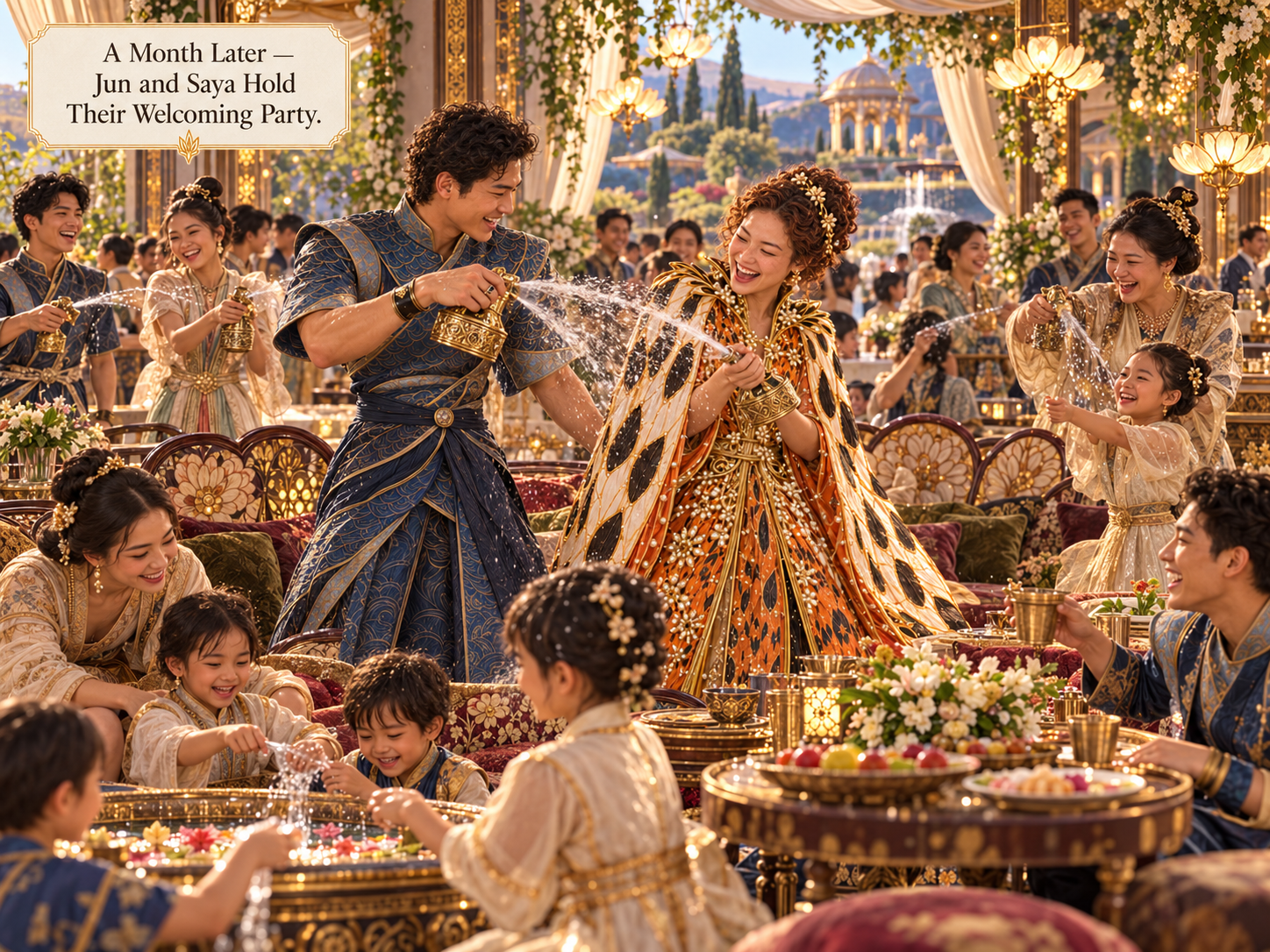
Their later public welcoming celebration is distinct from the official marriage ceremony and household-preparation activities.
Throughout their marriage, the Hall remains available when they wish to request resources, support their children’s developing abilities, or pursue new family projects.
Governing Living and Operating Principles
Implementation Boundary
Further technical refinements may address the working arrangements of Pacorips, Build-Life, Service Shadow, land stewardship, and other networks.
Those refinements must not introduce:
- Additional paperwork beyond the marriage record for the foundational entitlement.
- Unnecessary visits to the Marriage Hall.
- Repeated household-selection procedures.
- Fragmented responsibility or bureaucratic delays.
- Unnecessary waiting for the full compound to be constructed.
- Interference with family autonomy.
- Restrictions on legitimate family development that contradict the guaranteed baseline or capability-based expansion principles.
The established architectural, fashion, technology, land, animal, and Shubaka standards remain applicable to the work of their respective networks.
Official Consolidated Statement
The Trott Bailey Family Civilization recognizes marriage as the establishment of a new family entitled to the resources needed for comfortable and flourishing life.
Every newly married couple receives a minimum entitlement of 50 hectares of land.
The Marriage & Household Establishment Hall is accountable for ensuring that the couple’s selected principal home, including its essential room bodies and infrastructure, is delivered within one month.
The couple may use a free temporary Marriage Home or Travel Home during construction and may move into its own compound once the principal living facilities are ready.
Additional building bodies can follow successively.
Pacorips provides direct digital access to selections, coordination, progress, and future assistance.
Build-Life and other specialists perform their respective work. Service Shadow handles household deliveries, assigned readiness work, and the orderly storage of voluntary family gifts.
The Marriage Hall maintains lifelong availability for household expansion, additional land, machinery, training, specialist resources, and other family-chosen needs.
The civilization guarantees the foundational resources of marriage while enabling capable, dedicated families to expand their activities and contributions.
The Marriage Hall supports and resources families. It does not interfere with their lives.
Marriage establishes the entitlement. The civilization delivers the household. The family gets on with living, growing, contributing, and flourishing.

This is the story of two young people, Jun and Saya, in Trott Bailey Family Civilization who met and naturally began loving each other through shared experiences and challenges. Follow them as they declare their intentions and see their exciting life leading up to and after marriage