

Keslev Interiors: When Orchard Abundance Becomes Architecture


Keslev Interiors: When Orchard Abundance Becomes Architecture
Keslev interiors are not food-themed rooms. They are household systems where cooking, storage, child learning, cleaning, serving, and renewal are built into the room itself.
The Problem: Most Kitchens and Pantries Are Designed Too Shallowly
Many homes treat food spaces as either display rooms or storage afterthoughts. A kitchen may look expensive, but still make daily family life harder. A pantry may be full, but poorly organized. A dining room may look formal, but not help children learn where food comes from or how a household resets after meals.
The problem is not simply appearance. The deeper problem is that many interiors do not answer practical family questions:
- Where does washed produce go?
- Where do wet baskets, cloths, jars, and tools dry before storage?
- Can children help without being in danger?
- Can parents see children while cooking or sorting food?
- Can the family understand what food is available?
- Where do scraps, empty containers, and used serving items return?
- Does the room teach food order, or does it hide food behind dead cabinet walls?
What Keslev Interiors Do
A Keslev interior turns food life into architecture. That means the room is planned around how a family actually receives, washes, stores, cooks, eats, learns from, and returns food-related materials.
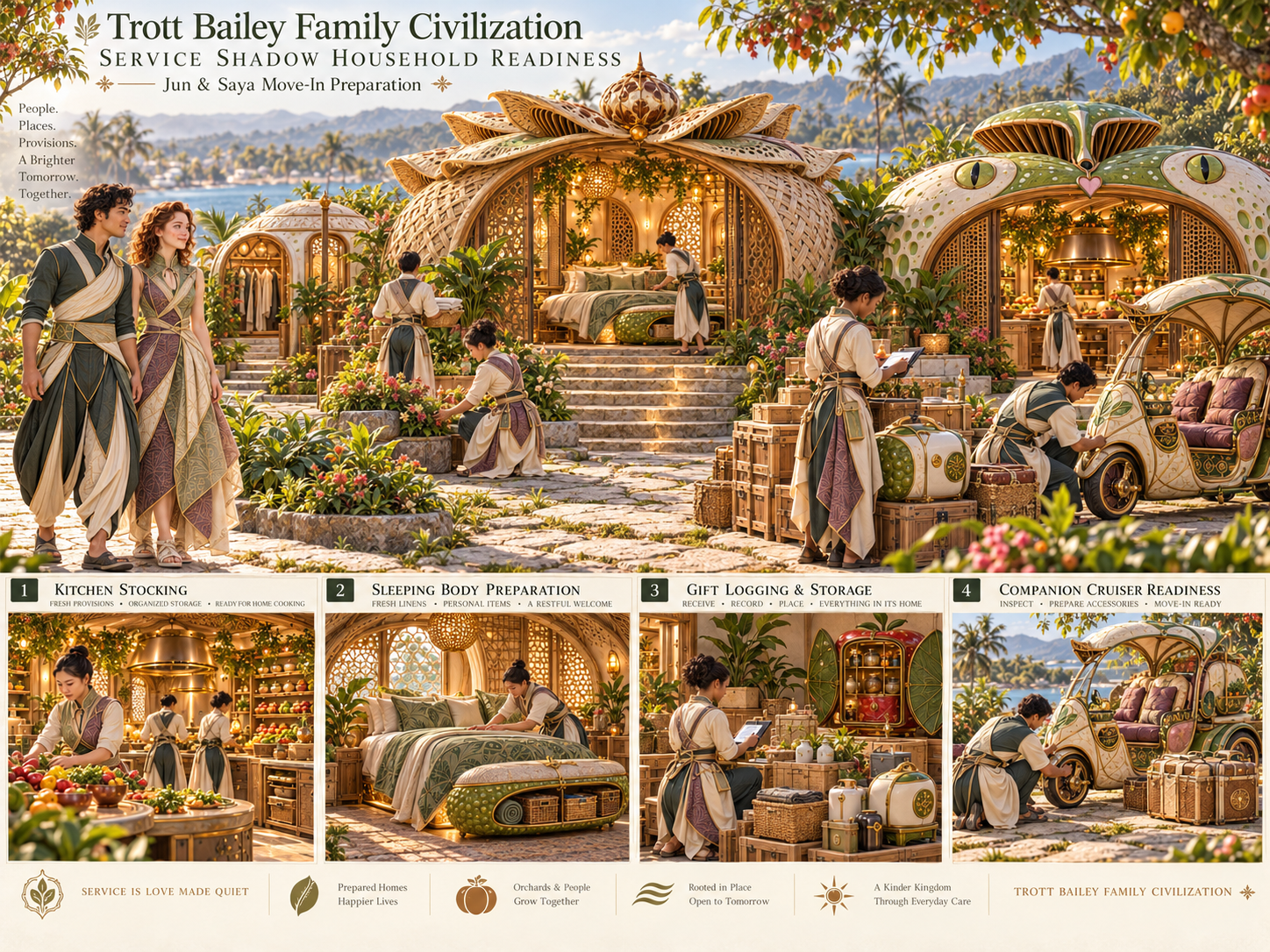
This is why Keslev interiors use fruit-pod cabinets, visible storage, deep trough sinks, dry-return walls, child tasting ledges, orchard views, and clean-return systems. These features are not decorative extras. They solve real household problems.
Key Terms Defined Clearly
Why Keslev Must Not Become a Brown Hearth Aesthetic
The word hearth can easily push a design toward brown wood, rustic stone, and dark cooking-room imagery. That is too narrow for Keslev.
In Keslev, hearth means the cooking heart of the home. It means warmth, nourishment, gathering, and practical food preparation. It does not mean the whole room must become brown.
Keslev’s stronger identity comes from orchard abundance. Its palette should include shell-ivory, orchard green, dark orchard green, apple red, pomegranate accents, honey gold, aged bronze, and dark washable flooring. Wood and bark tones can appear, but they must not swallow the room.
How a Keslev Kitchen Works in Real Life
A Keslev kitchen is not organized around a single luxury island. It is organized around family food movement. Here is a practical example of how the room works during an ordinary delivery-and-meal cycle.
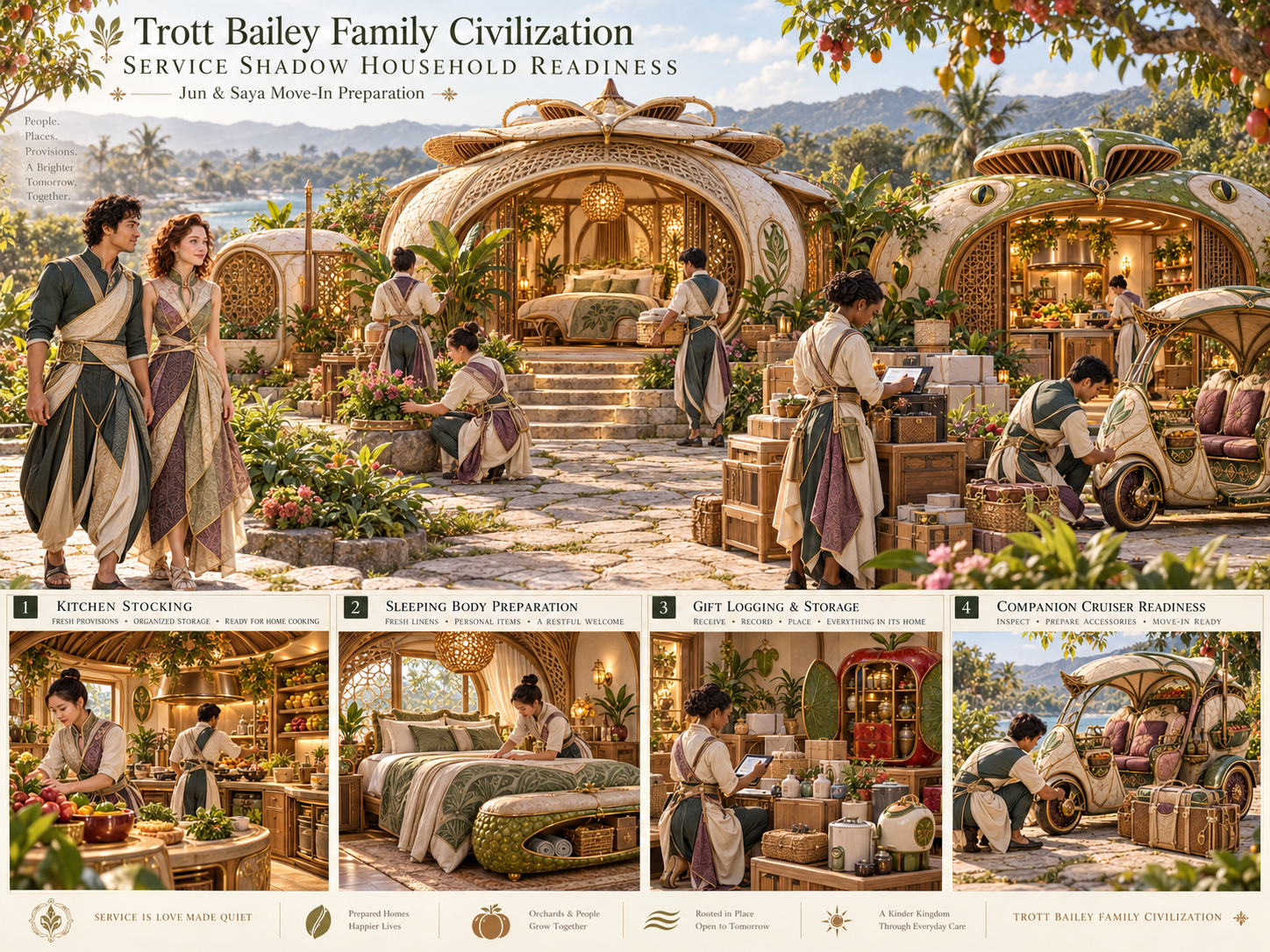
- Food arrives. A Keslev Sabennerie steward delivers prepared food bundles wrapped in banana leaves, along with fresh produce or pantry items. The packages are placed on a receiving surface near the kitchen or pantry.
- The family checks and sorts the food. Parents can see what arrived. Children can help place fruit into child-safe drawers, jars into honey-lit shelves, and wrapped packages onto serving trays.
- Food is rinsed or prepared. Produce and pots move to a deep trough sink. The sink is large enough for real family use, not just small dishwashing.
- Wet items dry before storage. Baskets, cloths, small tools, and containers go to the Dry-Return Wall so they do not sit in messy piles.
- The family eats or tastes together. A child tasting ledge or orchard dining table allows children to try foods, ask questions, and learn what the household is eating.
- Used items return cleanly. Empty jars, baskets, banana-leaf wrapping, cloths, and scraps go into labeled return points. Nothing is left as random clutter.
- Krubaro closes the loop. Organic matter goes toward compost or soil renewal. Rinse water can be filtered or routed. Reusable containers return to storage or Sabennerie return racks.
The Fruit-Pod Pantry: The Strongest Keslev Interior Example
The clearest Keslev breakthrough is the Fruit-Pod Pantry or Abundance Store Room. This room treats food storage as a serious family system.
Instead of ordinary shelves, the room uses apple pantry cabinets, breadfruit storage pods, seed-vault drawers, honey-lit jar niches, and basket return walls. Children can see food categories. Parents can quickly understand what the household has. Food is not hidden until it spoils. Storage becomes teaching, order, and beauty at the same time.
Why Krubaro Belongs Inside Beautiful Interiors
Krubaro is the clean-return system of the Trott Bailey Family Kingdom. It should not appear as ugly trash bins, dirty back rooms, or plastic recycling clutter. In a Keslev interior, Krubaro is part of the room’s intelligence.
Food life always creates return: scraps, peels, empty jars, used baskets, damp cloths, packaging, rinse water, and serving items. If the room does not plan for return, the family inherits the mess. A Keslev room plans for return from the beginning.
Practical Krubaro features inside Keslev interiors
- Compost return hatch for clean organic scraps.
- Jar and basket return wall for reusable containers.
- Rinse-water filtration channel near the washing area.
- Dry-return slots for towels, utensils, and washable tools.
- Seed-saving drawers for selected food seeds.
- Pacorips freshness labels to help track what should be eaten first.
- Child-safe return drawers that teach children how food materials return to usefulness.
Who Benefits From Keslev Interiors?
Why This Is Practical, Moral, and Necessary
Keslev interiors are practical because they reduce daily household confusion. They give food, tools, scraps, containers, and children’s participation a clear place.
They are moral because they do not treat household labor as invisible. They respect the work of feeding a family by designing rooms that support that work.
They are necessary because a family-first civilization cannot make food life chaotic, hidden, wasteful, or unsafe. If food is central to survival and family health, then food rooms deserve serious design.
Practical Summary
A Keslev interior is a food-centered household system. It uses orchard color, fruit-body furniture, visible storage, child-safe learning zones, dry-return infrastructure, and Krubaro clean-return logic to make family food life easier and more understandable.
The main point is simple: food spaces should do more than look beautiful. They should help the family receive food, prepare it, store it, eat it, teach it, clean after it, and return useful materials back into order.
Keslev proves that beauty and practicality do not need to compete. In a well-designed food room, beauty is how the practical system becomes visible, dignified, and easier to use.