
Baby Worlds: Why the Trott Bailey Family Kingdom Builds Public Worlds for Babies


Baby Worlds: Why the Trott Bailey Family Kingdom Builds Public Worlds for Babies
A baby should not have to wait until childhood to enter public life.
In many societies, babies are spoken of as precious, but the public world is not truly designed for them. The city may have roads, offices, shops, schools, parks, and entertainment spaces, but the baby is usually expected to fit into whatever adults have already built.
A parent pushes a stroller down a narrow path. A baby is carried through a loud store. A toddler is told to sit still in an adult space. A mother looks for somewhere private to nurse. A father searches for a clean place to wash a child’s hands. A grandparent tries to help while also needing a place to sit. A young family leaves home with bags, wipes, food, toys, bottles, spare clothes, snacks, and tired bodies because the outside world is not organized around their reality.
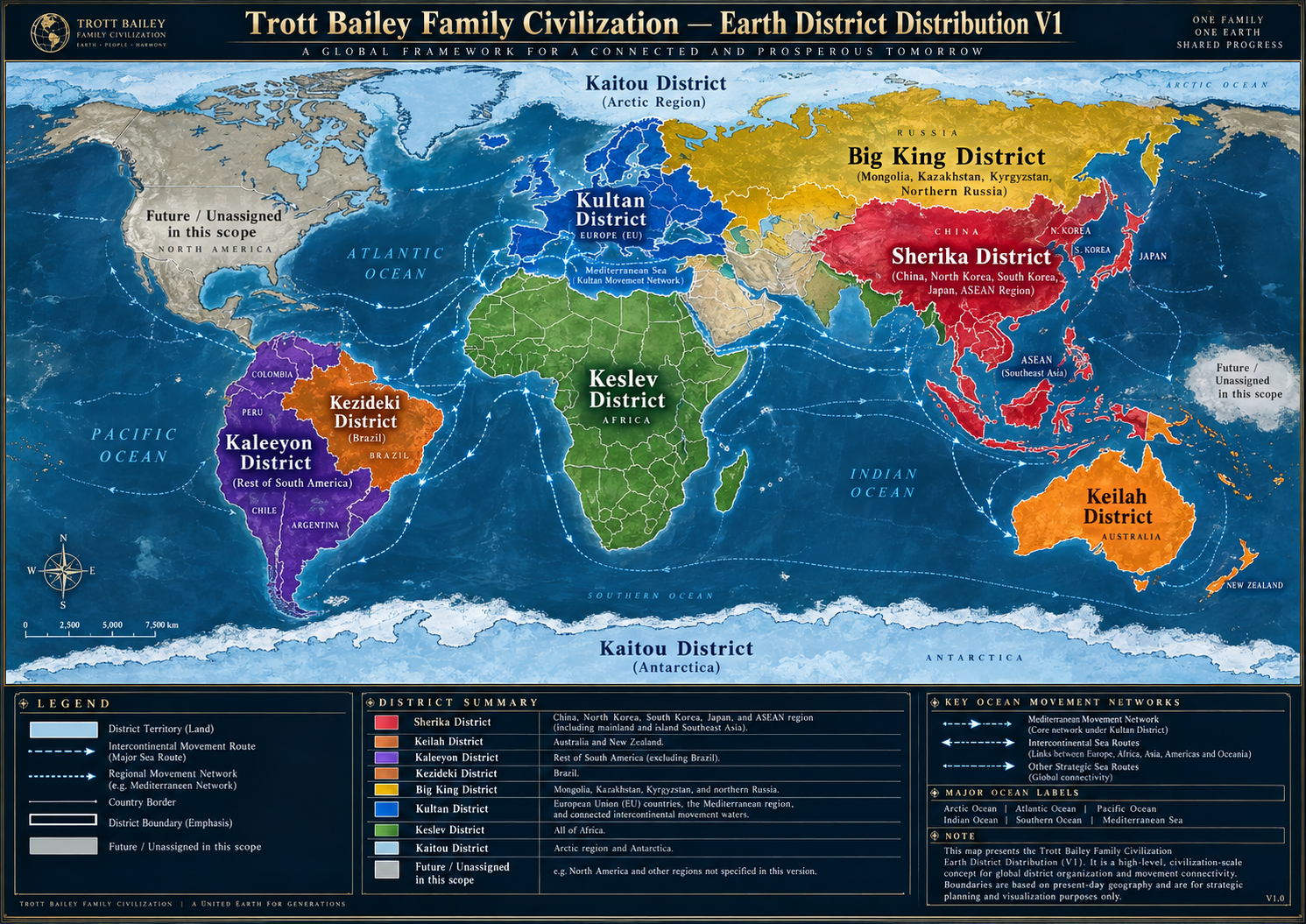
Kezidek District rejects that.
In the Trott Bailey Family Kingdom, babies are not treated as private household inconveniences. They are treated as citizens in their earliest stage of life, surrounded by families who also need support, rest, nourishment, beauty, and dignity.
That is why Kezidek District builds Baby Worlds.
A Baby World is not daycare. It is not a playground. It is early-life civilization infrastructure.
What Is a Baby World?
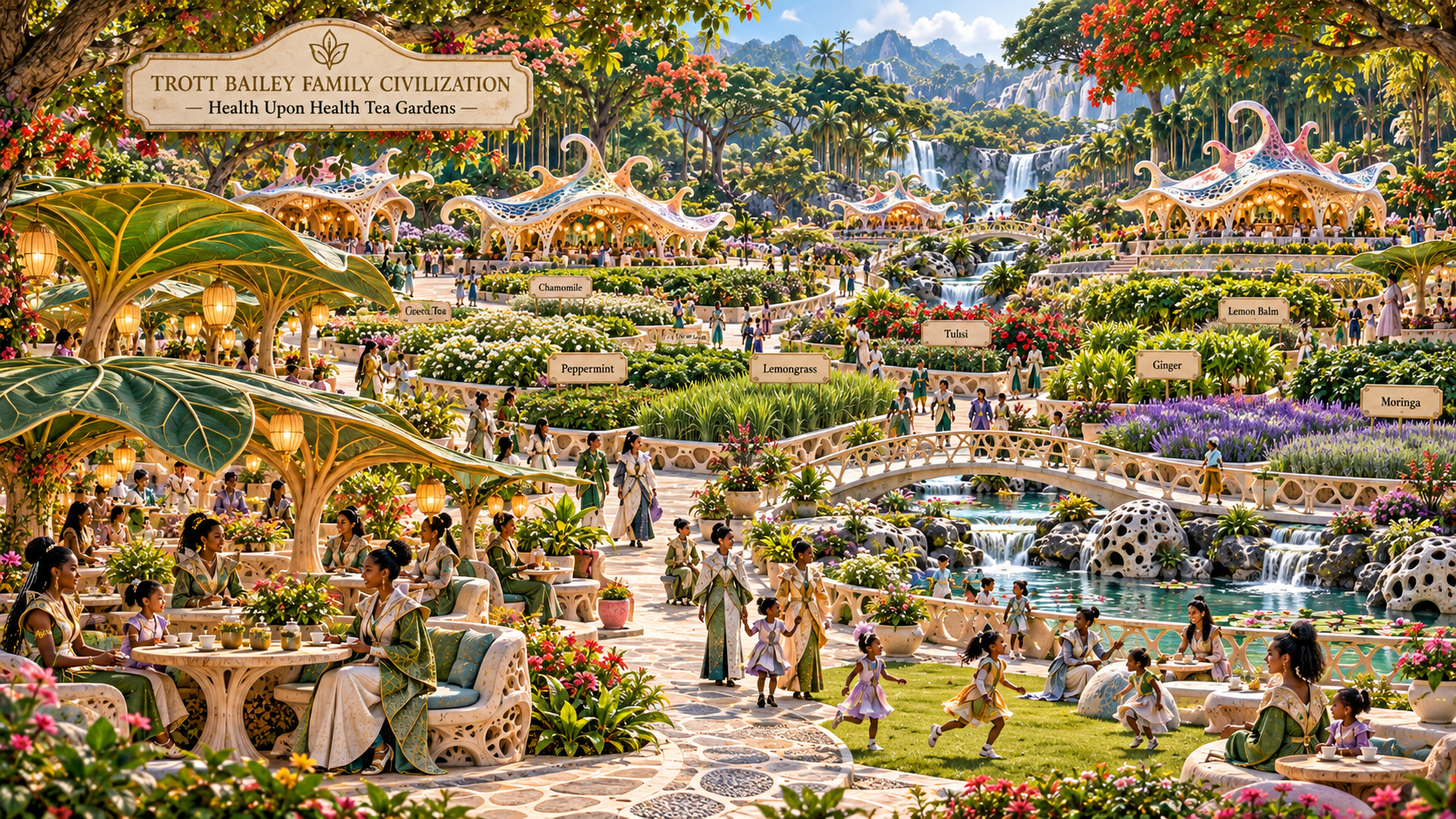
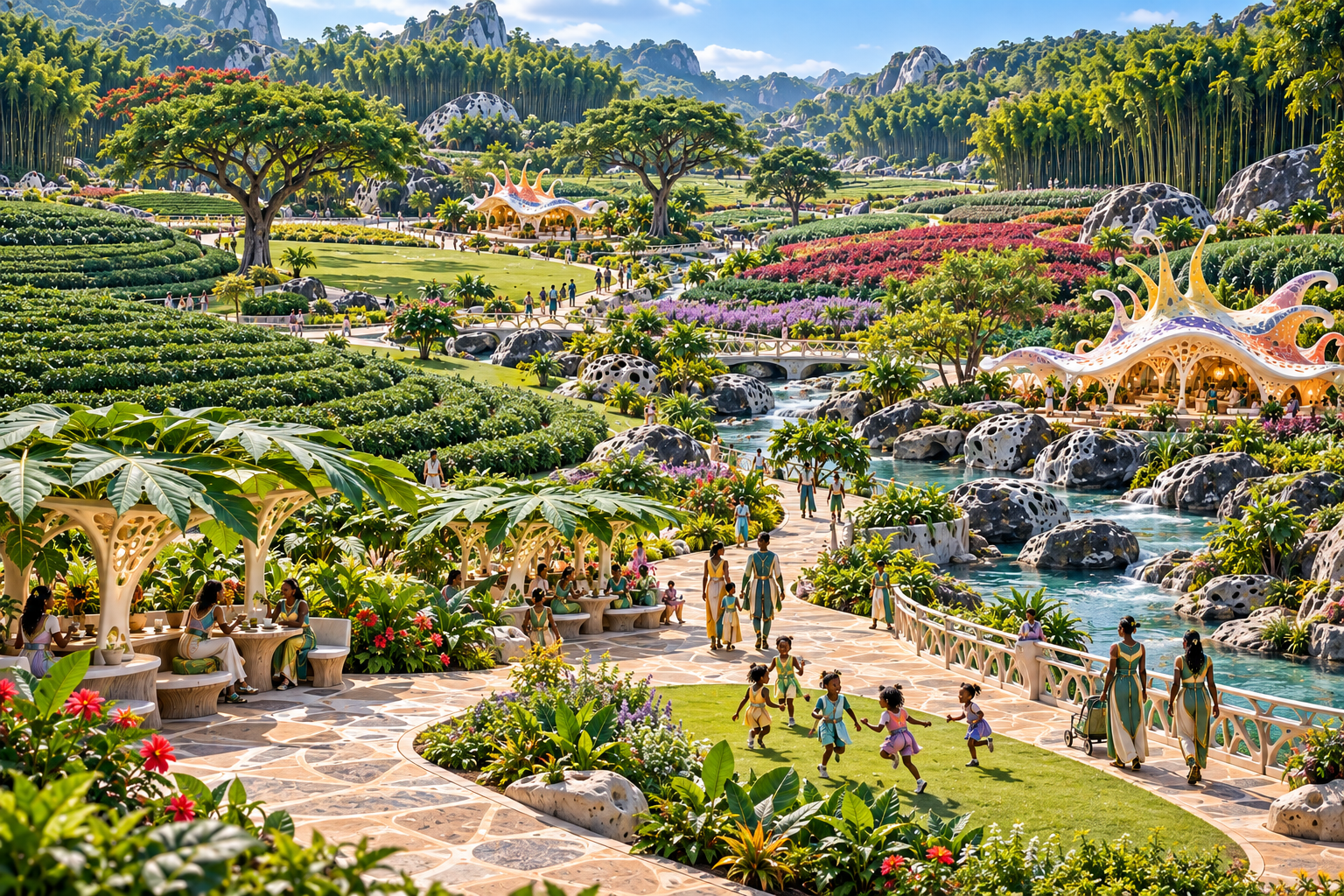
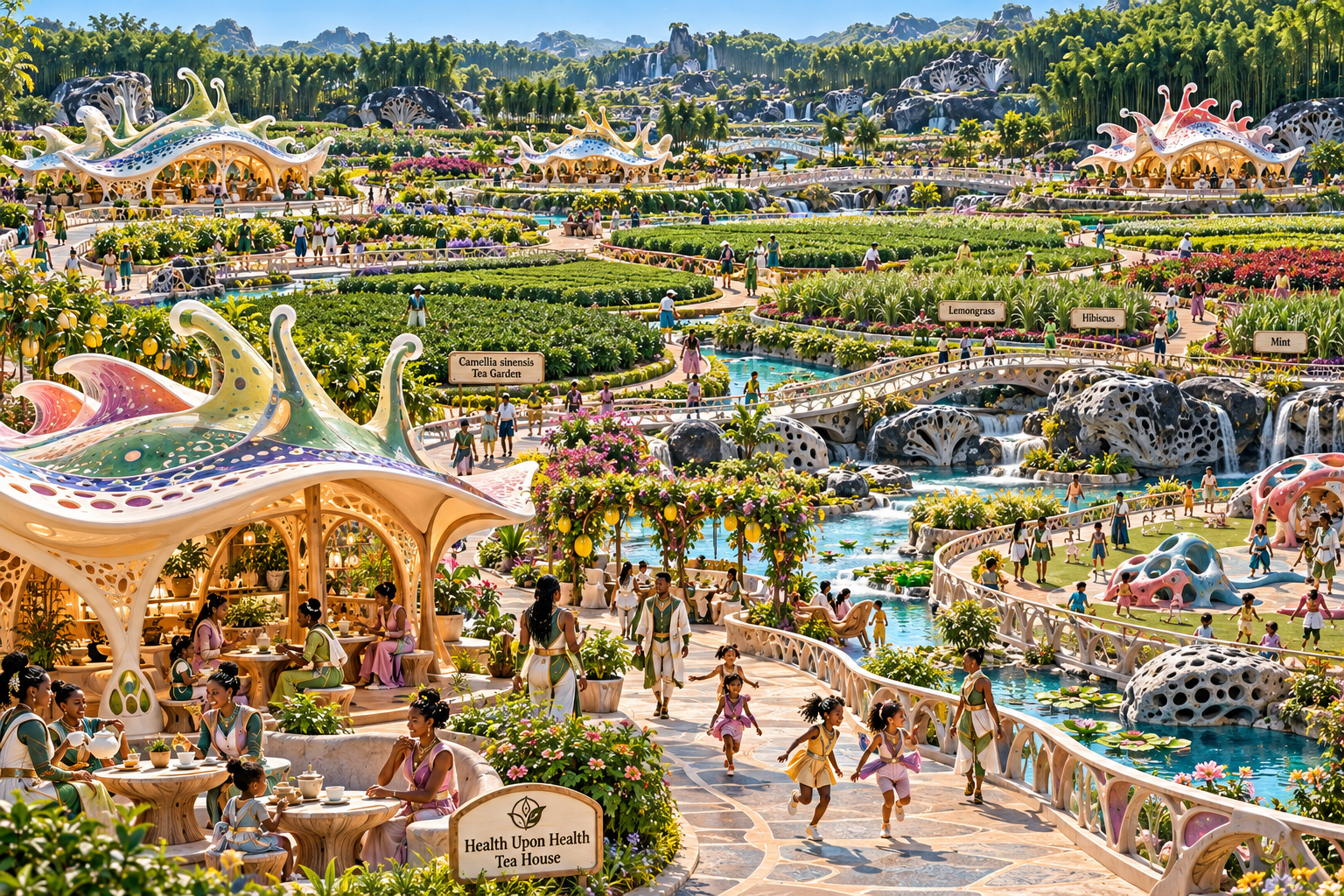
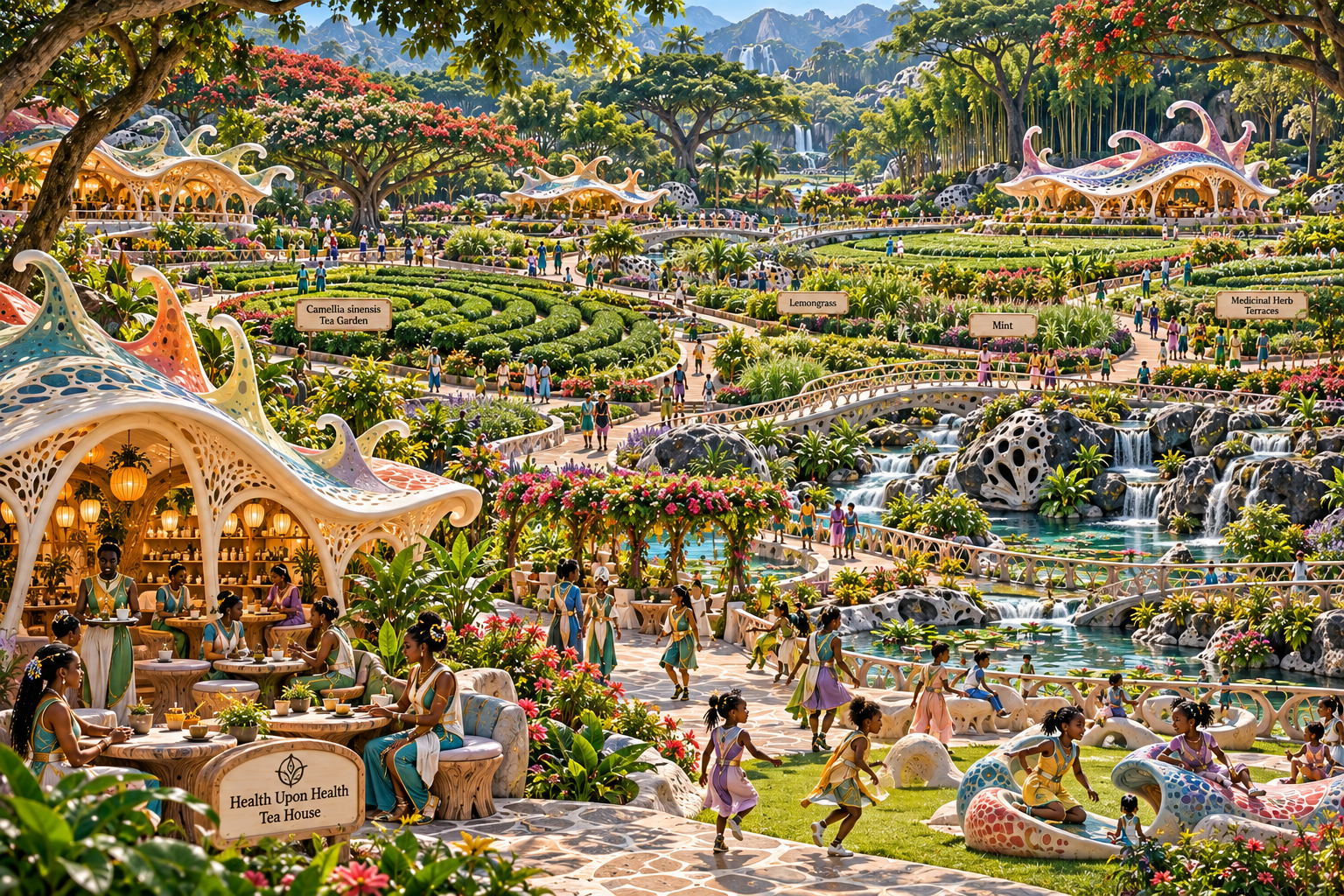
A Baby World is a public early-life environment designed for babies, toddlers, parents, grandparents, siblings, helpers, and young families to live part of the day with support around them.
It is not simply a place where children are dropped off. It is not a fenced soft-play room. It is not a plastic playground with baby colors. It is not a nursery attraction. It is not a daycare campus.
A Baby World is a living family-support landscape.
It may include:
- soft baby crawl lawns;
- toddler wobble paths;
- shallow water edges;
- parent rest porches;
- grandparent seating;
- sibling soft zones;
- Baby Edible Wonder Rings;
- nursing garden rooms;
- warm bowl porches;
- wash and reset stations;
- nap nest pockets;
- helper anchor points;
- Baby World character gardens;
- soft night-light routes;
- Pacorips-linked support coordination.
Everything is close because baby life is immediate.
A baby may need to crawl, then nurse, then nap. A toddler may want to touch water, then eat, then wash hands, then wobble again. A parent may need tea, rest, shade, a helper, a clean surface, and a quiet place to soothe a child. A grandparent may need a seat close enough to participate without being physically strained.
A Baby World gathers these needs into one beautiful, safe, public place.
A Baby World does not replace the family. It surrounds the family.
Why Babies Need Public Worlds
Babies are not separate from society. They are the beginning of society.
Before a child can read, work, vote, build, plant, sing, cook, design, or serve, that child first learns trust, movement, touch, sound, warmth, food, safety, faces, rhythm, and belonging.
Those early lessons do not happen only in the home. They happen everywhere the baby is carried, fed, washed, soothed, and allowed to explore.
If public life is hostile to babies, then public life becomes harder for families. Families stay home more. Parents become more exhausted. Grandparents are overburdened. Toddlers are treated as disruptive. Babies are treated as fragile objects to manage rather than young people learning the world.
Kezidek believes the opposite.
The baby years deserve:
- space;
- soft ground;
- safe water;
- warm food nearby;
- shade;
- rest;
- washing;
- help;
- beauty;
- gentle challenge;
- public dignity.
A Baby World gives babies their first experience of the kingdom as something warm, spacious, safe, and alive.
It also gives parents the message that they are not alone.
A Baby World Is Not Daycare
Daycare usually means the child is placed under the supervision of others while parents work or leave.
A Baby World is different.
Parents remain central. Families stay involved. Helpers assist. Grandparents participate. Siblings play nearby. Robots handle repetitive support tasks. Pacorips helps coordinate needs, but the family remains the heart of the experience.
A Baby World may include care support, but it is not built on separation. It is built on shared family life.
Its purpose is not simply to watch children. Its purpose is to strengthen early family life.
That means the design must consider the baby and the parent at the same time.
If a baby can crawl but the parent has nowhere comfortable to sit, the design has failed.
If a toddler can play but washing is far away, the design has failed.
If a mother can nurse but feels isolated, the design has failed.
If a father can bring a baby but feels like the space was not built for him, the design has failed.
If a grandparent can attend but has no shaded rest, the design has failed.
If the space looks beautiful but the ground is unsafe, the design has failed.
A Baby World must care for the whole young-family circle, not only entertain the child.
A Baby World Is Not a Playground
A playground is usually built around activity: climbing, running, sliding, swinging, jumping, and play.
A Baby World is built around early life.
Play is included, but play is not the whole purpose.
A baby needs more than entertainment. A baby needs soft movement, safe surfaces, sensory discovery, rest, feeding, washing, warmth, and adult closeness.
A toddler needs challenge, but not danger. A toddler needs steps sized for small feet, shallow water with safe edges, textured paths, things to hold, places to pause, and adults close enough to support without hovering over every movement.
A parent needs sightlines. A parent needs shade. A parent needs a place to sit. A parent needs food nearby. A parent needs to wash hands without packing up everything and leaving the area. A parent needs to know help is close, but not intrusive.
So the Baby World is designed as an ecology of care.
It is not one play structure. It is a living arrangement of:
- movement zones;
- rest zones;
- wash zones;
- feeding zones;
- soft challenge zones;
- sensory discovery zones;
- parent support zones;
- helper routes;
- safe service paths;
- beautiful architectural shelters.
A playground says, “Go play.”
A Baby World says, “Grow here, safely, with your family near.”
Soft Crawl Lawns
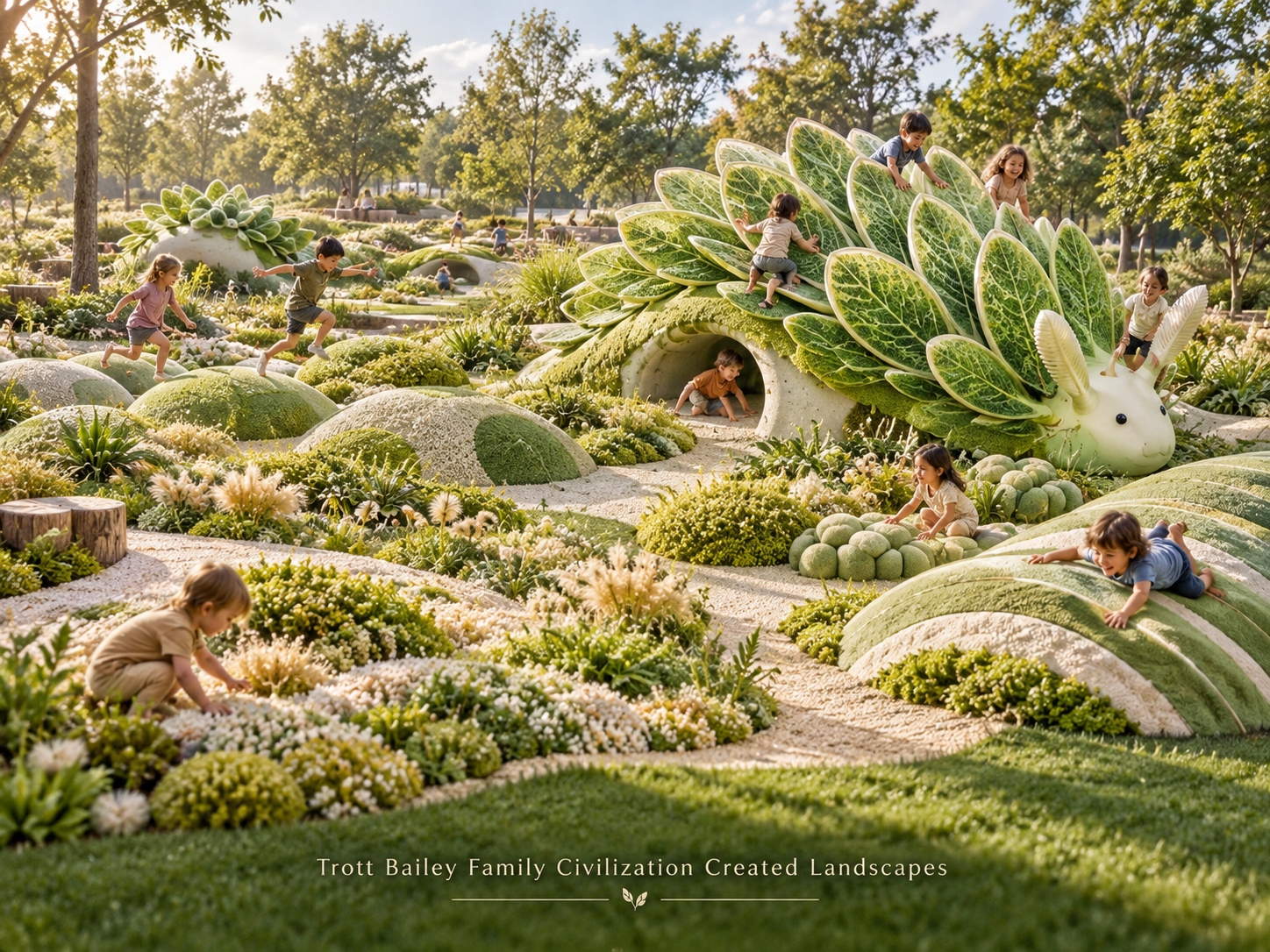
The first public ground a baby meets should not be hard, dirty, sharp, or careless.
Kezidek Baby Worlds use soft crawl lawns and baby-safe ground systems so babies can explore without every movement becoming a crisis.
These lawns are not ordinary grass patches. They are part of the district’s ground-care system.
They should be:
- soft enough for crawling;
- clean enough for supervised baby contact;
- shaded enough for long use;
- drained enough after rain;
- connected to wash support;
- visible from parent seating;
- protected from service routes;
- surrounded by gentle boundaries rather than harsh barriers.
Soft crawl lawns allow babies to meet the world through hands, knees, elbows, cheeks, feet, and curiosity.
This is not a minor detail. Ground is one of the first teachers.
In Kezidek, care begins underfoot.
Toddler Wobble Paths
Toddlers do not move like adults.
They wobble. They stop suddenly. They run without warning. They crouch. They reach. They fall. They get distracted by flowers, water, stones, birds, lights, and other children.
A Baby World must design for this truth instead of fighting it.
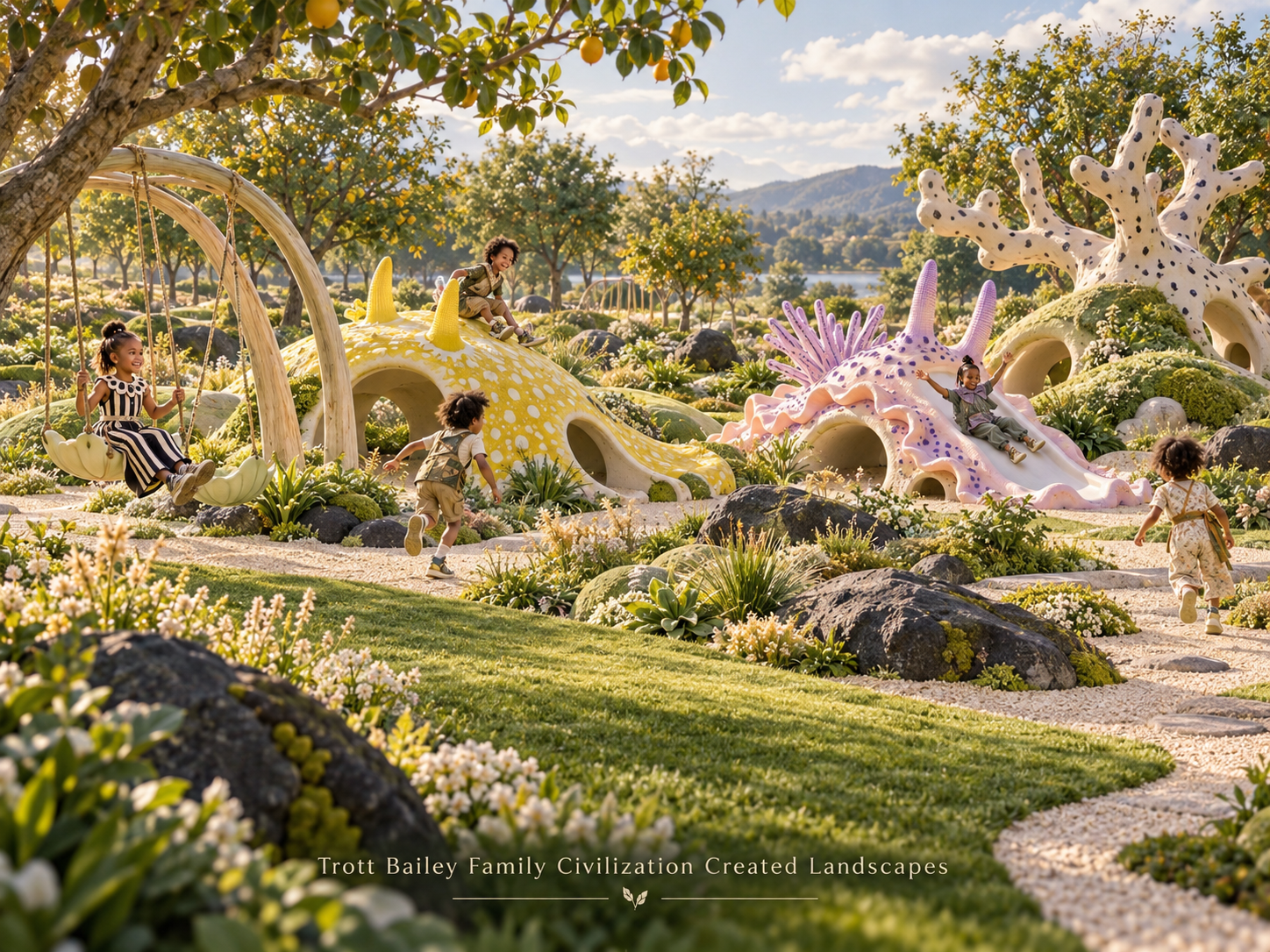
Toddler Wobble Paths are soft, visible, gently challenging paths for early walkers. They may include slight curves, low holding edges, textured walking zones, soft stepping stones, shallow bridges, small ramps, and nearby adult seating.
The goal is not to remove every challenge. The goal is to make the challenge honest, visible, and safe.
Kezidek does not want toddlers trapped in flat emptiness. It wants toddlers to build balance, confidence, and movement intelligence.
But the district also does not let hidden danger pretend to be adventure.
A Baby World gives toddlers challenge without betrayal.
Shallow Water and Safe River Edges
Water is powerful in early life.
Babies watch it. Toddlers splash it. Parents use it to wash hands, cool bodies, calm children, and create gentle rhythm.
Kezidek Baby Worlds include shallow water areas, water gardens, and baby-safe river edges where families can experience water without the space turning into a dangerous pool environment.
These water areas must be designed with care:
- shallow edges;
- soft steps;
- non-slip surfaces;
- visible depth changes;
- parent seating close by;
- helper sightlines;
- wash stations nearby;
- clear separation from deeper district water systems;
- gentle planting that does not hide hazards.
The water should feel alive, not frightening.
A baby can sit with a parent at the edge. A toddler can splash under supervision. A family can walk slowly along a shallow river. Grandparents can sit nearby in shade. Helpers can guide without turning the space into a controlled institution.
The water belongs to family life.
Parent Rest Porches
Many family spaces are designed as if parents do not get tired.
Kezidek knows parents get tired.
They get tired from carrying babies, watching toddlers, recovering from birth, waking at night, nursing, working, worrying, and moving through the day with children attached to their bodies.
So every strong Baby World needs Parent Rest Porches.
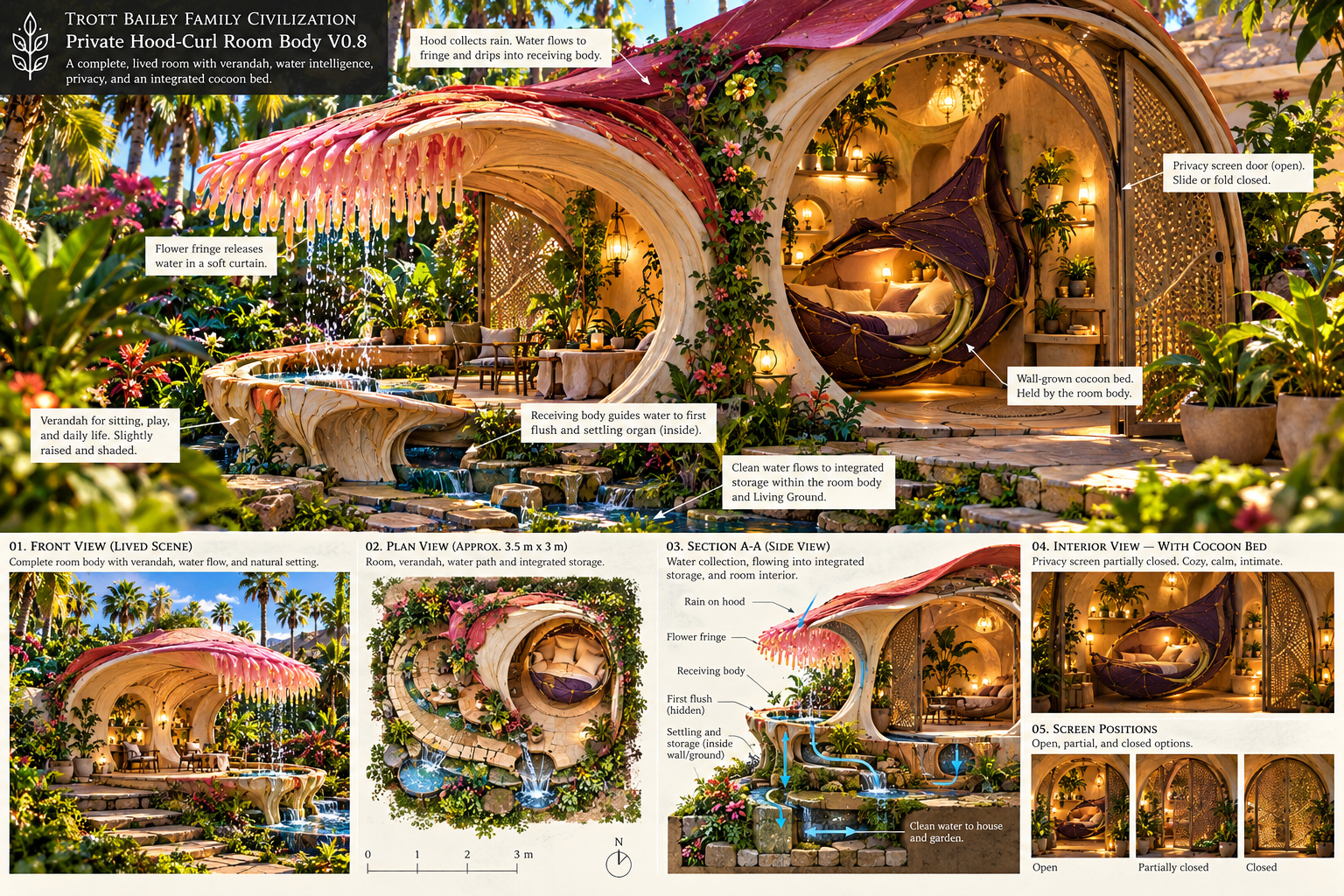
These are shaded, beautiful, visible places where parents can sit while still remaining connected to their children.
A parent rest porch may include:
- soft seating;
- stroller space;
- view of crawl lawns;
- nearby warm food;
- nearby wash access;
- nursing-friendly corners;
- grandparent seating;
- quiet conversation areas;
- helper call points;
- gentle shade and airflow.
Rest is not laziness in Kezidek.
Rest is part of keeping the family strong.
A Baby World that does not care for parents is not truly caring for babies.
Grandparent Seating and Multi-Generation Care
In many families, grandparents are a major part of baby life.
They hold babies. They tell stories. They watch toddlers. They help tired parents. They bring patience, memory, and tenderness.
But public spaces often forget their bodies.
Kezidek Baby Worlds must include grandparent seating that is close, shaded, comfortable, and dignified.
Grandparents should not be forced to stand on the edge or sit far away from the action. They should be able to participate without being physically strained.
Good Baby World design makes multi-generation care natural.
A grandparent can sit near a crawl lawn. A toddler can bring a flower. A parent can rest nearby. A helper can offer tea. A baby can be passed from arms to arms inside a safe, beautiful place.
This is not a decorative family image. It is infrastructure for intergenerational strength.
Baby World Characters
Kezidek Baby Worlds also include the kingdom’s child-authored Baby World character system.
These characters are not random mascots. They are gentle companions that help young children understand movement, turn-taking, comfort, discovery, and care.
The approved Baby World character family includes:
- Rosco — Garden Guide;
- Janga Mo-A — Quiet Nest Friend;
- Moo-Ba — Gate and Turn-Taking Friend;
- Fly-Moo — Arrival and Movement Friend;
- Lazza-Zooza — Banana-Fish Ride Friend;
- SaPo — Compost Return Friend;
- Ele-boo-boo — Sensory Discovery Friend.
Each character should appear in Kezidek as part of lived child culture.
They can appear as soft sculptural companions in gardens, small ride forms, signage friends, story markers, comfort objects, gentle robot-adjacent helpers, or child-scale teaching figures.
They help children understand the district through friendship instead of instruction alone.
A child may follow Rosco toward the garden. Moo-Ba may help with taking turns at a gate. SaPo may make compost return feel friendly instead of disgusting. Ele-boo-boo may invite sensory discovery. Janga Mo-A may mark quiet rest zones.
This is child-authored civilization language.
In Baby Worlds, children do not only learn rules. They meet friends who make care understandable.
Mr. and Mrs. Rasta Robot
Kezidek also uses robot helpers, but the district should not use generic robots.
The approved Baby World robot helpers are Mr. Rasta Robot and Mrs. Rasta Robot.
They were originally built for Baby World, but they can also support Kezidek family-life scenes throughout the district.
Their role is not to replace parents, helpers, or human warmth.
Their role is to carry repetition.
They may help with:
- bringing towels;
- carrying warm bowls;
- returning Doon items;
- moving clean cloths;
- helping with compost return;
- restocking baby supplies;
- guiding families to open support stations;
- helping Baby World characters appear in playful ways;
- reducing repetitive burden on human helpers.
But they do not discipline children. They do not replace emotional judgment. They do not become caregivers. They do not turn Baby World into a cold technology zone.
Kezidek’s helper principle remains:
Humans carry warmth. Robots carry repetition. Pacorips carries information. Field visits carry truth. Parents carry authority.
Warm Food Near Baby Worlds
Babies and toddlers make hunger unpredictable.
A family may arrive after a long morning. A baby may need feeding. A toddler may need a soft bowl after water play. A nursing mother may need something warm. A father may need tea while walking a stroller. A grandparent may need soup and a shaded seat.
That is why Baby Worlds must connect to Kezidek’s warm food system.
Warm food near Baby Worlds may include:
- porridges;
- soups;
- broths;
- soft rice bowls;
- sweet potato mash;
- corn porridge;
- taro and yam bowls;
- soft bean soups;
- coconut milk porridges;
- baby transition foods;
- toddler bowls;
- postpartum recovery bowls;
- night warm food support.
The goal is not to turn every Baby World into a food court.
The goal is to make nourishment close enough that families do not have to break the day apart just to eat.
In Kezidek, warm food should never be far from young-family life.
Baby Edible Wonder Rings Inside Baby Worlds
Some Baby Worlds include Baby Edible Wonder Rings.
These are food-discovery gardens where babies and toddlers meet food as living wonder under careful guidance.
Children may touch safe leaves, smell herbs, see roots growing, wash hands, watch food preparation, and connect living plants to warm bowls.
The learning arc is:
Living plant → safe touch → clean hands → prepared food → warm bowl → family table.
This does not mean babies are allowed to eat anything in the garden.
Kezidek must carefully separate:
- touch-only zones;
- smell zones;
- taste-safe zones;
- prepared-only foods;
- parent-approved tasting;
- wash-before-eating rituals;
- choking-risk controls;
- Keslev-verified plants.
Food discovery must be joyful, but it must also be disciplined.
Kezidek’s food rule is simple:
Food begins as wonder, but safety decides how it is touched, tasted, washed, prepared, and served.
Architecture Must Be Trott Bailey
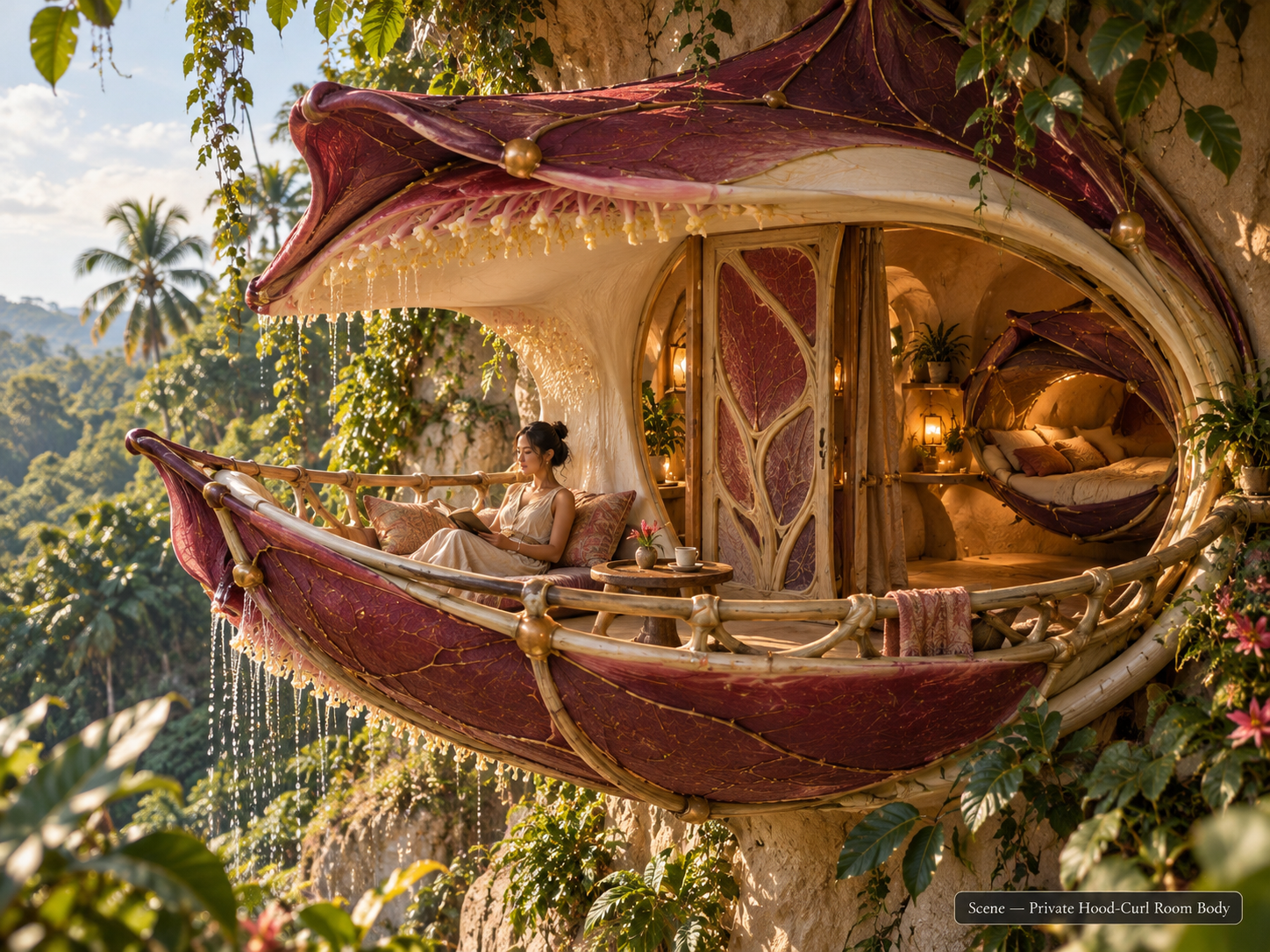
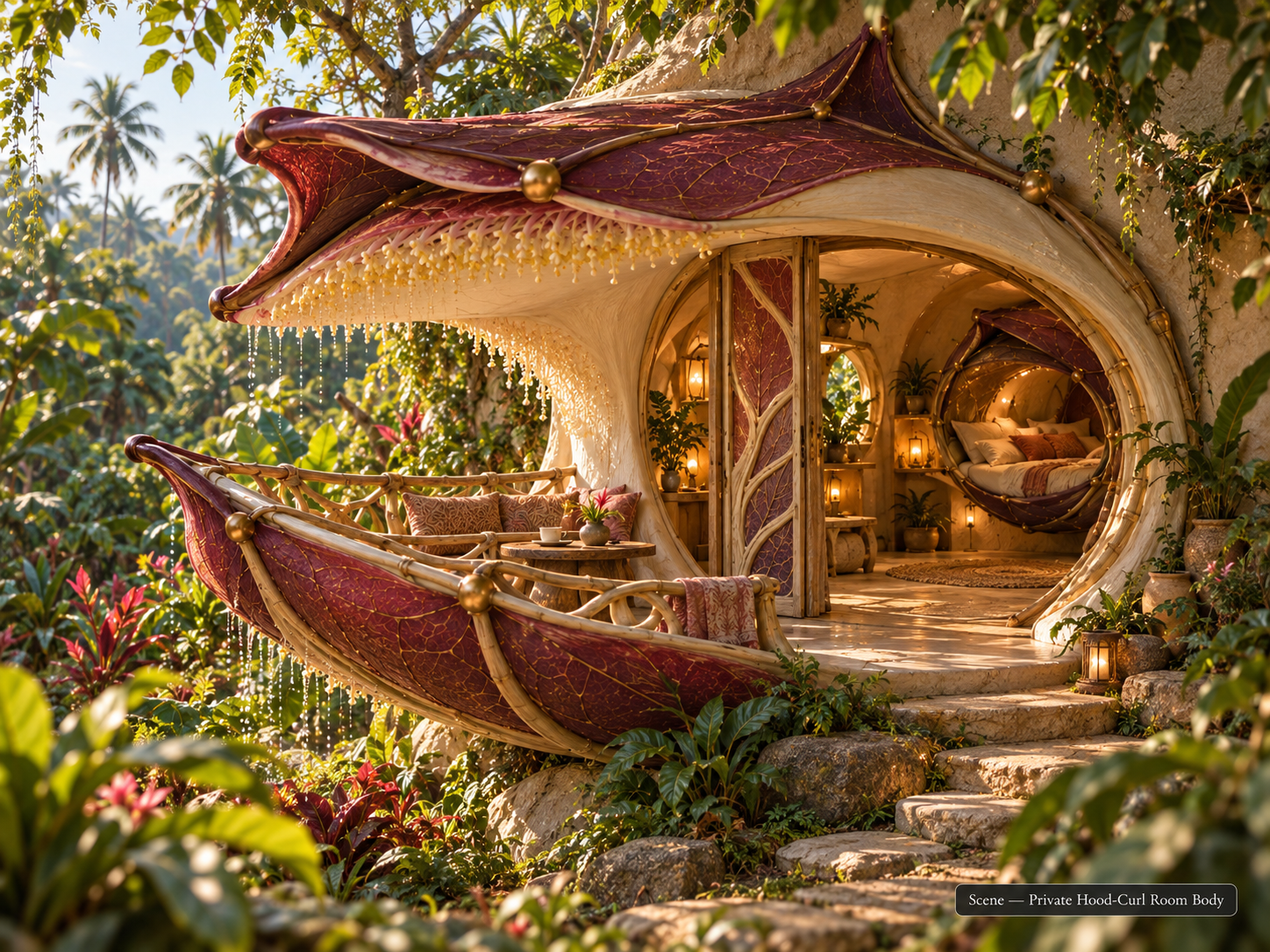
A Baby World cannot look like a generic nursery park.
It must clearly belong to the Trott Bailey Family Kingdom.
That means the architecture must be visible, authored, and specific.
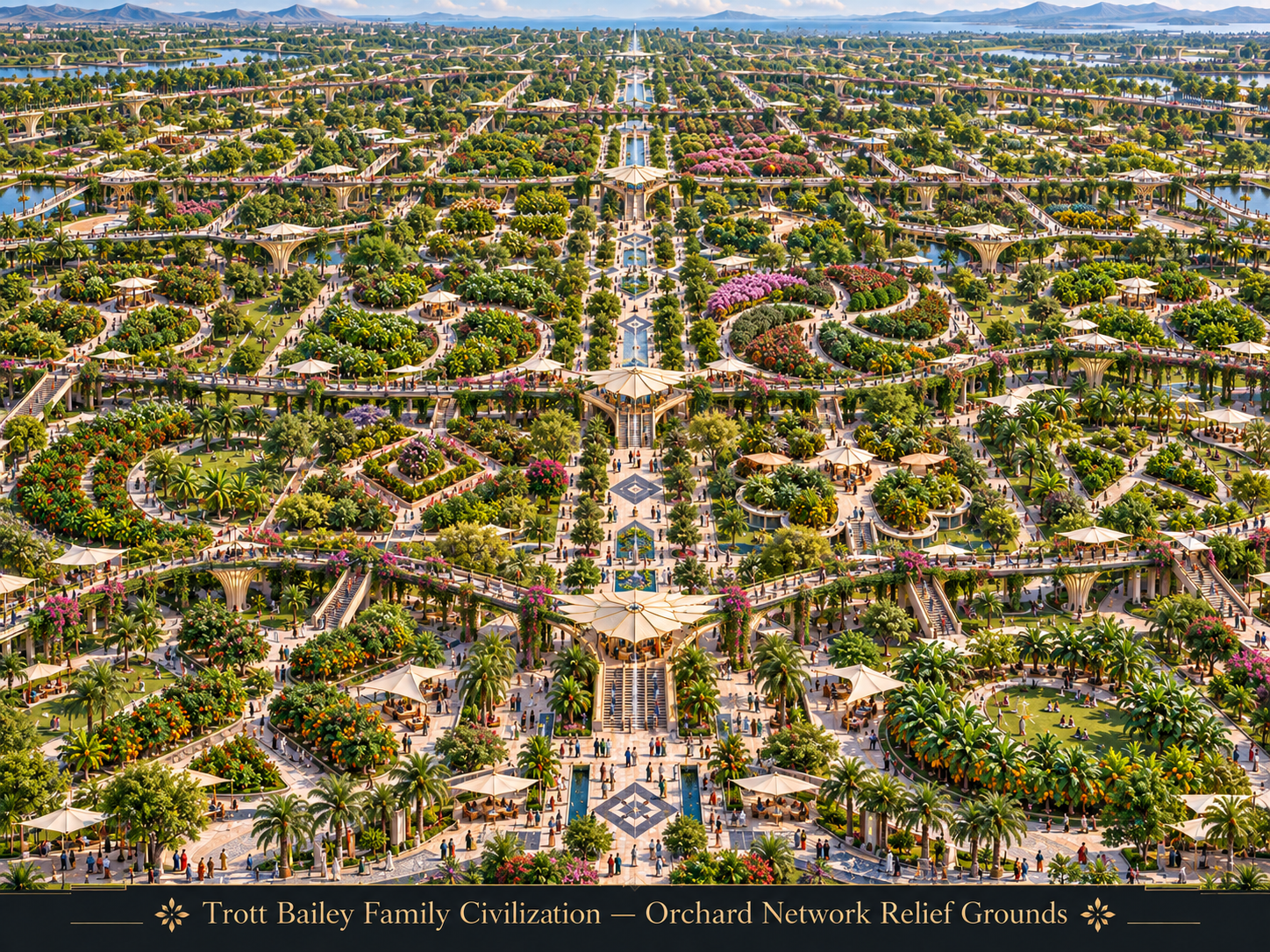
Baby Worlds should use the kingdom’s architectural library, including roof families and components such as:
- Pinned-Wing Comb-Crest Roof;
- Pleated Reef Fan Roof;
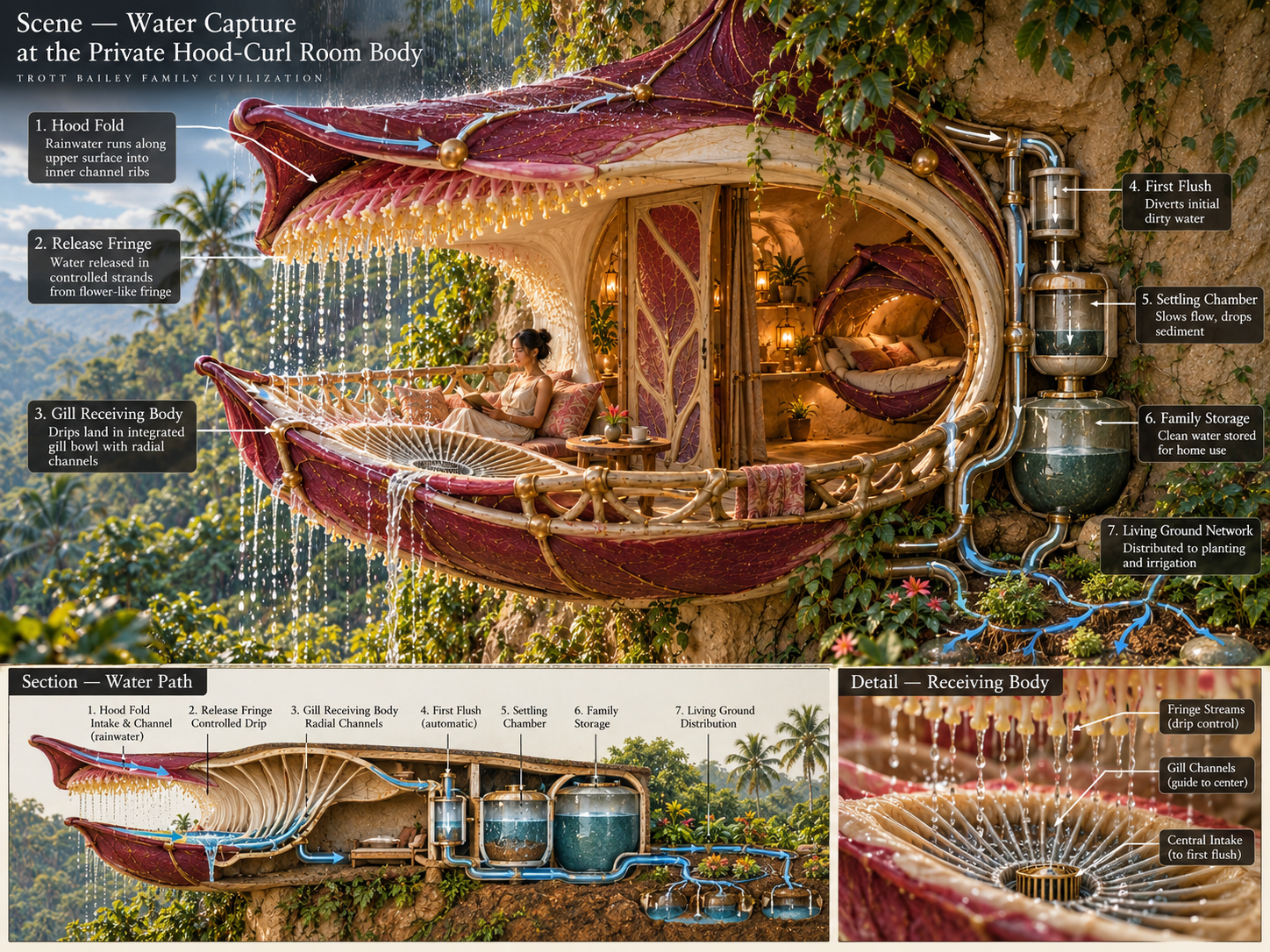
- Rain-Catchment Spine Roof;
- Broad Leaf Canopy Roof;
- Scale-Crown Hover Roof;
- Mushroom Gill Canopy Roof;
- Reptilian Umbrella Roof with softer curl tips;
- Flower Orb railings;
- Soft Palm-Fan railings;
- Dapple Stack columns;
- Open Palm Hand stair logic;
- carved patterned floors;
- biological pathway stones;
- lantern posts and soft night-light dots;
- Pink-Mottle Snowleaf Veil planting;
- Warm Bowl Hearth bodies;
- Cloud-Nest Civic bodies;
- Soft Water-Cradle edges.
This matters because babies should not be given cheap, generic, temporary-looking spaces while adult public buildings receive beauty and authorship.
The baby years deserve architecture.
Not pasted decoration. Not nursery wallpaper. Not random fantasy buildings.
Real Trott Bailey architecture.
A Baby World should look like the kingdom took early life seriously enough to build beautifully for it.
Families Must Dress Like They Belong to the Kingdom
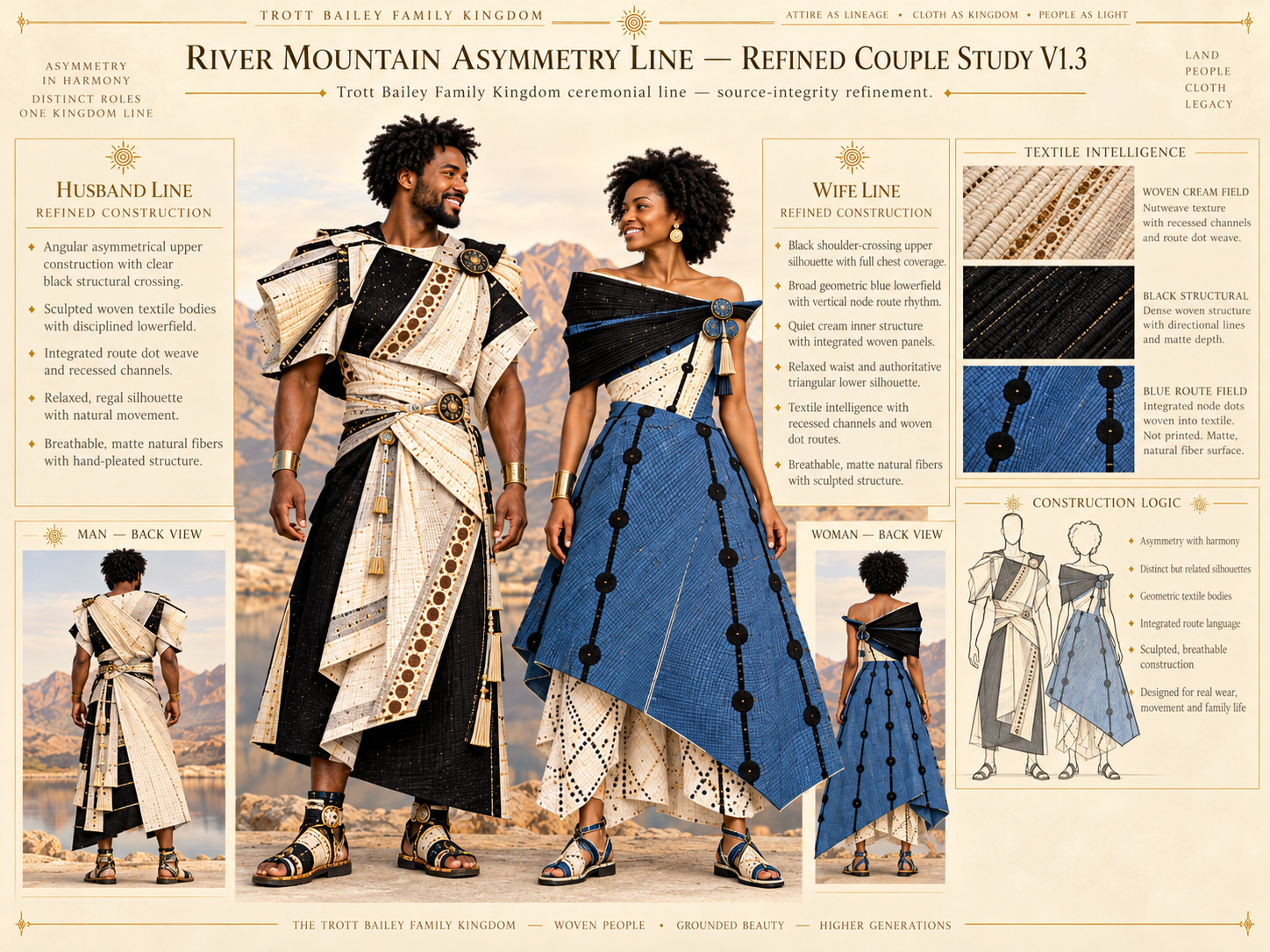
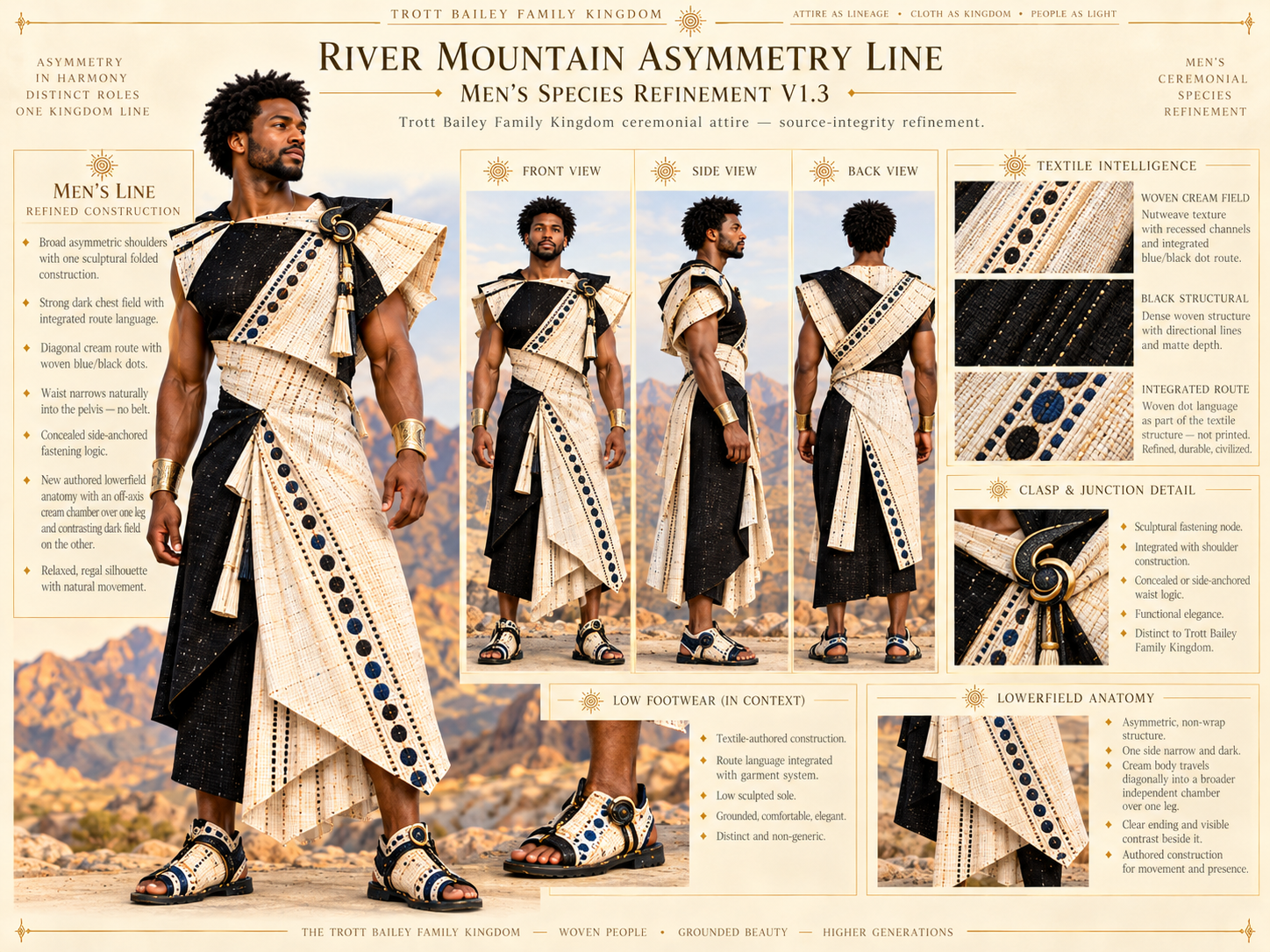
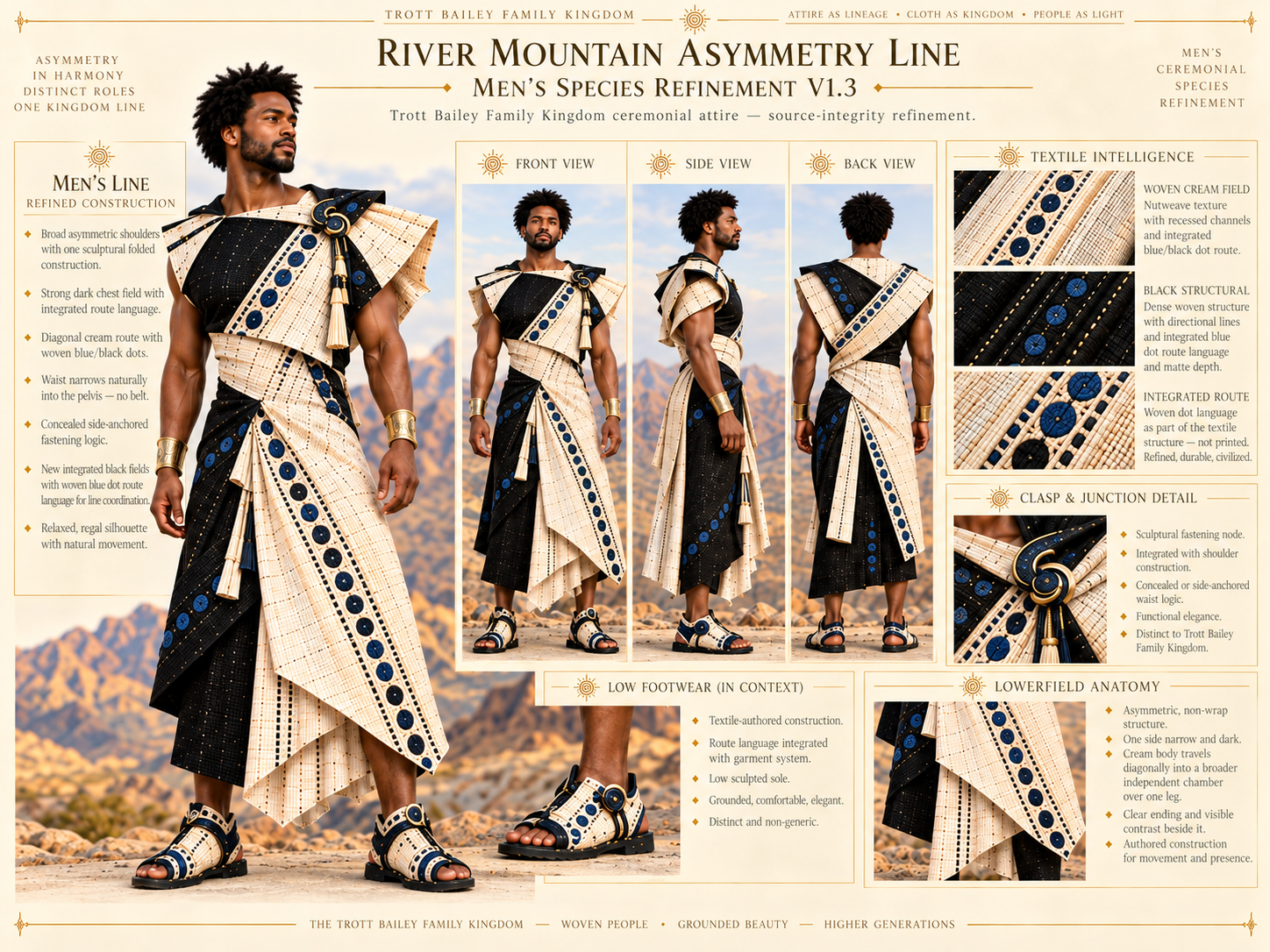
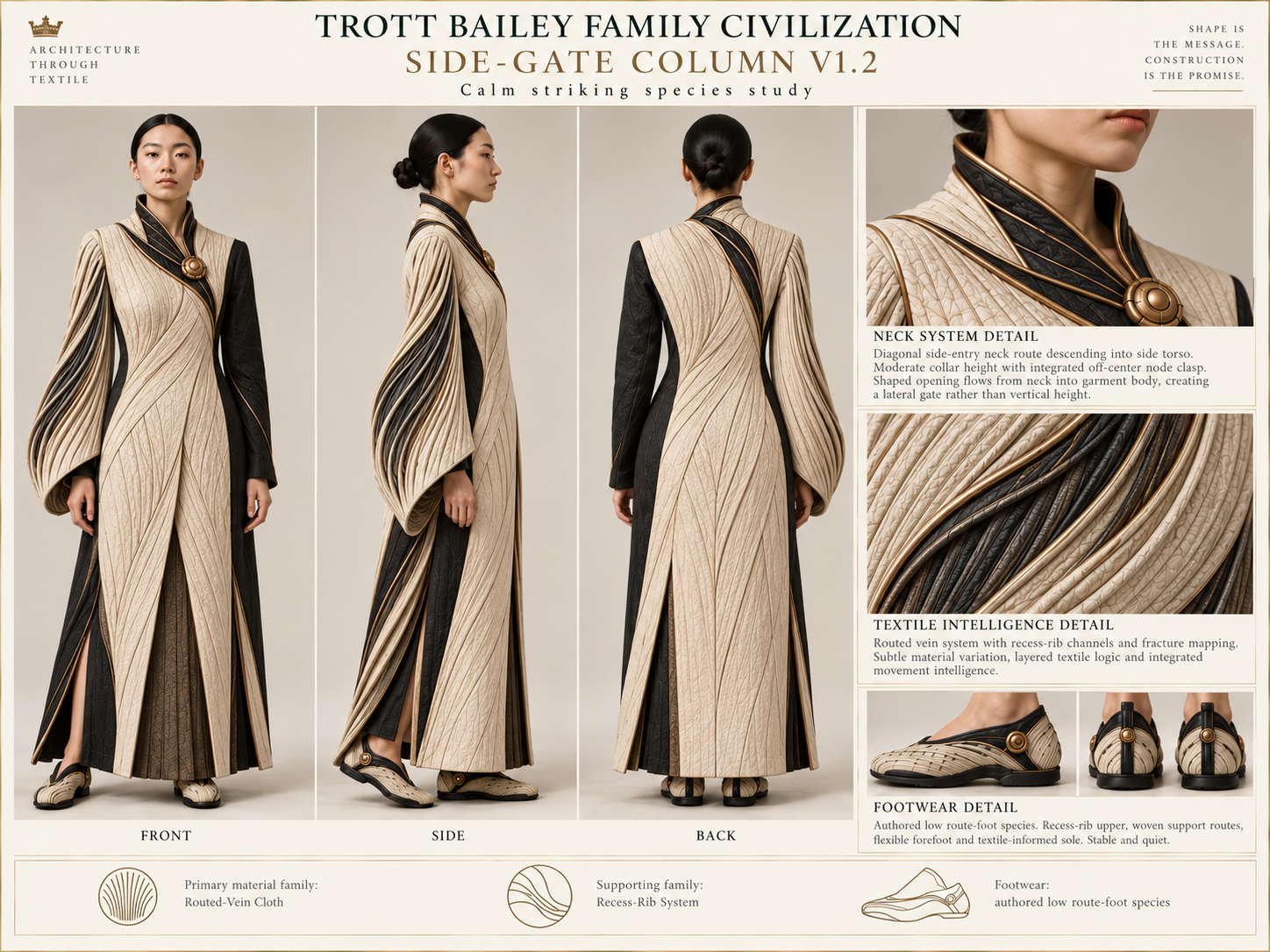
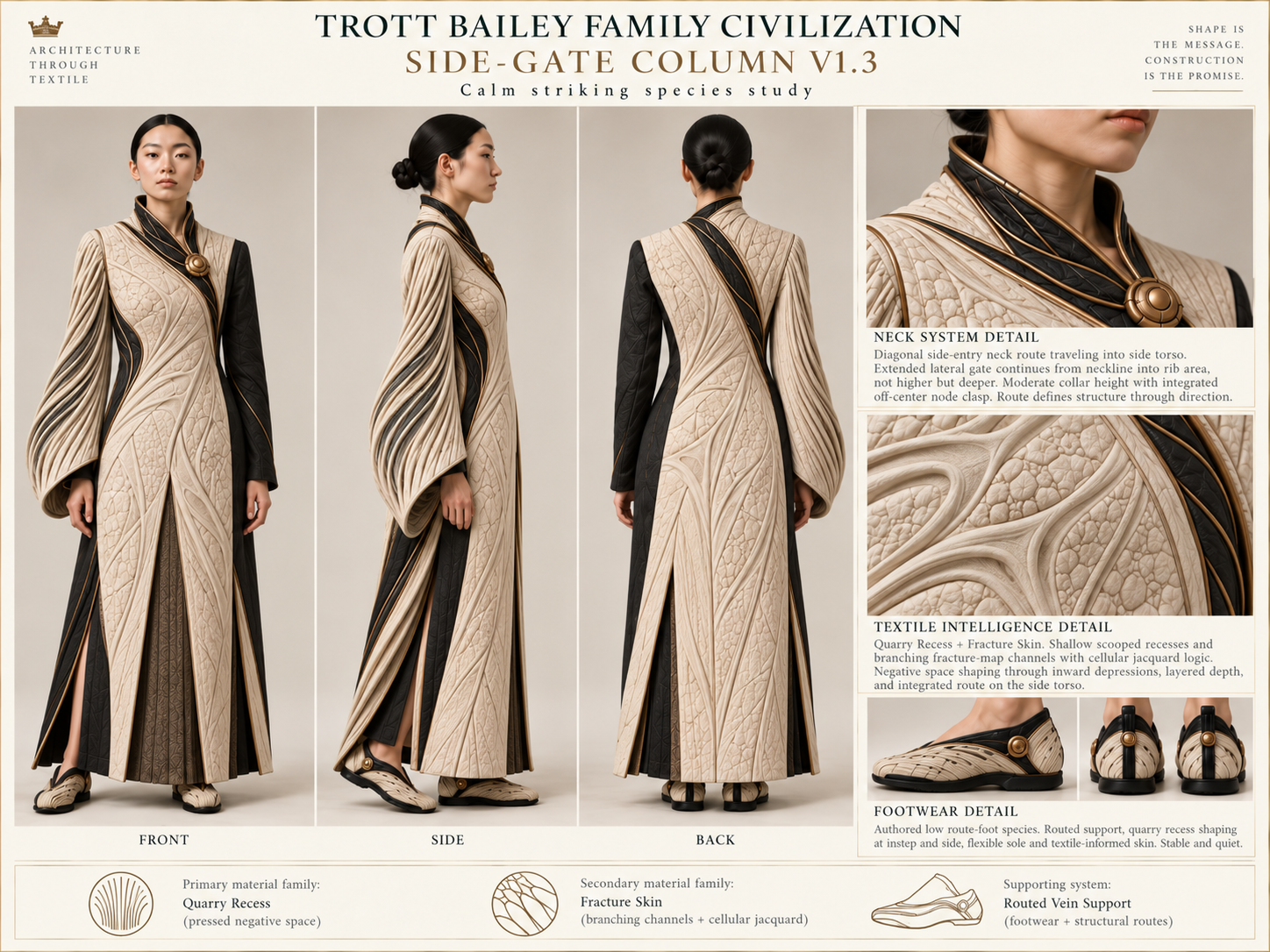
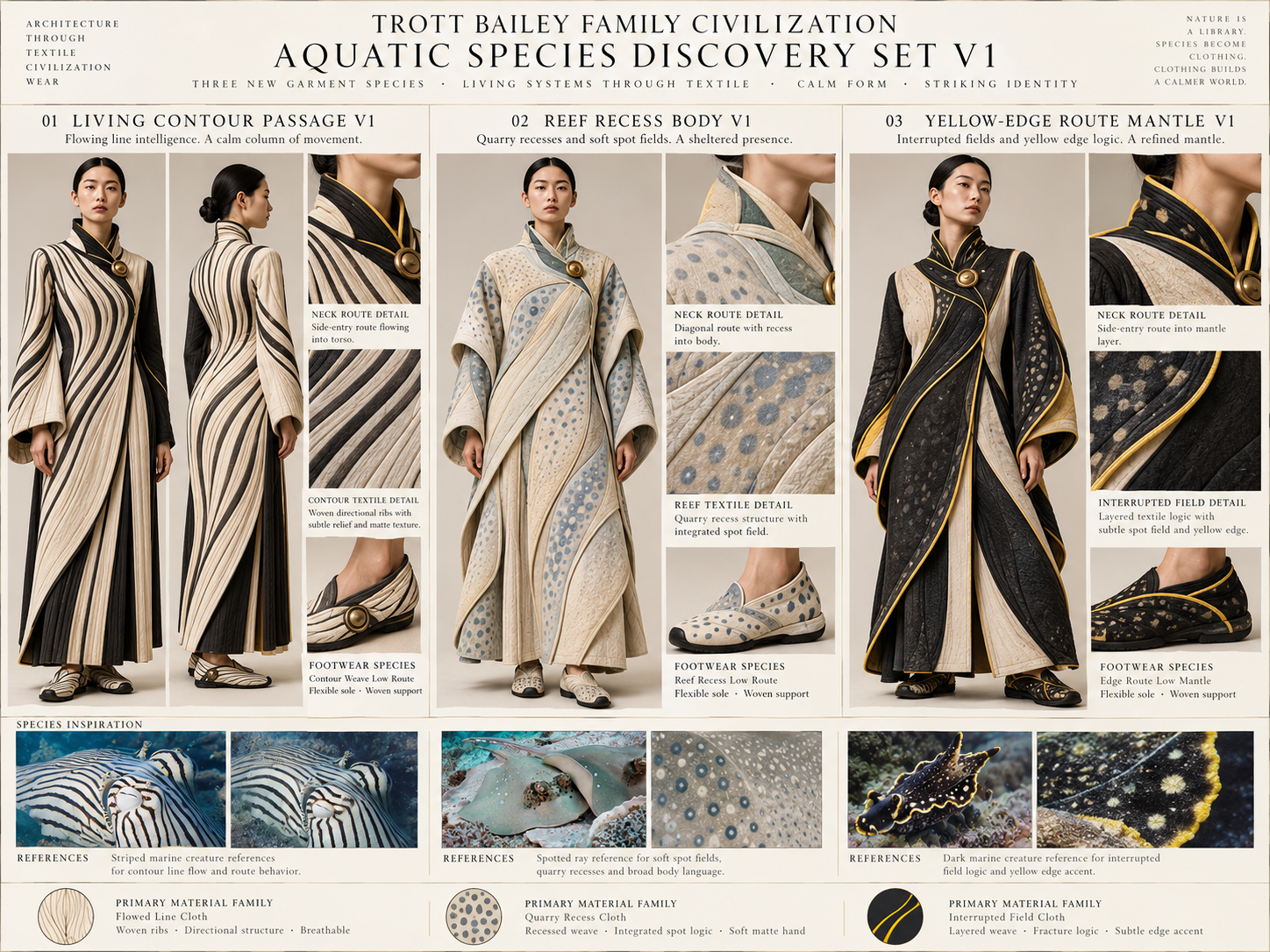
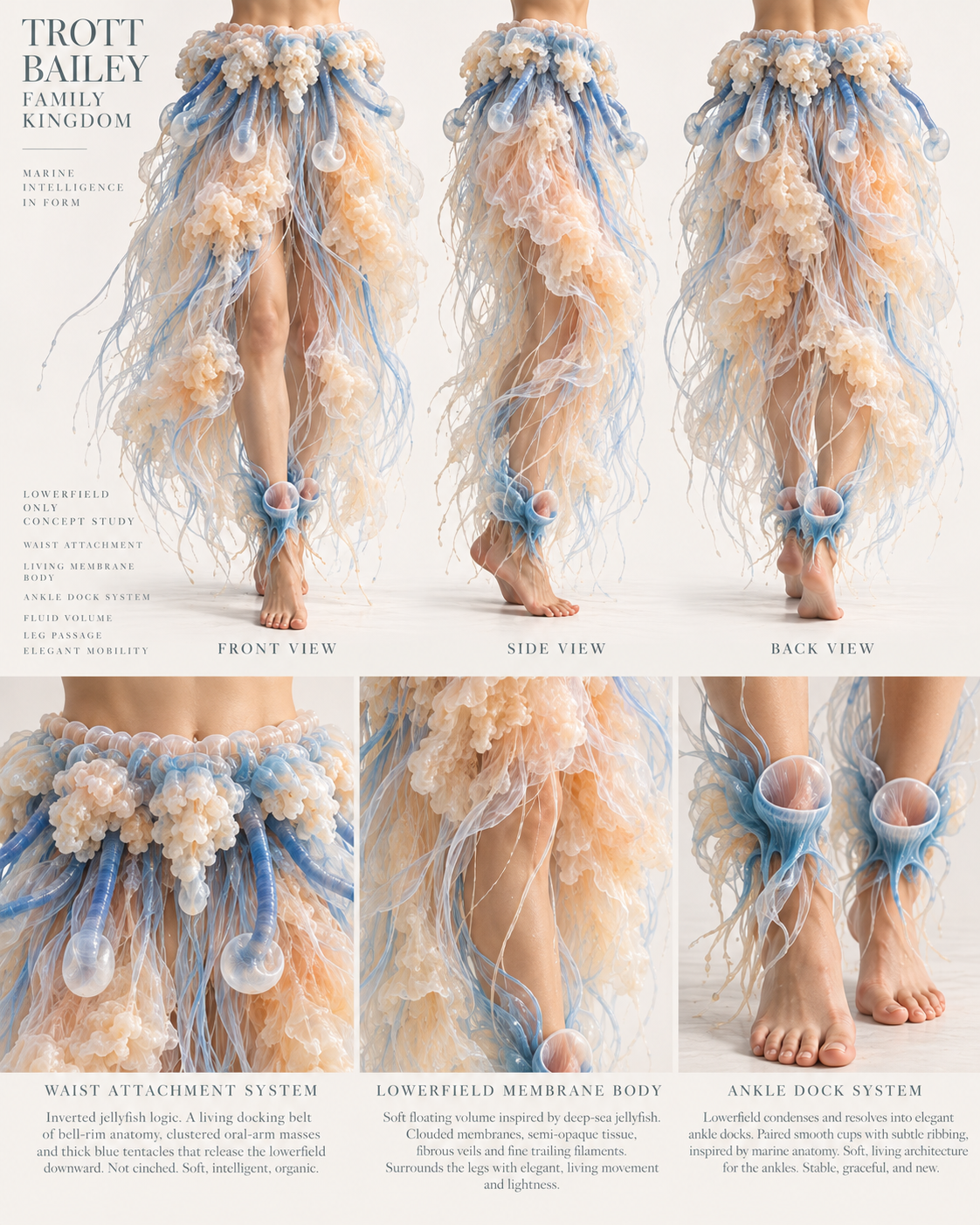
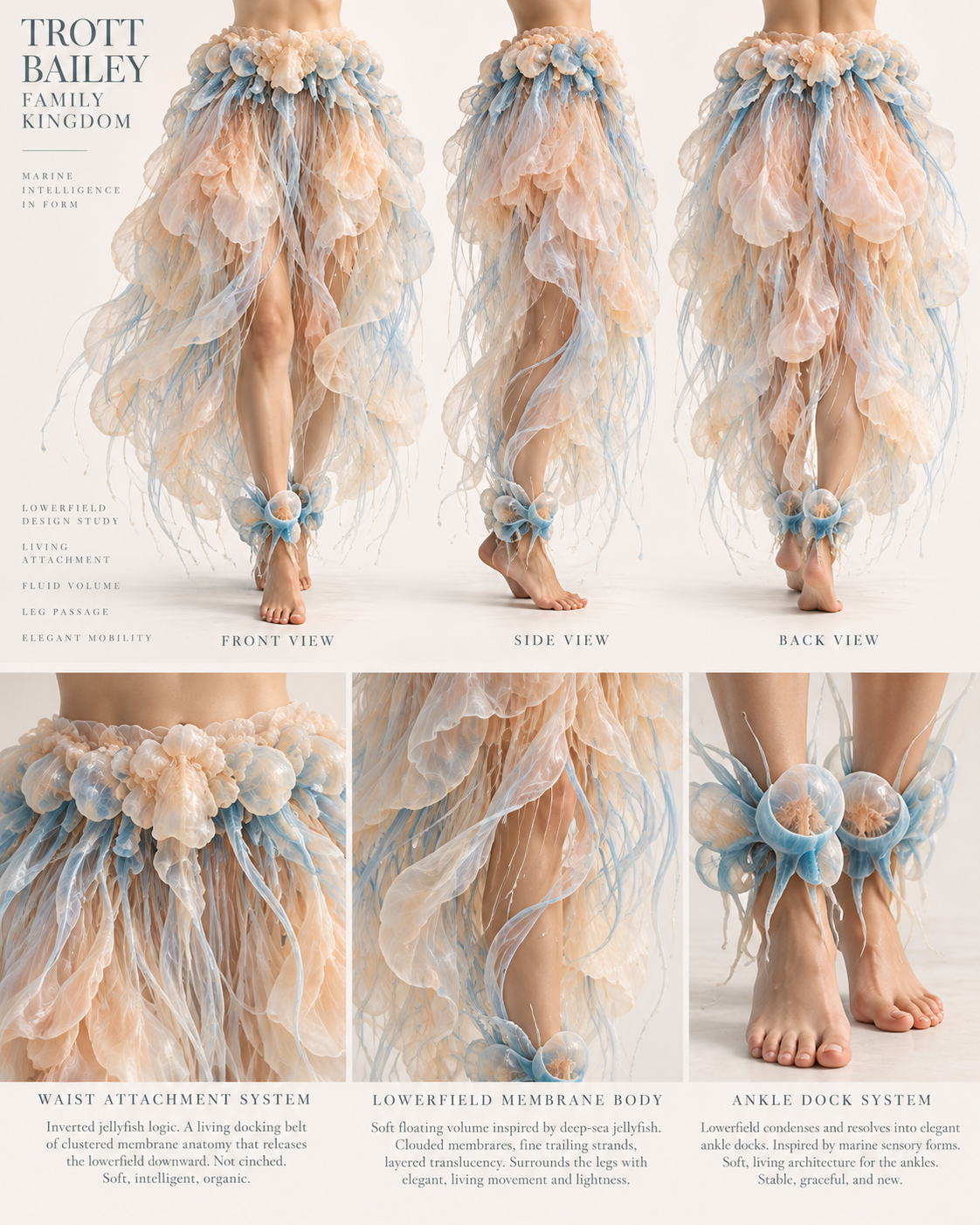
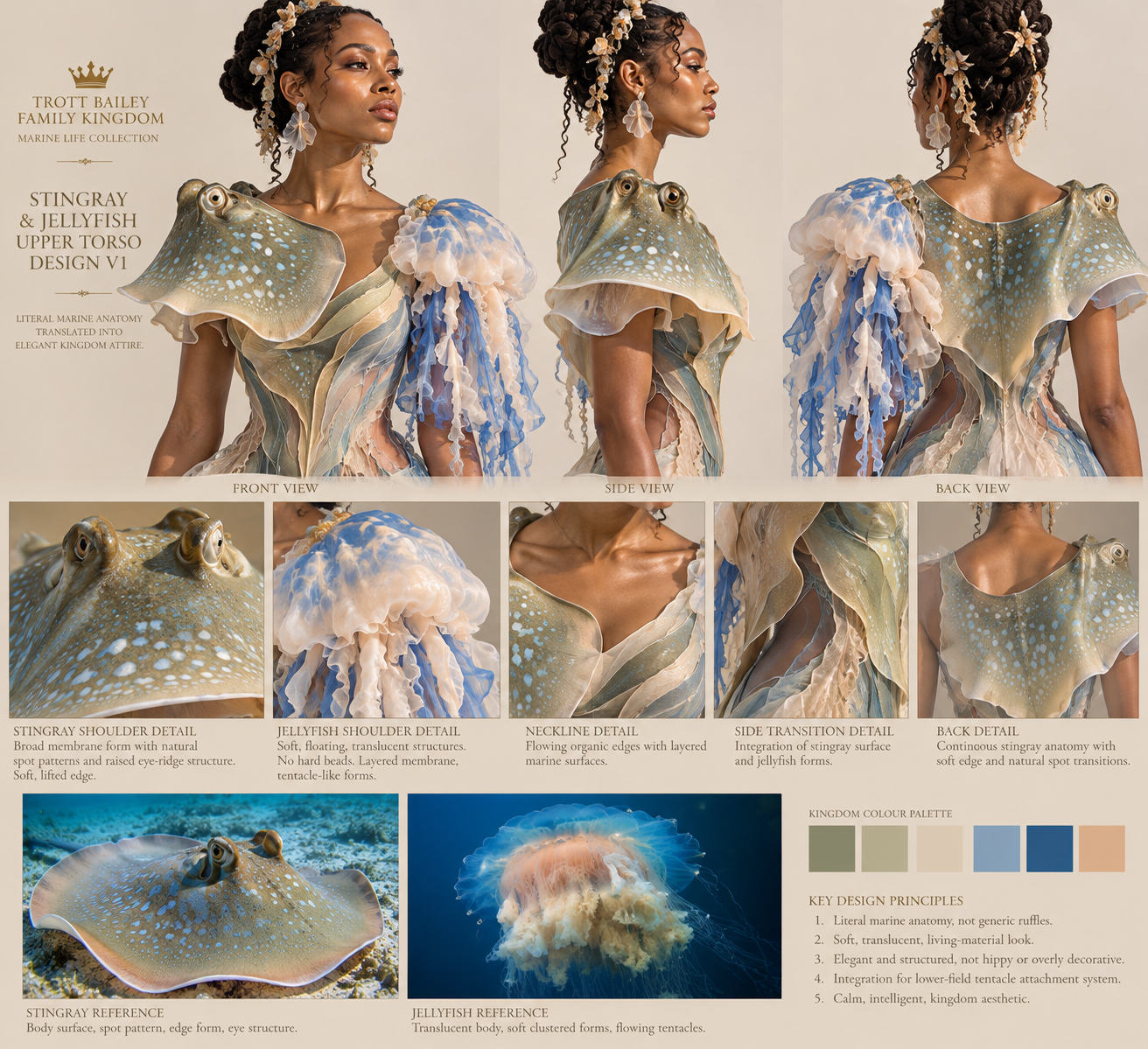
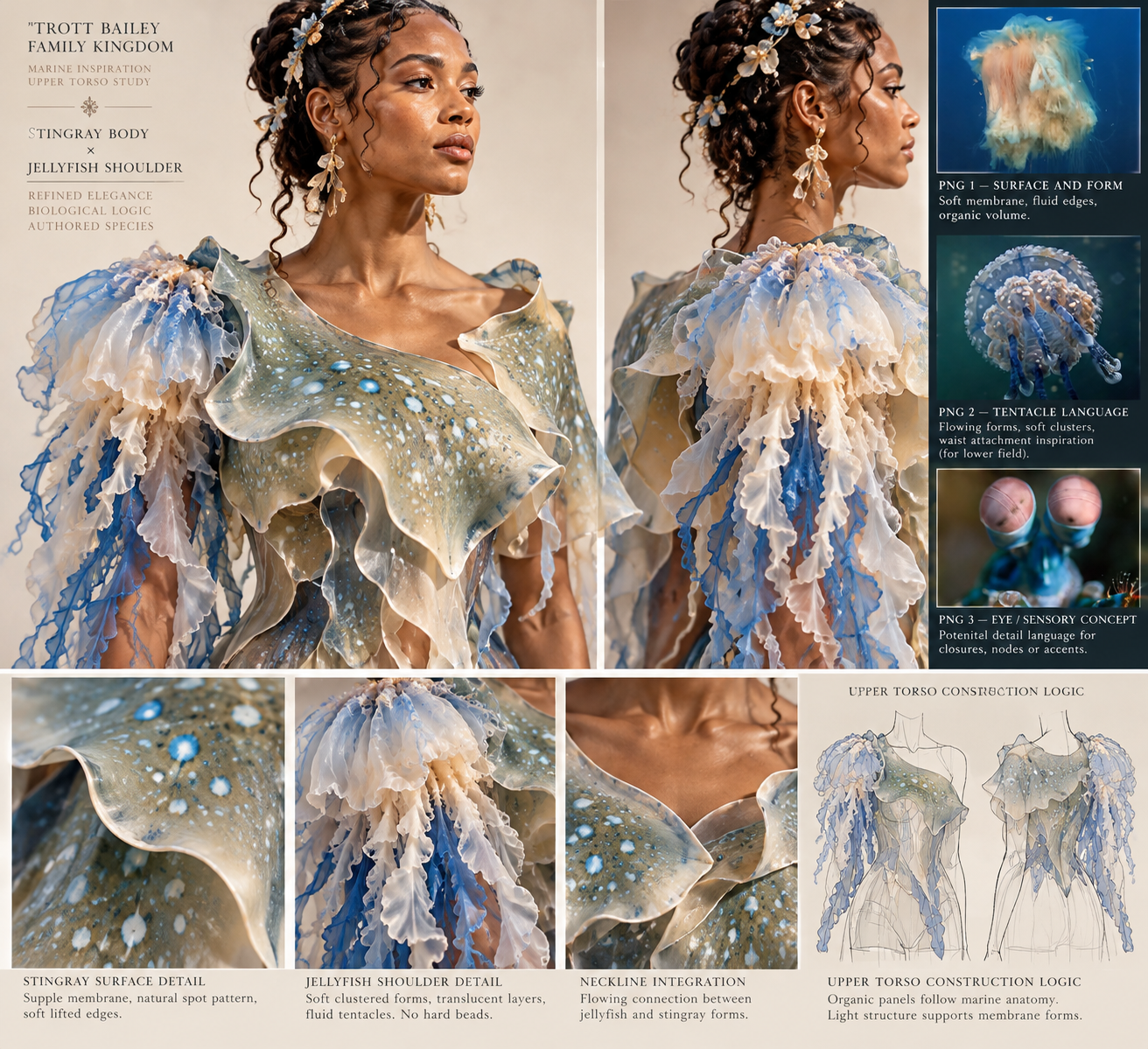
Baby World scenes must also show Trott Bailey Kingdom fashion.
Parents should not appear in generic modern casual clothes. Helpers should not look like daycare workers. Children should not look like random stock-photo children. Grandparents should not look like background extras.
The clothing must show that this is a civilization with its own fashion language.
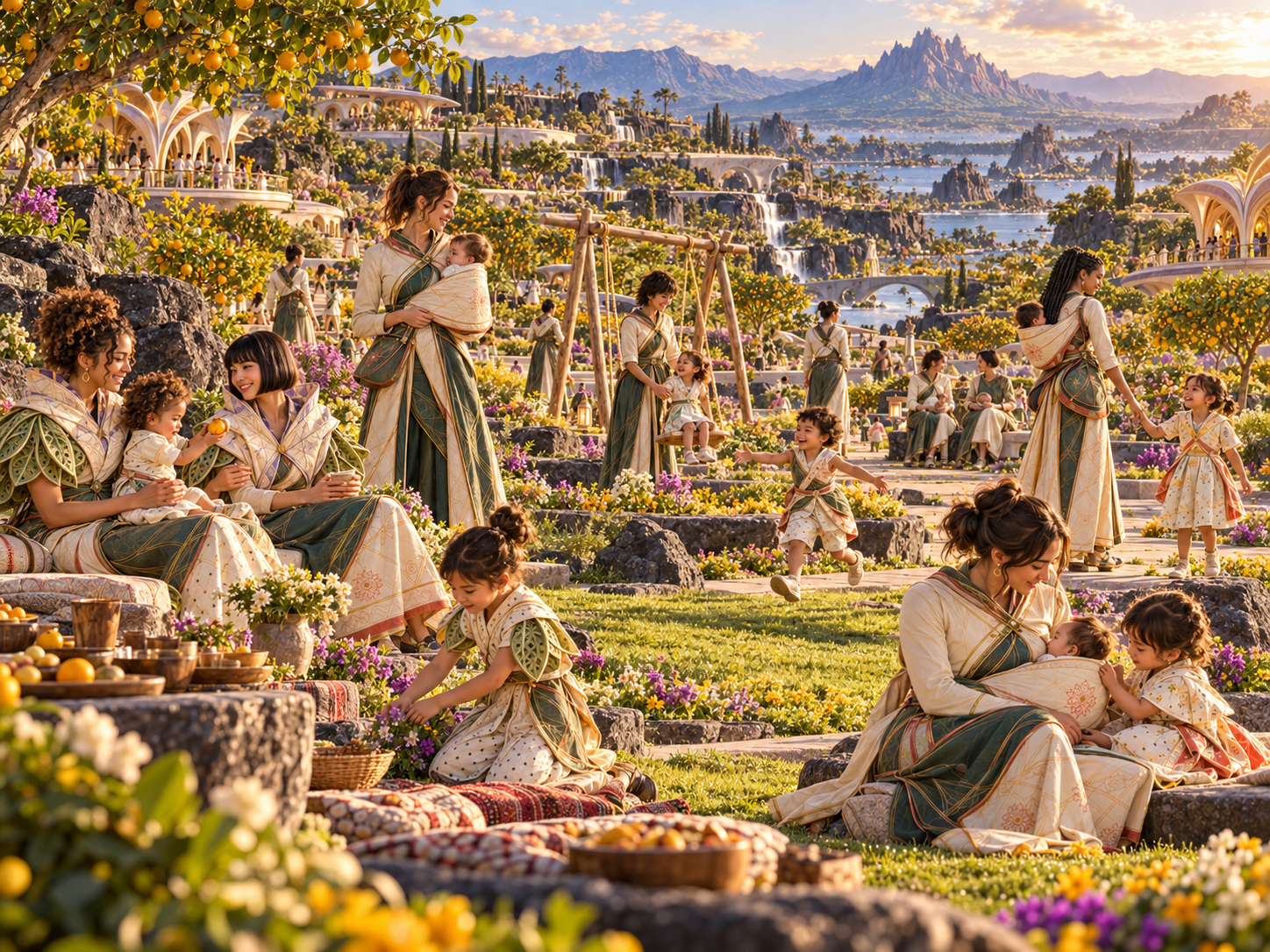
Families may wear soft public-life Trott Bailey attire with routed panels, gentle waist systems, breathable fabrics, ceremonial-but-wearable details, and kingdom-authored footwear.
Helpers should wear role-correct Shubaka uniforms. Baby World Stewards should look gentle, capable, warm, and useful, not like nursery staff.
Parents should look beautiful but practical enough to sit, walk, carry, nurse, feed, soothe, and play.
The goal is not costume.
The goal is daily-life kingdom fashion.
In Kezidek, even ordinary baby life should look like it belongs to the Trott Bailey Family Kingdom.
Kezidek Is Global
Kezidek is a global district. It welcomes families of all races.
Baby Worlds should show this clearly.
They should include Black families, Asian families, White families, South Asian families, Latino families, Middle Eastern families, mixed families, and grandparents from different backgrounds.
This diversity should not be hidden far in the background. It should be visible in the families, babies, toddlers, helpers, grandparents, and public life of the district.
The kingdom standard is not one family type. It is global family dignity.
Kezidek does not belong to one race. It belongs to young families across the kingdom.
One kingdom. Global families. One standard of care.
Space Matters
A Baby World must not feel overcrowded.
Young families need room to breathe.
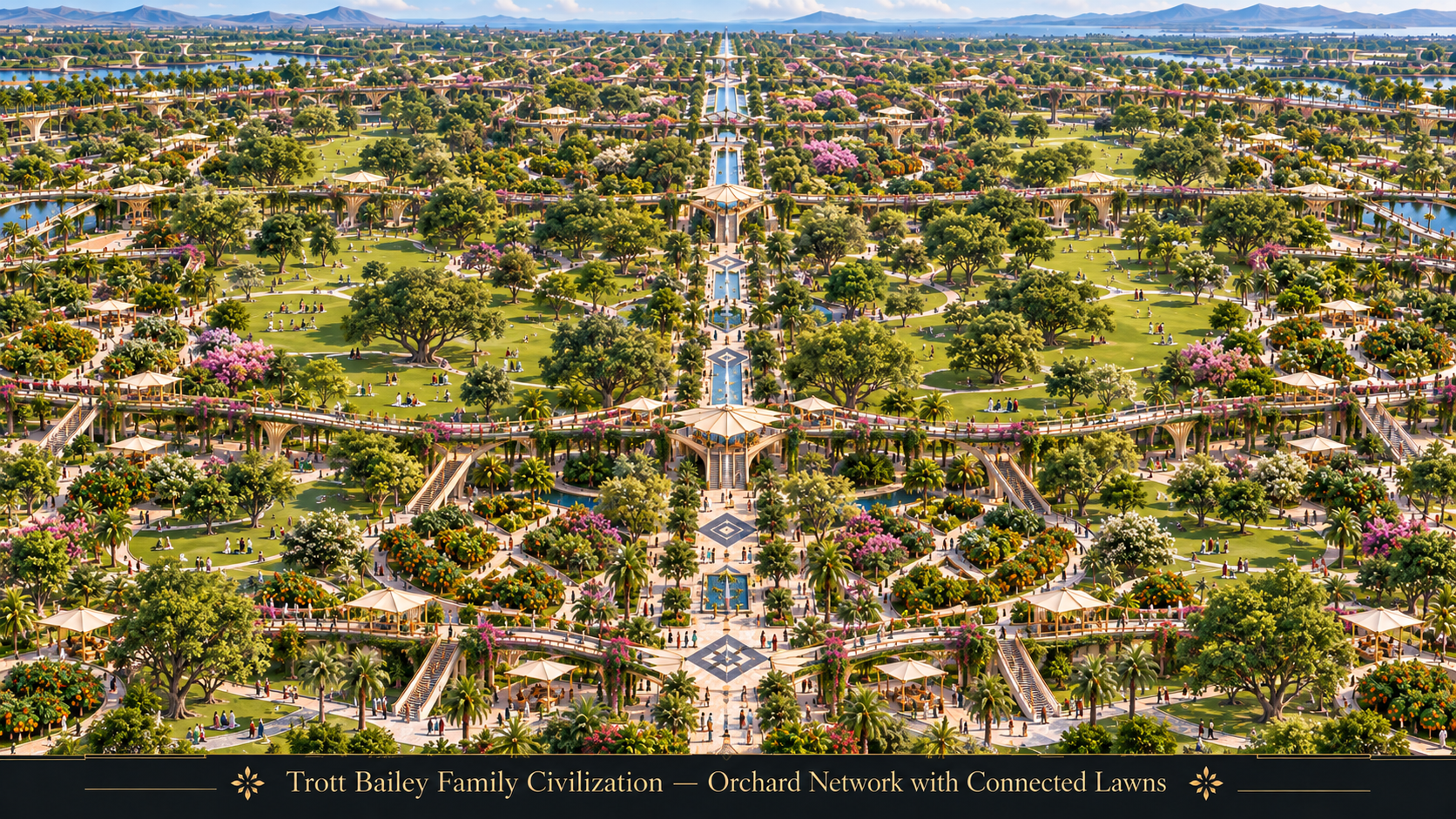
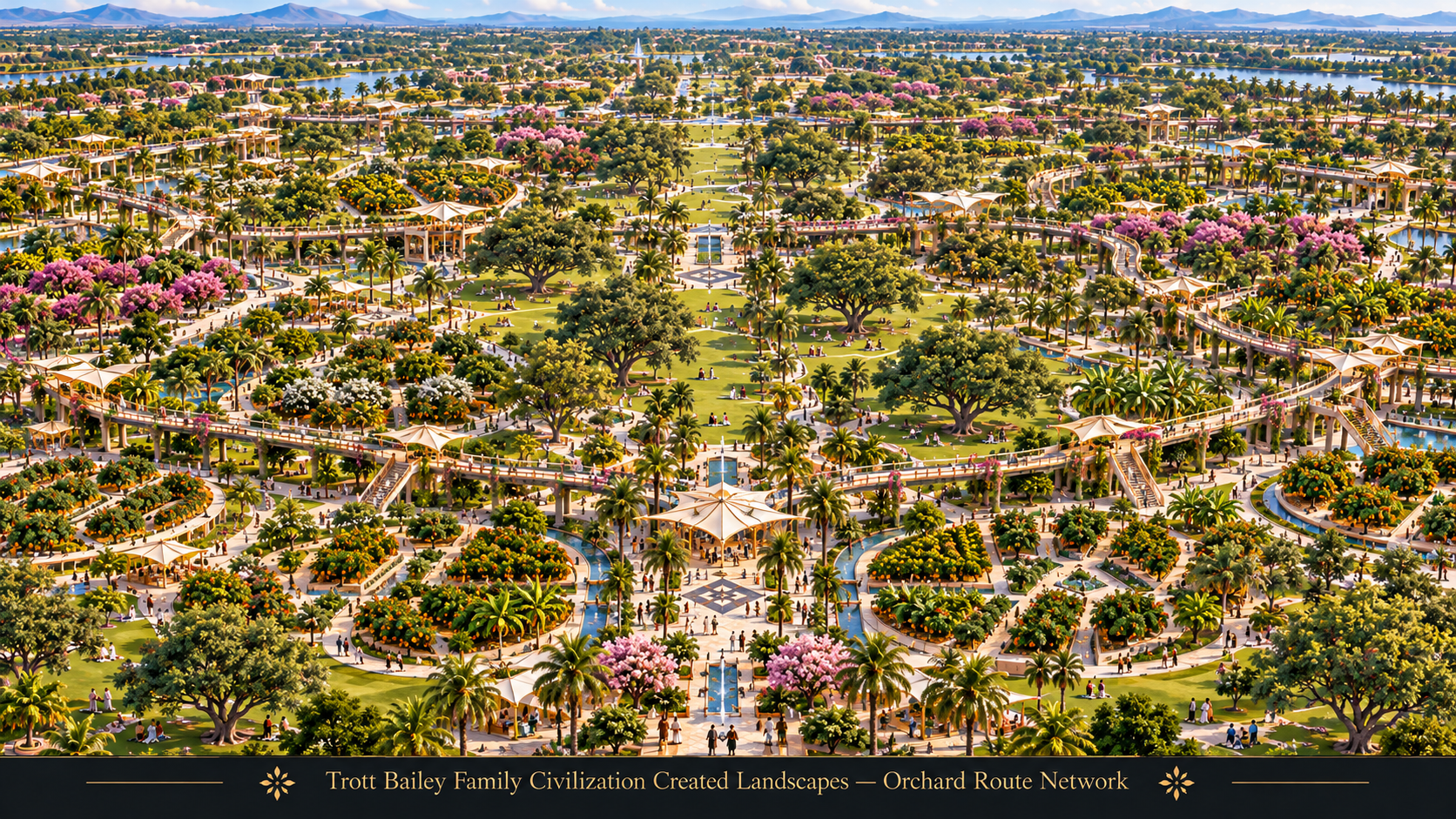
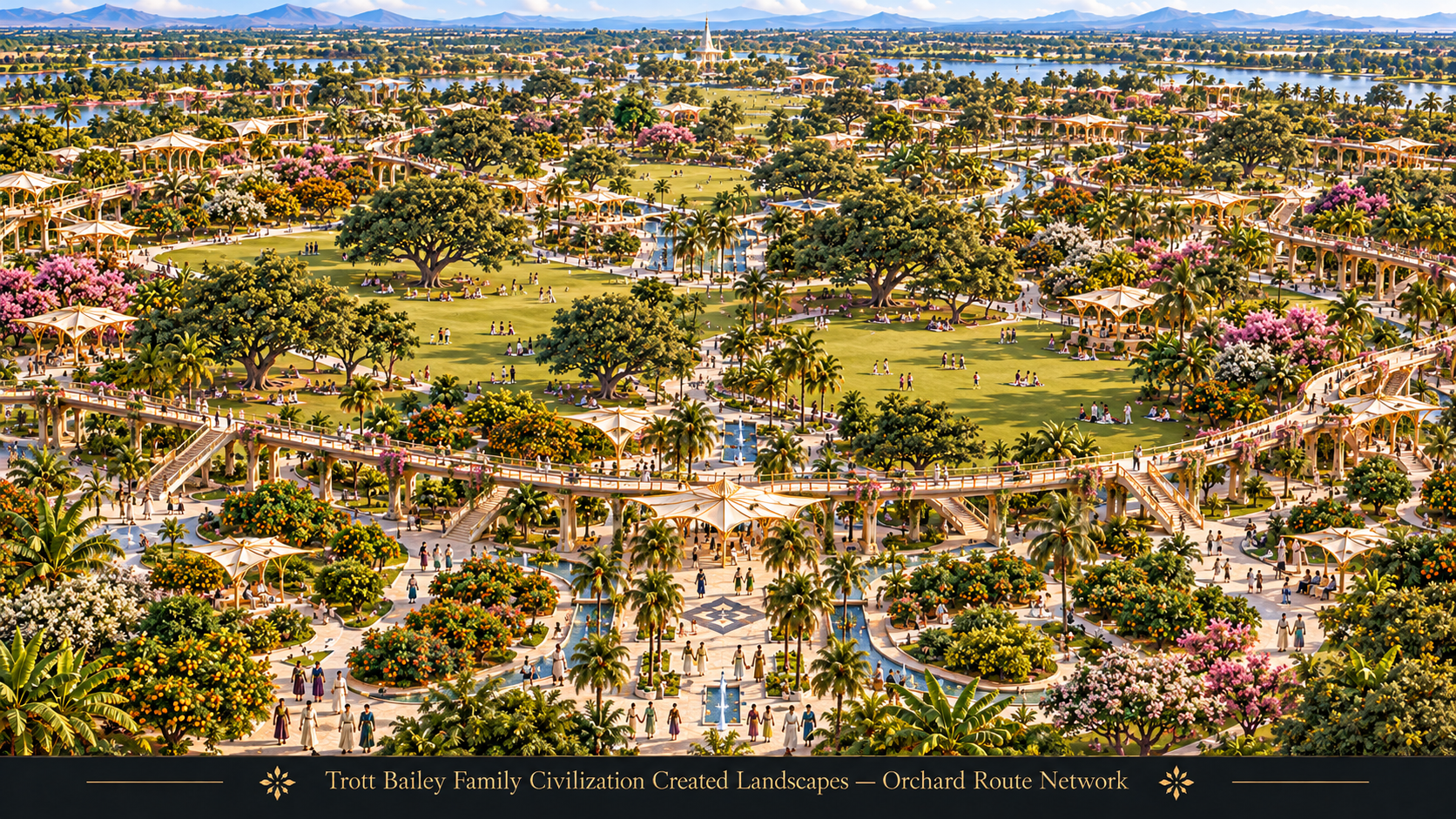
Strollers need wide routes. Toddlers need safe wandering space. Babies need blankets and crawl lawns. Grandparents need seating that is not squeezed into corners. Helpers need movement paths. Robots need service routes. Families need distance between groups so public care does not become public pressure.
Kezidek scenes should show:
- wide stroller paths;
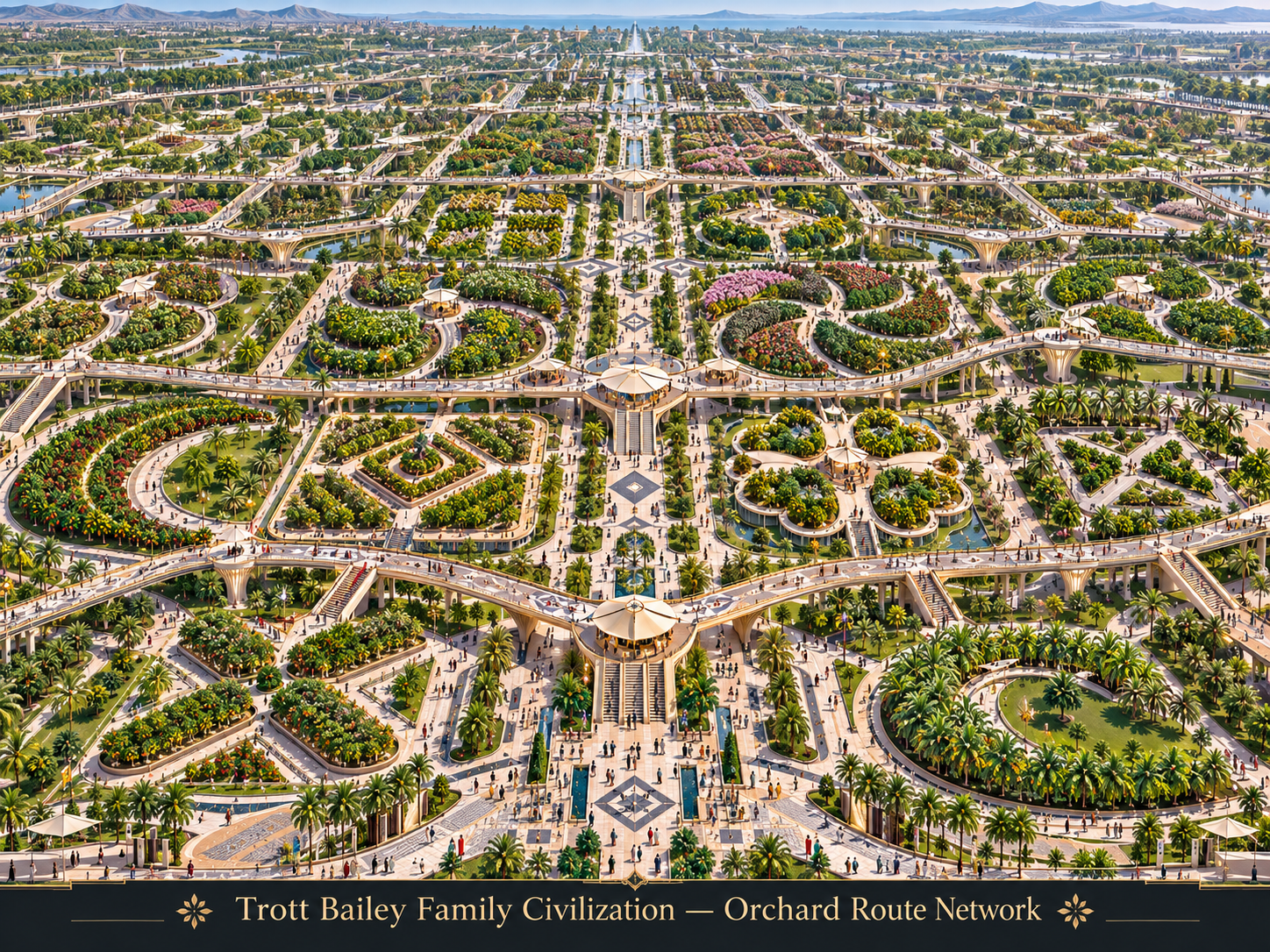
- open lawns;
- spaced housing clusters;
- flower fields with room between families;
- shallow rivers with gentle edges;
- pavilions separated by gardens;
- clear walking loops;
- soft seating coves;
- quiet corners;
- views across the district.
Beauty cannot be crowded into every inch.
Kezidek must feel generous.
Young families need closeness to support, but they also need space to breathe.
Daily Life Inside Baby Worlds
Some of the most important Baby World scenes are not big system demonstrations.
They are ordinary moments.
A father hushing a baby beside a shallow river.
A mother sitting on a blanket in a flower field while a toddler brings her a small bloom.
A grandparent giving a child a soft fruit bowl.
Parents walking at night under gentle lanterns until the baby falls asleep.
A toddler touching a safe herb in an edible ring.
A family sharing ice cream after a warm afternoon walk.
A helper quietly bringing towels.
Mr. and Mrs. Rasta Robot returning supplies without taking attention away from the family.
Rosco sitting near a garden path.
Ele-boo-boo helping a child explore shells, textures, leaves, and soft stones.
These are the scenes that make Kezidek feel real.
A Baby World should not only look like a system.
It should feel like a life.
The Baby World Promise
The Baby World promise is not simply that babies will be entertained.
The promise is deeper.
It says:
- babies deserve public beauty;
- parents deserve support without shame;
- toddlers deserve safe challenge;
- grandparents deserve rest and participation;
- warm food should be near;
- washing should be near;
- helpers should be warm;
- robots should handle repetition;
- Pacorips should coordinate;
- field visits should verify reality;
- architecture should carry dignity;
- fashion should reflect the kingdom;
- space should allow families to breathe.
A Baby World is one of the clearest examples of what the Trott Bailey Family Kingdom believes.
It believes strong families do not happen by accident.
They are supported by food, land, architecture, technology, beauty, public care, and daily-life design.
Conclusion
Baby Worlds are not a decorative idea.
They are not cute baby parks.
They are not daycare replacements.
They are not playgrounds with softer colors.
They are early-life civilization infrastructure.
They show that the kingdom understands the baby years as foundation years.
They give babies a public world to enter gently. They give toddlers space to wobble and discover. They give parents rest, food, washing, and help. They give grandparents a place in the circle. They give families beauty without removing practicality. They give helpers a clear role. They give robots a useful boundary. They give Baby World characters a place in child culture. They give architecture a reason to serve early life.
Most importantly, they tell young families the truth:
You are not expected to build the foundation alone.
In Kezidek District, the baby years are not hidden at home, squeezed into adult spaces, or treated as a temporary inconvenience.
They are surrounded by soft ground, warm food, safe water, open lawns, gentle companions, wide paths, rest porches, global families, Trott Bailey fashion, and real kingdom architecture.
A Baby World is where the kingdom first introduces itself to a child.



 and then