



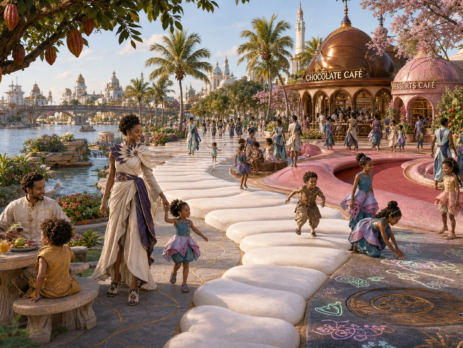
Balushu: The Public-Life World Where the Trott Bailey Family Kingdom Comes Alive
Balushu: The Public-Life World Where the Kingdom Comes Alive
Every civilization needs more than homes, systems, and functional districts.
A family can have a beautiful compound.
A kingdom can have strong food systems, transport systems, learning systems, water systems, and intelligence systems.
But there is still one question:
Where does the kingdom come out to be alive together?
That is Balushu.
Balushu is not a city.
It is not a district.
It is not a resort.
Balushu is a Trott Bailey public-life rhythm world.
It is where families leave the comfort of their compounds not because they must, but because shared public life is irresistibly delightful.
Balushu Handles the Rhythm of Coming Out
A compound supports intimate family life.
Districts carry major kingdom functions.
But Balushu carries a different rhythm:
the rhythm of pleasurable shared public life.
Balushu answers the question:
Why would a happy family leave its comfortable compound?
The answer is simple:
Because Balushu offers a kind of public life the compound should not replace.
Families come out for:
- sea enjoyment
- orchard delight
- ice cream, cafés, pastries, juices, and global foods
- beautiful lounging gardens
- public massage and reclining surfaces
- animal engagement
- child wonder
- night glow and dressed-up presence
- major kingdom premieres
This is not errands.
This is not commuting.
This is not shopping-as-life.
This is the kingdom saying:
Public life should be beautiful enough to draw the family out with joy.
The Sea Is Not a Background
In Balushu, the sea is not a distant view.
It is not something people look at from behind buildings.
It is not reserved for yacht clubs, private marinas, or special access.
In Balushu:
the sea should feel as easy to enter as a garden path.
Families should feel that the water is open to them in many ways.
They may walk toward the sea.
They may stroll along shoreline terraces.
They may go far out over the water on long walkout promenades.
They may board cute small delight boats.
They may use larger public sea transport.
They may temporarily enjoy a Public-Life Makji.
The sea is not an edge.
The sea is part of the public-life fabric.
Sea Access Must Feel Abundant
Balushu should never feel like one pier, one dock, one marina, or one stiff transport terminal.
Sea access must be generous and layered.
Balushu can include:
- shoreline arrival terraces
- long promenades extending far into the sea
- sea-facing waiting verandahs
- child-friendly boarding areas
- small family boats
- larger public sea vessels
- Public-Life Makji Nodes
- night-use water routes
- pause coves
- floating viewing edges
This is not marina culture.
This is not yacht-club exclusivity.
This is not industrial dock life.
This is sea abundance woven into kingdom public life.
Public-Life Makji Belong in Balushu
True Stewarded Family Makji remain special in the kingdom.
They are not bought.
They are not casually handed out.
They are connected to Pacorips, family development, stewardship, and discernment.
A family must live in the kingdom for three full years or more before becoming eligible for privately entrusted Makji stewardship.
That sacredness remains.
But Balushu also has a different Makji branch:
Public-Life Makji.
These are temporary public delight vessels.
They allow families who do not own or steward a Makji to still experience Makji wonder as part of Balushu public life.
Public-Life Makji are not buses.
They are not shuttles.
They are not tourist rentals.
They are not crowded public transport.
They are small-capacity magical public delight vessels, usually holding about 15 to 20 people maximum.
They should feel spacious, comfortable, sea-air open, protected, family-friendly, and emotionally memorable.
In the Trott Bailey Family Kingdom:
public access never means basic.
The baseline is luxurious, beautiful, and emotionally memorable.
It can only rise from there.
The Makji Face Matters
Public-Life Makji must still be recognizably Makji.
The whale face matters.
The expressive eye matters.
The gentle body language matters.
A child should know a Makji before anyone explains it.
The Makji should feel like something alive in the memory of the kingdom.
Not a machine.
Not a pod.
Not a transport unit.
A Makji.
Public-Life Makji should be more open, more repeatable, and more public-facing than Stewarded Family Makji, but they should never lose the iconic whale-face and eye identity.
Orchard Delight Gives Balushu Daytime Life
Balushu cannot only be beautiful at night.
It must give families strong reasons to come in the daytime.
One of those reasons is fruit.
Fruit gathering gives Balushu a daily, seasonal, active, sensory rhythm.
Families can wander through edible landscapes.
Children can carry small harvest baskets.
People can gather ripe fruit, taste fresh juice, discover seasonal treats, and learn where food comes from without entering a classroom.
Orchard delight makes Balushu more than a promenade.
It makes Balushu alive with food.
Land is not decoration.
Land feeds delight.
The Tasting Layer
Balushu needs food that makes families want to come out.
Not because they are hungry only.
Because tasting is part of the joy.
Balushu can include:
- ice cream shops
- pastry shops
- cafés
- juice bars
- fruit-tasting paths
- milk treats
- dessert promenades
- global food experiences
- orchard-and-dairy pairings
This is not commercial food culture.
This is public tasting abundance.
People are not being sold a lifestyle.
They are entering one.
Lounging Is Not Laziness
Balushu also carries the rhythm of public rest.
Families need places where the body can soften in public without shame.
Balushu can have beautiful park gardens with large automated massage and agitation surfaces.
People can sit, recline, lounge, stretch, rest, and let the surface gently come alive beneath them.
Imagine hundreds of people relaxing across soft massaging landscapes.
Some sit and talk.
Some recline quietly.
Some children laugh as the surface gently moves.
Some couples rest side by side.
Some elders enjoy comfort without being hidden away.
This is not a spa.
This is public ease.
Balushu says:
rest belongs in public life too.
Animal Engagement Makes Public Life Alive
Balushu should not feel sterile.
Selected animals can be beautifully integrated into public life.
Not as a petting zoo.
Not as a muddy farm attraction.
Not as an industrial livestock system.
But as public abundance made visible.
A park may have a dedicated cow.
Families may see fresh milk drawn from that cow.
That milk may be enjoyed nearby or transformed into cream, yogurt, pastries, or ice cream.
Other Balushu animal experiences may include:
- goat milk gardens
- egg-gathering gardens
- fiber meadows
- gentle animal brushing courts
- milk-to-dessert experiences
- animal care learning through delight
This makes public life feel connected.
Food is not hidden.
Animals are not hidden.
Abundance is not abstract.
Families see life producing life.
Children Must Be Thrilled to Go
Balushu cannot only be adult public beauty.
Children must want to go.
A child should ask:
“Can we go to Balushu today?”
Not because Balushu is an amusement park.
Not because Balushu copies Kaleeyon.
But because Balushu gives children their own public-life wonder.
Children should find:
- child-scale sea discovery
- little boats
- shallow water joy
- fruit-picking paths
- child-height treat windows
- milk from the park cow
- egg-gathering moments
- glowing night paths
- soft movement and rest zones
- child viewing terraces during premieres
Kaleeyon makes children feel that the kingdom was built for their play.
Balushu makes children feel that the kingdom’s beautiful public life belongs to them too.
The Presence Layer
Balushu is also where people get dressed up to come out.
This matters.
Public life should have presence.
It should make people want to show up beautifully.
Not in a stiff way.
Not in a vain way.
But in the way people dress when they are entering something worth being part of.
Balushu should have that buzz.
The feeling that something is happening.
The feeling that people are out.
The feeling that families, couples, children, elders, artists, helpers, and visitors are all moving through a living public world.
Balushu is not only comfort.
Balushu is public aliveness.
Balushu at Night
Night is one of Balushu’s great strengths.
At night, Balushu should not become empty.
It should glow.
Water should reflect light.
Long promenades should pull people toward the sea.
Public-Life Makji should move along special night routes.
Dessert paths should come alive.
Families should stroll safely.
Children should feel wonder, not fear.
Couples should feel romance.
People should feel that the kingdom has a public night presence worth dressing for.
This is not nightlife in the outside-world sense.
It is not chaos, clubs, drunkenness, or loud emptiness.
It is beautiful night presence.
The kingdom awake in delight.
Balushu Is Where Creations Are Released
Balushu also carries the kingdom’s major public reveal layer.
Keilah District creates, refines, rehearses, prototypes, and develops artistic and cultural works.
But Balushu is where major creations meet the people.
Keilah makes the kingdom’s cultural works. Balushu reveals them to the kingdom.
Balushu may host the public release of:
- new fashion lines
- new music
- major inventions
- food creations
- story works
- Jubo reveals
- architectural models
- cultural festivals
- family honor presentations
These premieres should not feel trapped inside a conventional venue.
They should unfold through Balushu’s public-life world.
The Release Commons
Balushu needs a Release Commons.
Not a plaza.
Not an arena.
Not a concert hall.
The Release Commons is a flexible public witnessing landscape woven into Balushu.
It may include:
- water-edge reveal platforms
- terraced viewing gardens
- promenade runways for fashion
- acoustic garden pockets for music
- floating or boating viewing edges
- orchard amphitheater slopes
- night-glow pathways
- massage-lounge fields around the edges
- food and dessert routes feeding into the event
- family seating without hard stadium logic
The point is not to put the kingdom inside a venue.
The point is to let the entire public-life world become capable of witnessing beauty together.
Why Balushu Matters
Balushu matters because private comfort alone is not enough.
A family can have a wonderful compound and still need public life.
Children need places where public beauty belongs to them.
Adults need places where they can dress up, taste, lounge, walk, watch, and be among others.
Couples need places where the evening feels worth entering.
Artists need places where their creations can meet the kingdom.
The sea needs to be open.
Fruit needs to be gathered.
Animals need to be encountered with care.
Food needs to be tasted.
Rest needs to be public.
Night needs to be beautiful.
A kingdom needs places where life gathers.
Final Statement
Balushu is not where the kingdom goes to complete a task.
Balushu is where the kingdom goes to come alive together.
It is the Trott Bailey public-life rhythm world of sea enjoyment, orchard delight, tasting, lounging, animal engagement, child wonder, dressed-up presence, night buzz, and cultural release.
It is where the sea feels open, the gardens feel edible, the food feels abundant, the children feel thrilled, the adults feel present, and the kingdom sees what it has created.
Balushu is not an escape from life.
Balushu is shared life made irresistible.



 and then






































