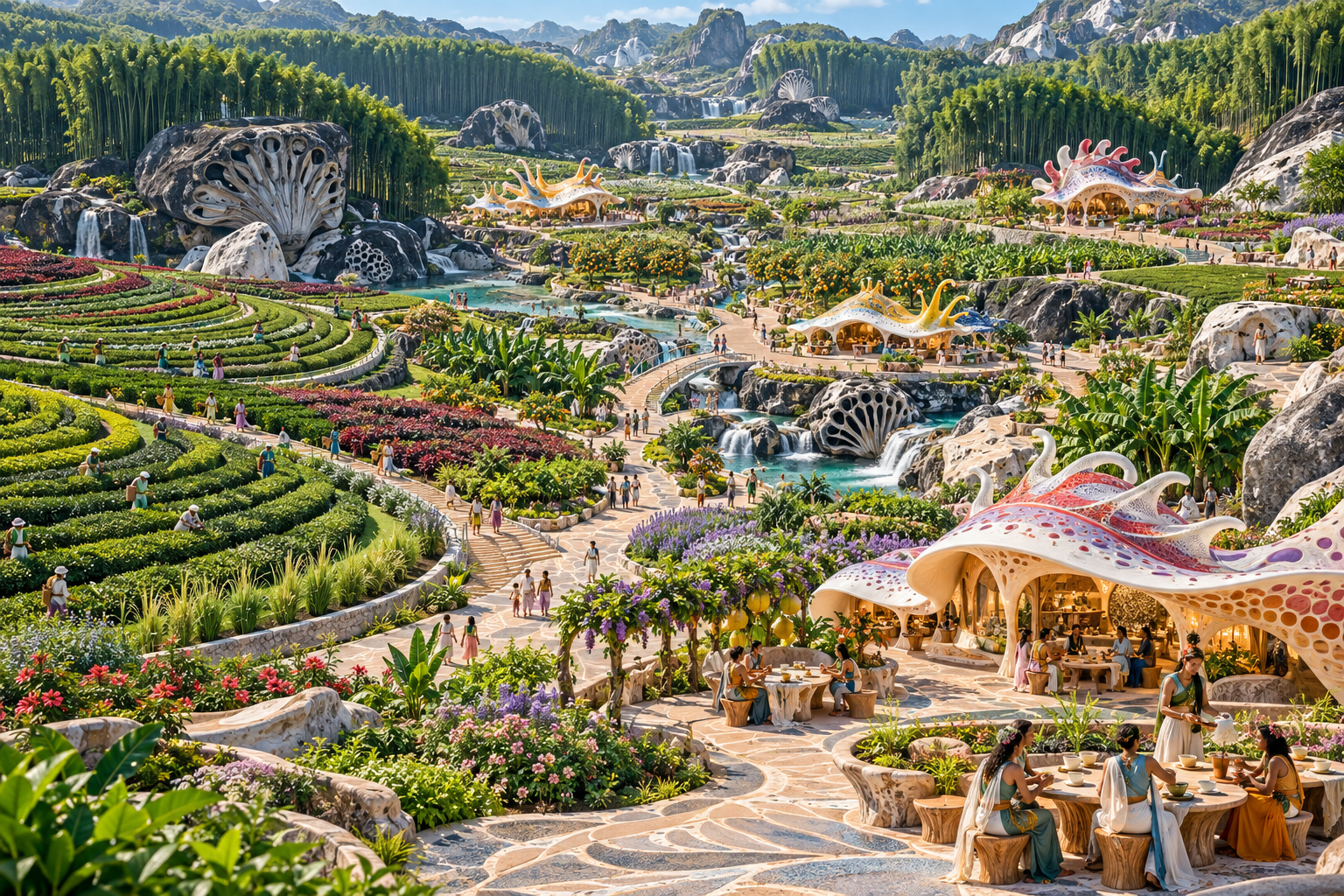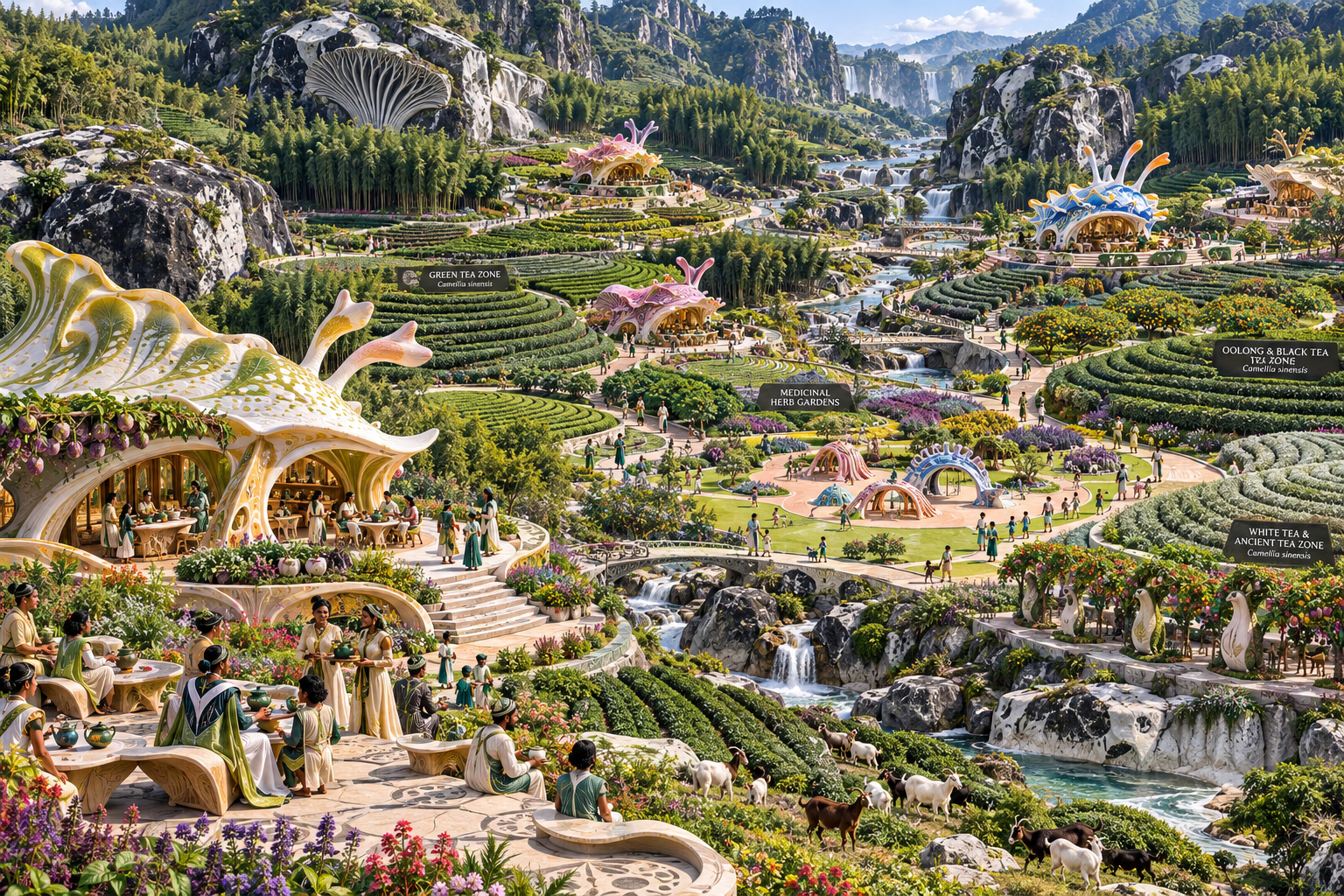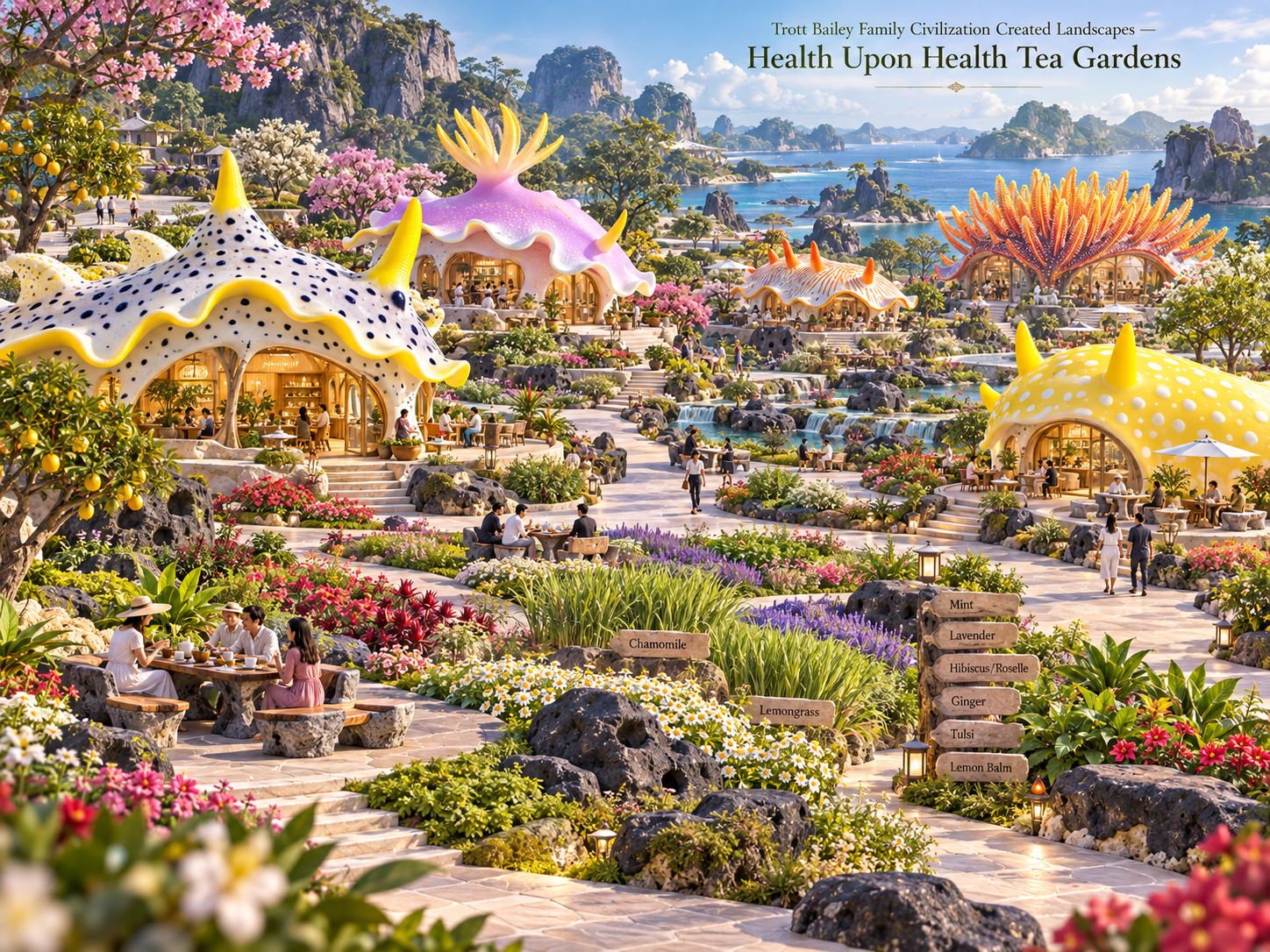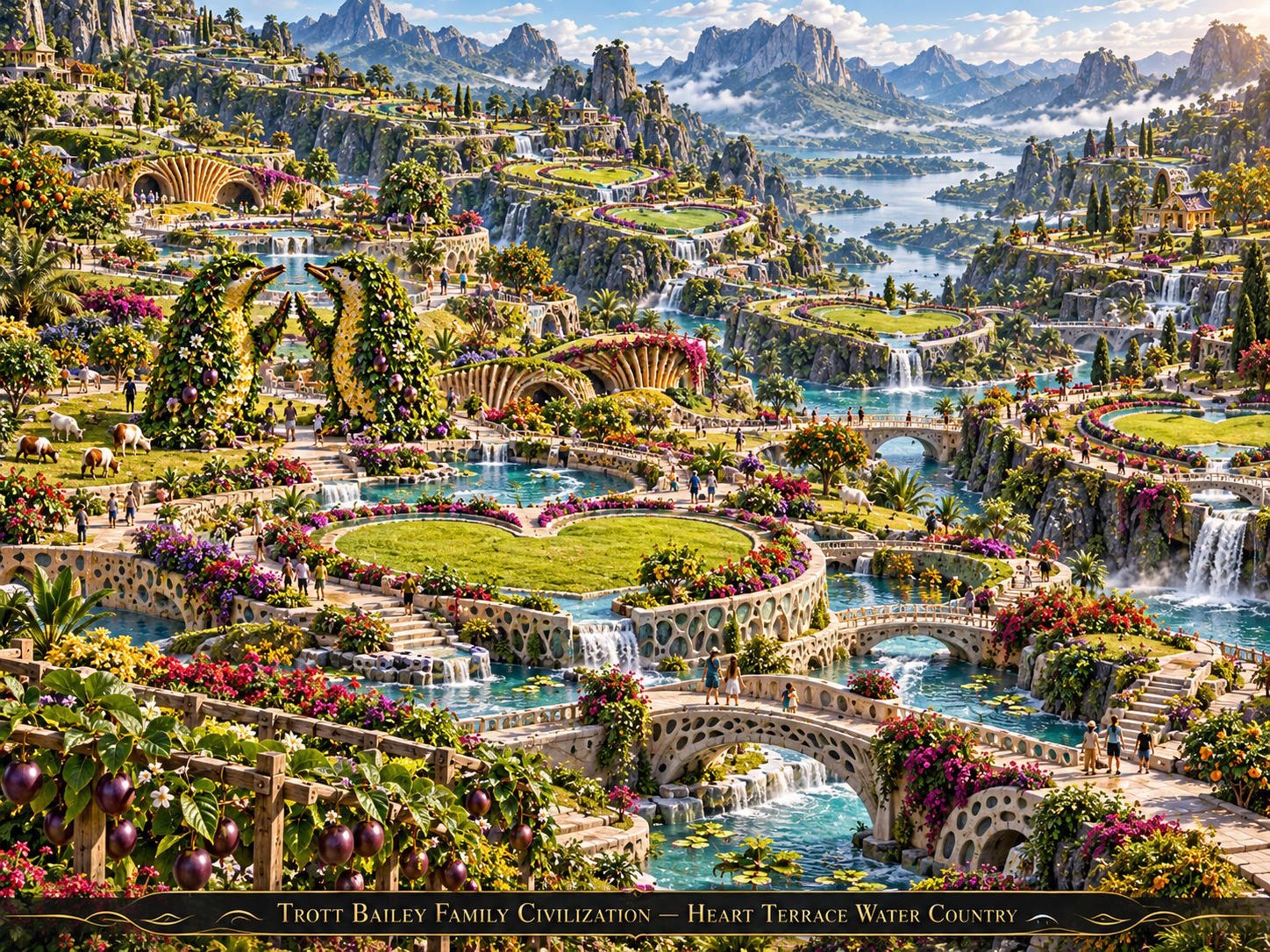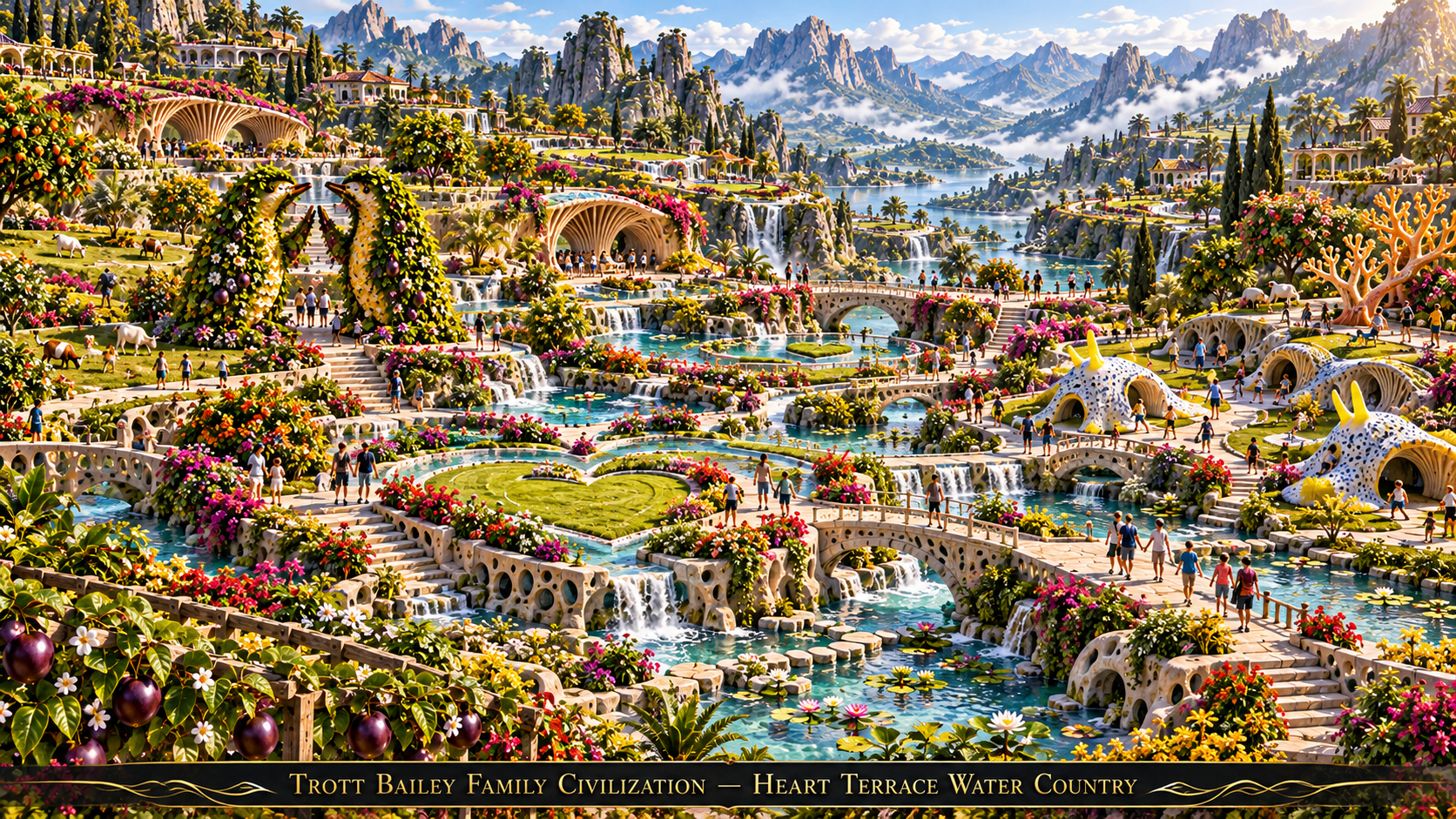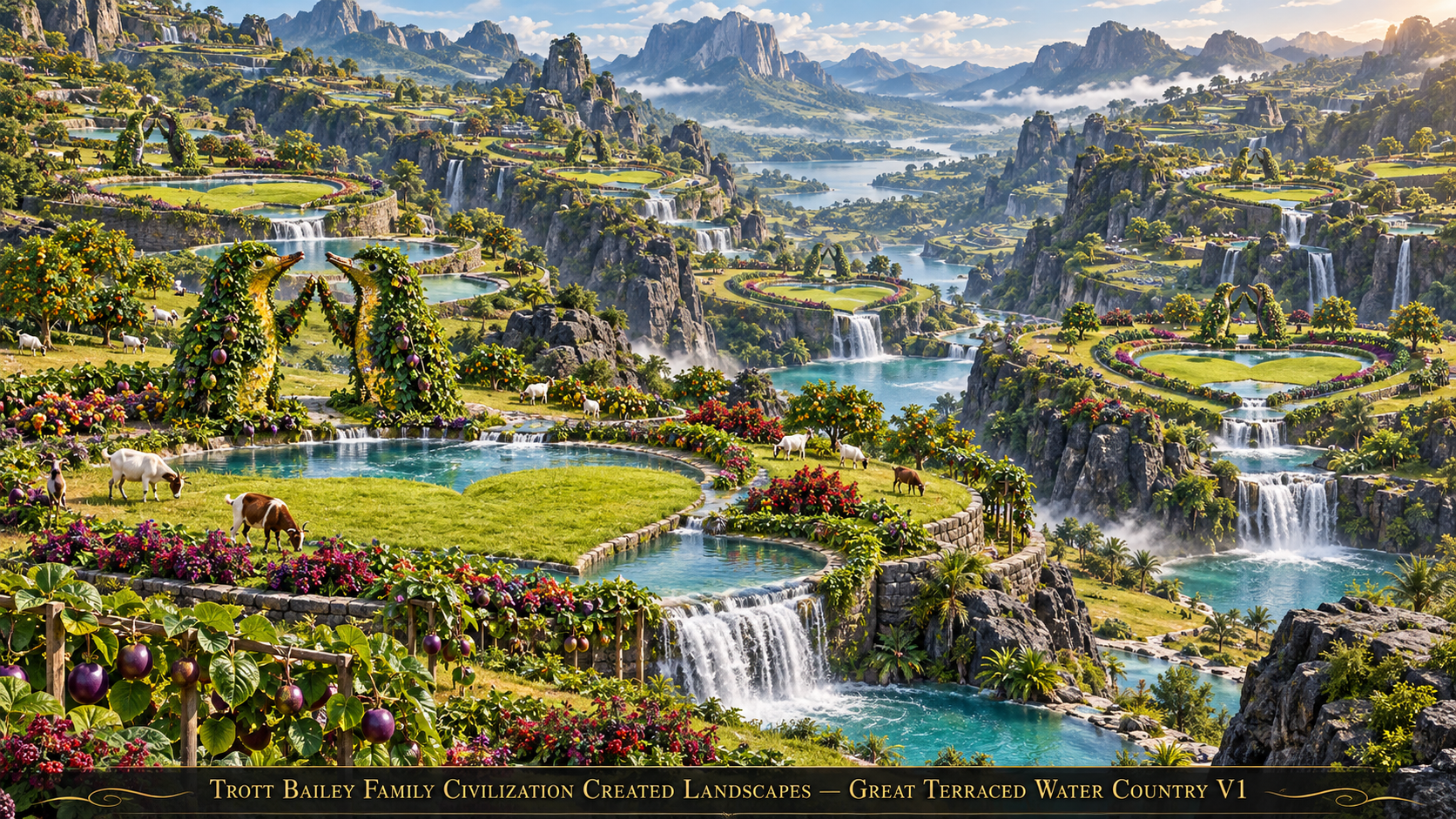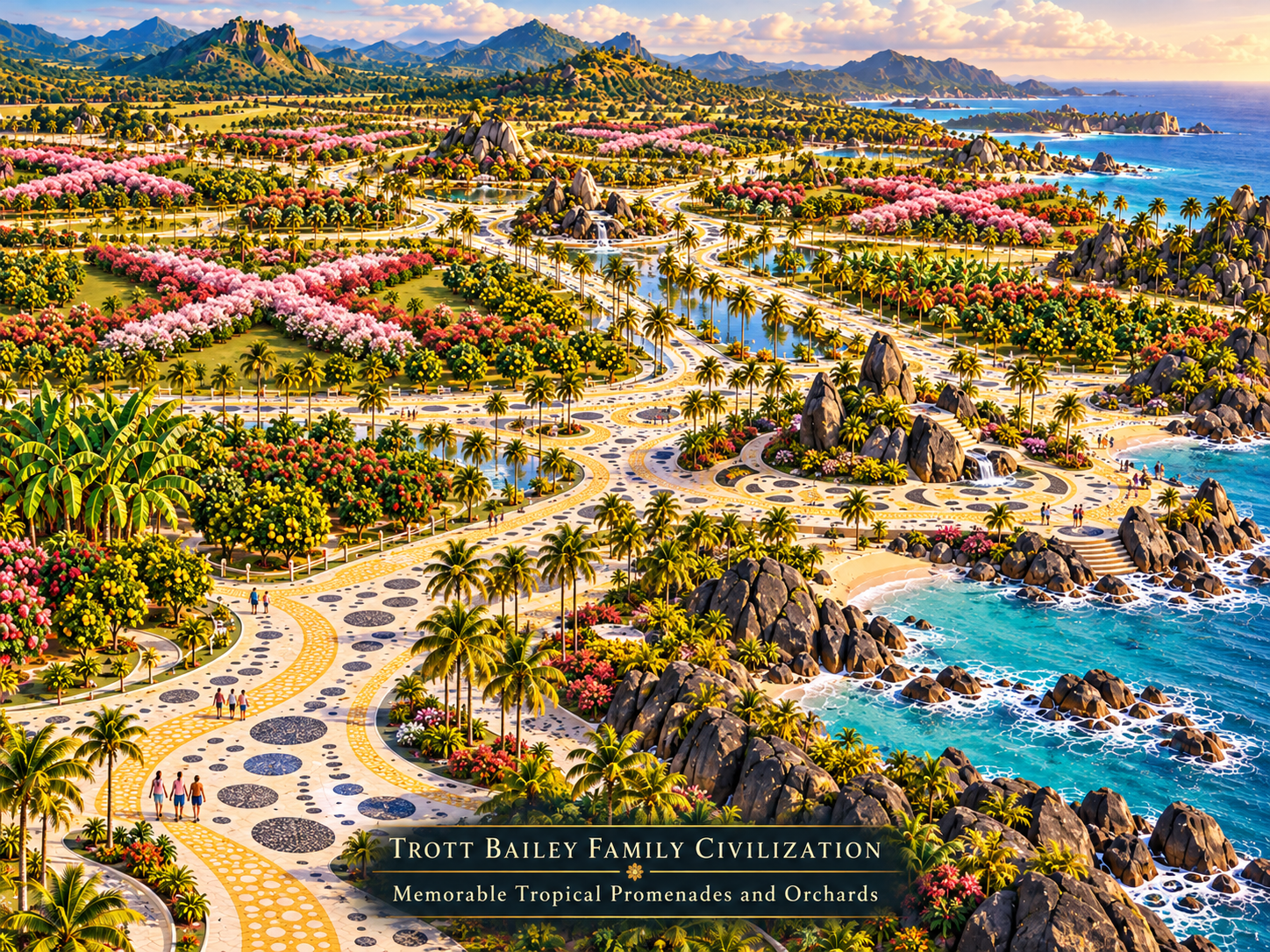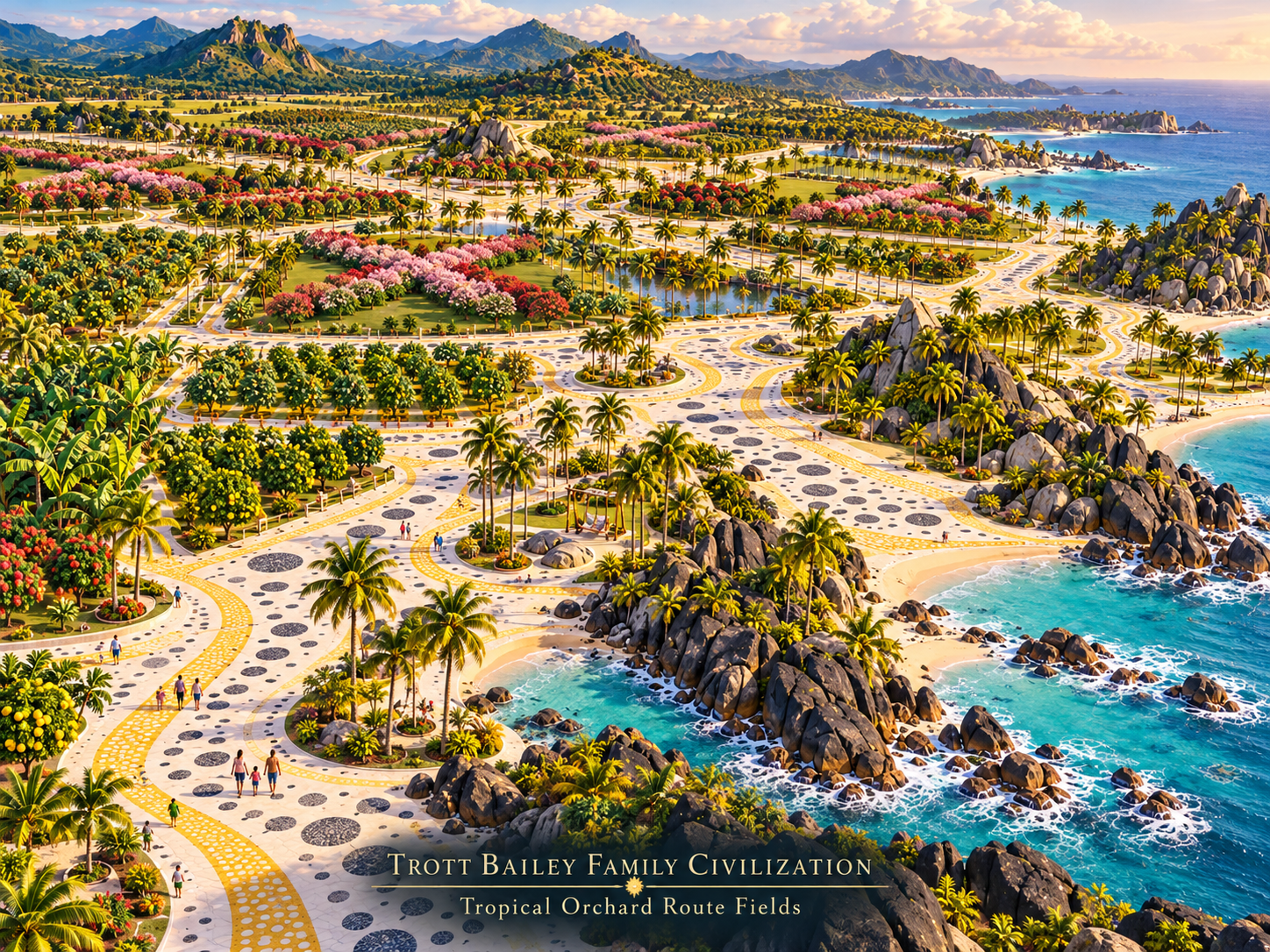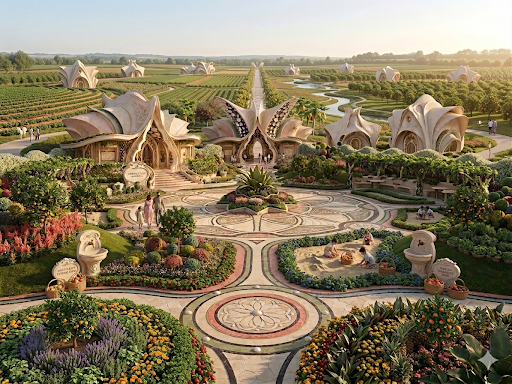
In the Trott Bailey Family Kingdom, the path itself can become part of the meal.
The Road That Feeds You: Why Trott Bailey Paths Are Edible
Trott Bailey Family Kingdom Food-Landscape Principle
In many places, a road is only a road.
It carries feet, cars, carts, strollers, crowds, and traffic. It connects one destination to another. It is paved, swept, lit, and forgotten.
But in the Trott Bailey Family Kingdom, a path should never be dead.
A path can move the body, feed the family, teach the child, cool the air, guide the elder, rest the parent, and reveal the abundance of the civilization.
The kingdom does not ask families to walk through empty ornamental space while food is hidden somewhere else.
The road itself can feed you.
A Path Is Part of the Food System
Food should not only appear at the table.
A true food civilization lets families see, smell, touch, pick, wash, learn, carry, prepare, share, and enjoy food as part of daily life.
This changes the meaning of a public path.
A path is no longer only a connector between buildings. It becomes a food-learning route, a tasting route, a harvest route, a child discovery route, and a resting route.
Along a Trott Bailey path, a child may see kumquats, strawberries, herbs, edible flowers, dwarf citrus, grapes, passionfruit, papaya, loquat, mulberries, or carefully managed child-pick fruit shrubs.
The family is not only walking past beauty.
They are walking through abundance.
Beauty and Food Must Be Unified
A beautiful landscape that feeds no one is incomplete.
It may be pleasant. It may be expensive. It may photograph well. But if every plant is ornamental, if every edge is decorative, if every fruit tree is missing, if children cannot learn from the land, then something important has been lost.
The Trott Bailey Family Kingdom holds a different standard:
Beauty and food must be unified.
A garden should not have to choose between elegance and usefulness.
A citrus tree can be beautiful. A strawberry hedge can be beautiful. A papaya grove can be beautiful. A grape ribbon can be beautiful. A herb ring can be beautiful. A dwarf pineapple band can be beautiful.
Food does not make a landscape less refined.
Food gives the landscape truth.
The 50% Edible Rule
The kingdom’s family-facing landscapes follow a major principle:
At least 50% of visible planted garden layers in family-facing landscapes should be edible, child-height, family-accessible, or food-learning related.
This rule protects the kingdom from ornamental emptiness.
It means that a public garden cannot be considered complete just because it has flowers, hedges, lawns, and pretty shrubs. The planting must participate in life.
It should teach. It should feed. It should invite. It should give children something real to understand.
A child should not grow up thinking food comes from shelves, counters, packages, and sealed kitchens only.
Food should be visible in the public world.
If Children Can Pick It, They Need a Wash Point
Edible landscapes must be practical.
It is not enough to place fruit beside a path and call it abundance. A kingdom-level edible route must also think about cleanliness, safety, supervision, harvesting, signage, and flow.
That is why the kingdom holds this rule:
If children can pick it, there should be a nearby wash point.
A child-pick strawberry edge should not be far from a hand-wash station. A citrus tasting ledge should not exist without a rinse point. A harvest basket node should not be disconnected from water, shade, and return logic.
The kingdom does not design fake abundance.
It designs abundance that works.
The Edible Edge
The edges of a path are powerful.
In ordinary design, path edges are often wasted. They are lined with generic shrubs, plain grass, hard curbs, or plants chosen only to fill space.
In the Trott Bailey Family Kingdom, the edge becomes an edible learning band.
It may hold:
- dwarf citrus
- kumquats
- tangerines
- strawberries
- herbs
- edible flowers
- sweet pepper pockets
- dwarf pineapple bands
- low grape or passionfruit teaching trellises
- child-pick fruit shrubs
- small crop signs
- basket points
- wash points
- shaded tasting ledges
The path edge becomes a classroom without becoming a schoolroom.
Children learn because the world around them is designed to teach.
Fruit Trees Give Public Space Memory
Fruit trees change how a place is remembered.
A child may forget the name of a plaza, but remember the place with the little oranges. A family may remember the Sabennery lawn where they ate under the papaya shade. An elder may remember the morning route with mulberries. A parent may remember the path where their child first learned what loquat looked like.
Fruit gives memory to movement.
That is why Trott Bailey public landscapes should not rely only on hardscape, signs, and decorative trees.
A fruit tree is not just planting.
It is an anchor of family memory.
Orchard Rings: Making Food Readable
Edible landscapes should be legible.
If food planting is scattered randomly, families may not understand how to interact with it. If everything looks ornamental, children may not know what is pickable and what is protected.
This is why the kingdom uses Orchard Ring logic.
A central fruit-tree anchor may sit inside a ring of herbs, edible flowers, strawberries, low greens, grape trellises, pineapple bands, tomato edges, sweet pepper patches, smooth walking paths, moon-bead markers, wash stations, basket points, and shaded tasting ledges.
The ring makes the food-world readable.
It tells the family:
This is not random planting. This is a designed place of tasting, learning, washing, resting, and walking.
The Mineral Road and the Living Edge
The Trott Bailey path is not a dirt trail and not a plain sidewalk.
It should have civilization-grade material dignity: hard jade stones, premium flagstones, safe hard colored crystal inlays, carved mineral medallions, moon-bead nodes, water-vein channels, textured side bands, grippy surfaces, smooth stroller-safe lanes, and elder-safe movement.
But the mineral road should not become cold.
The living edge softens it. Fruit trees, edible hedges, herbs, flowers, shade, water, benches, and tasting nodes make the path human.
This is the balance:
The road carries civilization authority. The edible edge carries family life.
Sabenneries: Where Food Paths Become Family Rest
The Sabennery is one of the strongest examples of an edible path system.
Food pickup should be clear and efficient. But once a family receives food, the landscape should open into picnic meanderways, shaded lawns, dessert gardens, smoothie and juice herb routes, child wash paths, return stations, edible edges, and Service Shadow support.
The path after pickup matters.
If a family receives food and has nowhere beautiful to go, the system is incomplete. If they have to crowd around hard tables or wander into a plain lawn, the landscape has failed the food.
The Sabennery prepares.
Families pick up.
The landscape receives them.
Baby World: Edible, But Gentle
Not every edible landscape should be intense.
In Baby World, edible planting must be softer, safer, more controlled, and more parent-visible. The goal is not to turn baby fields into harvest zones. The goal is to create gentle sensory learning at the edges.
Herbs, edible flowers, managed strawberry pockets, soft fruit learning gardens, and guided-pick dwarf citrus can help babies and young children begin to understand food, scent, color, texture, and care.
But Baby World’s first requirement remains space.
Parents must feel they can put their baby down safely.
The edible edge must support calm, not clutter.
Balushu: Public Abundance Without Crowd Pressure
In Balushu, edible paths must support public life.
Fruit-crown gardens, public lawns, Jubo detours, shaded food pockets, water comfort stations, child-pick edges, and night-safe meanders can make Balushu feel abundant without forcing families into crowd pressure.
The edible path should invite families outward.
It should not trap them in festival density.
Public abundance works best when people can spread, taste, rest, walk, and choose their rhythm.
Sherika: Food as Welcome
In Sherika, edible paths help newly arrived families feel cared for.
Banana snack-garden paths, mandarin routes, lychee walks, citrus edges, comfort herbs, child wash points, shaded benches, and helper-visible nodes turn arrival movement into welcome.
A tired family arriving in the kingdom should not be met only with counters, instructions, gates, and buildings.
They should also encounter food, shade, beauty, and calm.
Sherika proves that edible landscape can be emotional care.
Kultan: Lagoon Paths That Feed and Cool
In Kultan, edible path logic meets water.
Lagoon-edge meanders can include citrus pockets, herb gardens, island orchard pauses, Sabennery picnic lawns, cooling mist edges, water-vein paving, and shaded rest gardens near Makji service pauses.
A family waiting near water service should not feel abandoned beside infrastructure.
They should be able to walk, rest, taste, cool down, and watch the water.
Kultan’s edible routes prove that service infrastructure can still be family-rich.
Presence Boulevards: The Public Spine Should Bear Fruit
A Presence Boulevard must not become a shopping promenade.
If it is lined only with buildings, signs, terraces, and display edges, it begins to lose the kingdom standard.
A true Presence Boulevard should also hold open lawns, citrus bands, fruit-tree anchors, edible public planting, child snack gardens, herb pockets, water-vein channels, side story-meanders, shade, wash points, and long sightlines.
The public spine should bear fruit.
It should remind everyone that this is not a corridor of consumption.
It is a living route through civilization.
The Road Teaches Without Lecturing
A child does not need a lecture every time they walk past food.
Repetition teaches.
Seeing fruit grow teaches. Watching helpers care for plants teaches. Washing hands before tasting teaches. Returning baskets teaches. Seeing signs that distinguish pickable plants from protected plants teaches. Watching elders rest under fruit shade teaches.
The road becomes a quiet teacher.
That is stronger than a poster.
Abundance Must Be Maintained
Edible paths require care.
Fruit must be tended. Wash points must be cleaned. Harvest baskets must be returned. Overripe fruit must be managed. Soil must be protected. Service routes must exist. Helpers must be able to access the planting without interrupting families.
This is where Service Shadow matters.
A beautiful edible route without maintenance becomes messy. A child-pick edge without wash logic becomes impractical. A fruit path without harvest management becomes wasteful.
The kingdom does not design edible paths as fantasy decoration.
It designs them as living infrastructure.
The Kingdom Standard
When designing a Trott Bailey path, the question is not only:
Where does this path lead?
The deeper questions are:
- What does this path teach?
- What does this path feed?
- Where can a child safely pick?
- Where can a family wash?
- Where can an elder rest?
- Where does shade fall?
- Where does Service Shadow maintain the system?
- Where does the path open into a field?
- Where does the family feel invited to slow down?
A path that answers none of these questions is not yet kingdom-level.
Final Word
The Trott Bailey Family Kingdom does not design roads as dead strips of movement.
It designs roads as living food-landscapes.
A child should be able to walk and learn. A parent should be able to walk and rest. An elder should be able to walk and trust the ground. A family should be able to walk and encounter fruit, shade, water, beauty, and care.
The road should not merely take you to abundance.
The road should participate in abundance.
In the Trott Bailey Family Kingdom, the path itself can become part of the meal.
That is why the road feeds you.



 and then