Small Island Abundance Theory
Who Will Inherit the Island?
A family test for small-island prosperity: if we are building the future, are families actually becoming more able to live, grow, love and remain?
Small island states spend a great deal of time discussing the future. Sea-level rise, climate finance, debt, the blue economy, renewable energy, tourism resilience, coastal protection, food imports and digital transformation all deserve attention. But there is a simpler question sitting underneath all of them: who is the future for?
👨👩👧👦Start with the family
Antigua and Barbuda’s fertility rate is below replacement level, at roughly 1.6 births per woman. Many other Caribbean small island states are in a similar position. This does not mean governments should tell people to have babies, and it does not mean that a low fertility rate automatically proves a country is failing. But it should make every government intensely curious about whether people who want families actually feel secure enough to grow them.
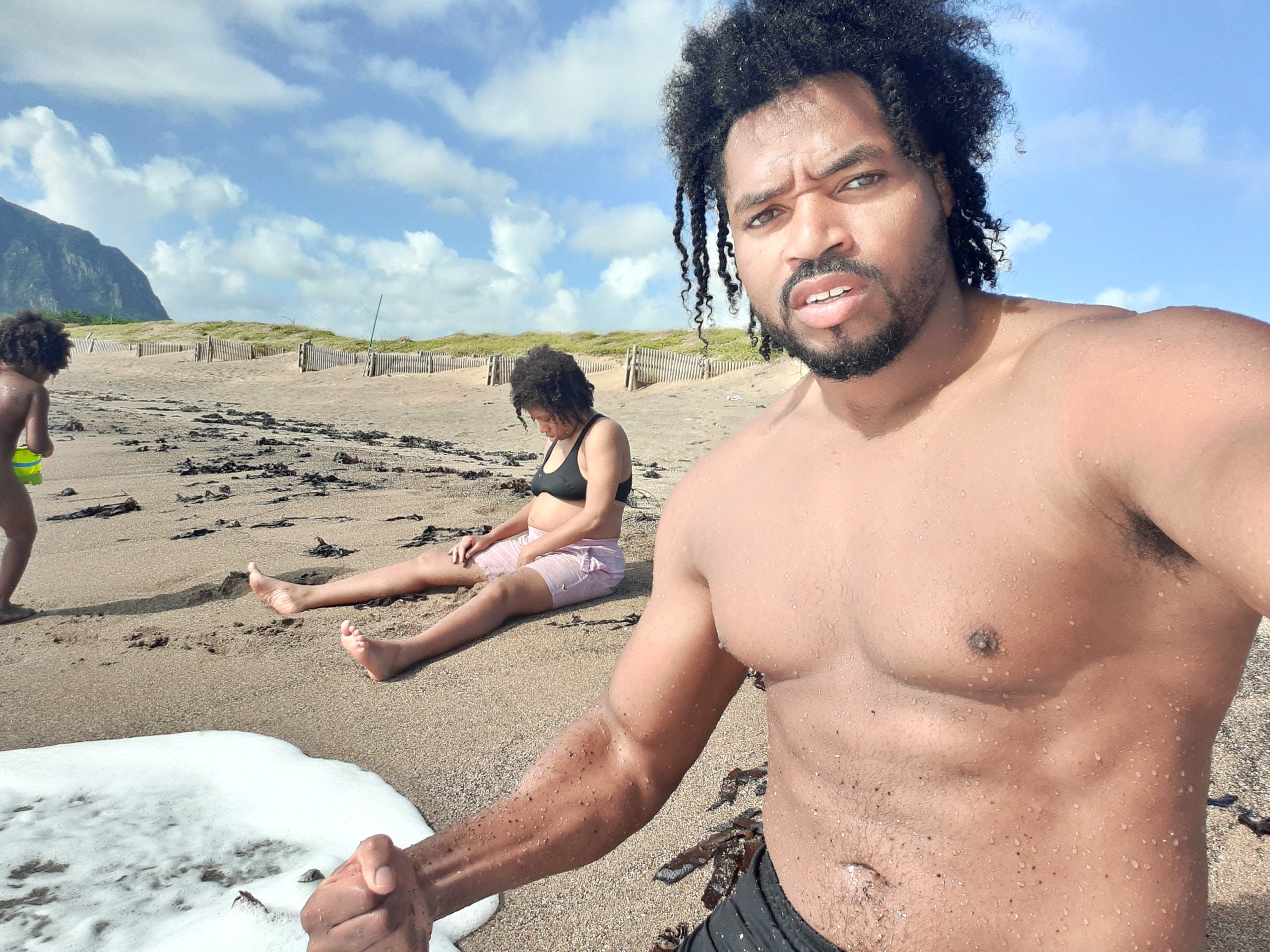
We are Sherika Trott Bailey and Kimroy Bailey, husband and wife, and parents to Keilah, 8, Kaleeyon, 4, and Kezidek, 2. We come to this question first as a family. The economics changes when you look at a country through their eyes.
Those sound like children’s questions, but they may be better economic questions than some of the ones adults have learned to ask.
🌊Who will inherit the shoreline?
Small islands are rightly worried about protecting their coastlines for the future. Governments attend conferences, seek climate finance, build resilience plans and discuss what rising seas may mean by 2050. But who will inherit that protected shoreline? Who will inherit the schools, the cricket culture, the fruit trees, the roads, coral reefs, public buildings, marine reserves and blue-economy investments?
At SIDS4 in Antigua and Barbuda, leaders discussed resilient prosperity, climate, debt, health, food, digital development and many of the pressures facing small island states. Demographic experts at the same gathering were also discussing ageing populations, youth migration and changing family structures. That family question should not sit on the side of the development plan. It should run straight through the middle of it.
It is also, “How do we make family life good enough that people still want to build their future on it?”
🍽️The restaurant still explains everything
The cash register can glow while the kitchen falls apart.
Imagine a restaurant. The cash register is ringing all night. Every table is full. The accountant says business is excellent. But inside the kitchen, the stove is broken. The refrigerator keeps failing. The cook is exhausted. The water supply is unreliable. Staff members barely see their children.
Sales, wages, purchases, activity and transactions.
Is the stove fixed? Is the family stronger? Is tomorrow easier?
Now imagine the restaurant becomes more successful every year. Revenue rises. More customers arrive. Staff earn more. A father who once took his children to cricket on Saturday now works Saturday too. His salary is higher. He can afford three streaming subscriptions. But he does not have time to sit beside his children and watch the match.
Has the family become richer? The cash register says yes. The children may give a different answer.
🏠You have to raise the family to raise the nation
A country is not prosperous simply because the top of the structure is shining. The penthouse can be magnificent while the foundation sits in quicksand. The foundation is the family.
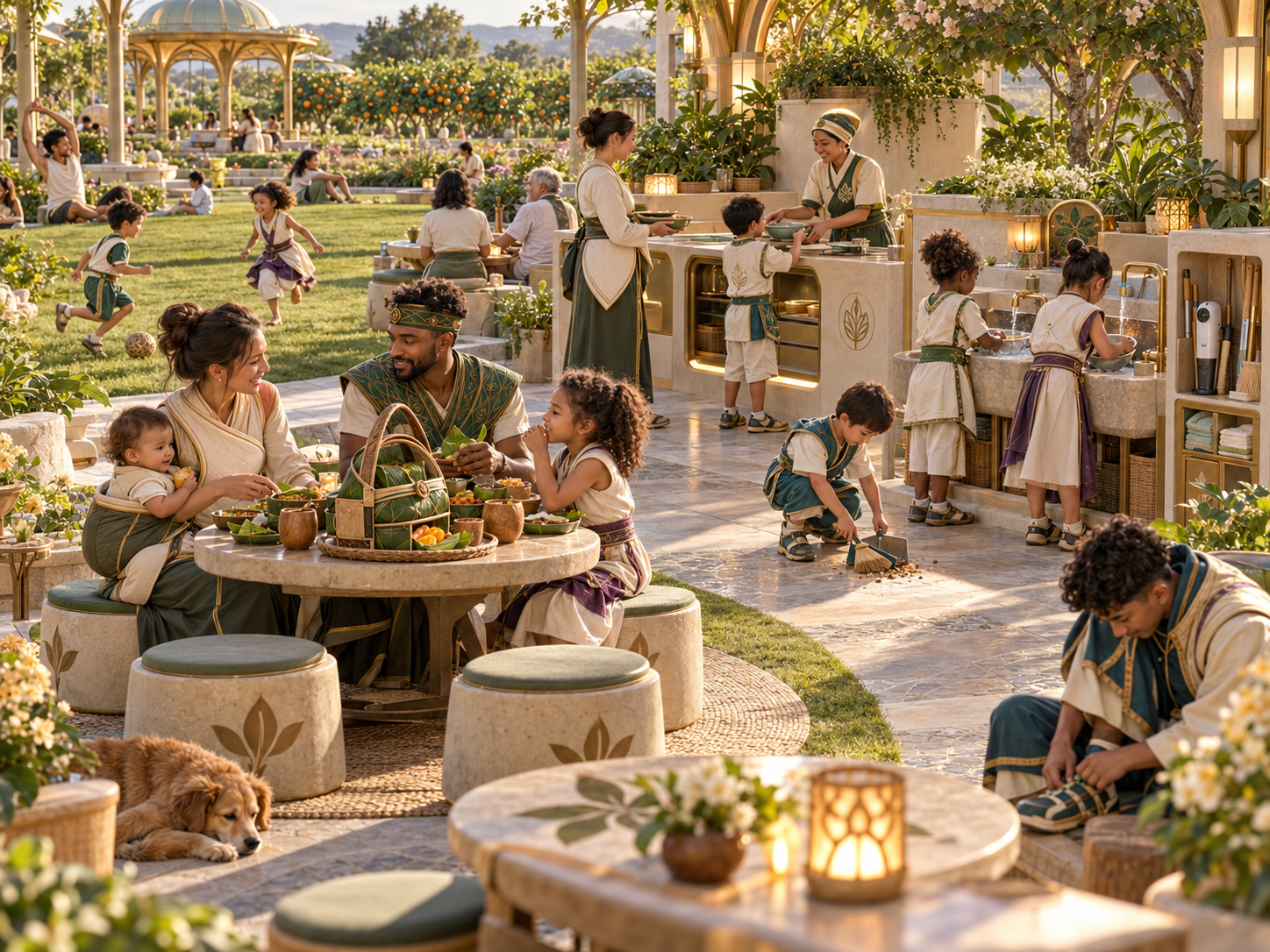
Can a young couple find a home they can afford? Can they feed children well without constant anxiety? Can they spend evenings together? Can they have another child without feeling that they are committing financial suicide? Can grandparents remain part of everyday life? Can fathers actually father? Can mothers actually mother? Can the family enjoy the island it supposedly owns together?
A country can be surrounded by extraordinary natural wealth and still create an economy in which its own people are too busy to enjoy it. A father can become richer and lose the afternoon at the beach. A mother can earn more and lose dinner with the children. A household can own more devices and spend less time together. GDP can rise through every one of those transactions. Abundance Theory can still call the outcome a loss.
🌳Public land should produce abundance
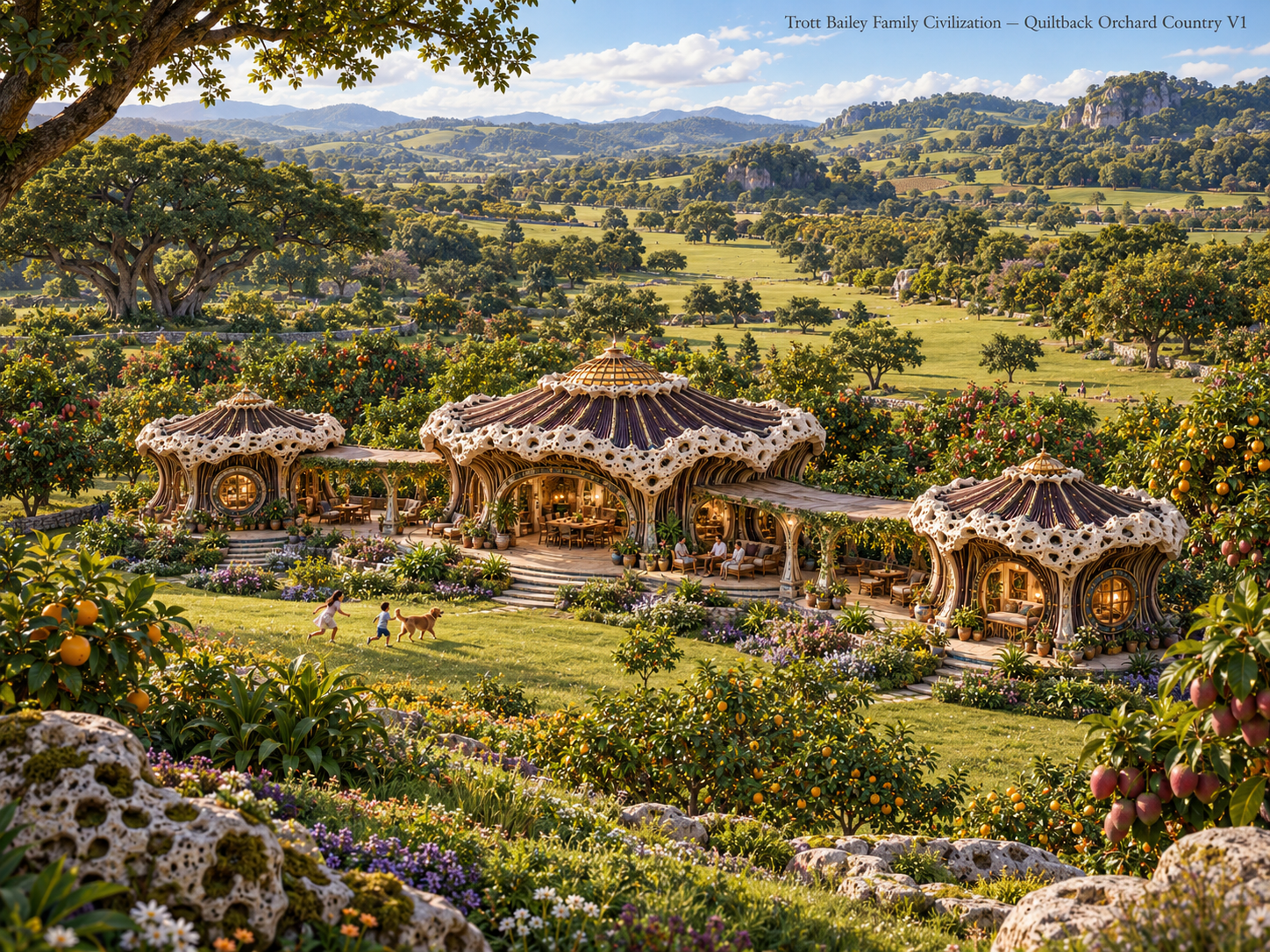
Small-island governments should begin treating every piece of public land they already maintain as part of the national food, shade, soil, biodiversity and family-security system. Start with schools. If a school has a perimeter of one kilometre, planting productive trees at roughly ten-metre intervals creates around one hundred planting positions. Those positions should become a living mixture of mango, breadfruit, citrus, coconut where appropriate, papaya, tangerine, passion fruit, grape vines and other species suited to the local climate and site.
This is not a decorative school-garden project. It is national infrastructure. The school is already there. The land is already under public care. The children are already arriving every morning. Government already pays to maintain the grounds. Instead of maintaining a landscape whose main job is to grow grass until somebody comes back six weeks later and cuts it again, that same maintenance effort can build something that becomes more productive every year.
Food, shade, learning, propagation and cooler grounds.
Cooling, nourishment, healing landscapes and family access.
Food, biodiversity, shade and free public life.
Turn routine maintenance into accumulating living wealth.
The default question should change from “How do we keep this ground tidy?” to “How many useful jobs can this ground perform for the nation?” A mango tree can provide food, shade, leaf litter, carbon storage, cooler ground, bird habitat, beauty and propagation material at the same time. Passion fruit can turn a fence or shade structure into productive infrastructure. Breadfruit can become canopy and a major food crop. Citrus can feed children while bringing pollinators and visual life into public space.
If a grounds crew cuts grass for twenty years and the land is no more useful in year twenty than it was in year one, money moved, wages were paid and GDP recorded activity. But very little abundance accumulated. If that same grounds crew gradually builds a productive landscape, every year of maintenance adds to the nation’s living wealth.
Let the maintenance abound.🥭This is what we are learning through the Foodway in Prado
This connects directly to what our family has been testing through the Foodway in Prado, Bahia, Brazil. Prado is a small seaside town, which makes it especially useful for thinking about island and coastal economies. Our family has been asking a simple question there: why should food-producing plants be separated from the routes where people already walk, live, wait and gather?
Our Foodway allows food to exist along ordinary human movement. Some of that food is simply left available. Locals can eat. Visitors can eat. A passer-by does not have to enter a shop, prove eligibility, find a cashier or open an app before touching a fruit. That generosity matters, but the deeper finding is economic: productive abundance can sometimes work more efficiently when money is removed from the middle of it.
💵Now contaminate the idea with money
Take that simple school fruit tree and decide that every fruit must become a commercial product. Now somebody has to pick the fruit for sale. Someone grades it. Someone packages it. Someone stores it. Someone transports it. Someone advertises it. Someone staffs the place where it is sold. Somebody buys a cash register or payment system. Accounting enters. Tax administration enters. Unsold fruit begins to spoil, so somebody is eventually paid to dispose of what nobody bought.
The original mango was hanging ten metres away from the child. We created an entire economy between the child and the mango. Then we called the extra activity growth.
This is one of the clearest reasons the Trott Bailey Family says money is becoming obsolete as the gatekeeper of abundance. That does not mean productive landscapes require no stewardship. Trees need pruning. Diseased fruit needs handling. Grounds must remain safe. Species must be selected properly. Harvest pressure must be observed. Skilled people still matter enormously. But stewardship and commercialization are not the same thing.
🚌Put food where people already wait
The same thinking can transform public transport spaces. Why should every bus stop be only concrete, metal and advertising? A shaded structure can support passion fruit. A productive edge can hold papaya. A trellis can carry vines. Nearby ground can support suitable low-growing food crops.
A traveller should be able to eat. A schoolchild should be able to eat. An elder should be able to eat. A tourist should be able to eat too. This is more than generosity. It changes how a country feels.
We expected you to be here, so we planted before you arrived.For a small island, this can be especially powerful because scale works in its favour. Government can map schools, clinics, parks, public buildings and maintained roadsides and begin converting suitable edges into productive land within a few planting seasons. The result would not be one grand agricultural project hidden away from the population. It would be thousands of small food-producing points woven through ordinary life.
🏏Cricket should lift the nation
Cricket is not merely entertainment in the Caribbean. It is memory, identity, family, rivalry, storytelling and national pride. So what does it mean when an Antiguan father can hear the crowd nearby but cannot take his children because access is money-gated?
We call the sport part of the nation, then we put the nation behind a payment screen. The father works more hours to earn more money. Now he can afford the streaming subscription, but he has no time to watch the match with the children. The cash register improved. The family experience disappeared.
That is Friction Economy. The better question is not automatically, “What price should we charge?” The better question is: How do we organize access when demand is greater than capacity? That is an organization problem. It does not automatically have to become a pricing problem.
A Pacorips-style system could organize family seating through reservations, rotations, school days, elder access, child access, district allocations and waiting lists. No bidding war. No richest-family-first rule. Just organize the chairs. Money is not the only technology humanity has for deciding who sits where.
🎭The arts centre should belong to the family too
The same test should apply to a publicly financed performing-arts centre. If the population takes on the cost of borrowing to create or renovate the facility, what happens when it opens? Do families then meet another money gate at the door?
This is what we call double spending. The population helps repay the loan. Then the same family must pay again to use the facility the loan created. That does not mean every performance can have unlimited capacity, but the default question should be how much access can be organized freely before another payment layer is introduced.
Family nights, children’s performances, school access, local music, community theatre, elder programmes, dance, storytelling and public celebrations should be treated as returns on the investment. If government is going to borrow, let the debt leave behind something that unburdens the people. Let it leave delight. Let a four-year-old walk into a performance she remembers ten years later. That memory is part of the return too.
👨👧The father matters too
Family policy conversations often place almost everything on mothers. But a civilization that strengthens families must protect fatherhood too. Kimroy is not simply the income side of our household. He is Daddy. Keilah needs time with him. Kaleeyon needs time with him. Kezidek needs time with him.
A prosperous economy should not congratulate itself because a father earns twenty percent more while quietly taking forty percent more of his waking family time. That is a bad exchange. The same applies to Sherika. A mother should not have to become economically “successful” by paying strangers to replace five things she once had enough time to do herself, unless that is the life she genuinely wants.
Daycare may be wonderful. Restaurant meals may be wonderful. Employment may be wonderful. The real measure is whether the family gained choice. If Mommy wants to work, can she? If Mommy wants more time with the baby, can she? If Daddy wants to coach a child, can he? If both parents want an afternoon at the beach, does the economy allow the family to breathe?
🍼The birth-rate question is really a confidence question
A fertility rate below replacement should not cause governments to pressure people into having children. That would miss the point entirely. The better question is: Are couples having the families they actually want?
If a couple wants three children but stops at one because housing is too expensive, that is economic information. If they want another baby but childcare would destroy the household budget, that is economic information. If both parents must work such long hours that another child feels impossible, that is economic information. If food, water, housing or energy insecurity makes family growth frightening, that is economic information.
A prosperous society should never force people to reproduce. But it should make wanted family life possible.
☀️Climate resilience needs somebody to inherit it
This is not an argument against climate investment. Protect the shoreline. Build renewable energy. Protect coral reefs. Strengthen water security. Reduce disaster vulnerability. Develop blue industries. But add one line to every investment plan: How does this make family life easier to continue here?
🥂CHOGM is one useful test
The current CHOGM spending debate in Antigua and Barbuda gives us one practical example. Think again about the restaurant. This time the restaurant is hosting a giant banquet. Famous guests are coming. Roads are repaired. Venues are improved. Technology is upgraded. Security is strengthened. Communications are improved. Emergency-response systems are prepared.
During banquet week, the cash register looks very busy. Abundance Theory asks what happens the morning after. Are the roads still better for Antiguan families? Are emergency systems stronger? Do local workers now have new skills? Does the performing-arts centre remain open and useful? Did digital and security capability stay in the country? Did businesses gain relationships that continue producing?
If the spending mainly produced temporary decoration, temporary logistics and temporary activity that disappeared with the delegates, GDP still recorded activity, but much less lasting wealth was authored.
That is not a government argument or an opposition argument. It is simply the question any sensible restaurant owner would ask after hosting the largest banquet of the year: Is the kitchen better now?
🏝️Smallness can be an advantage
Small island states often describe smallness as a vulnerability. It can also be an extraordinary design advantage. You do not have to transform a continent before people feel the difference. Transform one school perimeter. Then another. Then every school. Change one bus stop. Then another. Open one public arts programme. Then build a national rhythm around it.
A smaller national system can sometimes move from idea to lived reality much faster than a giant country. Small islands should not automatically import every economic assumption from much larger nations dealing with completely different scales and problems. An island can design around the island.
🏗️The investor test
Investment can be wonderful. A factory can create skills. A call centre can create income. A hotel can create careers. Technology companies can create opportunity. But Abundance Theory asks what happened to the family after the investment arrived.
Imagine a young Antiguan family. Before the new jobs, their income is modest. Afterward, both parents earn more. GDP rises. But now they need paid childcare. They need more transport. They buy more prepared food because nobody reaches home in time to cook. They see the children less. Their commuting costs rise. They have money for the beach but no time to go.
The answer is not to reject the job. The answer is to design growth so that the job returns more to the family than it removes: higher wages, shorter workweeks, remote options where practical, better transport, childcare close to families, technology that eliminates pointless labour, food growing close to communities, lower energy costs and more public joy that does not require another payment.
🌺What is Antigua already rich in?
Antigua and Barbuda is not starting from nothing. Look around. Sea, sunlight, warmth, wind, food-growing potential, coastline, culture, music, cricket, families, community memory, tourism knowledge, maritime knowledge and a population small enough that national improvements can touch a very large share of households.
These things are wealth before anyone sells them. GDP becomes interested in the beach when the tourist pays for the experience. Abundance Theory was interested in the beach before the tourist arrived. GDP notices food when it is sold. Abundance Theory also notices the fruit tree beside the school. GDP notices childcare when money changes hands. Abundance Theory also notices grandparents helping raise grandchildren.
This is not a rejection of money. It is refusing to let money claim ownership of the word wealth.
📋Small islands need family investment plans
A serious family investment plan would ask different questions. Not merely how many jobs were created, but how much family time those jobs leave. Not merely how much food was sold, but how much food-producing capacity exists near people. Not merely how many kilowatt-hours were generated, but how much household burden the energy system removed.
Not merely how many tourists arrived, but whether residents can still enjoy their own beaches. Not merely how much a stadium earned, but how many children sat beside their fathers and fell in love with cricket. Not merely whether an arts centre balances its books, but whether a four-year-old walked inside and saw something that stayed in her imagination.
Not merely whether GDP rose, but whether young couples look at the future and say:“Yes. I want to build my family here.”
🌱Money moving does not mean the nation is growing
The restaurant can have a record-breaking year while the kitchen falls apart. A country can report a glowing GDP while families become more tired, more separated, more dependent and less confident about having children.
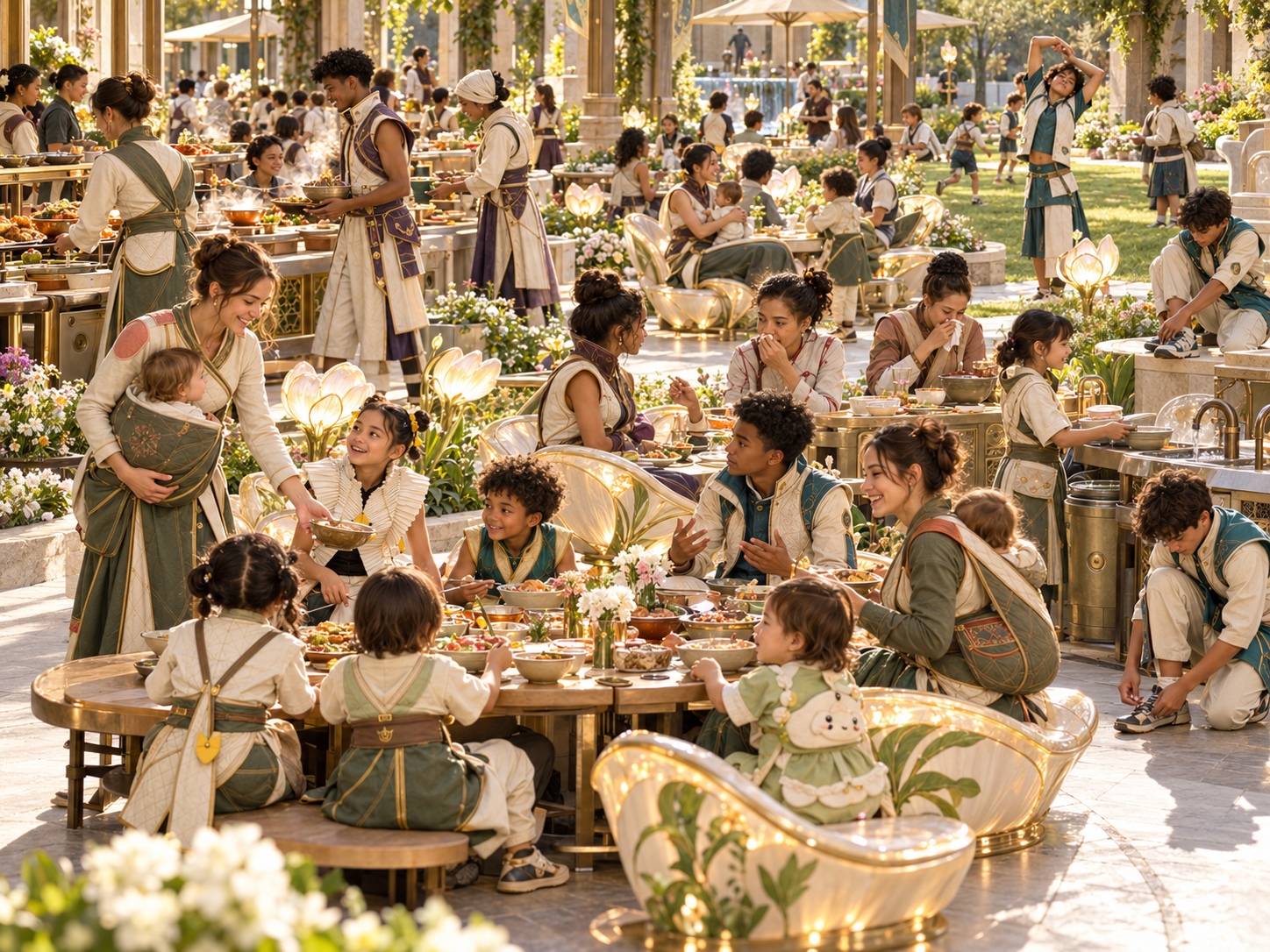
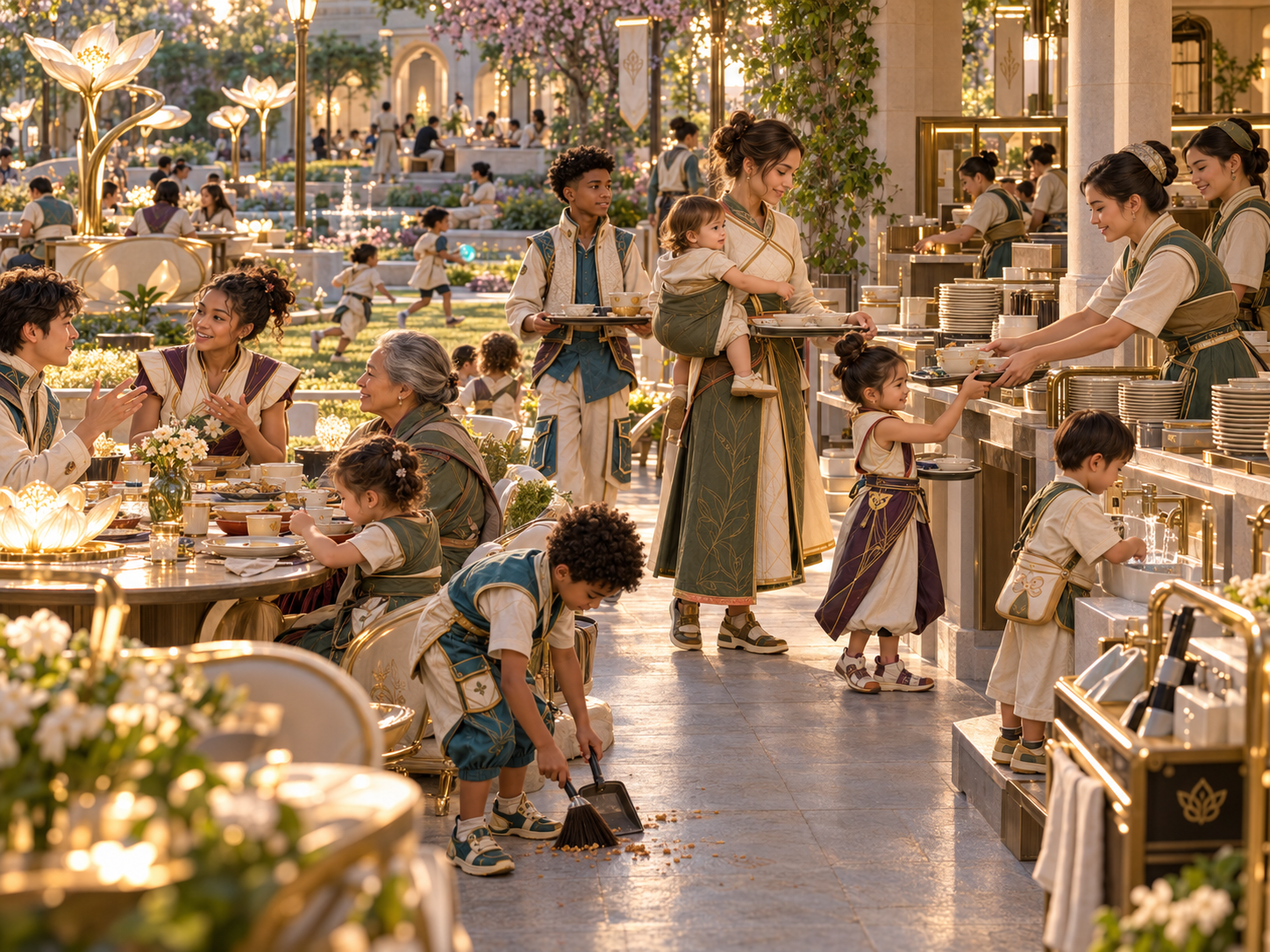
The Trott Bailey Family’s Abundance Theory begins at the bottom of the structure. Feed the family well. Return time to the family. Give the family beauty. Give the family public life. Give the family water. Give children productive landscapes and places to learn. Let fathers father. Let mothers mother. Let husbands and wives still know one another after the bills are paid.
You do not raise the nation first and hope the family catches up later.You raise the family, and the family raises the nation.



 and then