

Another Day with Amara: Fashion Network Apprenticeship
Fashion Network Shubaka — Amara Tesfaye
Textile Species House
Yesterday I was trying to save this cloth. Today I was standing in the place where people decide what the cloth should be able to survive in the first place.
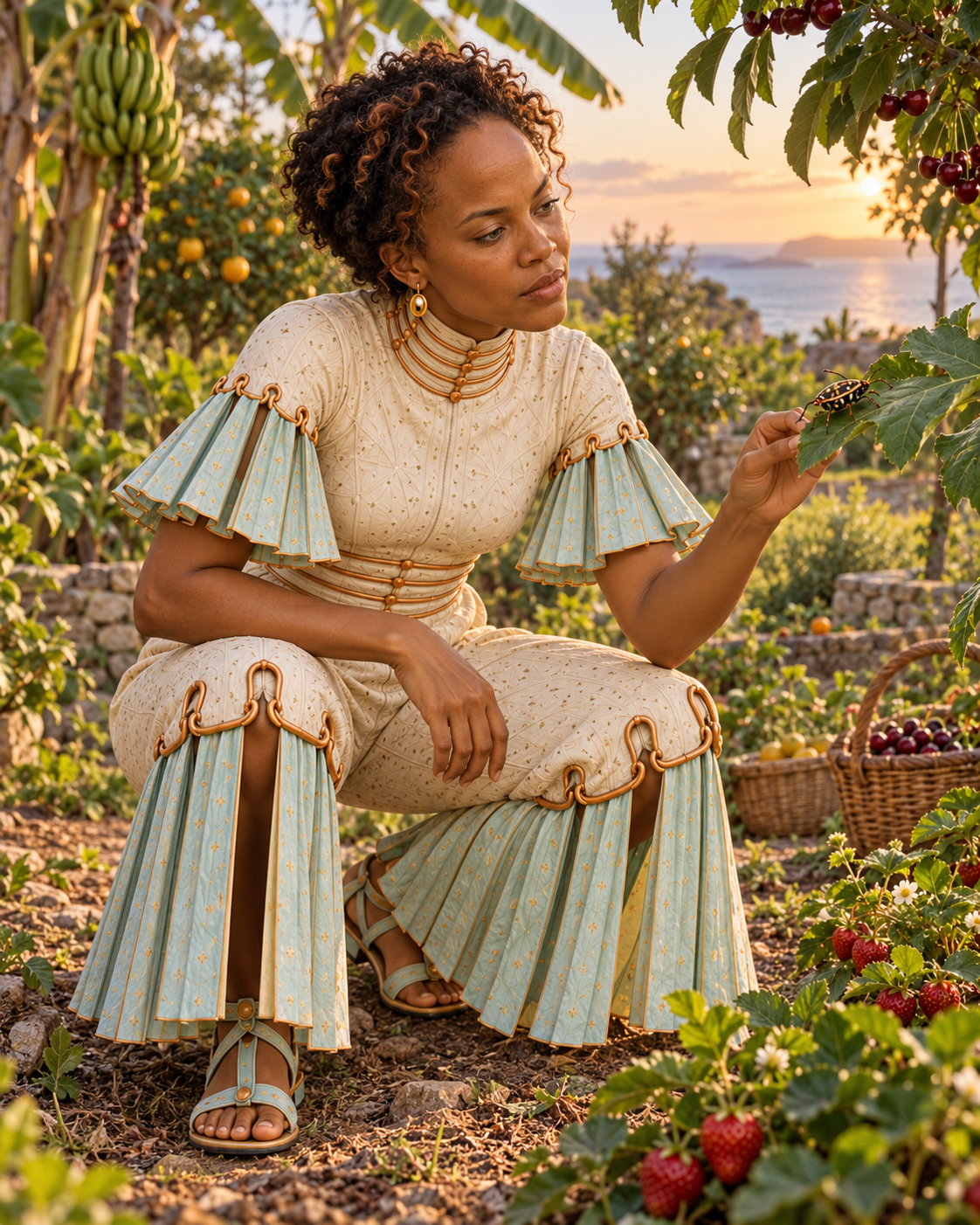
My name is Amara Tesfaye. I am 20 years old, and right now I am rotating through the Trott Bailey Fashion Network for Shubaka. Yesterday I worked in the Fabric Node. We treated a SaPo Handle Harness V1.1 that had berry juice across the front field. We got the stain out, but some parts of the textile relaxed during treatment. The sleeve chambers needed help getting their shape back, and the bridge yoke behaved differently from the softer parts of the garment.
I went home thinking about that, so when I saw that today’s rotation was in the Textile Species House, I was happy. I probably talked about it too much over breakfast.
Nari and Kojo
The lead stewards today were Nari, 22, and Kojo, 23. They have been married a little over a year.
Nari is calm most of the time, but once she starts talking about textiles she speeds up and starts using her hands to explain everything. Kojo is quieter. He will rub a textile between two fingers, fold it, stretch it, turn it over, wet a small section, and stare at it for a while before saying much.
They both understand how garments move through the whole Fashion Network, but textiles are where they have chosen to go deeper. They study how cloth handles sweat and water, how quickly it dries, whether it stretches and comes back properly, what repeated washing does to it, how stains move through it, whether colour holds, how much rubbing it can take, and whether it still feels good against the body after years of use.
We started by making a mess
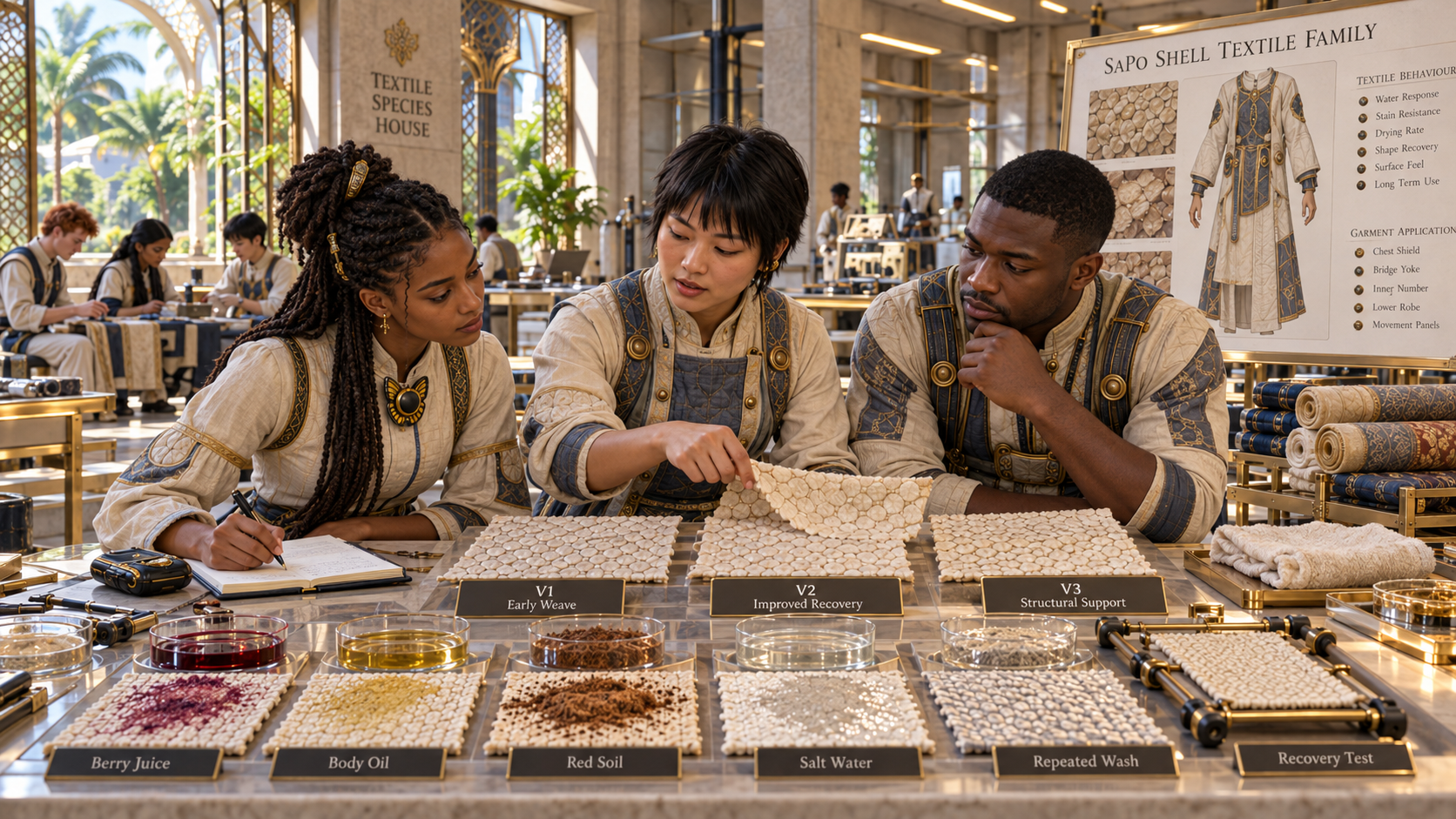
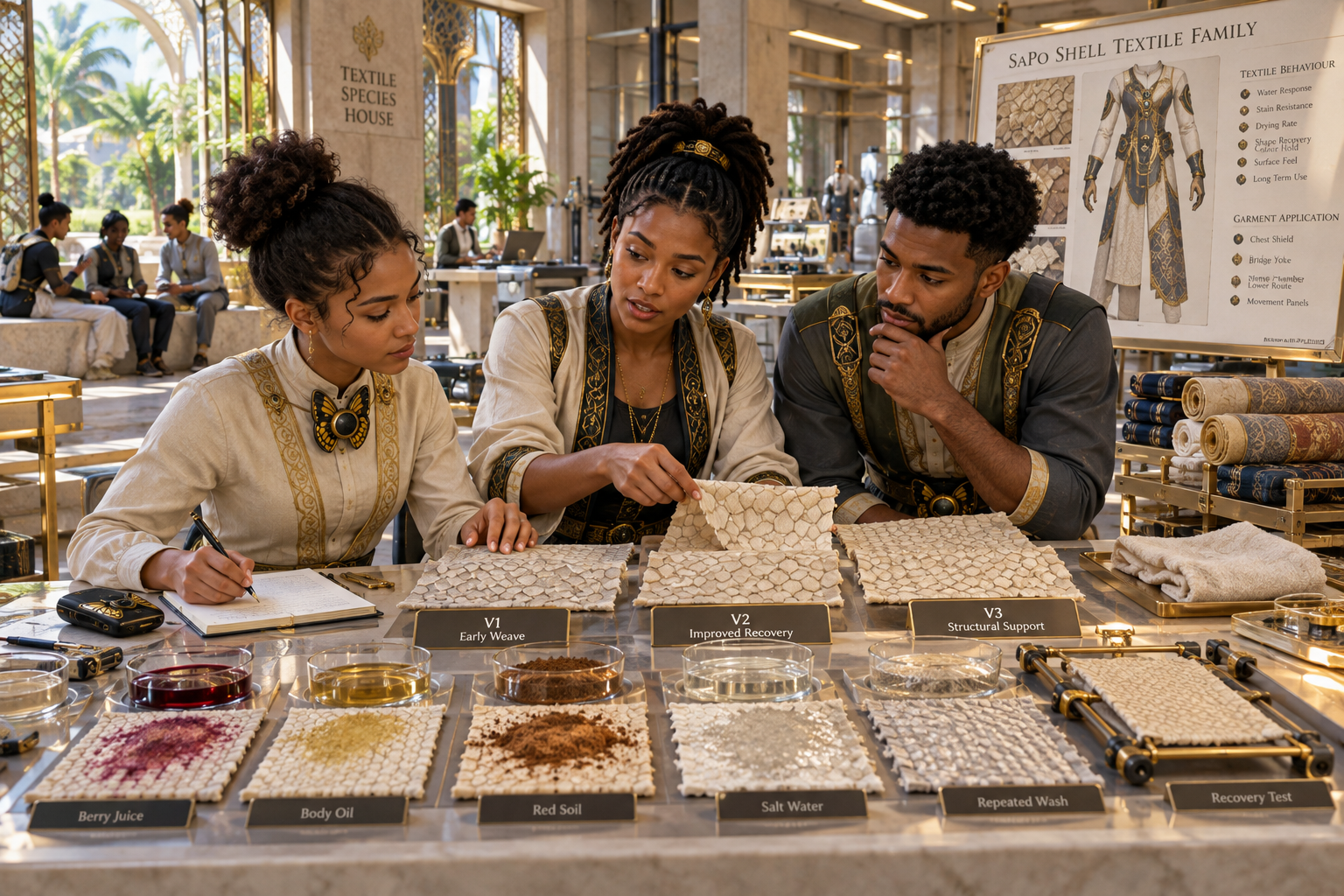
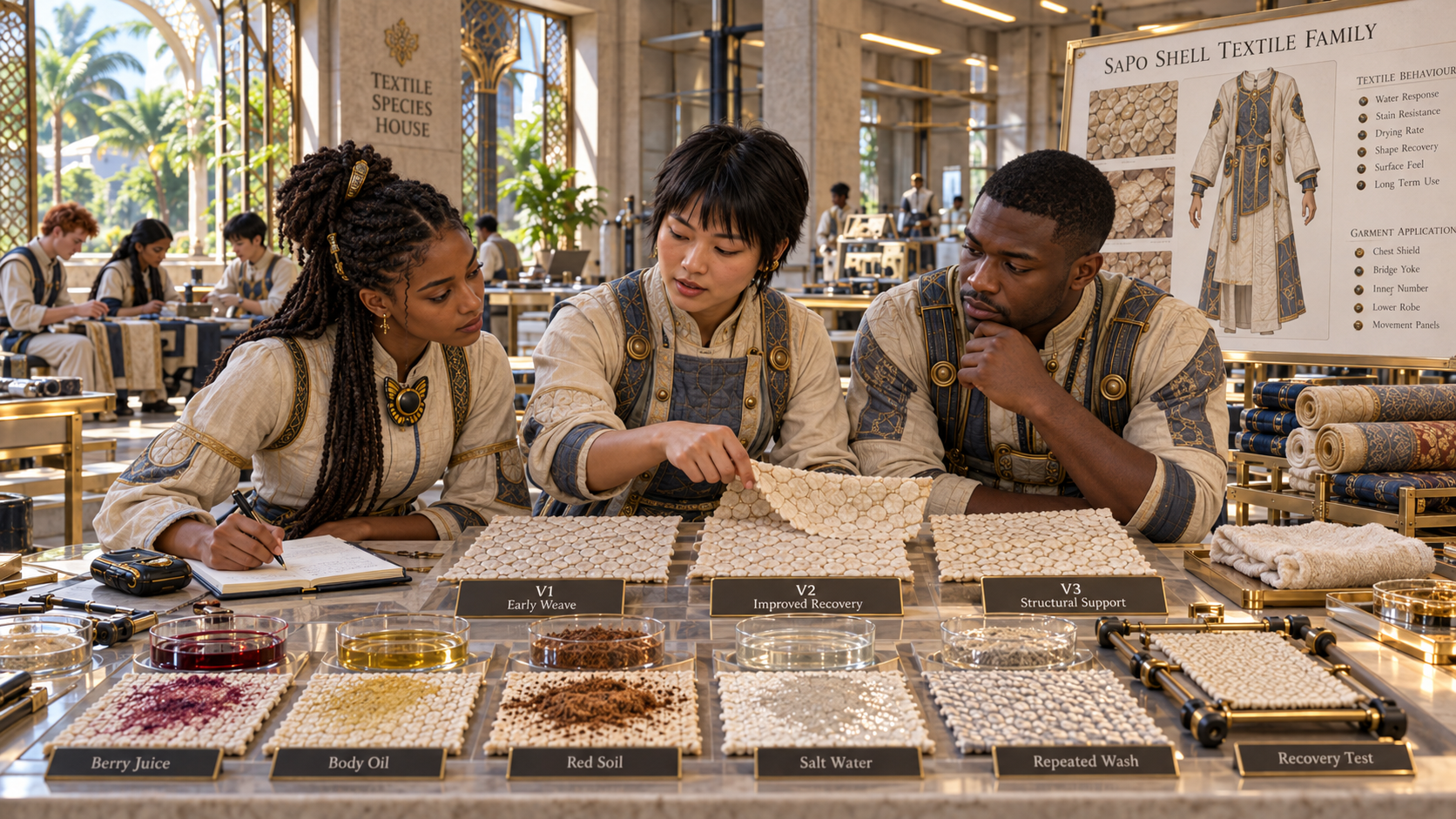
The first thing they gave me was six fabric samples. They looked almost the same, and then we started messing them up on purpose.
One got berry juice, one got body oil, one got red soil, and one got salt water. Another was bent, folded and compressed again and again. The last went through repeated wash and dry cycles.
I thought we were mainly checking whether the fabrics were strong. Kojo said, “We are also watching how they fail.”
That was more interesting. One sample held its colour very well but took too long to dry. Another cleaned easily but started losing its shape after several wash cycles. On one sample the berry stain stayed close to the surface. On another, the same stain travelled into the weave much faster.
A fabric can look fine after the first wash and still be a poor choice if it starts giving trouble after twenty.
The SaPo textile was here
Later, Kojo pulled three samples from storage and I recognised the textile family. It was the same type of shell cloth we had worked on in the Fabric Node yesterday.
I laughed. “Of course this is here.”
Nari looked at me and said, “Where did you think it came from?”
Fair enough.
The three samples came from different stages of development. The first relaxed too much after wet care. The second recovered better. The third had more support in the areas that would later become structures like the chest shield and bridge yoke.
At first the differences felt small. Once Nari showed me what to look for, they were easier to notice. One recovered its tension faster. One held structure better around the edge. Another felt nearly identical when dry but behaved very differently once water got into it.
Yesterday’s reshape work started making more sense.
Fabric Node reports come back here
I also learned that the Fabric Node sends useful information back into textile development. Not every stain and not every loose thread, because that would be too much noise. Patterns matter.
If one route node loosens once, perhaps somebody caught it on something. If the same node keeps loosening in the same place across many garments, somebody needs to look at it. If one garment dries slowly, that might mean nothing. If garments made from the same textile repeatedly stay damp along the same dense route, that is useful information.
Nari showed me a report from another district where one textile was taking too long to dry around a heavy lower route. They were already testing another weave there.
That was enough to make me want to keep rotating through the network.
The work is hot in places
The Textile Species House itself is comfortable, but some of the testing areas are hot. The steam and wash-recovery stations have concentrated heat around them, and if you stand close for too long, you feel it.
The whole building does not stay hot though. Warm air is drawn upward very quickly, and cooler air keeps moving through the larger hall. There are huge shaded windows along one side, with deep stone ledges underneath them. Everybody ends up there during breaks because the ledges stay cool.
Around midday I sat there with three of the other Shubaka interns. There are four of us rotating through this part of the network this week.
Jalen is interested in footwear and keeps finding reasons to wander toward anything involving soles, support, straps or tread. Mira likes routing and records. She wants to know why everything goes where it goes and how information follows it. Tavi still wants to get back to garment construction as soon as possible and is treating this rotation like something he has to finish before returning to the real work.
I said almost exactly the same thing about the Fabric Node yesterday, so I am not laughing at him too much.
Wokumbakia at lunch
Wokumbakia kept running while we ate. There were updates about harvests, food abundance, travel spots, and what was coming into season.
A heavy fruit harvest came up and Jalen immediately wanted to go. By the time the update finished, he was already asking who else wanted to travel with him.
Five minutes earlier we had been arguing about drying rates.
My Butterfly Route is getting full
I use a Butterfly Route voice device during Shubaka. I clip it near my collar because my hands are usually busy. If something comes into my head while I am working, I record it before I forget.
“Could the outer route slow fruit penetration without making the textile hotter?”
“Ask Kojo why sample three dries faster.”
That second one was very advanced science.
On break I played my notes back and added another question about the SaPo sleeve chambers. A few minutes later Jalen sent me a voice message from Footwear even though he was only a few rooms away. Apparently walking back to the window was too much work.
I thought textile work was mainly about inventing new fabrics
Sometimes it is. Other times it starts because something keeps annoying people.
A textile is too hot, takes too long to dry, traps soil in one area, becomes rough after repeated care, loses its shape after washing, or keeps staining in the same exposed section.
If the same problem keeps returning, somebody should study why. That seems simple enough.
Then Sher’s board came out
Later in the morning, Nari brought out one of World Ruler Sher’s approved garment boards.
The textile team cannot solve every problem by changing the garment into something easier. If Sher has authored a shield, a chamber, a suspended panel, a routed drape or a certain type of movement, the textile has to support that.
Kojo showed me one test weave that held its shape extremely well. At first I thought that meant it was better.
Then I moved it. It barely moved.
He was right. A person still has to live in it.
The part I liked most
After lunch we went deeper into stain testing. That is where I got stuck, in a good way.
We put the same fruit stain on several related textiles and watched what happened. On one, the liquid spread very fast. On another, it stayed close enough to the surface that early blotting removed most of it. A third resisted penetration well but held onto too much treatment water afterwards.
I started recording questions again. Could the surface slow fruit penetration without making the garment hotter? Could the outside resist stains while the inner surface stayed soft? Could support weaves recover faster after rinsing? If orchard clothing is going to meet fruit all the time, should the most exposed parts be built differently? Could some pieces come off for separate cleaning? Could some structures be easier for the Fabric Node to restore?
Nari looked at my notes and laughed. “You came here for one day.”
I know.
Do I want to stay in textiles?
I am not ready to stay in one department yet.
I still want Route Translation, construction, and more time with Foot Architecture because I am starting to realise that footwear has its own material problems. I also want to return to the Fabric Node after I know more.
Right now, though, I am very interested in material behaviour and stain chemistry. I want to understand why one treatment removes a stain without disturbing colour while another makes the textile worse. I want to understand what water temperature does to different stains, what repeated cleaning does to support structures, and how much of that can be solved before the garment is made.
Maybe I will specialise there later. I do not know yet. I would rather understand the whole garment first.
The bigger picture
Before today, I thought durability mostly meant making something tough. That is too simple.
A textile can be strong and still be terrible to wear. It can resist stains but trap heat. It can hold its shape but make movement uncomfortable. It can survive washing but take forever to dry.
What I want to understand now is how a textile keeps doing its job while ordinary life keeps happening to it: heat, sweat, rain, fruit, soil, children, pregnancy, growth, travel, work, cleaning, repair, and years of use.
Yesterday I saw clothing from the care side. Today I saw where some of those problems begin. Next week seven Big King District outfits are coming through, and I am already wondering what they are going to tell us.
I am not trying to decide my specialty yet.
I want to understand what helps a garment keep serving the person who wears it, even after years of ordinary life.
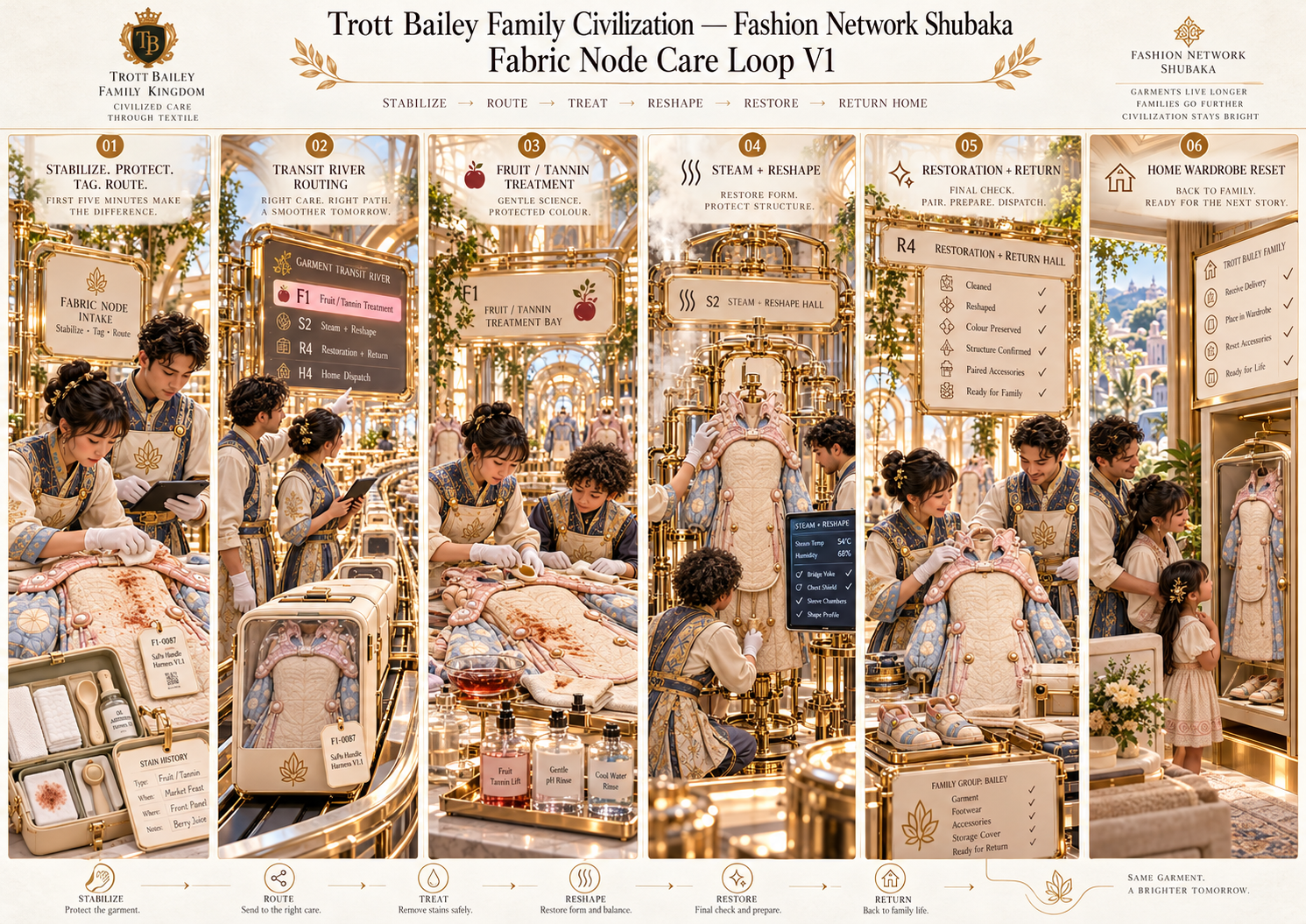
Follow the daily experiences of apprentices throughout World Ruler Sher Fashions Network from Garment Construction to Fabric Node, Fabric Preservation etc