

Weeloo-Weeloo Family Sea Carrier. Luv You Sea Care-port
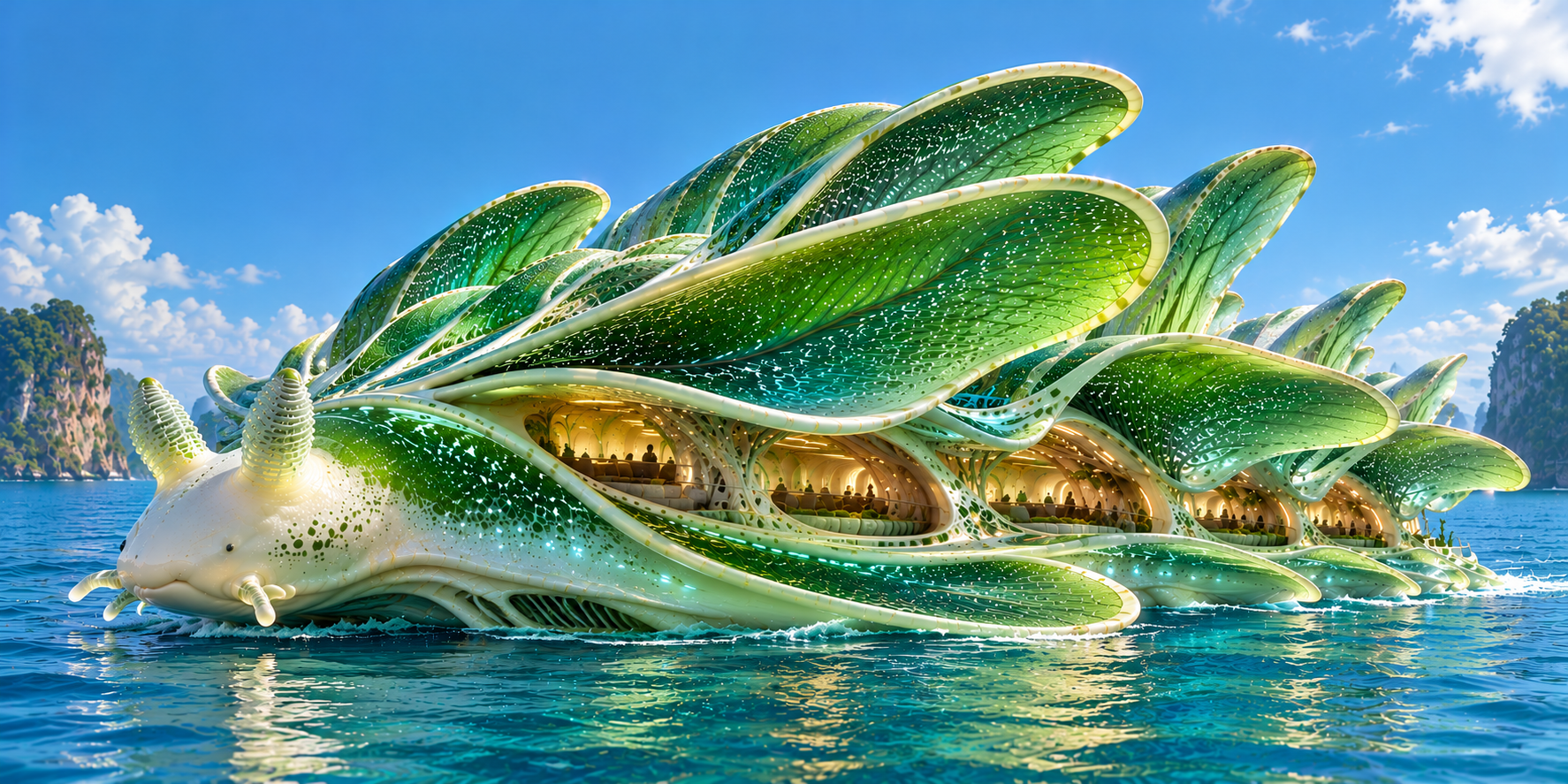
Weloo-Weeloo
The Leaf-Frond Family Carrier Body, Function, Movement, and Safety Law
Founding Origin
Weloo-Weeloo began around 7 p.m. at night.
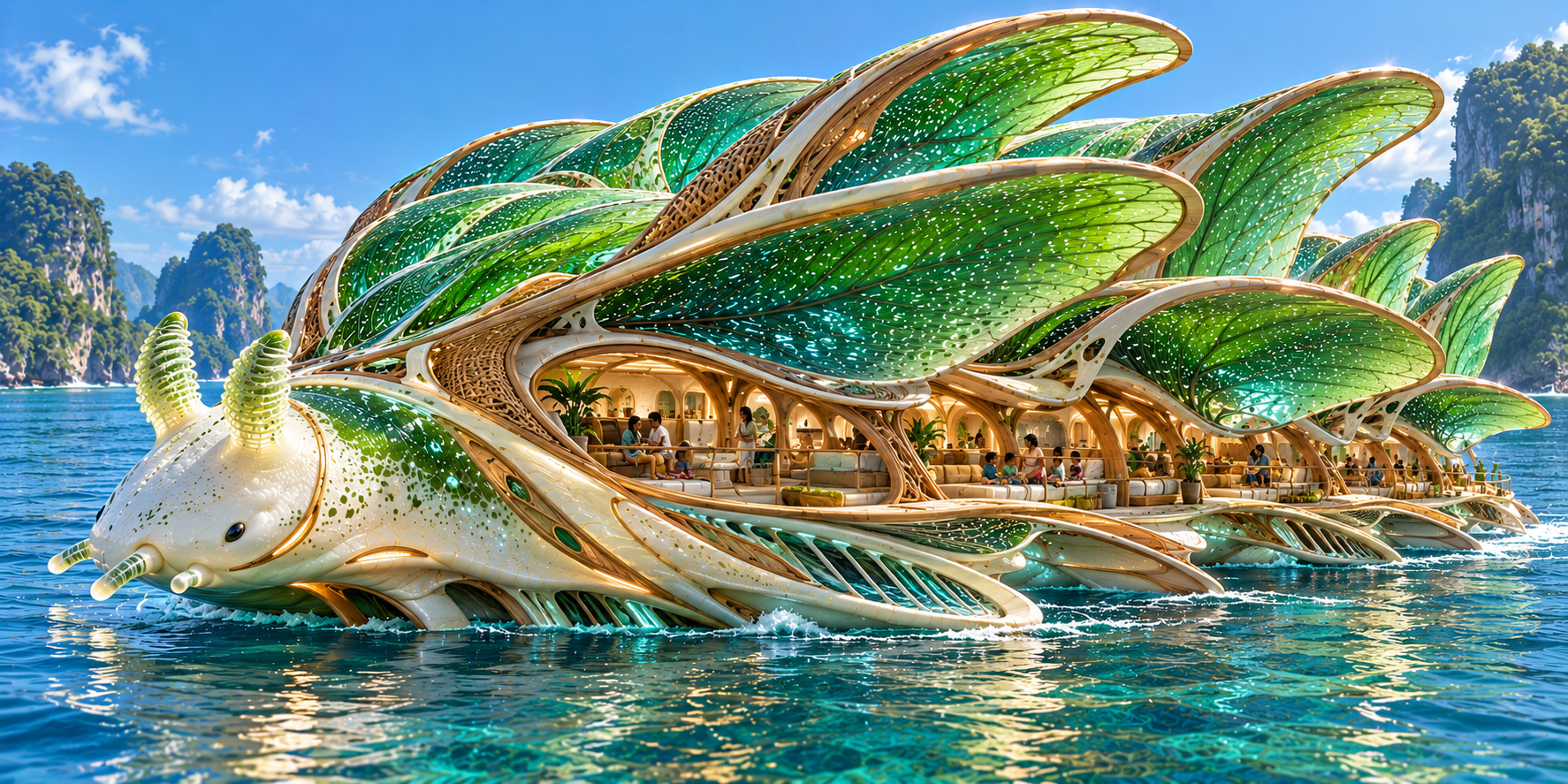
Sher was watching an under-the-sea feature on YouTube and saw the green leaf-frond sea slug. She thought it was cute, iconic, and strong enough to become a Sea Care-Port family carrier.
She took a screenshot and used ChatGPT to create the first sea carrier concept from it.
Beside her was her sleepy four-year-old daughter, Kaleeyon.
Sher asked Kaleeyon for a name for the cute carrier.
Sleepily, Kaleeyon said:
Weeloo-Weloo
That is how the carrier got its name.
Weloo-Weeloo began when Sher saw a cute green leaf-frond sea slug in an under-the-sea YouTube feature around 7 p.m., took a screenshot, and used ChatGPT to create the first Sea Care-Port carrier concept. Her sleepy four-year-old daughter Kaleeyon was beside her, and when Sher asked for a name, Kaleeyon sleepily said “Weeloo-Weloo.” That is the official naming origin of Weloo-Weeloo.
Record Note
This is an invention and design record, not construction certification, maritime approval, or operating approval.
It preserves the body laws of Weloo-Weeloo before later modeling, engineering, safety testing, construction planning, and Sea Care-Port integration.
1. Official Body Type
The official species name is:
Weloo-Weeloo
Full working name:
Weloo-Weeloo — Leaf-Frond Family Carrier Species V1
Weloo-Weeloo sits inside this line:
A Leaf-Frond Family Carrier is a Sea Care-Port carrier class defined by layered frond canopies, soft sensing heads, family chambers protected under canopy, gentle reef-glide movement, and child-friendly iconic presence.
Weloo-Weeloo is the first named carrier species in this class.
It should not be developed as Sugsul with green leaves. Sugsul is pod-husk, curl-drive, command-ark, and heavy-protection. Weloo-Weeloo is frond-canopy, sensing, reef-glide, and child-wonder.
Sugsul protects through pod-husk body, curl-drive movement, command ark, Eye Carriers, and layered body transformation. Weloo-Weeloo protects through soft sensing, frond canopy shelter, quiet reef-glide movement, family chambers under shade, signal bloom, chamber sealing, stabilizing frond systems, and child-loved recognition.
2. Core Anatomy Law
Weloo-Weeloo is not only a cute carrier inspired by a sea slug.
The cuteness stays. The child-loved shape stays. The sleepy naming origin stays. But the body cannot stop at charm.
Every major part must carry work.
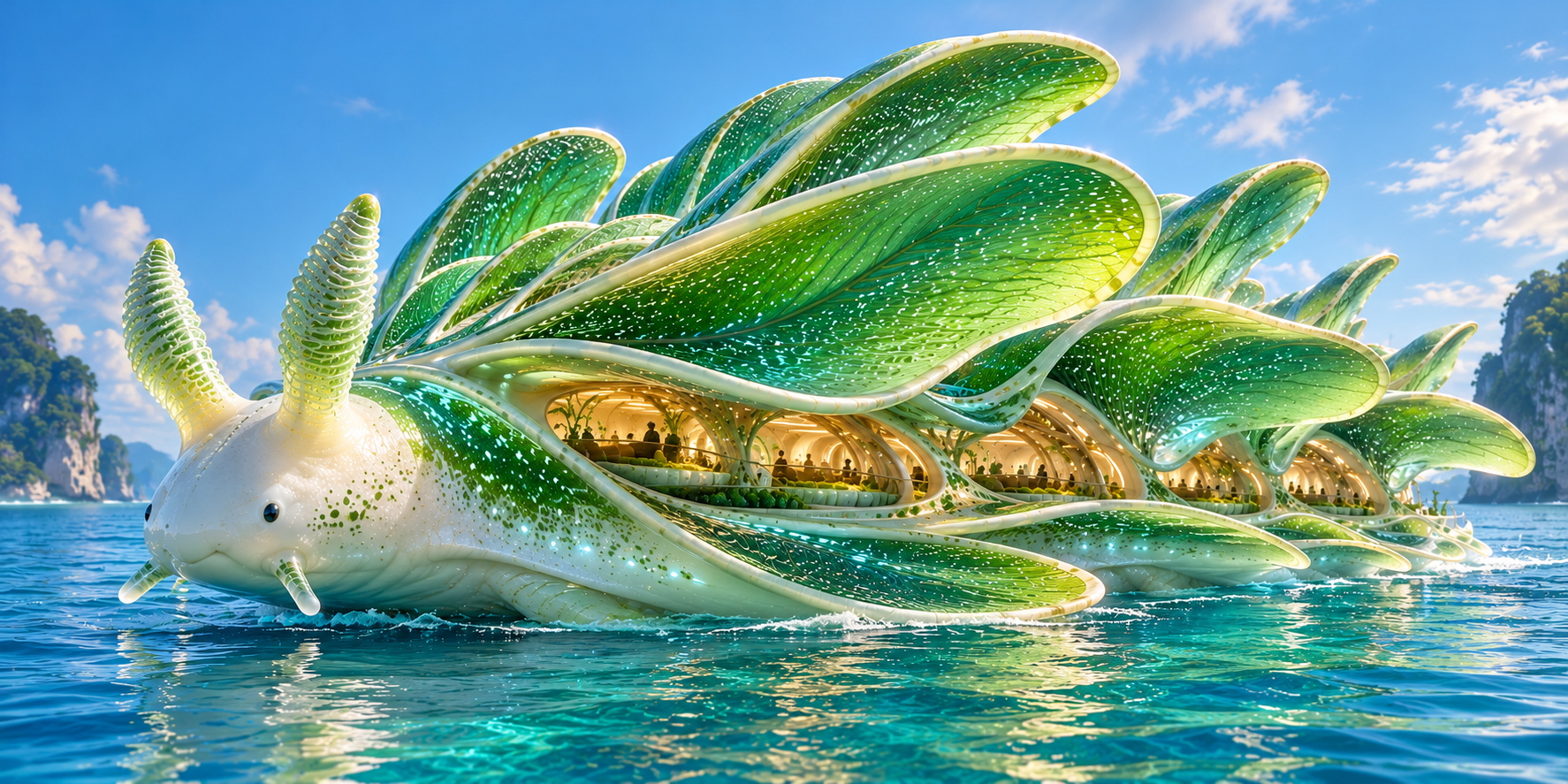
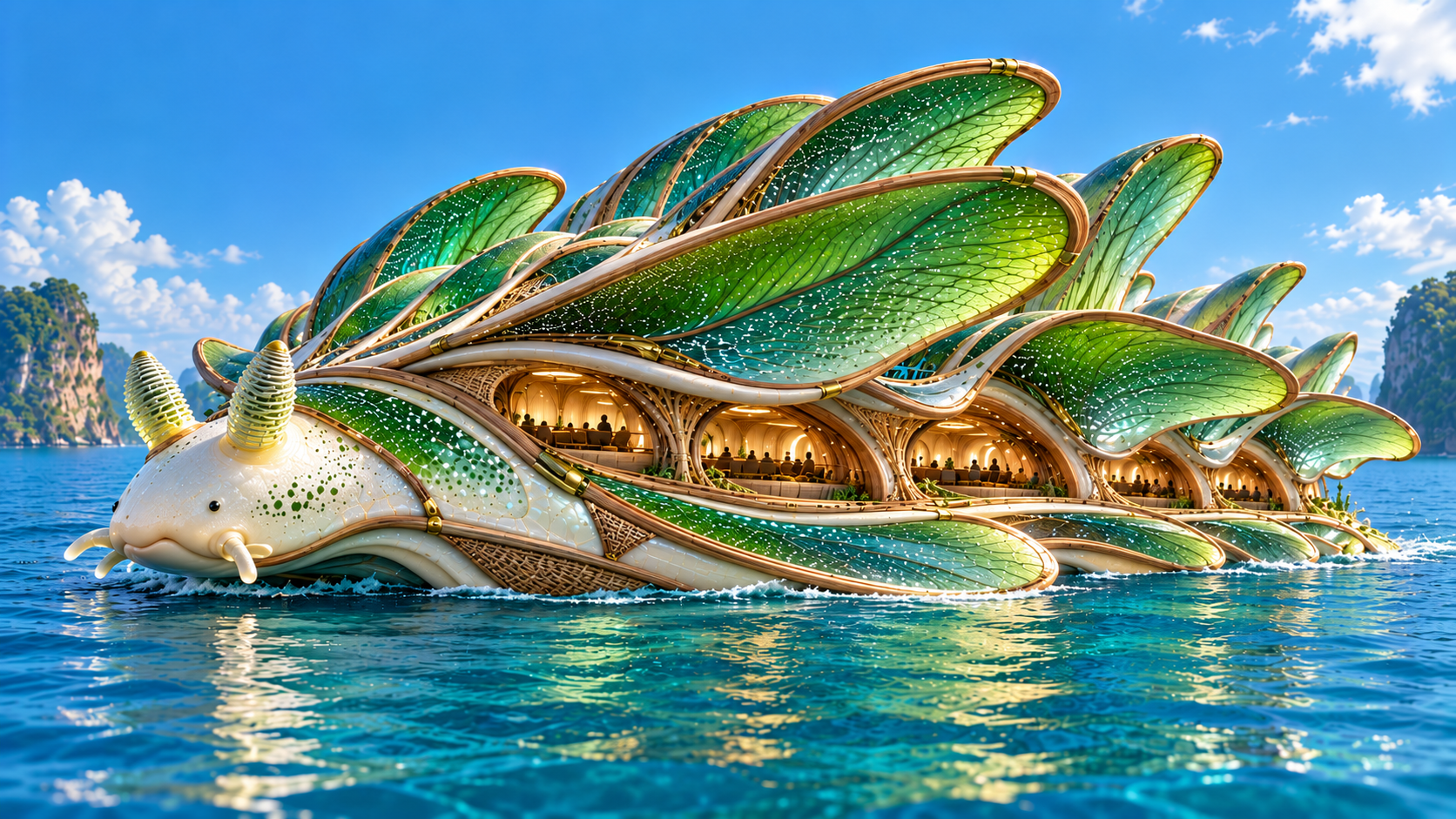
Weloo-Weeloo’s body is organized around a soft sensing head, layered frond canopy, protected family chambers, reef-glide underbody, and frond systems that shade, cool, signal, stabilize, shelter, and make the carrier child-lovable without making it childish.
Weloo-Weeloo has five main body systems:
Sensing Head
Reads route, sea, air, dock, and close approach.
Frond Canopy
Shades, cools, signals, balances, gathers energy, and shelters families.
Family Chamber Line
Holds families in warm protected sea rooms under the canopy.
Reef-Glide Underbody
Carries buoyancy, structure, propulsion support, and low-wake movement.
Emergency Bloom System
Uses fronds, chamber seals, beacon signals, stabilizing floats, and soft raft release to protect families.
Weloo-Weeloo is not a boat with sea-slug decoration. The sea-slug logic becomes the carrier’s head, canopy, chamber protection, movement, signaling, and safety structure.
3. Body Parts and Functions
Soft White Sensing Head
Weloo-Weeloo’s head is pale, soft, rounded, and gentle.
It carries forward intelligence and senses the conditions before the rest of the body commits to movement.
The head supports:
- route sensing;
- shallow-water and reef-depth reading;
- current, wind, and weather awareness;
- docking communication;
- obstacle detection;
- captain / route steward position;
- emergency beaconing.
Weloo-Weeloo’s head senses the sea before the body moves through it.
Cute Trustworthy Face
Weloo-Weeloo needs a readable face.
The face should hold the cute, iconic quality that made Sher notice the sea slug in the first place. It can use small dark eye points or gentle face marks, but it should not become cartoon, mascot, monster, or luxury vehicle nose.
The face supports:
- child recognition;
- front orientation;
- emotional trust;
- species identity;
- gentle dock approach presence;
- night readability when softly lit.
Weloo-Weeloo’s face is cute, iconic, and trustworthy, not cartoon, mascot, monster, or luxury vehicle nose.
Twin Sensing Horns
Weloo-Weeloo has two soft ribbed sensing horns rising from the head.
They come from the nudibranch inspiration. They are sensing organs, not weapons, antenna rods, or decorative spikes.
The horns support:
- wind and salt-air reading;
- wave rhythm sensing;
- weather caution;
- route signal reception;
- dock alignment sensing;
- emergency beacon glow;
- communication with Sea Care-Port marker systems.
The sensing horns read air, wave, route, and dock signal before Weloo-Weeloo commits its body forward.
Lower Docking Feelers
The lower docking feelers sit near the face and waterline.
They are small, soft, and close-range. They protect the slowest and most precise part of movement: the final approach.
The feelers support:
- final distance reading;
- soft contact detection;
- waterline sensing;
- shallow obstacle detection;
- dock-edge awareness;
- child-safe slow docking mode;
- fine approach correction.
Weloo-Weeloo’s forward feelers protect the final few meters of movement.
Layered Green Frond Canopy
The layered green frond canopy is Weloo-Weeloo’s main body identity.
The fronds are not decoration, leaves glued to a craft, or botanical costume. They are the carrier’s roof, skin, shade, balance, cooling system, signal system, and child-loved silhouette.
The fronds should overlap like the sea slug inspiration: soft, pointed, green, layered, slightly translucent, and edged with pale rims.
The frond canopy supports:
- shade over family chambers;
- passive cooling and airflow control;
- solar capture;
- spray filtering;
- rain shedding or rain capture;
- signal lighting;
- balance and wind trim;
- wave-softening;
- emergency visibility;
- chamber protection;
- species identity.
Weloo-Weeloo’s fronds are not ornaments. They are shade, breath, signal, cooling, energy, balance, protection, and species identity.
Pale Structural Frond Rims
Each frond should have a pale rim: white, cream, pearl, or soft shell-toned.
The rim makes the frond readable and helps the frond work. It is the structural edge, not a thin decoration.
The pale rims support:
- structural rib strength;
- flexible edge support;
- water shedding;
- frond posture control;
- impact-softening;
- night outline glow;
- emergency visibility;
- edge sealing;
- child-readable shape clarity.
Each Weloo-Weeloo frond has a pale structural rim that carries strength, water shedding, posture control, and signal light.
Speckled Green Energy-Cooling Skin
The green surfaces of the fronds can carry speckles, dots, pores, or patterned marks.
These marks should read as material intelligence, not random texture or cheap printed plastic.
The speckled skin supports:
- solar capture;
- light filtering;
- heat diffusion;
- moisture sensing;
- ventilation pores;
- salt mist behavior;
- route state points;
- soft night glow points;
- maintenance-readable surface information.
The green speckled frond surface filters light, gathers energy, manages heat, senses moisture, and signals carrier state.
Family Chambers Under Canopy
Families ride under the frond canopy.
This is where Weloo-Weeloo becomes a family carrier, not only a beautiful sea form.
The chambers should be warm, protected, and tucked into the body beneath the green fronds. They should feel like sea rooms under a living canopy, not yacht windows, luxury glass pods, exposed bubbles, or generic passenger cabins.
The family chambers support:
- family seating;
- child rest pockets;
- parent-child grouping;
- sea-view openings;
- soft route lighting;
- ventilation from the frond canopy;
- emergency supplies;
- baby and elder support;
- chamber sealing;
- side chamber entry for boarding;
- direct route to the inner family spine.
Weloo-Weeloo carries families in warm protected sea rooms under the frond canopy, not inside exposed bubbles, yacht windows, or generic passenger cabins.
Inner Family Spine
Weloo-Weeloo needs an inner route connecting the family chambers.
This route should feel like a protected internal sea path under the fronds, not a ship corridor.
The inner family spine supports:
- movement between chambers;
- steward access;
- child regrouping;
- elder support;
- baby care access;
- emergency routing;
- chamber status signals;
- connection to boarding entries;
- connection to the forward sensing / steward area.
Weloo-Weeloo’s inner family spine connects the chambers as a protected sea path, not a ship corridor.
Reef-Glide Underbody
The underbody is low, smooth, and pale green-white.
It sits beneath the frond canopy and family chamber line. It is the quiet carrying base of Weloo-Weeloo, not a normal ship hull, speedboat base, or submarine body.
The reef-glide underbody supports:
- buoyancy;
- main structural spine;
- lower stabilization;
- ballast balance;
- quiet propulsion support;
- underside water-channel shaping;
- soft contact protection;
- docking under-edge;
- service channels;
- emergency float storage;
- low-wake movement.
Weloo-Weeloo’s underbody is a reef-glide base, not a ship hull.
Side Stability Fronds
Some fronds along the sides may sit lower and wider.
These are side stability fronds. They help the carrier stay steady without rowing, flapping, or acting as paddles.
Side stability fronds support:
- roll reduction;
- side balance;
- wind trim;
- gentle turning assistance;
- docking trim;
- wave softening;
- passenger comfort;
- emergency float support;
- side shelter during boarding.
Weloo-Weeloo’s side fronds steady the carrier; they do not row it.
4. Movement Law
Weloo-Weeloo does not move like Sugsul.
Sugsul uses curl-drive movement:
Weloo-Weeloo uses quieter reef-glide movement:
The fronds breathe by opening, tilting, or relaxing for balance, wind control, cooling, and posture. The underbody ripples water through quiet channel propulsion. Then the carrier glides forward with low disturbance.
The movement system supports:
- quiet electric assist;
- low-wake water-channel propulsion;
- gentle turning;
- frond tilt balance;
- wave rhythm adjustment;
- stable passenger comfort;
- slow dock approach;
- calm sea presence.
Weloo-Weeloo moves by quiet reef-glide: the fronds breathe and balance while the underbody carries the carrier forward with low disturbance.
5. Frond Posture States
Weloo-Weeloo’s fronds change posture by need.
This gives the carrier life without turning it into a creature performance.
Travel State
Fronds layer backward and downward for glide, shade, wind management, and low resistance.
Boarding State
Selected side fronds lift to reveal side chamber entries and shelter the boarding point.
Cooling State
Fronds open to increase airflow, shade, and heat release.
Rain State
Fronds angle to shed rain away from boarding and chamber entries, or capture usable rain through planned channels.
Night State
Pale rims and frond tips glow softly for route identity and visibility.
Child-Welcome State
The face lights gently, the fronds open in a friendly posture, and the side entry becomes easy for children to read.
Emergency State
Fronds open wider, glow brighter, reveal route lines, increase visibility, and help guide families toward safe chambers or exits.
Weloo-Weeloo’s fronds change posture by need: travel, boarding, cooling, rain, night, child-welcome, and emergency.
6. Docking Interface
Weloo-Weeloo boards through side chamber entries under the frond canopy.
It should not board through exposed cruise ramps or copy Sugsul exactly.
It can share Sea Care-Port principles: family waves, stewards, Pacorips guidance, no luggage burden, and calm boarding. But the final interface must respond to its own canopy body.
Docking Behavior
- The sensing horns read dock signal and wind.
- The forward feelers read close distance.
- Side stability fronds trim the carrier.
- Selected side fronds lift into Boarding State.
- Side chamber entries become visible.
- The dock meets the carrier under the canopy.
- Families board through short protected entries.
- The side fronds settle after boarding.
Weloo-Weeloo boards through side chamber entries revealed by lifted frond sections, with the dock meeting the carrier under the canopy instead of forcing families across exposed ramps.
7. Emergency Shelter and Signal Bloom
Weloo-Weeloo needs safety that belongs to its own body.
It should not copy Sugsul’s full body-transformation system unless later design requires it.
Its emergency logic comes from frond shelter, chamber sealing, signal bloom, stabilizing floats, head beacon, and soft raft release.
Frond Signal Bloom
The fronds open and glow so the carrier is easy to see from land, sea, and rescue routes.
Canopy Shelter Mode
The fronds fold lower to protect families from spray, storm, heat, glare, or debris.
Chamber Seal Mode
Family chambers seal independently so families are protected in smaller groups.
Side Float Support
Lower side fronds or underbody float ribs help stabilize the carrier.
Head Beacon Mode
The soft white head becomes the main visible communication and beacon point.
Soft Raft Release
Small family raft-shells may release from beneath the chamber line if the carrier can no longer safely hold everyone onboard.
Weloo-Weeloo protects families by frond shelter, chamber sealing, signal bloom, stabilizing floats, head beacon, and soft raft release. It does not need to copy Sugsul’s full body-transformation system to be safe.
8. Material Direction
Weloo-Weeloo’s material language must stay soft, premium, sea-native, and child-loved.
Use
- soft white pearl head;
- green translucent frond membranes;
- pale cream frond rims;
- speckled jade-green energy skin;
- warm amber family chamber light;
- soft blue-green route light;
- flexible shell-rib structure;
- matte wet sea finish;
- non-plastic living material feel.
Avoid
- cheap plastic;
- yacht fiberglass;
- cyberpunk metal;
- toy gloss;
- theme-park creature skin;
- generic eco-ship panels;
- hard sci-fi plating.
Weloo-Weeloo must feel like a premium child-loved sea carrier made from pearl head, green frond membranes, pale structural rims, warm family chambers, and soft route light.
9. Hard Rejection Conditions
Reject Weloo-Weeloo if it becomes:
- Sugsul with green leaves;
- yacht with fronds;
- ferry with decorations;
- whale covered in plants;
- fantasy leaf dragon;
- sea monster;
- cartoon animal boat;
- toy enlarged into a carrier;
- sci-fi eco-ship;
- luxury glass resort craft;
- floating botanical building;
- generic green transport pod.
Reject the anatomy if:
- the fronds are only decoration;
- the head loses its soft white sensing identity;
- the face becomes creepy or silly;
- the horns become weapons or antenna rods;
- the feelers become tentacles;
- the family chambers become yacht windows;
- the underbody becomes a normal ship hull;
- the movement becomes propeller, speedboat, or thrashing;
- the side fronds row like paddles;
- emergency logic is missing;
- child-loved sweetness disappears.
Reject the scene if children would fear it, ignore it, or read it as a generic machine.
10. Final Anatomy Lock Line
Weloo-Weeloo’s anatomy is defined by a soft white sensing head, cute trustworthy face marks, twin ribbed sensing horns, lower docking feelers, layered green translucent frond canopy, pale structural frond rims, speckled energy-cooling frond skin, warm family chambers under the canopy, an inner family spine, a low reef-glide underbody, side stability fronds, breathe-ripple-glide movement, frond posture states, canopy-covered side docking, and safety through frond shelter, chamber sealing, signal bloom, stabilizing floats, head beacon, and soft raft release. Every part must help Weloo-Weeloo stay cute but not toy-like, iconic but not cartoon, gentle but not weak, premium but still lovable to children.
Closing Record
Weloo-Weeloo began from a real evening.
Sher saw a green leaf-frond sea slug while watching an under-the-sea feature, took a screenshot, and began turning it into a Sea Care-Port carrier. Kaleeyon was beside her, sleepy, four years old. When Sher asked for a name, Kaleeyon gave the name:
Weeloo-Weloo
That origin stays in the body.
Weloo-Weeloo must be cute enough for children to love and serious enough for families to trust.
Its softness is not an excuse for weak design.
Its fronds are not decoration.
Its face is not a joke.
Its name is not small.
This is how a cute sea slug becomes a Sea Care-Port carrier without losing the charm that made Sher notice it and Kaleeyon name it.
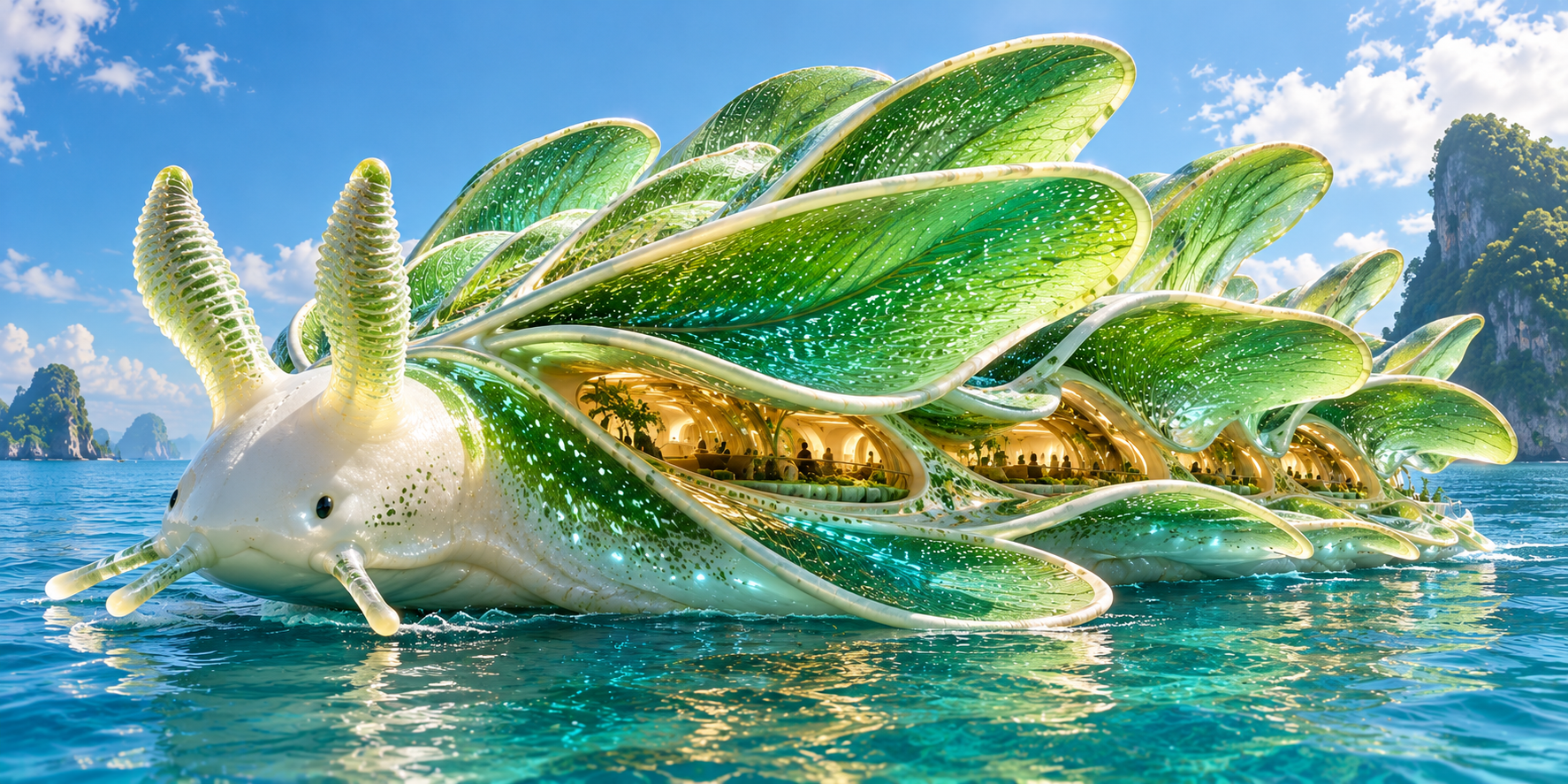
Weeloo-Weloo is a sea carrier branch of the LuvYou Sea Care-port carriers.