

Beauty and Abundance : Landscapes Made for Living
Landscapes Made for Living: Beauty, Abundance and Shubaka
Extraordinary living grounds, freely enjoyed, lovingly maintained and continually enriched through meaningful human contributions.
An Entire Country Can Be Beautiful
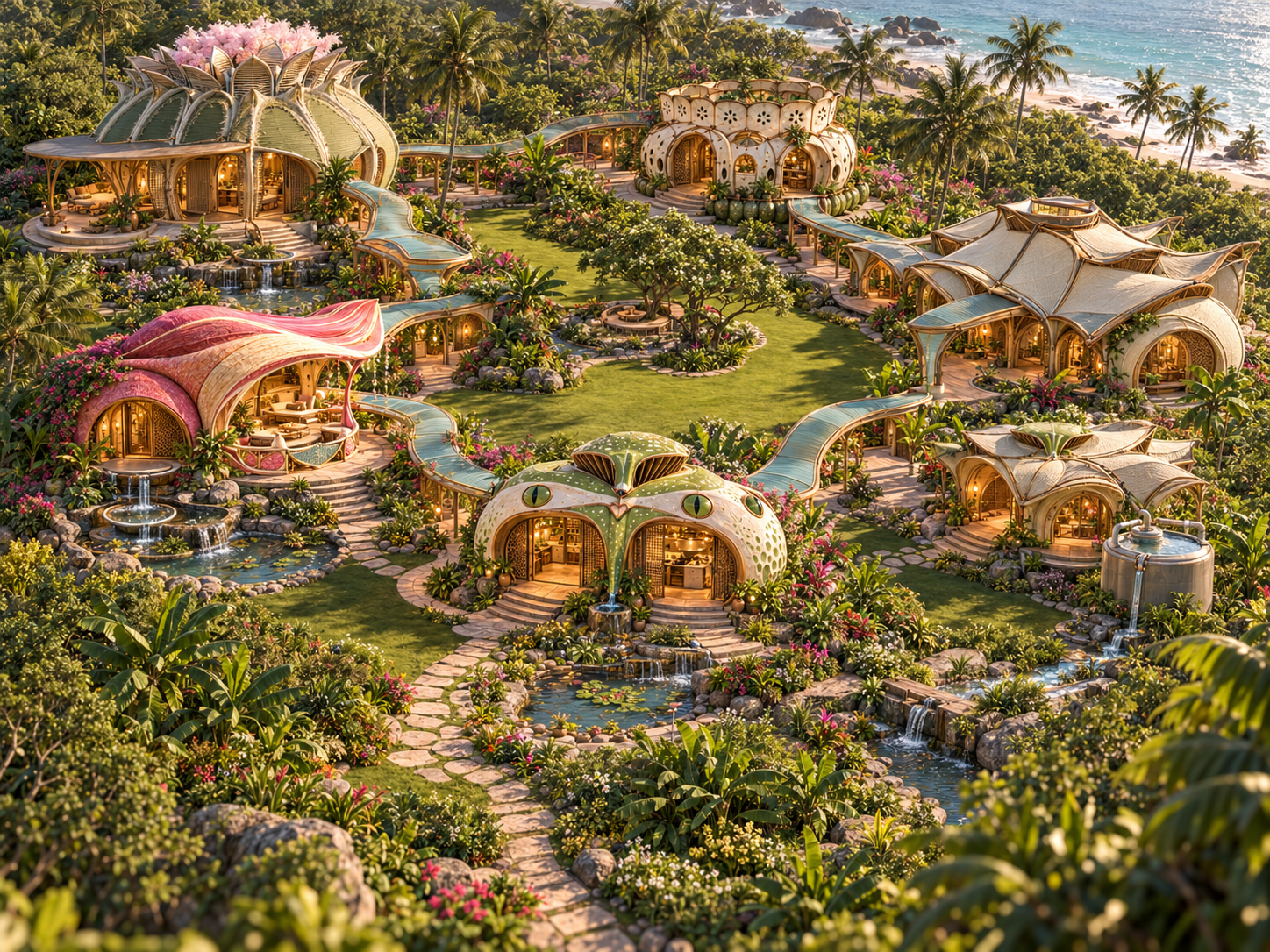
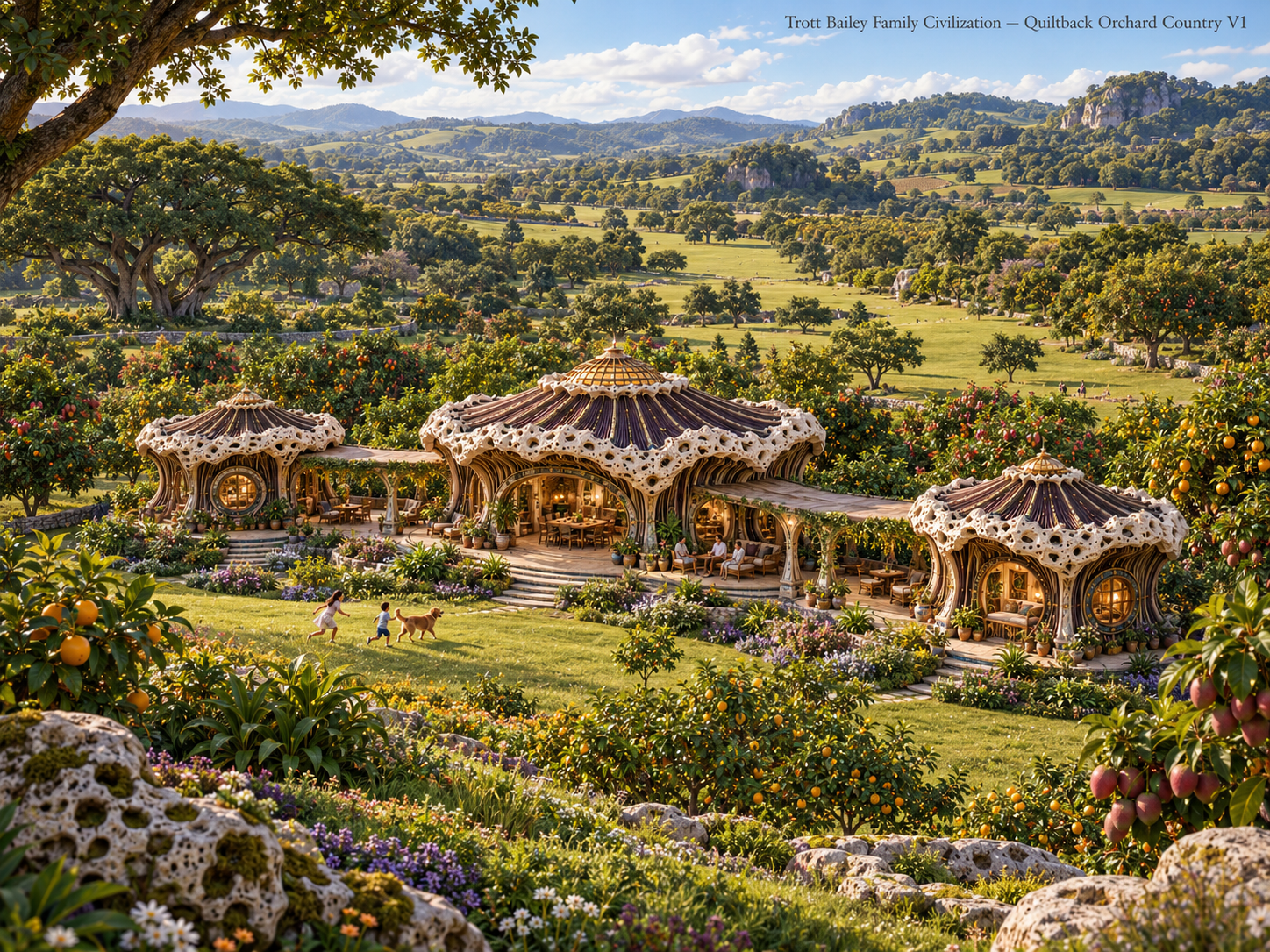
In Trott Bailey Family Civilization, we are designing large-scale landscapes that are beautiful, unusual and wonderful to live in. These are not ordinary parks, resort gardens or decorative spaces where people visit, admire the flowers and then return to cramped living conditions.
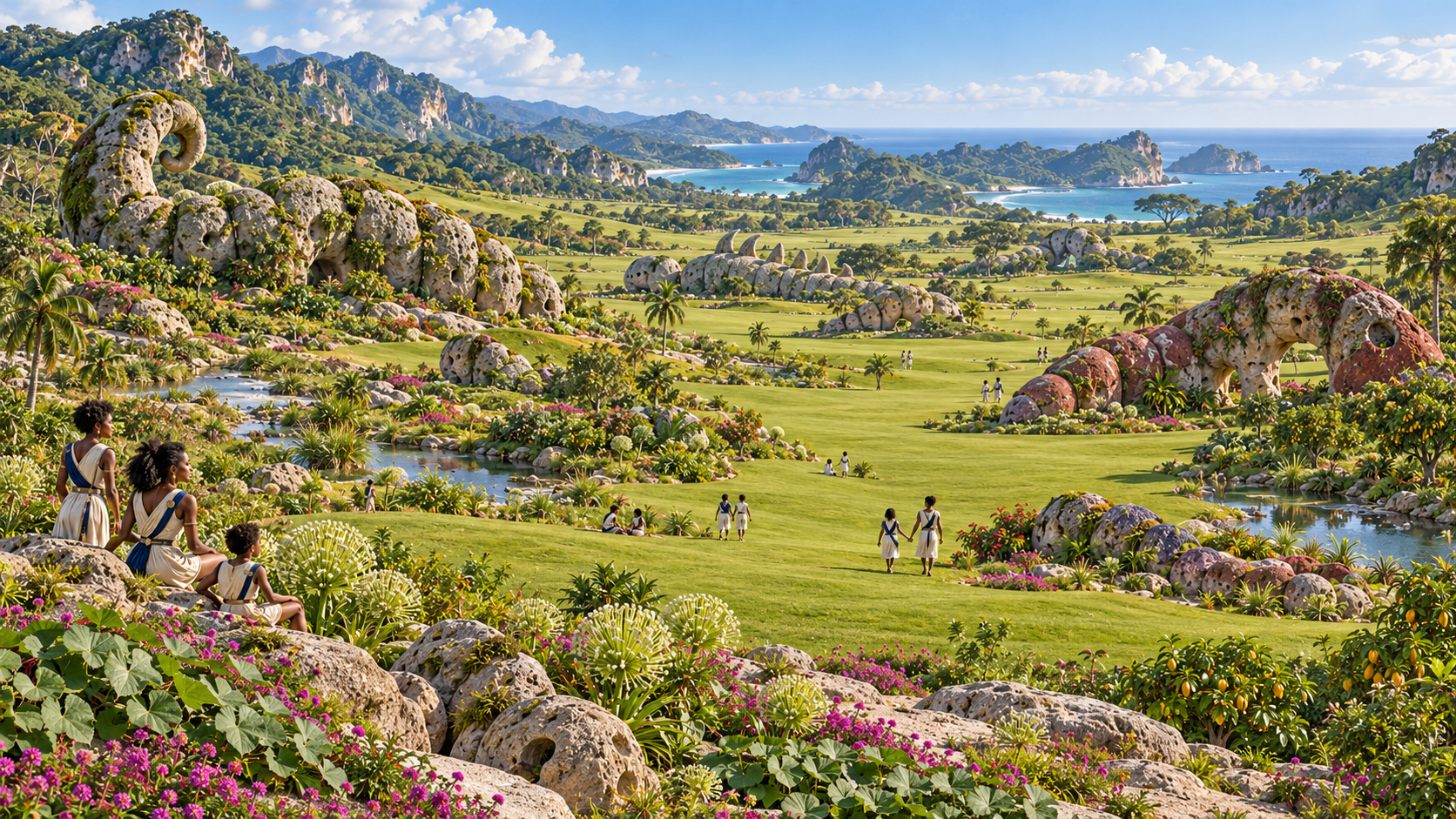
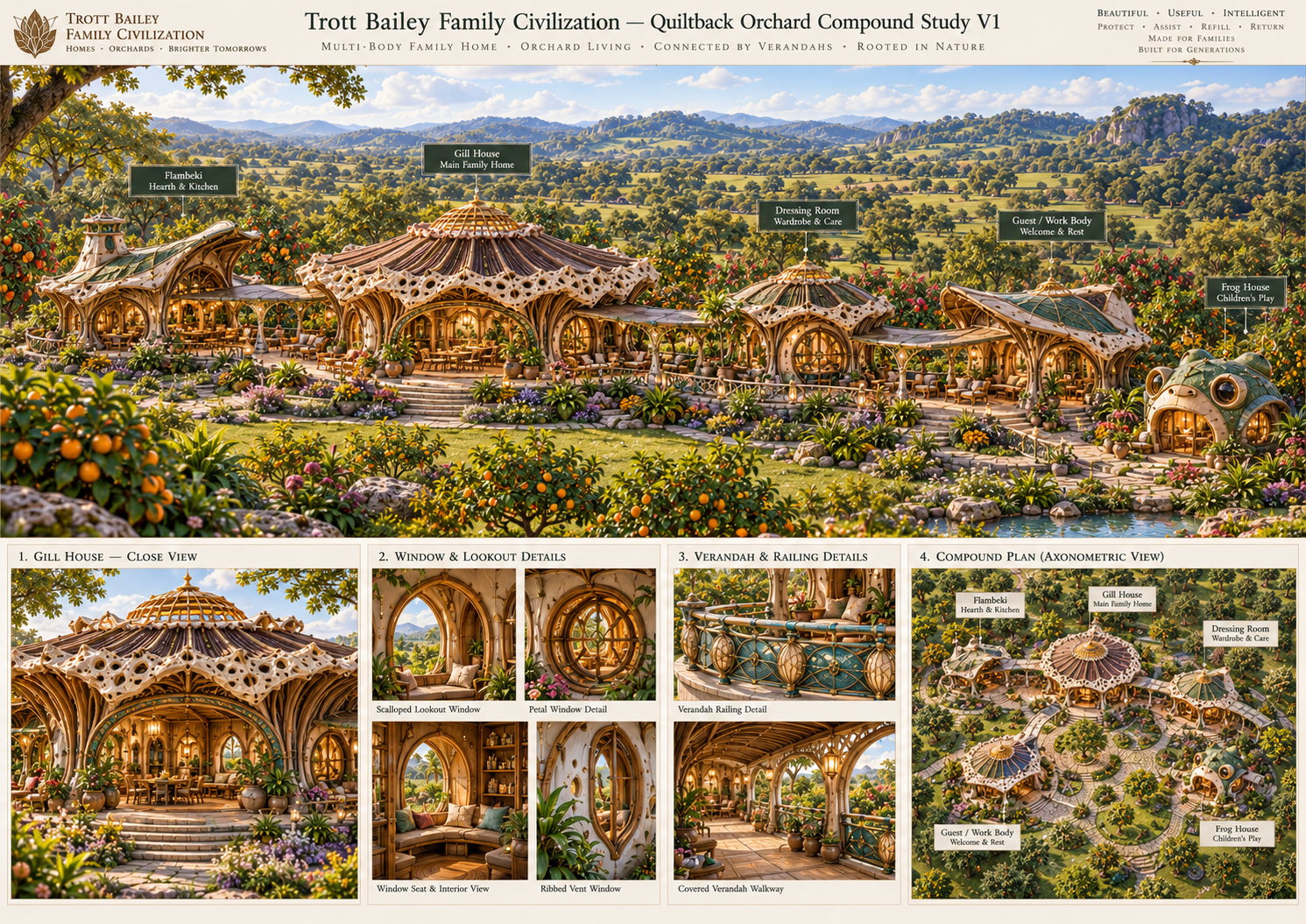
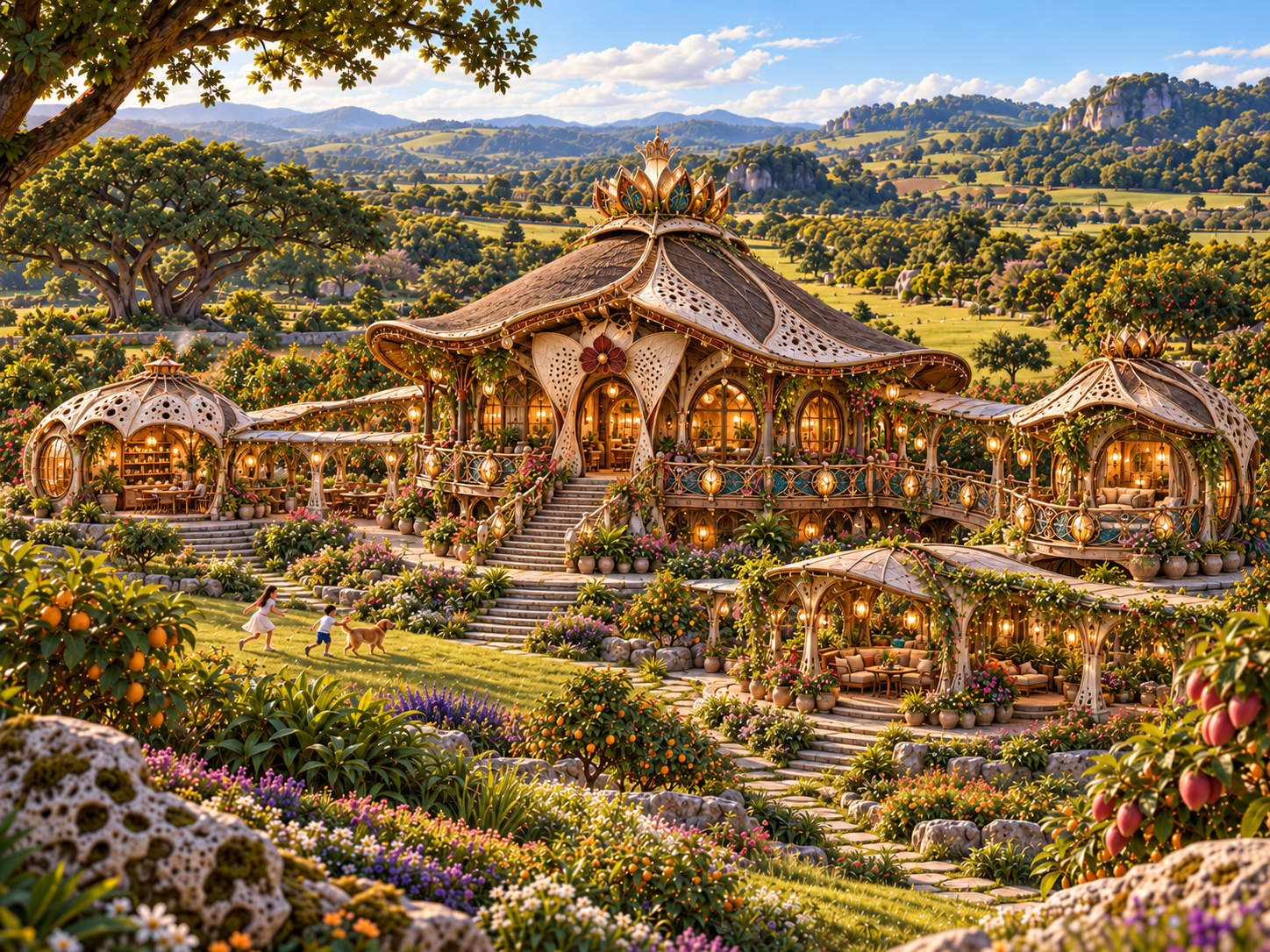
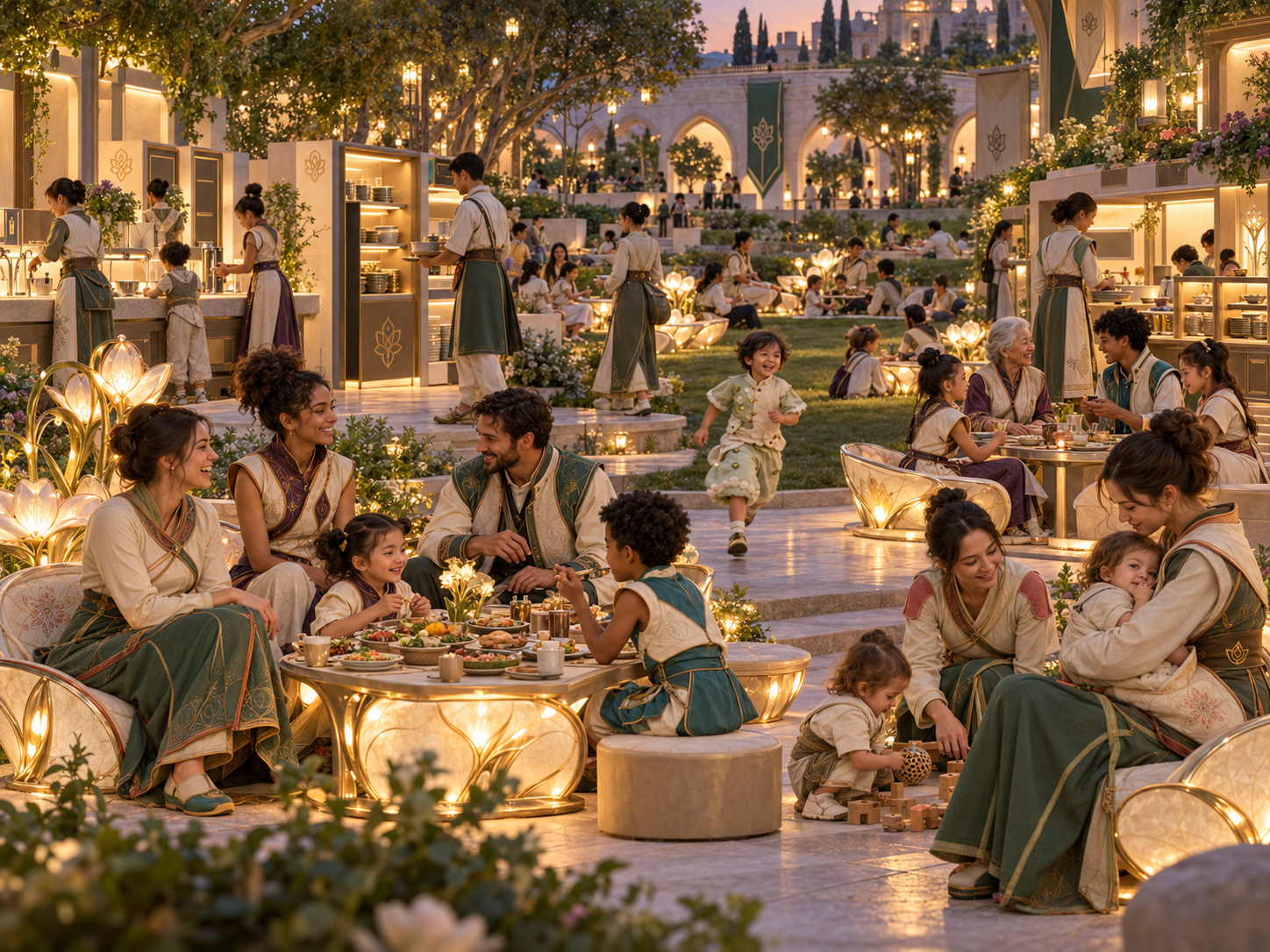
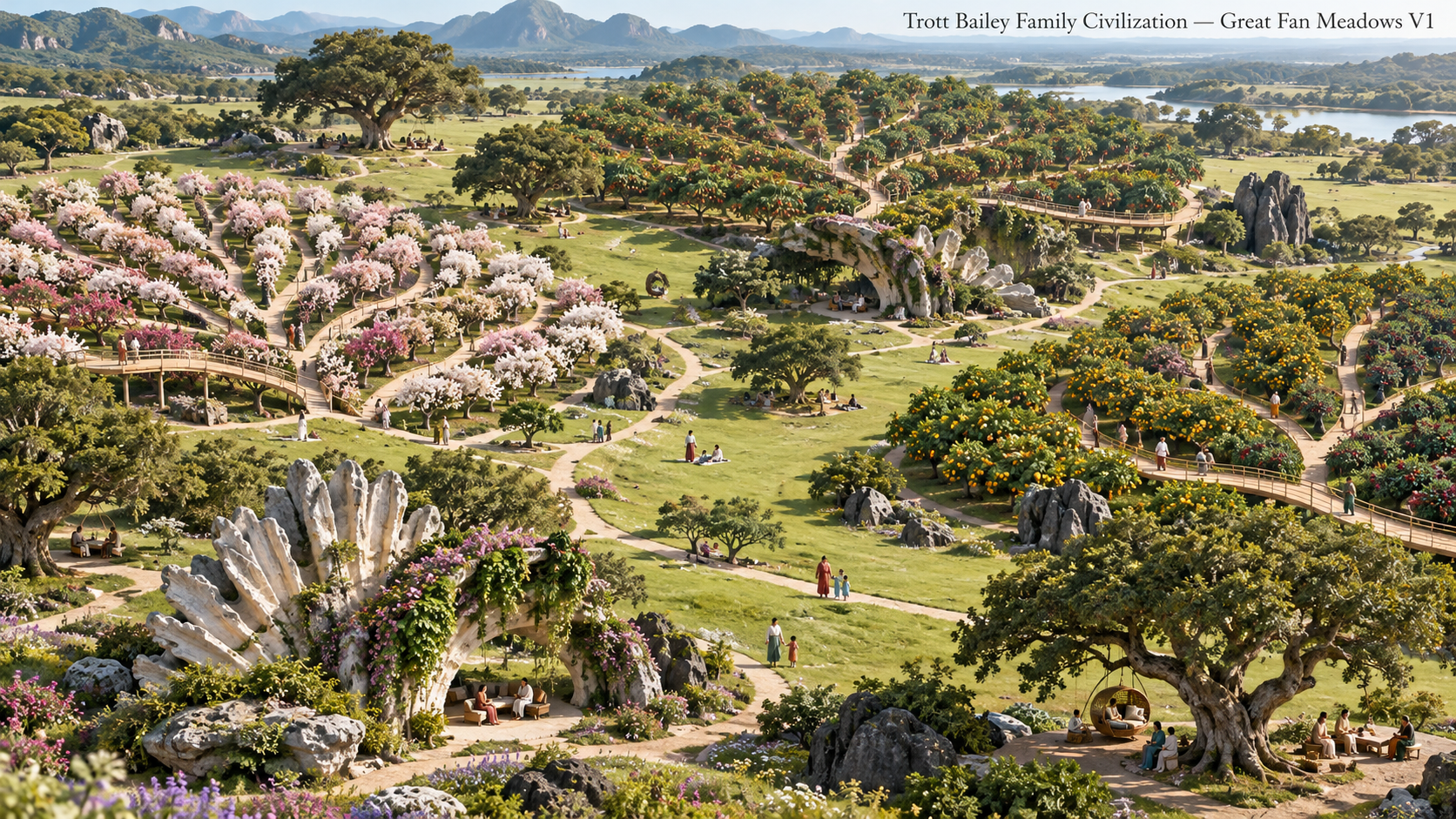
We envision enormous connected green lawns stretching through valleys, between rocky hills, beneath flowering trees and alongside productive orchards. Children have tremendous space to run and explore. Parents can stretch out beneath mature shade trees, relax together, enjoy the scenery or spend an afternoon doing very little.
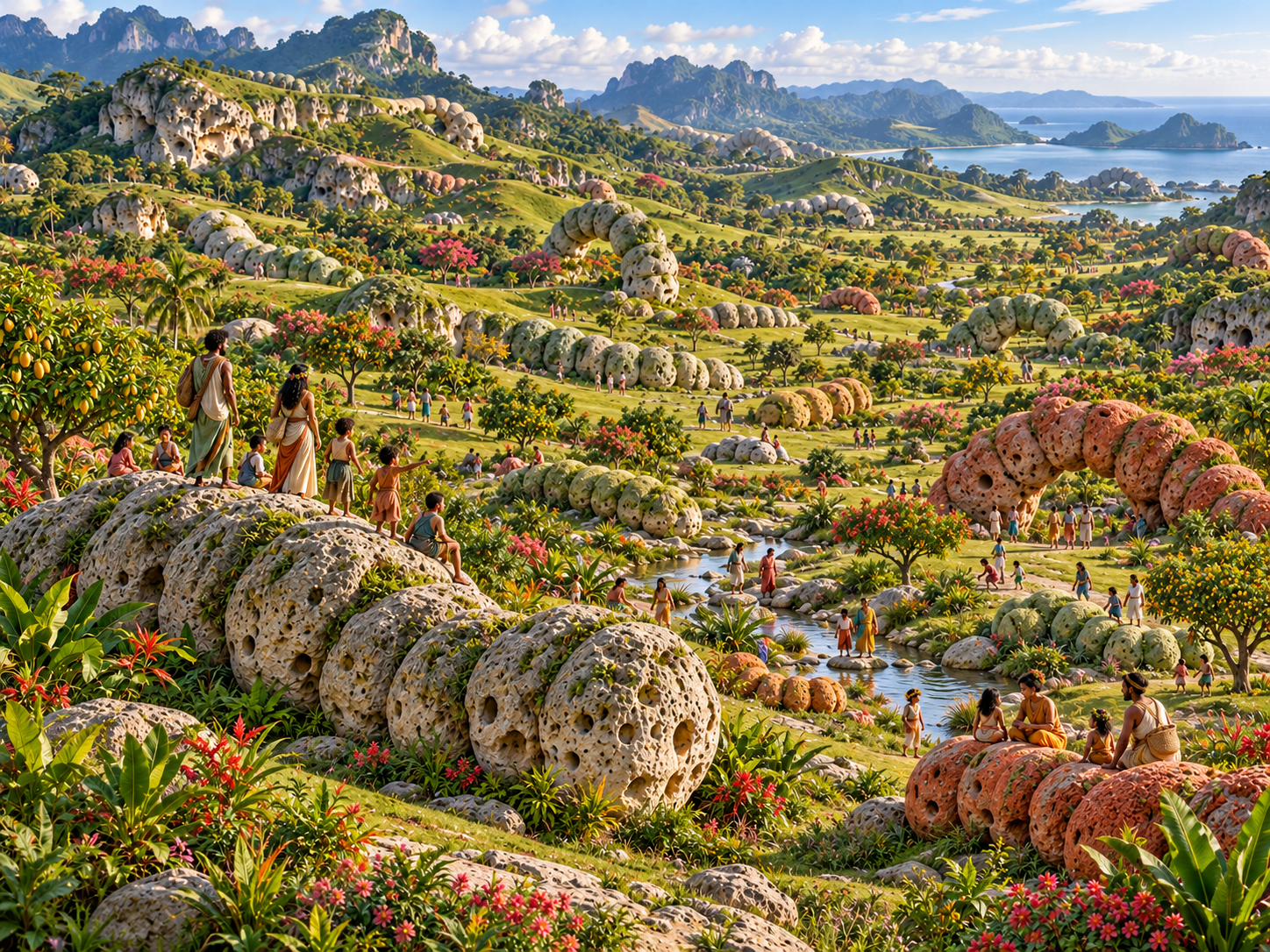
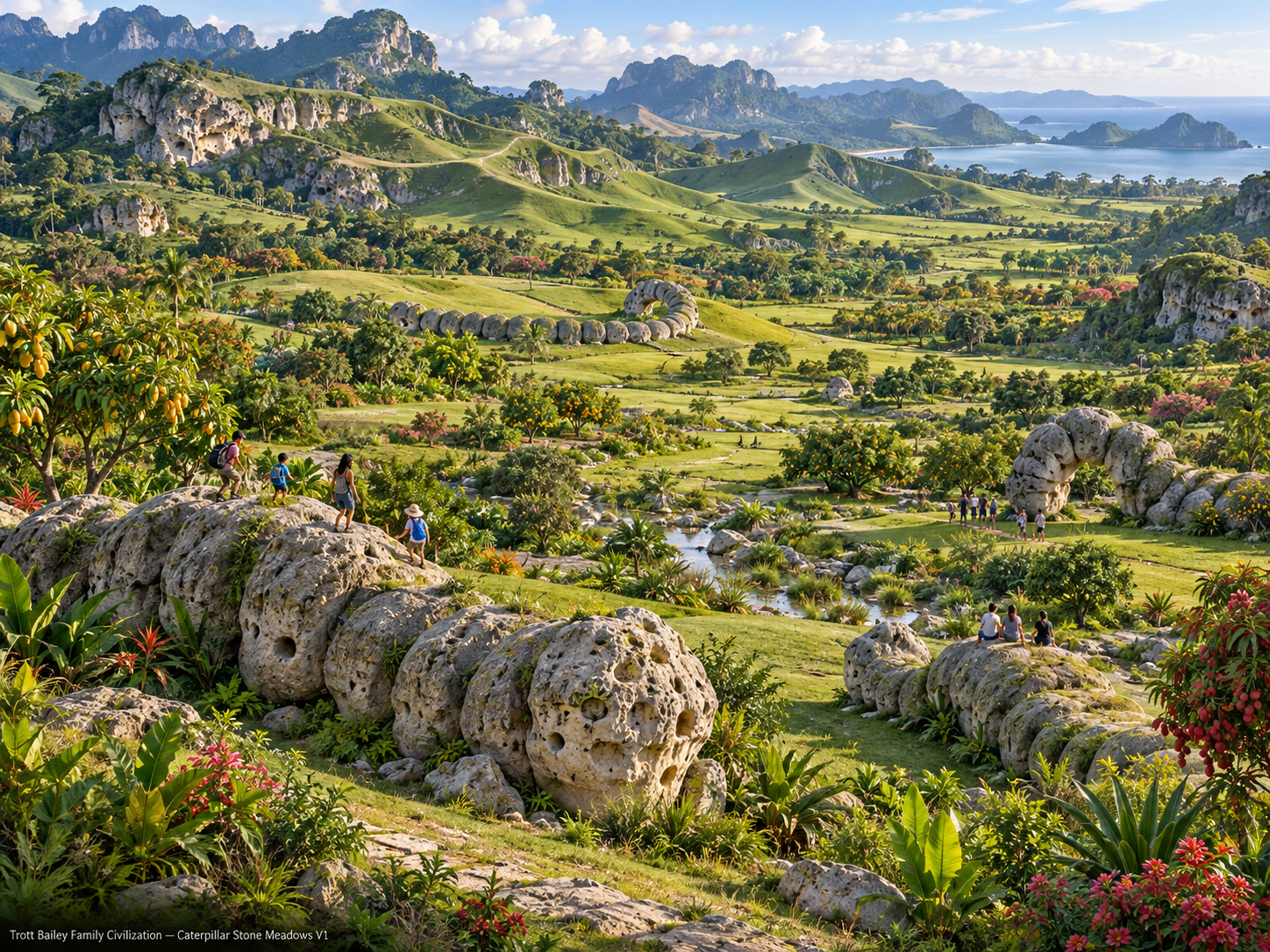
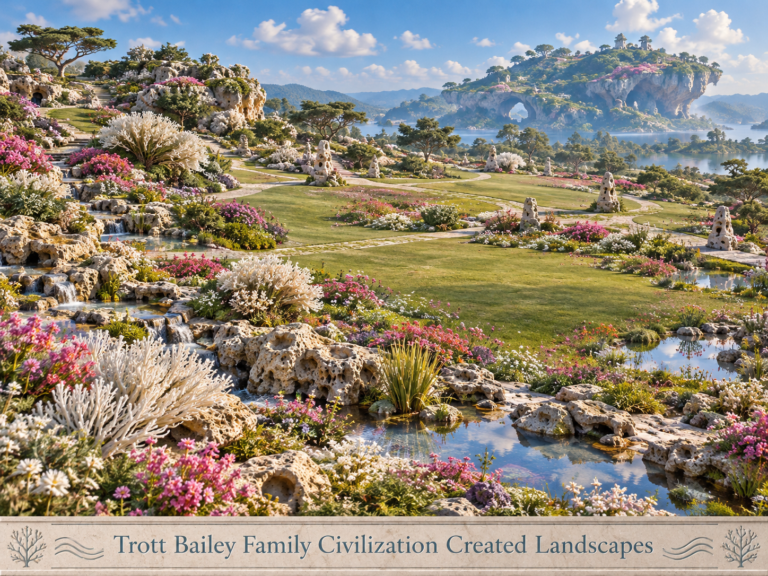
Our landscape designs draw inspiration from creatures and forms found in nature. Caterpillars become extraordinary segmented rock formations, varying from small, playful discoveries to enormous geological features. Marine creatures inspire limestone hollows, curling ridges, fan-shaped gardens, mineral sculptures and sheltered resting places.
Some formations carry beautiful mineral colours: moss green, burgundy, lavender, cream, charcoal and coral. Their surfaces can be rough, porous, spotted, folded or strangely textured. They do not need glossy finishes or artificial perfection to be remarkable.
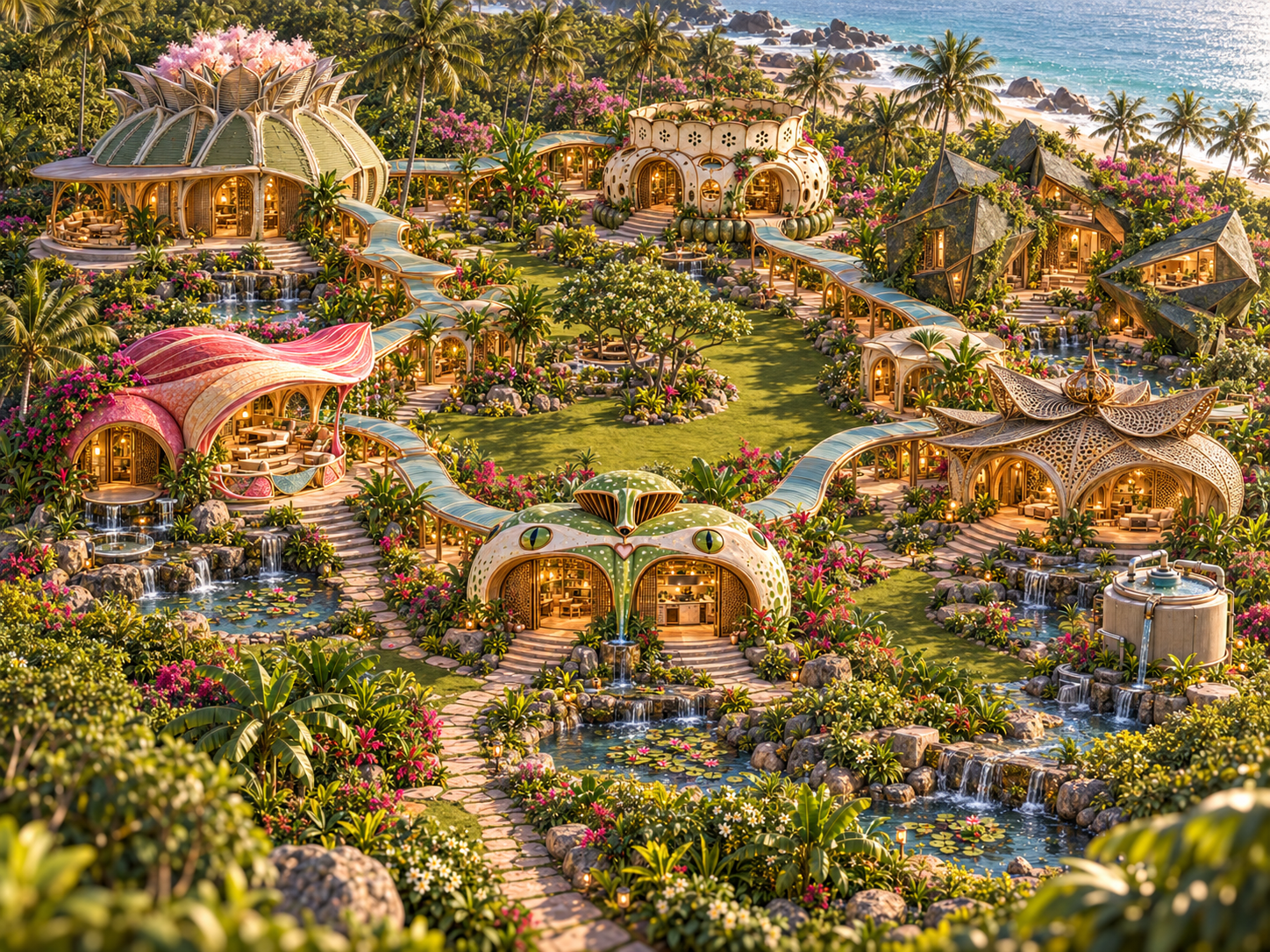
We combine these imaginative features with tropical flowers, fruit trees, edible gardens, enormous grassy meadows and natural geological terrain.
Designing Unique Landscapes With Our Nine-Axis Matrix
We do not want every landscape to look alike.
Trott Bailey Family Civilization has developed a nine-axis landscaping matrix that helps us create different living environments by combining terrain, transitions, planting, open ground, routes, stone, water, public relief and background scenery.
One landscape might feature enormous sea-fan-shaped orchards overlooking uninterrupted green meadows. Another might contain great spiral hills, fruit-growing territories and unusual limestone resting hollows.
Elsewhere, coloured caterpillar-shaped rock formations emerge from rolling green country. Another landscape may contain flowering cliffs, vast mineral folds, mature shade trees and elevated orchard routes.
The matrix encourages us to design the entire landscape rather than concentrate only on flower beds and pathways.
How should the land rise and fall? Where will the largest uninterrupted lawns belong? Which trees will produce food and shade? Where should unusual geological formations appear? How will families travel comfortably across the grounds?
We can experiment with different answers, creating landscapes with their own character, botanical collections, geological inventions and human experiences.
Beauty Needs Breathing Room
One of our strongest landscaping principles is the preservation of great open spaces.
We do not want every available piece of land crowded with buildings, pathways, flower beds, monuments or recreational equipment. Much of the beauty comes from the sheer freedom of the landscape.
Imagine three or four enormous connected lawns travelling between sculptural hills and productive orchards. Flowering plants occupy selected edges, great trees cast generous shade, and unusual rocks appear where they can be enjoyed without interrupting the open country.
A family might walk across a great lawn toward a remarkable caterpillar-shaped stone formation. Children could climb suitable low sections, inspect its curious mineral textures or play games around it. Elsewhere, families gather mangoes, lychees and citrus from the orchard territories.
Beautiful landscaping should invite people to live within it, not merely stand back and admire it.
No admission charges, compulsory purchases or commercial activities are required to enjoy their beauty. Families do not need to reserve a holiday, purchase an experience or possess money to spend an afternoon in extraordinary surroundings.
These are the freely accessible living grounds of their civilization.
A Landscape Full of Everyday Life
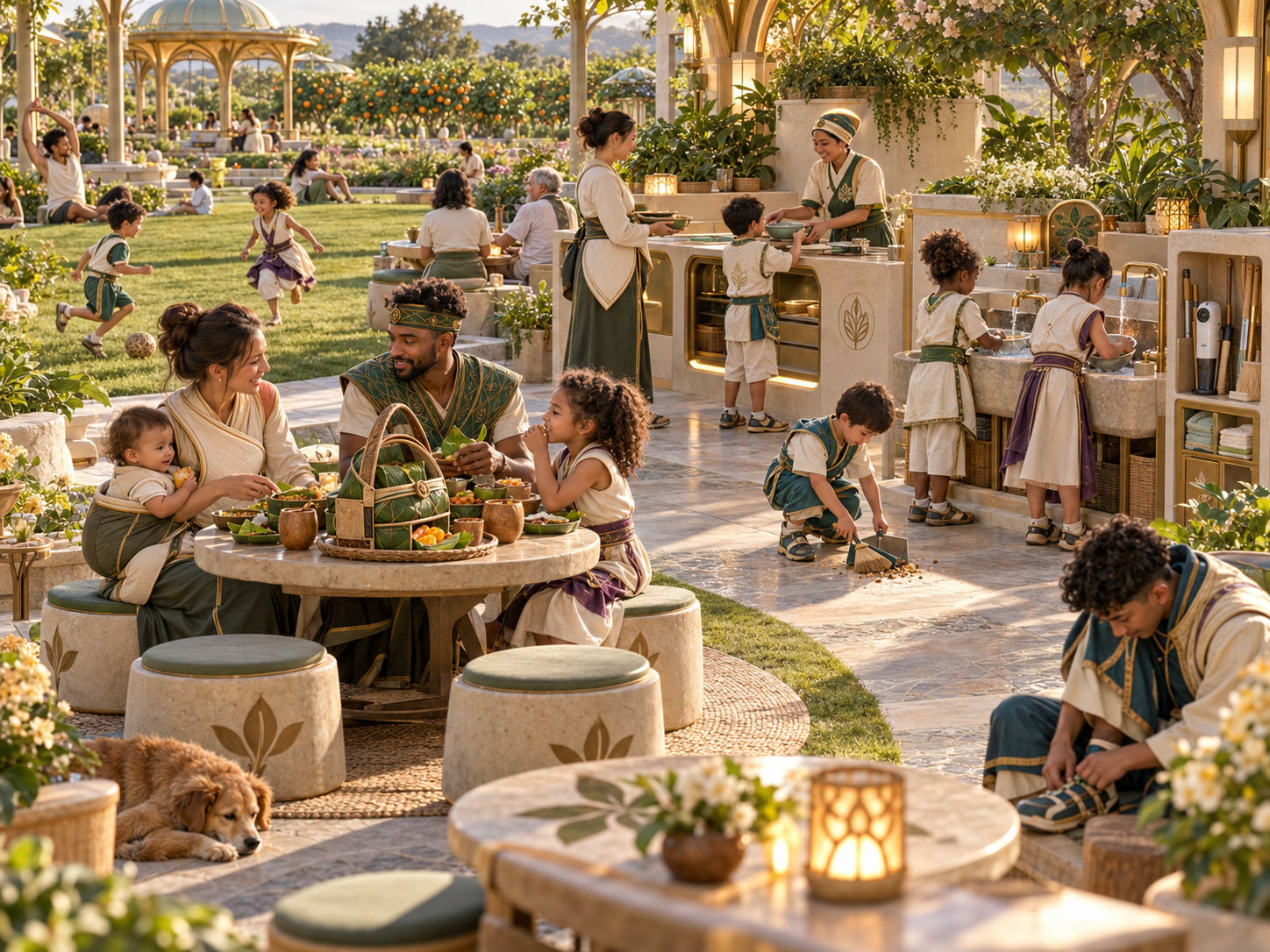
Imagine a morning when children are running across a tremendous stretch of green lawn while their parents enjoy the cool shade of an enormous tree.
Farther along, a family collects ripe fruit from an orchard. Some people are walking, stretching or exercising. Others are enjoying quiet conversations in shaded mineral seating hollows.
A child discovers the tiny plantlets growing along the edge of a leaf. Another examines the unusual colour of a mineral formation. Parents can join these discoveries or simply enjoy watching their children explore.
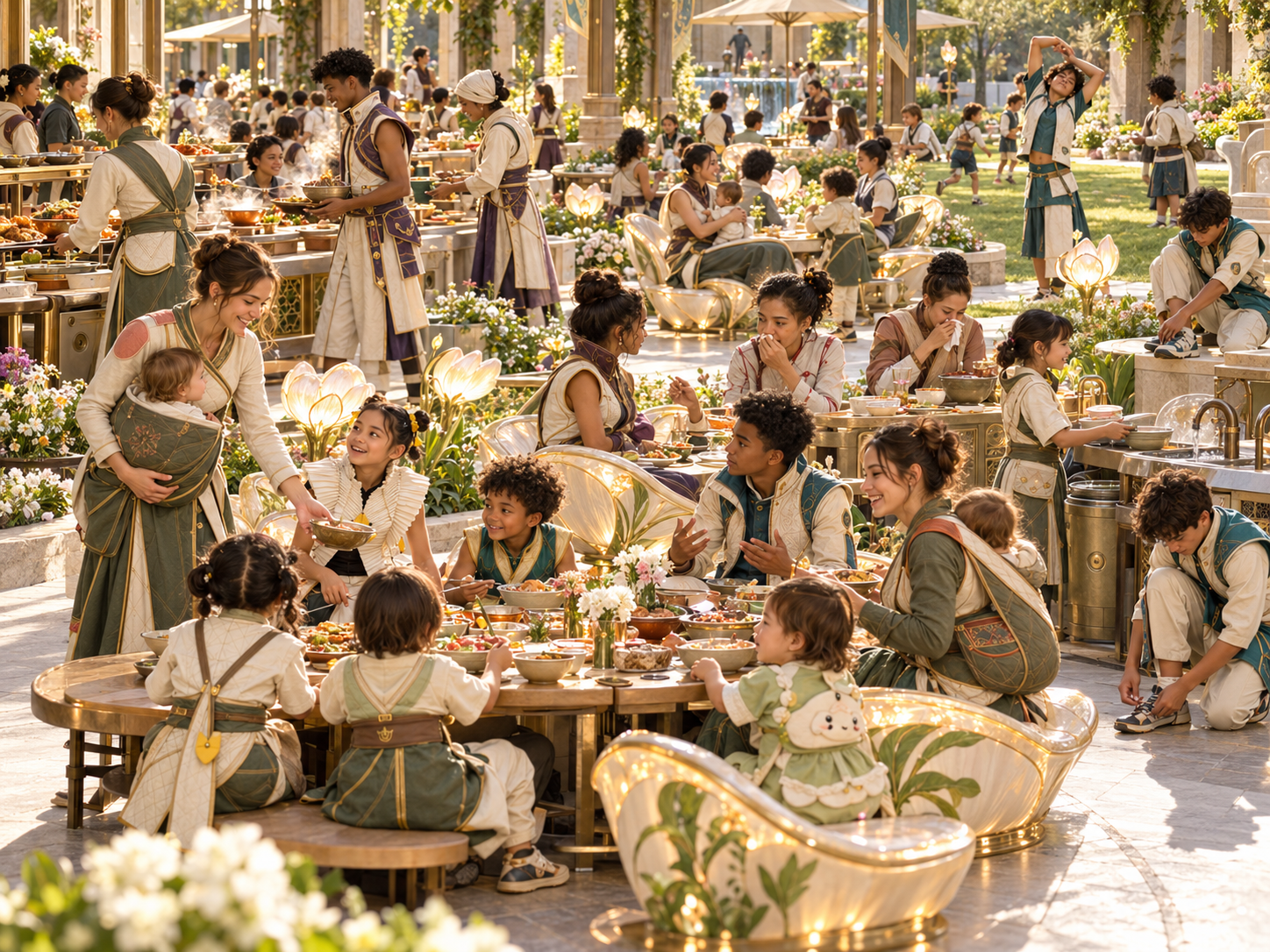
By afternoon, families might gather beneath a branching orchard canopy, share a meal or visit another landscape with completely different terrain, flowering plants and geological formations.
Later, the changing light reveals different colours in the stone, new shadows across the lawns and the remarkable shapes of the surrounding hills.
These are not special occasions requiring tickets, purchases or elaborate preparations.
Who Creates and Maintains These Enormous Landscapes?
Beautiful living grounds require ongoing attention. Grass grows, trees mature, fruits ripen, flowers complete their cycles, storms move branches, and pathways change with weather and use.
Rather than treating this work as an undesirable burden that must be pushed onto a small group of exhausted workers, we incorporate landscape creation and care into Shubaka — our civilization’s system of meaningful contributions to the life we share.
There are many different opportunities.
Some people may enjoy planting orchards, propagating unusual flowers, caring for mature trees or restoring growing areas after storms.
Others may prefer developing entirely new landscapes. They can experiment with terrain compositions, invent new mineral forms, design astonishing geological gardens or create stone features inspired by caterpillars, sea slugs, shells and other living creatures.
Imagine a Shubaka team developing a family of caterpillar-shaped landscape formations. One person studies caterpillar anatomy, another experiments with mineral colours and surface textures, while others develop the sculptural forms, accessible resting hollows and safe ways for children to interact with them.
Another team might experiment with plant propagation, developing new combinations of flowering species, selecting desirable traits and studying how different plants perform in local conditions.
There are opportunities in botanical research, ecological observation, soil care, landscape machinery, stone craftsmanship, irrigation engineering, nursery cultivation, route maintenance and environmental restoration.
These contributions also require technical skill. Large geological features need appropriate engineering, while living landscapes need careful attention to drainage, soil conditions, tree health and long-term stability.
Some Shubaka contributions will be physical. Others will involve observation, invention, design, research, coordination or teaching.
The civilization benefits from this variety, and people have opportunities to discover interests and abilities they might never have encountered in conventional employment.
Intelligent Maintenance: Caring for Vast Lawns Without Exhausting People
We should not create enormous lawns and then require people to spend their lives endlessly cutting grass.
Consider one tremendous meadow containing several hectares of open grass.
The areas used frequently for family play, resting and walking could follow a regular mowing schedule. Meadow edges and suitable orchard understories may need different vegetation-management cycles, allowing beneficial plants and wildlife to flourish.
Rather than cutting every section indiscriminately, maintenance teams can organize the land into care zones according to its actual use, growth rate and ecological requirements.
Appropriate machinery can help maintain broad lawns efficiently. Smaller equipment may be needed near sculptural rocks, delicate planting or irregular terrain.
Collected grass and suitable pruned plant material can enter the Keslev Soil-Return Compost Network, returning organic matter and nutrients to productive growing ground.
Fallen leaves, crop residues and other appropriate biological materials can also support soil restoration rather than automatically becoming waste.
Planting arrangements can reduce unnecessary maintenance. Well-chosen groundcovers, healthy soils, shade patterns and suitable grasses may lower watering, erosion and repeated restoration needs.
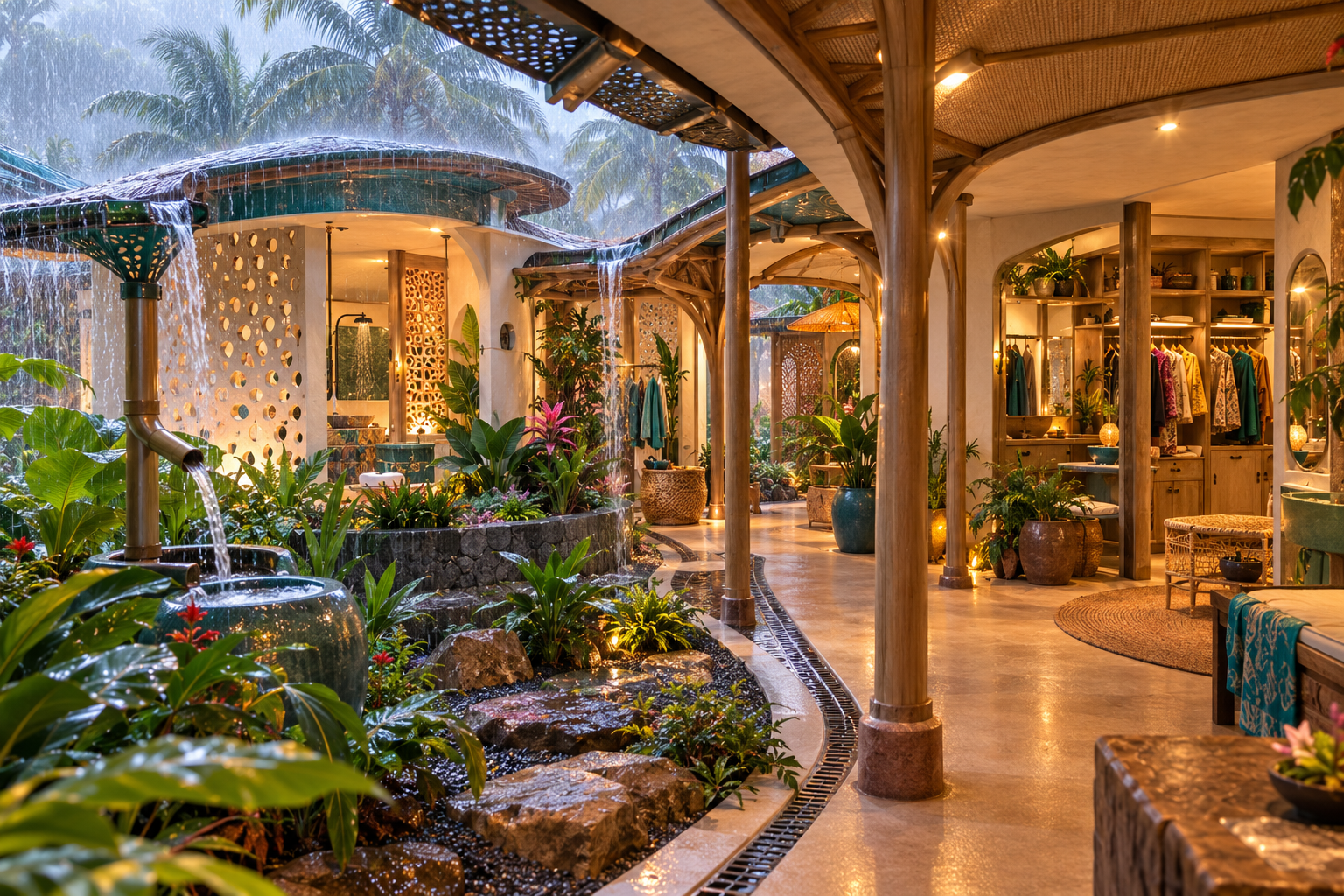
Rainfall also deserves deliberate design. Land gradients, planted drainage areas, rainwater collection and appropriate irrigation systems can work together to support growing landscapes.
Maintenance teams can observe which sections retain moisture, where soil is being lost, which plant species grow successfully and where the landscape needs adjustment.
A lawn that repeatedly suffers erosion should not simply be repaired in the same way forever. The terrain, drainage or planting arrangement may need improvement.
We can also develop better equipment and methods through Shubaka research. Citizens might invent machinery suited to unusual terrain, create improved approaches to orchard care or develop gentler techniques for maintaining flowering landscapes.
The objective is not to eliminate care. It is to remove unnecessary difficulty while preserving meaningful human participation.
Shubaka Should Return Human Time, Not Consume It
Trott Bailey Family Civilization is not designing beautiful landscapes only to recreate the old world’s exhausting employment arrangements.
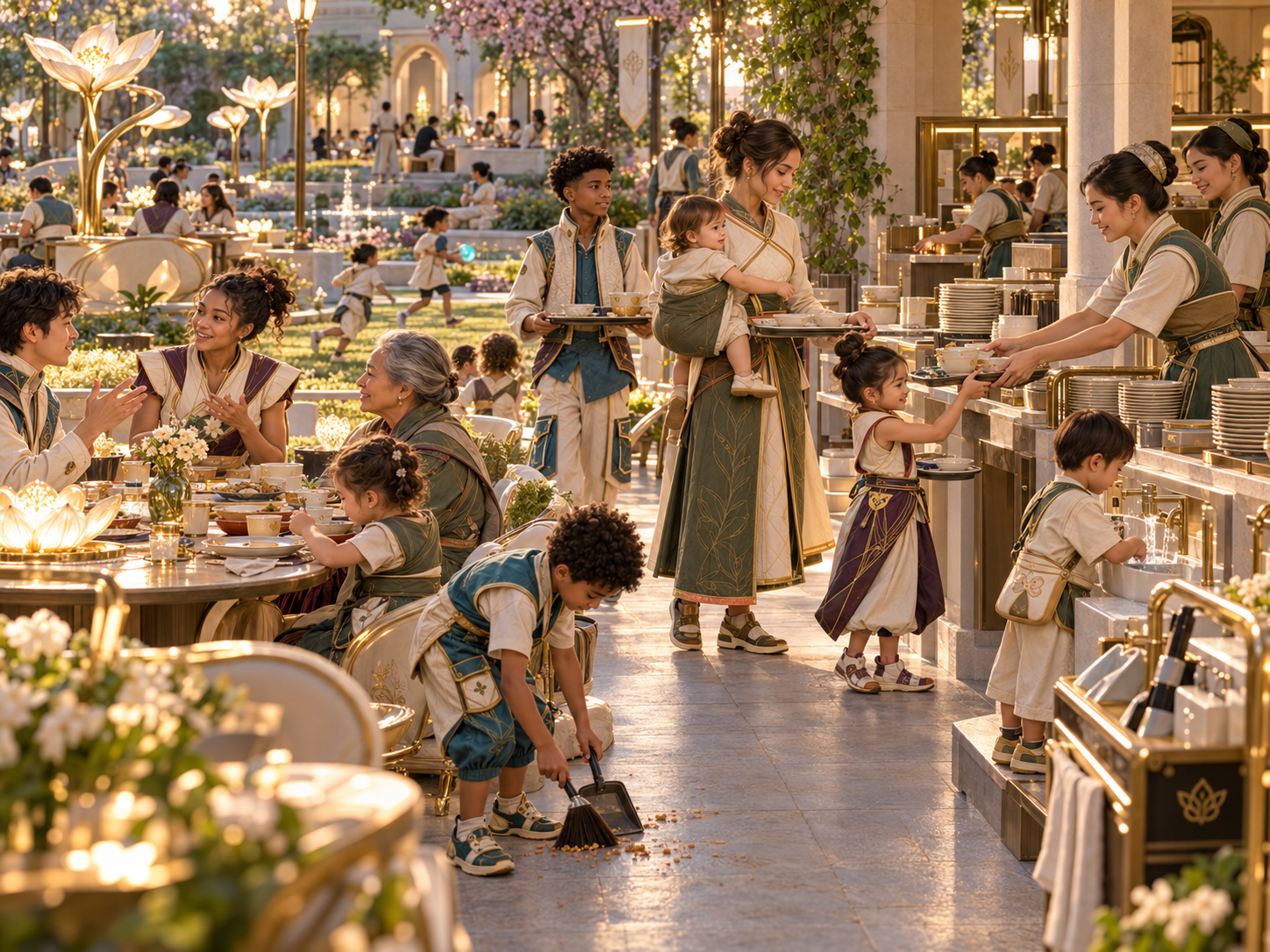
Our Shubaka system is organized around relatively short contributions, often a few hours per day on selected days of the week, with rotations and periods of restoration.
People should have enough time and energy to enjoy the civilization they help create.
A citizen who spends part of the morning caring for fruit trees might spend the afternoon resting with family, exploring another district or learning a new skill.
Someone who enjoys geology may contribute to designing a new stone formation, then spend the following days enjoying other interests. Another citizen may move from botanical propagation to landscape machinery, environmental research or an entirely different field.
People should not be trapped in one contribution for their entire lives.
Children can also participate in suitable activities with guidance. They can plant seeds, observe insects, measure tree growth, learn about soils and discover why shared spaces deserve care.
A child helping to plant a fruit tree may return over the years to see its canopy spread and its first harvest arrive.
Another child might become fascinated by the unusual anatomy of a caterpillar-shaped stone and begin learning about sculpture, geology or engineering.
Our growing Oasis video world can preserve these observations, techniques, inventions and experiences. Families across the civilization can watch how landscapes were created, how plants matured, what maintenance methods succeeded and what people discovered along the way.
Landscapes That Grow With Their People
Our landscapes are not finished merely because their initial construction and planting are complete.
Trees spread their canopies. Orchards produce food. Flowering territories develop. Families discover favourite resting places, and children grow up remembering the extraordinary landscapes they explored.
A newly planted orchard may eventually become a magnificent shaded walking territory. A large meadow might gain an entirely new geological formation. A family might suggest a more comfortable resting place after years of enjoying a particular viewpoint.
Citizens may invent new botanical arrangements, develop unusual stone species or discover better ways of maintaining the living grounds.
Some landscapes will change with seasons, while others will evolve over generations.
We can preserve these changes through photographs, videos, observations and the knowledge gained from Shubaka contributions.
Imagine a family returning to a landscape after twenty years and seeing enormous fruit trees where there were once young plants. Their children, now adults, might remember measuring those same trees when they were small.
The landscape carries part of their family’s history.
Beautiful Living Grounds, Beautiful Ways of Caring for Them
Our vision is not simply to create magnificent landscapes.
We are developing an entire relationship between human creativity, the natural world, shared resources, meaningful contributions and family life.
Extraordinary scenery should not be reserved for wealthy estates, commercial resorts or occasional holidays. Beautiful living grounds can become part of everyone’s ordinary surroundings.
And the work required to create and maintain them should not consume the time that families need to enjoy their lives.
Through intelligent design, suitable machinery, biological return systems, research, invention and meaningful Shubaka, we can develop remarkable landscapes that continue improving as the civilization grows.
We are not only designing beautiful landscapes. We are designing beautiful ways of living in them, caring for them and passing their abundance from one generation to the next.