

Luxury Is Not Abundance.

Luxury Is Not Abundance
A child grows up watching money strain the family.
They hear:
“We can’t afford that.”
“Maybe next month.”
“Your father works hard.”
“We have to save.”
“One day.”
And somewhere inside that child, a promise can form:
I am going to buy Mum a beautiful house.
I am going to get Dad the car he always wanted.
I am going to take my parents on expensive trips.
I am going to give my children everything I never had.
That promise can come from love.
The child does not necessarily worship money.
They may simply want to rescue the people they love from the pain they watched them carry.
But there is a tragedy hidden inside the dream.
The child saw the gate.
The child saw what the gate did to their family.
And instead of asking why ordinary human comfort was behind a gate at all, they decided they would become rich enough to pass through it.
Only the ambition changed.
Scarcity Can Teach the Wrong Meaning of Success
When a child repeatedly sees ordinary needs delayed because of money, wealth begins to look like freedom.
More money means:
no more asking.
no more waiting.
no more embarrassment.
no more hearing no.
no more watching Mum go without.
no more seeing Dad worry.
So the opposite of scarcity begins to look like luxury.
A bigger house.
A more expensive car.
Designer clothing.
First-class travel.
Exclusive places.
Rare objects.
Things most people cannot have.
And the person thinks:
But is it?
A More Expensive Gate Is Still a Gate
Suppose the family moves from a small rented home into an enormous luxury property.
The experience may be beautiful.
There may be more space.
Better materials.
More comfort.
Those things can be genuinely valuable.
But size and expense alone do not tell us whether the family has built abundance.
Does the home reduce labour?
Does it remain comfortable without consuming enormous amounts of energy?
Does it help produce food?
Does it manage water intelligently?
Does it support children, mothers, fathers and elders?
Is it durable?
Is it easy to repair?
Does it strengthen the family’s productive capacity?
Or has the family simply acquired a much more expensive thing that requires a much larger stream of money to maintain?
The same question applies to the car.
The clothing.
The holidays.
The furniture.
The technology.
The lifestyle.
The object may be excellent.
It may be beautiful.
It may be enjoyable.
But expense is not proof of abundance.
When Exclusivity Becomes Part of the Value
Luxury is not automatically shallow.
Some things are expensive because they require extraordinary workmanship.
Rare materials.
Time.
Skill.
Complex engineering.
Difficult production.
There is nothing inherently wrong with that.
But luxury becomes especially dangerous when exclusivity itself becomes part of the value.
This address proves success because most people cannot live here.
This object matters because it separates me from ordinary people.
Now value begins to depend partly on who is excluded.
That should make us uncomfortable.
Because abundance has the opposite instinct.
How do we make something excellent easier for more families to experience?
How do we make good housing normal?
How do we make beautiful clothing ordinary?
How do we make excellent food plentiful?
How do we make household relief standard?
How do we make children’s lives rich in beauty, movement, learning and delight without requiring wealthy parents?
Abundance seeks to overcome scarcity.
Those are different directions.
The Poor Child May Become the Rich Adult and Still Carry Scarcity
This is one of the saddest possibilities.
The child succeeds.
They make money.
Perhaps enormous amounts of money.
Now they can enter every place they once imagined.
They buy the house.
The car.
The clothing.
The holidays.
They give Mum the things she never had.
They prove to themselves that they escaped.
But the old training may still be alive inside them.
They still measure safety through money.
They still measure success through access.
They still think in terms of acquiring enough to protect the family from the gate.
Only now the gate is farther away.
The monthly costs may be larger.
The lifestyle may require more income.
The property may require more maintenance.
The status may require continued performance.
And the person may remain terrified of falling backward.
They escaped one level of scarcity but never escaped the scarcity framework.
Beautiful Things Are Not the Problem
This distinction matters.
I do not believe human beings should live ugly, joyless, purely functional lives.
Beauty matters.
Craftsmanship matters.
Comfort matters.
Delight matters.
Extraordinary design matters.
Celebration matters.
A beautiful garment can enrich life.
A magnificent home can bring joy.
A beautifully designed vehicle can be useful and pleasurable.
A richly planted public space can lift the spirit.
The problem is not beauty.
The problem is confusing expense, rarity and status with abundance.
A thing does not become wise simply because it is expensive.
A thing does not become abundant simply because it is luxurious.
It should not replace it.
Ask What the Thing Does for Human Life
Instead of asking only:
How much does it cost?
Who designed it?
How rare is it?
How prestigious is it?
Ask:
What does it actually do?
Does it reduce human burden?
Does it keep serving?
Does it last?
Can it be repaired?
Does it improve health?
Does it return time to the family?
Does it support children?
Does it reduce dependence?
Does it create more productive capacity?
Does it produce beauty without creating unnecessary strain?
Does it make tomorrow lighter?
Those questions reveal much more than a price tag.
Luxury Can Increase Consumption. Abundance Increases Capacity.
A R$500,000 object may be impressive.
But price alone tells us almost nothing about whether it creates abundance.
A less glamorous productive system may quietly do far more.
An orchard can feed people repeatedly.
A water system can keep supplying.
An energy system can keep generating.
A durable home can keep sheltering.
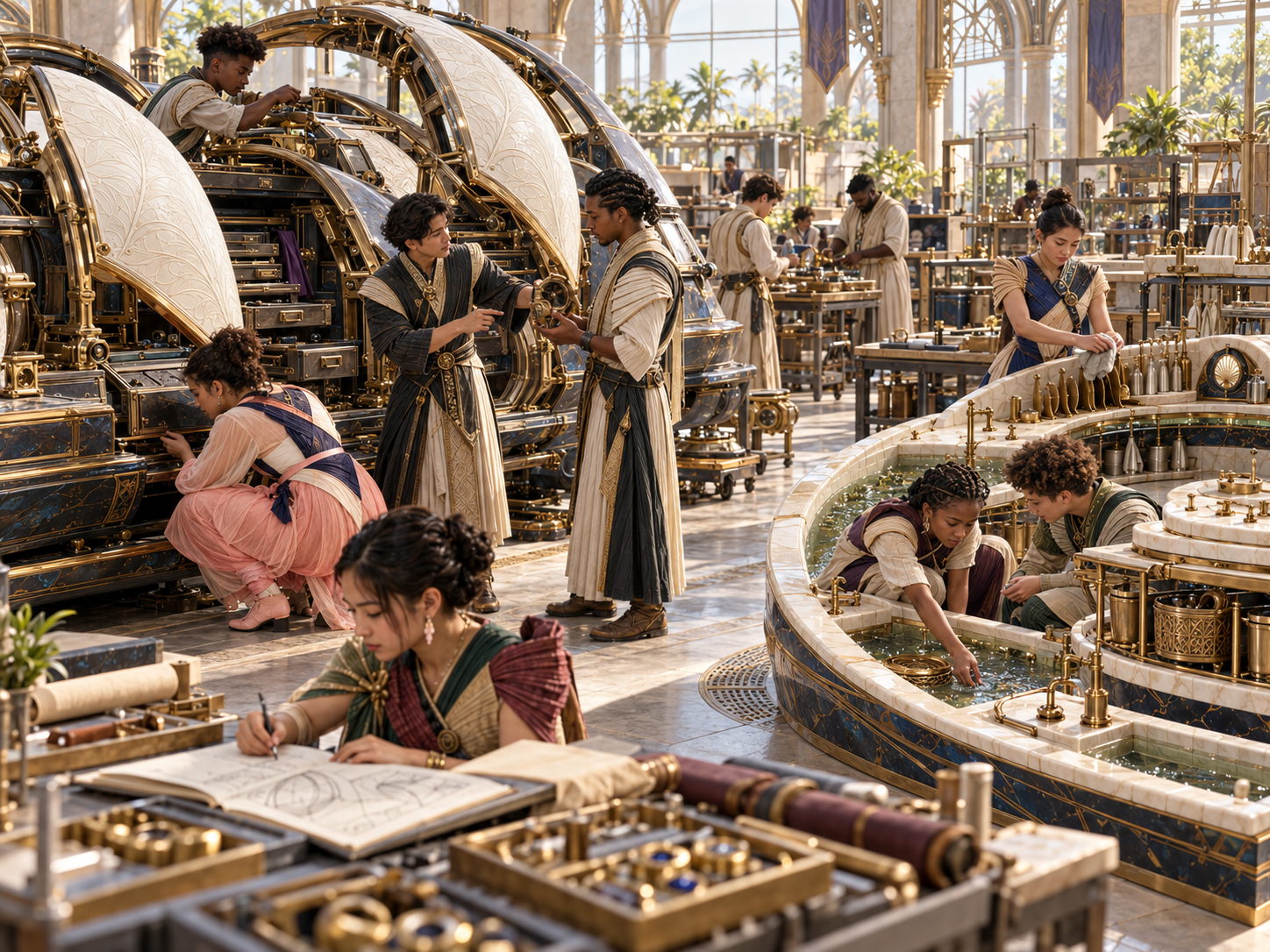
A machine can keep removing labour.
A workshop can keep producing useful things.
A skill can keep moving from one person to another.
A healthy breeding population can create the next generation of animals.
A seed store can become another harvest.
A preserved-food system can carry abundance between seasons.
These things may not always signal status.
But they can keep returning usefulness.
Abundance increases what can keep taking care of you.
That is the difference.
What Did the Money Leave Behind?
This is a useful question after any major expenditure.
What did it leave behind?
A memory?
That may be worthwhile.
Beauty?
That may be worthwhile.
Rest?
That may be worthwhile.
Joy?
That may be worthwhile.
Not everything has to reproduce materially to be valuable.
Human beings are not machines.
But if the overwhelming direction of family wealth is toward things that consume, while very little is converted into systems that keep serving, the family may look wealthy while remaining structurally fragile.
A possession can also become another obligation.
Insurance.
Maintenance.
Security.
Storage.
Repairs.
Replacement.
Upgrades.
Protection from damage.
Something bought as a reward can quietly claim a portion of the family’s future labour.
Again, that does not automatically make the object bad.
It means ownership should not be confused with freedom.
So the question is not:
The question is:
Are we spending our best labour mostly maintaining appearances and experiences?
Or are we also building systems that make family life progressively easier, safer and freer?
A Mansion Can Still Be Poorly Designed for Family Life
This is important because luxury is often judged from the outside.
A huge home may look like abundance.
But perhaps the mother is still walking unnecessary distances all day because the house is badly arranged.
Perhaps the children have expensive rooms but little meaningful family connection.
Perhaps the property has decorative landscaping but no productive food system.
Perhaps every surface is precious and the children are constantly being told not to touch.
Perhaps the house consumes extraordinary amounts of energy.
Perhaps maintaining it requires a large burden of labour.
Perhaps the parents have to work constantly to keep financing it.
Then the family may own a luxury property while the home itself does very little to relieve family life.
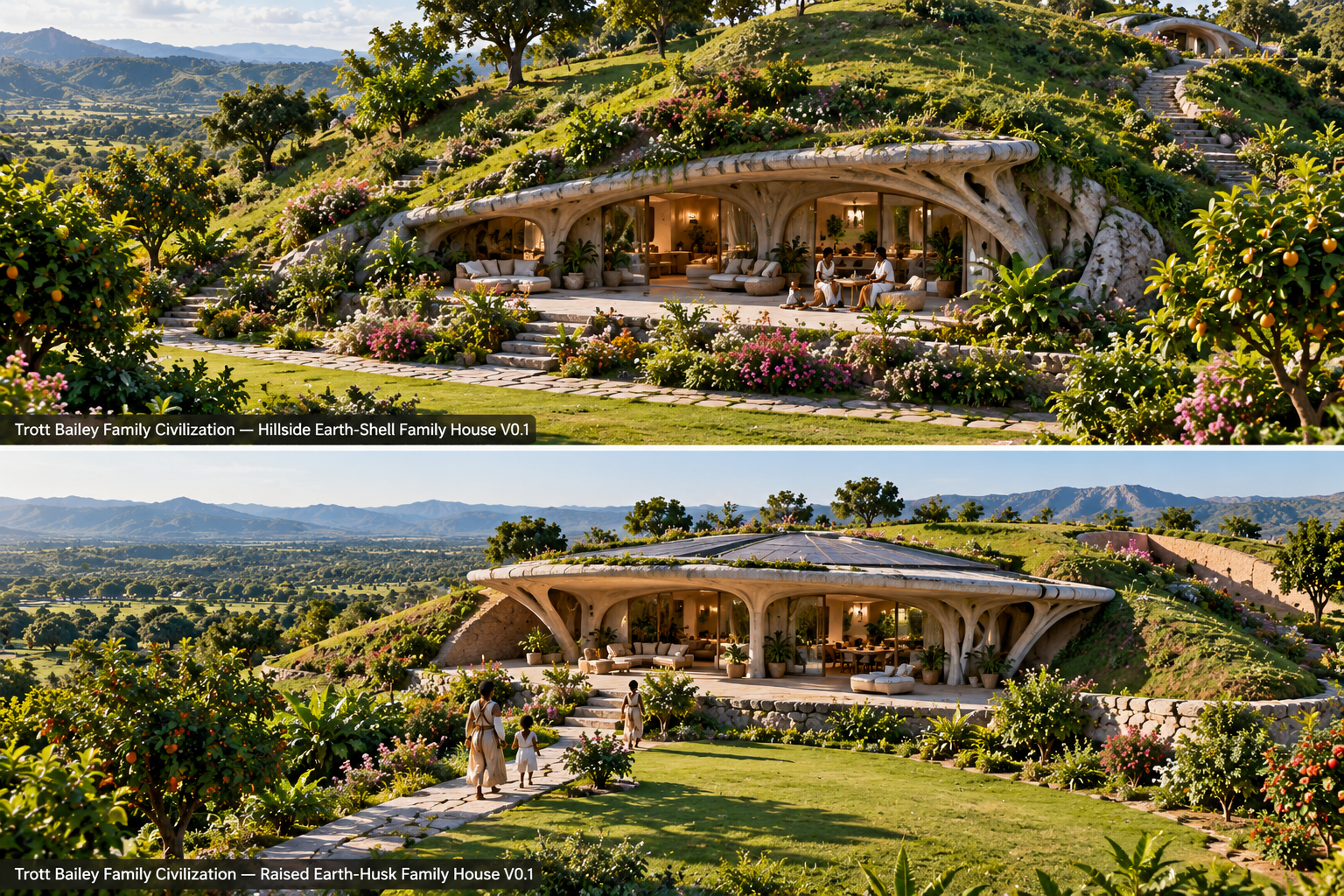
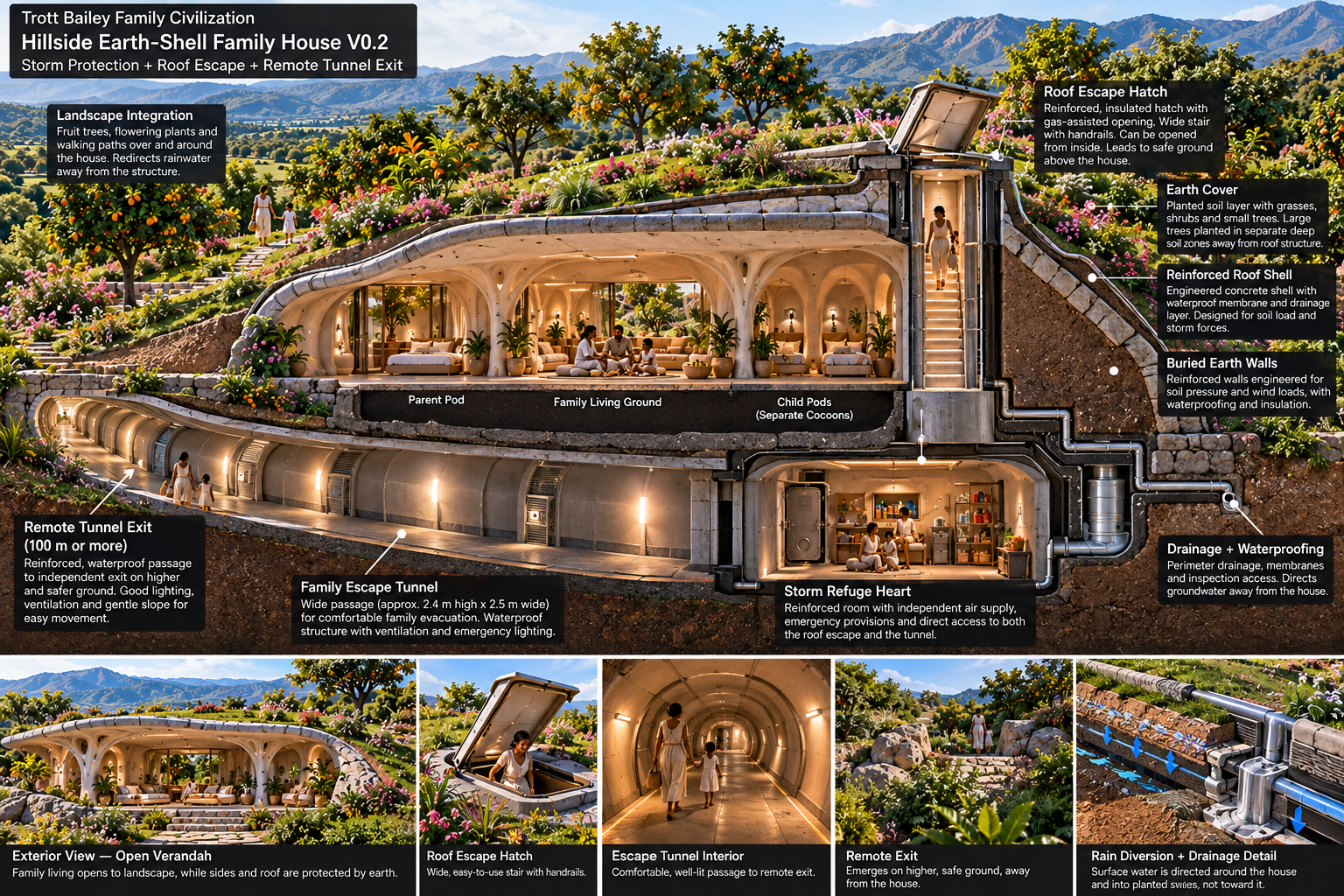
That is why the Trott Bailey measure must be different.
Do not ask only:
Ask:
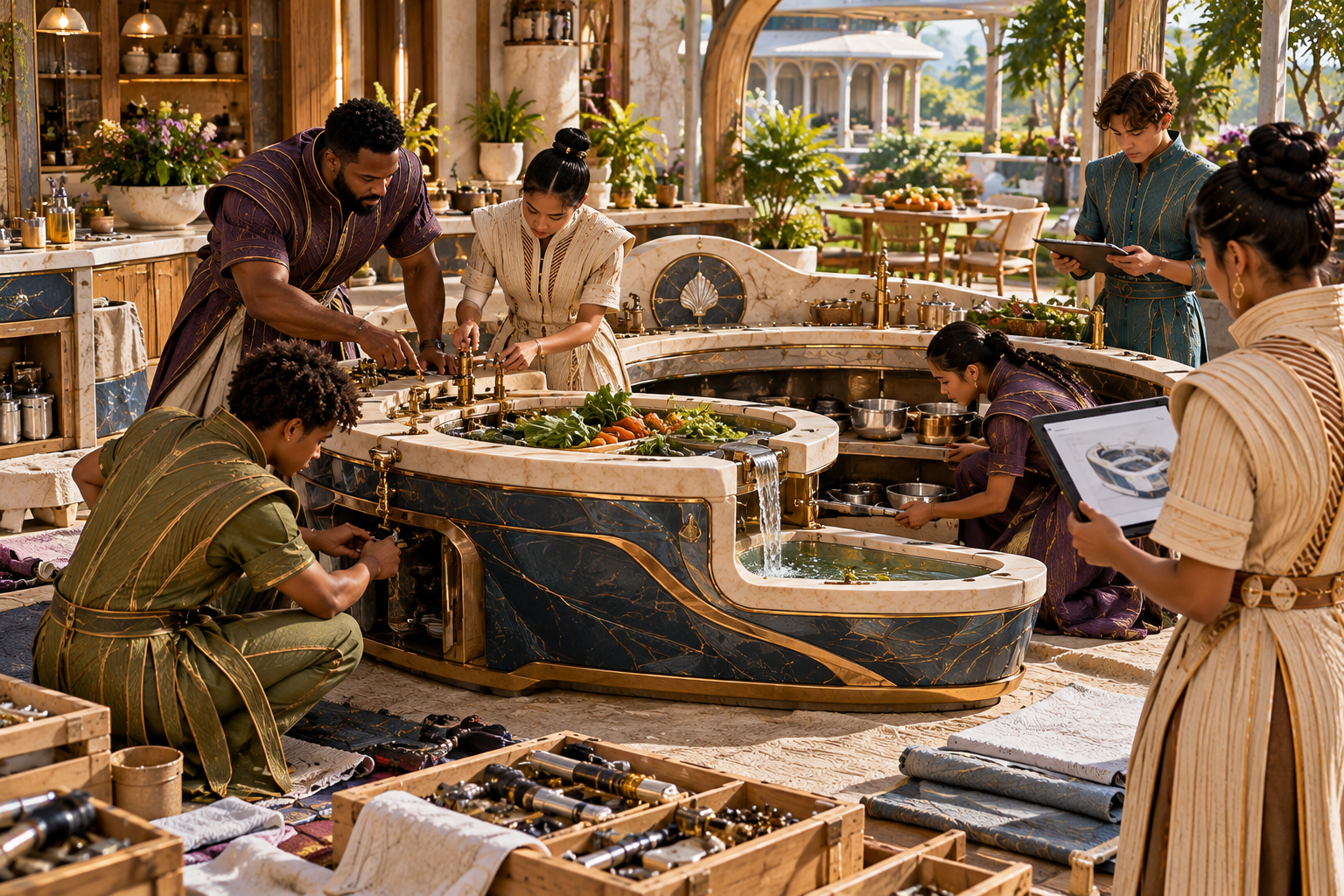
Does the beauty serve family life?
Does the architecture reduce labour?
Does the environment support parents?
Can children exist freely inside it?
Does the house participate in abundance?
That is richer than luxury.
True Abundance Reduces the Number of Things You Have to Keep Solving
This is the better measure.
True abundance gradually removes recurring burdens.
Food becomes secure.
Water becomes secure.
Energy becomes secure.
Housing becomes durable.
Transport becomes reliable.
Household labour is reduced.
Children are supported.
Parents have relief.
Useful tools exist.
Repair capacity exists.
Knowledge exists.
Productive land improves.
The family no longer wakes up repeatedly solving the same basic needs.
Not because everything is cheap.
Not because everything is simple.
Not because beauty has disappeared.
But because the family’s productive and supportive systems have become strong enough that life is not perpetually threatened by the next payment.
Teach the Child a Better Dream
The child who watched Mum struggle does not need to stop loving Mum.
The child who dreamed of buying Dad a beautiful car does not need to stop wanting to give.
But the dream can mature.
Instead of:
Teach the child to ask:
A home designed around actual family movement?
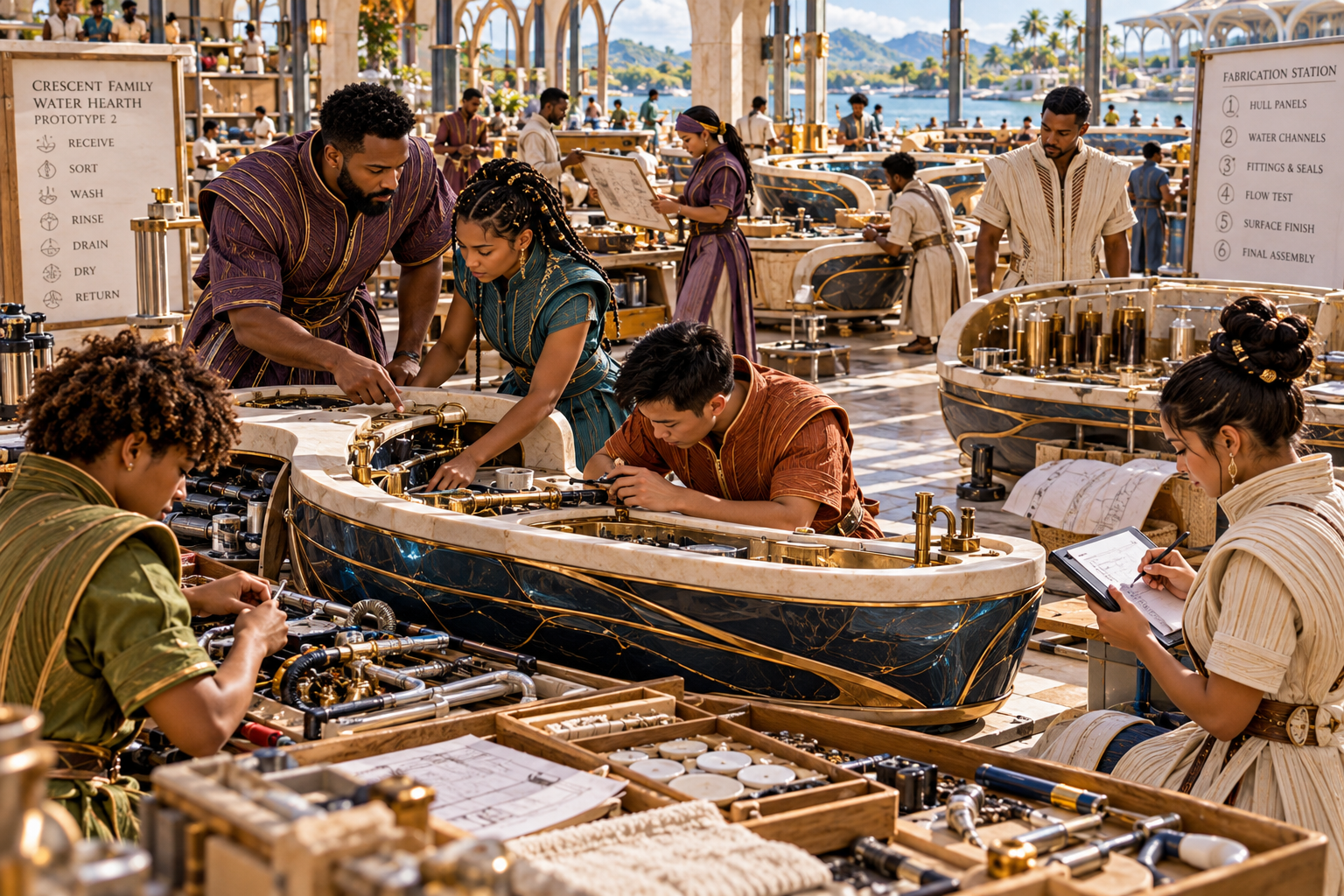
Household machinery that removes repetitive labour?
Reliable food abundance?
People and systems that provide parental relief?
Energy and water security?
A beautiful environment that does not require constant financial anxiety to maintain?
Instead of:
Ask:
That is a much more loving question.
It moves love away from status and toward human need.
Do Not Raise Children to Escape Into Wealth
Raise them to understand what wealth was supposed to accomplish.
Security.
Freedom.
Comfort.
Opportunity.
Time.
Beauty.
Choice.
Ability.
Then ask:
Can we build those things directly?
Can food abundance create security?
Can durable housing create stability?
Can machinery return time?
Can energy systems create independence?
Can intelligent family support create rest?
Can beautiful public environments create delight without exclusivity?
Can children inherit systems instead of merely inheriting money?
Human flourishing is.
The Difference Is Simple
That is a completely different direction.
Do Not Buy a Better Cage
The old world can teach a child to spend their whole life trying to reach the top of the same structure that hurt their parents.
Earn enough.
Buy more.
Upgrade.
Prove success.
Protect the lifestyle.
Keep earning.
And perhaps the cage becomes enormous.
Beautiful.
Comfortable.
Gold-plated.
But if your family’s peace still depends on continuously feeding the gate, then something fundamental has not changed.
Teach them to understand why the cage was there.
Teach them to build productive capacity.
Teach them to build systems that keep serving.
Teach them to make beauty normal.
Teach them to remove burdens rather than merely purchase relief from them.
Teach them to pursue what multiplies, what endures, what reduces dependency, and what returns time and possibility to human life.
The goal is to progressively remove recurring needs from the gate.
Luxury is not the enemy.
Beauty is not the enemy.
Comfort is not the enemy.
The mistake is believing that expensive access is the same thing as abundance.
It is not.
True abundance is not proving how much you can afford.
It is building a life in which your family increasingly has less that needs to be afforded at all.