

The Paycheck Forgets Your Labour: Why Income Is Not the Same Thing as Abundance

The Paycheck Forgets Your Labour
A fruit tree behaves very differently from a paycheck.
You plant the tree.
You care for it.
You protect it while it establishes.
Then one day it begins bearing.
And if it remains healthy, it can keep producing for years.
It bears again.
It gives fruit again.
Depending on the species, it may provide seed, grafting material, cuttings or air-layered plants.
It can produce new trees.
It can shade the ground.
Its fallen leaves can become mulch.
Its waste can feed animals.
Its prunings can become useful biomass.
One successful period of labour can continue serving the family long after the original work was done.
The paycheck does not.
You work January.
You receive January’s salary.
The family eats.
Pays housing.
Pays electricity.
Pays transport.
Buys household supplies.
Repairs something.
Perhaps saves a little.
Then February arrives.
And the family has to do it again.
The food from January is gone.
The electricity bill returns.
The rent returns.
Transport returns.
Children keep growing.
Things wear out.
The house needs something else.
Another month begins.
And your labour has to be sold again.
Every Month Resets
This is one of the strangest things about a life built primarily around salary.
You can work extremely hard and still wake up at the beginning of the next month needing another full cycle of income to preserve access to ordinary life.
The effort from last month does not automatically feed this month.
The grocery receipt does not grow another crop.
The rent payment does not become another room.
The electricity bill does not gradually turn into your own generating system.
The transport fare does not slowly become transport capacity that belongs to the family.
The money did its job.
Then it disappeared into access.
And the family starts again.
That is recurring permission.
You Cannot Sell the Same Monday Twice
There is another way to see it.
A worker gives Monday.
Monday is gone.
That day cannot be sold again.
You can work another Monday next week, but it is a new piece of your life.
A paycheck is usually tied to labour already spent.
The family must keep supplying fresh time to keep the flow going.
But suppose part of that Monday was used to plant a productive tree.
Years later, the tree may still be bearing.
The original Monday is gone, but the result of that labour is still working with the family.
That is the difference.
One form of work has to be continuously repeated to keep producing income.
Another form can leave behind productive capacity that continues returning usefulness after the original labour is over.
That is why the question cannot only be:
It also has to be:
Income Is Flow. Abundance Is Capacity.
This matters because we have been taught to confuse a bigger salary with a more abundant life.
They are not the same thing.
A family can earn R$5,000, R$20,000 or R$100,000 a month and still remain deeply dependent on the next payment.
The lifestyle may change.
The house may become larger.
The food may become more expensive.
The car may become better.
The neighbourhood may become more prestigious.
But ask a more revealing question:
How long before the household begins losing access?
That exposes the difference.
Abundance is productive capacity.
Income arriving can be extremely useful.
But income alone does not prove abundance.
Abundance is what remains capable of meeting needs even when another month has not yet been sold.
The Floor Can Move Too
And the family is not always resetting onto a fixed floor.
The cost of ordinary life can change.
Food can rise.
Housing can rise.
Electricity can rise.
Transport can rise.
Repairs can rise.
Services can rise.
Materials can rise.
At times, those costs can rise faster than the income available to the household.
So even when a salary remains the same, or even rises somewhat, the amount of life it can command can still shrink.
Then the person is told:
Earn more.
Work harder.
Get promoted.
Take another job.
Improve yourself.
Make better decisions.
Some of that advice can be useful on an individual level.
But there is something deeply wrong with turning a moving economic floor into a permanent judgment on the person standing on it.
You finally increase your income.
Then household costs shift again.
You work harder.
The target moves.
You save.
Something breaks.
Part of the savings disappears.
You rebuild.
Then another year arrives.
The family keeps climbing, but the hill can keep changing beneath them.
And because the struggle is individualized, the father may think:
The mother may think:
The child may think:
The structure keeps reproducing itself.
Savings Are Not Automatically Abundance Either
Saving is useful.
It gives a family room.
It can provide protection.
It can help build future capacity.
But money sitting still does not necessarily preserve all of the usefulness it had when it was earned.
If prices rise while savings earn less than that rise, the number may still be there while part of its purchasing power has weakened.
Some of the usefulness does not.
That does not make saving pointless.
It means savings are not the same thing as productive abundance.
A family can preserve money and still need to think about what that money becomes.
Does it remain only stored permission?
Or does some of it become land, tools, machinery, water capacity, energy capacity, food production, durable shelter or some other system that continues serving?
That is the more important question.
Consumption Solves Once. Capacity Keeps Solving.
Capacity keeps solving it.
Buying fruit feeds the family today.
A productive orchard can keep feeding the family across seasons.
Paying an electricity bill preserves access for a period.
Building reliable generation and storage creates energy capacity.
Paying for transport solves a journey.
Building durable transport capacity keeps solving movement.
Buying another household item may meet an immediate need.
Building a system that repeatedly removes labour can keep returning time to the family.
Consumption is not bad.
Families need to consume.
The problem is when almost all labour disappears into consumption and very little is converted into capacity.
Because capacity is what makes tomorrow lighter.
The City Can Hide Dependency
This becomes especially clear in cities.
A family can be surrounded by apparent abundance.
Supermarkets full of food.
Restaurants everywhere.
Clothing stores.
Pharmacies.
Delivery services.
Electricity at the wall.
Water at the tap.
Buildings everywhere.
Transport everywhere.
And still possess very little direct productive security.
The food exists, but it is not available to the family without payment.
The electricity exists, but access depends on continued payment.
The apartment exists, but shelter may depend on rent or mortgage.
The supermarket is full, but the family cannot eat from it without money.
It is proximity to abundance behind a gate.
A family can spend twenty years living beside enormous quantities of food and still own no food-producing system.
That is a profound kind of dependence.
Productive Loops Multiply
Now imagine a different base.
An orchard.
Staple crops.
Animals.
Water systems.
Energy systems.
Machinery.
Preservation.
Storage.
Workshops.
Knowledge.
The important thing is not simply that each system produces something.
It is that one system can support another.
Crop residues can become animal feed or return to soil.
Animals produce manure.
Manure builds fertility.
Fertility supports crops.
Crops feed people and animals.
Seeds create the next planting.
Breeding animals create the next generation of the herd or flock.
Fruit trees provide fruit and propagation material.
Surplus food can be preserved.
Energy powers machinery.
Machinery reduces labour.
Knowledge improves the entire loop.
Now the household is not only consuming what comes in.
It is standing inside a network of systems that keep returning usefulness and creating more capacity.
The Goal Is Not to Return to Drudgery
None of this means families should spend all day bent over fields, carrying water, processing everything by hand and exhausting themselves.
That would simply replace one burden with another.
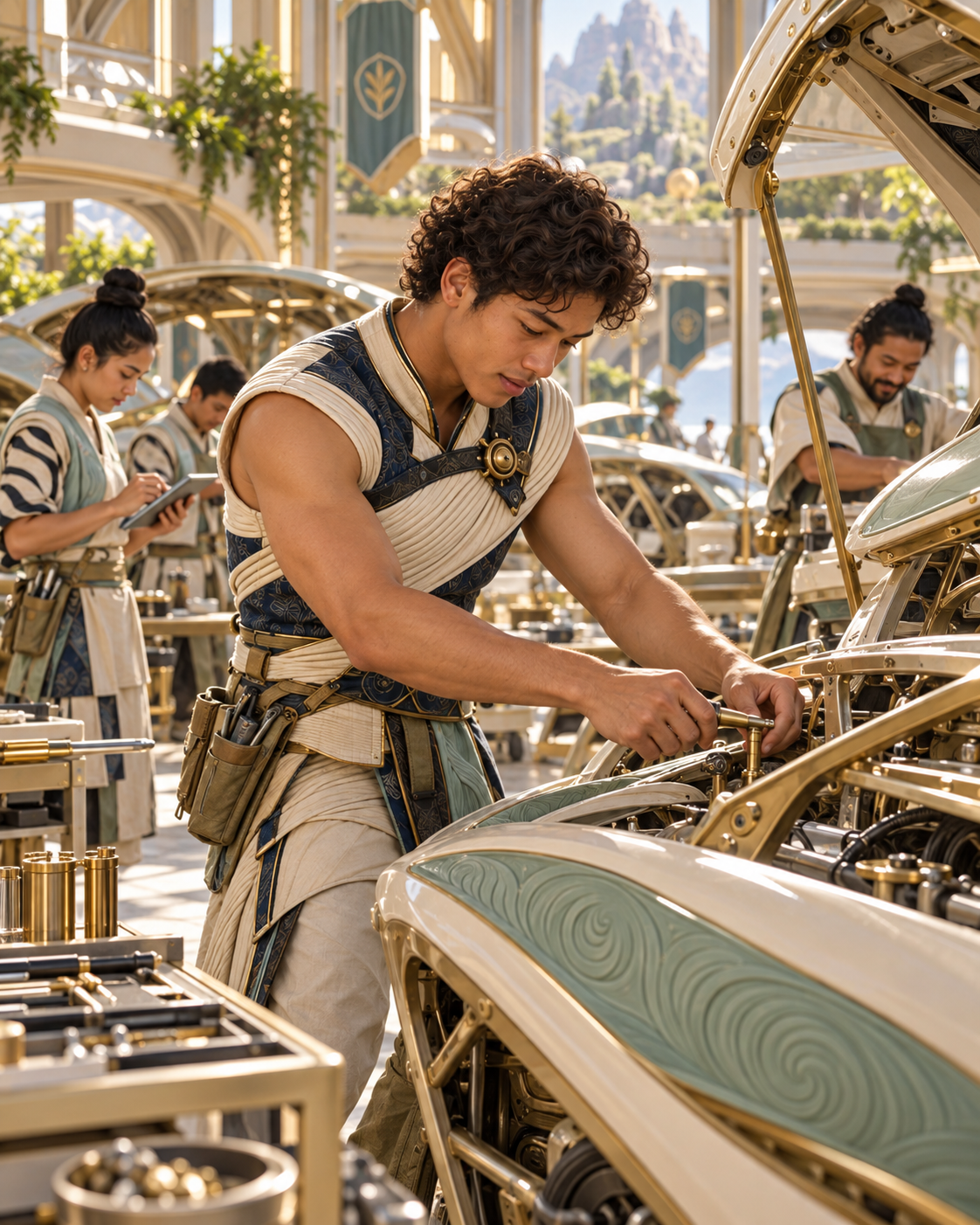
The answer is to combine biological multiplication with modern machinery.
Use irrigation.
Use pumps.
Use small tractors.
Use carts.
Use processing equipment.
Use refrigeration.
Use milking equipment.
Use food preservation systems.
Use solar generation.
Use intelligent storage.
Use automated watering.
Use tools that remove repetitive labour.
Human beings should not have to choose between modern convenience and productive abundance.
A mature civilization should combine both.
Let machinery carry more of the work.
Let human beings increasingly direct, refine, maintain and improve the system rather than exhausting themselves to keep it alive.
Good Systems Remember Previous Work
This may be one of the clearest ways to think about progress.
Good systems remember.
You plant the orchard. Years later, it is still feeding people.
You build the water system. Years later, it is still moving water.
You install the energy system. Years later, it is still generating.
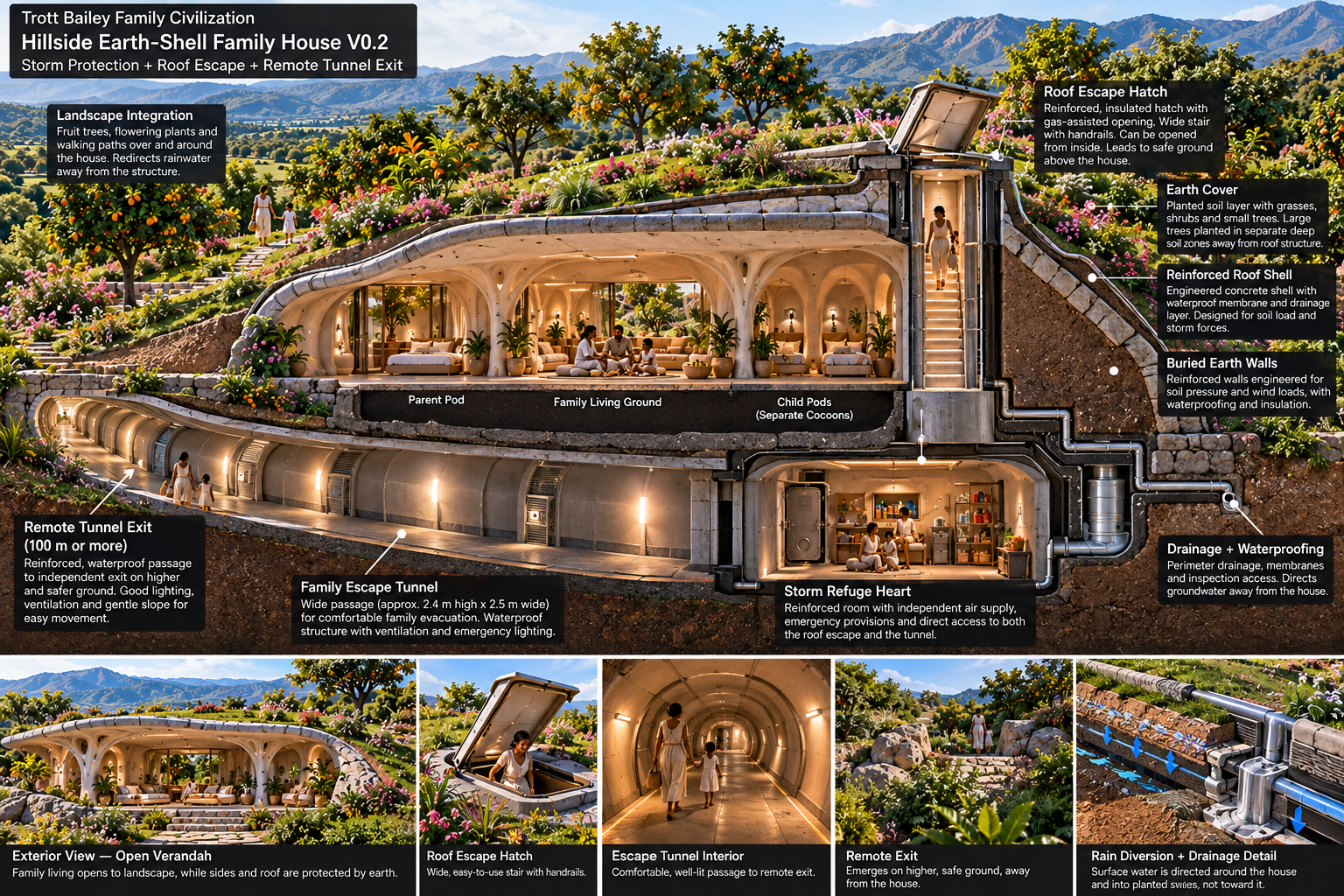
You build the house well. Years later, it is still sheltering a family.
You teach a skill. Years later, that knowledge still exists in another person.
You improve the soil. Years later, the land is more productive than before.
Yesterday’s work keeps helping tomorrow.
That is what abundance should feel like.
The family should not have to solve the same basic problems from zero every month.
A Generation Should Leave a Higher Floor
This is where the argument becomes generational.
Parents should not work for forty years and hand their children the same unsolved necessities.
Food still insecure.
Housing still conditional.
Energy still recurring.
Land absent.
Systems absent.
And the advice:
That is not progress.
A generation should leave a higher floor.
Mature orchards.
Improved land.
Secure water.
Durable housing.
Energy systems.
Machinery.
Seed stores.
Breeding stock.
Food preservation.
Workshops.
Knowledge.
Family systems.
Problems already solved.
Then the children begin from there.
They do not spend their best years repeating their parents’ struggle.
They build the next layer.
The Test Is Simple
Buying groceries meets today’s need.
Building a productive food system can meet today’s need and reduce tomorrow’s dependency.
Paying an electricity bill preserves access.
Building energy capacity can reduce recurring dependence.
Paying for transport solves a journey.
Building durable transport capacity solves movement repeatedly.
Buying another disposable thing consumes resources.
Building a system that keeps producing usefulness compounds them.
That is the difference between maintenance and abundance.
The Paycheck Forgets
A paycheck can be useful.
Money can help bridge gaps.
It can help acquire tools.
It can help build productive systems.
It can help during transition.
But it should not become the permanent architecture of family survival.
Because the paycheck forgets.
It pays once.
Then the month takes it.
Then the family works again.
But the orchard remembers.
The land remembers.
The water system remembers.
The machine remembers.
The house remembers.
The knowledge remembers.
The productive system keeps giving something back.
That is what a family should pursue.
Not endless reacquisition.
Not recurring permission.
Not a bigger number that must be chased again next month.
But systems that keep serving.
Systems that multiply.
Systems that reduce tomorrow’s burden.
Systems that allow the next generation to begin from a place their parents had to work to create.
The point is not to accumulate productive systems for their own sake.
It is to make family life lighter, safer, freer and more capable with every generation.
The paycheck forgets your labour.
Abundance remembers it.