
Before Beauty Can Be Maintained, It Must Be Built
Trott Bailey Family Kingdom — Shubaka Civilization Series
Before Beauty Can Be Maintained, It Must Be Built
The Trott Bailey Family Kingdom creates work not only through care, food, water, and beauty — but through the massive civilization-building effort required to make every district real.
A beautiful civilization does not appear by accident. Someone must prepare the land. Someone must carve the roads. Someone must build the water systems. Someone must shape the pavilions, install the lights, raise the roofs, lay the paths, build the food houses, protect the roots, assemble the machines, test the systems, and hand every place over to the stewards who will keep it alive.
Before beauty can be cared for, beauty must be built.
1. The Obvious Role We Almost Missed
The Trott Bailey Family Kingdom has already revealed many roles for maintaining beauty. There are stewards for food, water, babies, elders, orchards, public tables, vehicles, wash courts, compost systems, playgrounds, hair Lamus, furniture, routes, and public-life spaces.
But there is an even earlier question:
Who builds the civilization before anyone can maintain it?
Someone has to build the Baby Worlds. Someone has to build the Sabenneries. Someone has to build Kultan’s water courts. Someone has to build Keslev’s orchard systems. Someone has to build the Makji service bays, the sea promenades, the family compounds, the public pavilions, the Solar Moon Panel routes, the Lazza-Zooza scenic roads, the Soil-Crown Compost Works, the Release Commons, the Hair Lamus, the Pacorips interiors, and the beautiful service spines hidden behind public life.
This means the kingdom does not only create stewardship roles after beauty exists. It creates construction, making, installation, verification, and handoff roles before beauty can serve anyone.
2. A Kingdom Is Not Only Designed. It Is Built.
It is easy to admire a beautiful kingdom scene and forget the labor behind it. But every building, road, garden, water route, service court, threshold, bench, roof, column, sign, wash point, and machine has to pass through real stages.
The kingdom’s build cycle is now clear:
This is important because it proves the kingdom is not a flat fantasy image. It is a working civilization model. It has a lifecycle. It has people at every stage. It has those who imagine, those who draw, those who build, those who test, those who open, those who guide, those who reset, and those who improve the system over time.
A place is not finished when it looks beautiful. It is finished when it can safely serve life.
3. The New Master Role Family: Civilization Building + Installation Shubaka
This is now a locked master category in the Trott Bailey Family Kingdom Role Catalog:
Locked Role Family
Civilization Building + Installation Shubaka Family V1
The role family responsible for physically constructing, assembling, installing, verifying, and handing over the built systems of the Trott Bailey Family Kingdom.
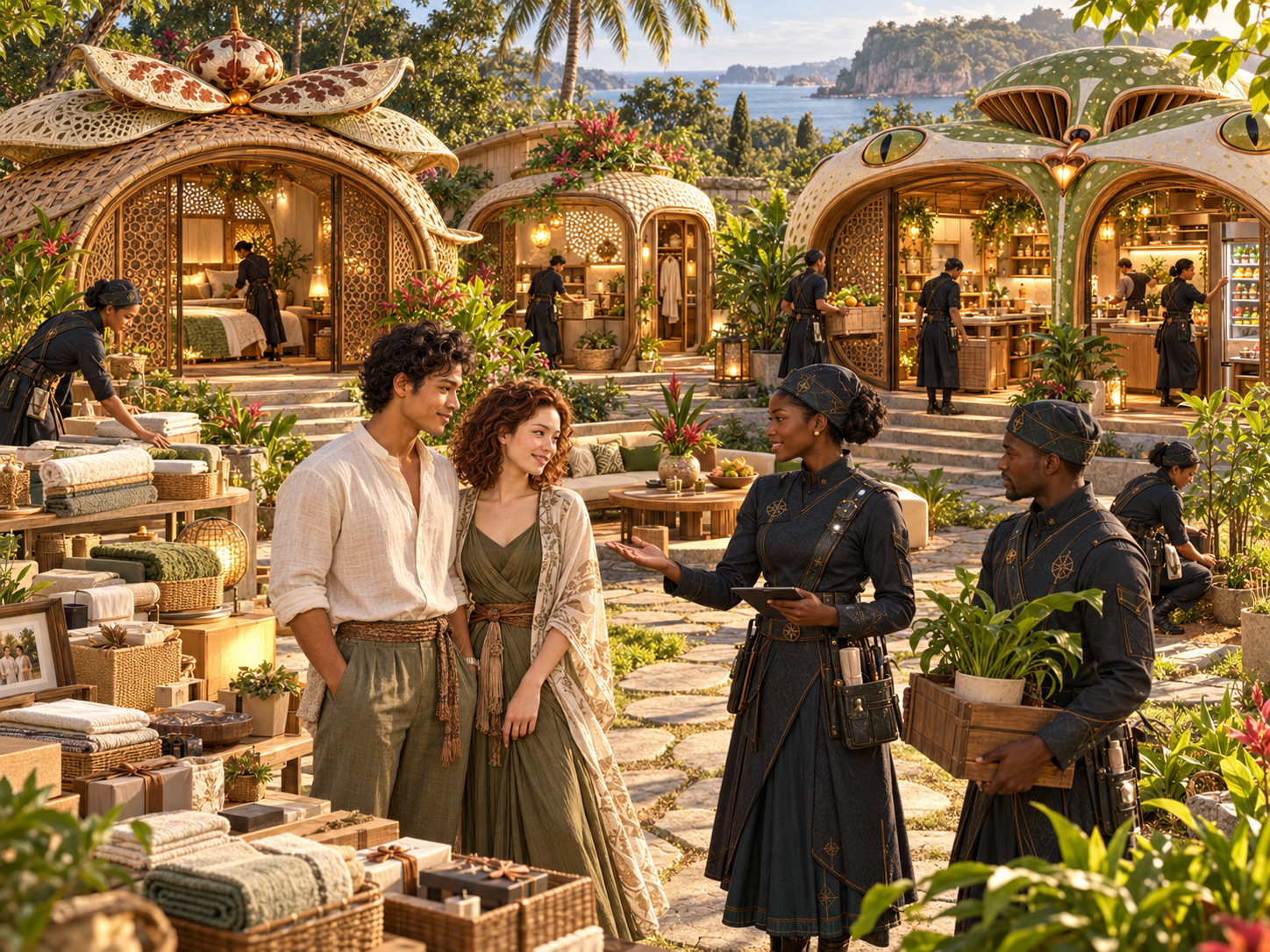
These are not generic construction workers. They are kingdom builders. They understand that a Trott Bailey building is not assembled from ordinary parts. It has authored roofs, porches, columns, railings, thresholds, child-height details, water logic, service routes, rain catchment, public beauty, and functional dignity.
They build the civilization so that future Shubaka can operate it, maintain it, teach within it, and keep it beautiful.
The kingdom creates work through building, then creates more work through stewardship.
4. The Major Building Role Categories
Once we admit that the kingdom must be built, whole categories of work appear. These are not temporary side jobs. They are major civilization pathways.
Site Preparation Shubaka
Prepare land without destroying the future. Protect roots, water paths, service corridors, soil, slopes, family routes, and future gardens before construction begins.
Structural Building Shubaka
Build pavilions, homes, service houses, roofs, porches, verandahs, stairs, ramps, thresholds, courtyards, columns, and civic bodies.
Architectural Detail Makers
Shape the details that make buildings read as Trott Bailey: trims, railings, fascia, carved thresholds, floor inlays, plaques, vents, screens, and child-height features.
Road + Route Builders
Build mineral roads, orchard paths, stroller promenades, Makji pause bays, Lazza-Zooza scenic routes, sea promenades, service spines, and public boulevards.
Water Infrastructure Builders
Build water veins, shell-comb channels, trough wash systems, rain catchment routes, Root Ribbon Irrigation, greywater return, filtration courts, and safe water edges.
Food-System Builders
Build Sabenneries, Blossom Feed Houses, Fruit Wash Courts, Soil-Crown Compost Works, Kornara processing houses, Flavor Pavilions, cold storage, dry storage, and dispatch porches.
Orchard + Landscape Builders
Build edible landscapes, orchard guild rings, food forests, child-height gardens, pollinator corridors, shade groves, Baby World grass layers, water gardens, and root-safe hardscape.
Interior + Furniture Builders
Build furniture as small architecture: Family Receiving Nest Seats, Quiet Abundance Walls, Husk Bloom storage, route tables, child seats, rest nests, public tables, and Makji interiors.
Machine + Technology Installers
Install Pacorips surfaces, Solar Moon Panels, Makji service ports, robotic arms, Jubo mechanisms, route lights, stroller docks, sensors, warm wash systems, and hidden service systems.
Safety + Quality Verifiers
Test whether each place is safe, buildable, child-ready, water-safe, food-safe, accessible, serviceable, beautiful, and true to Trott Bailey identity.
Construction Service Shadow
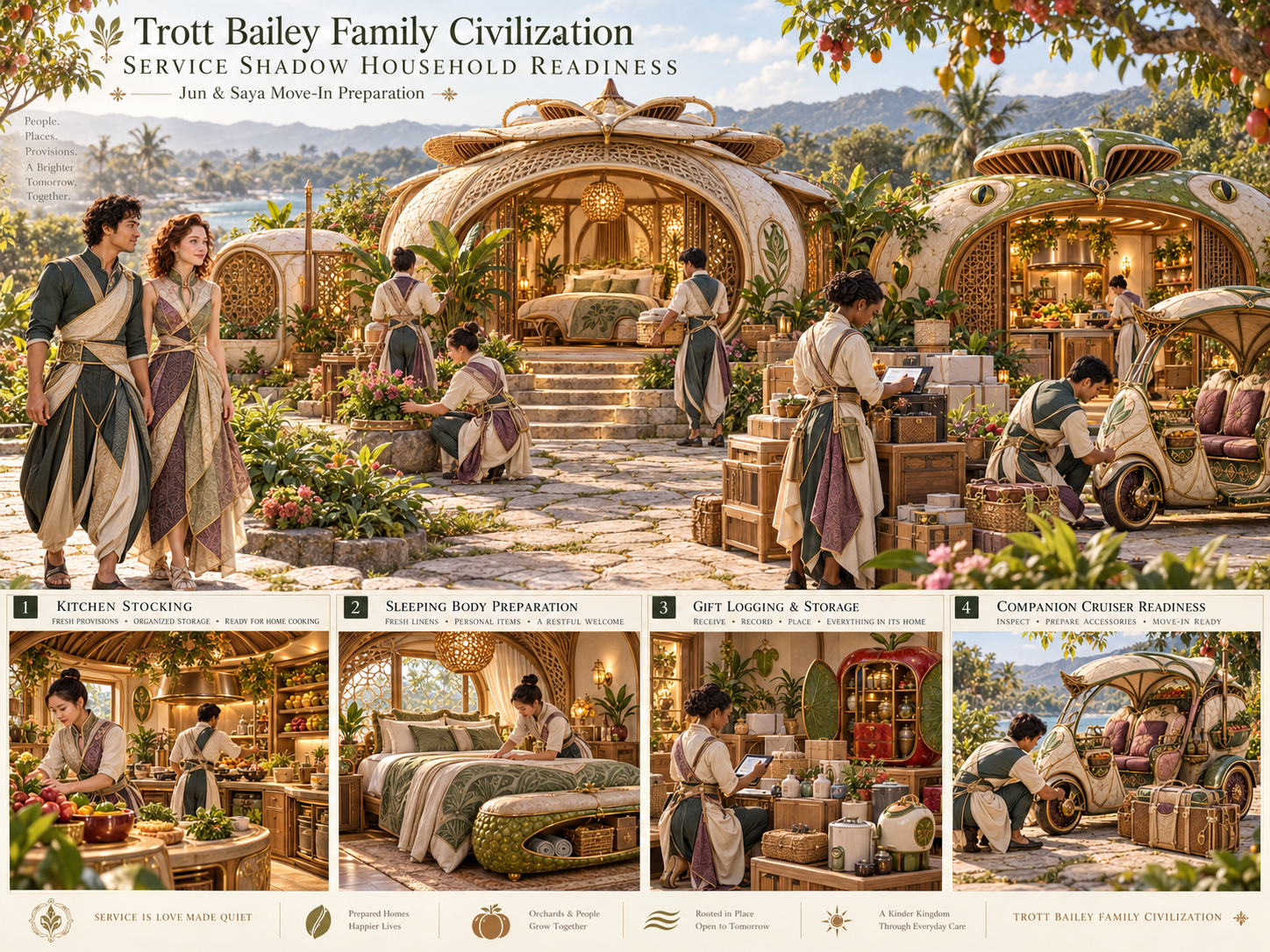
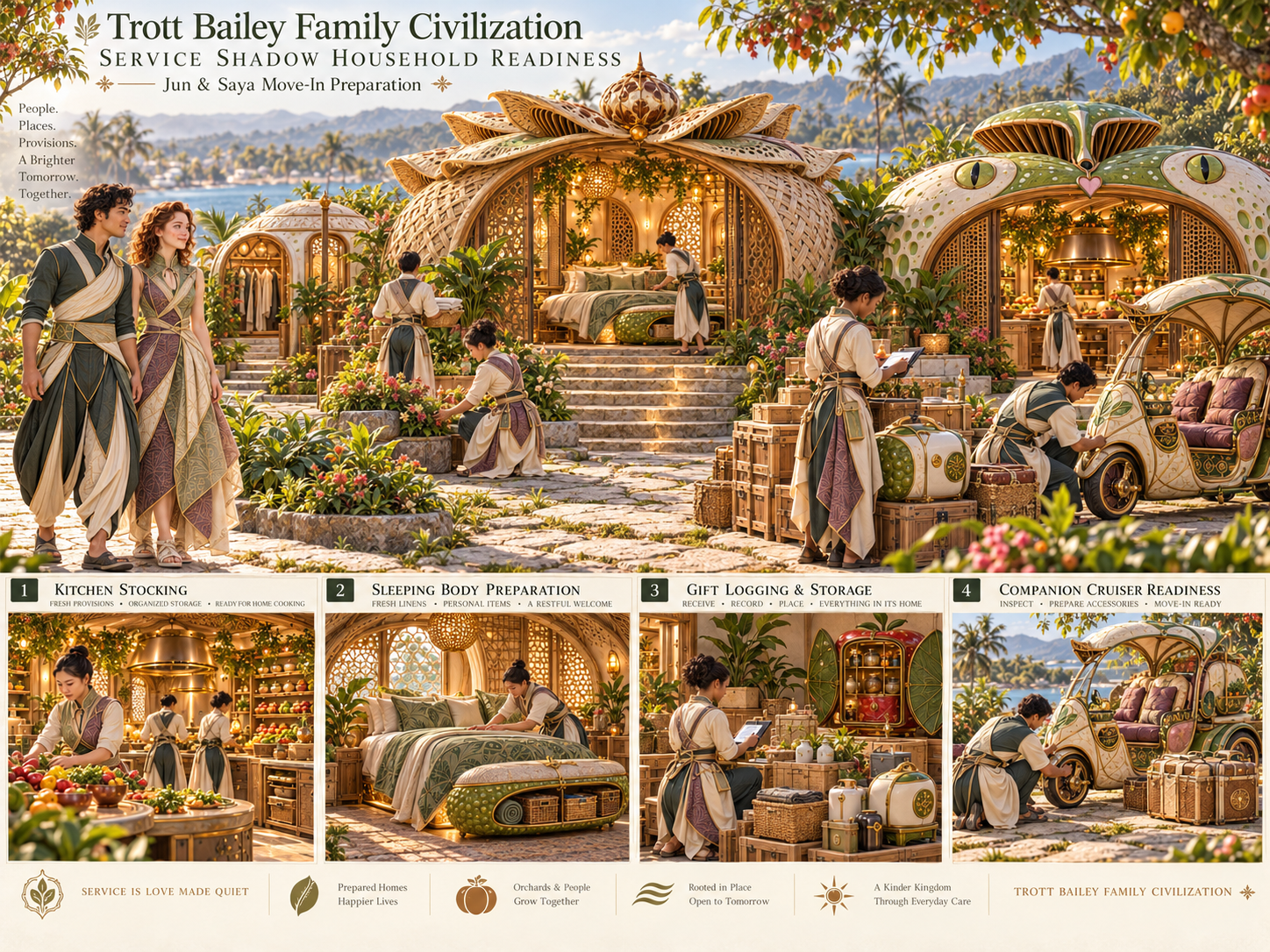
Keep construction itself clean, ordered, fed, safe, washed, stocked, routed, and dignified. Even the building process must obey the kingdom.
Build-to-Stewardship Handoff
Prepare finished places for opening, train the first stewards, confirm systems work, and transfer knowledge from builders to operators.
5. Building the Kingdom Is Not a One-Time Job
Some people may imagine construction as the first phase only. Build the kingdom once, then stop.
But the Trott Bailey Family Kingdom is not a frozen project. It is an expanding civilization. It will keep growing, adapting, repairing, extending, and opening new territories.
Districts will expand. New family compounds will be built. New public-life spaces will open. New orchard systems will be planted. New Baby World branches will appear. New Kultan water systems will be added. New Balushu public-life worlds will be created. New Kezidek mobility routes will be needed. New Keslev processing and soil-return systems will be developed.
And then the kingdom expands further.
The kingdom is not only building on land. It is expanding into sea territory, air movement, water civilization, land vehicles, floating systems, and massive infrastructure.
That means building roles do not disappear. They become generational.
6. Expansion Means Endless Infrastructure
A civilization that expands into land, sea, air, and water will always need new infrastructure.
When the kingdom expands into sea territory, someone must build floating platforms, lagoon edges, Makji terraces, service archipelagos, water-energy fields, reef-safe routes, public sea promenades, marine food systems, docking gardens, and beautiful coastal thresholds.
When the kingdom expands into air movement, someone must build airship courts, landing gardens, sky-route towers, safety terraces, maintenance bays, weather intelligence stations, family boarding rooms, and air-vehicle interiors that still feel like Trott Bailey civilization.
When the kingdom expands into land vehicles, someone must build Makji stewardship courts, Land Makji routes, Capability-Craft storage, service-ready scented streets, root-safe pause bays, protected scenic roads, and family challenge routes.
When the kingdom expands into water vehicles, someone must build Kultan service curbs, hidden side service ports, robotic service arms, provisioning hatches, night rest groves, floating service lanes, and public-life water terraces.
Every expansion creates another wave of roles.
As long as the kingdom expands, the role catalog expands with it.
7. What Must Be Built Across the Civilization
The building work touches every district and every system. It is not limited to houses. It includes the entire civilization body.
Sherika Must Be Built
Arrival pavilions, Cuddles Village, permanent family compounds, service spines, food gardens, intake paths, welcome courts, and family dignity routes.
Keslev Must Be Built
Orchard walkfields, Blossom Feed Houses, grain systems, Soil-Crown Compost Works, irrigation routes, fruit wash courts, nurseries, and food sovereignty infrastructure.
Kultan Must Be Built
Grand Node systems, water courts, Makji service bays, cafés, promenades, shell-comb filtration courts, Zero-Clean systems, and lagoon-edge public life.
Kezidek Must Be Built
Baby World, Royal Nest, warm wash courts, Parent Rest Nests, Lazza-Zooza routes, stroller promenades, supply houses, sibling rooms, and quiet gardens.
Balushu Must Be Built
Release Commons, distributed stage gardens, Presence Boulevards, sea promenades, Makji rest groves, public tables, service shadow routes, and night public-life worlds.
Big King Must Be Built
Technology command spaces, media systems, verification centers, maritime authority places, engineering courts, and public intelligence architecture.
Keilah Must Be Built
art spaces, aquariums, trampolines, flavor and invention places, reward refill stations, child creativity rooms, and playful public culture.
Kaleeyon Must Be Built
child delight systems, playful food routes, reward objects, interactive public devices, invention spaces, and youth-centered delight infrastructure.
8. This Creates Work for Whole Families
Building a civilization does not only create individual roles. It creates family pathways.
One family may become known for building water routes. Another may become known for orchard hardscape and root-safe paths. Another may specialize in child-safe interiors. Another may build pavilions. Another may install Solar Moon Panel systems. Another may make railings, carved trims, and floor inlays. Another may build Makji interiors. Another may prepare sites and protect soil.
Over time, families can develop generational knowledge.
- Builder families
- Route-making families
- Water-system families
- Orchard-building families
- Furniture-building families
- Machine-installation families
- Architecture-detail families
- Sea-infrastructure families
- Air-vehicle infrastructure families
- Public-life construction families
This is not ordinary employment. This is family contribution becoming family identity.
The first generation does not only live in the kingdom. They help build it.
9. Refugees and Talented People Would Not Only Be Housed — They Could Help Build
This is one of the most persuasive truths in the Role Catalog.
People entering the kingdom would not only be received, fed, registered, and supported. They could be routed into the building of the civilization itself.
Some may have construction experience. Some may be skilled with tools. Some may know masonry, carpentry, metalwork, planting, plumbing, electrical systems, boats, vehicles, kitchens, roads, irrigation, furniture, textiles, machine repair, or site logistics. Others may not have formal training but may have patience, strength, discipline, observation, craft sense, or willingness to learn.
The kingdom can route these abilities into meaningful build pathways.
You are not just being housed. You are not just being fed. You are not just being managed. You can help build the civilization itself.
That is a different kind of dignity.
10. Building Must Still Follow Kingdom Law
The kingdom does not want ugly construction followed by beautiful decoration. The way the kingdom is built must already reflect the kingdom’s values.
Construction sites should not become chaotic, unsafe, dirty, exploitative, or careless. Materials should be routed properly. Workers should have shade, wash points, rest areas, food support, safety systems, and clear service lanes. Construction waste should be sorted. Reusable materials should be recovered. Dust should be controlled. Temporary paths should be safe.
Even the act of building must be civilized.
Even the act of building the kingdom must obey the kingdom.
That is why Construction Service Shadow matters. Builders need support too. The people building the civilization must not be treated as disposable bodies outside the beauty they are creating.
11. The Builder Is Not Less Than the Steward
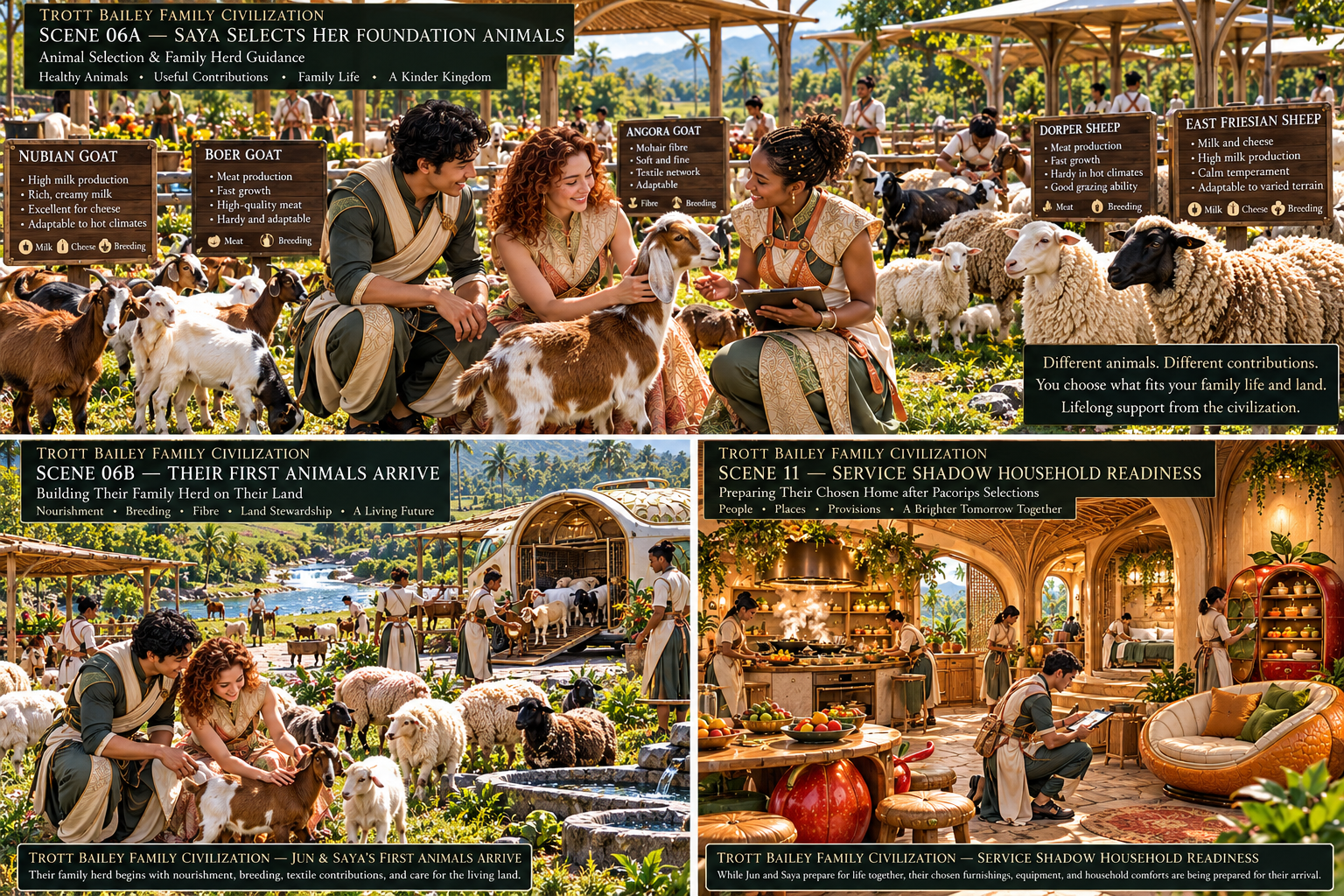
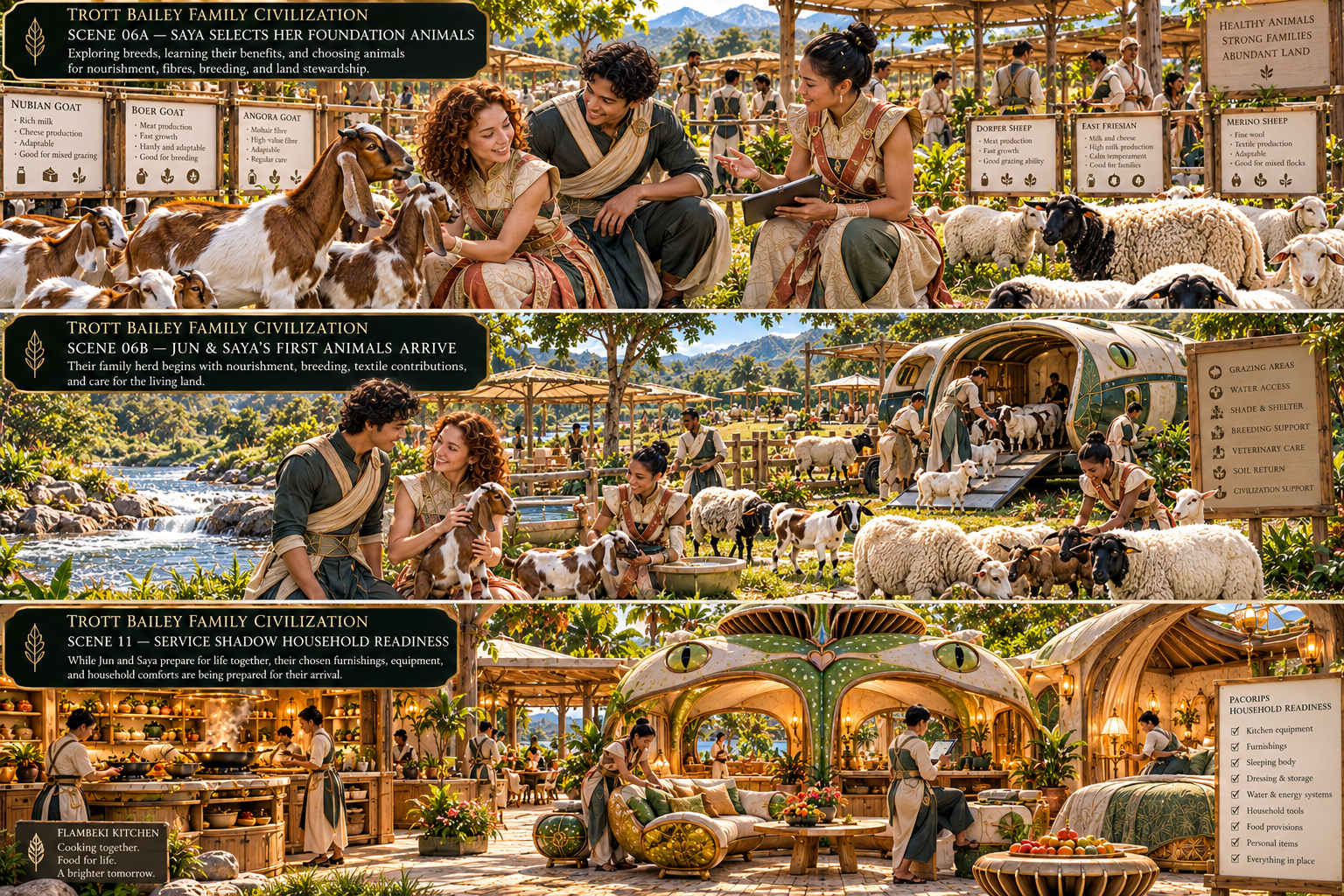
A steward may keep a wash court clean, but a builder made the wash court possible. A Flow Steward may guide the water, but a water infrastructure builder gave the water a safe path. A Baby World Age-Zone Steward may guide families, but terrain builders, nest builders, grass-layer builders, and warm wash installers made Baby World usable.
A Sabennery Steward may guide people through public meals, but food-system builders constructed the service counters, dish return, storage, prep spaces, public tables, and wash systems that make public feeding dignified.
Both are needed.
The builder and the steward belong to the same civilization chain.
This is why the Role Catalog must not only celebrate maintenance. It must celebrate making.
12. The Kingdom Needs Builders of Beauty, Builders of Systems, and Builders of Trust
Builders of Beauty
These Shubaka make the roofs, trims, columns, railings, thresholds, paths, gardens, lighting, furniture, and surfaces that make the kingdom recognizable.
Builders of Systems
These Shubaka install water, food, energy, drainage, service routes, sensors, Makji ports, Pacorips surfaces, compost systems, and route infrastructure.
Builders of Trust
These Shubaka verify safety, test child use, check accessibility, confirm food-safe construction, protect roots, and make sure beauty can actually serve families.
A civilization is not trusted because it looks impressive. It is trusted because its beauty works. It is trusted because someone tested the railing, checked the drainage, measured the slope, protected the root zone, verified the wash point, installed the lights, and made sure a child, elder, parent, or tired family could use the place safely.
13. This Makes the Kingdom Economically and Socially Powerful
The Role Catalog now shows two great waves of work.
Wave One: Build the Civilization
Construction, making, installation, assembly, landscape building, water building, route building, machine installation, safety verification, and opening handoff.
Wave Two: Steward the Civilization
Food service, water care, baby support, elder guidance, public-life hosting, reset work, route support, maintenance, learning, verification, and improvement.
This matters because the kingdom does not create a few jobs around a finished product. It creates an entire civilization economy of contribution.
Every new district, road, food system, sea platform, air vehicle court, public garden, water channel, family compound, and invention center creates work during construction and more work after opening.
The kingdom is not a place where work runs out. It is a place where meaningful work keeps unfolding.
14. Build-to-Stewardship Handoff Is the Missing Bridge
One of the most important parts of this system is the handoff.
A place should not be built and then abandoned to operators who do not understand it. The people who build a system should help teach the people who will steward it.
When a Fruit Wash Court is finished, the builders should help the Fruit Wash Court Stewards understand the basins, drains, prep surfaces, child-height wash points, greywater routes, and reset needs.
When a Baby World zone is finished, the builders should help Baby World stewards understand the terrain layers, water veins, warm wash points, sightlines, stroller paths, and safety edges.
When a Makji service bay is installed, the builders and installers should hand off knowledge to the Makji Service Port Stewards, Robotic Arm Monitors, Service Curb Operators, and Pacorips diagnostic readers.
Handoff protects the future. It keeps the knowledge of how a place was made connected to how the place will be cared for.
15. Building Becomes Generational Memory
Imagine families saying:
“Our family helped build the first Kezidek stroller route.”
“Our grandparents helped install the first Kultan shell-comb water court.”
“Our parents worked on the first Soil-Crown Compost Works.”
“Our children helped plant the next orchard expansion.”
“Our family helped build the first sea promenade.”
“Our line became known for Solar Moon Panel path edges.”
This is how building becomes more than labor. It becomes memory. It becomes honor. It becomes proof that a family helped bring the civilization into physical reality.
To build the kingdom is to leave your handprint in the future.
16. The Kingdom Will Always Need New Builders
Because the kingdom is alive, it will keep changing.
New children will be born. New families will arrive. New districts will mature. New technologies will emerge. New food systems will be needed. New sea territories will open. New routes will connect. New vehicles will require service systems. New public spaces will be imagined. Old places will be improved.
This means the Civilization Building + Installation Shubaka Family is not temporary. It is one of the permanent engines of the kingdom.
Some builders may work on first construction. Some may work on expansion. Some may work on renovation. Some may specialize in district upgrades. Some may build prototypes. Some may install new systems inside older places. Some may repair after storms. Some may transform temporary structures into permanent ones.
The work continues because the kingdom continues.
17. The Civilizational Promise
This article strengthens the promise of the Trott Bailey Family Kingdom:
There will be roles for people who care.
There will be roles for people who cook, wash, teach, guide, grow, comfort, verify, repair, record, and restore.
But there will also be roles for people who build.
People who prepare sites. People who raise structures. People who carve details. People who build roads. People who install water. People who shape landscapes. People who assemble interiors. People who install machines. People who verify safety. People who hand over completed places to the stewards.
The kingdom creates work through building, then creates more work through stewardship.
Closing: A Civilization Worth Building
The Trott Bailey Family Kingdom is not only a dream of beautiful finished places. It is a dream of people building those places together.
It is a civilization where the road builder matters. The water installer matters. The railing carver matters. The roof builder matters. The orchard planter matters. The furniture maker matters. The machine installer matters. The safety verifier matters. The Service Shadow construction team matters. The family that helps build a district matters.
Because before a child can run through a beautiful playground, someone must build it. Before a tired parent can rest in a shaded nest, someone must build it. Before a family can eat in a Sabennerie, someone must build it. Before clean water can flow through Kultan, someone must build the path for it. Before an orchard can feed generations, someone must prepare the soil, protect the roots, install the water, lay the paths, and plant the trees.
Beauty does not begin with maintenance.
Beauty begins with the first faithful act of building.
Before beauty can be maintained, it must be built — and in the Trott Bailey Family Kingdom, building itself becomes a path of dignity, purpose, family honor, and generational work.


 and then