
Capability Learning Fields Design Record V1
Trott Bailey Family Civilization · Design Record
Capability Learning Fields Design Record V1
A kingdom-scale family learning system in which children and adults discover real resources, transform them through real capability, enjoy the result together, and restore the land that sustained the experience.
Plain Definition
A Capability Learning Field is a large, open family landscape where children and adults learn a real civilization capability by finding, identifying, gathering, processing, transforming, using, sharing, and restoring the resources present around them.
Families do not merely receive information about food, water, tools, fibres, soil, energy, animals, or materials. They enter the real capability chain.
1Design Definition
Capability Learning Fields connect family recreation, discovery, childhood development, food sovereignty, land stewardship, practical education, and civilization capability.
Examples include:
Food Transformation
- Gather corn, mill it, form flakes, and eat the finished breakfast.
- Harvest breadfruit and roast it beneath the tree.
- Dig yams, wash them, wrap them, and cook them in a family fire.
- Catch and prepare a fish responsibly.
- Gather fruit and transform it into juice, preserves, sauce, or dried food.
Material and Infrastructure Transformation
- Harvest fibres and turn them into cord or a useful carrier.
- Gather clay, prepare it, shape it, and fire a vessel.
- Follow rainwater from catchment to irrigation and food production.
- Inspect a damaged object, repair it, and return it to use.
- Plant seed, tend the crop, harvest it, save seed, and prepare a meal.
The field is simultaneously:
- a family recreation space;
- a learning environment;
- a production landscape;
- a capability practice ground;
- a place of discovery;
- a source of family memory;
- and a bridge between children and the systems supporting civilization life.
2Why Capability Learning Fields Exist
Conventional learning often separates knowledge from reality. Children may learn that corn becomes food without touching corn, that water should be conserved without tracing a real water route, or that tools are useful without operating one.
This can produce people who know the names of processes while remaining unable to perform them.
3The Capability Learning Cycle
3.1 Find
The family notices or locates a real resource: mature corn, a breadfruit ready for harvest, a yam vine, suitable dry wood, clay-bearing soil, fibre material, or the place where rainwater gathers.
Finding should require observation rather than merely following an arrow.
3.2 Identify
The family determines:
- what the resource is;
- whether it is ready;
- whether it is safe;
- whether it may be harvested;
- how much should remain;
- and what tool or method is appropriate.
3.3 Gather
Gathering may involve picking, digging, cutting, catching, collecting, lifting, carrying, receiving, or sorting.
The work should be real, but scaled to the ability of each family member.
3.4 Process
Examples include:
- shelling corn;
- washing roots;
- cleaning fish;
- removing breadfruit sap;
- separating fibres;
- sieving clay;
- sorting fuel wood;
- and filtering water.
3.5 Transform
Corn becomes meal. Meal becomes flakes. Breadfruit becomes a roasted family food. Fibre becomes cord. Clay becomes a vessel. Water becomes irrigation. A broken object becomes useful again.
3.6 Use or Share
The family may:
- eat or drink the result;
- wear or carry something made;
- cook, repair, or plant with it;
- offer it to another family;
- or contribute it to a shared system.
3.7 Restore
Restoration may include extinguishing a fire, returning tools, repairing soil, replanting, saving seed, cleaning work surfaces, composting remains, routing scraps to animal feed, or leaving a habitat undisturbed.
Completion Law
Restoration is not cleanup added after the real activity. Restoration is part of the capability itself.
4Spatial Character of the Fields
Capability Learning Fields must not resemble school campuses, playground circuits, theme parks, or obstacle courses.
4.1 No Dominant Path
There should be no obvious pathway controlling the family’s movement. A pathway silently communicates, “This is the intended direction.”
Avoid:
- central axes;
- one-way circuits;
- numbered stations;
- painted arrows;
- rows of clues;
- forced starting points;
- and visual corridors that make one destination appear correct.
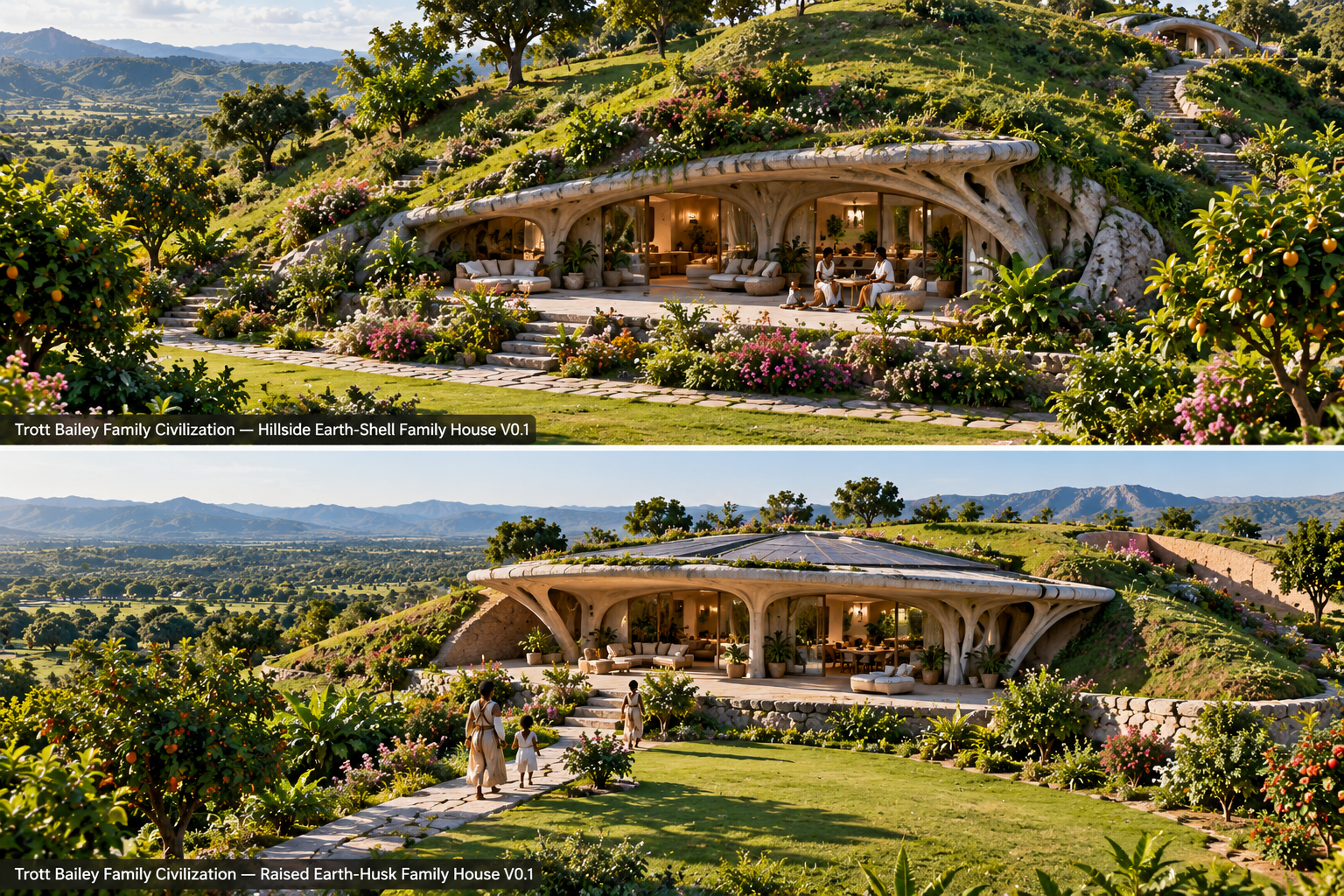
4.2 Broad Traversable Ground
Accessibility should be embedded into the field body rather than confined to a narrow accessible path.
- broad, firm ground;
- gradual slopes;
- low terraces;
- stable grass or groundcover;
- wide transitions;
- multiple equal approaches;
- and open turning areas.
4.3 Terraced Land
Broad, low landforms create differences in height, moisture, visibility, temperature, wind, shade, drainage, planting conditions, and discovery opportunities.
4.4 Boulder Families
Natural-looking boulders may serve as:
- sitting and leaning surfaces;
- low climbing forms;
- shade and wind pockets;
- water-catching surfaces;
- sound resonators;
- embedded receivers;
- and hidden discovery edges.
4.5 Sandy Tide Pockets
Small sandy interruptions can support:
- digging and pouring;
- imprint and footprint discovery;
- water-channel play;
- object burial and recovery;
- texture comparison;
- and washing gathered resources.
4.6 Shallow Pool Pockets
Naturalistic, tide-like pools can support splashing, floating, pouring, washing produce, tracing water, guiding objects, cooling hands and feet, and observing aquatic life where appropriate.
4.7 Space Between Activities
The field should not be saturated with objects. Children need room to run, roll, chase, rest, carry, observe, and decide what interests them next.
5Age-Layered Participation
The field serves the whole family in one shared environment. It should not separate children into isolated age zones.
Movement, Collection, Containment, and Cause
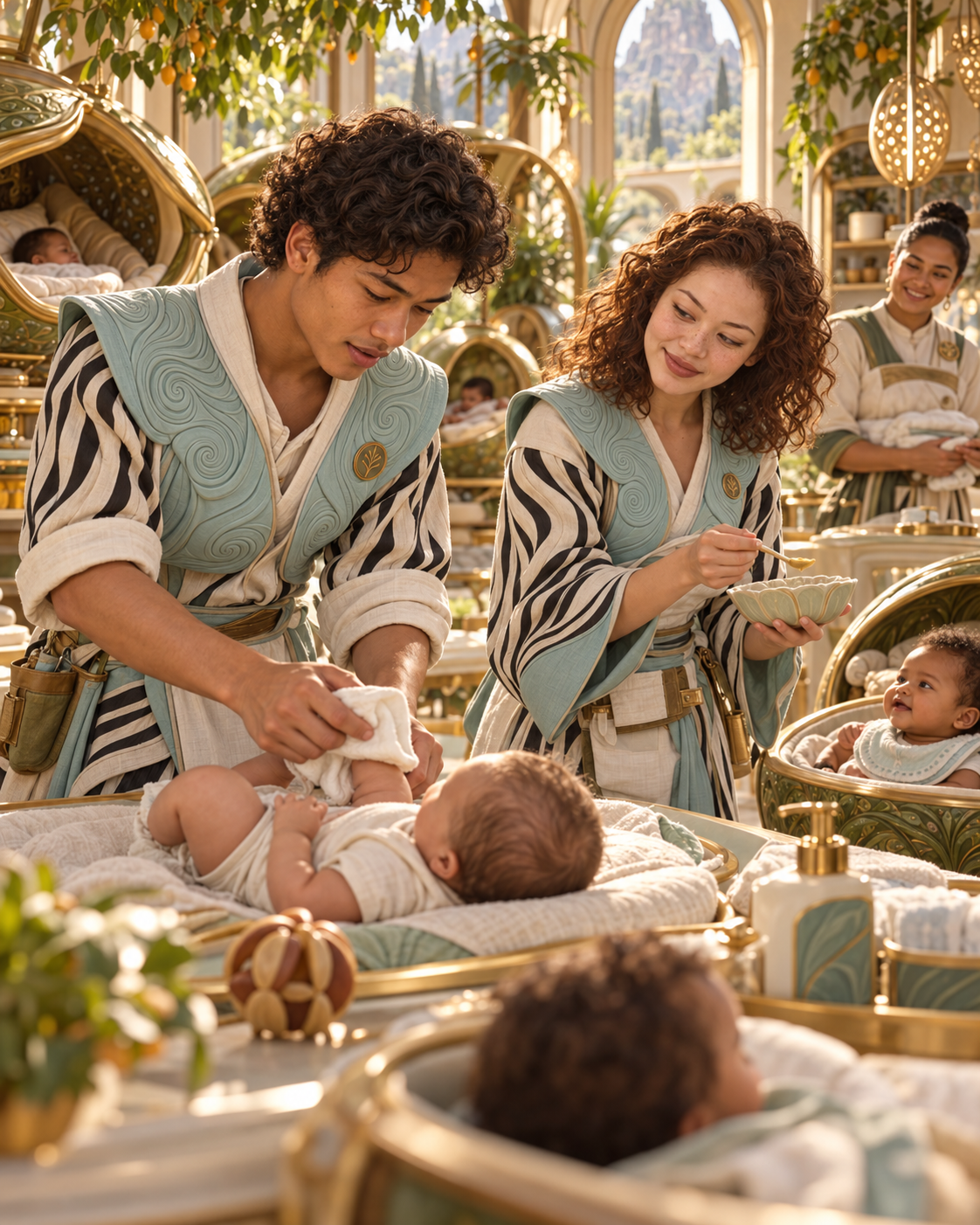
The youngest child learns through movement, grasping, carrying, filling, emptying, splashing, dropping, sorting, repeating, touching, and watching cause and effect.
For a child such as Kezi, meaningful tasks may include:
- carrying approved pieces of dry wood;
- placing corn cobs into a gathering basket;
- moving large kernels or seed forms into a receiver;
- placing washed produce into a low container;
- carrying a breadfruit with adult help;
- transferring water with a cup;
- placing fibre into a wide-mouthed vessel;
- and helping return materials after use.
Four-Year-Old Layer
A four-year-old benefits from an immediate point and a visible outcome.
- Sort dry and wet wood.
- Match crops to processing tools.
- Count how much the family needs.
- Wash roots.
- Help remove corn kernels.
- Turn a hand mechanism.
- Select wrapping leaves.
- Place prepared materials into a cooker or dryer.
Eight-Year-Old Layer
An eight-year-old should receive real reasoning and responsibility.
- Judge ripeness.
- Compare varieties.
- Read plant and animal signs.
- Select harvesting methods.
- Measure quantities.
- Operate hand mills with supervision.
- Track heat, sequence, or drying time.
- Manage one component from harvest to completion.
Teenager Layer
- Prepare tools.
- Manage fire under supervision.
- Adapt recipes.
- Calculate quantity and yield.
- Help maintain mechanisms.
- Support younger children.
- Apprentice with field stewards.
Adult Layer
Adults participate as learners and workers, not merely supervisors.
- Harvest and use tools.
- Manage risk.
- Prepare food.
- Learn unfamiliar processes.
- Model patience and restoration.
Elder Layer
Elders may contribute:
- plant and weather knowledge;
- food memory;
- preservation methods;
- hand skills;
- family recipes;
- songs, stories, and historical comparison.
Same Field, Different Depth
One water pocket may allow a toddler to float objects, a four-year-old to direct them, an eight-year-old to study flow, an adult to operate a gate, and an elder to explain earlier water practices.
6Capability Learning Field Species
Open Tide Discovery Field
A free-reading landscape organized around observation, movement, pattern recognition, collection, water interaction, and family cooperation.
Family Ember Harvest Field
A family gathering, harvesting, fire-preparation, food transformation, and shared feast landscape.
Families gather approved fuel, harvest breadfruit or roots, catch or select a protein, gather herbs, prepare a fire, cook, eat, and restore the site.
Corn-to-Breakfast Field
A food-sovereignty field showing how a standing crop becomes a recognizable family breakfast.
- Locate mature corn.
- Harvest approved ears.
- Remove husks.
- Shell and inspect kernels.
- Dry or use appropriately prepared corn.
- Mill the corn.
- Mix and cook the meal.
- Roll or form flakes.
- Toast or dry them.
- Prepare fruit, milk, or another accompaniment.
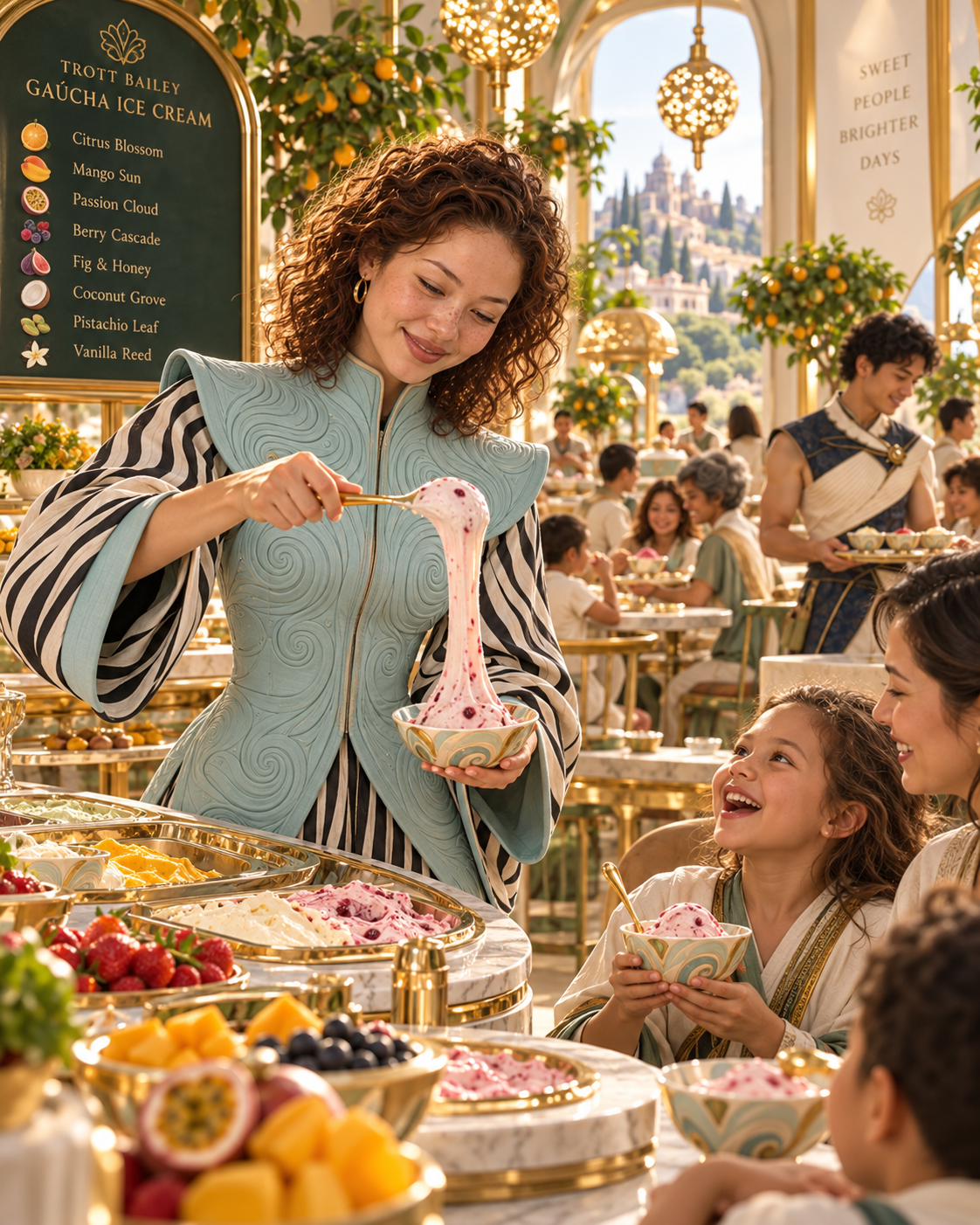
- Eat the family’s cornflakes.
Breadfruit Tree Roast Field
Families inspect breadfruit trees, identify a suitable fruit, understand what must remain, harvest with a steward, manage sap, prepare a roasting area, roast the fruit, and eat near the tree that produced it.
Root Discovery and Earth Roast Field
Families read above-ground signs, locate hidden crops, dig carefully, clean the harvest, transform it into a meal, restore the soil, and protect the next growing cycle.
Possible crops include yams, cassava, sweet potatoes, taro, peanuts, and locally suitable root herbs.
Fruit Transformation Field
Families learn ripeness, harvesting, flavour, storage, and preservation by producing juice, dried fruit, jam, fruit leather, sauce, vinegar, cooked fruit, or preserved slices.
Fibre-to-Use Field
Families identify a fibre source, harvest or collect it, clean, separate, dry, twist, braid, weave, and shape it into a useful object.
Possible results include family cord, carrying loops, food mats, field baskets, plant ties, and tool wraps.
Clay-to-Vessel Field
Families identify clay-bearing material, gather a limited amount, prepare it, shape it, dry it, fire it through a safe staged system, and use the finished vessel.
Rain-to-Food Field
Families observe catchment, first-flush separation, storage, movement, irrigation, soil absorption, crop growth, and eventual harvest.
The family learns that water infrastructure and food abundance are part of one connected capability.
Repair and Return Field
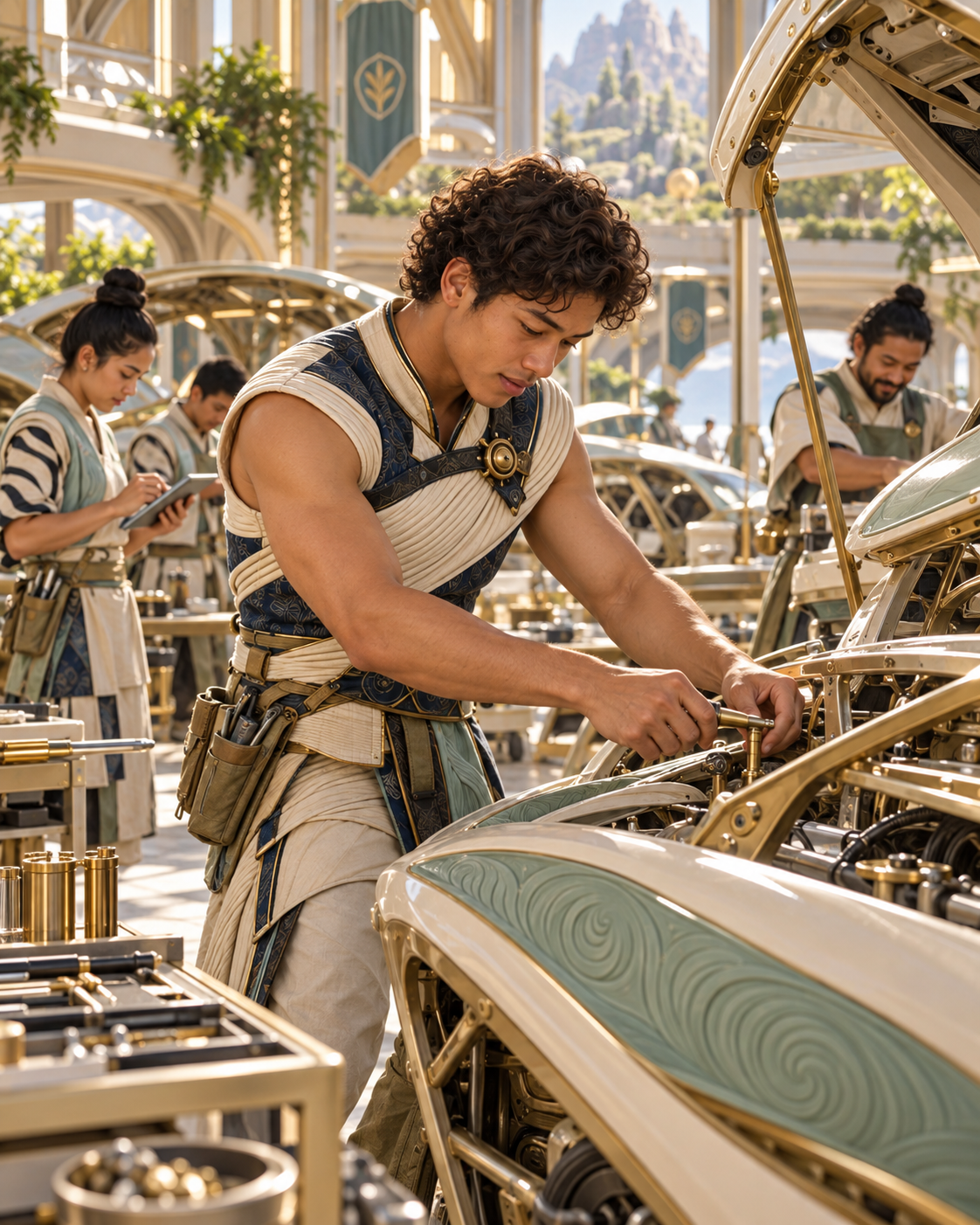
Families inspect a damaged object, identify the failure, select tools, disassemble safely, repair or replace a component, test the object, and return it to use.
Seed-to-Meal Field
A repeated-visit field where families select seed, prepare soil, plant, observe growth, weed or mulch, manage water, harvest, save seed, process food, and eat.
This field reveals the complete agricultural arc rather than beginning only at harvest.
7The Resource-Available Law
Capability activities should arise from the actual resources present. A breadfruit-growing area should not import artificial apples merely to follow a generic curriculum.
Coastal Areas
Fish, salt, tidal observation, nets, shoreline plants where safe, water movement, shells as material, and coastal preservation.
Inland Agricultural Areas
Corn, roots, beans, fruit trees, fibres, clay, fuel wood, animal care, and soil restoration.
Wet Regions
Water routing, drainage, aquatic food systems, rain harvesting, wet-soil crops, and moisture management.
Dry Regions
Storage, drought crops, shade, soil protection, fuel discipline, and careful water allocation.
8Reward Law
The reward should usually emerge from the capability itself.
- the meal;
- the drink;
- the preserved food;
- the woven object;
- the fired vessel;
- the repaired tool;
- the operating mechanism;
- the planted bed;
- or the completed family discovery record.
9Family Cooperation Law
The family is the primary learning unit. Capability fields should not be organized around individual ranking.
Toddlers may gather. Young children may sort. Older children may reason. Teenagers may manage deeper processes. Adults may handle higher-risk work. Elders may identify, remember, and advise. Stewards protect and teach.
10Steward System
A Capability Learning Steward is not a performer who completes the process while families watch.
The Steward Protects
- safety;
- ecological balance;
- food hygiene;
- tool use;
- animal welfare;
- harvest limits;
- process truthfulness;
- accessibility;
- and restoration.
The Steward Should
- explain why a process matters;
- allow the family to perform real work;
- intervene when risk exceeds current ability;
- inspect gathered materials;
- help families adapt when resources are unavailable;
- maintain equipment;
- and preserve dignity when a family struggles.
The Steward Should Not
- shame ignorance;
- rush the family;
- turn the field into a lecture;
- secretly complete every difficult step;
- rank families;
- or force participation in killing animals, fire use, or sensory activities.
Steward Balance
The family performs as much real work as it can safely perform. The steward protects life, teaches capability, and takes control only where risk exceeds the family’s current skill.
11Safety Laws
Food Safety
Families must not eat unidentified resources. All gathered food must pass through appropriate inspection and preparation.
Fire Safety
Fire activities require prepared hearth areas, extinguishing resources, wind checks, controlled fuel, adult authority, steward oversight, and complete extinguishing.
Tool Safety
Tool use must be graduated by age, strength, understanding, experience, and risk.
Animal Welfare
Families must learn catch limits, humane handling, when to release, how much is needed, and how to protect habitat.
Water Safety
Toddler-use pools must remain shallow, visible, hygienic, non-slippery, and free from concealed drop-offs or dangerous suction.
Collection Object Safety
Toddler objects must be oversized, non-toxic, washable, difficult to break, smooth enough for handling, and light enough for safe carrying.
12Seasonal and Reality-Based Learning
The field must not promise artificial certainty.
- The breadfruit may not be ripe.
- The fish may not be biting.
- The fuel wood may be wet.
- A crop bed may be resting.
- Water may be limited.
- A resource may already have been harvested.
- Weather may require a different activity.
Families may change ingredients, choose another process, use preserved reserves, cooperate with another family, repair before proceeding, or return later.
13Continuity Across Time
Some capability chains cannot truthfully be completed in one visit. Fields must therefore use honest continuity systems.
- Plant today and return to harvest.
- Begin drying one family’s corn and mill a previous family’s dried batch.
- Shape clay today and return after firing.
- Begin a ferment and receive an earlier completed batch.
- Plant a tree that future families will use.
- Restore a bed after harvesting what another family previously planted.
14Record and Memory Layer
Families may create a light record of:
- what they harvested;
- what they transformed;
- what they learned;
- what failed;
- what they changed;
- what they restored;
- and what they want to try next.
The record exists for memory, continuity, seasonal learning, capability growth, family reflection, and field improvement. It should not become a surveillance or ranking system.
15Anti-Drift Laws
No Theme-Park Simulation
Avoid fake crops, decorative machinery, staged abundance, and staff secretly performing all meaningful work.
No Outdoor Worksheets
The landscape and process should carry the learning. The field must not become a collection of signs, questions, and tests.
No Generic Scavenger Hunt Drift
Finding an object is not enough. Discovery should connect to a relationship, use, production process, or transformation.
No Child Labour Drift
Tasks must remain voluntary, age-appropriate, dignified, and educational. Children are not a production workforce.
No Survivalist Hardness
Food sovereignty should feel abundant, capable, joyful, and responsible—not fearful, deprived, or harsh.
No Adult Takeover
Adults must not perform every meaningful task while children observe simplified simulations.
No Decorative Farming
Fruit trees, crops, water systems, and animals must remain real parts of civilization life rather than scenery.
No Reward Detachment
Points, candy, tokens, and merchandise must not become more important than the meal, repair, object, or capability created.
No Forced Linear Progression
A process may have a logical sequence without the whole landscape becoming one prescribed physical route.
No Meaningless Inclusion
No age group should receive busywork merely to create the appearance of participation.
16Flagship Pilot Proposal
Corn-to-Breakfast Capability Field V1
Corn offers a highly visible transformation chain: plant, cob, kernel, meal, cooked mixture, flake, and breakfast.
Pilot Components
- open corn-growing zone;
- harvesting area;
- family husking and shelling surfaces;
- hand mills;
- safe powered mill demonstration;
- mixing and cooking area;
- flake-forming tools;
- toasting or drying system;
- fruit and milk accompaniment route;
- family eating area;
- seed-saving station;
- and compost and by-product return systems.
17Implementation Sequence
Phase 1 — Land and Resource Audit
Identify crops, trees, animals, water, soil, fibres, clay, fuel, tools, local skills, seasons, and hazards.
Phase 2 — Select One Capability Chain
Choose a resource with local abundance, clear transformation, multi-age participation, manageable risk, and a tangible result.
Phase 3 — Design Family Roles
Define meaningful participation for toddlers, young children, older children, teenagers, adults, elders, and stewards.
Phase 4 — Build the Open Field Body
Create broad traversable ground, terraces, boulder families, work pockets, shade, water, storage, and recovery systems without creating a dominant route.
Phase 5 — Test the Full Transformation
Confirm that families can move from real resource to meaningful result without hidden shortcuts that undermine the lesson.
Phase 6 — Test Safety and Dignity
Observe where adults take over, where children become bored, where risk is unclear, where accessibility fails, and where the work begins to feel fake.
Phase 7 — Seasonal Expansion
Add new capability chains only after the first field works truthfully, safely, and delightfully.
18Success Standard
A Capability Learning Field succeeds when a family can leave saying:
Locked Design Principles
- No dominant pathway at field entry.
- Broad open landscapes should permit free family movement.
- Terraces, boulder families, sandy pockets, and shallow tide-like pools form part of the field vocabulary.
- Every age must have real participation.
- Toddler collecting, carrying, filling, and emptying are legitimate capability-learning behaviors.
- Older children require purposeful activities with visible consequences.
- The family is the primary learning unit.
- Fields should use real surrounding resources.
- Learning follows Find → Identify → Gather → Process → Transform → Use or Share → Restore.
- The result of the transformation is the primary reward.
- Food capability learning should end in real family eating where appropriate.
- Stewards protect, teach, and intervene without taking over.
- Seasonal unavailability and adaptation are part of the learning.
- Restoration is part of capability, not an afterthought.
- Capability fields must not become scavenger hunts, school worksheets, theme parks, or child labour systems.
- The Corn-to-Breakfast Capability Field is the first flagship candidate.



 and then