
Cornflakes or Chicken: The Staggering Irony of Food Abundance in Brazil
Cornflakes or Chicken: The Staggering Irony of Food Abundance in Brazil
Brazil is one of the great agricultural powers of the world. It grows mountains of corn. It speaks proudly about agribusiness, harvests, exports, productivity, and its place in the global food economy.
And yet a common family can stand in a supermarket aisle and face a ridiculous decision:
Do we buy one small box of cornflakes for R$17, or do we buy a whole frozen chicken?
Imagine a family with three children. The children love cornflakes. But the box is so small that by the time each child gets a real serving, the box is finished. Breakfast is gone in one sitting. R$17 is gone in one sitting. And that same R$17 may be close to the cost of a whole frozen chicken, something that could help build a real family meal.
That is not a small inconvenience. That is a food-system indictment.
How does a country full of corn make cornflakes feel like a luxury item? How does one of the world’s great food producers leave ordinary families doing mental math between a cereal box and protein? How does agricultural greatness turn into household pressure?
The irony is staggering.
Brazil produces enormous amounts of corn. Conab-linked reporting projected Brazil’s 2024/25 corn harvest at around 119.6 million tons, with corn remaining one of the country’s largest grain crops. But agricultural output does not automatically become family abundance. A country can produce food at a massive scale and still organize that food in a way that leaves families squeezed, limited, and tired.
That is the wound.
Brazil does not suffer from a lack of agricultural ability. Brazil suffers from a food system where production power is not the same thing as family food security.
The Supermarket Tells the Truth
Forget the speeches. Forget the export charts. Forget the national pride language for a moment.
Go to the supermarket with children.
That is where the truth becomes visible.
A parent does not shop inside a government production report. A parent shops inside prices, portions, packaging, and choices. A parent sees the cereal box. A parent sees the meat freezer. A parent sees the wallet. A parent sees the children asking for something simple. A parent sees how quickly a small box disappears.
Cornflakes should not feel like a premium treat in a corn-producing country. It is processed corn. It is a basic breakfast food. It should be available in large, family-sized bags at a price that makes sense for households with children.
Instead, many families are forced into absurd tradeoffs.
A box of cornflakes or a chicken.
A breakfast treat or dinner protein.
A child’s simple request or the family’s practical survival meal.
This is not just about cereal. It is about the structure beneath the cereal.
When a country can grow the corn, transport the corn, feed the corn to animals, export the corn, process the corn industrially, and boast about the corn — but ordinary families cannot easily access affordable large-format corn foods — something is deeply wrong.
Where the Corn Goes
Corn is not only eaten directly by people. It is used for animal feed, ethanol, industrial processing, exports, and many other purposes. That is normal in modern agriculture. The problem is not that animals eat corn. The problem is when the system protects commodity flows better than it protects families.
Brazil’s animal feed sector is large and still growing. In 2025, industry reporting based on USDA FAS forecasts projected Brazil’s feed industry would grow, with poultry helping drive demand. Other feed-industry reporting projected Brazilian feed production at nearly 90 million tonnes in 2025.
So the country grows corn, then much of that corn moves into the feed system. The feed system supports poultry, pork, beef, exports, industrial production, and the meat economy. Then when corn prices rise, feed gets more expensive, and meat prices can come under pressure too. Reuters reported in 2025 that corn prices in Brazil had surged, creating inflation risks and pressure across food markets.
This is the ugly loop:
Brazil grows corn.
Corn becomes feed.
Feed becomes expensive.
Chicken becomes expensive.
Cornflakes remain expensive or limited.
The family loses twice.
The family does not get cheap corn-based breakfast food.
The family does not get cheap meat either.
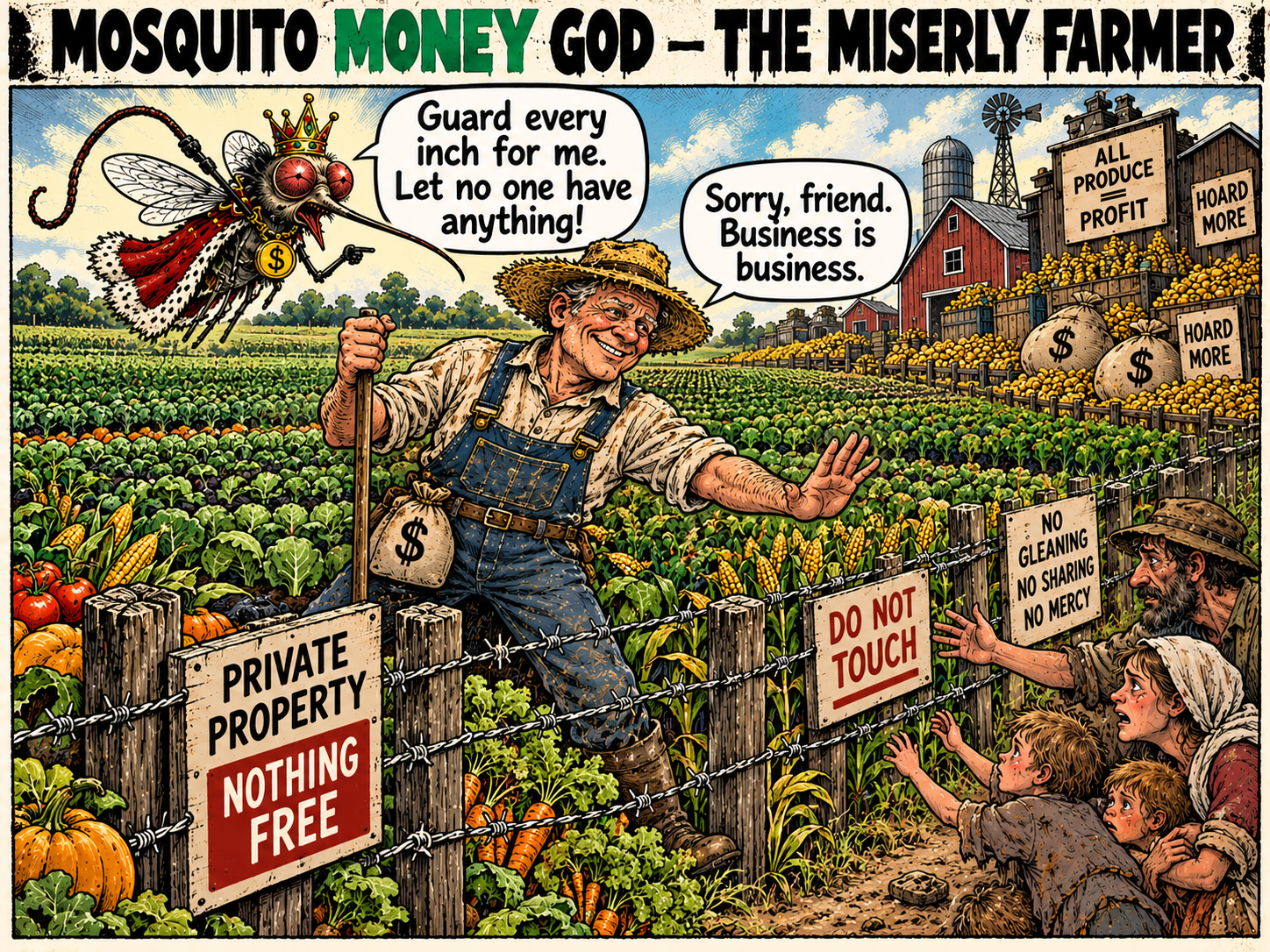
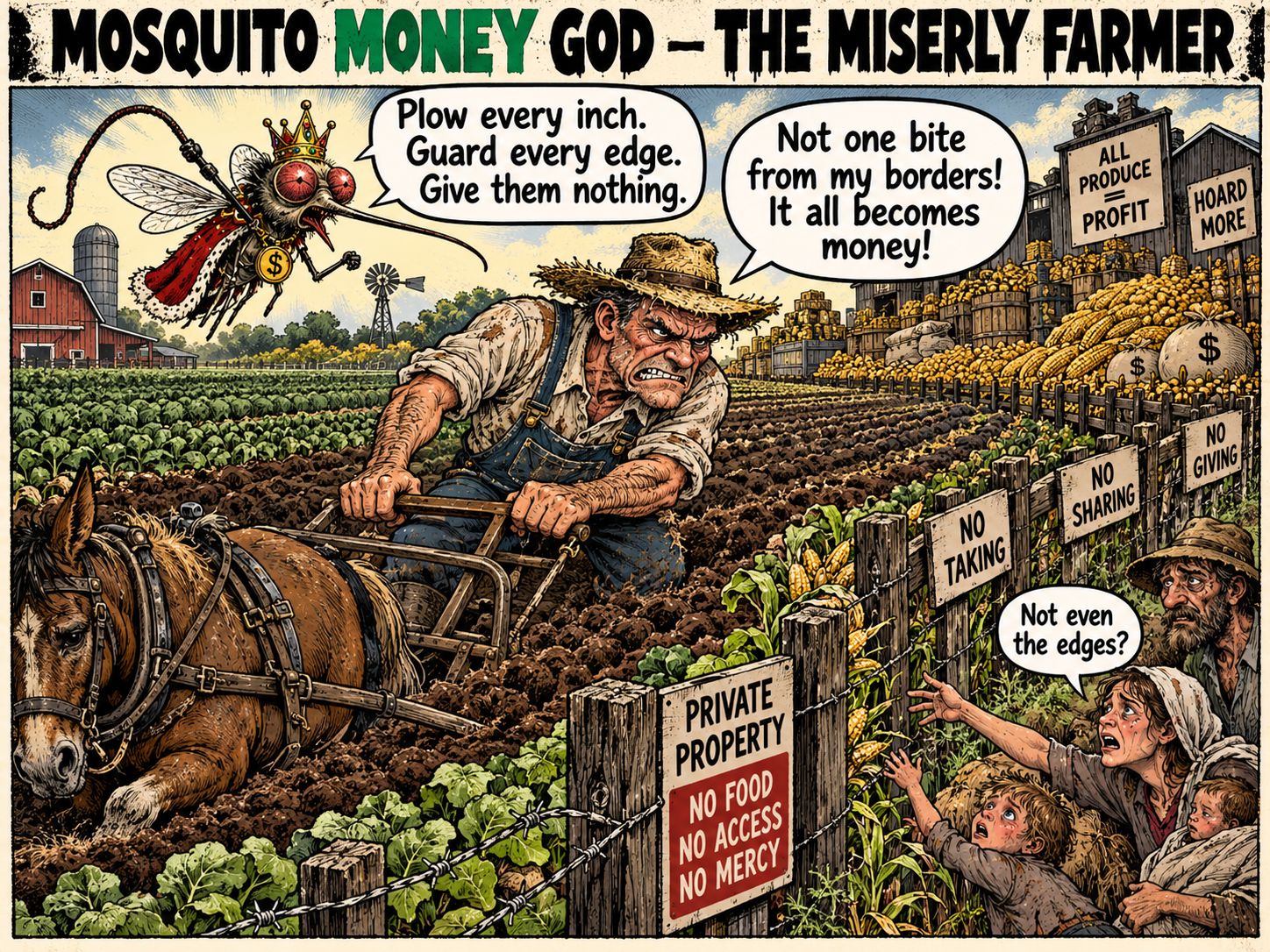
That is not abundance. That is a machine.
The Myth of “We Produce So Much Food”
People often say, “Brazil produces enough food.” That may be true in a technical sense. But families do not eat national production totals. Families eat what is available, affordable, and practical.
If the food system is built around exports, industrial buyers, animal feed contracts, branded retail, and profit-maximized packaging, then national abundance does not necessarily land on the kitchen table.
A country can produce millions of tons of grain and still leave a mother or father wondering whether they can afford breakfast cereal for three children.
That is why the phrase “food producer” can become misleading. Producing food is not the same as feeding people. Producing food is not the same as designing a civilization where families are secure.
Brazil’s agricultural system is powerful, but power alone does not equal justice. It does not equal affordability. It does not equal family dignity.
And while official hunger conditions have improved in some areas in recent years, food insecurity and food-price pressure remain serious realities for many people. Reporting on Brazil’s food banks has described millions still facing undernourishment or moderate to severe food insecurity, even in a country known globally for its food production.
This is the contradiction families feel every day:
The country is full of food, but the household still has to fight to eat.
The Cornflakes Problem Is Bigger Than Cornflakes
Some people may laugh and say, “It is just cornflakes.”
No. It is not just cornflakes.
Cornflakes represent a basic family food format. They represent whether the food system knows how families actually live. Families need bulk. Families need value. Families need dependable staples. Families with children cannot operate on tiny luxury-sized boxes pretending to be household food.
A small cereal box may work for a single adult. It does not work for a family with three children.
If one box disappears in one breakfast, then the product is not designed for family abundance. It is designed for controlled retail extraction. It is designed to make a basic food feel scarce.
The issue is not whether every child must eat cornflakes. The issue is whether a corn-rich country can provide corn-based foods in formats that make sense for common families.
Large family bags should exist. Affordable cornmeal should exist. Porridge mixes should exist. Roasted corn snacks should exist. Corn-based public meals should exist. Corn should show up as household security, not just as a commodity statistic.
How Brazil Does It
The Brazilian model, like much of the modern global food model, tends to organize grain through markets first.
Corn moves through a chain:
Farm production.
Commodity pricing.
Storage and trading.
Feed mills.
Animal production.
Export markets.
Industrial processors.
Branded food companies.
Supermarkets.
Small packaged consumer goods.
By the time corn returns to the family as cereal, snacks, or meat, the price has been shaped by many layers that do not answer first to the family.
Each layer has its own logic. Farmers need to survive. Transporters need to be paid. Feed mills need margin. Meat companies need margin. Brands need margin. Supermarkets need margin. Packaging costs money. Marketing costs money. Taxes and logistics matter. None of this is imaginary.
But the result is still brutal: families in a food-producing country can end up paying too much for simple food.
The system may be efficient for exports.
It may be efficient for agribusiness.
It may be efficient for feed conversion.
It may be efficient for branded retail.
But is it efficient for a family with three children?
That is the real question.
How the Kingdom Would Do It
The Trott Bailey Kingdom would not treat corn as a commodity first.
The kingdom would treat corn as a civilization grain.
That changes everything.
The first question would not be, “Where can corn get the highest market return?”
The first question would be:
Have the families eaten?
Before export, before feed expansion, before industrial speculation, before branded scarcity, the kingdom would secure direct family food.
The kingdom corn order would be simple:
- Family food
- Public meals
- Children’s food systems
- Seed protection
- Emergency reserves
- Animal feed
- Processing surplus
- Trade and export only after abundance is secured
That one change would break the cruelty of the cornflakes-versus-chicken decision.
District-Level Corn Processing
In the kingdom, corn would not disappear into distant industrial systems and return as overpriced small boxes.
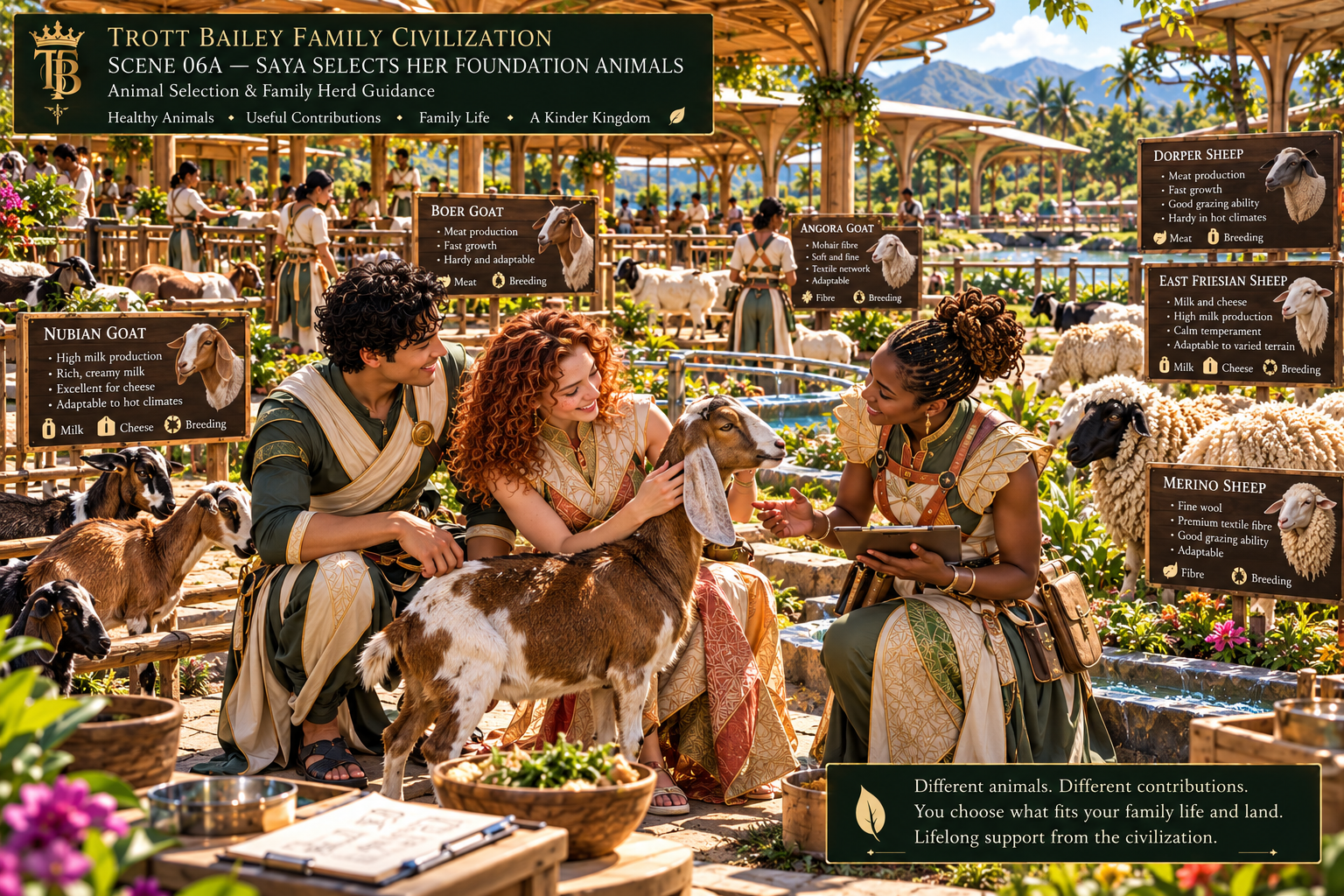
Each district would have a Cornworks — a civic food-processing hub that turns local and regional corn into real household staples.
The Cornworks would produce:
- large family bags of cornflakes
- unsweetened cornflakes
- lightly sweetened cornflakes
- cornmeal
- porridge meal
- roasted corn snacks
- puffed corn snacks for children
- corn crackers
- masa-style wraps
- corn dumplings
- public-kitchen corn bases
- travel packs for Makji families
The point is not to create one luxury product. The point is to create a whole family food ecosystem.
A parent should not need to choose between a tiny cereal box and dinner protein in a corn-rich society. A proper system would make sure the family has both: staple grain foods and stable protein access.
Corn for People First, Animals Second
The kingdom would still feed animals. It would still raise chickens. It would still produce meat and eggs. But animal feed would be governed intelligently.
Corn would not be allowed to quietly swallow the food system while families struggle.
Animal feed would use a balanced formula:
- corn
- legumes
- cassava byproducts where safe
- forage
- oilseed meal
- food-processing byproducts
- insect protein
- orchard surplus
- kitchen-safe feed streams
- pasture support
The kingdom would not raise more chickens than the district can feed responsibly. It would not pretend that unlimited poultry production is success if the feed system makes basic food more expensive for families.
Eggs may sometimes be prioritized over meat because eggs provide steady protein. Public kitchens may receive planned chicken portions instead of leaving each household to fight supermarket prices alone. Feed formulas would adjust when human grain reserves drop.
The kingdom rule would be clear:
No animal-feed system is successful if it makes families food-insecure.
Family Corn Baskets
The kingdom would create a direct household provision system.
Every family could access a regular corn basket scaled by family size. Not as charity. As civilization infrastructure.
A family corn basket might include:
- one large bag of plain cornflakes
- one large bag of lightly sweetened cornflakes
- cornmeal
- porridge meal
- roasted corn snacks
- corn crackers
- masa-style wraps
- child snack puffs
- seasonal recipes
- optional seed packets for family growing
For a family with three children, the system would not offer a tiny box that disappears in one meal. It would offer food in the size families actually need.
This is the difference between supermarket thinking and civilization thinking.
Supermarket thinking asks, “How much can we sell this box for?”
Civilization thinking asks, “How do we keep this family fed?”
Sabenneries and Public Corn Meals
The kingdom would also route corn into public meal places: Sabenneries.
There, corn would become:
- warm breakfast porridge with fruit
- cornflake bowls with local fruit
- cornmeal pancakes
- corn-and-bean plates
- roasted corn soups
- corn dumpling stews
- corn flatbread wraps
- child snack trays
- festival corn foods
This matters because not every food burden should fall on the private household. A strong civilization feeds people through home, public kitchens, schools, travel systems, festivals, and district support.
The family should not be abandoned to supermarket math every single day.
The Corn Dashboard
The kingdom would track corn openly and intelligently.
Each district would know how much corn is assigned to:
- family food
- public meals
- children
- newcomers
- animal feed
- seed reserves
- emergency reserves
- processing
- trade
This would be part of Pacorips district intelligence.
If family corn supply drops, export pauses. If public meal demand rises, processing adjusts. If animal feed is consuming too much, feed formulas change. If children’s food baskets are low, that becomes a district emergency.
The outside system hides these pressures inside prices.
The kingdom would make them visible before families suffer.
The Moral Difference
Brazil’s current food contradiction is not just economic. It is moral.
A country should not boast about agricultural greatness while ordinary families work hard and still struggle to eat. A country should not be proud of corn output while children’s corn-based breakfast is sold in tiny expensive boxes. A country should not celebrate production while parents are forced to choose between cornflakes and chicken.
The Trott Bailey Kingdom would reject that definition of success.
Success would not mean “we produced millions of tons.”
Success would mean:
- families have enough
- children eat well
- staples are available in family sizes
- public kitchens are stocked
- animal feed does not undermine household food
- seed is protected
- reserves are secure
- trade happens from surplus, not from family deprivation
That is food sovereignty.
The Real Question
The question is not whether Brazil can grow corn.
Brazil can grow corn.
The question is whether the food system is designed so that corn reaches the people in the forms they need, at the scale they need, before it is absorbed into feed mills, exports, industrial processors, and retail scarcity.
A family with three children should not be standing in a supermarket aisle weighing a small box of cornflakes against a whole frozen chicken in a country overflowing with agricultural capacity.
That decision should not exist.
And if it does exist, then the system is telling on itself.
The kingdom answer is simple and hard:
No district is allowed to call itself food-abundant while families cannot access family-sized staple foods.
Corn must feed the people first.
Only after that should it feed the machine.



 and then