
Courtship, Marriage & Married Life.
Do Not Make Dating the Best Part
The civilization should never make dating look like the most exciting stage of romantic life and then make marriage look like the point where excitement ends. If dating contains all the novelty, attention, anticipation and adventure while marriage is presented as routine, people will rationally delay marriage.
So the civilization deliberately reverses that pattern.
Courtship can be exciting. Meeting someone can be exciting. Discovering that someone likes you can be exciting. But courtship is not supposed to become an entertainment lifestyle in itself.
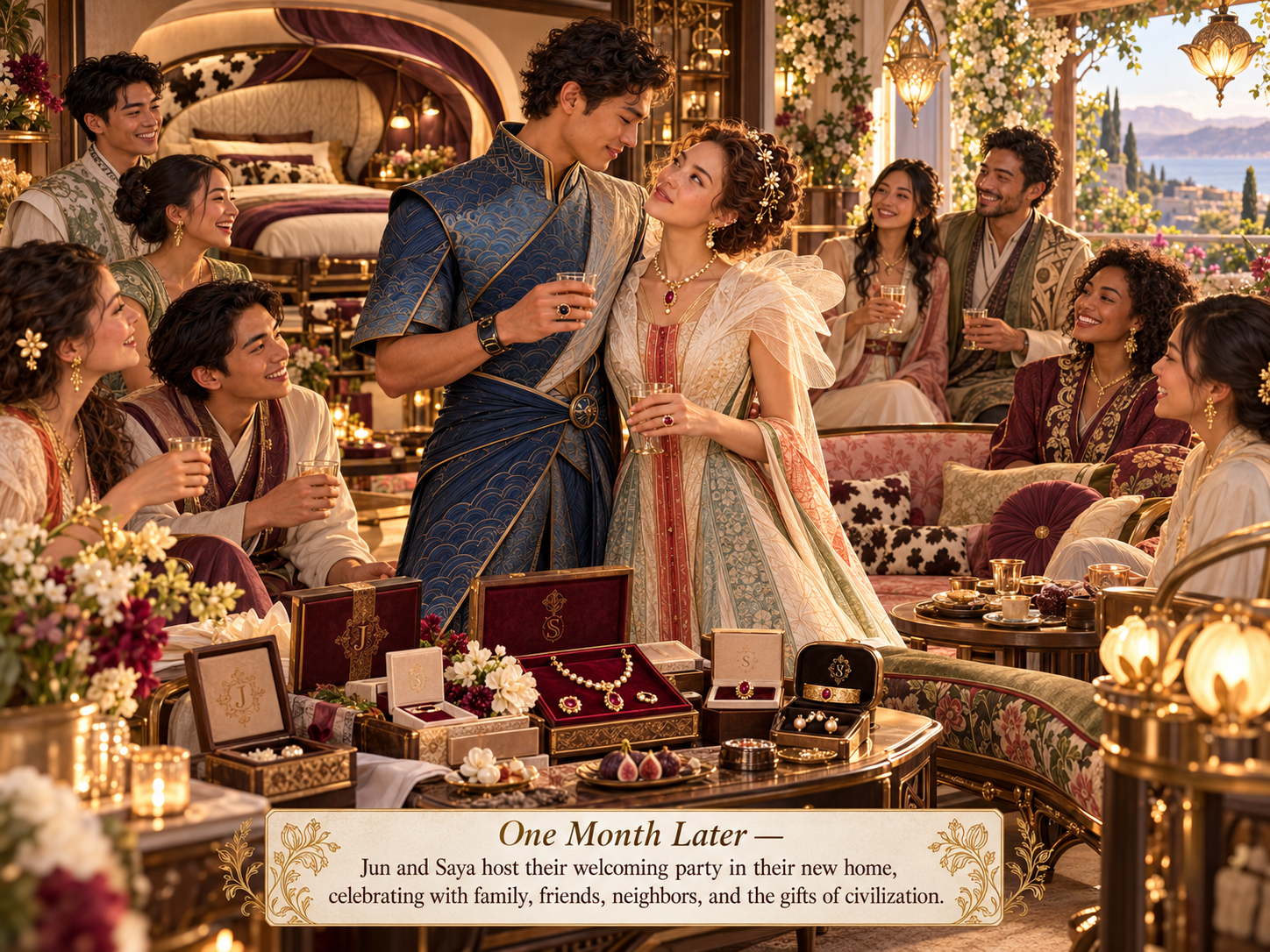
The deeper companionship, intimacy, shared adventure, household life, family experiences, recognition, travel, Shubaka, inheritance, civilization gifts and long-term support increasingly open after marriage.
The wedding is not the climax followed by ordinary life. It is closer to a launch.
Marriage Is Strongly Favored
The civilization does not pretend that remaining unmarried and building a marriage are socially equivalent life stages. Marriage is treated as a major civilization-building commitment, so married people receive more civilization support than unmarried people.
The civilization does not need to investigate why someone remains unmarried. Whether that person has not found the right spouse, is still preparing, has not chosen marriage yet, or arrived there through circumstances outside their control does not change the structure.
The support structure is based on life stage.
That can mean greater household support, larger family living arrangements, child-care infrastructure, family travel support, learning support, food provision, household equipment, recreation, mobility assistance and other resources connected to raising children.
Marriage with children opens even more.
Young people should be able to look around at married couples and think:
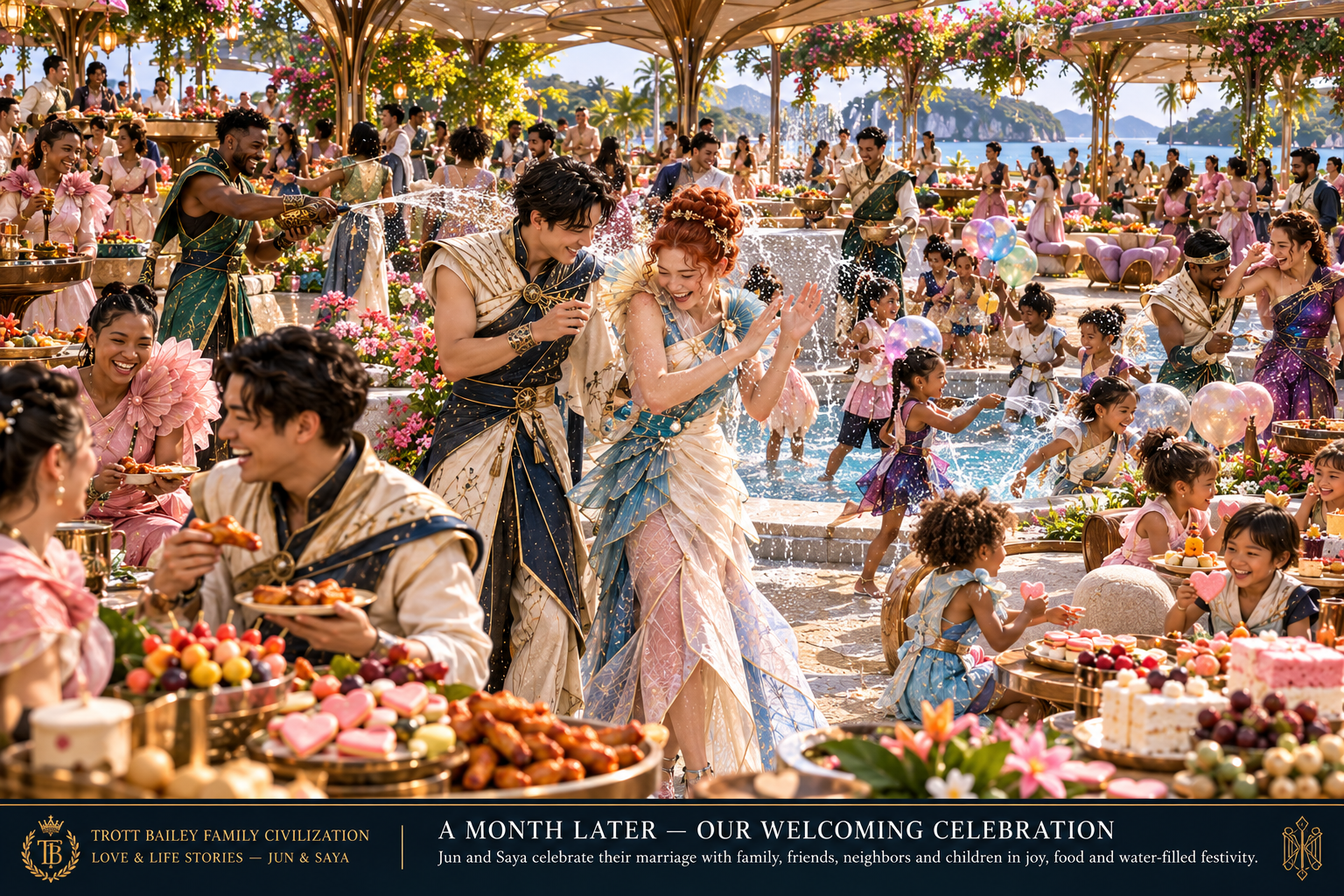
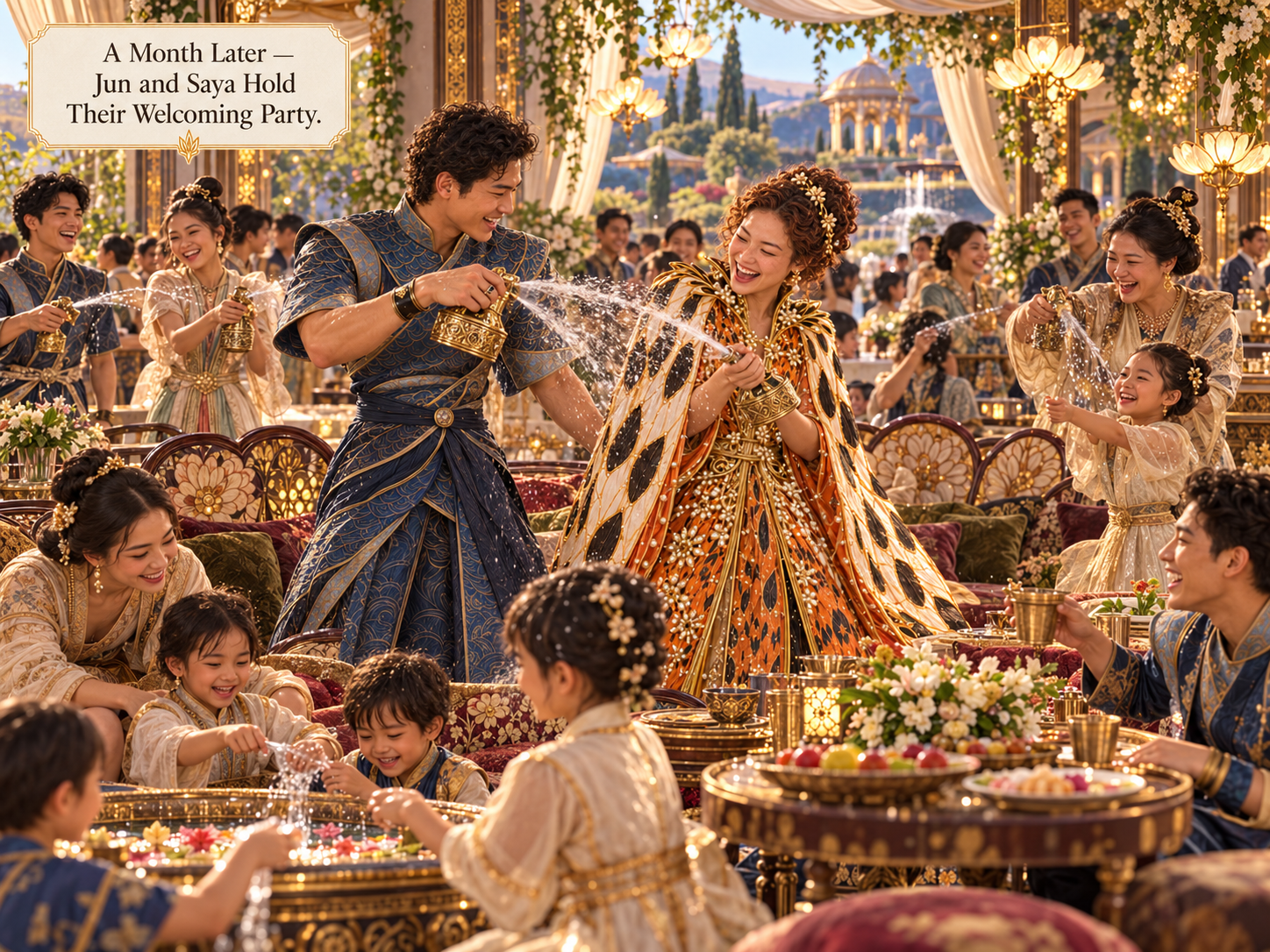
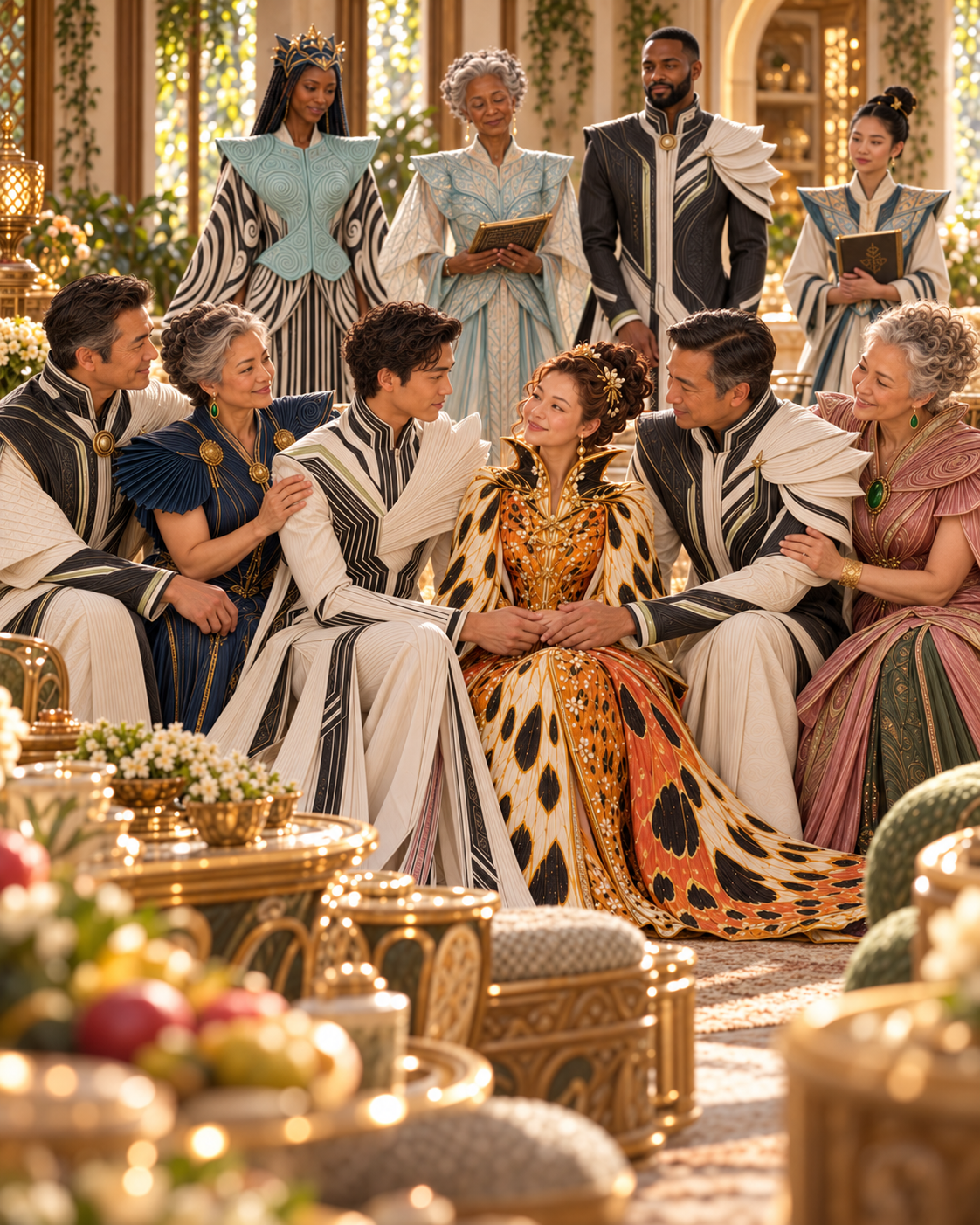
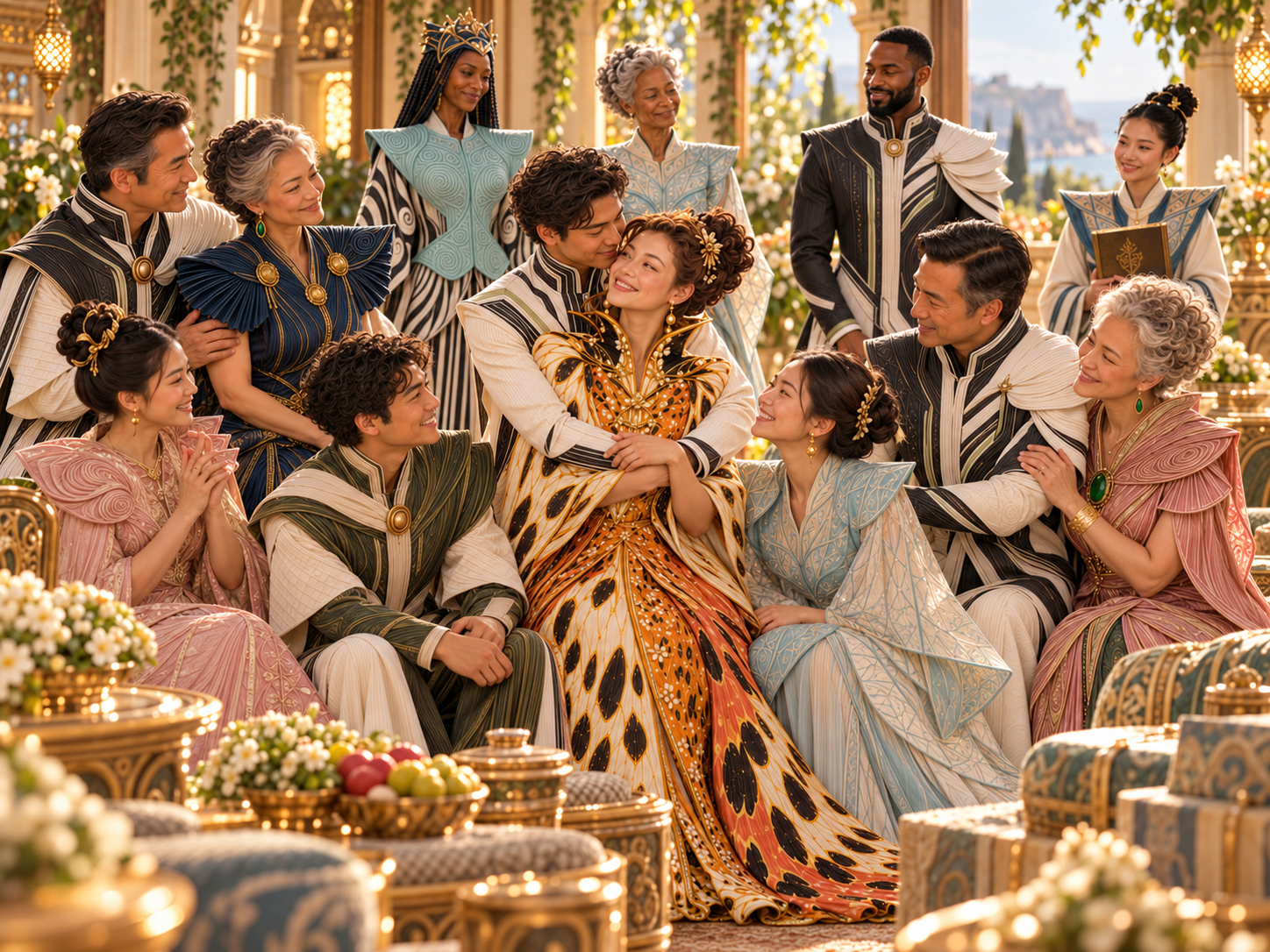
They should see husbands and wives traveling together, building together, receiving marriage gifts, establishing homes, completing Family Challenges, raising children, taking couple journeys, developing shared memories, celebrating anniversaries and receiving real support to keep their marriage strong.
Marriage should look like an expansion of life, not the end of it.
Most Matches Will Happen Naturally
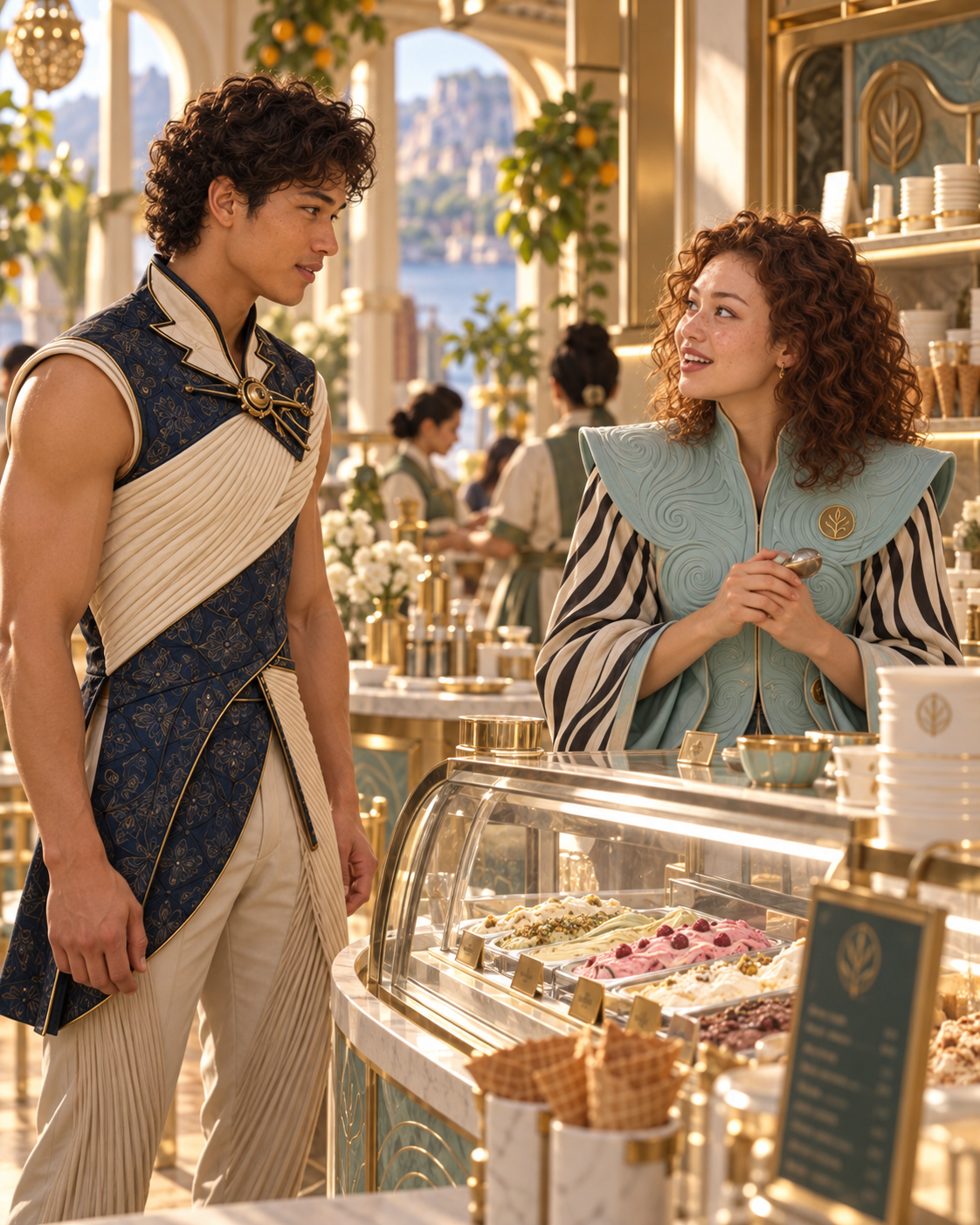
The formal matching system is not how every person in the civilization finds a spouse. Many matches will already be happening naturally through family networks, neighborhoods, Shubaka, learning, AgriGames, travel, celebrations, stewardship, shared projects, friendships and ordinary repeated contact.
A young man may already know the woman he wants to marry. A young woman may already have somebody in her immediate circle whom she is seriously considering. Two families may already know one another for years before the young people begin thinking about marriage.
Those people do not need a Courtship Gathering.
The civilization should not over-administer something that is already happening naturally.
The formal gathering system exists for the person who can honestly say:
The civilization then widens the world that person is meeting.
Wider civilization matching when needed.
The civilization is not trying to manufacture every marriage. It is making sure geography does not prevent one.
Four Courtship Gatherings Every Year
The civilization holds four major Courtship Gatherings every year.
That means somebody who wants to widen their search does not face an indefinite wait. Roughly every three months, another serious opportunity opens to meet young men or women from a wider civilization network. People may travel from other districts, regions or countries.
This matters because a civilization cannot strongly encourage marriage and then provide poor opportunities for people to actually meet suitable spouses.
A young person living in a small district should not be limited forever to the handful of people who happened to grow up nearby. Someone with unusual interests, abilities, temperament or family circumstances should not be treated as if failing to find someone locally means that no suitable person exists.
The civilization actively solves the geography problem.
Young People Travel With Their Parents or Close Family
Those attending a Courtship Gathering travel with parents or close family where possible.
This is not because parents choose the spouse. They do not. The man and woman must choose one another.
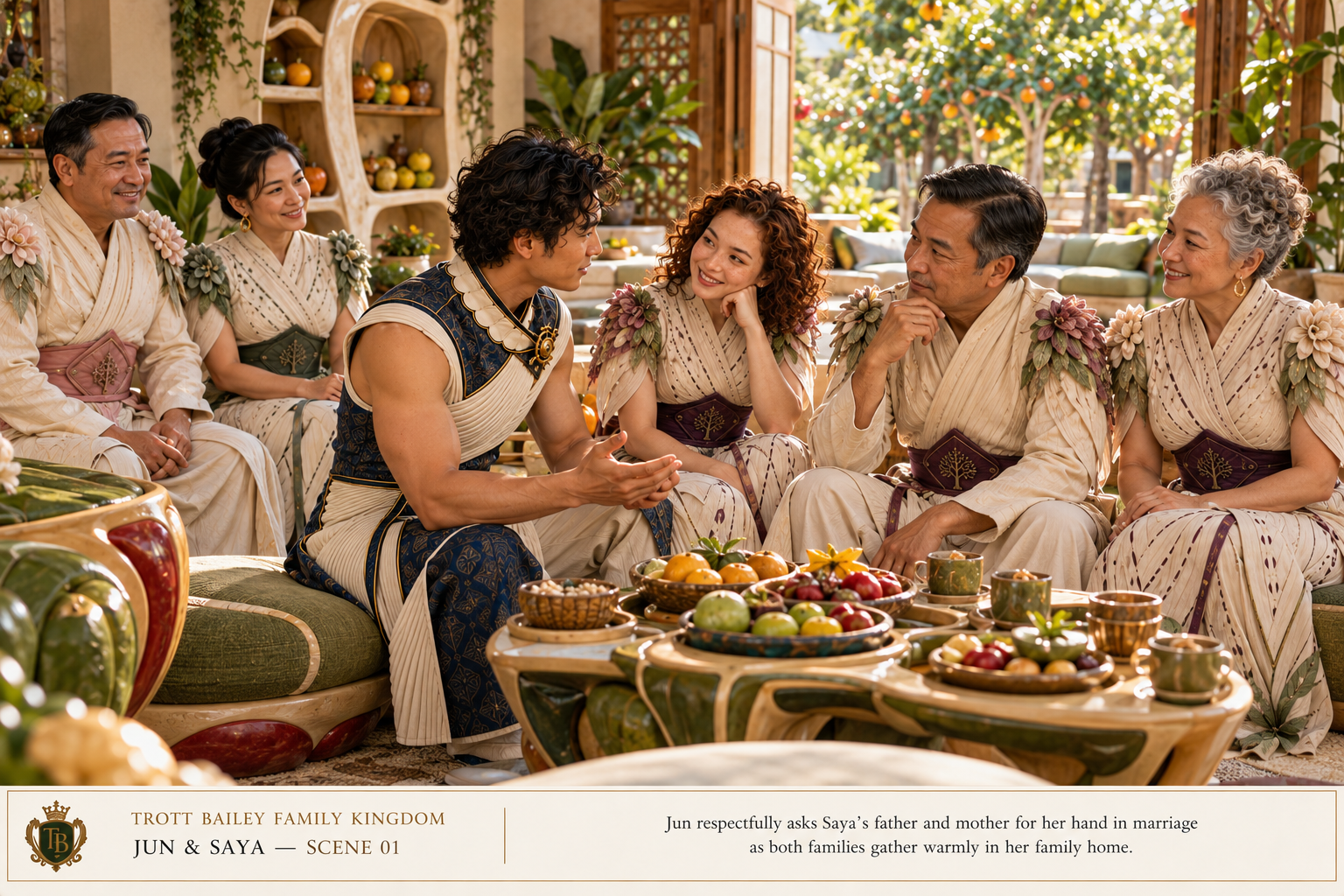
Parents come because marriage affects more than two isolated individuals. A young woman can observe how a man behaves around his mother, father, siblings and elders. A young man can observe the same.
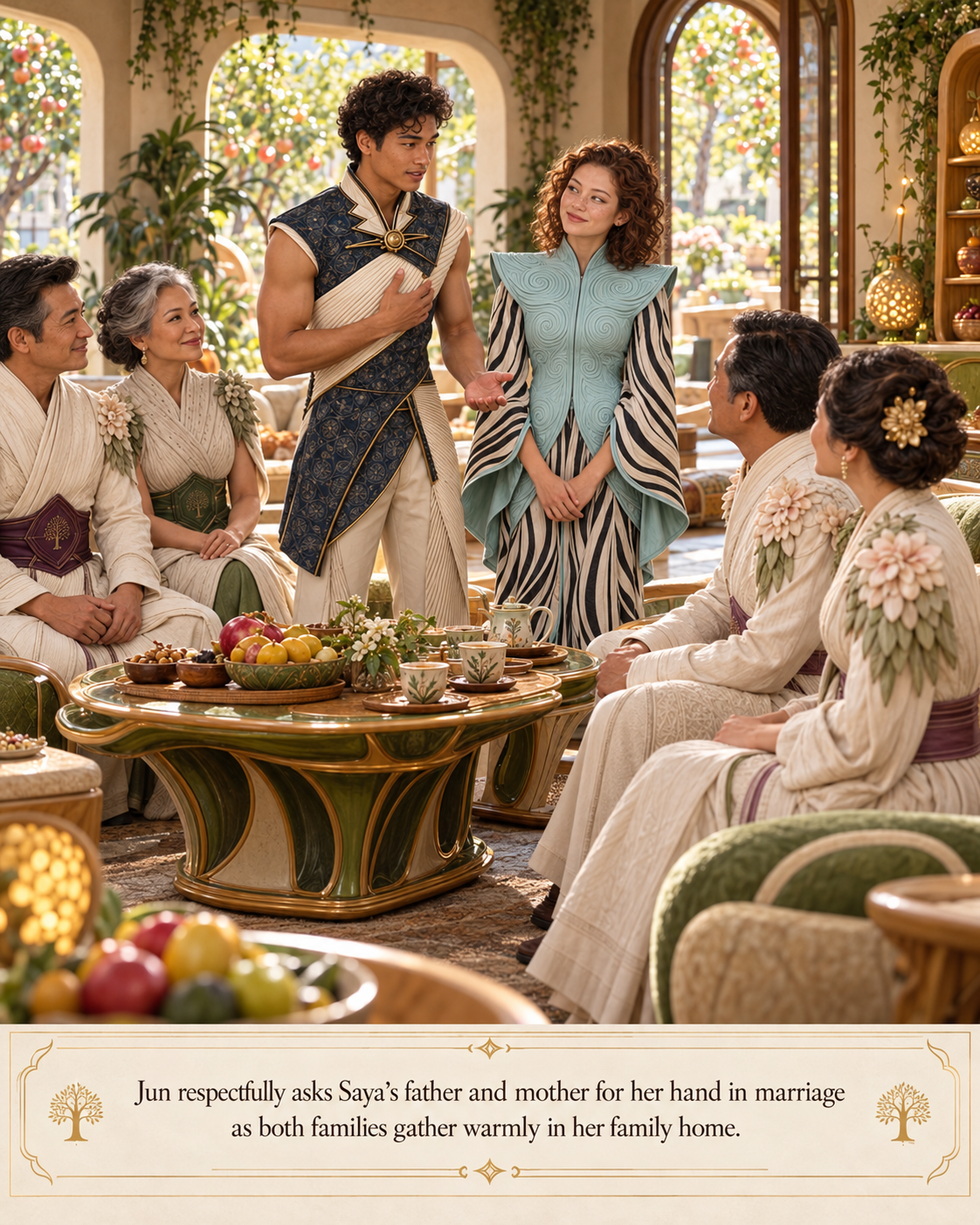
Families can meet. Questions can be asked. Parents can investigate character, notice inconsistencies, and point out things their child may not have noticed. They can strongly advise.
A parent should be free to say:
But parents do not make the final selection.
The civilization uses family involvement to improve judgment, not replace personal choice.
Present Your Best Natural Self
People should come to Courtship Gatherings presenting their best natural selves.
That means being beautifully groomed, well dressed, clean, healthy, rested and prepared while still looking and behaving like the person a future husband or wife would actually be marrying.
Do not disguise yourself. Do not neglect yourself either.
The civilization does not need artificial glamour, dating-show performance or beauty-pageant behavior. But there is also no virtue in deliberately presenting yourself poorly.
You are meeting people who may become part of your family for the rest of your life. Make an effort.
People Must Be Seen Doing Real Things
Someone choosing a husband or wife needs much more information than a photograph or first introduction can provide.
The gathering should therefore allow people to see one another doing things. They can cook, talk, eat, dance, compete, learn, help, play, work through practical tasks, care for children, interact with elders and participate in family activities.
People behave differently when helping someone than when posing. They behave differently when something goes wrong, when they are around children, when they are with their parents, and when they are tired, excited, competitive, uncertain or responsible for something.
Those moments can tell a future spouse far more than a staged introduction.
Men and Women Can Each Make One Serious Outgoing Choice Per Round
At the matching stage, each man may choose one woman per round. A woman may also submit one clear choice for one man in that same round.
Neither side needs to scatter interest across a long ranked list. Each person is allowed one serious outgoing choice at a time.
For the man, that means he does not submit a list of ten women and wait to see which one accepts. He observes carefully and asks himself:
The woman can do the same.
She does not have to wait passively for a man she likes to notice her first. If there is one particular man she already feels strongly interested in, she may submit his name as her one outgoing choice for that round.
That matters because a woman should not be prevented from expressing clear interest simply because a man did not happen to choose her first.
At the same time, an outgoing choice does not create ownership or an automatic match. The other person still has to freely return that interest.
A Woman May Choose a Man Who Did Not Choose Her
A woman’s choice is not limited to the men who selected her.
If she chooses a man and he also chose her, the choice is already reciprocal and they have a mutual match.
But suppose she chooses a man who did not choose her.
If that man has already formed a mutual match with another woman, he is no longer available and nothing further happens.
If he remains unmatched, however, the civilization may privately tell him that the woman selected him.
He is not required to return the choice simply because she made it.
He may immediately know that he is not interested and decline. If so, the matter ends privately and both remain free to continue through the gathering according to the matching rounds.
But he may also think:
In that case, he may agree to a pre-match interview.
The woman, the man and, where appropriate, their parents or close family can then have the same kind of deeper conversation used elsewhere in the pre-match evaluation process.
They can talk about marriage, children, family life, Shubaka, household expectations, responsibilities, temperament and the kind of future each person hopes to build.
This gives the man a chance to seriously evaluate interest that he had not initially acted on.
After that conversation, he may return her choice. If he does, the choice becomes reciprocal and a match exists. If he does not, no match exists.
Nothing embarrassing needs to become public.
A Woman Is Privately Informed of Every Man Who Selected Her
A woman’s ability to make one outgoing choice does not remove her right to know which men independently chose her.
The matching system privately informs her of every man who used his one serious outgoing choice for that round to select her.
This is an information step.
It does not mean the men are physically lined up in front of her. It does not mean she meets all of them together. It does not mean she begins dating all of them. It does not even mean she must interview all of them.
It means she receives complete information about the serious incoming choices that actually exist.
If one man selected her, she is privately informed of that one man. If three men selected her, she is privately informed of all three. If ten men selected her, she is privately informed of all ten. If a much larger number selected her, the same principle still applies.
The civilization does not impose an arbitrary cap simply because many men happened to choose the same woman.
It also does not secretly rank the men, filter them, choose favorites, or decide which of those potential husbands she should be permitted to consider.
That matters because these are not random names placed in front of her by an administrator. Each man used his one serious outgoing choice for that round to select her. The civilization should not erase or pre-filter that information before she has had the opportunity to consider it herself.
Receiving the information does not obligate her to do anything with every incoming choice.
She may already know exactly which man she prefers and, if he selected her too, choose him back.
She may review the incoming choices and decide that none of those men interests her.
Or she may be genuinely curious about several men and narrow the larger set to a much smaller number whom she wants to understand better through serious pre-match interviews.
Only the men she actually chooses to explore further move into those deeper conversations.
So a woman could be informed that ten men selected her and decide to interview none of them, one of them, or perhaps a small number she genuinely wants to compare more carefully.
That is still not dating several men.
It is a limited pre-match evaluation stage designed to help her determine whether she wants to return one man’s interest.
At the same time, she may also have made her own outgoing choice for a different man. If that man remains unmatched and agrees to a pre-match interview, she may consider that possibility as well before any formal match exists.
The matching system therefore gives her accurate information while leaving the actual judgment with her.
Incoming Selections Are Private
The fact that a woman is privately informed of every man who selected her does not make those selections public information.
The wider gathering does not need to know how many men selected a particular woman, which men she is considering, whom she declined to consider, or how she is narrowing her decision.
Without that boundary, useful matching information could quickly turn into social theater: who received the most choices, who was overlooked, who rejected whom, and who is supposedly more desirable.
None of that helps people choose a spouse well.
The information exists because the woman needs it to make an informed decision. It does not belong to the crowd.
A Woman Does Not Have to Choose Immediately
Being privately informed of serious incoming choices does not create an obligation to immediately return one of them.
Sometimes the answer will already be clear. She may have entered the round with one man strongly in mind and discover that he chose her too. In that case, the mutual choice can be immediate.
Other situations require more information.
She may receive several serious incoming choices and be genuinely interested in more than one man. She may also have made her own outgoing choice for a different man who remains unmatched and is willing to explore the possibility.
The civilization should not force a life-shaping decision simply because the matching round has reached a particular moment.
She can narrow the possibilities she genuinely wants to understand better and use the pre-match interview stage before making her final choice.
Serious Pre-Match Interviews
Pre-match interviews can arise in more than one way.
They may happen because a woman received several incoming selections and wants to examine a smaller group more seriously.
They may also happen because she made an outgoing choice for an unmatched man who did not originally choose her, but he has agreed that he is interested enough to explore the possibility before deciding whether to return her choice.
If a woman is meaningfully interested in several of the men who chose her, she may narrow the group and spend more intentional time talking with those men before deciding. Her parents or close family can join those conversations.
But the men must know what stage they are entering.
Once she narrows her incoming choices to a smaller group, each man in that group is privately told the true situation before the deeper interview begins.
That distinction protects the man’s dignity too.
A man should not enter the conversation believing, She chose me, when she is still deciding.
The civilization does not need to identify the other men she is considering. The purpose is not to create rivalry. The purpose is to make his actual status clear.
In either kind of pre-match interview, the deeper purpose is the same: both people should understand that they are still evaluating whether reciprocal interest exists strongly enough to create a formal match.
A Man May Decline the Pre-Match Interview
The man is free to decide whether he wants to continue.
Some men may be perfectly comfortable saying:
Another man may think:
He may withdraw.
The civilization does not punish him for that.
People have different expectations about reciprocity. A man who wants a woman to choose him immediately may simply be incompatible with a woman who wants more information before deciding.
Finding that out before courtship begins is useful.
His withdrawal helps narrow the woman’s choices naturally. If she narrowed ten incoming selections to three men and one declines the interview, she now has two serious possibilities remaining.
Nothing has gone wrong.
Pre-match evaluation works in both directions. The woman is evaluating whether she wants one of the men. The men are also deciding whether they want to remain available under the conditions of her decision process.
Sometimes a person narrowing himself out is part of finding the right match.
Pre-Match Interviews Are Not Simultaneous Courtship
A woman may speak seriously with several men during this evaluation stage.
That does not mean she is courting several men.
She has not entered several romantic relationships.
She is still in a pre-match evaluation stage inside the gathering.
No man becomes her match simply because he entered the smaller interview group.
She and her parents may ask about marriage, children, Shubaka, household expectations, family relationships, travel, character, responsibility and the kind of life he hopes to build.
After those conversations, she may choose one.
Or she may choose none.
The purpose is to improve the decision, not force the decision.
Parents Help Evaluate but Do Not Choose
The deeper interview stage makes family participation particularly useful.
A young person may be excited and miss something. A mother may ask a question her son or daughter had not considered. A father may notice how a prospective spouse responds to disagreement. Parents may recognize strengths, inconsistencies or problems that their child has not yet learned to recognize.
That information matters.
Parents can ask difficult questions, investigate character, share what they notice and strongly advise against a match when they believe there is good reason.
But their judgment remains advisory.
A parent does not acquire the right to choose a husband for a daughter or a wife for a son simply because the parent has more life experience.
The civilization uses family wisdom to improve the decision without transferring the decision away from the people who would actually have to live the marriage.
The man and woman make their own final choices.
A Match Exists When Both People Choose Each Other
A formal match requires reciprocal agreement.
Sometimes that reciprocity is immediate.
A man chooses a woman and she also submitted his name. They have already chosen each other.
Sometimes the man makes the first outgoing choice. The woman is privately informed that he chose her, considers him and chooses him back.
Sometimes the woman makes the first outgoing choice. The man did not originally choose her, but he remains unmatched, accepts a pre-match interview, becomes interested and chooses her back.
All three routes arrive at the same point:
That is the match.
The couple then leaves the matching pool.
Everyone else remains unmatched and may continue through later rounds if they wish.
There should be no humiliation attached to an unreturned choice. Someone expressed serious interest. The interest did not become reciprocal. They remain free to think again.
One Choice at a Time, More Than One Opportunity
The system avoids two extremes.
It does not let everybody submit long ranked lists and ask a computer to distribute couples.
But it also does not let one unsuccessful choice ruin an entire gathering.
In each round, a man may make one outgoing choice and a woman may make one outgoing choice.
If two people choose each other directly, they match.
If one person’s outgoing choice is not immediately reciprocal, that does not necessarily close the possibility.
If the person they selected remains unmatched, there may still be an opportunity for a pre-match interview and a later reciprocal decision.
If no reciprocal interest develops, both remain free to think again in later rounds.
People are allowed to think. They are allowed to learn. They are allowed to change where their attention goes as the available pool changes.
What the civilization does not encourage is maintaining several active romantic relationships simultaneously.
Matching Happens in Rounds
Each Courtship Gathering can contain several matching rounds.
After each round, successful matches leave the pool.
Once two people have chosen one another, they should not remain available simply to see whether something supposedly better appears. They have moved from searching into considering a relationship.
The people who remain unmatched may continue. They may observe more, talk with family, spend more time with other families, make another selection, or decide that nobody remaining is somebody they genuinely want.
The gathering does not need to continue until everyone has a match.
A Match Can Lead to Courtship
The normal next step after a mutual match is an official Courtship in the Light request.
The two families know the pair has matched.
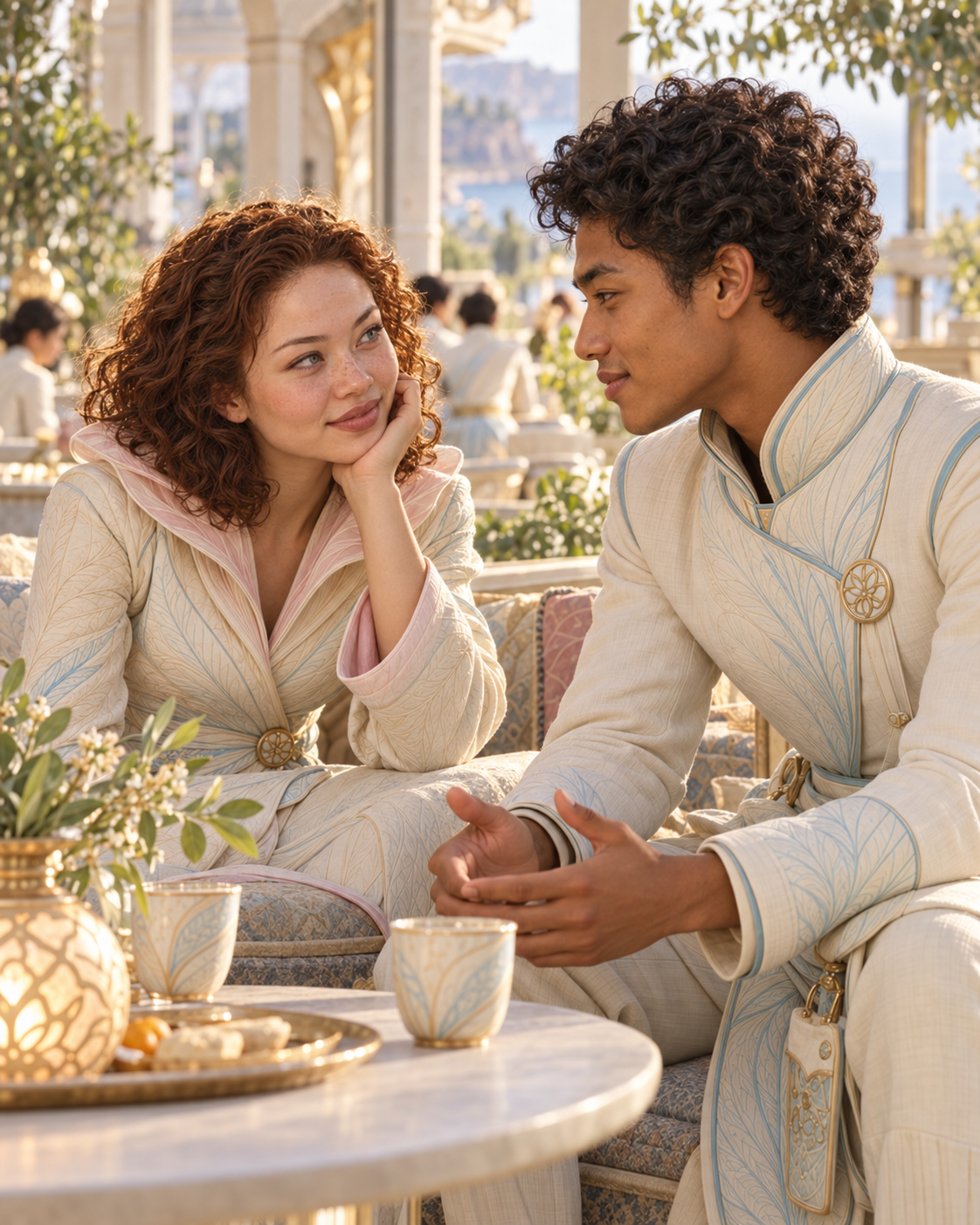
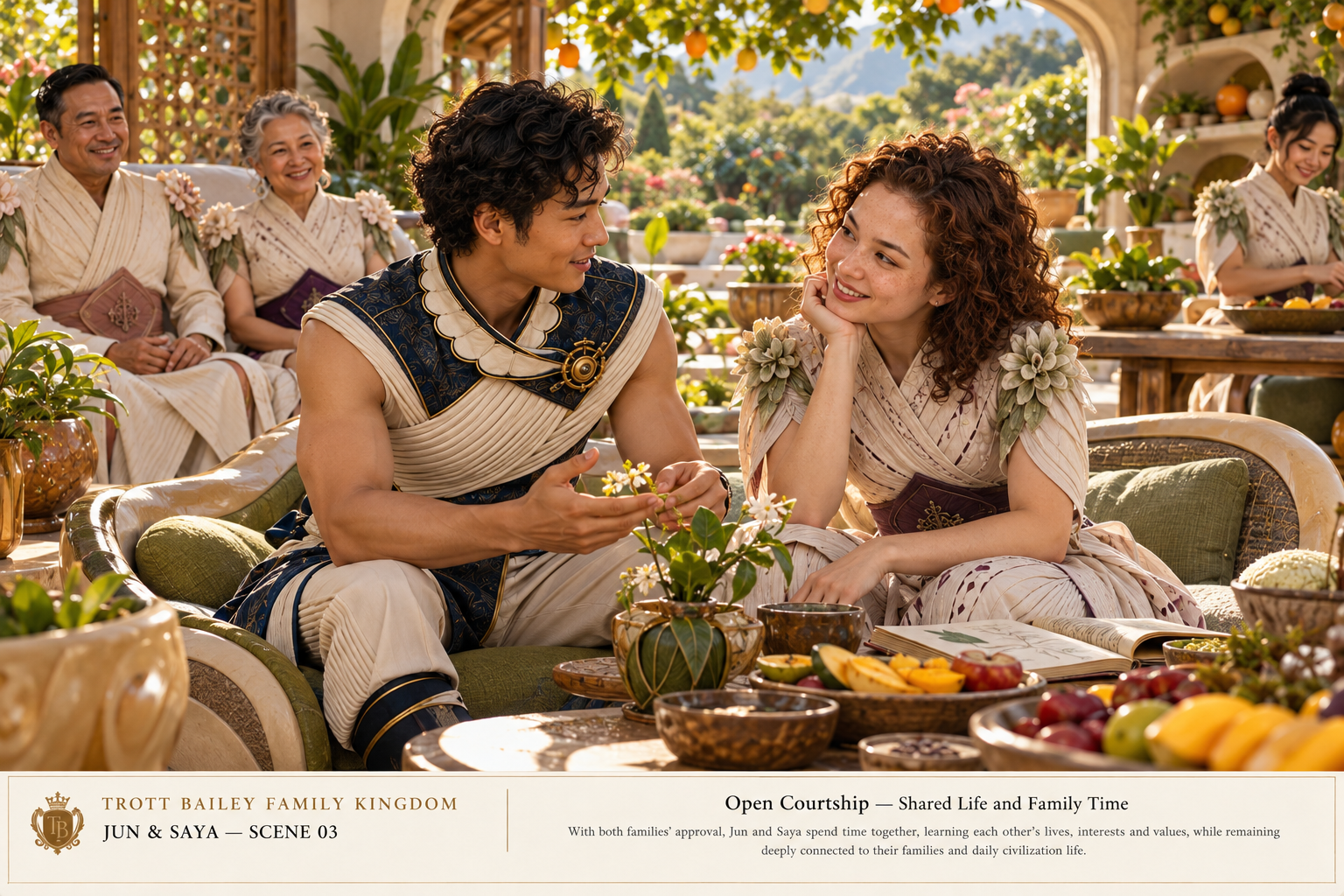
The man and woman can then spend intentional time getting to know one another. They can talk seriously, observe character, meet more of one another’s family, travel in suitable family or civilization settings, and see how one another behaves in ordinary life.
They can discuss children, living arrangements, Shubaka, expectations, responsibilities and the kind of household and family they want to build.
The purpose of courtship is not simply to enjoy being romantically attached.
The purpose is to answer:
A Match Can Also Move Directly Toward Marriage
The civilization should not force an artificial courtship period where one is unnecessary.
Some matched couples may already know one another very well. They may have grown up around each other, worked together, traveled through overlapping family circles, known each other’s families or observed one another for years.
If both already know that they want marriage, the system does not need to force them through months of ceremonial courtship merely to satisfy procedure.
If both freely choose marriage and are legally eligible, they may move directly toward marriage preparation.
Courtship Is Not Supposed to Replace Marriage
Courtship exists to help two people determine whether they should marry.
It is not supposed to become an indefinite romantic holding pattern.
The system should constantly communicate:
The civilization cannot celebrate courtship, leave the couple alone for years, and then discover that the relationship quietly became permanent dating.
The One-Year Courtship Check-In
If one full year passes after an official courtship begins and the couple has neither married nor formally rescinded the courtship, this becomes one of the limited moments when the civilization actually checks in.
A designated civilization official meets with the couple and their families.
The purpose is not to force a wedding.
The purpose is to understand why the relationship remains unresolved.
The official can ask whether they are still seriously moving toward marriage, whether a practical obstacle is delaying them, whether they need housing, travel support, inheritance transfer, household preparation, family mediation or some other civilization support, whether one person has become uncertain, whether both have simply become comfortable dating and avoiding a decision, or whether the courtship should now be formally released so both can move forward.
This protects both people.
A young woman should not lose several years waiting for a man who will never decide. A young man should not remain indefinitely attached to a woman who no longer intends to marry him. Families should not be left guessing.
And the civilization should not accidentally create the very dating culture it was trying to avoid.
If a genuine obstacle exists, the civilization can help solve it. If the relationship is no longer moving toward marriage, it can be released. If both still clearly want marriage, the check-in can identify what stands between intention and action.
This is supportive accountability, not coercion.
The civilization is not saying:
It is saying:
Courtship should lead toward marriage or toward release. It should not quietly become a permanent third category.
Young Adulthood Should Move Toward Marriage
Roughly 16 to 23 is treated as an active marriage-readiness period.
That does not mean sixteen is an automatic marriage deadline.
It means marriage is no longer treated as some vague possibility far in the future.
Young people begin learning how marriage works. They observe married couples, develop themselves, attend family discussions, may attend appropriate Courtship Gatherings, learn what husbands and wives actually do, and become increasingly capable of recognizing a suitable spouse.
Actual marriage must respect legal eligibility and the free choice of both people.
But the civilization also does not simply let years pass and then act surprised when someone reaches the later part of this period having never been given serious opportunities to meet anyone.
If the immediate circle is not working:
Four gatherings each year make that practical.
No Forgotten Young People
The civilization should not announce that marriage is important and then abandon people to luck.
A young man in an isolated district should not be told marriage matters and then be given no realistic opportunity to meet women.
A young woman whose local circle contains nobody she likes should not be treated as if she is failing because she has not chosen one of them.
The civilization has to do its part.
That is the deeper meaning behind the gathering system.
Marriage Opens Civilization Gifts
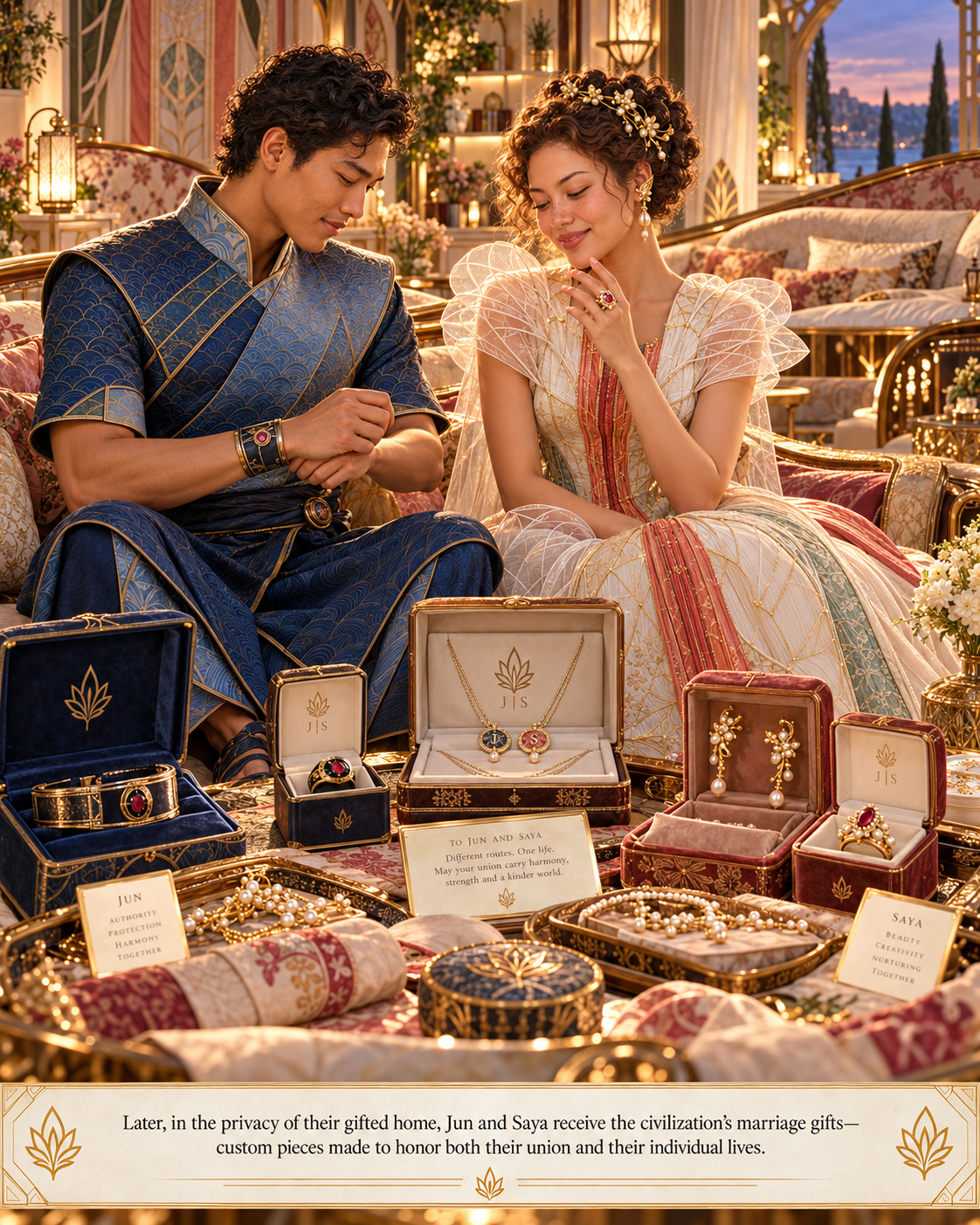
Marriage triggers specific, unique gifts from the civilization.
These are not ordinary provisions that everybody already receives.
They mark entry into married life.
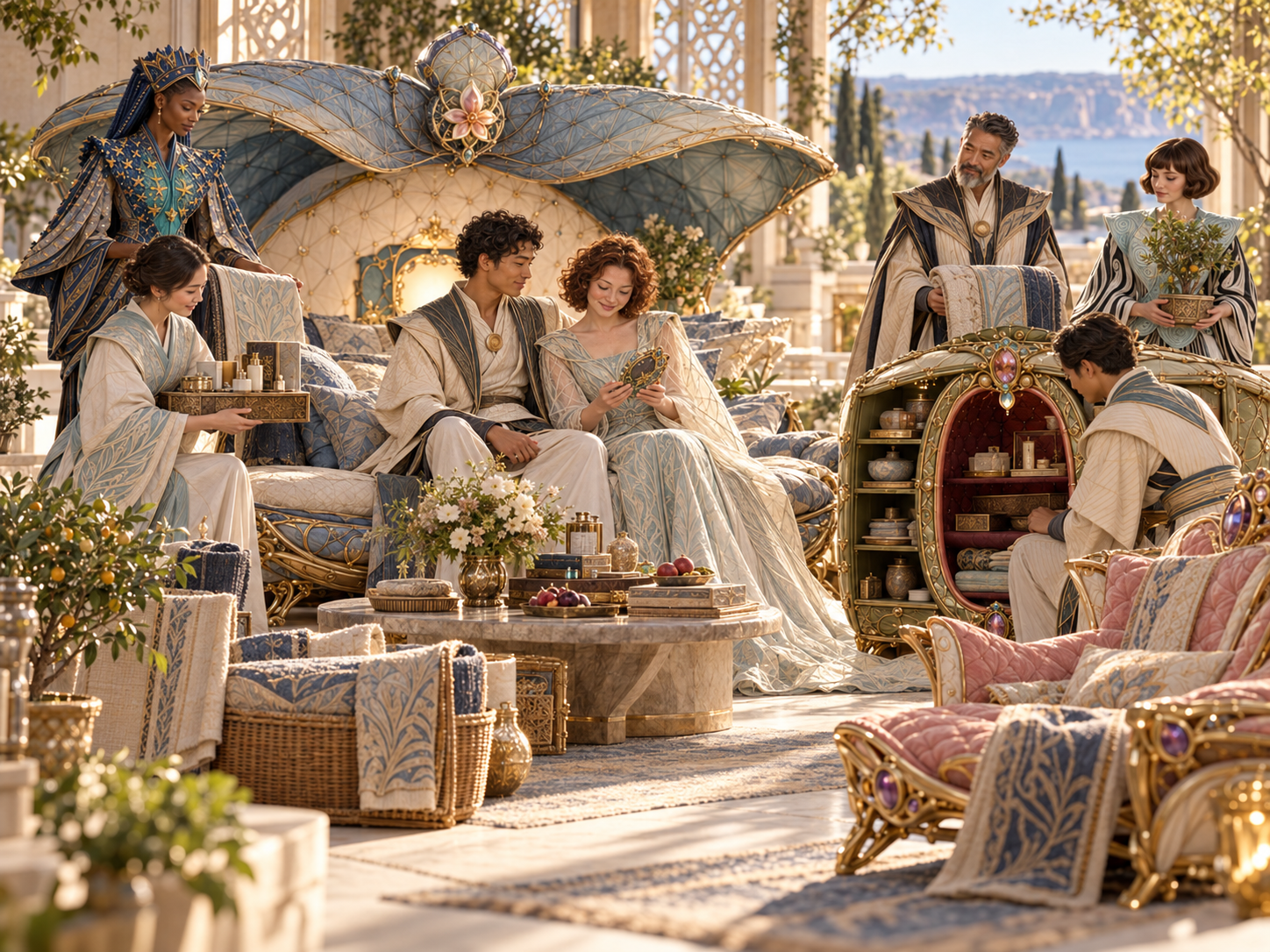
They may include beautifully made household pieces, special couple objects, productive tools, marriage travel, crafted heirlooms, equipment, experiences or other civilization-authored gifts associated specifically with beginning married life.
The exact gifts may vary by family, region, need and circumstance.
The important thing is that the civilization visibly says:
Marriage Is the Official Time for Inheritance to Move Forward
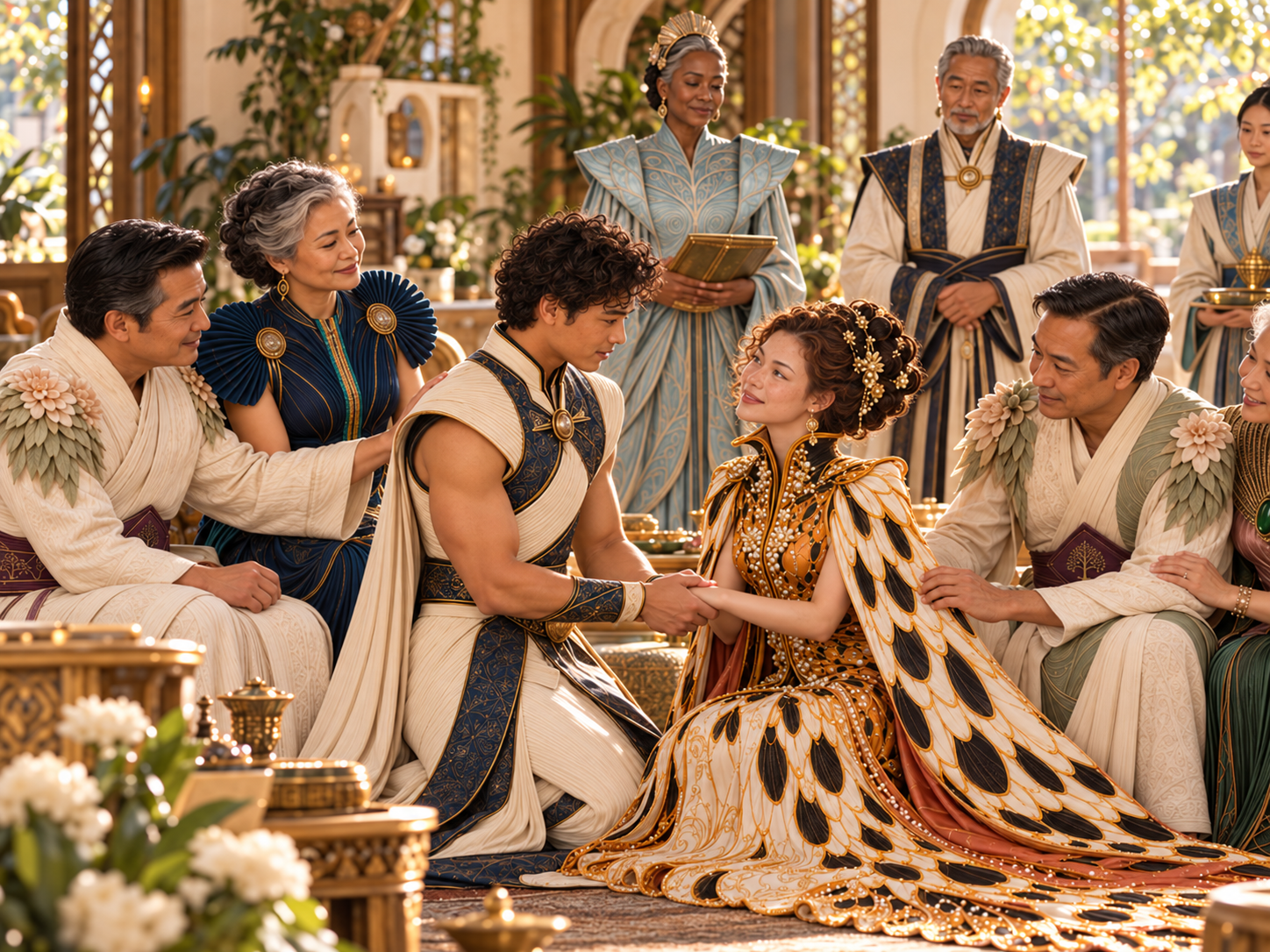
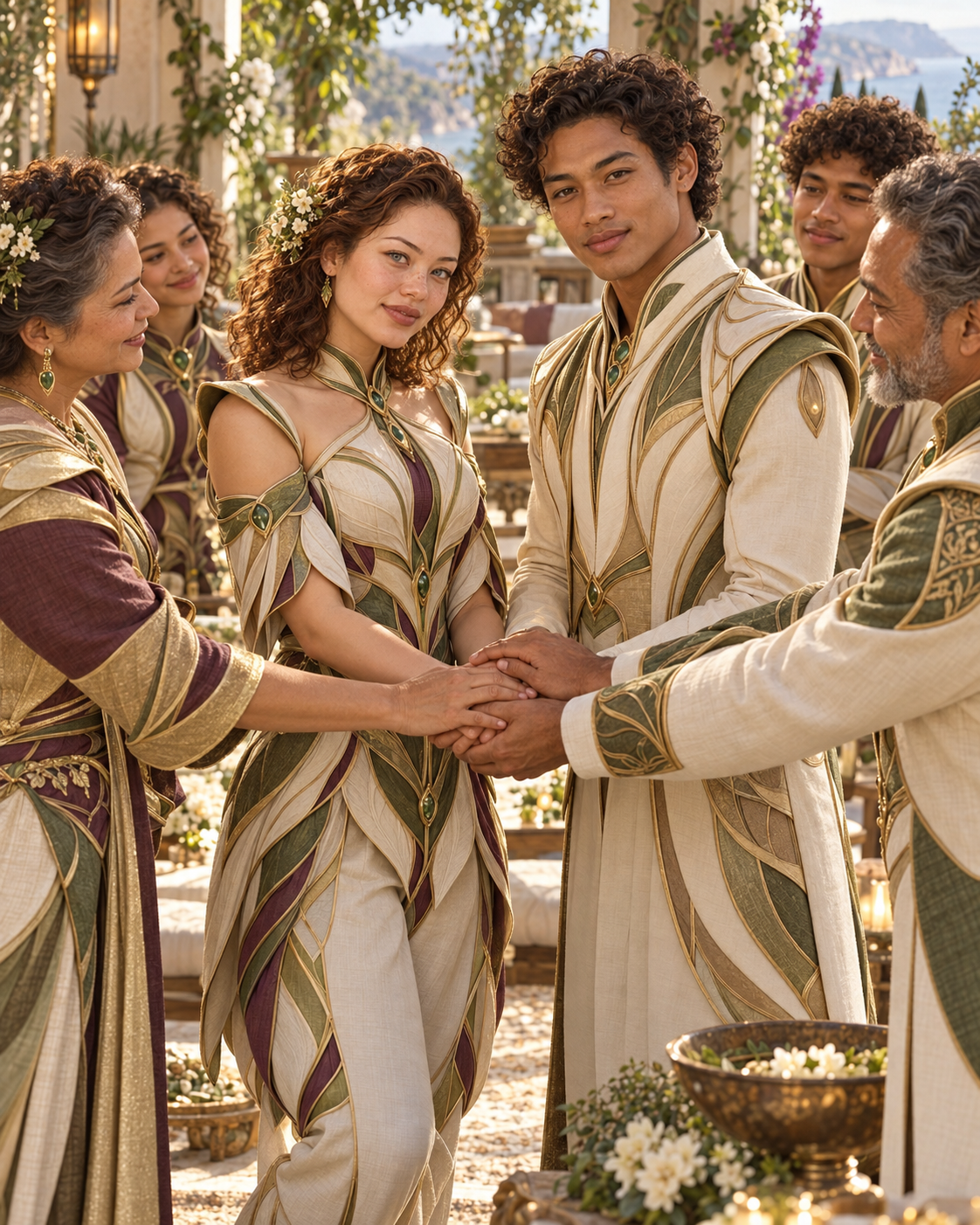
Marriage also becomes the official life-stage transition when parents may pass inheritances to their marrying children.
This changes the usual logic of inheritance.
Instead of waiting until parents die before substantial family resources move into the next generation, inheritance can arrive when those resources are actually useful.
A young married couple is establishing a home. They may be preparing for children. They may need land, tools, animals, equipment, household pieces, archives, family heirlooms, productive assets, knowledge collections, machinery or other accumulated family resources.
That is precisely when inheritance can do enormous good.
Marriage becomes a real intergenerational handoff.
Parents can say, in effect:
When the Family Handoff Is Missing, the Civilization Becomes the Family Handoff
Not every young man or woman reaches marriage with parents standing behind them.
Parents may have died. A family may have had very little to pass forward. A person may have grown up without meaningful inherited assets or family resources.
The civilization should not allow that circumstance to follow either spouse into marriage as structural disadvantage.
A woman should not begin married life materially weaker simply because she had no parents able to pass resources forward. A man should not begin married life materially weaker for the same reason.
So when the family handoff is missing:
The civilization steps into the parental support role for the marrying person and provides the practical inheritance and support package needed for the new household.
Depending on circumstances, that can include land ownership or land assets, machinery, animals, tools, household equipment, productive resources, building materials, physical labor support, crafted household pieces, family-start resources and other forms of practical support.
The package does not have to be identical for every person.
The purpose is to make sure the absence of parental inheritance does not become inherited disadvantage.
The civilization fills the parental gap when they cannot.
Whether the missing support belongs to the husband or wife, the civilization steps in.
Marriage Should Open a Larger Life
The support does not stop after the wedding.
Marriage opens a larger field of civilization life: couple living spaces, marriage journeys, private couple retreats, joint Family Challenges, shared learning routes, household-building assistance, anniversary experiences, family-start support, couple recreation, travel designed for husband and wife, and recognition for building and maintaining a strong household.
The first year of marriage can contain experiences unique to beginning life together. Later years can open things the first year could not.
A fifth anniversary should have meaning. A tenth year should have depth.
A couple that has raised children, built useful things, traveled together, completed difficult challenges, helped younger couples and contributed strongly to civilization life should be able to enter experiences reflecting what they have built.
The civilization keeps making marriage worth growing inside.
Shubaka Should Preserve the Couple
Marriage should also affect how adult contribution is organized.
The civilization should not praise marriage and then design everyday life so husbands and wives spend nearly all of it apart.
Shubaka, travel, learning, recreation, meals, family responsibilities and civilization participation should normally be routed in ways that preserve the couple rather than casually separating them.
This does not mean husband and wife must perform identical tasks every minute.
One may be checking irrigation while the other works with seedlings nearby. One may teach while the other contributes elsewhere in the same learning world.
They can have different abilities, different tasks and different specialties.
The important thing is that the civilization does not automatically build two separate lives and call that marriage.
The first question should be:
Temporary separation can happen when an activity genuinely requires it.
But separation should be the exception created by the needs of the activity, not the default structure of adult life.
Official Marriage Is Public
The privacy rules change once marriage actually happens.
Pre-match selections are private. Unsuccessful choices are private. Pre-match interviews are private. Courtship details remain private.
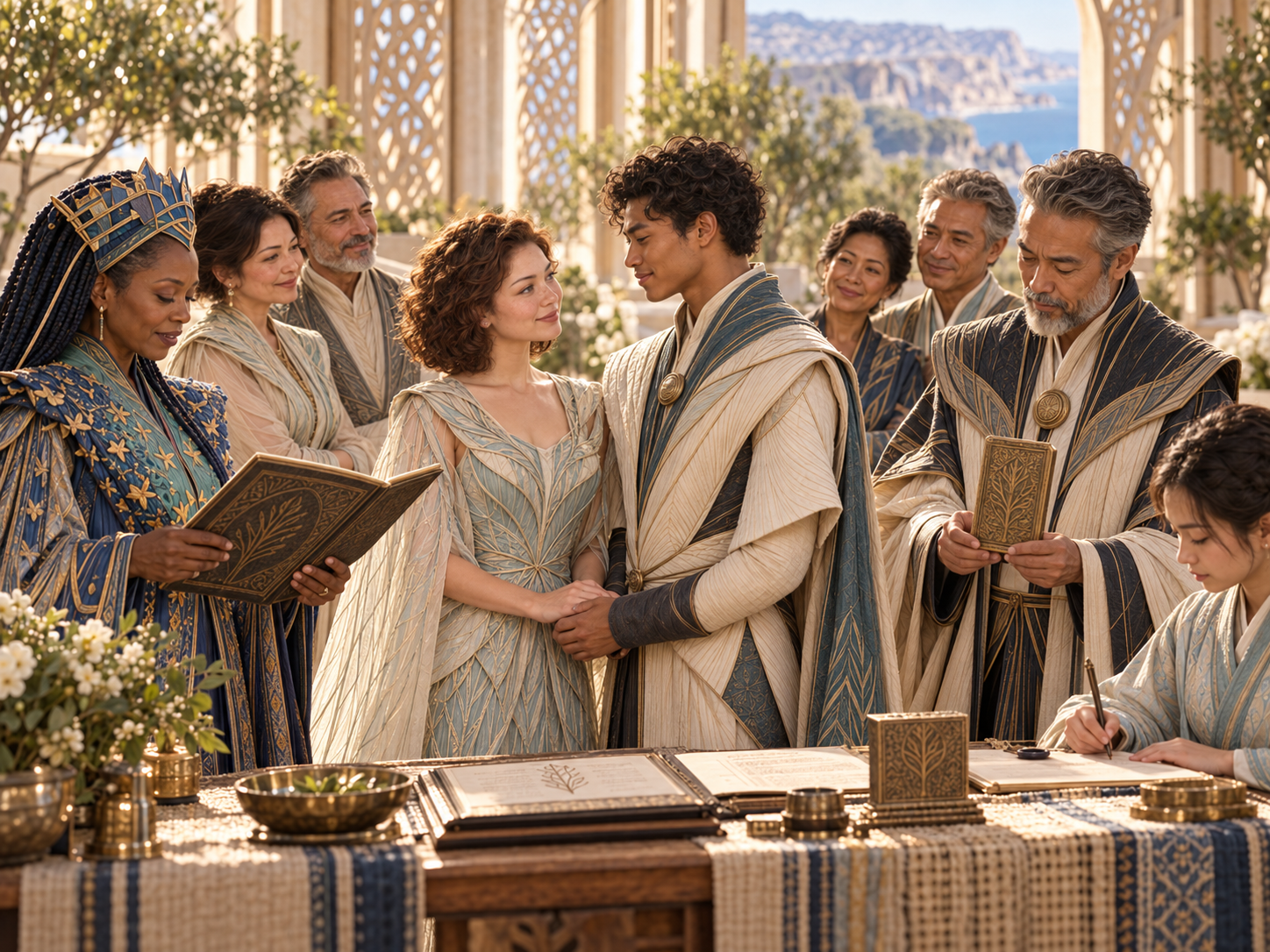
Once marriage becomes official, only the official marriage fact and official names become public.
For example:
They are now officially Sherika Trott Bailey and Kimroy Bailey.
That is the public record.
The civilization does not publish private courtship history, rejected choices, pre-match interviews, disagreements, household matters, inheritance details or other personal information.
Marital Status Must Be Easy to Verify
The important principle is not merely that a marriage record exists somewhere.
It must be easy for ordinary people to verify whether somebody is married and who that person’s spouse is.
The civilization maintains a simple, authoritative public marriage registry.
A person can check:
That supports accurate family records and basic honesty between people.
No Room for False Singleness
A person should have very little room to conceal an existing marriage while presenting themselves to someone else as single.
Someone entering a courtship should not have to wonder whether the other person secretly has a husband or wife elsewhere.
A married person should not be able to maintain an ordinary public identity as if no spouse exists.
The registry therefore makes deception that could support adultery, secret overlapping marriages or fraudulent courtship substantially harder.
This is not about gossip.
It is not about publicizing private marital life.
It is about one basic fact being easy to establish:
The privacy boundary is straightforward:
Private while evaluating.
Public and verifiable once married.
The Civilization Itself Becomes Designed for Couples
Marriage should not be a ceremony sitting on top of an individualistic civilization.
The civilization itself should be designed for couples.
Young people should be surrounded by examples showing them what comes after choosing well.
That makes the civilization’s preference for marriage concrete rather than rhetorical.
The Whole Route
The complete logic is:
If no suitable person is appearing locally:
At a Courtship Gathering, present your best natural self and spend enough real time together for character to become visible.
Men and women may each make one serious outgoing selection at a time.
A woman is also privately informed of every man who selected her. This gives her the complete information about genuine incoming interest; it does not mean she dates, meets or interviews all of those men.
She decides whom, if anyone, she wants to consider more seriously.
If a man and woman choose each other in the same round, the match is already mutual.
If a woman chooses a man who did not choose her, but he remains unmatched, he can be privately told that she selected him.
He may decline.
Or he may agree to a pre-match interview and decide after deeper conversation whether he wants to return her choice.
A woman who receives several incoming choices does not have to immediately select one of them either.
She may narrow the men she genuinely wants to understand better and request deeper pre-match interviews.
Those men are privately told that she has not chosen them outright and that they remain under consideration.
They may continue.
They may withdraw.
Either response gives useful information.
A formal match exists only when both people freely choose each other.
Matched couples leave the pool. Unmatched participants can continue into later rounds.
A successful match can lead into Courtship in the Light or directly toward marriage where both people already know enough and freely choose it.
If courtship reaches one year without marriage or formal release, the civilization checks in and asks why.
Marriage then opens civilization gifts, inheritance, household establishment, couple-centered Shubaka, deeper experiences and a larger field of adult life.
If family inheritance is missing for either spouse, the civilization fills the parental gap.
Married couples receive greater support. Married couples with children receive still greater family support.
Once marriage happens, the official marriage fact and the identity of the spouse become public and easy to verify.
Clarifying the Route
These questions address points that may still need clarification after the main operating system has been explained.
1. Does every young person have to use a Courtship Gathering to find a spouse?
No.
Many people will meet their future husband or wife naturally through ordinary civilization life.
Courtship Gatherings exist for young people who feel that they are not finding a suitable person within their immediate circles and want to widen the geography of whom they are meeting.
2. What if someone attends a Courtship Gathering and does not like anybody there?
They do not choose anybody.
Nothing has failed.
The gathering creates an opportunity to meet more people. It does not create an obligation to leave with a match.
That person can return to ordinary life and, if they want, attend another of the four yearly gatherings later.
3. Can a woman interview several men without dating several men?
Yes.
Being privately informed that several men selected her does not mean she automatically interviews all of them.
She first decides which of those men, if any, she genuinely wants to understand better.
If she is seriously curious about more than one, she may narrow that larger set to a smaller group and request deeper pre-match interviews.
That is still pre-match evaluation, not simultaneous courtship.
None of the men becomes her match until reciprocal choice actually exists.
She can speak with the smaller number she deliberately chose to evaluate, learn more, involve her parents in the conversations, and ultimately choose one or choose none.
4. What are men told before a pre-match interview?
They are told the truth privately.
If a man is part of a narrowed group, he is informed that the woman received several choices, narrowed the group, and included him among the men she wants to consider more seriously.
He is also told clearly that she has not chosen him outright.
He is entering a pre-match interview, not an established courtship.
If the interview instead began because she made an outgoing choice for him, he is told that she selected him but that no match yet exists because he has not returned the choice.
The point is that nobody should be misled about where they stand.
5. What if a man dislikes being one of several men under consideration?
He can withdraw.
The civilization does not punish him or treat that as misconduct.
He may simply prefer a woman who knows immediately that she wants him.
That may reveal an important difference in expectations between them.
His withdrawal can actually help the woman narrow her choices.
If the matching rounds are still open, he remains unmatched and can make another selection later.
6. Is a mutual match permanent once it happens?
No.
A mutual match means the two people have chosen one another enough to leave the general matching pool and move toward courtship or marriage consideration.
It is not ownership.
It is not an irreversible contract.
Either person may still decide before marriage that the relationship should not continue.
If that happens, the match or courtship can be formally rescinded and both people return to unmarried status.
The civilization wants serious decisions, not trapped people.
7. What happens if a courtship reaches one year without marriage?
If one full year passes and the couple has neither married nor formally ended the courtship, a civilization official checks in with the couple and their families.
The official is not arriving to order a marriage.
The purpose is to understand why the courtship remains unresolved.
There may be a practical obstacle the civilization can solve. There may be uncertainty that needs to be acknowledged. Or the pair may simply have become comfortable remaining in indefinite dating.
Courtship should move toward marriage or toward release. It should not become a permanent third category.
8. What exactly becomes public after marriage?
Only the official marriage fact and the official names of the spouses.
They are now officially Sherika Trott Bailey and Kimroy Bailey.
That is what the public registry needs to establish.
It exists so anyone can easily verify whether a person is married and who their spouse is.
The civilization does not publish their private courtship history, rejected choices, pre-match interviews, household matters, disagreements, inheritance information or personal marital life.
9. What happens if a marrying person has no parents or inheritance?
The civilization fills the parental gap.
This applies to either spouse.
A man should not begin married life disadvantaged because his parents died or had nothing substantial to pass forward.
A woman should not begin married life disadvantaged for the same reason.
The civilization becomes the missing family handoff and provides the practical support appropriate to the new household.
That may include land ownership or land assets, machinery, animals, tools, productive resources, household equipment, building materials, physical support, family-start resources and other needed assets.
The purpose is not to give every couple an identical package.
The purpose is to make sure missing parents or missing inheritance do not become permanent inherited disadvantage.
The civilization fills the parental gap when they cannot.
10. Does the 16–23 marriage-readiness period mean someone must marry at 16?
No.
Sixteen marks the beginning of a period in which marriage becomes a serious, visible part of preparation for adult life.
Young people can begin observing marriages, developing themselves, meeting families, attending appropriate Courtship Gatherings and learning how to recognize a suitable spouse.
It does not mean that every sixteen-year-old must immediately marry.
Actual marriage still requires legal eligibility and the free decision of both people.
The deeper purpose of the 16–23 route is that the civilization does not leave young people drifting for years without preparation, opportunity or help meeting suitable people.
11. Can a woman choose a man who did not choose her?
Yes.
Women may submit one clear outgoing choice for one man in the same matching round in which men submit their one outgoing choice for one woman.
If the man she chose also chose her, they have an immediate mutual match.
If he did not choose her but remains unmatched, he may be privately told that she selected him.
He can decline if he is not interested.
Or he can agree to a pre-match interview because, even though she was not his first outgoing choice, he may be curious enough to know her more seriously.
After that interview, he may decide to return her choice.
If he does, a mutual match exists.
If he does not, no match exists and neither person is trapped.
Build the route toward marriage—and then make married life worth entering.
No
No forgotten young people.
No dating market.
No public humiliation.
No endless girlfriend/boyfriend limbo.
No parents choosing spouses.
No geography trapping people.
No inherited disadvantage simply because family support was missing.
No easy concealment of an existing marriage.
Yes
Meet naturally where possible.
Travel farther when needed.
Choose carefully.
Use family wisdom.
Court seriously when courtship is needed.
Marry when both are ready.
Then build the larger life together.
Private while choosing. Public and verifiable once married.
The civilization itself becomes designed for couples.



 and then