
Public-Life Makji: Why Public Access in the Trott Bailey Family Kingdom Never Means Basic
Public-Life Makji: Why Public Access in the Trott Bailey Family Kingdom Never Means Basic
In many places, the word public has been trained to mean basic.
Public transport means packed vehicles.
Public seating means hard benches.
Public access means long lines.
Public experience means “take what you get and be grateful.”
That is not the Trott Bailey Family Kingdom.
In the Trott Bailey Family Kingdom, public access does not mean stripped down. It does not mean crowded, ugly, rushed, or emotionally flat.
In the kingdom, public access means:
beautiful enough for families, dignified enough for citizens, and memorable enough for children.
That principle is why Public-Life Makji exist.
What Is a Public-Life Makji?
A Public-Life Makji is not a bus.
It is not a ferry.
It is not a shuttle.
It is not a tourist rental.
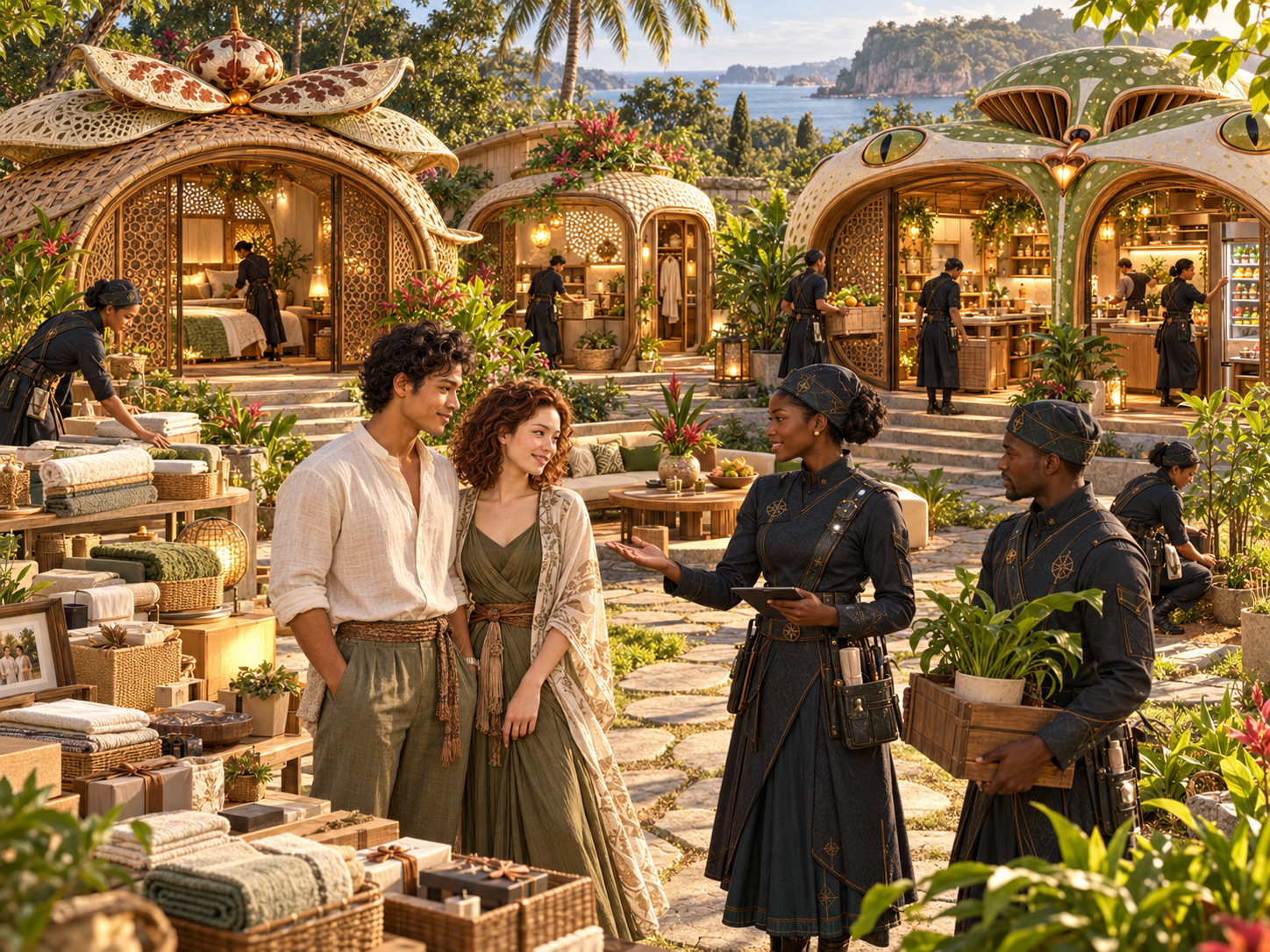
A Public-Life Makji is a small-capacity magical public delight vessel used in Balushu, the kingdom’s sea-and-orchard public-life world.
It allows families to temporarily enjoy Makji movement even if they do not privately own or steward a Makji.
This matters because true Makji stewardship remains special in the kingdom.
Privately entrusted Stewarded Family Makji are not casually handed out. They are not bought like consumer vehicles. They are tied to family development, Pacorips discernment, stewardship, and time in the kingdom.
A family must live in the kingdom for three full years or more before they may become eligible for a Stewarded Family Makji.
That makes Makji meaningful.
But Balushu also needs public sea joy. It needs children to feel the wonder of Makji movement. It needs families to experience the sea as easily as they experience a garden path.
So the kingdom creates a separate branch:
Public-Life Makji.
These are temporary, managed, beautiful public Makji experiences designed for Balushu outings.
Public Does Not Mean Crowded
This is one of the most important principles.
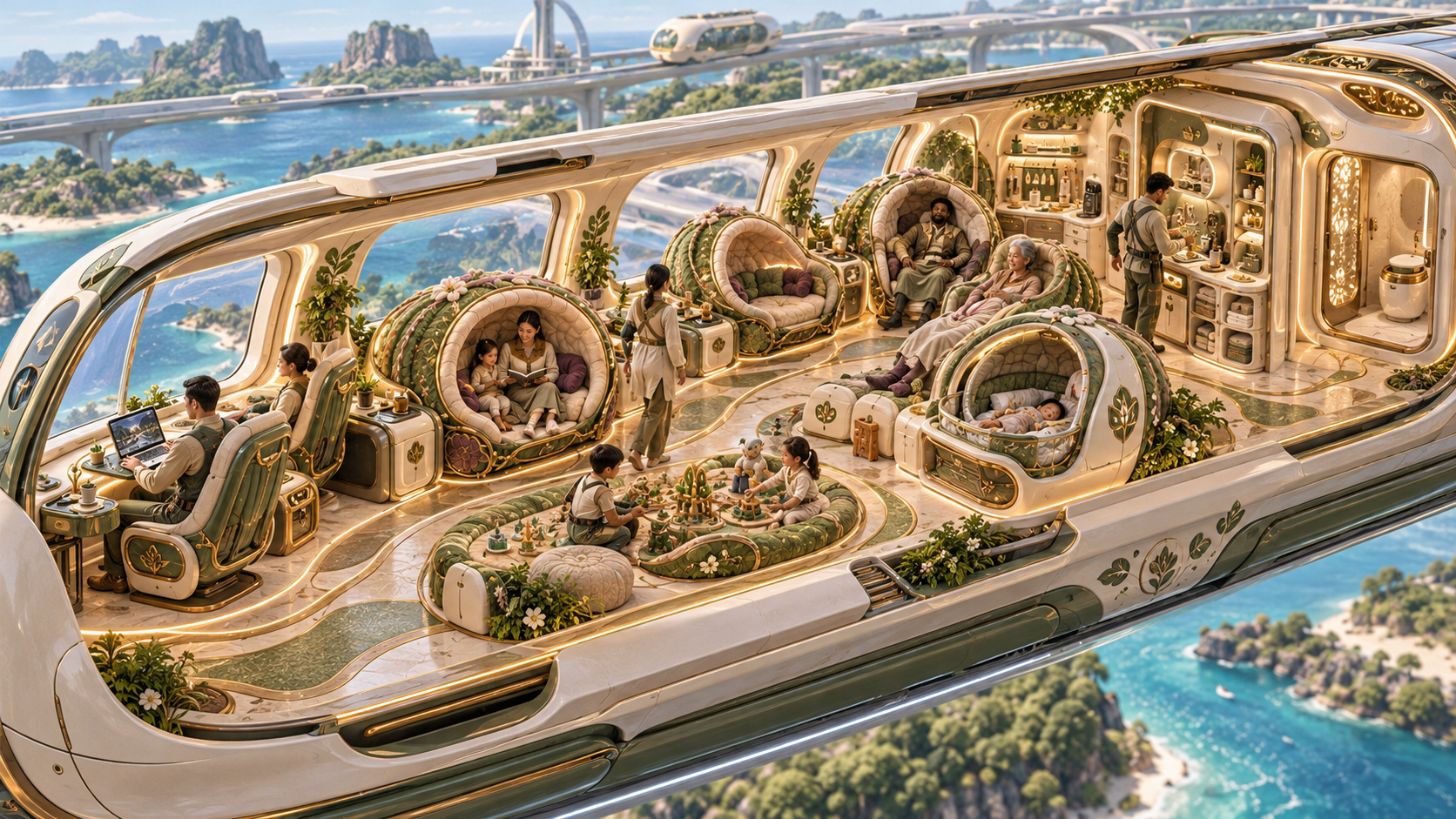
A Public-Life Makji is not designed to cram in as many people as possible.
The correct capacity is usually:
15 to 20 people maximum.
That is enough for:
- a few families
- one or two larger families
- mixed couples and small groups
- children
- trained Balushu helpers
But it is not so many people that the Makji becomes crowded, noisy, or impersonal.
The point is not mass transport.
The point is shared wonder.
The Kingdom Baseline Is Luxury
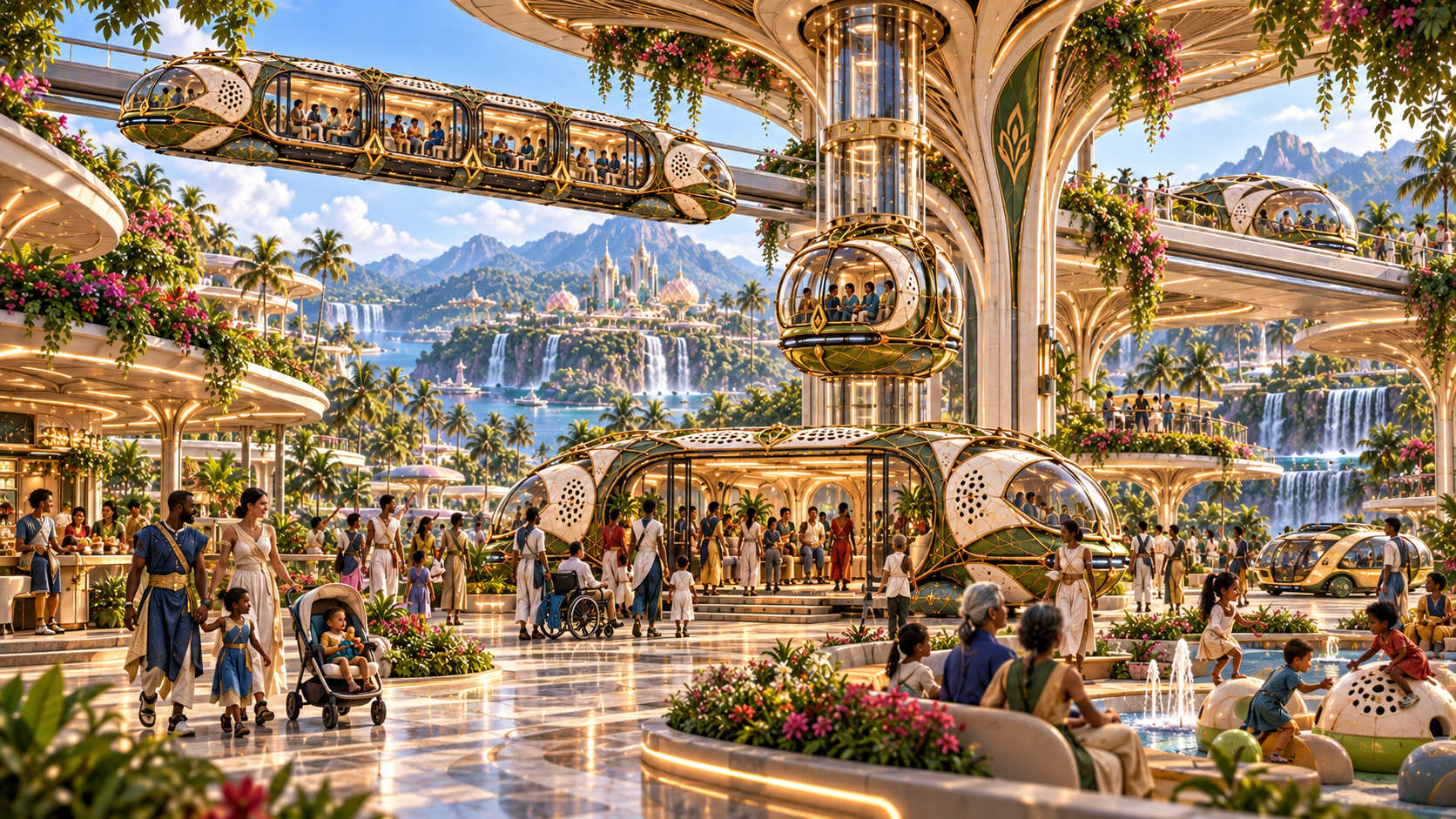
In the Trott Bailey Family Kingdom, luxury is not reserved only for the elite.
The baseline experience of the kingdom is already beautiful.
That does not mean wasteful.
That does not mean fake.
That does not mean glitter thrown on everything.
It means every public system must carry dignity, comfort, craft, and emotional memory.
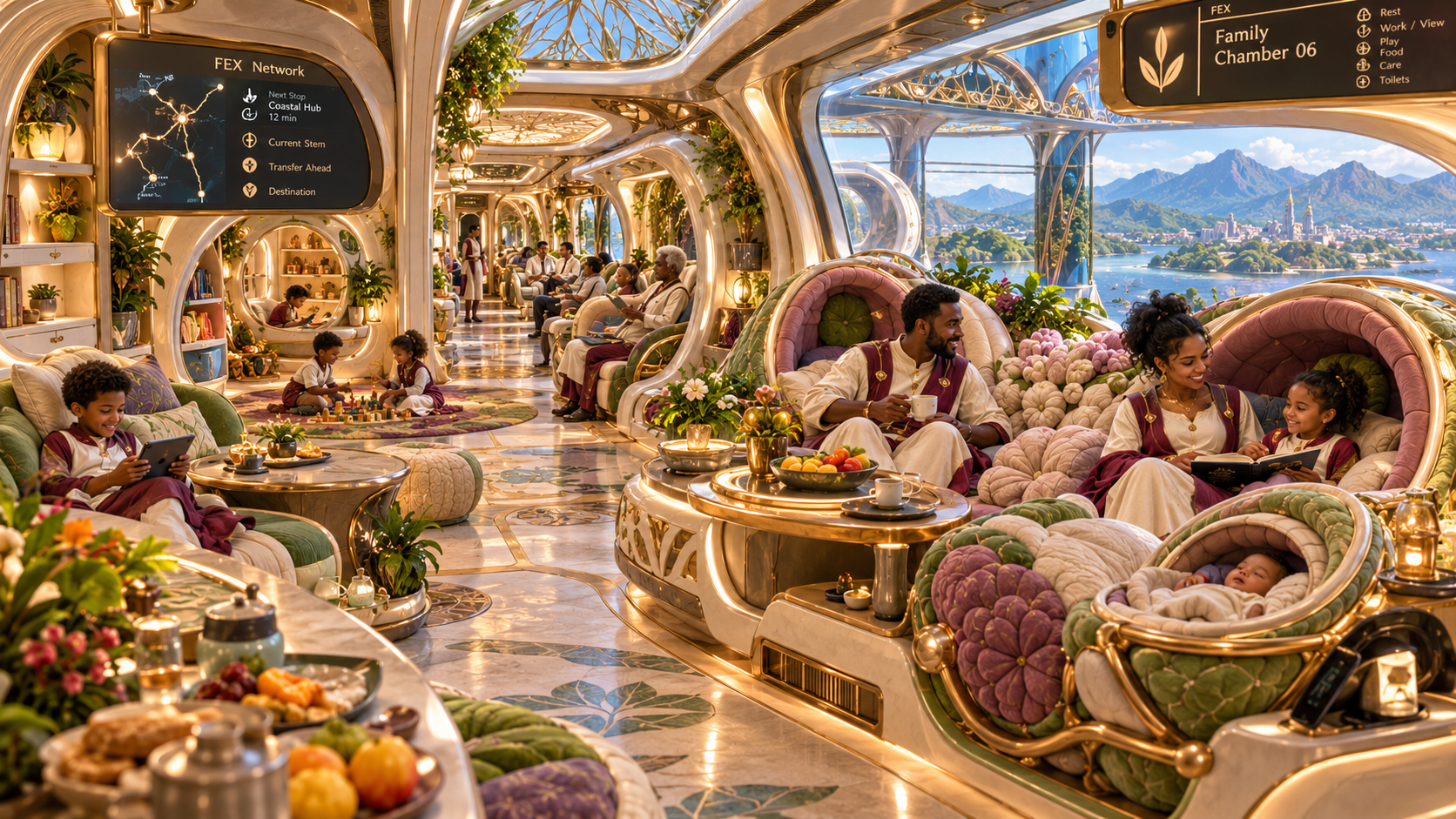
A Public-Life Makji should feel:
- spacious
- magical
- comfortable
- family-friendly
- easy to board
- protected but open to sea air
- elegant without becoming stiff
- beautiful enough that children remember it
This is the difference between a kingdom and a public system designed by exhaustion.
In the outside world, public things are often made to survive damage.
In the kingdom, public things are made to cultivate dignity.
That is a civilization-level difference.
The Whale Face Matters
Makji are not generic mobility pods.
Makji have an iconic identity.
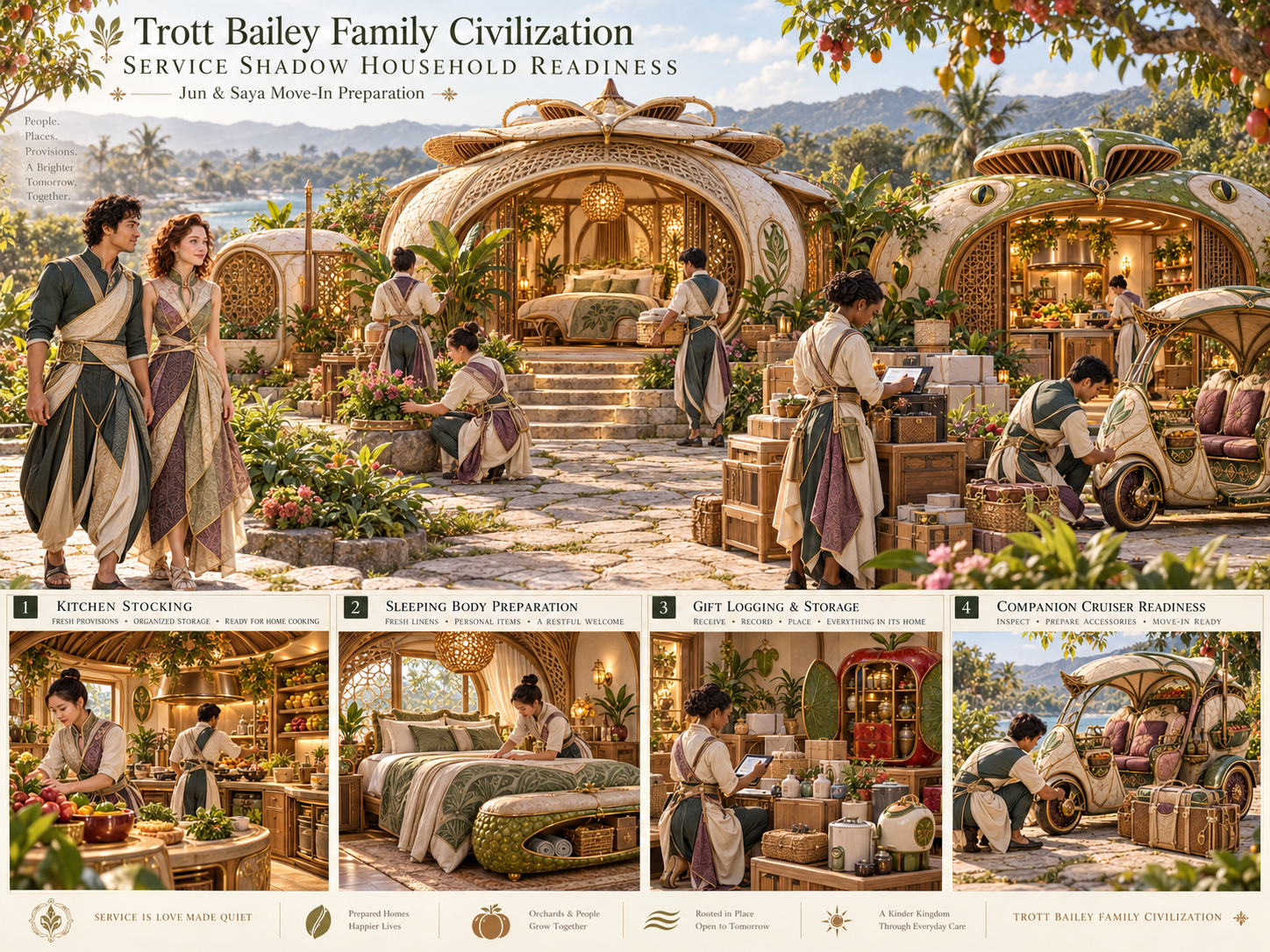
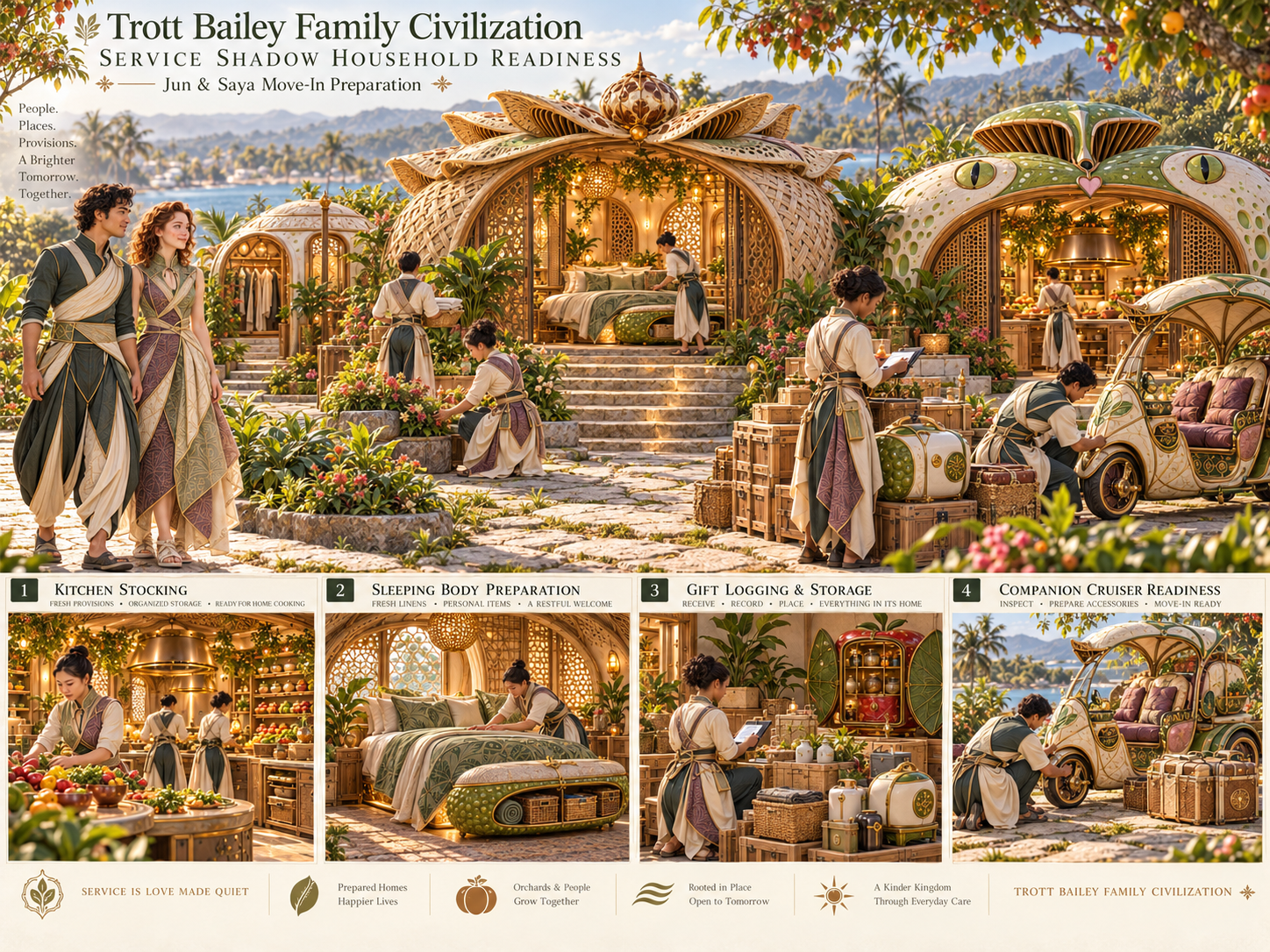
The whale-like face, the expressive eye, and the gentle body language are not decoration. They are part of what makes a Makji emotionally recognizable.
A Public-Life Makji should never lose that.
The eye matters because it gives the vessel presence.
Children should be able to point and say:
“That one is a Makji.”
Not because there is a sign on it.
Because its face, posture, and body language tell them.
That is how a civilization builds memory.
How Public-Life Makji Differ From Stewarded Family Makji
The kingdom now has a clear Makji hierarchy.
Stewarded Family Makji
These are private, entrusted family Makji.
They are deeper, more personal, and often more dwelling-capable.
They may include:
- longer stays
- family-specific interiors
- stronger storage
- sleeping or resting arrangements
- personal adaptation over time
- deeper Pacorips-linked stewardship logic
They belong to the family’s life story.
Public-Life Makji
These are Balushu-specific public delight vessels.
They are not owned by the family.
They are enjoyed temporarily.
They are designed for:
- sea outings
- scenic loops
- child delight
- family boarding
- public-life movement
- night-use routes
- premiere viewing from water
- short shared experiences
They give families a taste of Makji wonder without flattening the meaning of true Makji stewardship.
How Public-Life Makji Differ From Public Sea Transport
Balushu also needs larger public sea transport.
Those vessels move larger numbers of people.
They serve events, bigger flows, and public sea circulation.
But Public-Life Makji are different.
Public sea transport says:
“Many people need to move.”
Public-Life Makji says:
“A few families should experience something beautiful together.”
That difference matters.
The Public-Life Makji is not the big people-mover.
It is the intimate shared wonder vessel.
Why Balushu Needs Public-Life Makji
Balushu is not a city and not a district.
Balushu is where the kingdom comes out to enjoy life.
It is the kingdom’s public-life rhythm world of:
- sea enjoyment
- orchard delight
- tasting
- lounging
- dressed-up presence
- animal engagement
- night buzz
- child wonder
- major cultural premieres
So movement in Balushu cannot feel like a transport chore.
It must feel like part of the delight.
A family should be able to arrive in Balushu and feel:
“We can walk out over the sea.
We can take a small boat.
We can board a public sea vessel.
We can enjoy a Public-Life Makji.
The water is open to us.”
That is abundance.
Not a yacht club.
Not a marina for the wealthy.
Not a tourist strip.
A kingdom-authored sea life system.
The Child Test
The Public-Life Makji must pass the child test.
A child should not see it and think:
“That is transportation.”
A child should think:
“Can we go on that?”
That is the standard.
Children should remember:
- the eye
- the whale face
- the sea air
- the soft seating
- the glowing night route
- the helper helping them board
- the feeling of being on something special
That memory matters.
The kingdom is not only moving bodies through space. It is shaping emotional relationship with the world.
The Final Principle
Public-Life Makji prove one of the deepest principles of the Trott Bailey Family Kingdom:
Public access never means basic.
It means the kingdom has decided that shared life should still be beautiful.
It means ordinary families are not given stripped-down experiences.
It means children are not trained to expect public ugliness.
It means luxury is not treated as private escape, but as a baseline of civilization dignity.
A Public-Life Makji is not just a vessel.
It is a statement:
In the Trott Bailey Family Kingdom, even public movement can feel magical.



 and then