
The End of Fashion: Why Clothing Needs a Civilization


The End of Fashion: Why Clothing Needs a Civilization Again
Fashion, as we know it, is ending—not with a dramatic collapse, but with a quiet realization: it no longer serves us.
For decades, the industry has operated on cycles—seasons, trends, drops, collections—each one replacing the last before it has even had time to live. Clothing has become disposable, identity has become aesthetic, and design has become performance. The result is a system that produces more garments than ever before, yet delivers less meaning, less durability, and less connection to the human body.
This is not evolution. It is drift.
What’s emerging in response is not a new trend, nor a new aesthetic direction. It is something far more fundamental:
the return of clothing as a civilization system.
Fashion Was Never Meant to Stand Alone
Historically, clothing was never just “fashion.” It was tied to:
- role
- environment
- movement
- craft
- identity
- community
A garment told you who someone was, what they did, how they moved through the world, and what systems they belonged to. It was integrated into life.
Modern fashion severed those connections.
Today, most clothing is designed without asking:
- What does this garment do?
- How does it support the body?
- How does it behave over time?
- What role does it serve?
Instead, the dominant question became:
“How does it look right now?”
This shift—from function to appearance—is the root fracture.
The Illusion of Choice
We are told we have more choice than ever. Walk into any store or scroll any platform, and you are met with endless options.
But look closer.
Most garments:
- share the same underlying silhouettes
- use the same misapplied materials
- rely on trend-based color decisions
- ignore structure and movement
- degrade quickly
The variety is visual, not structural.
What appears as abundance is actually repetition.
Fashion has become a system where difference is simulated, not designed.
Clothing Without Purpose
A major consequence of this drift is that clothing has lost its purpose.
Most garments today:
- do not carry anything intelligently
- do not adapt to movement
- do not respond to environment
- do not reflect a specific role
- do not evolve with the wearer
They are static objects in a dynamic world.
And when clothing has no purpose, it becomes replaceable.
When it becomes replaceable, it becomes cheap.
When it becomes cheap, it becomes waste.
The Separation of Beauty and Function
One of fashion’s most damaging decisions was splitting beauty from function.
On one side:
- highly aesthetic garments with little practicality
On the other:
- purely functional garments with no design intelligence
Both are incomplete.
True design does not choose between the two. It integrates them.
Beauty without function is decoration.
Function without beauty is failure.
The Return of Material Intelligence
Another critical failure in modern fashion is the misuse of materials.
Fabrics are chosen for:
- appearance
- trend alignment
- cost efficiency
Rarely are they chosen for:
- structural behavior
- movement response
- durability over time
- interaction with the body
This leads to garments that:
- collapse when they should hold
- restrict when they should flex
- wear out where they should endure
A civilization-level approach to clothing reintroduces material intelligence—where every material is selected based on what it does, not just how it looks.
Clothing as System, Not Outfit
The idea of the “outfit” is temporary. It is assembled, worn, and forgotten.
A civilization does not operate on outfits. It operates on systems.
In a system:
- garments are designed in relation to one another
- materials are consistent and purposeful
- silhouettes are recognizable and repeatable
- roles are clearly defined
- expansion is intentional
This allows clothing to scale—not just across a wardrobe, but across an entire society.
Instead of asking, “What should I wear today?”
The question becomes, “What system am I operating in?”
Garments With Roles
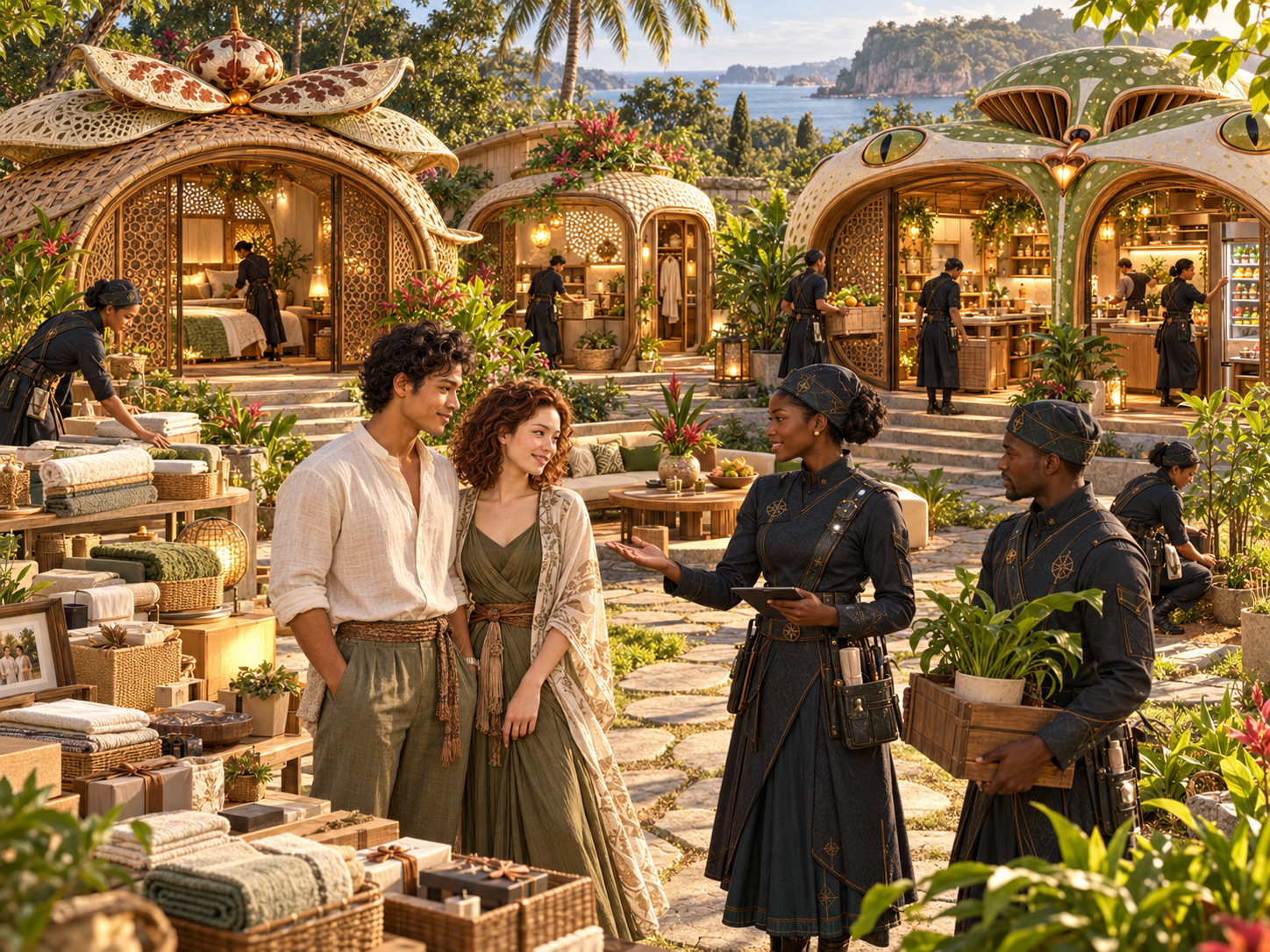
In a civilization-based approach, clothing is tied to role.
A garment might be designed for:
- hosting
- travel
- technical work
- public interaction
- caregiving
- ceremony
This creates clarity. Clothing becomes readable, purposeful, and grounded.
From Decoration to Infrastructure
Clothing is not decoration. It is infrastructure.
It shapes how we move, how we carry, how we feel, and how we are perceived.
When designed correctly, clothing can:
- reduce the need for external accessories
- improve comfort and efficiency
- support emotional state
- increase durability
- reinforce identity
The End of Fashion
This is not the end of clothing.
It is the end of fashion as:
- trend-driven
- disposable
- surface-level
- functionally disconnected
In its place: clothing as intelligent system design.
Final Thought
The future of clothing will not be decided by trends.
It will be decided by systems that:
- respect the body
- understand materials
- define roles
- integrate beauty and function
The question is no longer: “What is in fashion?”
The real question is: “What kind of civilization does your clothing belong to?”
b





 and then