
The Orchard Guild Ring: How the TBF Kingdoms Grow Food Beautifully


Trott Bailey Family Kingdom
The Orchard Guild Ring: How the Kingdom Grows Food Beautifully
A food-planning system where orchards become living classrooms, family gardens, district food security, public beauty, and shared abundance.
Food Should Not Be Hidden Away
In the Trott Bailey Family Kingdom, food is not treated as something that happens far away from daily life. Food is not hidden behind industrial fences, disconnected from children, families, public spaces, and culture. Food is visible. Food is beautiful. Food is educational. Food is abundant. Food is part of the civilization’s public life.
The kingdom does not think of agriculture as only farms, crops, harvest, and storage. It thinks in living food circles, family learning, abundance pathways, district food security, edible gardens, and beauty as infrastructure.
The kingdom is not just feeding people. It is raising a civilization that understands abundance.
What Is an Orchard Guild Ring?
An Orchard Guild Ring is a circular food-planning system built around a central food tree or crop anchor. Around that anchor, companion plants are arranged in rings, each with a purpose. Some build soil. Some attract pollinators. Some confuse pests. Some provide herbs, edible leaves, flowers, shade, groundcover, beauty, teaching, and harvest support.
In ordinary agriculture, a fruit tree might be treated as a single crop. In the Trott Bailey Kingdom, that tree becomes the center of a living food room.
The Orchard Guild Ring can be small enough for a family compound or large enough to organize a district-scale food system. It can be practical, beautiful, educational, ceremonial, and productive at the same time.
The Basic Structure
The Center
The center holds the main food anchor: a fruit tree, nut tree, spice tree, cacao tree, breadfruit tree, coconut palm, mango tree, citrus tree, avocado, guava, papaya, banana, or another important crop.
The Inner Ring
The inner ring supports the central crop. It may include soil builders, herbs, pest confusion plants, mulch-producing plants, nitrogen fixers, aromatic plants, and plants that improve the health of the root zone.
The Middle Ring
The middle ring brings life, teaching, and diversity. It may hold pollinator flowers, edible leaves, medicinal plants, scent plants, butterfly plants, small food crops, and child-safe touch plants.
The Outer Ring
The outer ring makes the food room usable for families. It includes groundcovers, vines, walking paths, water-holding edges, teaching labels, harvest baskets, soft borders, and small resting places.
The Service Edge
The service edge supports the whole ring without making it ugly. It includes compost, mulch, water access, storage, seating, washing, tasting, helper access, and discreet movement for harvest and maintenance.
Food Rooms, Not Just Farms
The Orchard Guild Ring changes how people experience agriculture. A food space is no longer only a production zone. It becomes a room of the kingdom.
A ring can be a picnic room, a teaching court, a family harvest garden, a baby tasting space, a café edge, a ceremony garden, a district food-security module, or a place where children learn the relationship between soil, flower, fruit, harvest, washing, eating, compost, and renewal.
The best Orchard Guild Rings should feel like living mandalas: ordered, useful, beautiful, and alive.
The Five Main Orchard Guild Ring Types
1. Family Orchard Ring
The Family Orchard Ring is the smallest daily-life version. It belongs in family compounds, Cuddle Villages, Baby World, residential areas, and small garden courts.
It may include one central fruit tree, six to twelve companion plant groups, a seating edge, child label stones, a wash basin, a mulch pocket, pollinator flowers, and a small harvest basket station.
Its purpose is daily food relationship. Families see food growing near where they live, rest, walk, and gather.
2. Teaching Orchard Ring
The Teaching Orchard Ring belongs in No Dumb Dumbs, Baby World, Pacorips orientation gardens, family training areas, and district learning spaces.
It includes labeled plant roles, child-safe paths, soil windows, pollinator observation spots, harvest calendar boards, taste-and-smell stations, and simple explanations of what each plant does.
Its purpose is food intelligence. Children and adults learn that agriculture is not random planting. It is relationship, ecology, timing, care, and design.
3. Production Orchard Ring
The Production Orchard Ring is used at Keslev scale. It is larger, more productive, and tied to food security.
It includes high-yield tree guilds, water-routing, compost systems, pollinator corridors, harvest paths, storage nodes, processing pavilions, helper access, and data-supported food monitoring.
Its purpose is abundance at scale. It feeds the kingdom while still remaining beautiful, ecological, and understandable.
4. Café Orchard Ring
The Café Orchard Ring belongs near Sabennery centers, Kultan promenades, Sherika welcome gardens, Balushu tasting routes, and public eating zones.
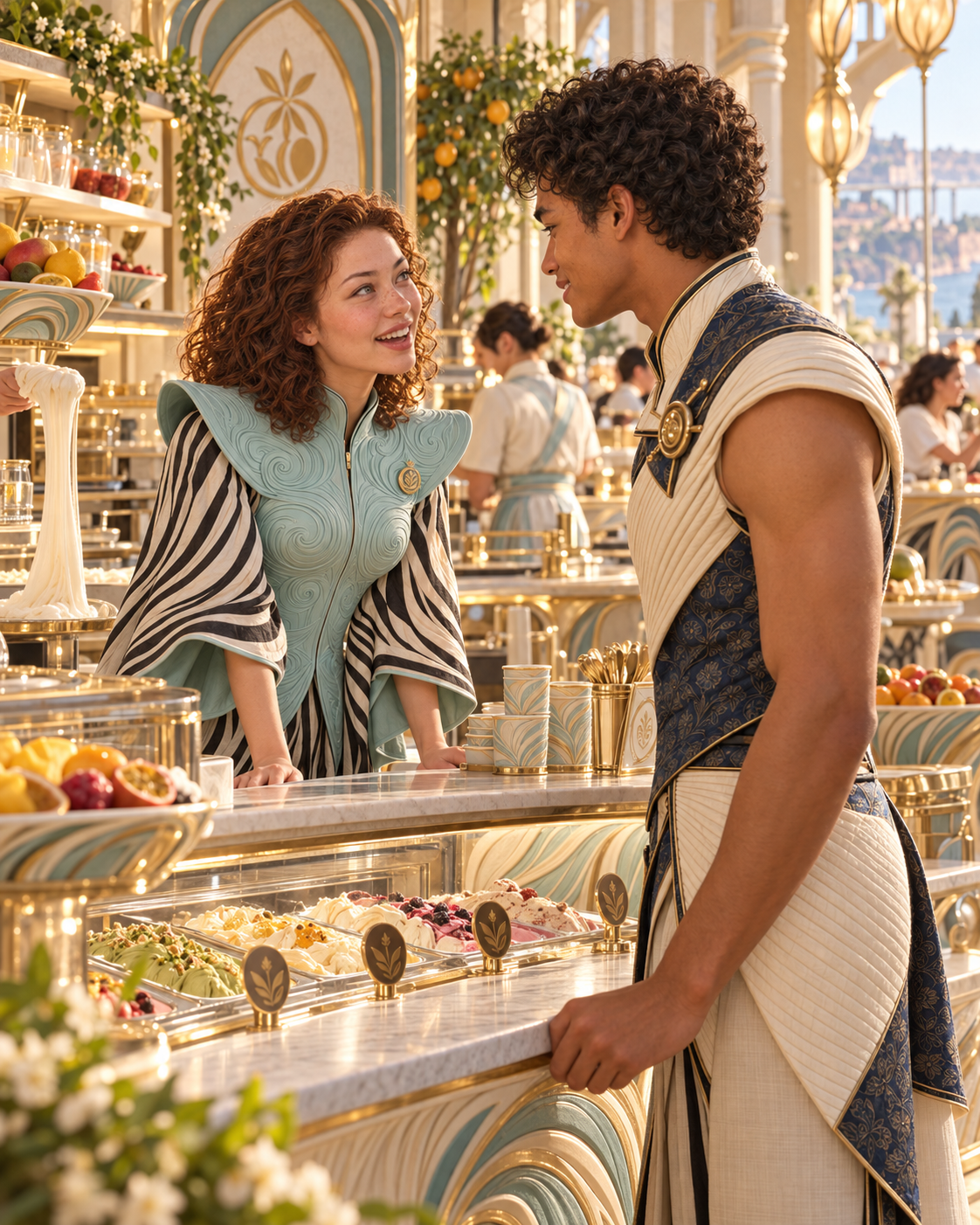
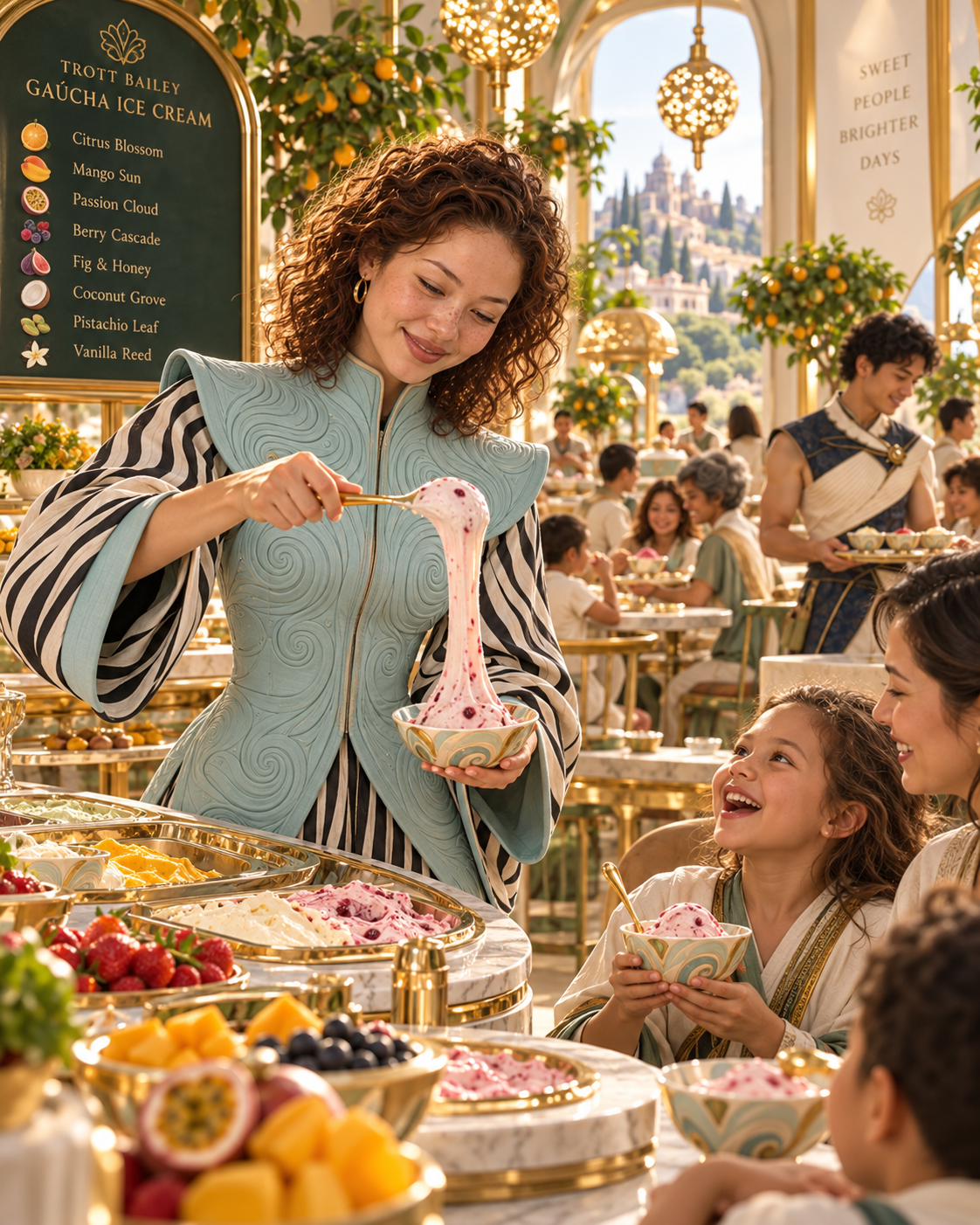
It includes fruit and herb supply, shaded seating, juice and smoothie stations, edible hedges, water rinse points, dessert counters, tasting tables, and child snack access.
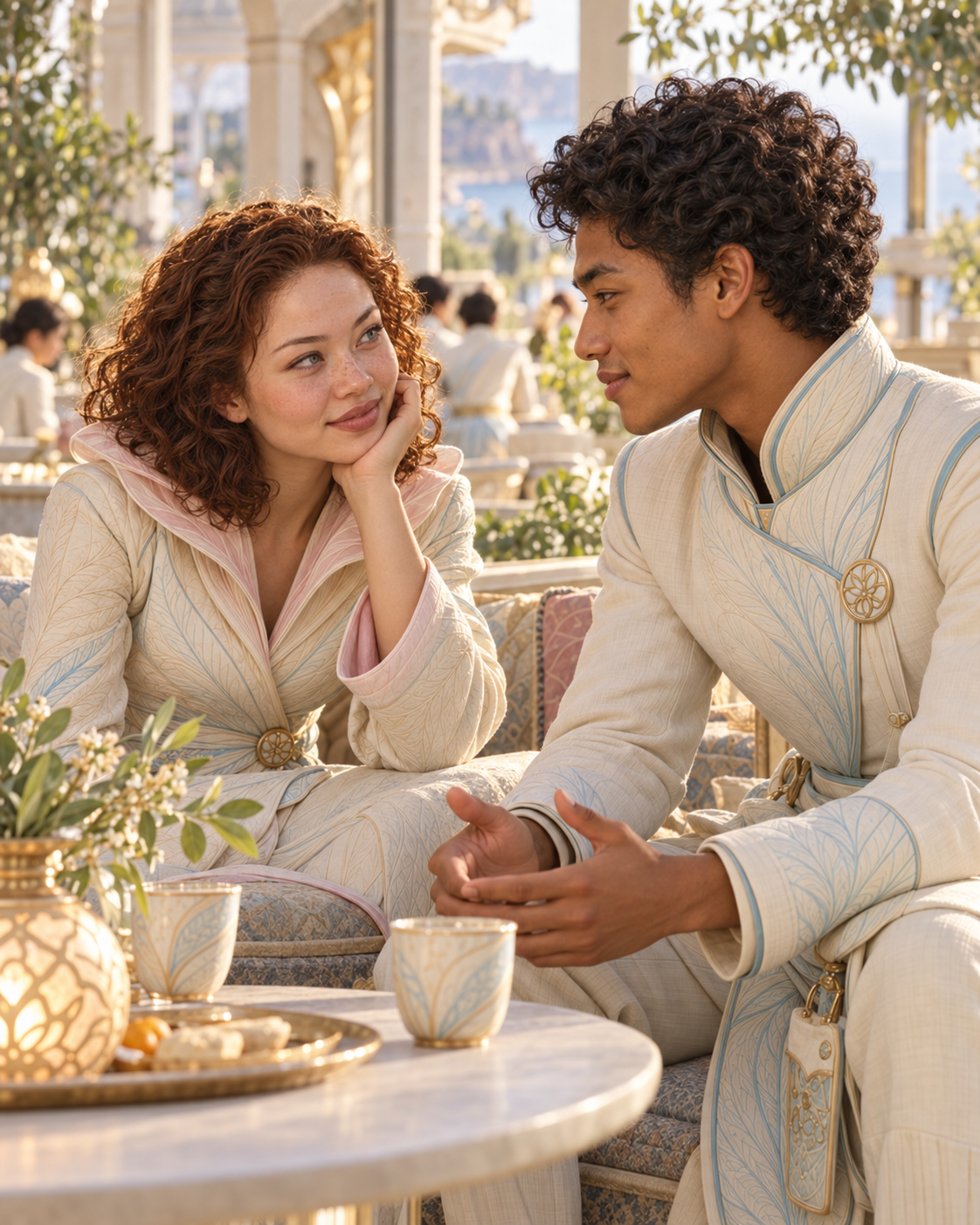
Its purpose is hospitality. Families can sit, taste, drink, rest, and understand that the food around them is part of the living landscape.
5. Ceremony Orchard Ring
The Ceremony Orchard Ring is used for Balushu, royal gatherings, district ceremonies, AgriGames, food releases, and major cultural events.
It includes rare fruit trees, beautiful radial planting, flower borders, tasting terraces, family honor plaques, night lighting, music, food reveal areas, and ceremonial harvest moments.
Its purpose is culture. Food becomes something the kingdom witnesses, celebrates, and remembers.
Keslev District: The Kingdom Food Backbone
Keslev District is the major food-growing and food-security backbone of the Trott Bailey Family Kingdom. It should not look like bland industrial agriculture. It should read as a living food civilization: beautiful, ordered, abundant, educational, resilient, and highly productive.
In Keslev, Orchard Guild Rings become Keslev Food Guild Fields. These large-scale systems can be organized by food type:
- mango guilds;
- citrus guilds;
- cacao guilds;
- coconut guilds;
- breadfruit guilds;
- banana and plantain guilds;
- avocado guilds;
- guava guilds;
- papaya guilds;
- cassava and yam support gardens;
- spice and herb rings;
- pollinator and medicinal corridors.
Keslev carries the serious responsibility of feeding the kingdom. But it does so with beauty, intelligence, and ecological order.
Sherika District: Arrival Food Comfort Gardens
Sherika District receives newly arrived families, refugees, foreigners, talented families, and guests. For this reason, food in Sherika should be immediate, visible, comforting, and generous.
Orchard Guild Rings in Sherika become Arrival Food Comfort Gardens. These gardens support Cuddle Villages, Pacorips intake courts, orientation verandahs, arrival pavilions, family rest zones, and recovery gardens.
Their functions include free fruit access, smoothie and juice stations, children’s snack trees, gentle first meals, family orientation gardens, and recovery food after long travel.
Sherika should make abundance visible from the beginning. A family should not enter the kingdom through stress, hunger, and bureaucracy. They should enter through warmth, order, food, gardens, welcome, and care.
Kultan District: Café Orchard Edges
Kultan District is the lagoon-based water movement, Makji servicing, promenade, café, and water-civilization district of the kingdom. Its food systems should be watery, social, relaxing, and easy to enjoy.
Orchard Guild Rings in Kultan become Kultan Café Orchard Edges. These appear along water promenades, Makji Rest Groves, lagoon cafés, family waiting terraces, dockside eating zones, water-cleaning gardens, and tropical fruit rinse stations.
Kultan’s food mood is simple:
Sit. Sip. Splash. Taste. Rest. Continue.
Families waiting for Makji service or water movement should be surrounded by edible beauty, shaded cafés, fruit, cooling water, and easy nourishment.
Baby World: Baby Edible Wonder Rings
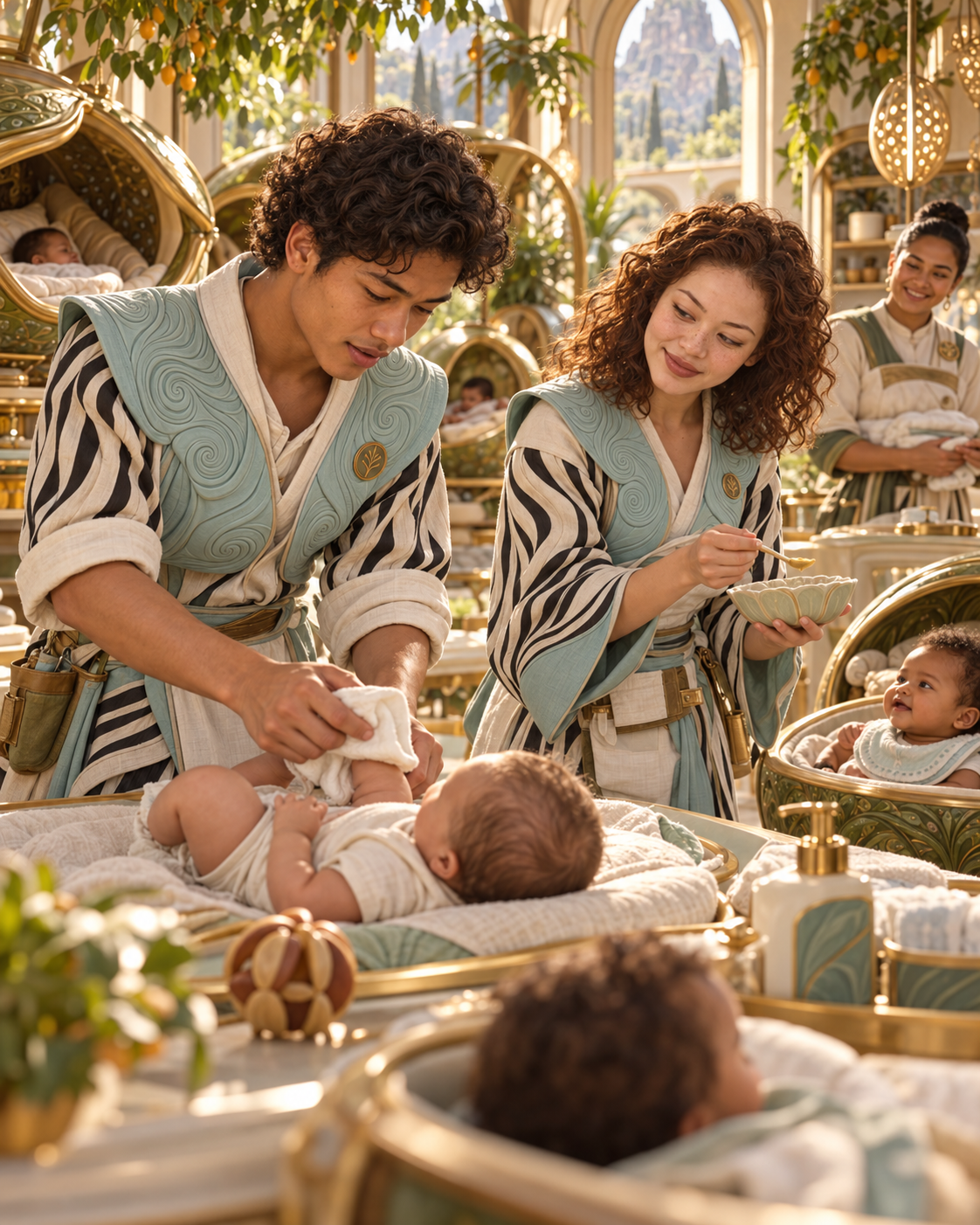
Baby World uses a gentle version of the Orchard Guild Ring. These are called Baby Edible Wonder Rings.
They are not intense farming spaces. They are soft, safe, sensory food gardens where babies and toddlers begin learning that food comes from living systems.
A Baby Edible Wonder Ring may include banana leaf shade, soft herb scent gardens, strawberry patches, edible flower edges, parent-guided tasting stations, baby-safe rinse bowls, color-coded labels, and simple touch-smell-taste-rest loops.
The purpose is early food relationship. A child can see a flower, touch a leaf, smell mint, wash fruit, taste with a parent, and learn that scraps return to compost and soil.
Balushu: Release Feast Guild Gardens
Balushu is the kingdom’s public-life rhythm world, where sea enjoyment, orchards, tasting, lounging, presence, learning-through-delight, night-buzz, and major cultural premieres come together.
In Balushu, Orchard Guild Rings become Release Feast Guild Gardens. They support Release Commons, tasting promenades, dessert culture, food premieres, AgriGames, family honor feasts, cacao demonstrations, new fruit varieties, and public food reveals.
Balushu food is not only eating. It is witnessing. The kingdom sees what Keslev grew, what Keilah designed, what families helped develop, and what the civilization is ready to share.
Nature Mimicry Inside the Food System
The Orchard Guild Ring should draw from the kingdom’s Nature Mimicry Archive so the food system feels Trott Bailey-authored instead of generic.
- Pink-Mottle Snowleaf Veil becomes orchard privacy hedges, ring borders, topiary dividers, Baby World garden walls, and Balushu food garden edges.
- Vein-Map Gourd Leaf Field becomes edible shade, leaf canopy design, groundcover logic, and orchard diagram graphics.
- Crawling Leaf Route Spine becomes vine-guided children’s routes, living path lines, edible corridors, and district food paths.
- White-Tip Bud Constellation becomes night orchard lighting, harvest path markers, child-safe glow points, and evening food garden atmosphere.
- Butterfly-on-White-Bud Dry Meadow becomes pollinator teaching strips, dry-season butterfly corridors, and ecological observation gardens.
- Dew-Bead Serrated Edge becomes water catchment edges, cooling paths, rain-fed orchard borders, and baby-safe dew play near food gardens.
- Orchard Guild Ring Diagram Logic becomes the planning brain for food gardens, orchard systems, teaching diagrams, and district food-management boards.
The Hidden Service Layer
A beautiful food system still needs serious logistics. Harvesting, washing, composting, storage, processing, water, soil care, and distribution must be designed into the system.
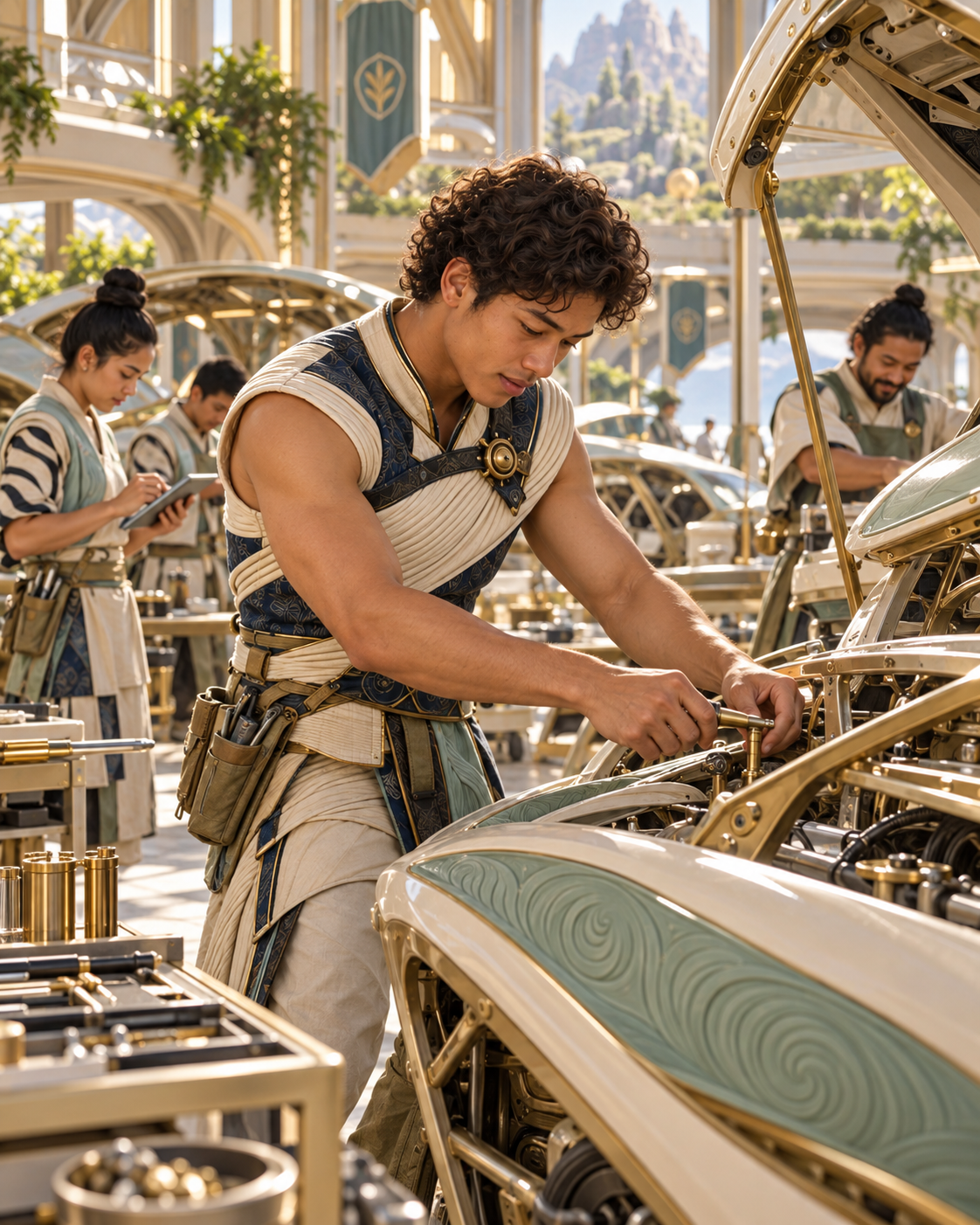
The Orchard Guild Ring includes a service edge so that beauty and function stay together. Helpers, automated carts, Mr and Mrs Rasta-style assistants, and district systems can move baskets, water, compost, tools, and prepared food without interrupting family life.
Public spaces should feel peaceful because the support systems are well designed. The kingdom should never pretend that abundance appears magically. It should show food growing beautifully while handling the hard logistics intelligently.
Food as Education
Children in the Trott Bailey Family Kingdom should grow up understanding food. Not as a school subject only, but as something they touch, smell, taste, plant, harvest, wash, share, and return to the soil.
Orchard Guild Rings allow children to learn:
- which plants support each other;
- how flowers become fruit;
- why pollinators matter;
- how compost returns life to soil;
- why water must be cared for;
- how food moves from garden to table;
- how family contribution supports abundance;
- how beauty and productivity can exist together.
This makes agriculture part of cultural intelligence.
Food as Public Beauty
The kingdom’s orchards should be beautiful enough for families to walk through, rest in, learn from, and celebrate. Food should not be separated from pleasure. A mango guild can be a harvest system, a shaded court, a butterfly corridor, a child learning garden, and a place for family photographs.
A citrus ring can perfume the air near a café. A cacao guild can support chocolate demonstrations. A coconut ring can shade water-edge seating. A banana and plantain ring can support arrival meals. A papaya guild can become a toddler tasting garden. A herb ring can teach smell, medicine, cooking, and pollinator care.
Food becomes part of the kingdom’s beauty, not something hidden behind the beauty.
The Final Vision
The Orchard Guild Ring gives the Trott Bailey Family Kingdom a way to grow food that is practical, beautiful, educational, ecological, and family-centered.
It connects Keslev’s food security to Sherika’s arrival comfort, Kultan’s café promenades, Baby World’s edible learning, Balushu’s cultural feasts, Sabennery’s nourishment centers, and family compounds across the kingdom.
It teaches children that food is alive. It teaches families that abundance is shared. It teaches districts that agriculture can be infrastructure, beauty, learning, and culture at the same time.
The Orchard Guild Ring is how the kingdom turns agriculture into visible abundance.
This is not farming hidden away from civilization. This is food woven into civilization.



 and then