Route Access, Movement Formation Stewards

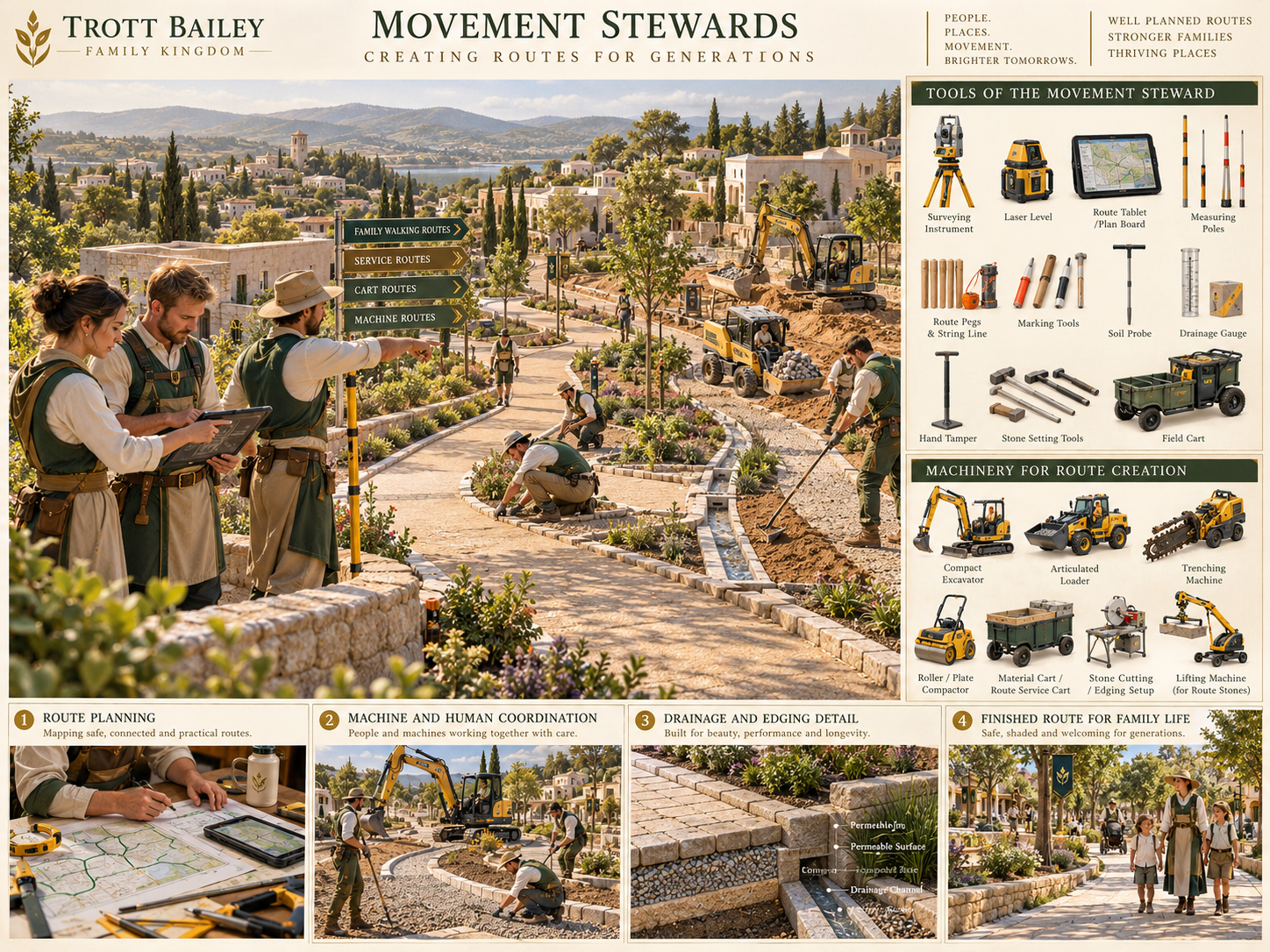
A first nucleus is not only made of buildings.
It is made of routes.
Routes are one of the first infrastructure layers because they help the whole nucleus work well from the beginning. They help families move with ease, children move safely, food arrive smoothly, Clean Return stay clear, machines work without disturbing family life, repairs happen quickly, and future growth remain open.
Routes include roads, walking paths, cart paths, machine paths, service routes, clean-side routes, used-item routes, emergency access, repair access, and future expansion corridors.
When routes are formed early, the nucleus becomes easier to enter, easier to cross, easier to supply, easier to service, easier to repair, easier to protect, and easier to expand.
Families move. Children move. Food moves. Water moves. Tools move. Materials move. Machines move. Clean things move. Used things move. Organic matter moves. Emergency help moves. Service Shadow moves. Build Corps moves. Repairs move. Future expansion moves.
Clear movement helps every system work better.
Why This Role Exists
A nucleus becomes stronger when movement is clear from the beginning.
Good routes help homes, water, energy, food, workshops, Clean Return, Service Shadow, children’s spaces, care spaces, machines, materials, and land recovery work together instead of competing for the same narrow paths.
Families can walk without being forced through work zones. Children can reach food, play, learning, and family spaces safely. Food delivery can arrive without blocking family life. Used dishes can return without crossing clean preparation. Tools can return to the right places. Machines can enter, turn, park, and work with order. Materials can be staged without cluttering homes. Service Shadow can move with carts instead of carrying by hand. Water systems can be reached for inspection and repair. Emergency help can approach directly. Future homes and systems can grow from a clear foundation.
These are not small details. They shape the daily ease of the nucleus.
Routes decide how well systems cooperate.
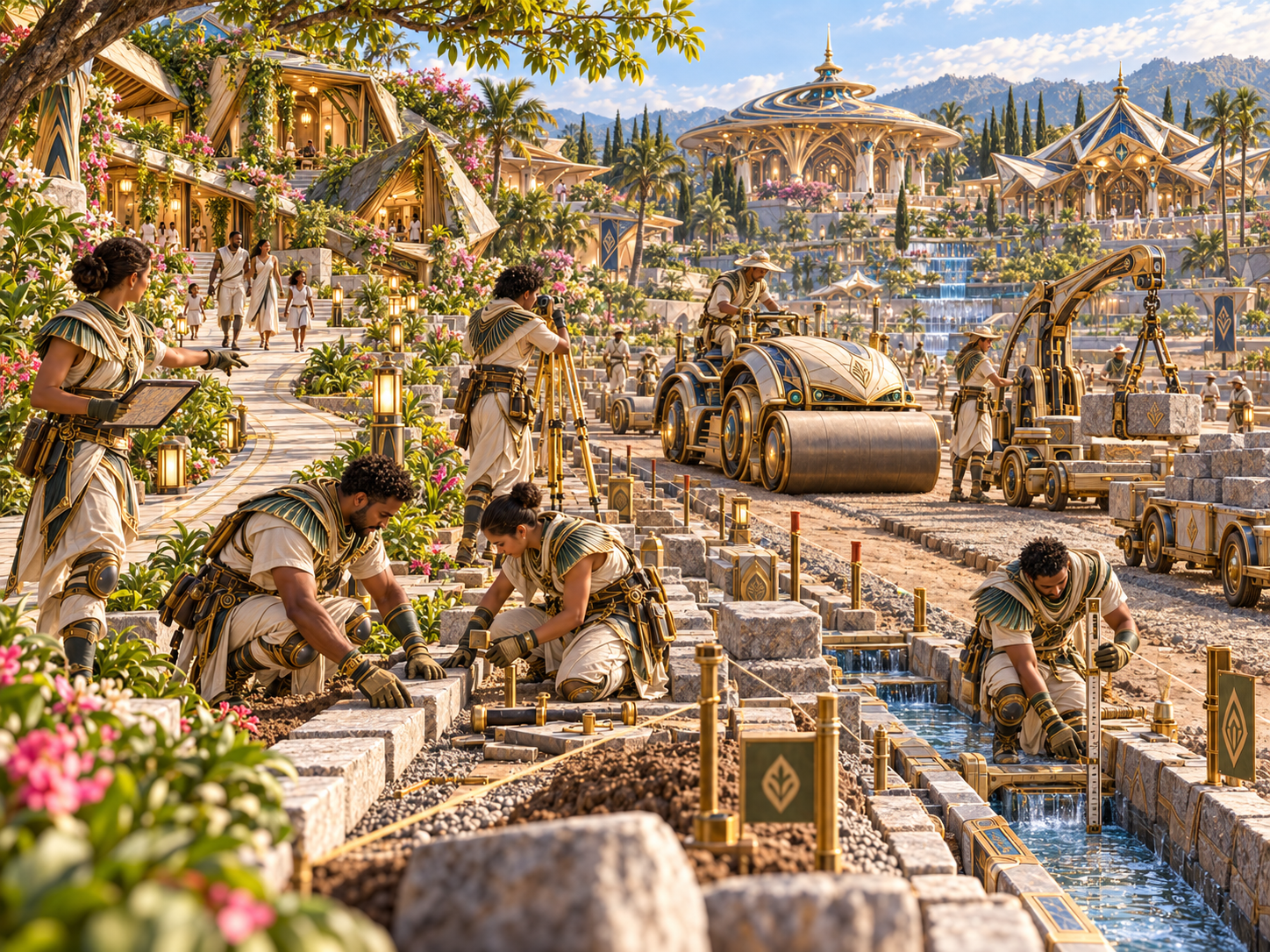
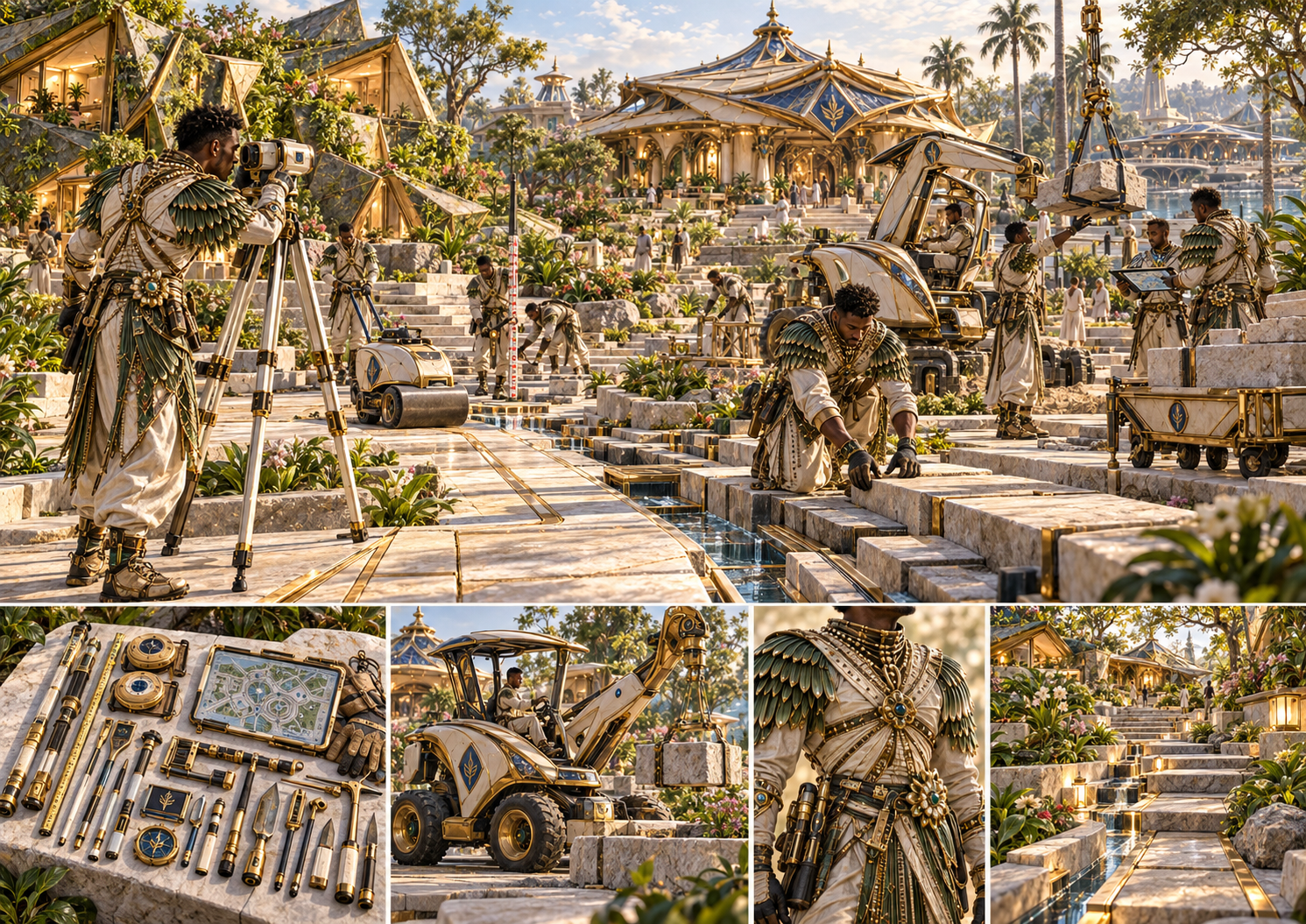
Route, Access, and Movement Formation Stewards lay out the movement body of the first nucleus before the place becomes crowded with buildings, materials, people, tools, carts, machines, and daily use.
Their work gives the first nucleus order, ease, safety, serviceability, and room to grow.
The Formation Standard
Route formation begins before the nucleus fills in.
These stewards ask practical questions early.
Where do families enter? Where do materials enter? Where do machines enter? Where do children move safely? Where does food arrive? Where does food return after use? Where do used dishes go? Where does clean service move? Where does organic matter move? Where do tools return? Where do carts pass? Where do machines turn? Where do emergency vehicles or emergency teams approach? Where can water systems be repaired? Where can energy systems be reached? Where will the next homes grow? Where can public life happen without crossing dirty, noisy, heavy, or dangerous routes?
A good route body is visible, useful, shaded where possible, drained, maintainable, expandable, and connected to all major systems.
Routes are infrastructure.
They are not decoration. They are not leftovers between buildings. They are not paths made only after people start wearing tracks into the ground.
They are one of the first structures of the nucleus.
1. First Access Stewards
First Access Stewards decide how the nucleus is entered from the outside.
This includes the first approach route, arrival point, material entry, machine entry, emergency entry, visitor receiving point, and delivery approach. The entrance should welcome family life while still organizing the heavier movement that supports the nucleus.
Families should be able to arrive safely. Materials should have a clear place to enter. Machines should have access without crossing child spaces. Emergency help should have a direct route. Service and delivery movement should be organized from the beginning.
The first access route also considers weather. Rain, mud, slope, drainage, shade, heat, dust, night movement, and vehicle weight all matter.
2. Main Spine Stewards
Main Spine Stewards form the primary movement line of the nucleus.
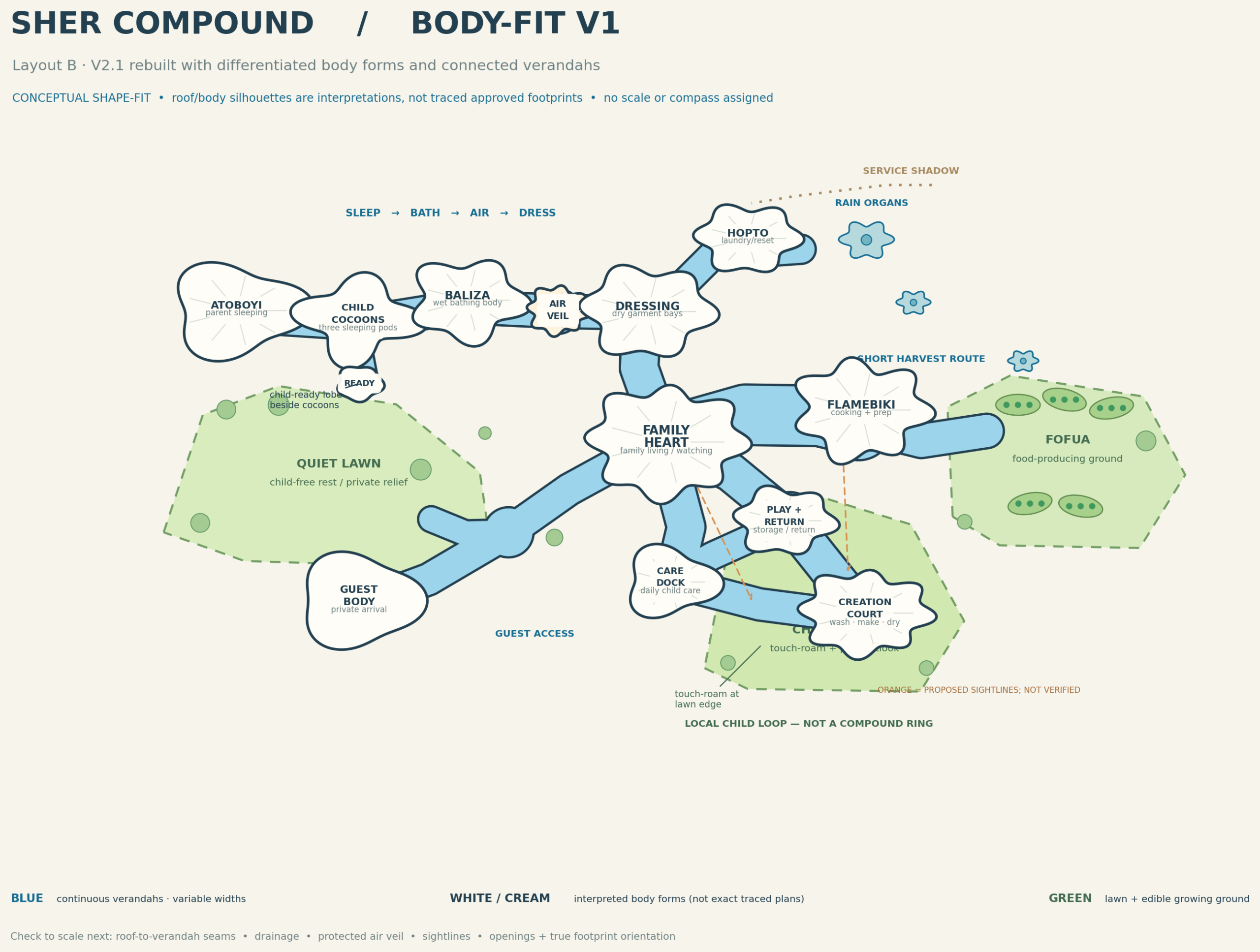
The main spine connects the major first systems: family housing, food body, water body, workshop, machine yard, Clean Return, care space, public rest areas, material staging, and future expansion zones.
It should be clear, legible, easy to follow, and sized according to its purpose. It may include separate lanes or related paths for walking, carts, service movement, and machines where needed.
The main spine helps people understand the place. A person should know how to move through the nucleus without guessing.
3. Family Walking Route Stewards
Family Walking Route Stewards make sure daily family movement is safe, shaded, pleasant, and direct.
Families need to move between homes, food spaces, care spaces, learning spaces, water points, rest areas, verandahs, play spaces, gardens, and public life with ease.
Family routes should consider children, mothers with babies, elders, people carrying small items, people walking barefoot or in light footwear, night movement, rainy movement, and tired bodies.
These routes should be wide enough where families naturally pause or walk together. They should have shade, drainage, seating or rest edges where needed, visibility, and protection from machine routes.
4. Child-Safe Movement Stewards
Child-Safe Movement Stewards protect children’s daily movement.
Children should be able to reach food, play, learning, bathing, and family spaces without crossing machine paths, workshop access, material delivery zones, dirty return routes, deep water access, tool areas, energy equipment, or construction staging.
This does not mean children are hidden away. It means their movement is understood and protected.
These stewards map where children will naturally go. They look at sightlines, crossings, corners, blind spots, machine turning zones, water edges, work areas, tool access, carts, and public gathering places.
They help create safe crossings, soft boundaries, visible edges, shaded child routes, guided paths, and route rules that adults can actually maintain.
5. Service Shadow Route Stewards
Service Shadow Route Stewards form the movement routes used to keep places ready.
Service Shadow needs to move food supports, clean items, restock supplies, care supplies, cloth, tools, carts, water supports, public-life supports, and daily readiness items.
Good Service Shadow routes make support work lighter. Carts can pass. Restock arrives on time. Public spaces stay ready. Clean items reach their shelves. Used items move to the right return points. Support workers are not forced through family gathering spaces with loads that should have their own route.
Service routes should connect storage, clean-side shelves, Sabennerie support, Clean Return, care spaces, public rest courts, family areas, and workshop support.
6. Clean and Used Route Stewards
Clean and Used Route Stewards protect separation.
Used dishes, used cloth, organic matter, waste, muddy tools, dirty carts, broken items, and repair items need clear routes. Clean items, food supports, care supplies, restock items, and prepared materials need clean routes.
Clean movement and used movement need different logic.
Used things need return routes. Clean things need restock routes. Organic matter needs biological return routes. Broken items need repair intake routes. Food vessels need dish return routes. Cloth needs wash and dry routes. Tools need return routes.
These stewards work closely with Clean Return, Service Shadow, Food Body, Workshop, Sanitation, and Pacorips.
7. Food Movement Stewards
Food Movement Stewards make sure food can enter, store, prepare, serve, reach people, and return through Clean Return without confusion.
Food movement begins with receiving. Food may come from land recovery, foodway production, storage, external supply, Wokumbakia routes, Sabennerie preparation, or shared abundance. It needs routes into the food body that work smoothly.
Prepared food also moves. It may go to workers, children, family seating, public eating areas, care spaces, or rest points.
After eating, vessels, trays, cloths, and organics move back. That return should be easy so the food body stays clear and ready.
Food routes are not only kitchen routes. They are nourishment routes.
8. Water and Repair Access Stewards
Water and Repair Access Stewards make sure water systems can be reached, inspected, repaired, cleaned, and expanded.
Water infrastructure should be serviceable from the beginning. Pumps, cisterns, valves, filters, drains, greywater routes, treatment components, pressure points, bathing water routes, irrigation points, and emergency water access all need access.
A water system becomes stronger when it can be reached easily by the right stewards.
These stewards plan access for Water Stewards, Workshop Stewards, Energy Stewards, Clean Return, Sanitation, and emergency repair. They make sure carts, tools, replacement parts, inspection equipment, and trained workers can get to the needed places.
9. Energy and Utility Access Stewards
Energy and Utility Access Stewards make sure energy systems, communication routes, lighting, charging points, batteries, panels, cables, machine charging areas, and utility corridors can be reached safely.
Energy equipment needs inspection. Batteries need monitoring. Cables need protection. Charging routes need order. Lighting needs repair. Communication lines need access. Machine power points need clear placement.
These routes should be safe and controlled. They should not invite untrained access, but trained stewards must be able to reach equipment quickly when something needs attention.
10. Material Delivery and Build Route Stewards
Material Delivery and Build Route Stewards keep construction movement orderly while family life begins.
A forming nucleus will have materials moving constantly: timber, stone, panels, pipes, fittings, tools, machines, fasteners, food equipment, water components, energy components, workshop equipment, Clean Return fixtures, and family-house materials.
Good build routes let these materials arrive, unload, stage, and move to work areas without overwhelming family spaces.
These stewards plan delivery paths, unloading zones, temporary staging, protected storage, machine turning, covered material areas, and build-phase routes.
11. Machine Movement Stewards
Machine Movement Stewards plan how machines move through the nucleus.
Machines need entry, turning, parking, charging or fueling, service access, attachment storage, work paths, and exit routes. Their movement should support the build without disturbing the family heart of the nucleus.
Machine routes account for weight, turning radius, visibility, noise, dust, slope, weather, drainage, stopping places, and emergency control.
These stewards work with the Machinery Yard, Build Corps, Land Recovery, Energy, Water, Workshop, and Service Shadow.
12. Cart and Small Carrier Route Stewards
Cart and Small Carrier Route Stewards plan the routes for hand carts, food carts, water carts, cloth carts, tool carts, return trolleys, baby-care supply carts, public restock carts, repair carts, and small carriers.
Cart routes must be smooth enough, wide enough, drained enough, and direct enough. A good cart route lets the cart carry the burden instead of the body.
These stewards look at route surfaces, turning spaces, resting edges, passing points, storage points, clean/used separation, and cart return points.
Carts should reduce burden.
13. Emergency Access Stewards
Emergency Access Stewards make sure urgent help can move.
A first nucleus needs routes for medical response, fire response, storm movement, urgent water repair, urgent energy repair, child emergency, birth support, evacuation, animal emergency where relevant, and machine accident response.
Emergency access should be known before urgent need. People should know where to go, where not to block, where emergency carts or vehicles can pass, where first-aid supplies are, where care spaces are, and how to reach the outside if needed.
These routes should stay clear. They should not become casual storage.
14. Expansion Route Stewards
Expansion Route Stewards protect the future.
A first nucleus is not the final settlement. It must be able to grow well. Future homes, future gardens, future Sabenneries, future workshops, future learning spaces, future care spaces, future water systems, future energy routes, future Clean Return houses, future public spaces, and future family compounds all need room.
Good early routes make expansion easier. They leave clear corridors, growth edges, future service routes, utility corridors, material access, family walking extensions, and machine access for future phases.
15. Route Surface, Shade, and Drainage Stewards
Route Surface, Shade, and Drainage Stewards make sure routes can actually be used.
A route is not only a line on a plan. It has a surface. It has edges. It has water behavior. It has shade or heat. It has night visibility. It has maintenance needs.
These stewards consider stone, compacted earth, planted edges, raised paths, boardwalks where needed, drainage channels, slope, sand, mud, root protection, dust, rainy-season use, wheelchair and stroller movement, cart wheels, machine weight, and child safety.
They also work with planting teams so shade develops early. A shaded, drained, well-surfaced route gives daily comfort and keeps movement reliable through weather.
16. Route Pacorips Stewards
Route Pacorips Stewards keep the movement body visible and correctable.
They map routes, blockages, pressure points, dirty crossings, clean-side risks, cart strain, machine conflicts, child crossing risks, material delays, emergency obstructions, drainage problems, and future expansion needs.
They record where people actually walk, where carts get stuck, where machines struggle to turn, where food return is delayed, where Service Shadow carries too far, where children cross badly, where Clean Return routes need adjustment, and where routes need widening, shading, resurfacing, or rerouting.
Pacorips helps the route body learn.
The First Nucleus Route Threshold
Before the nucleus fills in, Route, Access, and Movement Formation Stewards should be able to answer clearly:
Where is the main entrance? Where do families arrive? Where do machines enter? Where do materials unload? Where does food move? Where do clean items move? Where do used items return? Where does organic matter go? Where do children move safely? Where does Service Shadow pass with carts? Where can water systems be repaired? Where can energy systems be reached? Where do machines park and turn? Where are emergency routes? Where are future expansion corridors? Where will shade grow? Where does rainwater cross or collect? Where are routes too narrow? Where should routes never mix?
A nucleus is stronger when daily movement is clear before the place grows.
Relationship to Nucleus Formation Stewards
Nucleus Formation Stewards ask whether the first settlement is capable enough to receive families and keep building.
Route, Access, and Movement Formation Stewards answer one of the earliest questions: can people, supplies, tools, machines, food, water support, clean items, used items, emergency help, and future growth move properly through the nucleus?
A nucleus is more ready when its movement body is clear.
Routes must be part of the first formation judgment.
Relationship to Water, Sanitation, and Clean Return
Water, sanitation, and Clean Return depend on movement.
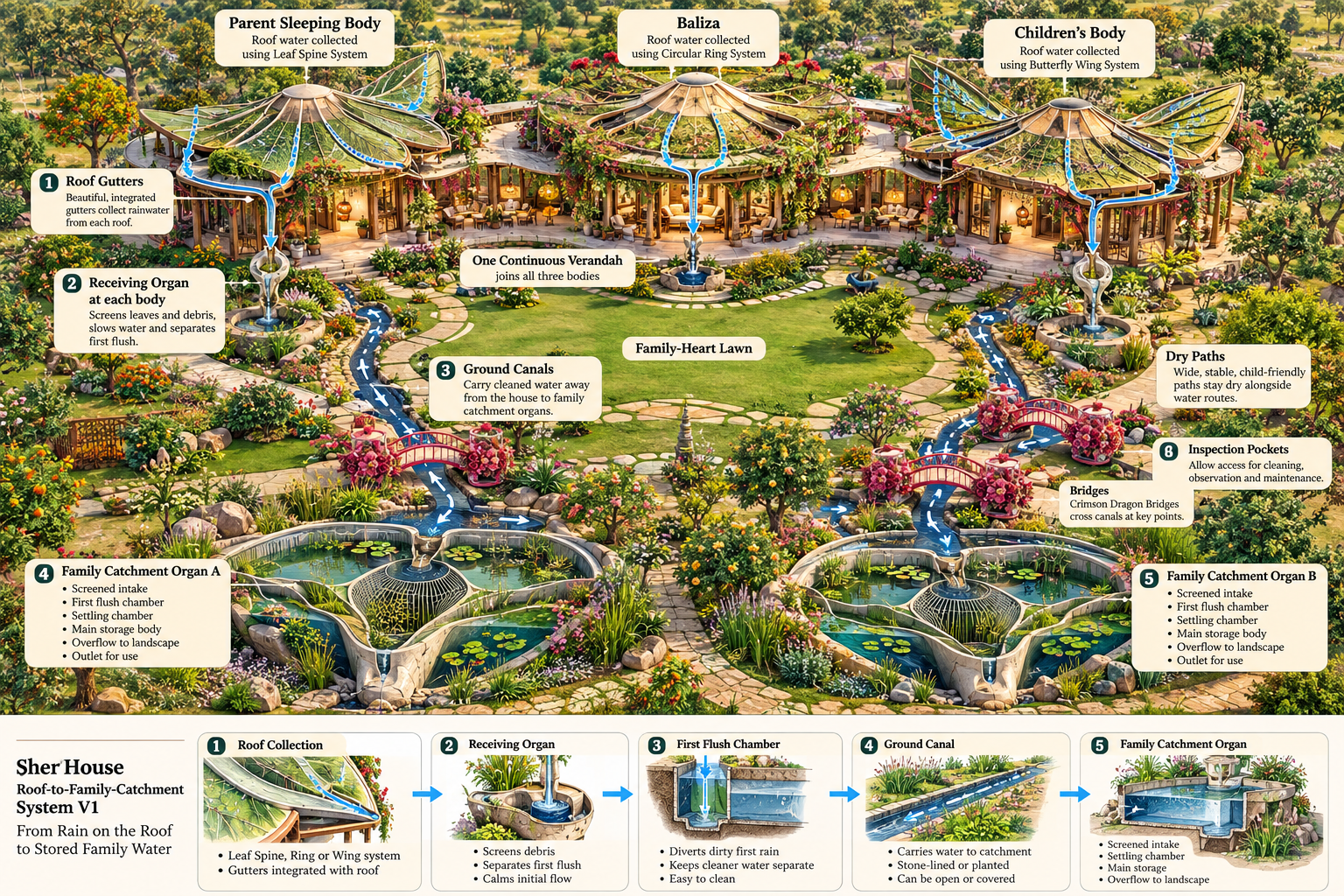
Water systems need access for repair. Greywater needs routes. Drainage needs paths. Toilets need cleaning support. Bathing systems need water movement. Used dishes need return routes. Cloth needs wash and dry routes. Organic matter needs biological return. Clean items need clean-side restock.
Clean and used separation starts with route formation.
When routes are clear, cleanliness becomes easier to maintain.
Relationship to Energy and Machine Power
Energy and machine power also depend on routes.
Power systems need service access. Batteries need safe approach. Charging stations need movement order. Machines need paths that protect families. Fueling or charging areas need separation. Lighting should follow real paths. Cables and conduits need protected corridors.
Machine routes should be planned early so machines can serve the nucleus without disturbing the places families depend on.
Relationship to Food Body and First Sabennerie
Food systems are movement systems.
Food arrives, stores, washes, cooks, serves, reaches people, returns through Clean Return, and sends organics onward. Every one of those steps needs routes.
A Sabennerie works better when food delivery, family seating, worker nourishment, dish return, clean preparation, and organic return each have clear movement.
Food abundance moves better through a well-routed nucleus.
Relationship to Workshop, Fabrication, Repair, and Machinery Yard
Workshop and fabrication work require strong routes.
Materials must enter. Machines must move. Parts must go out. Broken items must come in. Tools must return. Mobile repair carts must reach pumps, food systems, Clean Return, family homes, machine yards, and build sites.
The workshop is more useful when it is easy to reach.
Good routes turn workshop capacity into practical help across the whole nucleus.
Relationship to Service Shadow
Service Shadow depends on good routes every day.
Restock, cleaning support, care supplies, food support, public readiness, cart movement, return pickup, clean-side shelves, and relief work all move through routes.
Good routes make Service Shadow lighter, faster, and calmer. The body carries less. Carts move better. Support arrives sooner. The place stays ready with less strain.
Relationship to Land Recovery
Land recovery begins around and beyond the nucleus.
Workers need routes to planting areas, water points, nursery grounds, compost routes, forage areas, shade-building areas, foodway paths, tool return, cart paths, and harvest return. The land also needs protection from careless machine movement and compaction.
Routes should help land recovery.
A good route plan lets people reach the land while allowing soil, water, shade, food, and plant life to recover.
Related Civilization Reading
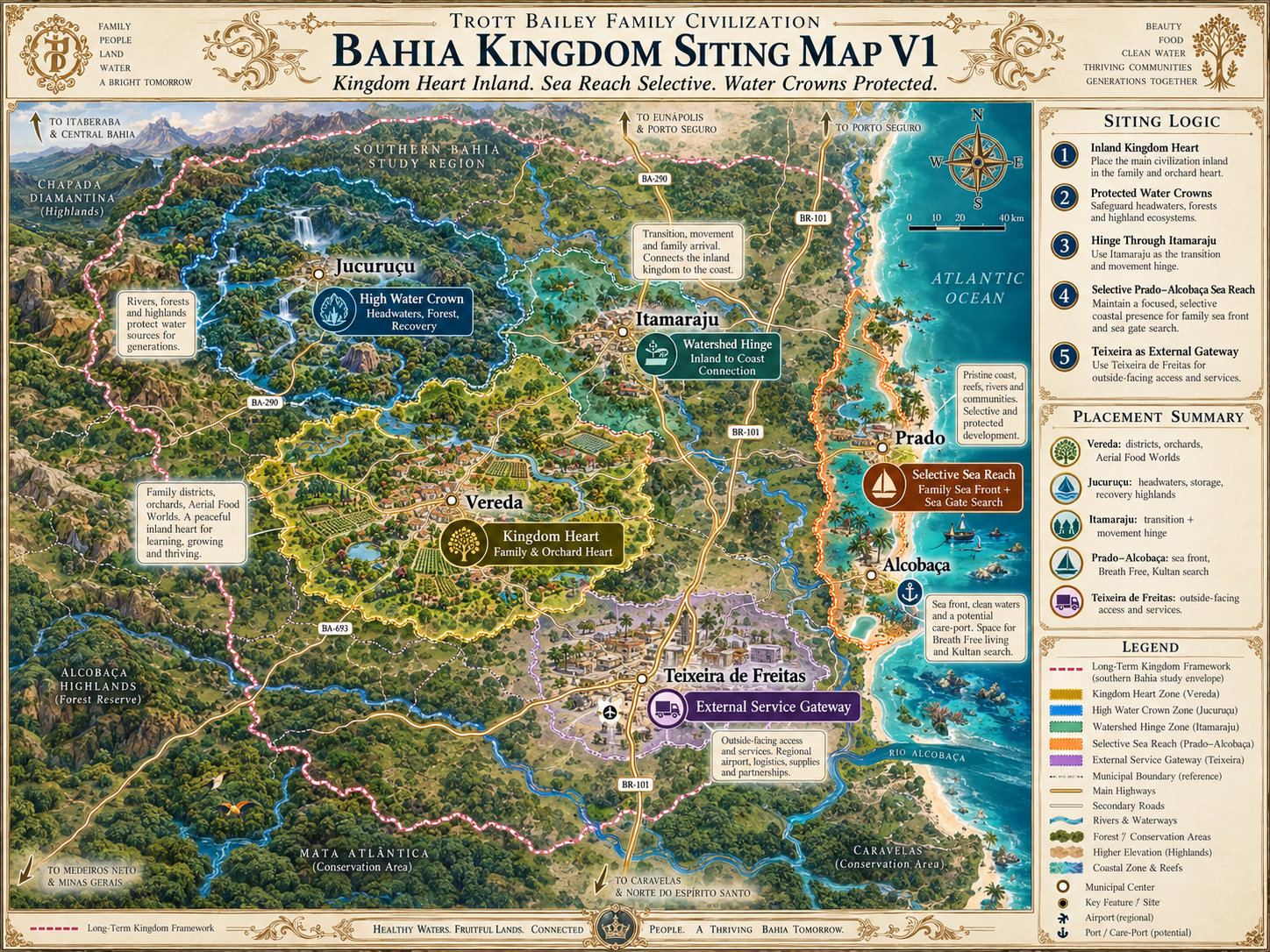
Route formation connects directly to the wider body of Trott Bailey Family Civilization work. These related pages help readers see the larger system behind movement, nuclei, Clean Return, Service Shadow, repair, physical formation, and visual authorship.
The Steward Standard
Route, Access, and Movement Formation Stewards must think early, practically, and spatially.
They must notice how people actually move. They must understand children, families, elders, carts, machines, food, used items, clean items, water repair, energy access, emergency movement, and future growth.
They should create routes that make life easier: family routes, service routes, machine routes, clean routes, used routes, emergency routes, repair routes, and future expansion routes. They should protect children, keep clean and used movement clear, make pumps and utilities reachable, give materials proper access, and keep temporary build movement from becoming permanent disorder.
Their work is to make the first nucleus easy to live in, easy to serve, easy to repair, easy to build, and easy to grow.
This Is Shubaka
Route formation is Shubaka because movement affects everyone.
It helps mothers avoid carrying too far. It helps children move safely. It helps Service Shadow work with less strain. It helps Clean Return stay clear. It helps food systems move smoothly. It helps water systems stay reachable. It helps machines work without blocking family life. It helps builders avoid material chaos. It helps the future grow from a good foundation.
Good routes save bodies, time, attention, and peace.
Routes are one of the first infrastructure layers of the nucleus.
They should be formed before buildings, machines, materials, food movement, Clean Return, water repair, and family life harden into poor patterns.
Route, Access, and Movement Formation Stewards make sure the first nucleus can be entered, crossed, supplied, serviced, repaired, protected, and expanded with order and ease.