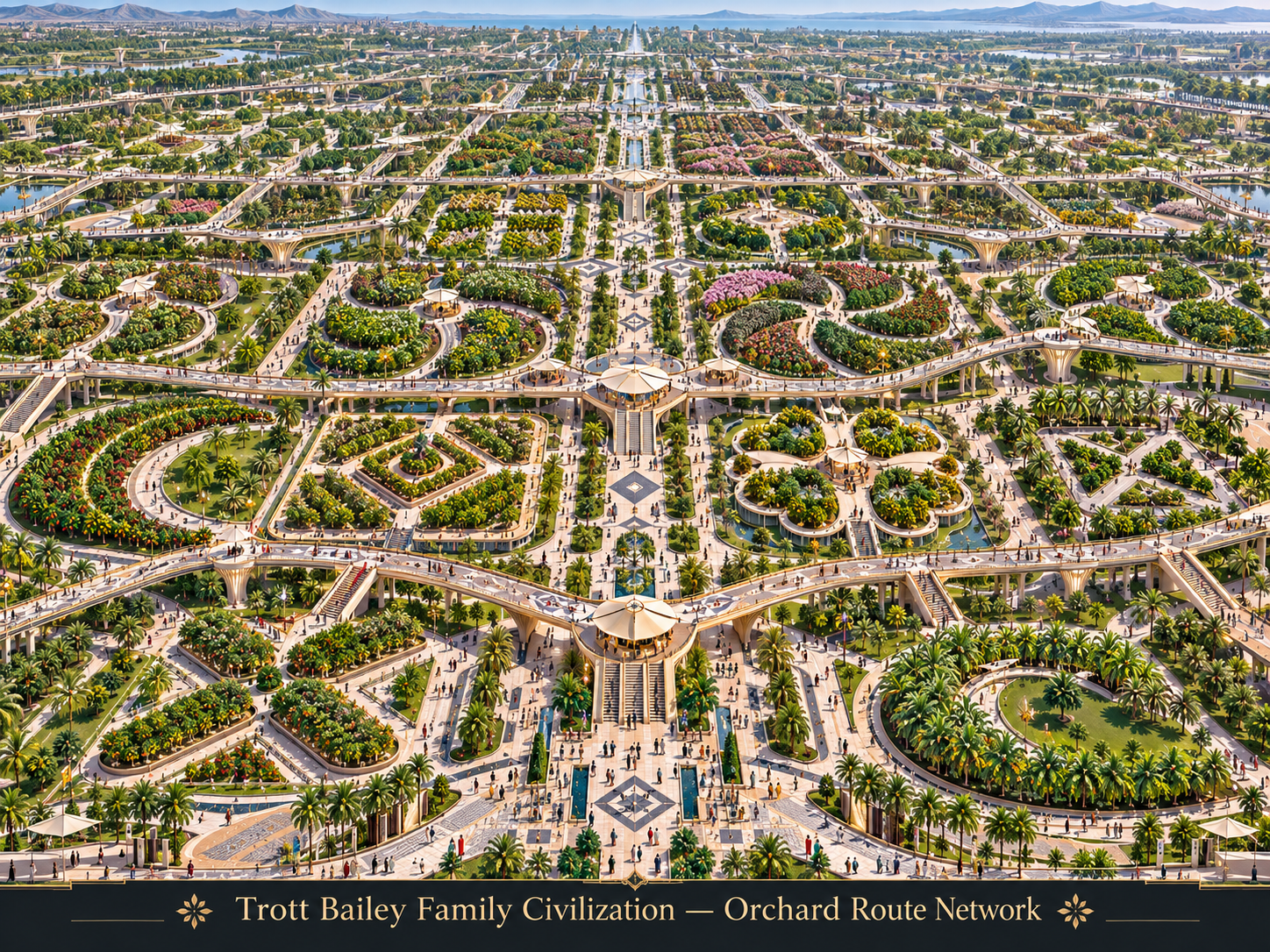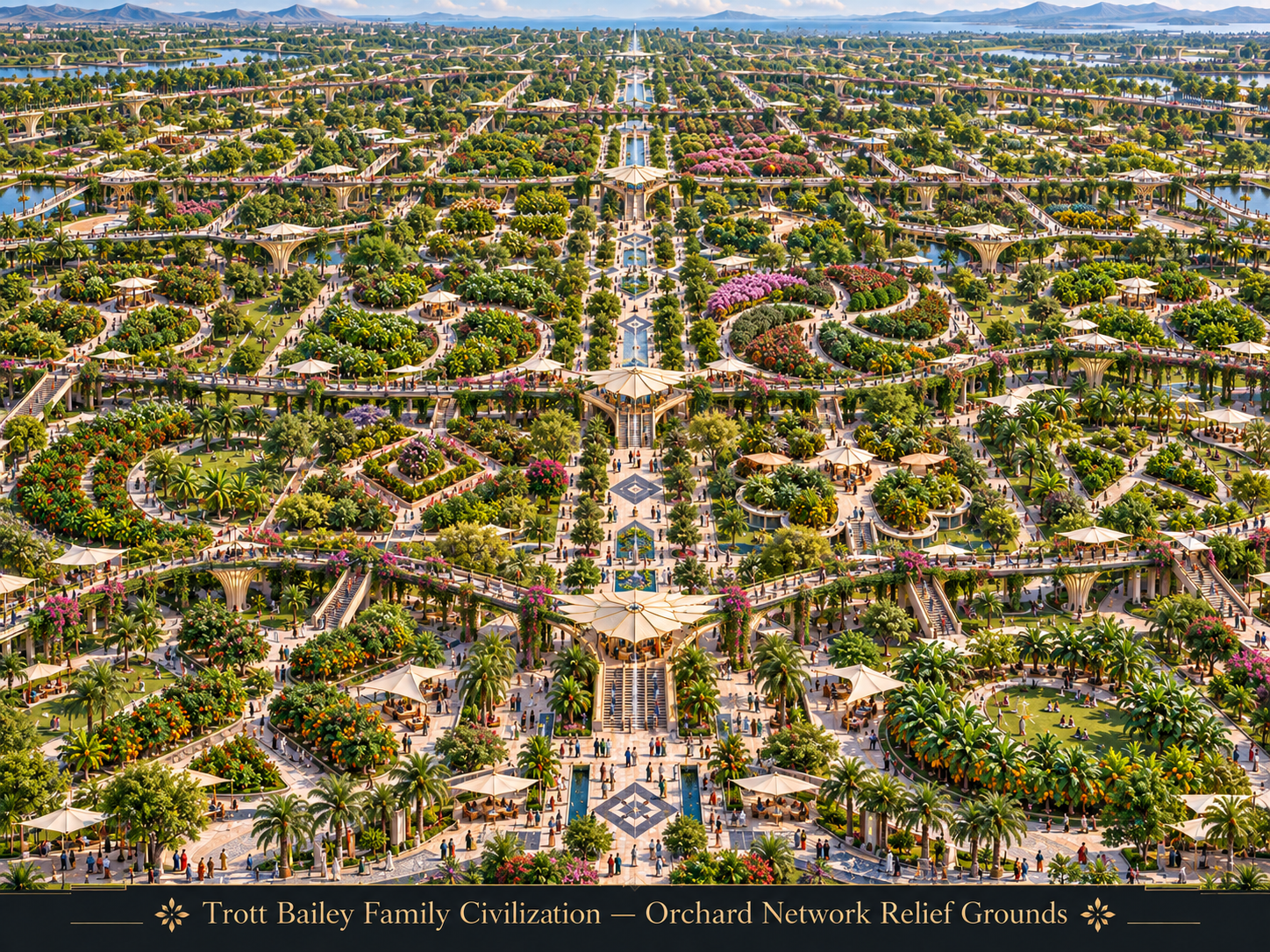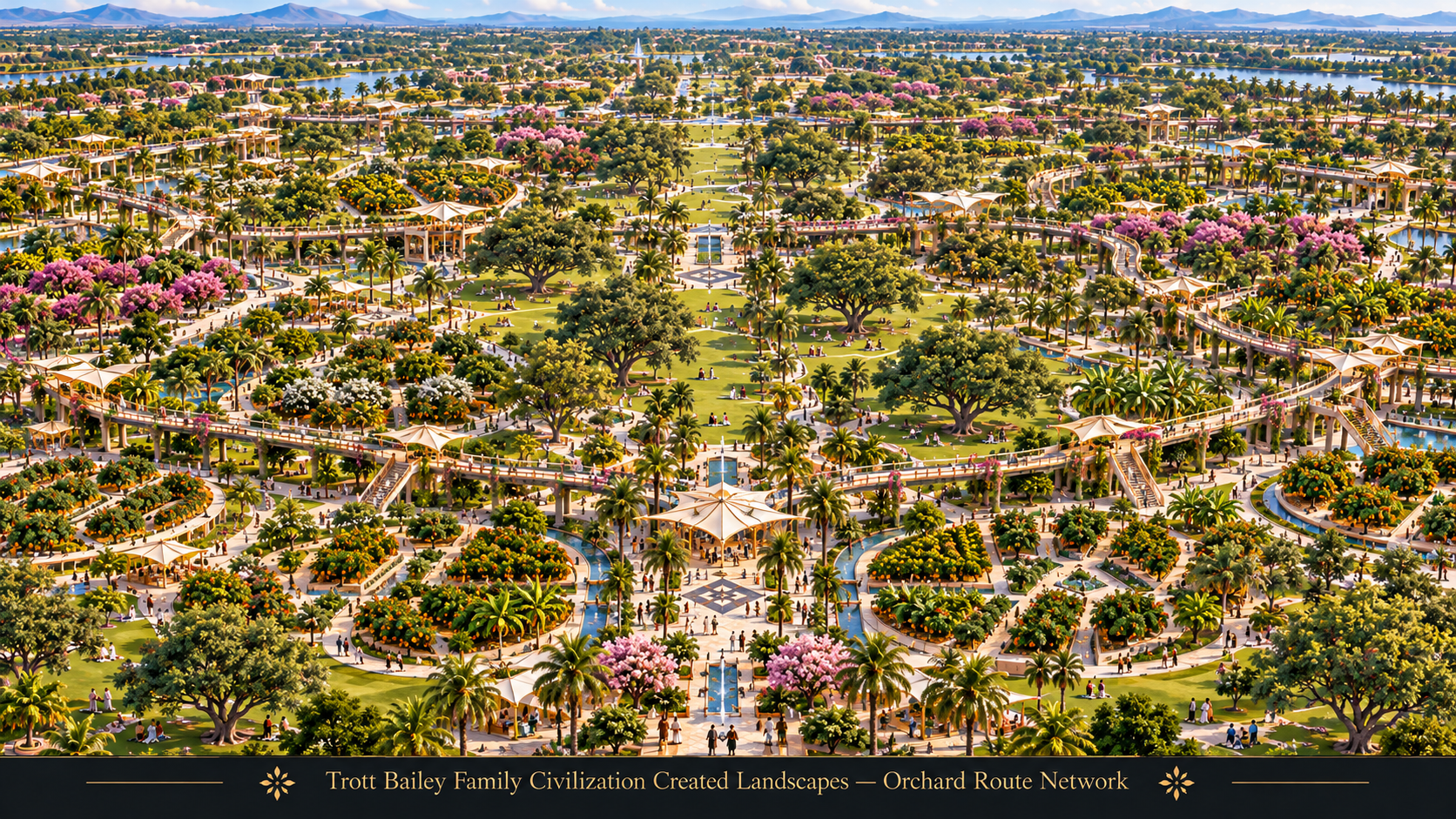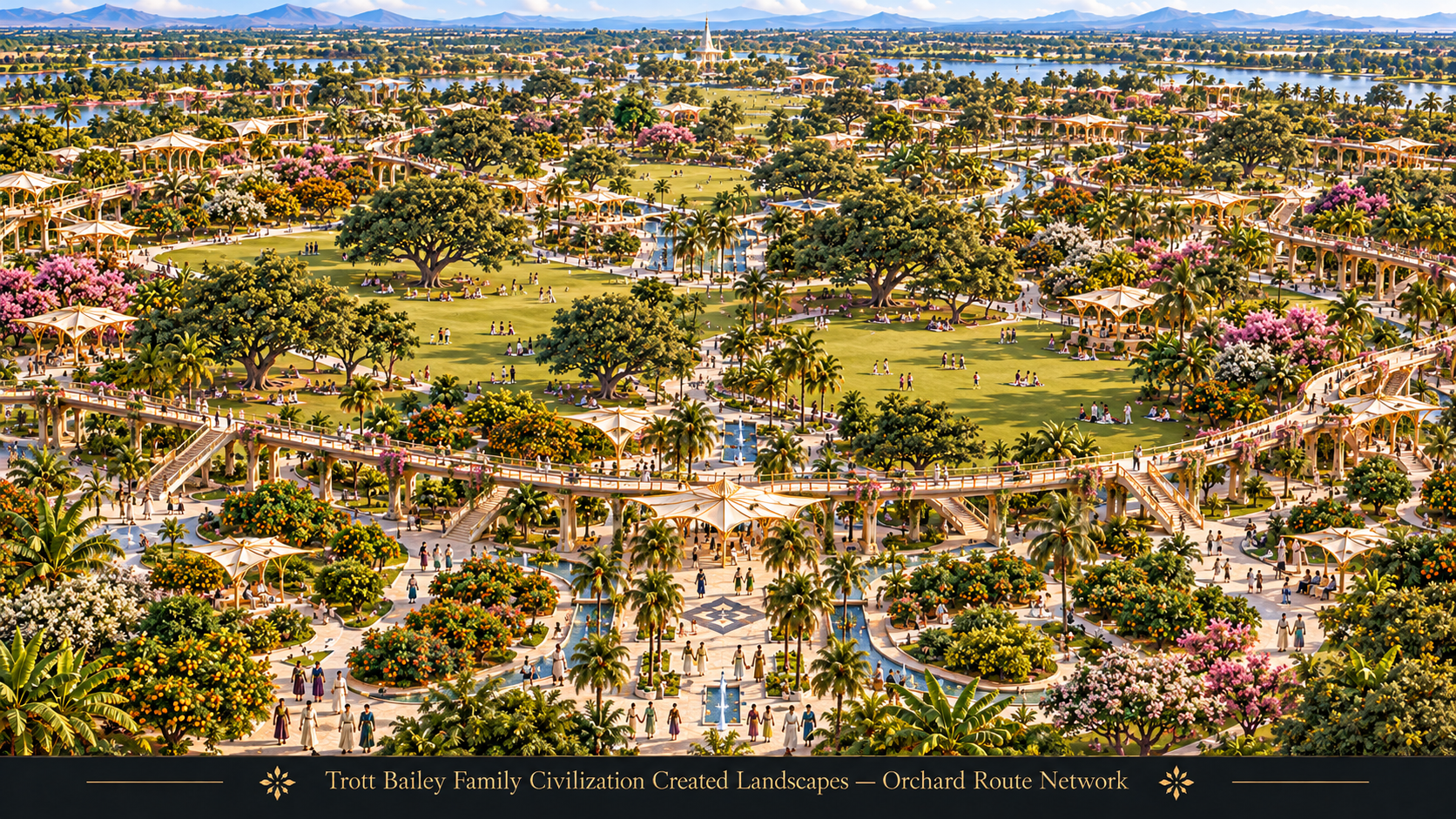
water Your orchards with Life
Water Your Orchards With Life
Why we are bringing irrigation back into the open, using moving water to cool the living landscape, build soil, create habitat and return water to the ground.
Water should not spend its whole useful life hidden inside a pipe.
We understand why modern irrigation loves pipes. Pipes move water directly. They reduce evaporation. They make it easier to measure what entered at one end and what arrived at the other.
But we are asking a different question.
What if the journey of the water is useful too?
What if water can nourish a mango tree and, on the way there, cool hot ground, moisten leaf litter, attract a bird, give an insect somewhere to drink, help a new plant establish, soften decomposing organic matter and enter the soil along an entire living route?
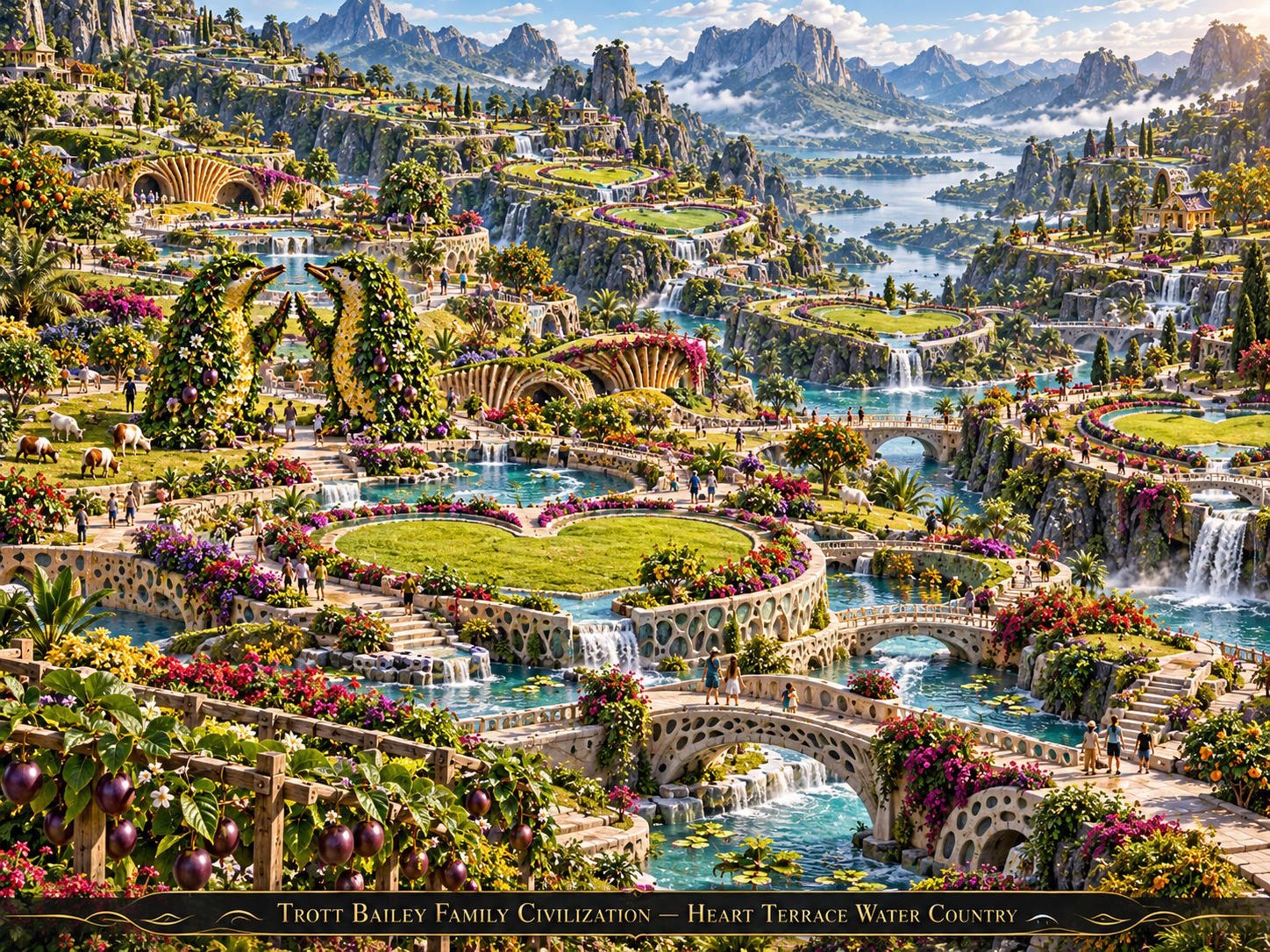
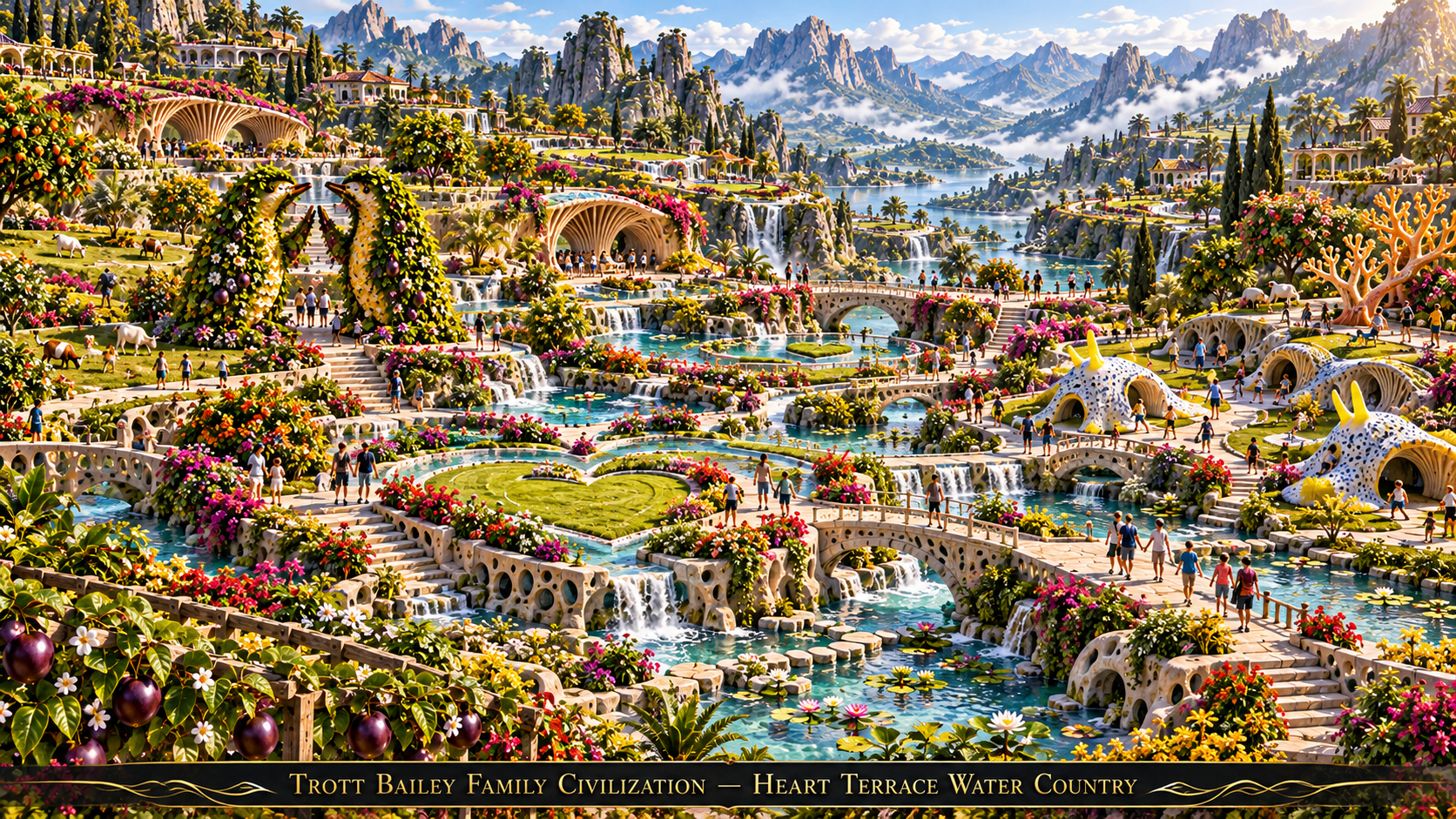
Water your orchards with life. Water your flowers with life. Let water travel where the living world can meet it.
This is the beginning of what we call Water With Life — Open Living Water.
Do not count every exposed drop as a loss
People frequently dissuade open irrigation because exposed water evaporates.
That calculation makes sense when the only job assigned to water is to arrive at a crop root.
We are assigning water more jobs.
Evaporation consumes heat. Moving exposed water can therefore contribute to cooling immediately around the wet ground and vegetation. It also changes local humidity and creates a different microclimate around the water route.
We are not saying that a narrow stream magically cools an entire orchard. Sun, wind, humidity, water volume, shade and landscape shape all matter.
We are saying something simpler:
A drop that evaporates has not necessarily done nothing.
Make the irrigation route part of the habitat
A buried pipe can deliver water extremely well.
It cannot become a stream edge.
An open shallow water route can be encountered by birds, insects, roots and surrounding plants.
Stones can interrupt the current and make slow wet pockets. Leaves can settle at the edges. Groundcovers can grow toward the moisture. Insects can reach the water. Birds can visit. New plants can establish where the ground remains wetter.
That means part of the irrigation system becomes habitat infrastructure.
Store water in the soil
Our long-term objective is not simply to keep more water inside containers.
We want the land itself to become better at holding water.
This matters enormously in Prado because the surface ground where we are growing is extremely sandy.
Water can enter sandy ground rapidly, but sandy soil generally stores less plant-available water than soil containing more fine particles and organic material.
We do not look at that sand and say the land has failed.
We ask what the land can become.
Do not only store water in tanks. Store water in the soil. Then build better soil so the ground becomes a larger reservoir over time.
We have already watched life make better soil
Our Prado archive began teaching us this before we had a name for the water system.
At our first major growing site, we started paying close attention to the ground beneath long-established trees.
The open ground around them was visibly sandy.
Directly beneath the mature trees, it was different.
We found thick accumulated leaves and decomposing plant material. Beneath that material was darker ground. Bromeliads and other plants had established around the trees. The growing environment underneath the canopy looked and felt different from the open sand nearby.
We began calling these places living islands.
Those trees had been standing there for years before our family arrived. We did not build the organic layer beneath them.
Life had been building it.
Leaves fell repeatedly. Roots occupied the ground. Shade reduced direct exposure. Organic material remained long enough to decay. Insects and other organisms worked through it. More plants established around the tree.
Use life to manufacture the conditions for more life.
Open Living Water extends that observation.
If we repeatedly bring water through an orchard corridor while continuing to add leaves, mulch, roots, safe woody material and other organic matter, then water is no longer simply feeding today’s plant.
It is helping us build tomorrow’s soil.
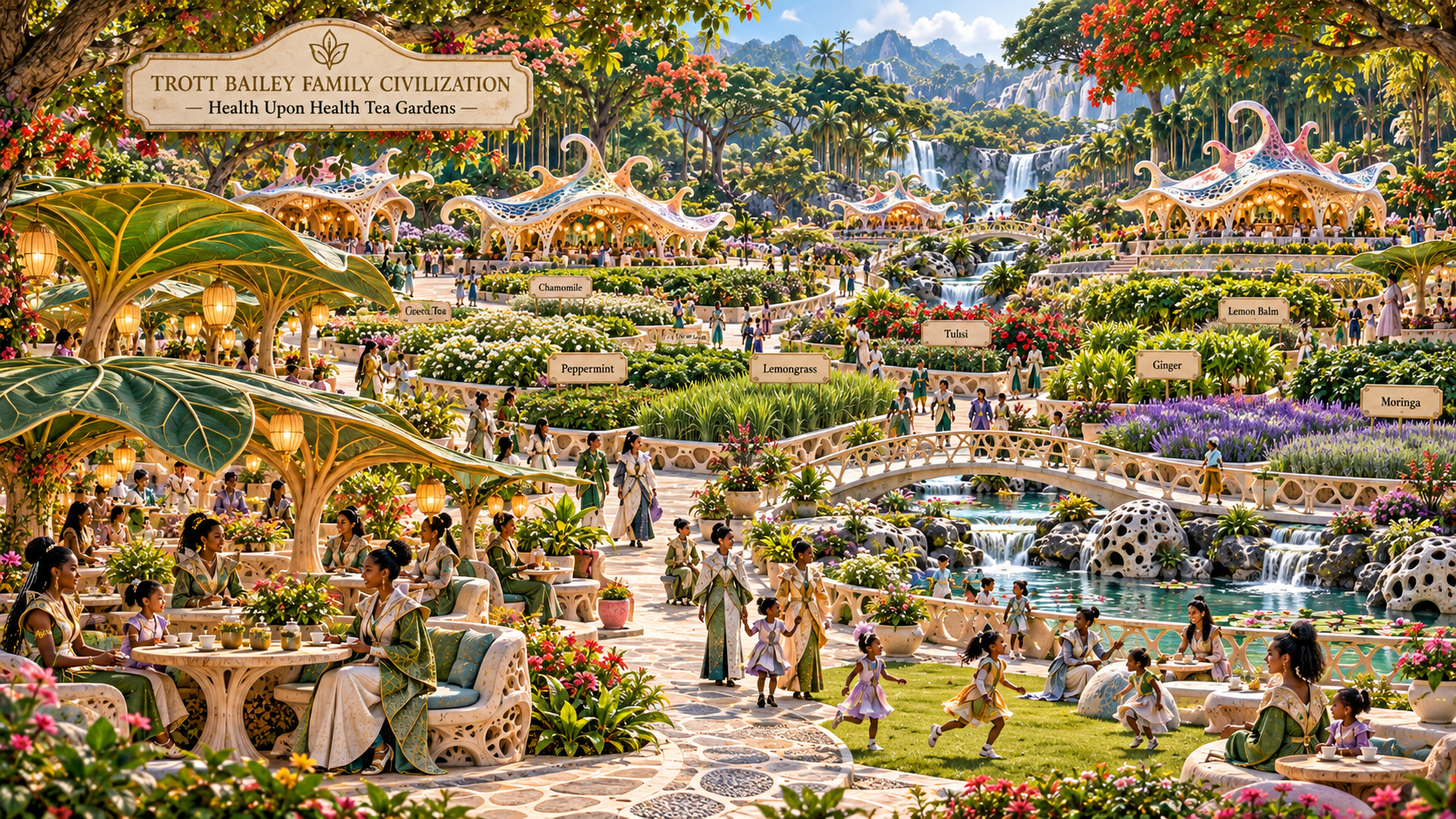
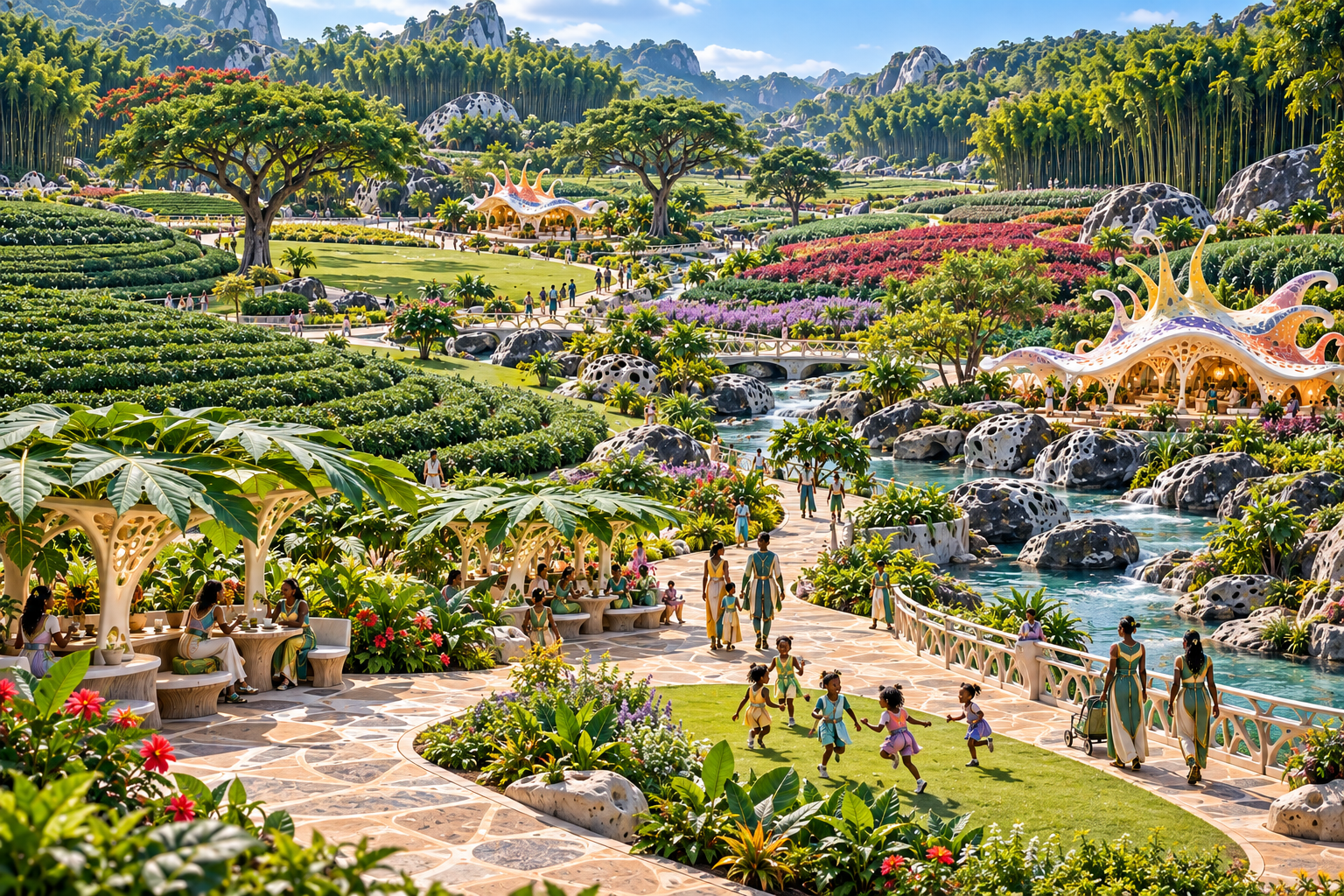
Canopy, flowers, birds, insects, moving air, shade, humidity and the visible stream.
Fallen leaves, mulch, stones, stems, fungi, roots and decomposing organic material meet the water.
Water enters around roots while organic matter and living organisms gradually improve the soil body.
Water that is not retained or used by plants continues downward through the soil profile.
A stream does not have to begin as expensive infrastructure
At our present Prado site, our field observation is that groundwater is accessible at roughly five metres.
That creates a practical opportunity.
A modest solar water pump can lift groundwater during the day and release part of it into an experimental orchard stream network.
The first version does not need to pretend it is a finished civilization system.
We can learn cheaply.
Pump groundwater during useful daylight hours instead of depending immediately on a large constant-pressure irrigation installation.
Release part of the pumped water into shallow orchard streams and runnels rather than keeping the entire journey enclosed.
Large rubbish-bag or plastic material can serve as a very low-cost experimental liner. Some sections remain intact to transport water. Other sections are perforated where we deliberately want water to enter the ground.
Hole size, number and placement can be changed so different parts of the stream release different amounts of water beside selected plants and root territories.
Stones can slow moving water, protect loose sand from erosion, interrupt the current, trap some suspended material and create wet surfaces where biological films can establish.
Leaves, chopped plant material, mulch and other useful safe biomass can remain around the wetted corridor rather than constantly returning the ground to exposed bare sand.
The cheap prototype is not the final material language. It is a way to discover the right water geometry before we build the durable version.
Thin rubbish-bag plastic will eventually degrade under sunlight, puncture and movement. If a particular route proves successful, that geometry can later be translated into a more durable system using stone, shaped earth, clay, planted channels, long-life membrane or another inert material appropriate to the place.
The important experiment is not the bag.
The important experiment is learning where water should travel, where it should slow, where it should seep and where life responds.
Let the stream come home — but not through the well opening
Protect the extraction point
The well is a protected pathway into the groundwater.
For that reason, the actual borehole should not become the final drain for surface water.
The wellhead should remain capped, clean and protected, and the immediate ground around it should move surface runoff away from the casing.
Otherwise the borehole can become a shortcut carrying animal waste, fertilizers, pathogens or other surface contaminants toward the groundwater.
Create a Water Return Garden
The stream can still finish near the place where its journey began.
Instead of draining against the borehole, let the final water enter a separate stony and rooted infiltration garden.
Here the current slows. Sediment can settle. Stones spread the water. Plant roots occupy the wet ground. Organic matter continues to build.
The remaining water enters the soil through a living landscape rather than through the well casing.
Visually, the stream has returned home. Hydrologically, the well remains protected.
Stone and gravel are useful, but we do not call them complete purification.
They can slow water, trap some physical material and create surfaces for biological activity. Soil, roots and microorganisms can further retain or transform some substances as water moves through the ground.
None of this guarantees the removal of every pathogen, chemical or dissolved contaminant.
Water intended for drinking remains a separate protected water system.
Do not merely circulate water. Use its circulation to manufacture better land.
Well
Pump
Stream
Seepage
Building
Garden
Infiltration
This is not a closed loop in the laboratory sense.
We are not claiming that the exact molecules pumped from a particular well will travel through our orchard and return to that same well.
Groundwater moves through a larger landscape. Plants take up water. Some water evaporates. Some remains temporarily inside the soil. Some continues deeper underground.
The loop is a landscape discipline.
Lift water carefully. Protect it where it needs protection. Expose it where exposure creates life. Let roots use it. Let the soil retain more of it. Let the stream help build the very ground through which future water will travel.
Pump water up.
Give it to life.
Let life change the ground.
Let the changed ground hold more water.
Then do it again.
This is Life upon Life becoming hydraulic
Our earlier Prado work changed when we stopped treating existing life as something that first had to be cleared away.
We started reading what the landscape was already doing.
We watched mature trees create richer biological zones around themselves.
We placed decomposing coconut trunks beneath new planting beds rather than treating the old wood as useless.
We worked with sandy soil, accumulated organic material, sawdust, pumped-well water and retained vegetation.
We moved from the idea of clearing life away before growing to the principle of building new life inside the work already being done by existing life.
Open Living Water is the same thought expressed through water.
The narrow irrigation question
How do we get water from the source to the crop with the smallest measurable loss?
The civilization question
How much life can the water build between the source and the plant — and how much better can that living landscape become at receiving the next water?
A pipe can carry water through a dead landscape. A living stream can help the landscape stop being dead.
This does not mean that every pipe disappears.
Long transfers, sanitary water, drinking water and places where contamination or excessive evaporation would be unacceptable still need protected conveyance.
Pipe where water needs protection or efficient transport. Open it where exposure can create life.
That is the species we want to develop in Prado.
Not decorative water placed beside an orchard.
Not irrigation hidden completely beneath it.
Water infrastructure that becomes part of the orchard’s ecology and part of the long work of manufacturing soil.
This article separates our Prado field observations from broader supporting research.
- Trott Bailey Family — AgriGames Foodway / Prado growing experiments
- Trott Bailey Family Prado Field Evidence Archive — Mature-tree living islands, accumulated organic material, sandy-soil observations and Life upon Life Land Recovery records.
- Food and Agriculture Organization of the United Nations — Soil water storage, sandy soils and organic matter
- USDA Agricultural Research Service — Organic matter and available water-holding capacity
- U.S. Environmental Protection Agency — Protect Your Home’s Water
- U.S. Environmental Protection Agency — Potential Well Water Contaminants and Their Impacts



 and then