
Why Trott Bailey Family Civilization Was Built.
Why the Kingdom Was Built
Money, debt, crushed talent, halted invention, cheapness, lost capability, family pressure, and the civilization that had to come next.
The Trott Bailey Family Kingdom was not built as a fantasy, slogan, or decoration. It was built as a response to repeated failures that ordinary families were forced to carry every day.
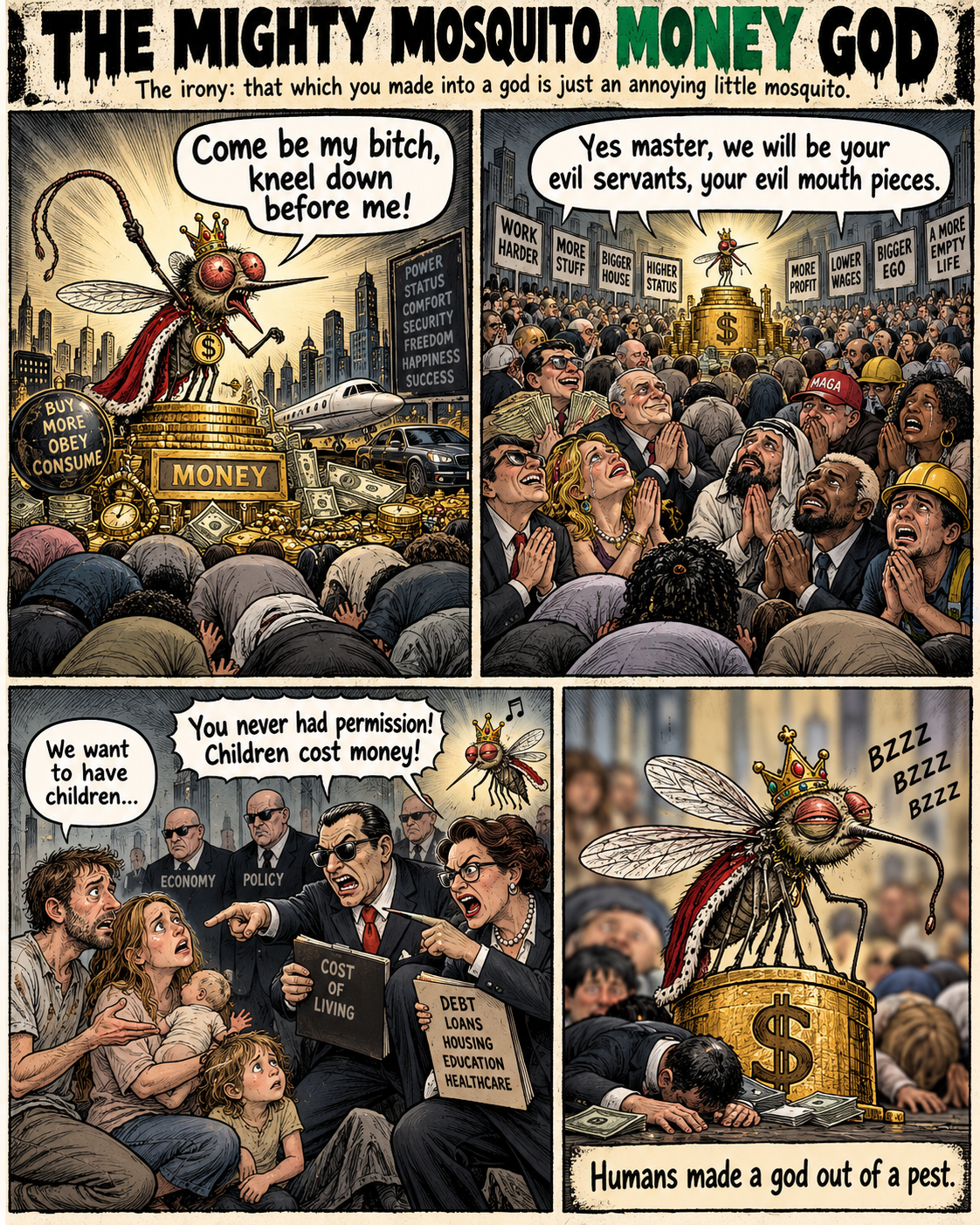
The biggest problem the kingdom solved was money. Not money as a simple tool of exchange, but money as the gatekeeper of life. In the old world, families needed money before they could access nearly every basic condition of a decent life: food, housing, rest, childcare, transport, healthcare, education, safety, beauty, land, public joy, recovery, elder care, and time with their own children.
The pressure did not stay in banks, bills, markets, jobs, or government systems. It entered homes. It entered marriages. It entered parenting. It entered the hearts of children. The kingdom was built because too much of the old world’s failure was being paid for inside the family.
The kingdom was built to stop money from being the main gatekeeper of family life.
01Money Became the Gatekeeper of Life
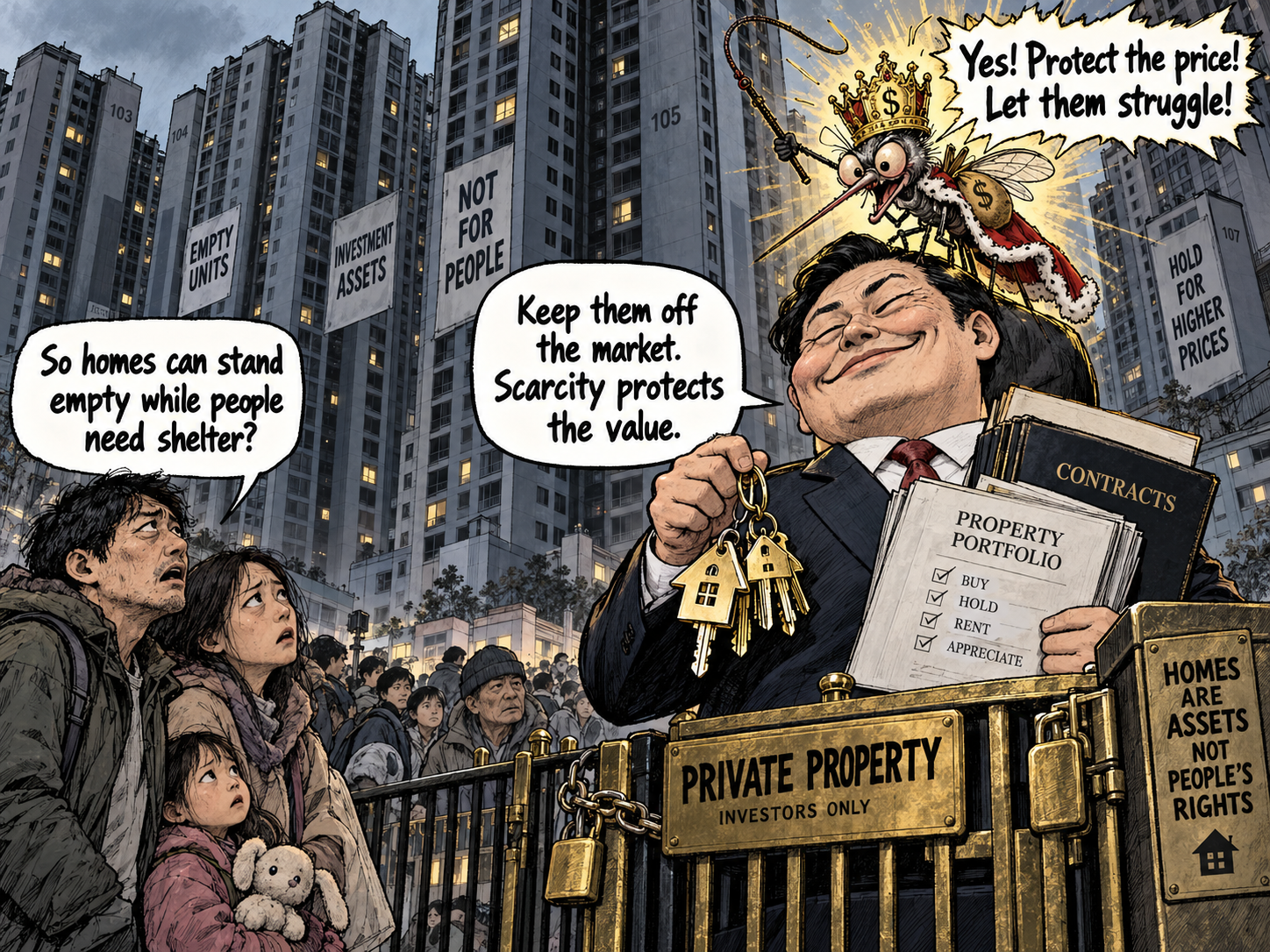
In the old world, money controlled access to almost everything a family needed to live with dignity. If a family had enough money, many doors opened. If they did not, almost everything became harder.
Food was not simply nourishment. It was a bill. Housing was not simply shelter. It was rent, mortgage, interest, deposits, repairs, and constant fear of losing stability. Childcare was not simply support for parents. It became an expensive service that many families could not afford. Education, healthcare, transport, tools, rest, recovery, and even safe public spaces were all tied to buying power.
This meant that family life became one long financial fight. Parents were not only raising children. They were fighting bills. They were fighting rent. They were fighting food prices. They were fighting debt. They were fighting the cost of rest. They were fighting the cost of time.
Evidence-based example: A parent might want to spend more time with a child, but rent, food costs, transport, and debt force longer work hours. The problem is not that the parent does not love the child. The problem is that the system makes access to life depend on constant money pressure.
This is why the kingdom had to change the access model. It could not build a better family civilization while leaving every basic support trapped behind individual buying power.
The only thing left was for money to start gatekeeping the air people breathe.
02Debt Became the False Door Into Survival
Money did not only gatekeep life. It also offered debt as the solution when people did not have enough money.
If people could not afford a house, they were offered a mortgage. If they could not afford education, they were offered student debt. If they could not afford a car, they were offered a loan. If they could not afford medical care, they were pushed into bills or credit. If they could not afford basic life, they were told to borrow against the future.
Whole societies became riddled with debt. Families were unable to freely progress because there was always another bill, another payment, another loan, another mortgage, another interest rate, another crisis. Housing crashes and banking crises showed how fragile the system was, but ordinary families often paid the deepest price.
Debt gave temporary access.
It allowed people to enter housing, education, transport, healthcare, or business before they could fully afford it.
Debt bound future labor.
The cost was often years of repayment, stress, reduced freedom, and decisions shaped by obligation.
This is one reason the kingdom builds food systems, family support systems, public-life systems, youth development systems, and shared infrastructure into the civilization itself. The point is to reduce the need for families to borrow their way into basic life.
03Scarcity Pitted People Against Each Other
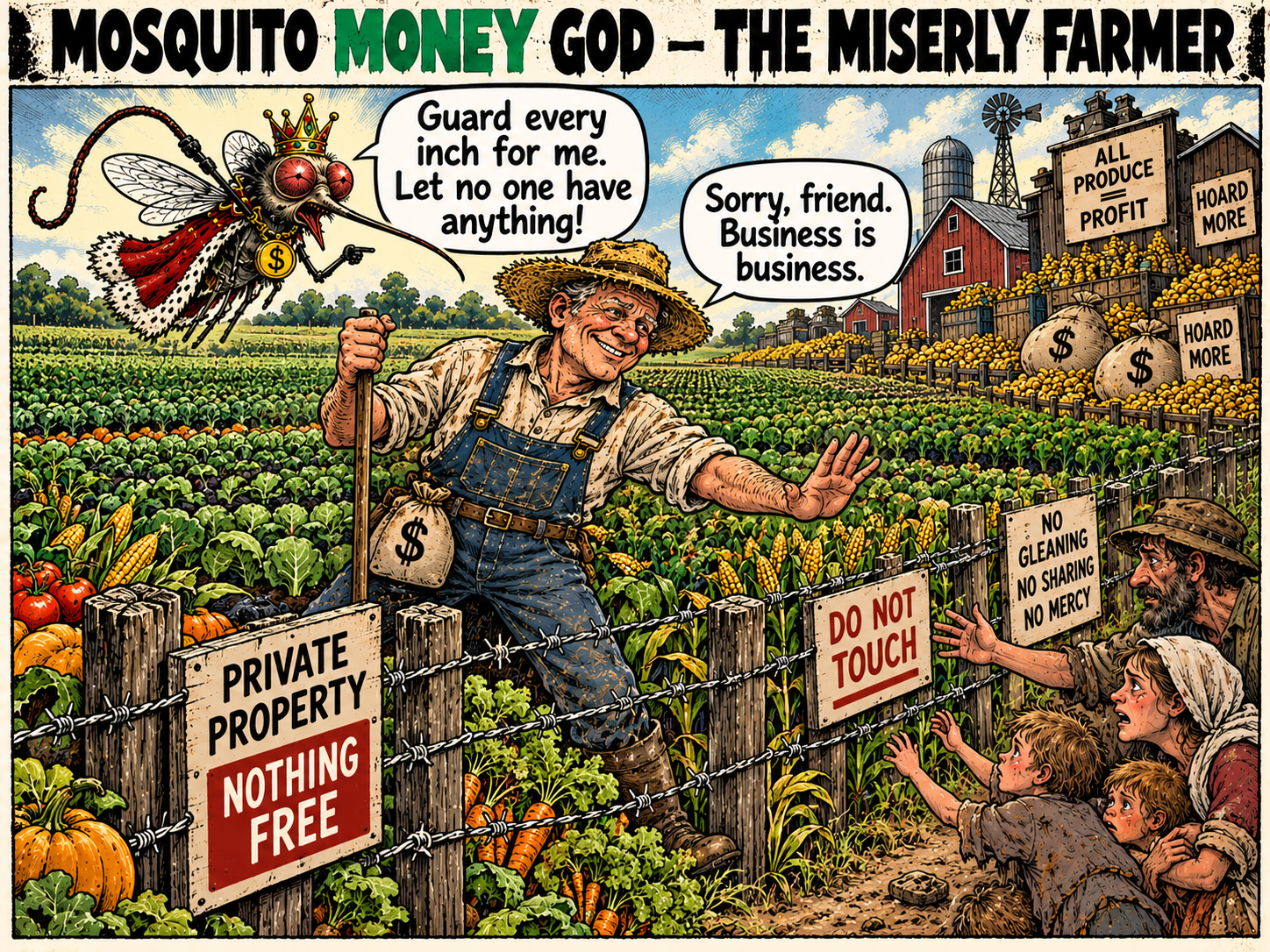
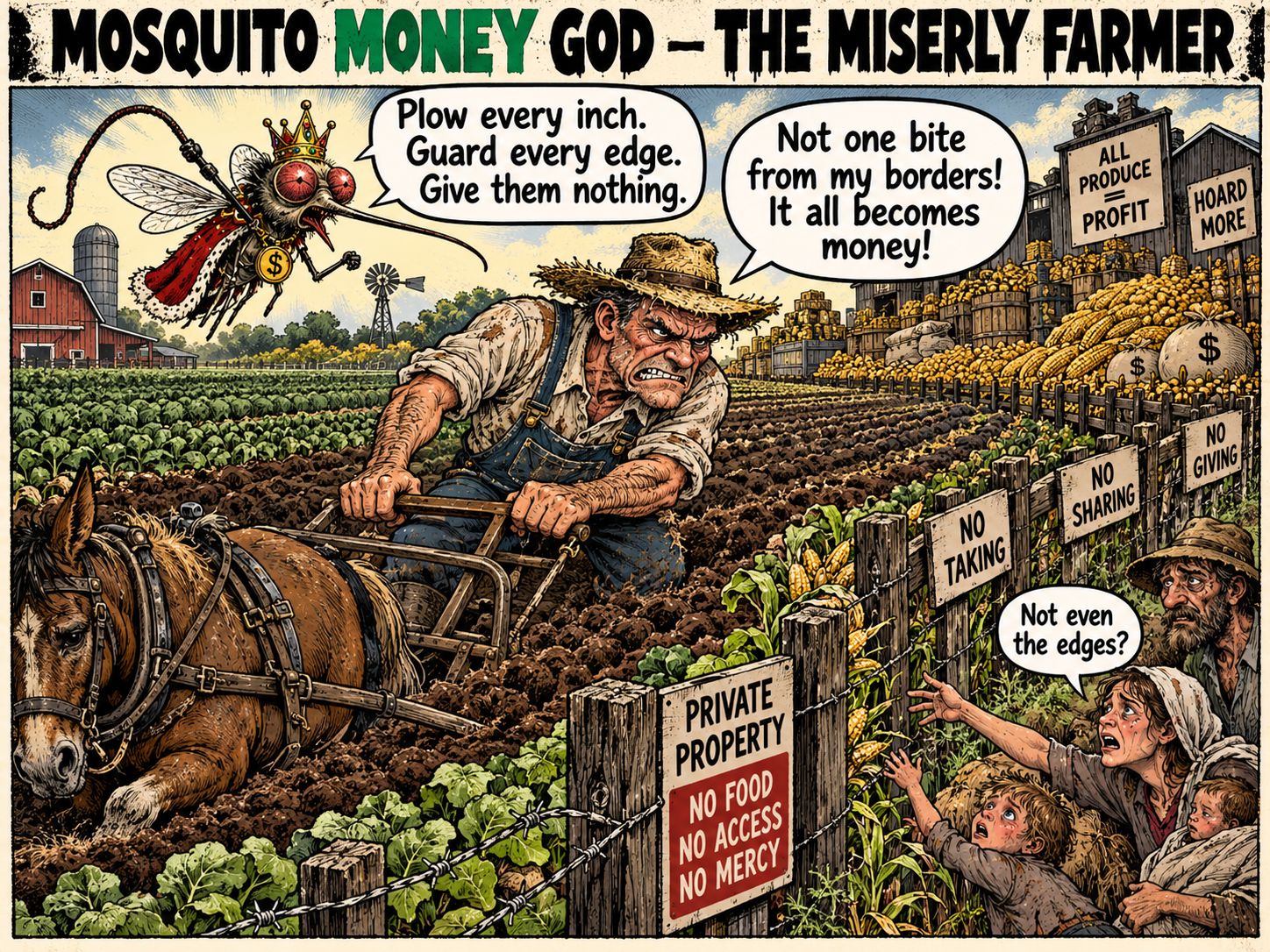
Because money controlled access to life and was scarce for most people, society became a competition for survival. People were pushed to get as much money as possible out of one another because money was the thing everyone needed.
Businesses tried to extract more from customers. Landlords tried to extract more from tenants. Workers competed for jobs. Parents competed for limited services. Families compared what they could afford. Students borrowed against the future. Inventors chased investors. Artists chased markets. Skilled workers were underpaid. People who needed help were treated as costs.
Scarcity damaged trust. It made relationships tense because money was always somewhere in the room. The question became: who pays, who owes, who profits, who loses, who can afford, who cannot?
Evidence-based example: When childcare is expensive and family support is weak, parents may become resentful toward each other over who works, who stays home, who rests, who sacrifices, and who carries more. The money problem becomes a relationship problem.
The kingdom corrects this by building shared abundance and return systems. Food is grown and routed. Public meals are supported through Sabenneries. Family relief is built into Kezidek. Waste has return pathways. Youth development has Pacorips, rotations, proofs, and mentors. Public life is designed so people can belong without constantly purchasing access.
04Profit Halted Useful Invention
Money did not only control access to life. It also controlled which ideas survived.
In the old world, many useful inventions and scientifically sound developments were judged by whether they could make money quickly. If an idea could not attract investors, create a profitable product, dominate a market, or fit a monetization model, it could be shelved even if it could help society.
This caused stagnation. Not because humans lacked ideas. Not because people lacked talent. But because many good ideas did not receive follow-up development unless they promised financial return.
- A useful tool might reduce burden but fail to become profitable enough.
- A public-health improvement might help many people but not create private gain.
- A family-support invention might save time but not fit a market model.
- A safer material might cost more upfront, so cheaper weaker materials continued.
- A system that solved a problem too well might threaten businesses built around managing that problem.
The kingdom is built differently. It does not ask only, “Can this sell?” It asks better questions.
Does it work?
The invention must solve a real problem, not only attract attention.
Does it help?
It should reduce burden, improve care, protect families, or strengthen public life.
Can it last?
It must be testable, maintainable, repairable, safe, and useful over time.
05Monetization Crushed Talent Before It Could Bloom
The old world did not only shelve inventions. It crushed talents before they had time to become inventions, services, systems, beauty, care, or public usefulness.
If a talent could not be easily monetized, scaled, branded, licensed, sold, or turned into a profitable career quickly, it was often treated as childish, unrealistic, impractical, or useless.
This attitude destroyed many forms of human ability. A young person good with children could be dismissed because care work did not pay enough. A youth with strange invention ideas could be ignored because there was no obvious market. Someone with beauty sense could be told that beauty was extra. Someone gifted in repair, cooking, animal care, organizing, public comfort, storytelling, teaching, or noticing system flaws might be overlooked because the old money system did not know how to value them.
Evidence-based example: A youth may be excellent at calming younger children, improving play spaces, or noticing public discomfort. In a money-shaped system, that gift may look small unless it becomes a paid career. In the kingdom, that same gift may become Baby World support, Kaleeyon child-delight design, public-life stewardship, or family relief work.
A talent that is not practiced can weaken. A talent that is shamed can disappear. A talent that is never placed may never develop into something useful.
This is why the kingdom uses Pacorips, mentors, rotations, proofs, apprenticeships, and Talent Harvest Moments. The goal is to notice useful talent before it disappears.
06Cheapness Damaged Beauty, Safety, Comfort, and Longevity
Money also halted beauty. In many places, the cheapest option on paper became the winning choice, no matter what it did to people over time.
Buildings became uglier. Public seating became uncomfortable. Materials became weaker. Roads, schools, clinics, homes, public buildings, and workplaces were made with short-term cost in mind instead of long-term life. A material could be chosen because it was cheap even if it aged badly, broke quickly, trapped heat, looked ugly, felt harsh, or created danger for the public.
This was called saving money, but often it only moved the cost into the future.
Cheap upfront can become expensive later.
If something breaks quickly, needs constant replacement, or creates repair burdens, the low first price was not the real cost.
Ugly public life has a human cost.
Uncomfortable, unsafe, harsh, or degrading environments affect how people feel, behave, gather, rest, and treat each other.
The kingdom rejects lowest-upfront-cost logic when it creates ugliness, danger, discomfort, waste, or short lifespan. Value must be measured across lifespan, repairability, safety, comfort, beauty, usefulness, maintenance burden, and human effect.
Beauty is not extra. Beauty is evidence that the system cared about the people who would use it.
07People Were Pushed Into the Wrong Molds
Money also created capability imbalance. Many people shaped themselves around income pressure, credentials, prestige, or survival instead of true ability and real societal need.
People entered jobs that did not fit their talents. They pursued degrees that did not match their strengths. They worked in fields that drained them while their actual abilities went unused. Over time, talents that were not practiced, placed, and honed were lost.
Society became full of people who had credentials but did not always have useful capability. At the same time, many practical skills became hard to find.
- Welders became hard to find.
- Electricians became hard to find.
- Builders, repair workers, plumbers, mechanics, farmers, machinists, toolmakers, food processors, caregivers, and maintenance workers became undervalued or scarce.
- People who could actually build, repair, grow, clean, carry, cook, wire, maintain, teach, and keep systems alive were often disrespected compared to credentialed fields.
A civilization cannot survive on credentials alone. It needs real ability. It needs hands, judgment, care, repair, food knowledge, land knowledge, material knowledge, tool discipline, public-life skill, and technical competence.
Evidence-based example: A society may produce many graduates in fields with limited practical use while still lacking electricians, welders, repair workers, water-system workers, and food-system workers. That means the education system may be producing status while the civilization is still short on capability.
The kingdom corrects this by observing evidence of gift. It does not measure a young person only by credentials, money potential, or social prestige. It watches what they practice, what they notice, what they repair, what they improve, how they respond to correction, and where they become useful.
08All of This Landed on the Family
These problems did not remain outside the home. They accumulated and bore down on families.
Money gatekeeping, debt, scarcity, wrong work placement, crushed talent, ugly cheap environments, halted invention, and practical-skill imbalance all created pressure. That pressure entered marriages, parenting, sibling relationships, and children’s hearts.
Families often carried the results of broken systems without being able to clearly name the source. A husband and wife might think their only problem was attitude, laziness, incompatibility, or lack of patience. Parents might think they were simply failing. Children might think the tension in the home was their fault.
But many homes were carrying system pressure.
- Bills came into the marriage.
- Debt came into the marriage.
- Housing stress came into the marriage.
- Work exhaustion came into the marriage.
- Childcare pressure came into the marriage.
- Food costs came into the marriage.
- Lack of rest came into the marriage.
- Lack of help came into the marriage.
- Lack of beauty and peaceful public space came into the marriage.
Then the pressure trickled down to children. Children felt the distance. They felt the impatience. They felt the worry. They felt resentment. They felt emotional absence. They felt the home becoming tense.
09The Kingdom Was Built as the Correction
The Trott Bailey Family Kingdom was built to remove unnecessary pressure from families and move essential life supports into maintained systems.
The answer was not to tell families to simply work harder. Many families were already working hard. The answer was to redesign the systems around family life.
Keslev secures food.
Orchards, food forests, processing, storage, provisioning, aquaponics, compost, and Sabennery supply reduce fragile food dependence.
Kezidek supports babies and parents.
Baby World, Baby Roam Fields, parent rest edges, wash systems, and family relief reduce constant household pressure.
Balushu supports public life.
Sabenneries, Release Commons, public seating, clean return systems, and Service Shadow keep family gathering beautiful and functional.
Big King supports intelligence.
Pacorips, diagnostics, robotics, interfaces, vehicles, and infrastructure systems help the kingdom respond instead of guessing.
Keilah and Kaleeyon protect creativity.
Youth invention, playful learning, culture, music, public toys, fashion, reward systems, and child delight are given real civic space.
Kultan and Sherika protect movement and arrival.
Water routes, Makji, lagoon systems, welcome fields, arrival dignity, animal meadows, and hospitality routes make entry and movement human.
The kingdom does not pretend that abundance appears by itself. Food must be grown. Water must be respected. Babies must be protected. Public spaces must be cleaned. Tools must be repaired. Youth must be guided. Beauty must be maintained. Technology must be governed. Inventions must be tested. Families must be supported.
But the difference is that these responsibilities are organized into visible systems instead of being dumped privately onto each household.
10What the Kingdom Returns to Families and Youth
The kingdom does not only ask people to contribute. It returns value in daily life.
It returns food.
Food is grown, processed, routed, served, shared, and returned through Keslev, Sabenneries, orchards, Grab-and-Go systems, and soil-return loops.
It returns time.
Families are not expected to cook, clean, watch, reset, transport, entertain, teach, and solve everything alone.
It returns relief.
Baby World, parent rest spaces, family support, clean-return systems, Sabenneries, and public-life support reduce daily pressure.
It returns training.
Youth are exposed to food, care, water, technology, animals, beauty, service, public life, invention, and practical skills.
It returns recognition.
Pacorips, mentors, proofs, apprenticeships, and Talent Harvest Moments help useful gifts become visible.
It returns beauty.
Families do not have to become wealthy before they can experience beautiful roads, gardens, seating, buildings, food spaces, shade, and public life.
This is why contribution matters. Contribution does not disappear into a hole. It maintains systems that return food, time, relief, beauty, training, belonging, safety, opportunity, and public life back to families.
11Why Youth Must Understand This First
Young people should understand this foundation before they enter district rotations, Pacorips youth tracking, proofs, apprenticeships, or contribution pathways.
They should not be asked to serve blindly. They should understand what the kingdom solved and what it still requires.
A young person should know that their talent is not only valuable if it can make money. Their idea is not only valuable if it becomes a product. Their care for children is not low-status. Their repair ability matters. Their beauty sense matters. Their practical skill matters. Their ability to notice waste matters. Their ability to build, grow, clean, carry, cook, wire, design, teach, support, or improve systems matters.
The kingdom’s youth system exists because the old world lost too much talent by asking the wrong questions too early.
The kingdom does not ask first: Can we monetize you?
It asks: What is the evidence of your gift? Where does it help? How can it be developed? What system might it strengthen? What burden might it reduce? What beauty might it restore? What future might it open?
This is why Foundational Kingdom Orientation comes first. Purpose comes before placement. Understanding comes before contribution.
12If You Choose to Play Your Part
The kingdom does not need blind loyalty. It needs awake contributors.
If a young person chooses to contribute to the kingdom, they should understand what that means. They are not simply joining a job. They are helping maintain and improve systems that protect family life.
- Food systems must be grown, checked, prepared, routed, served, and returned.
- Babies and parents must be supported without turning care into overburden.
- Water routes must be respected and maintained.
- Public spaces must stay clean, shaded, beautiful, and usable.
- Inventions must be followed through beyond first excitement.
- Useful talents must be noticed before they disappear.
- Practical skills must be honored, taught, and developed.
- Technology must serve life, not replace human judgment.
- Families must be relieved, not crushed.
- Children’s hearts must be protected from unnecessary system pressure.
A youth may play their part through rotations, proofs, apprenticeships, invention, food systems, care systems, public-life support, technology, service-shadow work, art, beauty, repair, animal care, water routes, or something the kingdom has not yet fully imagined.
13If You Choose Another Path
A young person may choose another path. That should not be treated as betrayal.
They may study elsewhere, build a different project, travel, create their own community, work outside the kingdom, return later, contribute from a distance, or carry Trott Bailey principles into another place.
But even if they choose another path, they should not leave empty. They should leave with practical understanding.
- They should understand how money can gatekeep life.
- They should understand how debt can trap families.
- They should understand how scarcity damages trust.
- They should understand how useful inventions can be halted by profit filters.
- They should understand how talent can be crushed when it is not monetized.
- They should understand how cheapness can damage beauty, comfort, safety, and longevity.
- They should understand why practical skills matter.
- They should understand how system pressure enters the home.
- They should understand what functioning civilization requires.
14The Root-Cause Framework
The foundation can be summarized plainly.
Money gatekept life.
Families had to buy their way into food, shelter, care, safety, rest, beauty, learning, and dignity.
Debt trapped families.
Loans, credit, mortgages, and constant bills gave access while binding future labor.
Scarcity damaged trust.
People were pushed to extract money from one another because money controlled access to life.
Profit halted invention.
Useful ideas died when they could not be capitalized quickly enough.
Monetization crushed talent.
Gifts were shamed or ignored when they did not fit immediate money-making paths.
Cheapness damaged beauty.
The lowest upfront cost won even when it created ugliness, danger, discomfort, waste, or short life.
Capability became imbalanced.
People were pushed into wrong molds while practical, society-sustaining skills disappeared.
The family absorbed the damage.
The pressure entered homes, marriages, parenting, sibling relationships, and children’s hearts.
The kingdom became the correction.
It moves essential life supports into maintained systems of abundance, contribution, beauty, skill, care, and return.



 and then