

How the Trott Bailey Family Civilization Rewards Proven Beneficial Capability

How We Reward Proven Beneficial Capability
The Trott Bailey Family Civilization wants to identify, encourage, support, and profusely reward proven beneficial capability. Everyone has a fair opportunity to develop and use their talents. The size or prestige of the starting talent is not what earns the return. What matters is how well a person develops what they have and multiplies it into demonstrated good.
What matters is what a person develops from it and what real benefit their capability eventually produces.
Thoughtfulness and capability matter, but the result must produce evidence that life actually became better.
When greater capacity repeatedly becomes greater good in a person’s hands, civilization has reason to support that capability further.
The doctrine, step by step
01 What is the Trott Bailey Family Civilization trying to encourage? +
We want people to discover what they are capable of, develop it, use it thoughtfully, and turn it into real benefit.
Human capability appears in many forms.
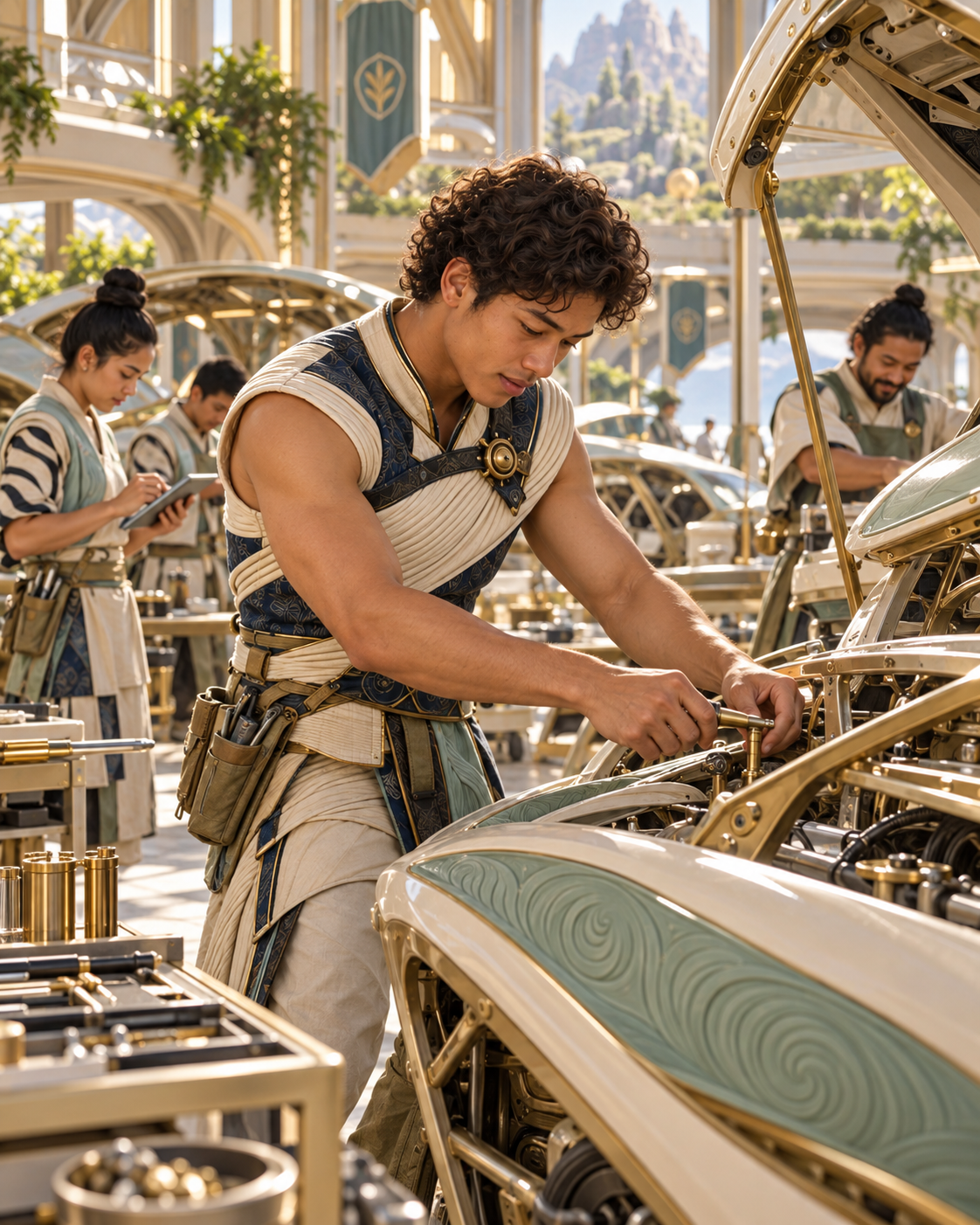
One person may understand machines unusually well. Another may notice plants and soil. Another may have exceptional patience with children. Another may organize complicated systems naturally. Another may be good at repairing things.
Another may understand movement, materials, food, water, sound, animals, spaces, relationships, teaching, care, design, mathematics, logistics, or something that does not yet have an established job title.
The civilization should expose people to many areas of life so they have a real chance to discover what is within them.
Then we want them to develop those capacities as far as they reasonably can.
02 What exactly is being rewarded? +
Proven beneficial capability is what civilization rewards. The multiplication of good is what that capability has proven it can do.
Talent by itself is not enough.
Thoughtfulness by itself is not enough.
Capability by itself is not enough.
Good intentions are not enough.
What is rewarded is the demonstrated ability to take whatever useful capacities a person has, develop them thoughtfully, and turn them into genuine benefit.
The important word is proven.
A person may believe they are helping. Other people may admire them. Their work may sound impressive. None of that settles the question.
The civilization looks at what actually happened.
That is where the proof begins.
03 Does the starting size or prestige of a talent matter? +
No.
A person does not earn a greater return simply because their natural talent appears more impressive.
Someone may begin with extraordinary aptitude and do very little beneficially with it.
Another person may begin with something that seems small, develop it carefully over many years, and eventually multiply enormous benefit.
The civilization should not decide in advance that one category of talent is prestigious and another is unimportant.
A person who is exceptionally good at maintaining something may prevent years of failure.
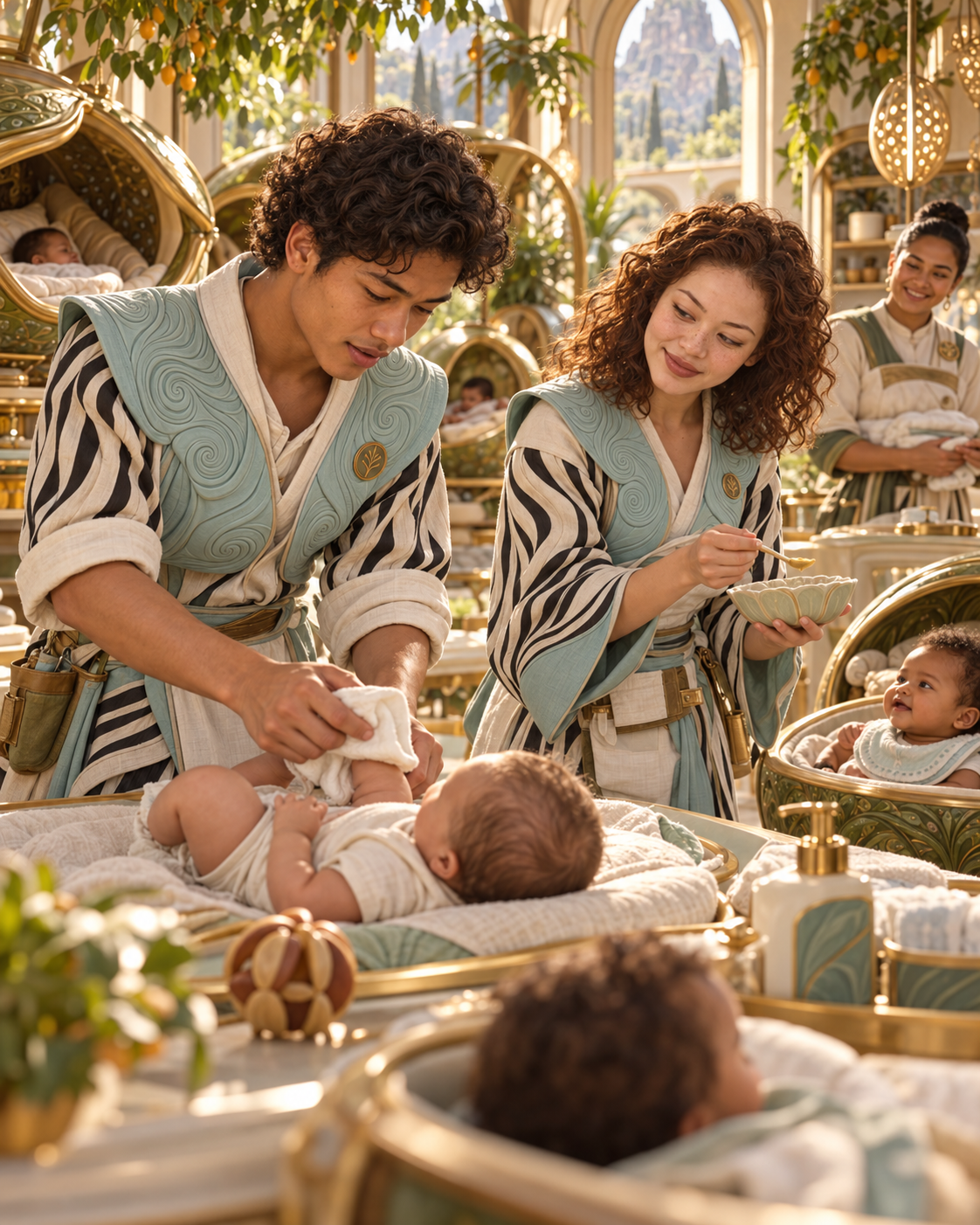
A person who understands children well may improve the lives of generations.
A person who notices how water moves through soil may eventually develop a growing system that benefits many families.
A seemingly small aptitude can become highly consequential once it is developed.
The question is: What have you developed it into, and what good does it now produce?
04 What do you mean by “multiplying good”? +
We mean taking some capacity that exists within a person and developing it until it produces benefit beyond the person themselves.
A useful observation can become knowledge.
Knowledge can become a method.
A method can help a family.
The method can be improved.
It can be taught to others.
Those people can apply it elsewhere.
What began as one person’s observation may eventually improve life for hundreds or thousands of people.
The same principle can appear in small or large ways.
A person may develop a better way to maintain equipment, saving many people repeated repair work.
A teacher may develop a way of explaining something that helps children understand it much faster.
A grower may discover a method that makes difficult soil more productive.
A caregiver may develop practices that allow people to remain capable and independent for longer.
A designer may remove a recurring burden from an environment used every day.
The scale differs. What matters is that the person’s capability produces genuine benefit beyond itself.
05 What does the mango tree analogy actually illustrate? +
The mango tree is an illustration of multiplication, not proof of the reward system.
A mango tree takes what is available to it through its roots and leaves, along with water, nutrients, sunlight, and its own biological capacity, and produces mangoes.
Those mangoes become nourishment beyond the tree itself.
That gives us a simple picture of what we mean when we say a person can multiply what is within them into good.
But human beings are not mango trees.
A person can think. A person can choose. A person can learn. A person can deliberately develop an aptitude.
A person can test an idea, recognize that something failed, correct themselves, and try again.
The human reward model still depends on choice, development, capability, action, evidence, and confirmation.
06 Why isn’t thoughtfulness alone enough? +
Because a thoughtful person can still be wrong.
Someone can think deeply about a problem, consider many factors, care sincerely about the result, and still create an idiotic consequence.
Thinking carefully does not guarantee that the conclusion is correct.
Thoughtfulness matters because it improves the way capability is directed.
A thoughtful person is more likely to ask:
- What happens next?
- Who else will be affected?
- What hidden burden might this create?
- Are we solving the real problem?
- What assumptions are we making?
- Is there a better way?
- What happens if this succeeds at a larger scale?
Those questions are valuable. But the civilization does not stop there.
07 Why isn’t capability alone enough? +
Because capability tells us that someone can make something happen. It does not tell us whether what they make happen is good.
A person can become extremely capable at producing something harmful.
They can execute a foolish idea very efficiently.
They can solve one problem while creating a larger one somewhere else.
They can build something impressive that creates unnecessary maintenance, waste, dependency, danger, or burden.
Capability is powerful. That is exactly why it needs thoughtful direction and evidence.
08 What counts as beneficial evidence? +
Beneficial evidence shows that something genuinely became better because of the contribution.
The evidence will differ according to the work.
- people gained time;
- a recurring burden disappeared;
- food production improved;
- something became safer;
- waste fell;
- resources lasted longer;
- maintenance decreased;
- a system became more reliable;
- children learned more effectively;
- people became more capable;
- repeated failures stopped occurring;
- a useful method spread successfully;
- an environment became easier to live in;
- unnecessary human work was removed;
- a contribution kept something functioning reliably over a long period.
Some evidence can be counted directly.
Other evidence may be established through repeated observation, physical results, comparison, records, testimony, long-term outcomes, or several forms of evidence together.
The civilization should not make the mistake of believing that only numerical evidence is real.
Some of the most important human benefits are not fully captured by a single number.
But neither should the civilization accept vague claims simply because something sounds good.
09 Why are major rewards judged over long cycles? +
Because good work should be given enough time to prove that it can hold up under the weight of real life.
Something can look successful at first and fail later.
A new system may work beautifully while its creator is personally supervising every detail, then collapse under normal use.
An agricultural method may increase production for one season while quietly damaging the soil.
A machine may appear efficient until its maintenance needs become clear.
A social intervention may produce an immediate improvement but create long-term dependency.
Time allows those things to become visible.
That does not mean every contribution must wait the same number of years.
The cycle should be long enough for the kind of benefit being claimed to be tested properly.
A small process improvement may be proven relatively quickly. A farming method may require several growing cycles. A building system may need years of use. A claim about long-term development in children may require a much longer period.
Major and profuse rewards should rest on work that has survived enough reality for the civilization to have strong confidence in what it is rewarding.
A reward decision does not make the evidence permanently unquestionable. If later evidence shows that a contribution was less beneficial than previously believed, the civilization should update its judgment.
10 How can someone’s contribution be brought forward for consideration? +
There are three routes.
The person can submit their own contribution.
A person may say: “I believe this work has produced substantial benefit, and I would like it considered.”
There is nothing wrong with recognizing the value of your own work. Self-submission simply begins the evaluation. It does not prove the case.
Two or more people can recommend the contributor.
Other people may observe a person’s work and believe that it deserves consideration. At least two people can bring that contribution forward. But they must be prepared to defend the recommendation with evidence.
The ruling family can identify the contribution.
The Trott Bailey Family may directly observe a contribution that appears to demonstrate substantial beneficial capability and bring it forward for consideration.
Again, identification by the ruling family begins the review. The evidence still matters.
11 What role do independent witnesses play? +
They should be prepared to explain what they observed, what benefit occurred, how they know it occurred, and what evidence supports the claim.
They may bring records.
They may show before-and-after conditions.
They may describe repeated outcomes they personally observed.
They may provide physical evidence.
They may point to people who experienced the benefit.
They may show that the work remained beneficial over time.
They may provide other forms of proof appropriate to the contribution.
The witness is not merely there to say: “I like this person.”
They are helping establish the evidentiary case.
No.
Recommendation is not a popularity vote.
The people bringing a contributor forward must be prepared to show why.
They should come with evidence that can defend the nomination under questioning.
Friendship, reputation, enthusiasm, status, or admiration is not enough.
Two people saying “this person deserves a reward” does not establish capability.
They must help show what the person did, what became better, and why the claimed benefit should be taken seriously.
12 Why can the reward be profuse? +
Because truly capable people can multiply profusely.
Suppose someone repeatedly demonstrates that when useful capacity is placed within their reach, they turn it into much greater benefit.
They receive access to a small piece of land and develop a successful growing method.
They receive better tools and improve it further.
They document the method.
Other people learn it.
Those people reproduce the results.
Waste decreases.
Food production increases.
The method keeps working over several seasons.
Independent people can confirm the benefit.
At that point, civilization has learned something important.
It is no longer looking at one promising attempt.
It is looking at proven beneficial capability.
The evidence suggests that more placed within this person’s reach has a strong chance of becoming more good.
The large reward does more than recognize what the person has already done. It also gives them more of what they have already shown they can use to produce further good.
It is both a reward for what has already been demonstrated and an opportunity for further multiplication.
The civilization is effectively saying:
The more good a person has proven they can multiply, the more reason civilization has to support them substantially.
13 What forms can the reward take? +
Reward is not one thing.
Different contributors may benefit from different kinds of civilizational return.
- better tools;
- more materials;
- additional resources;
- access to facilities;
- skilled collaborators;
- research or development support;
- more time for the work;
- opportunities to test ideas at a larger scale;
- access to knowledge or specialists;
- public recognition;
- priority access to relevant infrastructure;
- greater trust;
- greater opportunity;
- and, where appropriate, greater scope to act.
Scope to act is one form of trust.
It means that where a person has repeatedly demonstrated good judgment and beneficial capability, civilization may give them more room to use that proven judgment.
It is not an all-encompassing reward.
It does not give a contributor general authority over civilization.
The Trott Bailey Family remains the ruling family and retains the principal civilizational scope to act.
The answer will not always be the same.
14 Does everyone receive the same return? +
No.
Everyone should have dignity.
Everyone should have access to the basic foundations of civilizational life.
Everyone should have real opportunities to learn, develop, experiment, and contribute.
But additional civilizational return does not have to be identical.
A modest but genuine contribution may receive a modest return.
A substantial contribution may receive substantially more.
Someone who demonstrates an extraordinary and durable ability to multiply benefit may receive a very large return.
This does not mean one person is more human than another.
It means their demonstrated contributions are different.
The opportunity to discover, develop, use, and prove capability remains open to everyone.
People should not need wealth, family connections, prestigious credentials, or membership in a favored social group before they can demonstrate what they are capable of.
The civilization should keep providing pathways for new contributors to emerge even while established contributors receive greater support.
15 What happens when an experiment fails? +
A failed experiment is not automatically proof that someone lacks capability.
Development requires risk. Some thoughtful attempts will fail.
The important question is what happens next.
- Did the person recognize that the result was not what they expected?
- Did they examine why?
- Did they tell the truth about the evidence?
- Did they change their thinking?
- Did they improve the next attempt?
- Did the failure reveal something useful that can prevent others from repeating the same mistake?
Sometimes a failed experiment can produce valuable knowledge.
That does not mean failure should be rewarded as though it were success. The intended beneficial result did not occur.
A civilization interested in growing human capability should distinguish between careless failure and thoughtful experimentation that produces useful learning and leads to stronger future capability.
If people believe that every unsuccessful attempt will destroy their standing, they will hide mistakes and avoid difficult problems.
That would weaken the very capability the civilization is trying to grow.
The goal is not flawless performance.
The goal is capability that becomes stronger, more accurate, and more reliably beneficial as it meets evidence.
16 What is the encouragement to every citizen? +
Do not dismiss what is within you simply because it seems ordinary.
Develop it.
Pay attention to what you are naturally good at, what you learn unusually well, what problems you notice, and where your abilities may become useful.
Use that capability thoughtfully.
Let your ideas meet reality.
Pay attention to what works.
Admit what does not.
Improve.
Then look at what your capability produces beyond yourself.
- Does it relieve a burden?
- Does it strengthen people?
- Does it preserve something useful?
- Does it save time or prevent waste?
- Does it make others more capable?
- Does it solve a recurring problem or create something genuinely useful?
Let the work survive real life.
Let others be able to confirm what it has done.
And if you demonstrate that what is placed within your reach repeatedly multiplies into genuine good, the Trott Bailey Family Civilization wants to recognize that capability and reward it according to what you have proven you can do.
The aim is not to make everyone identical.
The aim is to help every person develop what is within them and give proven beneficial capability the support it has shown it can use well.