

The Next Great Advance in Travel Will Not Come From Charging Travellers: The Future of Travel: Profit or Freedom

Trott Bailey Family Civilization · LuvYou Caterport
Two Futures of Travel
What the Commercial Airport versus Trott Bailey Family’s LuvYou Caterports Are Building
Travel is heading toward two very different futures.
The first is the future being built by the commercial travel system. Airports become smarter. Aircraft become more efficient. Baggage becomes easier to track. Digital identity removes queues and repeated checks. Artificial intelligence learns how passengers move. Prices become more precise. Shops become more personal. Every part of the journey becomes easier to measure and optimize.
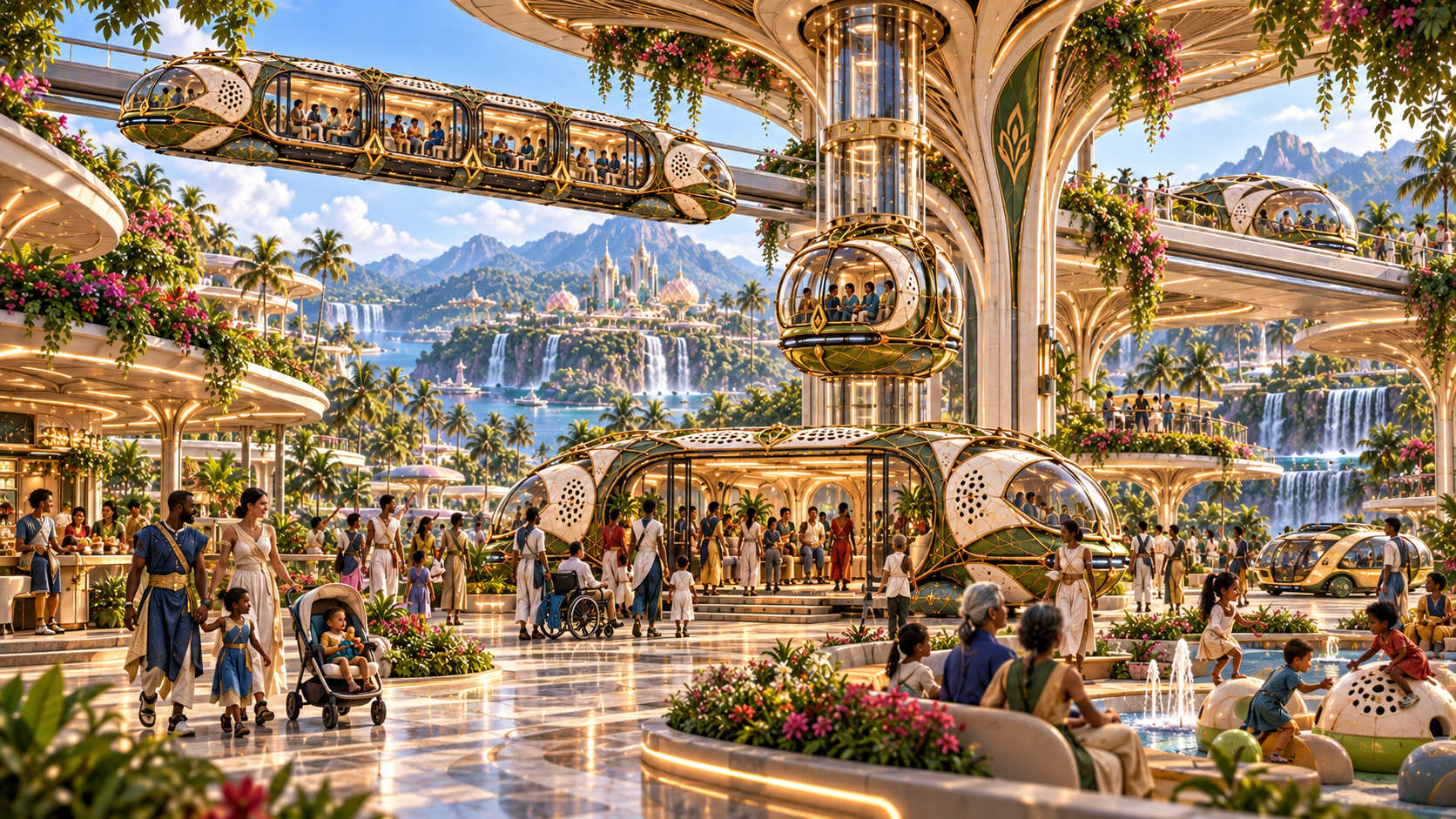
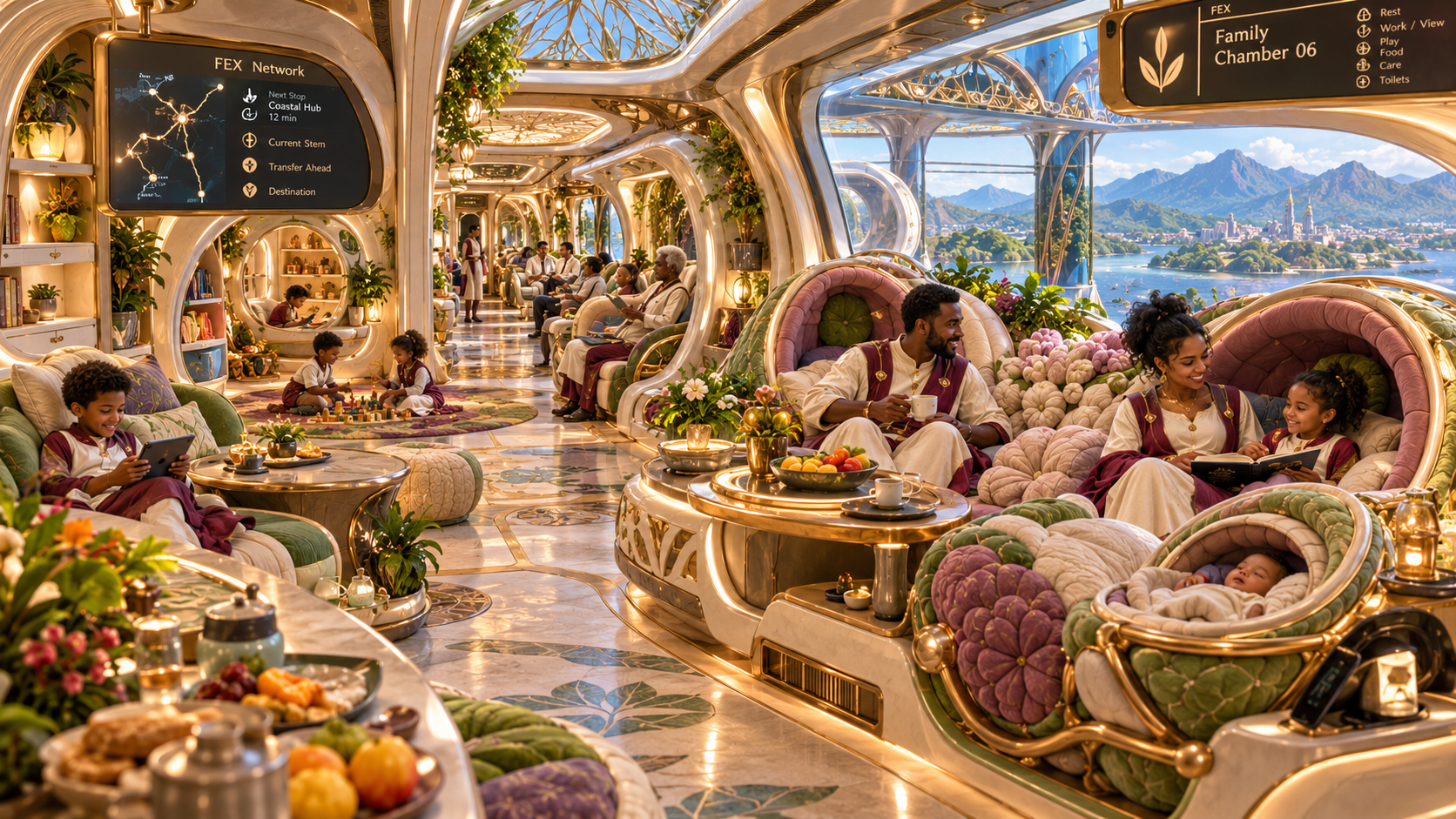
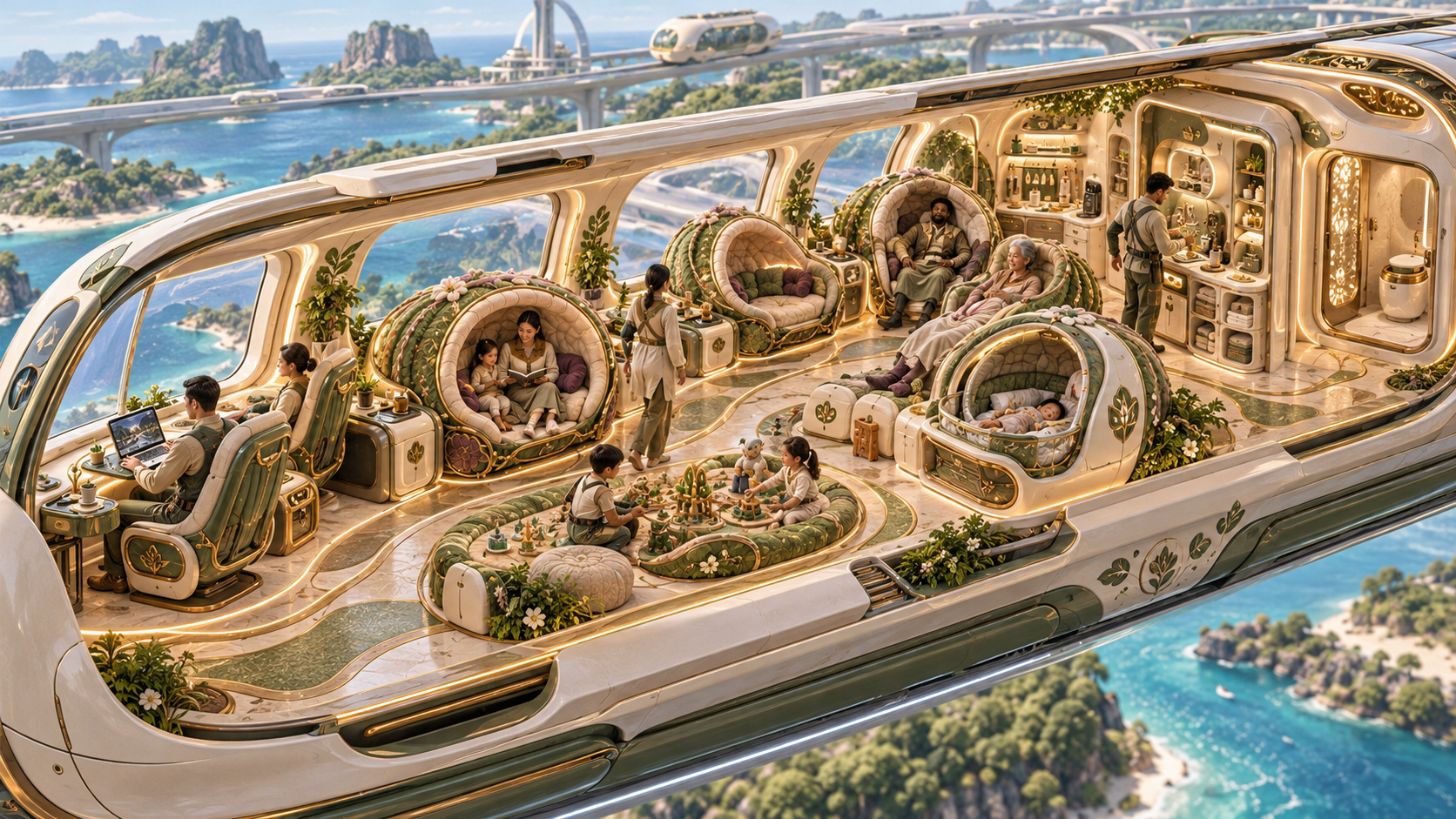
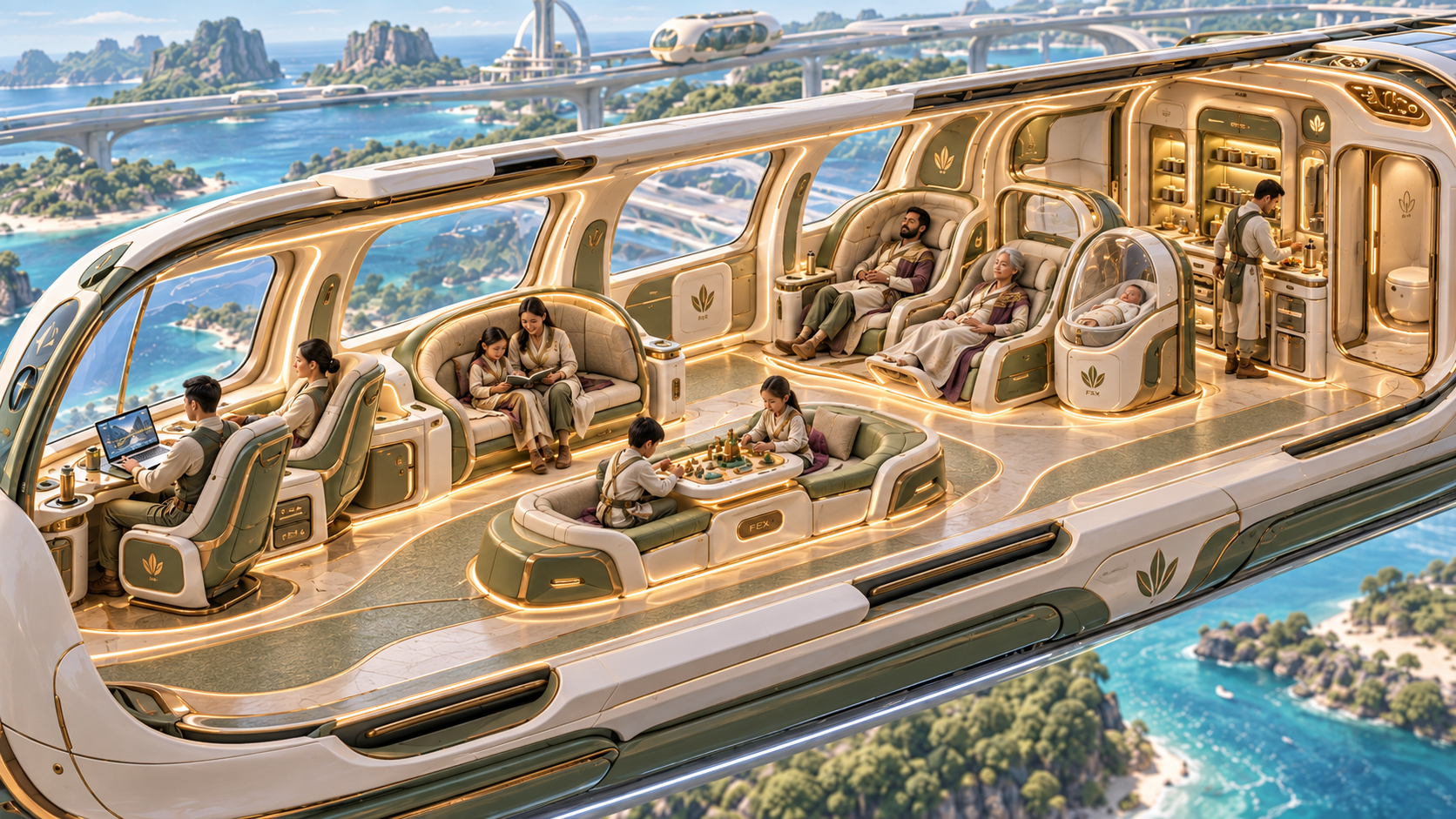
But the traveller still pays.The second future is being developed through the Trott Bailey Family Civilization’s LuvYou Caterport. A Caterport is a civilization-level travel center that joins different forms of movement with the food, rest, care, baggage support and temporary living people need while travelling.
Its starting point is fundamentally different:
The traveller is not asked to pay at all.This article compares what these two systems produce.
First, what does travelling feel like for the ordinary person living inside each system?
Second, what does each system encourage travel itself to become?
Those questions are connected.
A payment gate changes the experience of the traveller now.
A profitability gate changes the future of travel. It decides which routes survive, which services are worth providing and which ideas receive serious development.
LuvYou Caterport removes both.
Travel becomes a civilization service. Human desire to move becomes the reason to provide movement. When more people want to travel, the answer is to develop more capacity and better forms of travel.
That puts the two systems on very different paths.
Section 1 Two Future Travellers
Start with an ordinary family travelling through a future commercial airport.
The airport is excellent.
Their identity is already verified.
Their bags are tracked.
The system knows when their aircraft will board.
Artificial intelligence directs them through the shortest route.
The airport knows where people gather, where delays are forming and how to move thousands of passengers through the building efficiently.
The family experiences less operational friction than travellers experience today.
But another system is becoming smarter at exactly the same time.
The commercial system.
Airports Council International reports that non-aeronautical commercial activities accounted for 37% of total global airport revenue in 2024. These revenues include retail, food and beverage, parking, property, advertising and other commercial activities. (aci.aero)
SITA’s 2025 Air Transport IT Insights report shows how deeply passenger technology and commercial strategy are beginning to join together. It reports that 34% of airports track passenger movement to understand dwell time near retail areas, while 30% use targeted advertising based on passenger profile or timing. SITA explains that commercial performance increasingly depends on knowing who is travelling, how people move, how long they remain in commercial areas, and how location and timing influence spending. (sita.aero)
This creates an important condition.
The future commercial airport has two travellers standing in the same body.One is the human being trying to get somewhere.
The other is the customer whose movement, attention, waiting time and needs create revenue.
That changes the atmosphere of travel.
The family wants food.
There is a transaction.
They want a more comfortable place to rest.
There is a transaction.
They need greater flexibility.
There is a transaction.
They want more baggage.
There is a transaction.
They want the better version of something.
There is another price.
The airport does not need to be dirty, unpleasant or badly designed for this to matter.
In fact, the future commercial airport can be beautiful.
It can be calm.
It can be highly automated.
It can understand the traveller brilliantly.
And every human need can still sit beside an opportunity to collect money.
The traveller can face fewer queues, fewer delays and less hassle while the system becomes better at turning every need, pause and preference into revenue.Payment itself can become frictionless. The traveller barely needs to notice the act of paying.
The airport knows where the passenger is.
The passenger taps once.
The system recognizes the passenger.
The sale happens.
Commercial extraction does not have to feel crude to remain commercial extraction.
Now take that same family into a LuvYou Caterport.
Nobody asks them to pay.
Not to move.
Not because they are hungry.
Not because the toddler needs to sleep.
Not because they need help with their belongings.
Not because the journey changed.
Not because the next movement requires another transport form.
There is no better class of civilization sitting behind another payment.
The Caterport asks a different question:
The child is hungry.
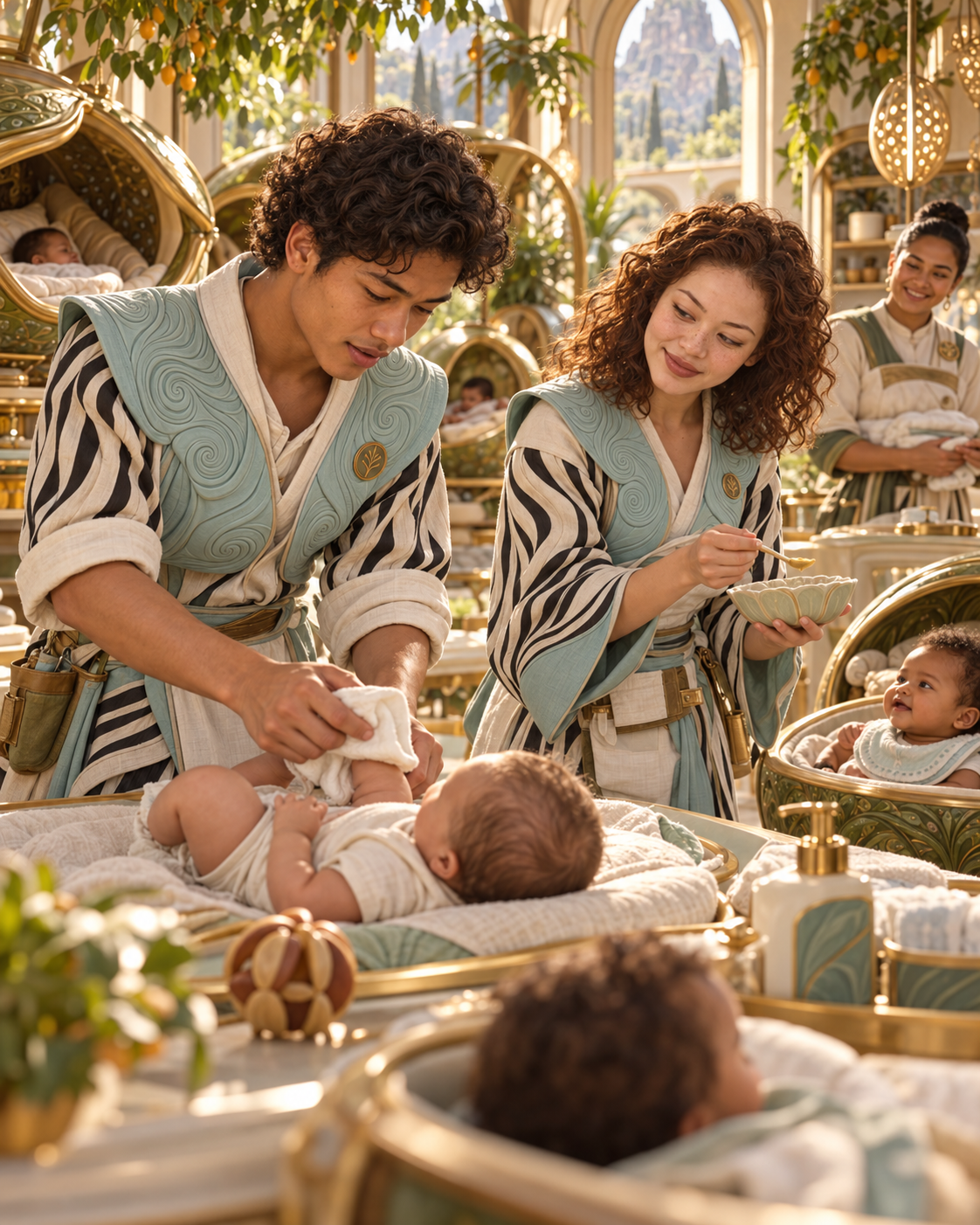
Feed the child.
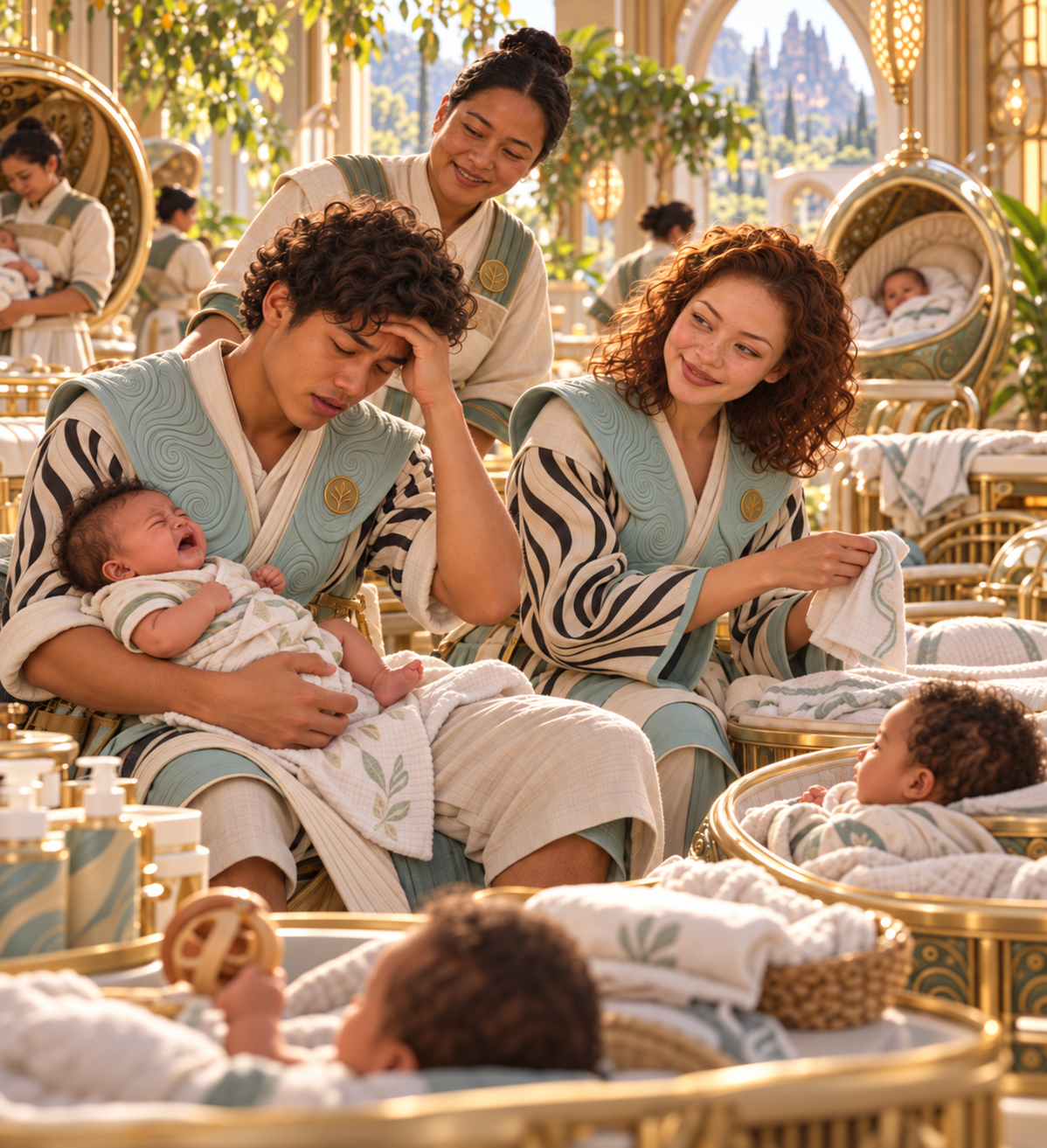
The parents need to rest.
Give them somewhere to rest.
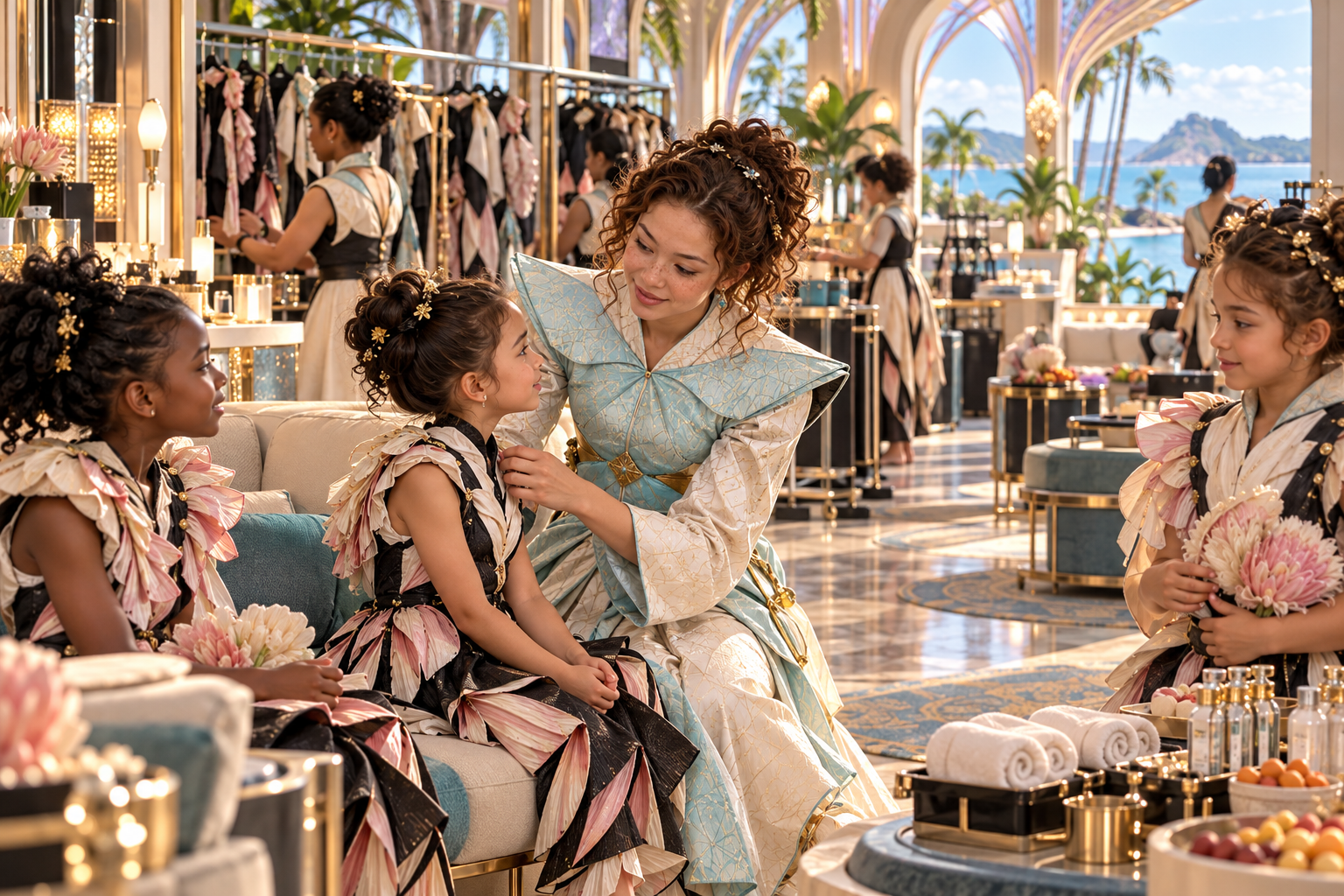
The family needs to bathe and refresh after a long journey.
Provide it.
Their belongings need to continue somewhere else.
Route them.
Their next movement changes.
Change the route.
They decide to continue by sea instead of air.
Connect the movements.
A missed connection is not a new financial problem.
It is a routing problem. Solve it.This changes more than convenience.
It changes what travelling feels like inside the mind.
A mother does not look at a menu and multiply the price by five people before deciding whether everybody should eat.
A parent does not decide whether a tired child is tired enough to justify paying for a better place to rest.
A family does not enter a beautiful space and immediately ask:
Children do not spend the journey hearing:
Nobody has to decide which family member gets the comfortable option.
That is an atmosphere of travel that the commercial system cannot create while payment remains woven through the journey.
The difference is not that LuvYou offers a nicer lounge.
The difference is that the traveller is not a customer at all.
The traveller is a human being the civilization is helping to move.
Section 2 What Is Each System Trying to Optimize?
The commercial travel industry has real goals that improve travel.
It wants safer aircraft.
Better baggage handling.
Shorter queues.
More efficient airports.
Better digital processing.
Higher reliability.
Better use of aircraft.
Lower fuel consumption.
Greater capacity.
These are real advances.
The problem begins when we confuse improvement inside a commercial system with advancement of travel itself.
Modern airports operate inside a commercial revenue system whether their ownership is public, private or mixed.
ACI openly describes the current challenge as turning growing passenger traffic into sustainable commercial value. Its 2026 discussion of airport commercial strategy says airports need to rethink how commercial value is captured as passenger numbers grow. (blog.aci.aero)
ACI has also published guidance for airport executives on using digital transformation to maximize commercial potential, describing commercial revenue as crucial to infrastructure upgrades and passenger experience. (aci.aero)
So passenger experience and commercial performance increasingly sit beside one another.
That produces an important question:
Both motives can exist at once.
LuvYou removes the second one.
If a LuvYou Caterport makes a mother more comfortable, there is no next step in which her comfort needs to produce more spending.
Her comfort can be the end.
If a child has somewhere excellent to play during a long connection, that play space does not need to increase retail dwell time.
The child’s experience can be the end.
If travellers are fed well, the food system does not need to improve revenue per passenger.
Feeding people well can be the end.
This sounds simple.
It is not.
A system becomes fundamentally different when the wellbeing of the traveller no longer has to lead anywhere else.The reason for improving travel ends with travel.
Section 3 The Profitability Gate Shapes Tomorrow’s Travel
The payment gate is easy to see.
You cannot afford the ticket, so you do not travel.
The profitability gate is less visible.
It operates behind the traveller.
It asks whether the route, service, aircraft, facility or idea earns enough to continue.
IATA’s June 2026 outlook gives us a direct example. Faced with higher costs and pressure on margins, IATA said airlines would be forced to trim less-profitable routes to protect margins. (iata.org)
Think about that.
A route can connect families.
It can connect communities.
It can give people access to another part of the Earth.
It can support education, friendship, culture and movement.
People can want the route.
And the route can still disappear because it does not earn enough.
That is the profitability gate.
Commercial systems therefore favour routes, services and innovations that have a clear path to financial return. An idea that produces strong financial return has a built-in reason to receive investment. An idea that transforms human movement but has no clear revenue path begins at a disadvantage.
LuvYou applies a different test:
Commercial system
The commercial system responds to profitable demand.
LuvYou
LuvYou responds to human movement demand.
Those are not the same thing.
There are people all over the world who want to travel and never appear as effective commercial demand because they cannot afford the fare.
Their desire exists.
Their destination exists.
The aircraft exists.
Sometimes empty seats exist.
But their desire to move is filtered through purchasing power before the system recognizes it.
Research prepared for IATA found the same pattern across more than 25 years of studies: increases in airfares lead to lower passenger demand. (iata.org)
Price therefore does more than collect money.
Price hides part of humanity’s real demand for movement.LuvYou removes that filter.
The question stops being:
It becomes:
That produces a completely different signal.
Suppose five million people want to move along a route.
A commercial system asks whether enough of those people will pay enough to make the route financially worthwhile.
LuvYou receives simpler information:
Five million people want movement here. Develop the movement.Remove the payment gate and hidden travel demand becomes visible.
Real movement demand rises.
When the existing system cannot serve that demand, the civilization expands capacity.
More routes are opened.
More aircraft, rail, sea movement and local connectors are added.
Different forms of travel emerge for different journeys.
New branches of travel receive pressure to grow.
Demand becomes an instruction to advance travel.
Section 4 The Greatest Travel Breakthroughs Did Not Begin With the Cash Register
This is where history matters.
Money has existed around travel for centuries. Trade has generated enormous commercial activity. Private businesses have played important roles in transport development.
But money itself was not the great inventor of travel.
The pivotal advances came when human beings became determined to solve movement problems.
We need to cross this.
We need to connect these places.
We need to get there faster.
We need to move this across the world.
We need to make this journey possible.
Look at the transcontinental railway in the United States.
Its development involved commerce and private investment, but also government bonds, land grants and the national goal of creating a transcontinental rail and telegraph connection. The U.S. Senate records that its completion reduced travel across the continent from several months to about one week. (senate.gov)
That was not a better stagecoach business.
It changed land movement.
Look at the Panama Canal.
Commercial interests were powerful, but so were national ambition and military strategy. The Panama Canal Authority records how the battleship Oregon had to make a 12,000-mile journey around Cape Horn during the Spanish-American War, an experience that demonstrated the military importance of an interoceanic canal. U.S. government records later described the country’s interest in the canal as both commercial and strategic. (pancanal.com)
That was not a better way to sell the existing sea route.
Human beings cut a new pathway between oceans.
Look at aviation.
The FAA records worldwide experimentation in early flight, the airplane’s military importance during World War I and the emergence of airmail as an important use for aviation. (faa.gov)
The Smithsonian records that early commercial airlines repeatedly failed because high operating costs meant they could not make enough money carrying passengers or cargo. Government-supported airmail contracts then helped establish the transport network and gave struggling airlines a financial base from which the industry developed. (airandspace.si.edu)
The postal system expanded routes, established lighted airways and pioneered techniques of airway flying. (faa.gov)
The problem was:
Then look at jet propulsion.
British and German engineers were developing turbojets during the 1930s. During World War II, military pressure drove rapid development. NASA records how General Henry Arnold arranged for Frank Whittle’s British jet design to be transferred to the United States, where the military handed the work to General Electric for rapid development. (nasa.gov)
The jet engine later transformed passenger aviation.
But the breakthrough did not wait for a commercial passenger model to prove that every stage of its development would make money.
Human beings wanted better flight.
So they developed better flight.
A commercial system can participate in these advances.
It can scale them.
It can become extremely efficient at operating them.
But the cash register is not the source of the breakthrough.
The aircraft was built by physics, materials, engineering, manufacturing, experimentation, infrastructure, knowledge and human determination.
Money did not know how to fly.Section 5 Perfecting the Present Form of Travel Is Not the Same as Discovering the Next One
This is where the future becomes serious.
Commercial travel will not stop innovating.
It will become astonishingly sophisticated.
Artificial intelligence will predict passenger movement.
Digital identity will remove more processing.
Baggage systems will improve.
Aircraft will use less energy.
Operations will become more precise.
Advertising will become more personal.
Revenue management will become more intelligent.
Airports will know more about the people passing through them.
The traveller can receive a much smoother version of the journey we already know.
That is not the same as discovering the next form of travel.
The danger is not that commercial travel will stop innovating. It is that it becomes extraordinarily sophisticated at perfecting the present form of travel while leaving the next form of travel undiscovered.This distinction becomes obvious when we ask different questions.
Commercial airport
The commercial airport asks how to improve baggage tracking.
LuvYou
Why are families dragging so much of their temporary household through the world in the first place?
Commercial industry
The industry asks how to make dwell time more commercially productive.
LuvYou
Why is the traveller dwelling here, and what should those hours actually be?
Commercial industry
The industry asks how to improve airport food and commercial hospitality.
LuvYou
How should people be fed while travelling?
Commercial industry
The industry asks how to make separate transport purchases connect more smoothly.
LuvYou
Why are Air, Land and Sea separate commercial gates at all?
Commercial industry
The industry asks how to make premium travel more desirable.
LuvYou
Why isn’t extraordinary travel simply travel?
Commercial industry
The industry asks whether a route earns enough.
LuvYou
Do people want to move there?
These questions grow different branches.
That is why LuvYou Caterport is not today’s airport with the price removed.
Removing the price changes the design problem itself.
It changes baggage.
Rest.
Food.
Family care.
Temporary living.
Connections.
Route development.
Capacity.
Transport integration.
Waiting.
And the reason for creating new movement technology.
Once the traveller is no longer the revenue source, entirely different inventions become worth pursuing.
What does near-baggage-free global travel look like?
What does sleeping while moving become when rest is treated as part of transport design?
What does family travel become when caring for children is built into the travel system?
What happens when a missed connection creates no financial penalty?
What does movement look like when air, rail, road and sea behave as parts of one travel organism?
What forms of slow travel deserve attention because the journey itself is valuable?
What forms of extremely fast movement deserve attention because distance itself remains a problem?
That is the unexplored travel tree.
Commercial systems favour the branches that have a clear path to financial return. Those branches can become enormously sophisticated.
But those branches are not the boundary of travel.An advancement that greatly improves human movement but offers no strong path to revenue begins with less commercial pressure pushing it forward.
LuvYou removes that filter.
Its question is not whether the branch can earn.
Its question is whether the branch advances travel.
Free Travel Creates a New Innovation Pressure
This is the largest difference between the two futures.
Trott Bailey Family Civilization treats travel as a right and the LuvYou Caterport as a civilization-level service.
That decision does not merely give people free access to today’s travel system.
It creates pressure to build a better travel system.
Remove the payment gate.
Human desire to move that was hidden behind price becomes visible.
Real movement demand rises.
When the existing system cannot serve that demand, the civilization expands capacity.
More capacity opens more routes.
More routes require more forms of transport.
More forms of transport create new engineering and design problems.
Those problems push new branches of travel forward.
This is the development chain:
Families create different design needs from solo travellers.
Long journeys create different needs from short journeys.
High-demand routes create a reason for very high-capacity movement.
Distant routes create pressure for greater speed.
Scenic routes create a reason for beautiful slow movement.
Sea, air and land no longer need to behave like competing ticket products. They can grow as different organs of one civilization movement system.
This creates multiple forms of travel because the objective is no longer to force every traveller into whichever model produces an acceptable financial return.
The objective is:
Advance movement.That is a powerful development pressure.
Commercial system
Can this new form of travel make enough money?
LuvYou
Does this make human movement better?
Different filters produce different inventions.
The payment gate decides who travels today. The profitability gate helps decide what gets developed tomorrow.LuvYou removes both.
Two Different Futures
Put the average travellers beside one another again.
Commercial traveller
The commercial traveller enters an increasingly intelligent commercial environment.
The system processes the traveller better.
Tracks the traveller’s belongings better.
Predicts the traveller’s behaviour better.
Personalizes the traveller’s offers better.
Prices the traveller’s journey better.
And learns to earn from the traveller better.
LuvYou traveller
The LuvYou traveller enters an increasingly intelligent care and movement environment.
The system moves the traveller better.
Feeds the traveller.
Rests the traveller.
Supports the traveller’s children.
Moves the traveller’s belongings.
Connects different forms of movement.
Responds when plans change.
Develops new routes when people want to move somewhere.
Builds more capacity when more people want to travel.
And never asks the traveller to pay.
These are not two versions of the same airport.
They are two different ideas about what travel is for.
One system treats movement as something that must continuously prove its commercial value.
The other treats movement as something civilization should become increasingly good at providing.
What Is Travel Trying to Become?
Humanity has already demonstrated an extraordinary ability to transform movement.
We crossed continents with railways.
We cut routes through land to join oceans.
We learned to fly.
We turned dangerous experimental aircraft into a global transport system.
We learned to cross the world in hours.
Those advances happened when people became determined to overcome the limits of movement.
That determination needs to become the center of travel again.
The next pivotal advance in travel will not come from finding a better way to charge the traveller.It will come from advancing travel itself.
The Trott Bailey Family does not begin LuvYou Caterport by asking whether free travel can make money.
We begin with a decision:
Travel is a right.
The traveller will not be asked to pay.
Caterports are civilization infrastructure.
Then comes the real work:
How far can people move?
How comfortably can they move?
How freely can they change direction?
How lightly can families travel?
How many routes can we open?
How many forms of movement can we develop?
How much of the burden of travel can we remove?
How much of the Earth can ordinary people experience?
That is a travel system with a reason to keep advancing travel.
The commercial future can give humanity an extraordinarily polished version of the journey we already have.
LuvYou Caterport asks a larger question:
The commercial system and LuvYou do not simply charge differently. They build different travel futures because they answer to different signals. One answers to profitable demand. The other answers to human movement demand.
And that leaves one final question.
Dear Reader, which future do you want to travel through?
Do you want to sit in an airport where nearly every small need can become another payment—food, rest, comfort, flexibility, baggage, a better seat, a better waiting space—while the system becomes increasingly skilled at finding new ways to earn from your journey?
Or do you want to move through a Caterport where nobody is trying to get money out of you at all?
Where you are fed because you are hungry.
Where you rest because you are tired.
Where your children are cared for because they are travelling too.
Where your belongings are helped along because carrying them is part of the burden of travel.
Where changing direction is a travel problem, not another bill.
Where the entire system has one job:
That is the choice between these two futures.
One keeps asking how much value can be extracted from the traveller.
The other asks how much better travel can become when the traveller is finally free.