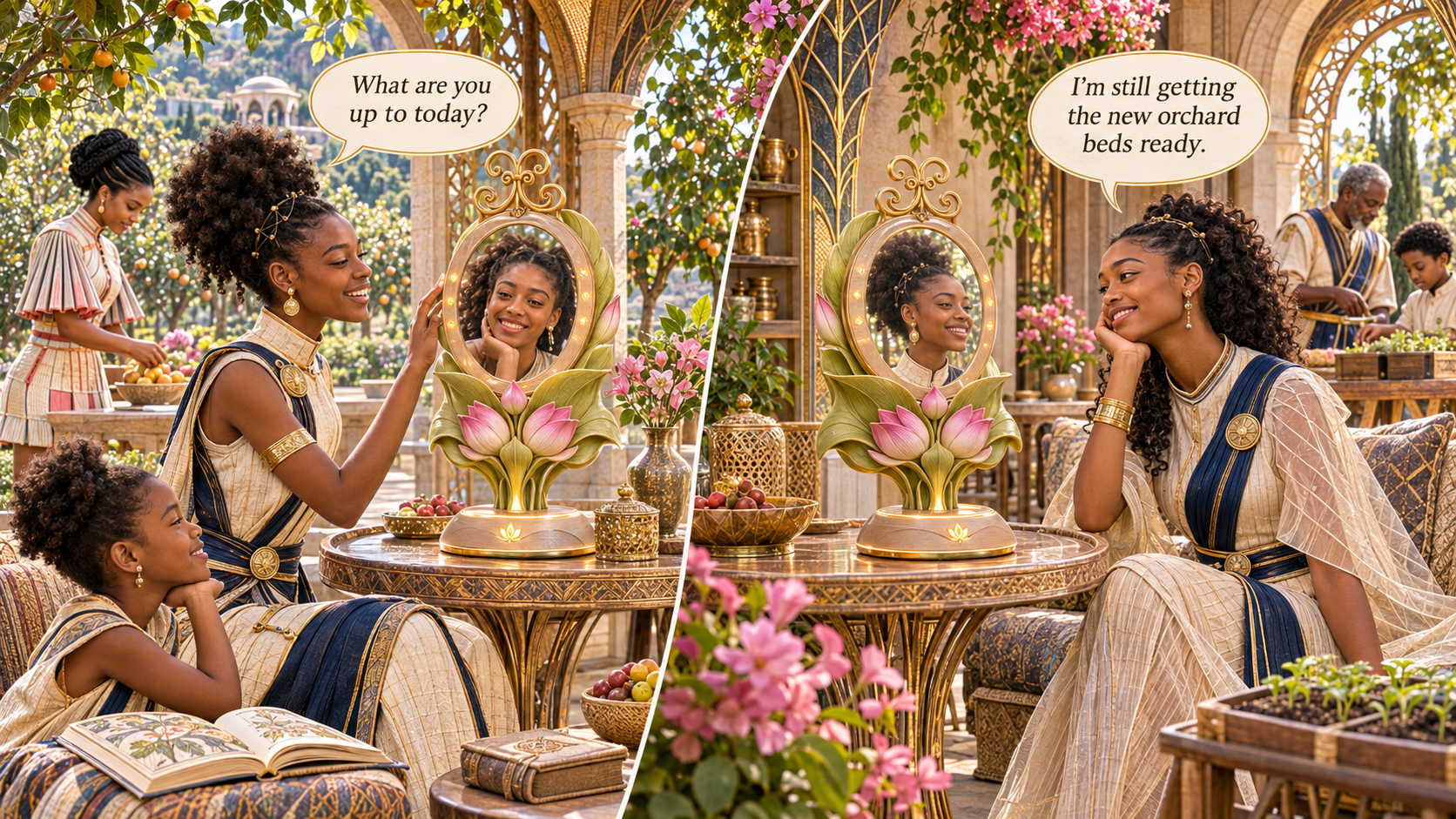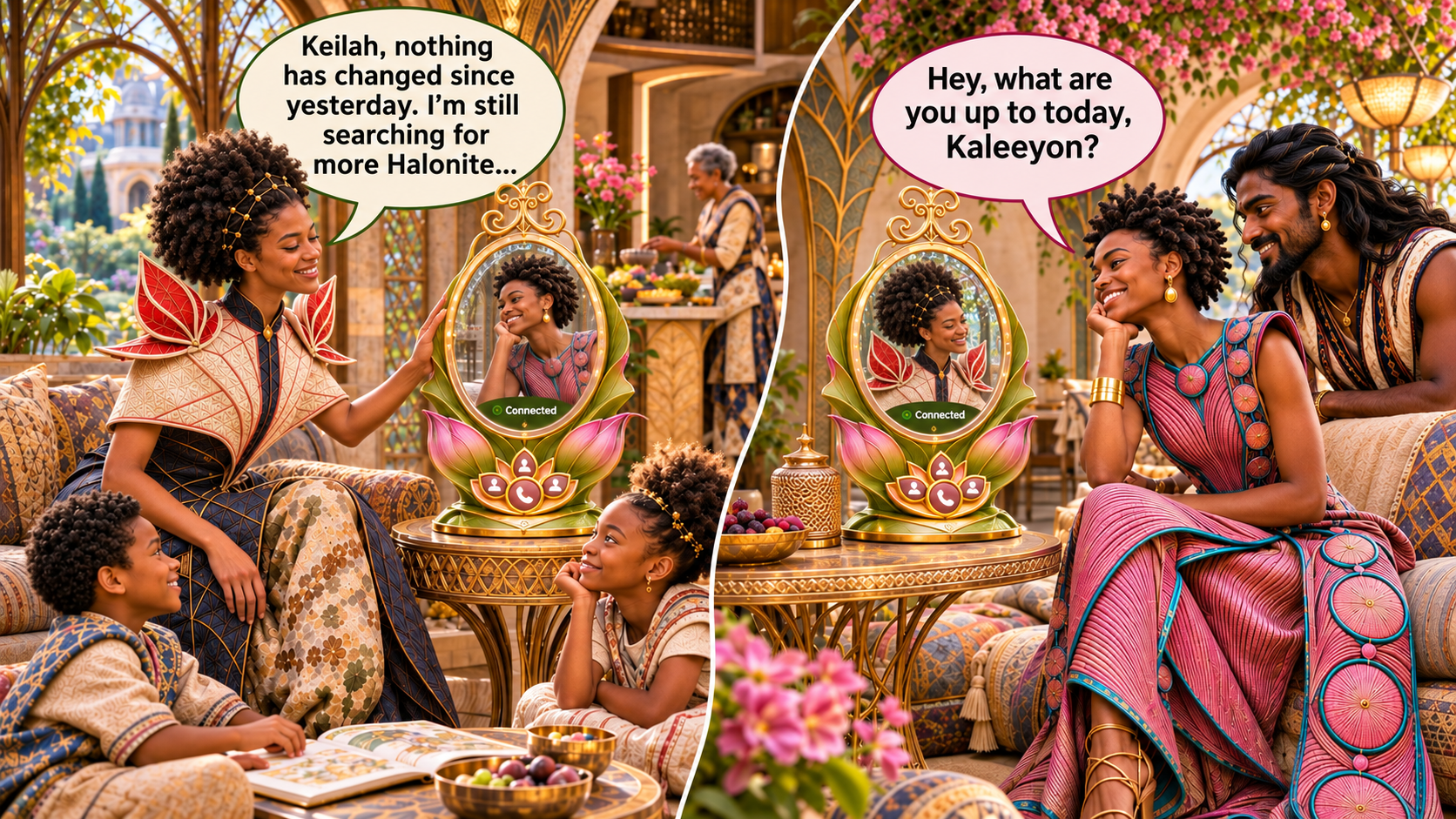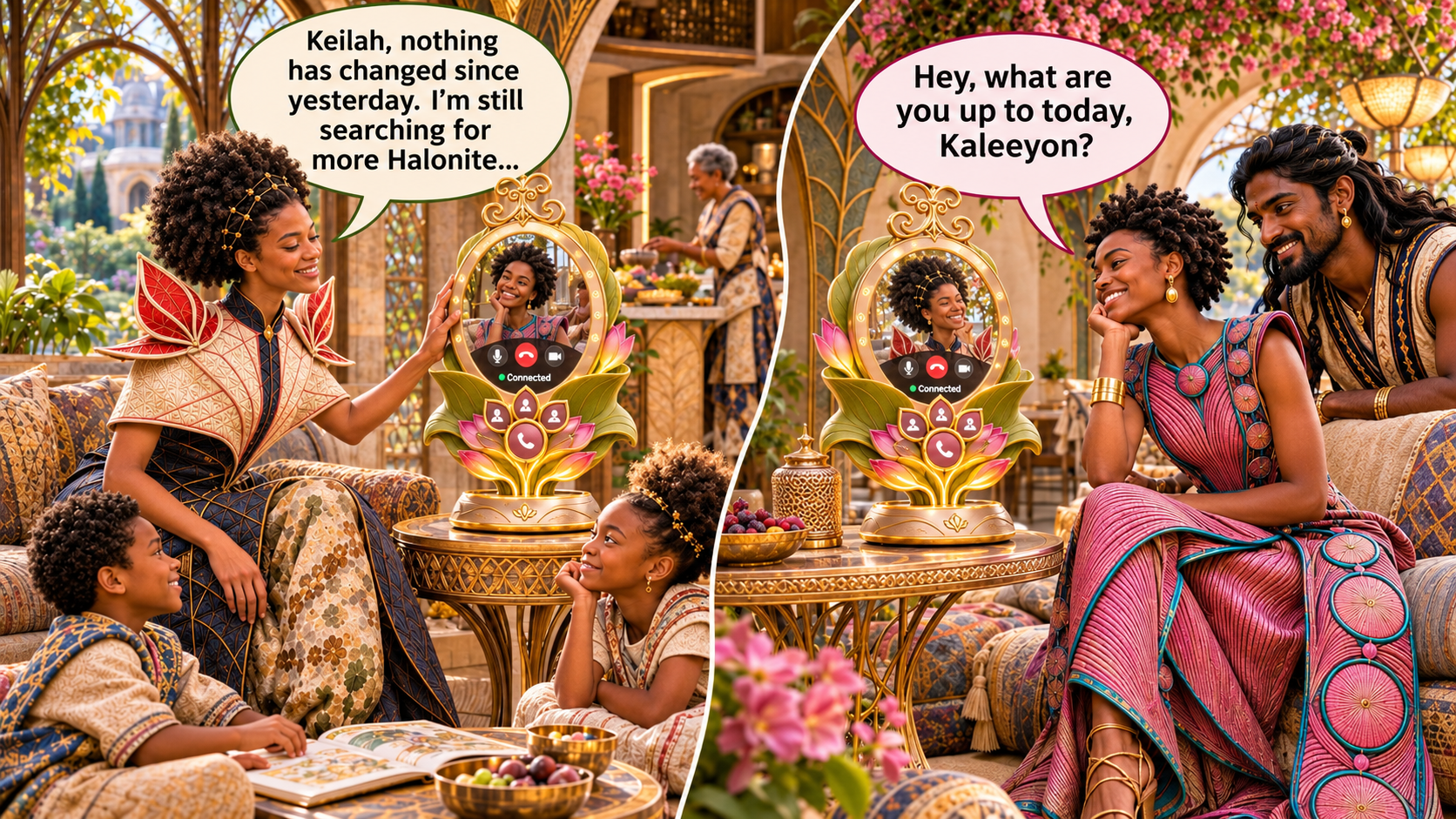


Fold Your hands and Mope or Join hands and Cooperate…You Decide…

Trott Bailey Family Civilization
The Earth Is Young and Rich in Resources
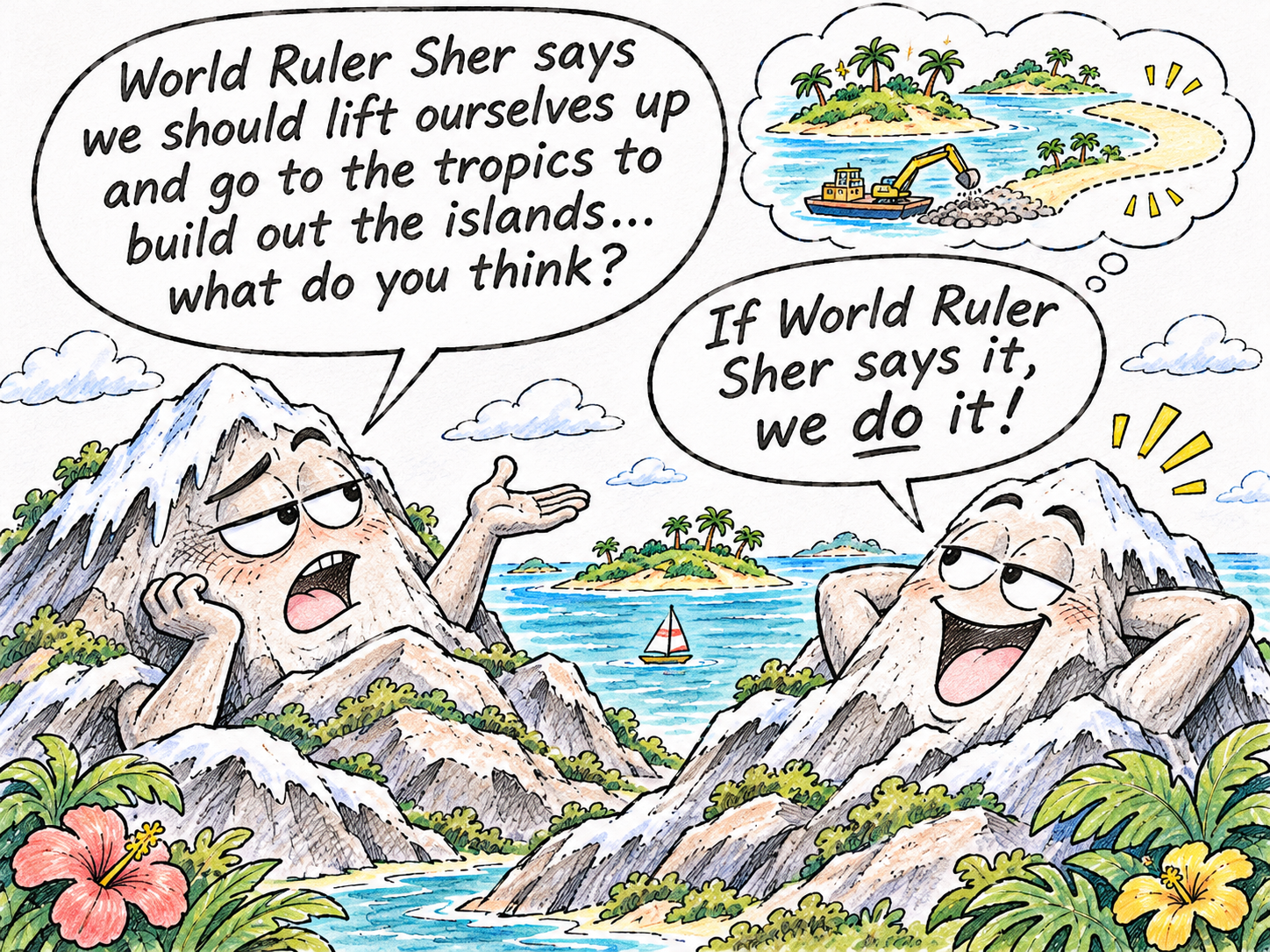
The Earth is young, rich in resources, and full of talented people. Yet the leaders and citizens have decided to fold their hands, put their hands at their jaws, and mope about the lack of jobs and money.
As a result, the Earth can be rich in resources while its inhabitants remain young in their thinking, imagination, and development.
That’s why what is currently considered luxury, which only a fortunate few can ever achieve in this life, is paltry and really should be the bare minimum.
From my perspective as World Ruler Sher, not even your best ideas of luxury living for a fortunate few are worthy of being the base minimum for a citizen in the Trott Bailey Family Civilization.
Just the very fact that you have to pay money to live, much less live luxuriously, shows backwardness.
I must pay to live well on the Earth? I must pay my brothers and sisters, my uncles and aunts, to live well. I must pay…just to live… even just live poorly I have to pay….sit with that thought? who decided this? why was this course of action taken when we could have cooperated like the ants do?
When instead, we could have all joined hands and created a world where we all cooperate to live beautifully and delightfully.
1. The Earth Is Young
At what age should Earth actually be considered old?
We are told that the Earth is approximately 4.54 billion years old. That sounds very old when compared with a human lifetime. But what is the expected lifetime of a planet? At what age does a planet reach maturity? And what would an old Earth even look like?
I consider the Earth young in its age, its thinking, and its level of development.
1a. The Earth Is Young and Rich in Resources
Look at what is already around us.
Stones, enormous boulders, sand, clay, timber, bamboo, metals, minerals, semiprecious stones, gems, water, sunlight, plant fibres, fallen branches, compostable materials, seedlings growing beneath established trees, and plants producing new seeds season after season.
Then consider the machinery, tools, equipment, scientific knowledge, and the enormous range of human talent already present.
There are people who can build ships, design machines, grow food, cut stone, shape timber, weave magnificent textiles, make furniture, construct buildings, repair engines, create beautiful landscapes, and invent things that have never existed before.
What an extraordinary collection of resources and capabilities to have at our disposal!
1b. A Planet Can Be Billions of Years Old and Still Be Young in What Its Inhabitants Have Learned to Accomplish
The age of the planet tells us very little about the maturity of its civilization.
Humanity has developed extraordinary technologies, yet our everyday systems often remain terribly primitive.
We are still learning how to use the materials around us, organize our talents, build comfortable environments, and cooperate with one another.
We should be enjoying ourselves with all this work!
2. Extraordinary Wealth of Materials and Astonishingly Low Living Standards
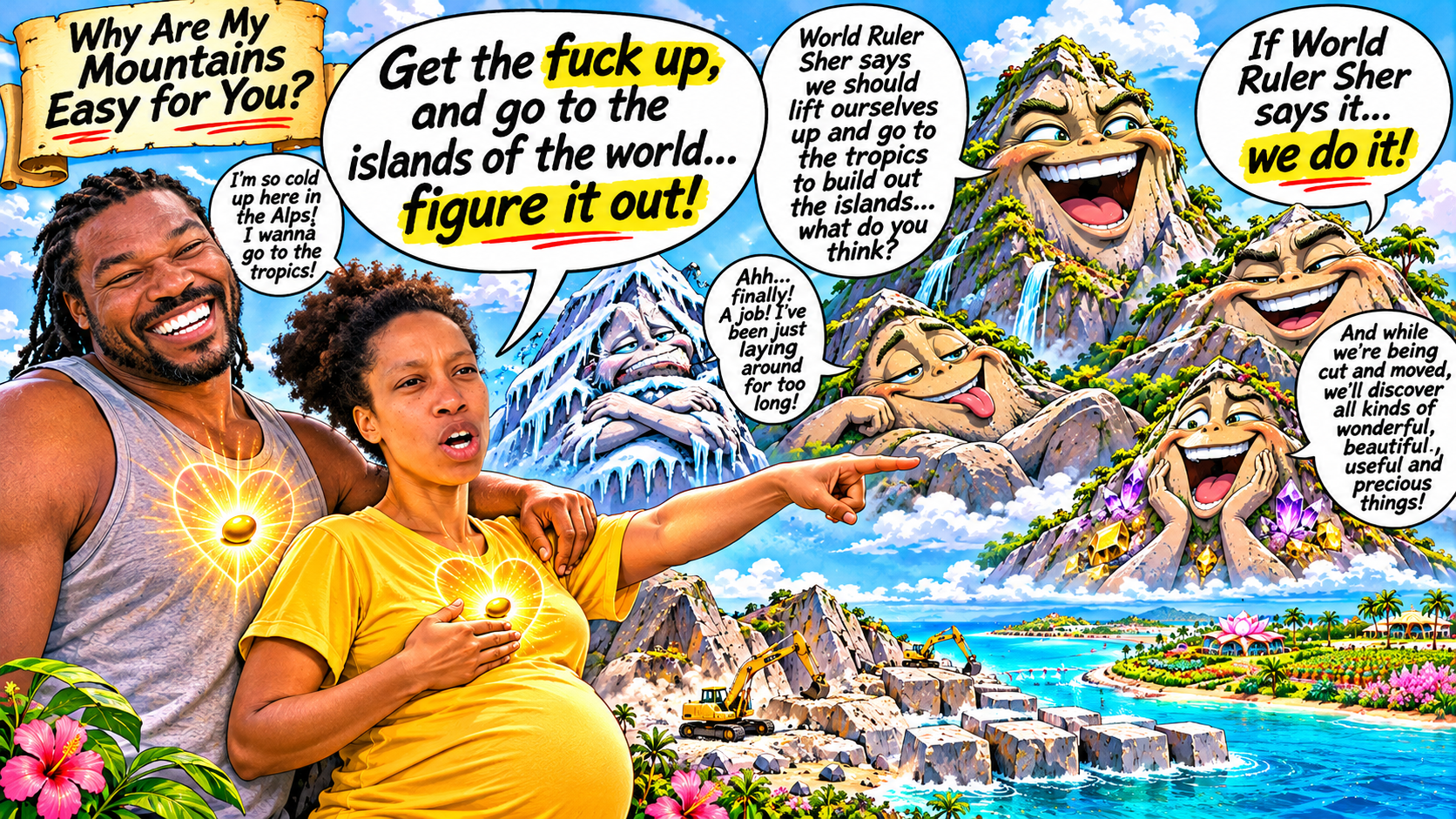
Get it through your thick heads!
Look at all the wonderful things already lying around us. Look at the machinery, tools, materials, buildings, land, and talented people.
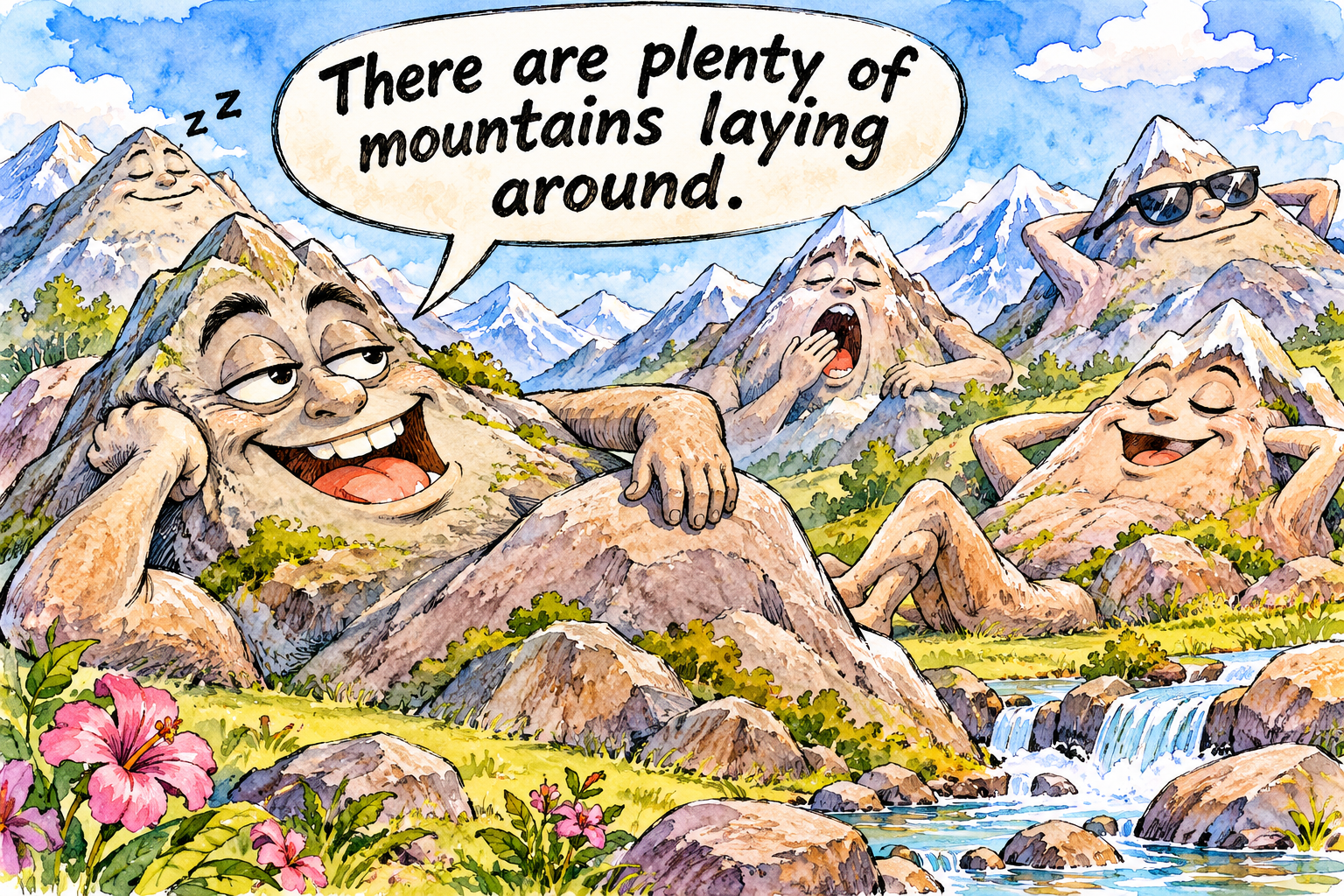
Why are we sitting around moping about the lack of jobs and money?
There are homes to build, ships to manufacture, waterways to develop, playgrounds to invent, food forests to establish, appliances to improve, and entire landscapes waiting for thoughtful development.
Yet national leaders have accepted conditions in which millions of families struggle to secure a decent home, adequate food, proper healthcare, transport, and the simplest conveniences.
Someone receives a beautiful home with a garden, fresh organic food, pleasant views, good ventilation, skilled household assistance, and the freedom to travel, and we call it luxury.
For what?
These are fairly basic pleasures that human beings are capable of arranging for one another.
I have considerably grander plans for the inhabitants of the Earth.
3. Trott Bailey Family Civilization Has More Than Enough Vision and Ideas to Employ All of the World
The Trott Bailey Family Civilization has already developed an enormous body of designs, inventions, systems, and living standards covering agriculture, architecture, engineering, transportation, healthcare, fashion, manufacturing, education, household relief, and public life.
There are beautiful things to make, problems to solve, materials to investigate, and countless opportunities for people to contribute their talents.
And I want us to enjoy the process of making the world beautiful.
3a. Imagine Drinking Fresh Coconuts Every Day, for Free
Consider something as simple as drinking a fresh coconut.
People travel thousands of miles to tropical resorts, pay considerable sums of money, and enjoy fresh coconut water while sitting among palm trees.
Perhaps they eat freshly cut fruit for breakfast, swim in beautiful surroundings, enjoy a delicious lunch, and return to a comfortable room overlooking the gardens.
For a week or two, they experience what the tourism industry calls luxury.
Then they return to their ordinary lives.
But why shouldn’t a family enjoy fresh coconuts every day?
Why shouldn’t fresh, organically grown fruits and vegetables be plentiful and freely available? Why shouldn’t people have access to wonderful food prepared by talented cooks using fresh ingredients?
We have already developed extensive food systems for the Trott Bailey Family Civilization.
Our Keslev District covers agriculture, food cultivation, preservation, processing, storage, and distribution. Foodway 99 brings edible plants into ordinary public environments, while our Sabenneries provide places where people can receive and enjoy beautifully prepared food.
We have designed orchards, vegetable-growing areas, grain systems, fruit-processing facilities, food preservation methods, and environments for preparing everything from everyday meals to delicious desserts.
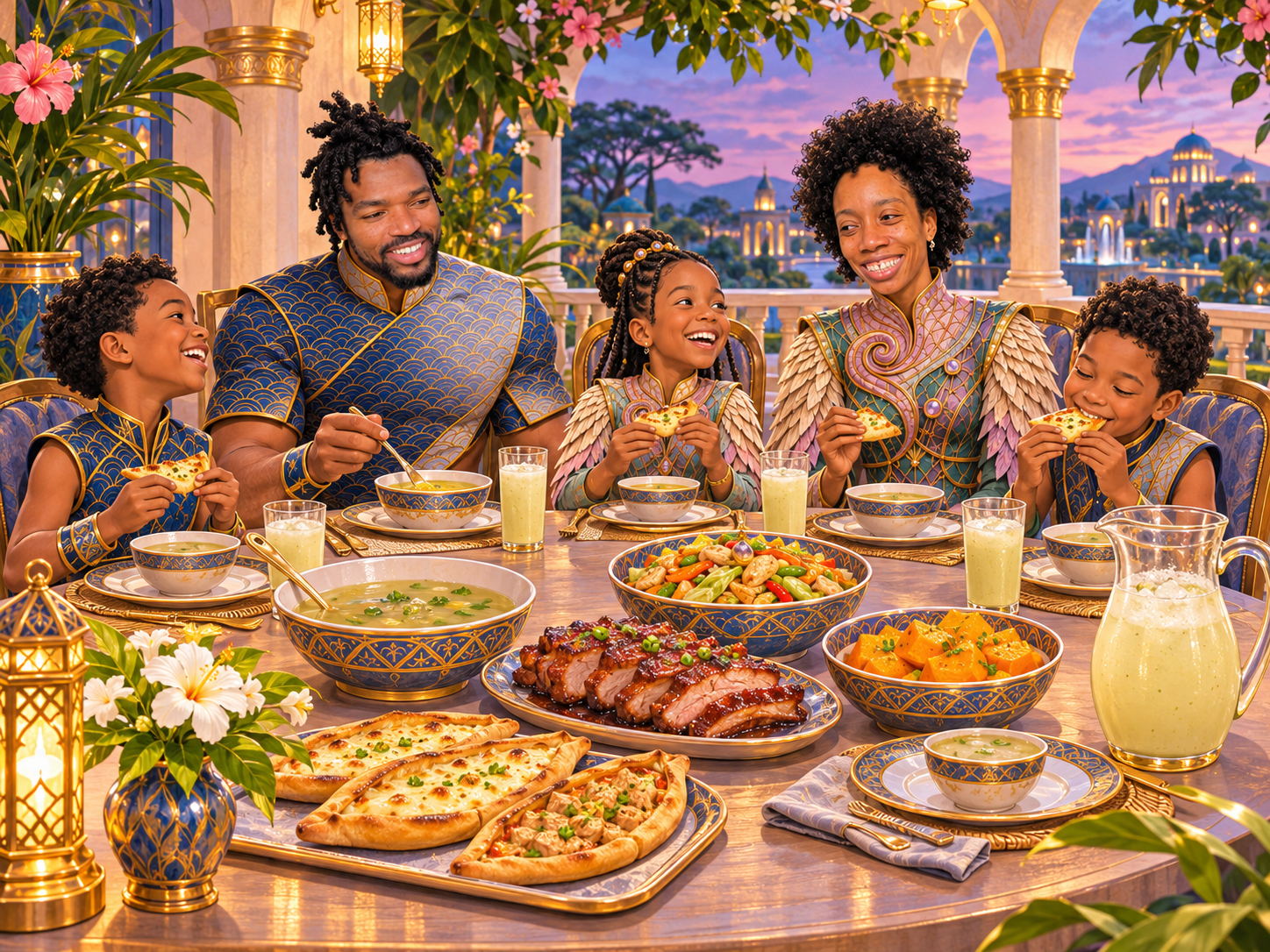
Imagine families enjoying fresh coconuts, fruit juices, ice cream, wonderful breakfasts, freshly prepared lunches, and the different cuisines of the world without a cash register standing between them and their enjoyment.
And think how much work this creates!
Someone cultivates the seedlings. Someone develops the orchards. Others design harvesting equipment, maintain machinery, study soil, preserve food, prepare meals, and develop recipes.
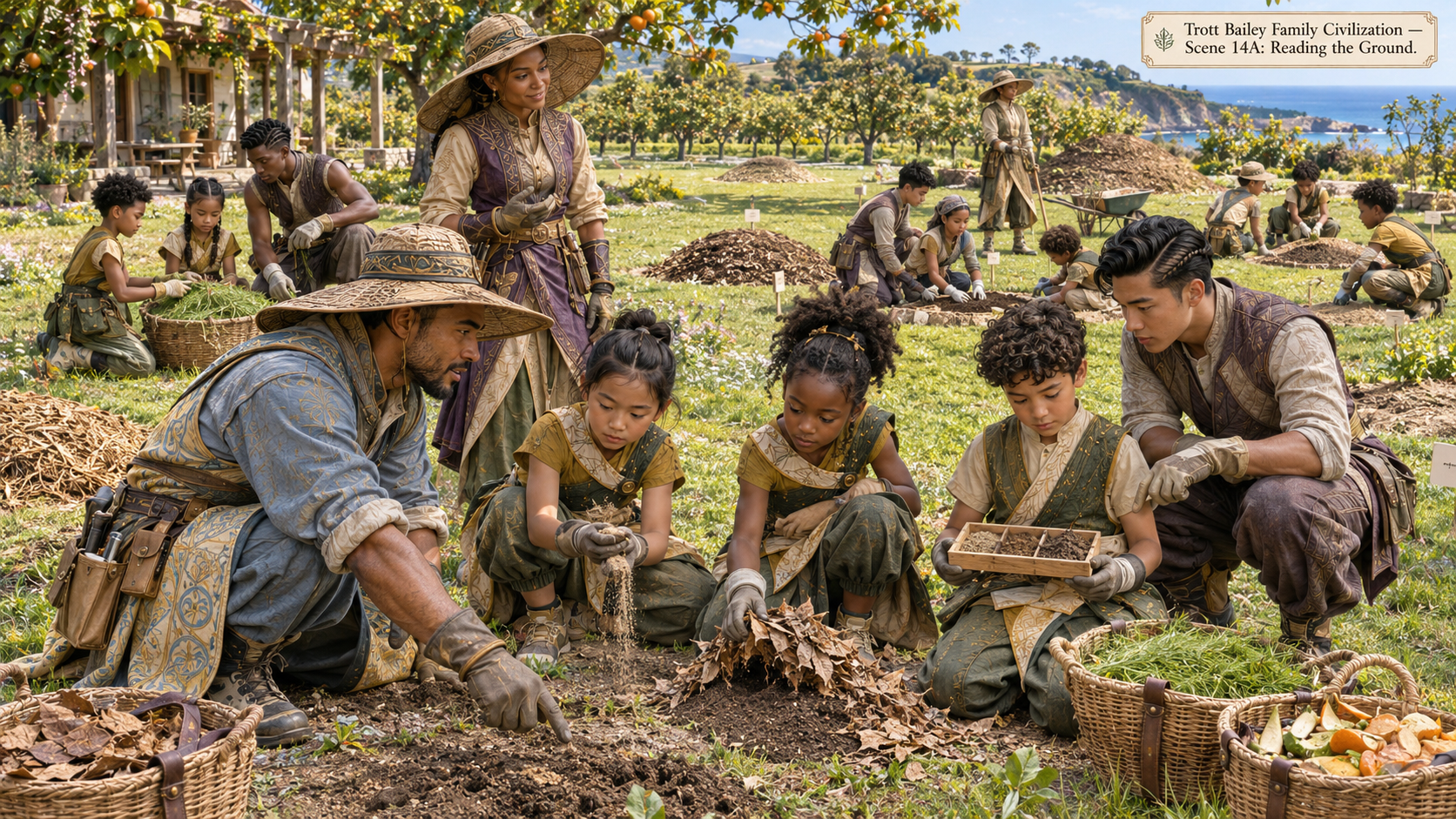
We have also begun practical Foodway work in Prado, Bahia, where our family has been investigating how to establish productive growing areas in sandy ground.
We have observed fallen organic material beneath established trees, watched pumpkins spread across exposed sand, examined how different plants grow, and worked with bananas, coconuts, papaya, tomatoes, flowers, and other useful plants.
A banana plant produces food while providing shade, leaves, and useful biomass. A pumpkin vine can produce food while covering the ground. Flowers bring beauty and offer resources to visiting insects.
We are still testing and developing these methods.
Now imagine what can be accomplished when people throughout the Civilization have suitable land, tools, machinery, skilled assistance, seeds, planting materials, and opportunities to contribute their own discoveries.
Fresh coconuts every day would be a rather modest pleasure among the many things available to enjoy.
3b. Beautiful Homes That Breathe and Have Room for Life
One of the first things people do when they become wealthy is acquire a larger, more comfortable house, preferably with pleasant surroundings, beautiful views, privacy, good ventilation, and room to enjoy themselves.
I consider these fairly ordinary requirements for a good family home.
The Trott Bailey Family Civilization has developed its own architecture around the actual activities of family life.
Our homes are not those modern boxes where every function is packed into one building, with rooms squeezed together and a tiny piece of land left around the edges.
We design spacious family compounds with distinct architectural bodies, beautiful connections between them, and substantial outdoor surroundings.
The Atoboyi supports sleeping and rest. The Flamebiki provides a properly designed cooking environment. The Baliza serves bathing, cleaning, drying, dressing, and personal restoration. HOpto supports laundry functions. Fofua provides edible gardens.
There are private areas for the husband and wife, family gathering places, children’s spaces, verandahs, shaded outdoor routes, courtyards, productive landscapes, and additional facilities developed around the family’s needs and interests.
Proper cross ventilation should be built into the architecture.
Imagine resting in a beautiful sleeping room where air moves comfortably, protected from excessive heat, with pleasant views and a quiet environment.
Imagine a spacious cooking pavilion with suitable equipment, work surfaces, ventilation, storage, washing systems, and everything conveniently arranged for preparing excellent meals.
And imagine stepping outside into generous surroundings filled with fruit trees, flowers, shaded paths, useful plants, and places to enjoy the day.
Some families may enjoy extensive orchards. Others may develop remarkable gardens, animal environments, workshops, waterways, sports grounds, or specialised areas connected to their interests.
The Civilization’s marriage standard establishes a minimum land entitlement of 50 hectares for each married couple, with the possibility of further expansion according to their capabilities and needs.
Build-Life is responsible for creating the family’s principal home, while the Marriage Hall ensures that the essential household is delivered within the established one-month standard.
The compound can continue developing as the family grows and makes further choices.
Think of the architects, engineers, stoneworkers, carpenters, ceramic makers, furniture makers, gardeners, water technicians, machine operators, and other skilled people involved in creating these living environments.
And every profession has room for invention.
Why should a family’s home be an exercise in squeezing life into the smallest possible space when we can create such magnificent environments for living?
3c. The Home Should Relieve Parents, Not Give Them Endless Work
A beautiful home should also work beautifully.
I am a wife and mother of three children. I know how much activity can take place in a family home from morning until night.
Children eat, play, scatter things, invent things, carry objects around, make messes, get themselves dirty, and somehow discover new ways to keep everyone busy busy busy.
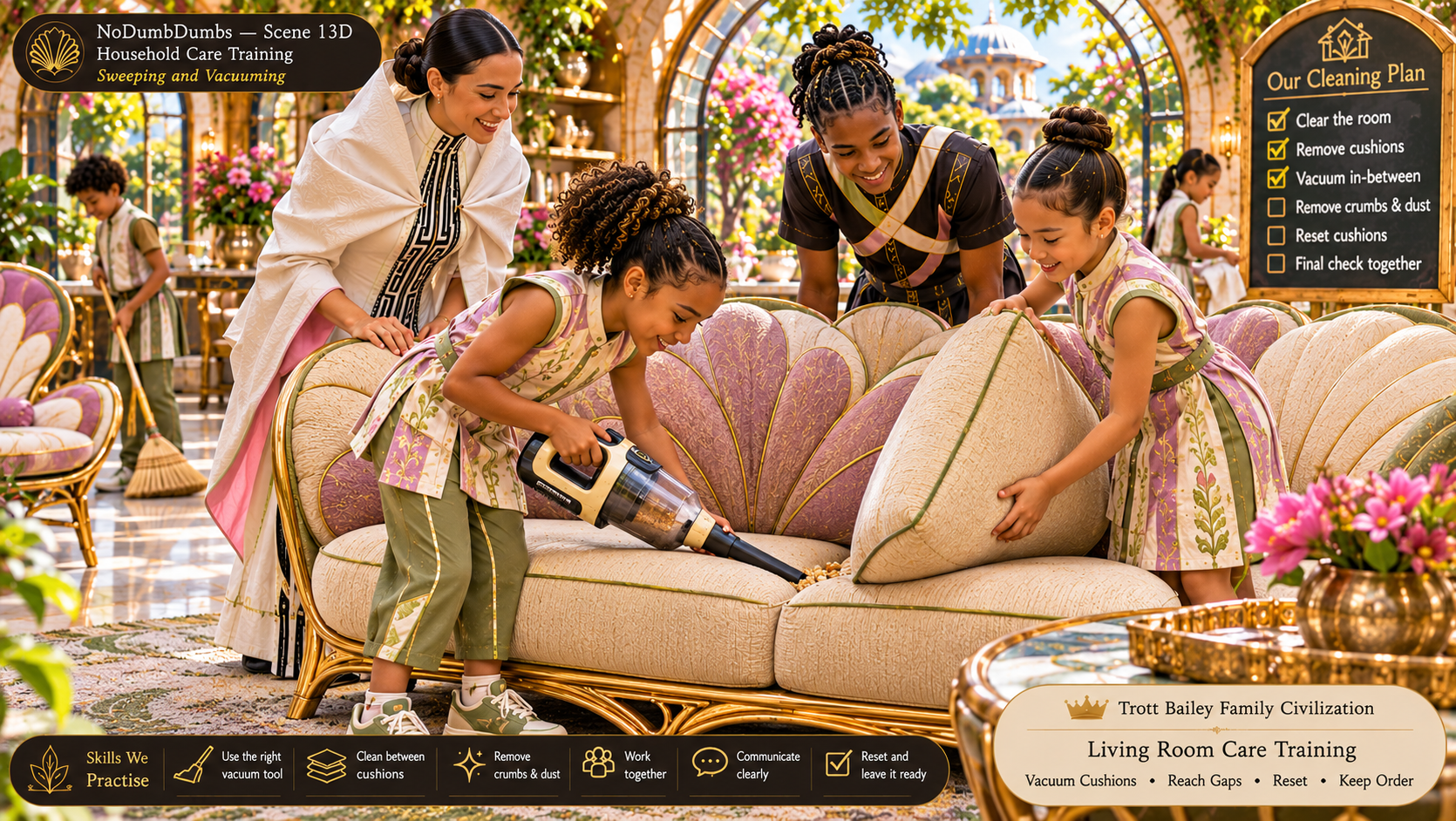
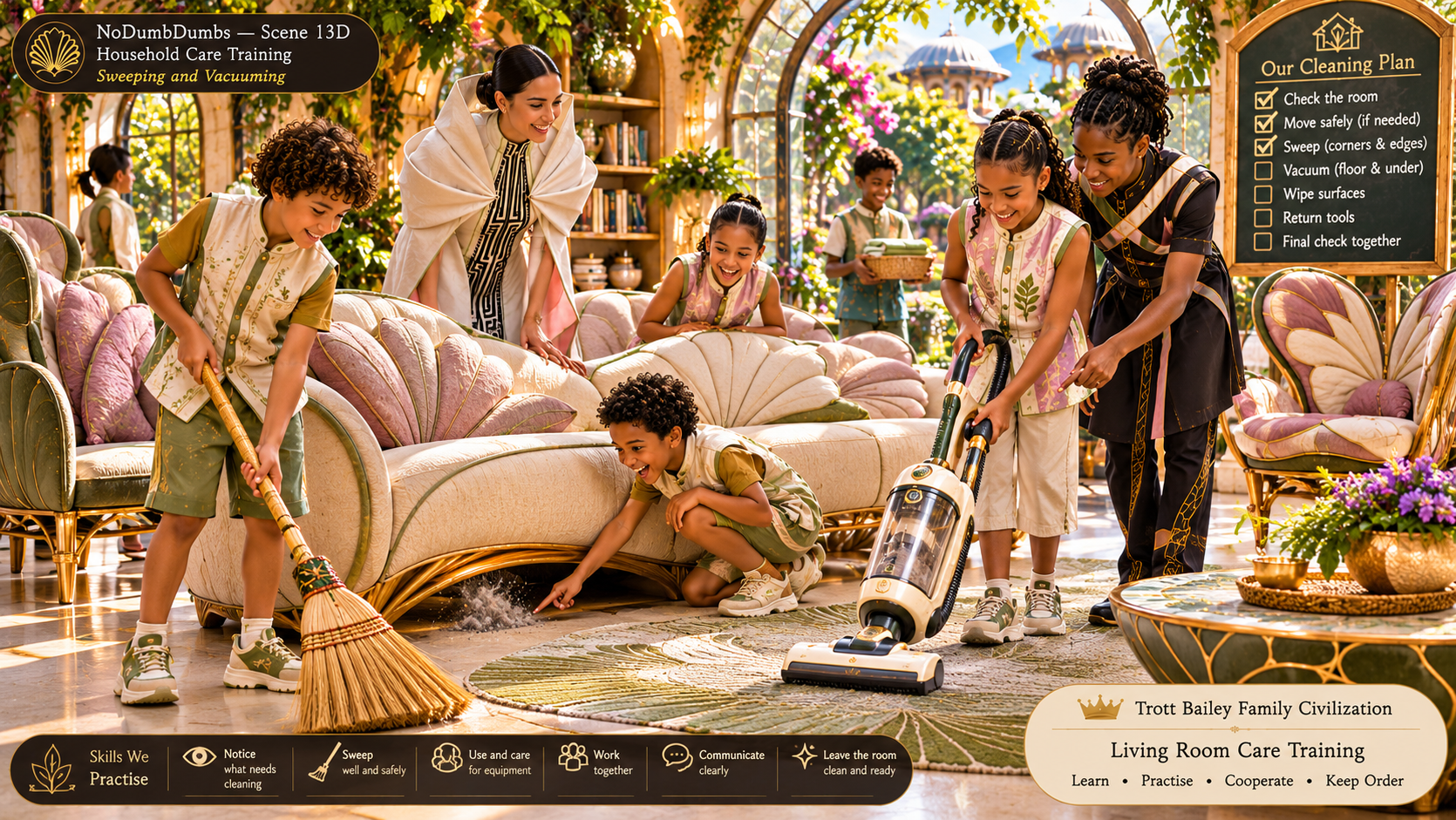
There is washing, cooking, sweeping, food preparation, cleaning, clothing care, bathing, tidying, and getting everyone ready for whatever the family plans to do next.
I enjoy a clean, pretty, orderly environment, but I also want us to have plenty of time for one another and for the many interesting things we can do together.
So why shouldn’t our homes have excellent systems for relieving parents?
Take laundry.
A family needs somewhere suitable to receive used garments, wash them, dry them, care for them, and return them ready for use.
That requires more than putting a washing machine somewhere in the house.
Our HOpto and garment-care systems address the movement of clothing, appropriate washing equipment, drying arrangements, fabric care, storage, and clean return.
Or consider a child coming inside after a wonderful morning outdoors.
The child may be covered in sand, mud, grass, or whatever exciting substance the day’s adventures have provided.
Our Child Ready Lobe and Baliza systems provide distinct places and equipment for washing, drying, dressing, preparing, and returning children comfortably to their activities.
The Child Care Dock includes purpose-designed cleaning tools. The Boom-Bloom Relief Pod supports a child’s toilet routine. Other inventions address hair, crumbs, bathing, garments, and the ordinary little challenges of caring for children.
The cooking environment has its own inventions, including the Kultan Rinse Sink and specialised cooking arrangements.
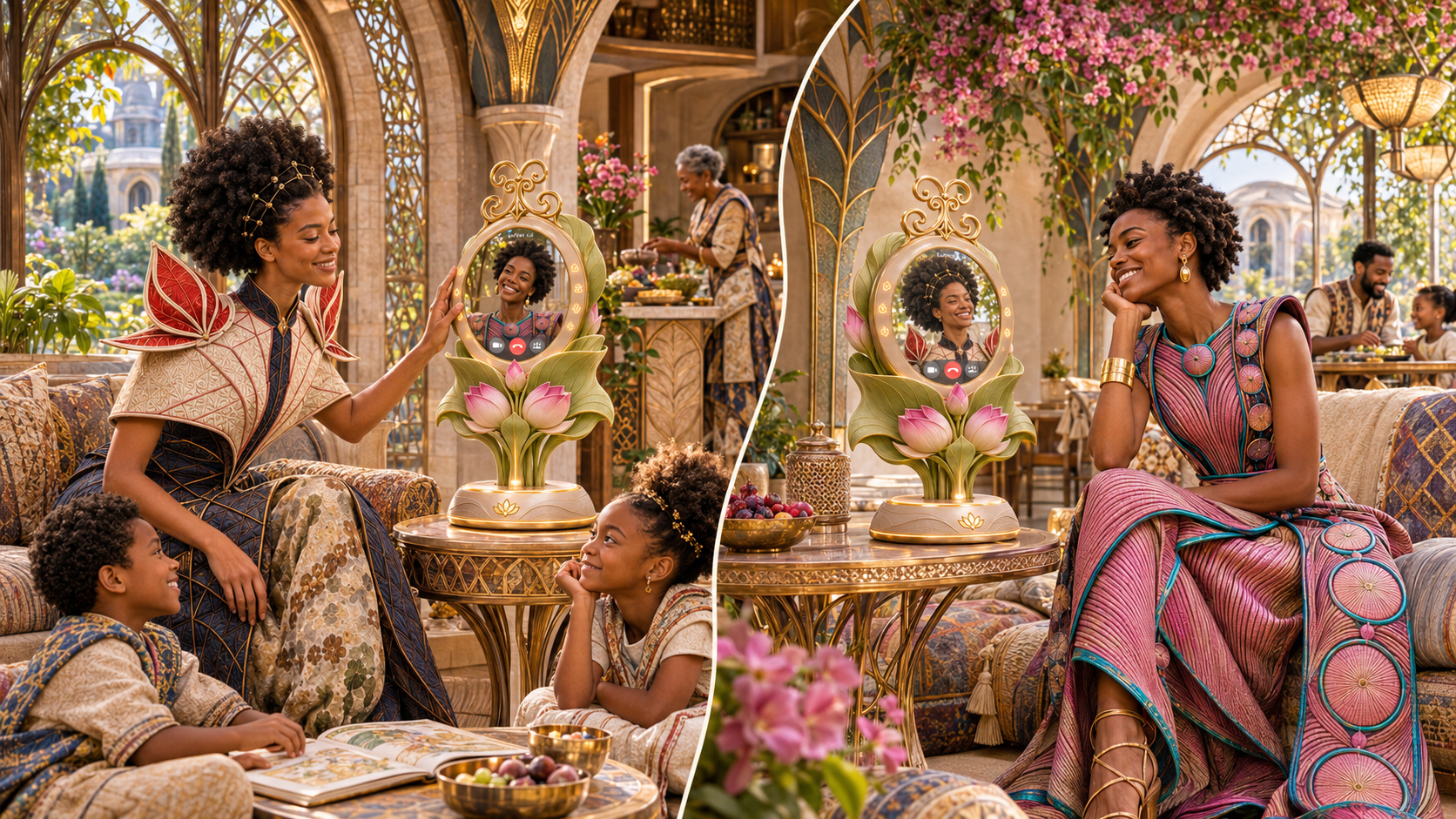
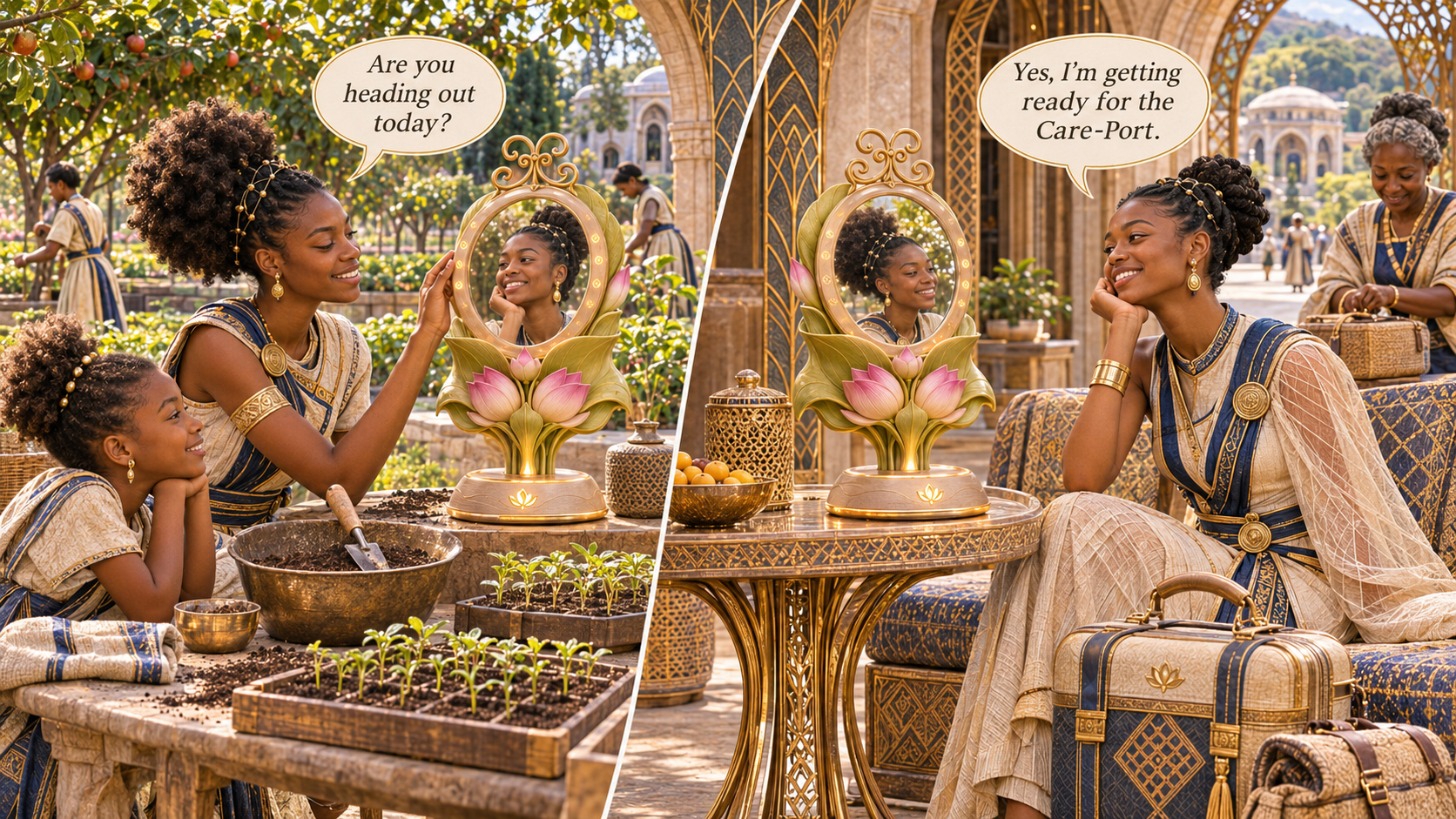
Mother-Sight provides another layer of household awareness and support.
And then there is Service Shadow, the organised support structure that helps keep homes, buildings, and public environments clean, stocked, repaired, prepared, and functioning.
The people providing these services have proper equipment, training, working conditions, and relief arrangements. Machinery carries demanding and repetitive work wherever practical.
Imagine how much family life can improve when the tools, appliances, buildings, and supporting services are all thoughtfully arranged.
A mother can spend more time with her children. A husband and wife can enjoy quiet mornings together. The family can go swimming, cycling, hiking, exploring, or simply sit outdoors eating something delicious.
Meanwhile, the systems that support their home continue functioning.
3d. Free Access to the Talents of Our Brothers and Sisters
Consider how much talent exists among people.
One person can make the most beautiful garments. Another can repair almost anything mechanical. Someone knows how to grow magnificent fruit trees. Another person understands medicine, dentistry, engineering, music, carpentry, or boatbuilding.
Why should we need to purchase one another’s contributions before we can live well?
In the Trott Bailey Family Civilization, people have free access to goods, services, and the capabilities of talented and skilled people.
Our Fashion Stewardship Network is an excellent example.
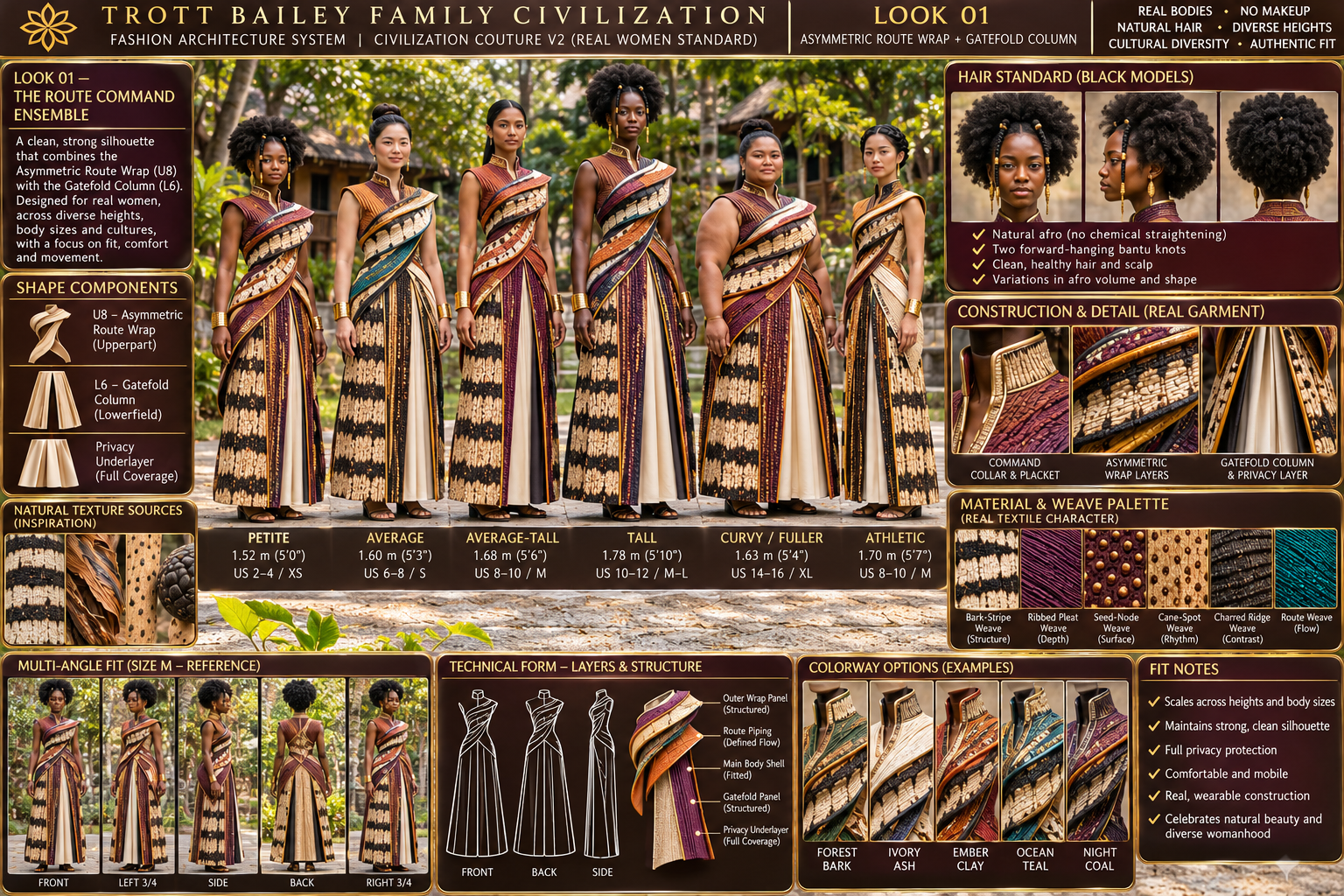
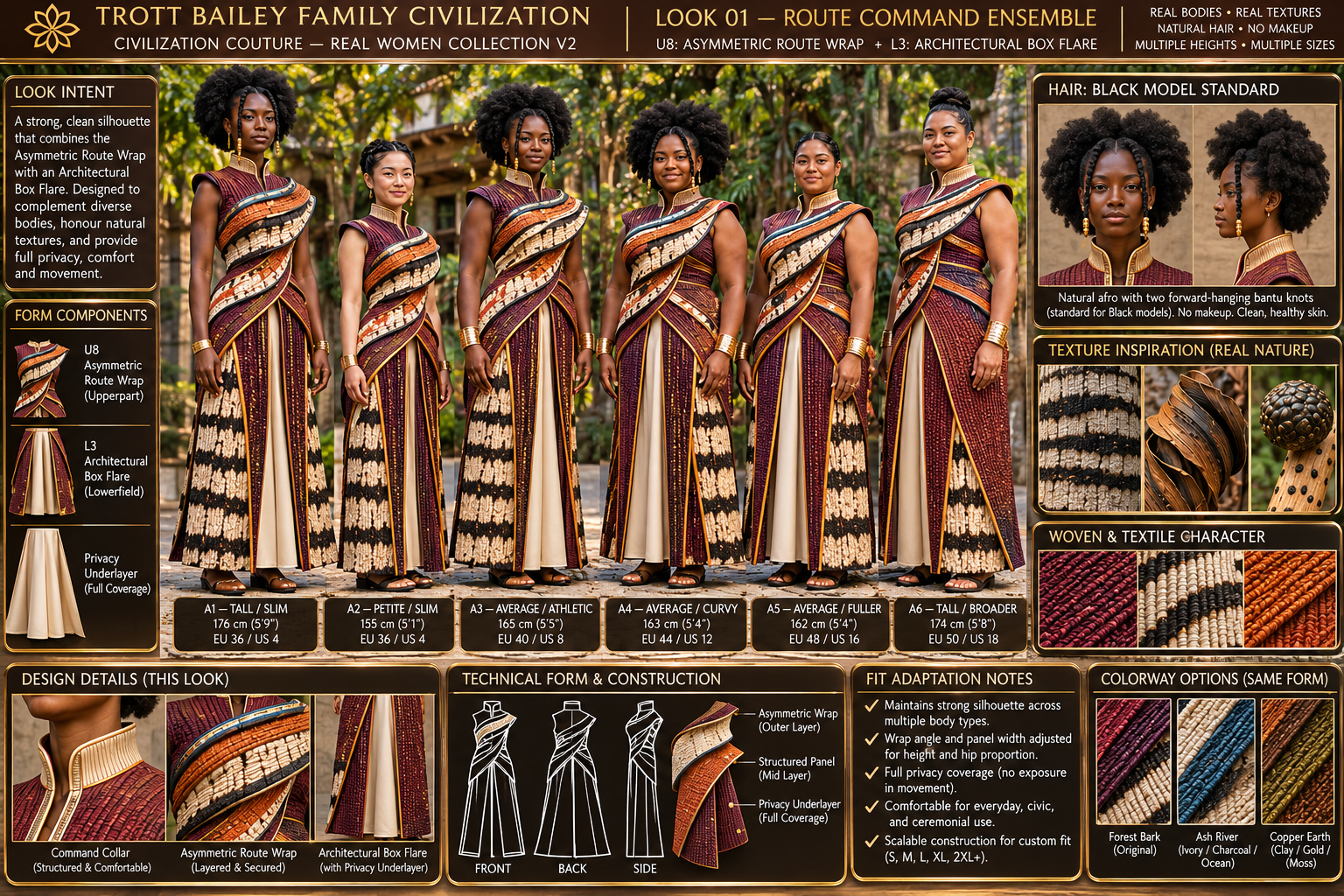
A family can receive beautifully designed garments, footwear, fitting services, alterations, care, repairs, and replacement through a network of skilled people and properly equipped facilities.
We have already developed distinctive garment designs, textiles, specialised work garments, children’s clothing, and facilities for manufacturing and caring for them.
Think of the textile makers, dyers, garment designers, footwear specialists, fabric-care stewards, fibre growers, and craftspeople involved.
The same principle extends to healthcare.
Our Health Upon Health systems include access to medical professionals, dentistry, preventive care, emergency treatment, maternal care, and continuing assistance.
Our Tideechi maternity environments provide appropriate medical capability alongside private family space.
One of our maternity standards says, “We do not make birth harder than it already is.”
Excellent healthcare should be freely available, with properly equipped facilities and capable people providing care.
And why stop there?
Our travel systems include Travel Homes, Traveller Houses, Makji, FEX, marine transportation, and supporting services.
A family should be able to visit another district, explore the coast, travel through the mountains, or spend time learning from people with interesting skills.
Travel is free.
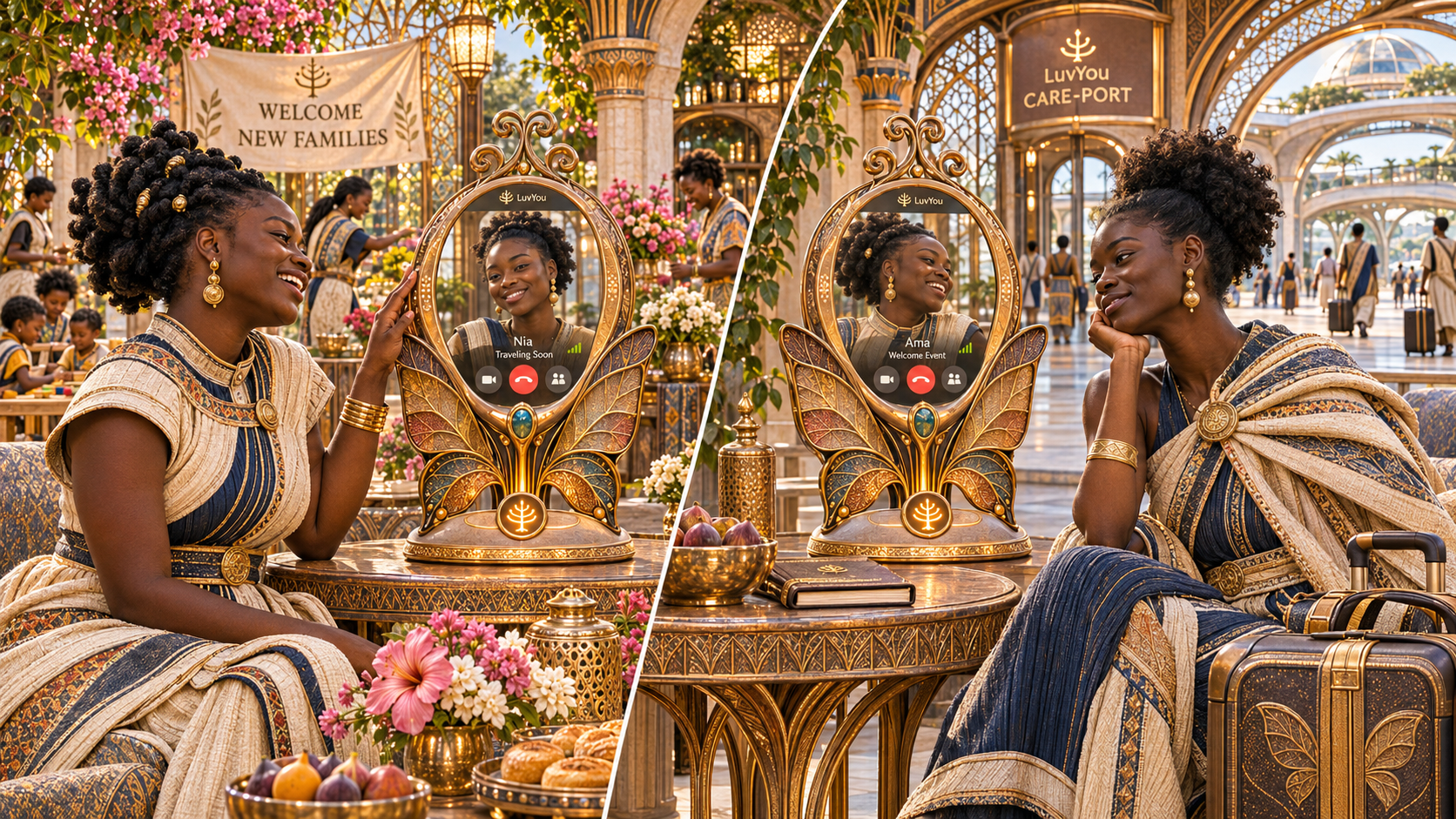
We have even developed arrangements through the Fashion Stewardship Network so families can receive suitable garments at their destinations instead of hauling enormous wardrobes around the world.
Imagine what can happen when a family needing an engineer, a medical professional, a garment maker, or a skilled craftsperson can access that person’s capabilities freely.
And imagine those same people enjoying excellent homes, food, clothing, healthcare, transportation, and all the other things their fellow citizens produce.
3e. Children Should Grow Up Surrounded by Beauty, Adventure, and Capability
Children should have room to run, play, explore, build, create, experiment, and develop their abilities.
Our Civilization has designed Baby Worlds, specialised child environments, outdoor adventure areas, and places for practical learning.
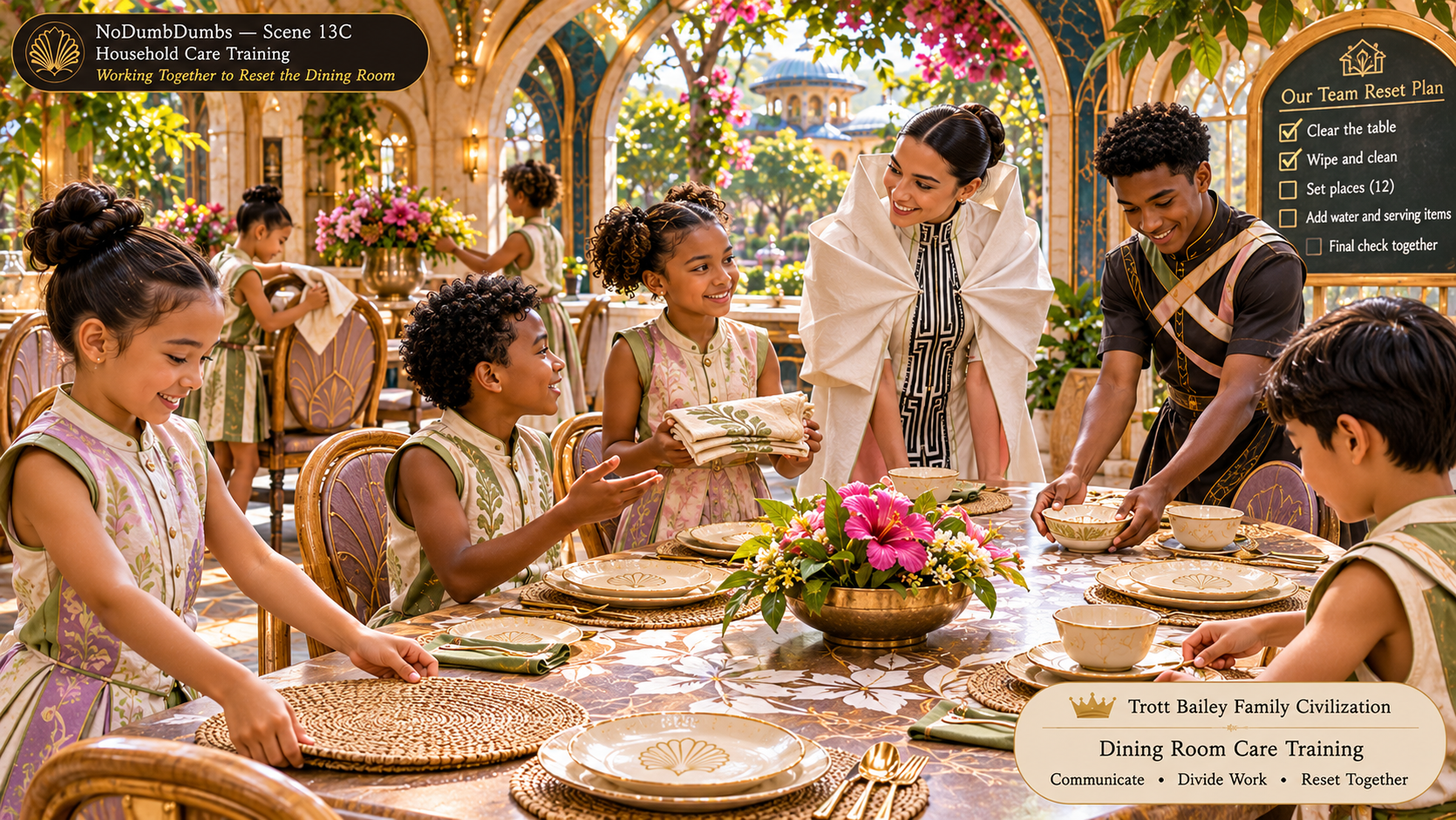
We have also developed NoDumbDumbs, our lifelong capability system.
I want children to learn how to care for a home, grow food, use tools, work with materials, prepare meals, build things, make repairs, understand machinery, care for animals, and develop practical judgment.
A child interested in sailing could spend time learning from capable sailors and boatbuilders.
Another might love weaving, gardening, engineering, woodworking, cooking, or making interesting objects.
Some children will discover passions they never knew existed because the Civilization gives them opportunities to try.
Our NoDumbDumbs system includes practical activities that begin at home and expand through district learning and extended travel to places where particular skills can be learned well.
One of the principles we have been exploring is resourcefulness.
We want children to use their eyes to spot solutions given their local constraints, rather than immediately folding their hands and declaring that there is nothing around to use.
If a child needs to improve the soil for a planting area, perhaps there are useful fallen leaves, grass cuttings, suitable kitchen returns, or other organic materials available.
The child can learn what those materials are, what they do, how they should be prepared, and what happens when they are used.
The same thinking applies to building, repairing, inventing, and making things throughout life.
We are a Civilization that likes to live in beauty, order, and delight while still remaining brave and capable.
3f. Look at All the Things We Can Make!
Now consider the materials themselves.
Stone can become paving, walls, furnishings, sculpture, and beautiful architectural features.
Clay can become tiles, vessels, bricks, ornaments, and useful household objects.
Timber and bamboo can become furniture, structures, tools, equipment, boats, and countless other things.
Plant fibres can become textiles, baskets, cordage, and manufactured materials.
Metals can be shaped into machinery, tools, transport systems, appliances, building components, and inventions that improve everyday life.
We can develop workshops, factories, fabrication facilities, research spaces, and specialist production centres to transform these materials into useful things.
Stone cutters, woodworking machines, robotic arms, lifting equipment, textile machines, agricultural tools, and food-processing equipment can carry enormous amounts of work.
Consider a large boulder.
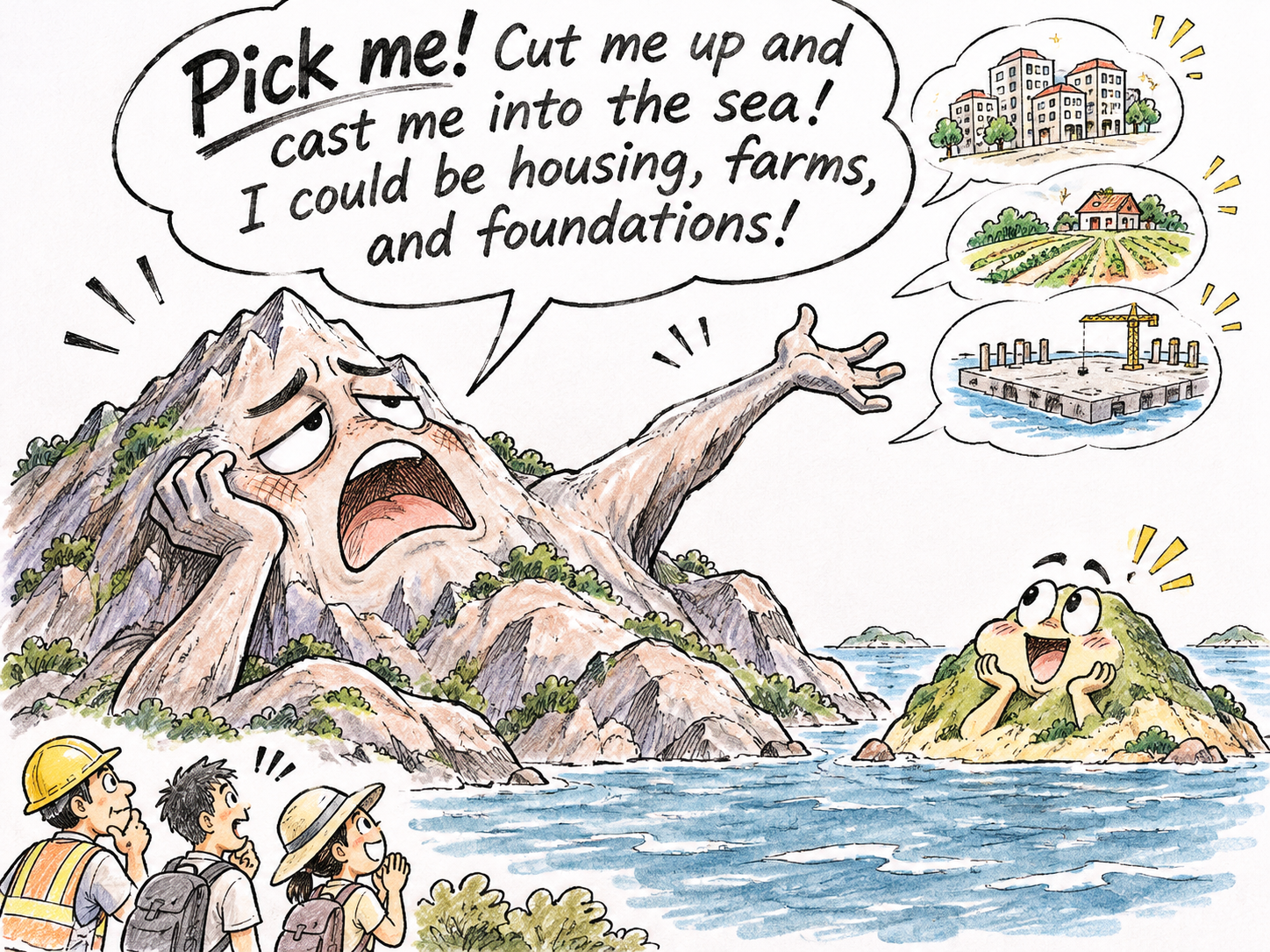
One person may see an obstacle that needs to be removed. Another may imagine a beautiful sculptural feature, a piece of furniture, or a natural component of a landscape, or strong, sturdy foundations for a house.
With the right equipment and knowledge, an enormous range of possibilities opens up.
Or consider an idle machine.
Perhaps it needs repair, a replacement component, a skilled operator, or a new assignment.
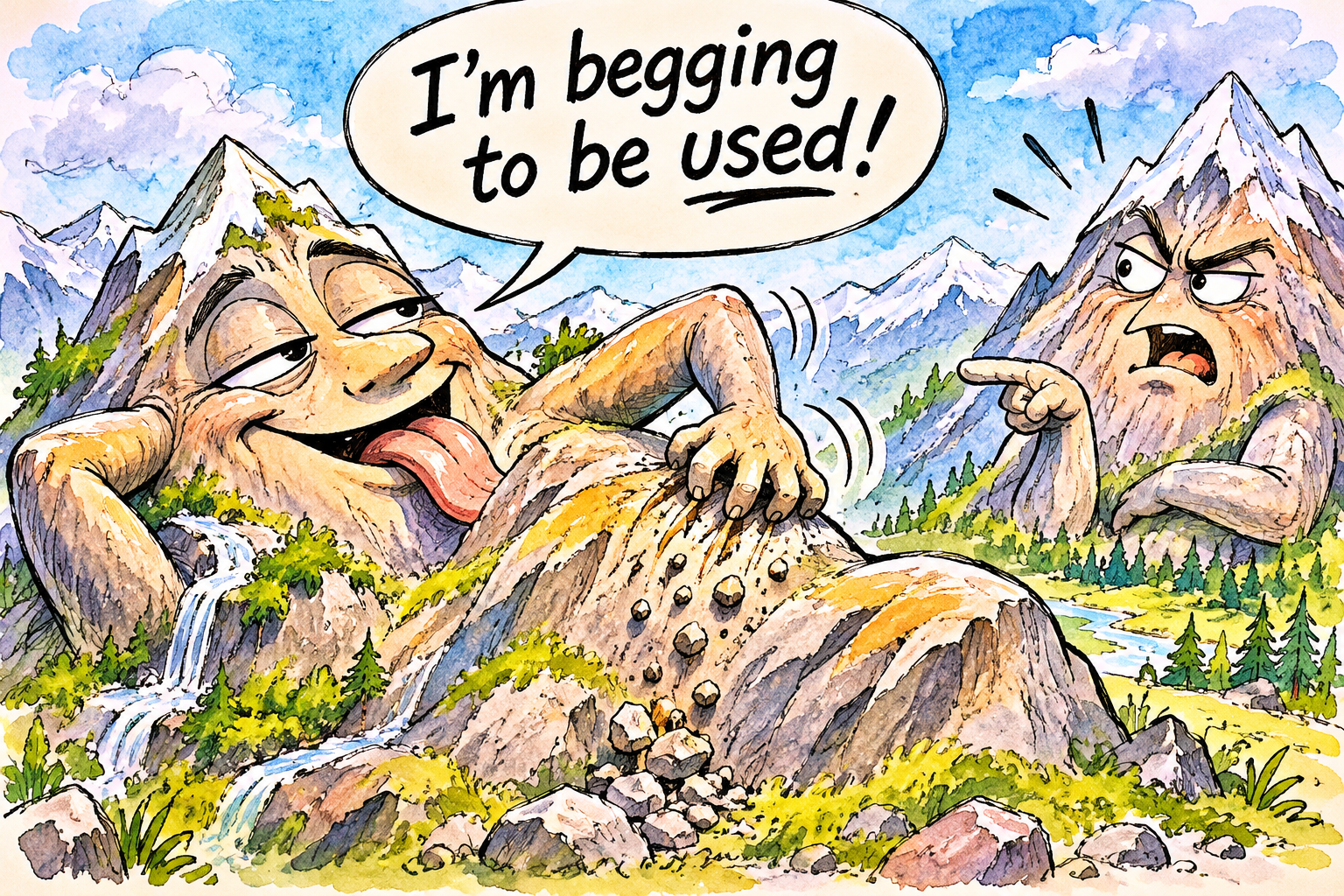
A useful machine sitting unused while there is work waiting to be done is a wonderful opportunity for resource coordination.
This is why our Resource Reality Before Money principle is so important.
We first examine what actually exists, what it can do, who understands it, and where it can be useful.
Our Kaitou system is designed to make this kind of resource information visible.
And I want our makers to keep inventing.
There should be new kinds of furniture, wonderful appliances, household equipment, boats, children’s play structures, agricultural tools, food-processing machines, textile systems, and inventions that we have not even conceived yet.
3g. There Is More Than Enough Useful Work to Employ the World
Take a single beautiful public pavilion.
Before the first visitor arrives, someone has to imagine it, design it, examine the site, prepare the ground, obtain suitable materials, make components, construct the building, install equipment, test the systems, furnish the space, and prepare the landscape.
After it opens, there are people caring for gardens, maintaining machinery, cleaning, repairing, hosting activities, arranging supplies, and improving the facilities.
One beautiful place can support an astonishing variety of contributions.
Now multiply that across family compounds, orchards, public gardens, marine facilities, transportation networks, healthcare buildings, learning environments, workshops, manufacturing centres, and entire districts.
Our published Civilization work already identifies more than a hundred kinds of public roles, with many additional specialist branches.
But I am especially interested in the work we have not yet imagined.
What happens when talented people have excellent tools, suitable materials, wonderful places to work, access to skilled collaborators, and the freedom to pursue useful ideas?
What might an experienced carpenter invent after collaborating with a textile engineer?
What could a farmer and a machine designer develop together?
What could an architect learn from someone who has spent decades understanding how a particular tree grows?
I want to see what people come up with.
This is part of what we call Shubaka.
Shubaka is meaningful contribution to the Civilization, organized around people’s talents, interests, skills, capabilities, and the needs of the wider community.
We have developed it with family life in mind.
Husbands and wives can contribute together where suitable, with opportunities for relief, rotation, learning, and changes of responsibility.
Family care and work around the family compound also count as contribution.
A person should be able to enjoy meaningful work without being separated from the pleasures of family life by endless exhausting shifts.
Pacorips helps organize the needs and capabilities of the Civilization. NoDumbDumbs develops skills. Kaitou makes resources and capacity visible. Service Shadow keeps environments functioning.
I find it remarkable that humanity can surround itself with so much unfinished work and still complain that there is nothing for people to do.
Look around!
3h. Study the Ants to Learn Wisdom
One of the wisest men to ever have lived said, “Study the ants to learn wisdom.”
Now let me add my two cents.
Don’t the ants diligently cooperate each day for the collective good of their world? Aren’t they diligent and organized? Don’t they get a lot of things done by working together toward one common goal?
Are they fighting each other to pick money out of each other’s pockets? Do they only consider their individual interests? Do they isolate themselves in city apartments?
Check for yourselves. Do you realize the great feats they accomplish just by observing where they put their homes?
They excavate sand and dig tunnels into the earth. They build homes within big mighty trees and raise their babies in those trees. You can find them underground and above ground in mounds. They even make little thatch nests.
Are they afraid because of their small size?
No.
3i. Beautiful Living Is Something We Can All Create Together
The people enjoying the Civilization’s abundance are also the people helping to create it.
A family enjoys fruit grown by skilled growers. Those growers enjoy homes designed and built by other talented people. The builders receive excellent food, clothing, healthcare, transport, and access to all the other services the Civilization provides.
An engineer contributes machinery. A garment maker creates beautiful clothes. A doctor provides care. A farmer grows food. An artist creates something wonderful for a public space.
Each person benefits from an enormous range of contributions made by others.
Some contributions may be highly technical. Others may involve patience, careful attention, practical skill, strength, creativity, or the ability to organize things properly.
And we also need people who notice the little things.
Someone may discover that a household appliance is awkward to clean. Someone else may improve the handle on a commonly used tool. A parent may notice that a child’s washing area needs a better drying arrangement.
These observations can lead to inventions that make daily life more pleasant for everyone.
The Civilization develops through the work of its people, while its people enjoy the benefits of the Civilization.
3j. Even Your Best Idea of Luxury Is Too Paltry for Our Minimum Standard
Let us return to what the world calls luxury.
A beautiful home with generous outdoor surroundings. Fresh organic food. Wonderful meals. Good ventilation. Skilled assistance. Well-designed appliances. Healthcare. Free travel. Beautiful garments. Clean public spaces. Wonderful environments for children.
These are among the things wealthy people pay extraordinary sums to enjoy. We have already developed Civilization systems intended to provide them freely as part of ordinary life.
But having our priorities rightly ordered around family and its flourishing takes us considerably further.
Think of free time given back to a family, rather than having to work yourself to exhaustion to maintain fleeting wealth.
Think of the authored systems we have developed around family life, and then consider the things that, currently, even if you had all the money in the world, are not available for sale.
You can purchase an enormous house, fill it with expensive furnishings, and surround yourself with every convenience imaginable. But where does one go to purchase a happy and faithful marriage?
You can pay for the most magnificent children’s environments. Can you purchase back the years you missed while working yourself to exhaustion?
These are among the most precious experiences of human life, yet they receive astonishingly little attention when people discuss what it means to live luxuriously.
The Trott Bailey Family Civilization has placed family formation, marriage, children, and the flourishing of family life at the centre of its design.
Our Marriage Hall supports couples as they establish their marriages and throughout their married lives. The marriage land entitlement provides the foundation for a permanent family compound, while Build-Life is responsible for constructing the principal home.
Our family architecture provides private spaces for husbands and wives, generous environments for children, and household systems that give parents more time to enjoy their families.
Shubaka recognizes family life and its responsibilities, with opportunities for husband-and-wife contribution, relief, and rotation. Caring for the family compound also counts as contribution.
Tideechi provides maternity support. Our children’s systems support their care, learning, and adventures. The wider Civilization provides food, clothing, healthcare, transportation, skilled assistance, and the materials families need to develop their homes and interests.
All these systems are organized around helping families flourish.
Imagine a husband and wife waking up together, enjoying a peaceful morning, spending time with their children, contributing their talents, and returning to a home where they can enjoy one another’s company.
Imagine children growing up with parents who have time to know them, teach them, laugh with them, and enjoy the wonderful little people they are becoming.
Genuine love, loyalty, and affection cannot be manufactured or purchased. But we can build a Civilization that gives families the time, support, and freedom to nurture those relationships.
What good is the finest holiday resort if a father has no time to enjoy adventures with his children?
What good is an enormous mansion if a husband and wife have spent their marriage exhausted, working to maintain it?
From my perspective as World Ruler Sher, having a happy and flourishing family, time to enjoy one another, and the freedom to develop our talents and interests belong among the greatest riches of human life.
And I want our citizens to enjoy these things alongside beautiful architecture, delicious food, productive surroundings, wonderful inventions, and all the other pleasures our Civilization is developing.
Even the finest luxuries currently imagined are too paltry to measure the full standard of living we are working to establish.
The Earth Has So Much More Growing Up to Do
The Earth is young, and its inhabitants have a great deal of growing up to do.
I want to see people using their eyes, their hands, their skills, their intelligence, and their imagination to create a magnificent world.
I want us to cooperate, to develop our talents, to enjoy the talents of others, and to make beautiful living an ordinary part of human life.
We have an entire Earth to develop!