

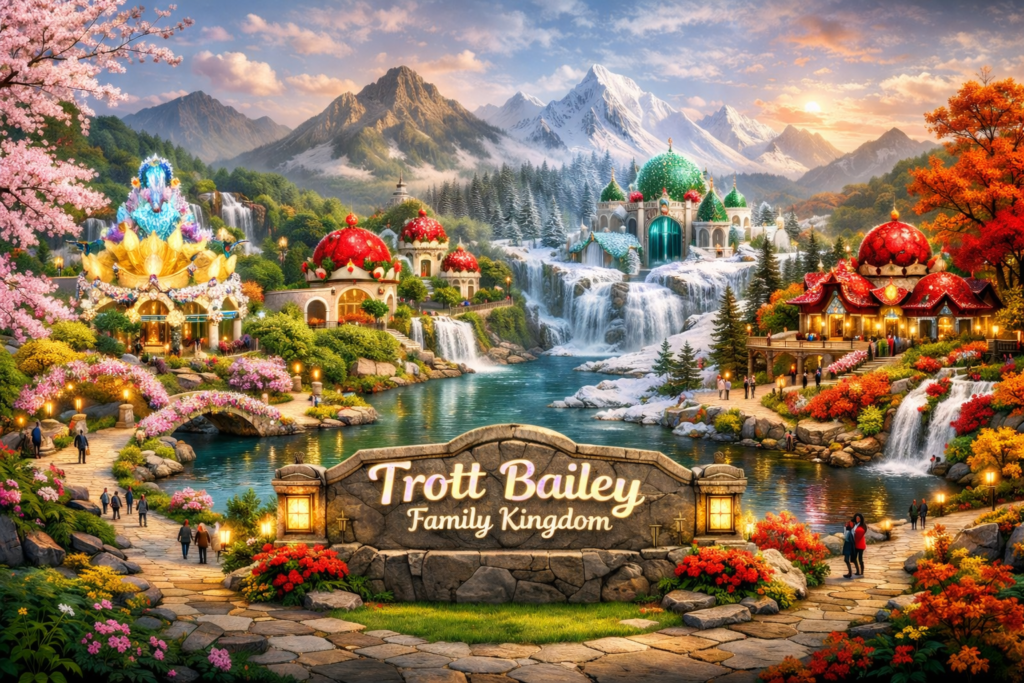
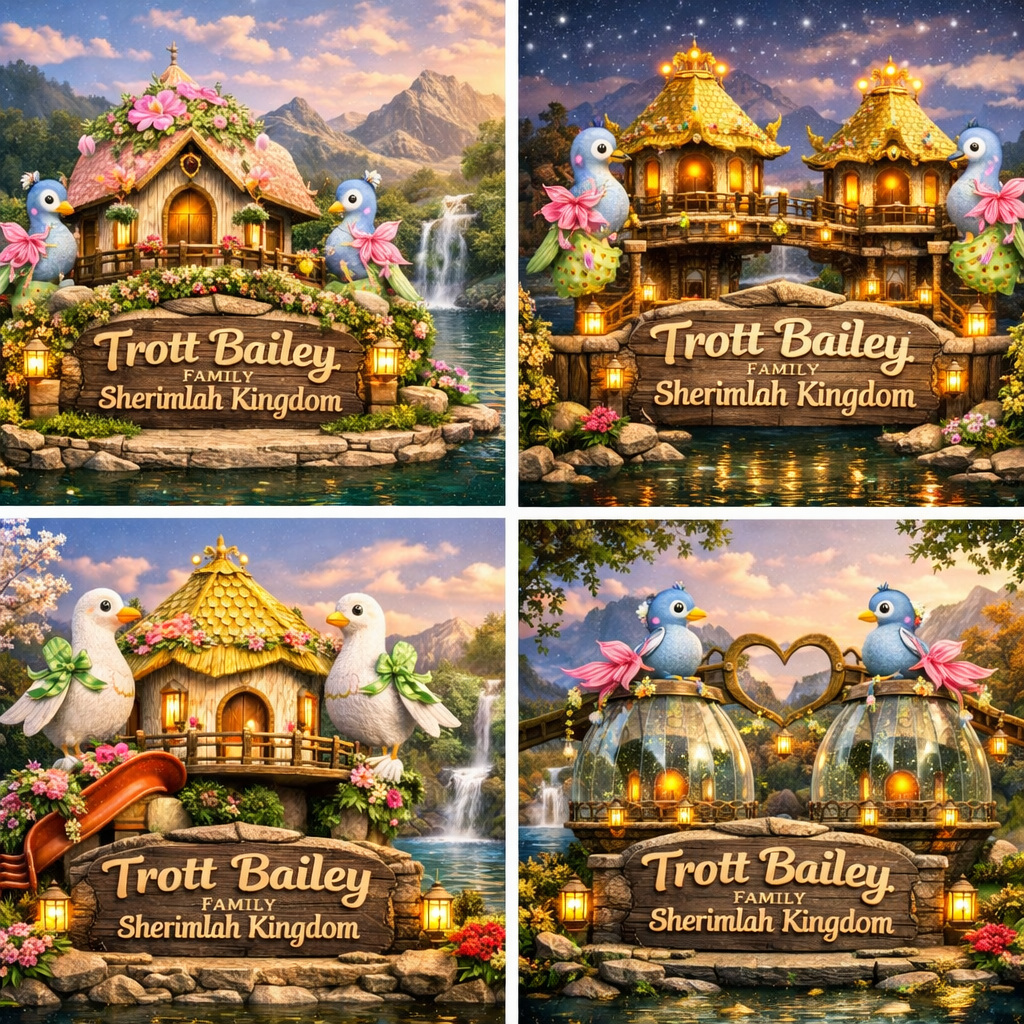
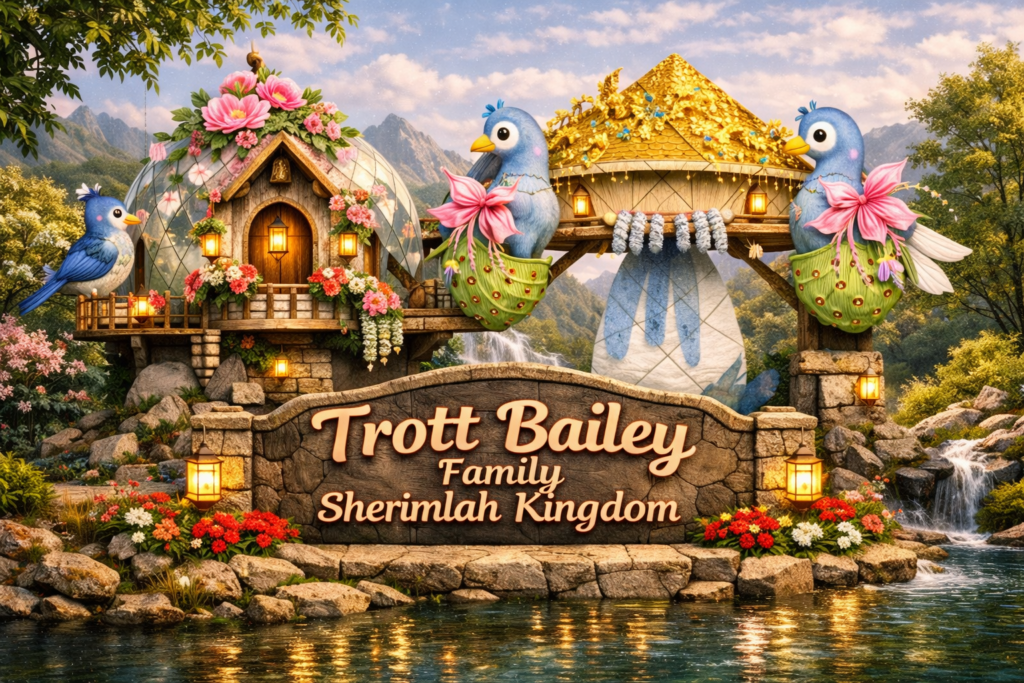
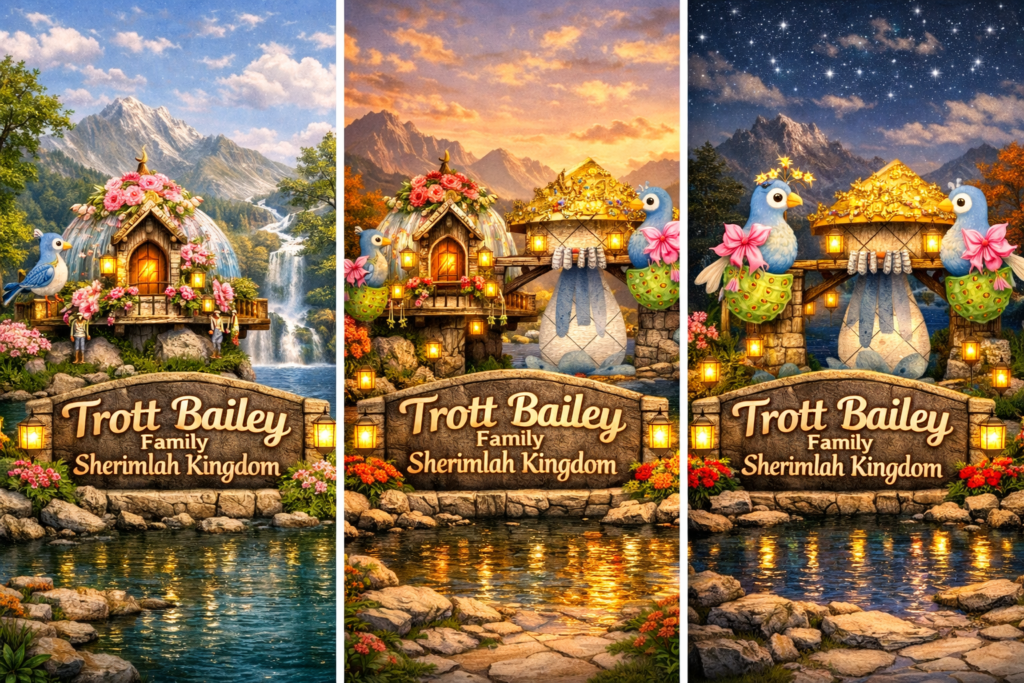
Trott Bailey Family Sherimlah Kingdom BySher
The Culture of Sherimlah- No Boring Winters

Life and Beauty in the Trott Bailey Family Kingdom
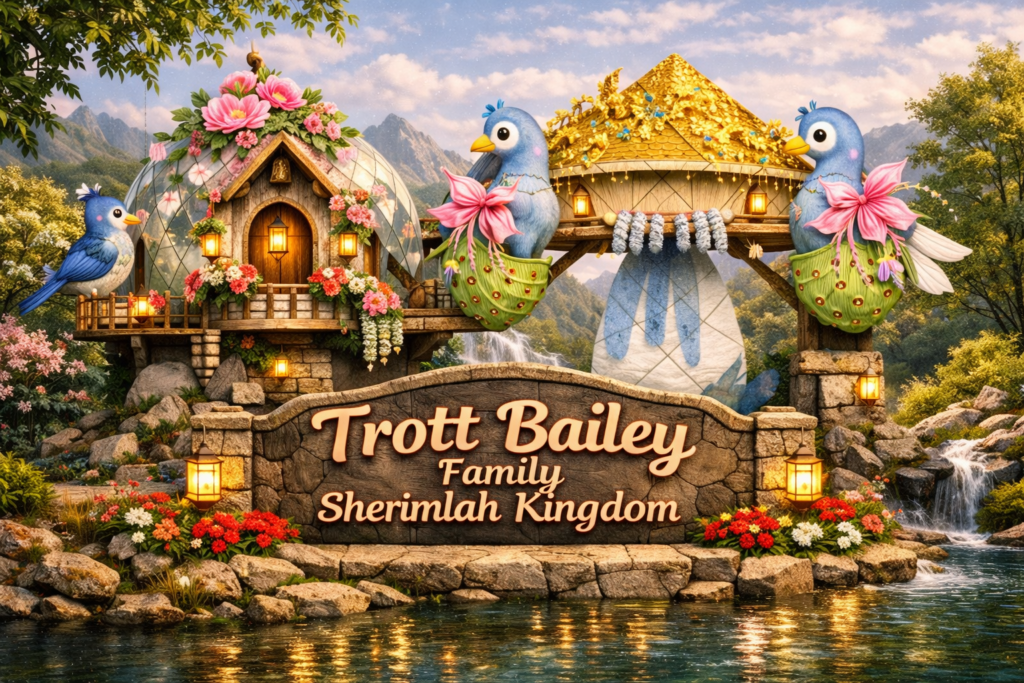
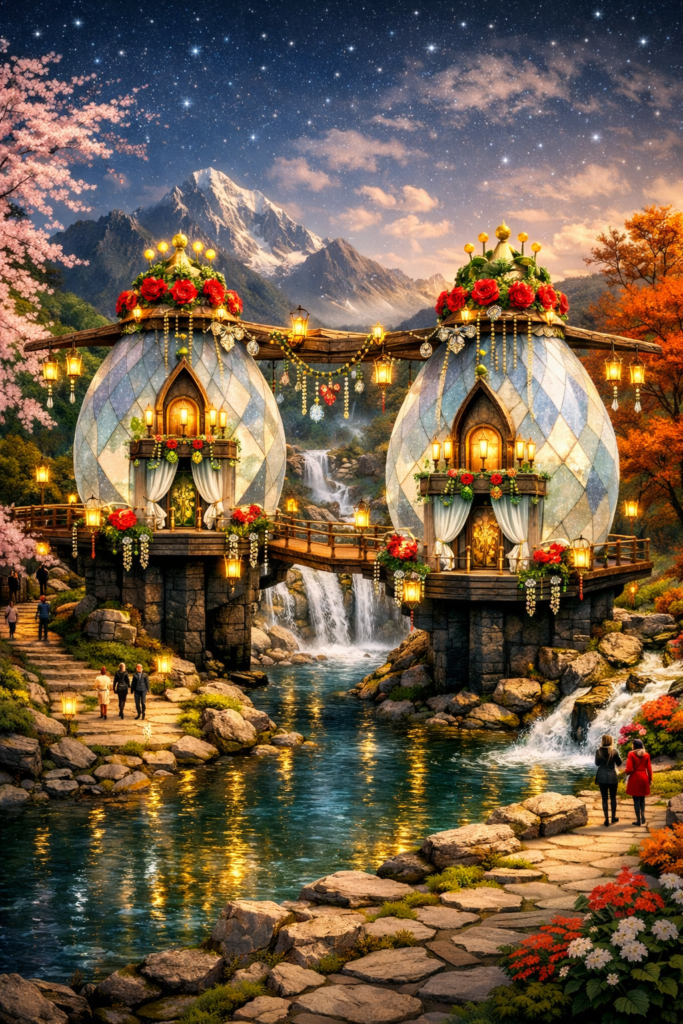
High among the mountains and open valleys of the Trott Bailey Family Kingdom lies Sherimlah, a district where daily life blends art, architecture, nature, and family living into a single vibrant culture. Sherimlah is not simply a place where people live—it is a place where beauty, creativity, and family joy are intentionally designed into the environment.
From its jewel-studded bridges and floral gondola transport systems to its pastry markets and conservatories, Sherimlah reflects a guiding philosophy: every part of life should feel meaningful, artistic, and alive.
A Culture Built Around Beauty
One of the defining features of Sherimlah is its devotion to ornamental craftsmanship. Citizens are known throughout the kingdom for their skill in transforming natural materials into large-scale works of art.
Bridges, buildings, walkways, and pavilions are decorated with carefully arranged stones, crystals, and floral motifs. Instead of plain architecture, Sherimlah embraces living design, where structures resemble jewelry pieces placed across the landscape.
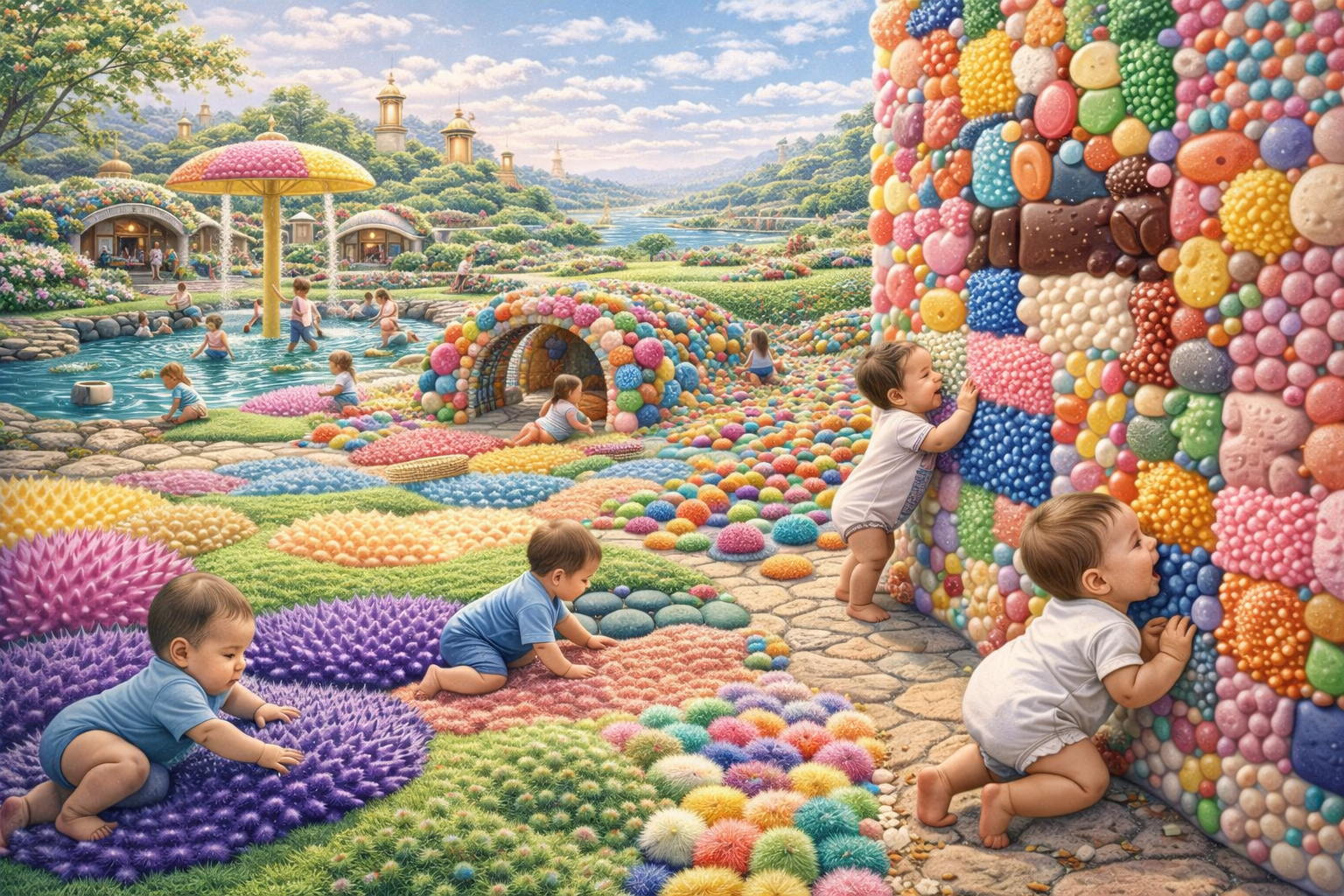
Many of the designs draw inspiration from nature—flowers, birds, fruits, and spiky pom-pom blossoms—which are recreated in stone, crystal, and metal.
The result is a district that feels like walking through a vast open-air gallery of craftsmanship.
The Grand Jewelcraft Tradition
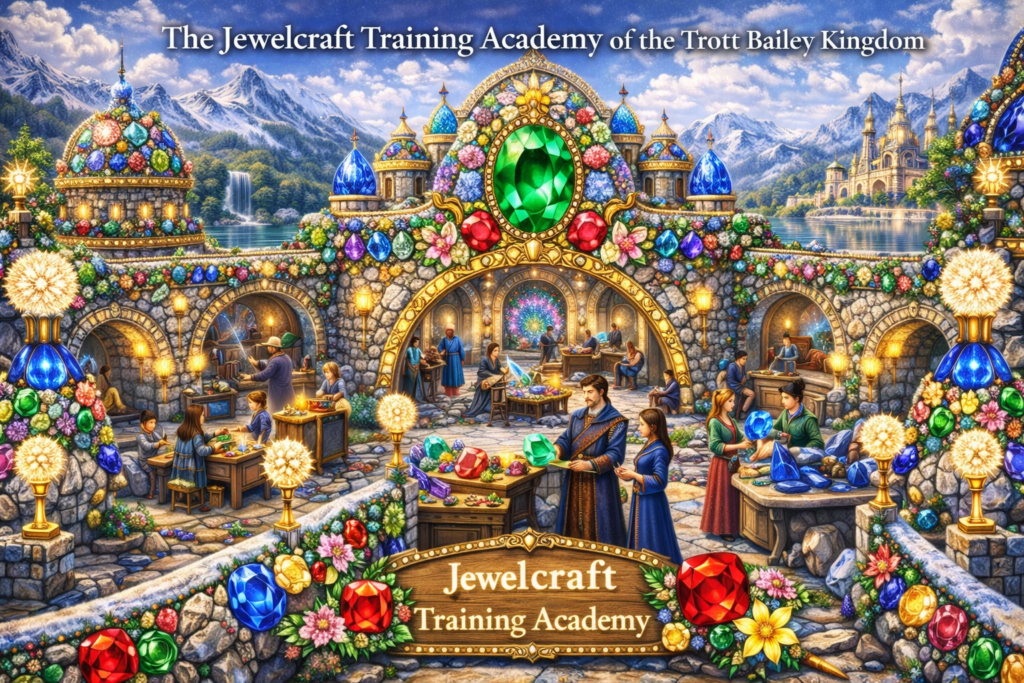
A central craft practiced in Sherimlah is known as Jewelcraft.
Unlike traditional jewelry, which is small and personal, Sherimlah jewelcraft is practiced on a massive architectural scale. Citizens embed polished stones, colored minerals, and sculpted ornamentation into bridges, towers, and decorative structures.
This art form is so important to the district that it is formally taught at the Jewelcraft Training Academy, where students learn:
• stone cutting and polishing
• gemstone embedding techniques
• structural decorative design
• mosaic and ornamental construction
Apprentices often begin young, studying how to combine engineering with artistic expression.
Over time, many of Sherimlah’s most iconic structures are created through these guild traditions.
The Jewel Bridges of Sherimlah

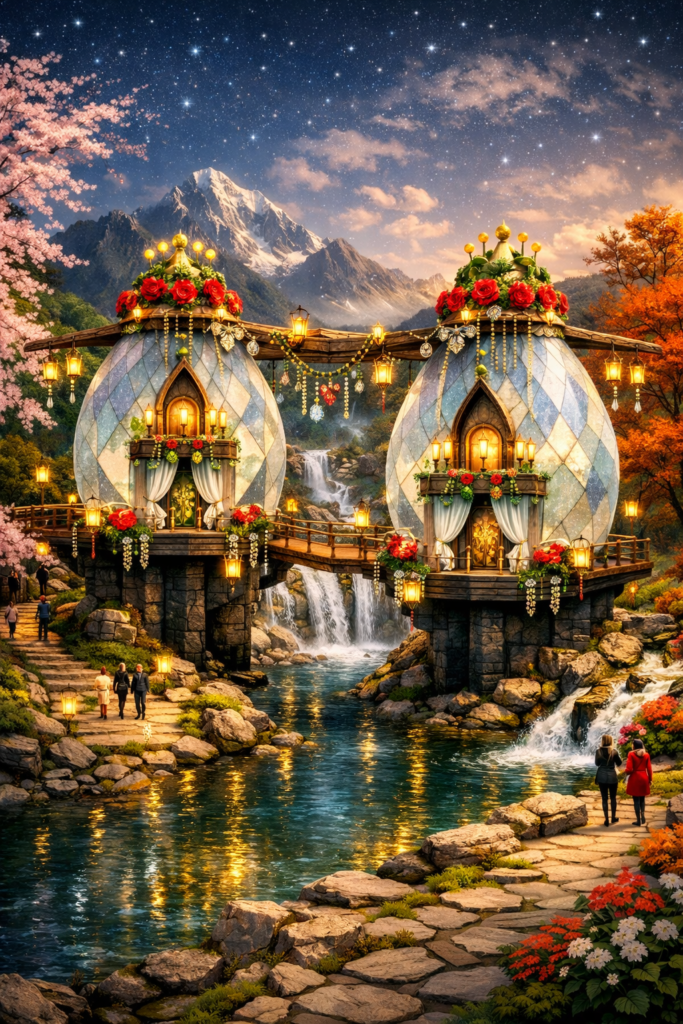
Perhaps the most recognizable feature of the district is its ornate bridge network.
Sherimlah’s bridges are not simple passages across rivers or valleys. Instead, they are decorated with floral stone designs, glowing lantern structures, sculpted birds, and decorative rails shaped like spiky pom-pom flowers inspired by local plants.
Walking across these bridges is both transportation and experience.
Families stroll across them in colorful clothing, enjoying views of the valley and nearby conservatories while light reflects from the ornamental designs embedded along the bridge walls.
Gondola Transport Across the Mountains
Because Sherimlah sits within a mountainous landscape, transportation has evolved into something both practical and beautiful.
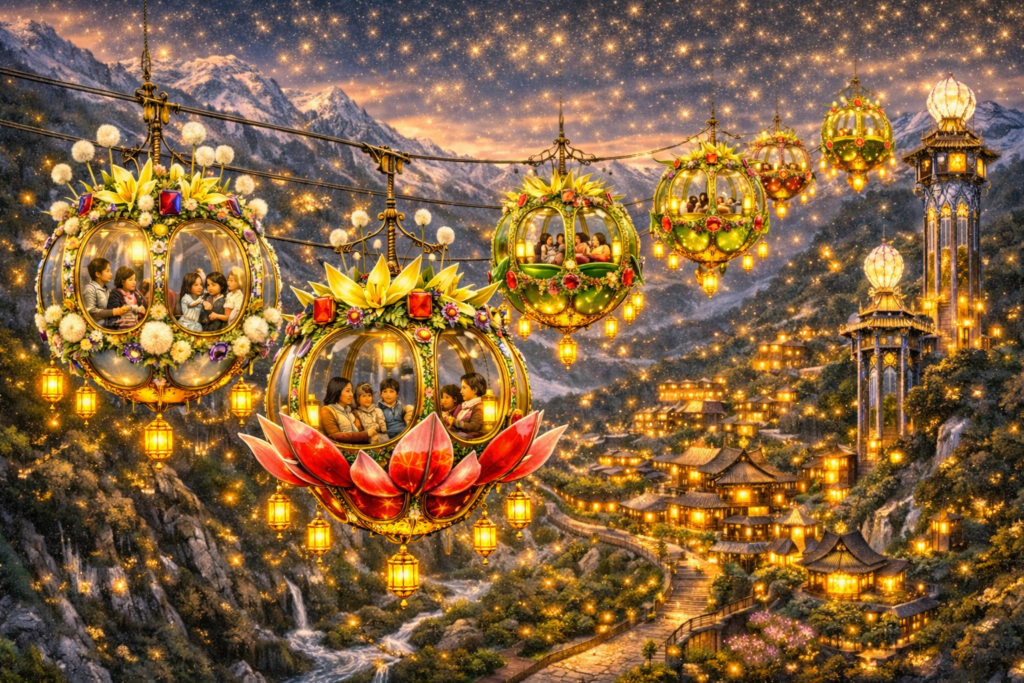
One of the district’s signature travel methods is its floral gondola system. These suspended cabins travel across valleys and slopes, carrying families gently from one district hub to another.
Unlike typical cable cars, Sherimlah’s gondolas are designed to resemble flowers. Their shapes feature curved petals and outward spines inspired by the distinctive pompom blossoms that grow in the region.
The gondolas are decorated with gemstone patterns and floral embellishments, making them instantly recognizable symbols of Sherimlah. The gondolas glide along elegant cable lines suspended between tall ornamental towers, allowing citizens to travel smoothly between districts, gardens, and mountain villages. Families ride comfortably inside the warm lantern-lit cabins while enjoying breathtaking views of waterfalls, terraces, and illuminated homes below.
Designed as both transportation and art, the gondolas form a floating garden in the sky—each cabin uniquely styled with floral petals, pom-pom blossoms, leaf prongs, and jewel accents that reflect the aesthetic traditions of the Trott Bailey Family Kingdom.
This system allows Sherimlah citizens to travel across steep terrain effortlessly while preserving the natural landscape and maintaining the whimsical beauty of the kingdom.
Watching them move across the sky has become one of the district’s most beloved sights.
The Winter Conservatory
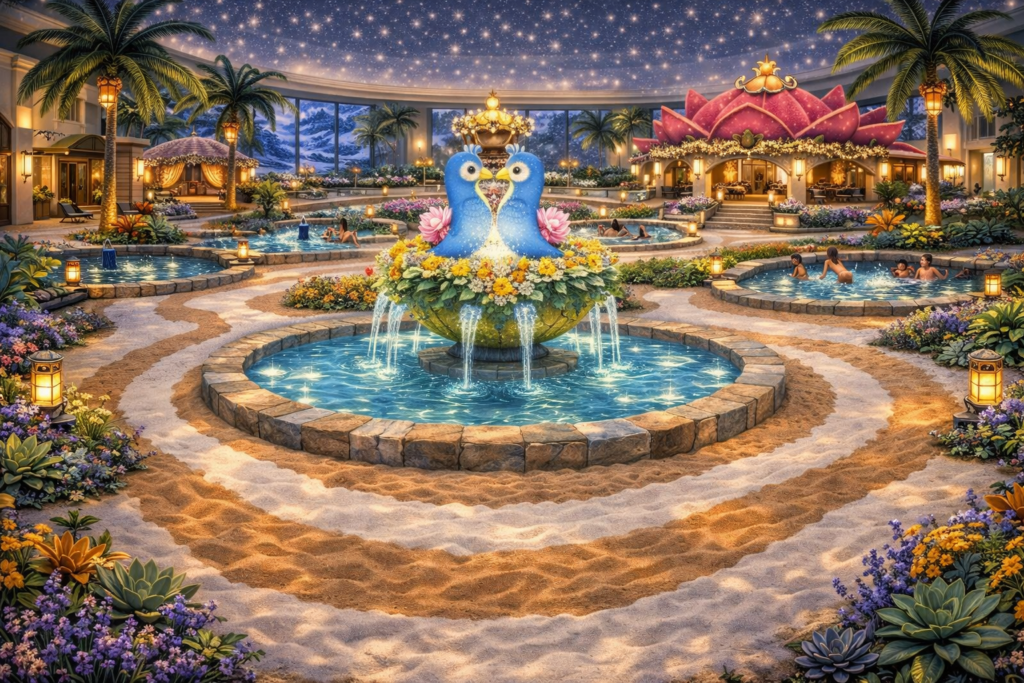
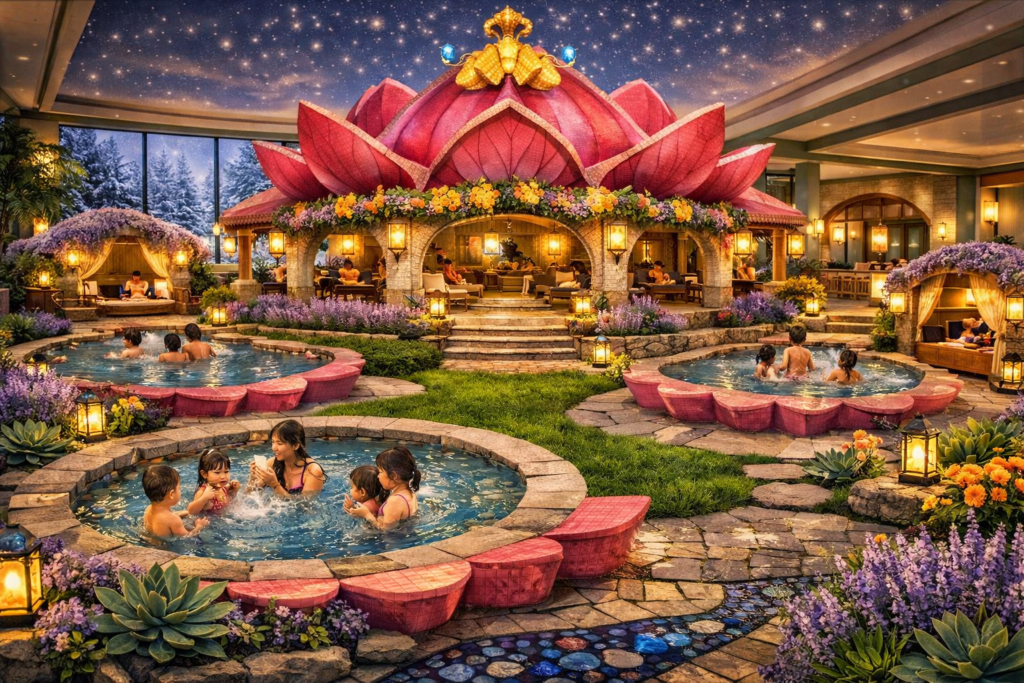
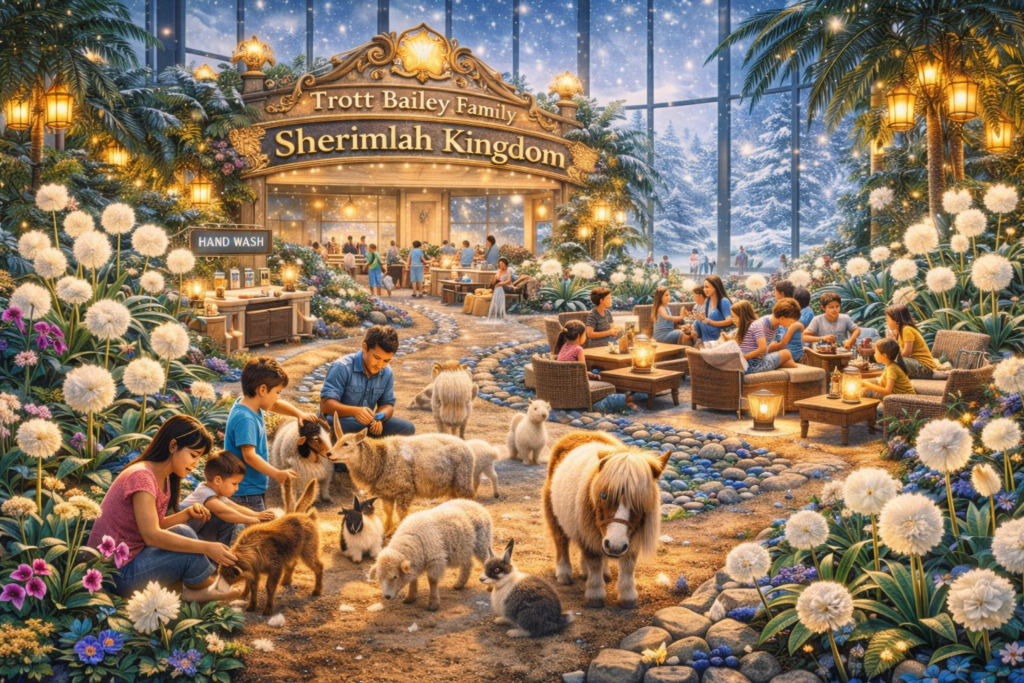
Another important landmark is the Winter Conservatory, a grand architectural structure used for relaxation, gatherings, and seasonal festivities.
Its design resembles a blooming crystal flower rising from the snow-covered landscape. Inside, citizens can enjoy warm gardens, fruit trees, and gathering spaces even during the coldest months.
Families visit the conservatory for:
• warm winter walks
• dessert gatherings
• seasonal celebrations
• quiet reflection in the gardens
It serves as both a cultural center and a place where the natural beauty of the kingdom can be enjoyed year-round. Winter no longer feels boring or trapped inside, inside the conservatory feels tropical.
The Grand Dessert Market
Sherimlah is also famous for its dessert culture.
Throughout the district, pastry makers experiment with fruits, herbs, honey, and natural ingredients grown in nearby orchards and gardens. These creations are showcased in the Grand Dessert Market, a lively plaza where families gather to taste and share new sweets.
Pastries often reflect Sherimlah’s artistic culture. Many are shaped like flowers, fruits, or gemstones, echoing the ornamental designs seen throughout the district.
Visiting the market is not just about eating—it is about celebrating the creativity of the community.
Fashion and Public Life
Sherimlah’s public spaces encourage residents to express themselves through fashion and personal style.
It is common to see citizens walking across bridges and promenades dressed in elegant fabrics, colorful garments, and expressive outfits that reflect their personality.
Public life in Sherimlah emphasizes celebration, artistry, and family presence rather than hurried routines.
Even everyday activities—travel, meals, walks—are designed to feel beautiful and memorable.
A Living Work of Art
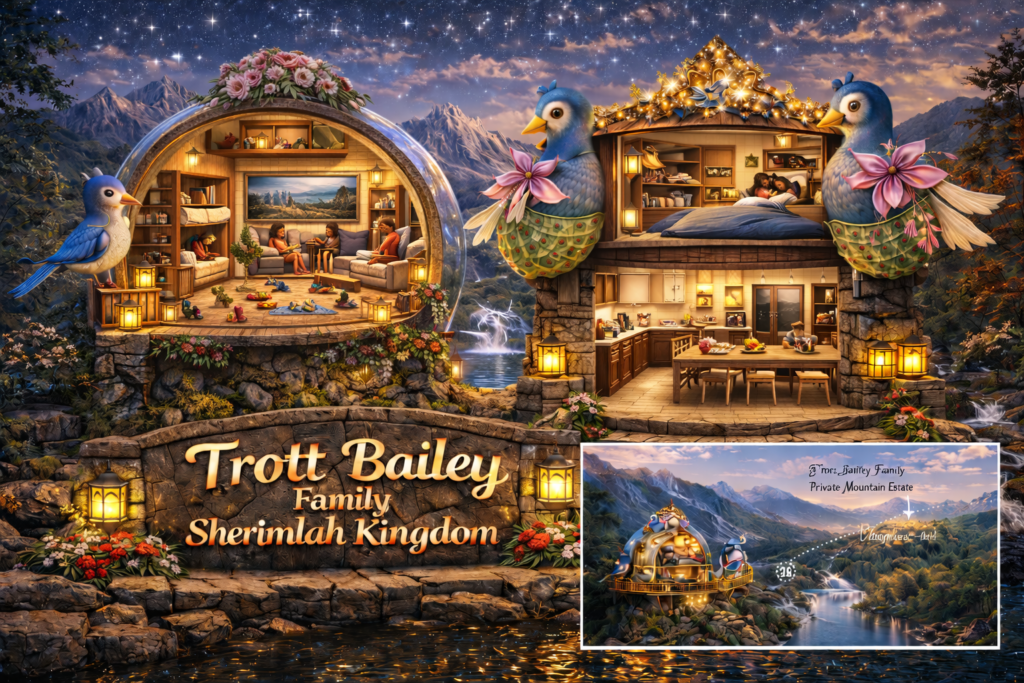

The culture of Sherimlah reflects the vision of the Trott Bailey Family Kingdom: a world where communities are designed with intention, creativity, and joy.
Rather than separating art from daily life, Sherimlah merges them.
Architecture becomes jewelry.
Transportation becomes sculpture.
Markets become celebrations.
And the landscape itself becomes part of the design.
The result is a district that feels less like a city and more like a living work of art shaped by the families who inhabit it.
Sherimlah’s food sovereignty is one of the defining pillars of the Trott Bailey Family Kingdom. Because Sherimlah sits in mountainous terrain with varied micro-climates, its food culture naturally evolves around resilience, preservation, and abundance management rather than constant outside supply. The result is a society where food security is both a cultural craft and a technological system.
Below is a clear framework for how Sherimlah’s food system could function.
Food Sovereignty in Sherimlah
A Culture of Preservation, Innovation, and Mountain Agriculture
In the Trott Bailey Family Kingdom of Sherimlah, food is not treated as a commodity. It is treated as heritage, craft, and security for future generations. The kingdom’s mountainous terrain and cool climate shaped a culinary tradition centered on growing hardy foods, preserving harvests, and storing abundance for all seasons.
Rather than relying on fragile supply chains, Sherimlah maintains a layered food system combining outdoor agriculture, preservation arts, climate-controlled conservatories, and inter-kingdom exchange within the Trott Bailey Family network.
1. Cold-Climate Mountain Agriculture
Sherimlah’s farmers specialize in cold-tolerant crops that thrive in alpine environments.
Core Crops
- Mountain berries (currants, gooseberries, lingonberries)
- Stone fruits in sheltered terraces
- Kale, cabbage, and hardy greens
- Potatoes and root vegetables
- Ancient grains such as rye, buckwheat, and barley
- Alpine herbs and medicinal plants
Terraced farms carve across the mountainsides, catching sunlight while preventing erosion.
These terraces become beautiful landscape features, often decorated with Sherimlah’s signature stone-and-gem architecture.
2. The Great Preservation Culture
Sherimlah citizens pride themselves on their mastery of food preservation crafts, passing techniques down through generations.
Preservation Traditions
Pickling Houses
- cucumber and herb pickles
- fermented mountain vegetables
- preserved citrus from conservatories
Fermentation Guilds
- cultured dairy products
- fermented grains and breads
- fruit vinegars and tonics
Drying and Curing
- mountain fruit drying houses
- herbal smokehouses
- root cellars carved into hillsides
Honey and Sugar Preservation
- fruit preserved in honey
- jewel-like candied fruits used in desserts
These foods are stored in beautiful stone vault pantries, allowing Sherimlah to maintain reserves for years if necessary.
3. Conservatories and Orangeries
To complement the alpine climate, Sherimlah constructs magnificent glass agricultural structures.
Types of Controlled Growing Spaces
Winter Conservatories
- tropical fruits
- citrus groves
- exotic herbs
Orangeries
- oranges
- lemons
- kumquats
- fragrant blossoms
Highland Greenhouses
- tomatoes
- peppers
- climbing beans
- strawberries
These structures are not hidden farms—they are architectural jewels of the kingdom, often decorated with gemstone ornamentation and floral stonework.
Families stroll through them like botanical gardens.
4. Inter-Kingdom Food Exchange
Sherimlah is part of the wider Trott Bailey Family Kingdom network, meaning food does not rely solely on local production.
Different kingdoms specialize in different climates.
Example Exchange Network
Sherimlah exports:
- preserved foods
- mountain cheeses
- berries and fermented drinks
Other TBF kingdoms export:
- tropical fruits
- grains from warm plains
- spices and cacao
- specialty vegetables
Transport occurs through the kingdom’s gondola systems, cargo caravans, and aerial transport routes, creating a beautiful but efficient food circulation system.
5. Food Guilds and Community Kitchens
Rather than isolated private kitchens, Sherimlah thrives on culinary guild culture.
Examples include:
The Picklers Guild
The Fermentation Houses
The Dessert Bakers of Sherimlah
The Orchard Keepers
The Conservatory Gardeners
Large communal kitchens produce meals for markets, celebrations, and families.
Food knowledge becomes a respected craft discipline, similar to architecture or jewelmaking.
6. Markets of Abundance
Food eventually flows into Sherimlah’s most joyful public space:
The Grand Dessert Market
Here citizens enjoy:
- pastries shaped like flowers and jewels
- preserved fruit desserts
- fermented drinks
- honey cakes
- orchard ice creams
Because food is abundant and shared, the markets are celebrations rather than places of scarcity.
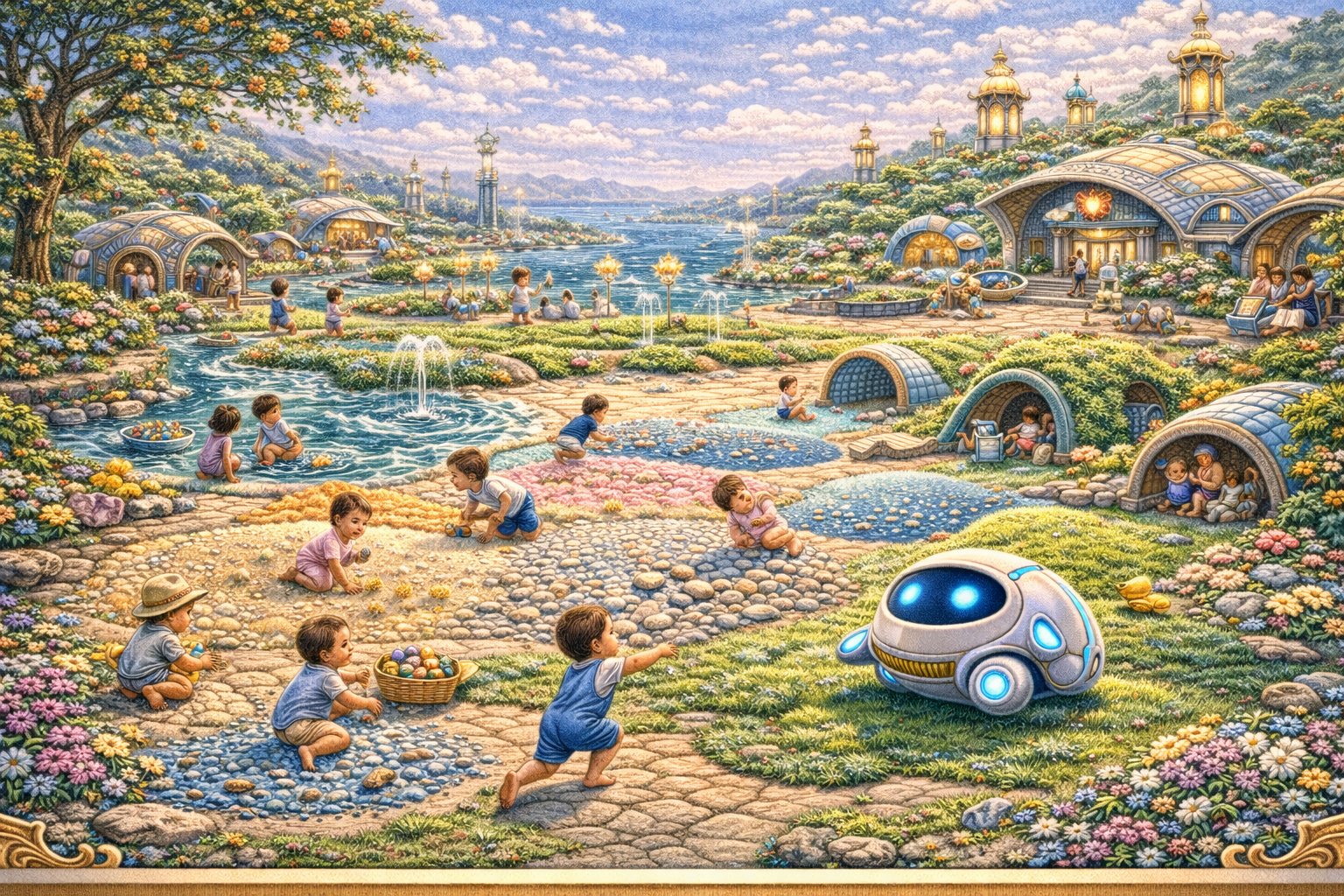
Children run across large lawns while families picnic among dessert stalls.
7. Food Security Philosophy
The Trott Bailey Family vision ensures that Sherimlah is never vulnerable to hunger.
The system is based on four principles:
- Grow what thrives locally
- Preserve what cannot be eaten immediately
- Store abundance in beautiful food vaults
- Exchange freely across the Trott Bailey Kingdom network
Food sovereignty becomes not only an agricultural strategy but a cultural identity of Sherimlah.
Sherimlah Through The seasons:
The Festival Calendar (Sherimlah Year)
Each festival is designed to “show off” the kingdom’s beauty and keep citizens active.
🌸 Spring — “Bloomlight Season”
Theme: flowers, renewal, fashion debut, outdoor return
Key events
- The Night Bloom Walk: lantern-lit trails, families dress in green/black/red accents.
- Orchid & Pom-Pom Parade: giant floral sculptures, perfume gardens, live music.
- River Opening Day: first official swim + picnic + boat lantern release.
☀️ Summer — “Water + Radiance Season”
Theme: rivers, fitness, playful luxury
Key events
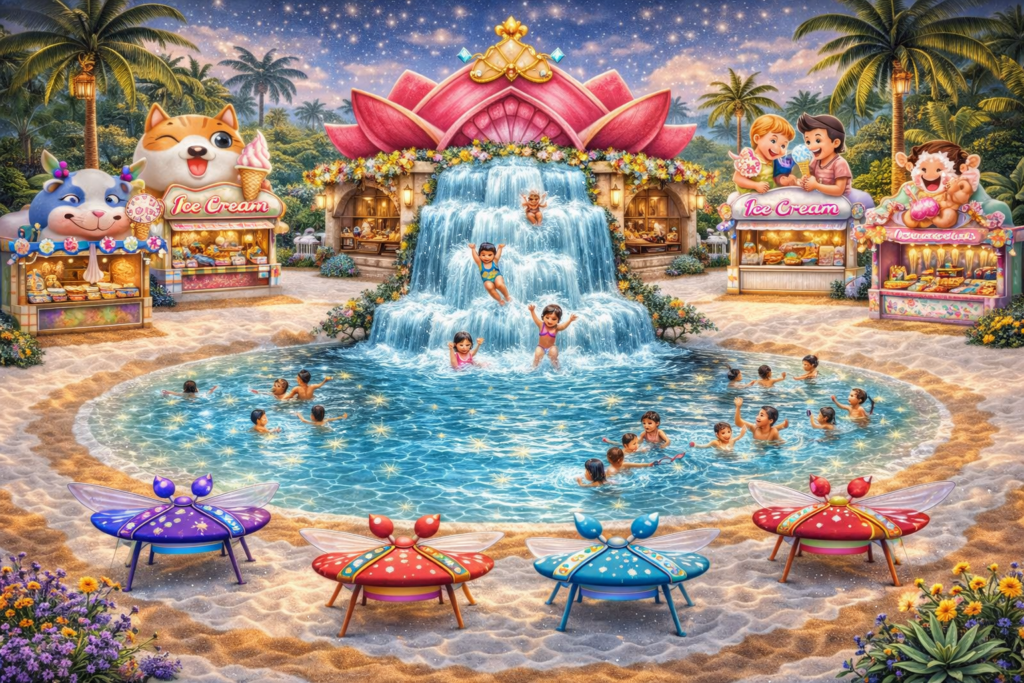
- Cascading Waterfall Games: kids slides, sand pools, trampoline bays, friendly races.
- Ice Cream Carnival Week: 5 themed shops compete for “Flavor Crown”.
- Midnight Glow Markets: late-night food streets, sapphire streetlights, fashion pop-ups.
🍁 Autumn — “Harvest + Style Season”
Theme: food mastery, design, cozy elegance
Key events
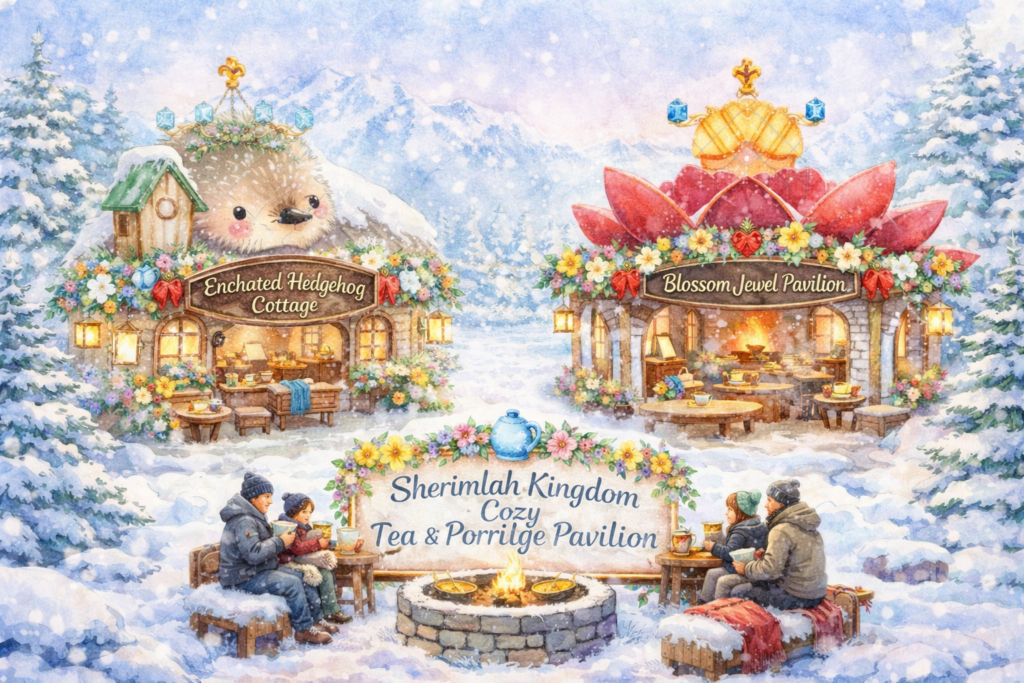
- The Great Porridge & Tea Gathering: central pavilion meals; storytelling stage.
- Firelight Fashion Week: jewel-toned outerwear, shawls, boots; runway on bridge walkways.
- Lantern Orchard Nights: fruit picking + music + warm dessert carts.
❄️ Winter — “Conservatory Season”
Theme: snow outside, tropical inside
Key events
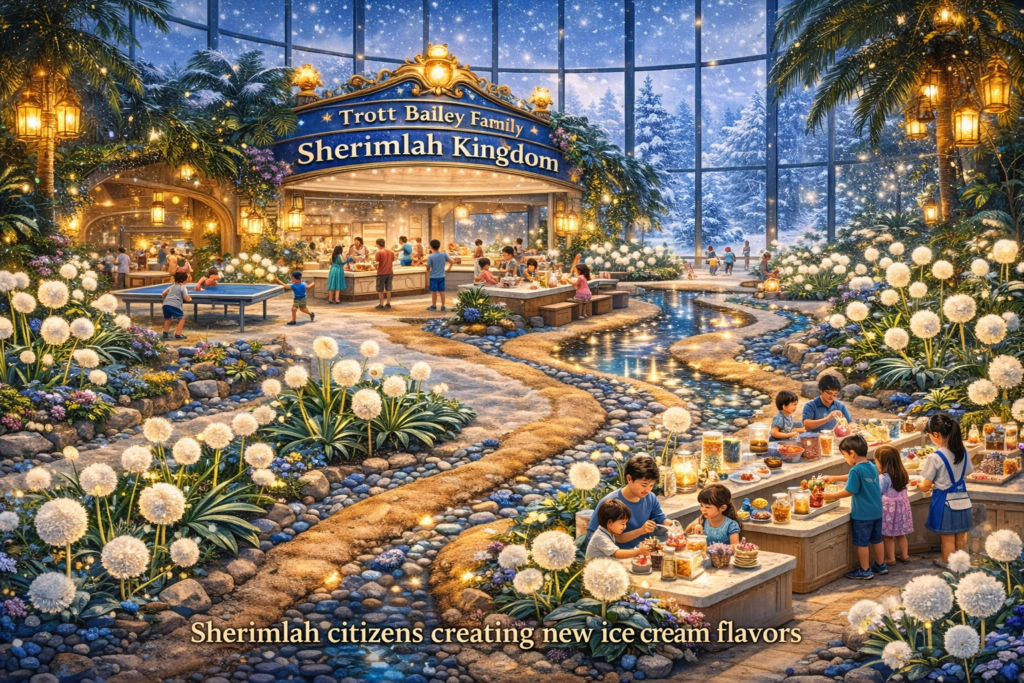
- Sherimlah Ice Cream Labs (Winter Inventors Month): citizens create new textures/flavors.
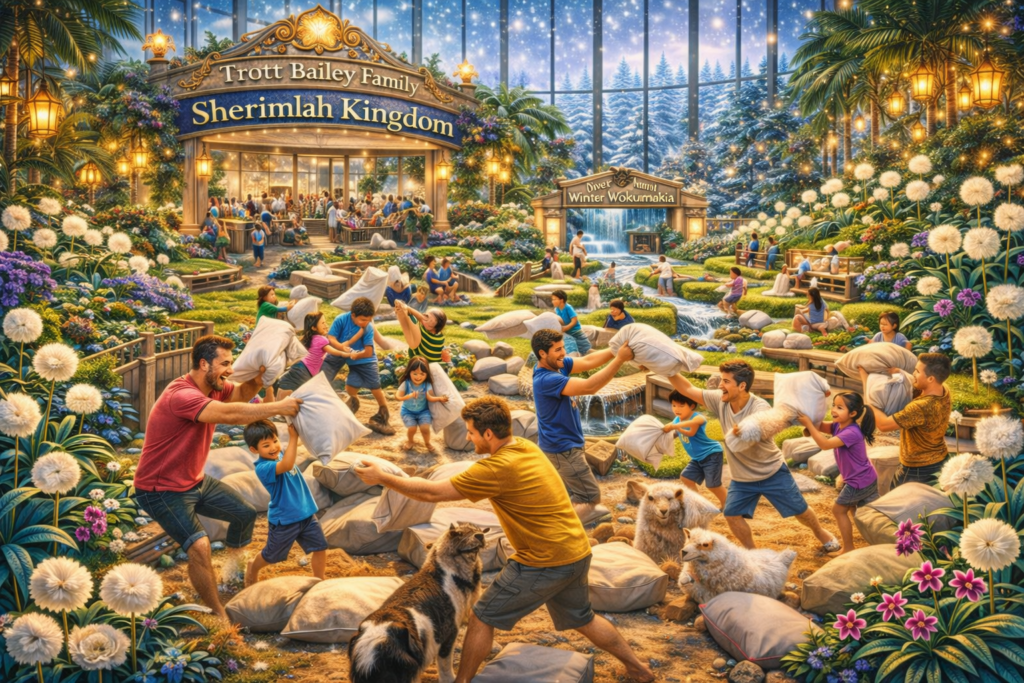
- Winter Wokumbakia: massive family obstacle course + pillow fight tournament.
- Hot Springs Moon Rooms: lavender archways, mint hedges, private pockets + kids splash pools.
- Snow + Skate Festival: ice skating rings, snowboarding hills, warming benches.
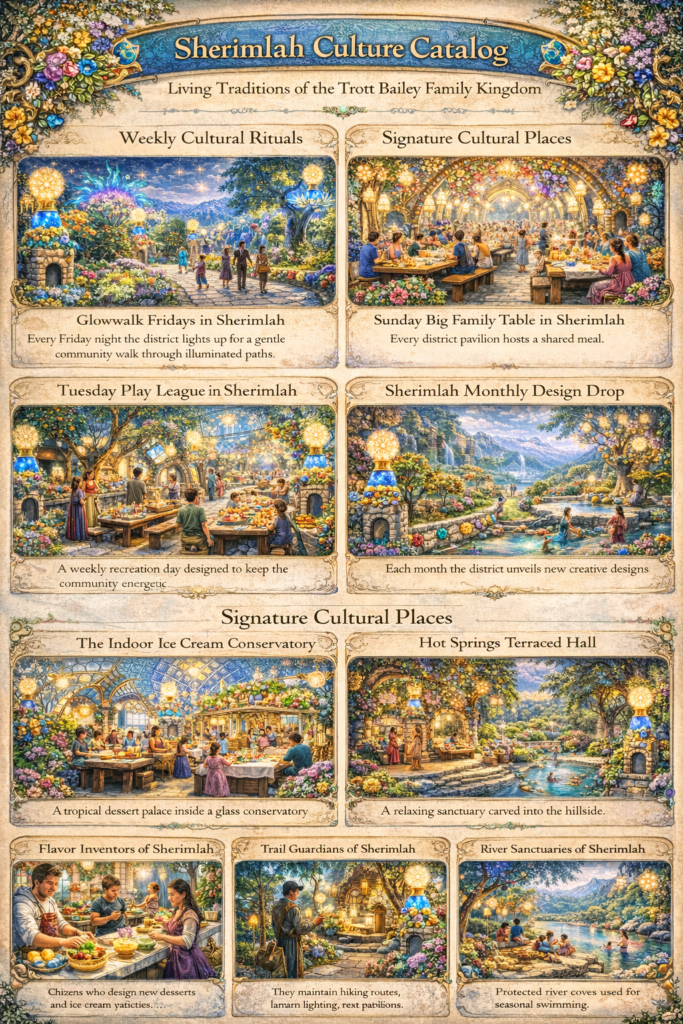
Weekly Culture Rituals (so it’s alive all year)
1) Glowwalk Fridays
- Whole district goes on a night walking circuit (family-friendly, music nodes, snack stations).
2) Sunday “Big Family Table”
- District pavilions host shared meals: soups, porridge, breads, fruit, tea.
3) Tuesday Play League
- Table tennis, trampoline games, climbing trails, indoor/outdoor challenges.
4) Monthly “Design Drop”
- New street pattern, new pavilion decor, new fashion accessory line, new ice cream series.
Signature Places That Create Culture
- Indoor Ice Cream Conservatory: snow outside, tropical inside, labs + tasting balconies + pavilions above.
- Hot Springs Terraced Hall: spaced, multi-level, semi-private floral archways.
- The Porridge & Tea Pavilion: winter heart of the district, elevated on stilts, stairs from themed buildings.
- Glow Trail Network: hiking loops labeled by difficulty, lit by sapphire “coconut-tree” street lamps.
- River Sanctuaries: seasonal swim coves, warm stone paths, picnic terraces.
“Citizen Roles” (fun identity, not jobs)
- Flavor Inventors (ice cream kitchen)
- Trail Guardians (hiking + lighting upkeep)
- Bloom Artists (orchids/pom-poms/lavender gardens)
- Night Market Hosts (food + music + dance)
- Winter Game Captains (Wokumbakia organizers)
Sherimlah Food Sovereignty Catalog
Facilities of the Trott Bailey Family Kingdom
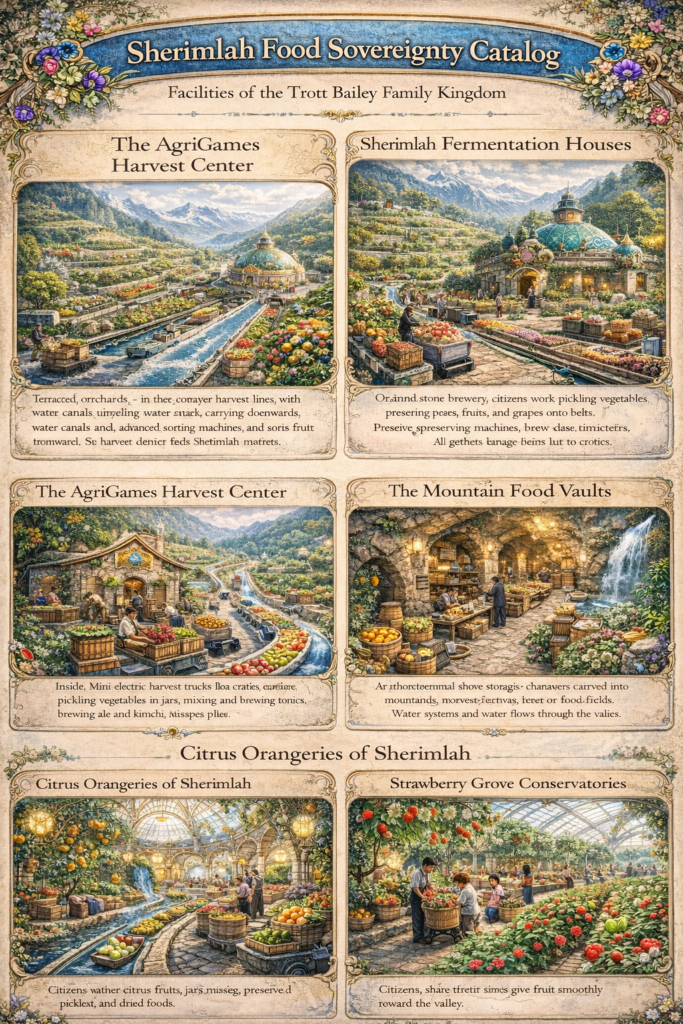
The AgriGames Harvest Center
Description
At the base of the Orchard Terraces, the AgriGames Harvest Center receives fresh fruit from the mountains.
Mini electric harvest trucks, gravity-fed water canals, and conveyor belts move baskets of fruit efficiently downhill from the terraces.
Inside the center, advanced sorting machines clean, grade, and distribute fruit for markets, preservation houses, and dessert kitchens across Sherimlah.
Sherimlah Fermentation Houses
Description
These stone and glass fermentation halls are where citizens practice the ancient preservation arts of Sherimlah.
Fruits and vegetables are transformed into pickles, fermented tonics, cultured foods, vinegars, and preserved delicacies.
Temperature-controlled fermentation chambers ensure stable flavor development throughout the year.
The Mountain Food Vaults
Description
Carved into the cool stone of Sherimlah’s mountains, the Food Vaults store preserved harvests for long-term security.
Root cellars, honey preservation chambers, drying rooms, and grain vaults allow the kingdom to maintain a deep reserve of food during winter seasons.
Natural airflow and underground springs maintain ideal storage conditions.
Citrus Orangeries of Sherimlah
Description
Because Sherimlah sits in a cool mountain climate, elegant glass orangeries allow warm-weather crops to thrive.
These sunlit conservatories grow oranges, lemons, mandarins, and fragrant blossoms year-round.
Water canals carry citrus harvests gently through the gardens toward sorting stations and markets.
Strawberry Grove Conservatories
Description
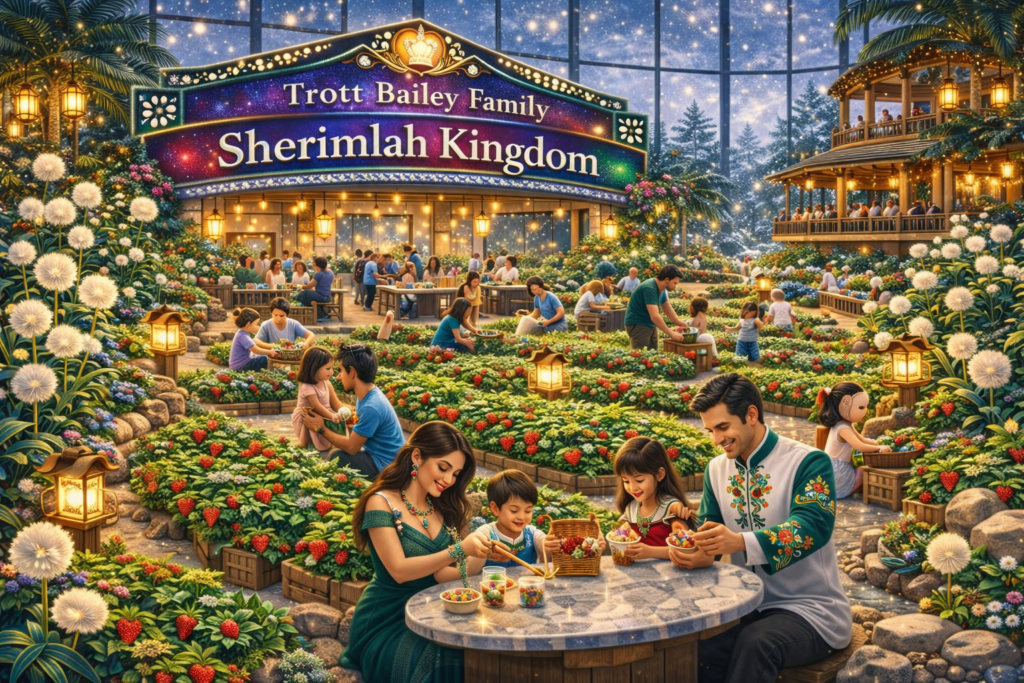
Inside warm glass conservatories, rows of strawberry vines grow along trellised beds under filtered sunlight.
Citizens harvest berries by hand and load them onto gentle conveyor systems that carry fruit toward packing stations.
These berries supply the Grand Dessert Market and the Indoor Ice Cream Conservatory
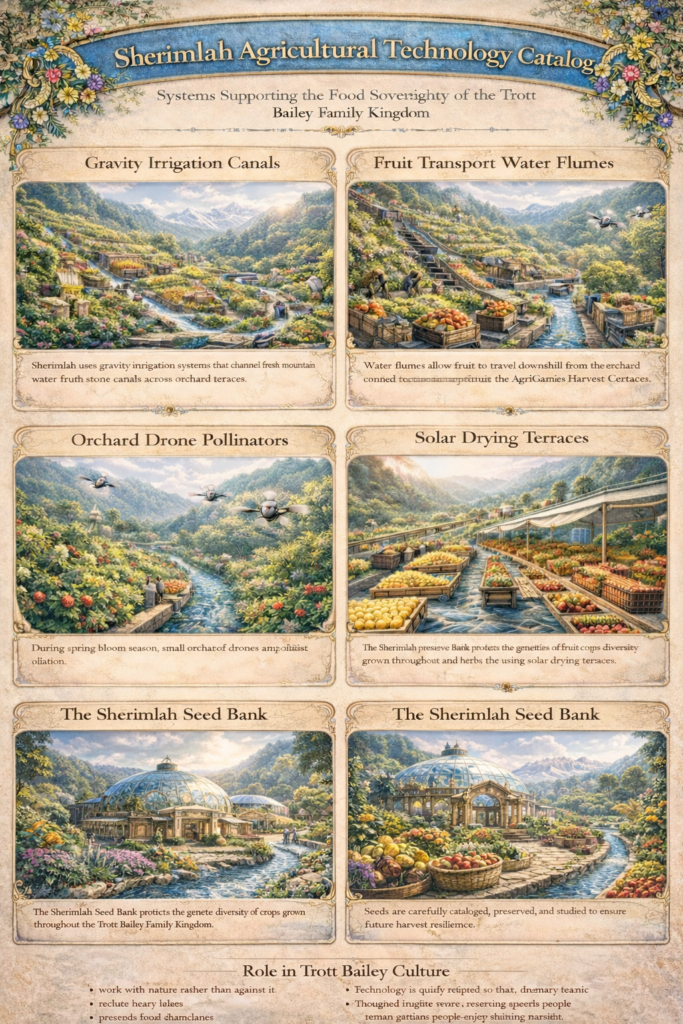
Sherimlah Agricultural Technology Catalog
Systems Supporting the Food Sovereignty of the Trott Bailey Family Kingdom
Gravity Irrigation Canals


Description
Sherimlah uses gravity irrigation systems that channel fresh mountain water through stone canals across orchard terraces.
The canals gently distribute water to fruit trees, berry fields, and vegetable gardens without pumps or heavy machinery.
Excess water flows downward toward reservoirs that support fish ponds and irrigation storage.
Fruit Transport Water Flumes


Description
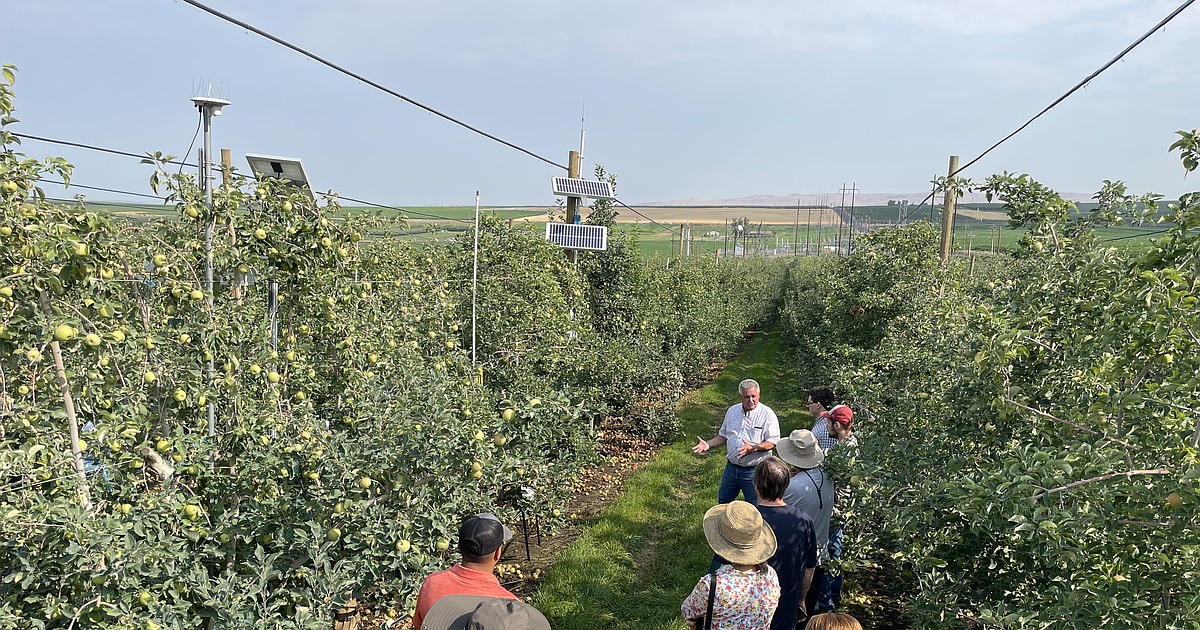
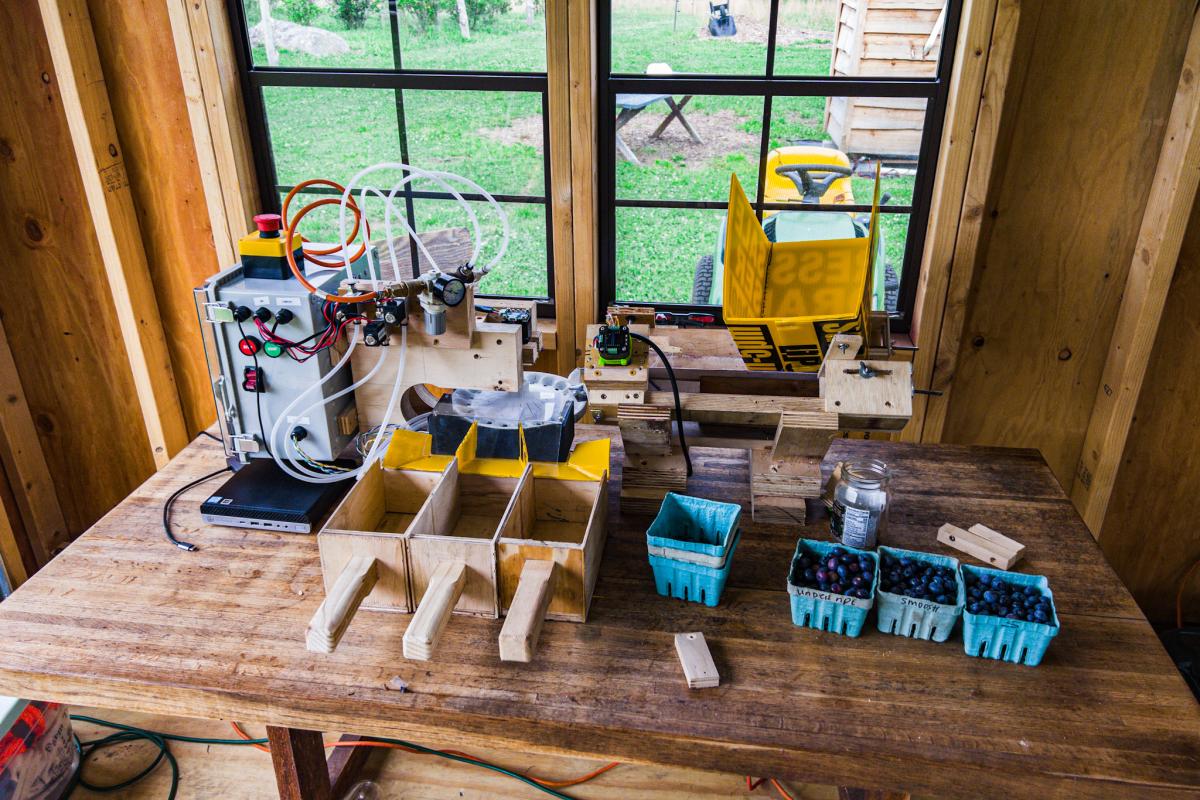
Water flumes allow fruit to travel downhill from the orchard terraces.
Harvest baskets are gently placed into flowing channels where fruit floats toward collection basins near the AgriGames Harvest Center.
This low-energy system prevents bruising and reduces manual transport across steep terrain.
Orchard Drone Pollinators

Description
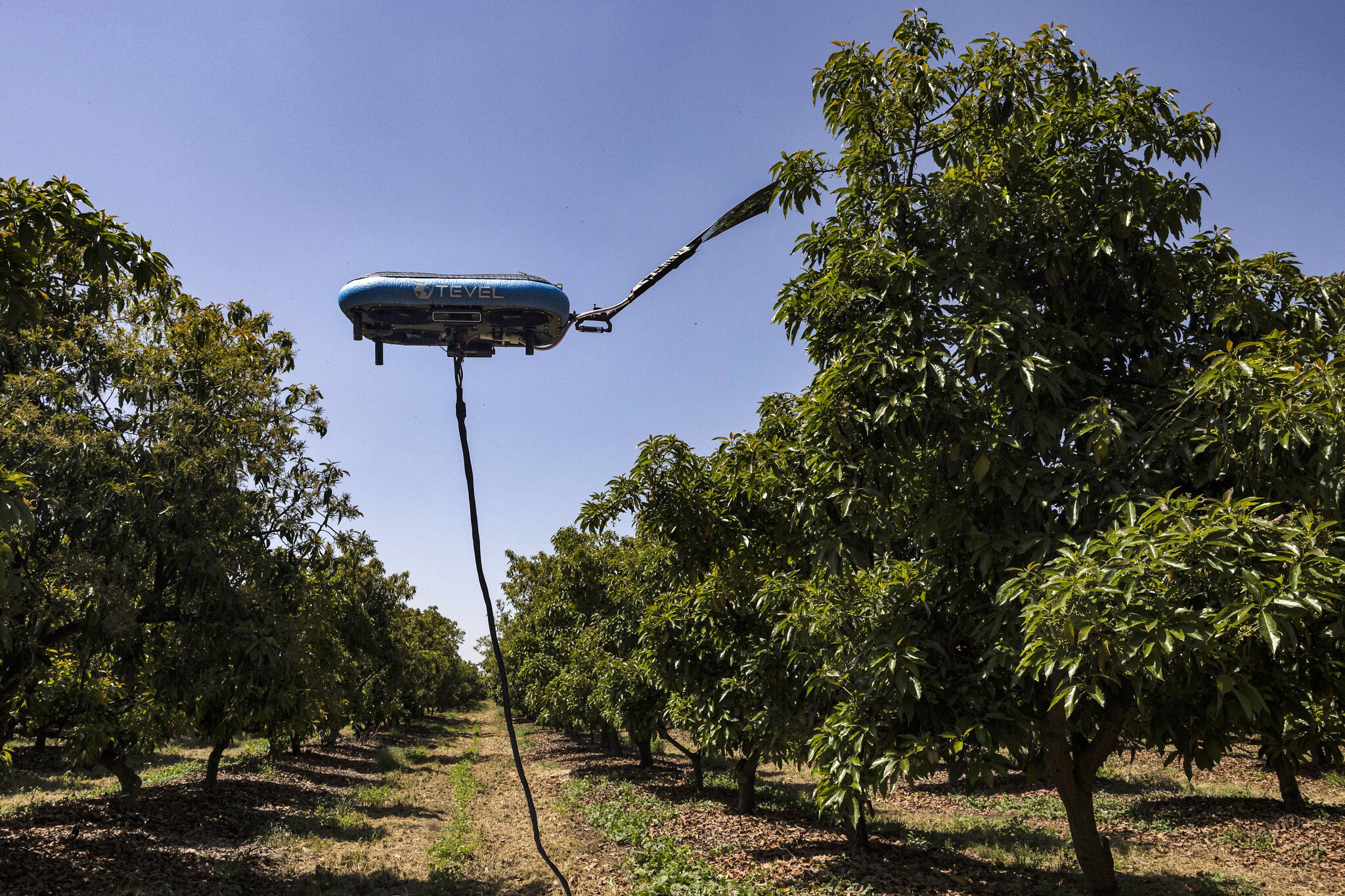
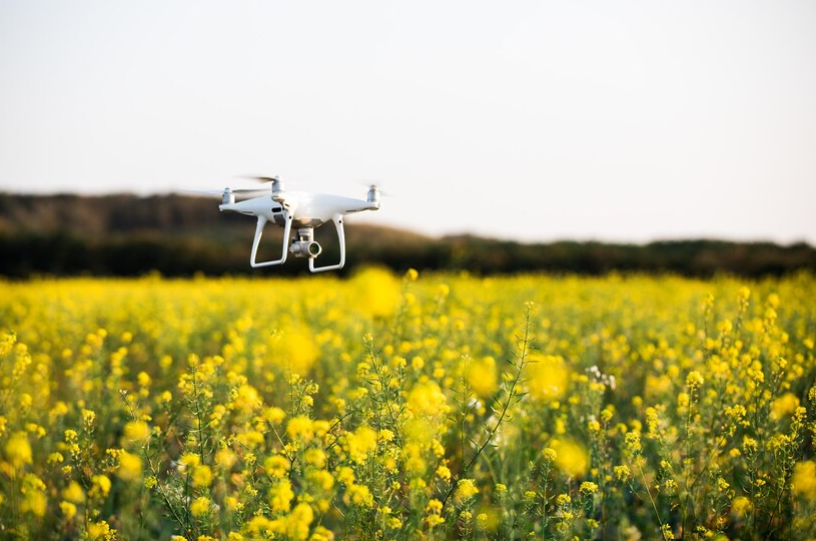
During spring bloom season, small orchard drones assist pollination.
They help distribute pollen across large terrace areas when natural pollinator populations are low.
These drones work alongside bees and butterflies to maintain strong fruit yields.
Solar Drying Terraces


Description
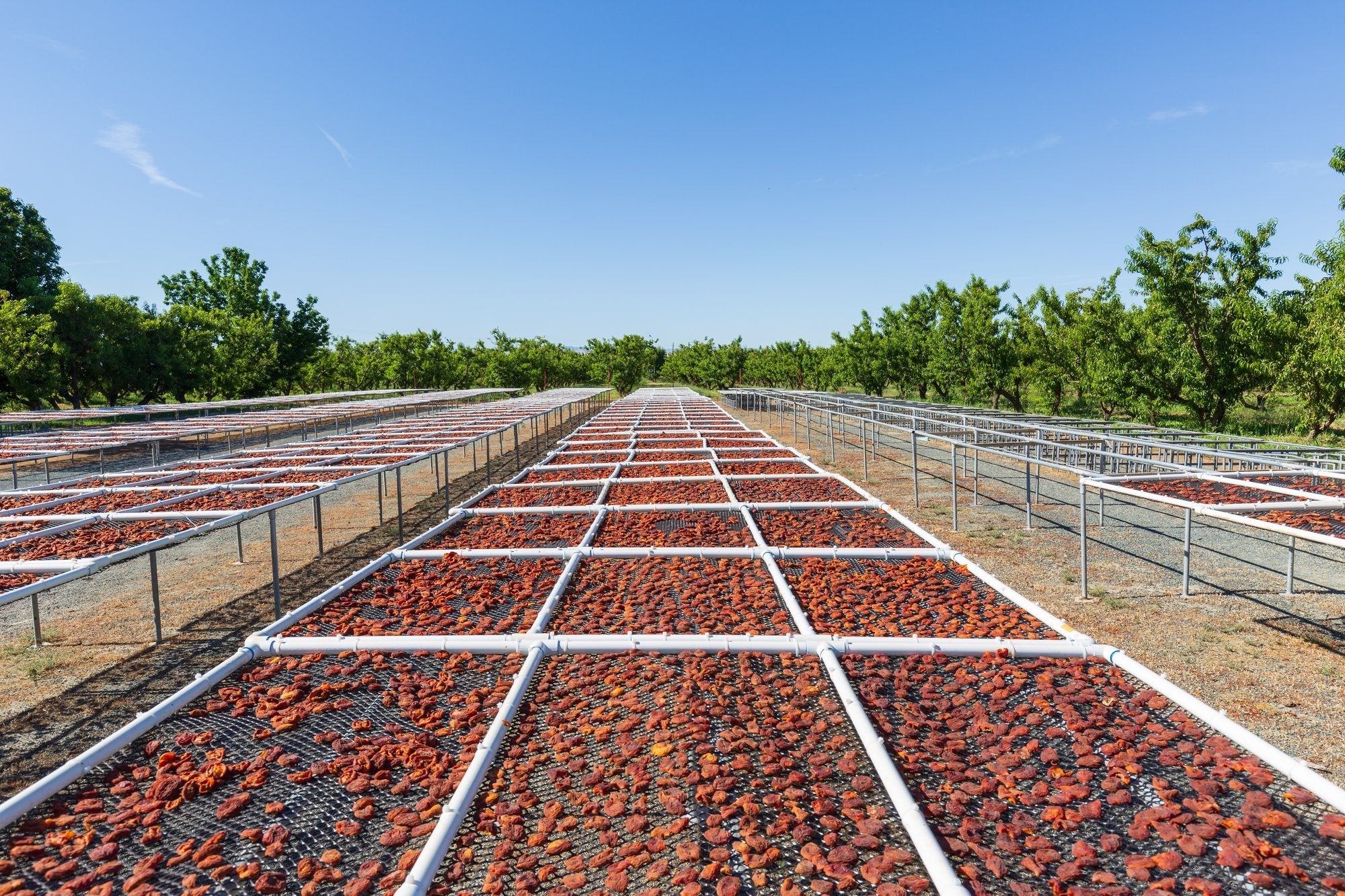
Sherimlah preserves large quantities of fruit and herbs using solar drying terraces.
Wooden racks hold sliced fruit, berries, and herbs under protective mesh canopies that allow sunlight while preventing insects.
The dried foods are later stored in the Mountain Food Vaults.
The Sherimlah Seed Bank


Description
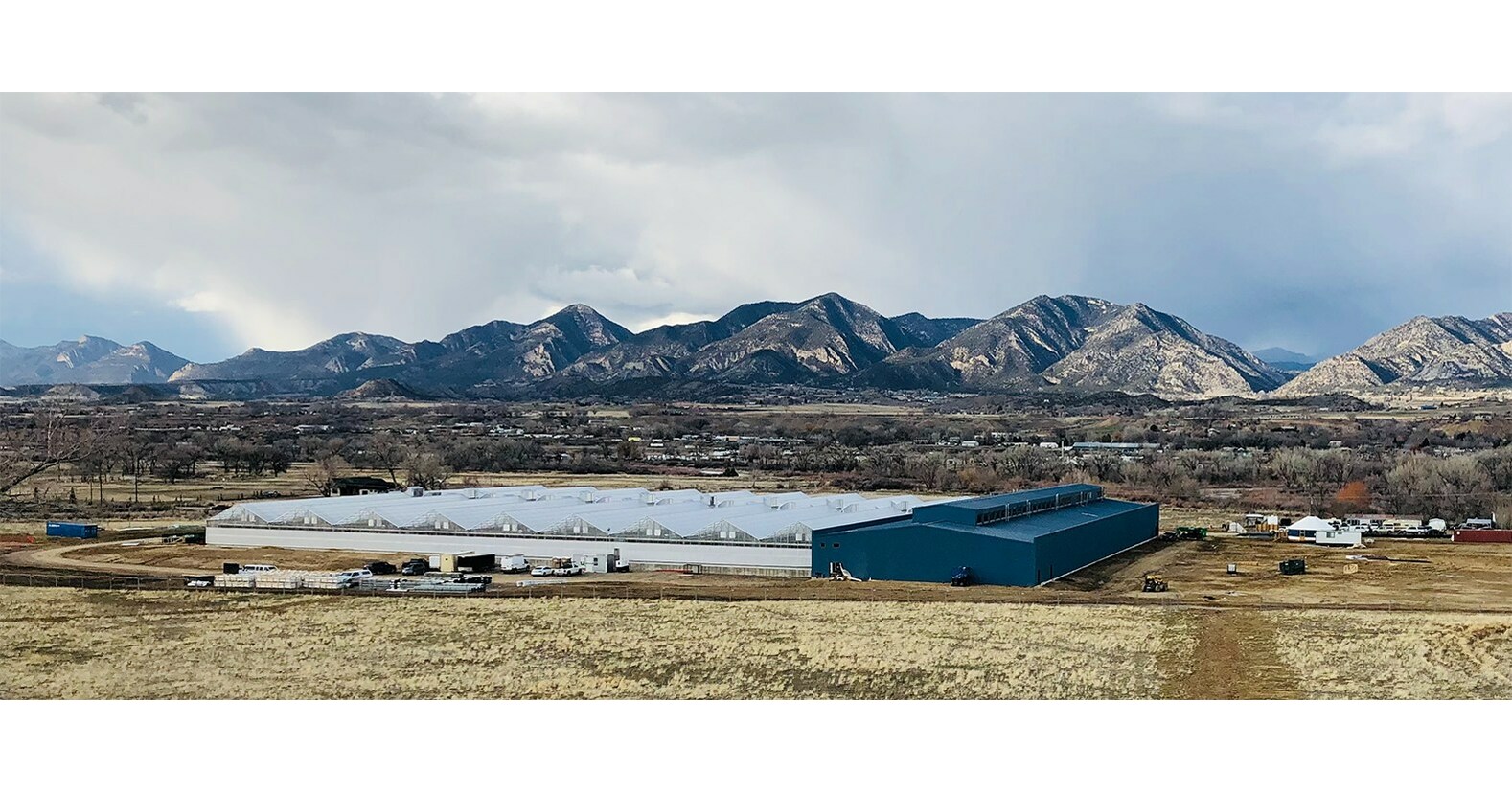
The Sherimlah Seed Bank protects the genetic diversity of crops grown throughout the Trott Bailey Family Kingdom.
Seeds are carefully cataloged, preserved, and studied to ensure future harvest resilience.
The surrounding botanical gardens serve as living libraries of edible plants.
Role in Sherimlah Culture
Agricultural technology in Sherimlah is designed to:
- work with nature rather than against it
- reduce heavy labor
- preserve food abundance
- keep farming visually beautiful
Technology is quietly integrated so that farms remain gardens people enjoy walking through.